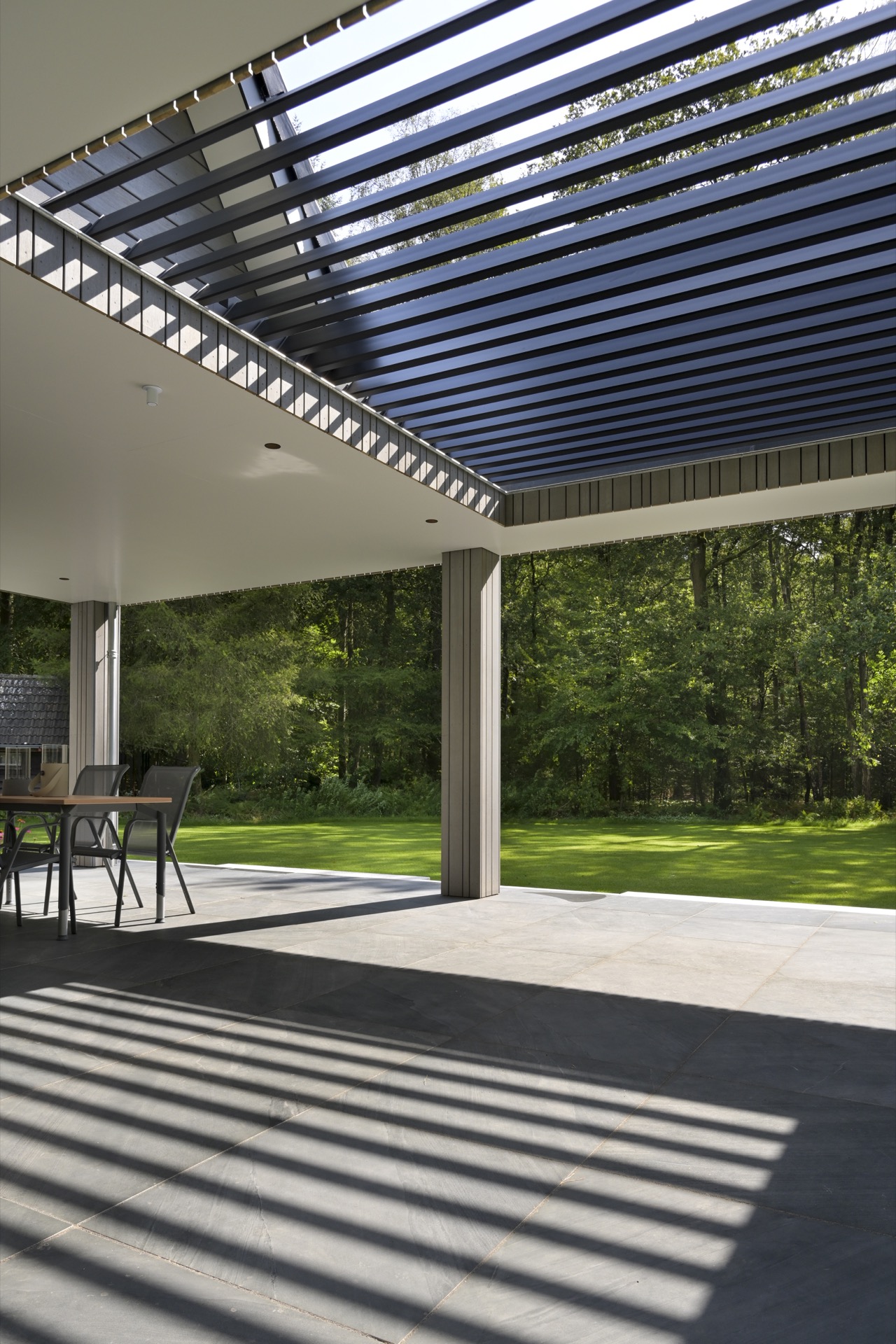






Modern patio cover with an adjustable louvered roof
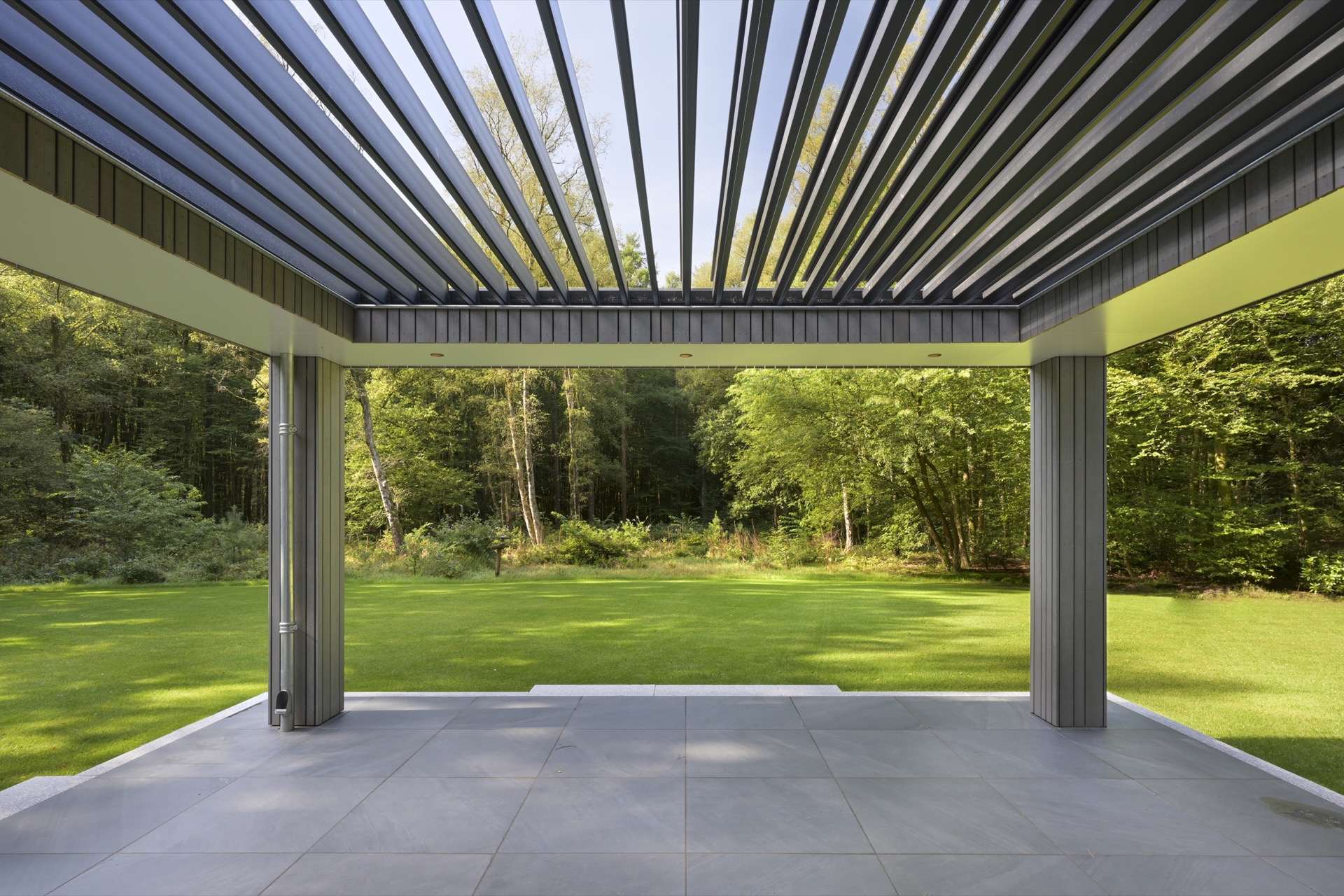
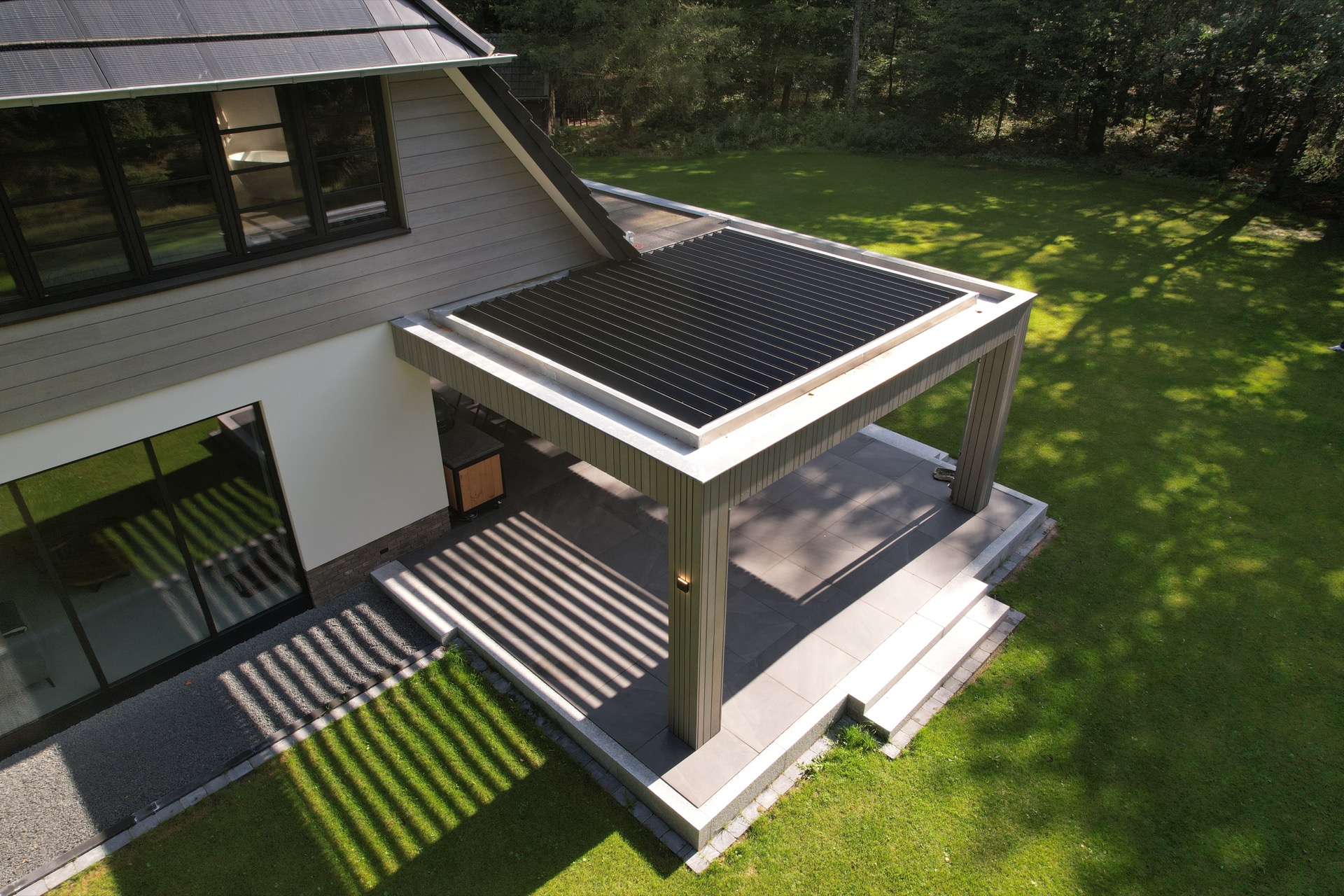
The modern patio cover with louvered roof is immediately visible in the way the project is framed. The roofline sits close to the house and extends the interior toward the terrace without changing the clear geometry of the building. Here, a patio cover with louvered roof is attached directly to the home, and the dark roof elements set a sharp line against the lighter structure below. The contrast is visible at once: black louvers above, white framing beneath, and a paved surface that keeps the outdoor area grounded.
modern patio cover with louvered roof as the architectural starting point
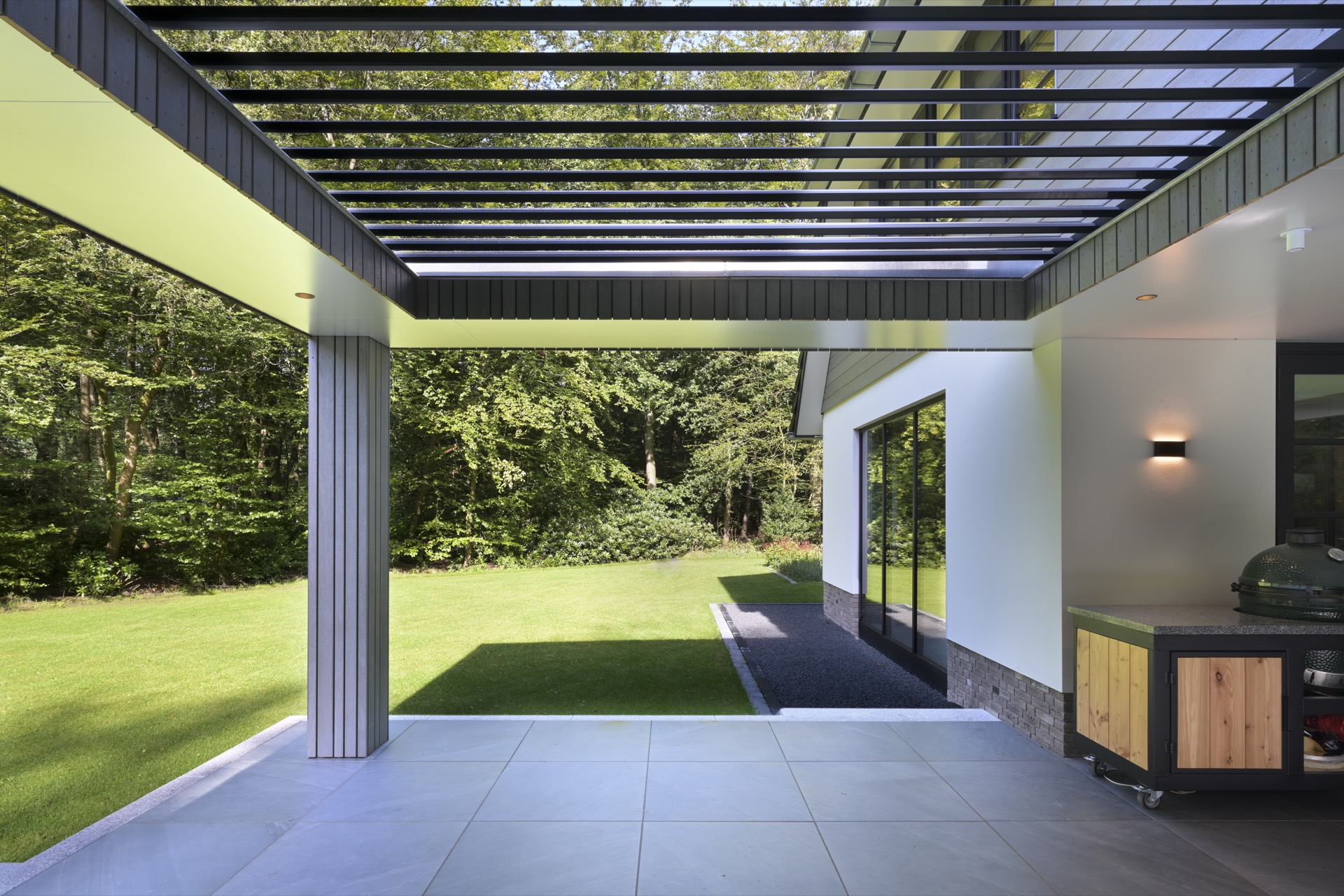
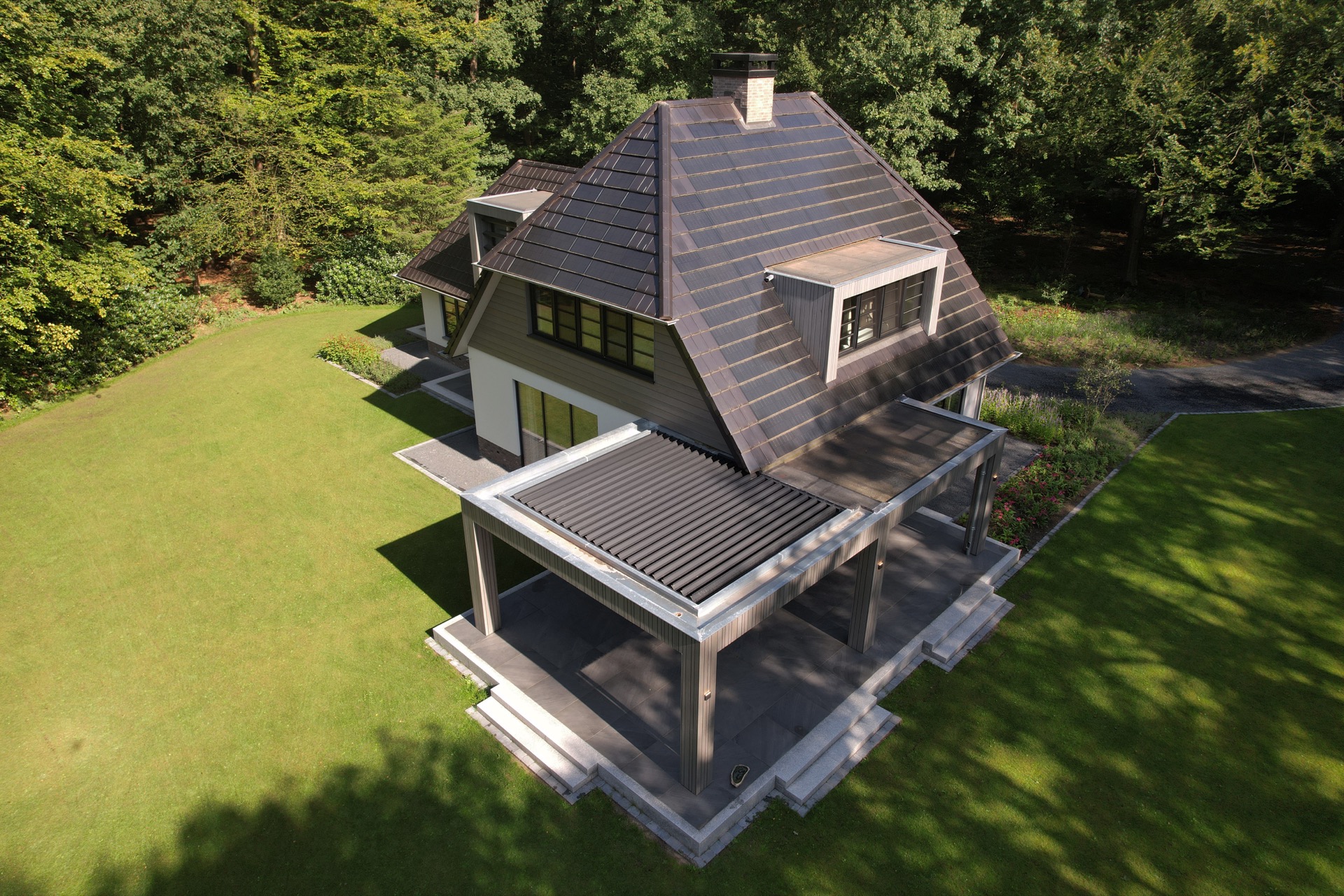
The connection to the house is straightforward and visible in the way the structure meets the wall. That direct attachment gives the patio cover with louvered roof a fixed position in the architecture rather than the feel of an added object. The lines stay restrained. Aluminium members, a timber detail and ceramic tiles shape the space, while the garden edge remains open in the background.
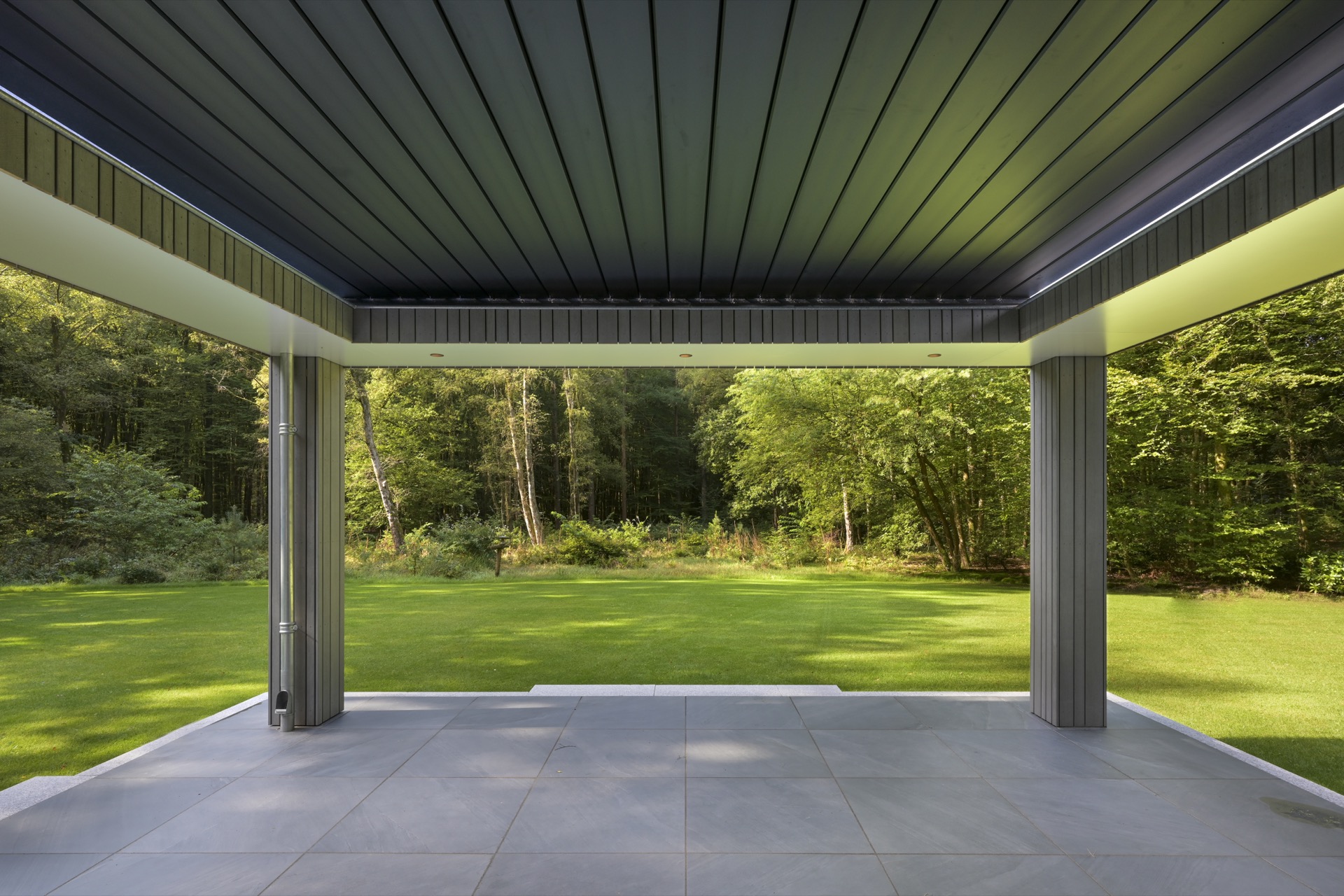
From the terrace, the roof reads as a set of adjustable aluminium louvres rather than a closed plane. That distinction matters here. The openings between the slats make the roof responsive to changing light, and the slim profile keeps the structure visually light. Seen from below, the white and black elements create a measured rhythm above the seating area and along the transition to the garden.
Light, shade and ventilation under one roof
The adjustable louvered roof allows the amount of sun on the terrace to be moderated throughout the day. When the slats are angled open, air can move through the space and the roof does not shut out the sky entirely. When they close, the cover offers shade and weather protection, including shelter during a summer shower. The function is easy to read in the construction itself, without any extra devices or visual clutter.
That control over light also changes how the terrace is used. A chair placed near the edge of the cover stays in a softer band of daylight, while the paved floor remains bright where it reaches beyond the roof. The ceramic tiles reflect a muted tone, which keeps the surface calm under the darker overhead structure. Nothing here is oversized; the proportions stay close to the house and to the seating zone below.
Aluminium louvres in a clear black-and-white palette
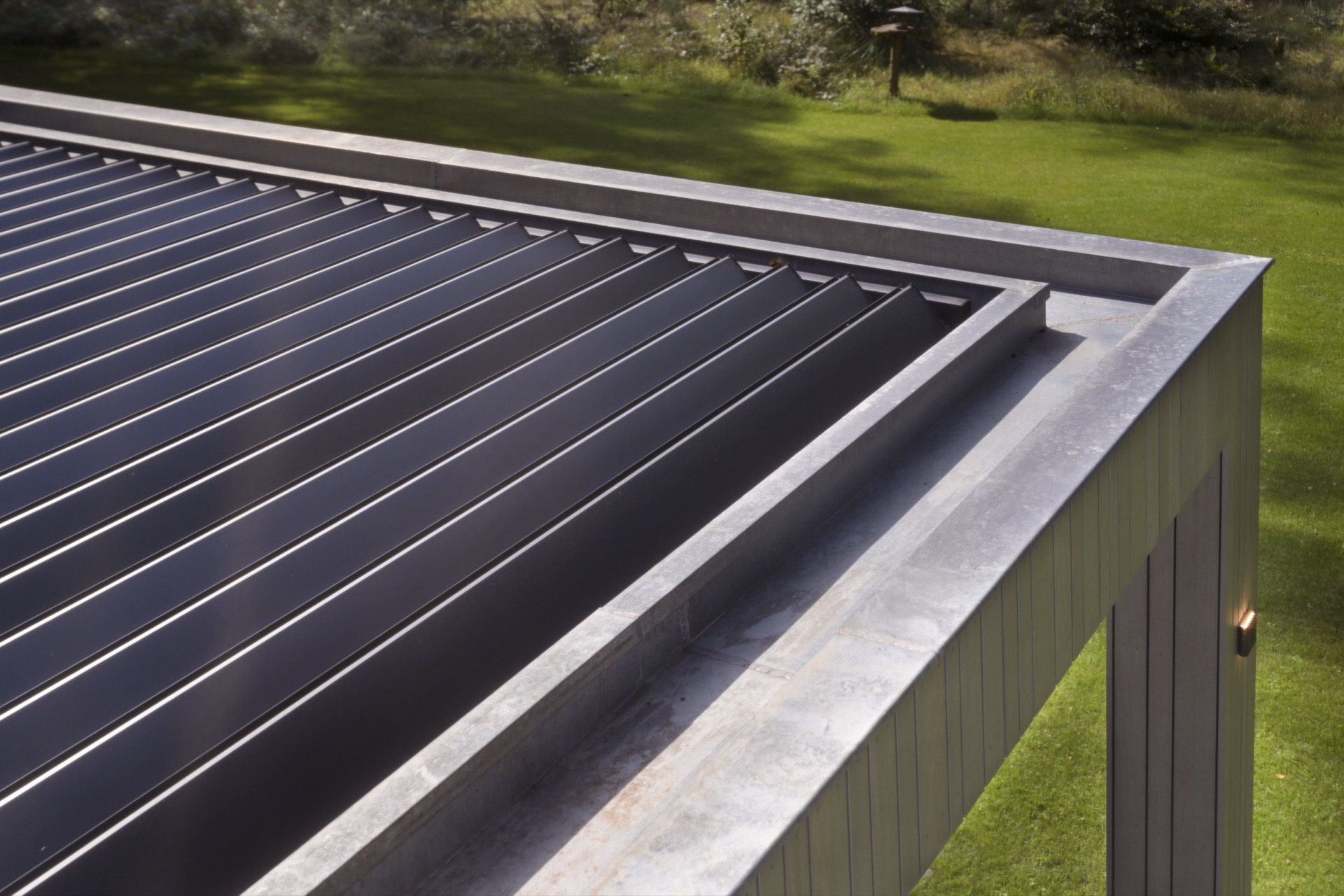
The louvred roof uses aluminium louvres that are finished in white and black. The palette is simple, but it does the work of defining the whole composition. White structural parts catch the light and keep the frame readable against the house, while the darker slats set depth above them. That contrast gives the patio cover with louvered roof a precise outline, especially where the roof edge meets the open garden side. That makes the modern patio cover with louvered roof part of the architectural character rather than a loose finish.
Wood appears in the lower parts of the project and softens the harder surfaces of aluminium and tile. It is not used as decoration; it marks a practical change in material and breaks the run of smooth planes. Together with the ceramic flooring, it places the cover firmly within the language of a modern outdoor cover, one that relies on a few materials rather than a long list of finishes. The result is direct and legible.
An outdoor room framed by straight lines
The covered seating area is arranged with the same restraint as the roof above it. Straight edges run through the structure, the paving and the furniture zone, so the eye can move from the house out to the terrace without interruption. The patio roof attached to the house defines a room outside, but it does so through proportion and alignment rather than enclosure. The garden remains visible around the sides.
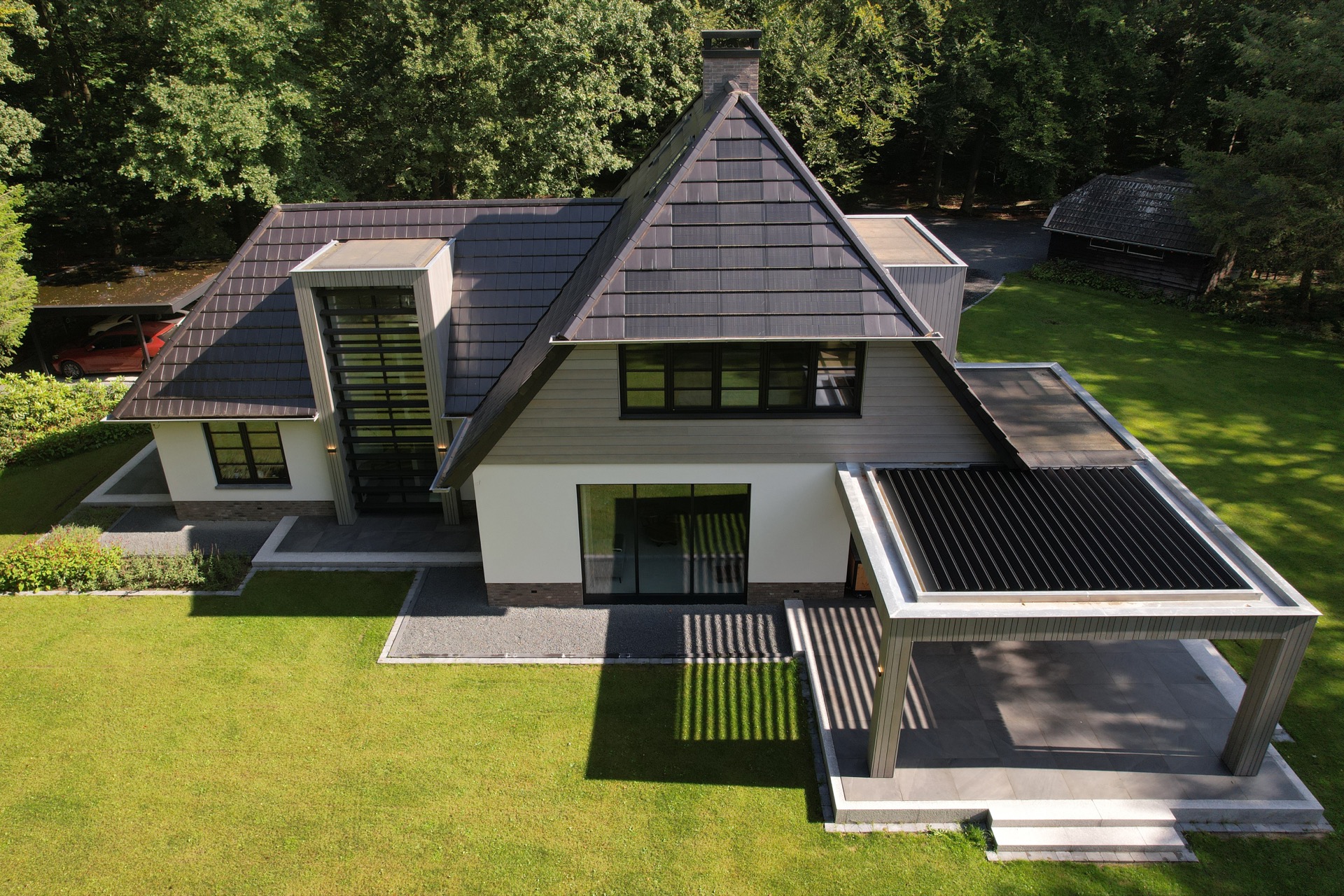
Seen as a whole, the project shows how a modern outdoor cover can sit close to a contemporary home without competing with it. The dark louvered surface, the pale support structure and the low ceramic floor create a clear hierarchy. The roof is the most active part of the composition because it moves, while the floor and frame hold steady beneath it. That contrast between fixed and adjustable parts gives the terrace its character.
Materials that are easy to read from a distance
Aluminium, timber and ceramic tiles each occupy a different role here. Aluminium forms the adjustable roof and the supporting structure, timber appears in selected details, and the tiled floor carries the seating area outward. Because the materials are few, every joint becomes visible. The change from wall to post, from roof to floor, and from terrace to garden is easy to follow. Even from a wide view, the project stays legible.
The result is not a closed pavilion, but a light structure that extends daily use outside. It offers shade and weather protection when needed, yet keeps the terrace open to daylight and ventilation when the slats are adjusted. For a house with clear architectural lines, that response is practical as well as visual. The patio cover with louvered roof sits quietly against the building, while the movement of the louvers gives it a functional role throughout the season.
Photography: Jaro van Meerten That makes the modern patio cover with louvered roof part of the architectural character rather than a loose finish.
Want to see more of Livium? View the page of Livium for even more great projects and company information.


.png)