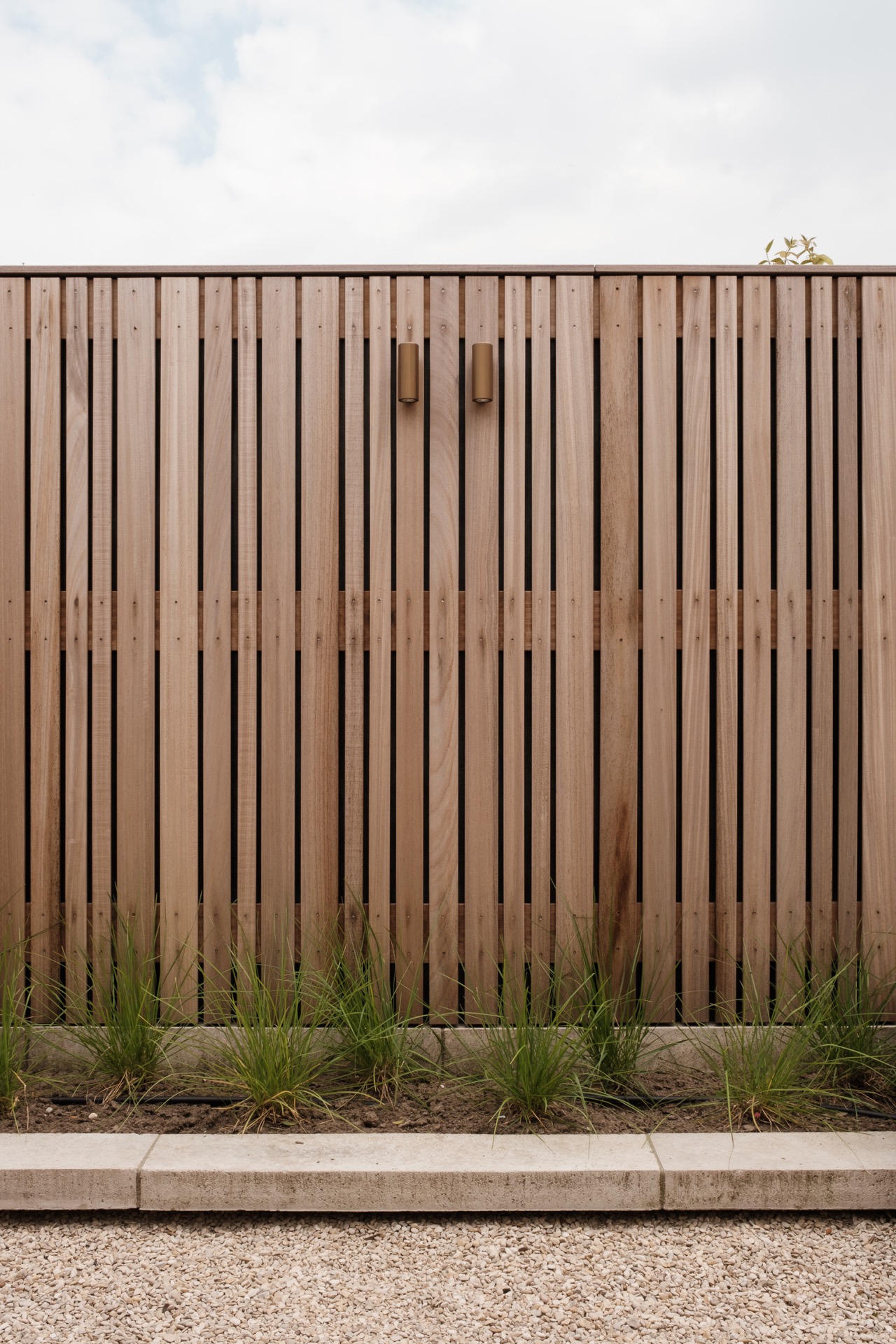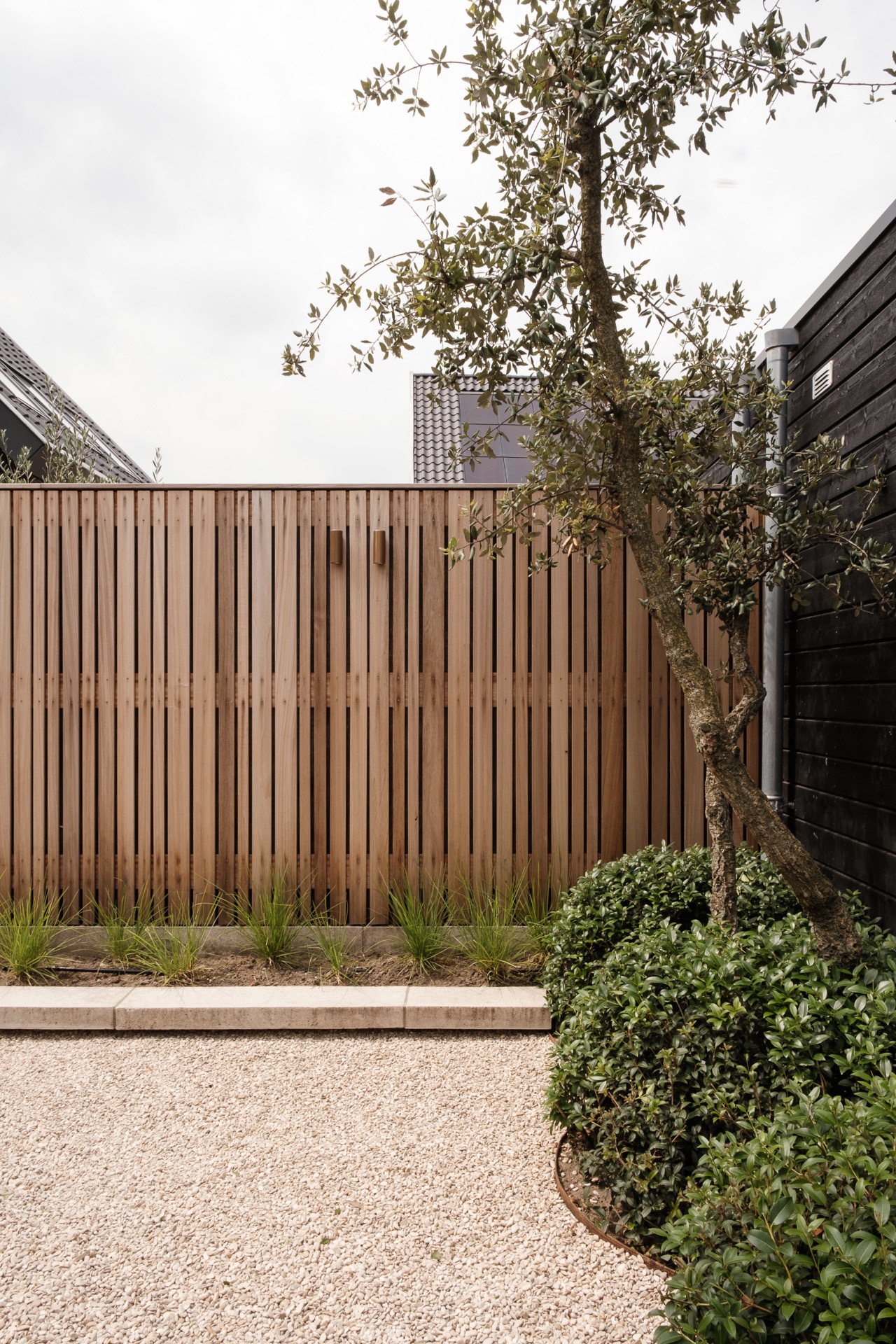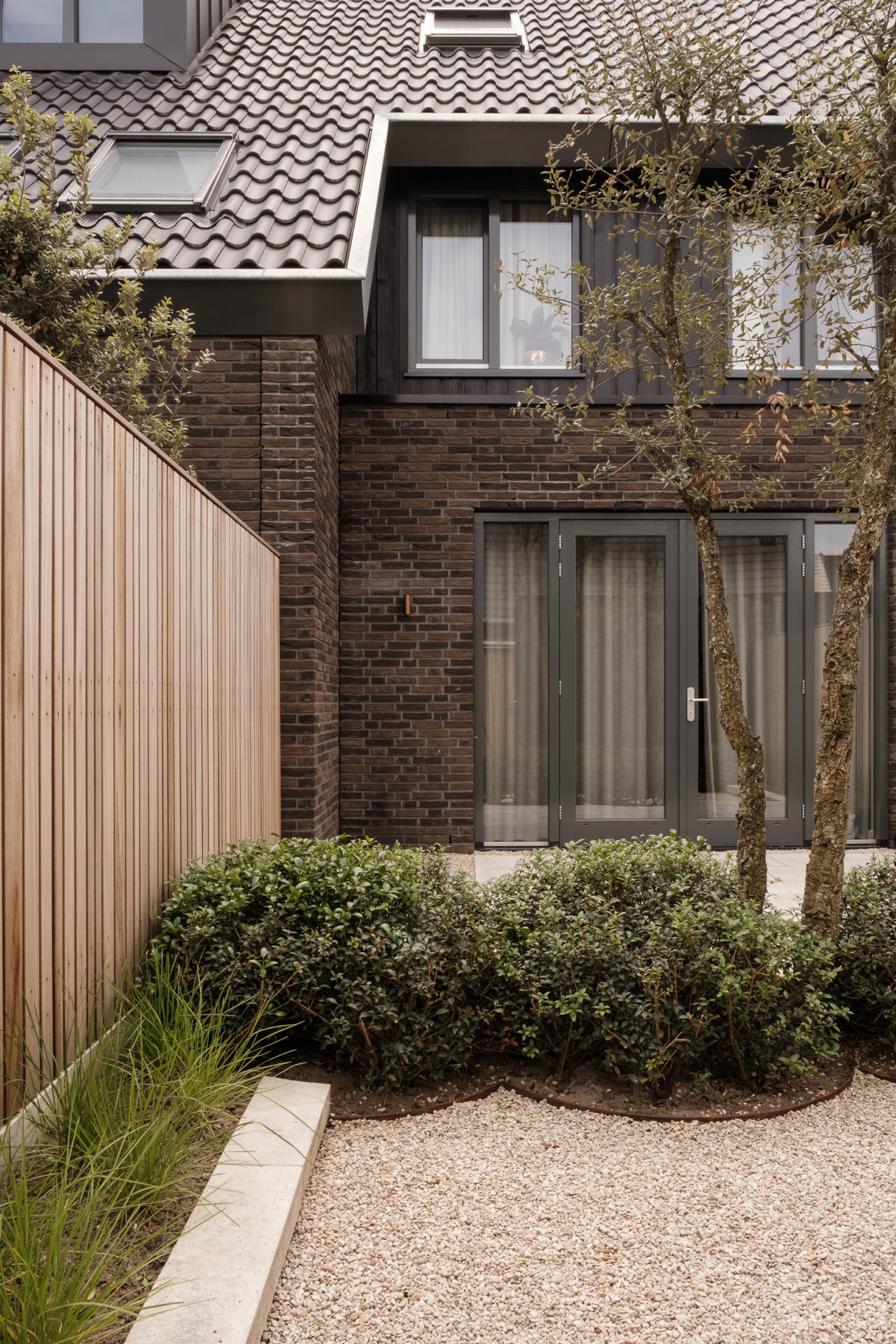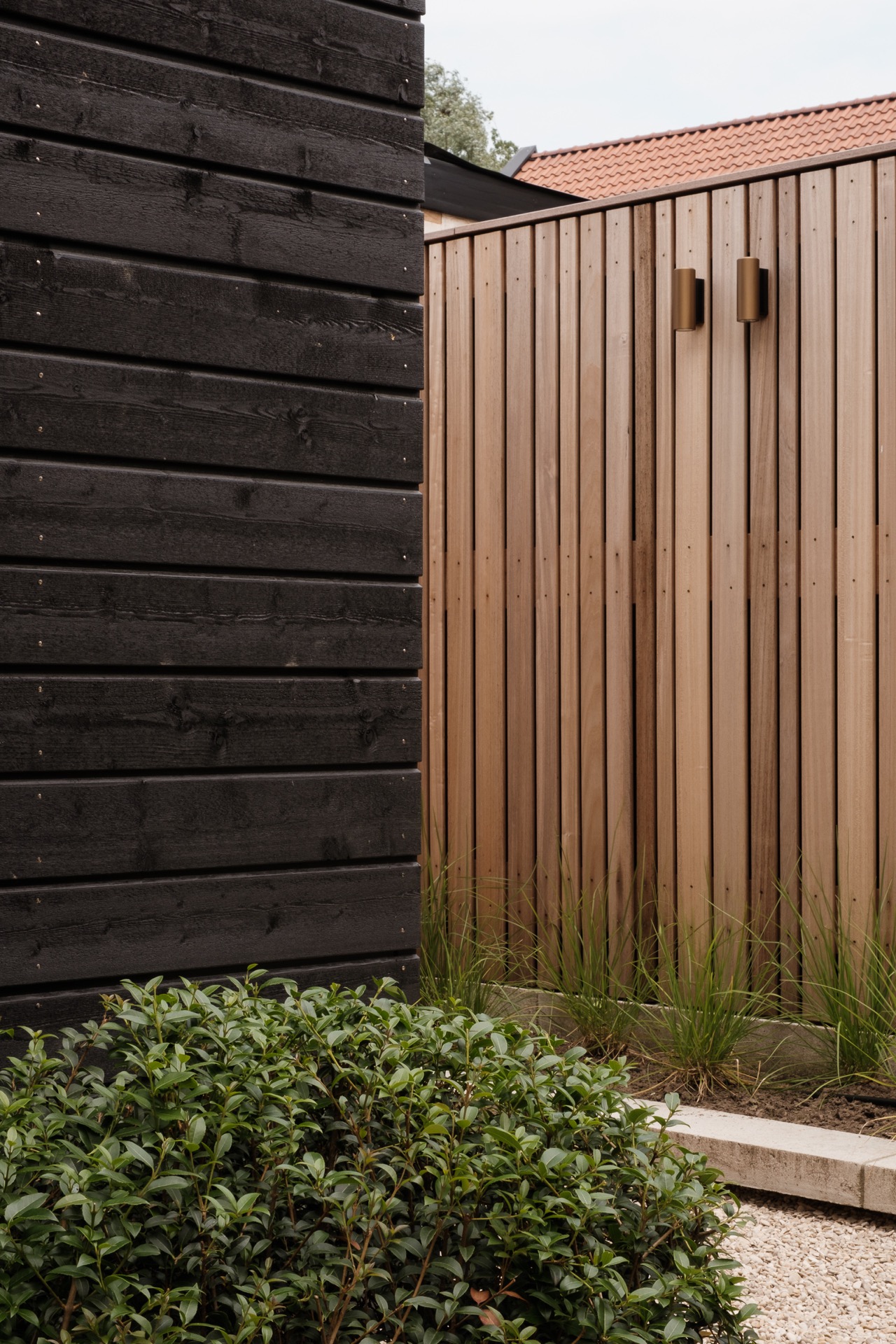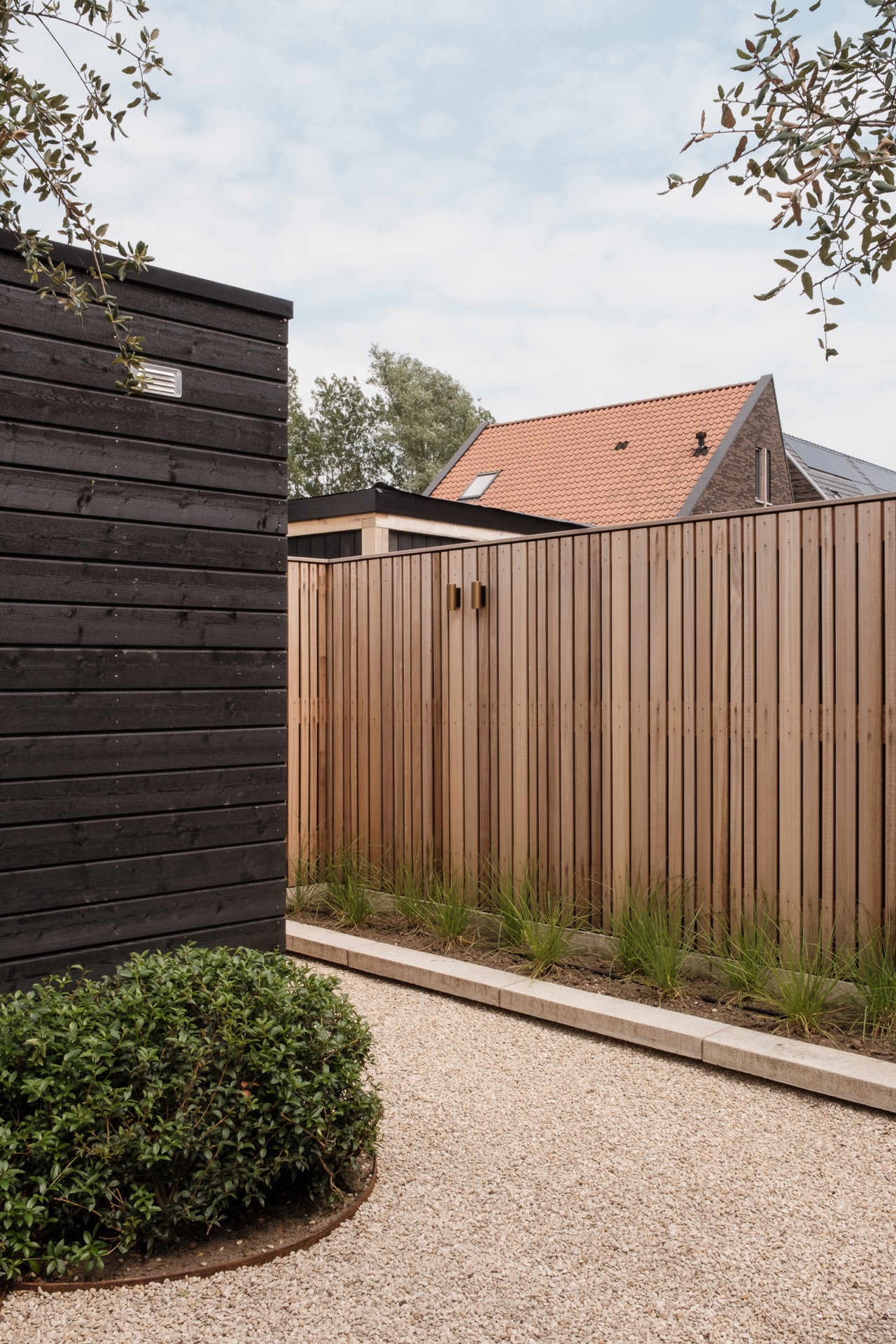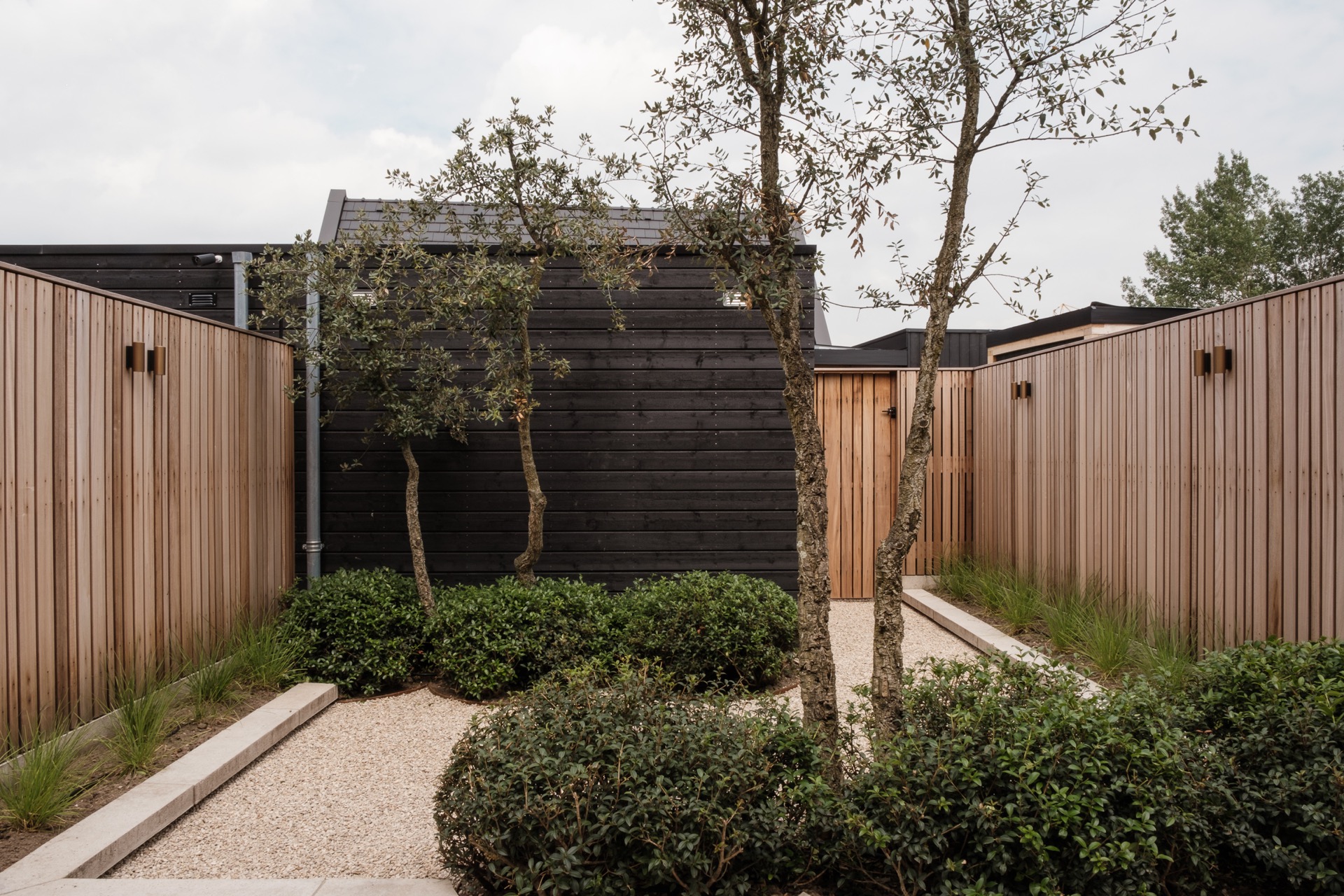






The urban garden ideas is immediately visible in the way the project is framed. At the heart of this outdoor space, dark wooden slats line the fence and façades, punctuated by the crisp green of evergreen trees that maintain their foliage throughout the seasons. The contrast between the vertical timber elements and the soft organic shapes of the planting brings a grounded calm to the garden. Under daylight, textures of wood, brick, and gravel create layers that invite a closer look.
urban garden ideas as the architectural starting point
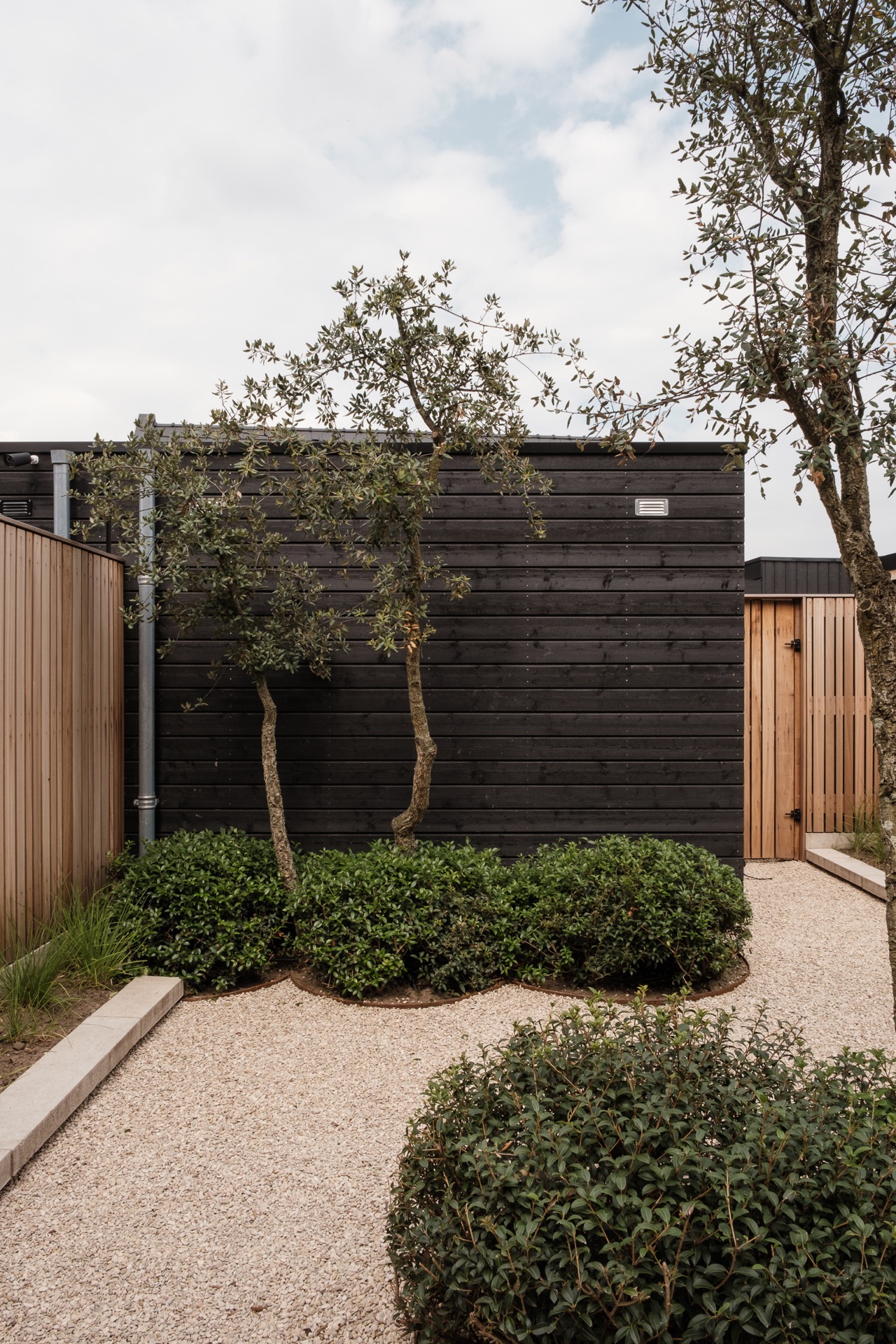
Clusters of trees and shrubs sustain their color and form across seasons, providing a persistent green canopy amid the urban context. Their placement defines boundaries and creates pockets of intimacy without overwhelming the compact garden footprint. The plants’ stature varies to balance openness and enclosure, crafting a sense of quiet enclosure that extends through all seasons.
Wood elements sculpting space and warmth
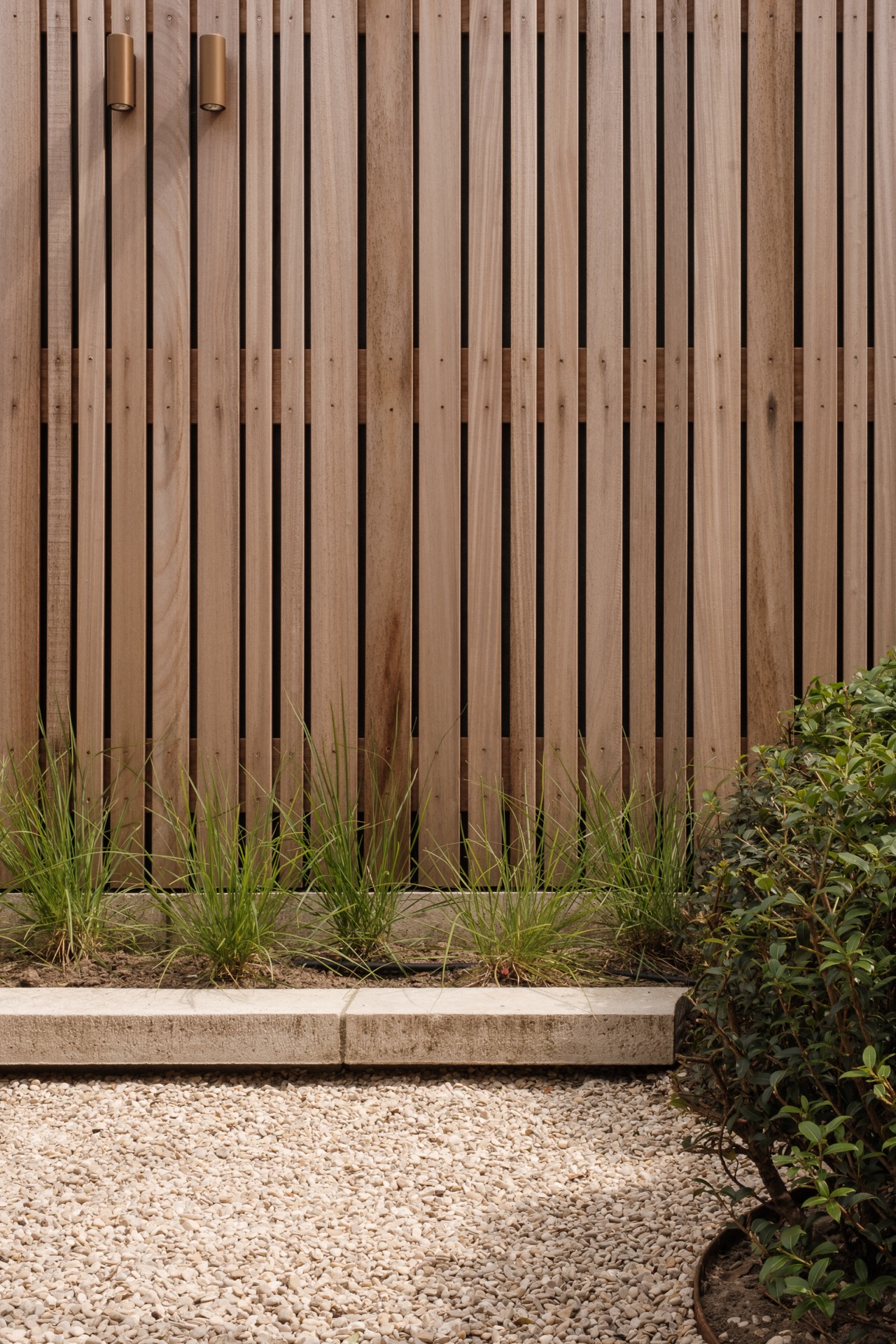
Vertical wooden fencing panels form a textured backdrop along multiple garden edges. The warm tones of the timber contrast with the darker facades, highlighting the layered construction of the garden. Adjacent to the greenery, the wood introduces a tactile quality that catches the light differently over the day, contributing subtle shifts in visual interest without distraction.
Details in cladding and enclosure
The wood’s grain and natural variations surface prominently on the fencing and gate, where the vertical arrangement of planks emphasizes height and boundary definition. The gateway serves as a threshold, opening into a distinct outdoor zone. This wooden enclosure guides movement and frames views within the garden.
Lighting sculpting mood from dusk onward
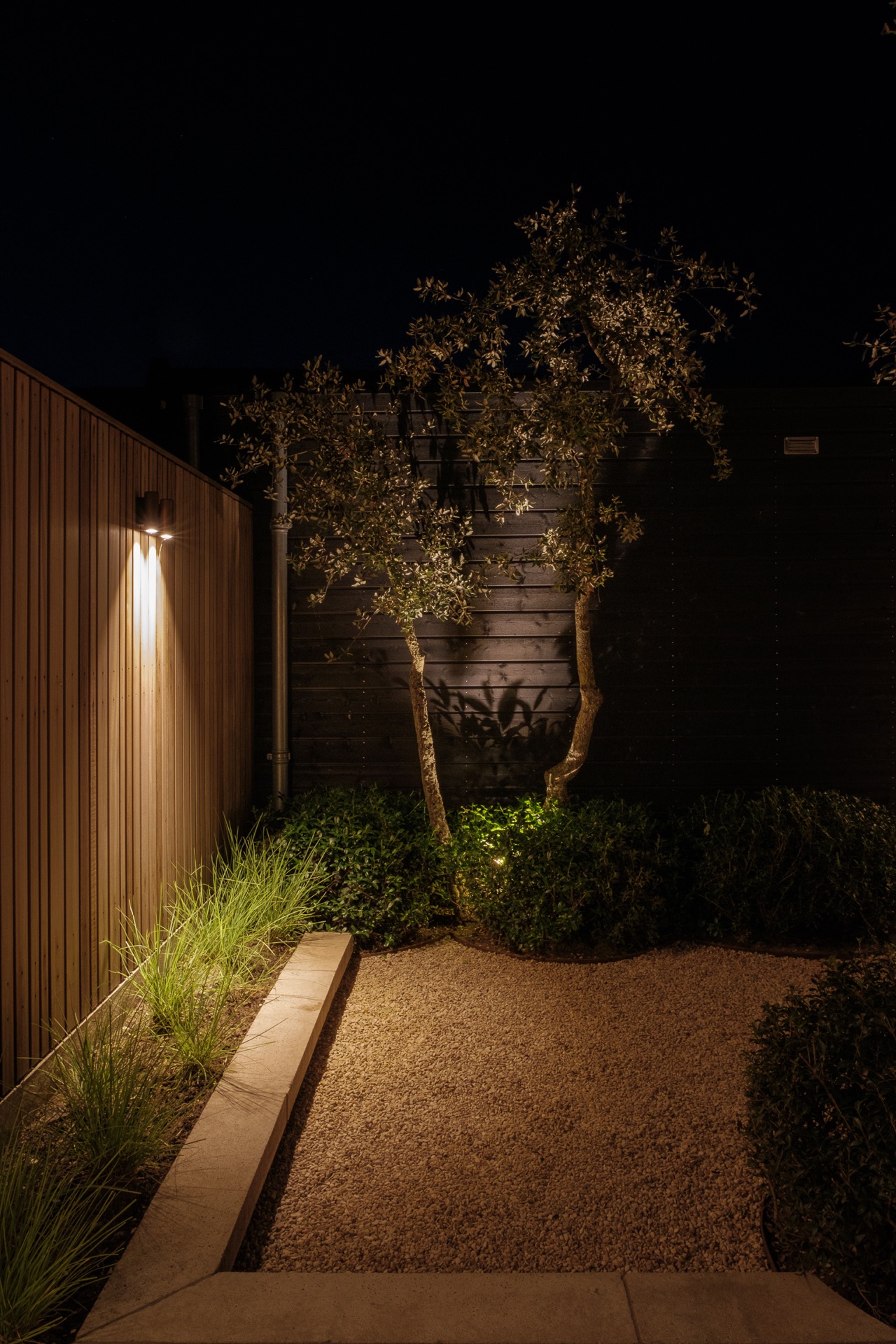
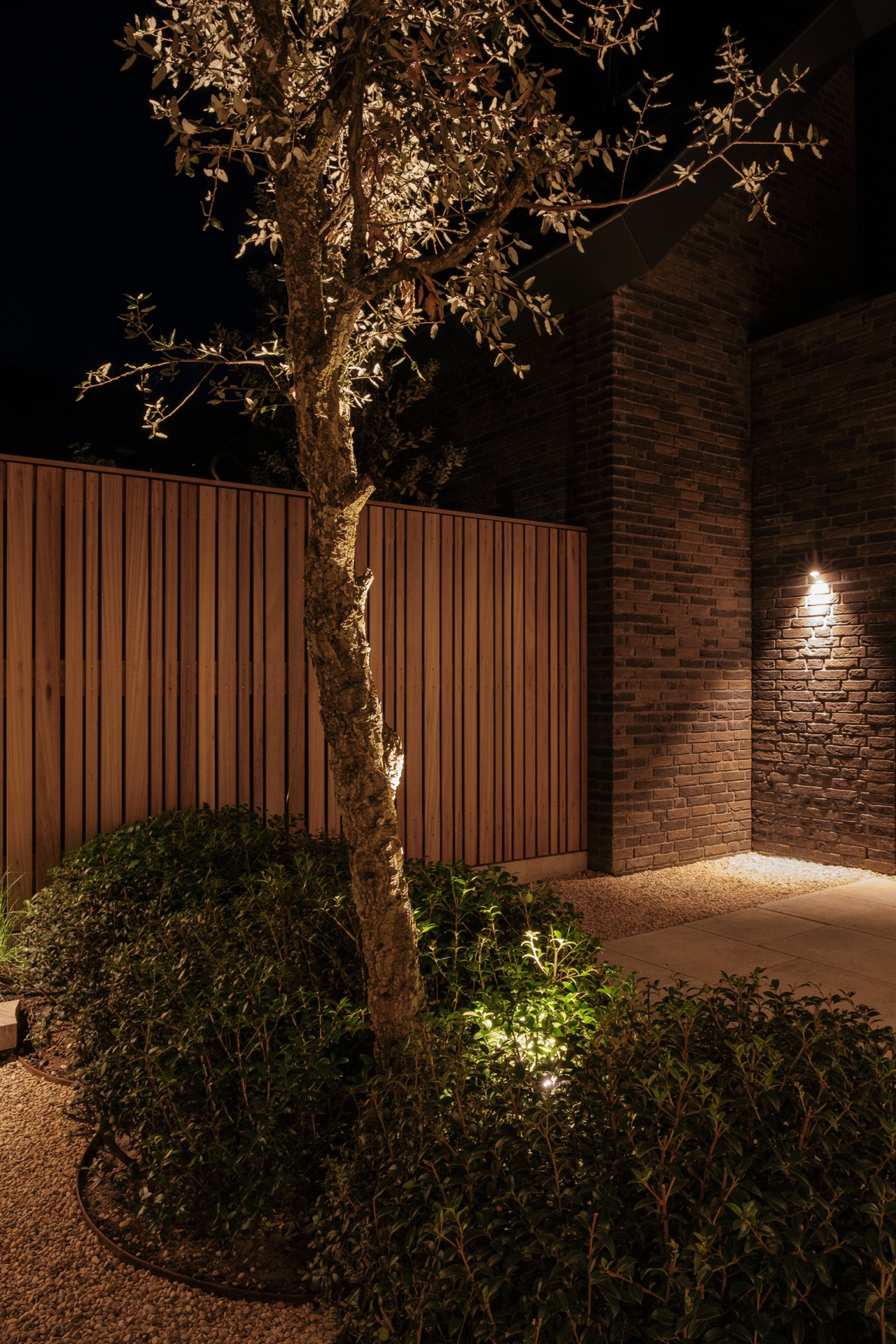
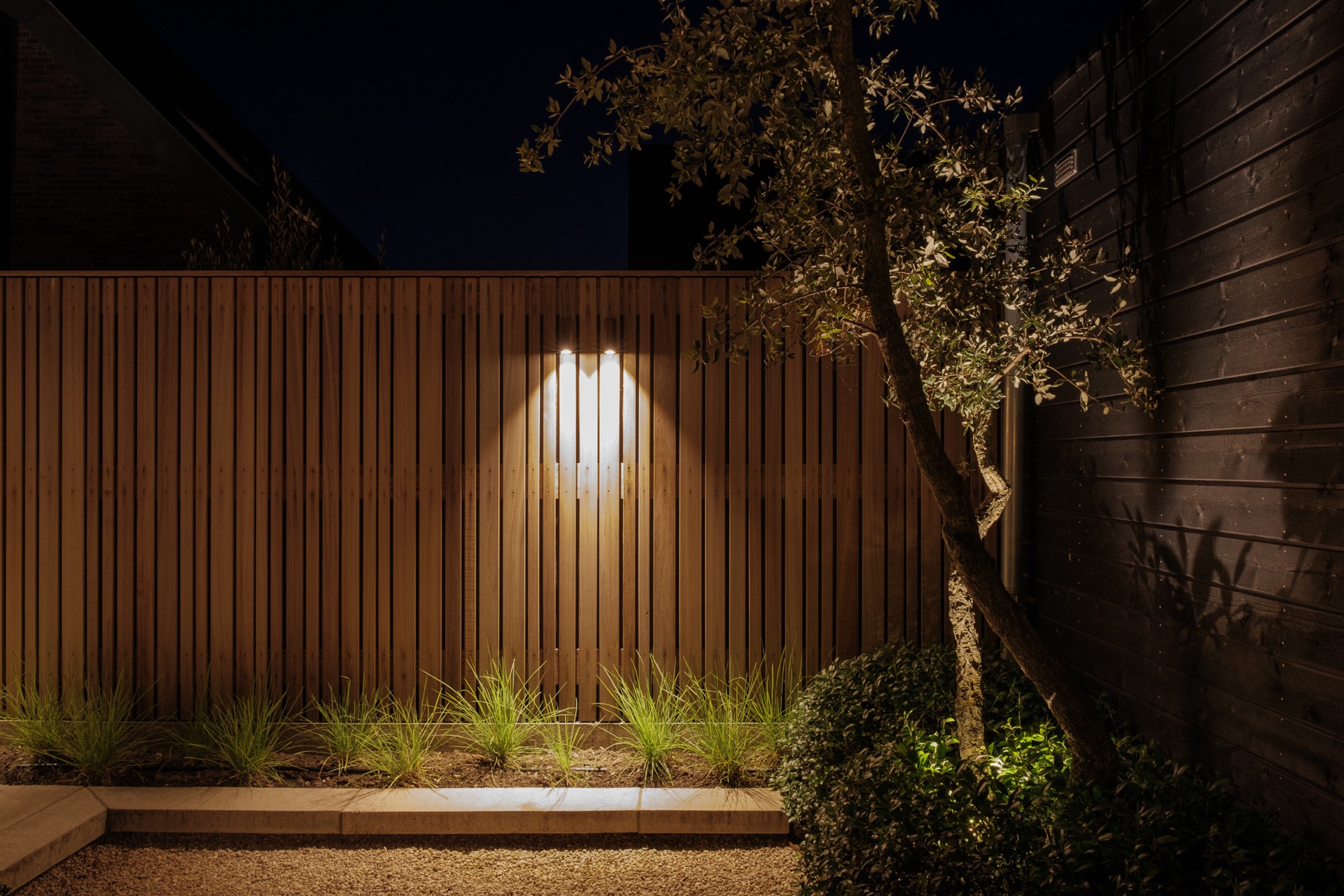
Discrete lighting fixtures integrated into the garden and façades animate the space through evening hours, casting pools of soft illumination between shadows. The lighting system accentuates textures of the timber and leaf surfaces, layering depth into the darkened garden. The interplay of light and shadow marks transitions and invites nocturnal use.
Nighttime contrasts and textures
Beneath the glow of subtle garden lamps, the wooden fence takes on an embossed appearance. Shadows form from tree branches and plantings, producing a dynamic but controlled environment. The lighting enriches the spatial experience while respecting the minimalist approach, avoiding excessive brightness.
Material interplay defining subtle complexity
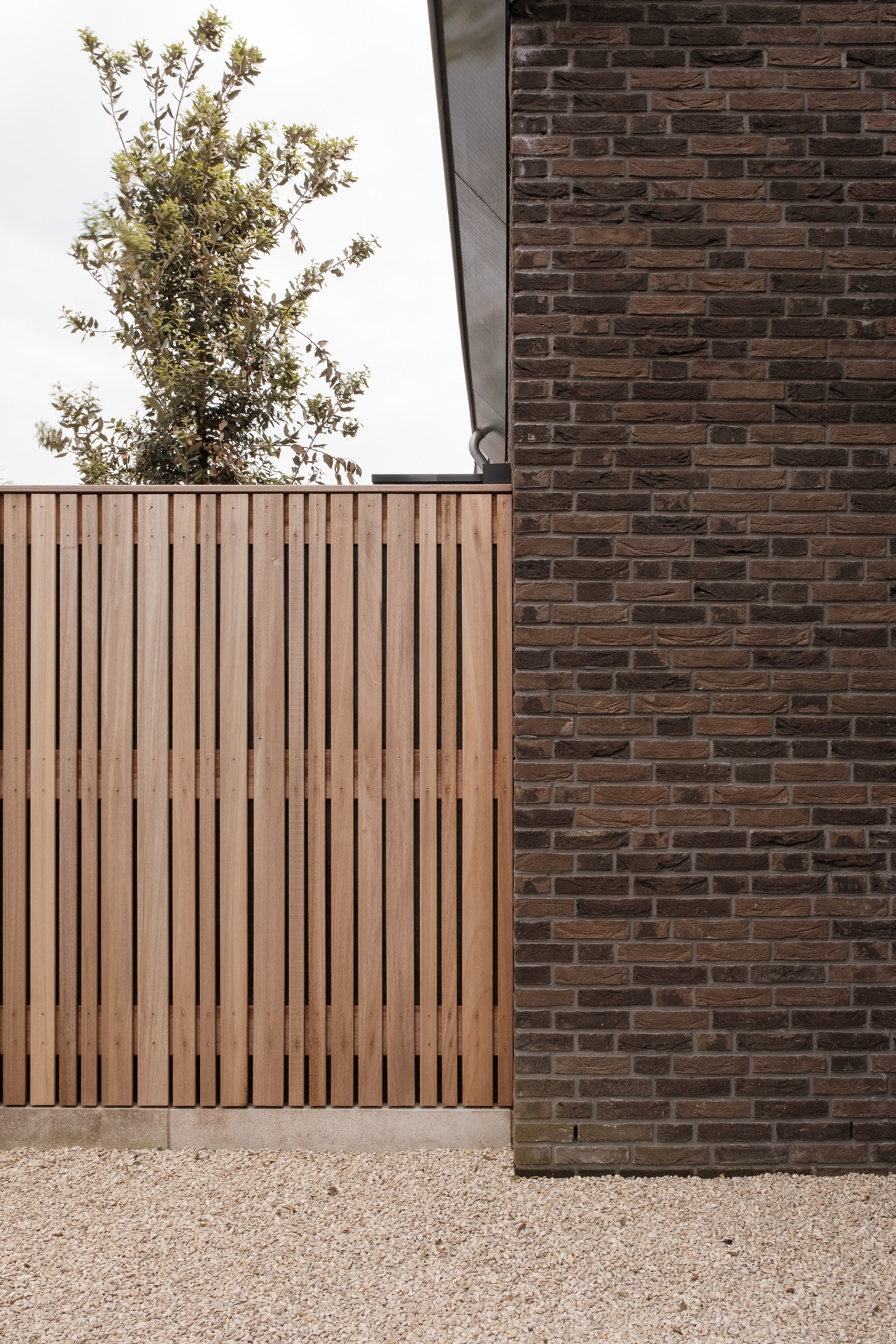
Alongside wood and planting, the garden floor combines gravel and paving materials. The granular surfaces provide a muted reflecting ground that contrasts with smooth timber and the rough texture of brickwork. These material transitions are carefully measured to guide circulation and demarcate functional areas without visual clutter. That makes the urban garden ideas part of the architectural character rather than a loose finish.
Spatial layering in a compact setting
The garden avoids rigid zoning by overlaying vertical and horizontal elements. Trees rise between facades, fences, and plant beds, creating depth beyond the limited footprint. This layering supports a sense of expansiveness despite the compact scale typical of urban gardens.
Balancing enclosure and openness
While fencing and façades enclose the space, openings such as the gate and carefully considered sightlines allow permeability. This prevents the garden from feeling claustrophobic and maintains connections to surrounding environments, blurring boundaries through visual access and planting arrangement.
Natural tones uniting elements
The palette rests on warm wood hues, the deep greens of foliage, and muted grays from gravel and masonry. These natural tones establish an understated unity across elements, emphasizing texture and form over color contrasts. The result is a backdrop that supports quiet reflection rather than commanding attention.
Integrating vegetation within architectural forms
Trees and plants are layered alongside the vertical surfaces of walls and fences, softening the rigid lines and introducing organic irregularity. This adjacency blurs architectural and natural components, composing a garden where built and living materials engage in dialogue.
Lighting and materials as year-round fixtures
Both the selected evergreen vegetation and the fixed lighting design serve as constant markers in different conditions. Through lush days and long nights, the garden reveals shifting atmospheres without the need for seasonal overhaul. This consistency supports ongoing use while emphasizing calmness and visual stability.
Creating tranquility with restrained elements
Simplicity in choices—be it in plant species, timber cladding, or lighting methods—avoids overcomplication. Instead, small details come forward: the texture of vertical wooden slats, the gentle rustle of leaves, the pattern of shadows after sunset. These elements collectively foster a tranquil, measured outdoor environment. That makes the urban garden ideas part of the architectural character rather than a loose finish.
Want to see more of ? View the page of for even more great projects and company information.
.png)