





Villa Featuring Vertical Wood Cladding and Bright Open Living Spaces
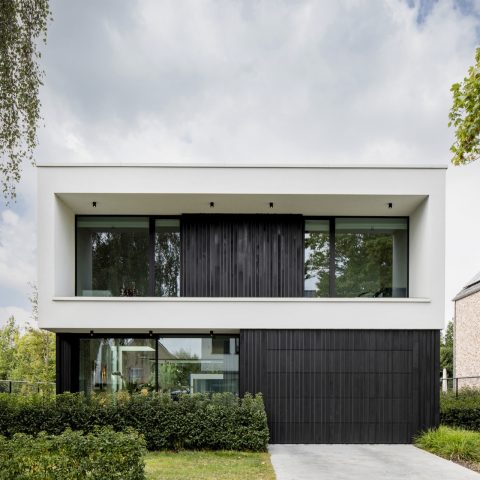
Vertical wood cladding wraps the villa’s exterior, stretching upward along its sharp-edged cubic volumes. The warmly textured timber contrasts with the extensive white stucco surfaces, establishing a rhythm that punctuates the facade and relates the building closely to its wooded hillside setting.
wood cladding as the architectural starting point
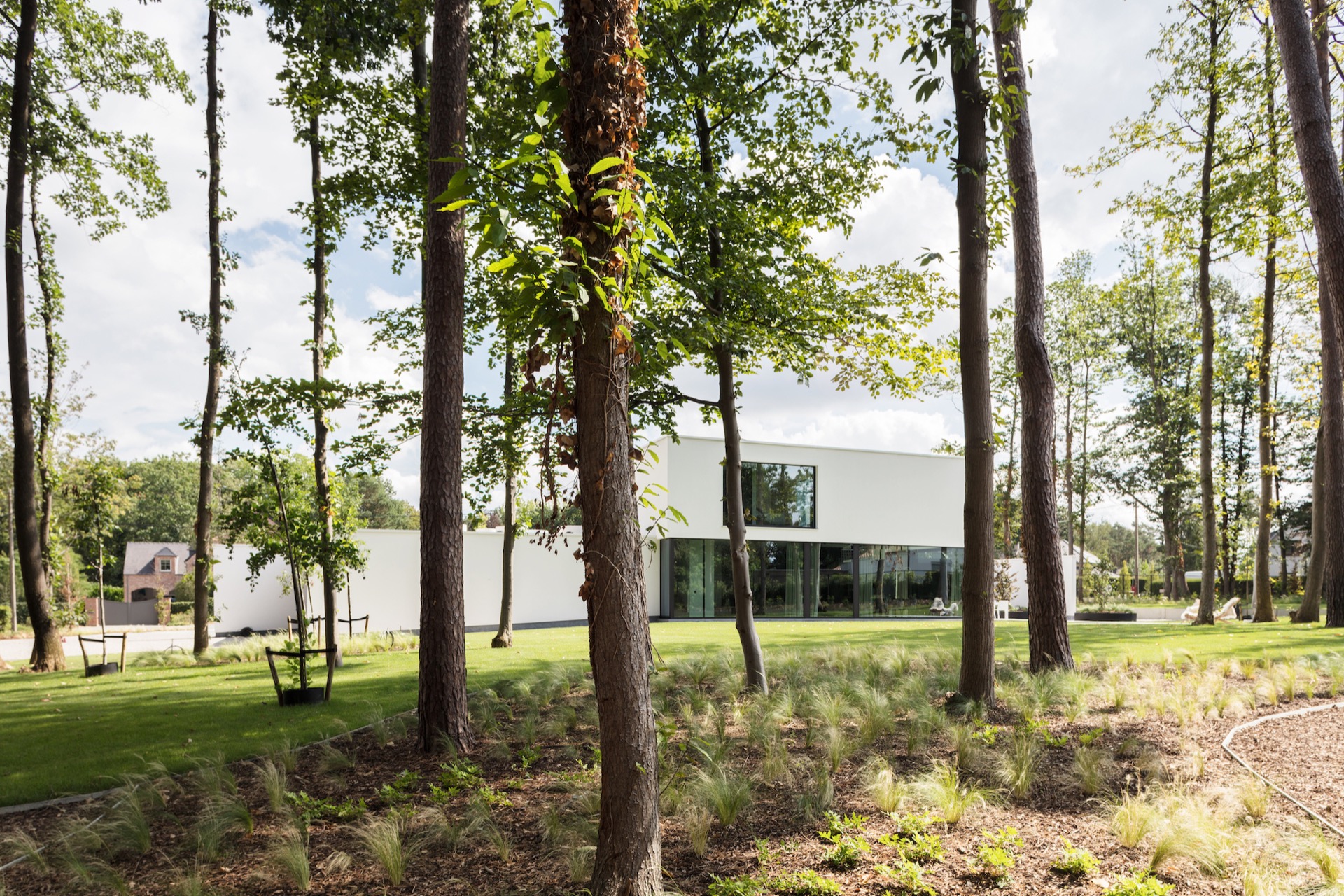
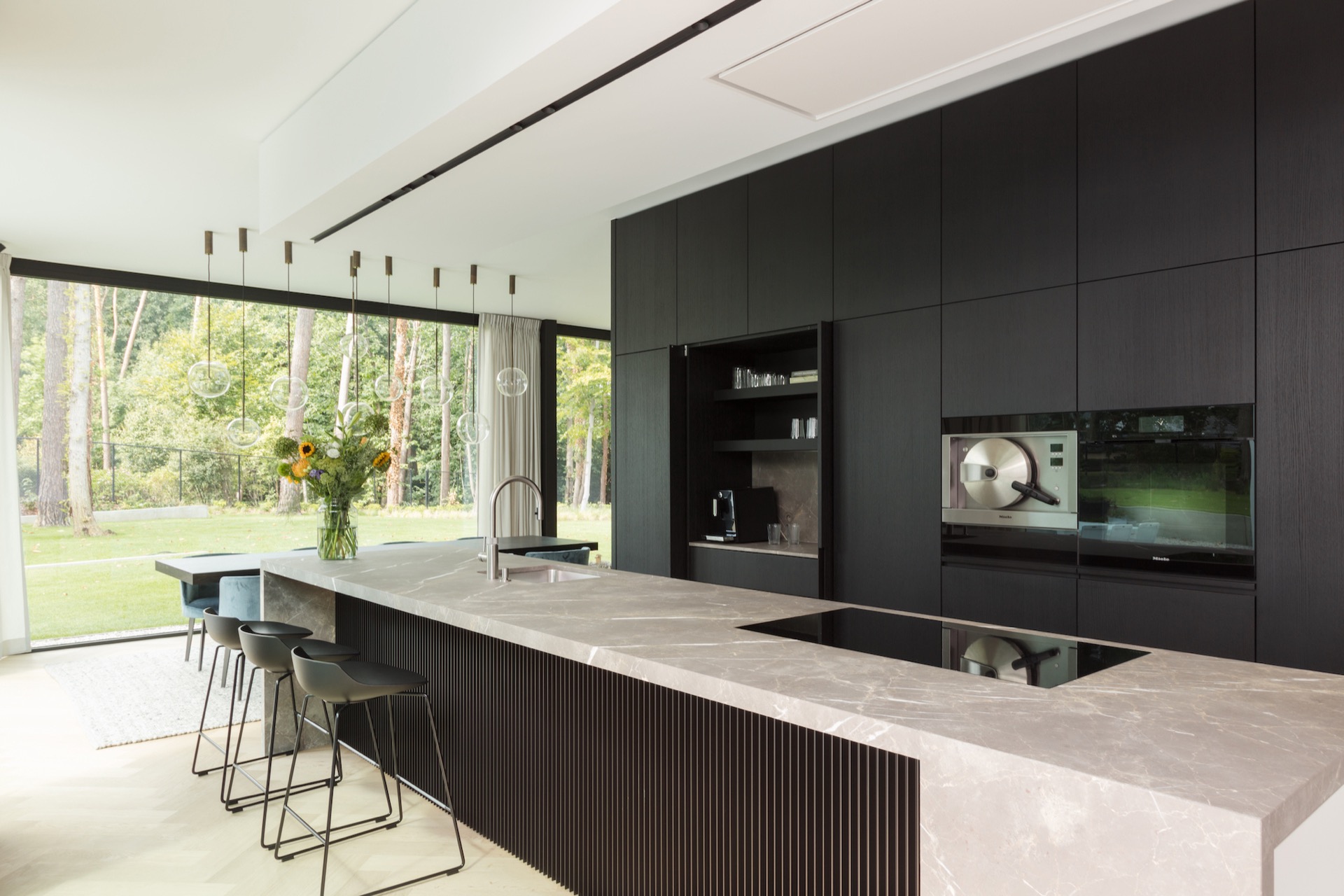
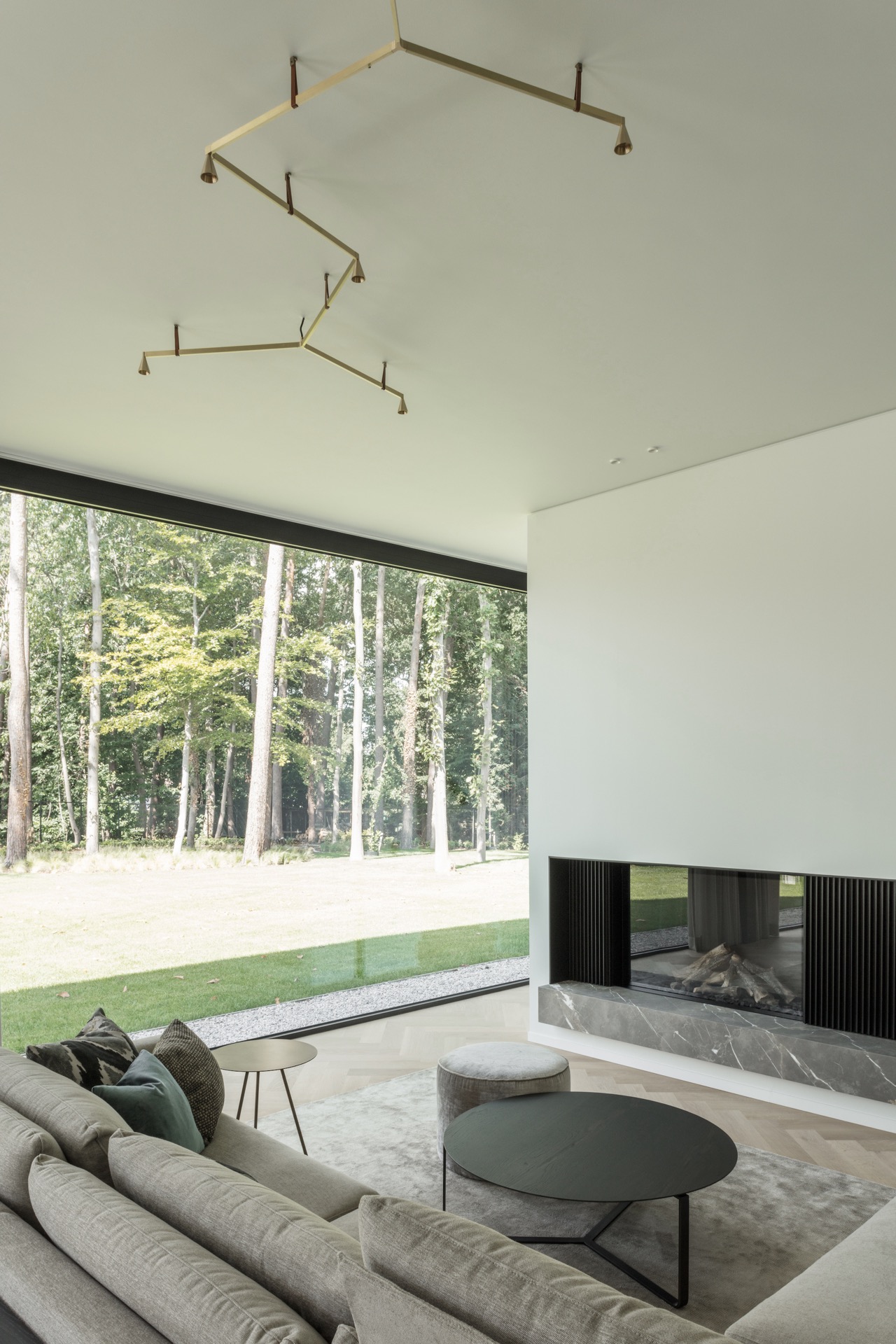
The house extends lengthwise along the gently sloping terrain, where its open-plan layout opens towards the southwest-facing garden. Floor-to-ceiling glass panels frame views of the surrounding trees and bring natural light far inside. The sunlight moves across surfaces through the day, softening the lines between indoor and outdoor areas.
Central Kitchen Island in Natural Stone
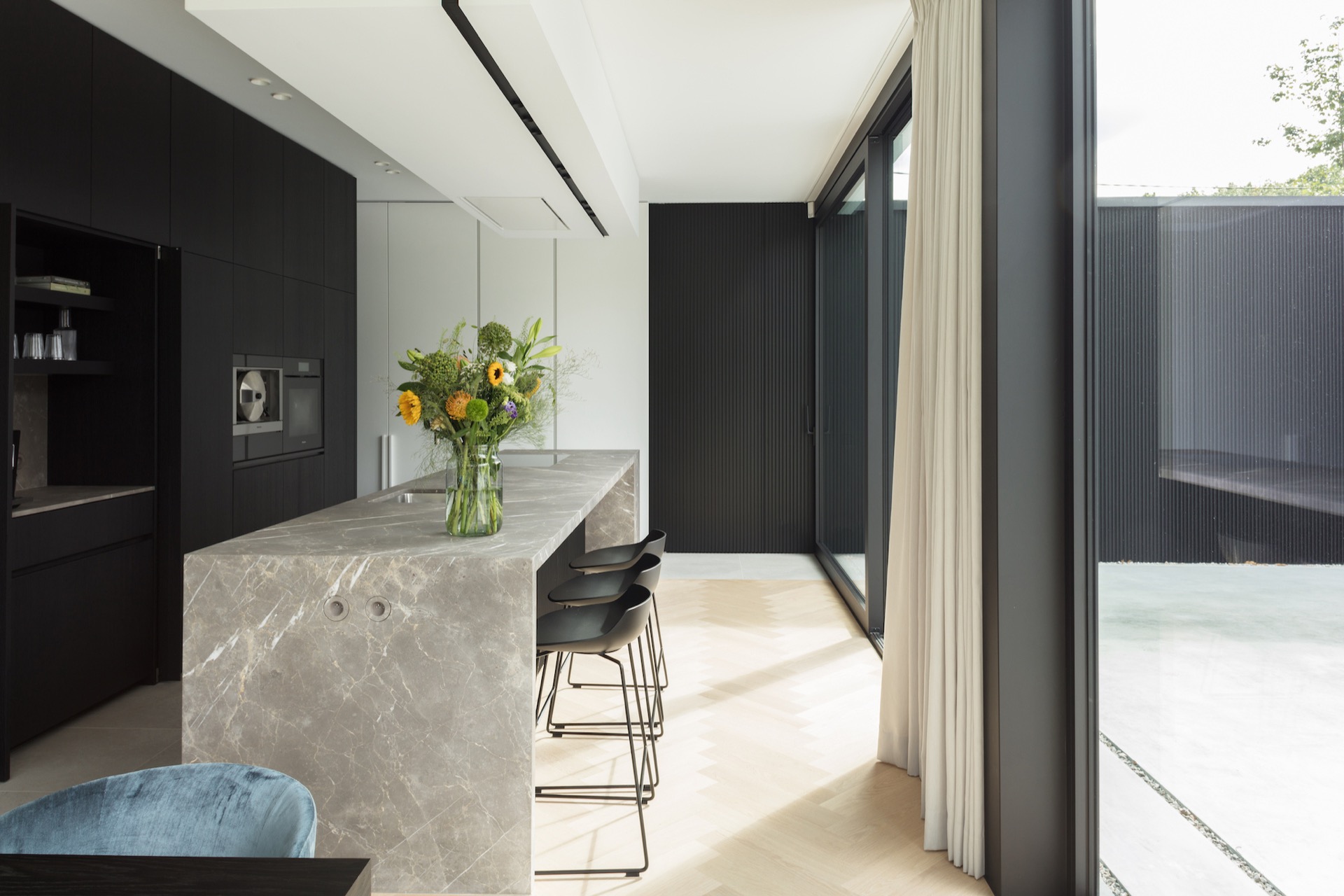
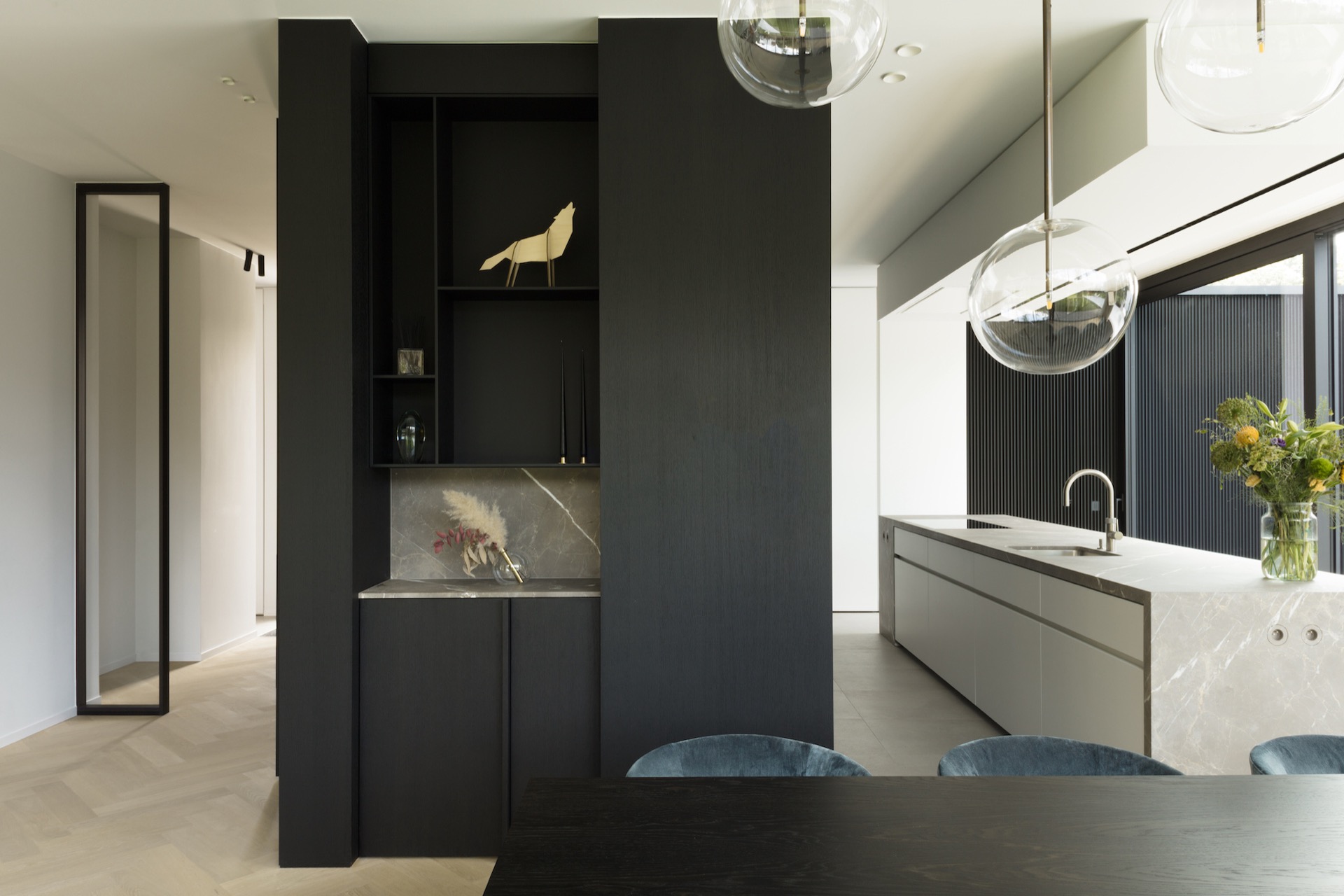
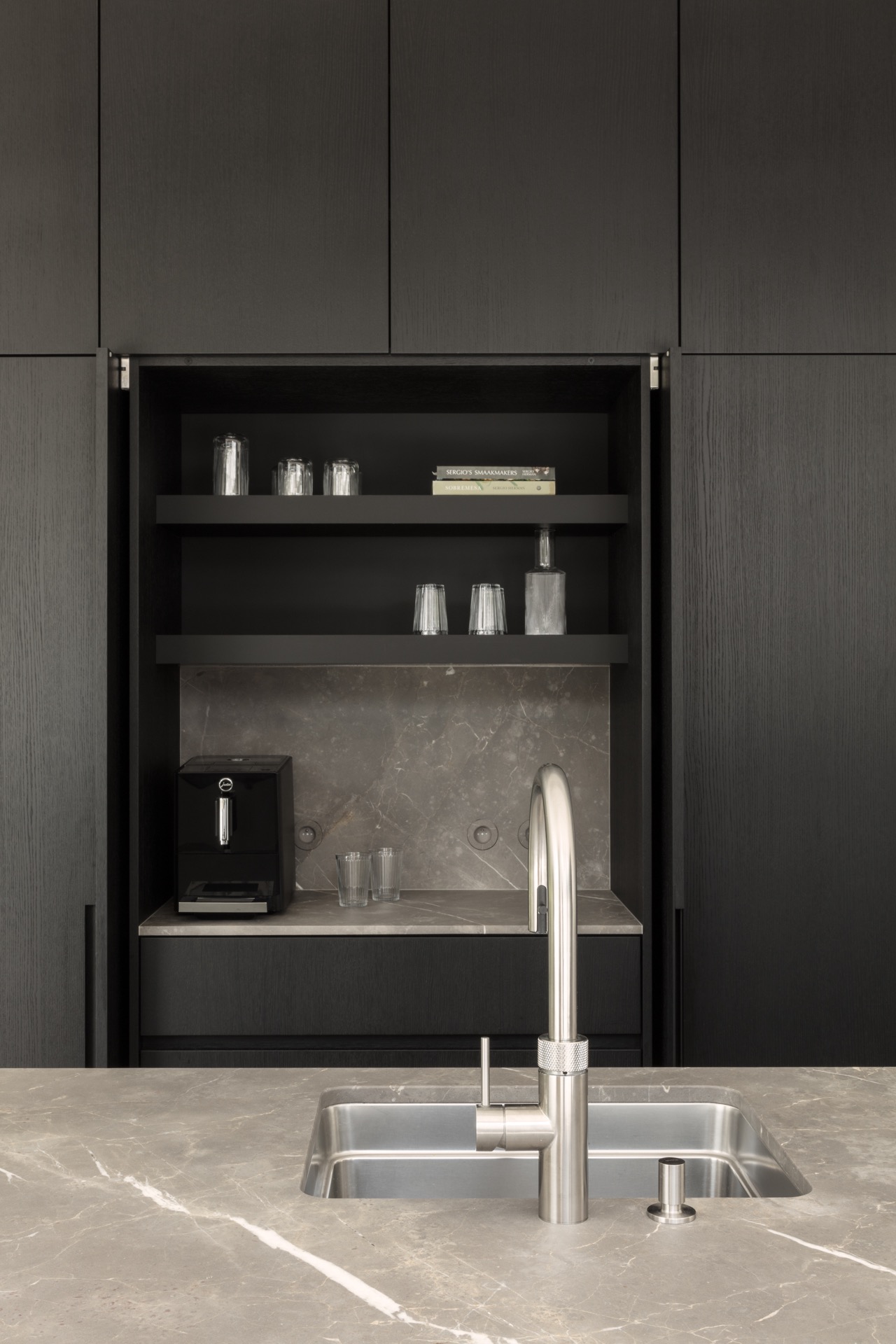
At the core of the open kitchen lies a natural stone island with delicate veining. This surface reflects the vertical lines of the wood cladding outside, creating a subtle material echo. Surrounding cabinetry, finished in a dark wood veneer, grounds the space visually, while maintaining its openness. The tactile differences between stone and matte wood enrich the material palette.
Herringbone-Patterned Parquet Flooring Links Interior and Landscape
The kitchen and living areas are floored with light oak parquet laid in a herringbone pattern. These blocks introduce a measured rhythm beneath the feet and recall the palette of the adjacent forest. The chosen wood tone bridges the interior with the natural environment beyond.
Internal Patio Channels Daylight into Private Rooms
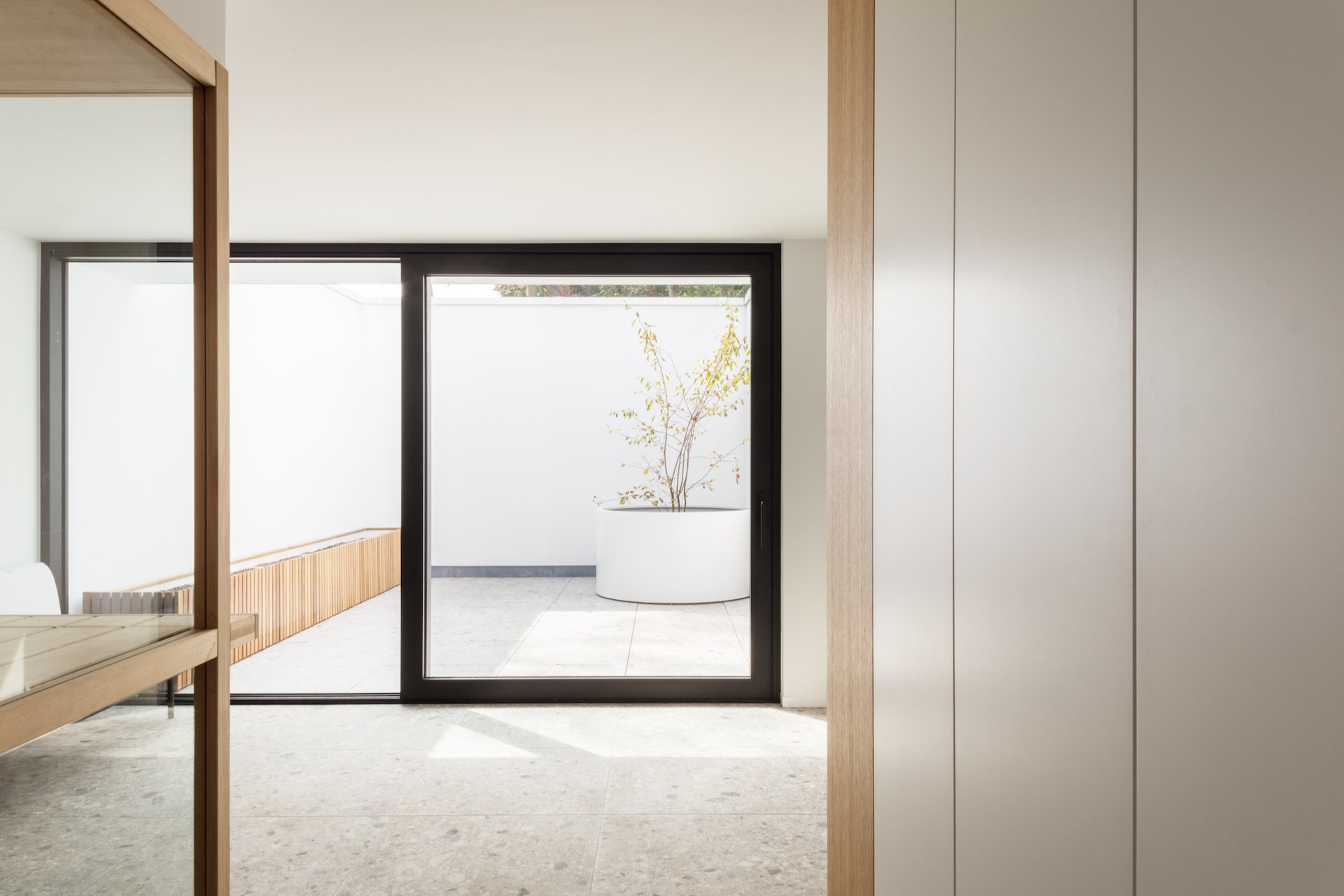
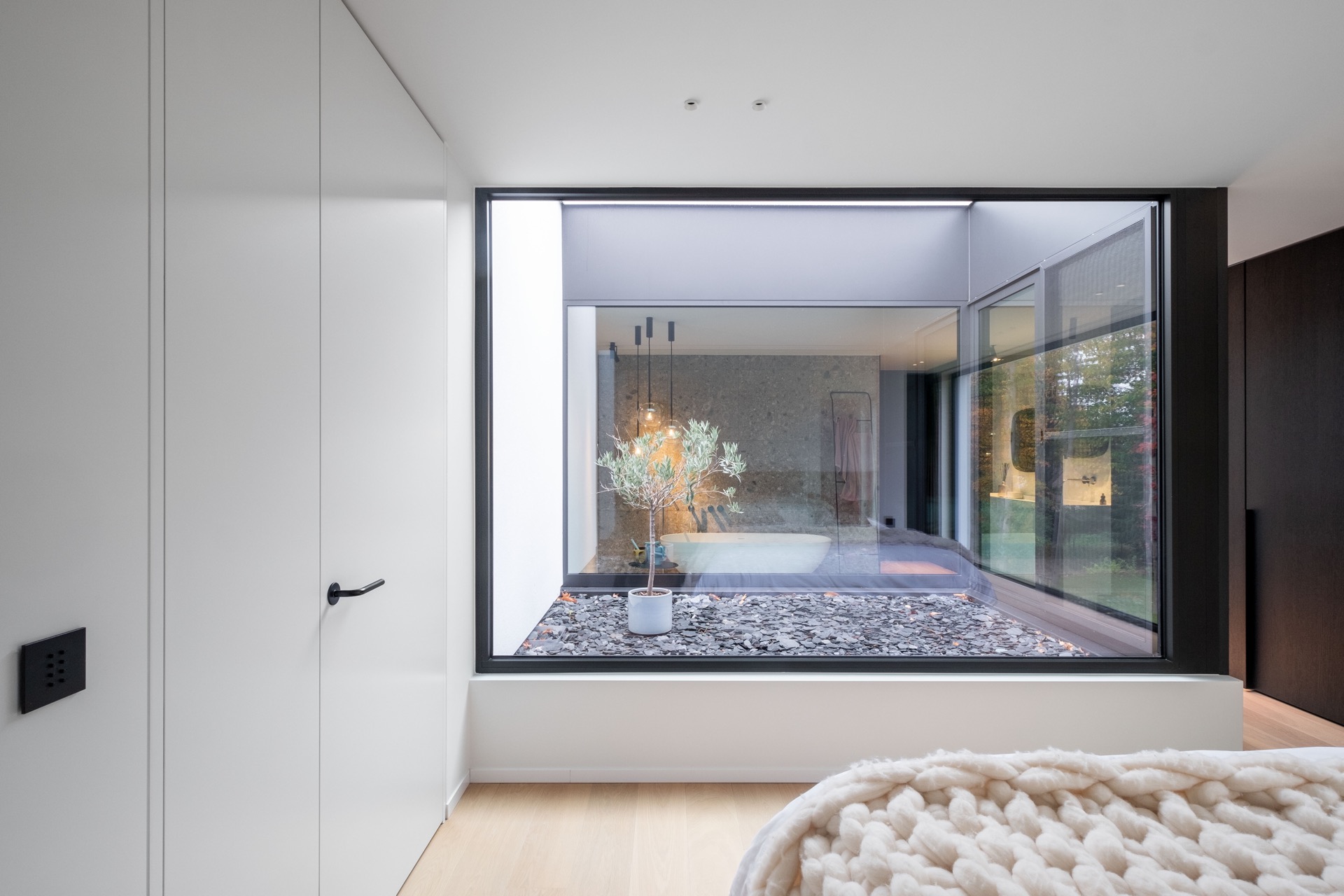
An internal patio, surfaced with large pale stone tiles and bordered by crisp white walls, brings daylight to both the master bedroom and bathroom. Sparse planting tempers this space, preserving privacy without compromising brightness. The patio punctuates the sleeping wing with gentle light and a quiet sense of separation.
wood cladding as the architectural starting point
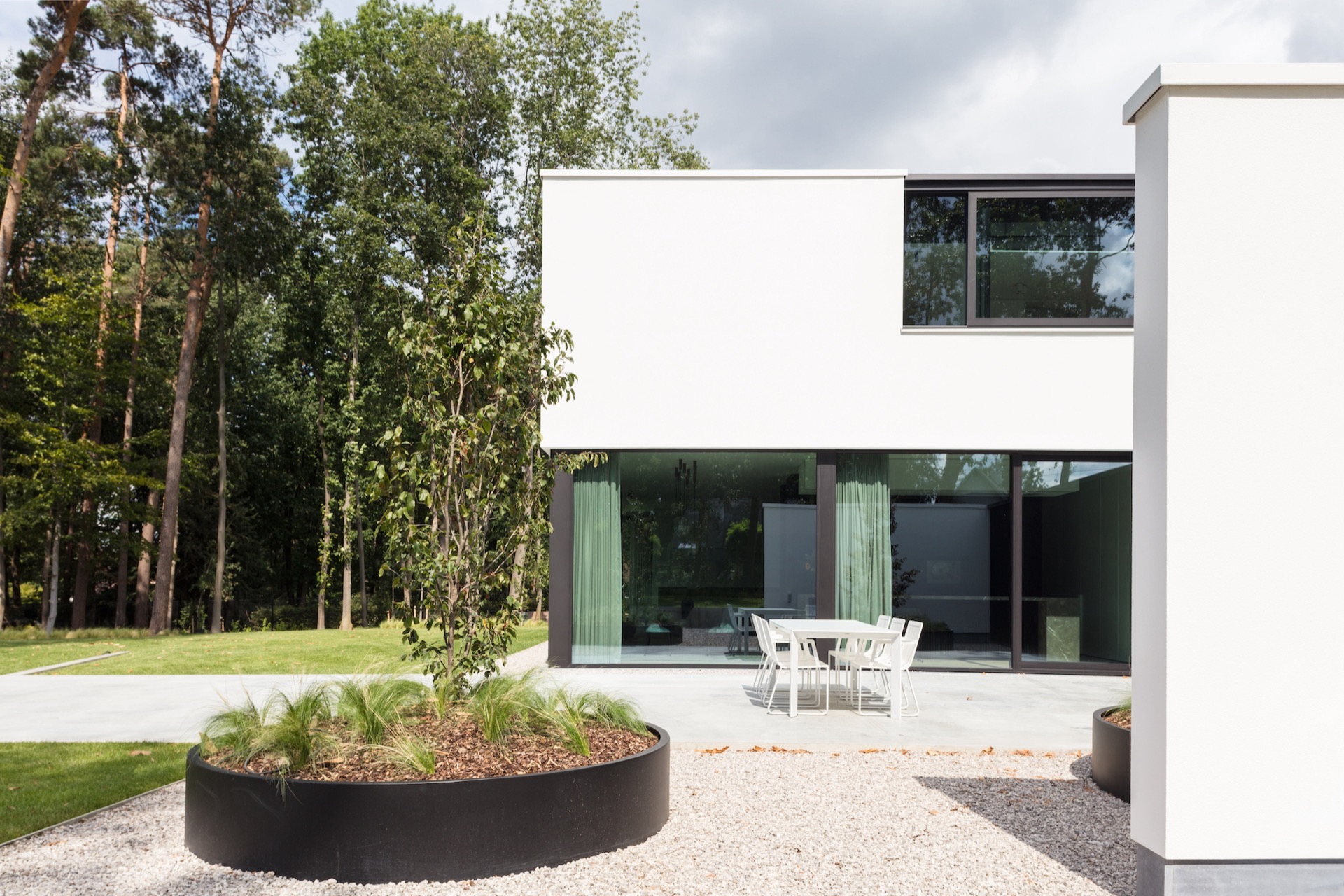
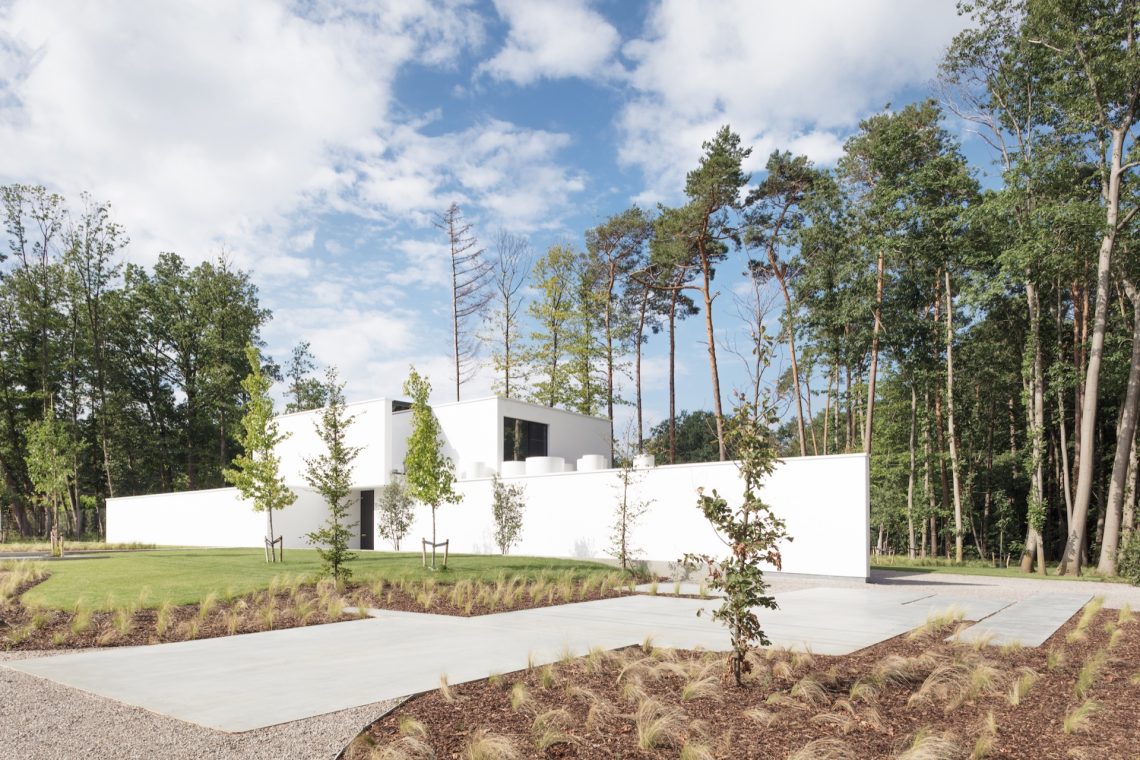
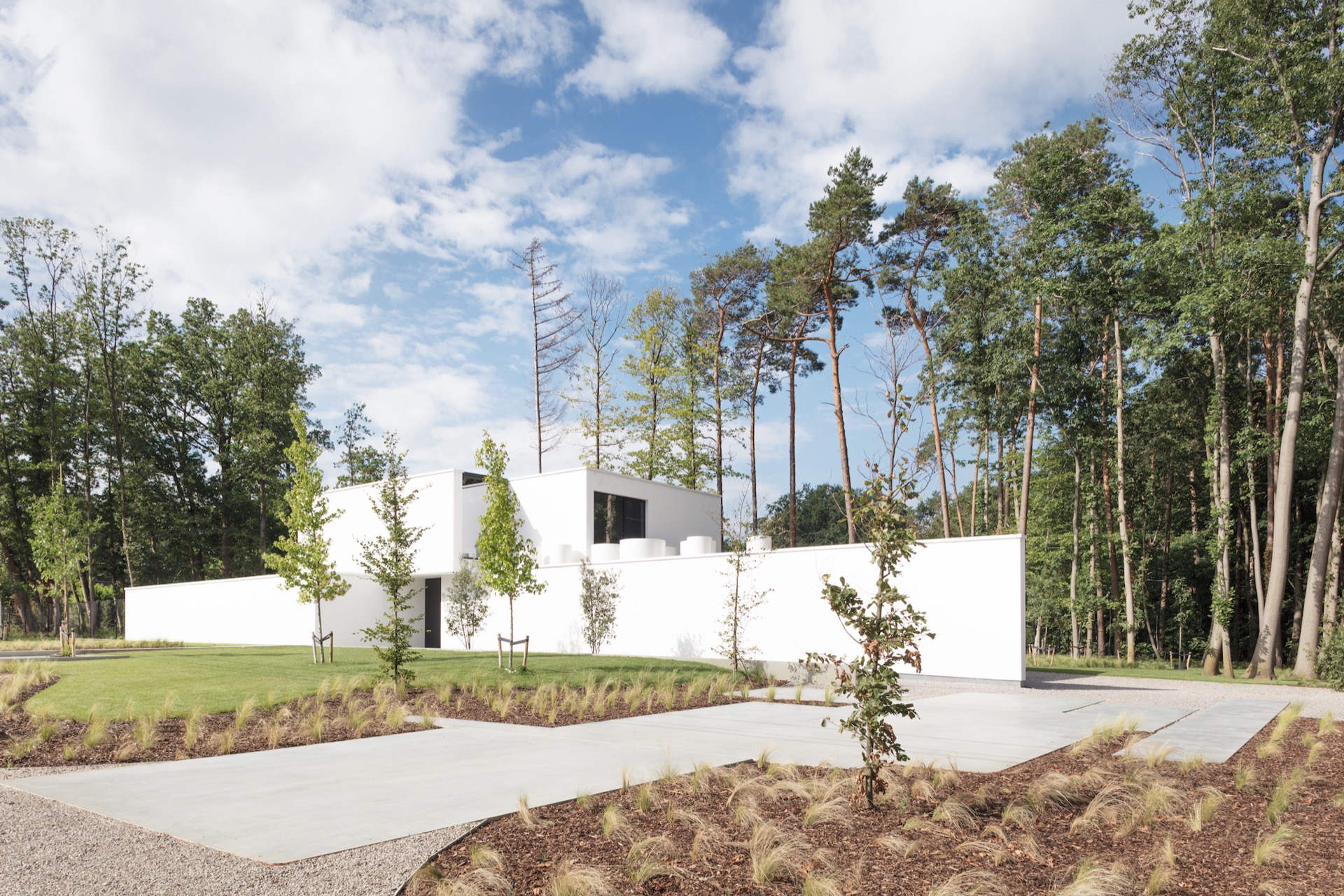
The exterior spaces feature carefully composed horizontal elements that balance the verticality of the wooden facade. Low garden walls screen a secluded terrace and double carport, while gravel pathways intersect with geometric lawns and raised black planters. The garden’s clarity mirrors the villa’s cubic forms.
Wellness Area Incorporates Glass-Walled Sauna
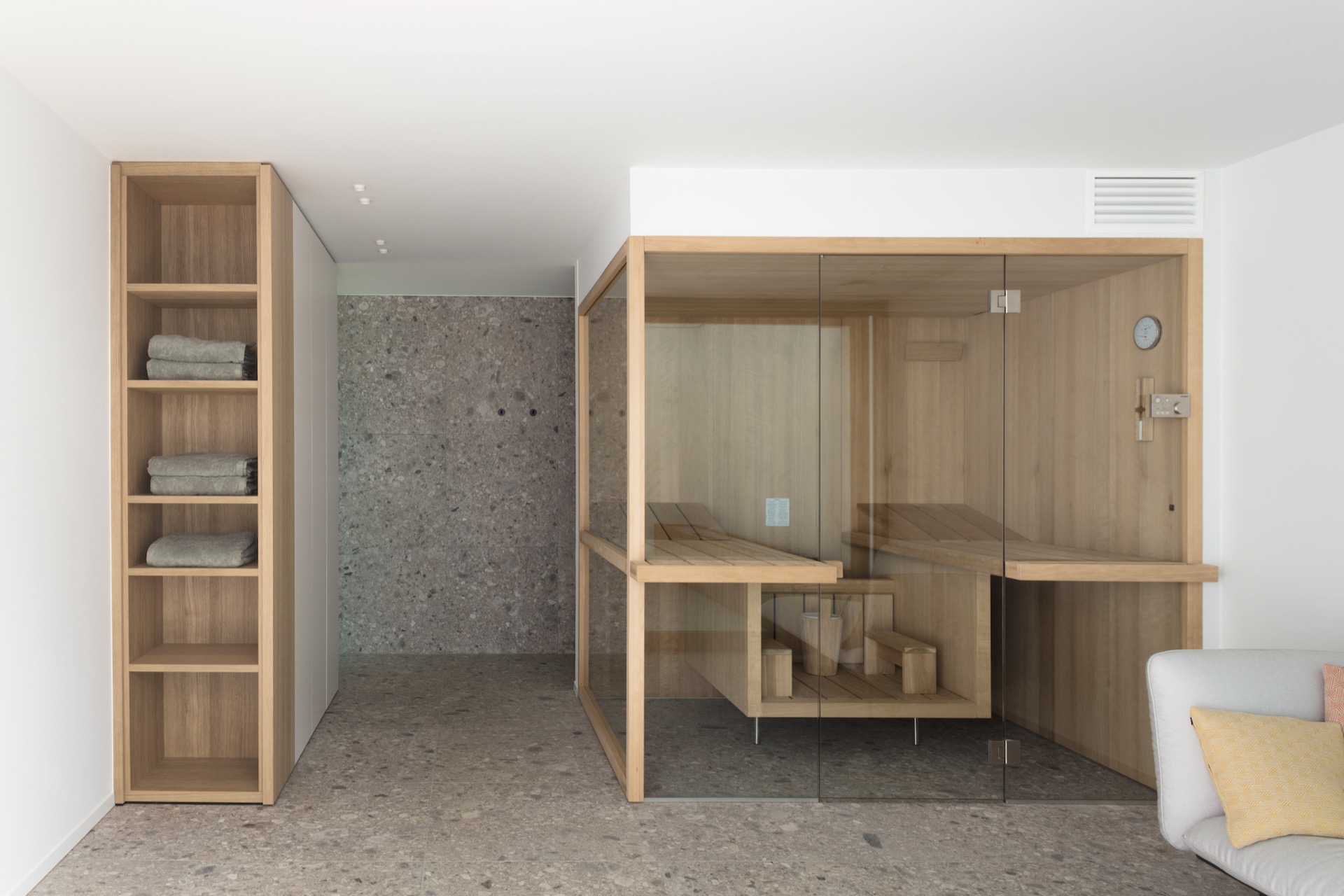
Within the open living zones, a glass-walled sauna occupies a discreet corner, blending transparency with enclosure. Natural stone flooring continues here, reinforcing material continuity. The transparent partitions contain warmth while maintaining visual connection to the garden beyond.
Slender metal-framed sliding doors punctuate the facade, supporting visual and physical continuity between inside and outside. These doors provide flexible enclosure options, allowing rooms to open fully onto terraces or close off as desired.
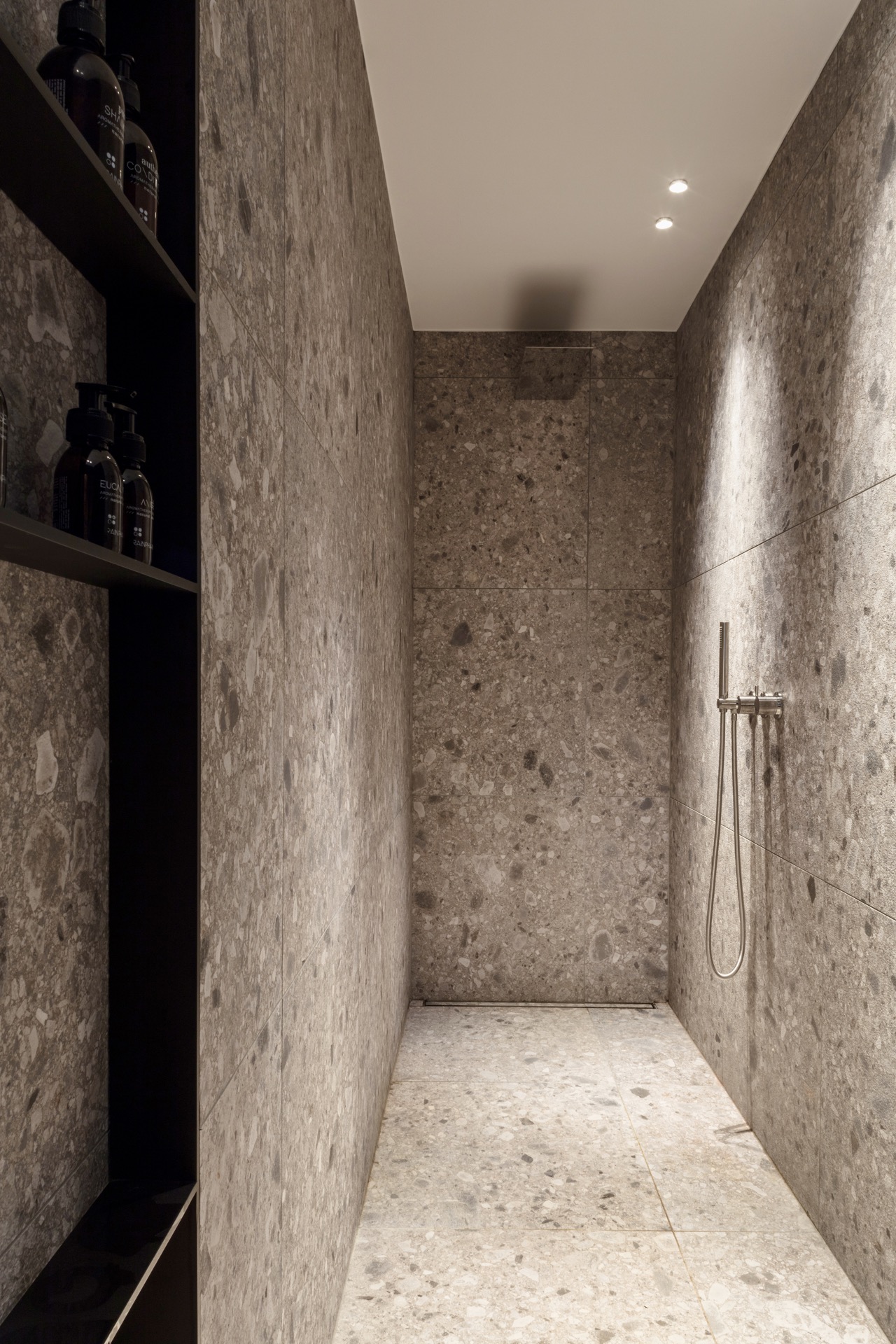
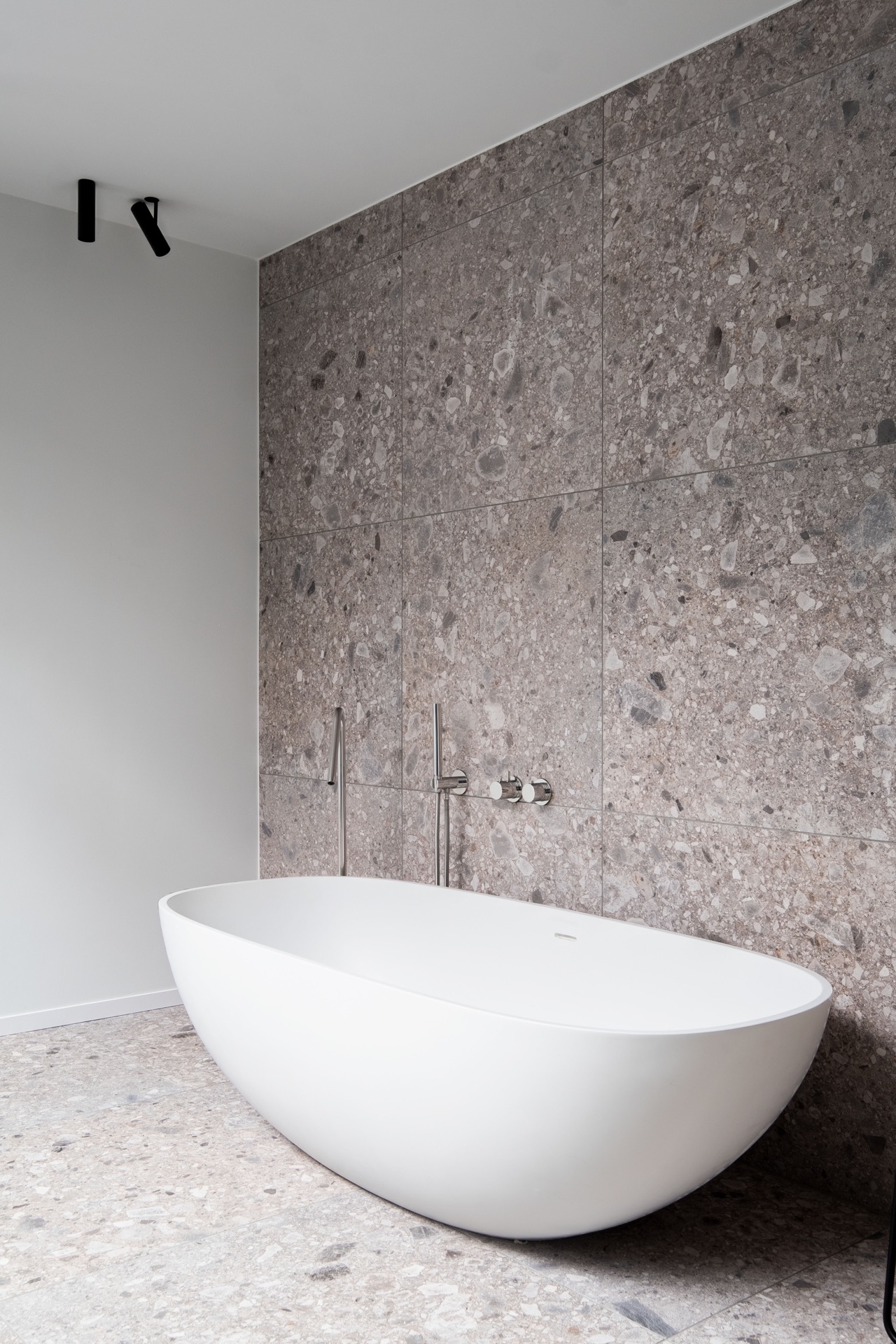
In the bathroom, walls sheathed in light terrazzo create an understated backdrop for a freestanding tub. The stone surfaces reflect soft, diffuse daylight, layering quiet texture without overwhelming the space. Fixtures remain restrained, reinforcing the room’s calm material focus. That makes the wood cladding part of the architectural character rather than a loose finish.
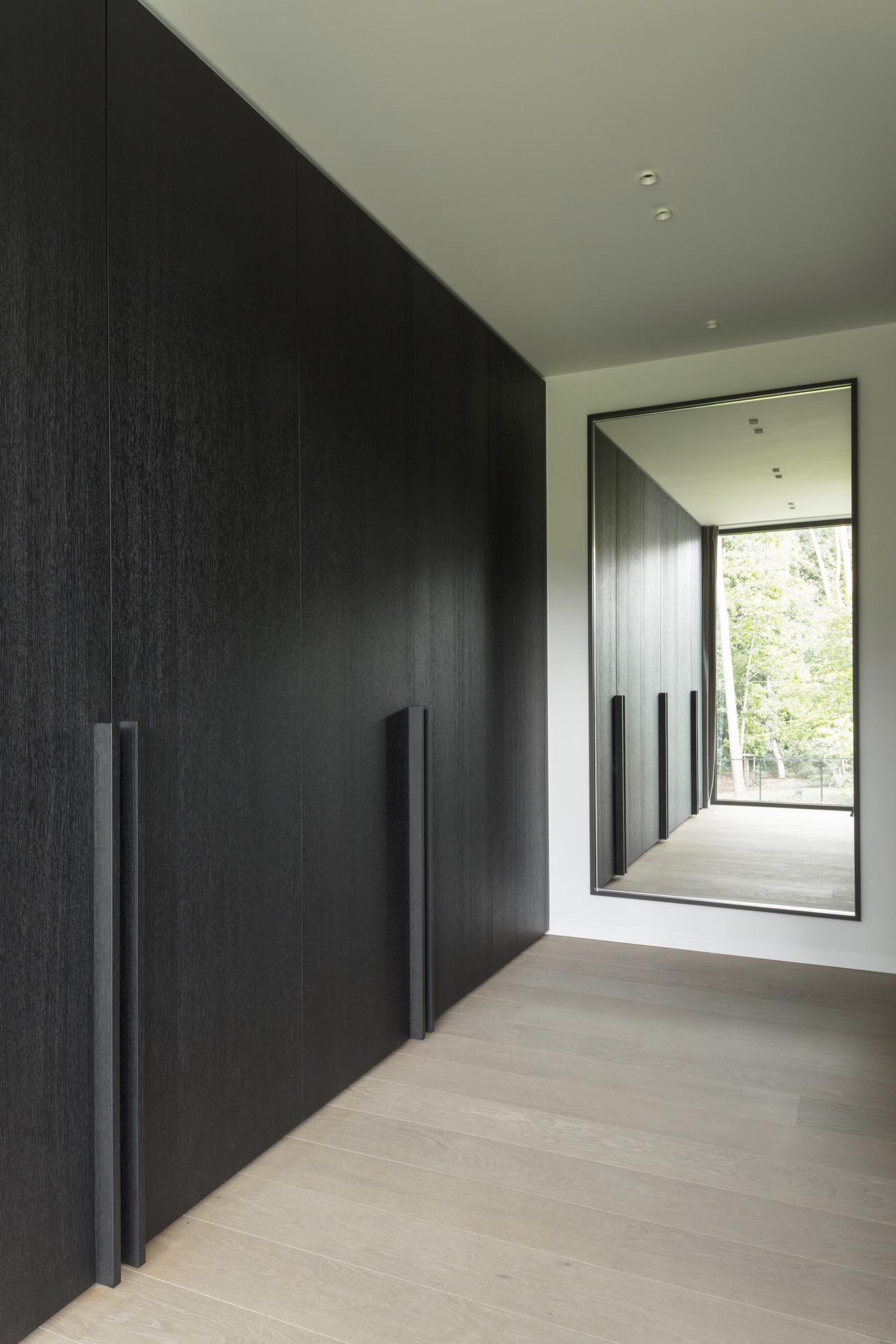
Circulation runs along the villa’s longitudinal axis, linking entrance, shared spaces, and sleeping quarters with clarity. Built-in storage in black wood lines corridors, organizing practical elements unobtrusively. Glass partitions subtly separate areas, letting light filter through and sustaining the openness throughout.
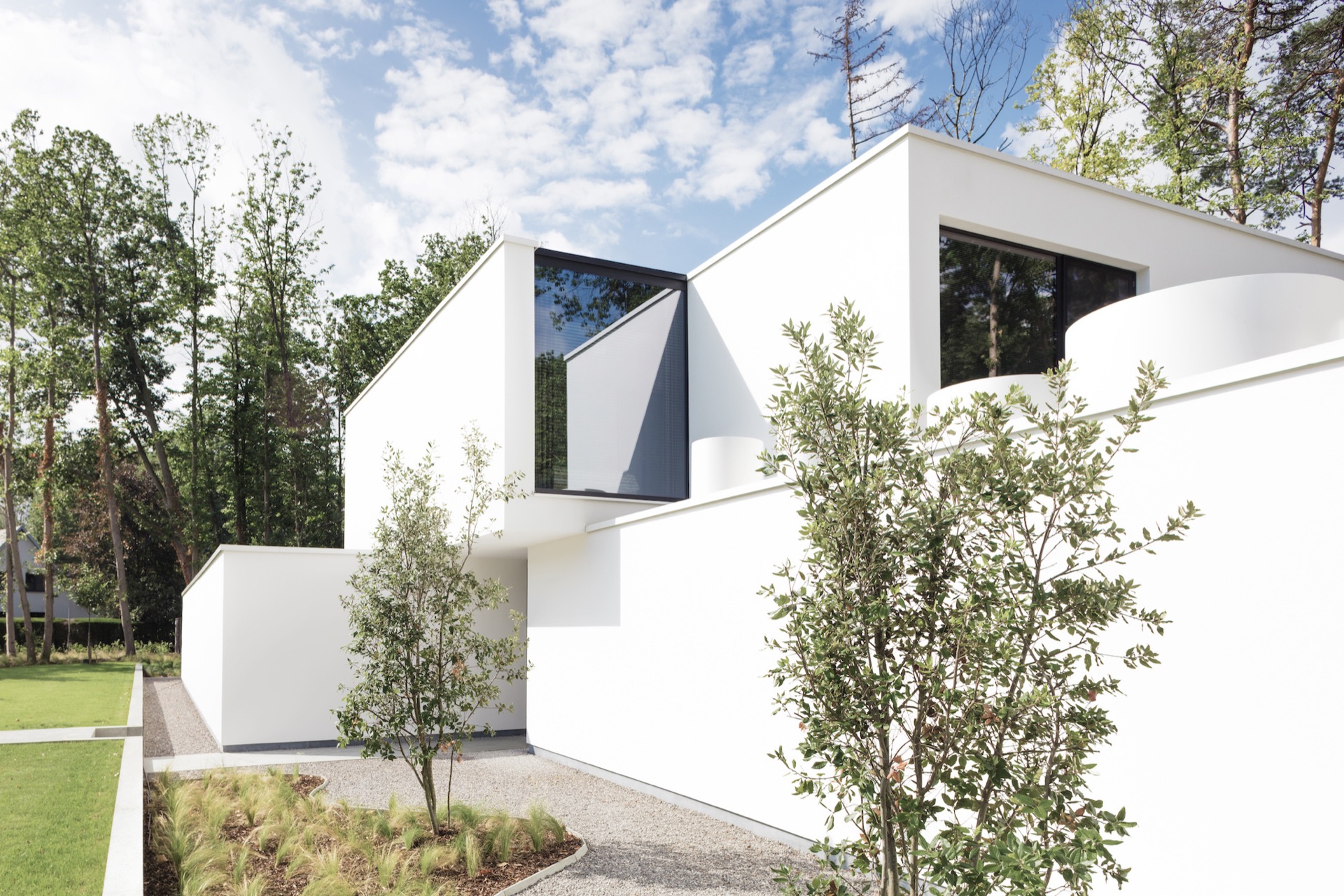
The combination of vertical wood cladding and natural stone introduces tactile depth to the villa’s defined volumes. Precise white plaster surfaces articulate the cubic shapes, contributing to a composed yet expressive silhouette. Together, these materials ground the building firmly within the woodland context.
Artificial lighting layers ambient recessed fixtures with glass globe pendants above the dining area, their reflective surfaces amplifying natural light and casting gentle shapes. Parquet and stone finishes reflect and diffuse illumination, marking shifts in time and mood inside.
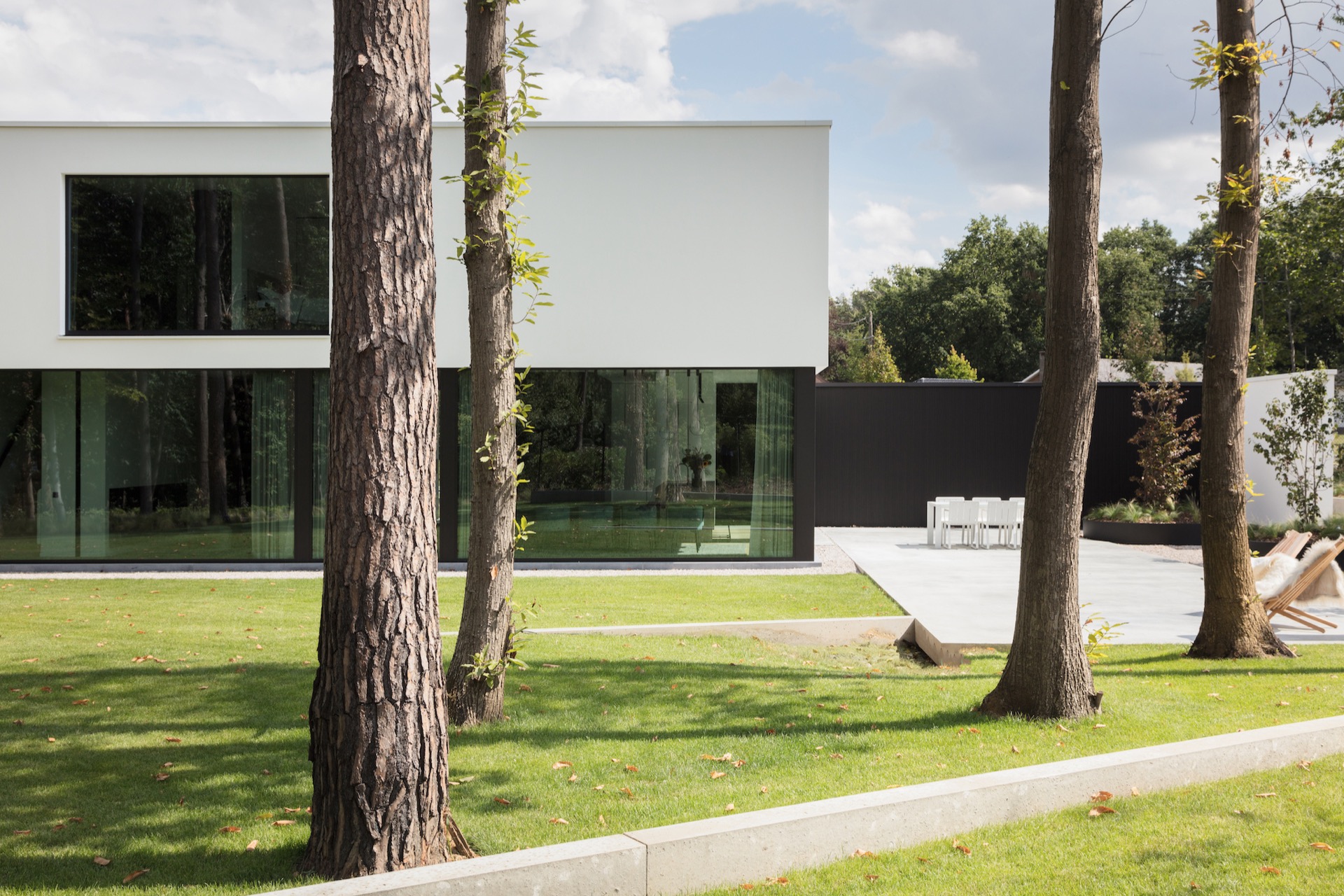
An outdoor terrace, paved in large natural stone slabs, extends the living environment outward. Minimal furniture frames views toward the garden’s geometry and planting schemes. This exterior area continues the interplay of materials and space that defines the villa inside.
The design emphasizes natural materials and daylight strategies to respond thoughtfully to its wooded hillside locale. Vertical wood cladding anchors the architecture visually to its environment, while expansive glazing fills interiors with light and views. The project explores elemental form enriched by subtle material and spatial nuances.
Horizontally Oriented Architecture Enhances Spatial Perception
The facades emphasize horizontal lines through expansive white stucco panels and elongated roof edges. This composition visually broadens the structure, accentuating its presence along the hillside while preserving the actual dimensions. Window placement and flat rooflines draw the eye laterally, reinforcing the link with the gently sloping site.
Dark Wood Volume Defines Interior Organization
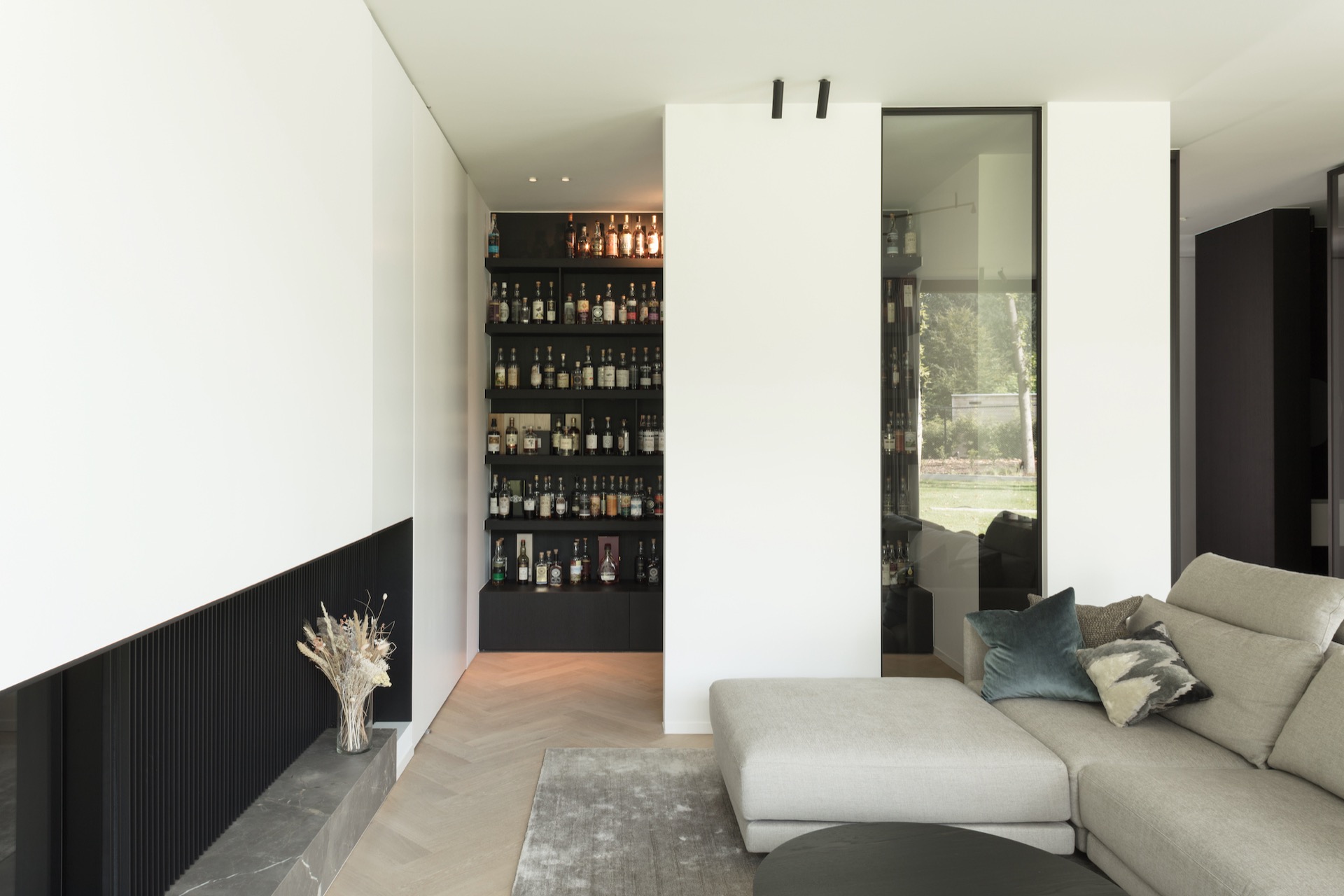
A substantial black-brown wood veneer volume occupies the interior center, providing a tactile counterpoint to lighter floors. This element anchors the arrangement of open living spaces and facilitates smooth circulation. Its integration of built-in storage conceals utilities and maintains clear spatial order.
Transitions Between Indoors and Outdoors Through Glass
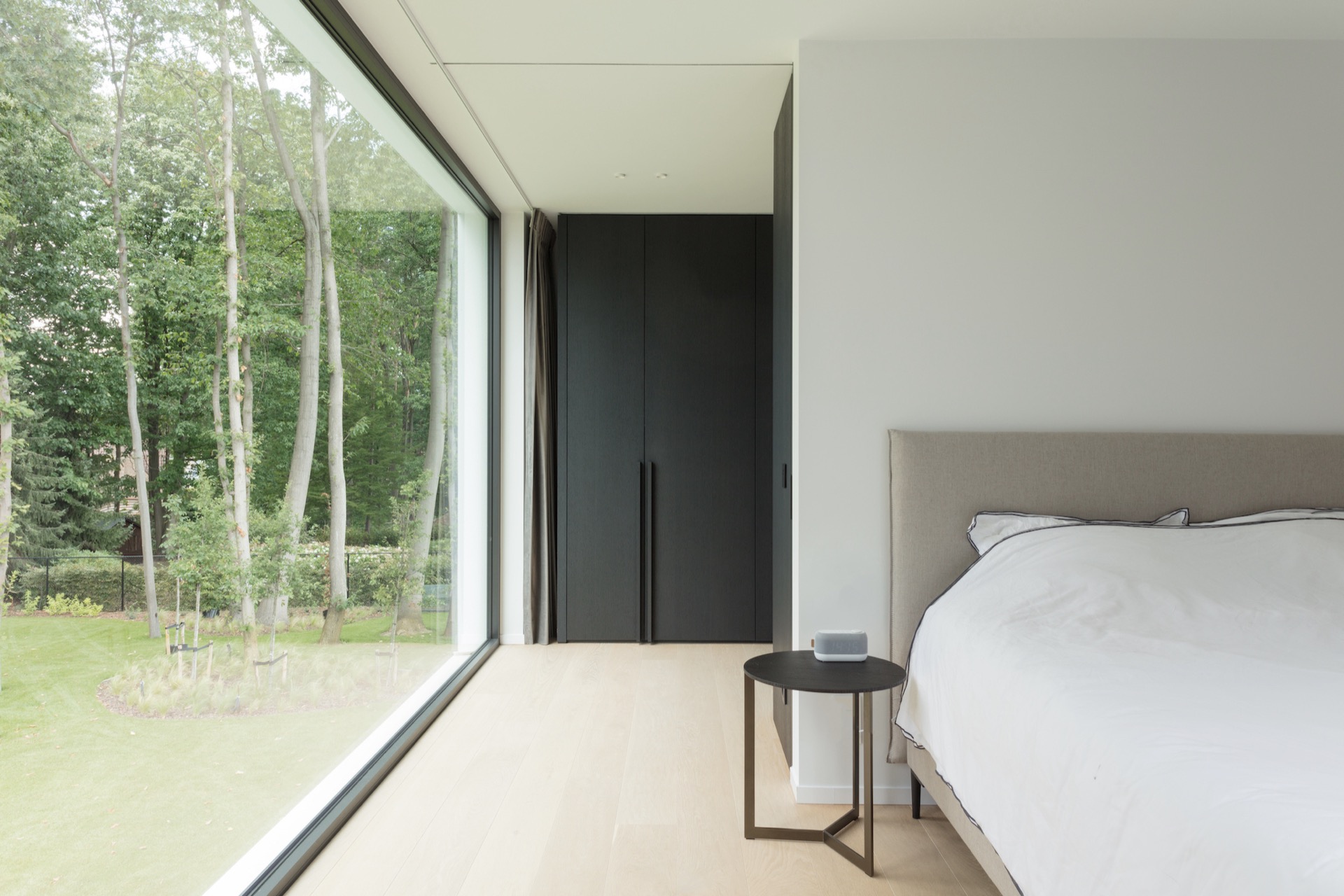
Floor-to-ceiling sliding glass doors and windows frame broad views of the woodland garden, blurring boundaries visually and spatially. The doors open to wide terraces surfaced with large stone slabs that echo the kitchen island’s materiality. Abundant daylight penetrates deep into adjacent rooms, reducing reliance on artificial light and heightening spatial experience.
Bathroom Design Highlights Materials and Natural Light
The bathroom places a freestanding tub near generous glazing, inviting daylight to accentuate natural stone textures on floors and walls. The restraint in decoration focusses attention on material qualities and light. Streamlined fixtures and subtle metal accents support the pared-back aesthetic. That makes the wood cladding part of the architectural character rather than a loose finish.
Want to see more of Niko Wauters architecten bv? View the page of Niko Wauters architecten bv for even more great projects and company information.

.png)
NEW 2026 Jubileum Edition The Best Interior Designers Benelux
Order Now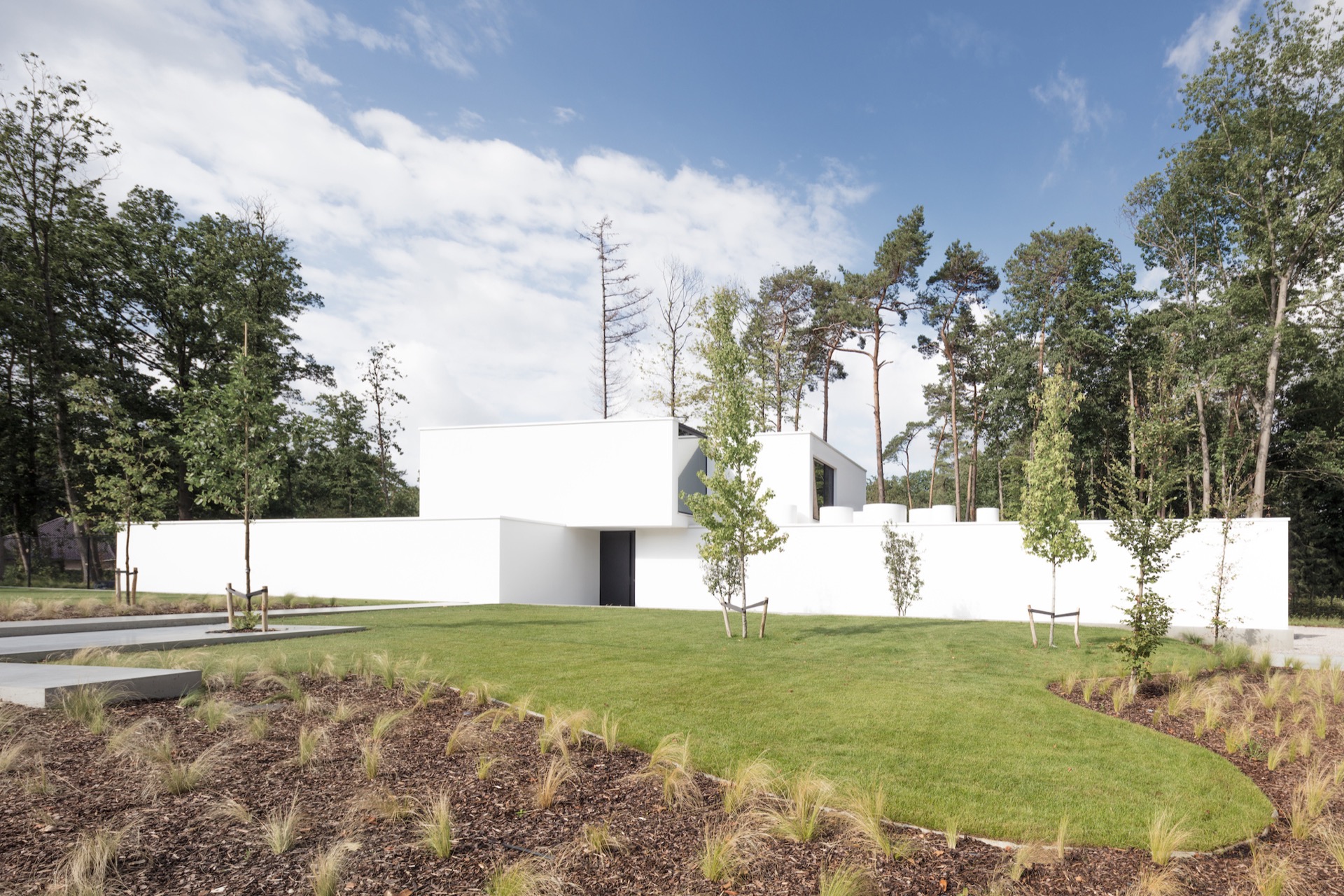
NEW 2026 Jubileum Edition The Best Interior Designers Benelux
Order Now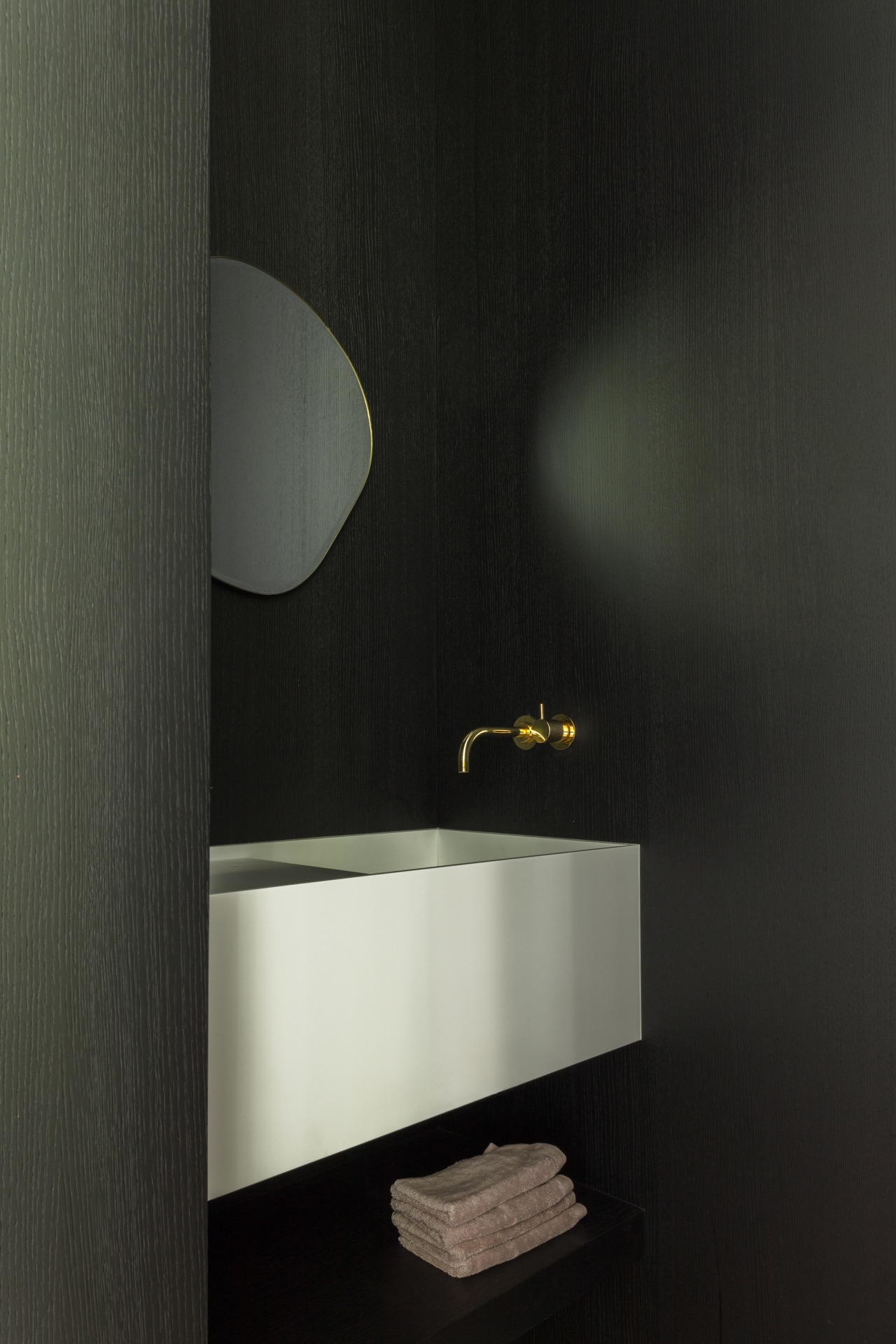
NEW 2026 Jubileum Edition The Best Interior Designers Benelux
Order Now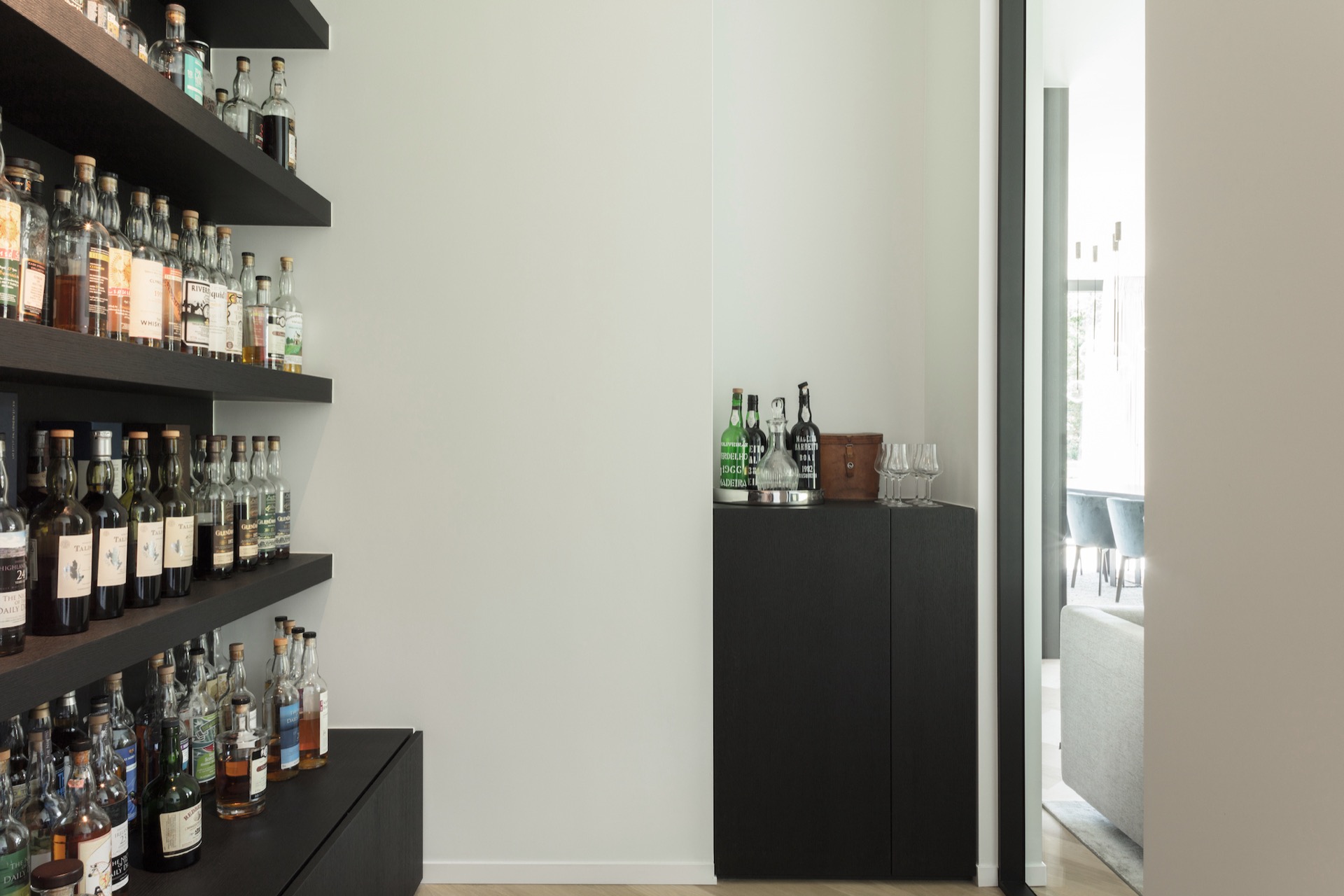
NEW 2026 Jubileum Edition The Best Interior Designers Benelux
Order Now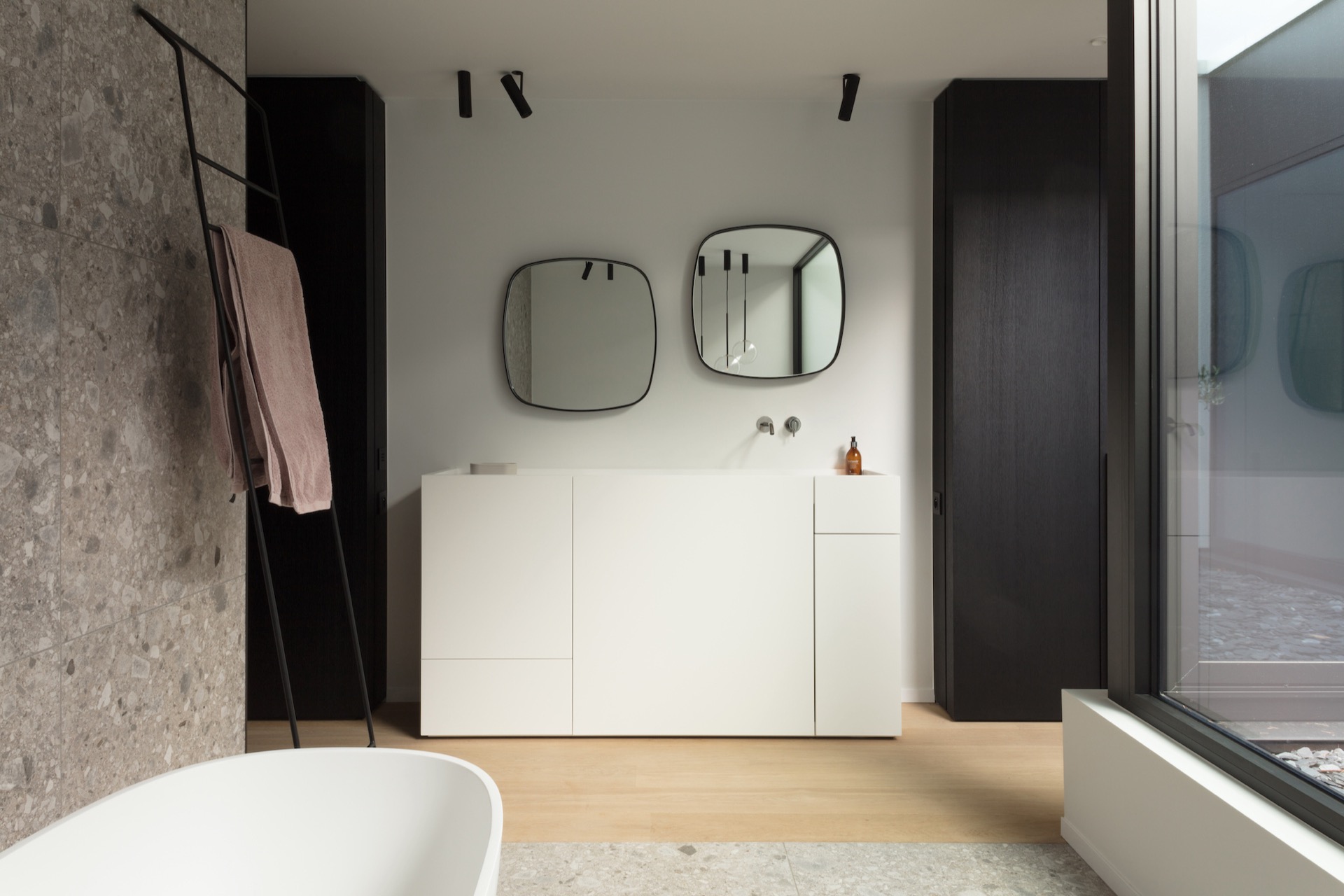
NEW 2026 Jubileum Edition The Best Interior Designers Benelux
Order Now