





Modern waterfront villa with a continuous indoor-outdoor sightline
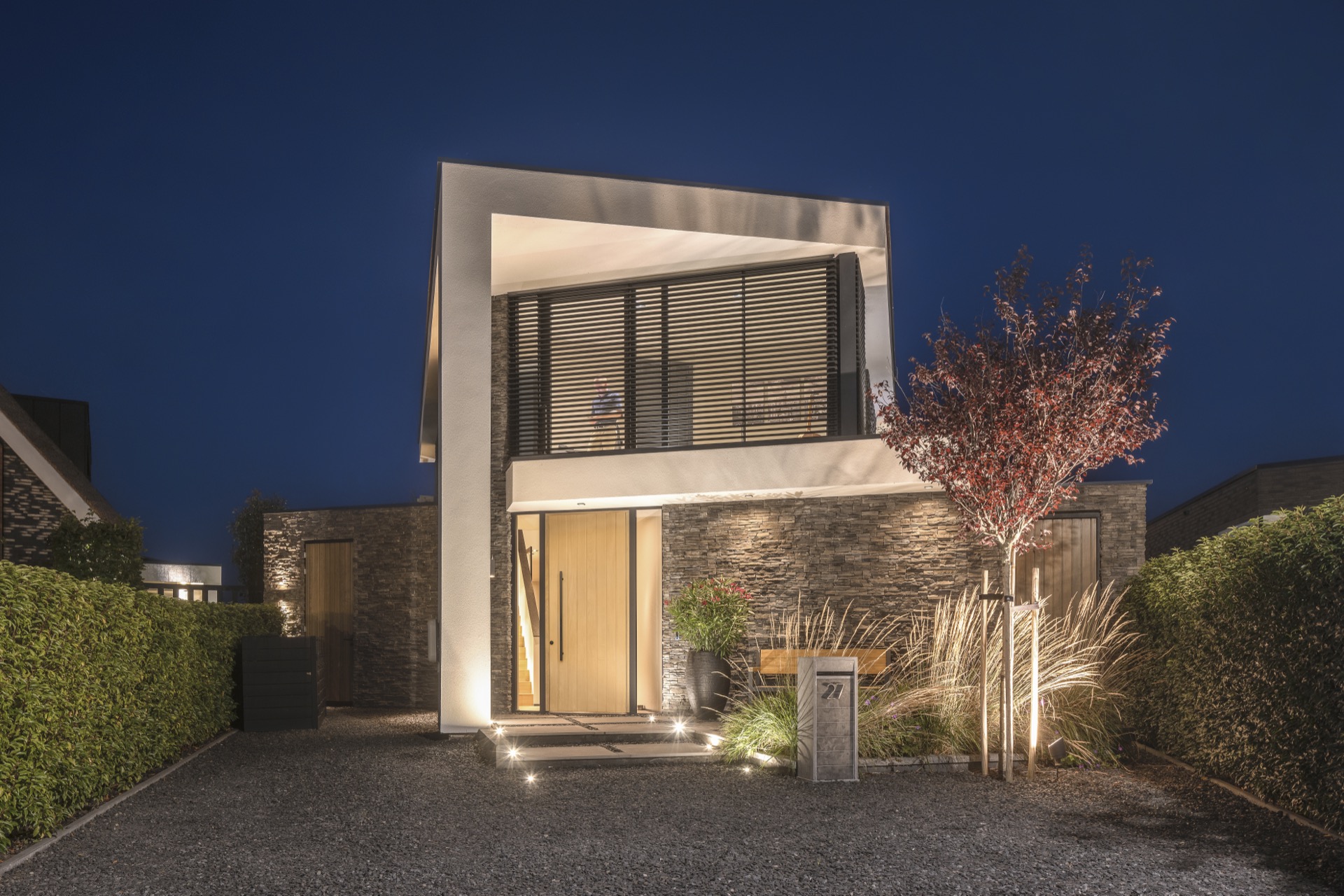
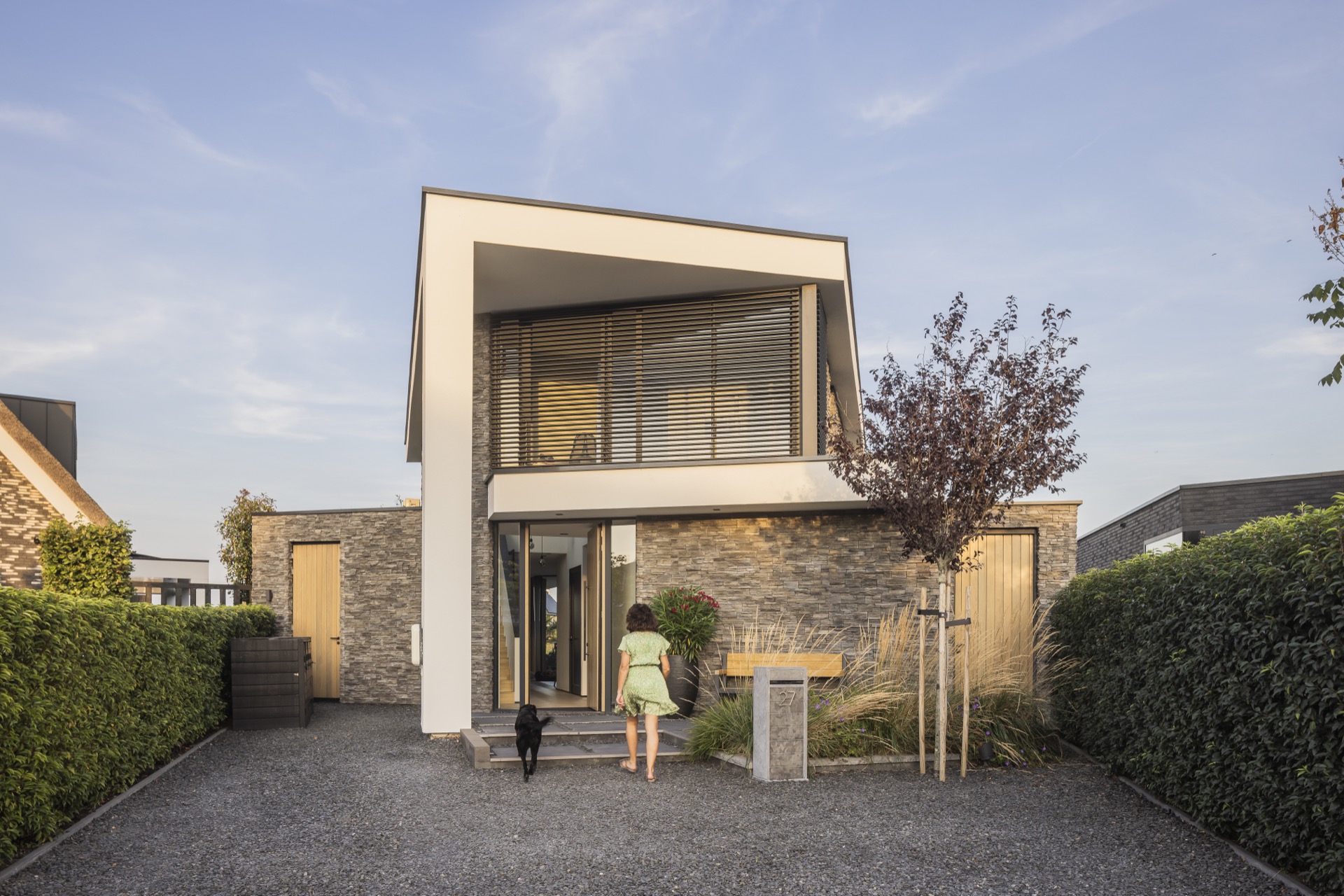
Light reaches the first steps and keeps going. From the entrance, the view runs through the house to the water, so the route feels open from the first glance. In this modern waterfront villa, the eye is drawn past glass, pale walls, and the dark line of the water outside. The effect is not staged; it comes from one direct indoor-outdoor sightline that stays readable across the plan.
The house handles that view with restraint. Rather than breaking the route into separate rooms, the architecture keeps opening it up. Large glazing frames the outside without cutting it into fragments, while the sheltered edges of the building hold the composition in place. The result is a clear spatial movement from entry to water, with a sense of depth that grows as you move through the home.
modern waterfront villa as the architectural starting point
The strongest gesture is the straight indoor-outdoor sightline. It begins where you enter and carries through to the waterline, making the interior feel longer and more open than a simple sequence of rooms would suggest. Glass doors and wide openings support that line, and the interior surfaces stay quiet enough to let the view do the work. You notice the route before you notice the furniture.
Inside, the plan opens around a living area with a stone-clad fireplace wall and a clear passage toward the kitchen and dining zone. Daylight comes in from the side and from the rear, so the room does not stop at one wall. Even the threshold reads as part of the experience: floor, glass, and ceiling line up to pull the eye outward. That is what gives the modern waterfront villa its calm pace.
Large glazing keeps the outside visible
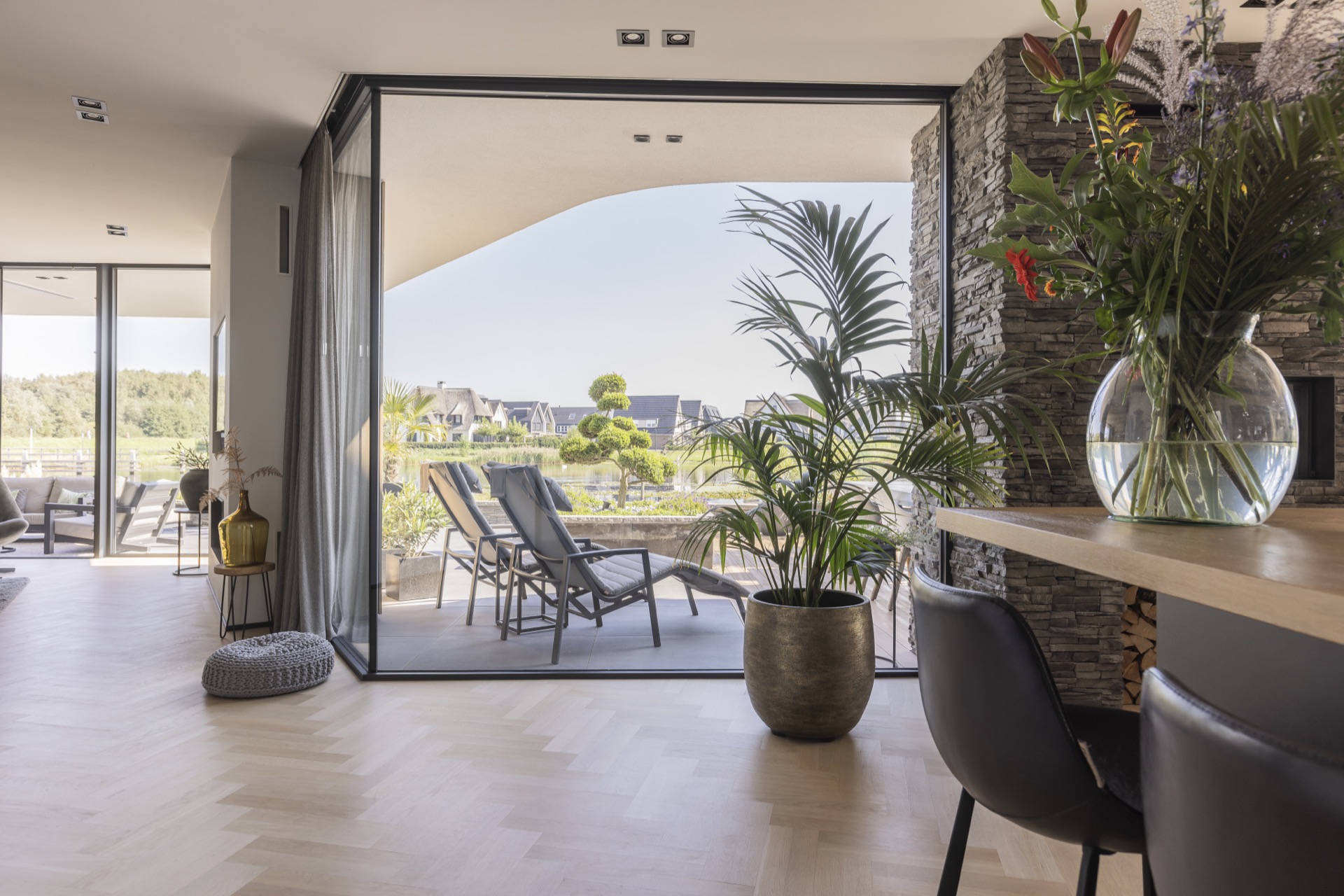
Large glazing views define several moments in the house. In the living spaces, the panes are broad enough to hold the terrace, the garden edge, and the water beyond in one frame. Reflections move across the glass at different times of day, but the basic reading stays the same: outside is always present. The interior does not turn away from the landscape; it stays aligned with it.
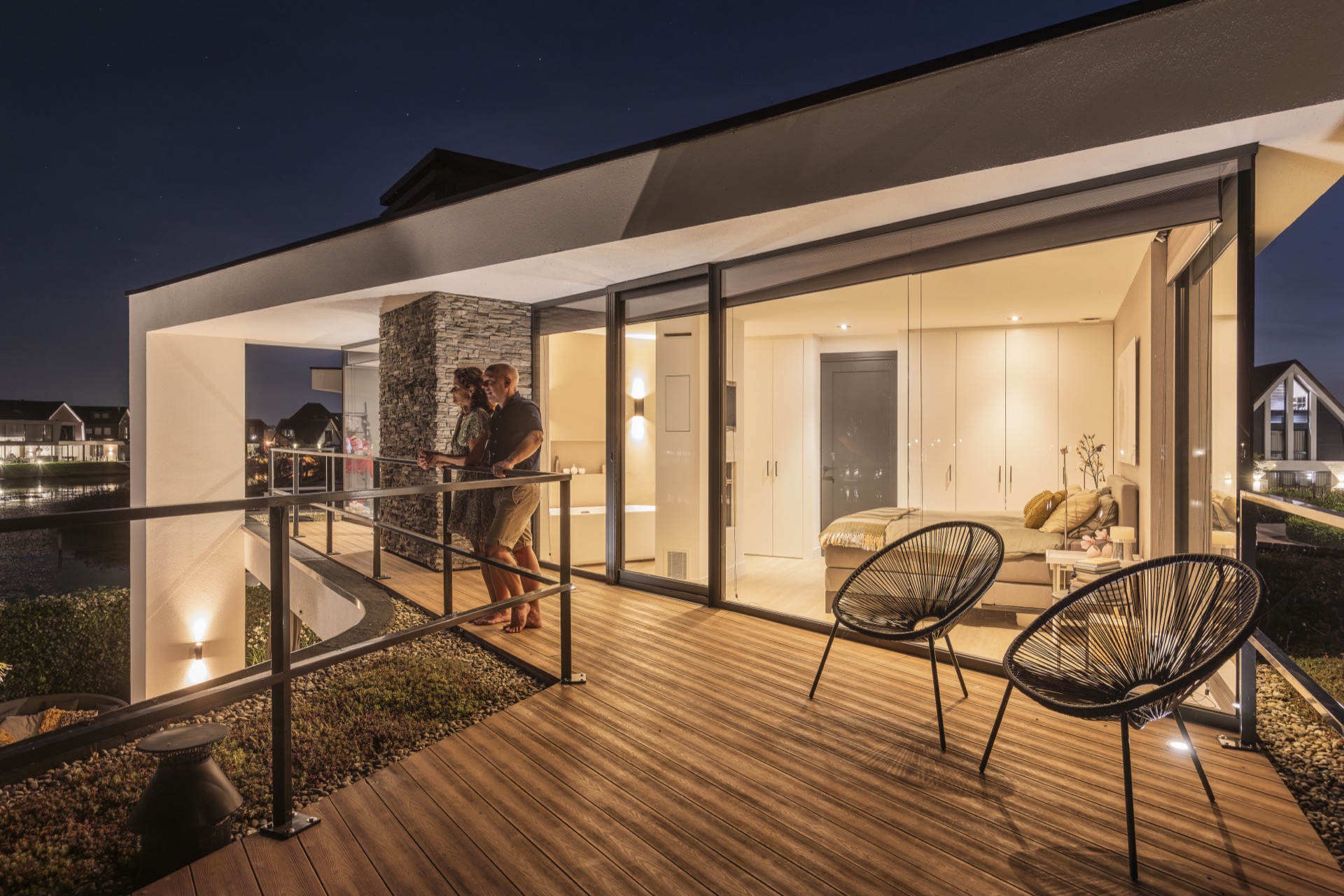
That alignment matters in the rooms closest to the water. Instead of closing the edge of the house, the glazing keeps it legible, so the transition feels direct. The windows also shape how the interior is furnished. Seating can sit low in the frame, while the view remains uninterrupted above it. This is where the indoor-outdoor sightline becomes more than a concept; it becomes the way the room is used.
Curved overhangs soften the edge
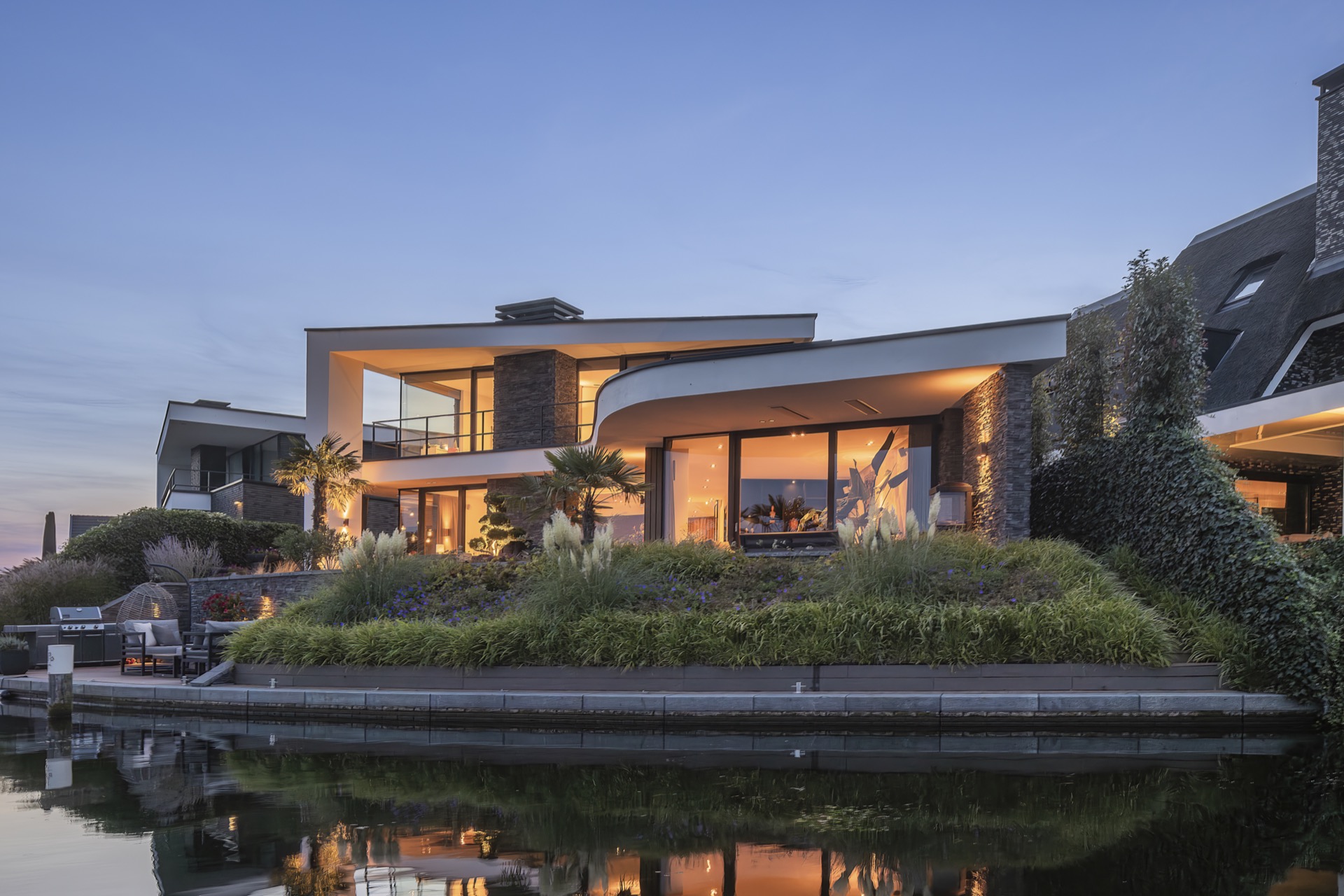
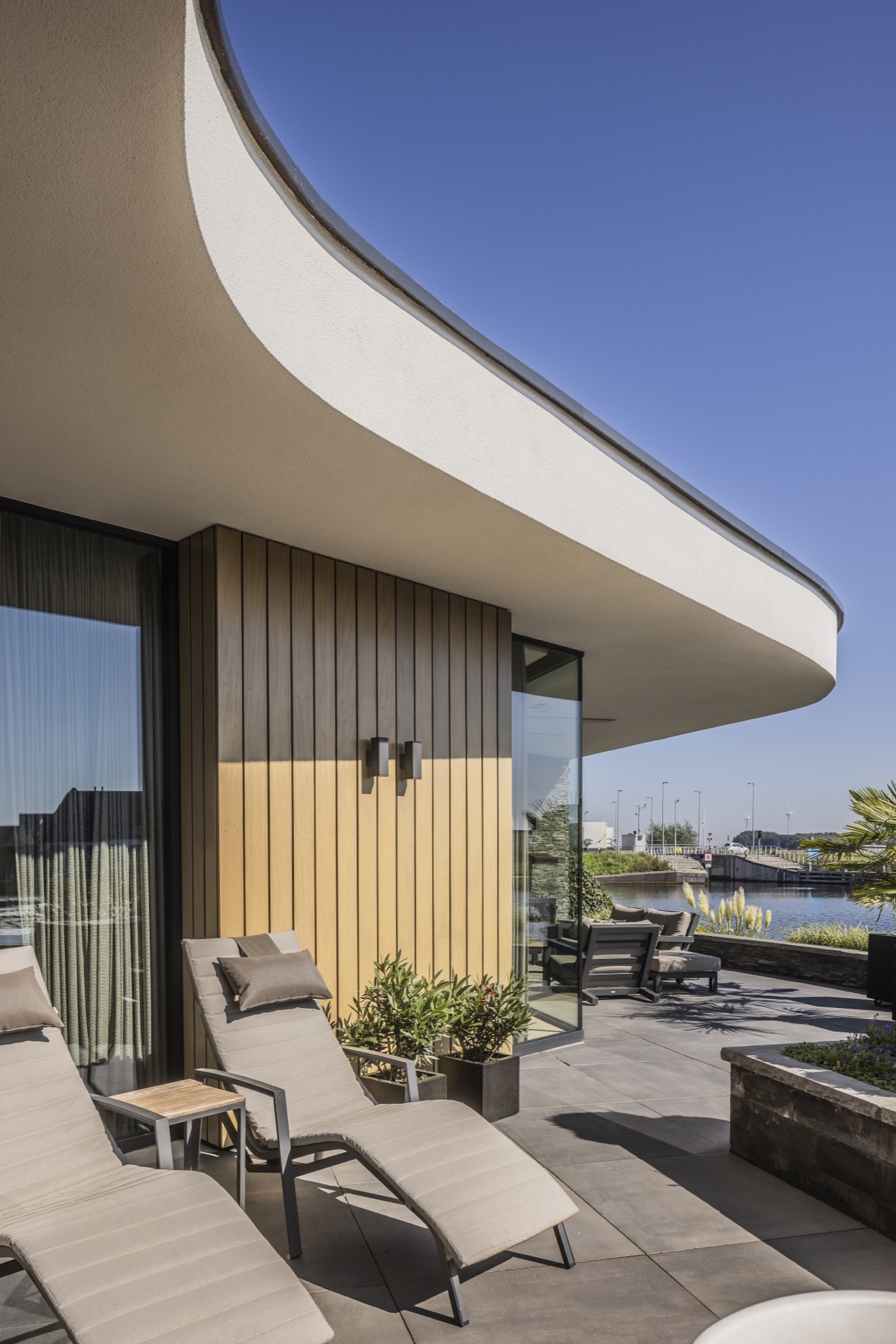
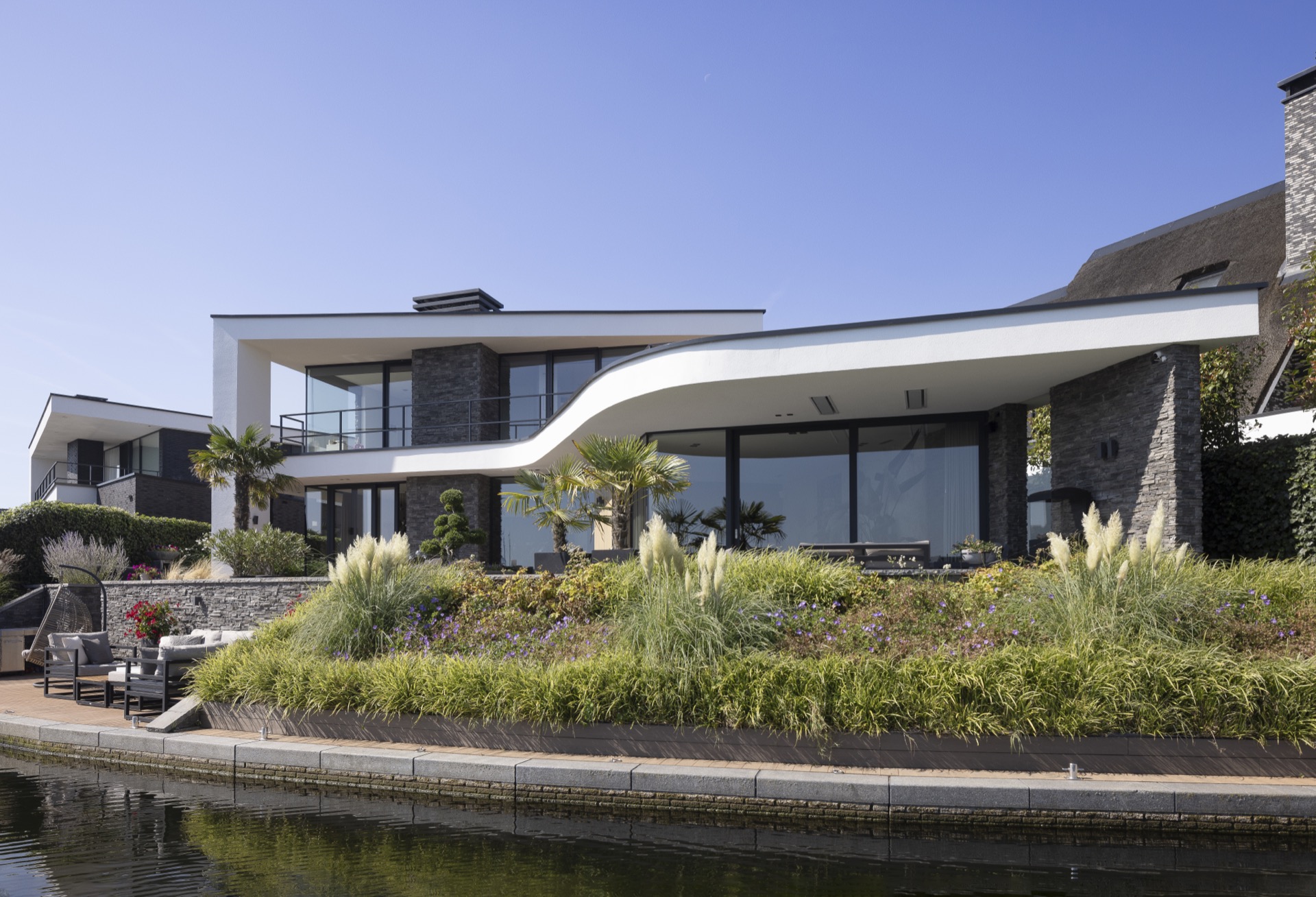
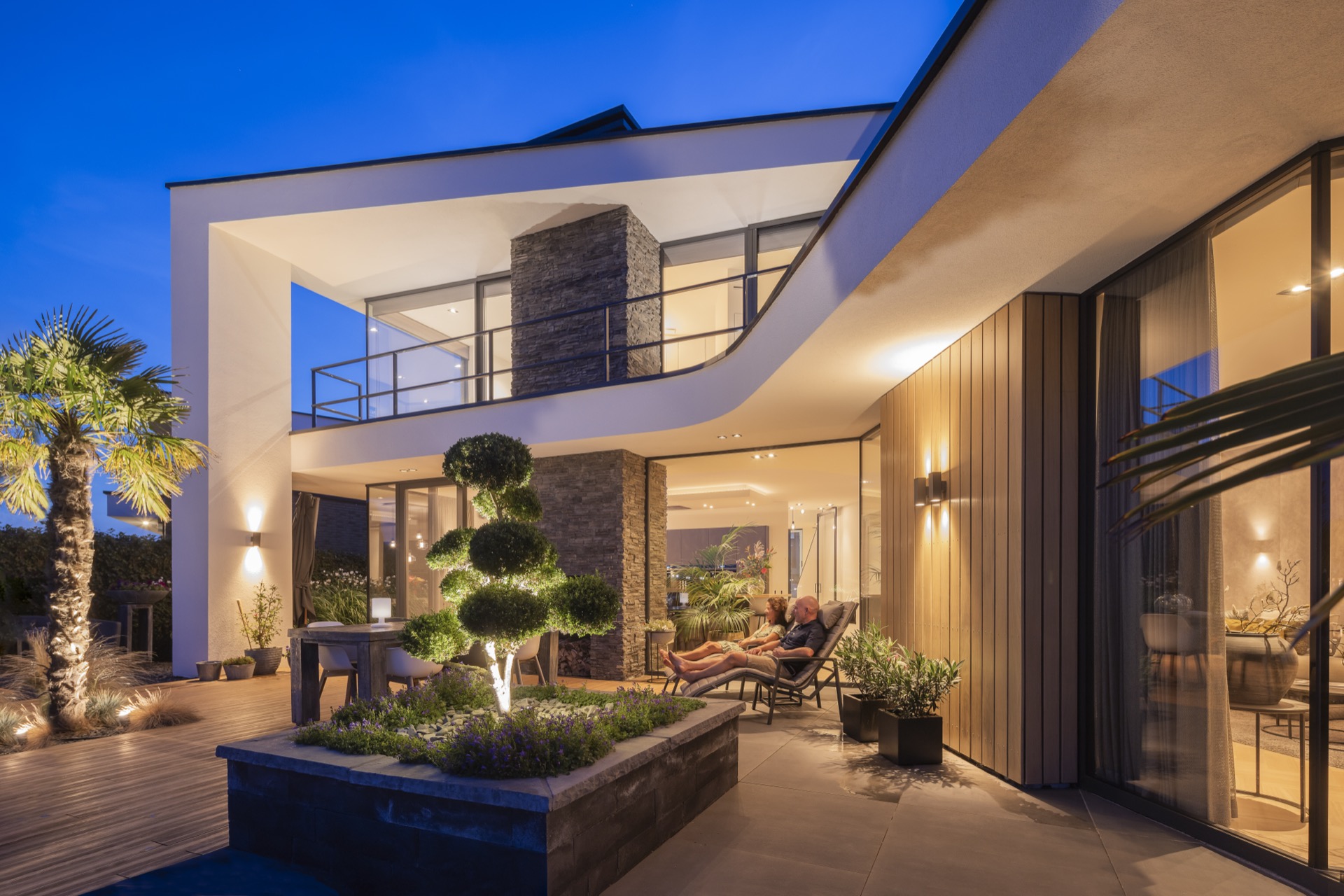
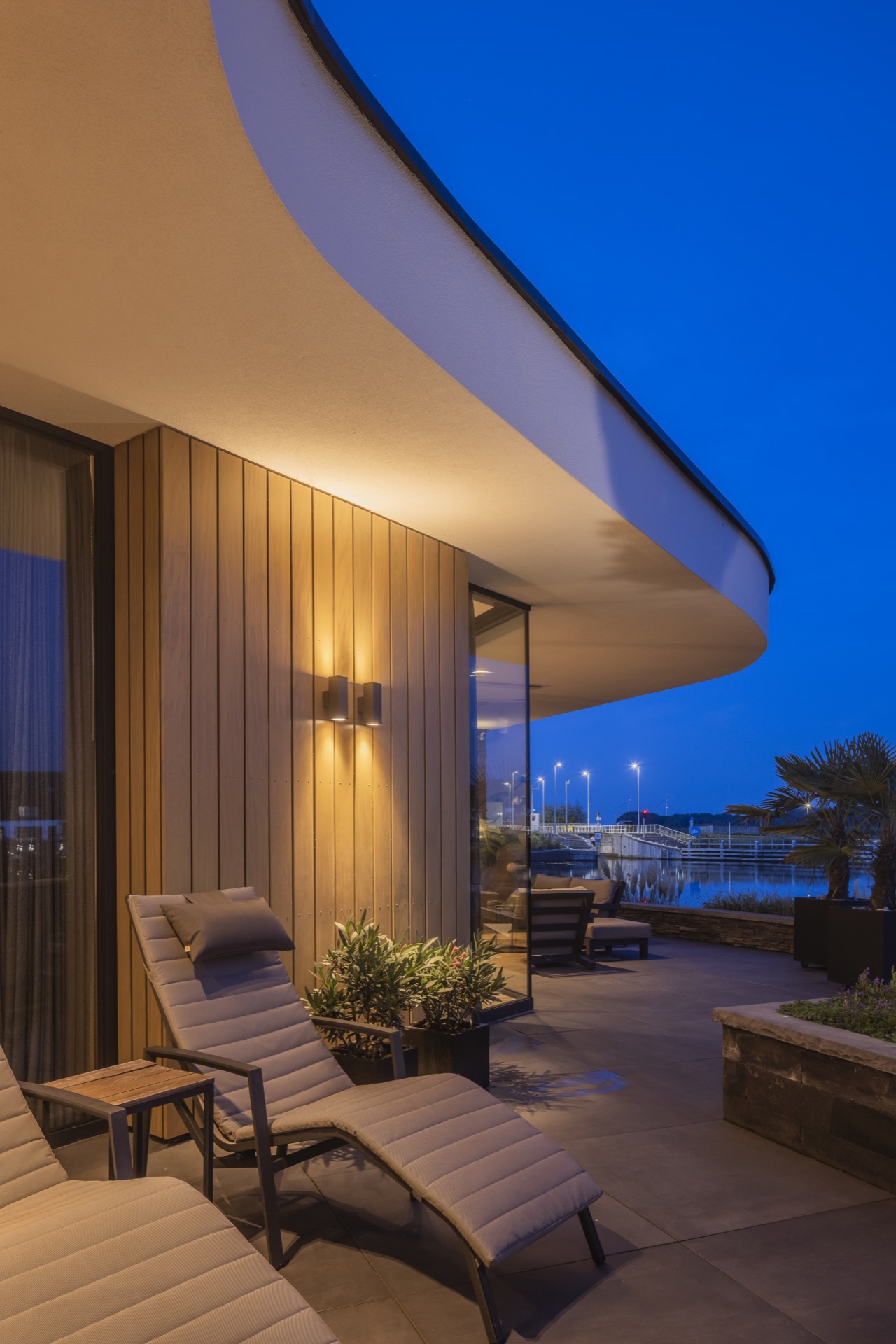
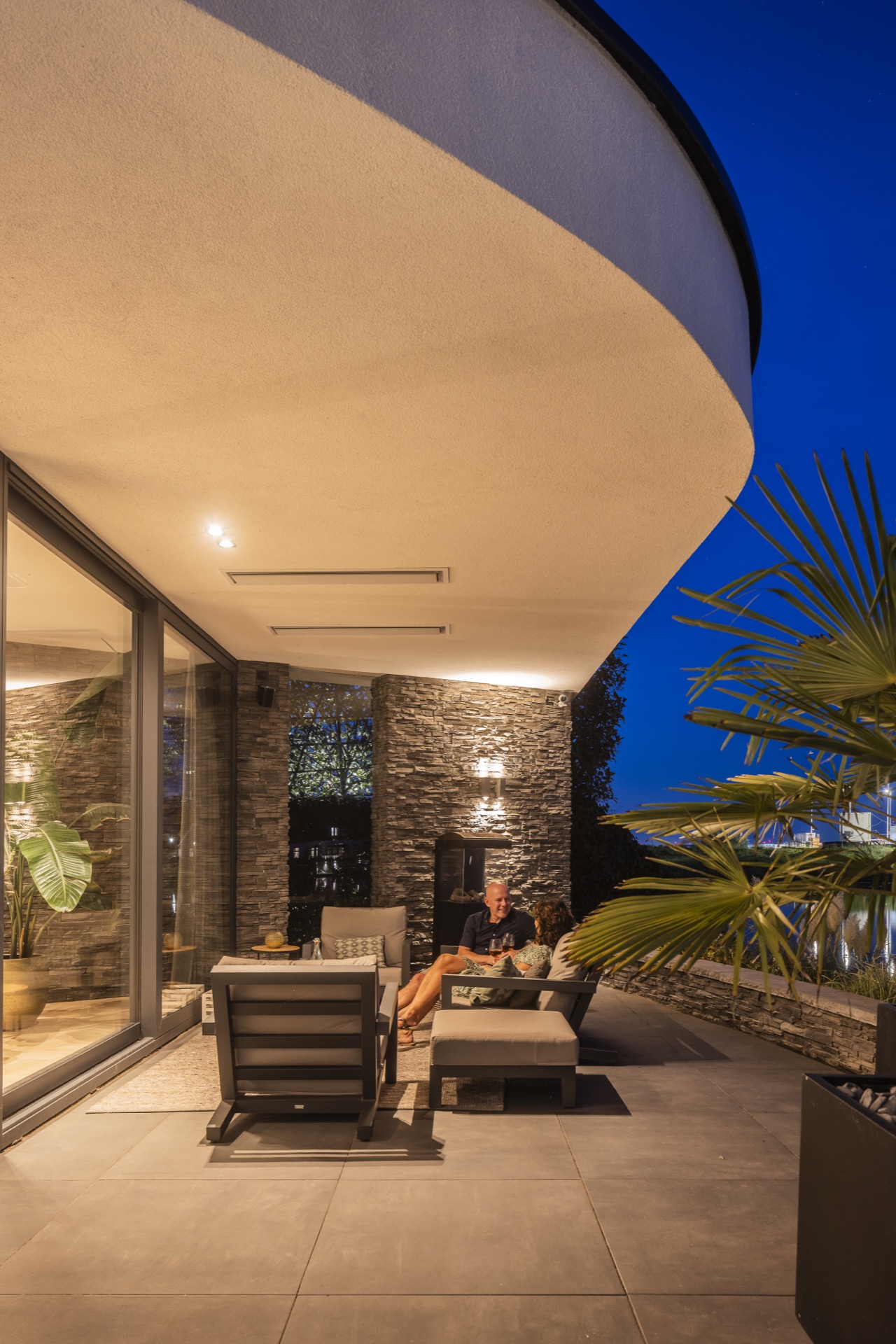
Along the exterior, a curved overhang changes how the house meets sun and shadow. The underside reads as a smooth, sheltered band that projects beyond the glazing and terrace. It gives the façade a floating effect without making it look fragile. In daylight, the curve is clear; in the evening, it picks up the glow from the lighting below and turns into a quiet horizontal marker across the water-facing side.
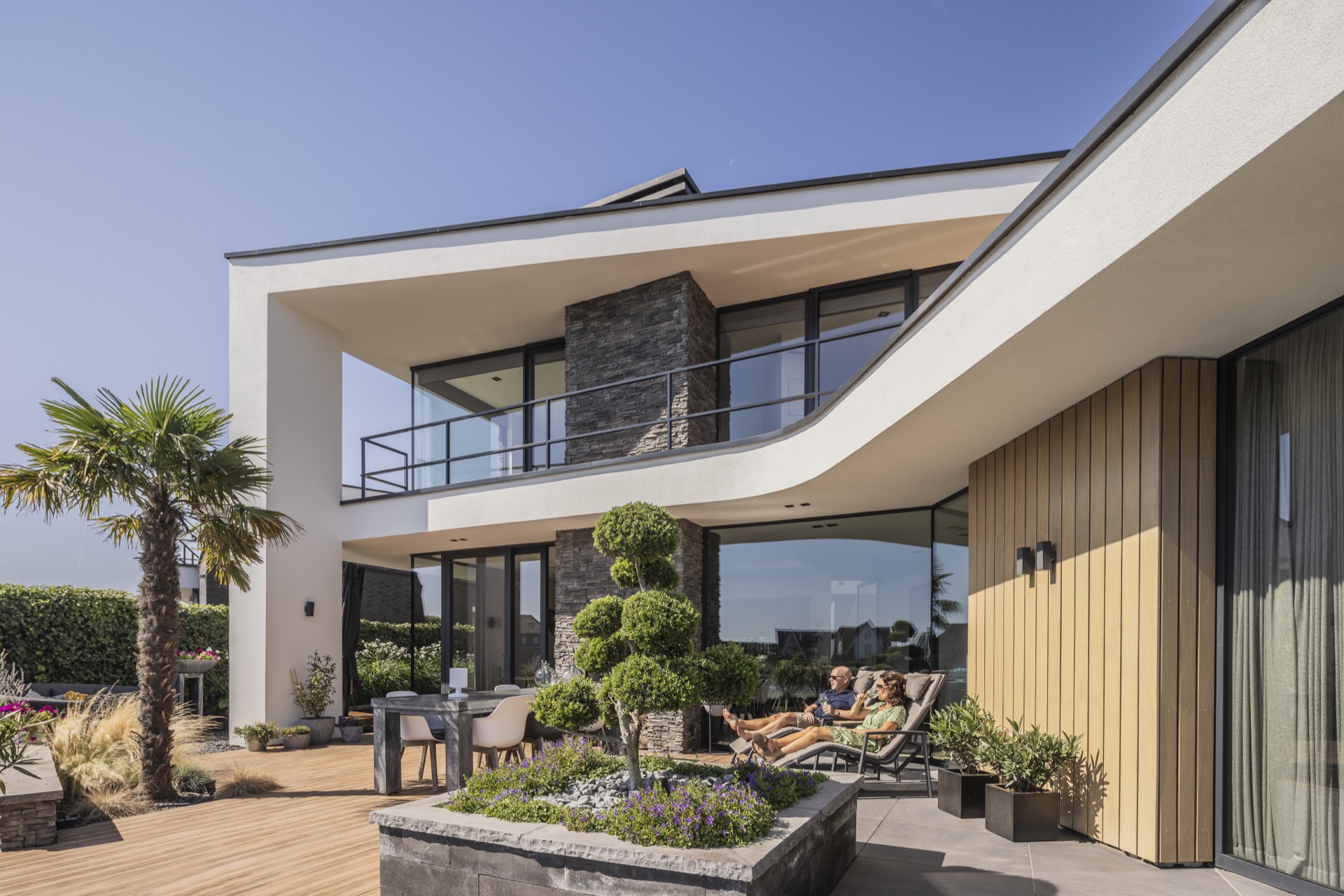
These overhangs also explain why the house can feel intimate even with so much glass. The edge is not exposed in a flat, hard line. It is held back by shadow, projection, and a sense of depth under the roofline. From the terrace, that means a protected place to sit close to the water. From inside, it means the view arrives under a defined frame instead of dissolving into brightness.
Evening light changes the reading of the façade
At dusk, the modern waterfront villa shifts character. Warm facade lighting traces the lower edges, catches the soffits, and reflects softly in the water. The building becomes less about sharp daylight contrast and more about layered surfaces: glass, pale wall finish, stone accents, and the darker strips of wood. The lighting does not flood the house. It picks out the lines that matter.
That is especially visible where the terrace meets the living volume. The lit underside of the overhang lifts the composition, while the water below mirrors the glow. The house stays readable even after sunset because the architecture already works with strong horizontal layers. Light only reinforces what is there: the span of the roof edge, the opening of the glass, and the steady line toward the water. That makes the modern waterfront villa part of the architectural character rather than a loose finish.
Wood, stone, and a pale shell
Material contrast keeps the exterior from feeling flat. Natural stone appears as a grounded accent, especially around openings and entry points, while wood slats add a finer texture to the façade. Between those elements sits a lighter shell of plastered wall, which gives the darker materials something to press against. The combination is understated, but it is never bland. Each surface has a clear job in the composition.
The wood slats and natural stone also help the building work at different distances. From afar, the villa reads as a modern volume with strong horizontal lines. Up close, the stone has weight and the wood introduces a finer rhythm. That shift in scale matters on a project like this, where the views are long and the transitions happen gradually. It keeps the house from becoming a single flat image.
On the water side, the materials are tied to movement and shade. Stone anchors the edges, wood breaks up the broad planes, and glass opens the rooms toward the outside. The terrace uses the same logic. Hard surfaces meet planted borders, and the furniture stays low so the line of sight remains clear. The architecture does not hide the structure of the house; it uses it to hold the view.
An interior built around openness
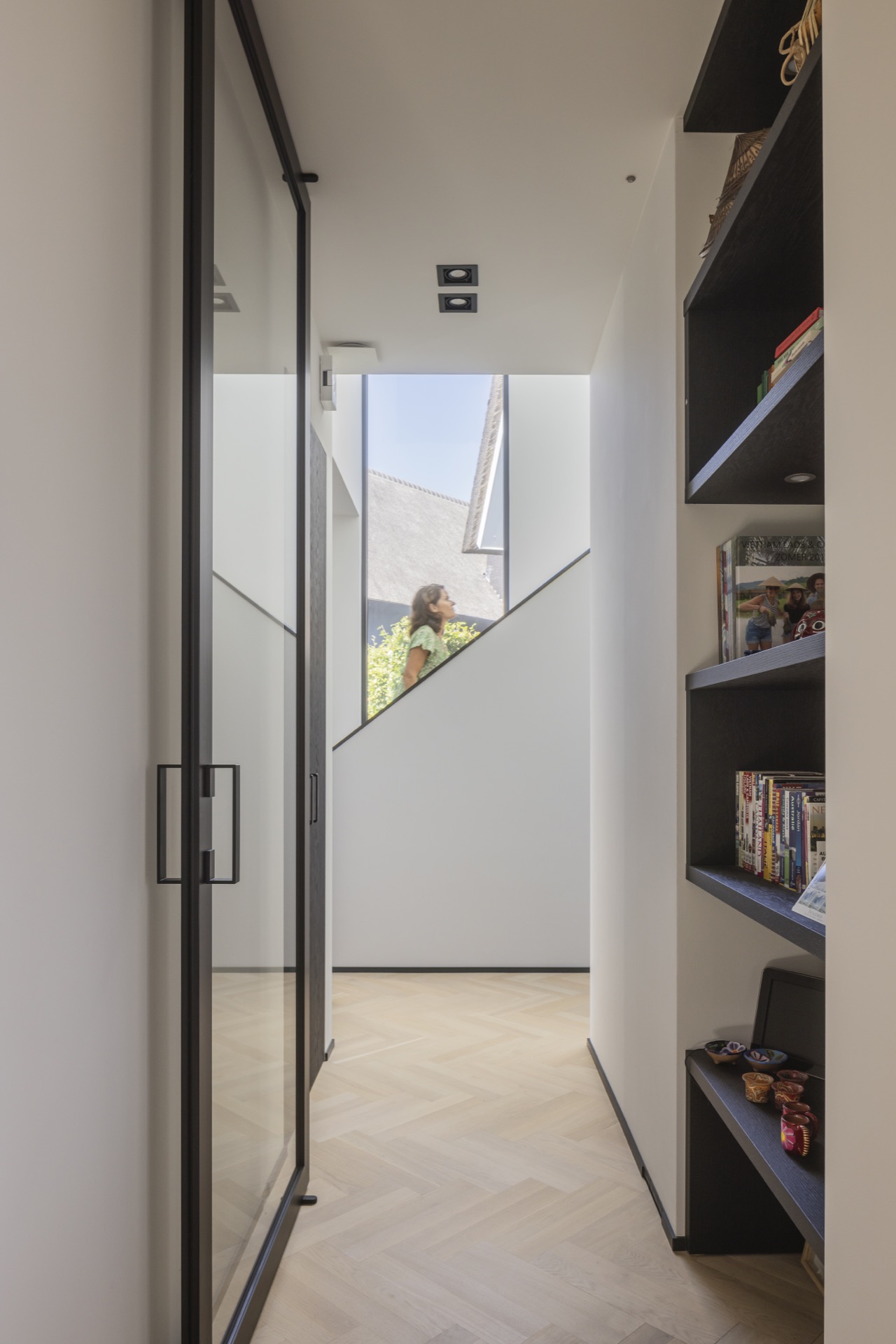
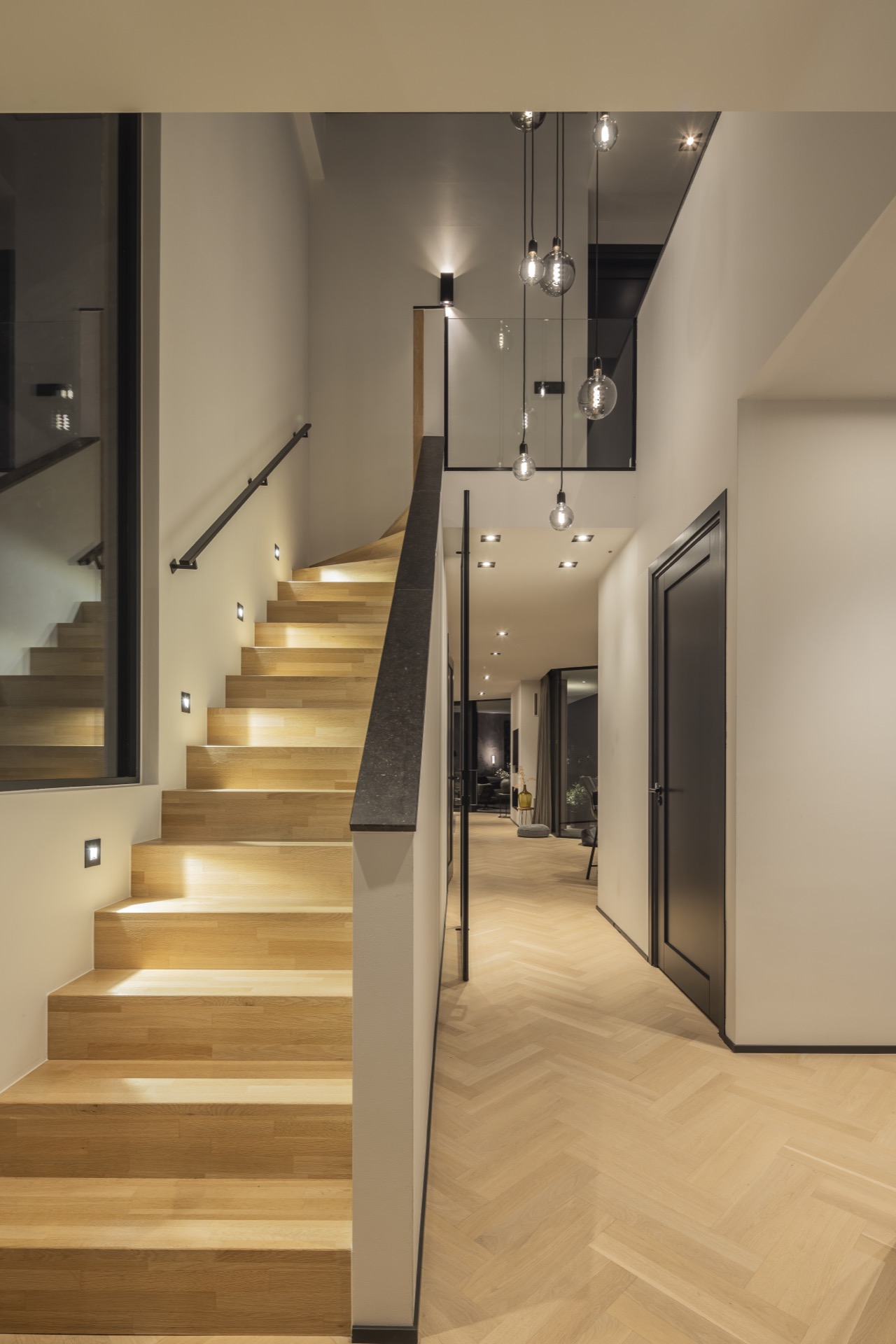
The interior continues the same logic as the exterior. White walls, dark frames, and broad openings set up a neutral backdrop for the view and the materials. A stair with wooden treads rises through a double-height volume, and daylight reaches the upper level through the glazed edge. The route is easy to read. You move, and the house reveals a little more height, a little more depth, a little more water.
In the entry zone, the openness is immediate. A glass door, a visible stair, and direct sight through to the next space prevent the hall from becoming a dead end. The design relies on lines rather than decoration. Even the transition from one room to another is shaped by what can be seen beyond it. That is why the modern waterfront villa feels measured rather than empty: the spaces are open, but they are not loose.
Stone, wood, and daylight in the living area
The living room combines a stone fireplace wall with a clear view through to the terrace. That pairing is practical as well as visual. The stone gives the room a fixed point, while the glazing keeps the eye moving outward. Nearby, the dining and kitchen areas remain part of the same field of view, so the interior reads as one connected sequence without losing its zones. The materials help separate those areas without closing them off.
Daylight also changes the texture of the room. On bright hours, the glass makes the outside feel close, and the pale interior surfaces bounce light back across the floor. Later, the room becomes more defined by the reflections in the panes and the darker outline of the window frames. In both cases, the indoor-outdoor sightline stays active. It is present in the way the room is arranged, not just in what the windows show.
Terrace, planting, and the edge of the water
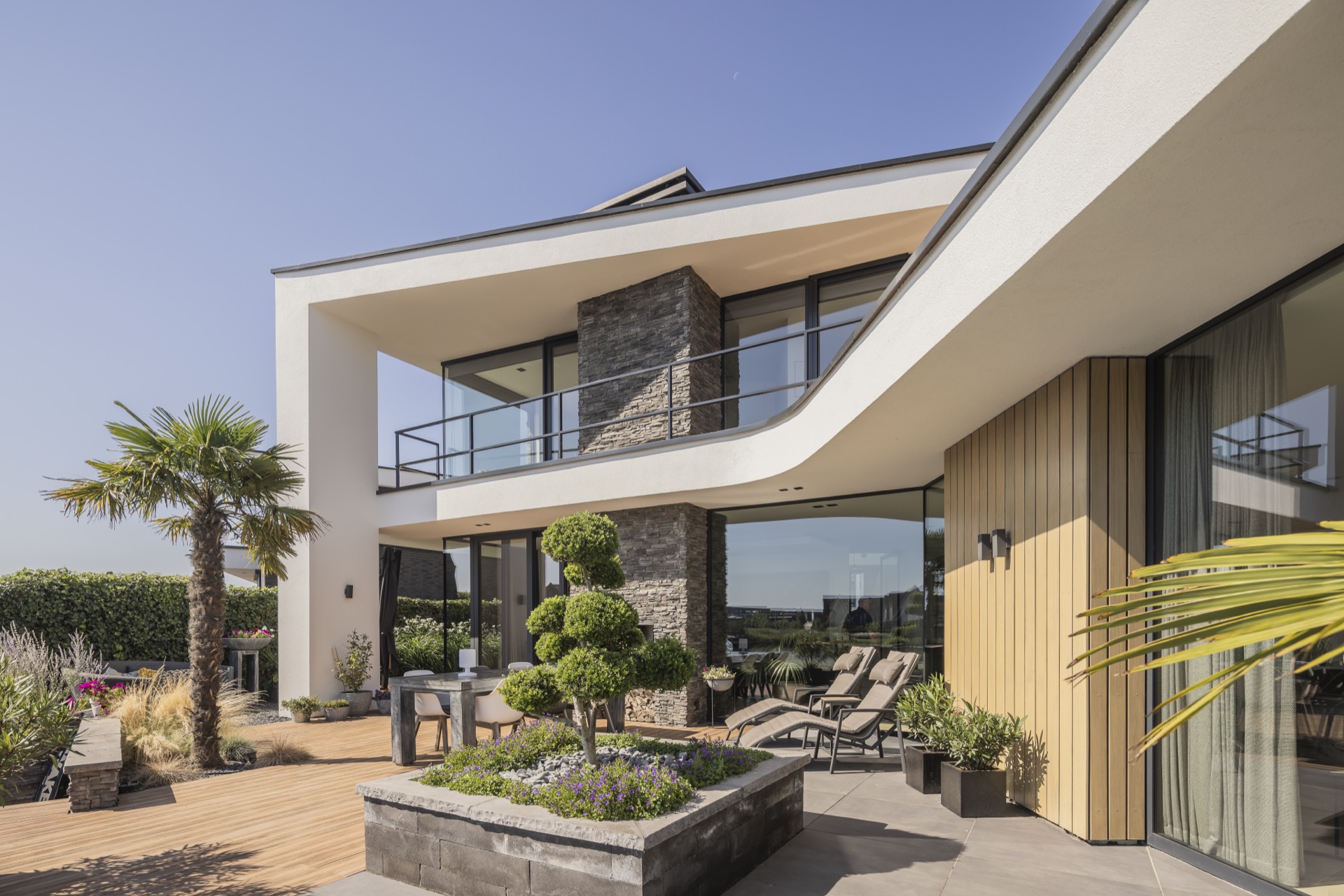
The terrace extends the house toward the water with paved surfaces, low planting, and places to sit close to the edge. It does not try to dominate the landscape. Instead, it steps into it with a measured sequence of floor, border, and view. The result is a clear outdoor room where the same lines from inside continue outside. Looking back, the overhangs and glazing keep the house tied to that terrace.
Seen from the garden side, the building layers stone, wood, glass, and light into one readable composition. The water remains part of the frame throughout, sometimes bright, sometimes dark, sometimes catching the reflections of the evening lights. That consistency is what gives the project its strength. The modern waterfront villa is less about a single statement than about a continuous sightline that keeps the house and the water in contact from the first step to the last view.
Want to see more of BAAS architecten? View the page of BAAS architecten for even more great projects and company information.


.png)
NEW 2026 Jubileum Edition The Best Interior Designers Benelux
Order Now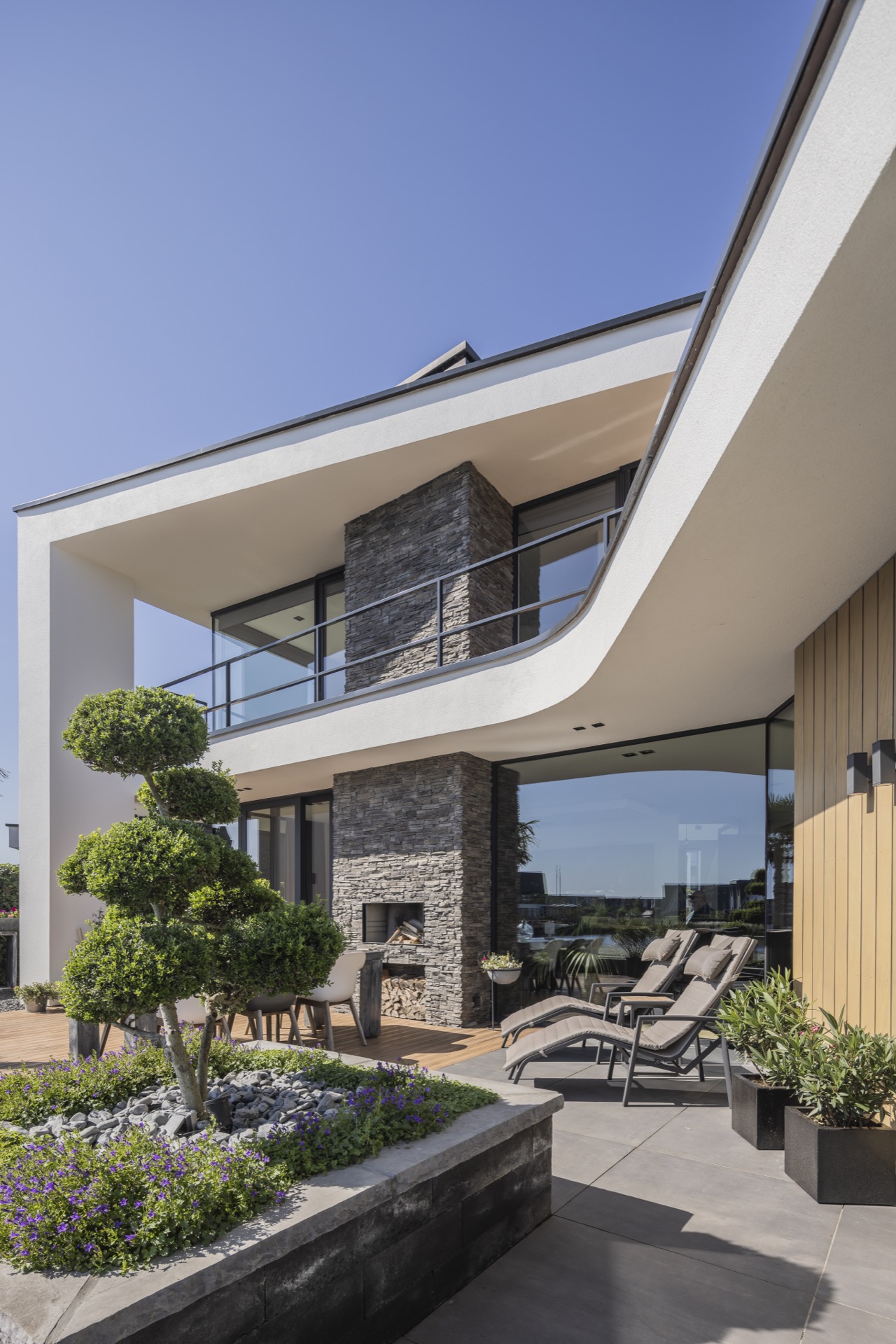
NEW 2026 Jubileum Edition The Best Interior Designers Benelux
Order Now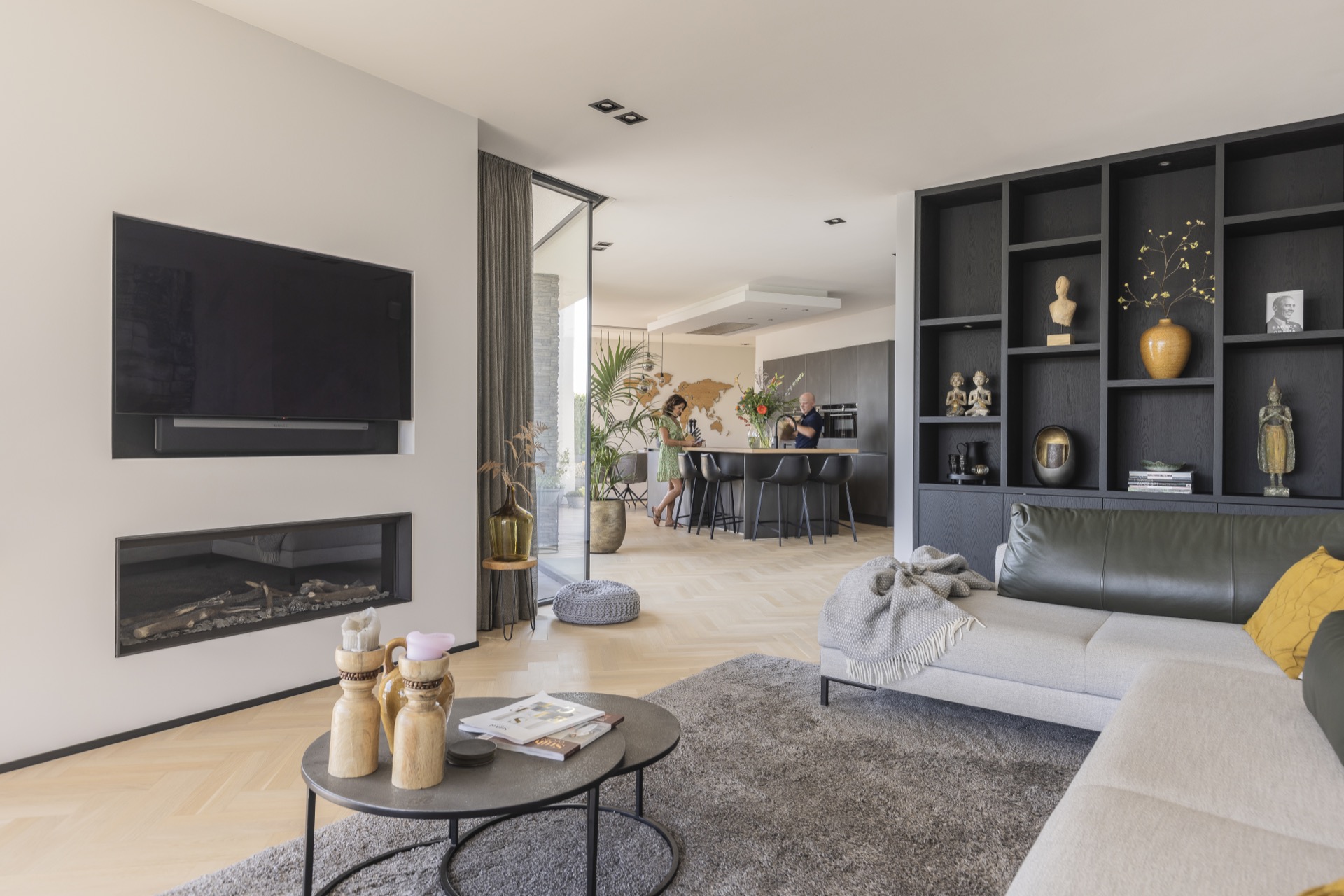
NEW 2026 Jubileum Edition The Best Interior Designers Benelux
Order Now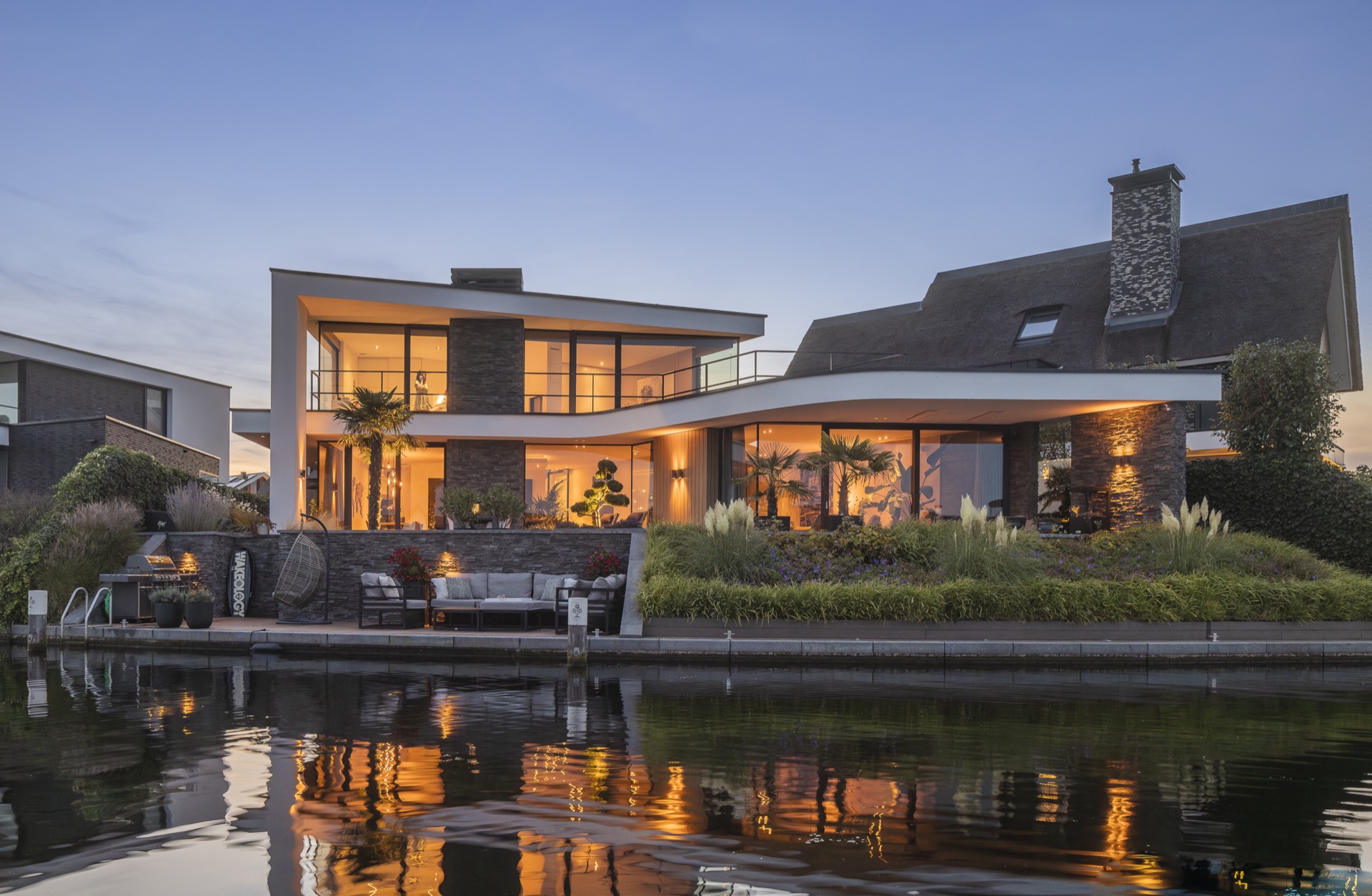
NEW 2026 Jubileum Edition The Best Interior Designers Benelux
Order Now