




Natuurlijk en stijlvol: Oprit en tuinpad met natuurlijke materialen
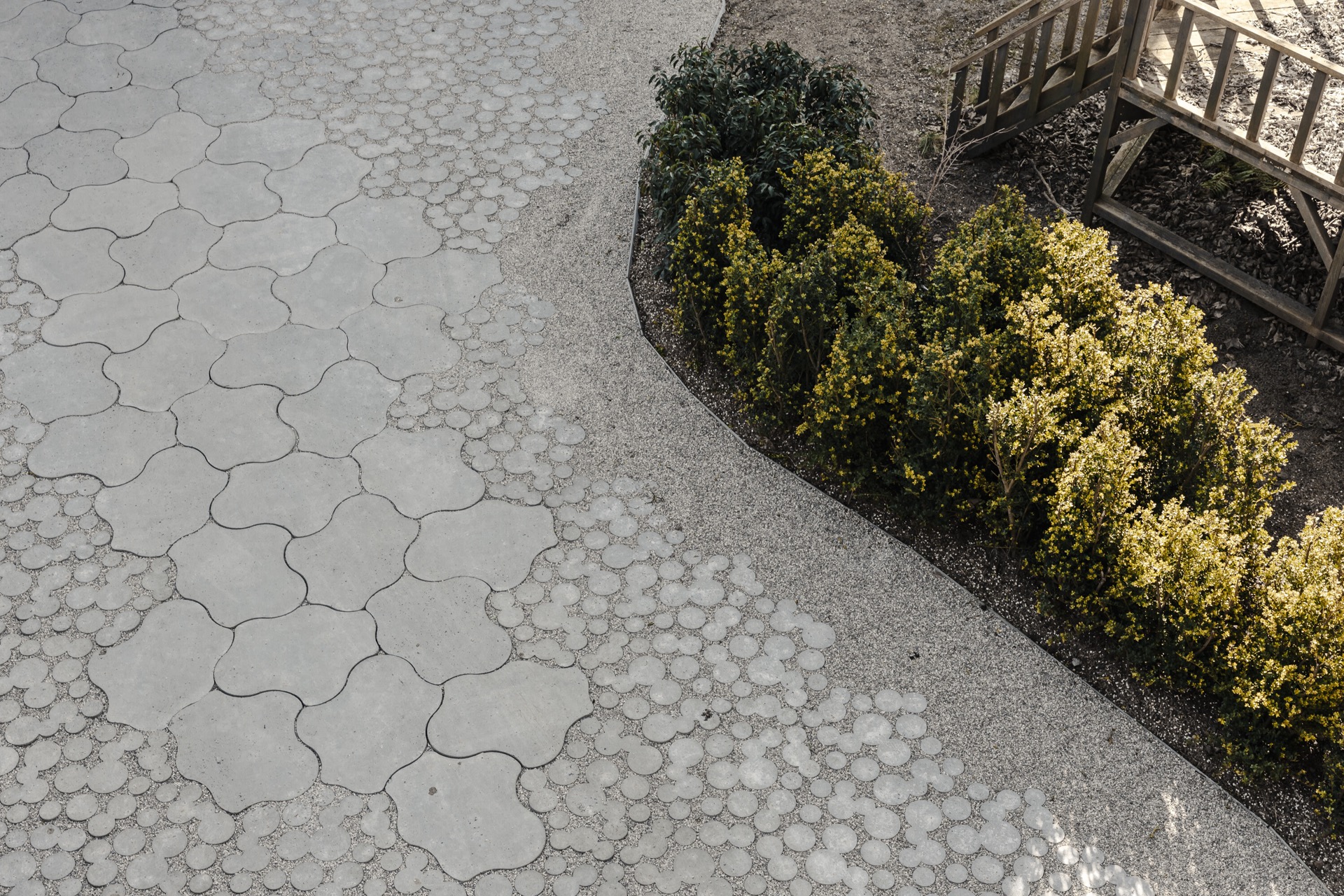
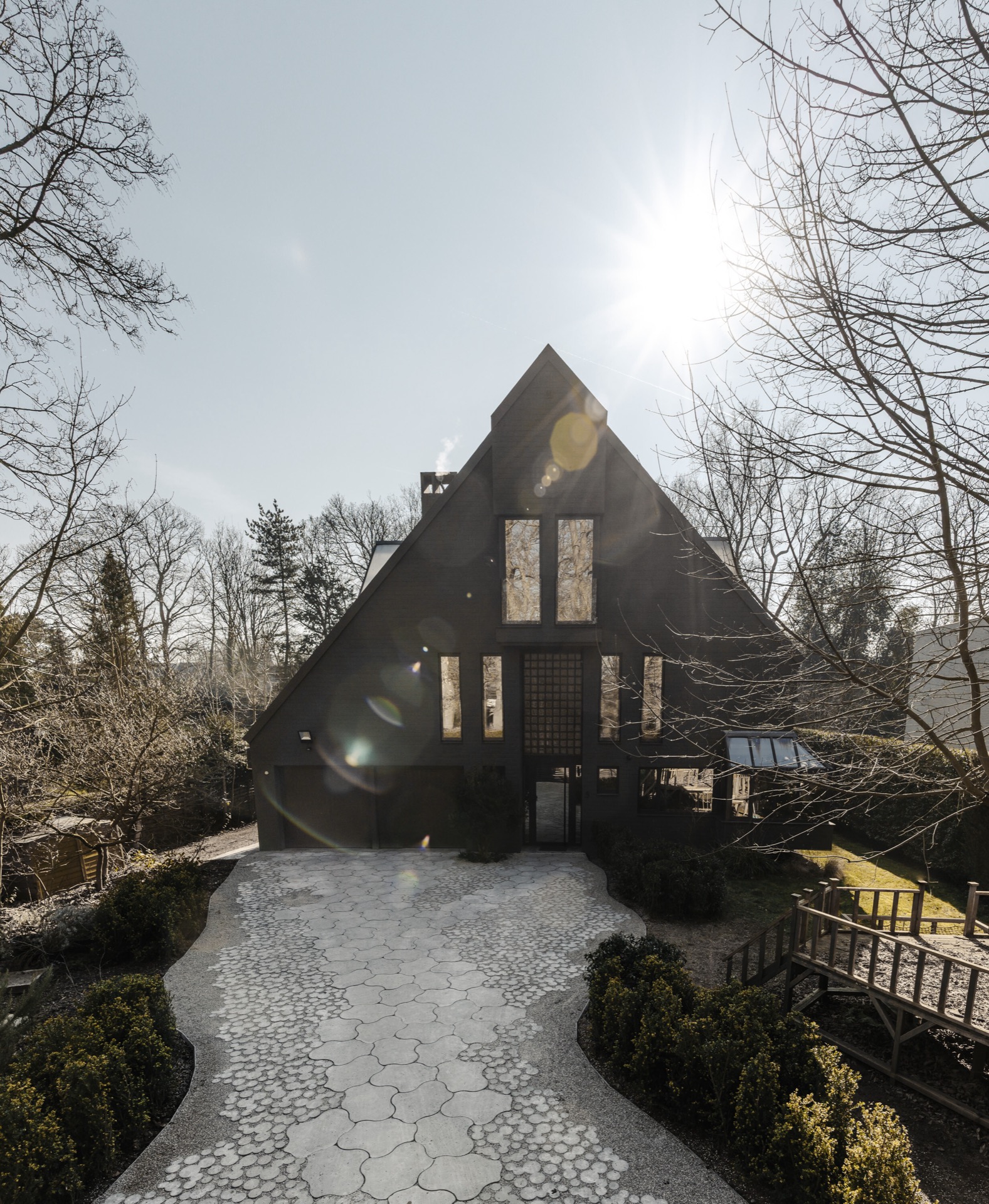
The natural driveway design is immediately visible in the way the project is framed. The driveway features concrete pavers designed with open grids, allowing grass to grow through the spaces between slabs. This infusion of greenery tempers the solid concrete surface, offering soft spots that catch the eye amidst hard materials. Narrow channels filled with fine gravel weave between the pavers, introducing a contrasting texture underfoot while interrupting the otherwise continuous concrete plane. This alternating arrangement breaks the surface into smaller sections that feel closer to natural ground than expansive pavement. Along both sides, slender evergreen shrubs rise in orderly rows, framing the driveway with vertical green accents that define the route without closing it off.
natural driveway design as the architectural starting point
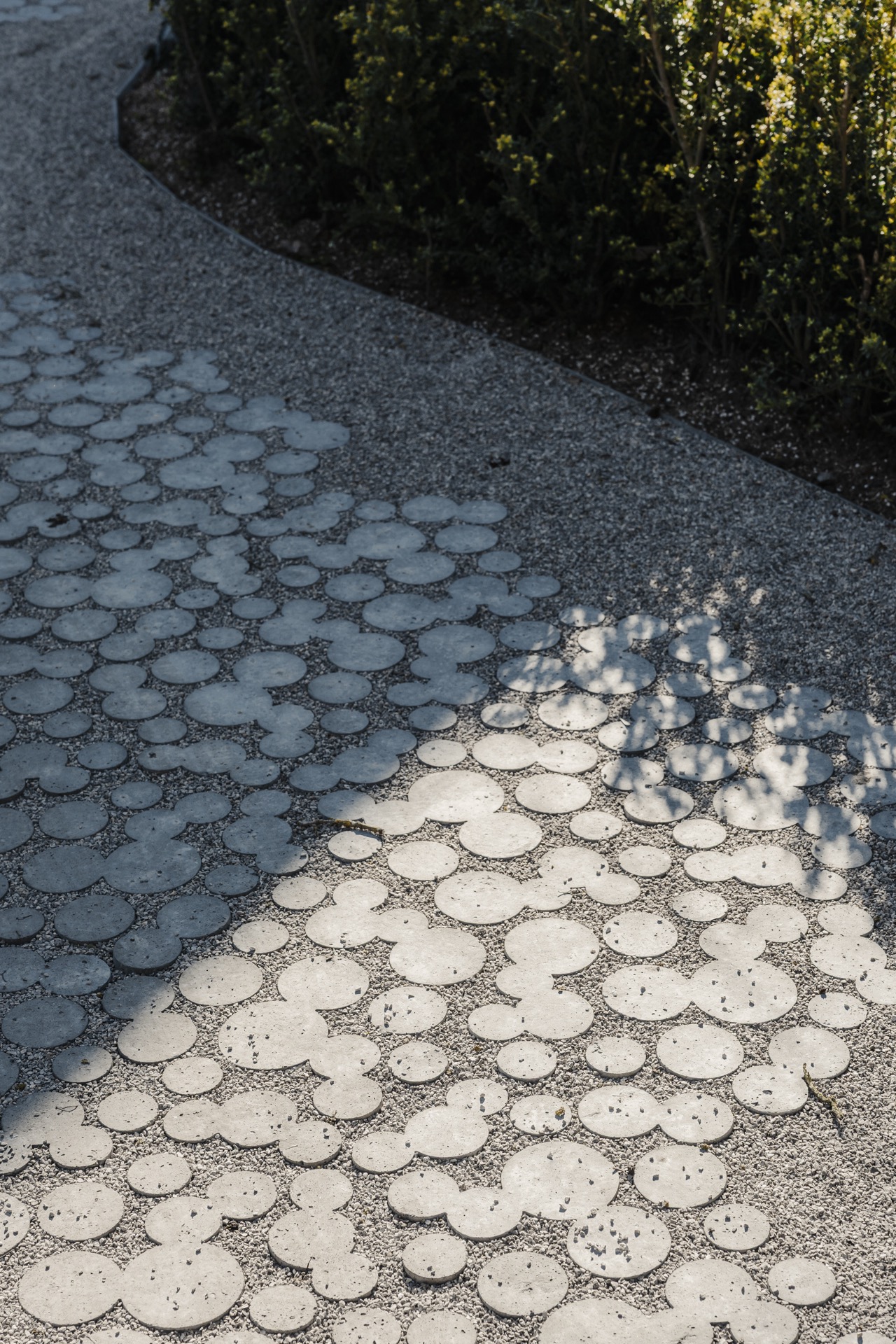
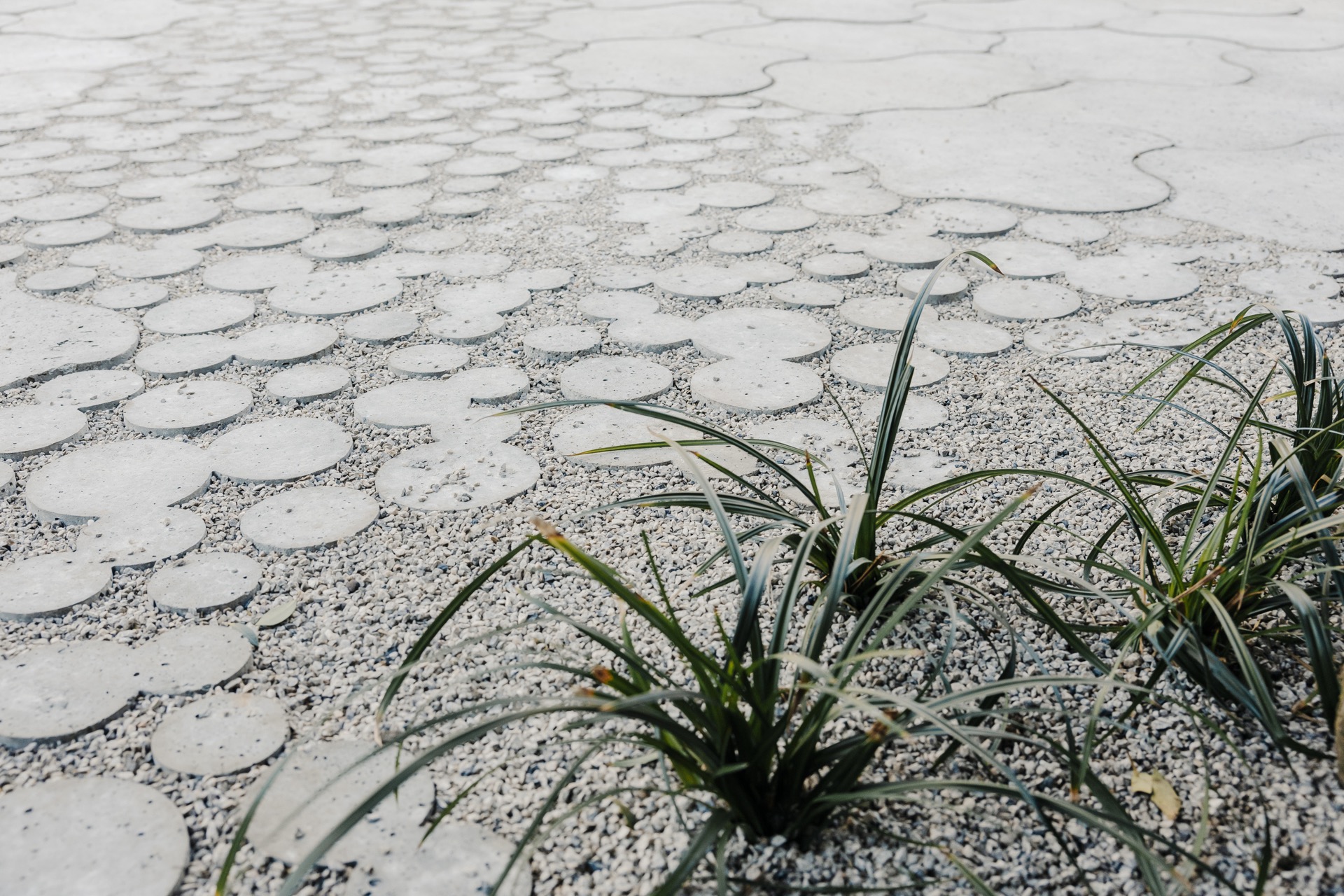
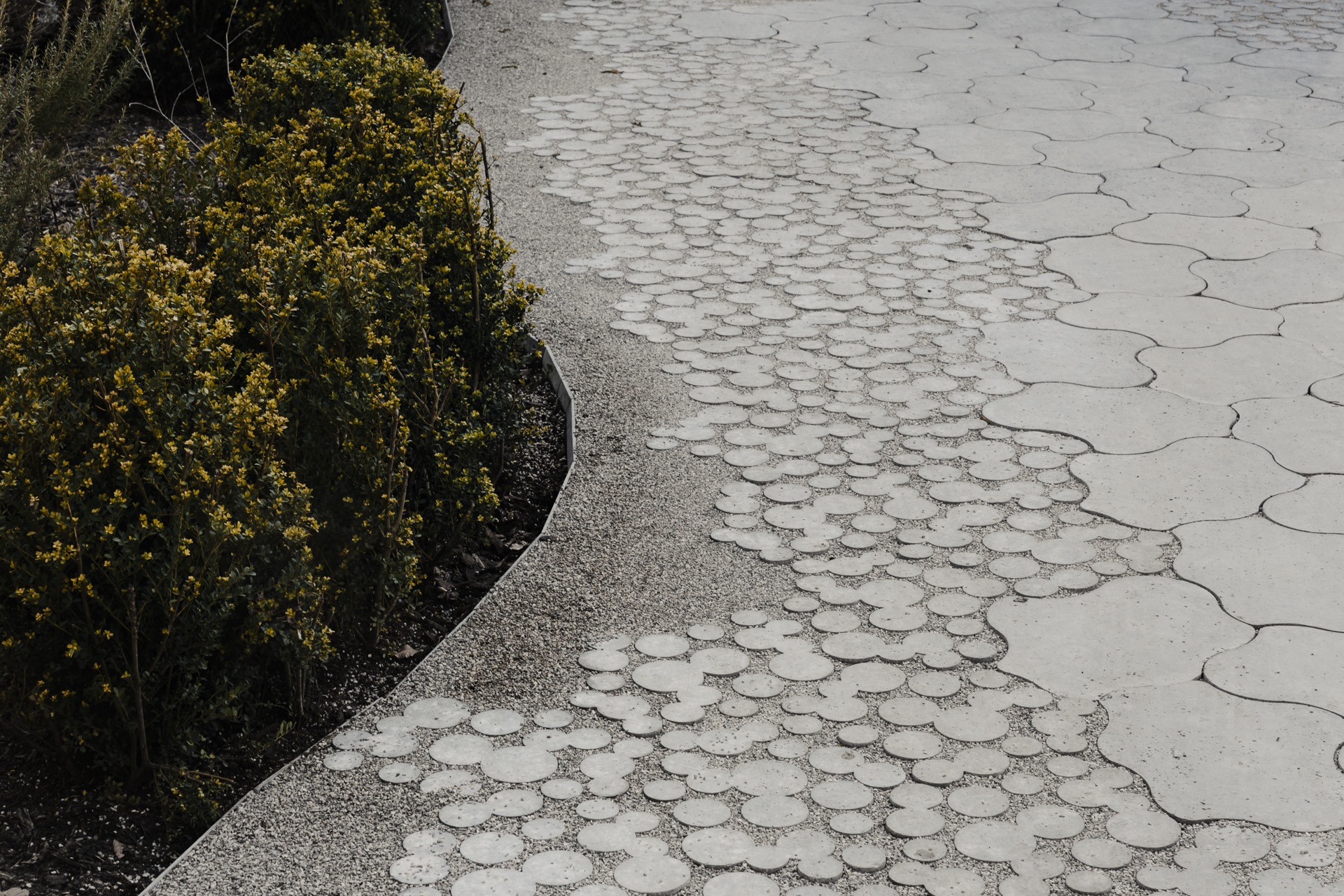
Next to the driveway, a garden path meanders with rounded concrete slabs spaced apart to form open joints filled with gravel. The soft curvature of these slabs contrasts with the driveway’s geometric rigor, encouraging a slower, more deliberate walking pace. The granular gravel stretches softly between the pavers, its texture shifting subtly as sunlight filters over it, creating a lively contrast to the smooth solidity of the concrete. This layering of paving textures clearly distinguishes pedestrian areas from those used by vehicles.
Earth-Toned Palette Blends Built and Natural Elements
Grays of the concrete complement the vibrant greens emerging through the pavers and in adjacent planting beds. Along the edge, wooden sleeper borders add a warm bronze hue, complementing the lush hues of surrounding shrubs and perennials. Changes in light throughout the day animate these tones, as shadows and highlights flow across surfaces, linking landscape and structure visually and tonally.
Materials That Combine Durability and Water Permeability
Structural concrete supports vehicle loads while the open grids allow rainwater to infiltrate, aiding soil moisture retention and reducing runoff. The gravel channels contribute natural permeability, as do the planted borders. Wood edging creates a tactile, organic boundary that separates paved zones gently, without sharp or artificial divisions.
Grass Networks Add Thermal and Ecological Benefits
Grass threads growing through the concrete pavers soften the surface temperature, helping the driveway stay cooler than solid pavement. This living layer enhances soil vitality and supports biodiversity, while withstanding regular vehicle passage thanks to its strong concrete base beneath.
Textural Changes Guide Movement Subtly
Transitioning from large concrete slabs to gravel-filled joints creates a sensory cue that signals a shift in spatial function. Visitors intuitively recognize where driving ends and strolling begins. This subtle layering of textures assists in orientation without the use of fences or visible dividers.
Vertical Green Boundaries Mark the Driveway Edge
Rows of upright evergreen shrubs line the driveway margins, their slender forms creating a living screen that channels movement while preserving openness. Below them, varied herbaceous plants add seasonal texture and softness, their foliage spilling naturally into surrounding beds. This layering produces gradual edges where paving meets planting. That makes the natural driveway design part of the architectural character rather than a loose finish.
Contrasting Surfaces Outline Circulation Flow
The firmness of the concrete contrasts with the shifting feel of gravel underfoot, distinguishing vehicle routes from pedestrian paths. This tactile interplay enriches the spatial experience by providing clear, yet unobtrusive, distinctions between zones.
Adapting to a Range of Outdoor Settings
The restrained color palette and natural materials suit both urban gardens and countryside landscapes. Materials show weathering gracefully while maintaining visual cohesion with adjoining greenery, offering a practical and resilient solution for diverse environments.
Organic Paths Soften Hardscaped Surfaces
Rounded concrete slabs in the garden path break the driveway’s rectangular rhythm, reducing visual mass and encouraging the eye to drift toward plants and beyond paved boundaries. This organic shape brings an open feeling and invites a slower, explorative movement.
Sequential Surface Textures Encourage Wayfinding
From grass-filled concrete to gravel joints, changing textures gently prompt users to alter pace and behavior. This layered approach leads movement intuitively, underpinning smooth navigation without the need for explicit signage or barriers.
Natural Edges Meld Structural and Living Elements
Wood edging combined with dense planting smoothely transitions from paved surfaces to garden beds. This avoids abrupt contrasts, instead blending architectural features into the landscape for a cohesive and welcoming outdoor experience.
Flowing Concrete Slabs Provide Flexible Circulation
Rounded slabs placed with open spaces form varied walking routes, contrasting with the driveway’s tight grid and encouraging diverse movement patterns within the garden. This interplay adds dimension and interest to the layout.
A Layered Material Palette Meets Practical Needs
Combining concrete, gravel, wood, and layered planting achieves a balance of durability, ecological benefit, and sensory richness. These materials create surfaces resilient enough for cars and pedestrians alike, without losing connection to the environment or relying on ornamental accents. That makes the natural driveway design part of the architectural character rather than a loose finish.
Want to see more of Deer? View the page of Deer for even more great projects and company information.


.png)