





Natural materials in house design with wooden details
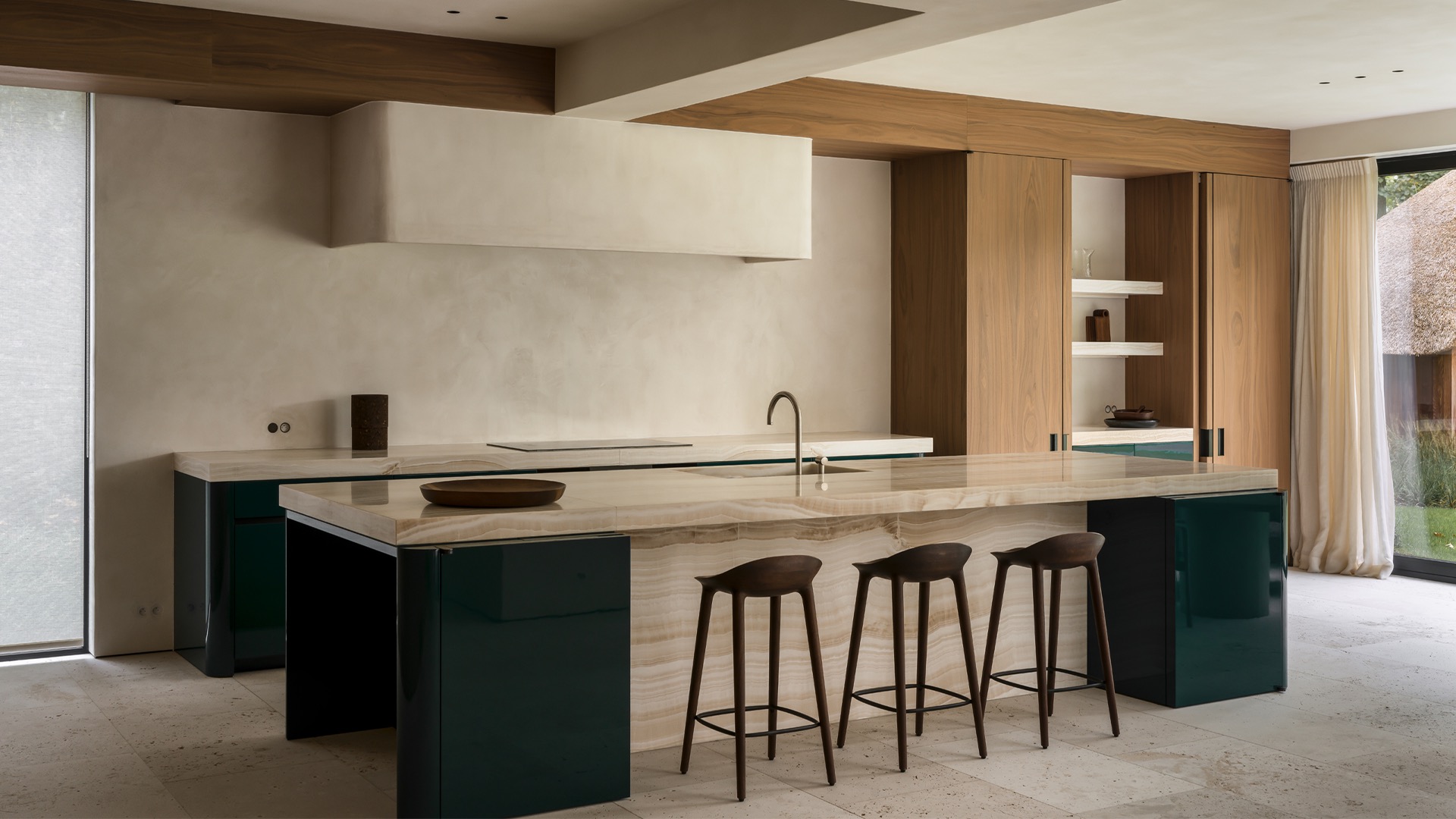
The natural materials home is immediately visible in the way the project is framed. Sunlight filters through large windows, highlighting the grain of wood panels that line the walls of the living spaces. The kitchen island features a natural wood finish countered by smooth stone surfaces, creating layered textures that invite touch. Throughout the residence, soft beige floors transition into wooden shelves and cabinetry, where objects rest against simple wall planes.
natural materials home as the architectural starting point
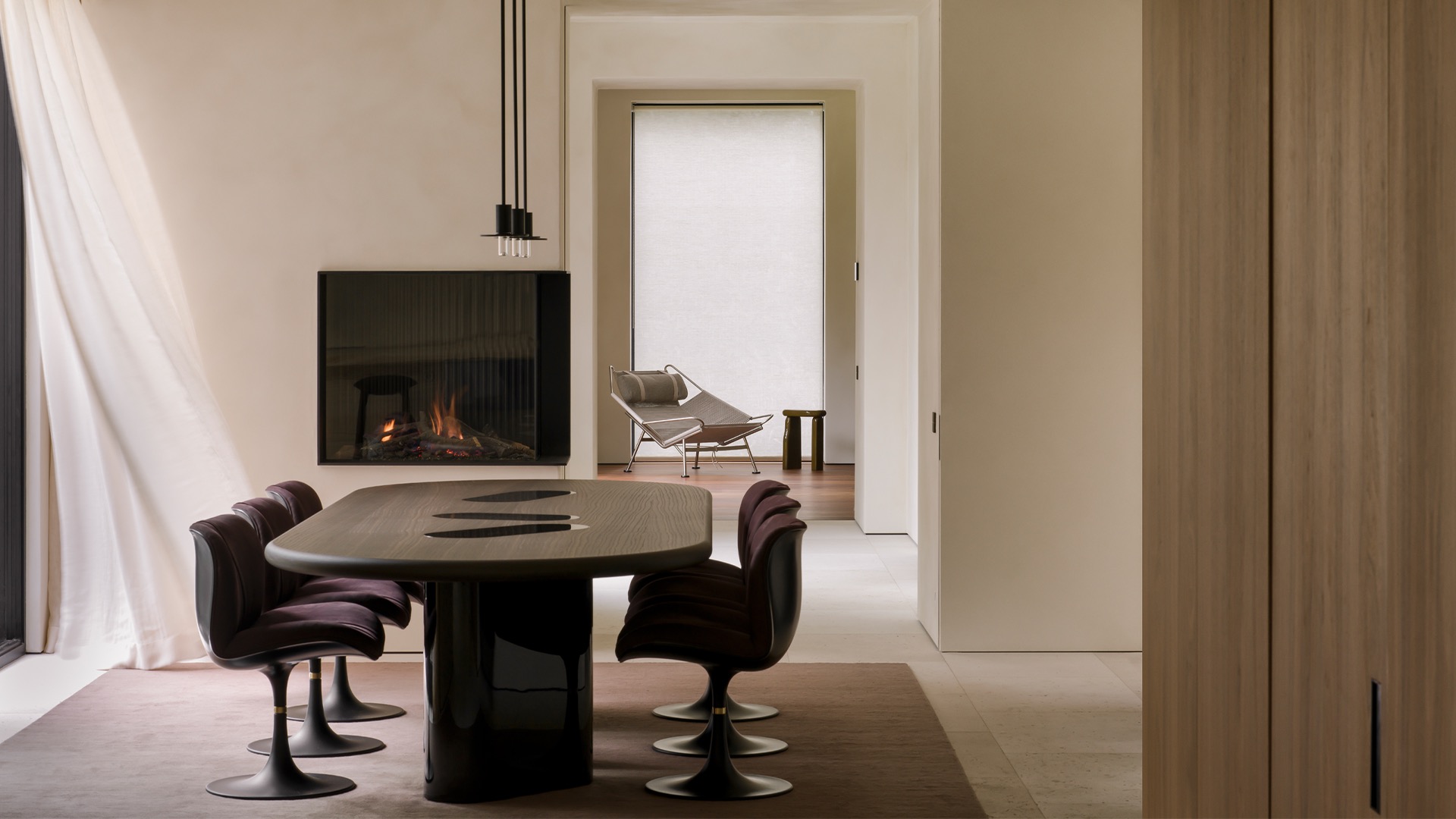
The living area juxtaposes glossy lacquered wood furniture with rawer natural materials like plaster walls and ceramic floor tiles. Built-in shelving made from warm-toned timber frames books and objects, referencing practical wooden bookshelf ideas while reinforcing the tactile nature of the space. A gas fireplace is nestled within a stone surround, its clean lines softly interrupted by the uneven surface of the natural stone.
Natural Light Enhancing Materiality
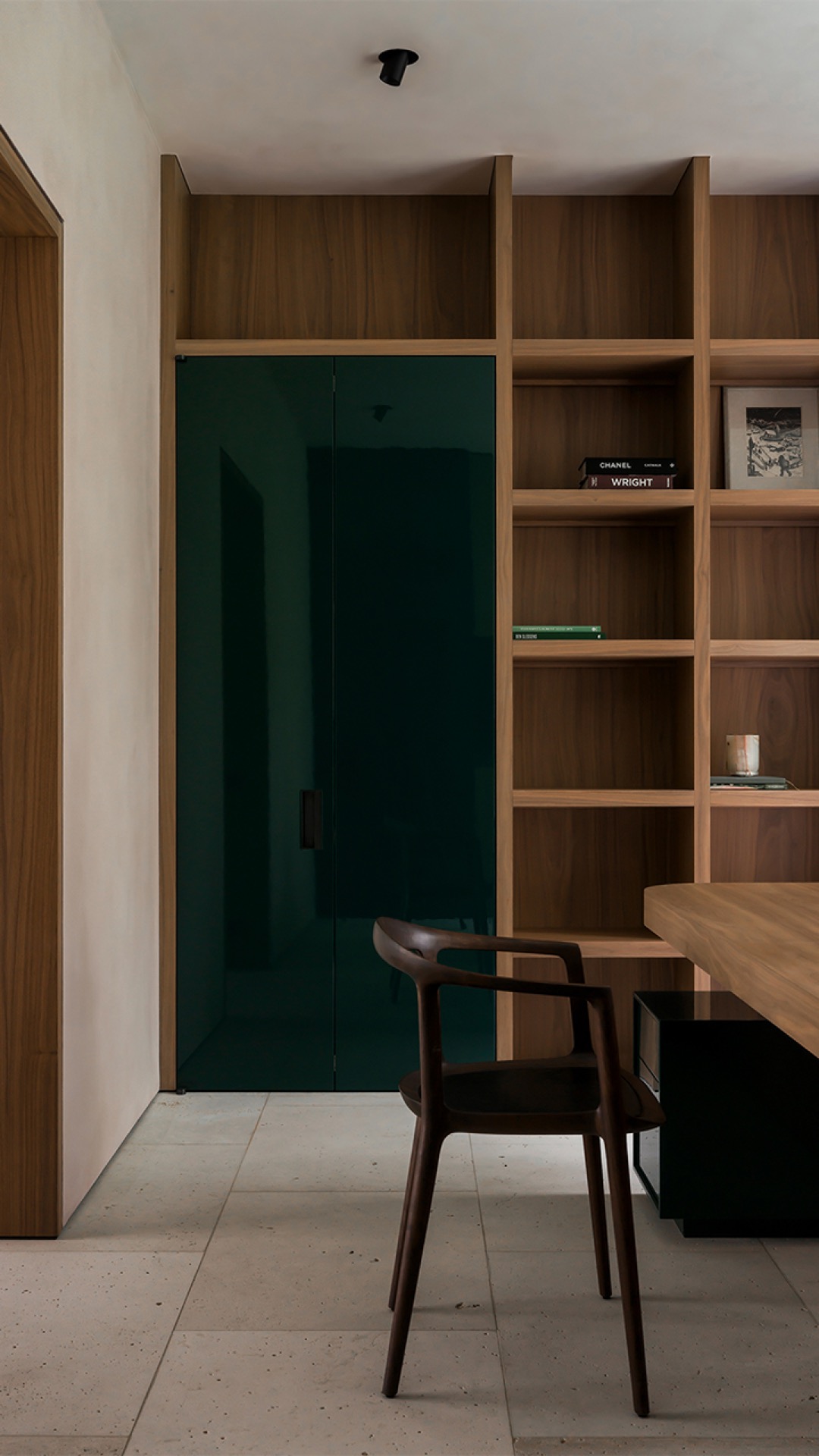
Large windows and a green sliding door not only provide views but also amplify the interplay between interior finishes and daylight. The light reflects off smooth ceiling plaster and warm wooden surfaces, casting subtle shadows that change through the day. These transitions in illumination emphasize the texture of natural materials used across the home.
Kitchen Featuring Warm Wood and Stone
The kitchen centrepiece is an island with a natural wood base topped by a stone countertop that extends with gentle curves. Cupboards under the counter continue the wood motif, while appliances are integrated into the furniture to preserve surface continuity. Warm kitchen style shows through in the choice of wood species and the earthy colors that complement the stone’s grain.
Built-In Storage Highlights Wooden Details
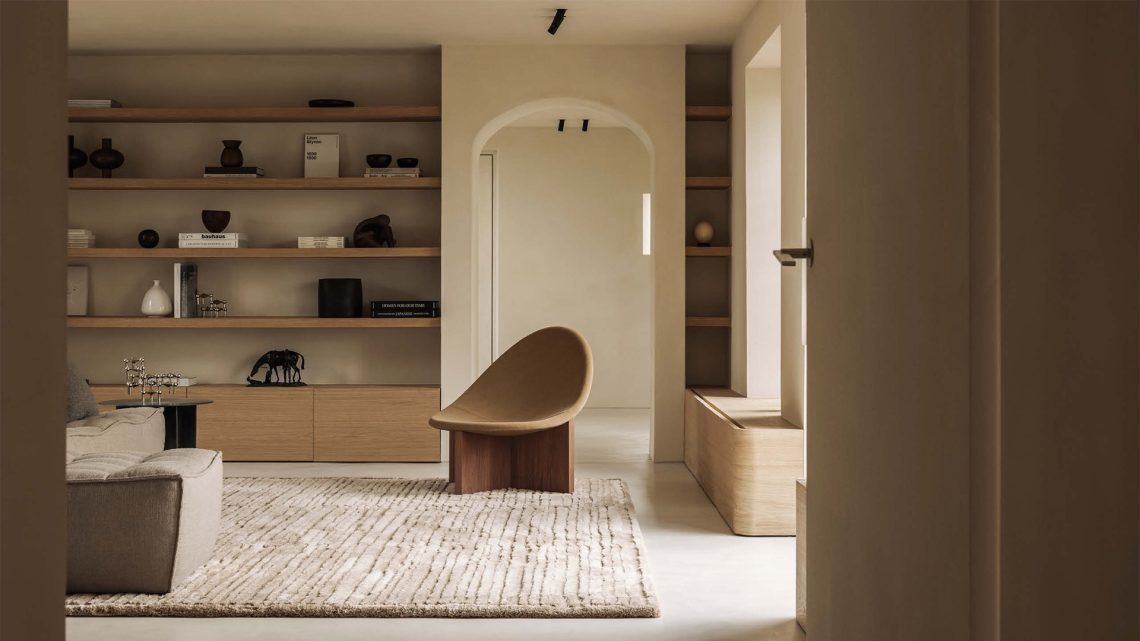
Storage units blend practical shelving with wooden finishes that reveal the material’s texture. Shelves and cabinets hold carefully arranged items, serving as an example of wooden bookshelf ideas adapted for varied objects. The design respects proportions and material contrasts, revealing close attention to detail in spatial organization.
Subtle Reflective Surfaces and Glossy Finishes
Glossy wood finishes appear not as decoration but as surfaces that interact with light and contour in space. Doors and cabinets reflect parts of the room, creating a soft doubling effect that adds depth. These sleek surfaces balance against rougher elements, such as plaster walls and natural stone, lending variety without overt sharp transitions. That makes the natural materials home part of the architectural character rather than a loose finish.
Spatial Flow Supported by Material Choices
The arrangement of rooms—from kitchen to dining to workspace—is marked by material continuity and thoughtful differentiation. Floors transition from ceramic to wood, while walls alternate between plaster and wooden paneling. These transitions both delineate areas and maintain coherent spatial flow. The restrained palette underscores the materials’ inherent characteristics without competing for attention.
Natural Tones Anchoring Bedrooms and Bathrooms
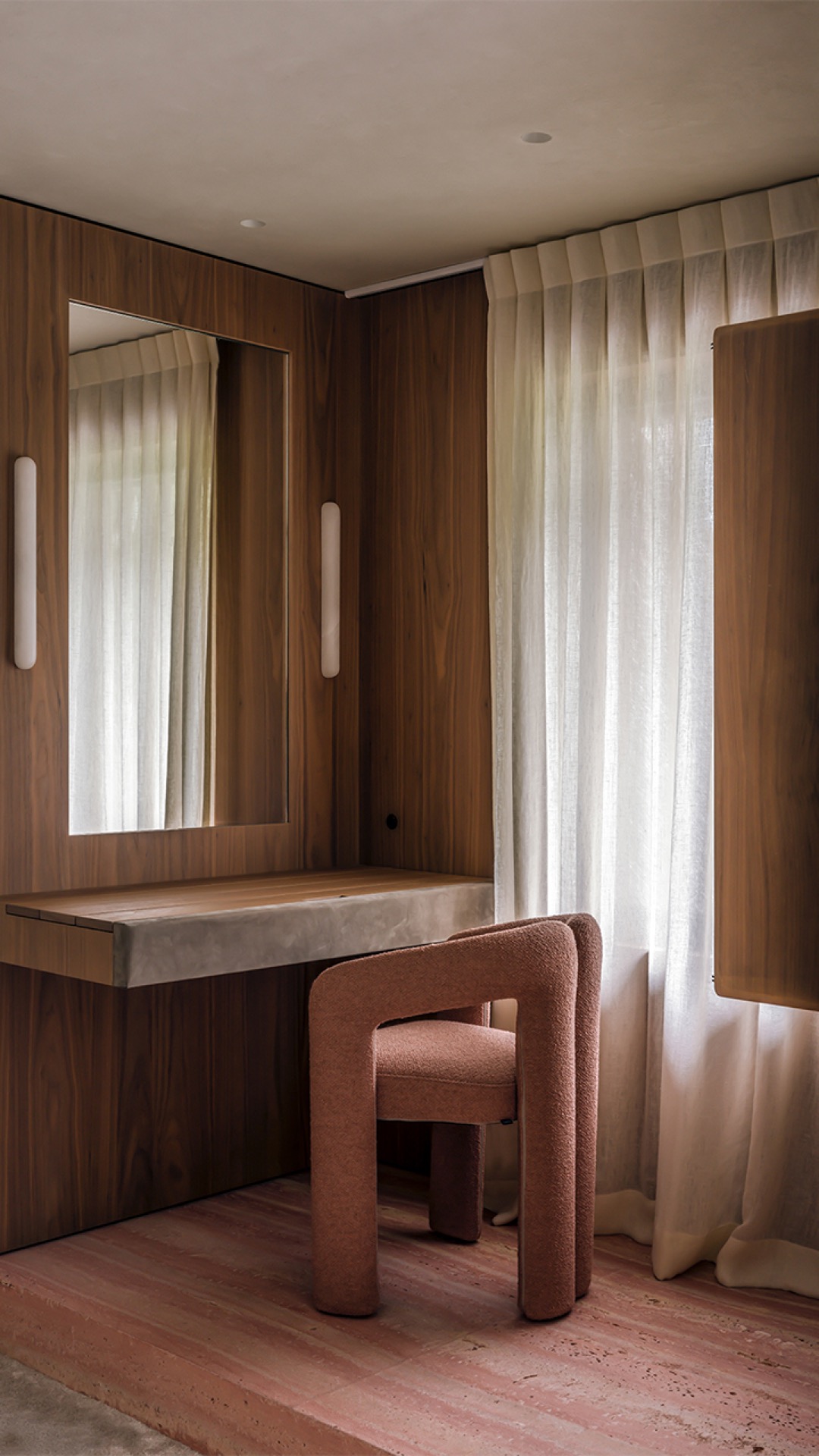
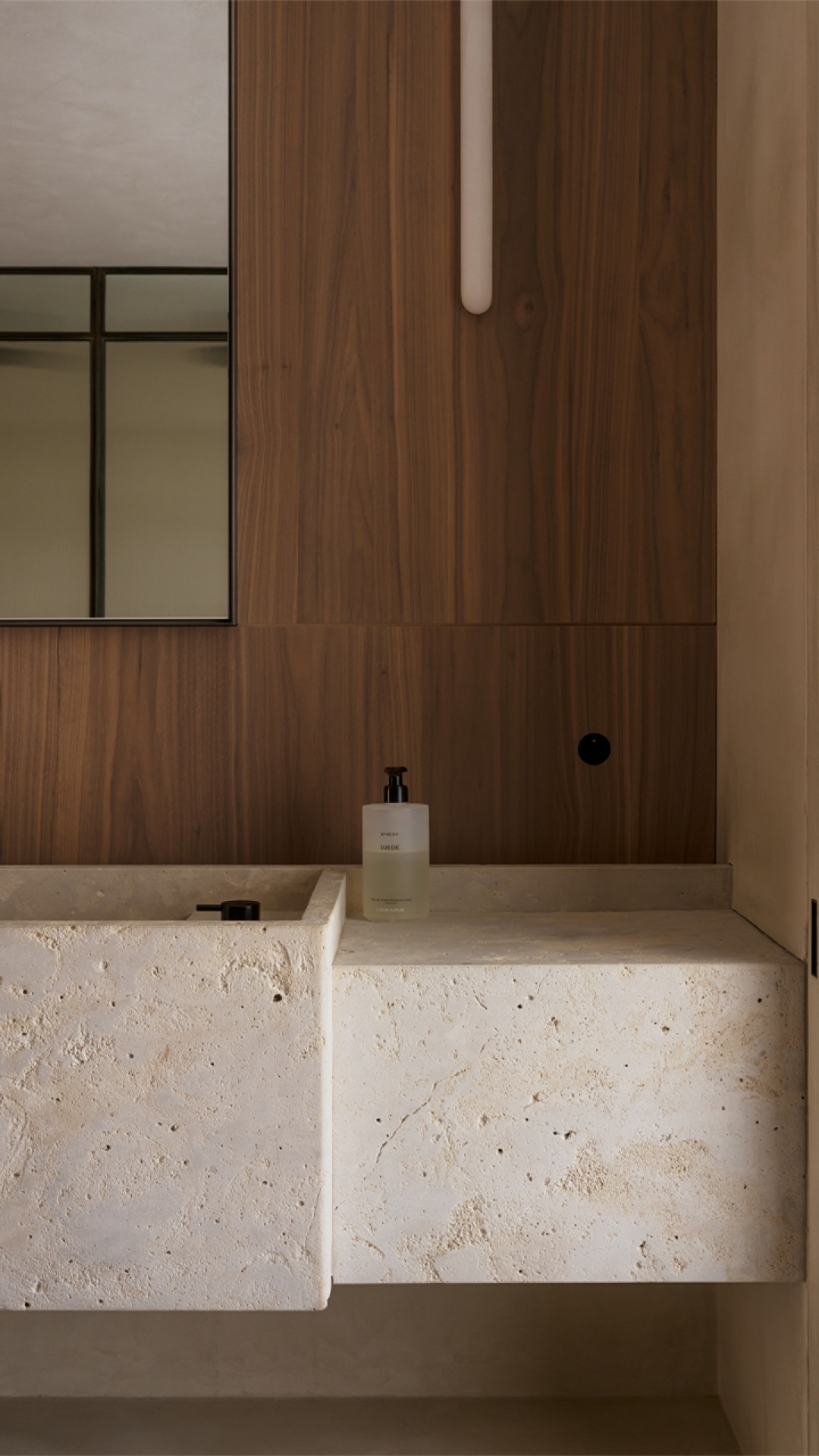
In private spaces, wood panels line the walls near large windows, enhancing connection to the exterior environment. Bathrooms incorporate wooden furniture with natural textures complemented by soft lighting around the basin area. The tonal range draws on warm beiges and subtle wood hues to maintain a calm ambience.
Innovative Lighting and Ventilation Elements
Lighting is designed with subtlety; fixtures like mini spotlights integrate directly into ceilings and cabinetry, avoiding visual clutter. Ventilation spans long, narrow insets that align with architectural features, emphasizing linearity and controlled insertion into the design. These technical elements support the natural materials home concept without detracting from the tactile surfaces.
Throughout the home, natural wood design merges with varied texture and light to create an environment that prioritizes material presence and spatial coherence. The varying grain patterns on shelving, the warm hues of wooden kitchen cabinets, and the tactile qualities of plaster and stone combine in a measured composition that evolves along the circulation paths.
Details like a green-painted sliding door introduce subtle color references that harmonize with the natural palette while marking transitions between rooms. This juxtaposition of materials and colors underscores a careful exploration of contrasts that animate the overall interior. That makes the natural materials home part of the architectural character rather than a loose finish.
Want to see more of prado? View the page of prado for even more great projects and company information.

.png)