






Clear water sets the tone here. The natural swimming pond sits at the center of the garden, its rounded outline held by a mix of stone, timber, and planting. From the first view, the water reads as the main surface in the composition, while the surrounding materials keep the edges grounded and calm. The natural swimming pond with waterfall is not treated as an add-on, but as the feature around which the rest of the garden is arranged.
natural swimming pond with waterfall as the architectural starting point
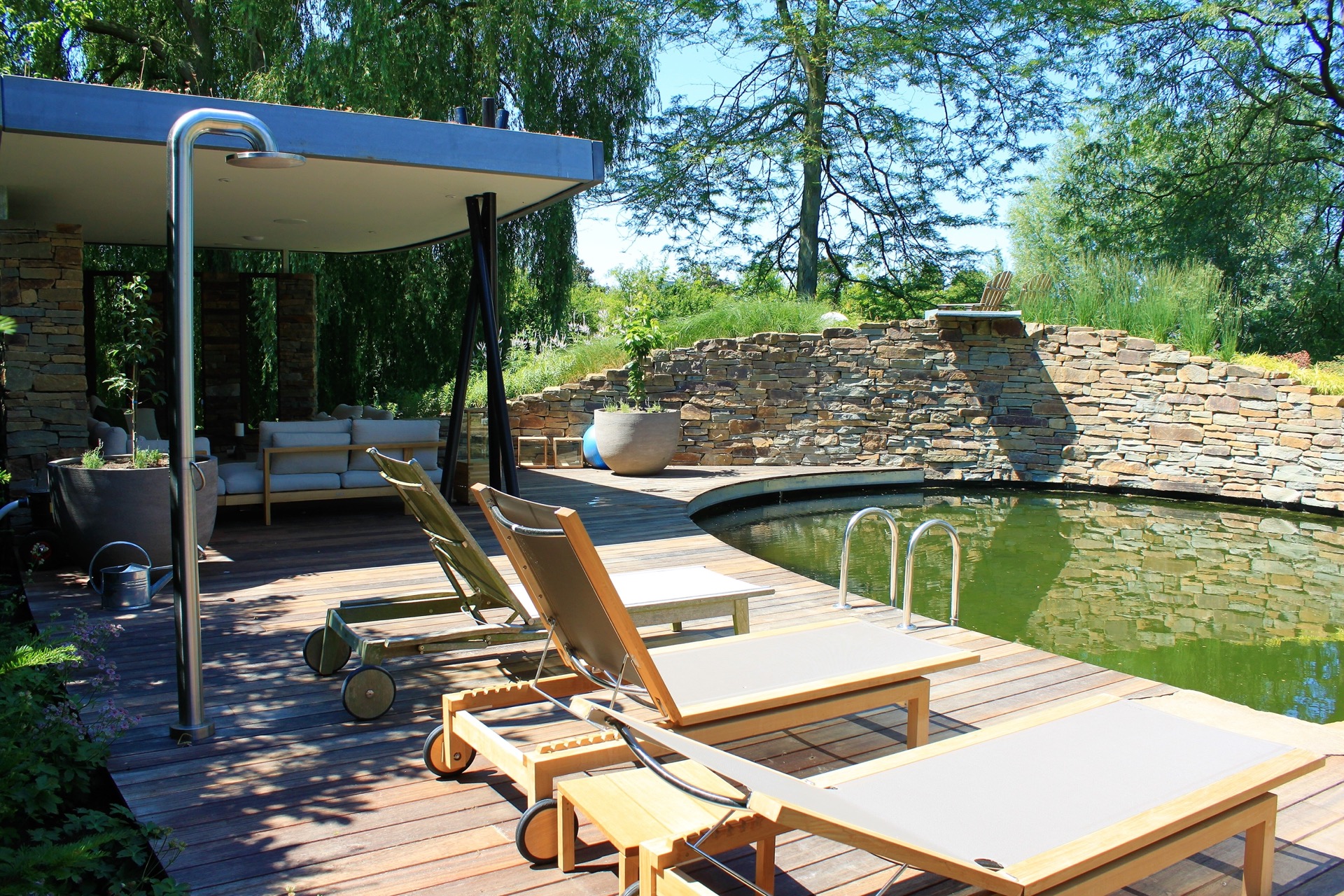
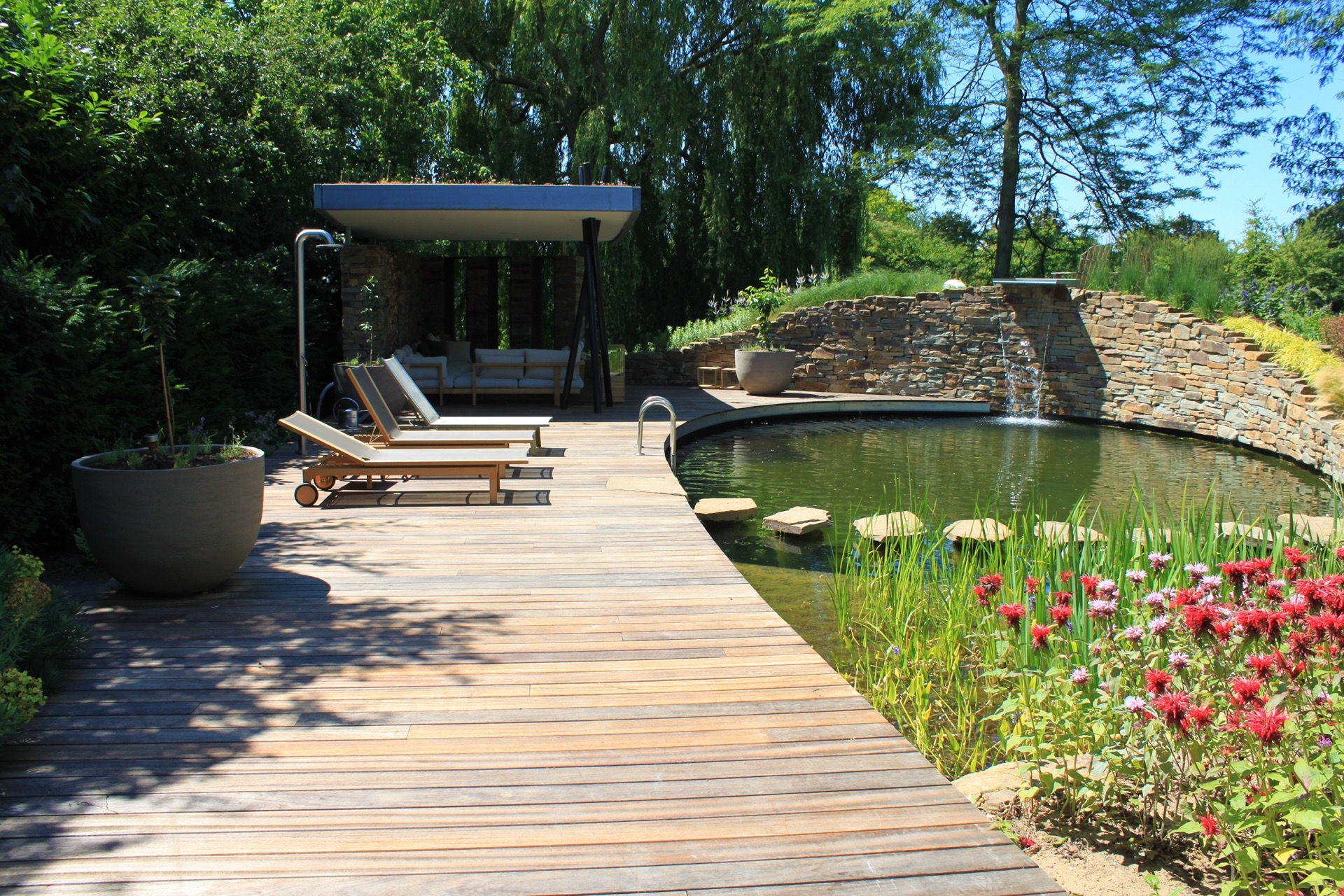
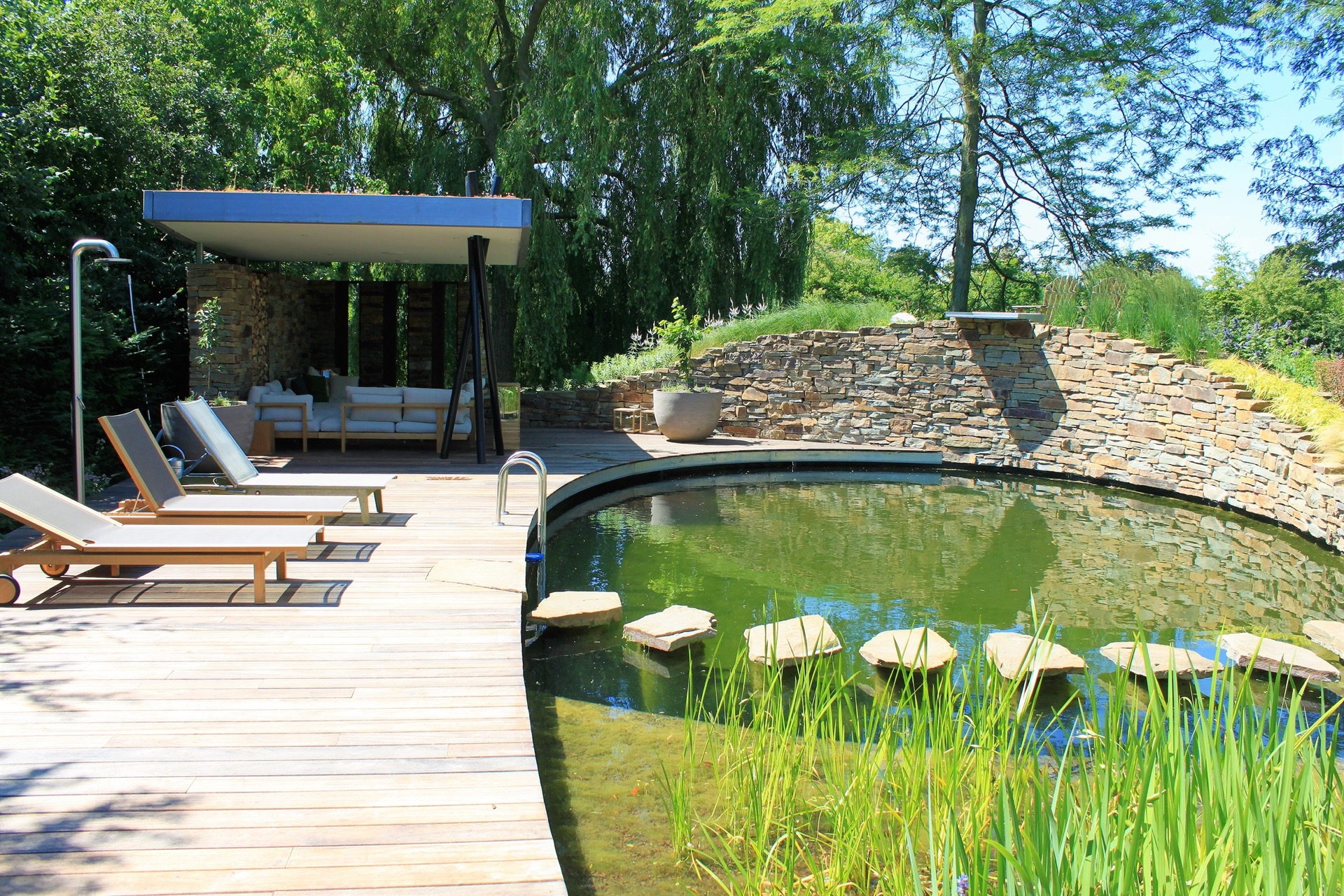
The pond has an organic, rounded form that softens the geometry of the hard surfaces around it. Instead of a rigid basin, the waterline bends gently past the wooden deck and the stone edges. That movement gives the garden a slower pace. The clear water sits in contrast to the darker stone wall and the planted border, so each layer around the pond remains easy to read. In the middle of the composition, the swimming pond with clear water becomes the visual anchor.
Seen from the deck, the edge detail matters. The waterline shifts from timber to stone and then back to planting, with no abrupt break in the material rhythm. The natural swimming pond with waterfall gains its presence from that sequence: a rounded pool, a defined edge, and a water feature that brings movement into the still surface. The result is a setting that feels composed through surfaces rather than ornament.
Stonework that holds the edge and frames the water
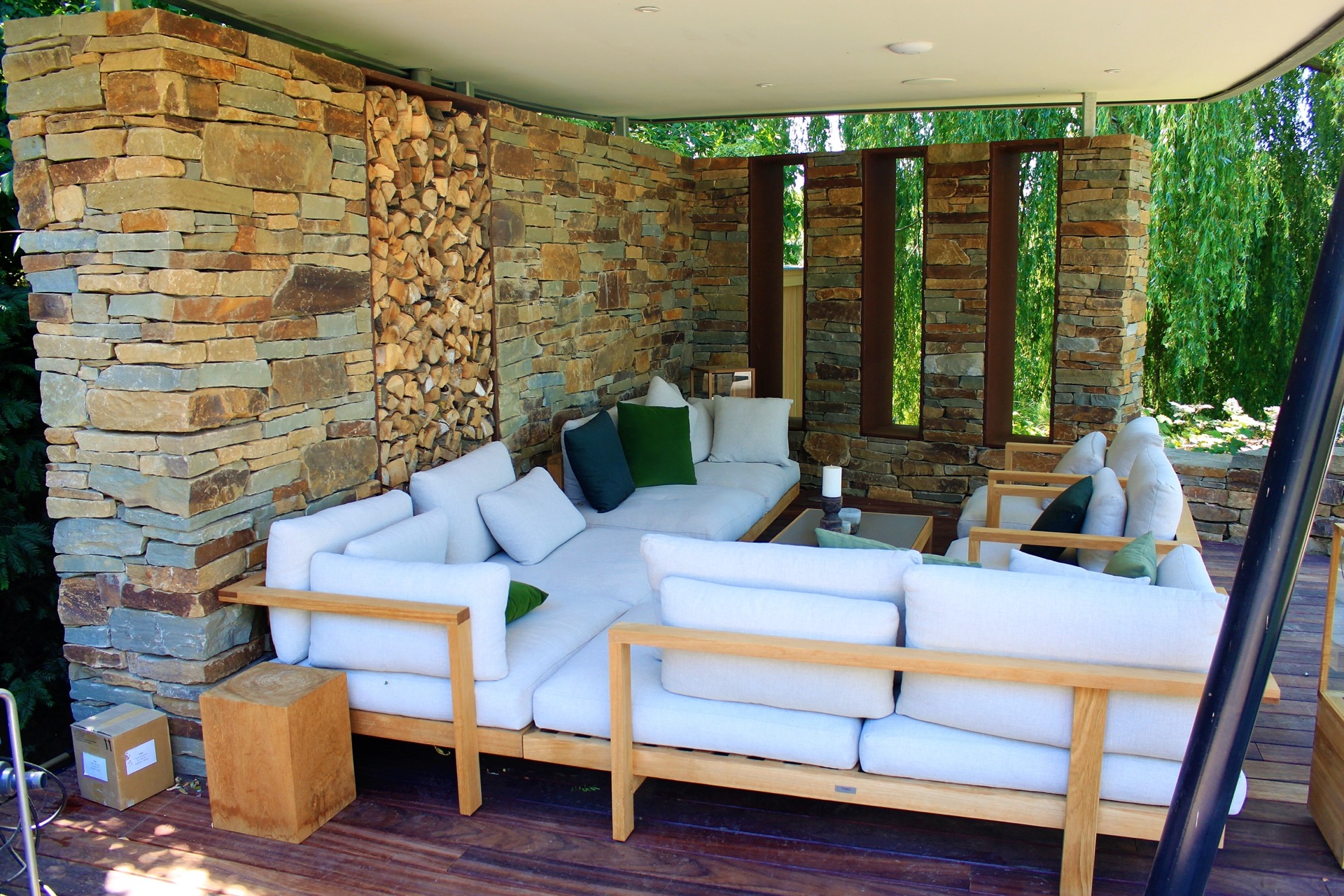
The natural stone retaining wall is built from stones in different sizes and tones, which gives the wall a layered look even before the water feature comes into view. It rises as a solid backdrop behind the seating area and along parts of the pond edge, giving the garden a clear boundary without closing it off. The texture of the stone is strong enough to frame the pond, yet irregular enough to avoid a flat, engineered finish.
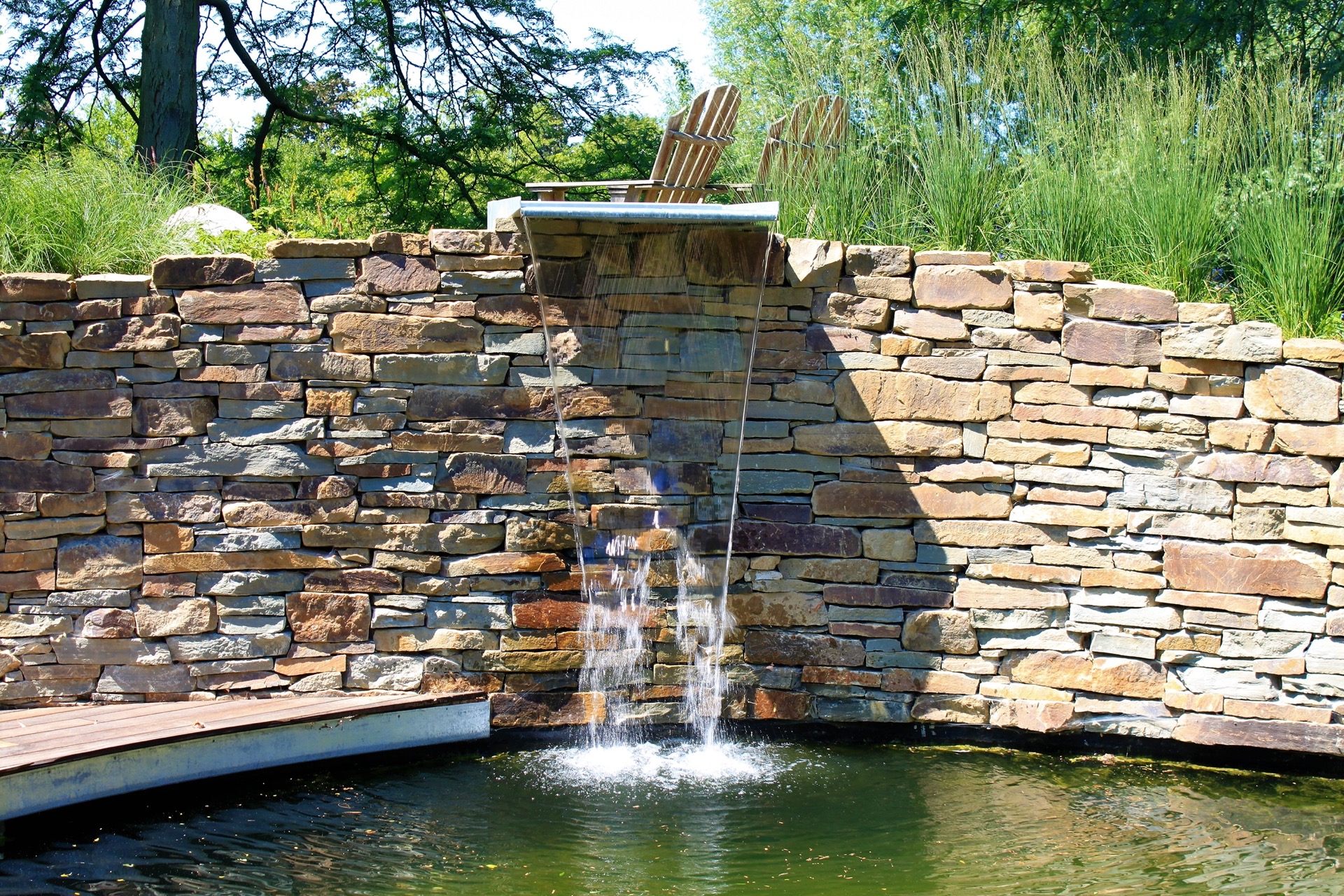
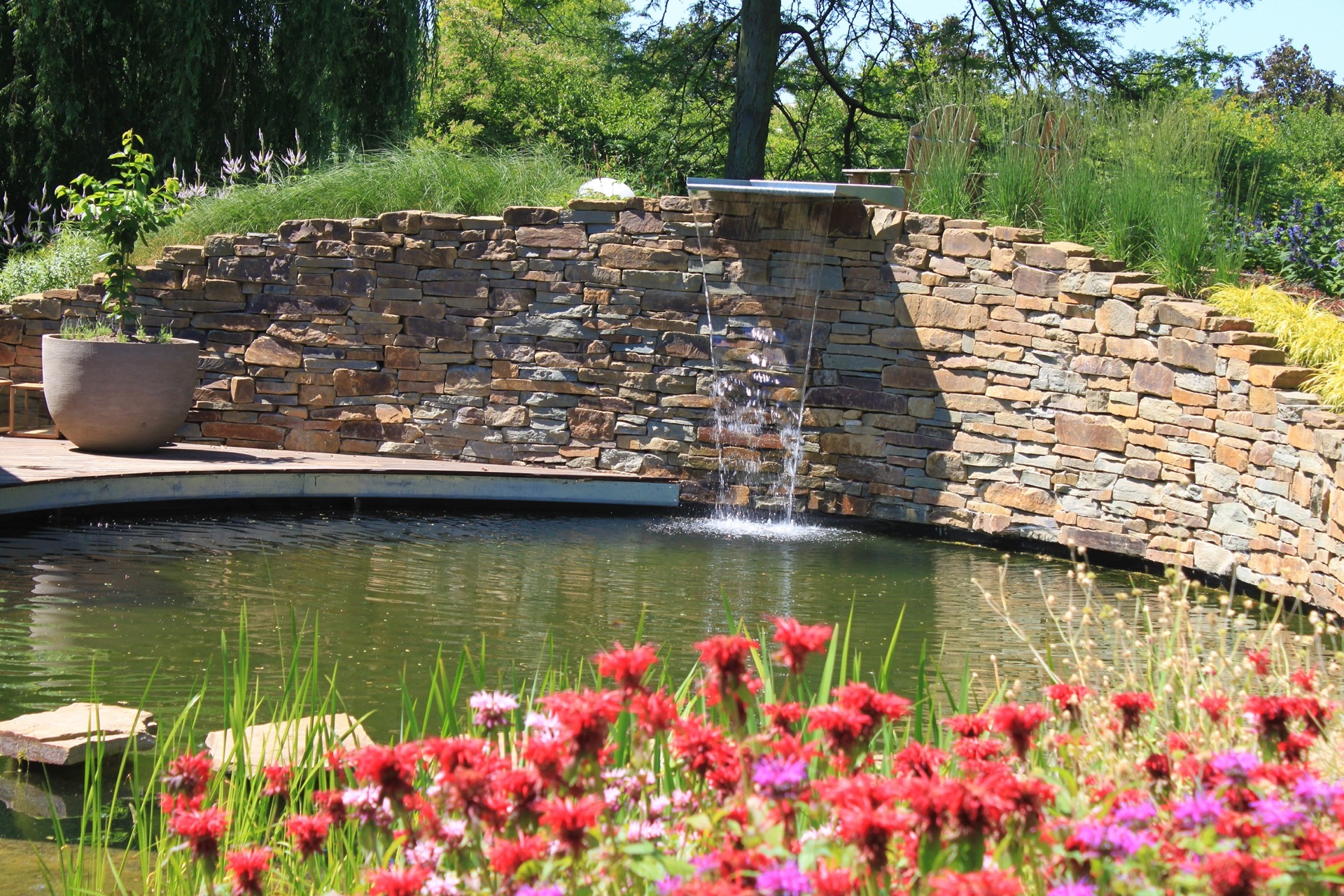
In several views, the stone wall does more than mark a line. It forms the base for the pond waterfall feature and sets up a visual stop behind the deck and seating zone. Water comes through openings in the masonry and drops into the pond below, turning the wall into part of the experience rather than a purely structural element. The natural stone retaining wall also gives the adjacent plants a more grounded edge, especially where grasses and flowering stems sit in front of it.
Water moving through the wall
The waterfall is a small but decisive detail. It appears as a controlled stream from the stonework, with water breaking against the pond surface below. Because the wall is built from mixed stones, the moving water stands out immediately. The pond waterfall feature adds sound and motion, but visually it also changes the depth of the scene: the flat plane of the water gets interrupted by a vertical line of flow, which makes the whole composition feel more active.
Close to the waterfall detail, the materials work in layers. Stone, water, and planting overlap instead of sitting in separate zones. That overlap is visible in the way the pond edge is handled, with the water landing near the planting border and the stonework reading as both retaining structure and backdrop. The natural swimming pond with waterfall uses that contrast carefully, letting one material sharpen the next.
A wooden deck that extends the edge of the pond
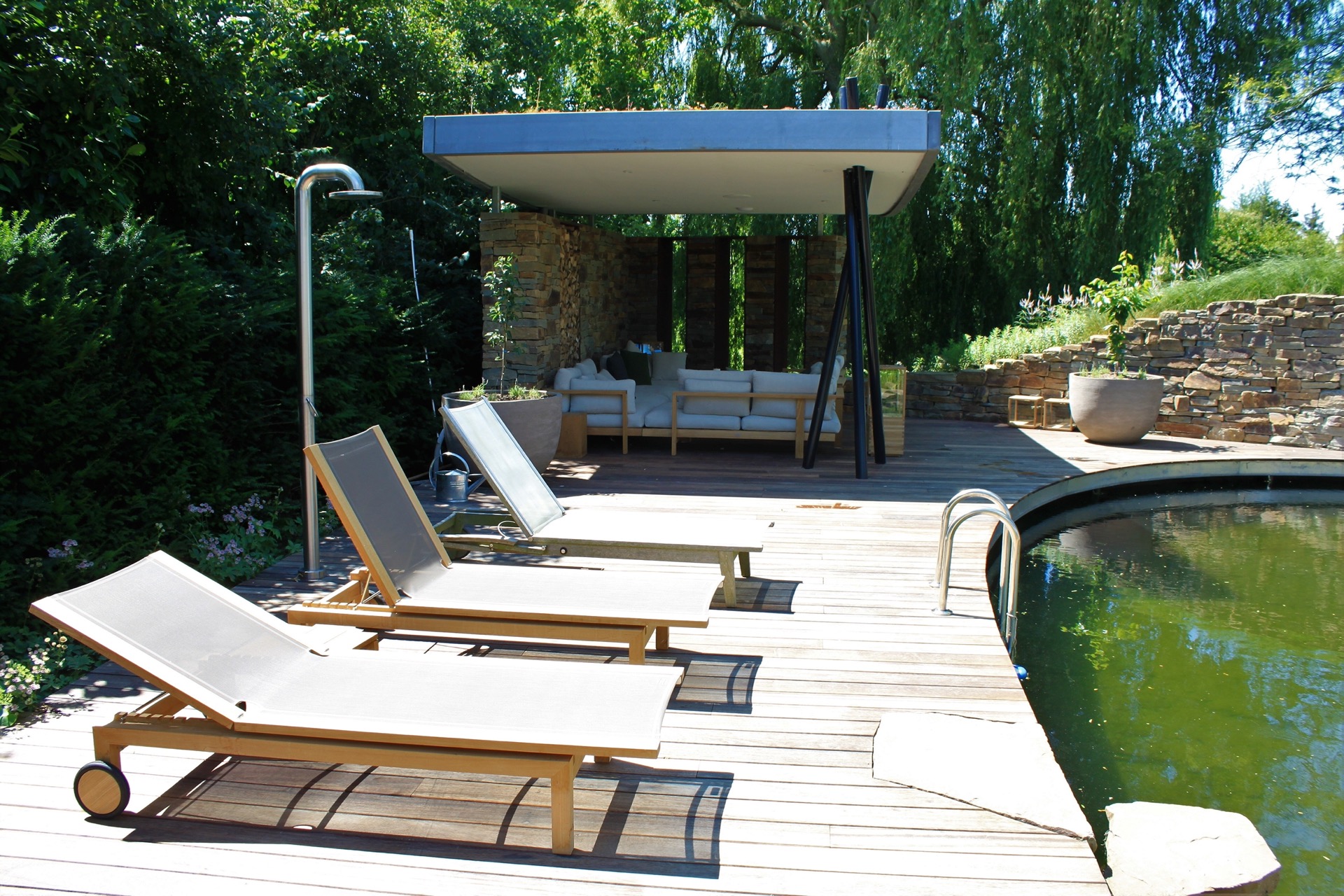
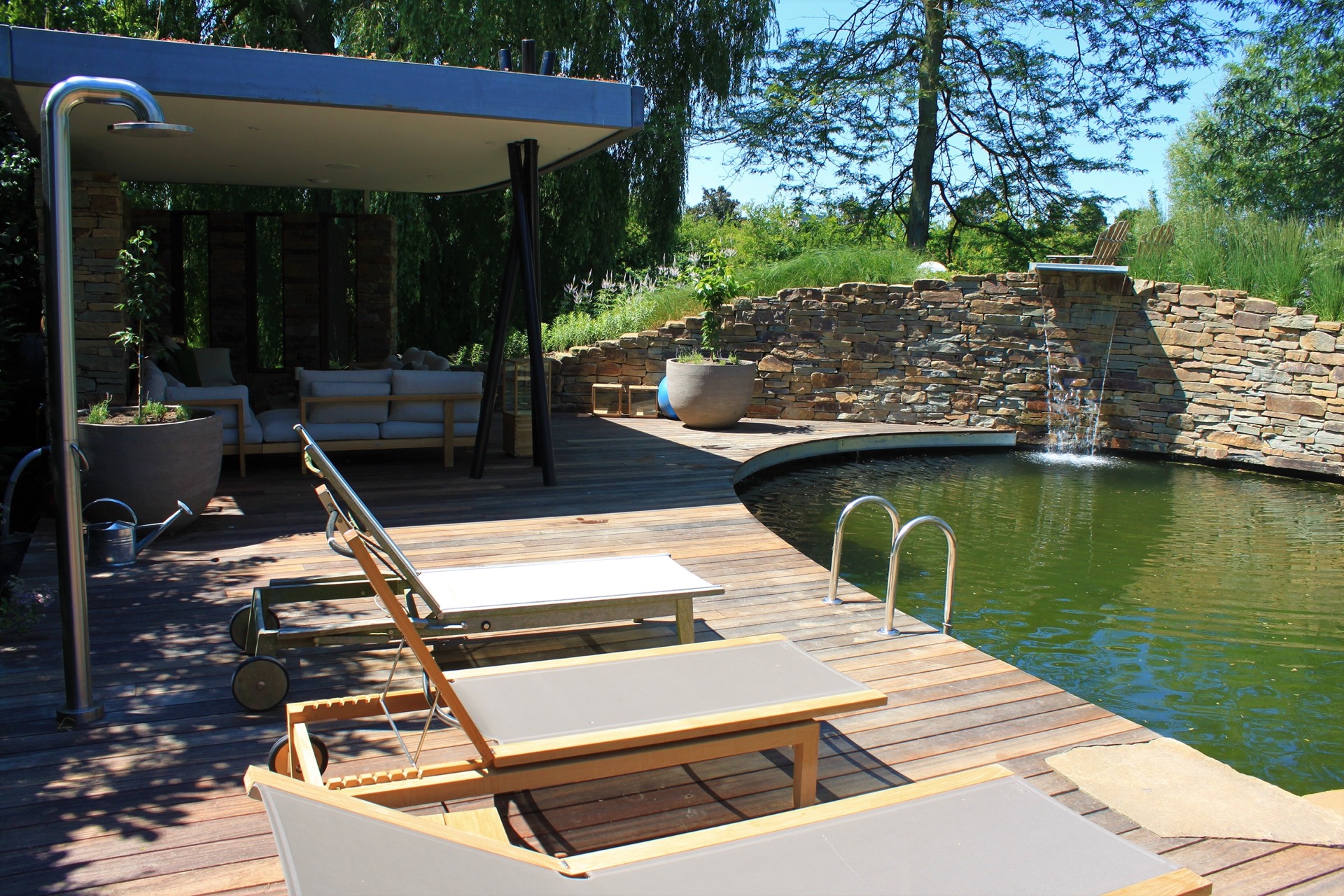
The wooden deck by the pond runs directly along the water, creating a place to sit, lie down, or simply look across the surface. Its planks give the garden a long horizontal line that cuts through the stone and planting around it. In some views, the deck becomes a narrow viewing platform; in others, it broadens into a terrace with loungers placed toward the edge. The timber surface reflects light differently from the stone, which keeps the pond perimeter readable at a glance. That makes the natural swimming pond with waterfall part of the architectural character rather than a loose finish.
Because the deck follows the curve of the water, the transition from land to pond feels open and immediate. There is no heavy threshold. Instead, the pond edge is staged through a clear sequence of plank, coping, and water. The wooden deck by the pond also helps connect the seating area and the lounge spots, so the garden can be read as a continuous route around the water rather than a set of separate corners.
A covered seating area beside stone and shade
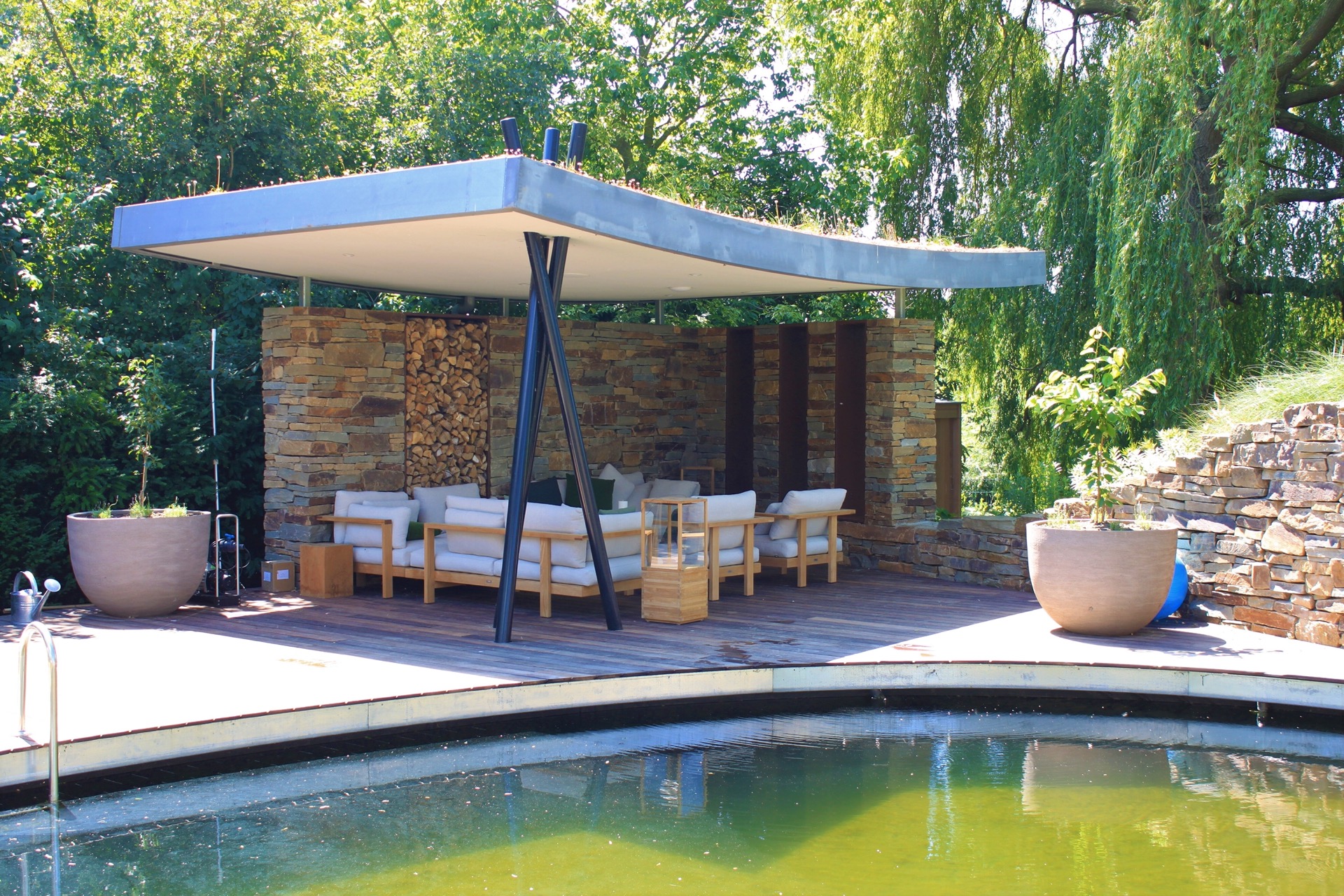
Under the canopy seating area, a large sofa-like bench with cushions sits against the stone backdrop. The overhang creates a shaded pocket beside the pond, with the wall behind it pulling the seating into the same material language as the rest of the garden. This is not an isolated patio room; it sits directly beside the water and under the line of the cover, so the seating zone stays close to both the pond and the stonework.
The canopy does more than shelter a chair or sofa. It marks a pause in the garden route, a place where the view shifts from the water surface to the wall texture and back again. From this angle, the natural stone retaining wall reads as both enclosure and backdrop, while the pond waterfall feature remains visible nearby. The setting keeps the distance between seating and water small, which makes the whole area feel connected through sightlines rather than decoration.
Loungers, views and a low edge
Along the wooden deck, loungers face the pond and the waterfall, turning the edge of the garden into a place for sitting low and looking across the water. The deck boards lead the eye toward the rounded shape of the pond, while the plants soften the outer border. This arrangement makes the swimming pond with clear water visible from several positions: from the lounge zone, from the shaded seat, and from the side where the wall and water feature meet.
The furniture is placed with little distance to the pond, so the deck feels like an extension of the water’s edge rather than a separate terrace. That closeness is what gives the garden its strongest rhythm: stone behind, timber underfoot, and water in the middle. The natural swimming pond with waterfall stays present in every view, but the setting around it changes from open deck to shaded seat to planted margin.
Planting that softens the stone and timber
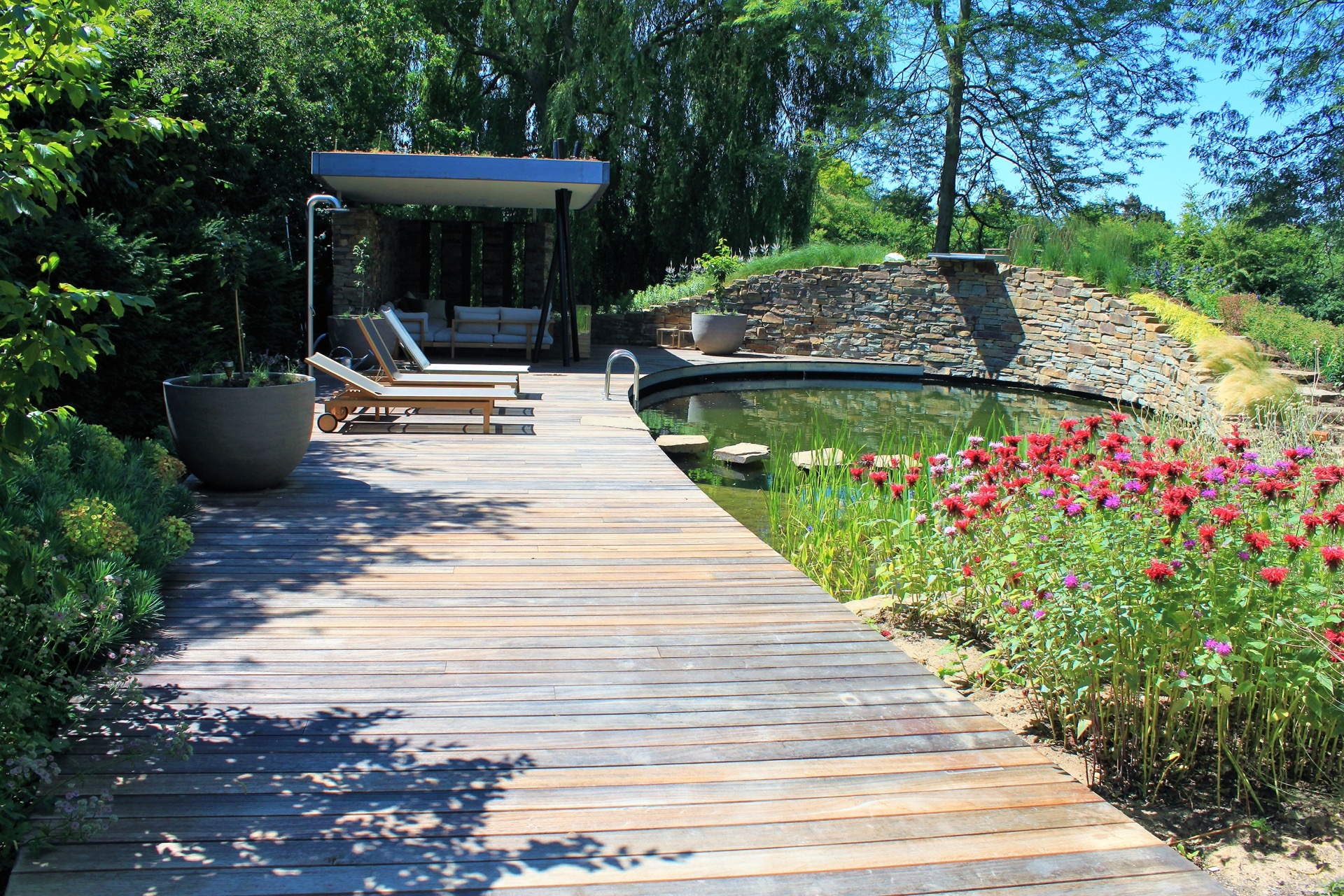
Garden planting around the pond brings in the softer layer of the design. Flowering plants and ornamental grasses sit along the borders, especially where the deck meets the water and where the stone wall needs a lighter foreground. Their height and movement interrupt the harder lines of stone and timber, but they do not hide the pond. Instead, they keep the edge alive and visually varied.
That planting also works as a transition between the built parts of the garden and the water itself. In the foreground, stems and blooms sit close to the pond edge; behind them, the stone retaining wall and waterfall hold the composition in place. The plants are not used as filler. They define how the eye moves from one material to the next, which is why the garden planting around the pond feels integral to the layout.
Seen as a whole, the project relies on clear spatial layers: rounded water, rough stone, horizontal timber, sheltered seating, and planting at the border. Each part is easy to identify, but none of them stands alone. The pond remains the center, with the natural swimming pond with waterfall bringing movement into a garden that is otherwise shaped by still surfaces and measured edges.
Want to see more of ? View the page of for even more great projects and company information.
.png)