








New-build home with timeless materials: the complete concept
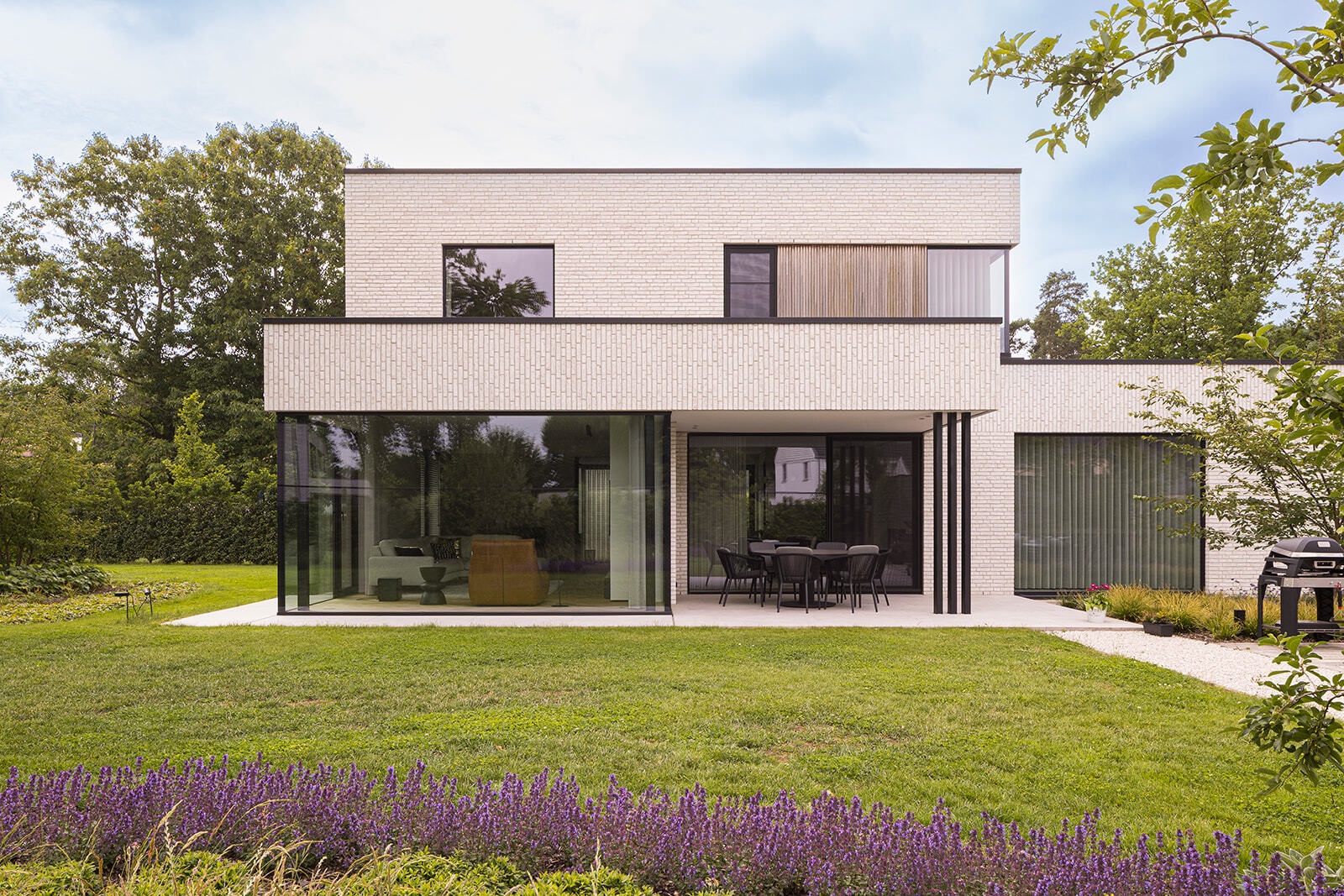
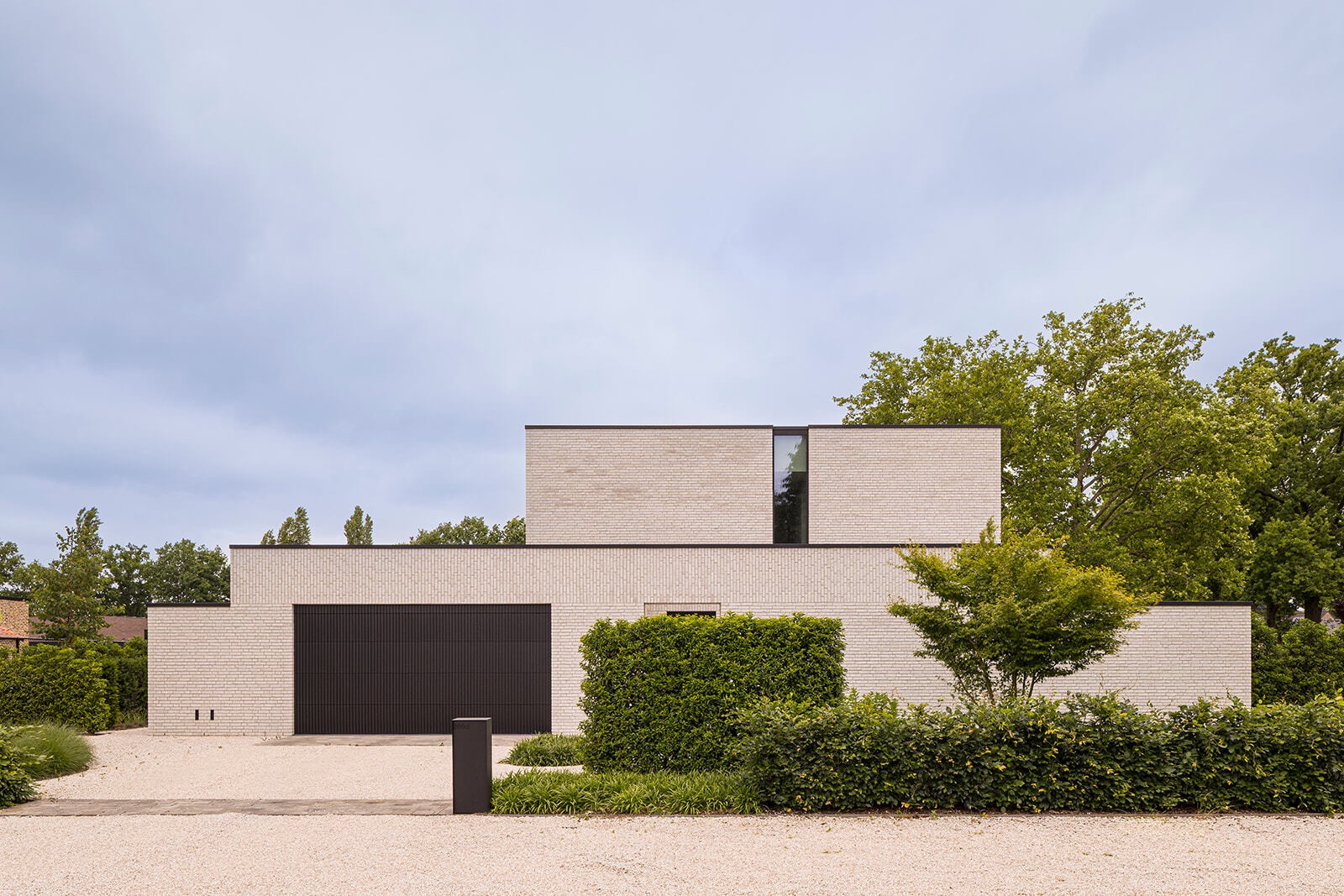
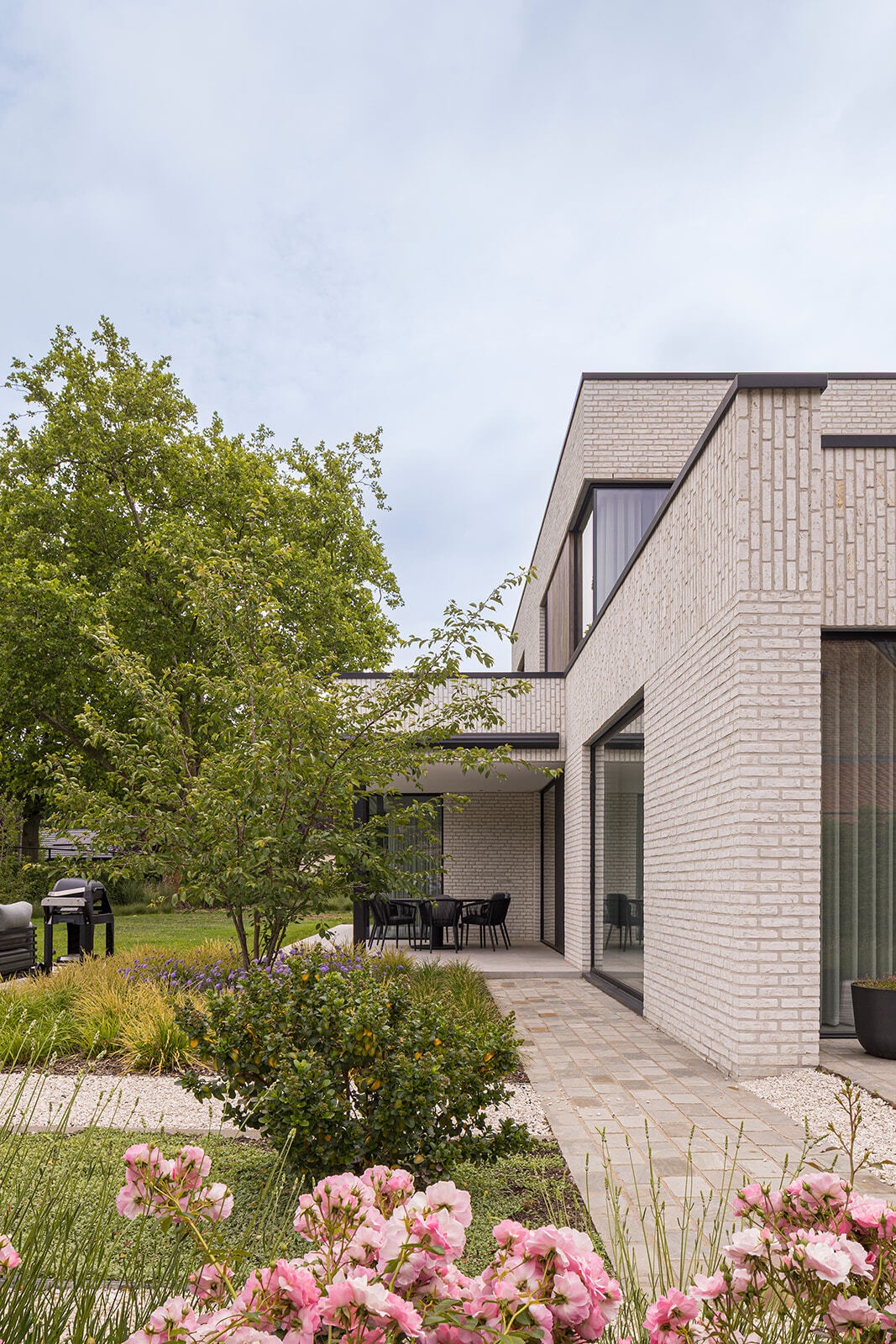
The first impression is set by the brickwork and the large glazed opening facing the terrace. White masonry wraps the volume in clear lines, while dark frames cut through the surface and keep the composition sharp. In the foreground, lawn and planting soften the edge between house and garden. The result is a new-build home with timeless materials that reads as a complete concept from the street to the living spaces.
New-build home with timeless materials as a spatial starting point
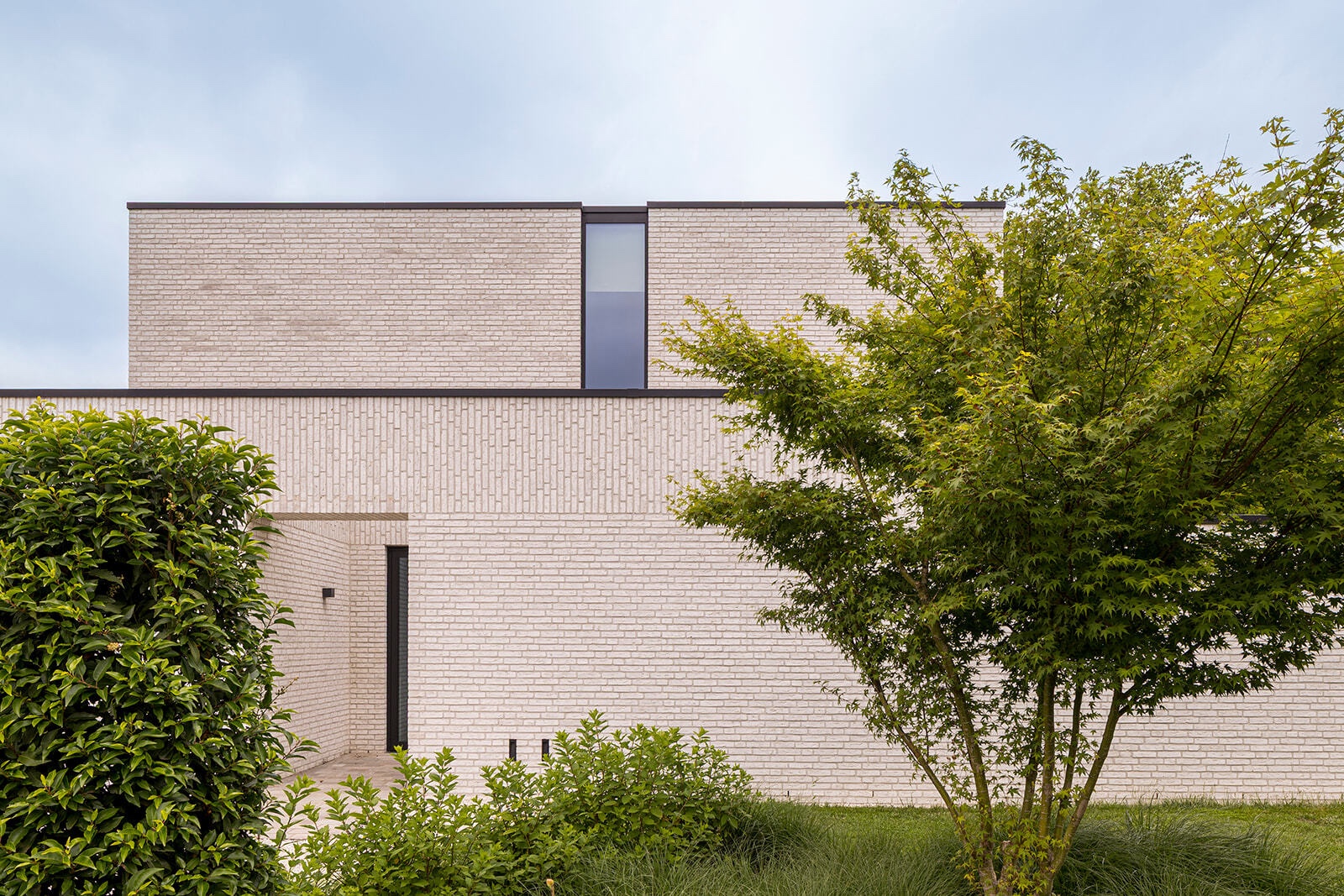
The exterior relies on a simple palette: brick, dark metal, glazing and planted ground cover. A deep garage door sits quietly in the facade, while the multi-level brick volume is broken up by a vertical strip of profiling and a narrow glazed opening higher up. Those moves give the front a layered look without adding noise. The brick facade with large windows is not just about openings; it is about how the wall holds its shape around them.
Seen closer, the material changes are small but deliberate. Dark accents around the frames sharpen the window edges, and the contrasting band in the masonry draws a horizontal line across the elevation. Gravel and stones in the drive create a rougher foreground than the brick itself, which makes the planted borders and low shrubs stand out. It is the kind of composition where the house depends on proportion, not ornament, to keep its presence.
A terrace that extends the room
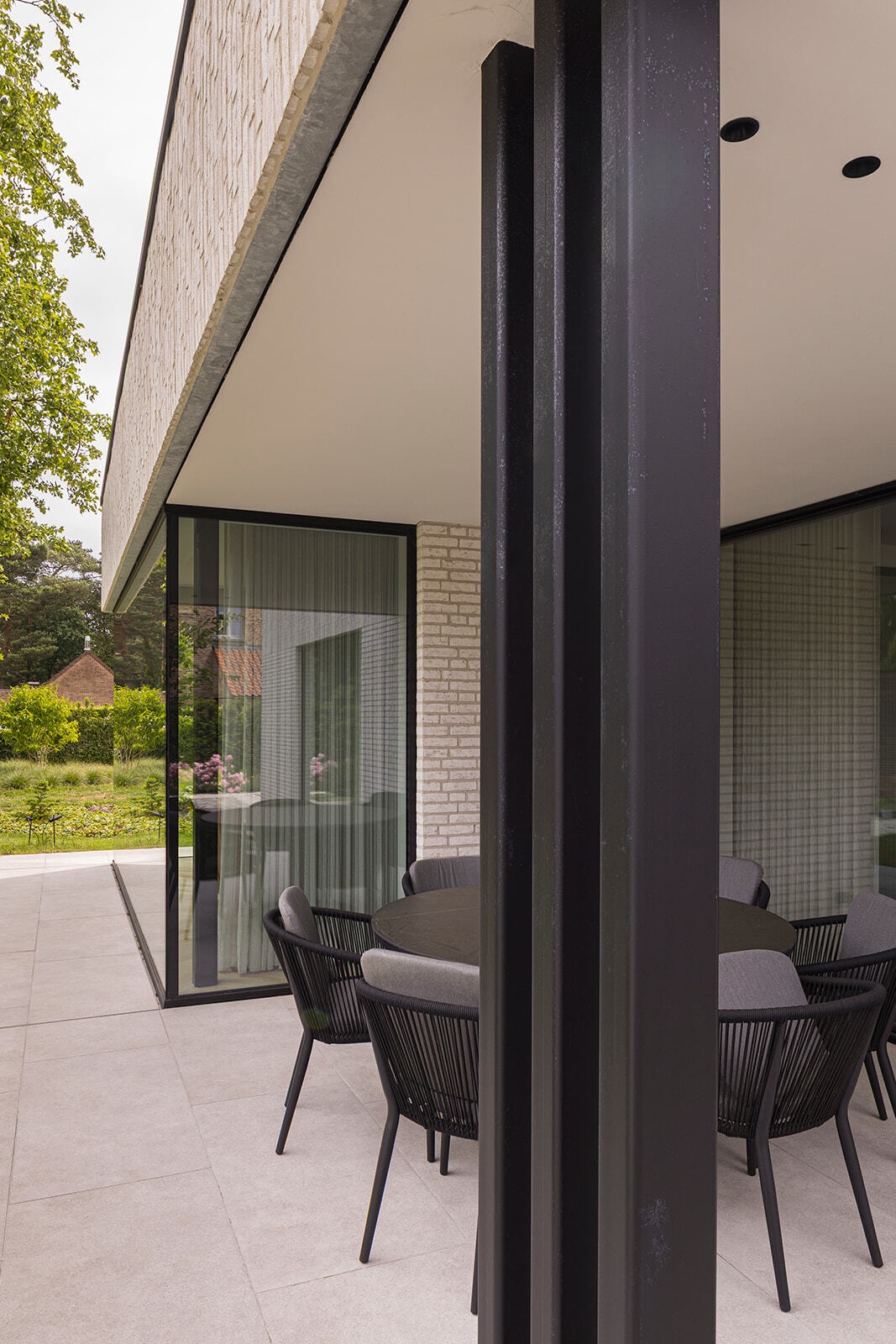
At the rear, the large glazing toward the terrace turns the boundary into a transparent plane. Black metal posts and dark framing keep the opening legible, while the brick wall behind it anchors the setting. The terrace sits beside planted borders, so the transition from inside to outside happens through a mix of glass, stone and greenery rather than a single wide gesture. That detail matters in a new-build home with timeless materials: the connection is visible, not staged.
The terrace view also explains the house’s rhythm. Tall windows pull daylight deep inside, and the glazing shows the interior as part of the exterior composition. Even before entering, the relationship between wall, opening and garden is clear. Large windows are used to frame the terrace rather than simply enlarge the rooms, which keeps the composition calm and direct.
Inside, the route opens gradually
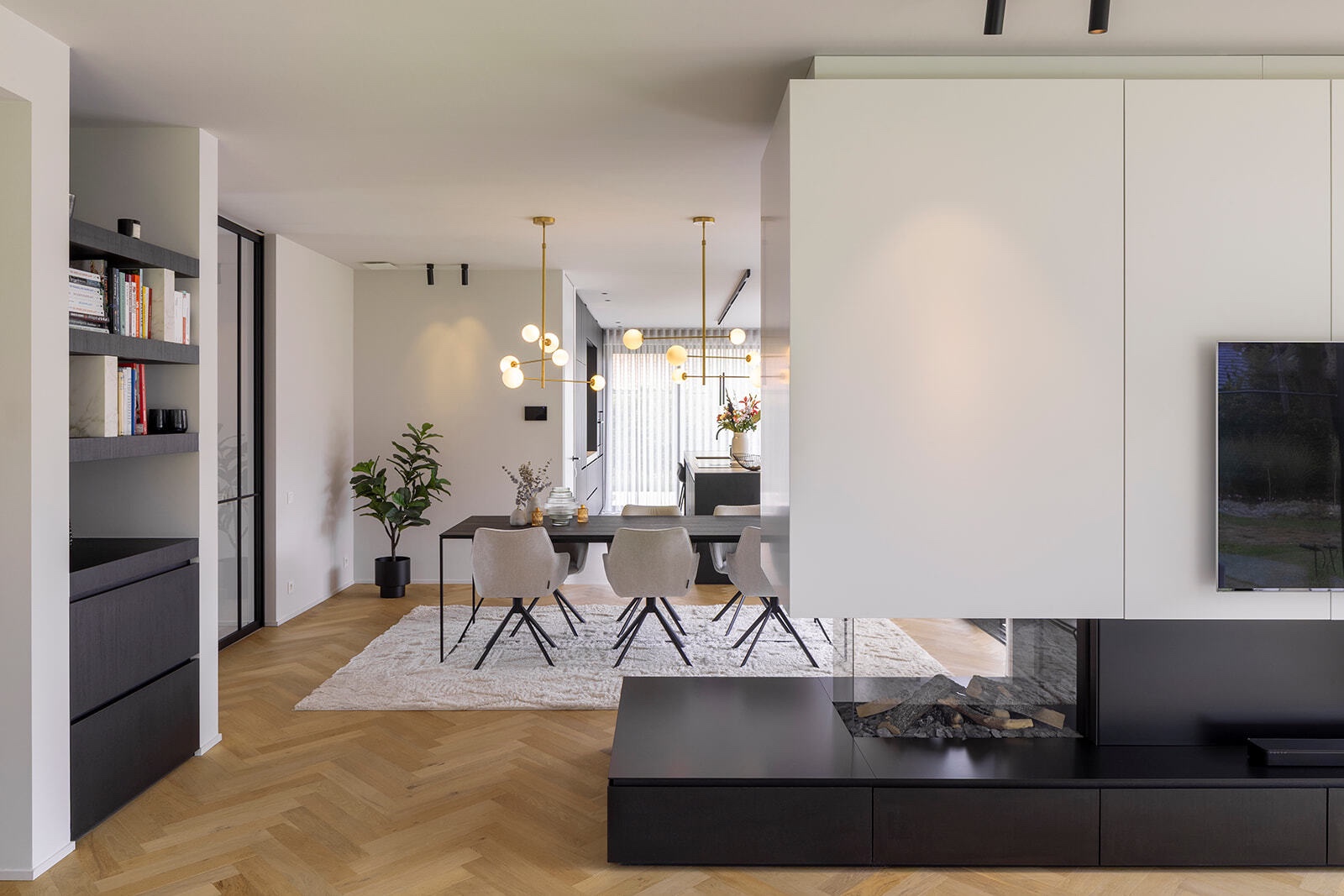
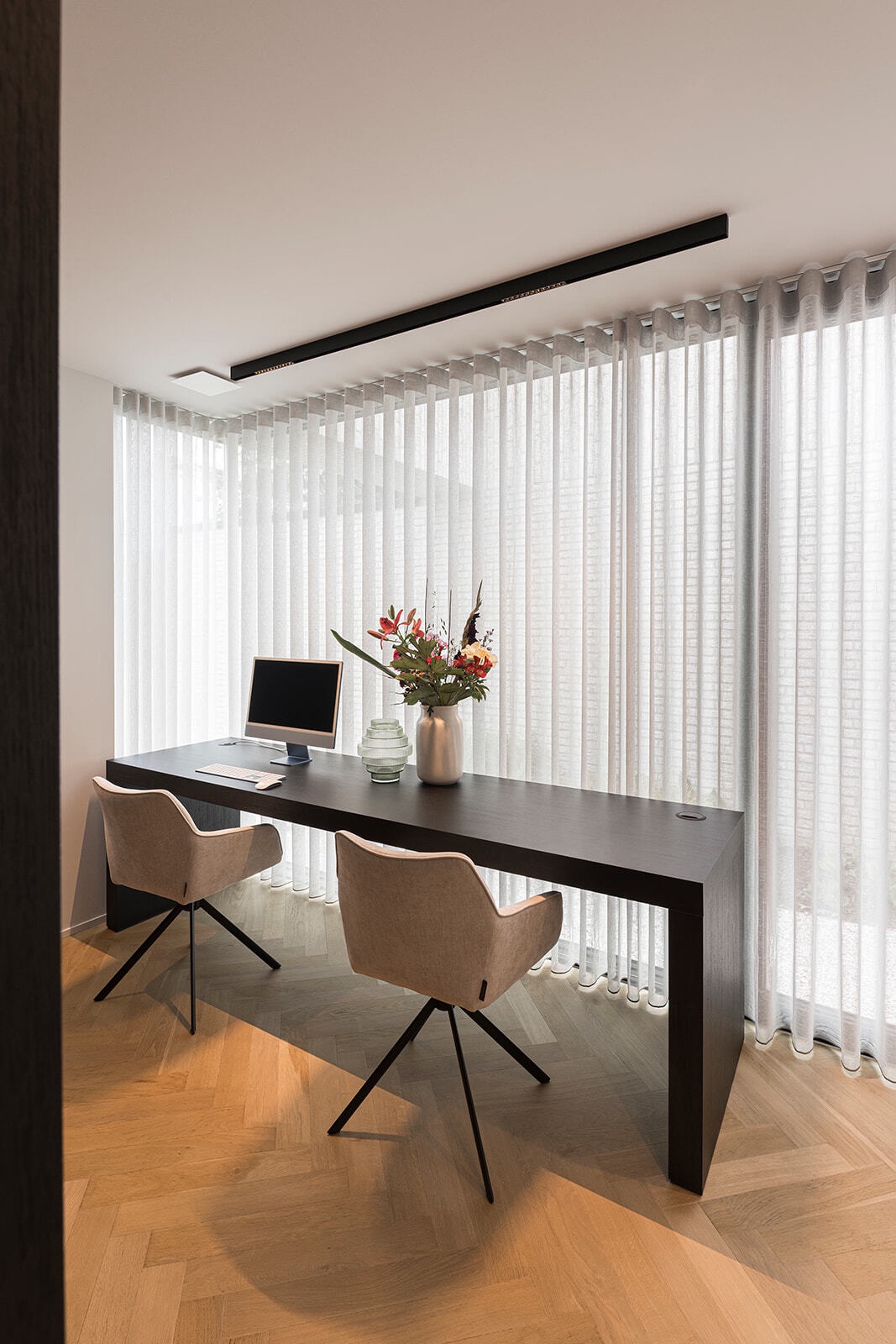
Movement through the house feels controlled. A glazed interior door with a black frame leads from the hall toward the eating and living zone, where floor-to-ceiling curtains line the windows and soften the long vertical surfaces. The parket floor continues through the passage and gives the route a steady base. Nothing is overstated; the sequence relies on openings, thresholds and the change from hard frames to fabric and wood.
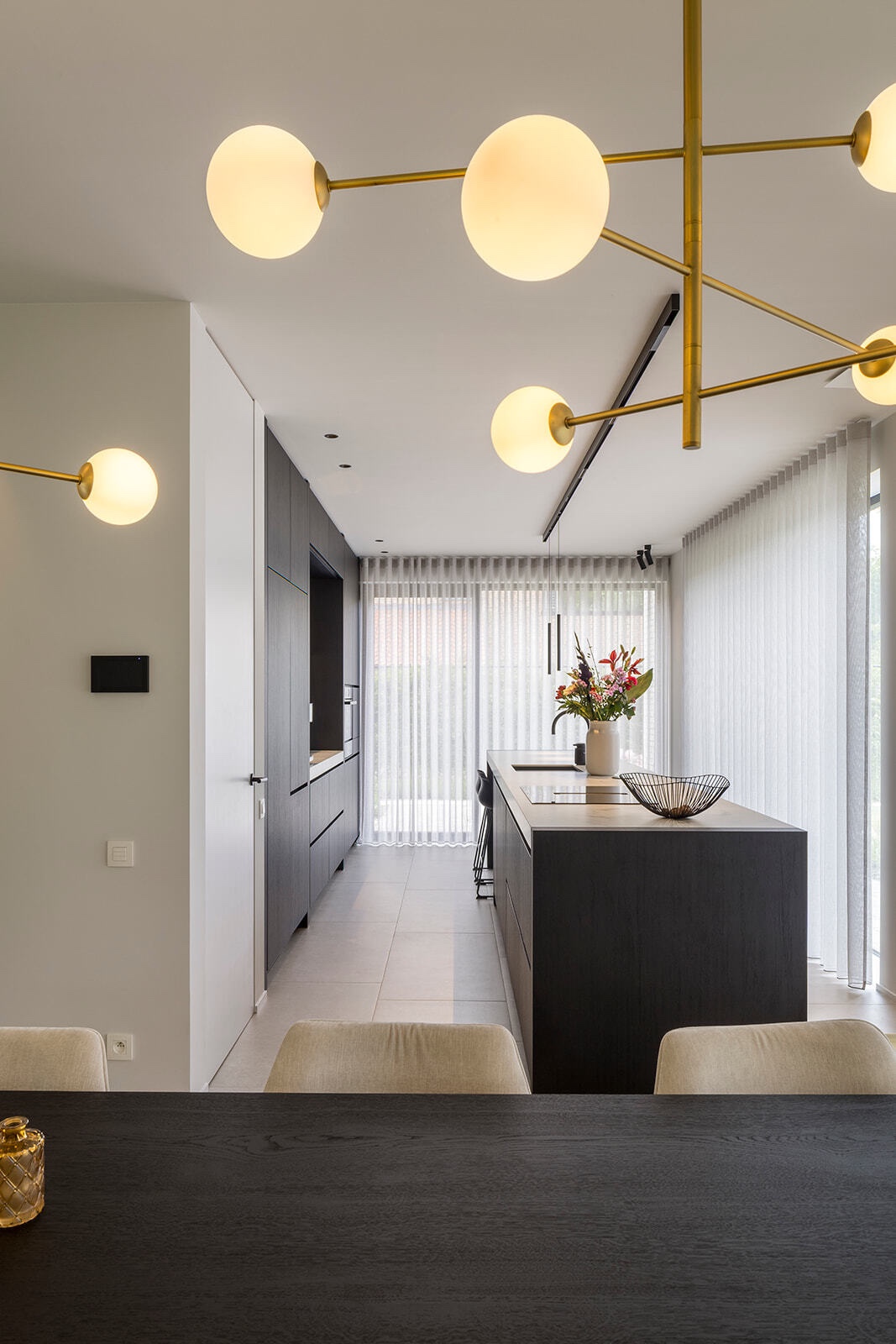
The dining area is marked by a ceiling light with multiple round globes on gold-toned stems. It hangs against a field of light walls and long white curtains, so the fixture becomes a clear object instead of background decoration. The room is open, but the furniture and lighting still define a place for sitting down. In this part of the house, the new-build home with timeless materials shows its quieter side: plain surfaces, measured reflections and a plan that lets the daylight do most of the work.
Living room fireplace and window wall
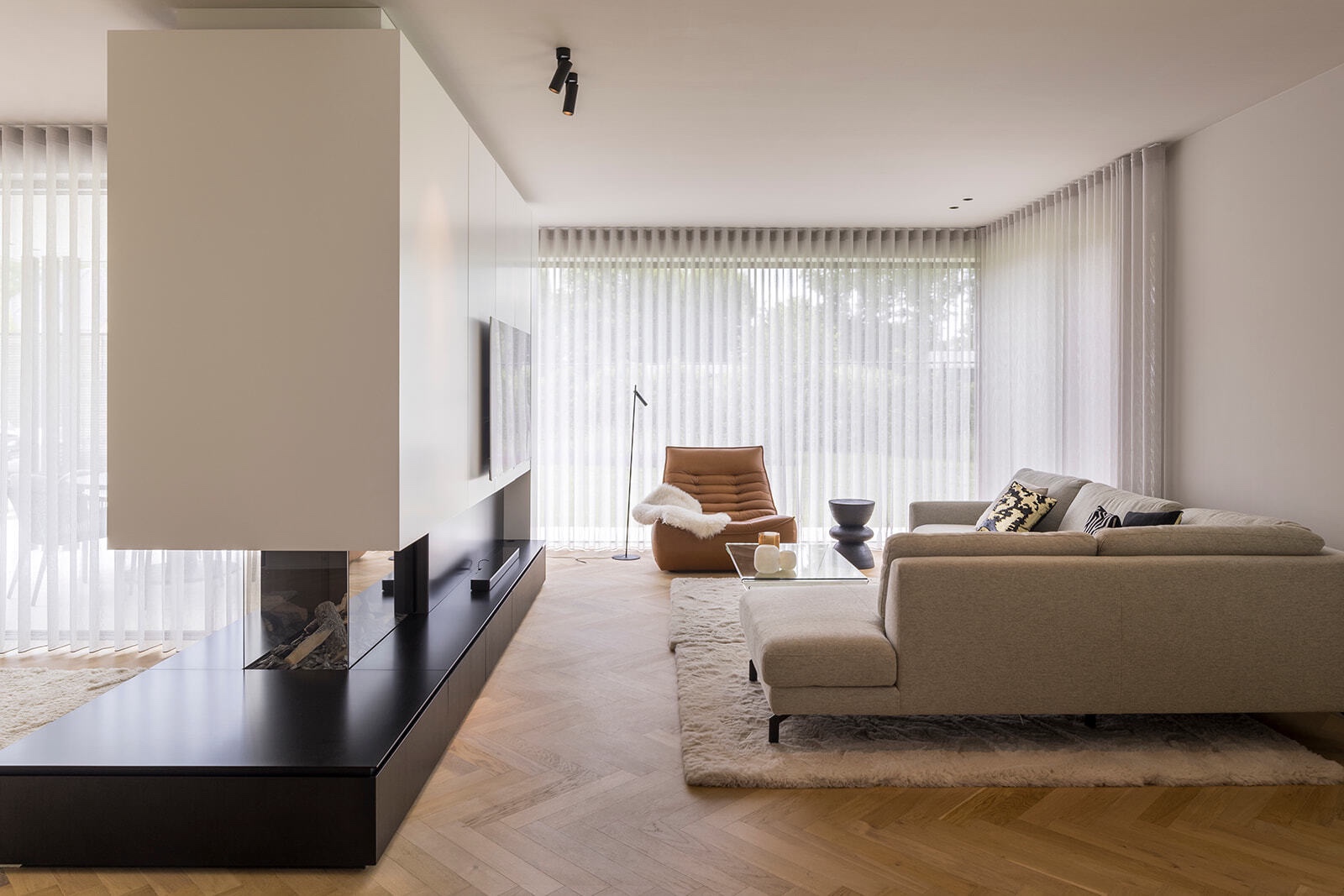
The living room fireplace sits low in the room, with a dark frame that gathers attention without dominating the wall. Beside it, the curtain wall runs from floor to ceiling and keeps the vertical scale of the room intact. The fireplace is not treated as a feature object placed in the middle of the space; it is folded into the wall composition, where it works together with the window line and the pale surface around it. New-build home with timeless materials remains connected to the layout, materials and daily use of the home.
That same restraint continues in the seating area. The window wall lets in light across the parket floor, and the long curtains break the width into soft folds. Because the fireplace, glazing and textile all sit within a limited palette, the room feels anchored by surfaces rather than by decoration. It is a clear example of how a living room fireplace can shape a room when the surrounding materials stay controlled.
Kitchen surfaces built around the island
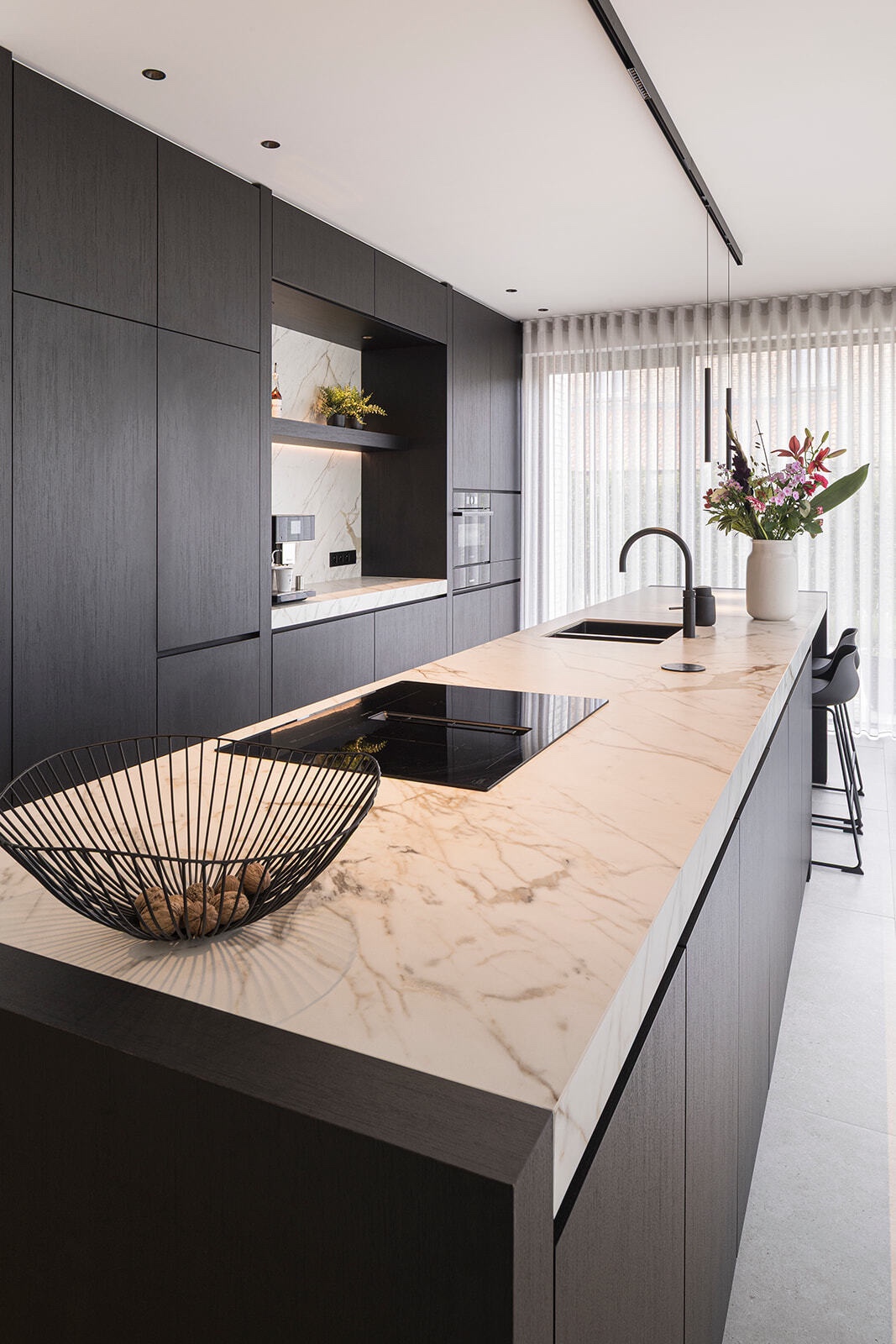
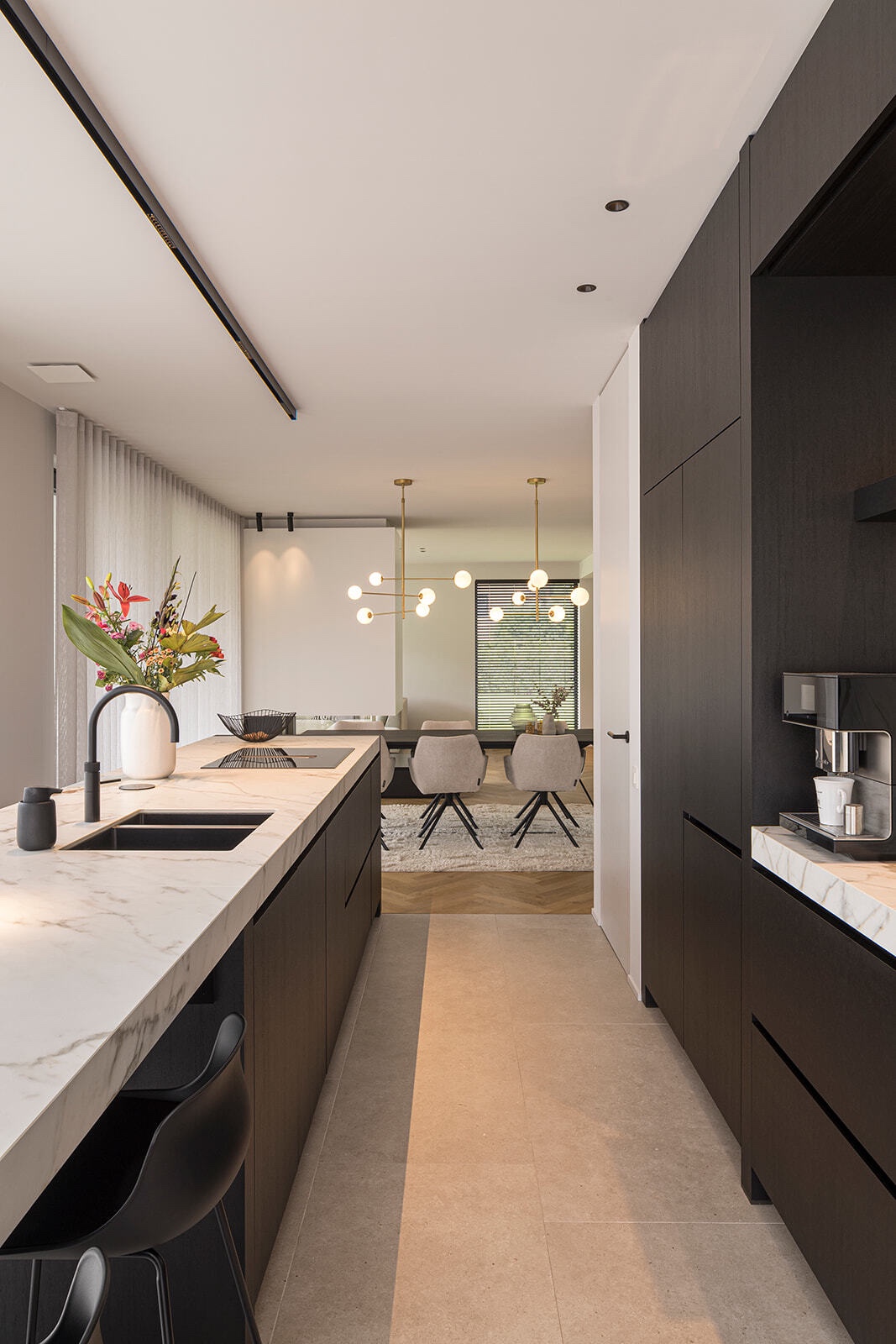
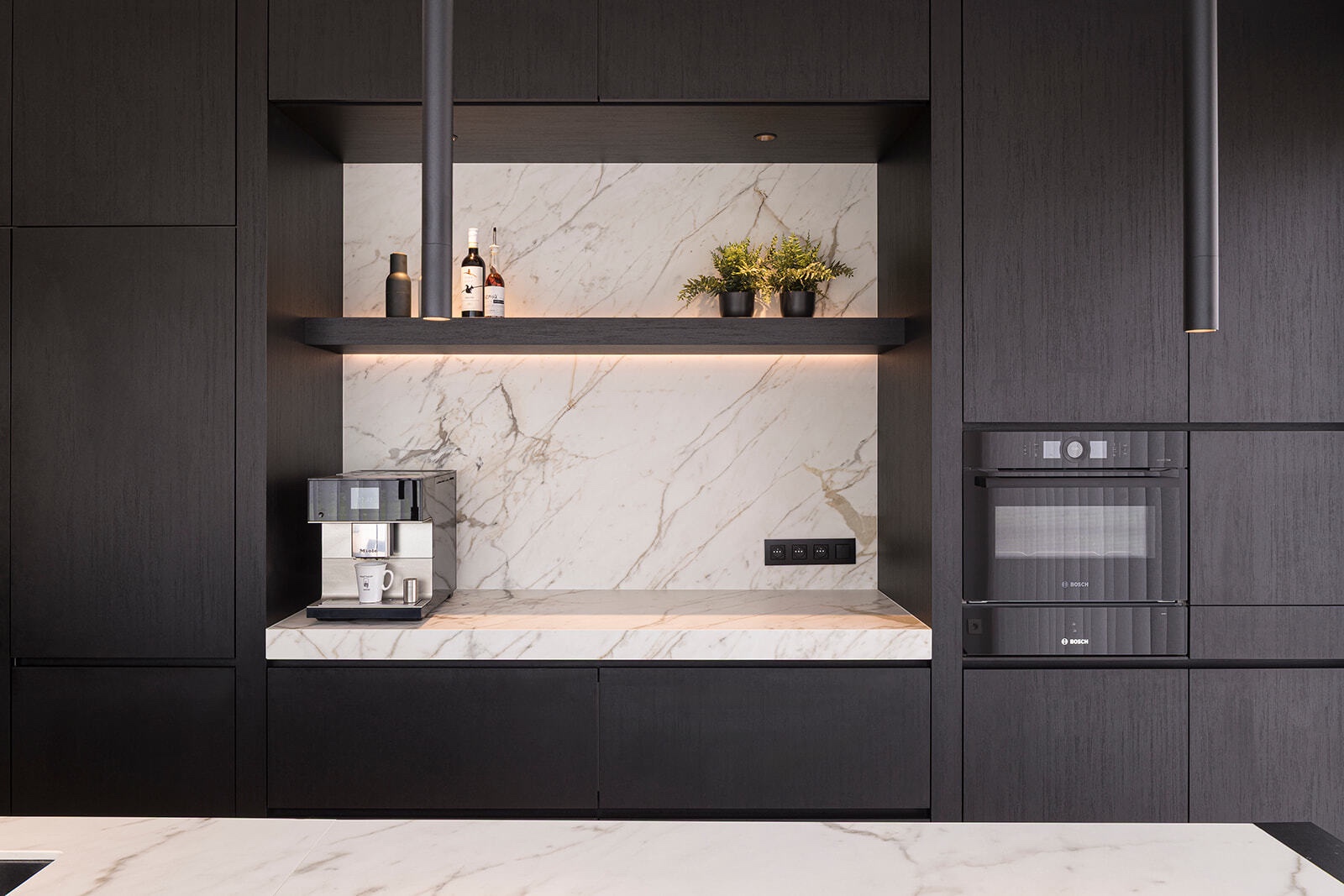
The kitchen is drawn around an island with a marble-look worktop. The stone surface has enough variation to catch the light, but it stays calm next to the darker framing underneath. A built-in hob is set into the top, which keeps the island visually clean. Behind it, a long linear run of cabinetry and worktops extends the kitchen without breaking the room into pieces. The kitchen island marble-look detail becomes the point where the whole arrangement is read.
Another stone surface appears on the back wall, where a marbled accent panel brings texture into the kitchen without making it busy. The contrast between that wall and the darker cabinet lines gives the space a clear depth. Because the materials are repeated rather than multiplied, the room feels precise. The kitchen does not chase effect; it uses natural sustainable materials in a way that keeps the surfaces legible and the working zone compact.
What stands out most is the way light moves across the kitchen. The island catches a softer reflection than the darker volumes around it, and the long lines of the room make the eye travel from one end to the other. That elongated reading suits a new-build home with timeless materials: the kitchen is part of the overall plan, not a separate showpiece. The result is practical in use, but the visual sequence remains carefully paced.
Bathrooms with clear lines and mirrored light
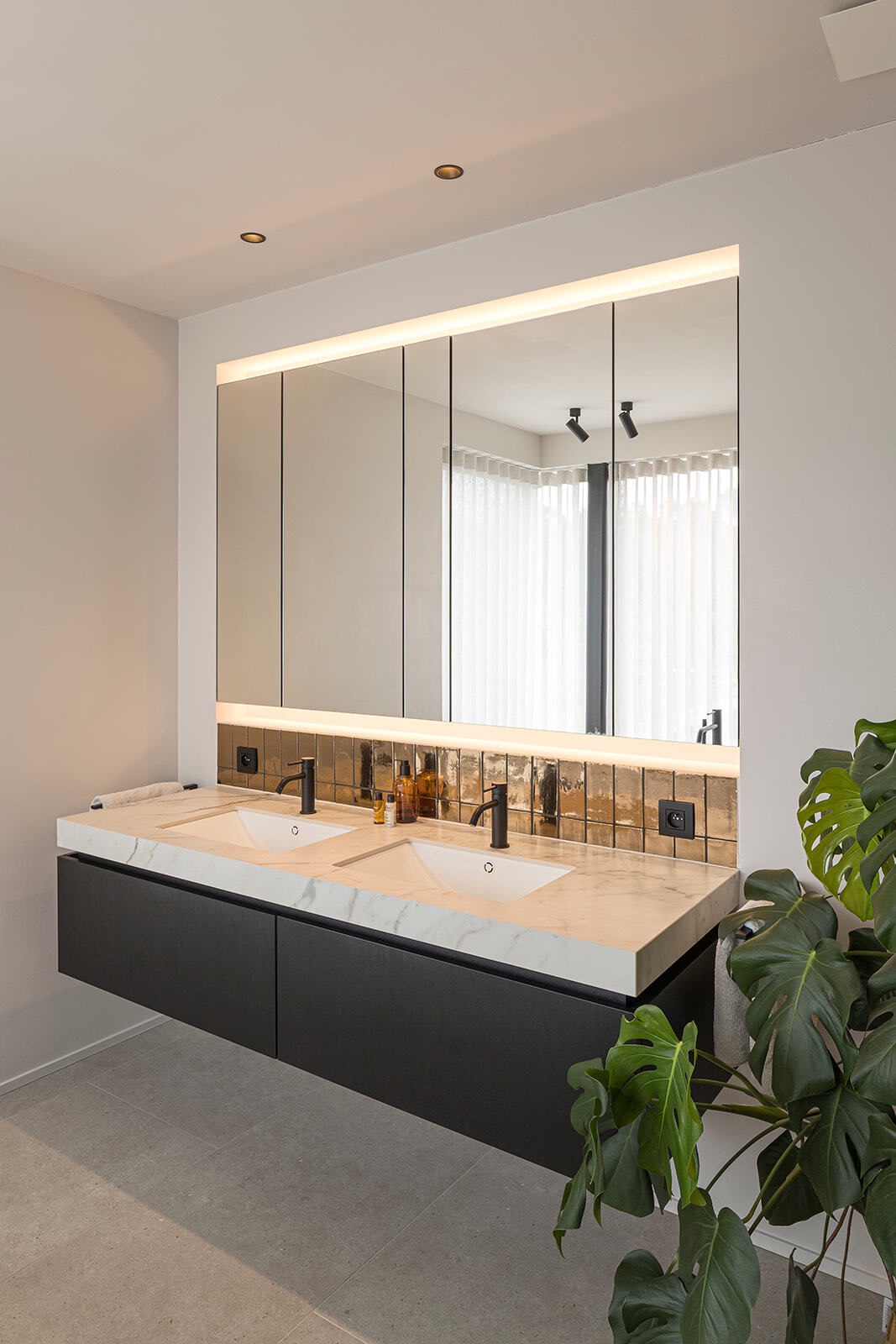
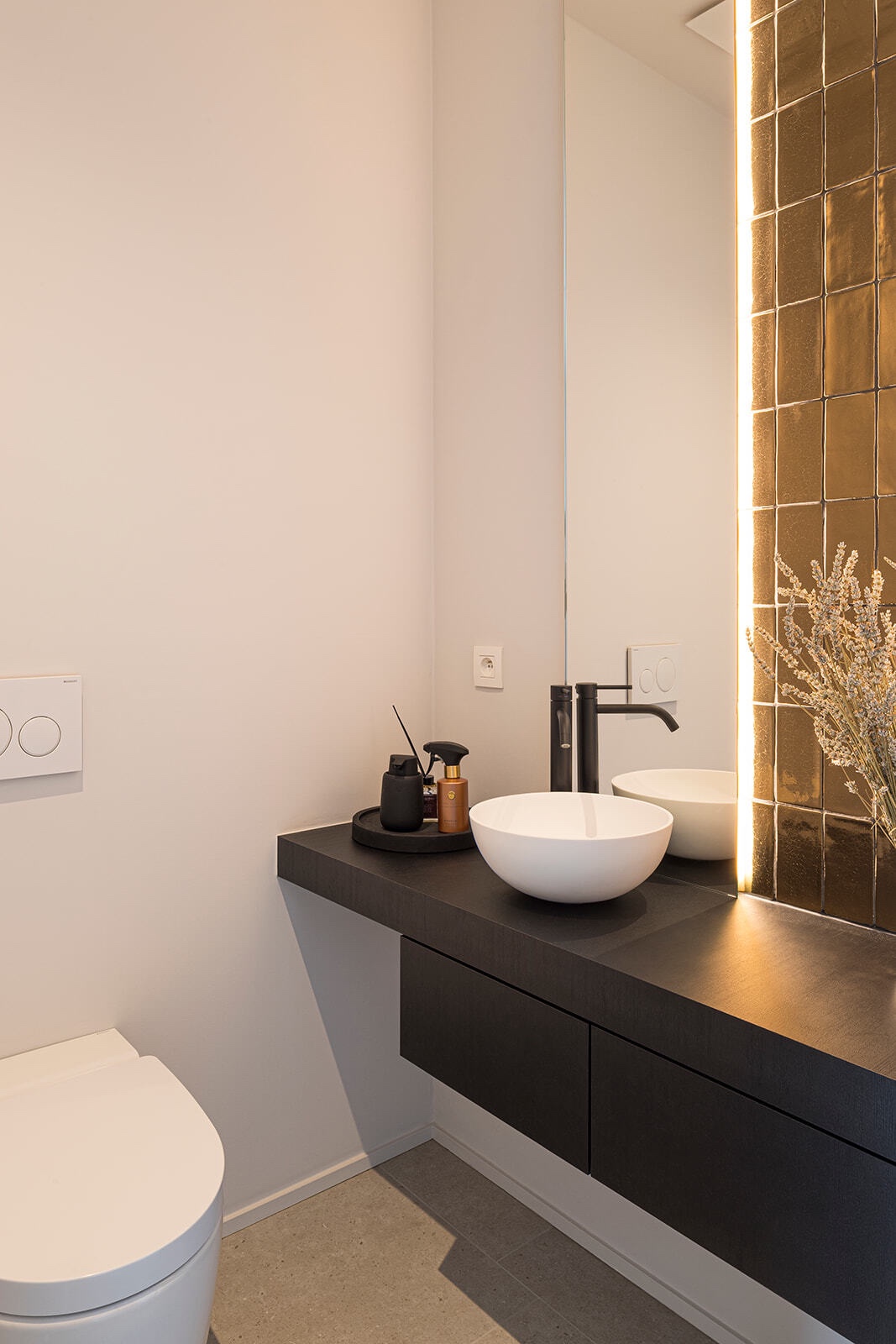
The main bathroom continues the same material discipline. A bathtub sits beside a window with curtains, giving the room a softer edge, while the double vanity stretches across a long marble-look top. Above it, the mirror wall is lit from behind, which lifts the sink zone without adding visible fixtures. The double vanity backlit mirror arrangement gives the bathroom a clear centre, and the long counter keeps towels, basins and fittings aligned in one plane.
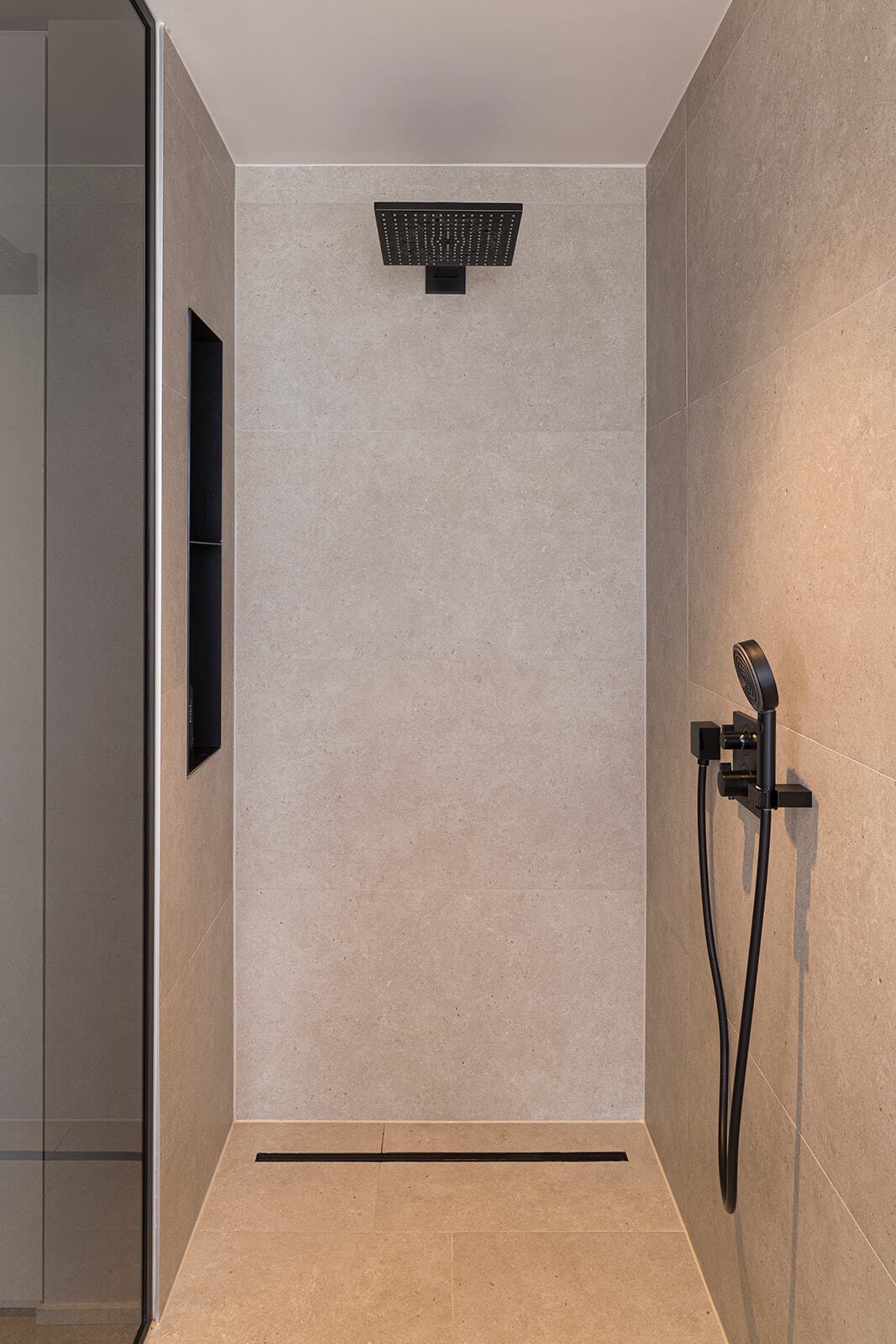
The shower area is defined by glass, black profiles and large wall tiles. A rain shower is set within the walk-in shower, and the enclosure keeps the line of sight open through the room. Nothing here depends on decorative interruption. The surfaces are smooth, the joints are quiet, and the shower reads as part of the same measured interior language used elsewhere in the house. That consistency is what ties the bathrooms back to the whole project.
Materials that stay present without taking over
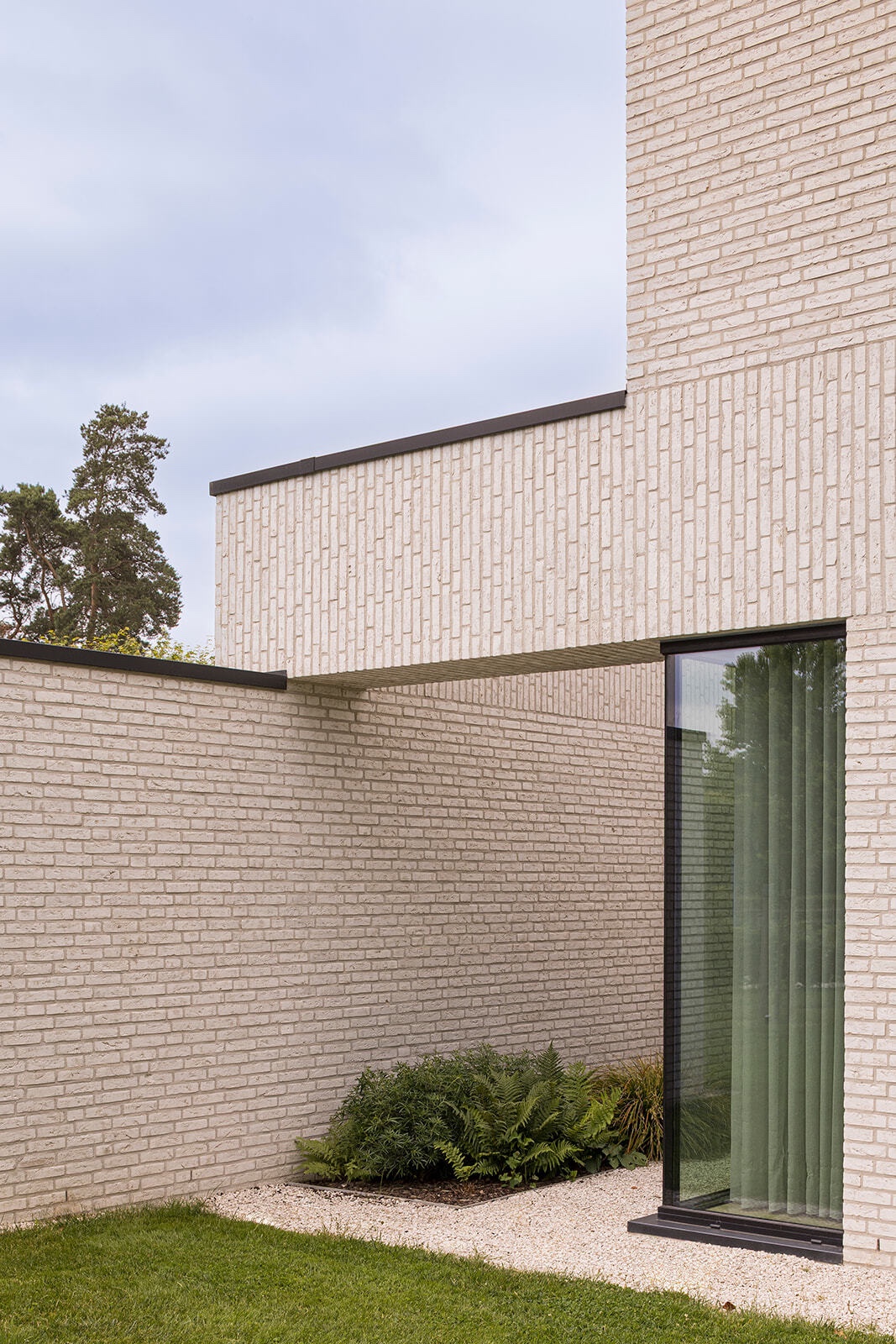
Across the house, the choice of natural sustainable materials is expressed through texture rather than statement. Brick, stone-look worktops, glass, timber flooring and fabric curtains each take on a clear role. Some surfaces absorb light, others reflect it, and that contrast gives the rooms depth. The project’s strength lies in that repetition: a brick facade with large windows outside, then stone, glass and wood inside, all kept within the same restrained palette.
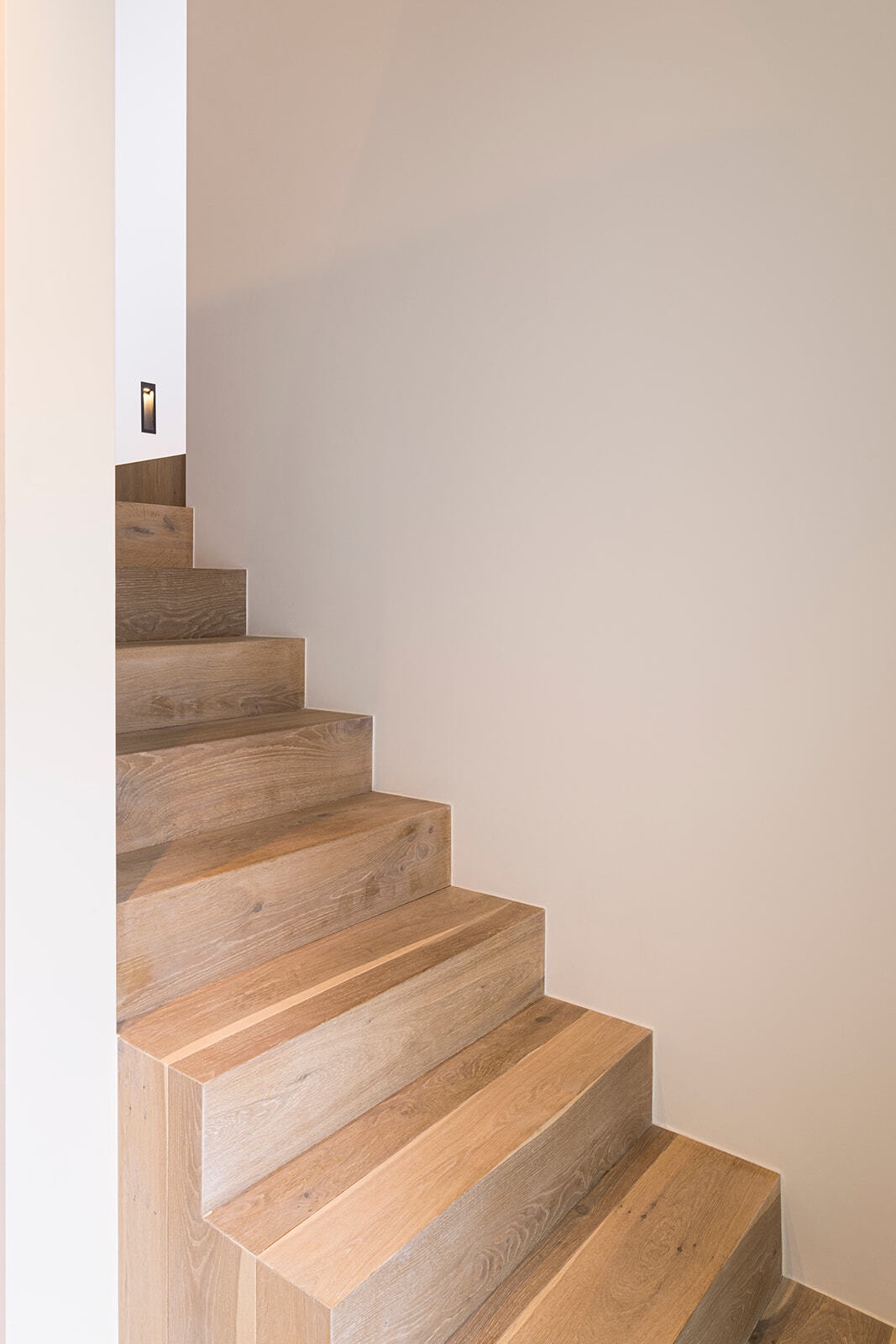
Even the smaller details support that reading. The vertical lamella-like strip in the facade, the dark garage opening, the framed glazing and the black trim around the interior doors all give the house a neat edge. Nothing feels added after the fact. This new-build home with timeless materials stays focused on the same idea from start to finish: a complete concept made of plain forms, accurate openings and surfaces that are allowed to speak for themselves.
Want to see more of SFAR architectuur & interieur? View the page of SFAR architectuur & interieur for even more great projects and company information.


NEW 2026 Jubileum Edition The Best Interior Designers Benelux
Order Now €125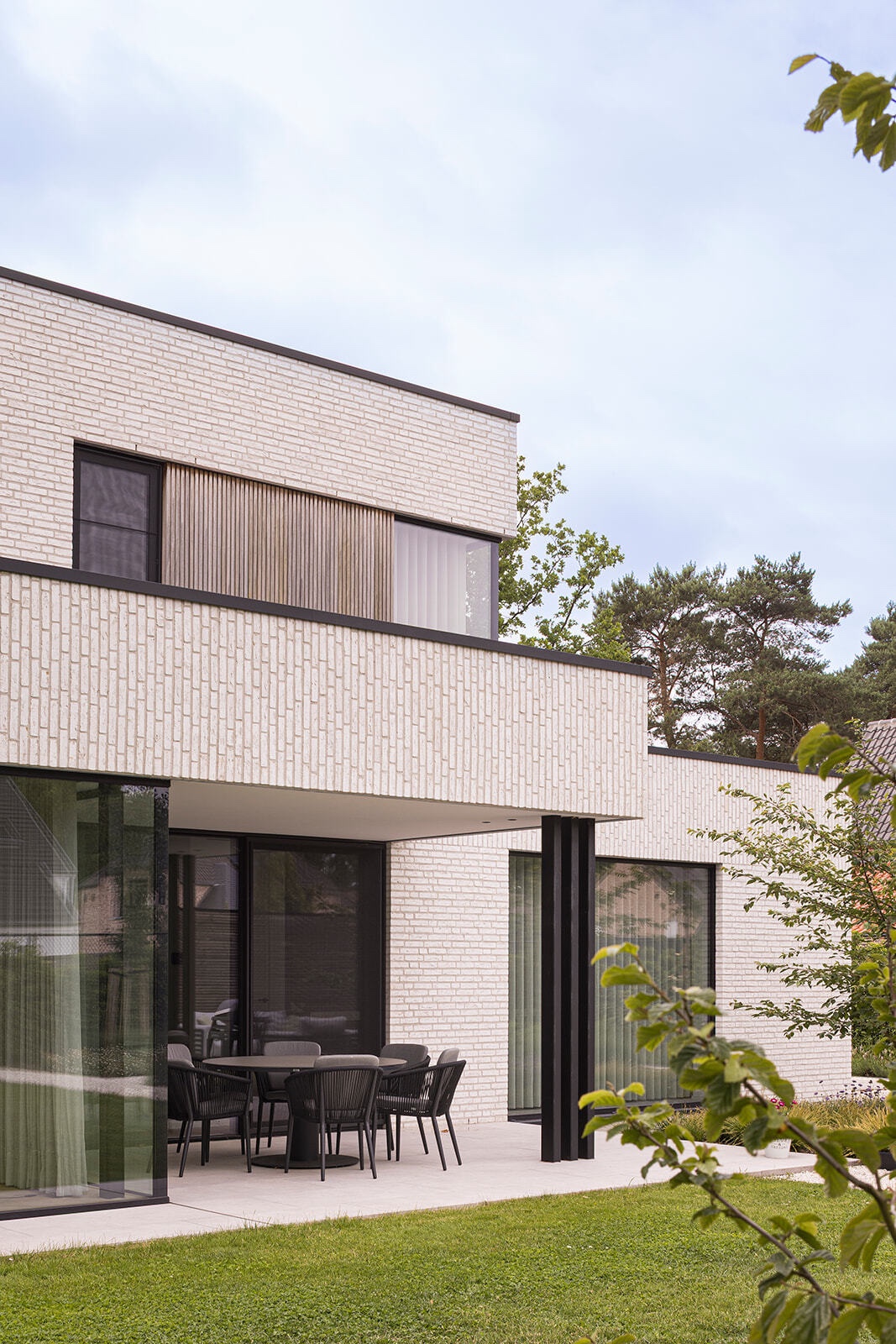
NEW 2026 Jubileum Edition The Best Interior Designers Benelux
Order Now €125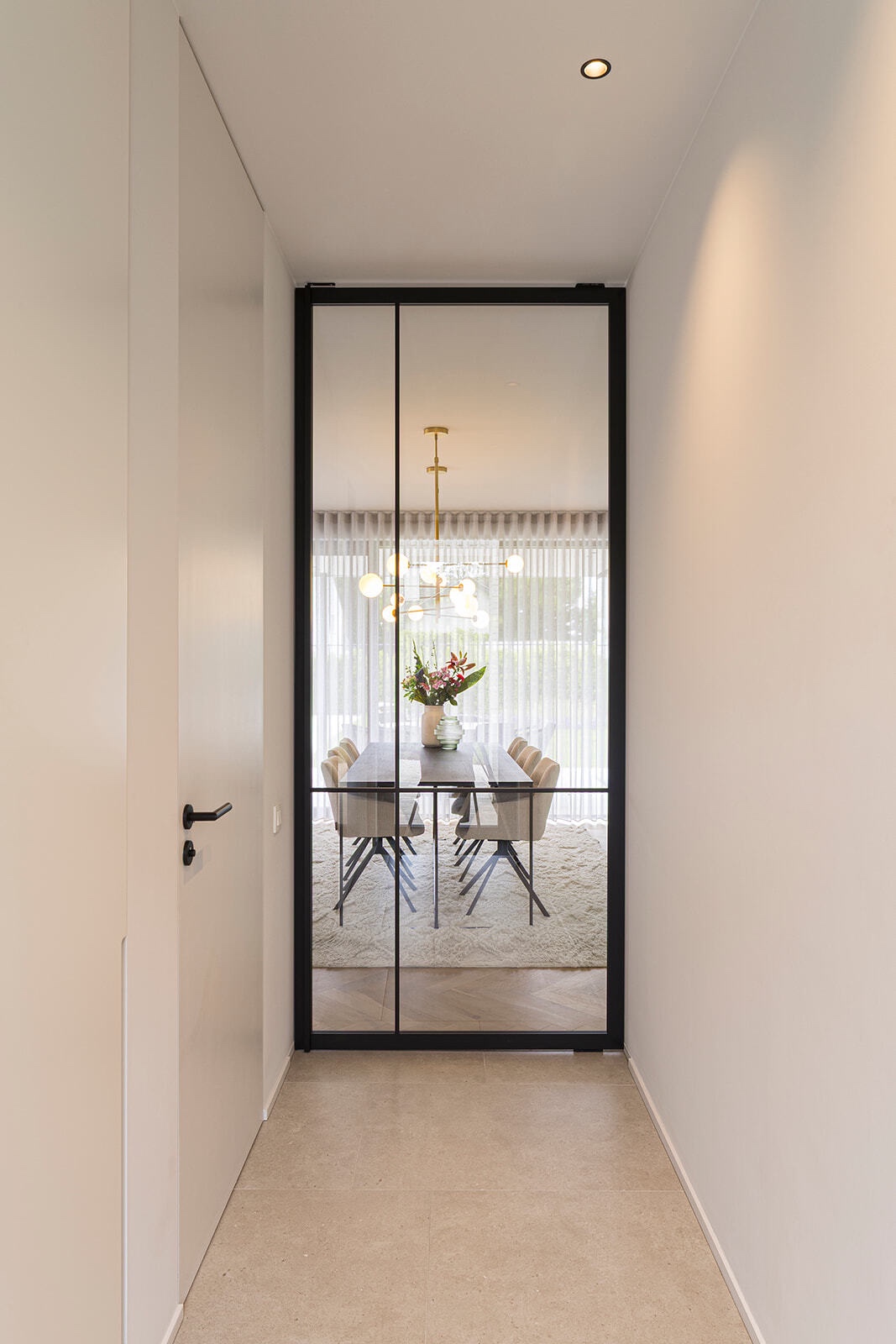
NEW 2026 Jubileum Edition The Best Interior Designers Benelux
Order Now €125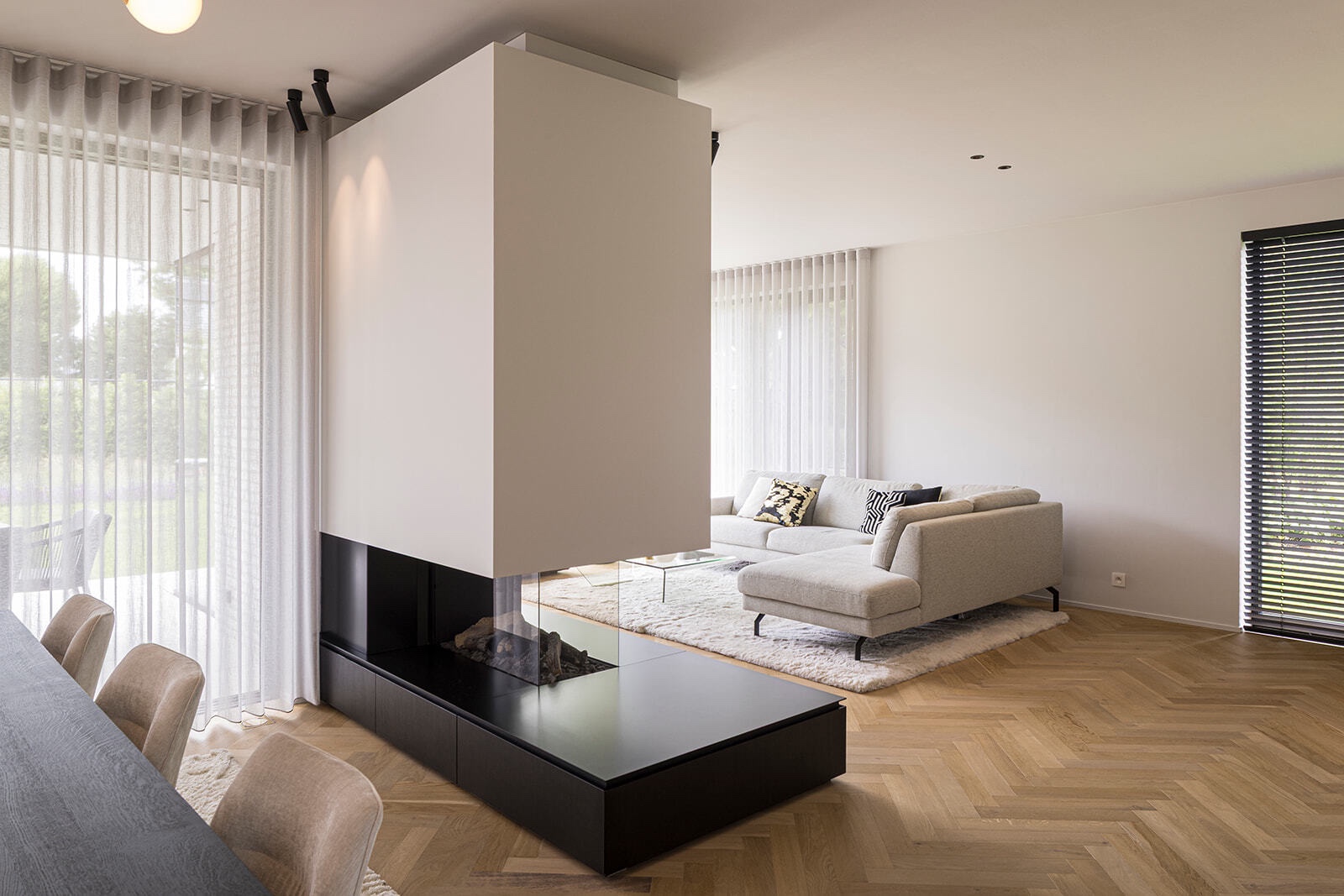
NEW 2026 Jubileum Edition The Best Interior Designers Benelux
Order Now €125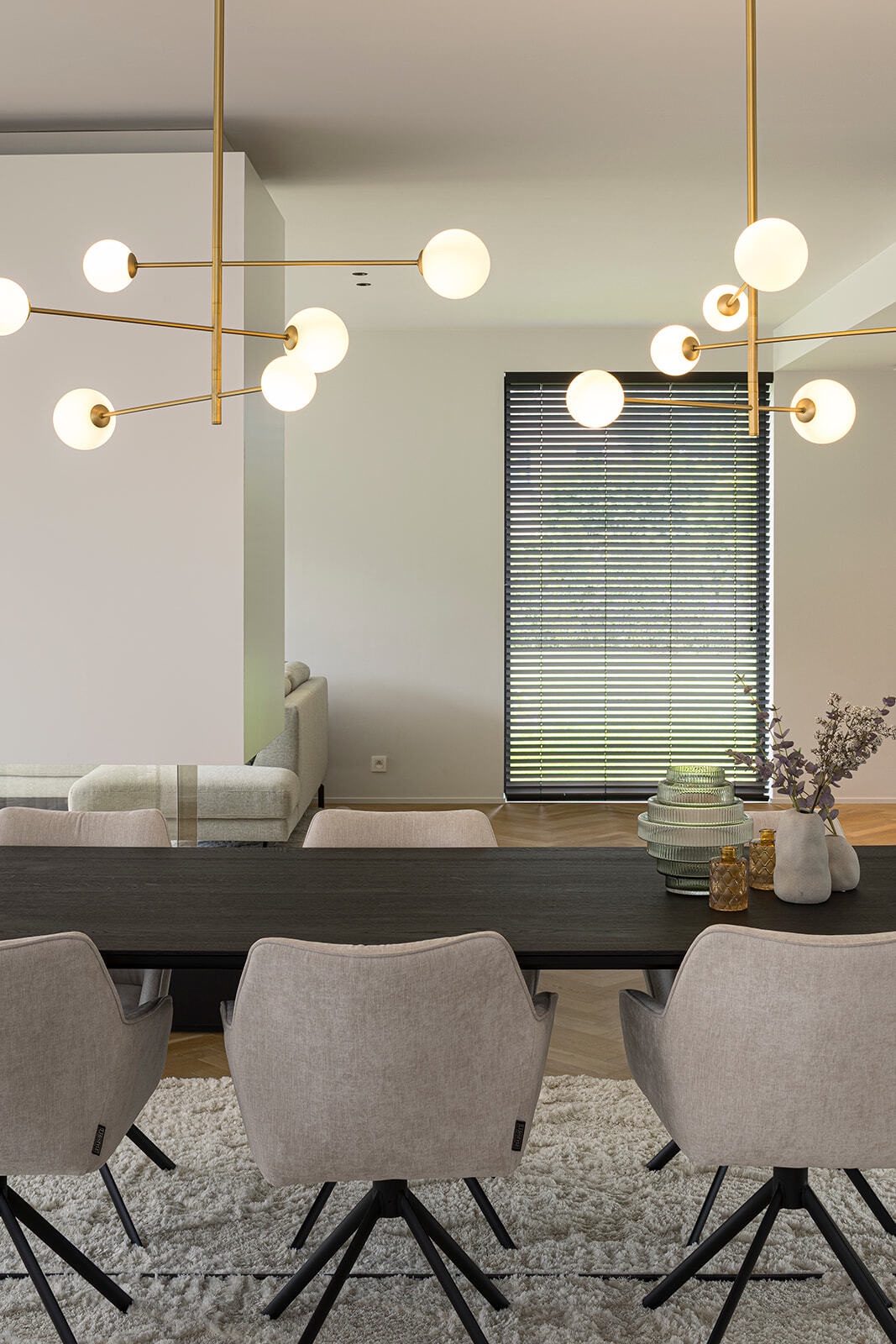
NEW 2026 Jubileum Edition The Best Interior Designers Benelux
Order Now €125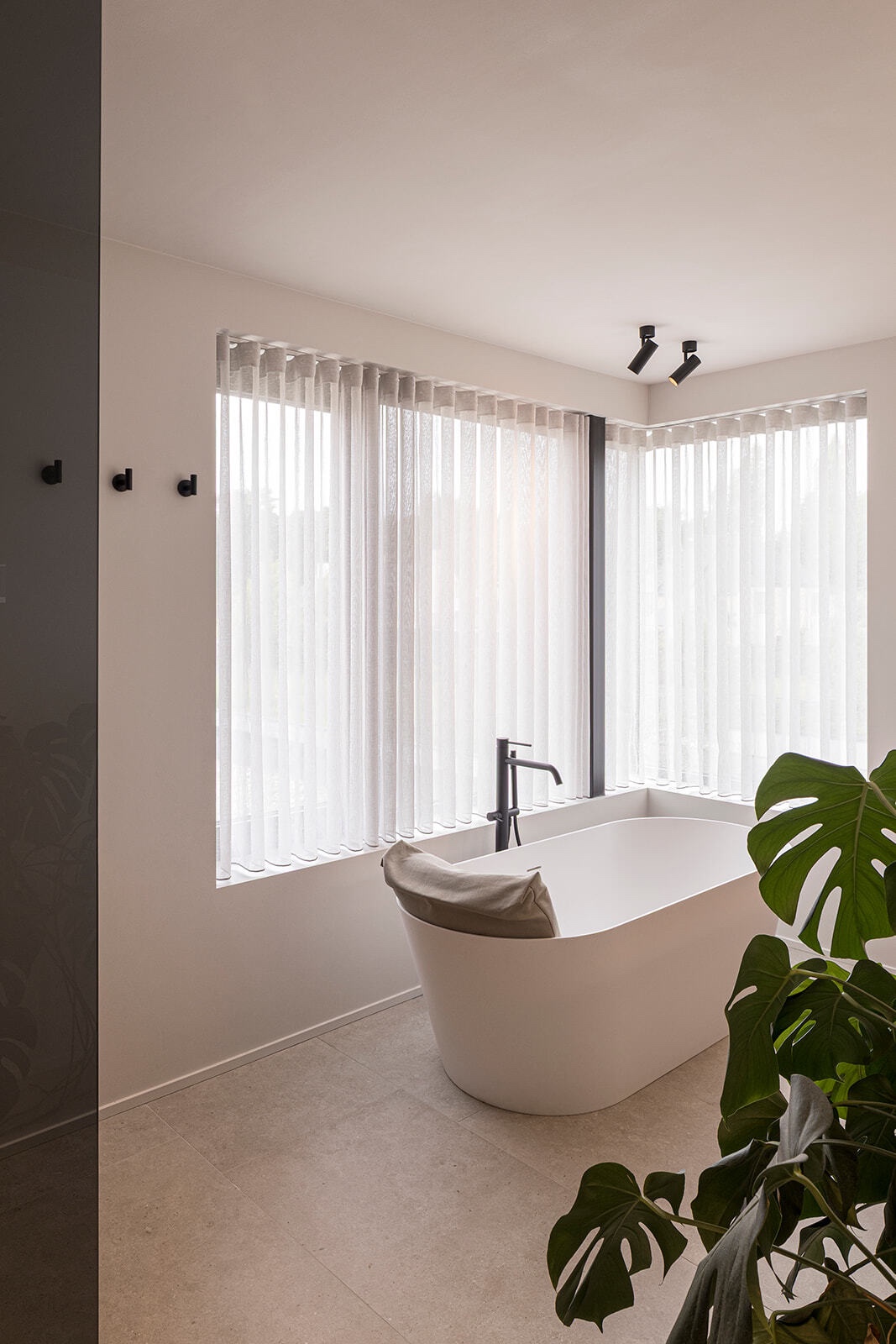
NEW 2026 Jubileum Edition The Best Interior Designers Benelux
Order Now €125