







Office with Rug and Wall Hanging
Light from the tall windows sets the tone before anything else. It lands on ceramic tile, catches the folds of the curtains, and softens the edges of the table placed near the glass. In this office with rug and wall hanging, the textiles do more than decorate the room. They define the way the space is read: one layer underfoot, one layer on the wall, both working against the hard lines of the glazing and the floor.
Window light, glass, and a measured palette
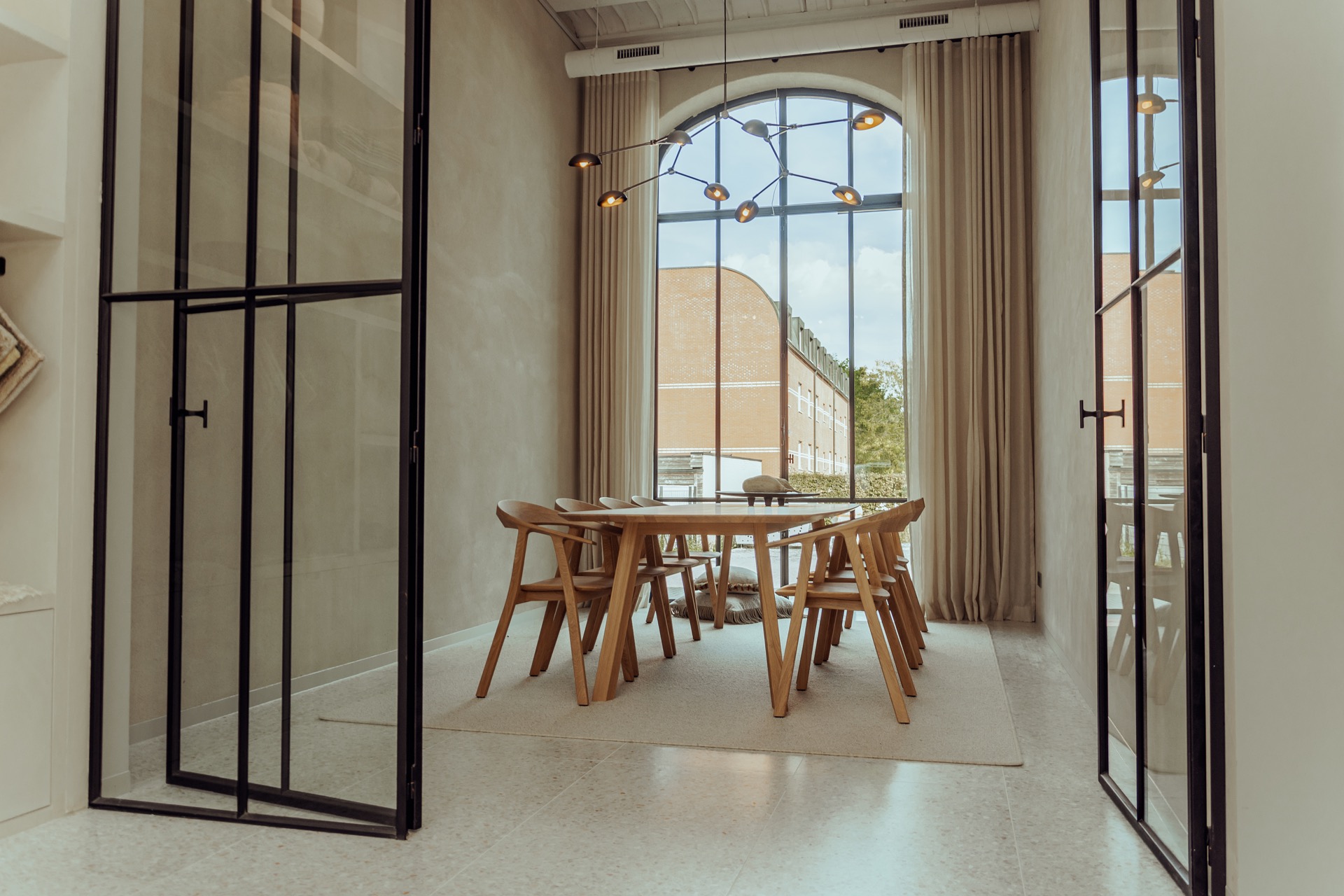
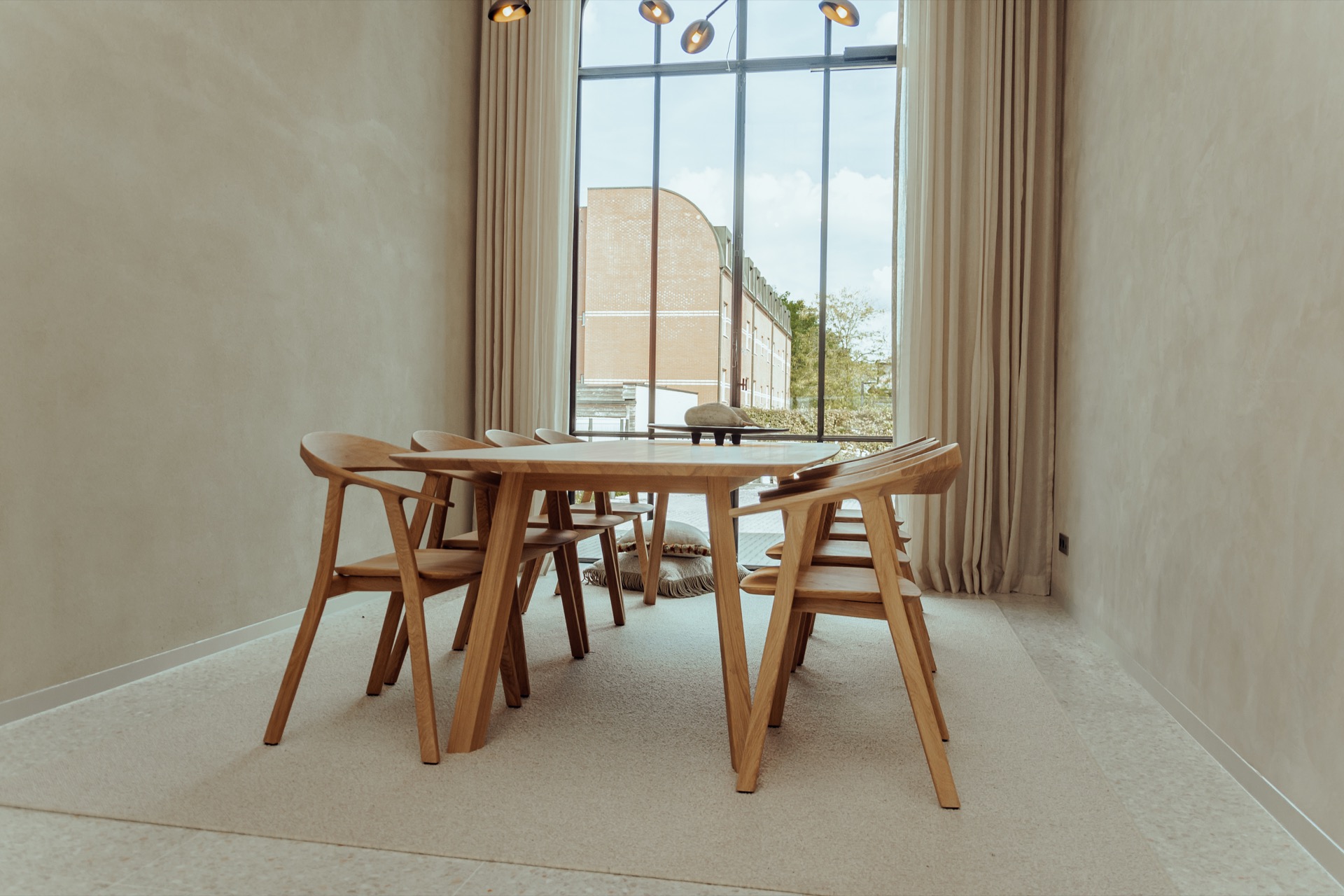
The room is built around large windows with curtains and dark-framed glazed doors, so the view is never separate from the interior. Beige, sand, and cream tones take over the scene, with wood adding a lower, grounded note at the table and chairs. The palette stays close to the materials already present in the room: tile, textile, glass, and timber. That restraint lets the daylight do some of the work, especially where the curtain fabric breaks the brightness into softer vertical bands.
In the office dining area with rug, the table sits close to the window rather than deep in the room. That placement keeps the light active across the surface and brings the floor covering into the composition. The rug is not treated as an isolated object. It sits on the ceramic tiles as a soft base, rounding off the sharper edges of the floor and giving the furniture a quieter footing. The result is calm, but it is never flat.
A rug that settles the room
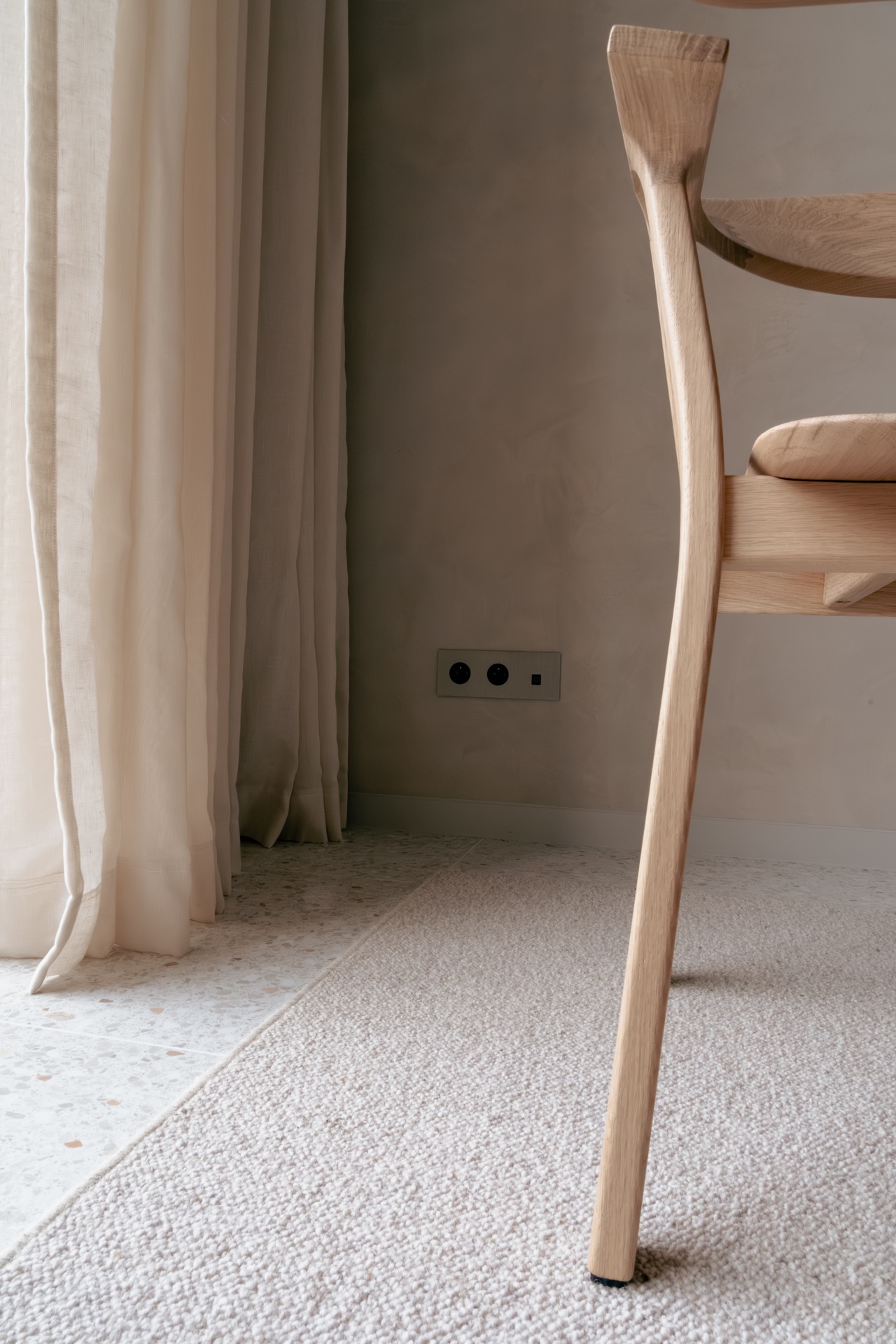
The rug introduces texture before color. Its surface is subtle, but it changes the way the floor reads around it, especially beside the smooth tile joints. In a room with hard glazing and precise lines, that difference matters. The soft field under the table tempers the reflections from the windows and gives the chairs a more defined zone to occupy. This is where the idea of a warm minimalist interior becomes visible: not through added decoration, but through measured material contrast.
Seen from another angle, the rug also helps stitch together the working and dining sides of the room. The table, chairs, and lighting cluster above it, while the floor beyond remains open and uncluttered. That open edge keeps the room from feeling boxed in. Instead, the rug acts as a visual pause, a surface that slows the movement of the eye and holds the center of the composition in place.
The wall hanging as a textured counterpoint
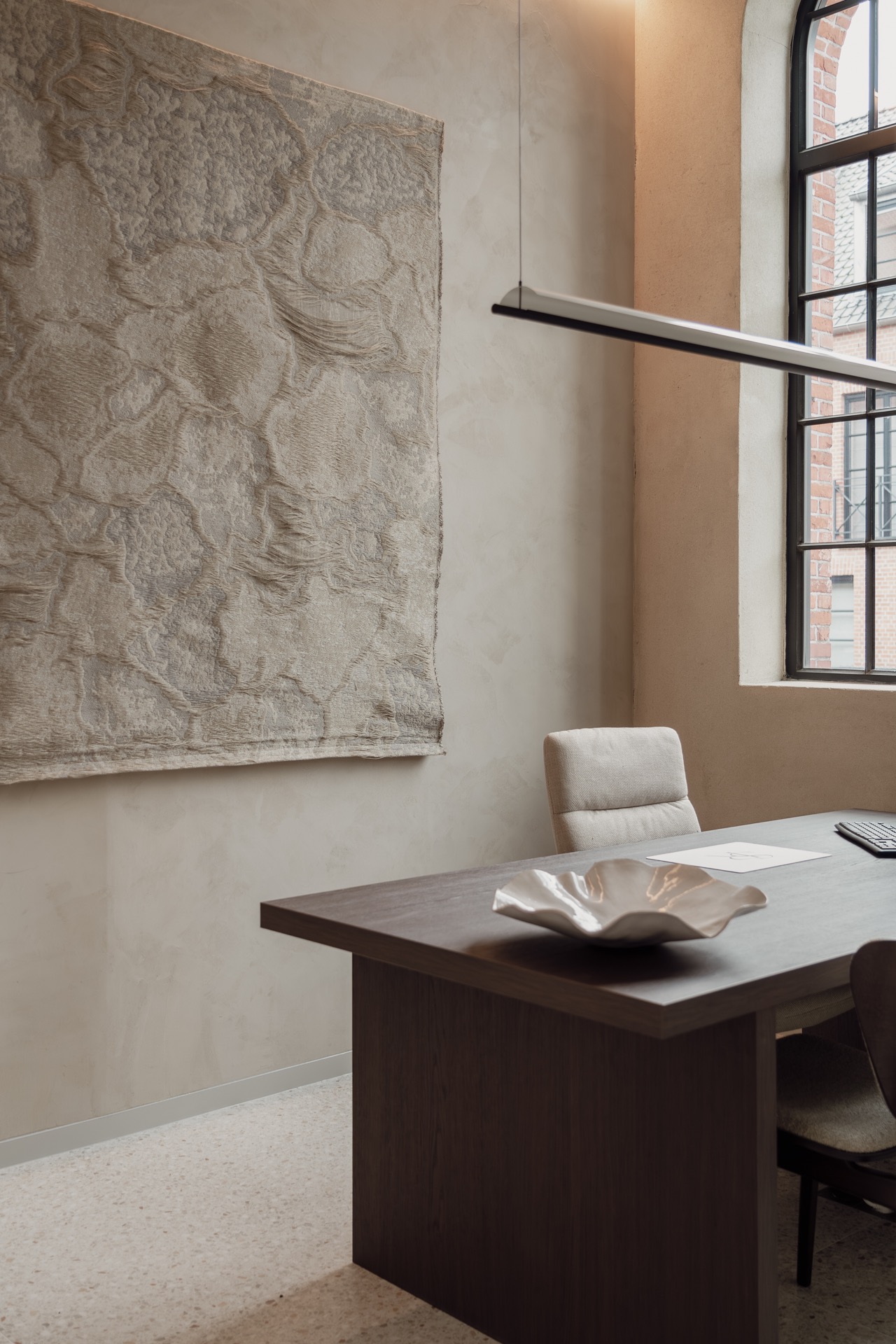
Across the room, the textured wall hanging changes the pace. It has more presence than a framed image because the material surface reads from a distance and then becomes richer as you move closer. The relief catches the light in small variations, which gives the wall a slower rhythm than the glazed side of the room. Placed against the pale wall, it becomes the point where texture is most explicit and where the room’s textile language shifts from floor to wall.
That wall piece does not need to dominate through scale alone. Its effect comes from contrast: soft fiber against smooth paint, raised structure against a plain plane, dense material against open air. In an office with rug and wall hanging, that contrast is what keeps the space from feeling too even. The wall hanging marks a focal point without interrupting the restraint of the room, and it gives the eye a place to stop after moving across the windows, curtains, and table.
Materials that keep the room grounded
Tile, textile, and wood each play a distinct role here. The ceramic floor is cool and exact, the rug absorbs part of that sharpness, and the wood introduces a warmer line in the furniture. The curtains add another layer, not as a heavy screen but as fabric that filters the large windows with a gentle fall. Together, these elements turn a simple office-dining area with rug into a room that feels considered through surfaces rather than through ornament.
The long vertical lines of the curtains also mirror the height of the glazing. That echo matters because the room already relies on proportion to hold together the furniture and the large openings. When the curtain folds repeat beside the black profiles of the windows, the wall feels taller and the opening more measured. The textiles do not hide the architecture; they sharpen how it is seen.
How the space is read from one side to the other
What stands out most is the way the room changes as you look across it. Near the window, the light is bright and direct. At floor level, the rug softens the transition from one part of the room to another. On the wall, the textured hanging pulls the material story upward. Each element answers a different surface, and none of them competes for attention. That is why the room feels composed rather than filled.
The combination of large windows with curtains, a rug on the tile floor, and a strong wall textile gives the interior its pace. The pieces are few, but they are placed where the room needs them most: at the edge of the light, under the table, and on the wall that benefits from texture. The result is a clear reading of an office with rug and wall hanging, where neutral textile accents help define the space without overwhelming it.
Photography records those details well. You can see the multi-light pendant hanging over the table, the black-framed glazing, the arch-like opening around the central window, and the fine pattern of the curtain folds. In another frame, the wall hanging comes forward as a relief surface rather than a flat decoration. Together, the images show a room shaped by light and fabric, with each material placed where it changes the way the interior is experienced.
The project remains direct in its choices. No surface is overworked, and no element is added without a clear role in the room. The rug settles the floor, the wall hanging shifts the focus upward, and the curtains modulate the window wall. In that measured layering, the office dining area with rug reads as a practical interior that uses textile detail to define atmosphere through visible structure, not through excess.
Want to see more of Wool & Wire? View the page of Wool & Wire for even more great projects and company information.


NEW 2026 Jubileum Edition The Best Interior Designers Benelux
Order Now €125