








Organic garden layout with pond and natural stone
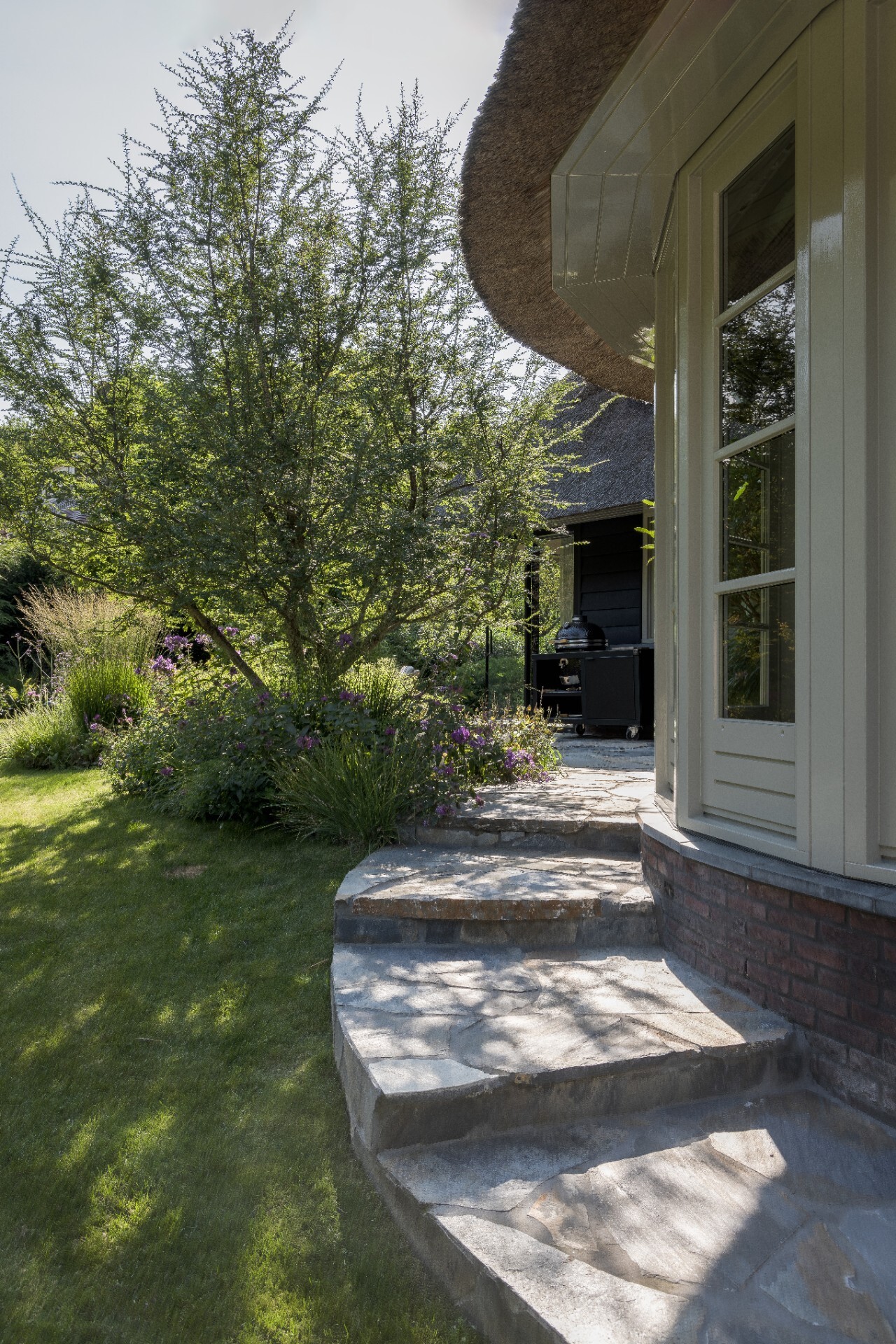
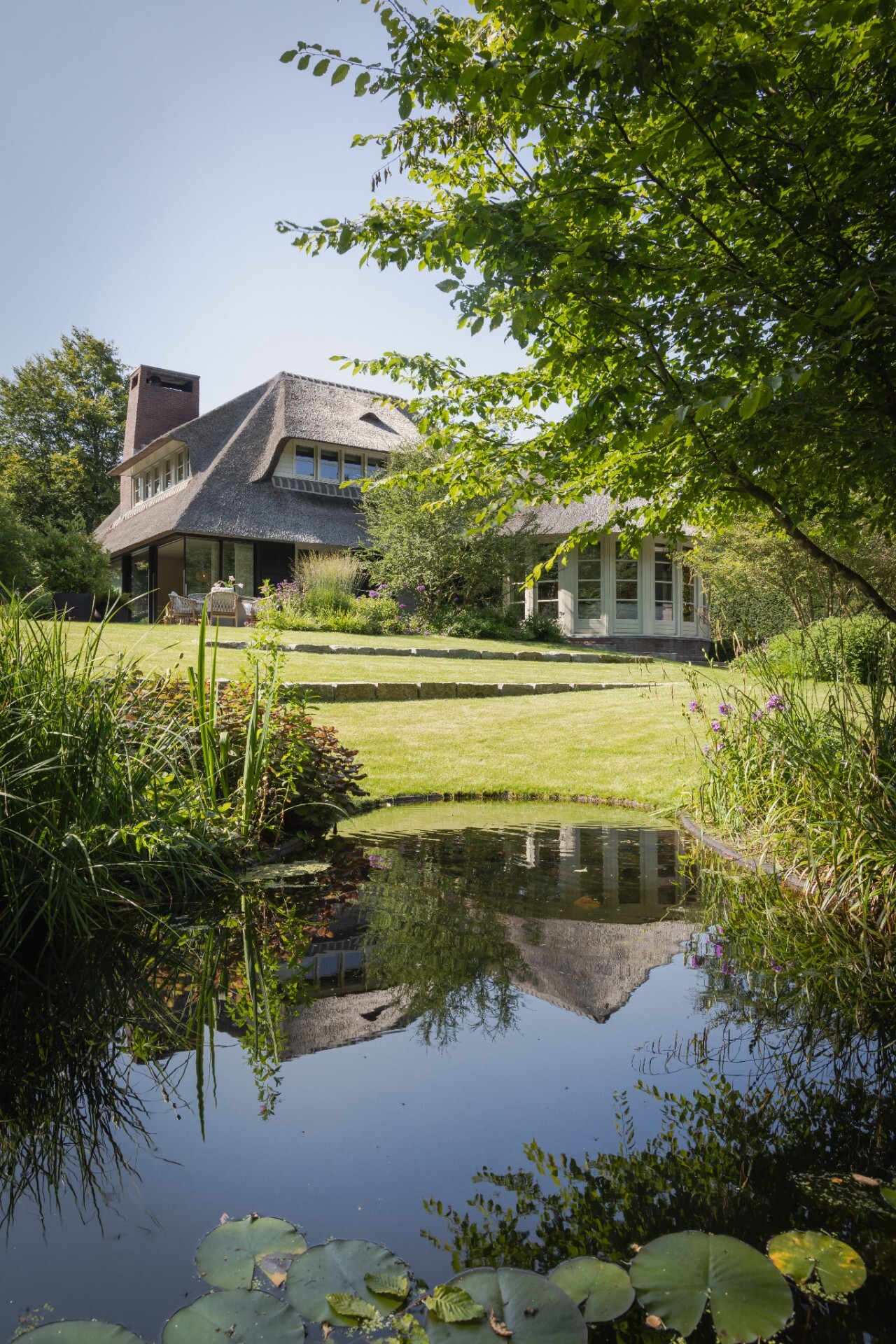
The organic garden layout starts with a soft curve rather than a straight line. It links the house and the outdoor space in one movement, using the surrounding nature reserve as a point of reference. Near the lawn, natural stone elements step through the level change and read almost like a broad stair. They draw the eye across the width of the garden and set up the first clear route through the planting.
Curves that guide the view
Those curved lines do more than shape the plan. They give the garden a slower pace, with turns that reveal the pond, the stone edges and the deeper planting little by little. The organic garden layout is visible in the way paths bend beside the lawn and in the way the stone work does not cut the plot into hard parts. Instead, the materials follow the terrain and keep the sightline open toward the water and the seating areas.
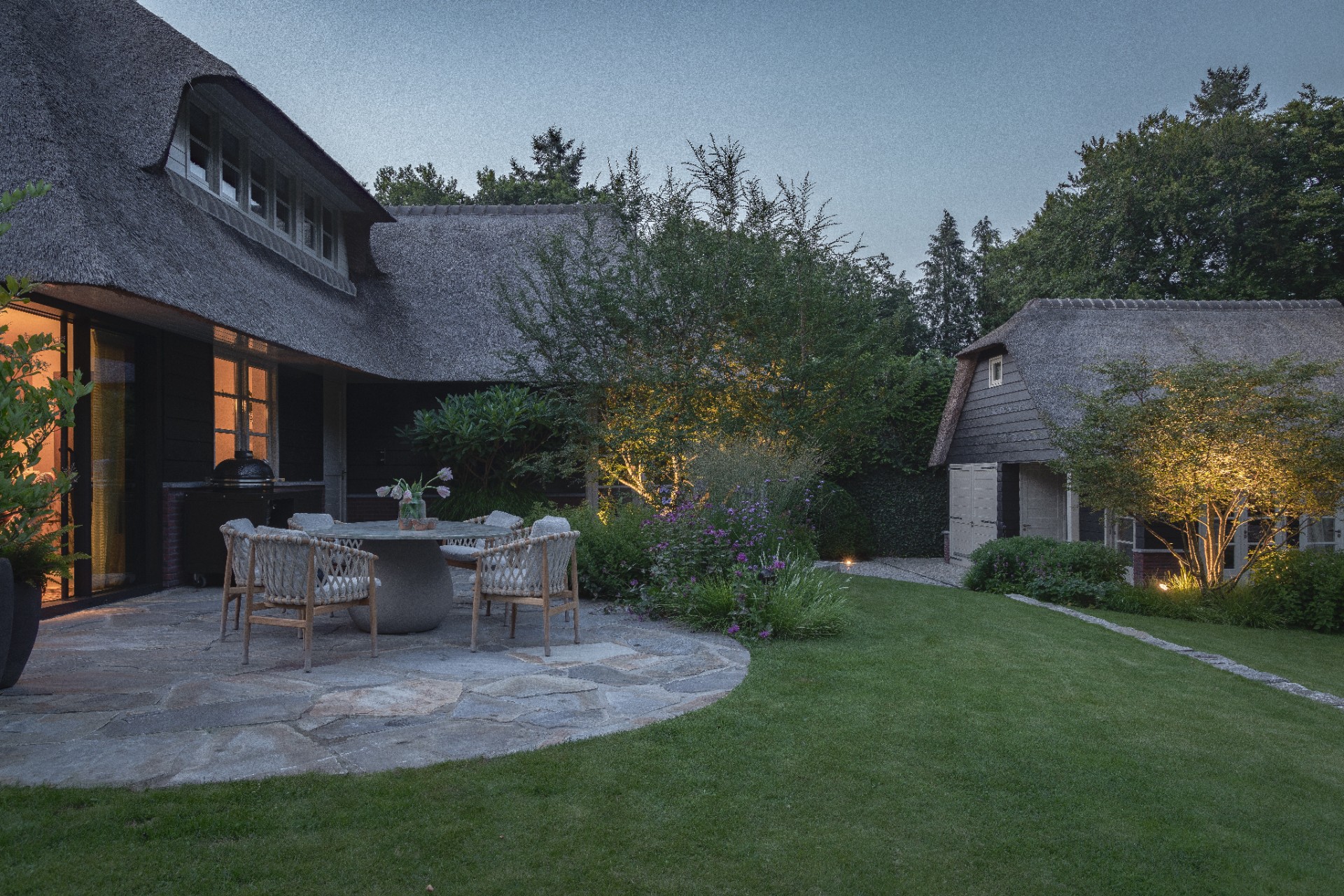
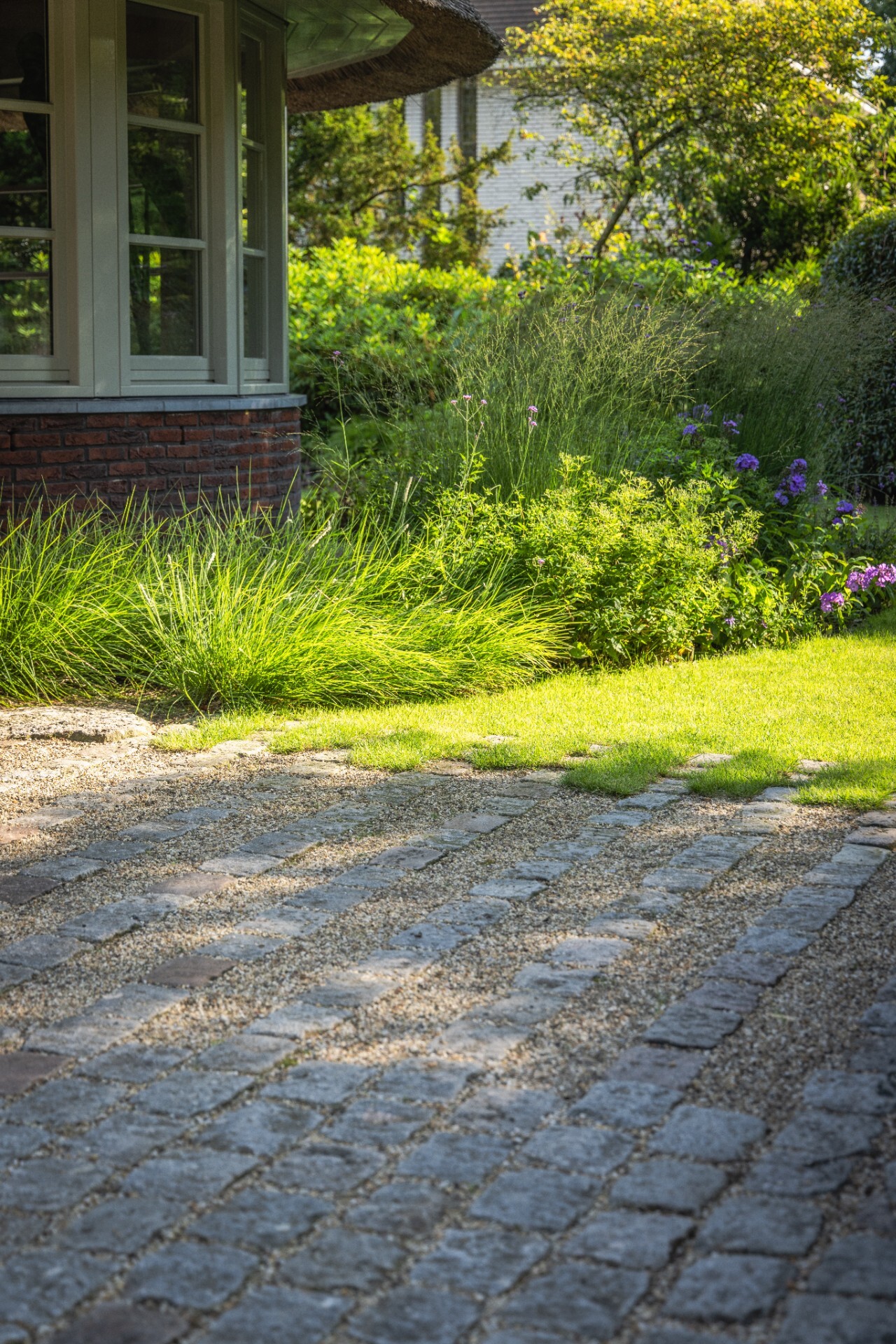
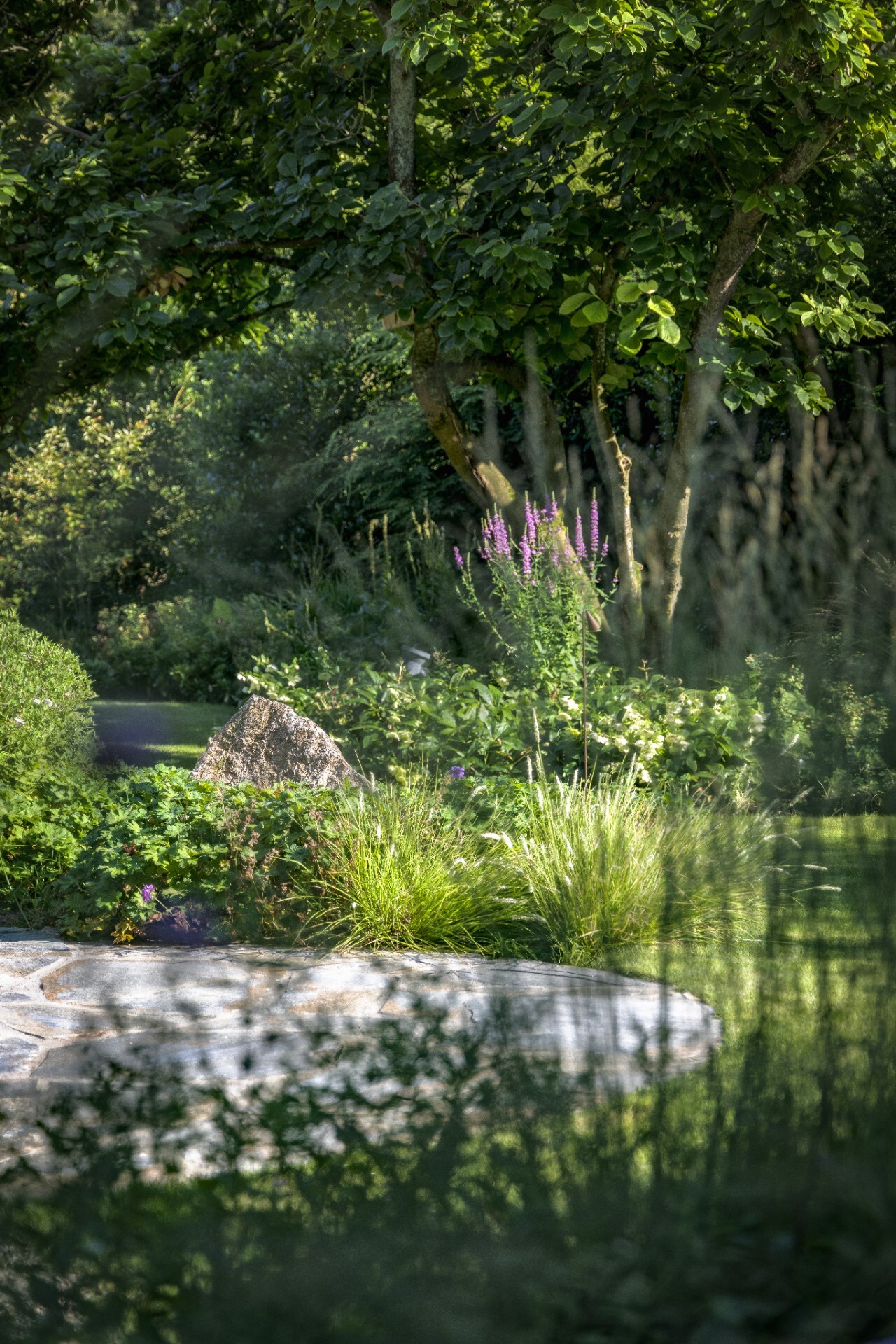
Natural stone appears in several places, but never as a separate layer. It forms the low walls, the terraces and the stepped elements in the grass. On the ground, the stone path has a firm, measured rhythm beside the softer edges of the borders. That contrast gives the garden its structure without flattening the planting around it.
Stone steps through the lawn
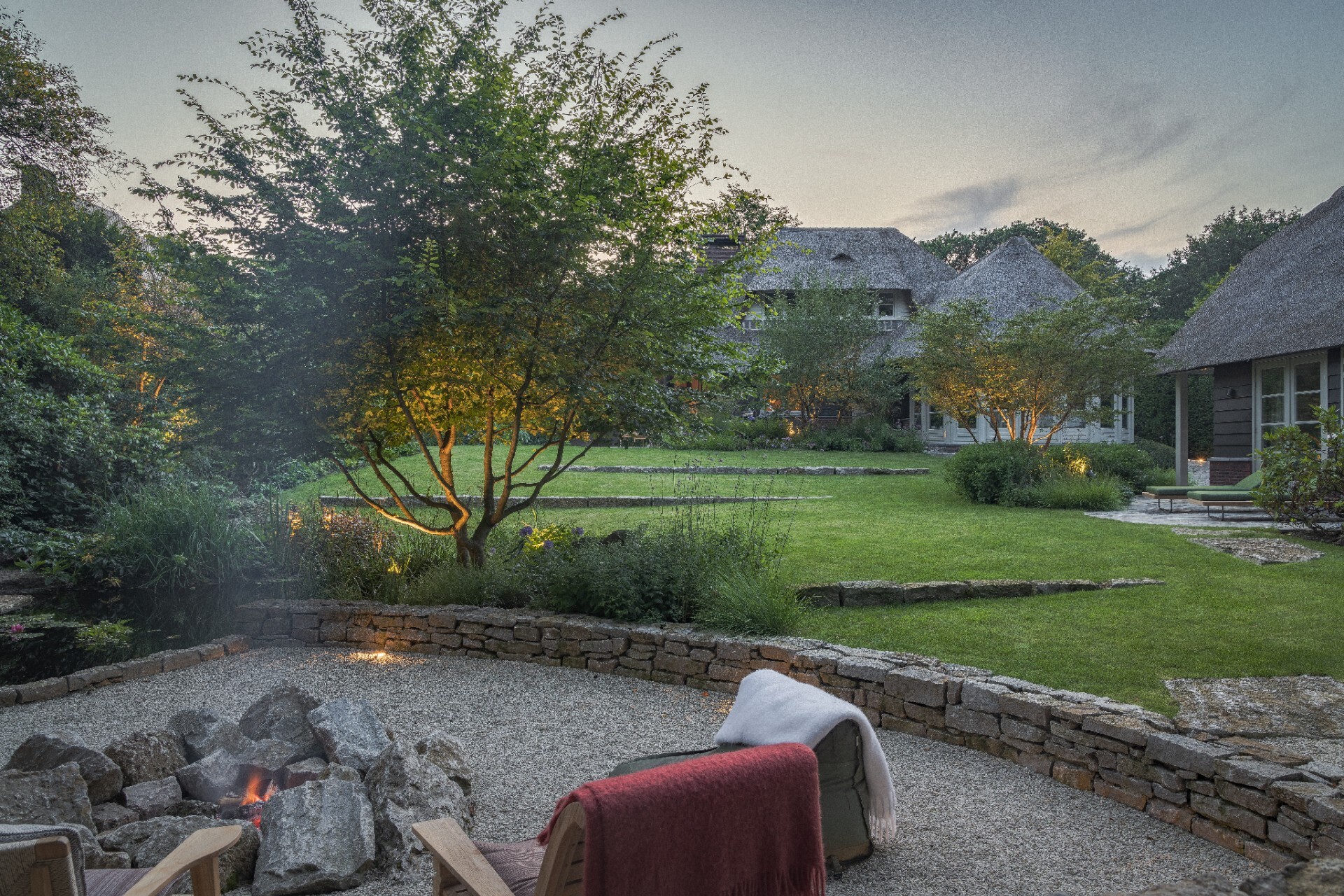
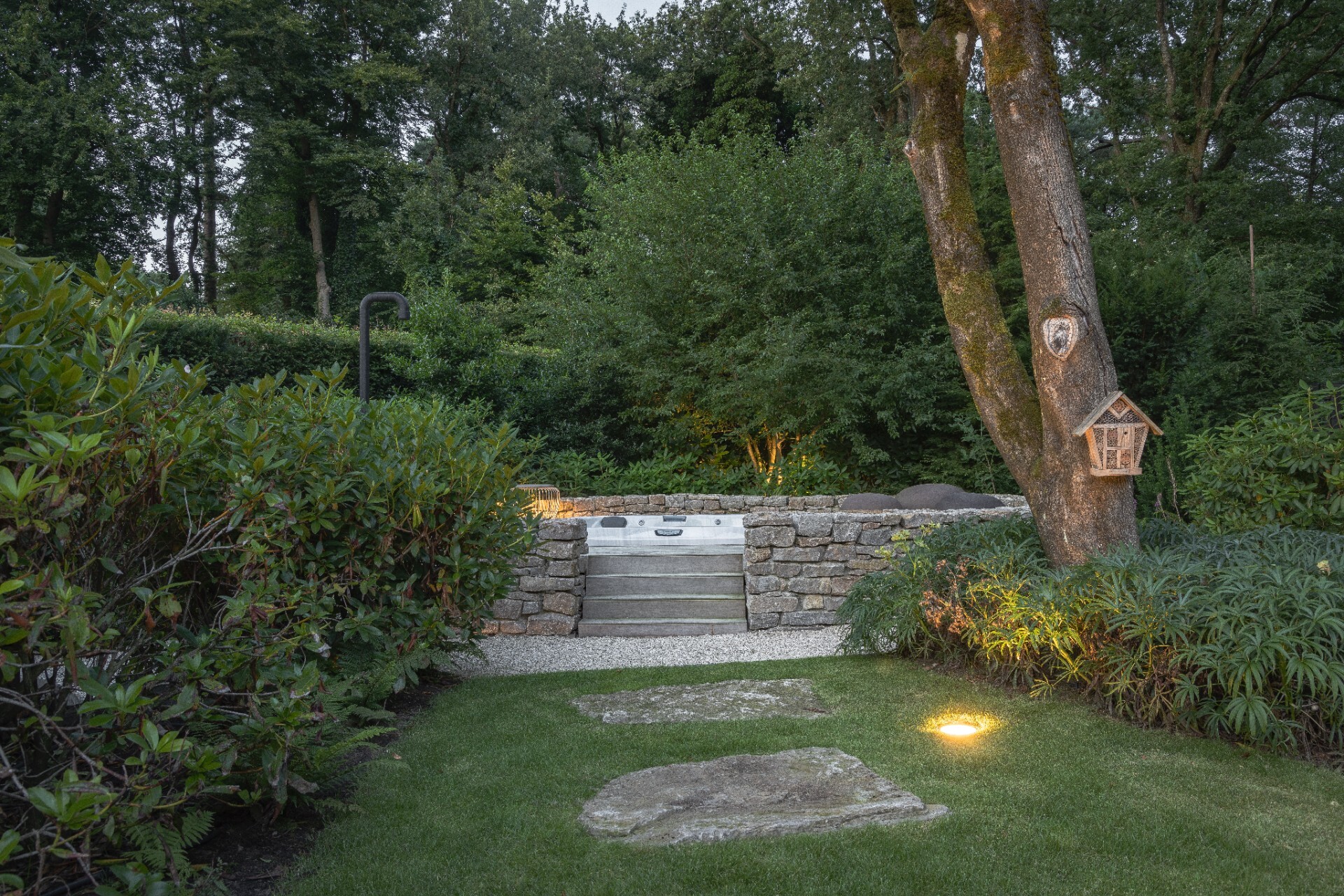
The most striking natural stone garden path is not a single path at all, but a sequence of stone elements that bridge the difference in level. Their shape suggests a wide staircase set into the lawn. Because the pieces sit low and spread across the green surface, they create a clear line without breaking the garden into fragments. The effect is practical, but it also reinforces the breadth of the plot.
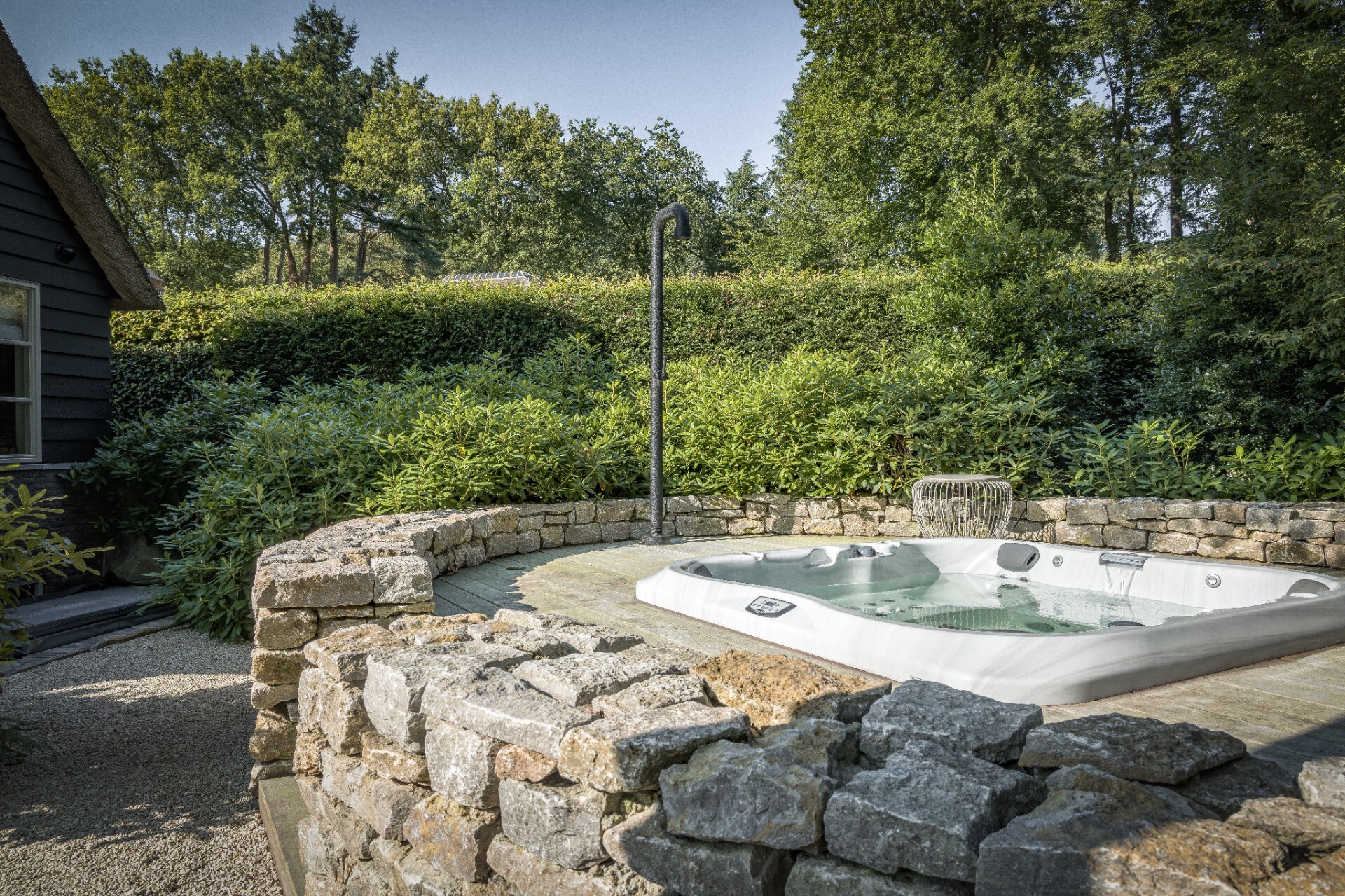
In the same area, a natural stone retaining wall frames the raised parts of the garden and gives weight to the terraces. The stone sits close to the planting and the water, so the material feels tied to the setting rather than added later. From the house side, the transition from the built volume to the garden reads in short steps: terrace, path, lawn, then pond.
Privacy held by wintergreen hedging
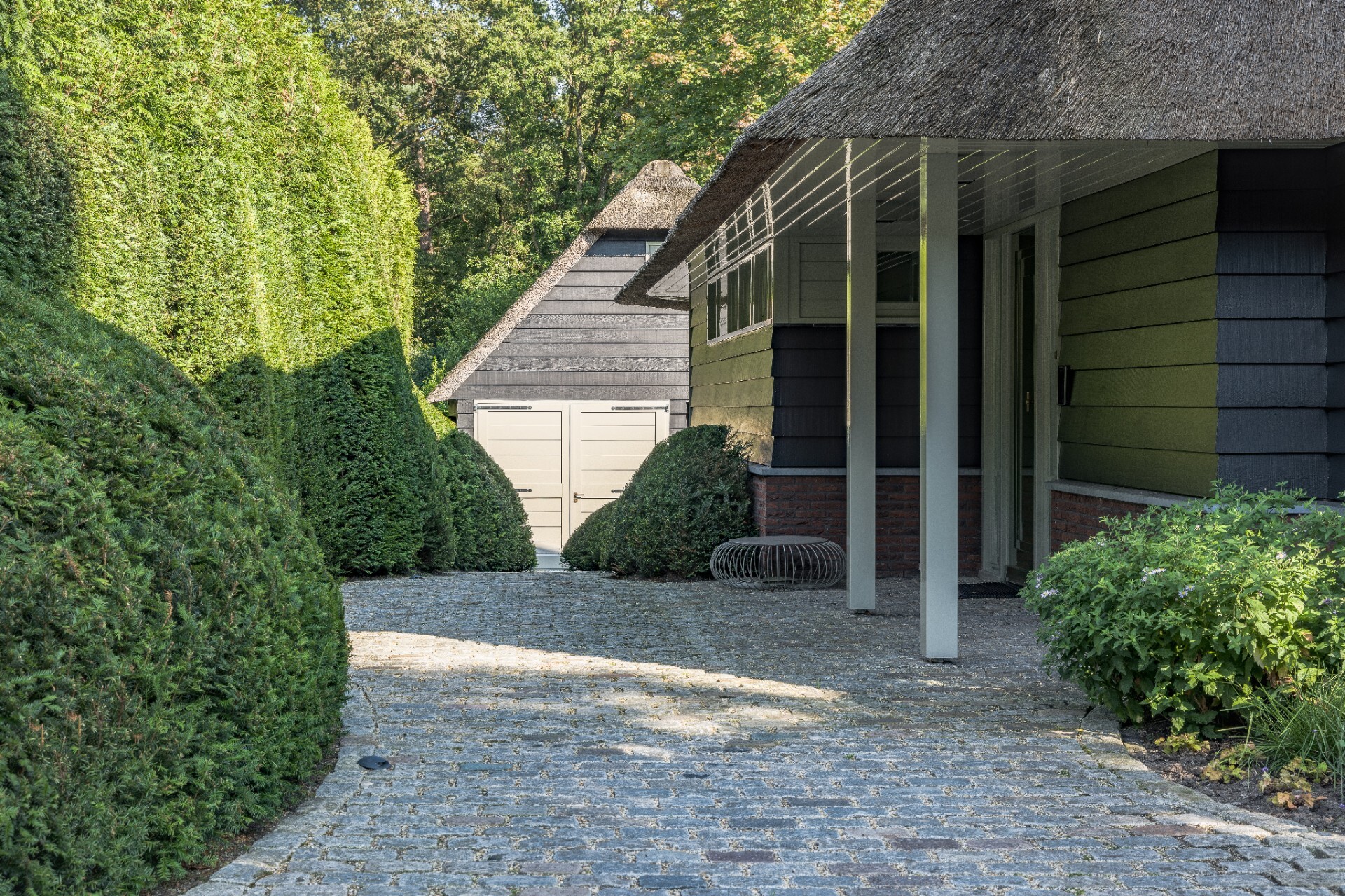
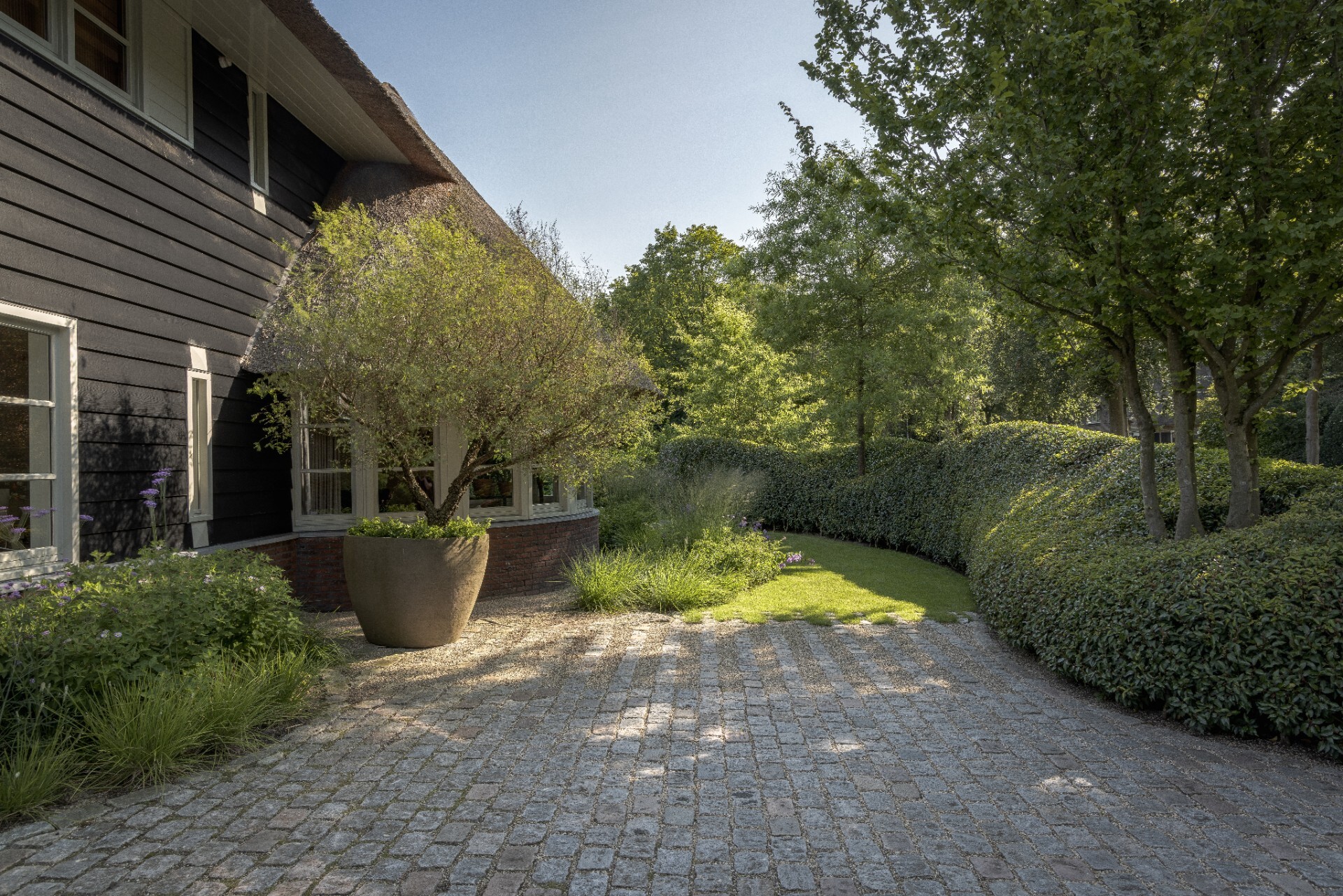
Along the edges, wintergreen hedging rises in cloud-like forms. The clipped masses are not straight or severe; they soften the boundary with the neighbours and the public road while still holding the garden in place. Even in winter, the hedges keep their outline, so the edge of the plot remains legible when the borders recede.
That edge treatment matters because so much of the garden is open in the middle. The hedging keeps the long views intact across the lawn and toward the pond, while the planting close to the borders becomes denser and more enclosed. It is a simple move, but it allows the centre of the garden to stay calm while the perimeter does the work of screening.
Pond water and layered planting
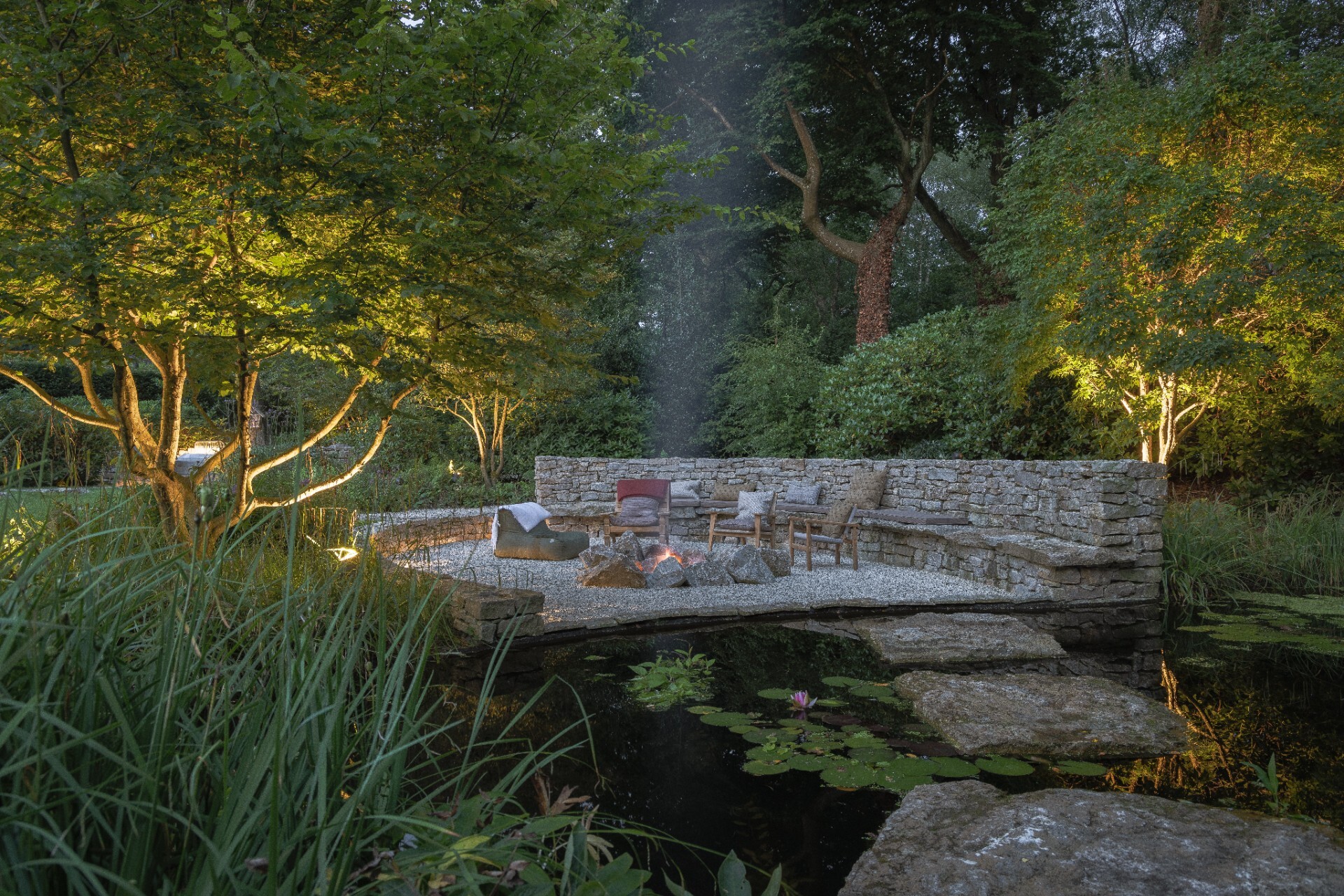
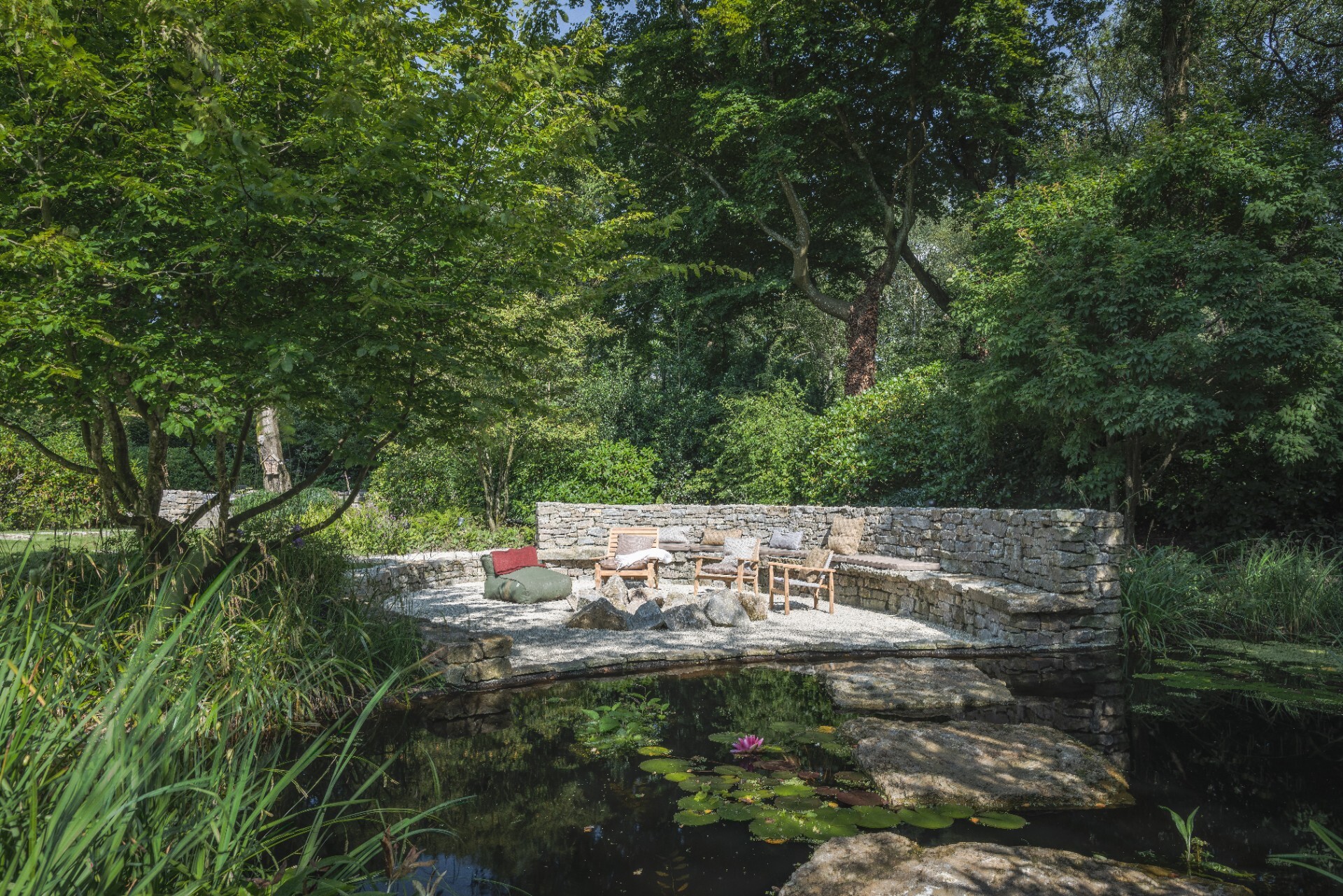
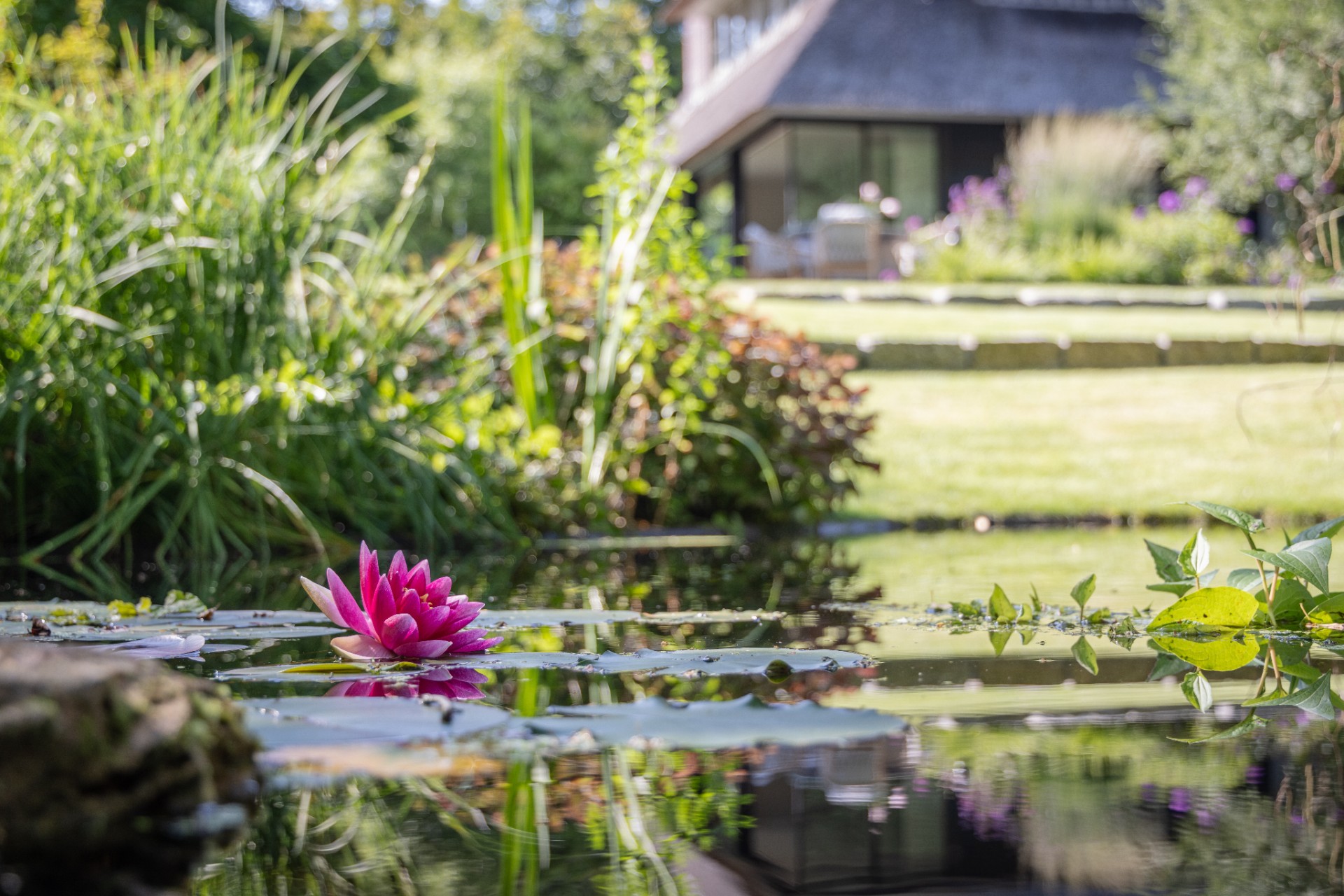
The country house pond garden is anchored by a water surface with water lilies. The pond sits low in the composition, so the reflections and floating leaves become part of the garden’s slower layer. Around it, the planting grows more generous, with mixed masses of green, flowering stems and softer edges that merge into one another. The water does not sit apart from the landscape; it is folded into it.
Blue purple white borders run through the planting scheme and give the garden a clear colour direction without making it rigid. The palette appears in the flowering edges and in the fuller beds near the path and pond. Because the borders are planted loosely, the colours can shift as the garden changes through the year. The result is less about one fixed view and more about small differences from one corner to the next.
At dusk, the planting is picked up by garden lighting at dusk. Small light points appear between the leaves and around the routes, so the garden remains readable after daylight fades. The lights do not dominate the scene; they trace the edge of the path, catch the stone and pick out the taller plants near the water.
A fire point beside the water
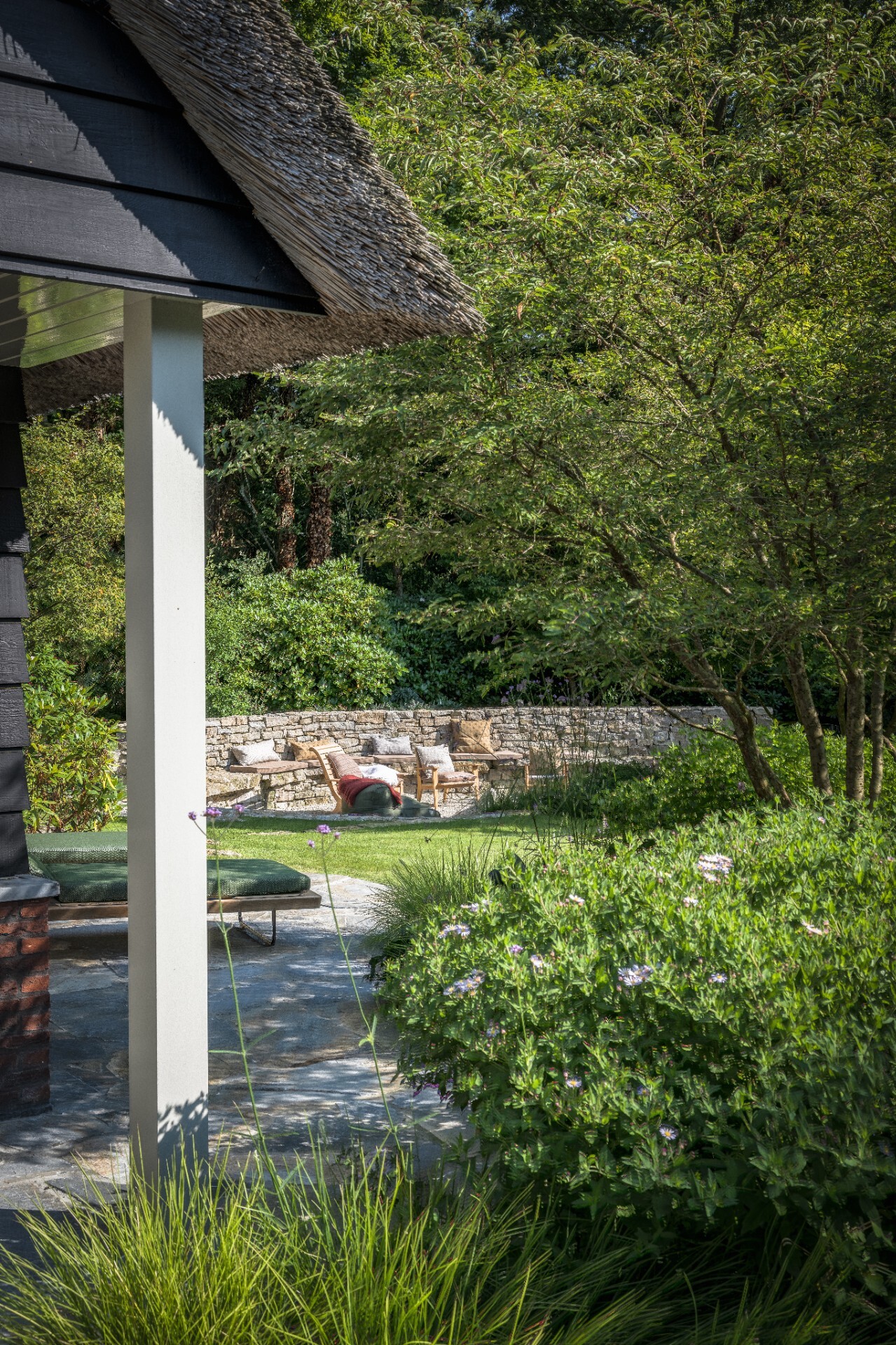
The outdoor fireplace by pond sits within a compact zone of stone, gravel and greenery. It is set in close to the water, so the fire and the pond form one quiet destination within the larger garden. The seating area is not oversized. It is enclosed by a natural stone wall and surrounded by planting that keeps the space sheltered without hiding it from the rest of the garden.
Seen together, the pond, the stone ring and the low seating create a place that is easy to read from a distance and more intimate once you stand in it. The gravel underfoot gives the area a drier texture than the lawn and the water nearby. That shift in surface is important: it separates the fire zone from the rest of the garden while keeping the materials consistent.
Material choices that stay close to the landscape
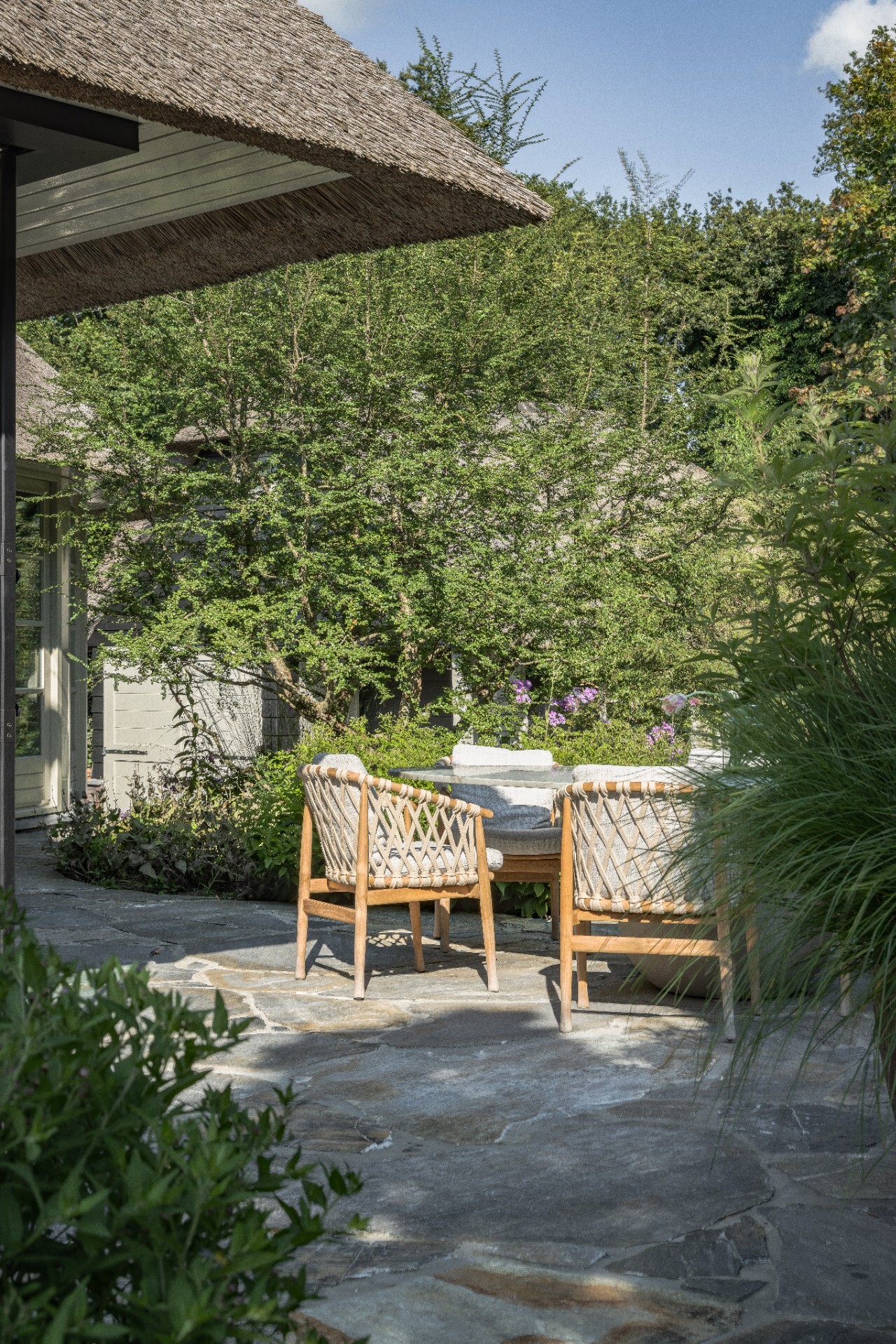
Natural stone appears again along the garden’s edges and beside the house, where the path and terraces connect the built areas to the planting. The stone has a practical role, but it also carries the same muted tone as the walls and the ground around the pond. That gives the project a clear material language without overloading it. Even the raised spots read as part of the landscape rather than as separate objects.
The planting remains grounded in the same approach. It is natural in character, with soft transitions rather than clipped contrasts, and it is arranged so that the garden keeps interest across the seasons. Blue, purple and white flowers lift the darker greens, while the cloud-shaped hedges and the stone work keep the composition in place. The outdoor spa with natural stone is visible as part of that broader setting, set into the garden rather than isolated from it.
Seen from one end of the plot to the other, the garden moves between open lawn, stone steps, water and denser planting without losing its direction. The organic garden layout does not rely on a single gesture. It is built from repeated details: the curve of a path, the edge of a wall, the reflection on the pond, the glow of a light point after dusk. Together they make the whole site feel carefully ordered, but never rigid.
Want to see more of Studio REDD? View the page of Studio REDD for even more great projects and company information.


NEW 2026 Jubileum Edition The Best Interior Designers Benelux
Order Now €125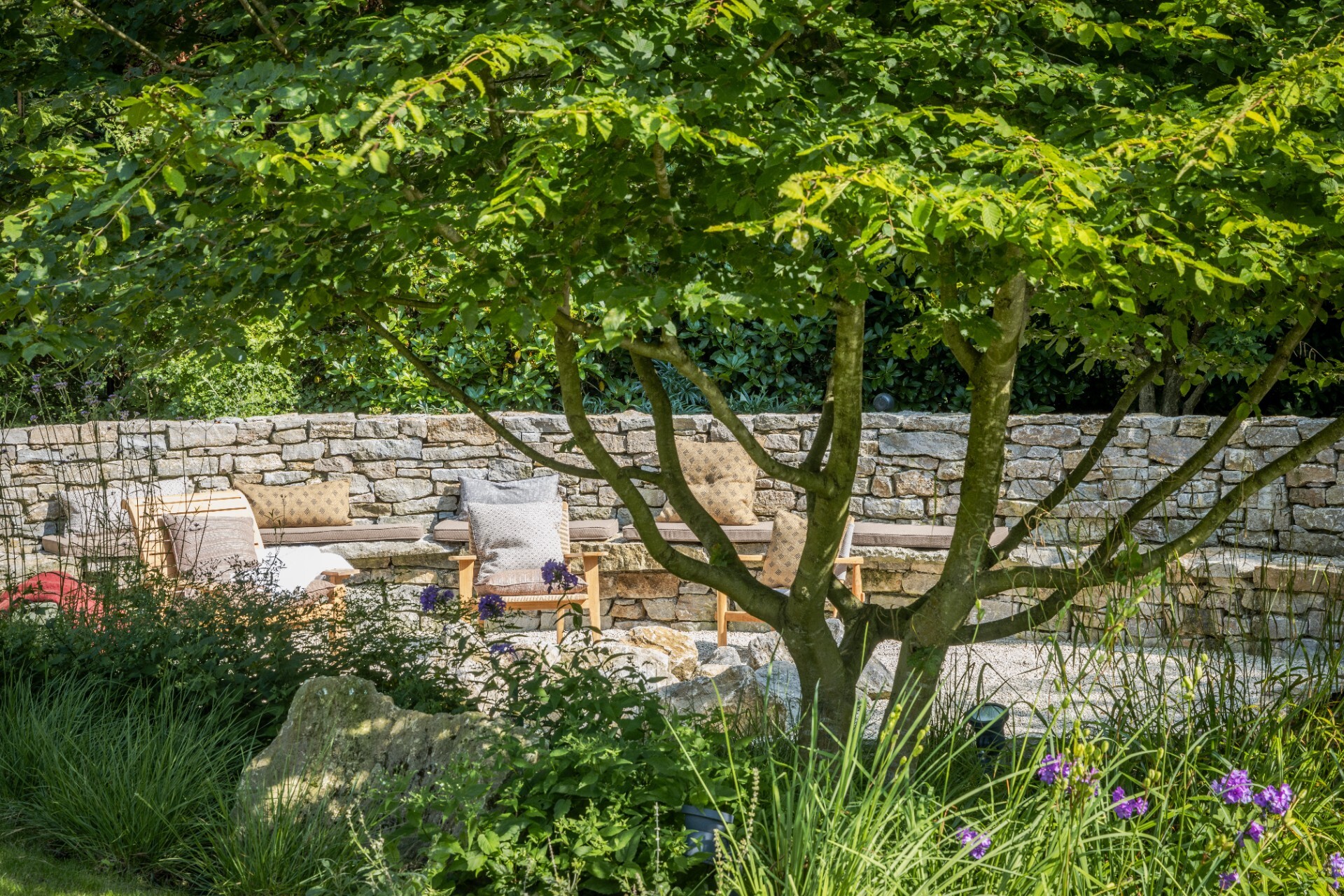
NEW 2026 Jubileum Edition The Best Interior Designers Benelux
Order Now €125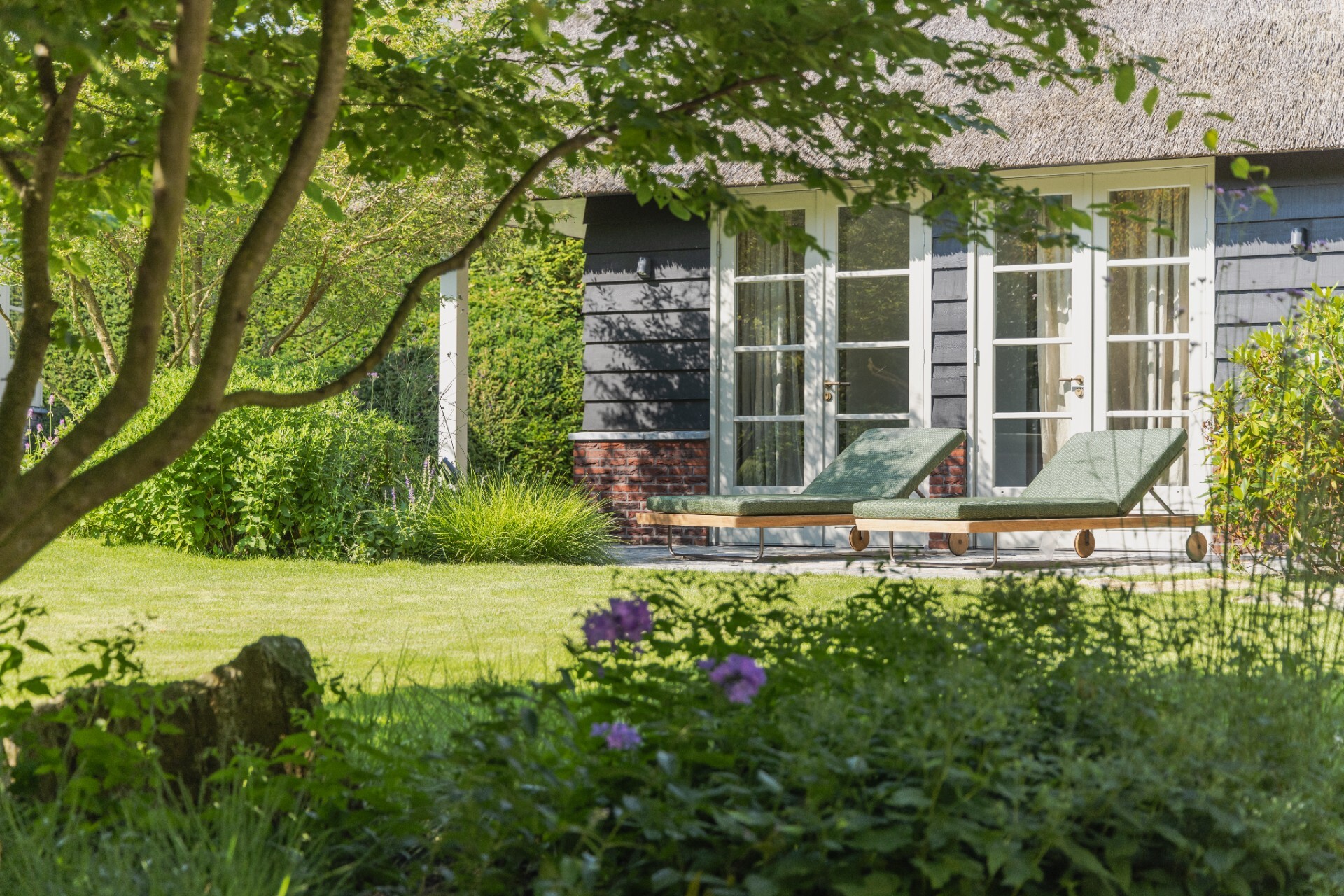
NEW 2026 Jubileum Edition The Best Interior Designers Benelux
Order Now €125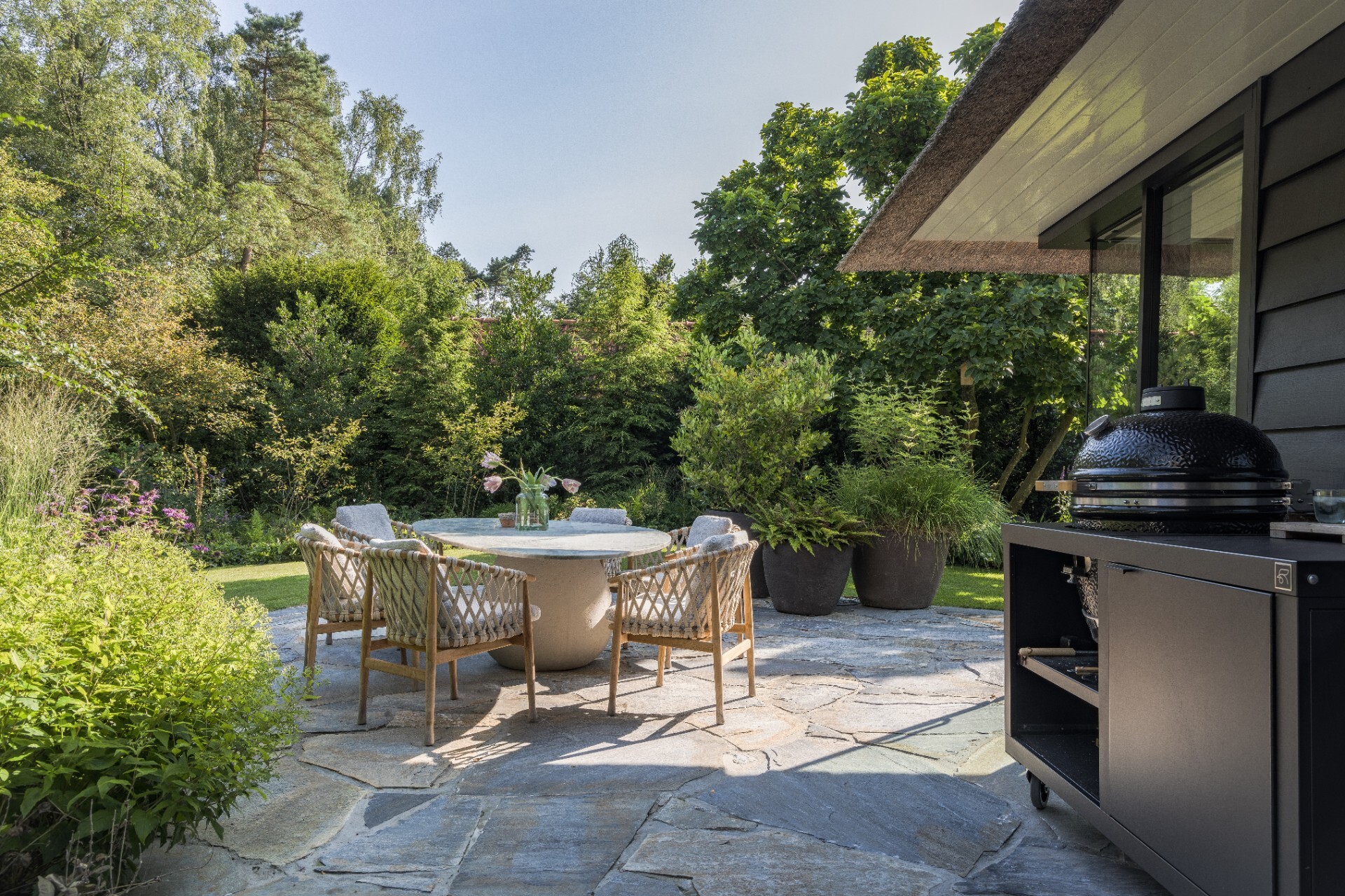
NEW 2026 Jubileum Edition The Best Interior Designers Benelux
Order Now €125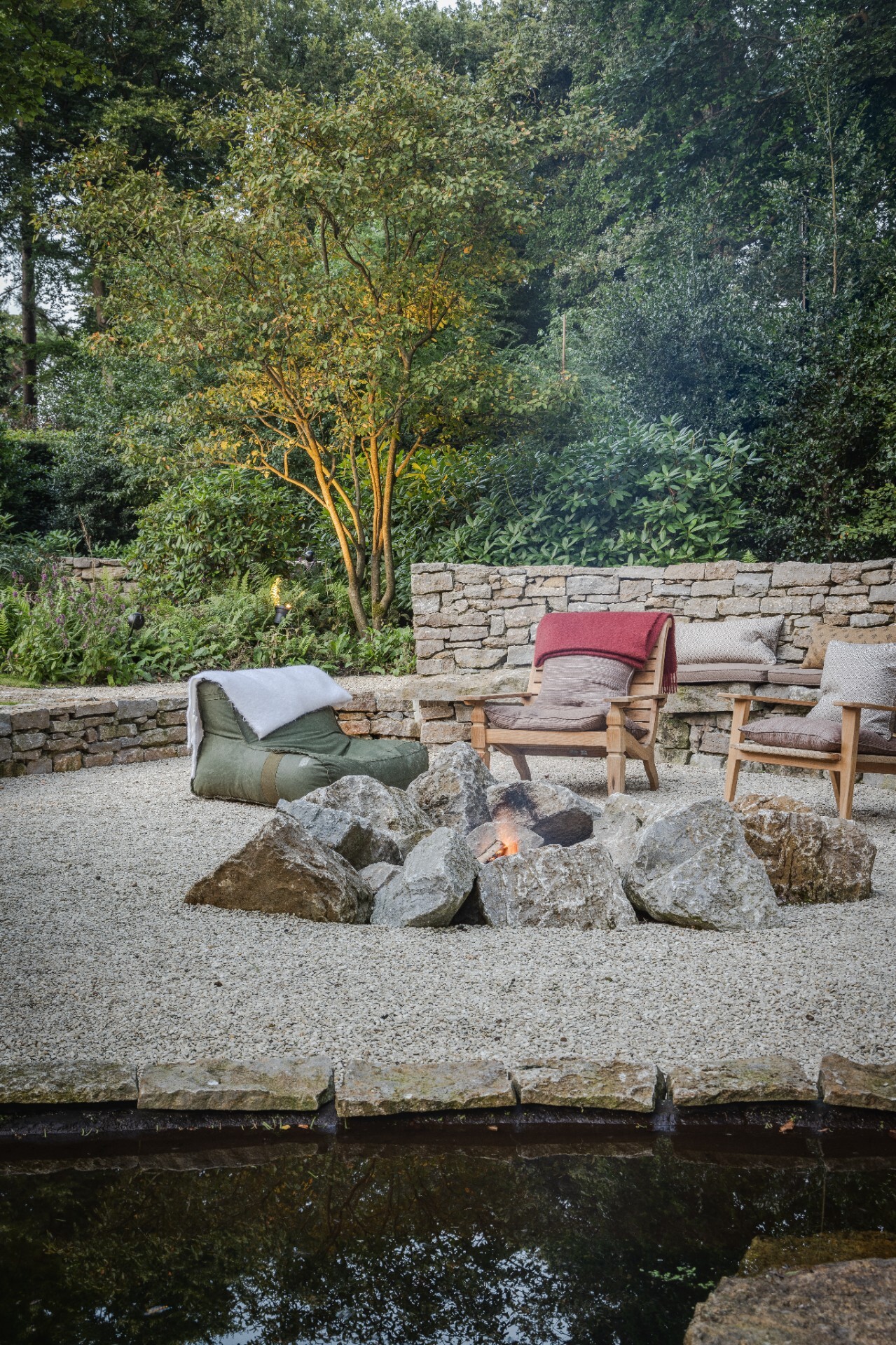
NEW 2026 Jubileum Edition The Best Interior Designers Benelux
Order Now €125