








Organic wooden coffee table with carved pattern
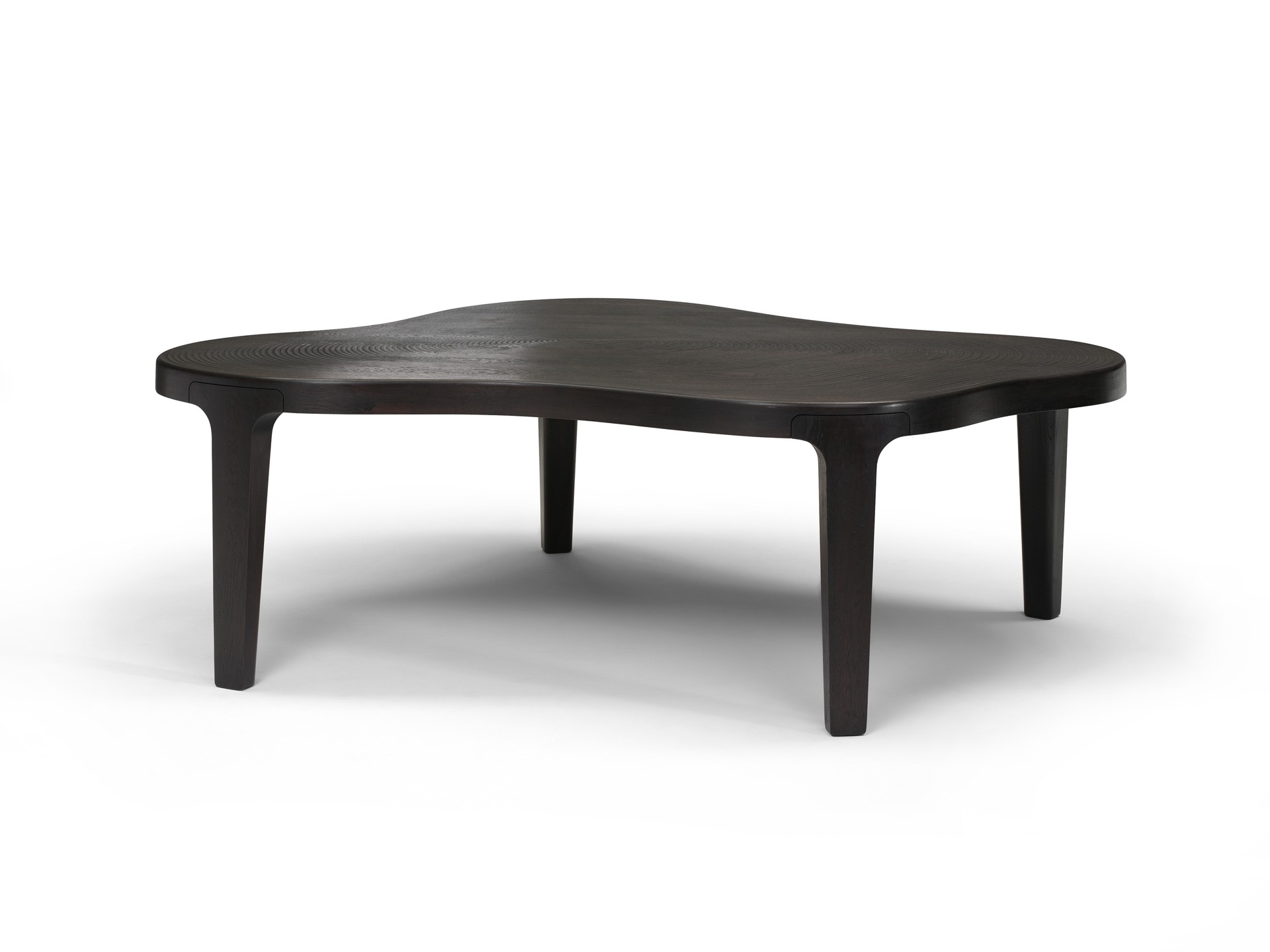
The tabletop starts with a wave, not a square edge. Its outline bends softly, and the carved wood pattern gives the surface a quiet rhythm that reads clearly in close-up. This organic wooden coffee table is part of a series that includes a dining table and a side table as well, all shaped away from the usual round, square or rectangular format. The inspiration comes from the marks waves leave on a beach, translated here into timber.
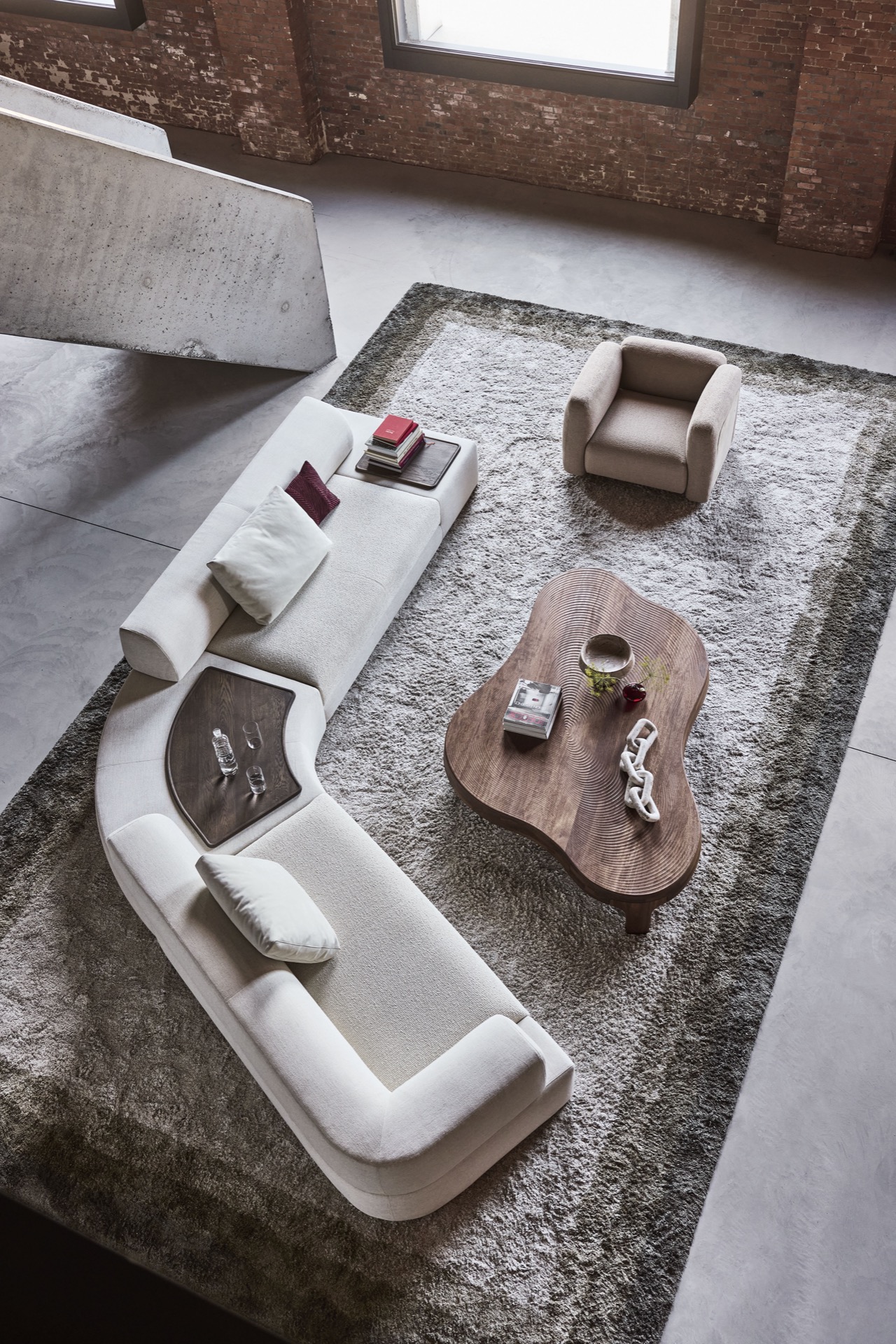
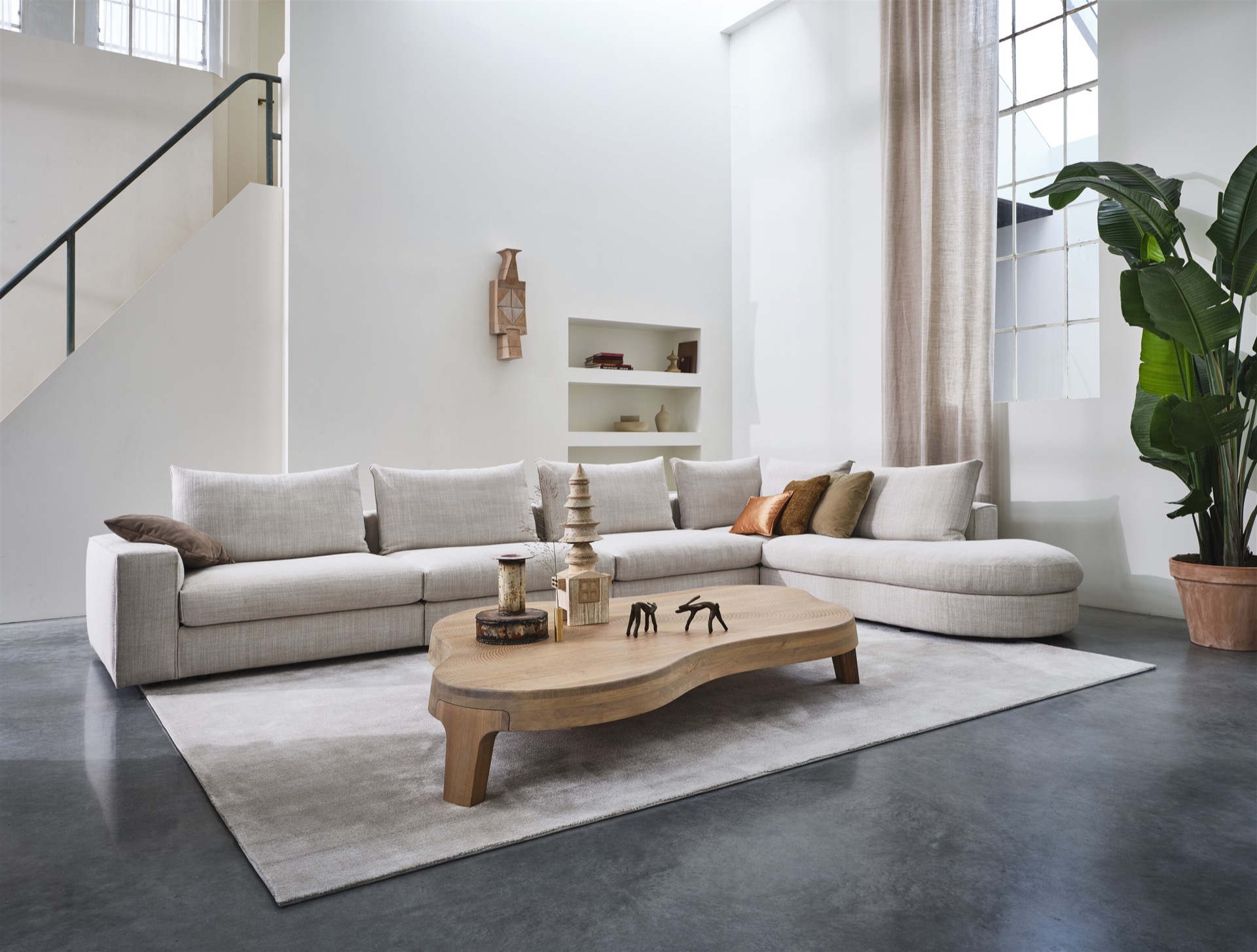
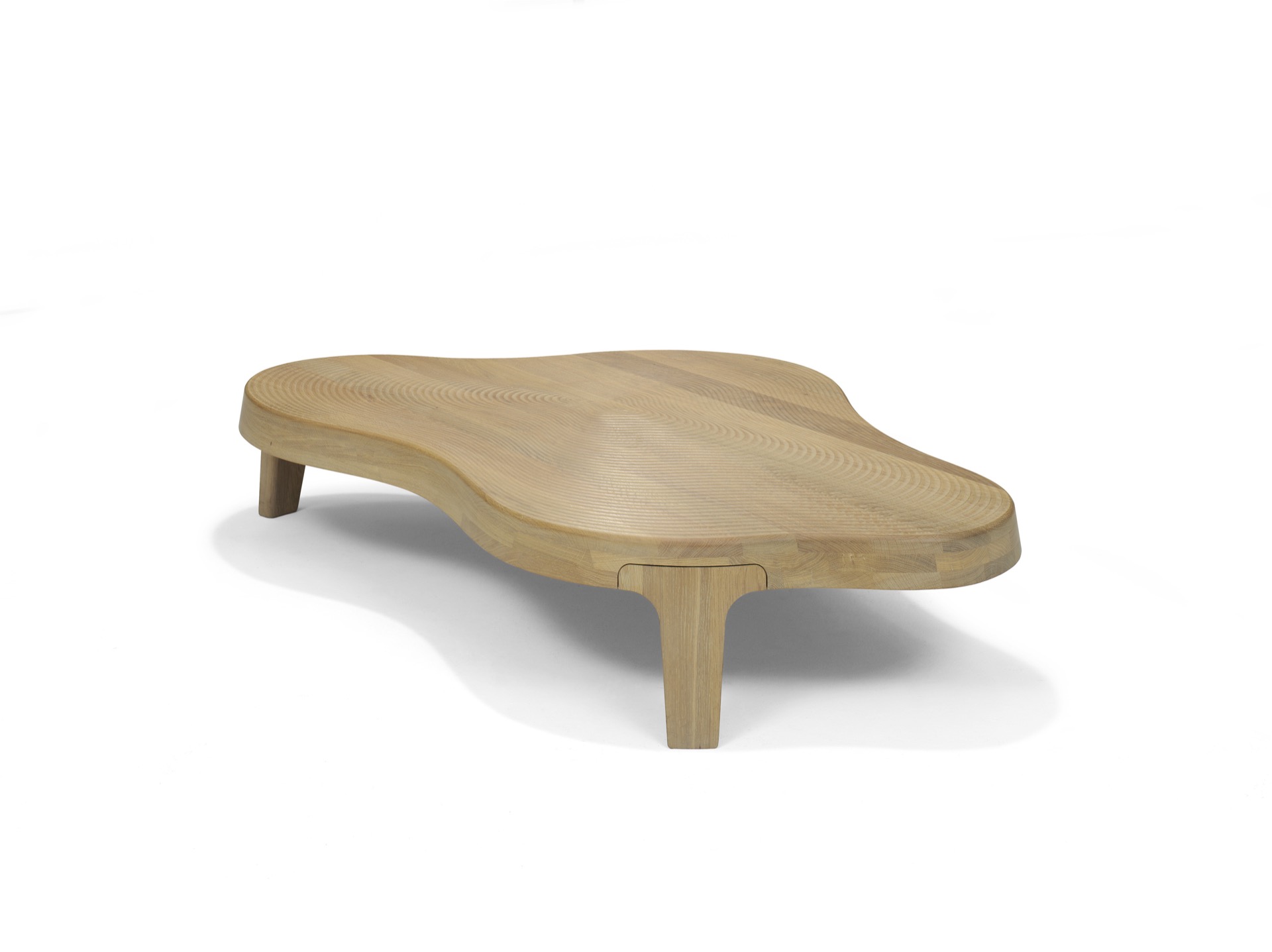
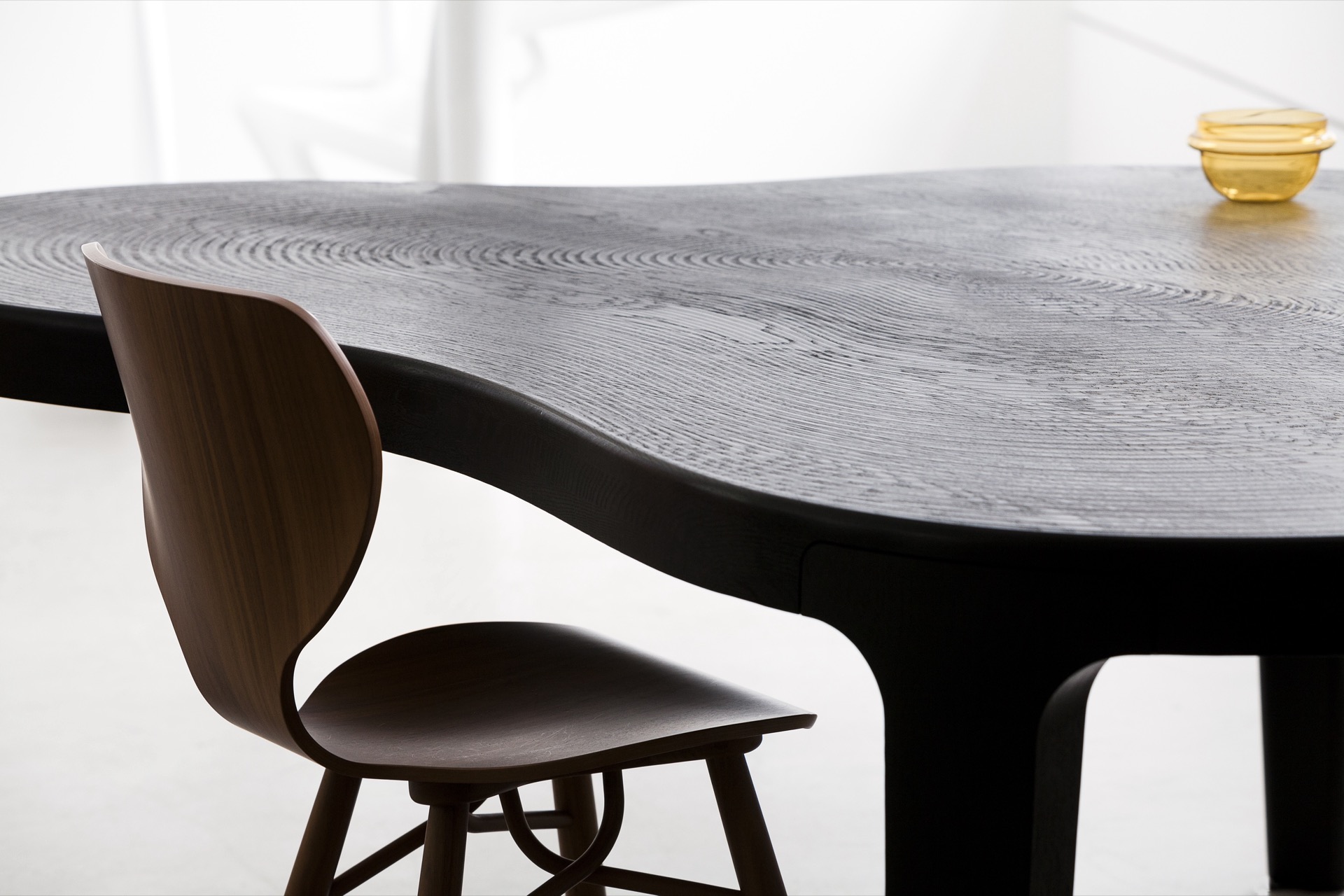
Seen from above, the board looks almost drawn by hand. The edges are rounded, the surface carries fine routed lines, and the grain changes the tone as the light moves across it. In the product images the table sits on its own against a plain background, which makes the carved wood pattern table easy to read. In the room photographs, the same shape lands differently: once beside a low sofa, once inside a brighter dining setting.
A wavy wooden tabletop with a clear profile
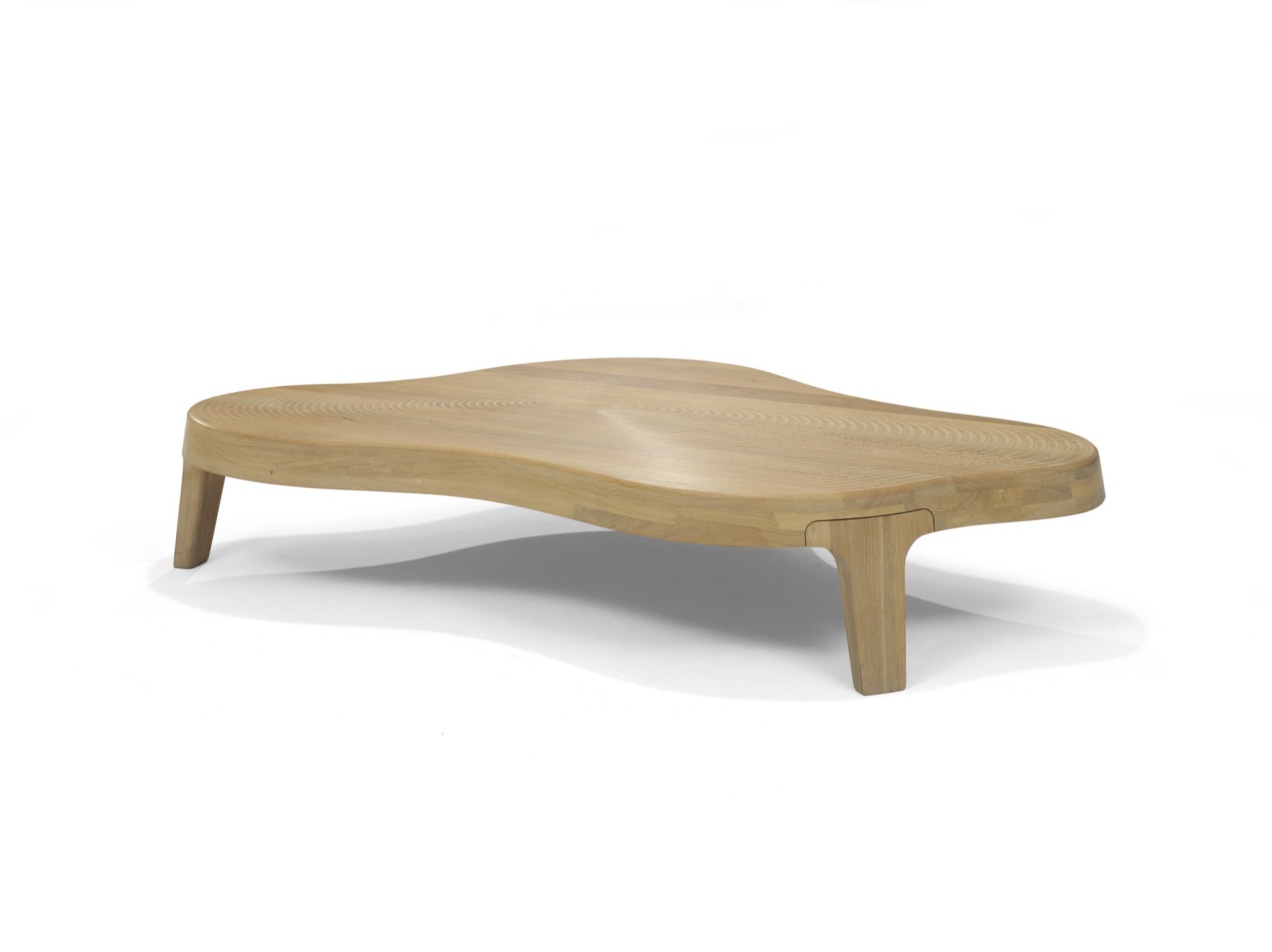
The most immediate detail is the line of the top. Instead of following a strict geometry, the wavy wooden tabletop opens and narrows in gentle steps, giving the table a profile that feels in motion even when it stands still. The low silhouette keeps the focus on the surface itself. In the side views, the top seems to float on tapered wooden legs, which makes the cut of the outline even more visible. The table never relies on ornament beyond that shape and the routed pattern.
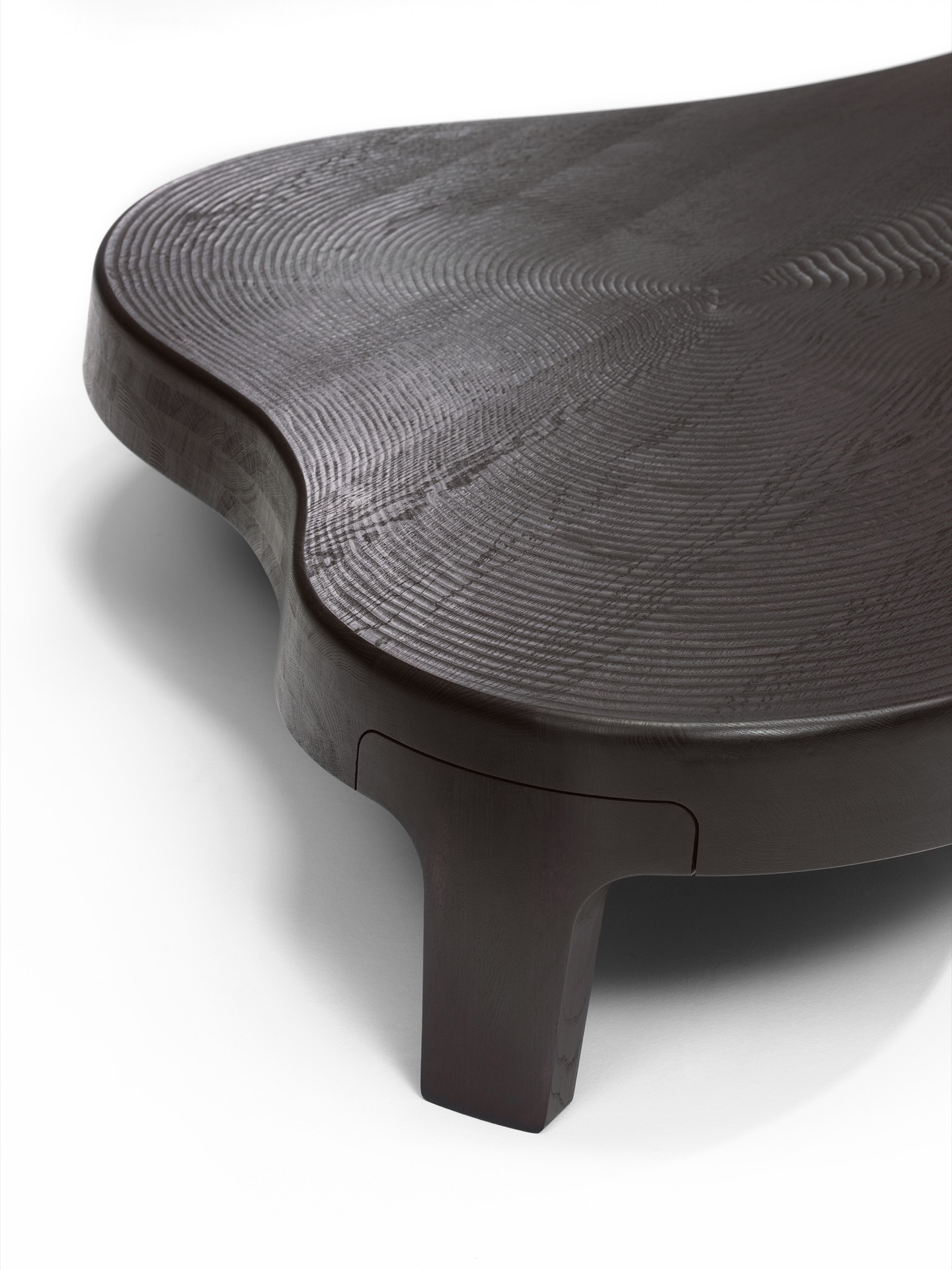
That combination of form and surface gives the piece its character. The carving is not loud; it sits inside the wood, following the grain and catching shadow at the edges of the pattern. In one darker version, the motif becomes more graphic, while the lighter oak shows the lines with a softer contrast. The result is a table that reads as a single object from across the room, but rewards a closer look at the edges and the top.
From a quiet living room to an industrial backdrop
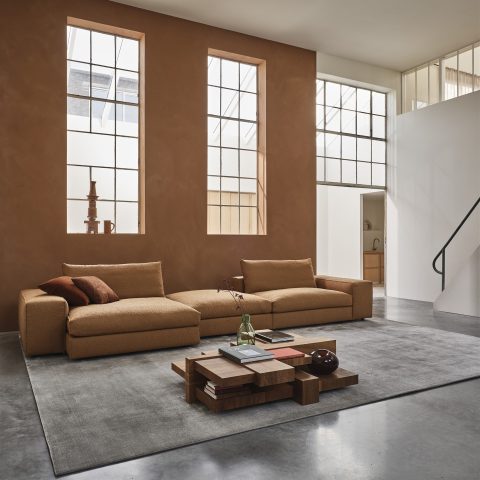
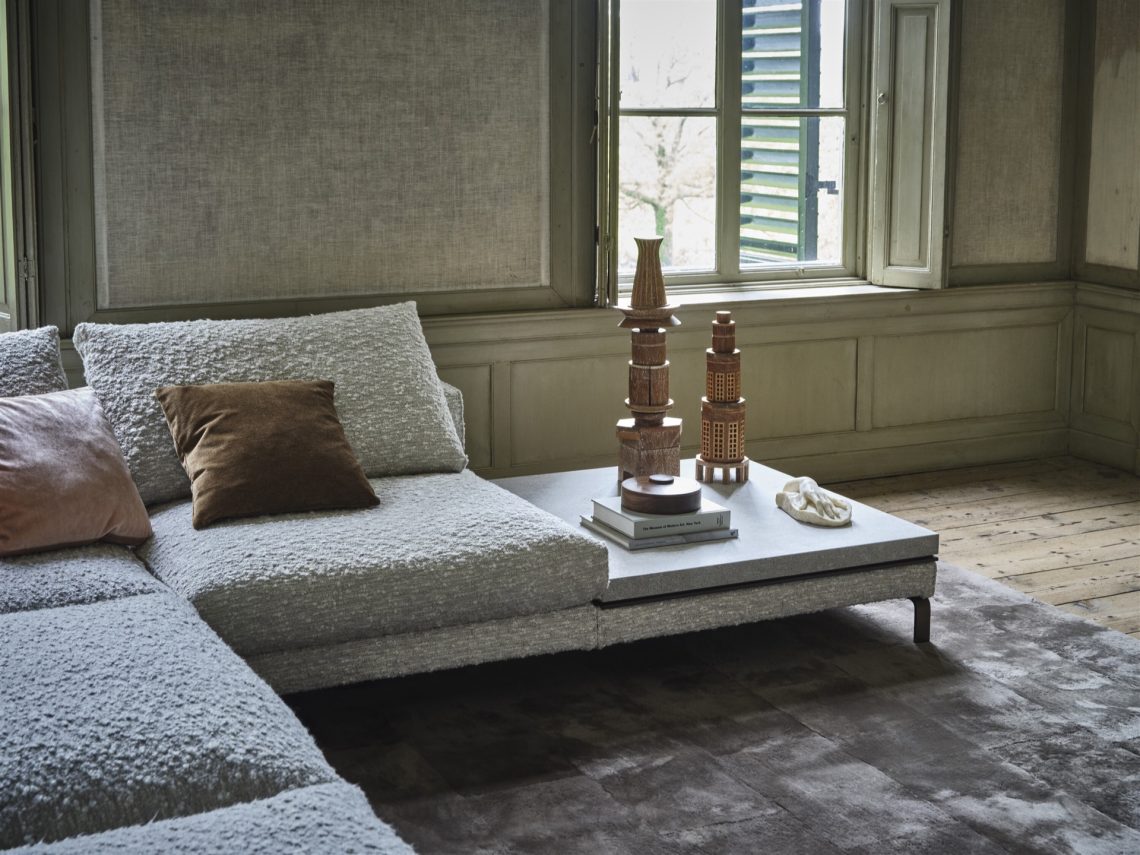
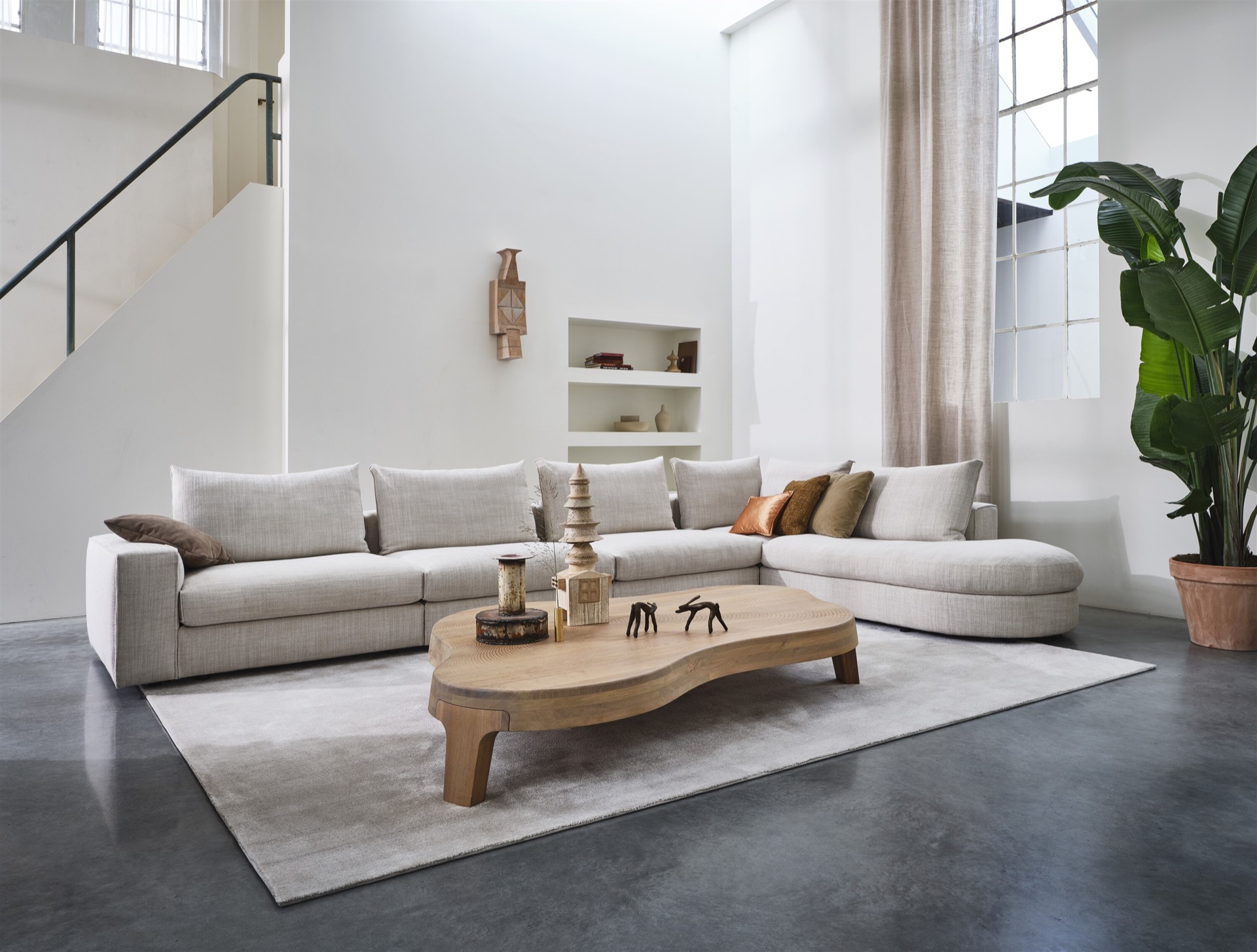
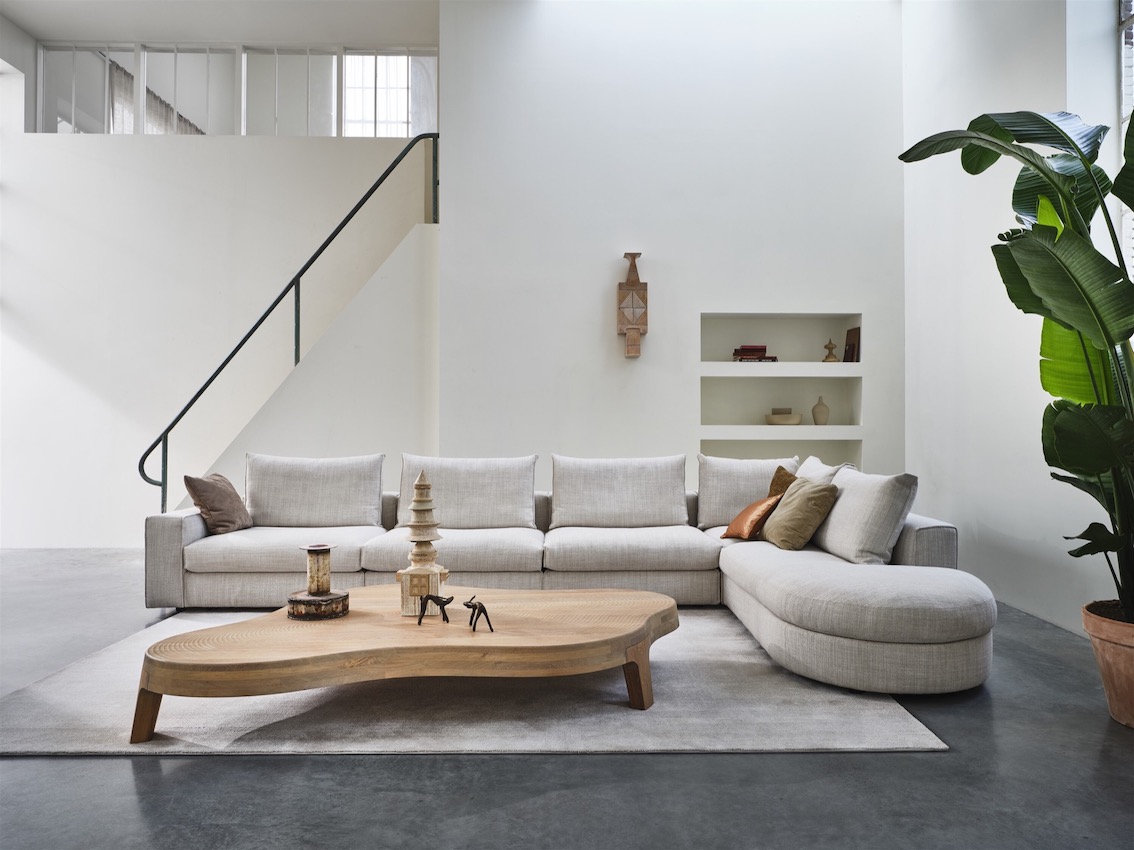
In the living-room images, the organic side table design sits on a rug in front of a grey sofa, under a large window and beside a curtain that pulls the light down the wall. The room is restrained: white walls, broad openings, simple upholstery, and enough daylight for the tabletop to pick up its carving. The table does not compete with the seating; it anchors the centre of the room with its low shape and rounded perimeter.
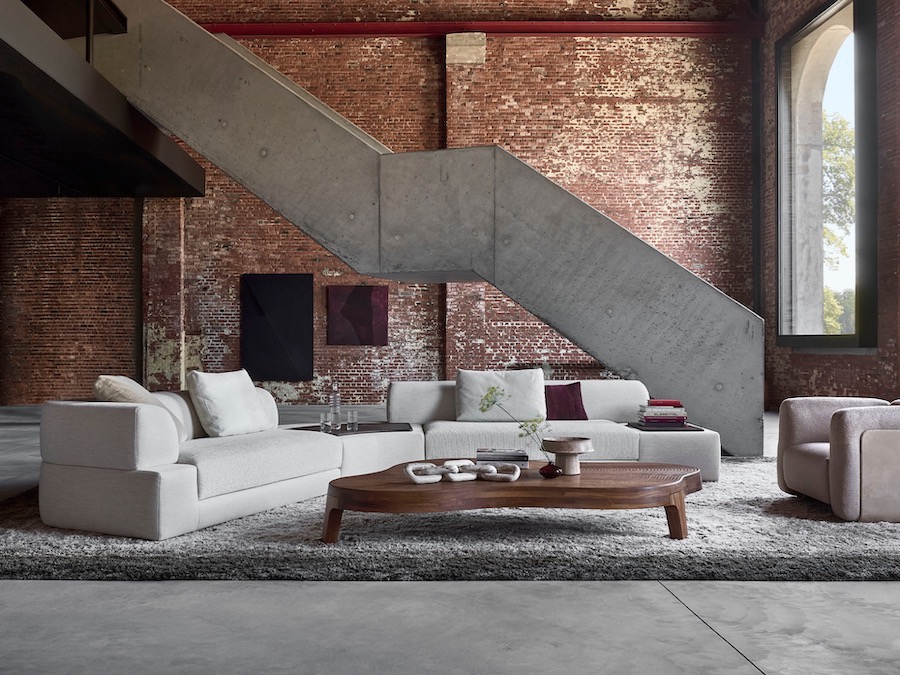
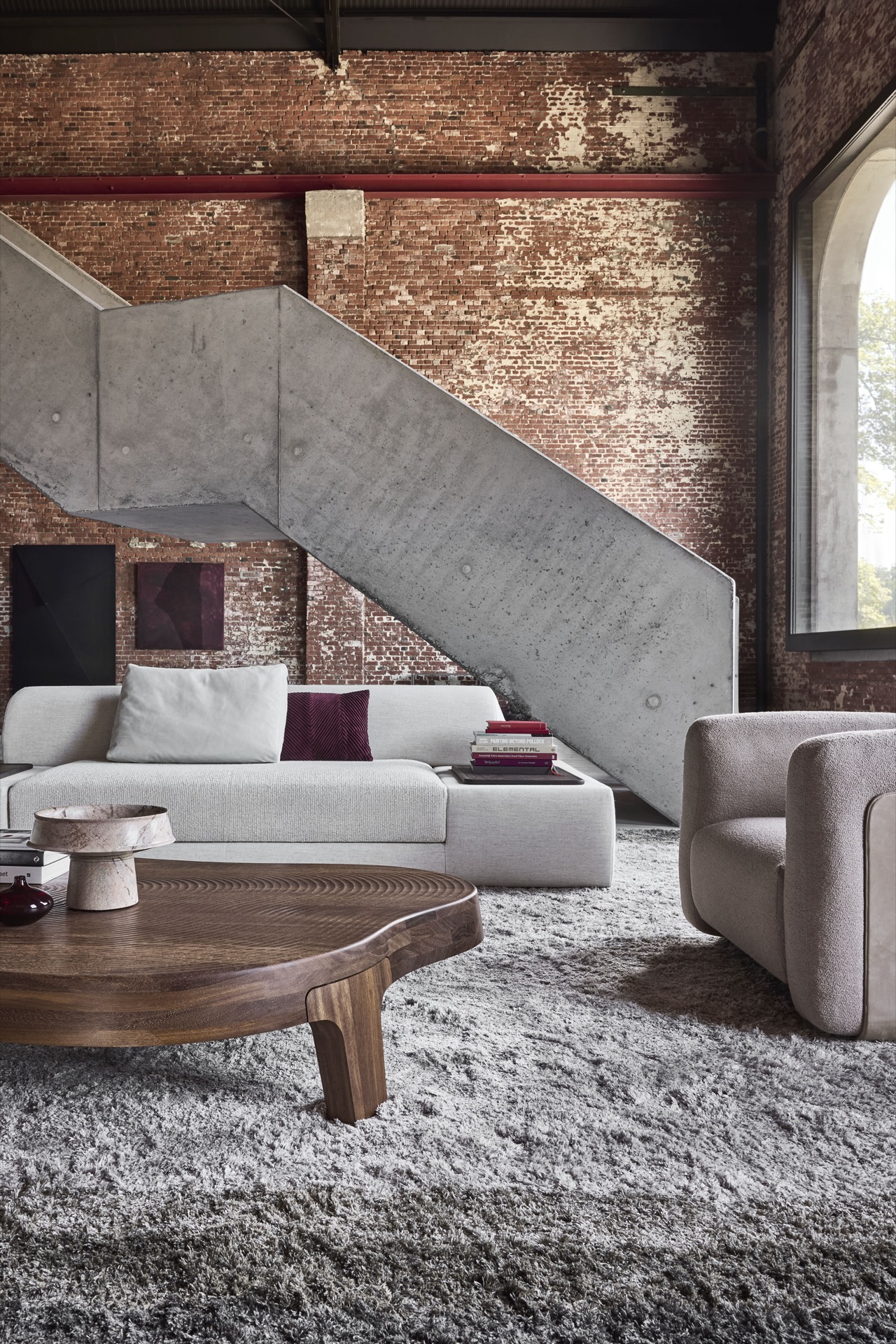
Another image shifts the context entirely. Brick, concrete and a sloping surface frame the table in an industrial interior, where the wood feels more pronounced against the harder materials. There the same form works as a coffee table with more contrast around it. The dark floor, the masonry wall and the grey structural elements leave the board and its carved lines fully exposed. The table keeps its scale, but the setting changes the way the grain and shape are read.
What the close-ups reveal
The detail images are the most direct way to understand the series. A close crop of the top shows concentric lines crossing the surface, with the rounded edge dropping into shadow. Another view places the camera at the side, where the top’s thickness and the straight, tapered legs create a sharp contrast. These are small moves, but they explain why the piece feels more like a shaped object than a conventional table. The routes in the wood matter as much as the silhouette.
Because the surface is carved rather than simply polished flat, the light never sits still on it. It slips into the grooves and along the raised grain. That makes the handmade coffee table especially legible in the product shots, where the background stays neutral and the eye can follow every transition in the board. The darker finish brings out the pattern in a stronger way; the lighter one keeps the lines softer and closer to the natural tone of the timber.
Handmade in the Netherlands, in three wood types
The series is handmade in the Netherlands and offered in solid oak, sucupira or walnut. Each material changes the table without changing the idea behind it. Solid oak gives the carved wood pattern table a more familiar grain and can be finished in different ways. Sucupira introduces a deeper colour, while walnut gives the surface a richer brown tone. The same wavy outline works across all three, but the grain and colour shift the mood of the piece.
That material choice matters because the pattern is cut into the wood rather than applied as decoration. In oak, the lines stay close to the surface and pick up a softer contrast. In walnut, the carving is more defined and the tabletop becomes darker and denser in appearance. The table series therefore works less as a single fixed object than as a shape that can be read through different woods. The form stays constant; the material does the rest.
A series for different table scales
Although the coffee table is the most immediate version, the series also includes a dining table and a side table. That makes the shape readable at several scales, from a low centre table to a larger table for eating and gathering. The same organic edge appears in each type, which keeps the family of tables linked without turning them into copies. The side table version, in particular, carries the same carved language in a smaller footprint.
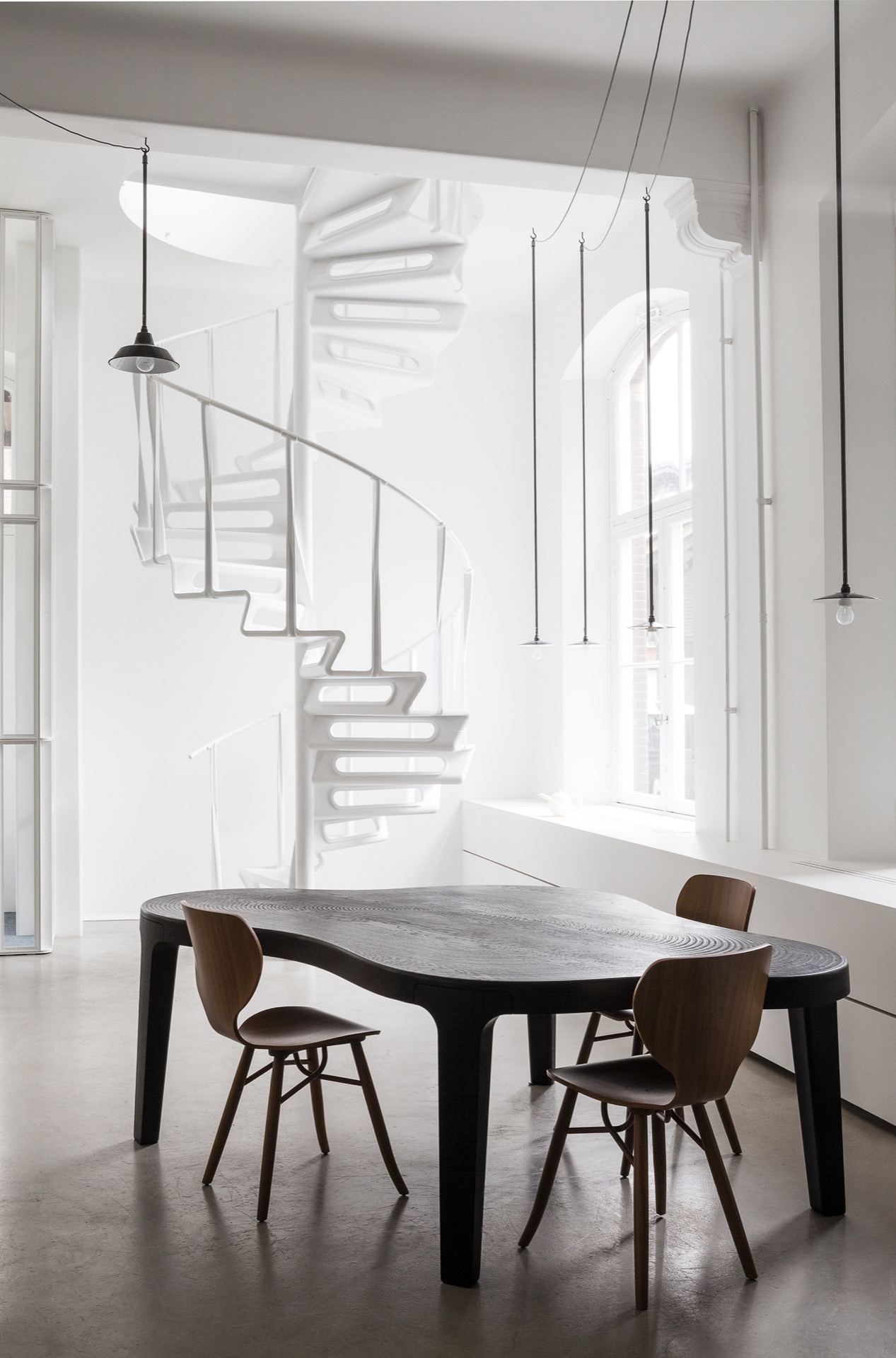
In the room settings, the coffee table sits naturally between upholstered seating and open floor space, while the dining-table version appears in a more upright context with brick and concrete behind it. The images show how the series can move from a quiet lounge to a more robust interior without losing its identity. What stays consistent is the shape of the top and the way the routed pattern catches light.
Why the surface matters as much as the form
Many tables depend on proportion alone. Here, the surface does more of the work. The carved lines give the top a texture that reads even in a quick glance, while the rounded outline slows the eye and keeps it on the edge. Together they make the table feel rooted in the material rather than added to it. In the photographs, that difference is easy to see: the board is not just a plane, but the main event.
The organic wooden coffee table is therefore best understood as a shaped surface first, and a piece of furniture second. It offers a clear visual move in a room, whether placed on a pale rug in daylight or against brick and concrete in a tougher setting. The series keeps the same idea across its different versions: a wave-like form, a carved pattern, and the grain of the wood carrying both.
Photography – Sigurd Kranendonk, Alexander van Berge & Pieter Kleiterp
Contributors / Materials:
Styling – Anya van de Wetering
Handmade in the Netherlands
Available in solid oak (different finishes possible), sucupira or walnut
Want to see more of LINTELOO? View the page of LINTELOO for even more great projects and company information.


NEW 2026 Jubileum Edition The Best Interior Designers Benelux
Order Now €125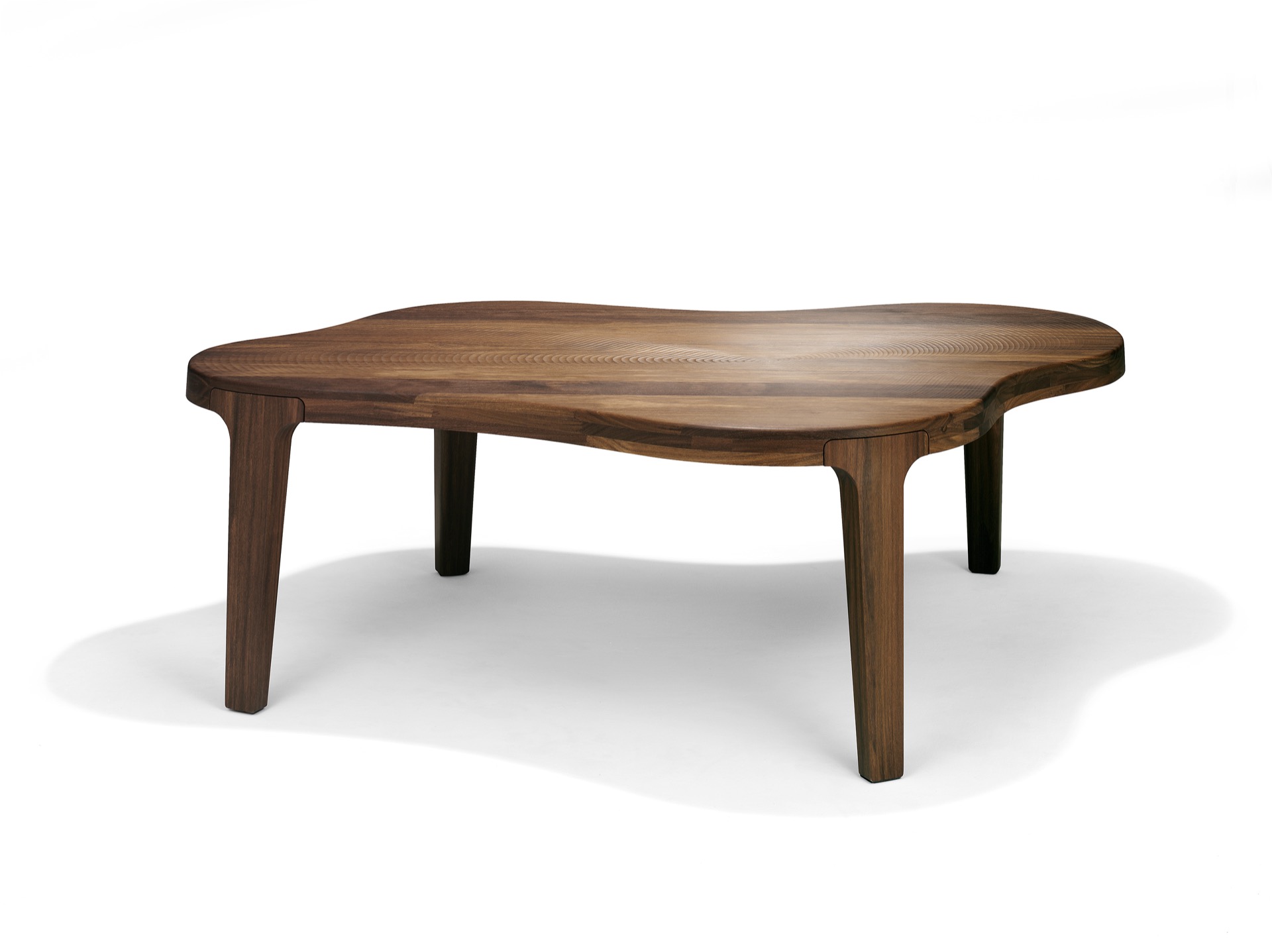
NEW 2026 Jubileum Edition The Best Interior Designers Benelux
Order Now €125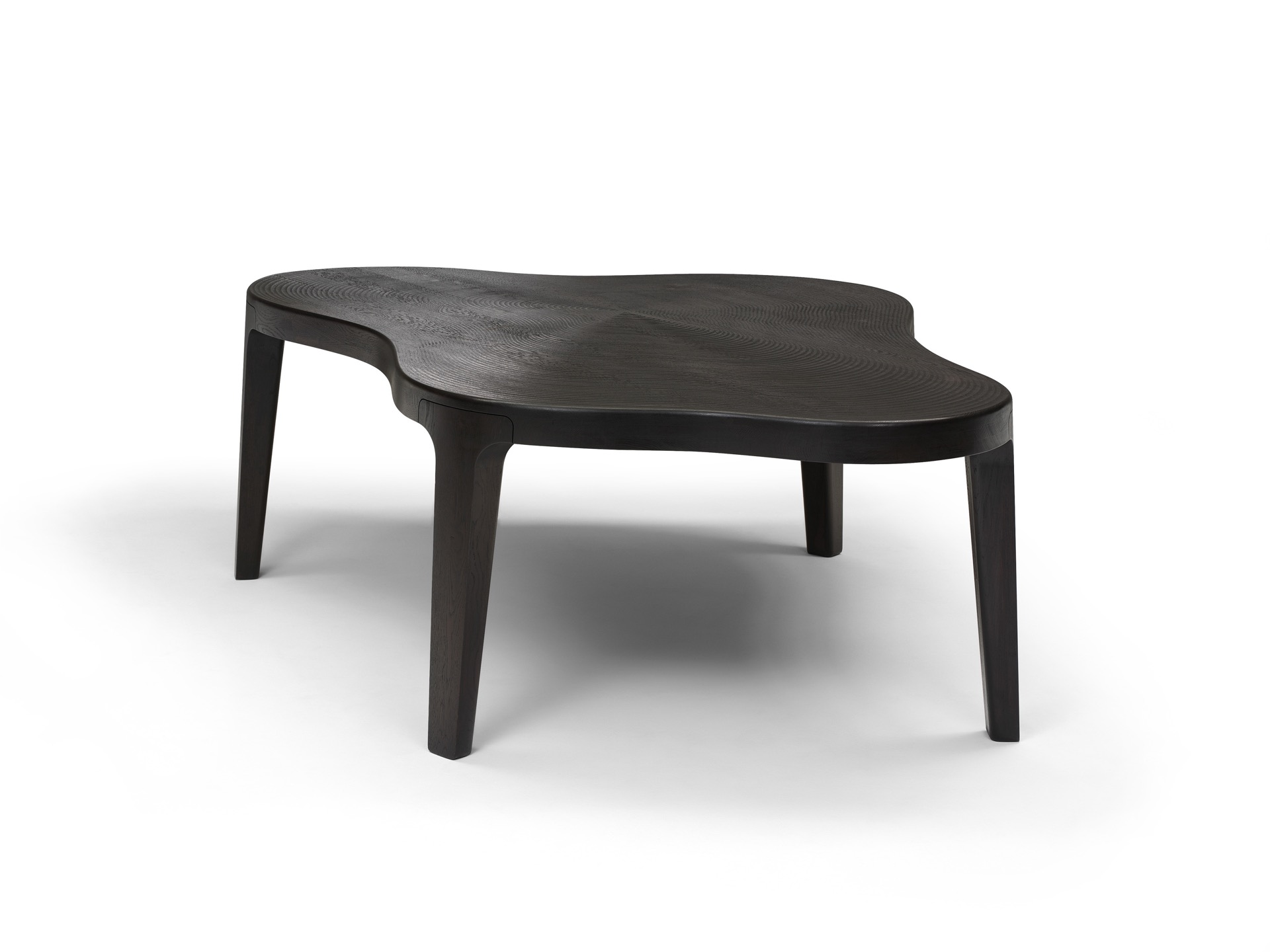
NEW 2026 Jubileum Edition The Best Interior Designers Benelux
Order Now €125