





Hoogtepunten van organisch tuinontwerp met natuurlijke materialen
The wooden staircase with black railing is immediately visible in the way the project is framed. The entrance greets visitors with dark-stained wooden steps bordered by a sleek black railing. This contrast punctuates the garden’s organic flow, lending a disciplined edge to the broadly natural landscape. The interplay between the warm wood and stark metal rail guides movement, while anchoring the composition of plants and stone elements surrounding it.
wooden staircase with black railing as the architectural starting point
Alongside the staircase, raw stone walls rise with rugged surfaces. Their coarse texture echoes the unrefined qualities of nearby timber fences and gates. This repetition of earthy materials establishes a tactile dialogue between structures, emphasized by subtle variations in grey and brown hues. The stones’ irregular faces cast fragmented shadows as daylight shifts, accentuating depth in the garden’s architecture.
Swaths of tall grasses shape spatial boundaries
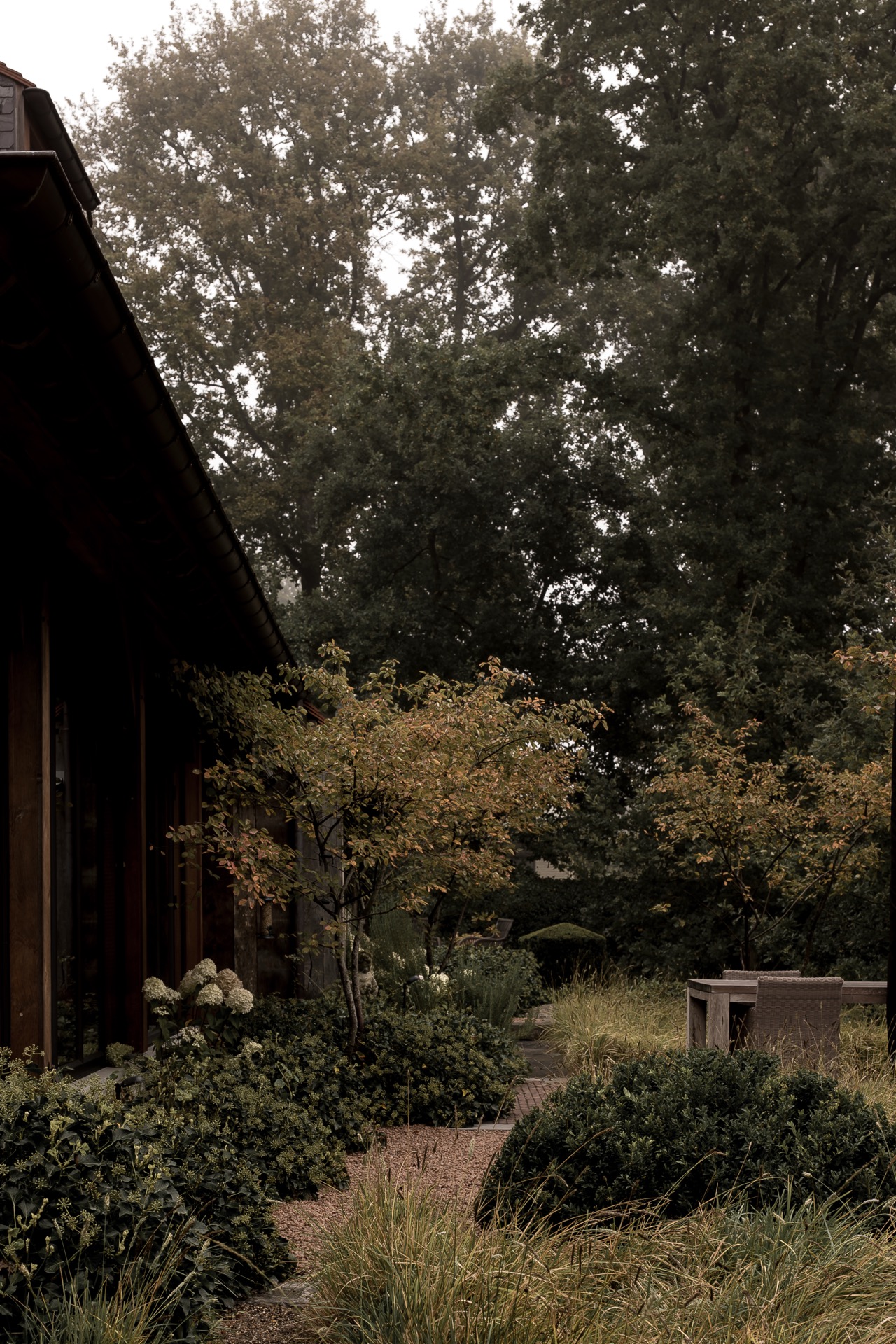
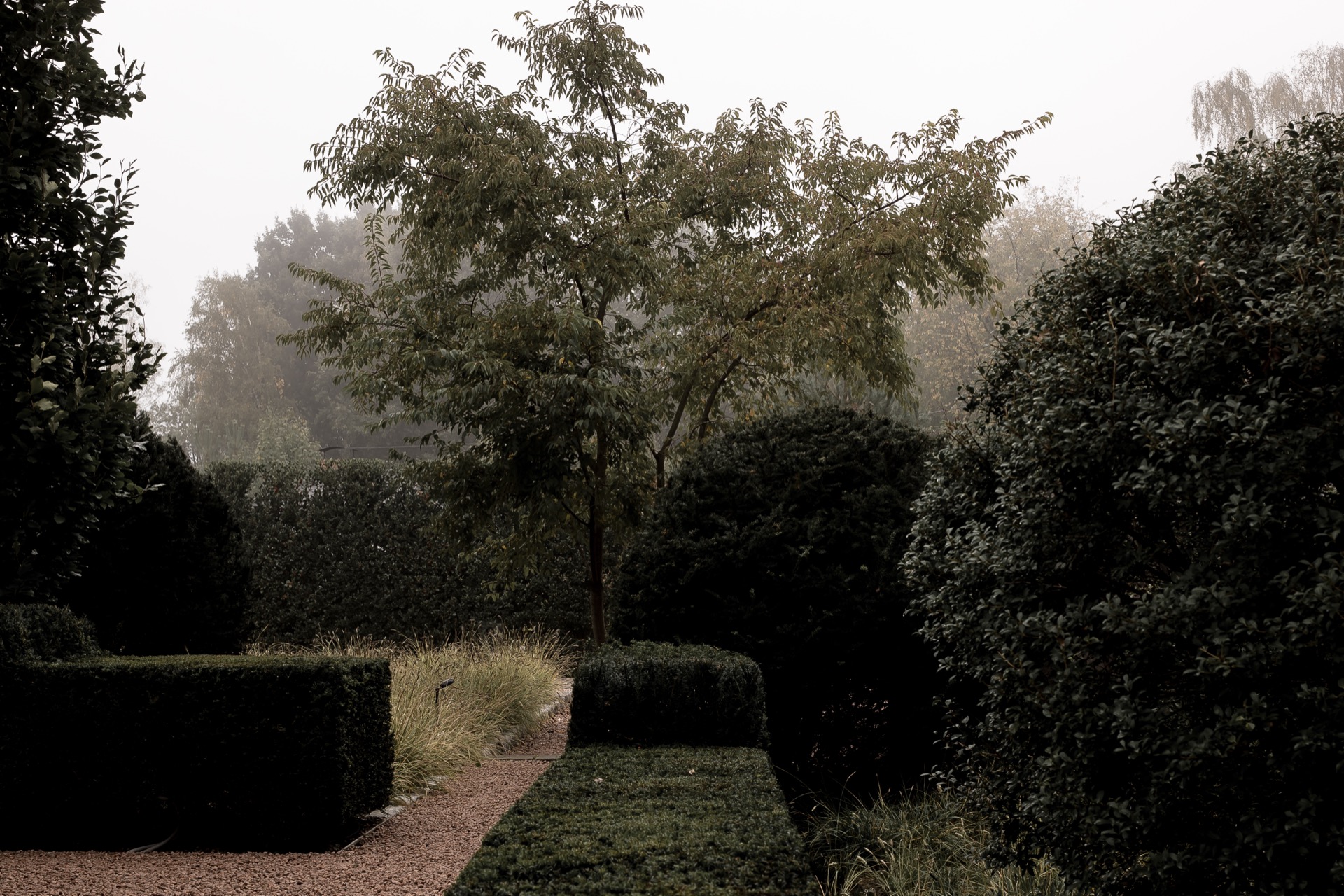
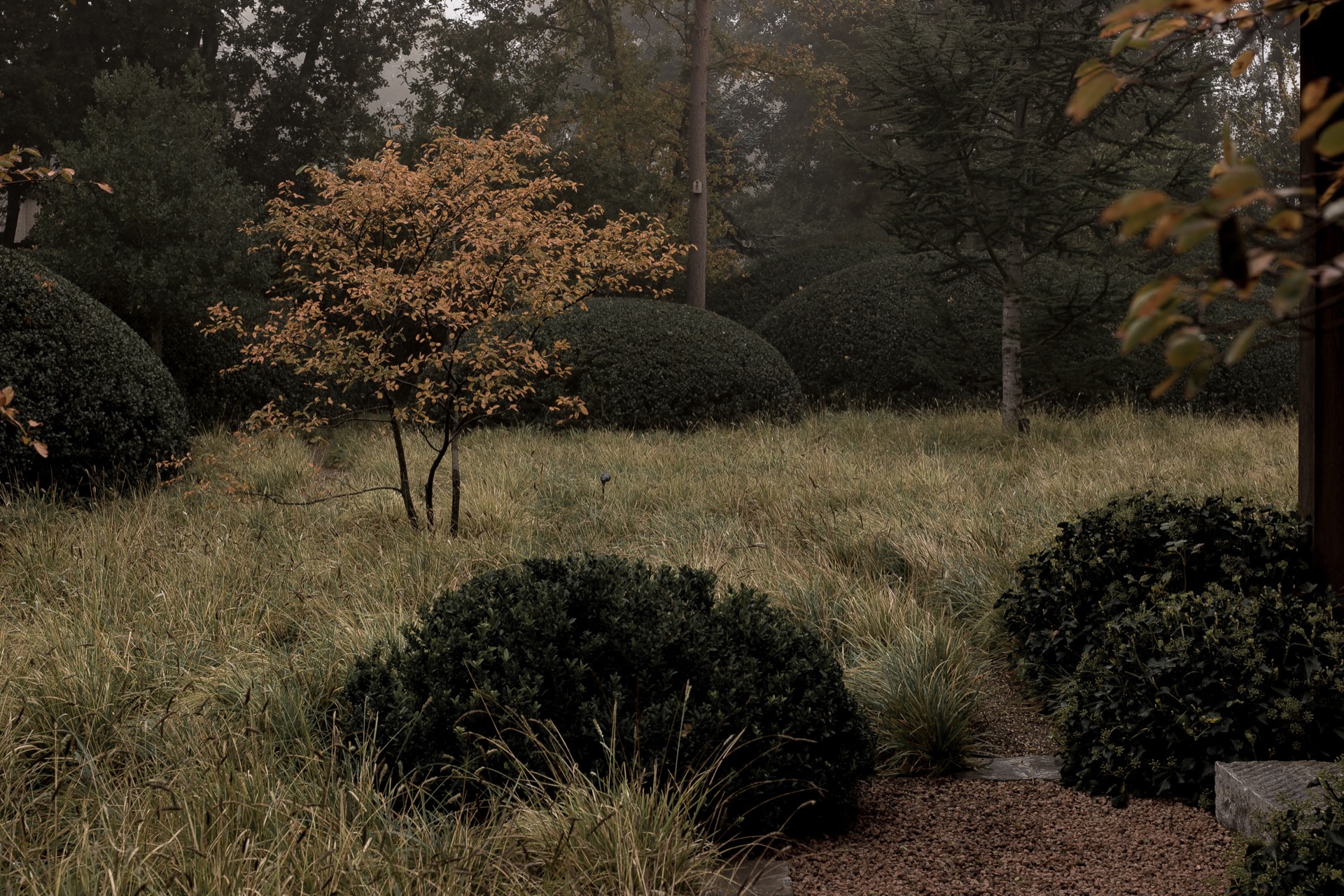
Clusters of towering ornamental grasses form soft barriers, shaking gently with the breeze. Their verticality contrasts the horizontal planes of stone paths beneath. Moving through the garden, these wavy blades create dynamic pockets of privacy, blurring the edges between neighboring plots without imposing hard divisions. The grasses’ feathery plumes feather the structured zones, introducing a breath of movement.
Transitions through organic shrub and tree forms
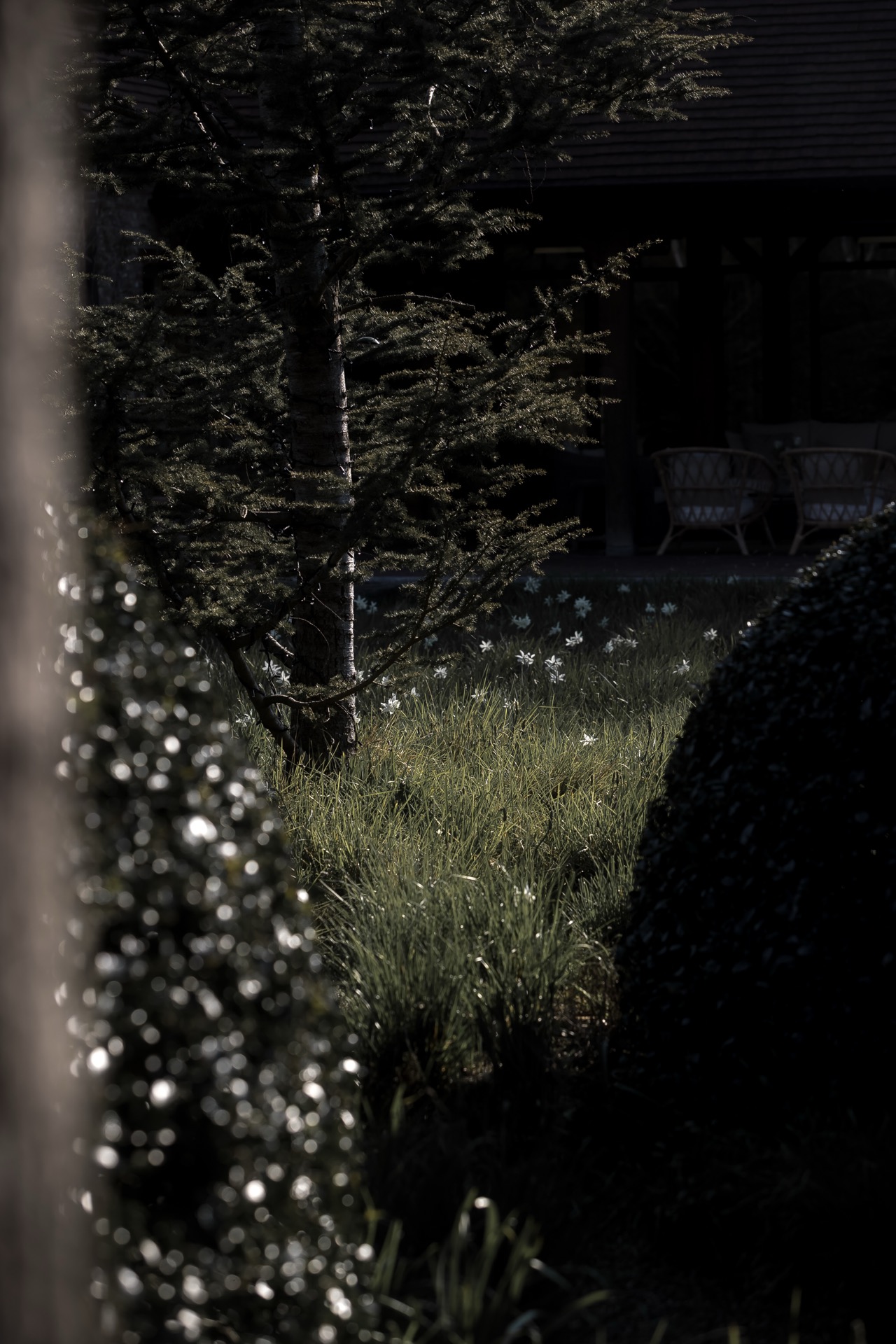
Rounded shrubs and compact tree crowns punctuate the garden with sculptural silhouettes. Their curves repeat in the shapes of stone arrangements and in the harmonious sweep of wooden railings. These natural forms provide restful pauses along the garden route, framing glimpses into more intimate spaces and inviting thoughtful exploration.
Wooden elements shaping spatial rhythms
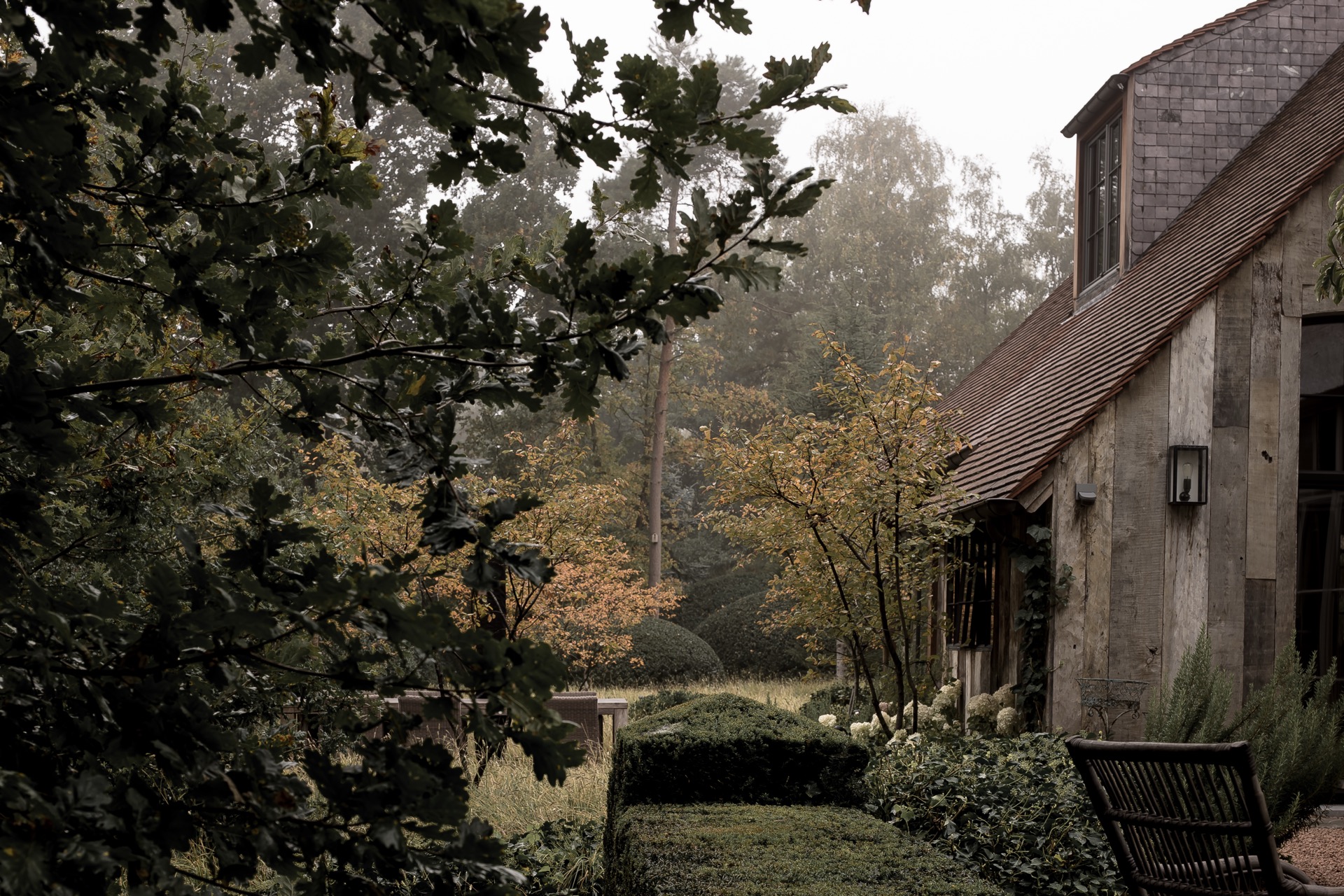
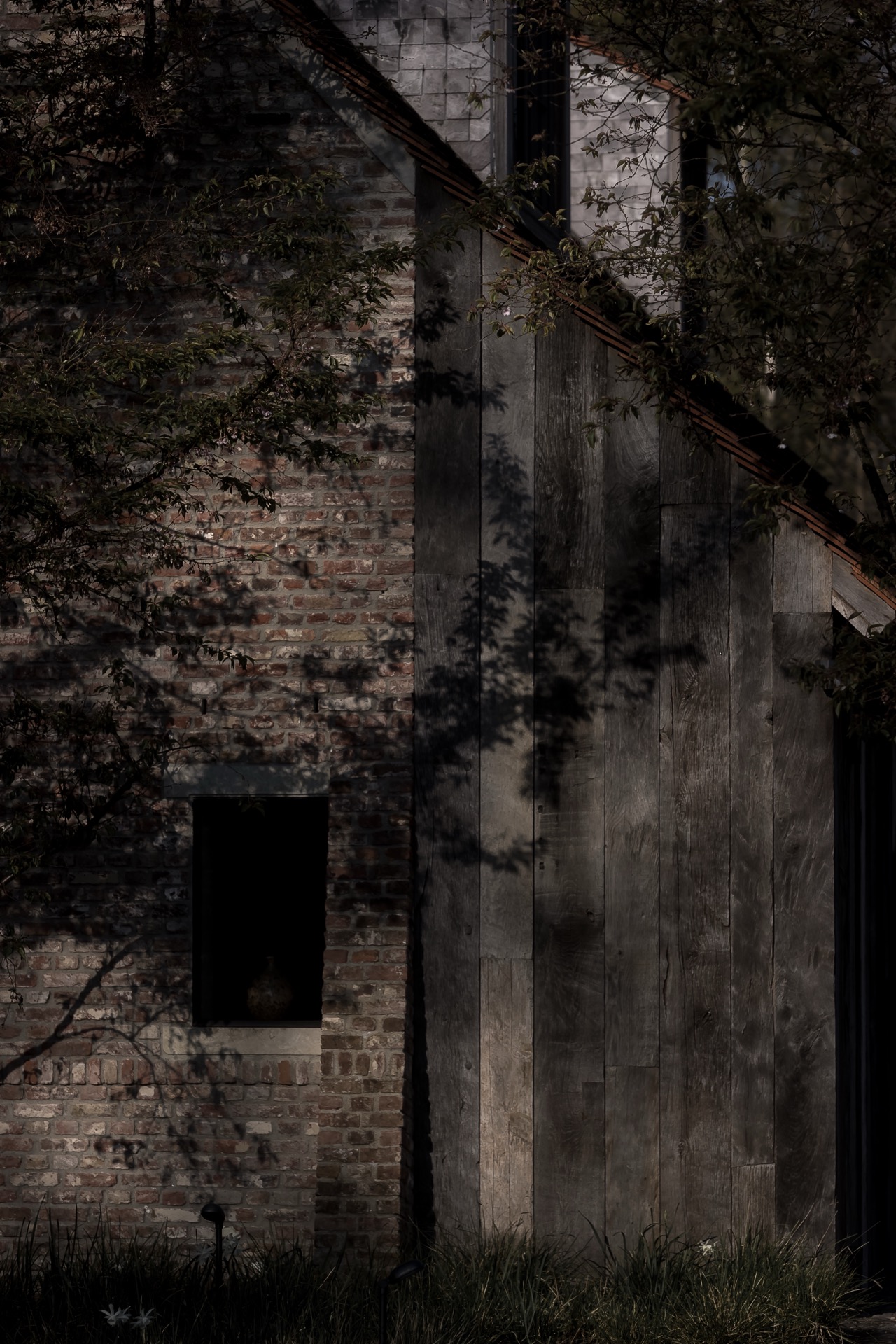
Beyond the staircase, wooden walls and storage areas are arranged with care. The wood’s grain, visible beneath tempered finishes, enlivens surfaces while absorbing dappled light filtering through foliage. Doors punctuate these surfaces, their proportions varying to mark entrances and movement. The repetition of timber creates a visual tempo, expanding the sensory experience of texture and warmth.
wooden staircase with black railing as the architectural starting point
As daylight fades, delicate lighting skims over flower beds and wooden elements. Subtle uplights render the black railing’s silhouette visible against the darkening backdrop. Light pools around stone surfaces, revealing nuances in texture otherwise hidden by shadows. The gentle glow offers a quiet reprieve, animating landscape features and fostering a contemplative atmosphere after dusk.
Water features integrating with rustic landscape details
Nearby, a shallow pond mirrors the sky’s changing colors, edged by natural stones and bordered with native plants. The water’s surface fractures evening light, softening adjacent garden structures. The water feature’s irregular shape contrasts geometric elements of the built environment, heightening the organic impression of the space while providing a serene auditory backdrop. That makes the wooden staircase with black railing part of the architectural character rather than a loose finish.
wooden staircase with black railing as the architectural starting point
Throughout the garden, materials such as wood, stone, and steel converge in subtle combinations. Each surface bears marks of texture and natural color variation—grains in timber, veins in stone, patina on steel railings—forming a layered palette. This assembly reflects a careful vision of natural elements coexisting without forced order, revealing material authenticity in both texture and tone.
Visual interplay between openness and enclosure
Expanses of flowering plants alternate with solid boundaries formed by timber and stone. This arrangement maintains openness while subtly channeling movement and views. Gateways framed by wooden posts invite passage while delineating distinct garden rooms that respond to changes in light and season. The shift from enclosed to open spaces is gradual, offering moments of privacy and connection.
Natural outdoor decor ideas shaping garden atmosphere
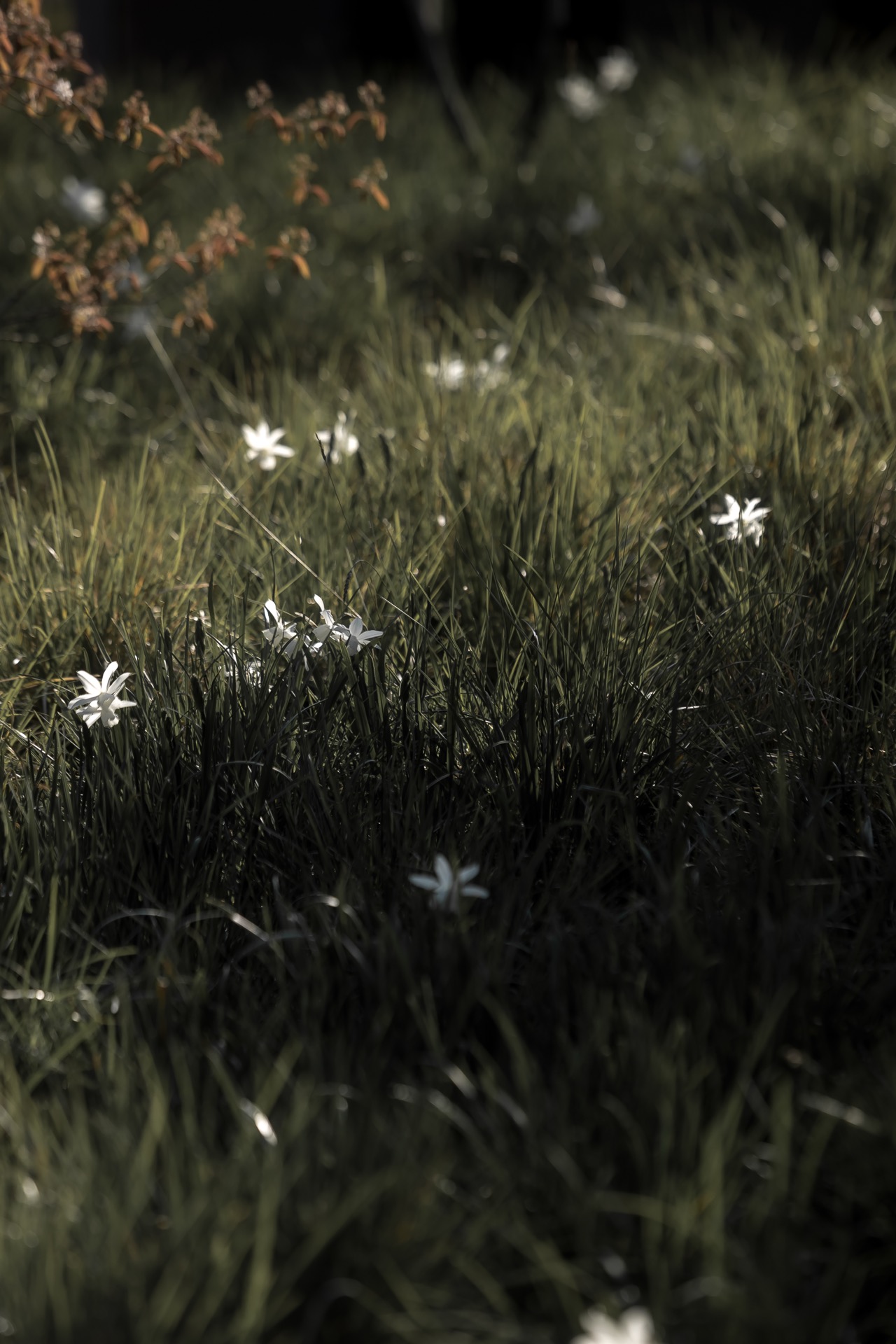
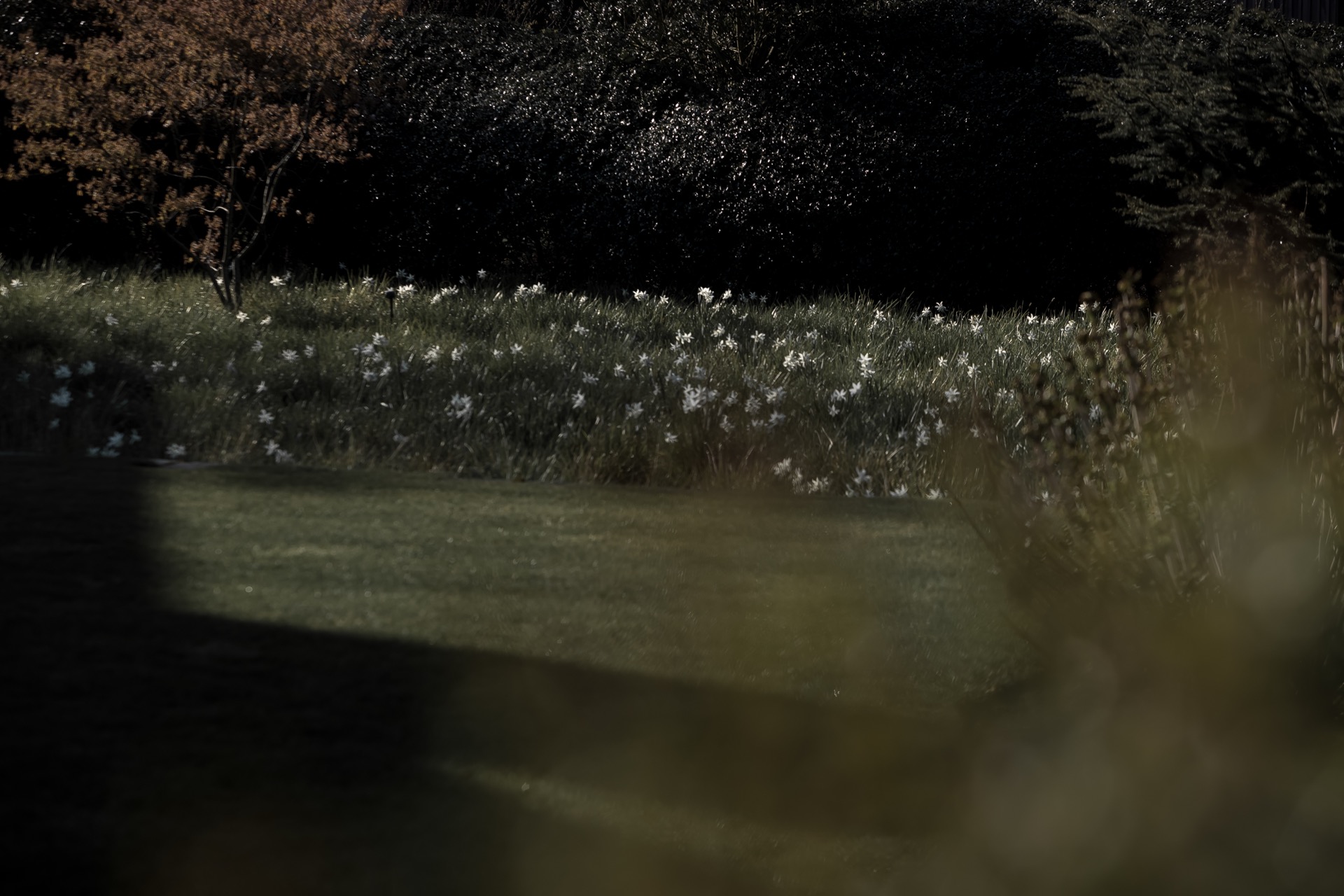
Decorative plantings along paths incorporate clusters of perennial flowers in soft whites and greens. These beds exhibit organic edges rather than rigid forms, encouraging a naturalistic impression. The floral groupings interact with the sturdier grasses and shrubs, contributing to a layering effect that enhances immersion in the landscape and softens built details.
Wood storage as a rustic sculptural element
Stacks of firewood, neatly arranged, appear as vernacular sculptures within the garden. Individual logs with rough bark textures catch shifting sunlight, imparting tactile interest. The wood piles serve both a practical purpose and function visually, their ordered presence counterpointing looser plantings nearby, adding rhythm and warmth without overt decoration.
Architectural value rooted in material expression
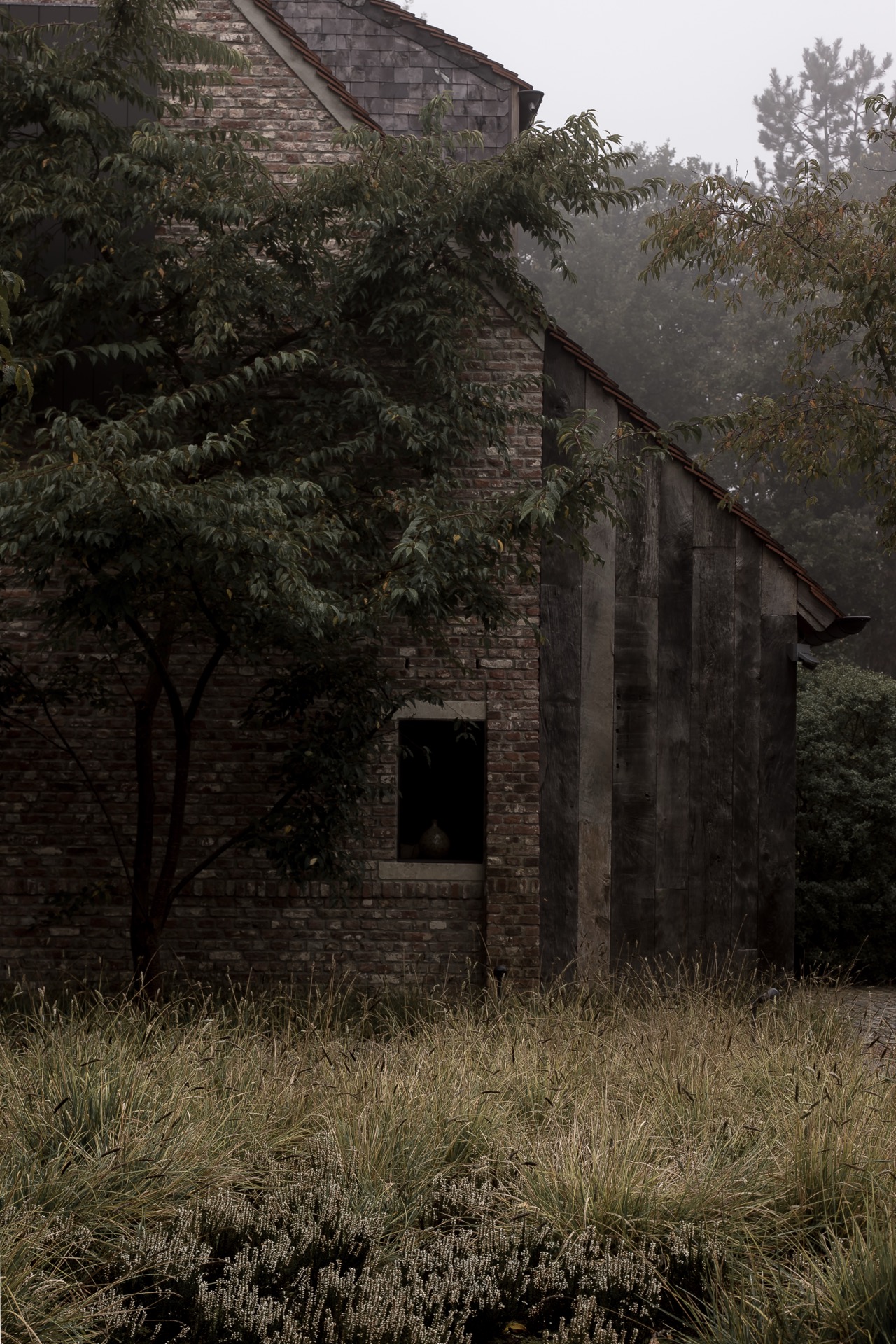
The house’s design resonates with the landscape’s natural vocabulary. Architectural details echo garden materials, with wood-framed windows and stone thresholds reinforcing the outdoor palette. The spatial organization allows the natural textures and layered planting to define the experience, rather than relying on ornament. This integration expresses a dialogue between built form and landscape context.
Gardens shaped by seasonal light and atmosphere
Daylight filters differently across garden zones, enhancing the perception of depth and color shifts. Morning mist softens outlines near water and plants, while evening lights transform flowerbeds into glowing clusters. These temporal variations emphasize the garden’s interactive qualities, revealing new facets as the day progresses and inviting renewed attention.
Pathways guided by balance of materials and space
Stone paths meander through the garden, sized and laid with natural variation to harmonize with adjacent planting. Each step transitions between areas framed by wooden fences or undulating grasses. This subtle choreography among materials encourages slow movement, ensuring each garden detail registers fully against the sensory backdrop of plants and stone textures. That makes the wooden staircase with black railing part of the architectural character rather than a loose finish.
Want to see more of Jan Verlinden BV? View the page of Jan Verlinden BV for even more great projects and company information.

.png)
NEW 2026 Jubileum Edition The Best Interior Designers Benelux
Order Now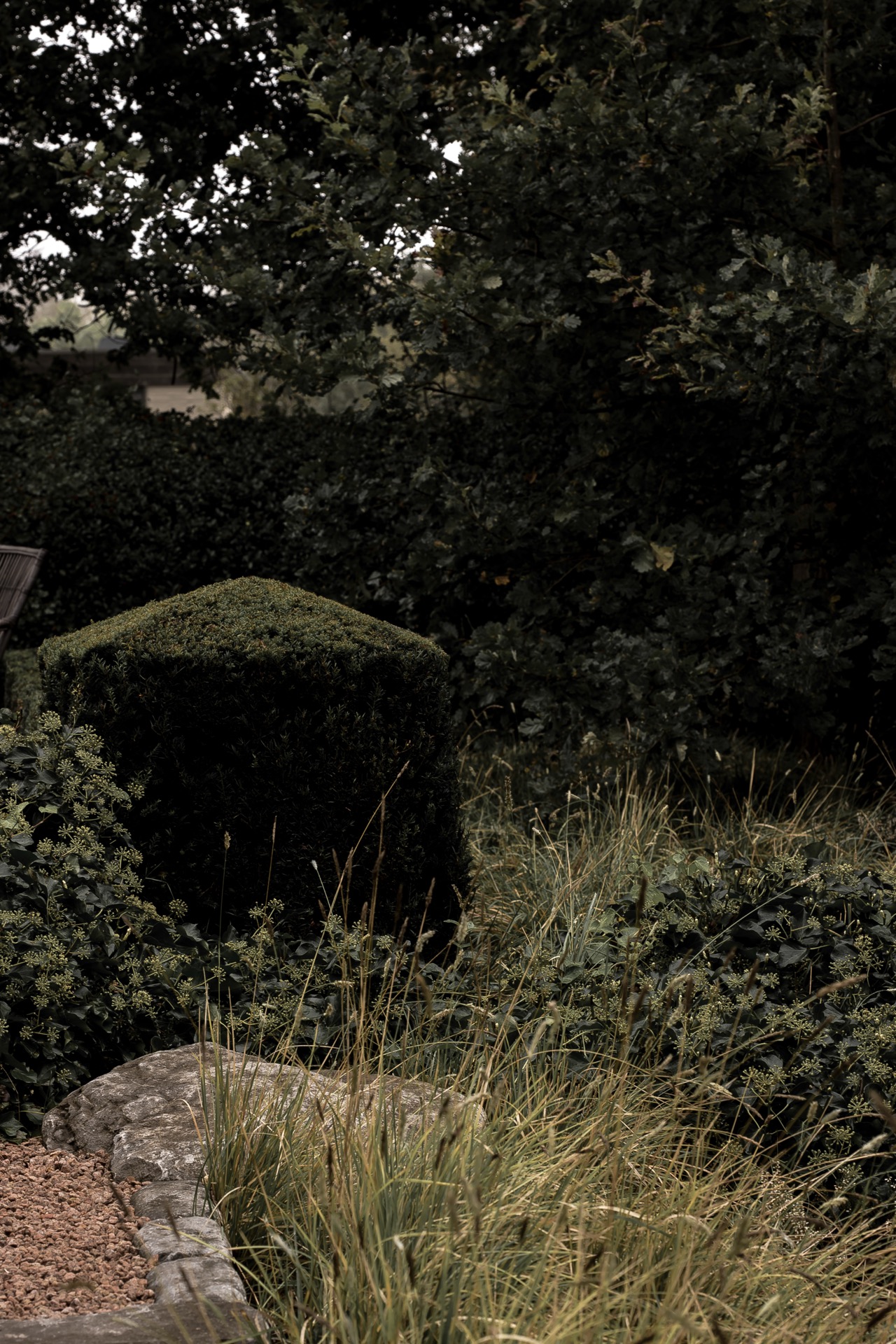

NEW 2026 Jubileum Edition The Best Interior Designers Benelux
Order Now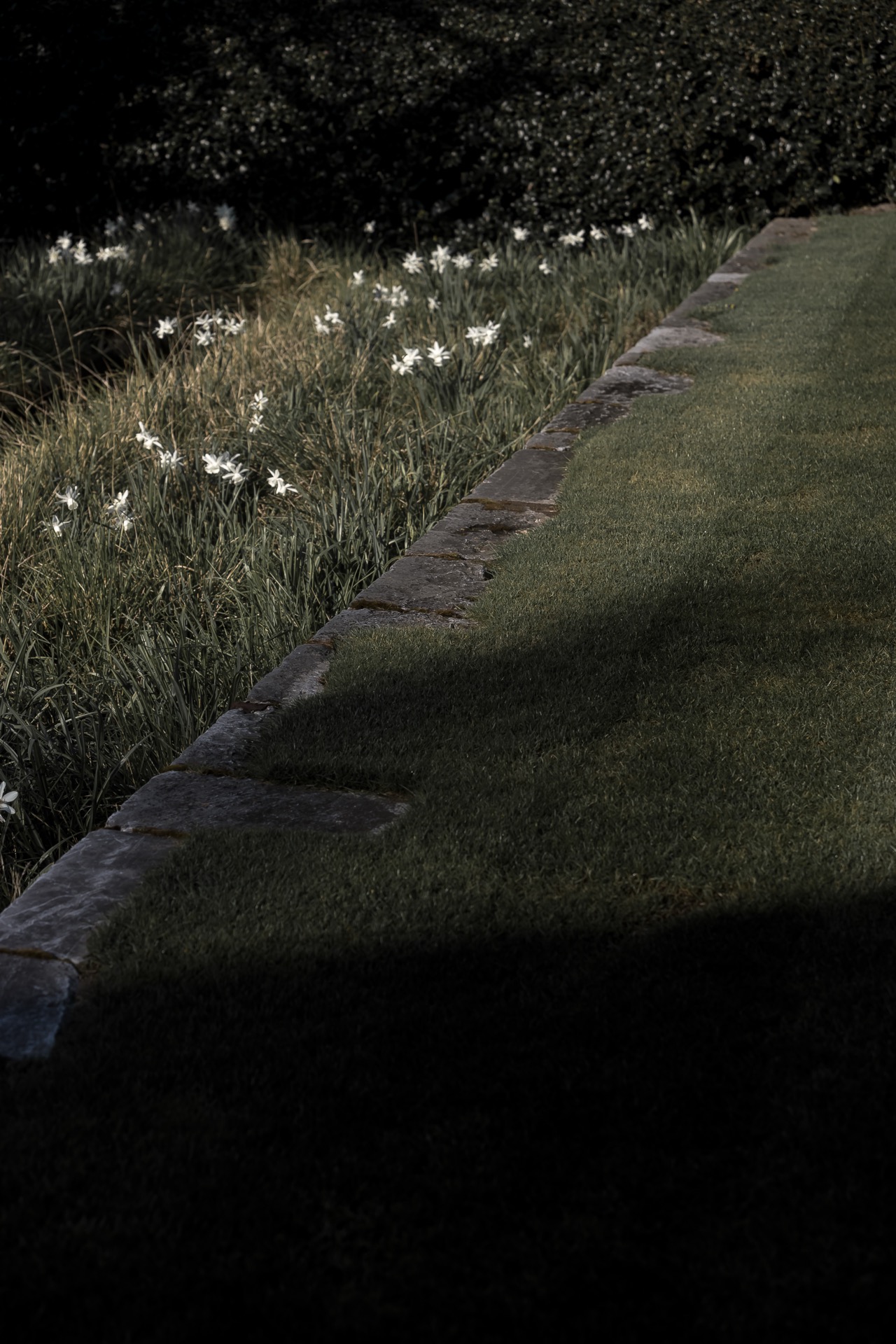
NEW 2026 Jubileum Edition The Best Interior Designers Benelux
Order Now

NEW 2026 Jubileum Edition The Best Interior Designers Benelux
Order Now