





Outdoor Garden with Pergola and Natural Elements
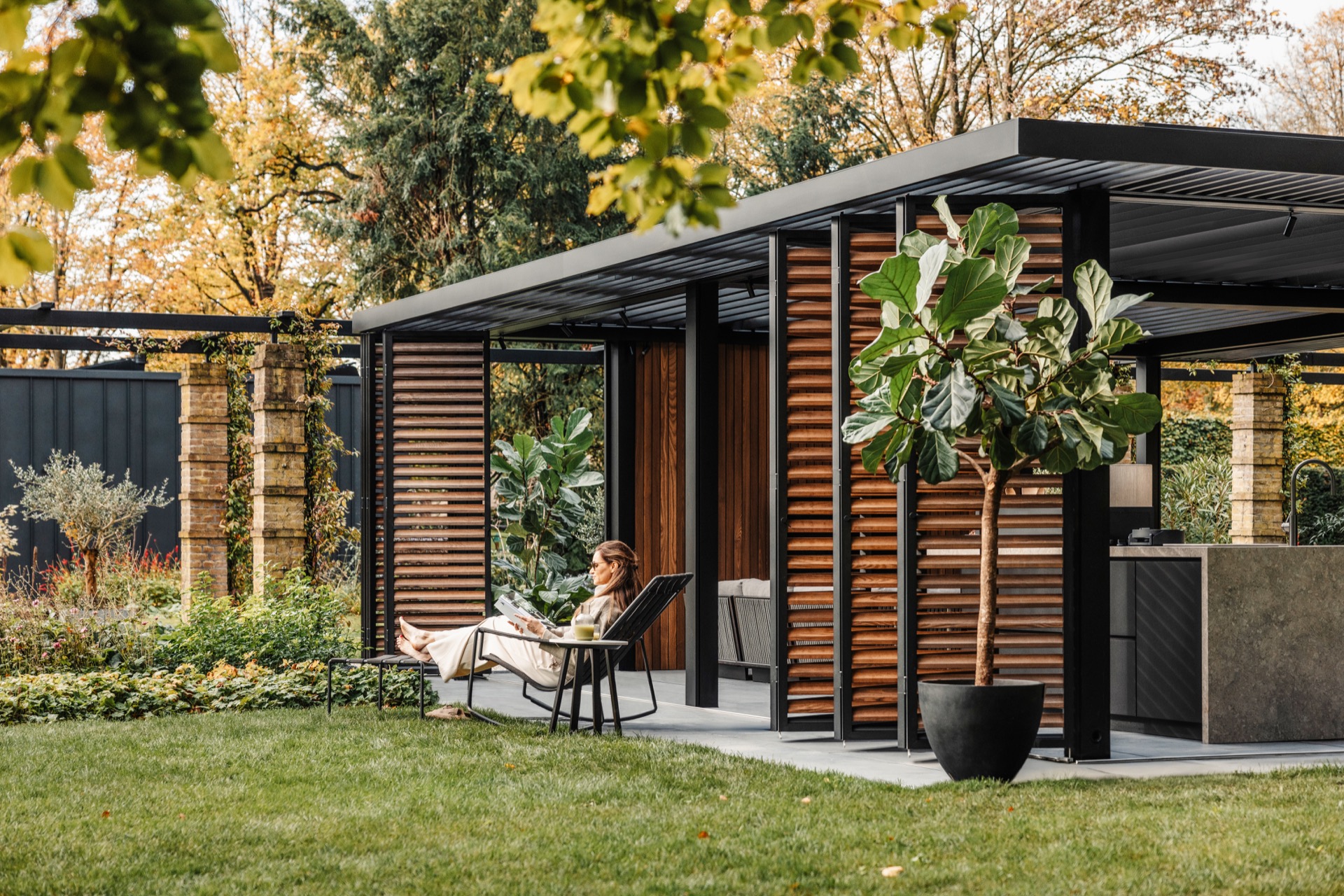
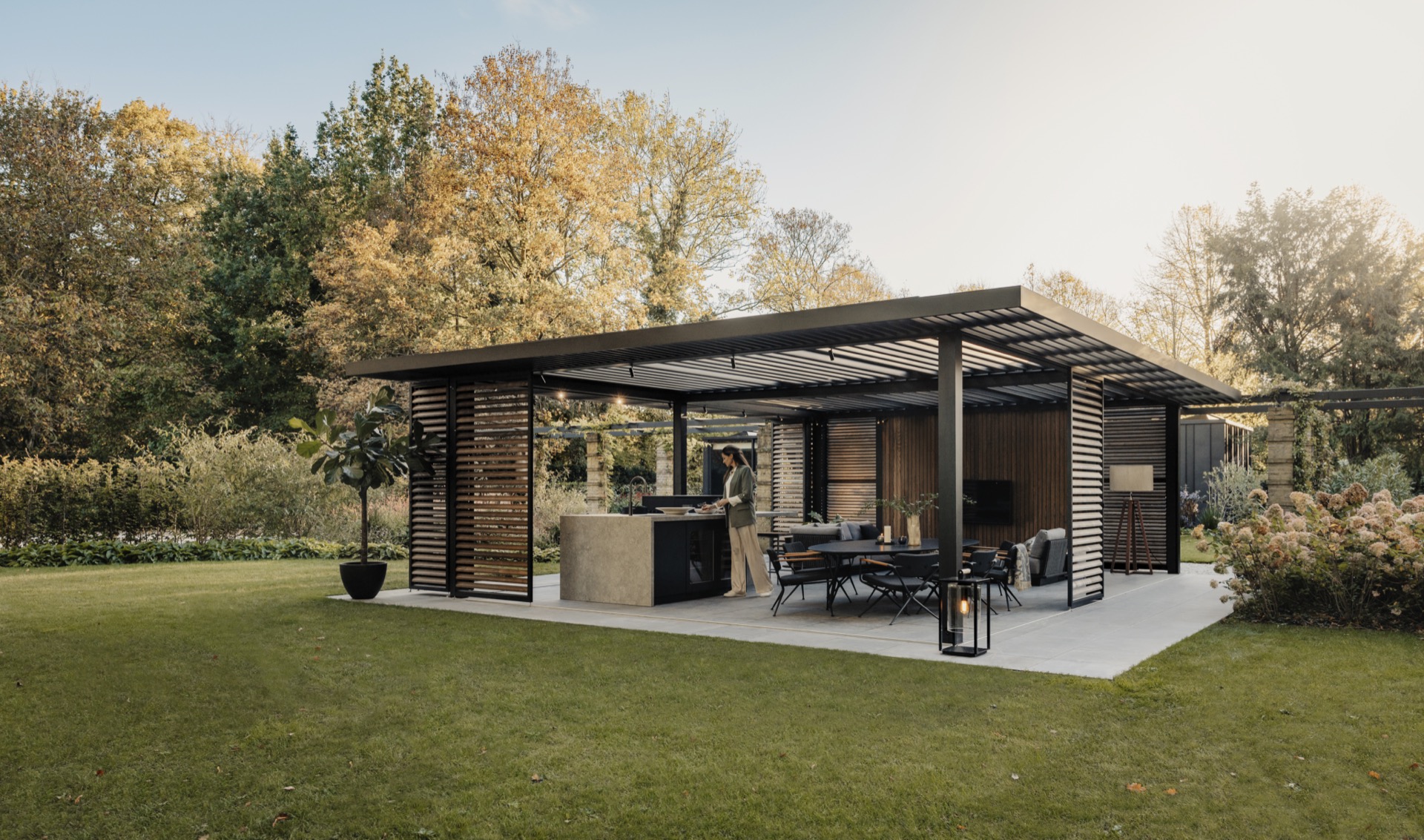
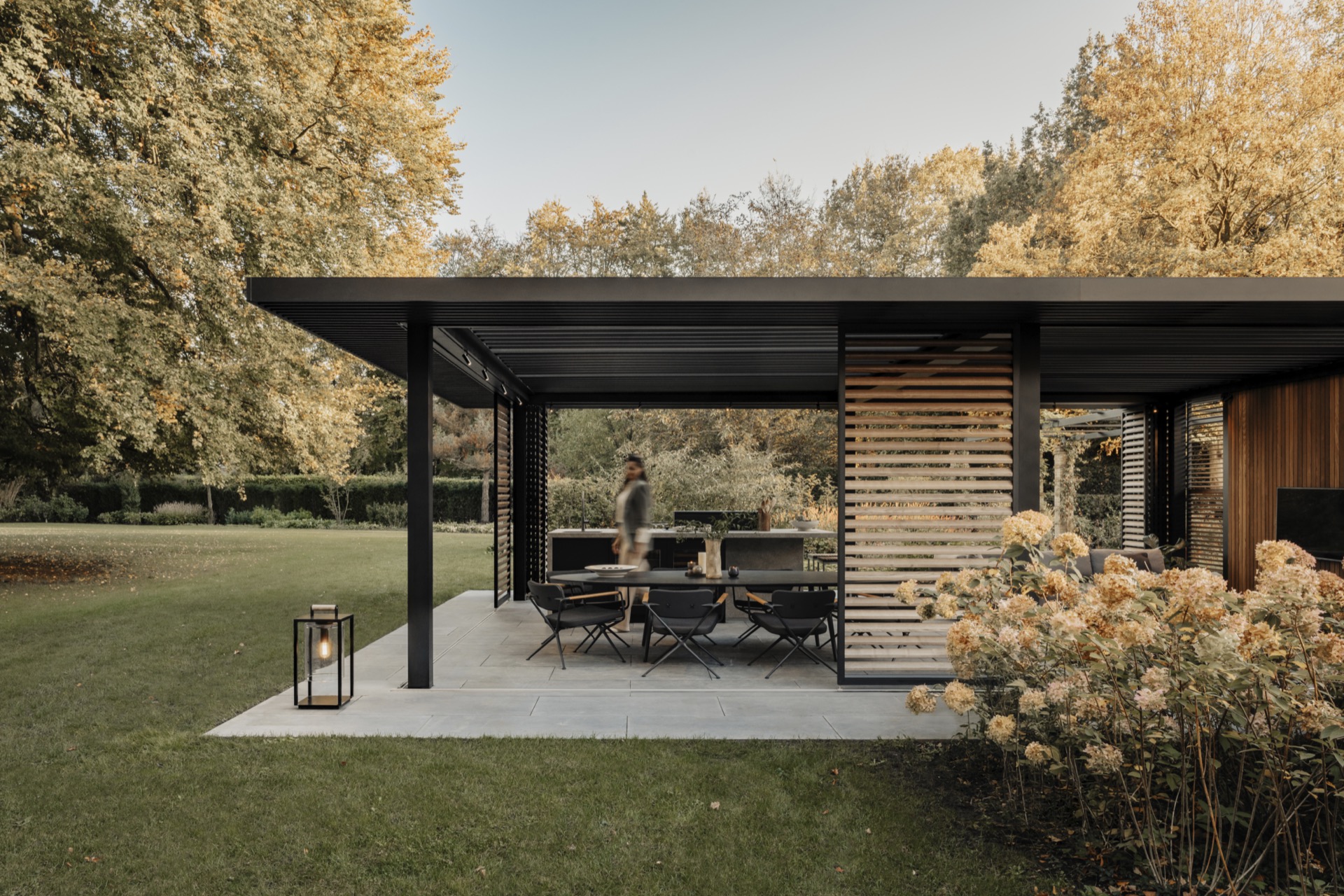
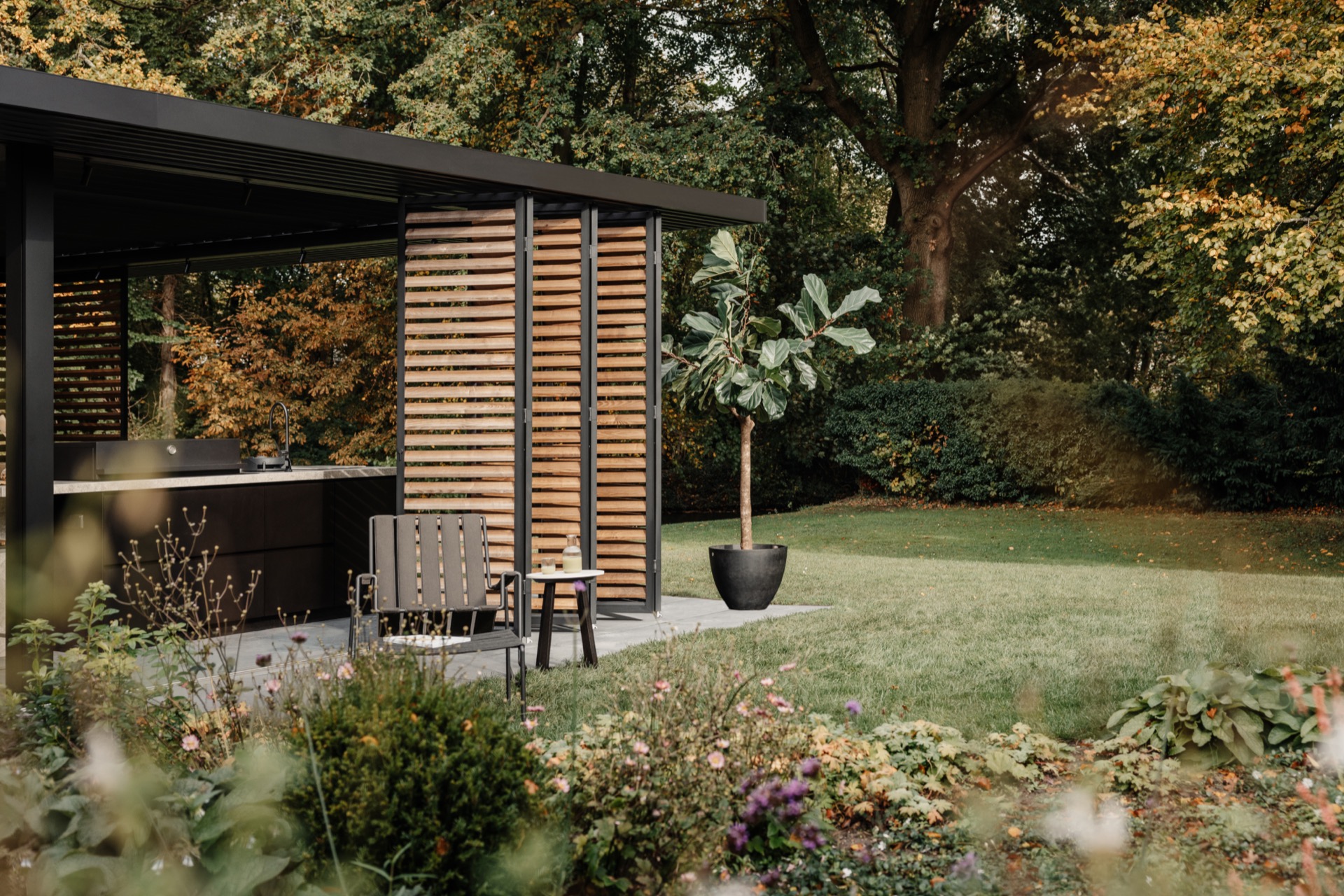
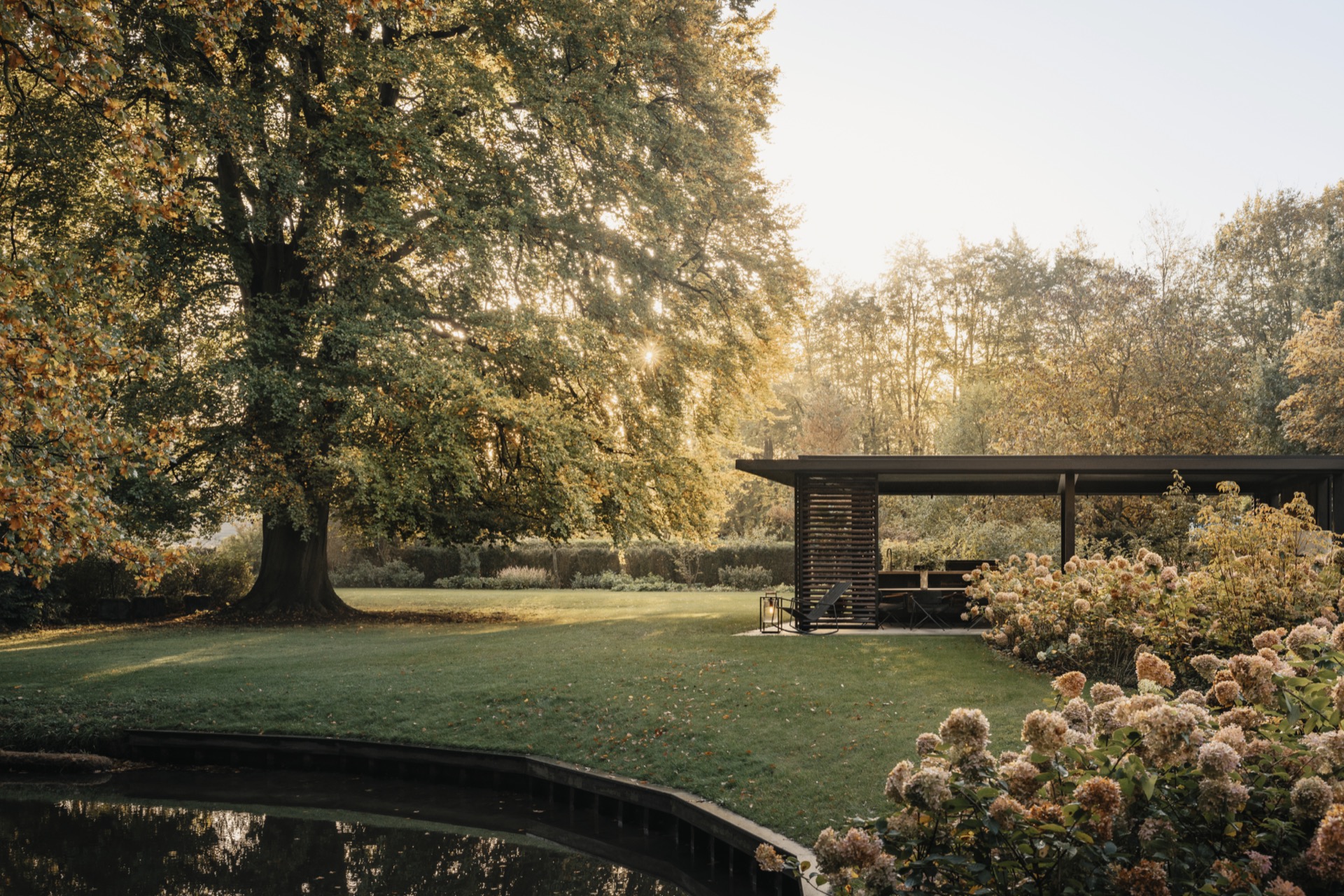
The garden with pergola is immediately visible in the way the project is framed. A wooden pergola with evenly spaced lamellas shades a paved terrace, its linear shadows shifting with the sun as it moves across the sky. The structure shelters an outdoor living space articulated through timber, metal, and stone, each material chosen for its texture and relationship to the surrounding greenery.
garden with pergola as the architectural starting point
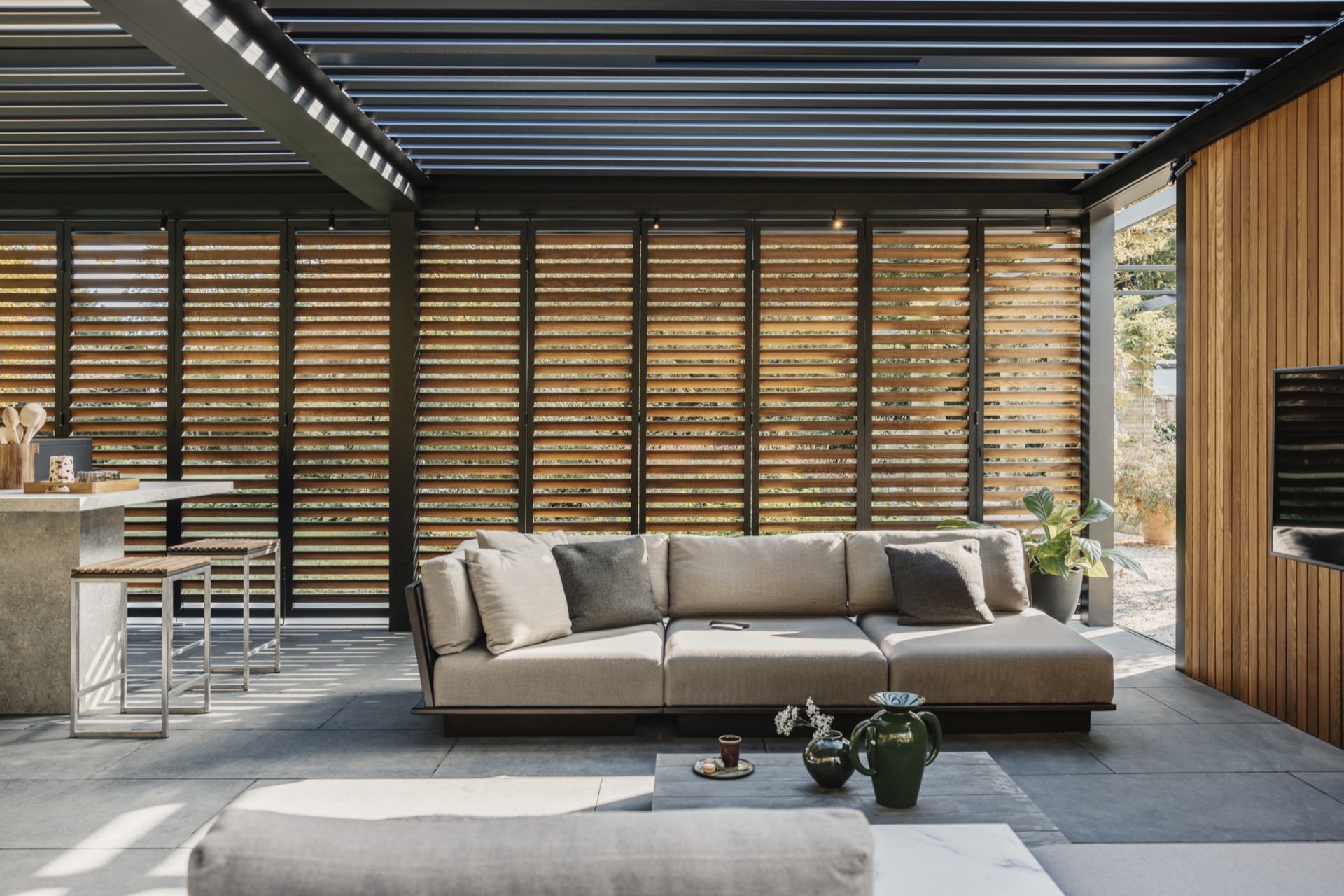
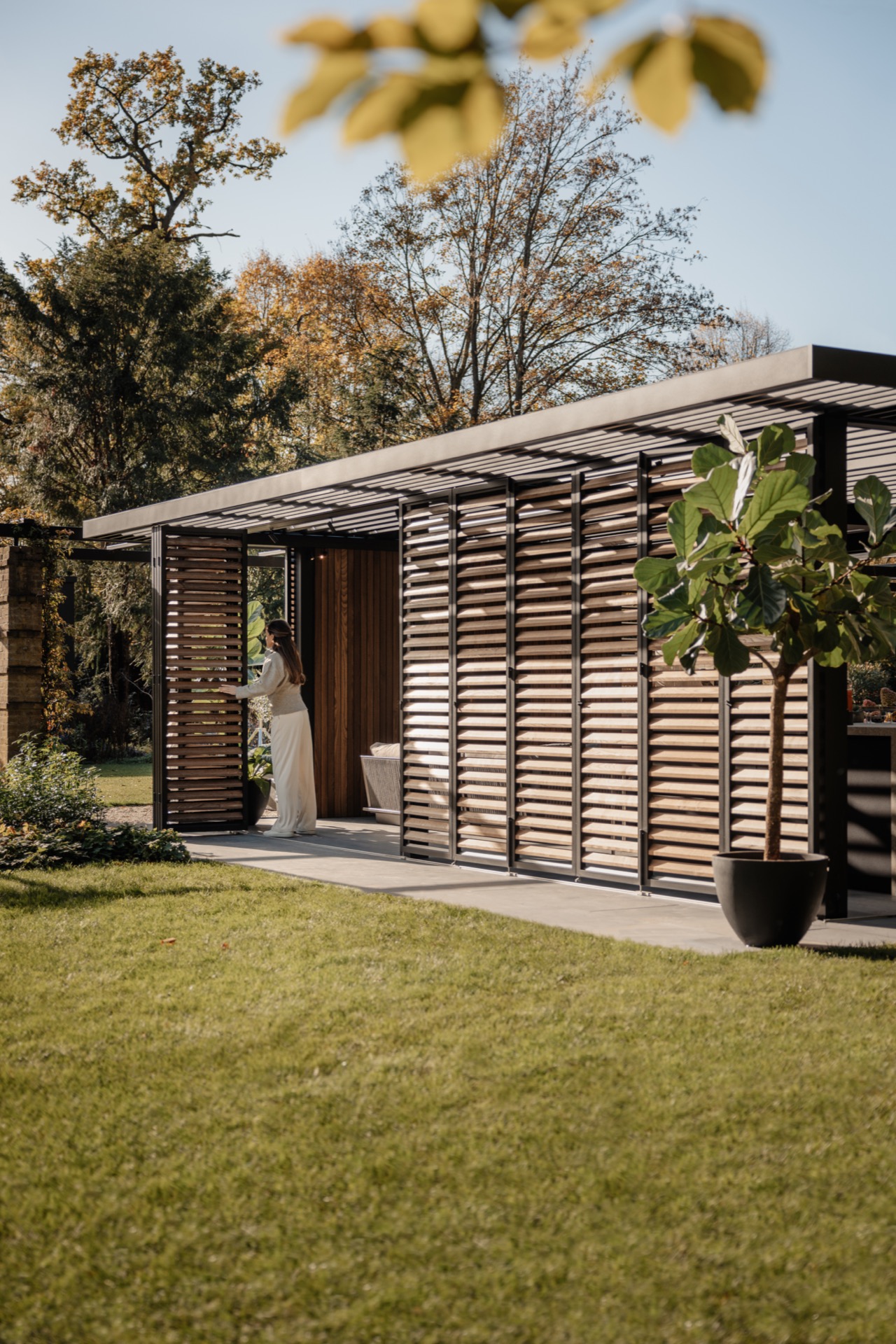
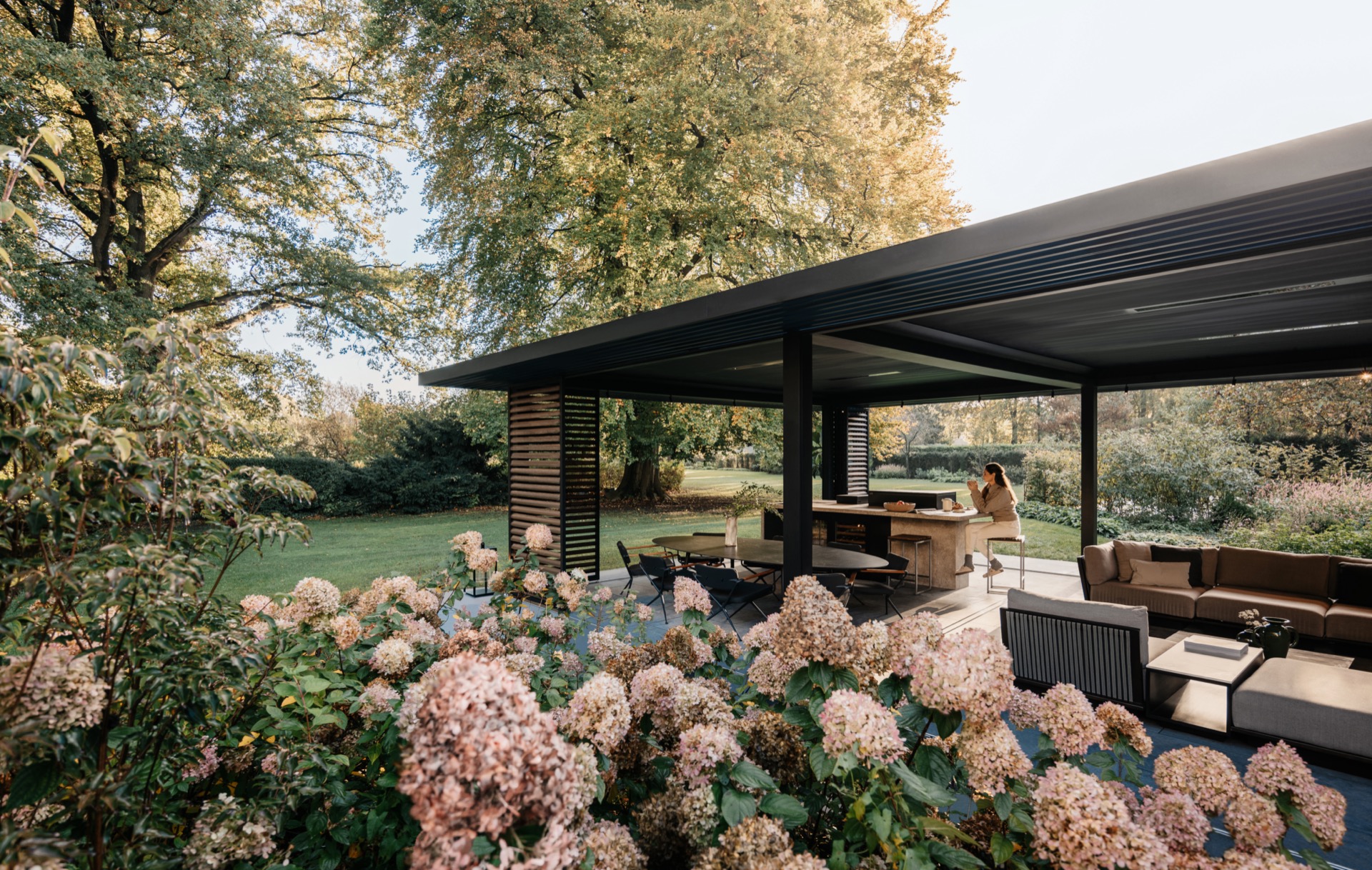
Occupying one side of the garden, an outdoor cooking and dining zone features stone countertops paired with timber cabinetry typical of natural garden elements. The kitchen area looks out onto leafy greens, inviting long meals outdoors. Nearby, the lounge area offers a wooden feature wall integrating a hidden television, providing a casual setting. Two wooden sliding doors open onto the garden path, while embedded power outlets in the supporting posts allow for device charging without interrupting the clean lines.
Flexible Boundaries and Material Flow
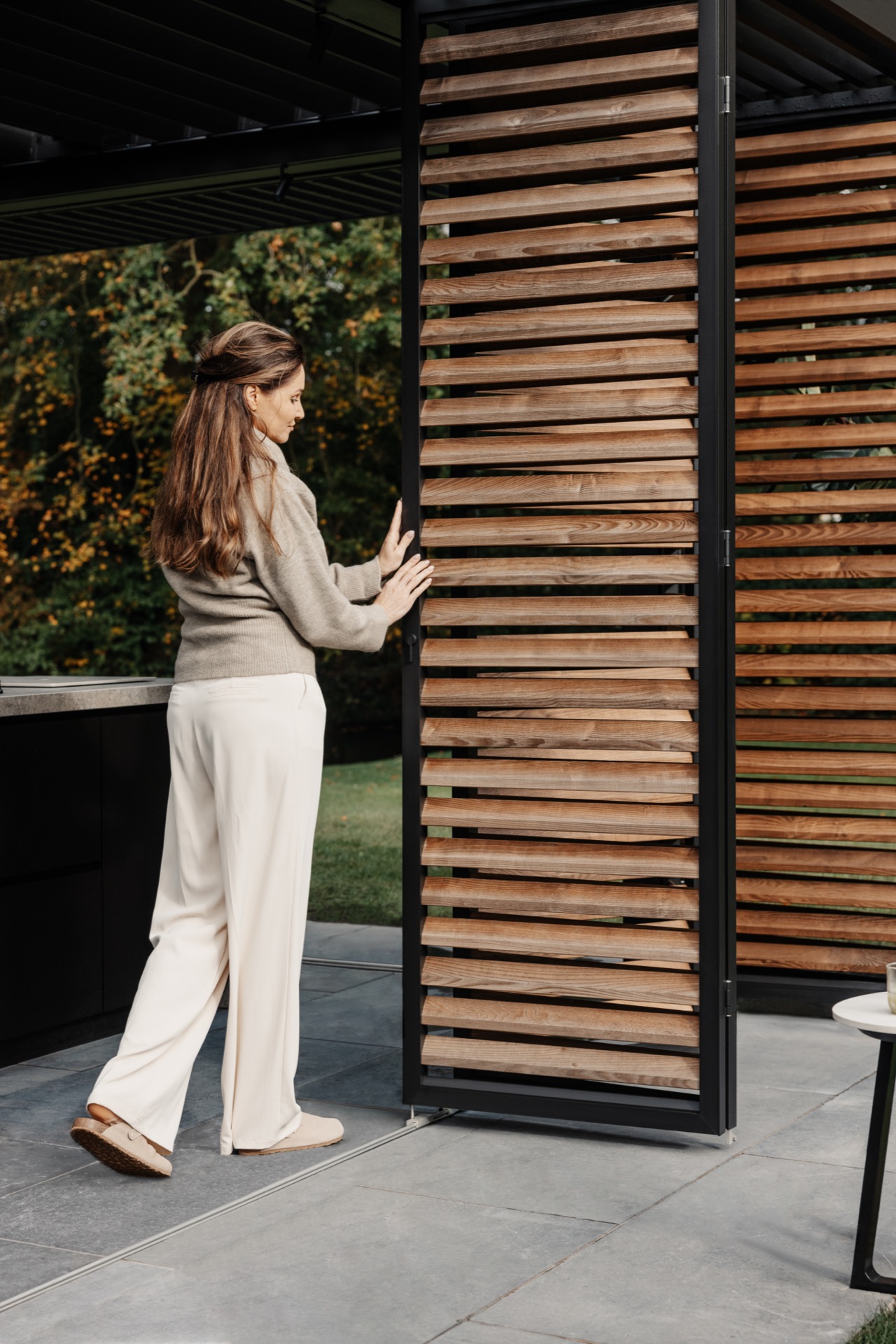
Separating these zones, foldable timber and glass walls provide the option to enclose or open the space according to season or occasion. The wood used in these panels matches precisely the grain and tone of the lounge wall, tying the areas together visually. When open, the boundaries dissipate, giving way to uninterrupted views across the garden.
Light, Shade, and Natural Tonality
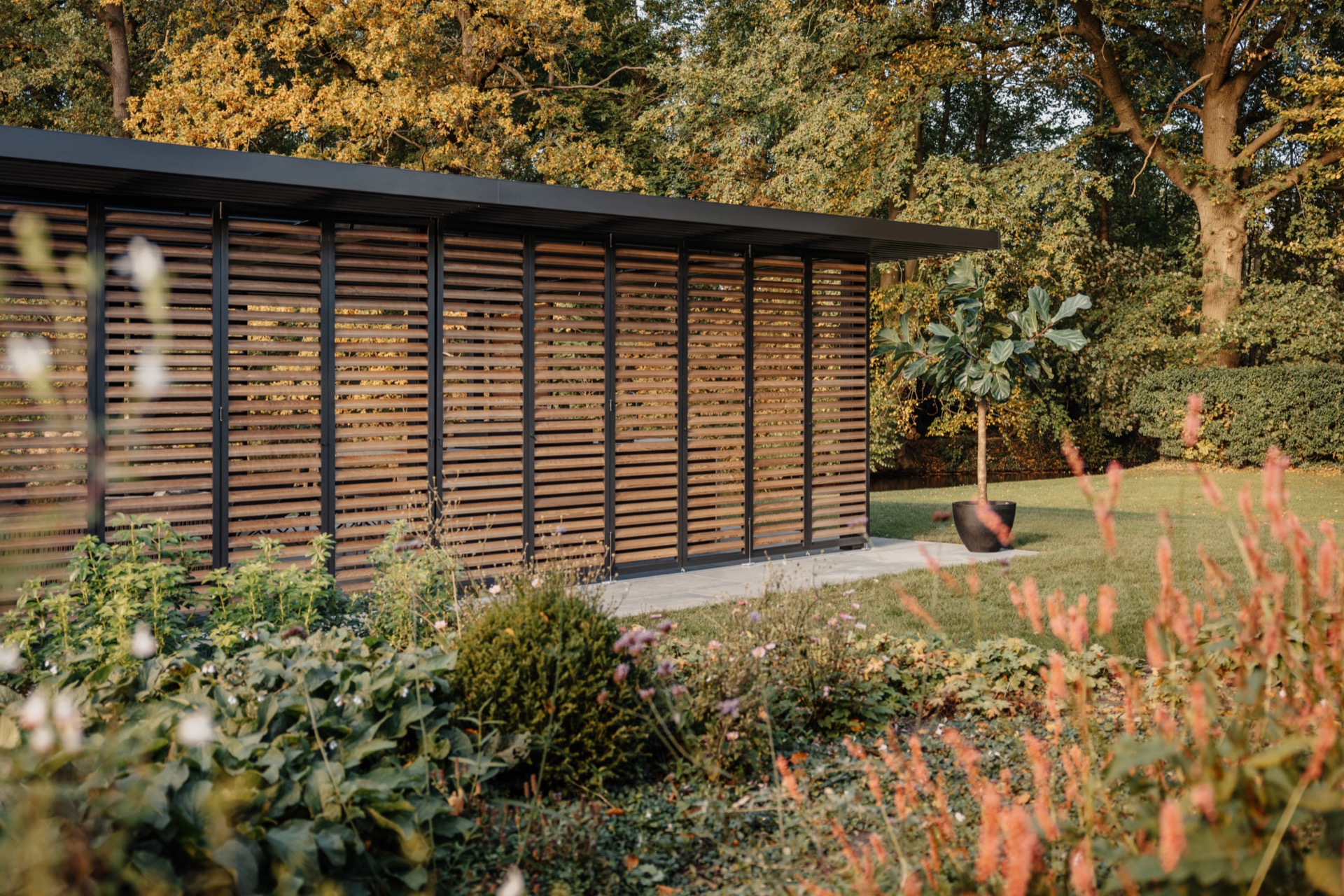
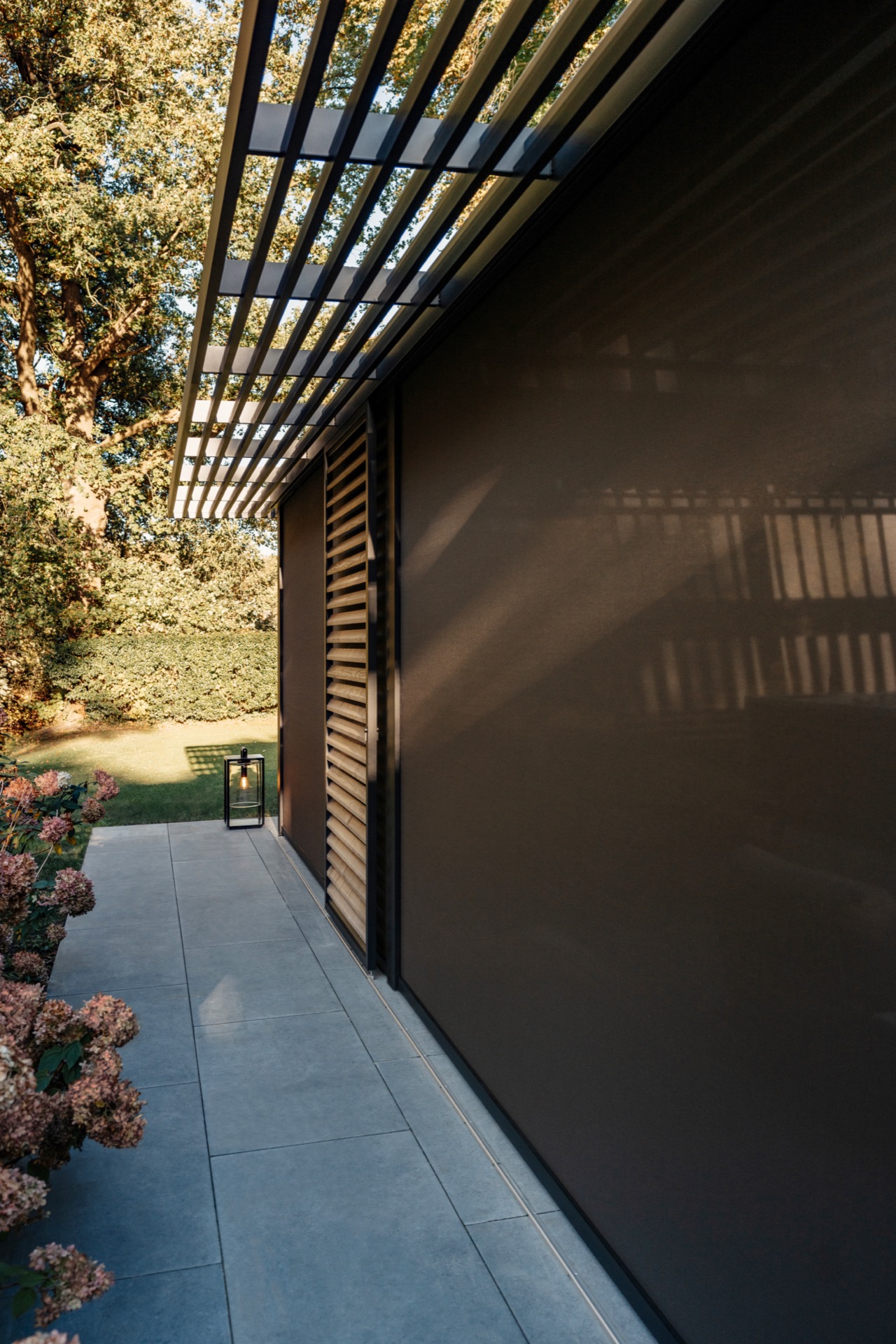
Sunlight filtering through wooden jalousies casts angular patterns onto the stone flooring. This interplay of light and shadow animates the terrace throughout the day, while a palette of greens, browns, and muted blacks emphasizes the connection between built elements and natural surroundings. The stone paving shows subtle irregularities that contrast with the timber’s smooth surfaces and the metal framework’s rigid lines.
Lighting Arrangements Enhance Function and Atmosphere
Dimmable spotlights, unobtrusively integrated into pergola beams and structural frames, balance utilitarian needs with mood lighting. At dusk, pools of warm light define zones around the cooking surface and seating area, encouraging extended use into the evening.
Transitions that Connect Indoors and Outdoors
Wide sliding doors create a dialogue between interior rooms and the outdoor living space, aligning with wooden treatments inside to extend the garden’s presence. This continuity between inside and out encourages movement and openness while allowing the outdoor area to respond to weather and social needs.
garden with pergola as the architectural starting point
Planting beds border the terrace with a mixture of low shrubs, seasonal florals, and a trimmed lawn that softens the garden’s edges. Natural garden elements, like a garden bench placed thoughtfully beneath the pergola, invite rest and sensory engagement with the environment. That makes the garden with pergola part of the architectural character rather than a loose finish.
Material Selections Reflect a Dialogue between Structure and Nature
Untreated wood surfaces vary in tone, lending tactile variety while maintaining coherence. Black metal frames provide structure, their slender profiles supporting pergola lamellas and sliding systems without overwhelming the scene. Stone flooring extends through dining and cooking zones, connecting indoor functionality with the outdoor realm through natural surfaces.
Seamless Flow and Spatial Layering
The combination of sliding and folding loggia walls lets the garden shift effortlessly from distinct, cozy zones to a single expansive outdoor room. Even when enclosed, transparency remains through glass and timber, preserving openness. The pergola’s wooden slats were designed to modulate sunlight, balancing shade and brightness as the day advances.
Integrating Technology Into The Landscape
Electrical outlets hide within the timber posts of the pergola, serving contemporary needs without disrupting the garden’s uncluttered appearance. This subtle integration demonstrates respect for the overall design language, offering convenience while maintaining clean spatial lines.
garden with pergola as the architectural starting point
Natural stone paths weave through planting borders, connecting lounge and dining zones. These tactile pathways contrast with timber decking and smooth stone counters, enriching the sensory experience and guiding circulation across the garden composition behind the framed pergola.
Wood’s Varied Roles in Texture and Shade
The garden’s wooden elements—from folding doors to pergola lamellas—not only unify the space visually but also control light and airflow. Wooden screens and shutters provide adjustable shading while maintaining openness, their grain adding gentle texture that plays against metal and stone surfaces.
A Balanced Outdoor Environment Without Excess
This garden with pergola avoids embellishment, instead focusing on how materials interact with light, space, and function. The layered outdoor design accommodates distinct uses—cooking, dining, and lounging—under one cohesive structural frame that responds cleanly to environmental conditions and social rhythms.
Want to see more of Veraluxe | Luxury Outdoor? View the page of Veraluxe | Luxury Outdoor for even more great projects and company information.


.png)