






Complete outdoor shading with a louvered roof and sliding shutter panels
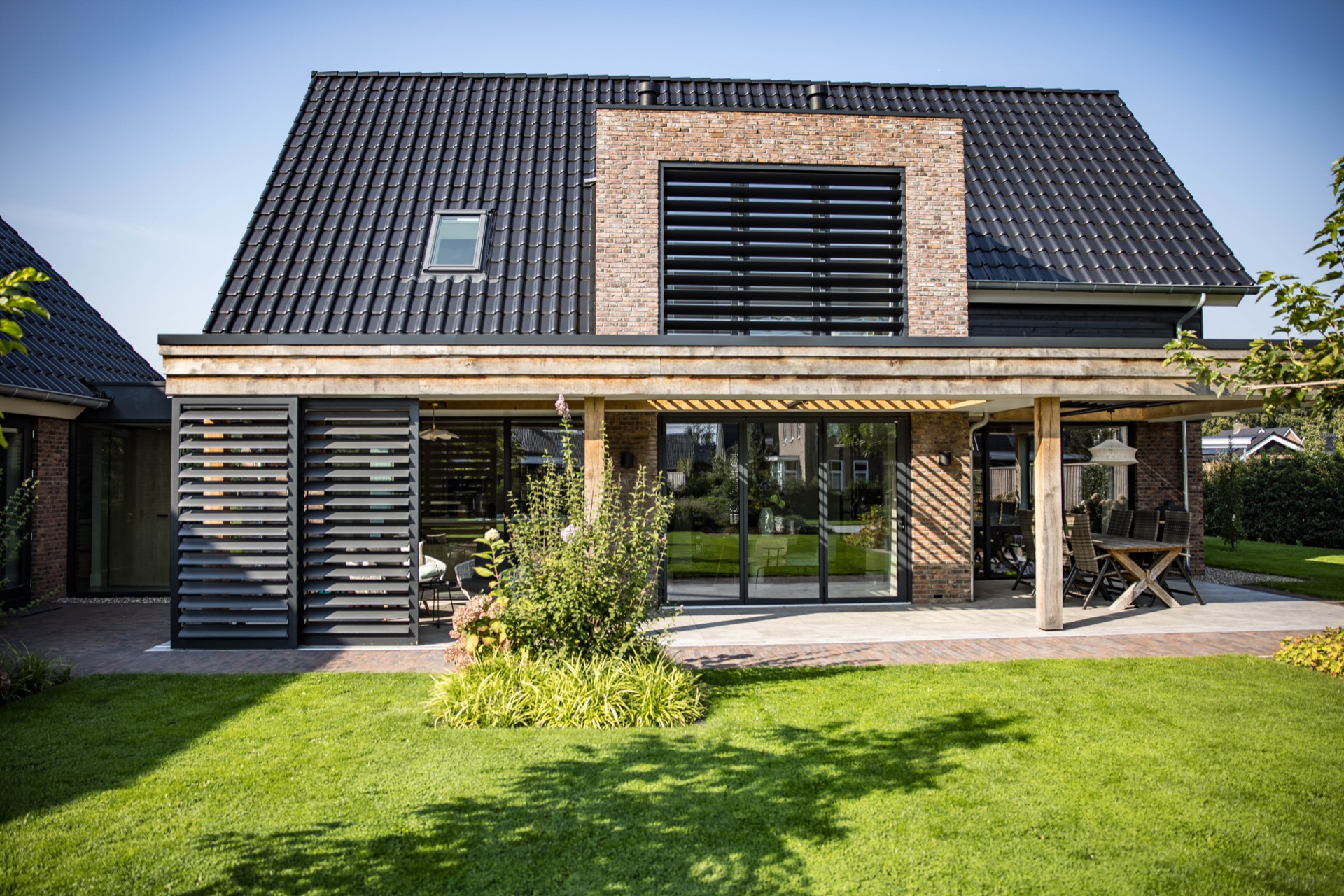
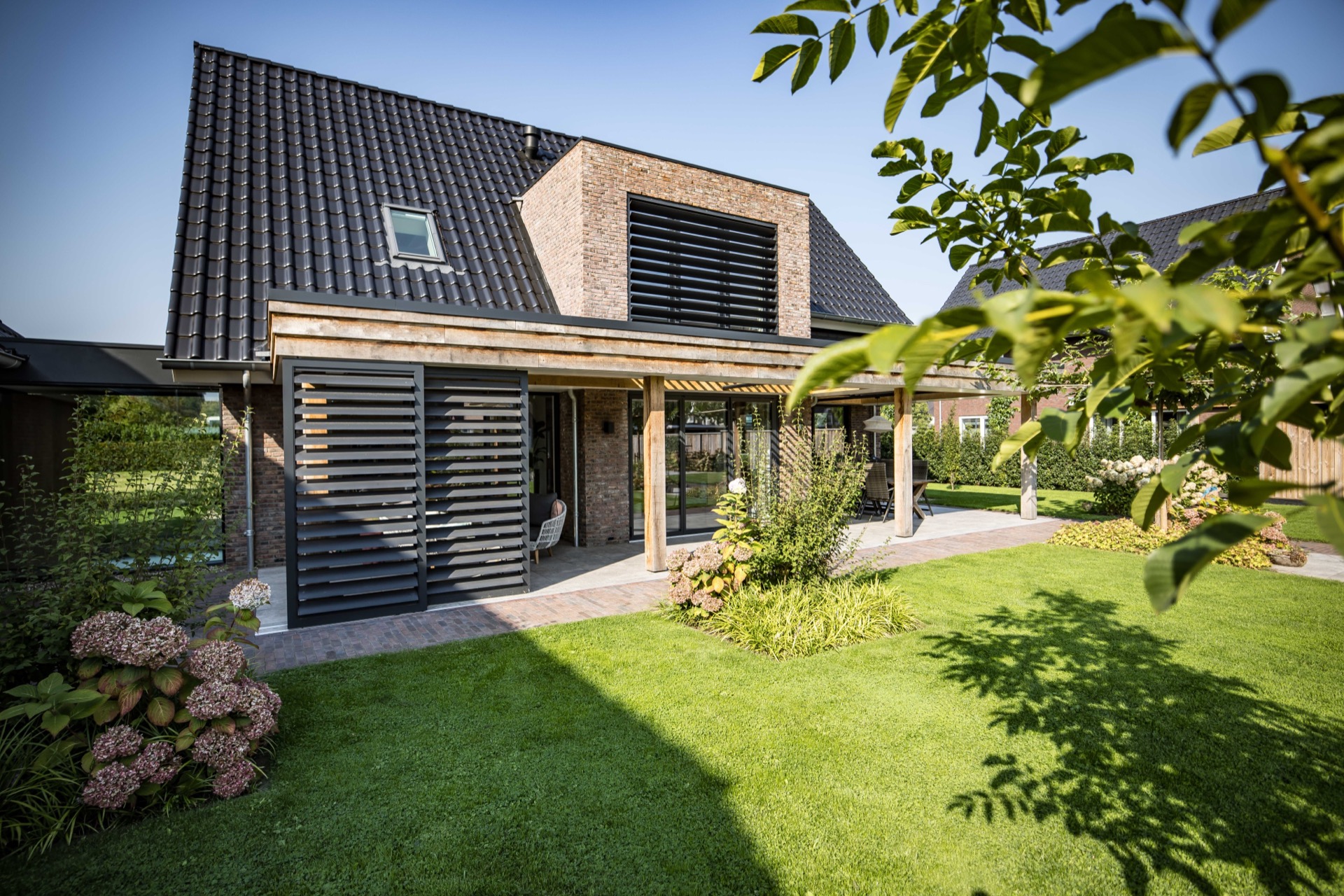
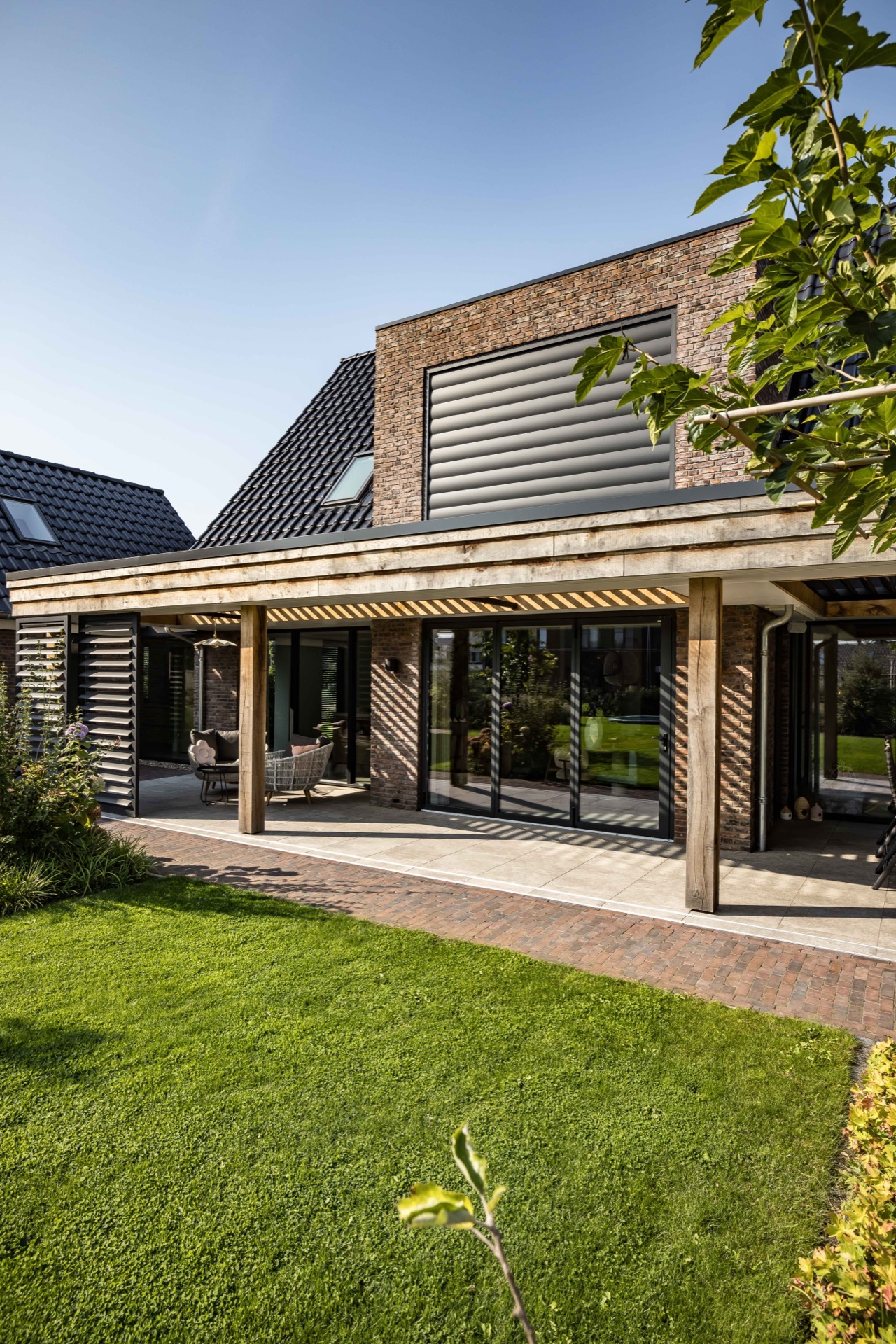
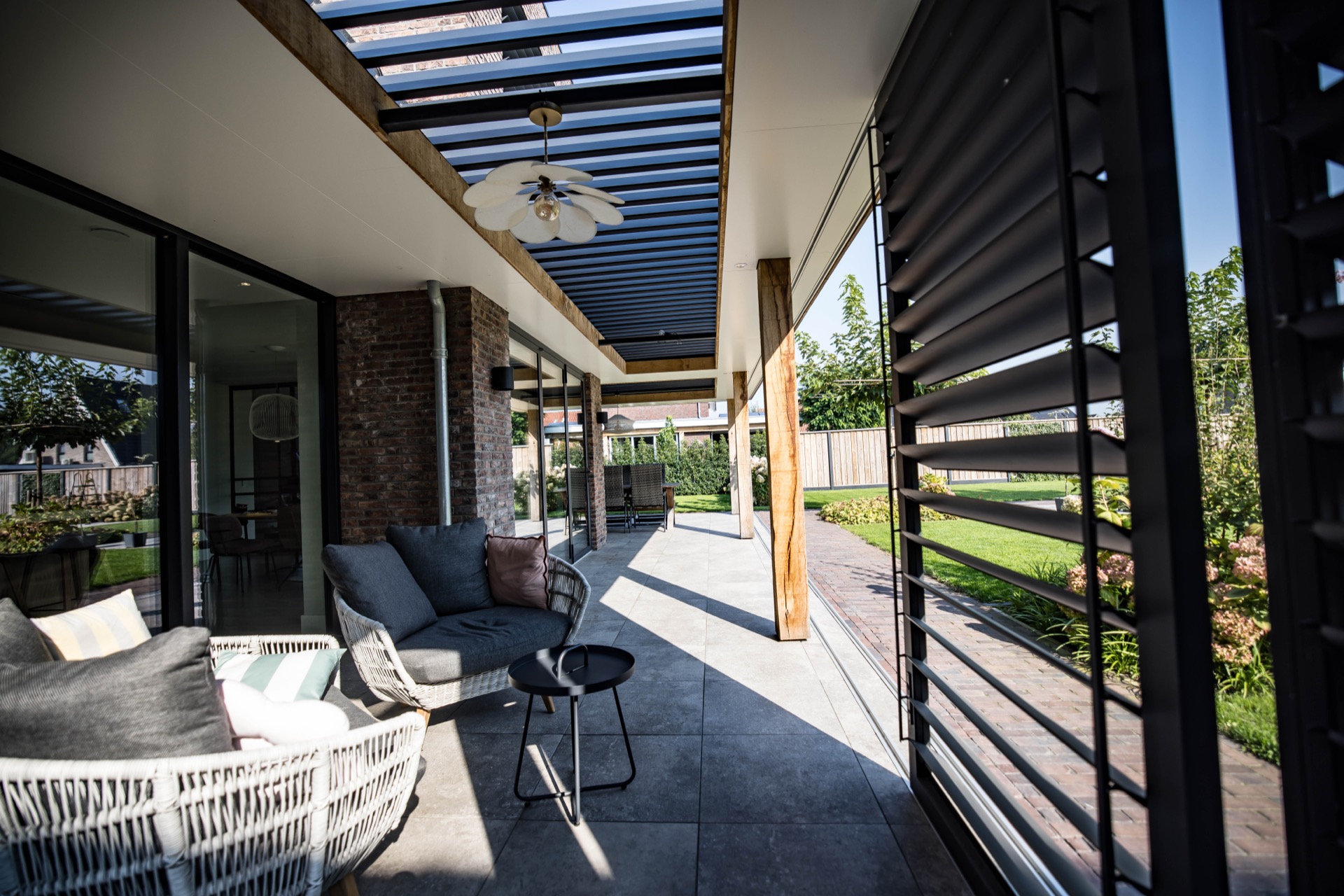
The outdoor shading with louvered roof and horizontal louvers is immediately visible in the way the project is framed. Horizontal lines set the tone across this modern new-build home. Sliding shutter panels run along the length of the house, and their position can be changed to control sun, cold and wind. The same language appears again in the two louvered roofs, which turn the terraces on both sides of the house into usable outdoor spaces. A straight louver panel at the bedroom adds full blackout and privacy.
outdoor shading with louvered roof and horizontal louvers as the architectural starting point
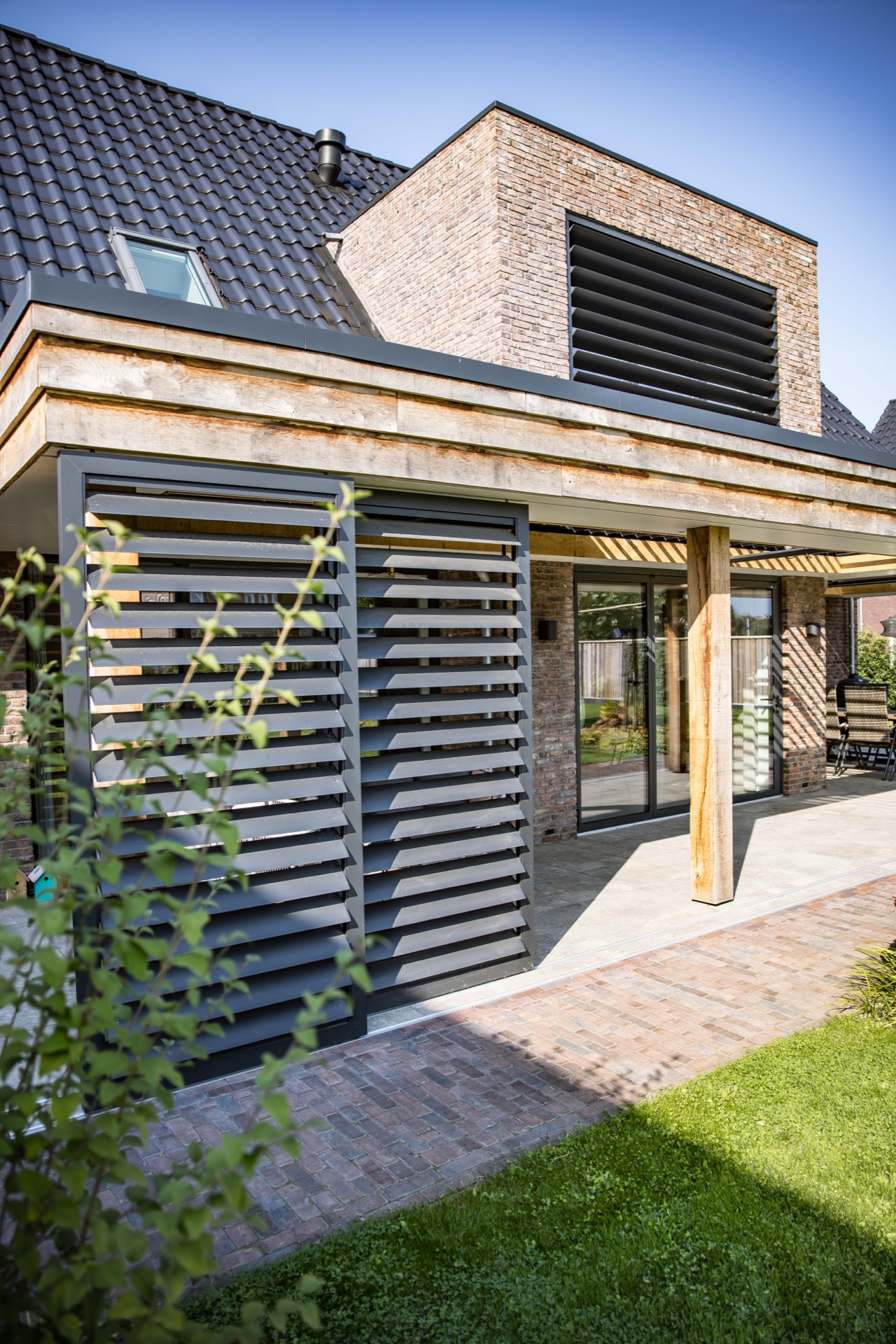
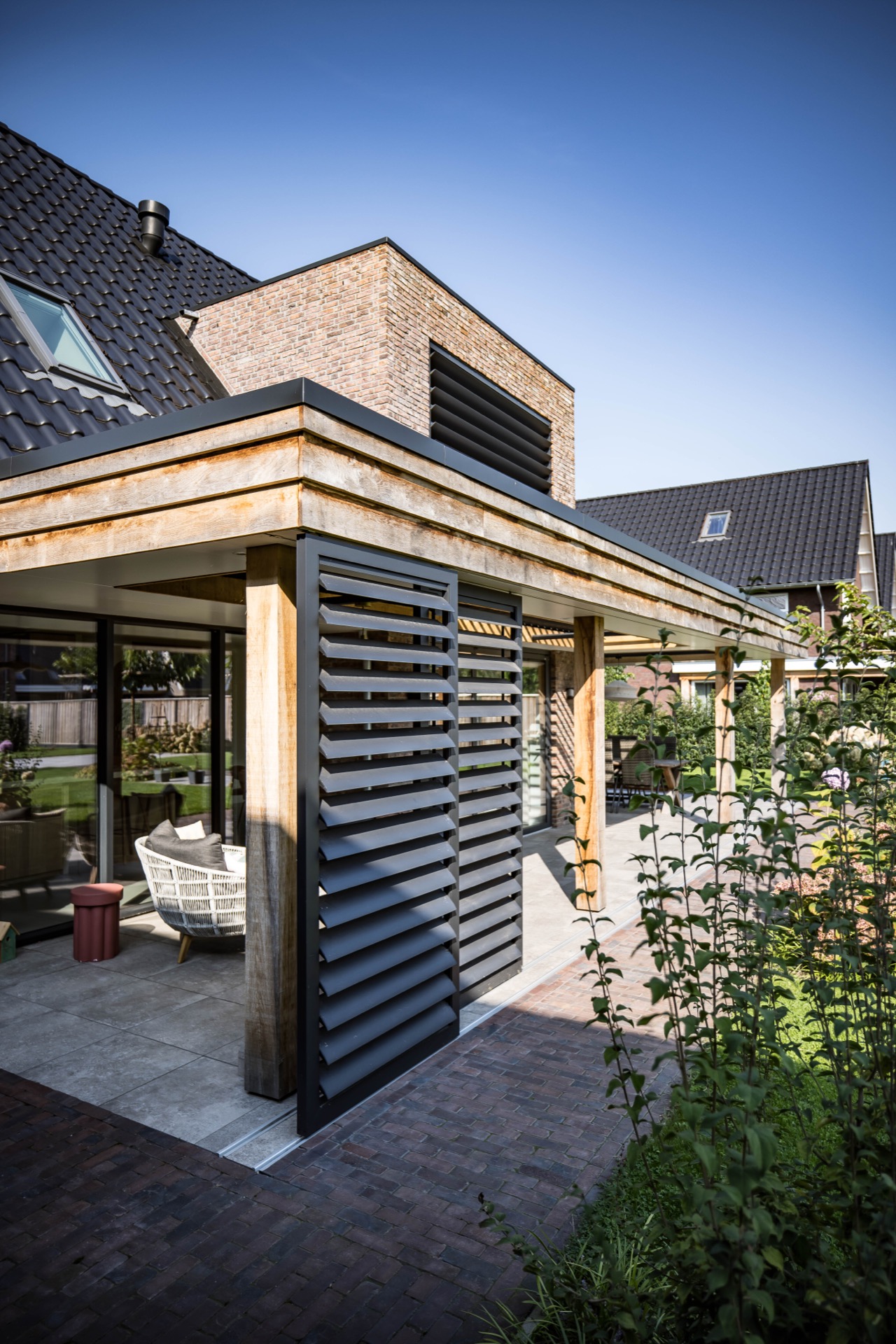
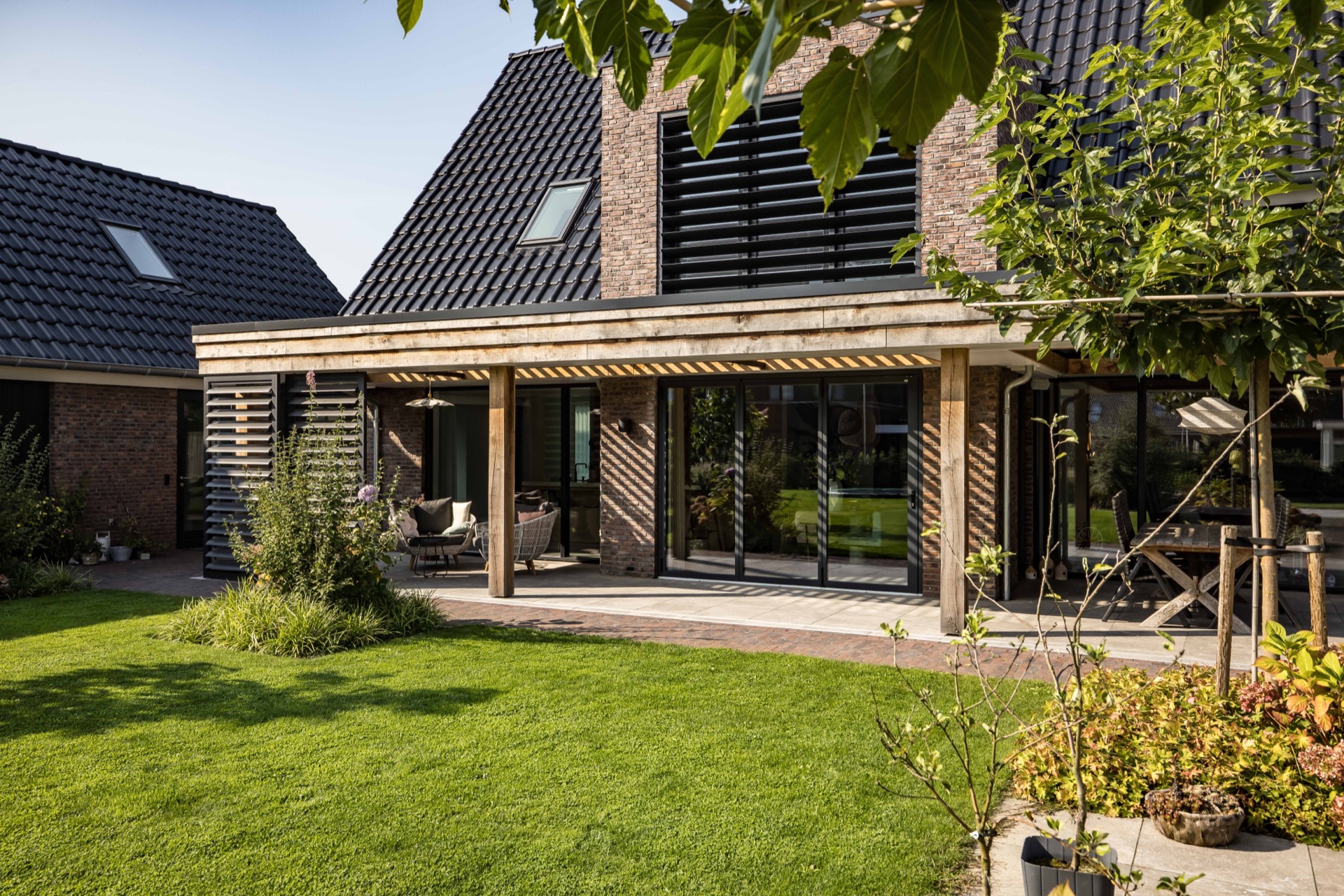
The most visible element is the row of sliding shutter panels. They move across the full length of the home, so the level of shelter can change with the weather and with the time of day. In the photos, the dark grey panels sit against large glass openings and the pale paving outside, making the contrast easy to read. The horizontal slats also tie the different parts of the project together without turning the façade into a single closed surface.
What stands out is the way the panels sit between openness and cover. In one moment they screen the terrace from direct sun; in another they close down more of the view and reduce exposure to wind. The system is not hidden away. It is part of the architecture, visible beside the glazing and aligned with the long, low profile of the home. That makes the sliding shutter panels more than a practical layer: they become a clear part of the exterior composition.
Two louvered roofs create shaded outdoor rooms
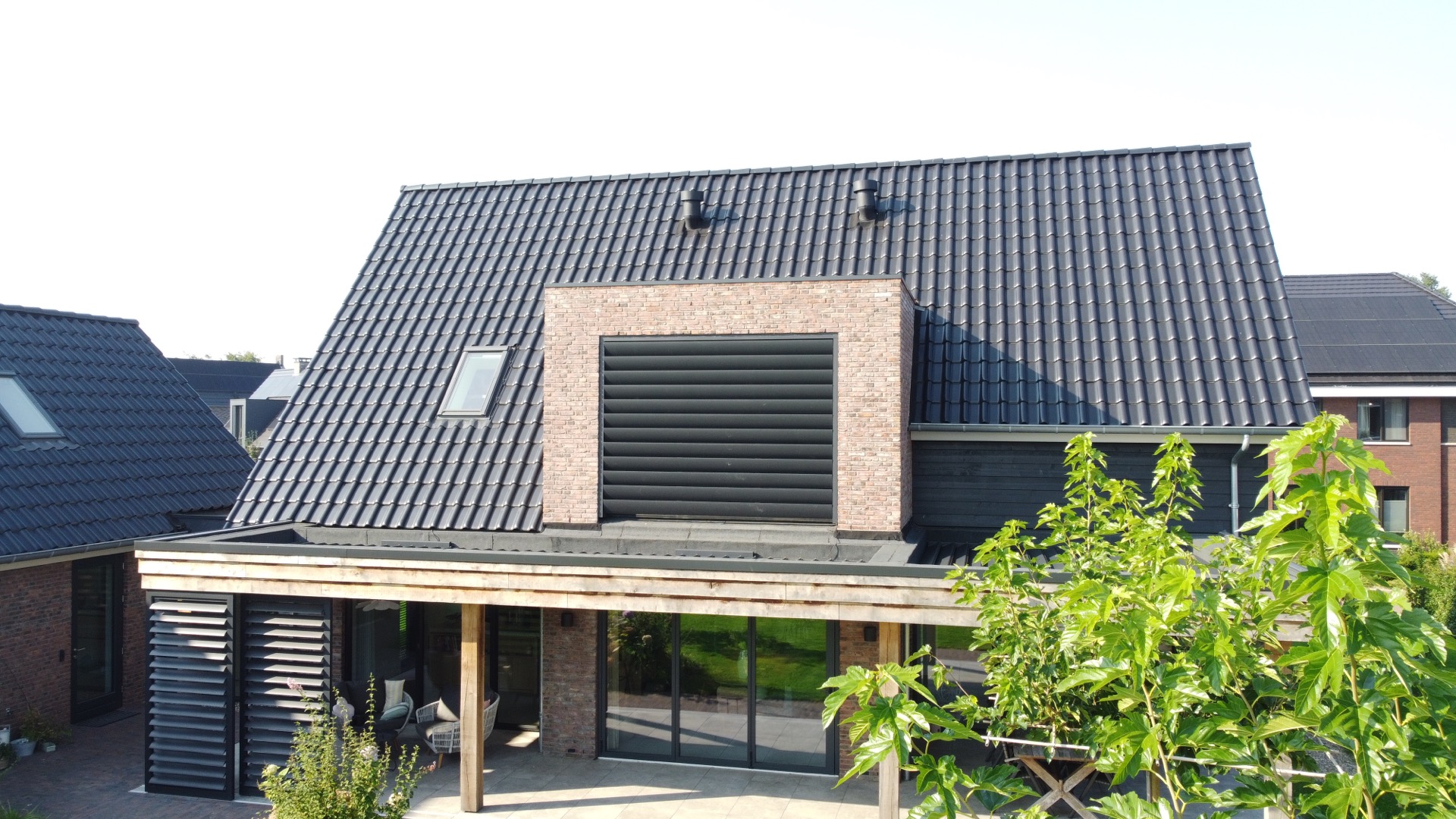
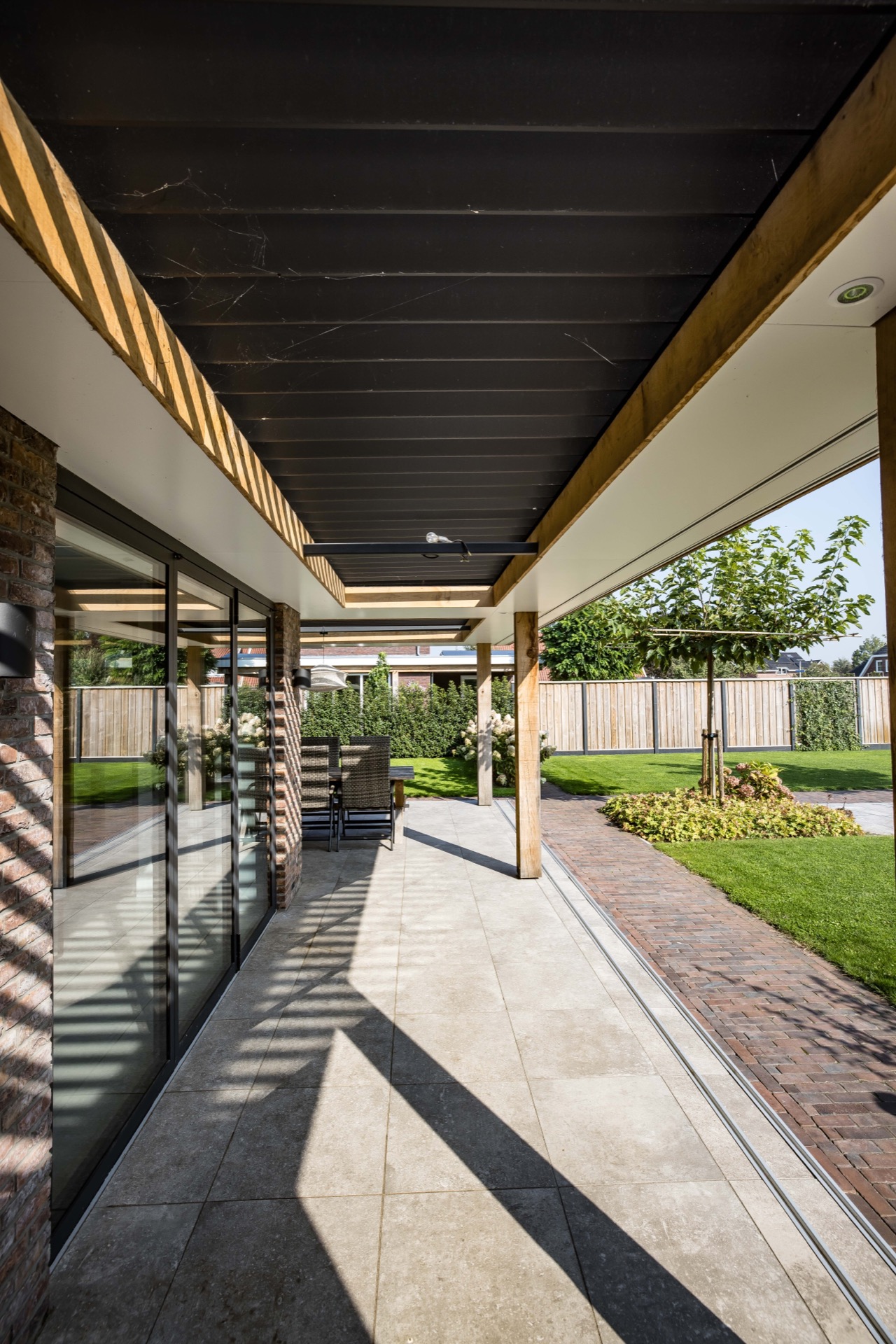
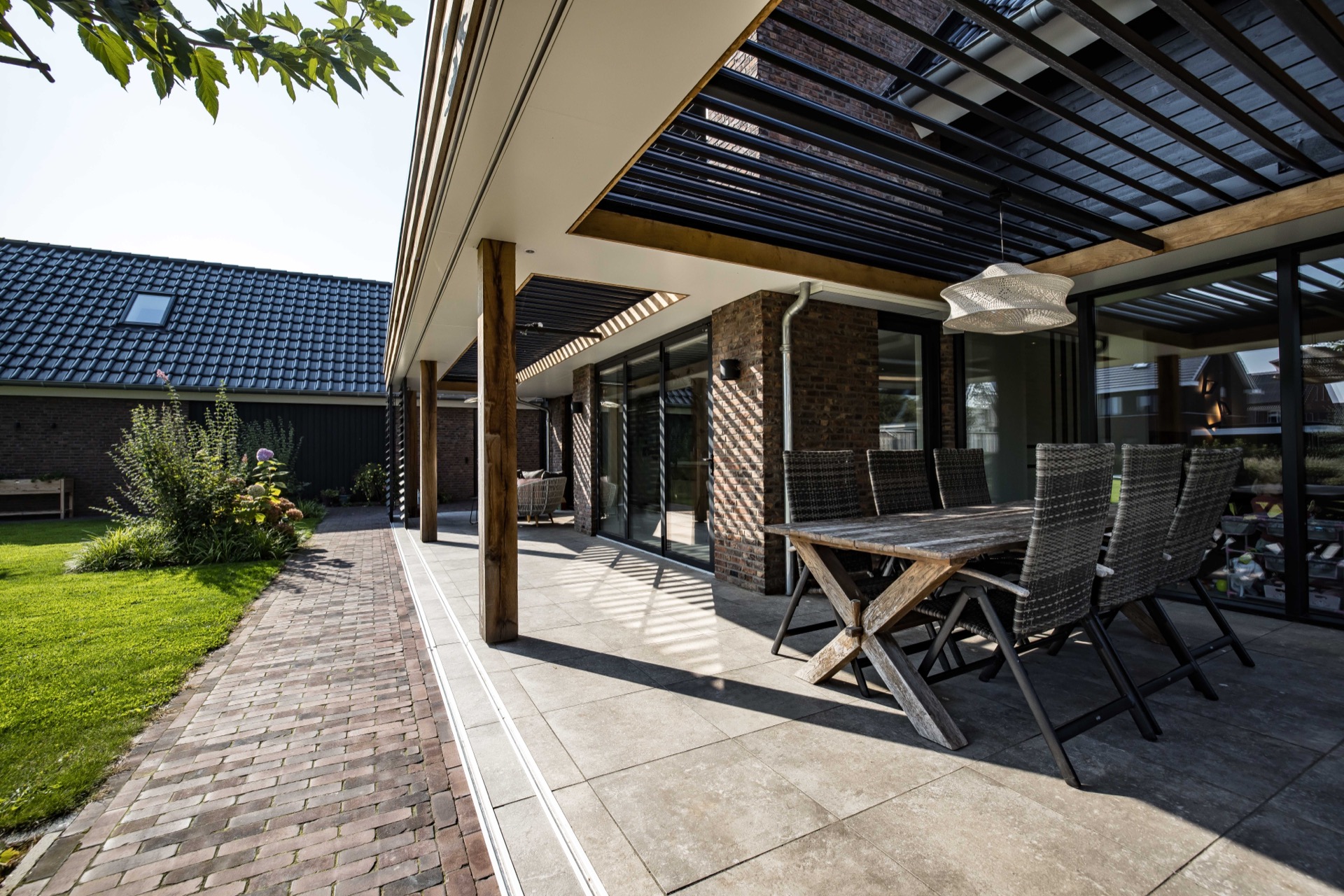
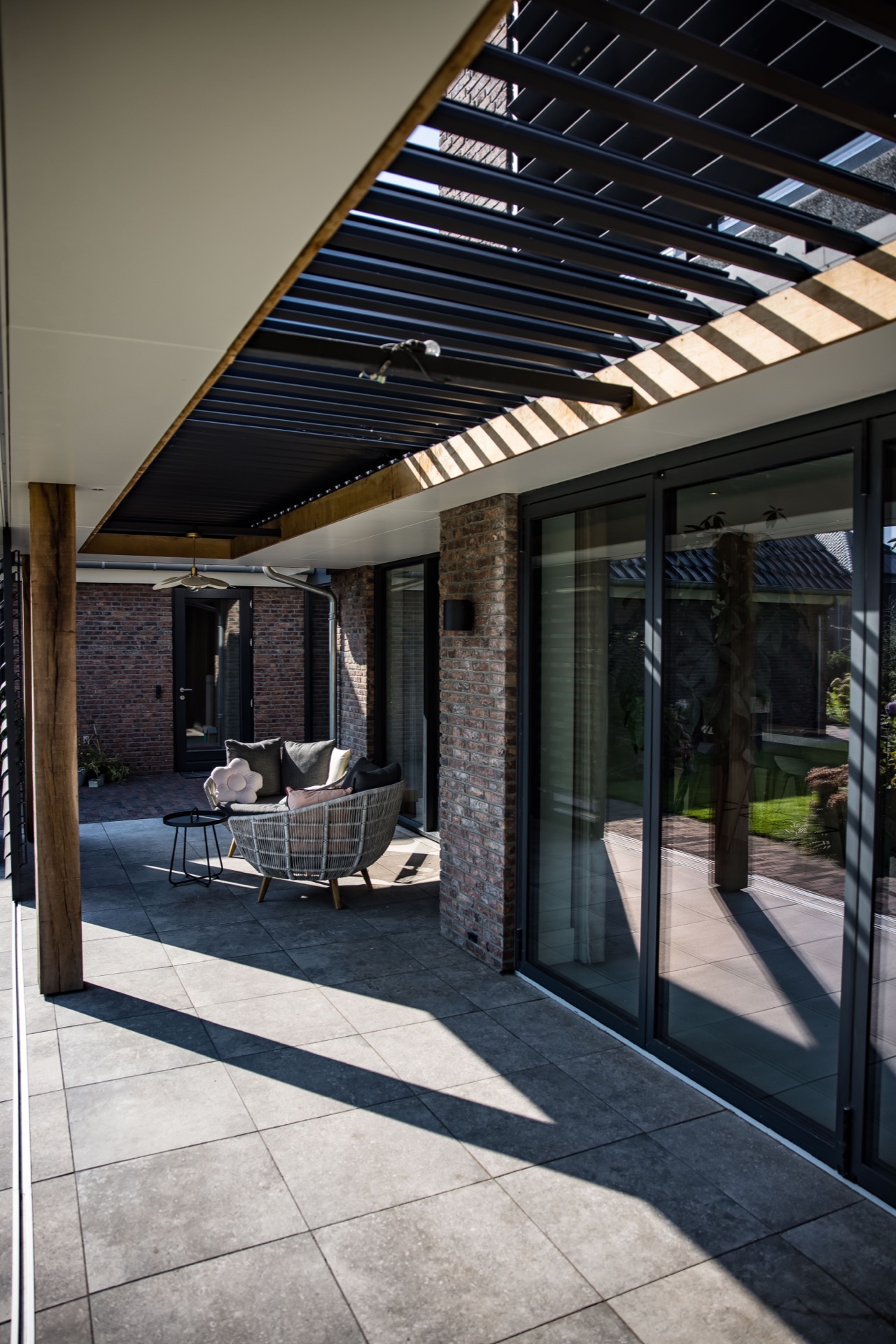
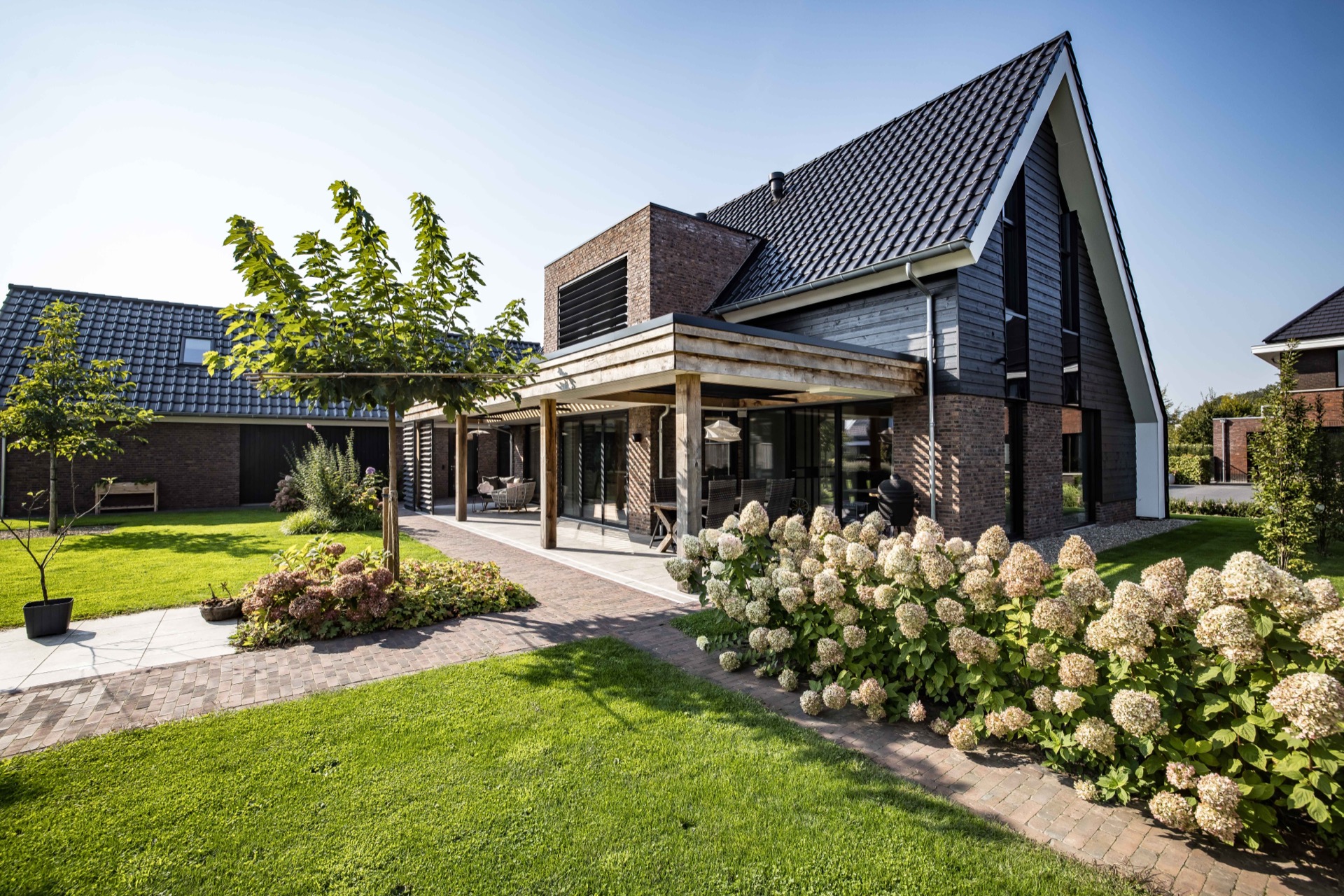
On both sides of the house, two louvered roofs form sheltered outdoor areas. The roof structure is read through its repeated slats, timber supports and dark underside, which appear in several images as a strong horizontal layer above the terrace. Beneath that cover, the paving continues right up to the glazed openings, so the transition from inside to outside stays direct and legible. The result is a pair of outdoor zones rather than one single terrace.
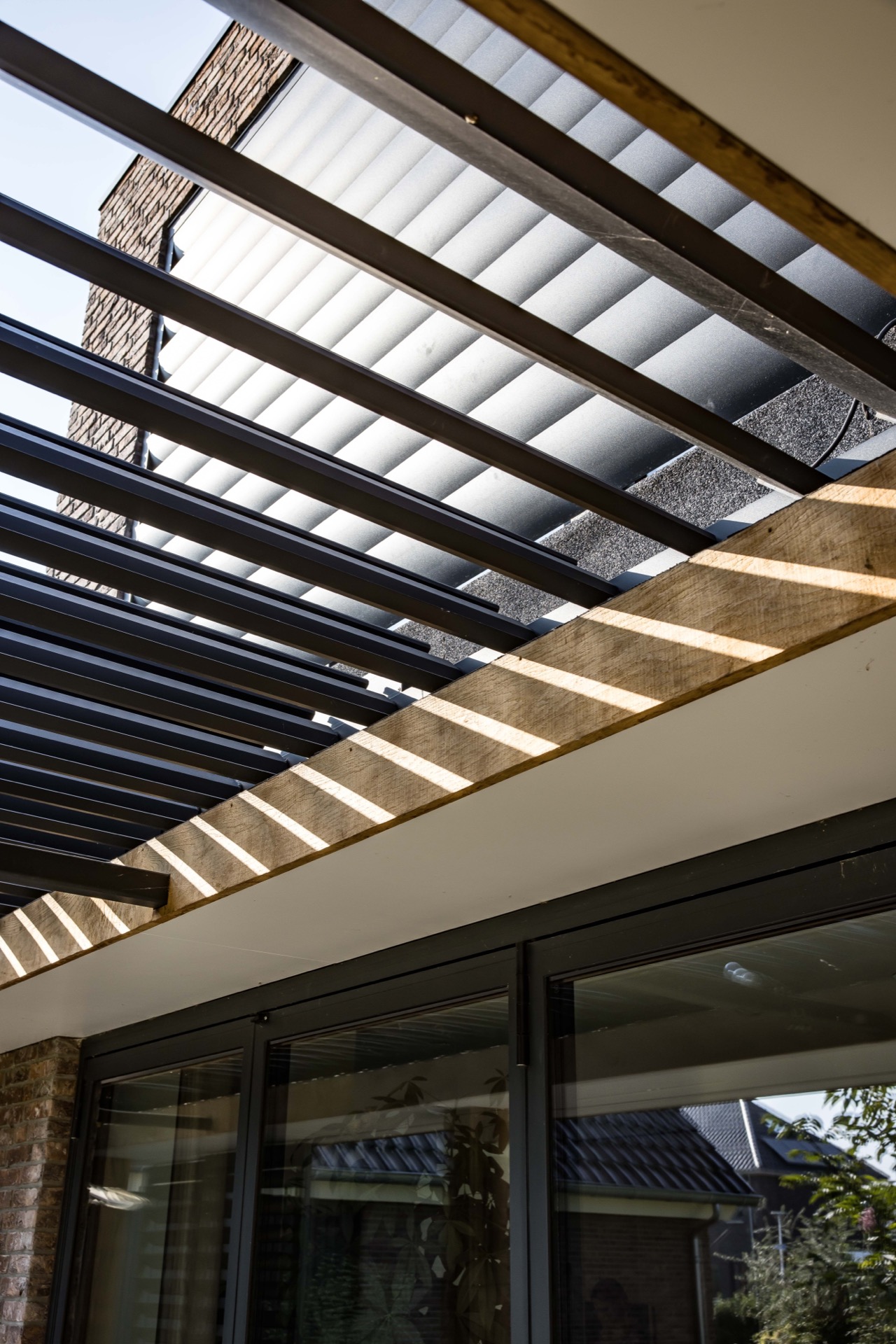
One side shows a broad run of glazing under the cover, while the other reveals the roof line from a different angle, with garden planting and stone paving along the edge. The louvered roof shading does not simply cap the house; it defines where a terrace begins and where the weather protection takes over. In detail shots, the slats and support structure read almost like a ceiling outdoors, with light filtering between the elements instead of falling in one flat sheet.
Horizontal louver shading at the terrace edge
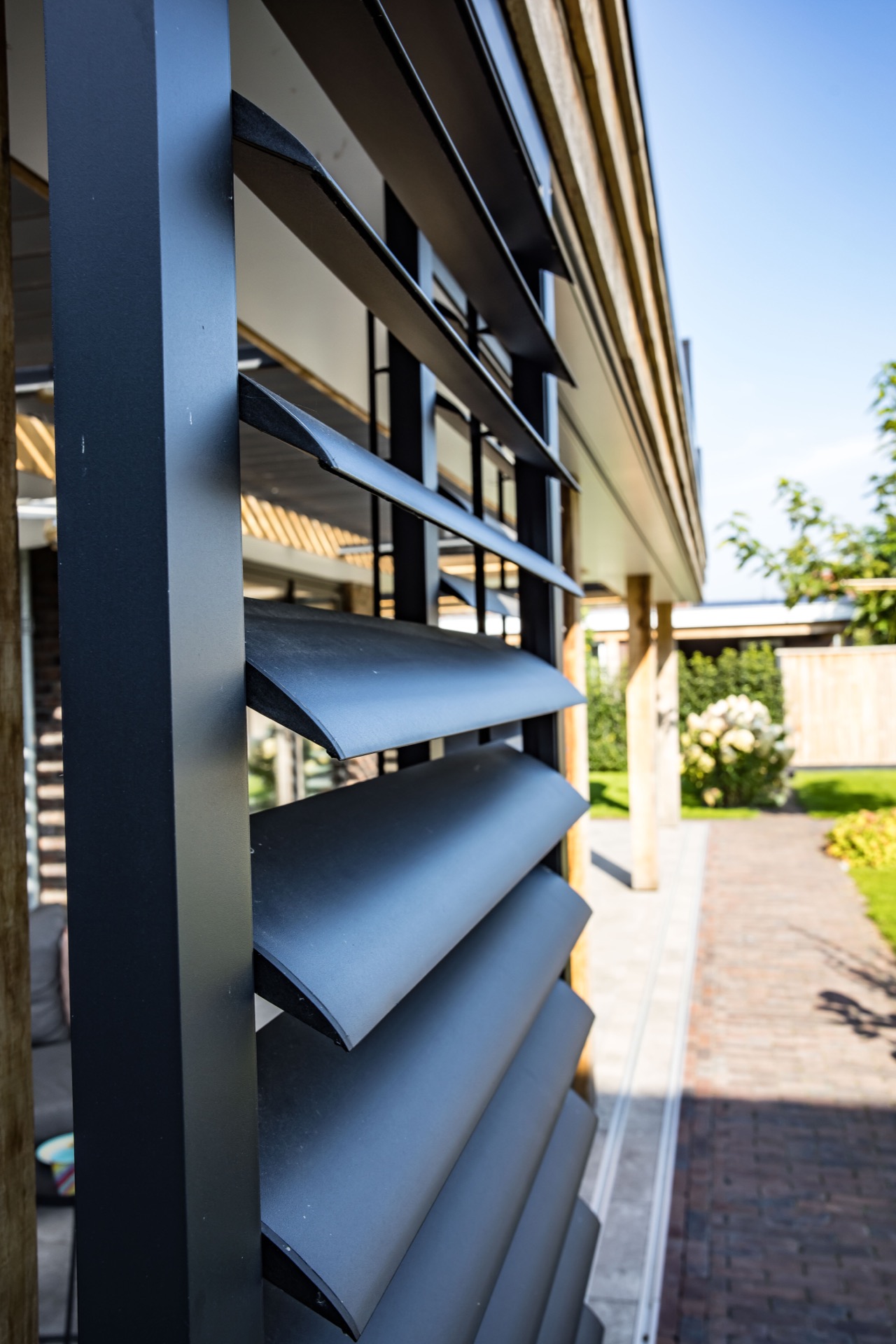
Several images show the horizontal louver shading from close range. Here the structure is less about the whole house and more about line, spacing and depth. The dark slats sit in front of brickwork, glass and timber, and that layering gives the terrace edge a measured rhythm. It is easy to see how the panels and roof elements relate to one another: both use the same horizontal direction, both control light, and both leave the underlying structure visible.
That consistency matters in the wider view. The terraces do not feel added as separate objects. They are cut into the length of the home by means of louvered roof shading, timber posts and sliding panels that can open or close as needed. The garden side stays open, with lawn and planting against the paving, while the shaded edges hold the outdoor rooms in place. That makes the outdoor shading with louvered roof and horizontal louvers part of the architectural character rather than a loose finish.
A bedroom panel for blackout and privacy
The straight louver panel in the bedroom is the most enclosed part of the project. Its purpose is specific: full blackout and privacy. The panel fits the same visual system as the other elements, but here the effect is tighter and more controlled. The slats sit in a clean frame, blocking view and light where the bedroom needs it most. It is a quieter detail than the terrace systems, yet it completes the set of shading measures used throughout the home.
Seen alongside the larger outdoor elements, the bedroom blackout louvers show how the project moves from open to closed without changing language. Outside, the louvers shape terraces and regulate exposure. Inside, the straight panel manages darkness and privacy. The shift is practical, but it is also visible in the way the panel lines echo the horizontal rhythm found elsewhere in the house.
Louver panels for privacy in a restrained frame
The bedroom solution uses louver panels for privacy without drawing attention to itself. The frame stays slim, the slats remain the main feature, and the effect is made through coverage rather than decoration. That restraint matches the rest of the project. The house works with repeated horizontal elements, dark finishes and clear openings, all read against brick, glass and timber.
Across the project, the same material and spatial vocabulary keeps returning: dark grey panels, timber supports, glazed openings, and stone paving that leads from one outdoor area to the next. The images of the louvred roofs, the sliding shutter panels and the bedroom panel make that sequence easy to follow. Each element does a different job, but the house uses one family of forms to carry them all.
How the shading system reads in the photographs
The photographs are especially useful because they show the project from several distances. In the wider views, you see the covered terraces, the large glass façade and the garden edge in one frame. In the closer images, the horizontal slats become the main subject, revealing the spacing and the direction of the louvers. Together they make the project readable as a complete outdoor shading with louvered roof and horizontal louvers setup, rather than as separate products placed around a house.
Stone paving, dark frames and light brickwork give the system a grounded setting. The louvered roof shades the sitting areas, the sliding shutter panels adjust the level of exposure along the length of the house, and the bedroom panel closes the private room when needed. It is a clear sequence of use, visible in the architecture itself and in the way the outdoor areas are drawn out beside the glazing. That makes the outdoor shading with louvered roof and horizontal louvers part of the architectural character rather than a loose finish.
Want to see more of Livium? View the page of Livium for even more great projects and company information.


.png)