








Oval dining table in a warm beige dining area
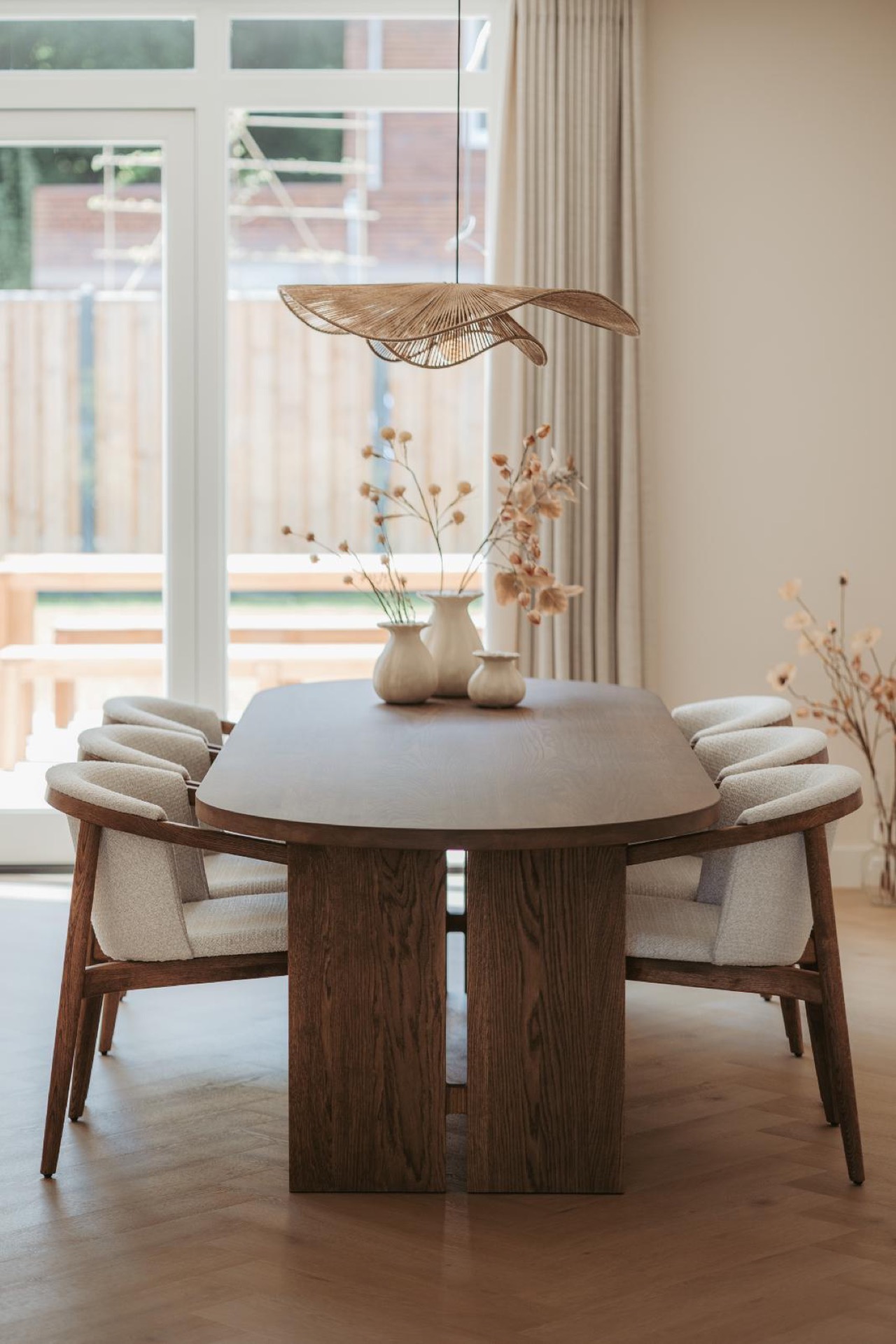
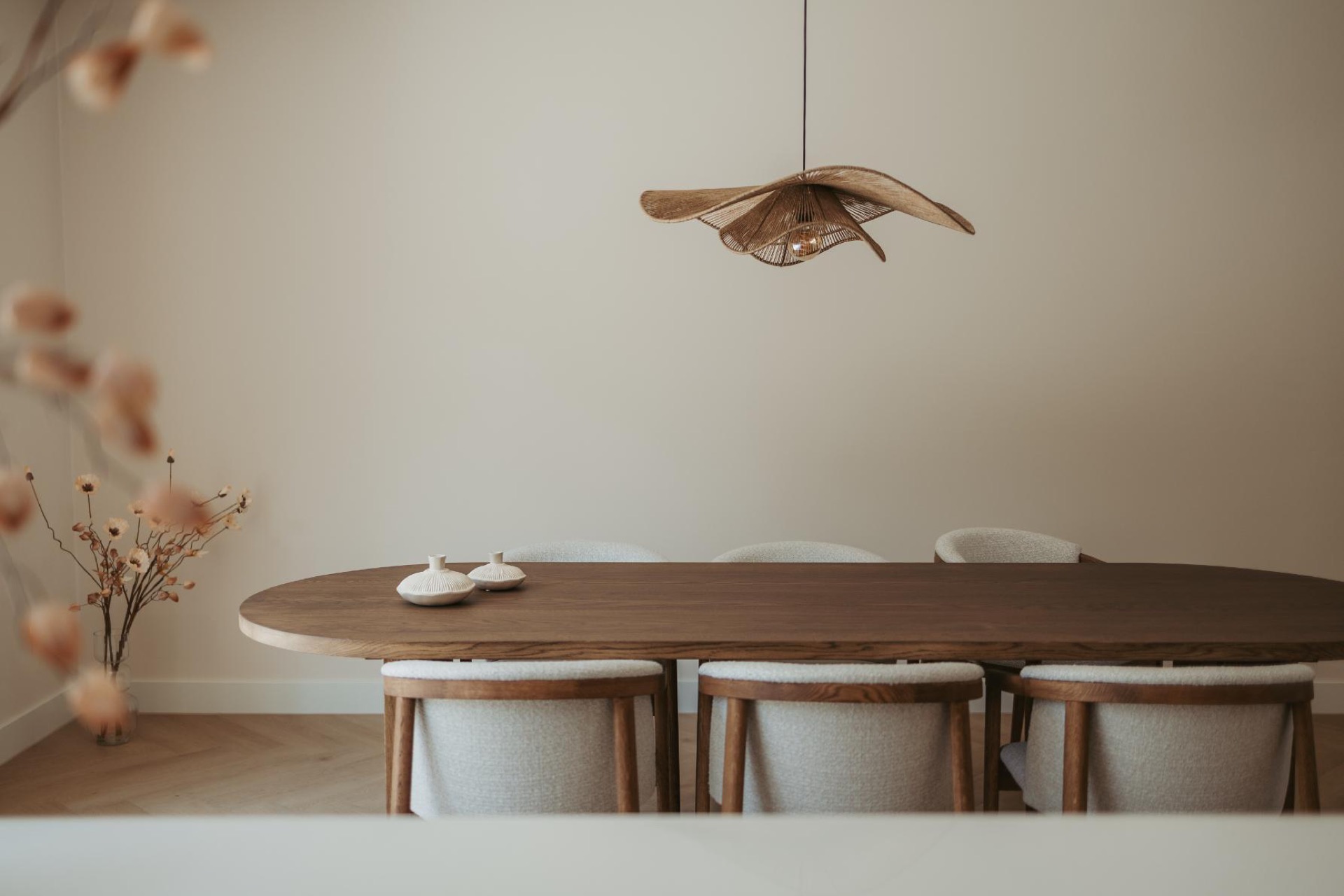
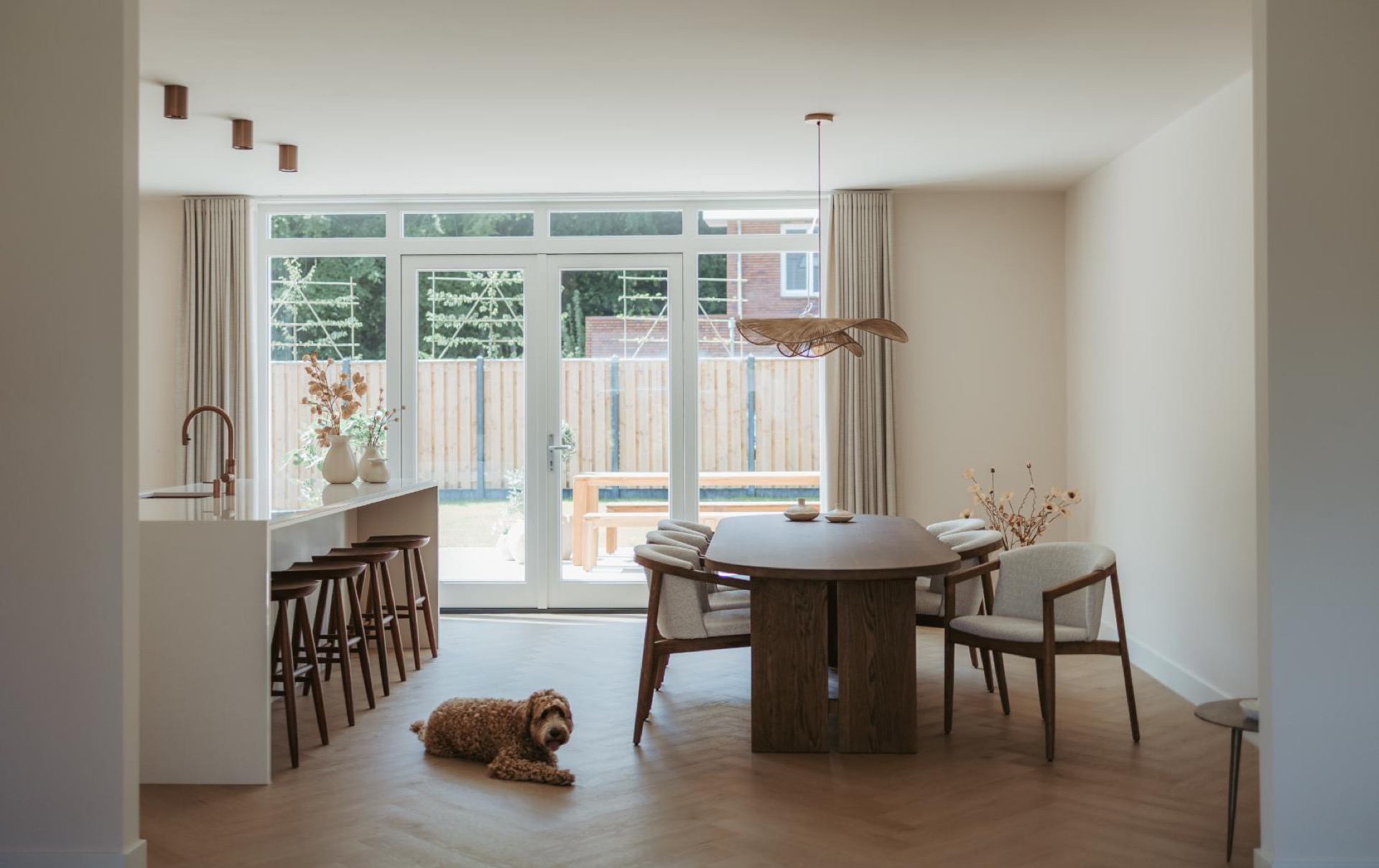
Soft beige surfaces set the tone, but it is the oval dining table that holds the room together. The solid oak top, finished in a walnut tone, sits in a dining area washed with daylight, so the grain reads clearly without feeling heavy. Around it, the chairs keep the palette quiet and let the shape of the table do the work. The result is a warm minimal interior that feels composed through materials rather than through decoration.
A table shaped by grain and proportion
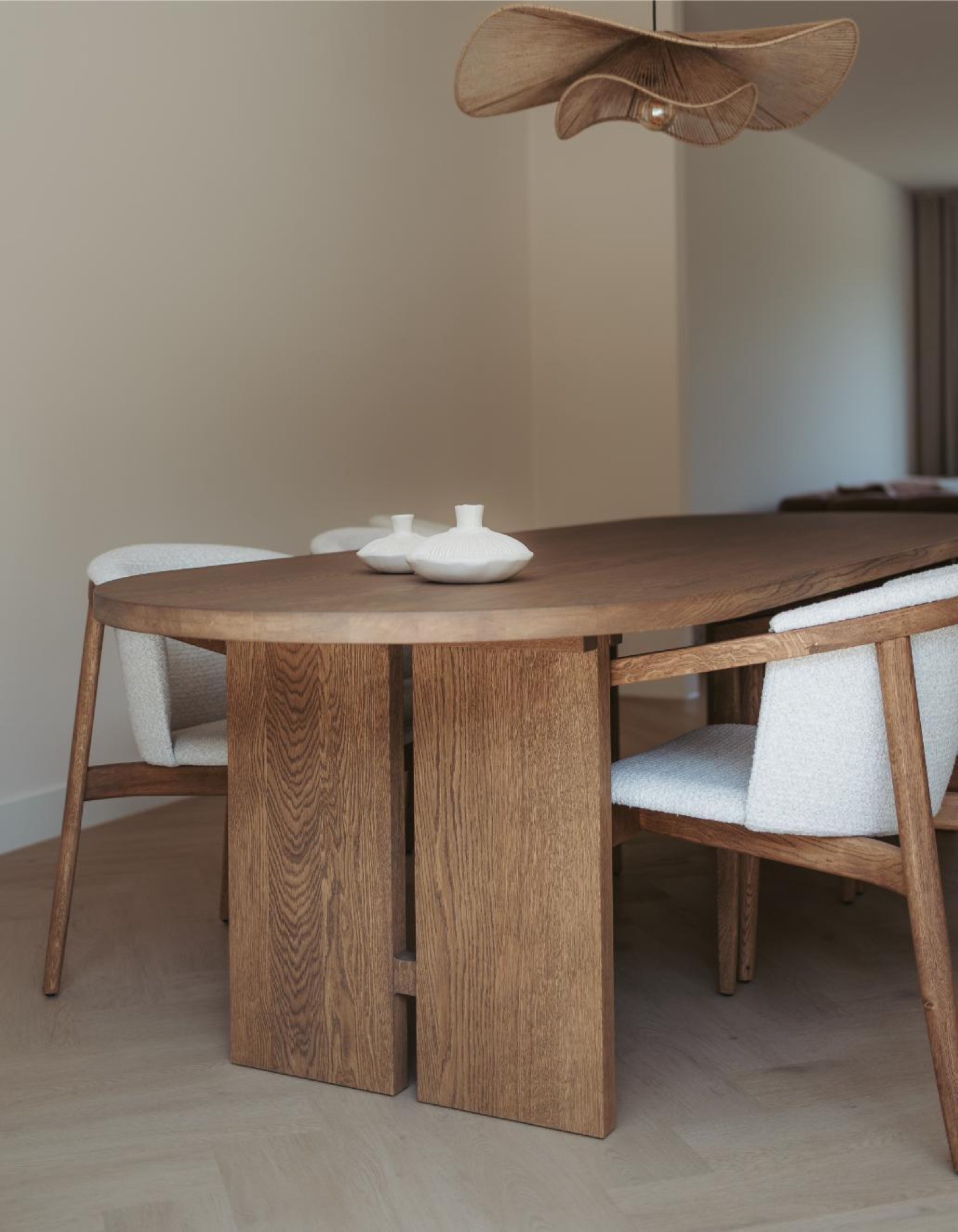
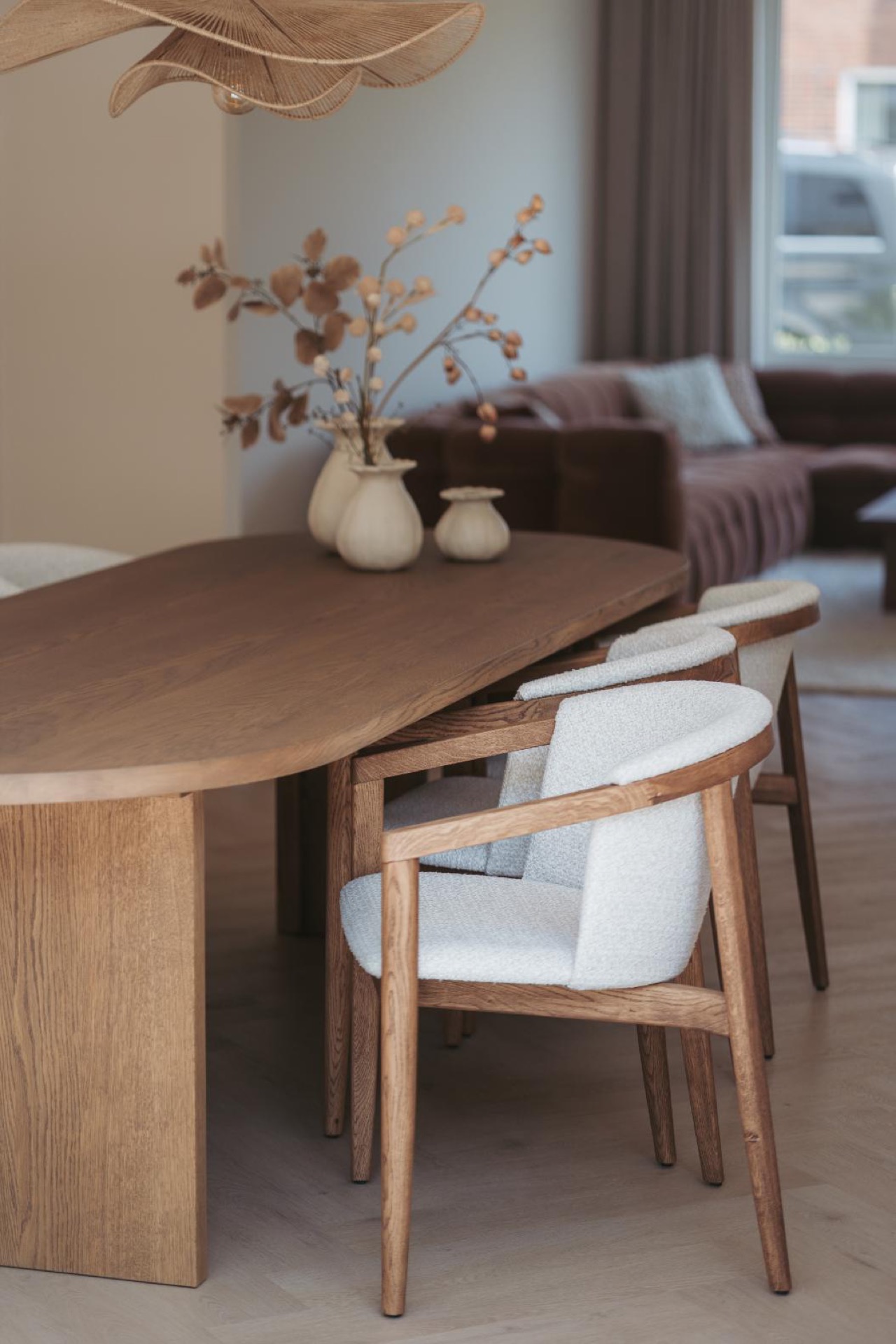
The oval dining table gives the space its direction. Its rounded outline softens the straight lines of the walls and the window openings, while the robust base adds visual weight at floor level. Close up, the wood grain dining table reveals a surface that is more tactile than polished; the oak keeps its natural movement, and the walnut-colored finish deepens the tone without hiding the material. Subtle references to craftsmanship appear in the base, where the construction is detailed rather than hidden.
Seen from across the room, the table works as a low, steady center. It is large enough to anchor the dining area, yet the oval form keeps the circulation around it open. That matters in a room where light, upholstery, and wood already carry much of the visual rhythm. The shape also helps the dining area connect to the adjacent living space, where the same neutral palette continues at a softer pace.
Beige upholstered chairs against a neutral backdrop
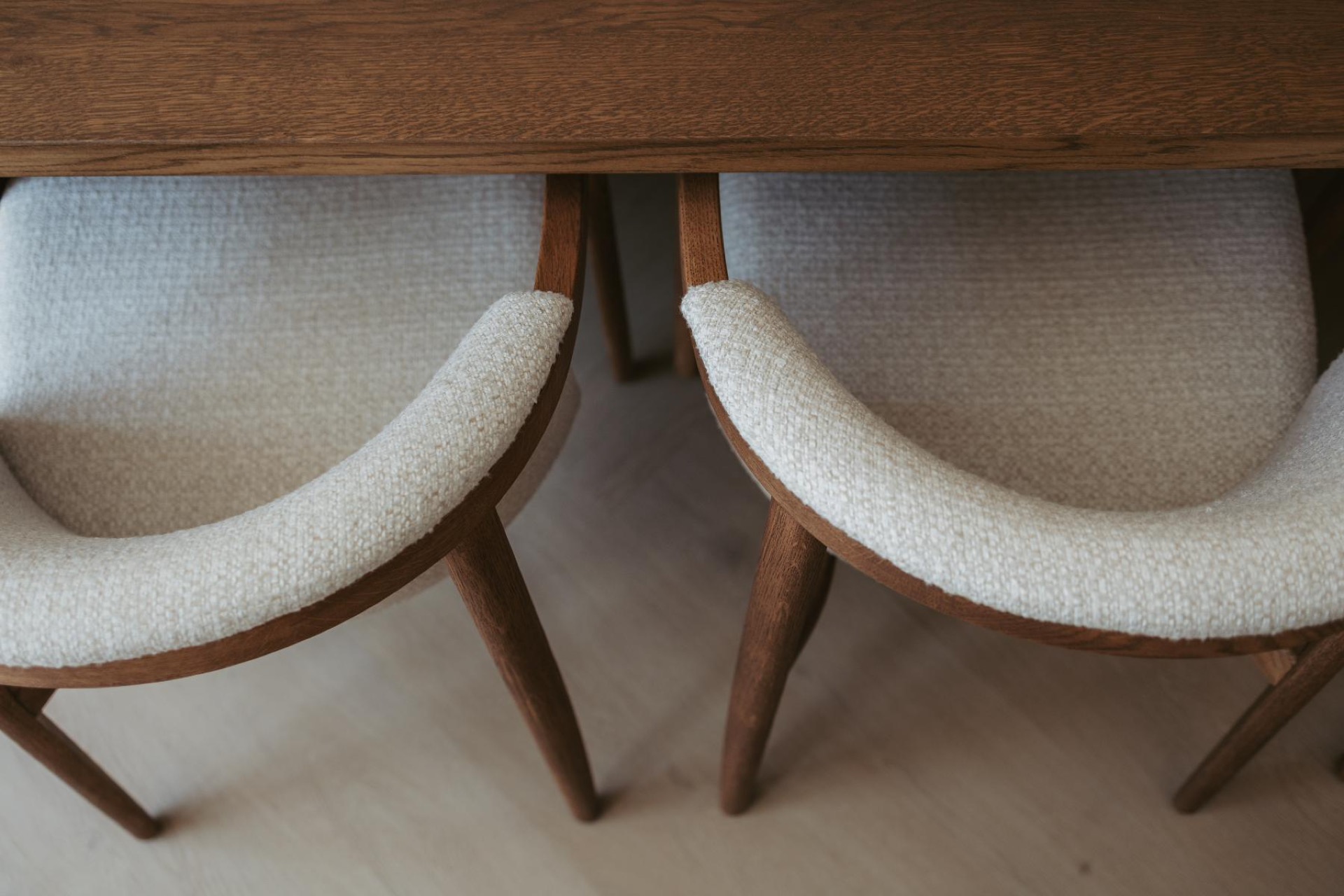
The beige upholstered chairs sit close to the table without adding noise to the room. Their fabric brings texture instead of contrast, and the frame color stays restrained so the eye returns to the table and the daylight beyond it. In the photos, the upholstery is shown both as part of the full setup and in tighter views, where the weave becomes visible. Those close-ups matter: they show how the chairs pick up the calm of the room through touch, not through ornament.
These chairs can be customized with different fabrics and frame colors, but here the choice stays understated. That decision keeps the seating in step with the rest of the warm minimal interior. The beige dining table setting never turns flat, because the fabric, wood, and floor each have their own texture. Seen together, they make the dining area feel quiet without losing structure.
Light, fabric, and the space around the table
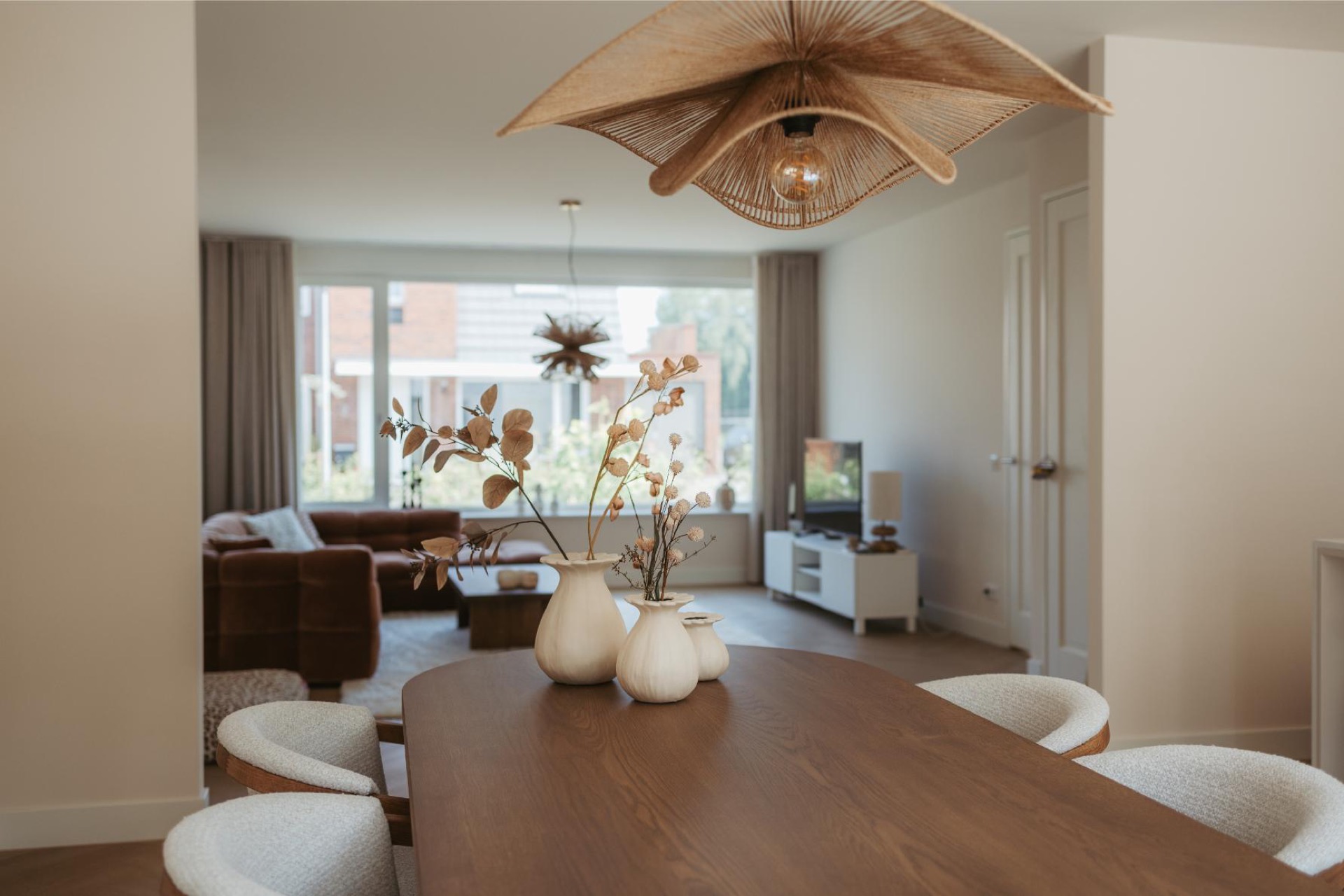
Daylight does much of the visual editing here. It touches the table surface, softens the upholstery, and leaves the wall finish reading as a pale backdrop rather than a blank field. The window treatments temper the brightness, so the room holds onto its calm tone throughout the day. Above the table, the organic pendant light adds a clear focal point. Its shape is less about display than about drawing attention back to the oval dining table below it.
The lamp’s leaf-like profile gives the ceiling plane a gentler edge. It sits comfortably with the curved tabletop and the rounded silhouettes of the chairs, but it also breaks the room’s horizontal lines. That small shift keeps the composition from becoming too predictable. In the wider view, the pendant, table, and chairs work together as one measured group inside the dining area with daylight.
From close-up detail to the full dining area
The project is shown at two speeds. Wide shots place the dining area inside the larger interior, where a nearby sitting zone shares the same muted tones. Close-ups then move in on the wood joints, the table edge, and the woven chair fabric. That change in scale gives the room depth. It also makes the customization options more tangible, because the pieces are clearly designed to be adjusted in size, textile, and frame finish.
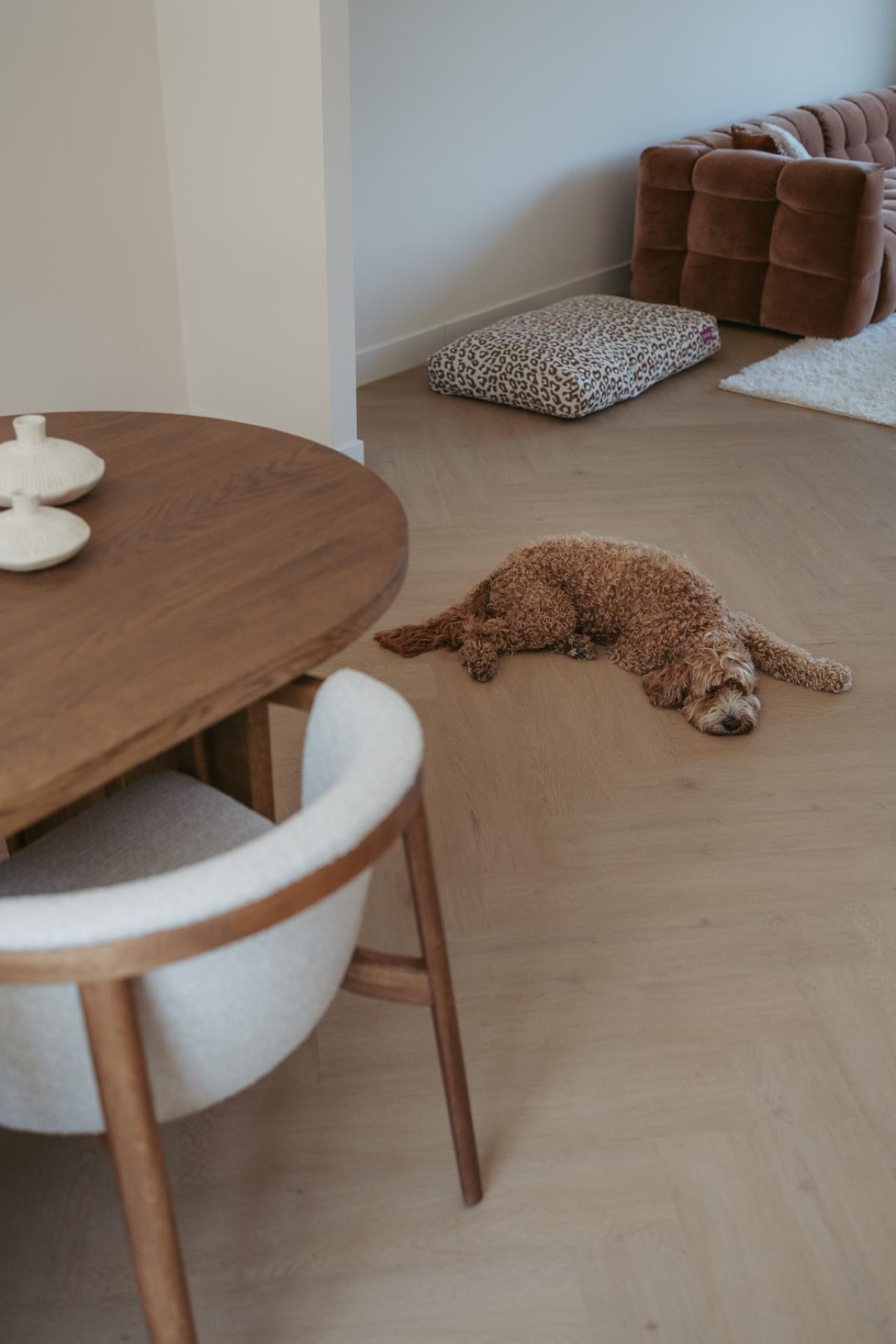
The table and chairs were developed with the room’s atmosphere in mind, but the setting remains practical and lived-in. A dog appears in the space and quickly finds a favorite spot, which says more about the room than any styled caption could. The furniture is not arranged to look untouched. It is positioned as a place where meals, pauses, and daily movement can happen around a stable oval shape.
Pieces that can be adapted without losing their character
Both the table and the chairs are presented as pieces that can be adapted to different dimensions and finishes. The table is made from solid oak, and the material carries through clearly in the grain, the base, and the warm walnut tone. The chairs can be specified with different fabrics, including designer textiles, and the frame color can be changed as well. Even so, the project shown here stays measured and quiet, proving that customization does not need to lead to visual excess.
That restraint is what gives the dining area its calm. Nothing competes for attention. The oval dining table remains the anchor, the beige upholstered chairs keep the perimeter soft, and the organic pendant light ties the composition to the ceiling. Together they form a room that reads as deliberate in proportion and tactile in detail, with daylight moving over wood, textile, and floor throughout the day.
How the dining area connects to the rest of the interior
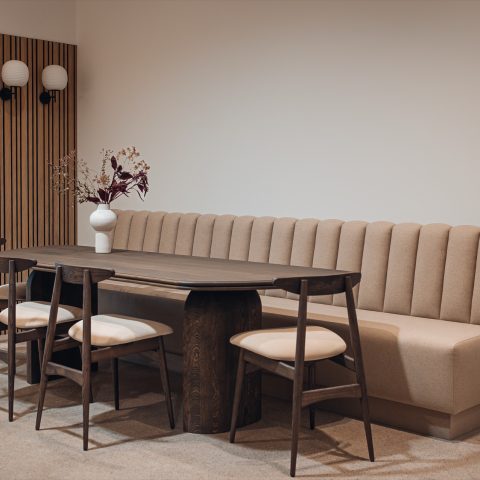
The wider interior continues the same neutral vocabulary, so the dining area does not feel isolated from the living space nearby. A brown sofa appears in the background, linking the two zones through tone rather than through matchy repetition. This is where the project becomes interesting: the table is not treated as a standalone object, but as part of a sequence of rooms that share light, floor material, and a steady range of beige, wood, and soft brown.
That sequence is easy to read in the photographs. One image holds the full arrangement with the oval dining table, another isolates the chair upholstery, and a third catches the table edge as it turns toward the lounge. The room never relies on one gesture. Instead, it uses shape, texture, and daylight to keep the eye moving from one detail to the next, while the central table keeps the whole composition grounded.
A dining setting built around material rather than display
What stays with you is the way the materials behave in the light. The oak surface darkens slightly toward the edges, the fabric absorbs brightness, and the pendant casts a small, controlled presence above the table. None of it is showy. The room works because the pieces are distinct enough to read individually and quiet enough to sit together without friction. The oval dining table does most of the organizing, but it is the texture of the chairs and the daylight that give the space its pace.
Shown in the showroom as well, the table and chairs are presented as pieces that can be assembled to suit different rooms and proportions. In this project, though, the final composition is what matters: an oval table in warm wood, beige seating with visible weave, and a dining area with daylight that connects easily to the rest of the interior. It is a restrained arrangement, but one with enough material detail to keep every view engaging.
Want to see more of Lijn M? View the page of Lijn M for even more great projects and company information.


NEW 2026 Jubileum Edition The Best Interior Designers Benelux
Order Now €125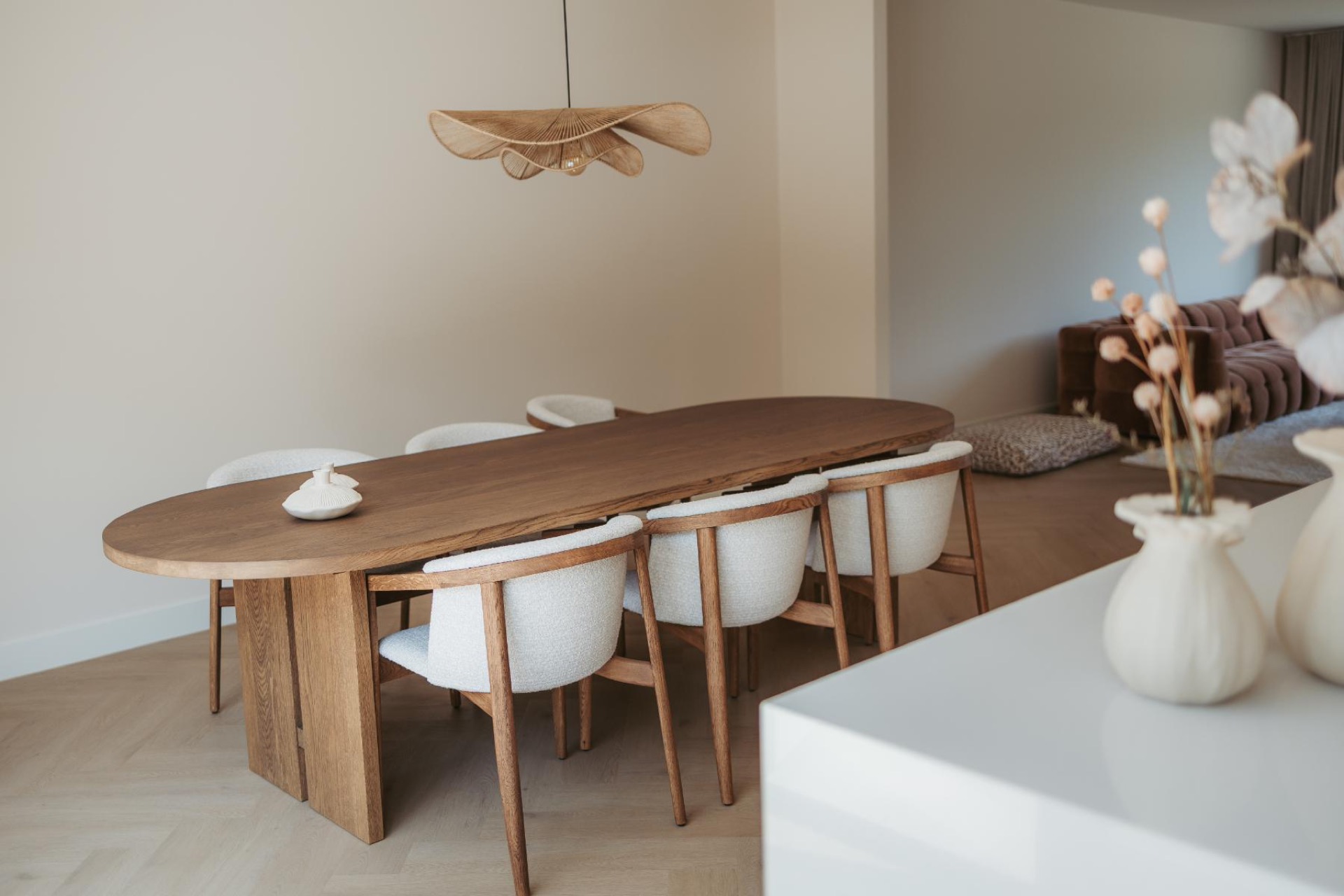
NEW 2026 Jubileum Edition The Best Interior Designers Benelux
Order Now €125