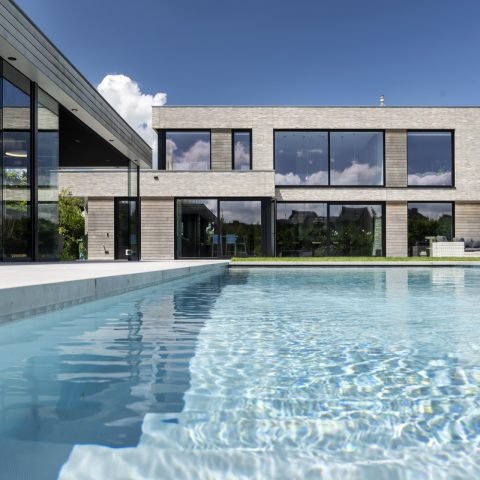









Overflow liner pool in a modern garden
The water sits exactly at the rim, so the first thing you notice is the line itself. In this overflow pool liner, the surface reads as a clean sheet against the dark edge, with the terrace meeting the basin in straight, measured lines. The setting around it is restrained: gray stone paving, large panes of glass, and a rietgedekte roofline in the background that cuts a softer profile across the scene. Nothing feels overdrawn. The pool takes the lead simply by holding the water so close to the edge.
Water at the edge, not below it
That rim-level waterline changes the whole impression of the pool. Instead of a visible drop to the water, the eye follows the surface right to the border, where the overflow edge detail keeps the finish tight and clear. The effect is quiet but direct. In photographs of the project, the blue water reflects the sky while the surrounding stone stays compact and flat, letting the basin read almost like a drawn rectangle set into the terrace. It is the kind of detail that gives an overflow pool its calm focus without asking for decoration.
The liner finish supports that reading. The project text describes a durable, low-maintenance pool, and the visible surfaces back that up: smooth water, a consistent edge, and a lining that disappears into the composition instead of competing with it. The dark border beneath the waterline sharpens the profile and makes the pool look more exact from every angle. In a setting with so much glass and stone, that precision matters. The basin does not need extra gestures when the water already meets the rim so evenly.
Gray stone paving keeps the terrace grounded
The terrace around the pool is laid in gray stone slabs with straight joints, which keeps the whole outdoor zone grounded and legible. The paving does not distract from the water; it frames it. Along the long side of the pool, the stone meets the overflow pool liner in a narrow transition, and that narrow strip is enough to make the edge read clearly. A few steps away, loungers and parasols sit on the same pale surface, giving the terrace a lived-in order without crowding the view. The materials stay close to a limited palette: stone, glass, water, and the muted roof beyond.
This restraint helps the pool feel integrated with the rest of the garden. The image set shows green planting and trees along the outer edges, but the strongest relationship is between the basin and the terrace. The gray stone terrace sets up a flat plane beside the water, so the overflow pool appears almost embedded in the ground. In the late light, the reflections shift across the waterline and the stone remains matte, which makes the edge detail even easier to read. The result is not dramatic in a loud way; it is precise, and that precision does most of the work.
Glass surfaces open the pool to the house
Large glazing runs beside the pool zone and keeps the transition between inside and outside direct. Through those glass surfaces, the white and dark architectural volumes sit in view, and the pool remains visible as part of the same composition rather than a separate object in the garden. The glazing also amplifies the long horizontal lines: terrace, waterline, and roof edge all run parallel for stretches, which makes the whole scene feel stretched and open. In that setting, the liner pool becomes more than a basin in the yard; it works as a measured line within the architecture.
The contrast with the rietgedekte roof is worth noticing. The roof surface softens the skyline, while the white walls and glass keep the rest of the scene crisp. That contrast is visual rather than decorative. It gives the pool a place to sit between heavier and lighter elements, between textured roofing and smooth glazing. The water mirrors those shifts without losing its own clarity. You can read the edge, the terrace, and the reflections all at once, and that layered view is part of what makes the project memorable.
A pool that reads cleanly from every angle
From the garden side, the basin appears as a strong horizontal cut against the paving. From closer up, the waterline at rim level becomes the main event. A detail image shows the water running against a darker border strip, with gray tiles and sharp joints beside it. Another view places loungers and parasols just beyond the pool, so the eye moves from the edge to the seating area in one sweep. Those shifts in viewpoint matter. They show how the overflow edge detail gives the pool a clear outline whether you look from the lawn, the terrace, or the glass side of the house.
The finish also suggests the practical side of the project without turning it into a technical story. The source material refers to a leak-free execution and a result that is meant to hold up over many seasons. In the photographs, that care comes through in the straight lines, the even water level, and the way the liner sits quietly within the structure. The pool does not announce its construction. It reveals it only through the accuracy of the joints and the consistent line where water meets the rim.
Leafy borders and open sightlines
At the outer edge of the garden, trees and shrubs soften the geometry of the pool area. They sit beyond the terrace rather than around the basin, which keeps the swimming zone open and lets the water remain the visual center. The planting is visible, but it does not close in on the architecture. Instead, it frames the long view from the glazing toward the pool and across to the lawn. That openness lets the reflective surface stand out, especially where the blue water meets the gray paving in a strong, simple contrast.
The project’s calm comes from these measured relationships. The pool is not packed with features, and the garden does not fight for attention. Glass, stone, and water each hold their own plane. Even the parasols and loungers stay low against the terrace, leaving the rim-level surface easy to read. It is this controlled arrangement that gives the overflow pool liner its strength. The design relies on a clear waterline, a disciplined edge, and materials that stay close to one another in tone. Nothing is forced, and the pool benefits from that restraint.
Why the finish stays with you
The strongest impression is not size or spectacle. It is the way the edge holds the water. The overflow pool keeps the surface aligned with the rim, and the liner finish lets that line stay crisp across the whole rectangle. Around it, gray stone paving, glazing, and the rietgedekte roof form a setting with enough contrast to make the water stand out, but not so much that it loses its quiet. As a project, it shows how an overflow pool liner can shape a garden through line, reflection, and a finish that stays visually controlled from the first glance to the last.
Want to see more of Zwedak? View the page of Zwedak for even more great projects and company information.




NEW 2026 Jubileum Edition The Best Interior Designers Benelux
Order Now €125


NEW 2026 Jubileum Edition The Best Interior Designers Benelux
Order Now €125