




Quarter-turn staircase with an elegant balustrade
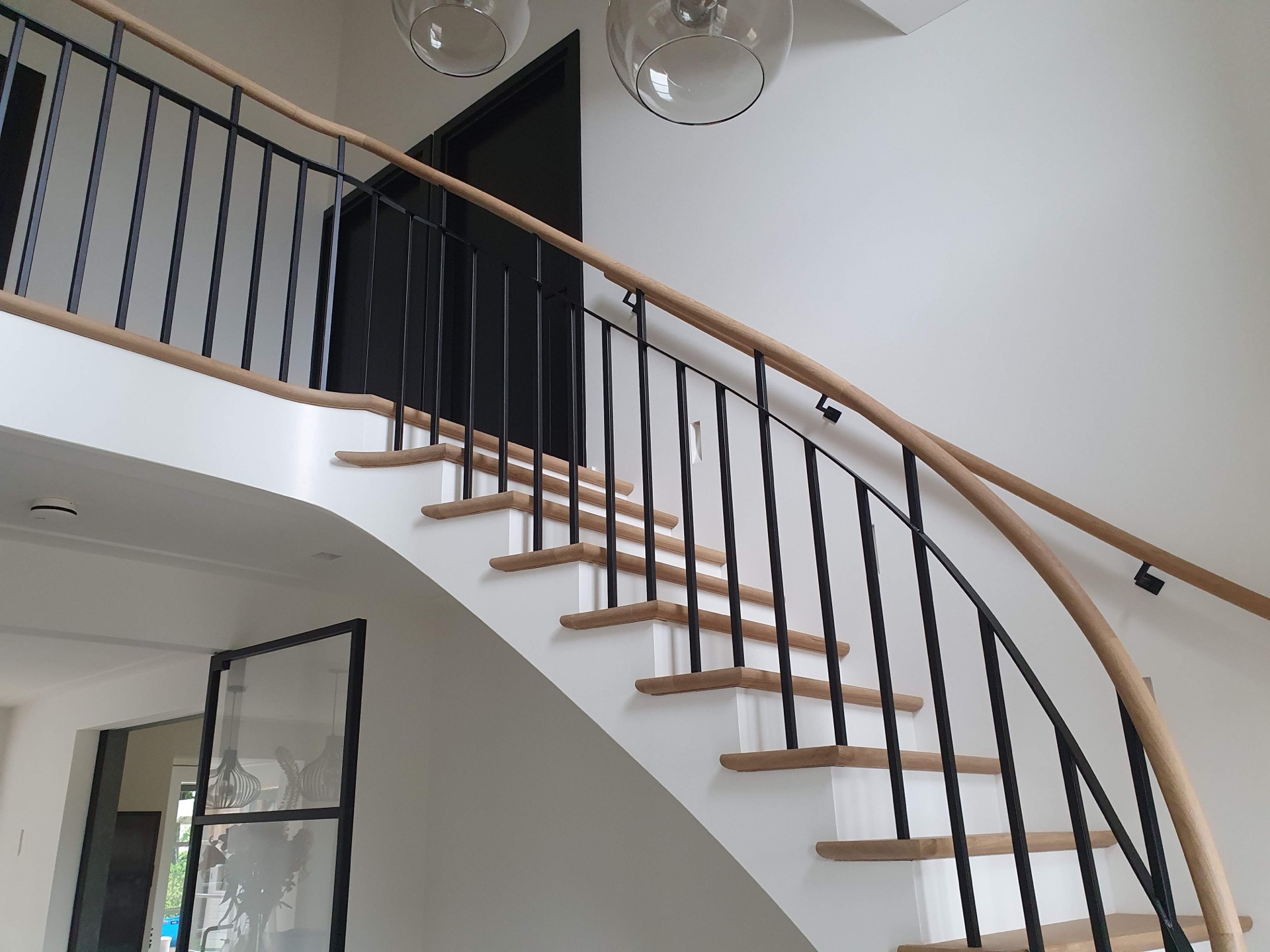
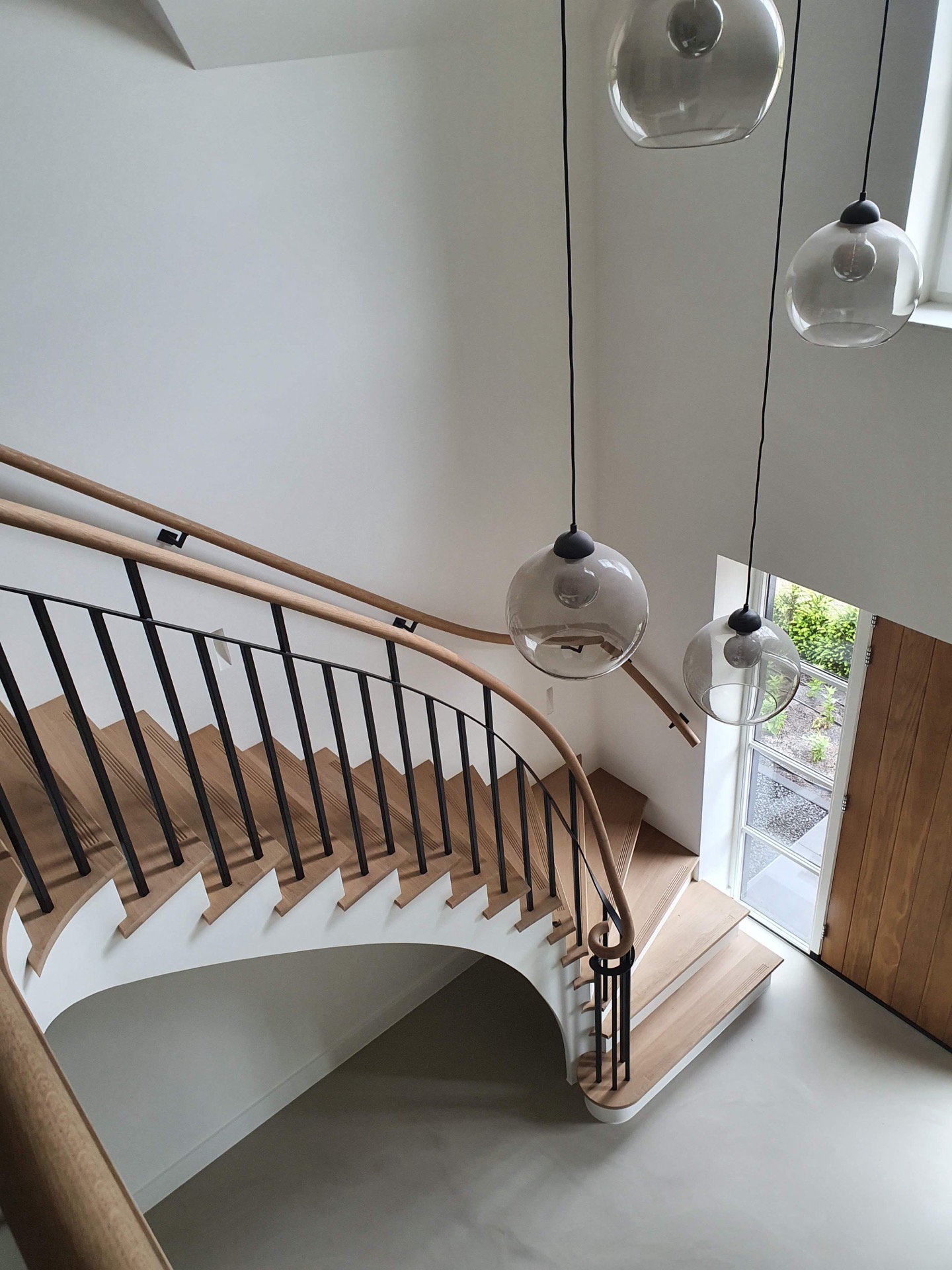
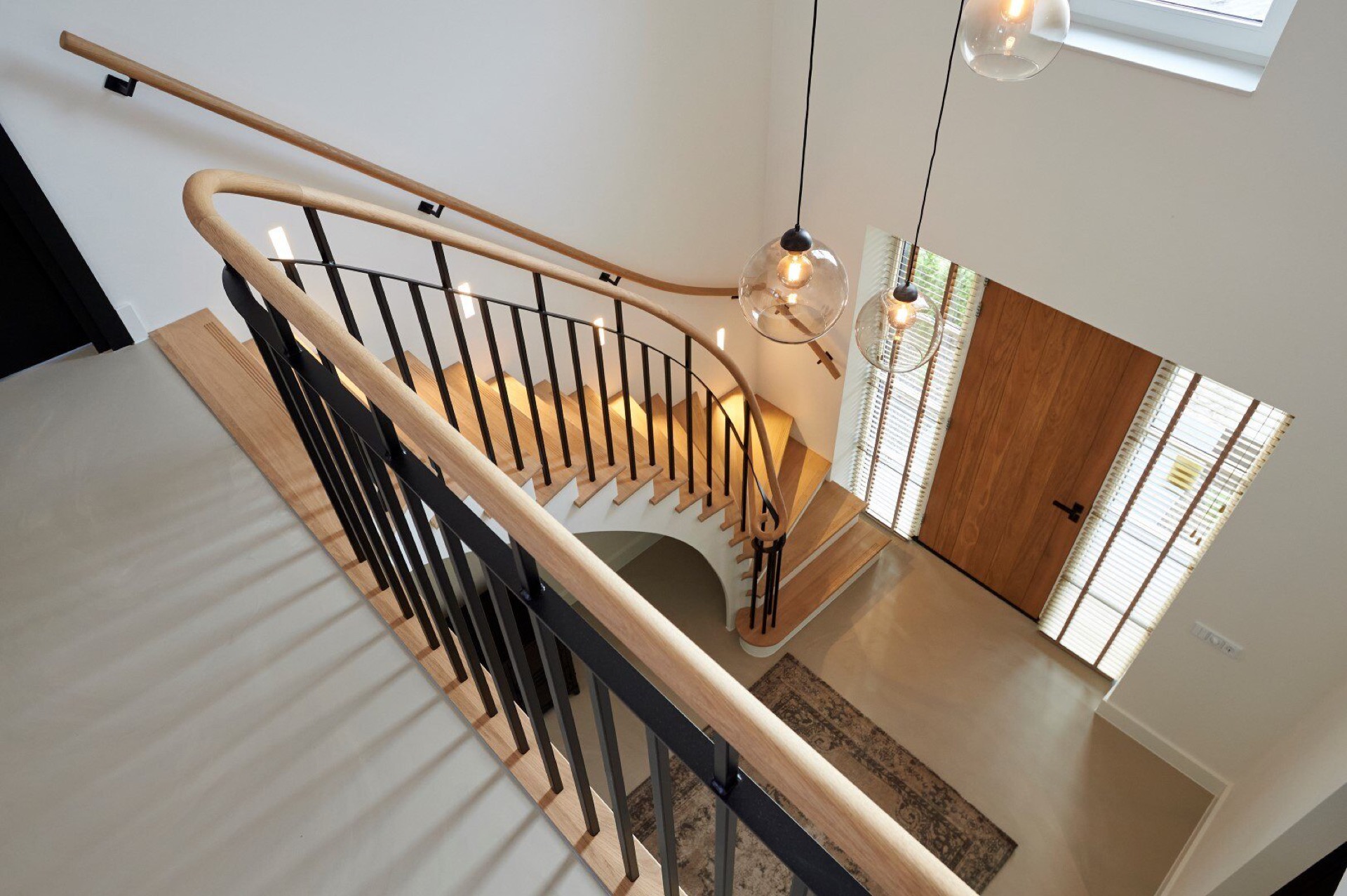
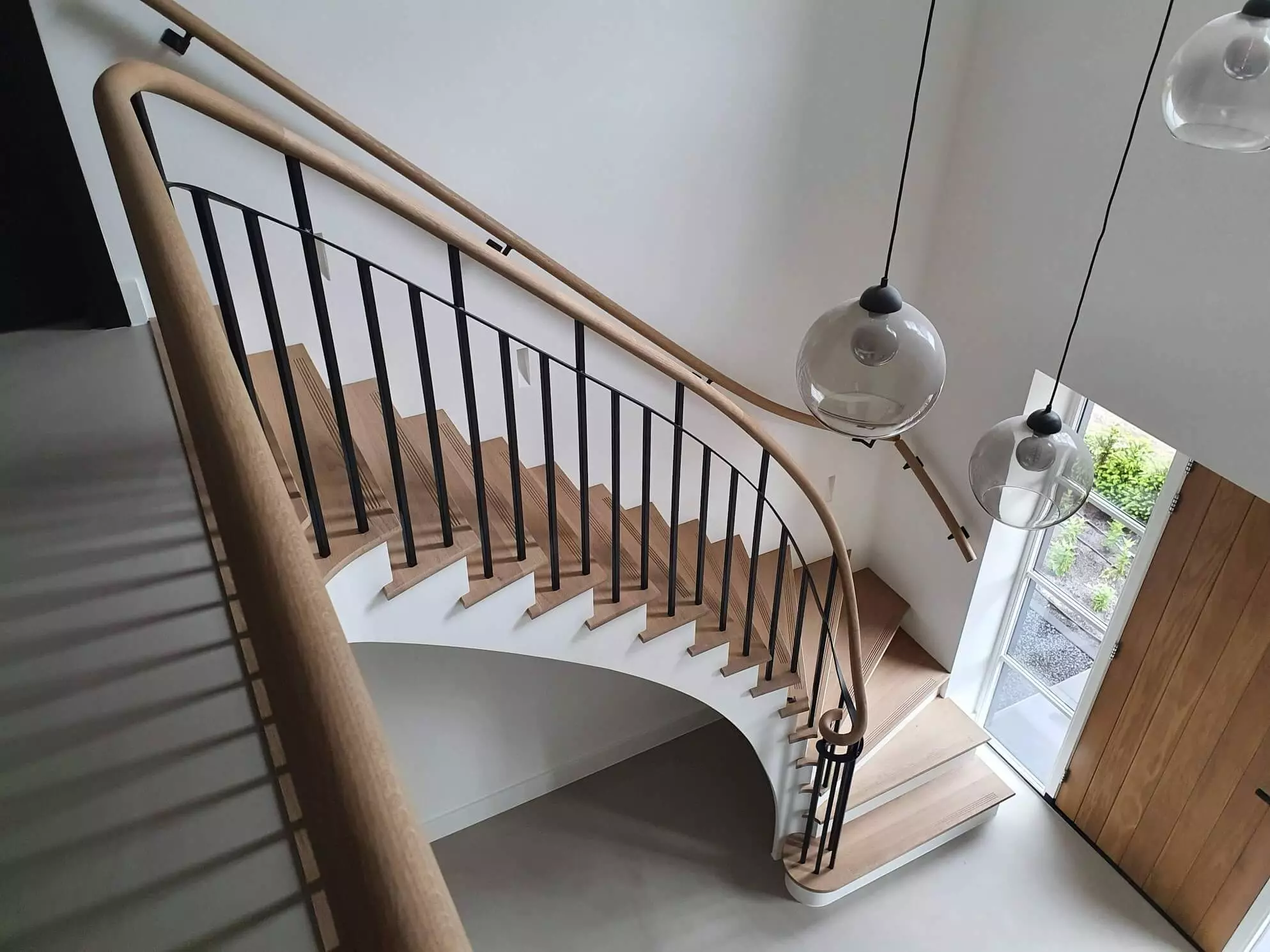
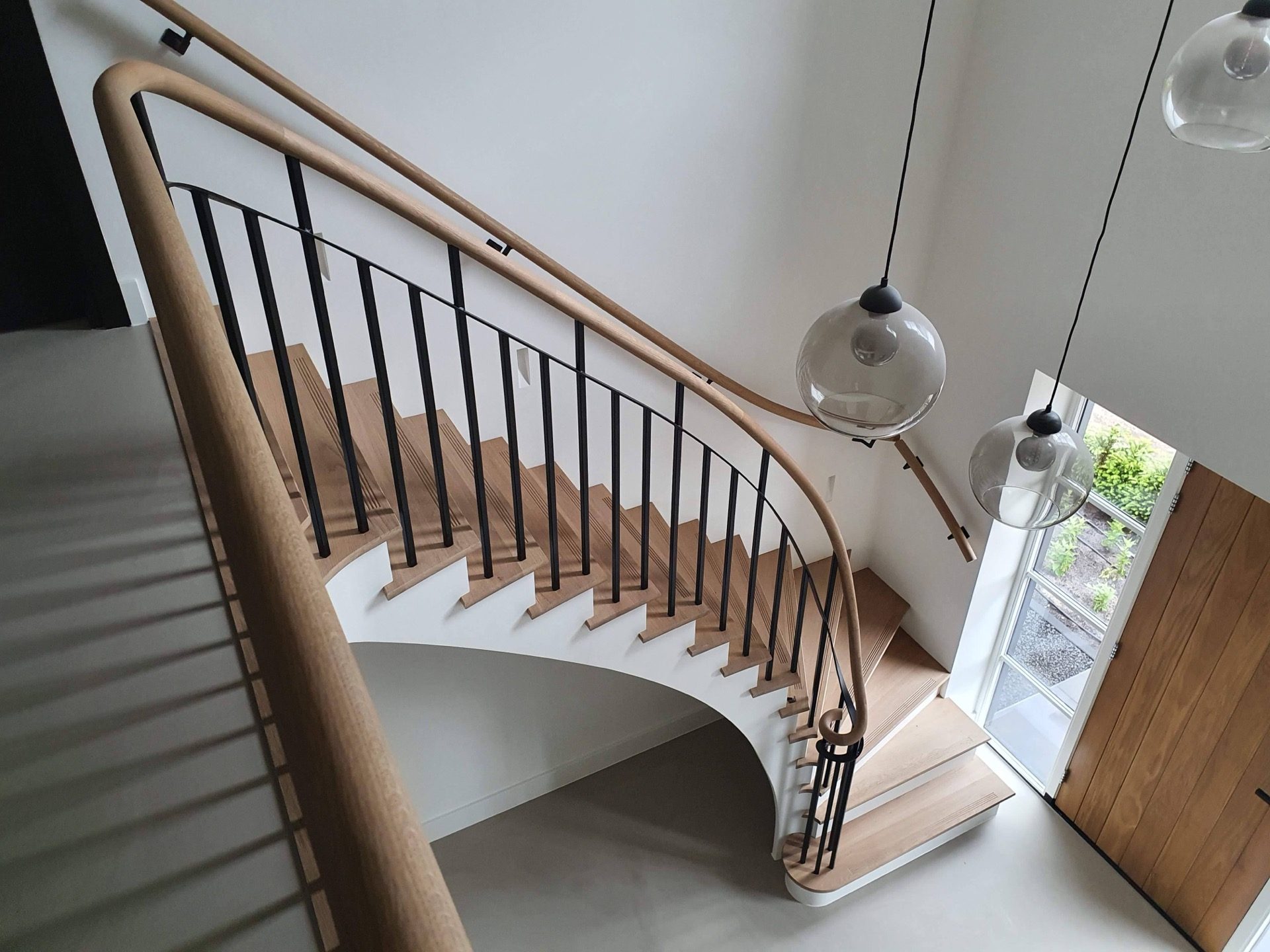
A white stair run turns once, and that bend is where the whole composition comes into focus. The quarter-turn staircase with railing gathers the movement into a clear corner, then lets the handrail continue in a soft curve. Black vertical balusters sit between the oak handrail and the stairs, so the line reads almost like a drawn frame. The result is open, but never loose; every change in direction is visible in the wood and metal.
quarter-turn staircase with railing as the architectural starting point
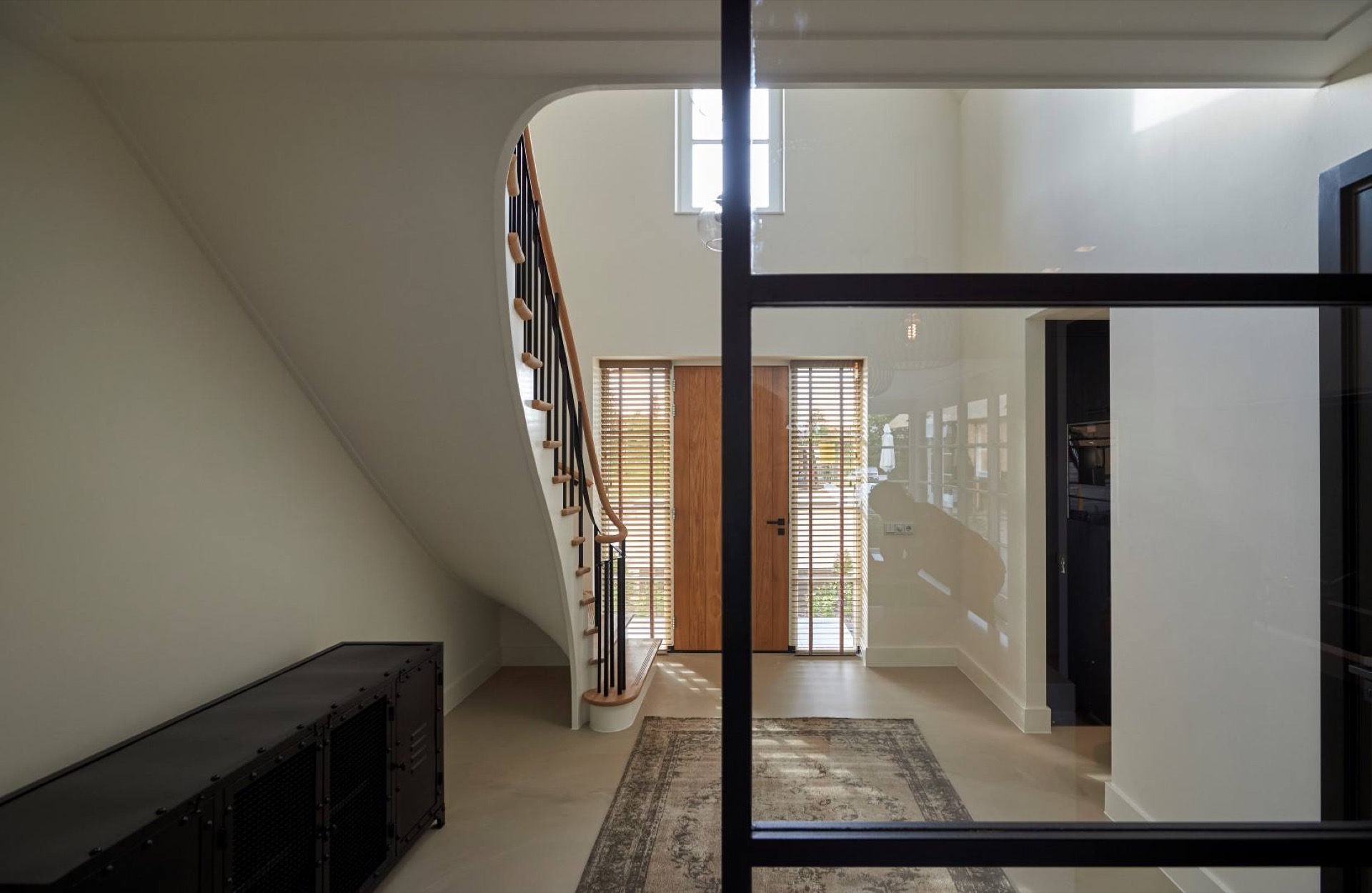
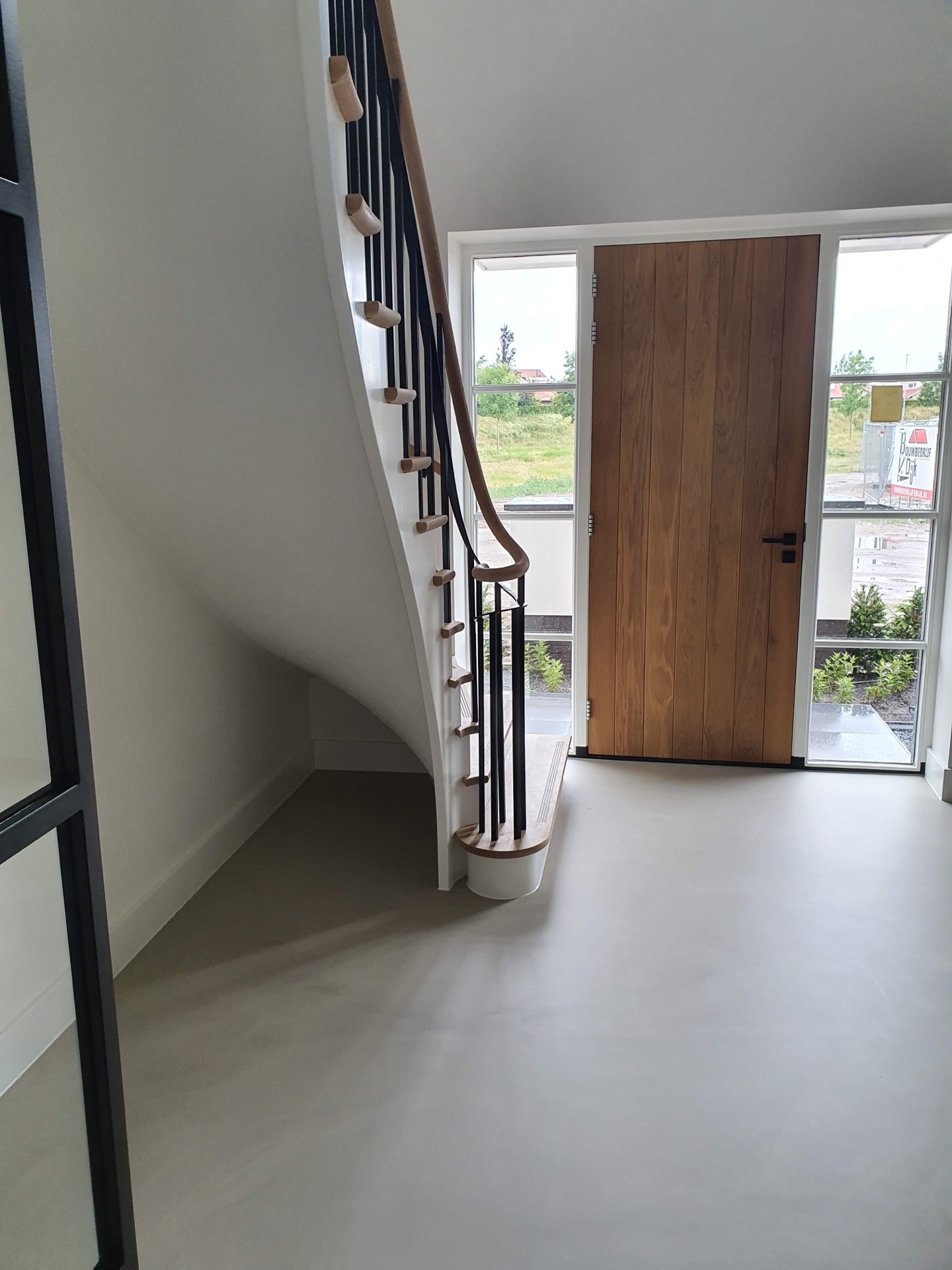
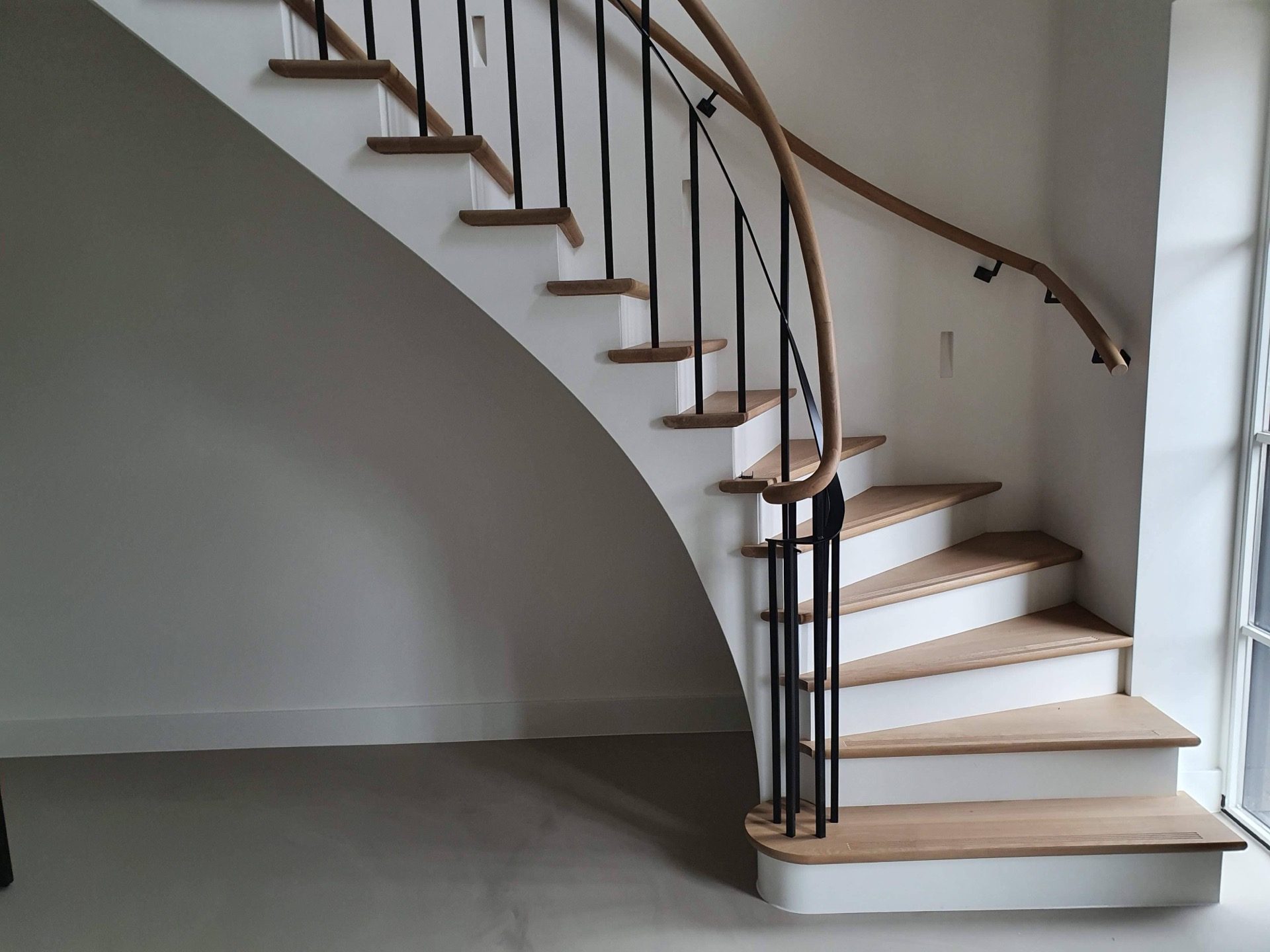
The quarter-turn is not hidden here. It marks the transition between the lower and upper parts of the stair and gives the route a deliberate pause before it continues upward. White risers and light wall surfaces keep the body of the staircase readable, while the darker balustrade traces the edge. From the side, the geometry is easy to follow: a compact turn, then a straight continuation, with the railing carrying the eye through both movements.
That open staircase railing does more than protect the stair edge. It breaks up the mass of the white surfaces and lets daylight pass through the balusters. The black coating on the metal strips keeps the line crisp, while the oak handrail softens the visual contrast. Seen in profile, the stair reads as a sequence of materials rather than a single block.
Oak above, rubberwood below
The material palette is straightforward and precise. The stair stringers are made of rubberwood, giving the side structure a stable wooden base. The treads and handrails are oak, finished with oil so the wood color stays close to its natural tone. That treatment leaves the grain visible and avoids a glossy surface. On the treads, the wood catches the light in narrow bands, especially where the step edges meet the white background.
The contrast between the oiled oak stair treads and the black metal balusters is what gives the stair its tension. The oak keeps the touch points warm and legible. The black elements pull the balustrade into a sharper outline. In the images, that contrast is reinforced by the white risers and the pale walls around the stair, which make the darker railing stand out without making it heavy.
Black balusters, measured and visible
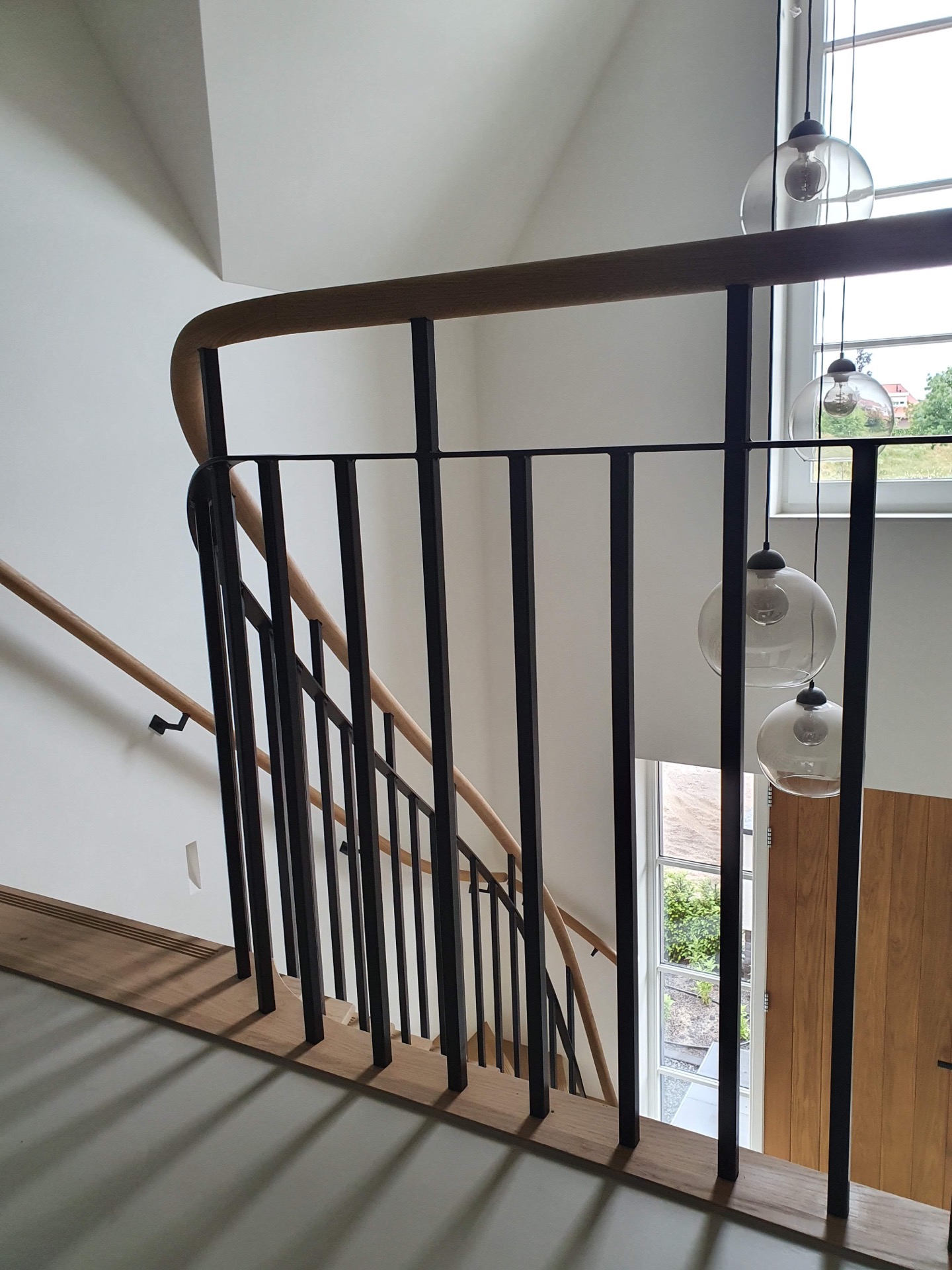
The balusters are built from metal tubes measuring 20 x 20 mm. They are slim enough to keep the balustrade open, but still square and clear in the way they read against the white stair body. Between the handrail and the balusters runs a metal strip measuring 40 x 10 mm. That connecting line is also coated black, so the railing keeps one visual language from top to bottom. The detail matters: it stops the balustrade from looking decorative for its own sake and gives it a steady structure.
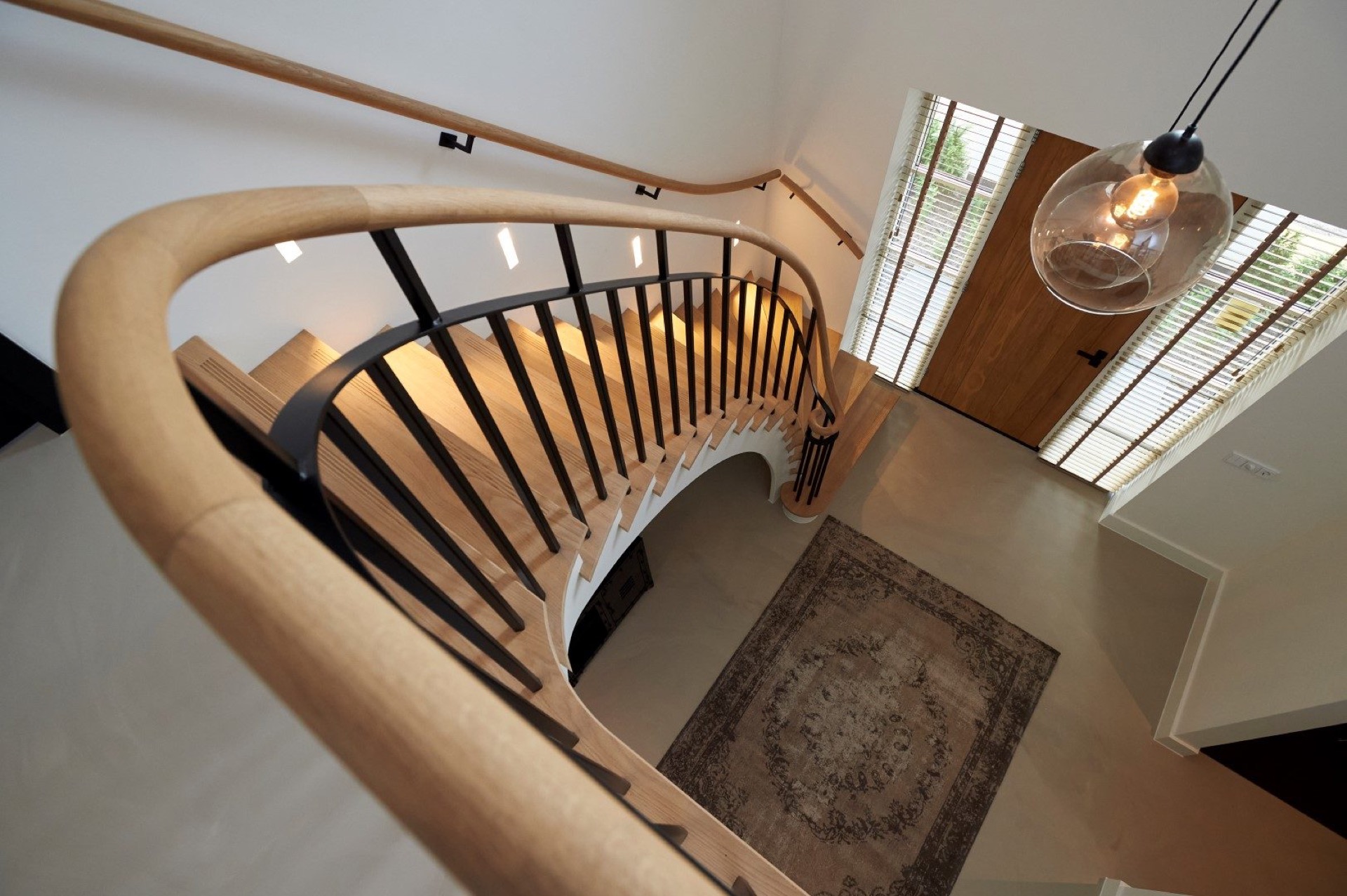
Up close, the curved wooden handrail with black spindles is the strongest image on the page. The handrail bends with the turn, then continues in one uninterrupted line. The eye follows that curve before it notices the vertical rhythm of the balusters. Because the metal is dark and the wood is pale, the railing stays readable from several angles, even when the stair is seen past a wall opening or along a long side view. That makes the quarter-turn staircase with railing part of the architectural character rather than a loose finish.
Detailing that keeps the stair light
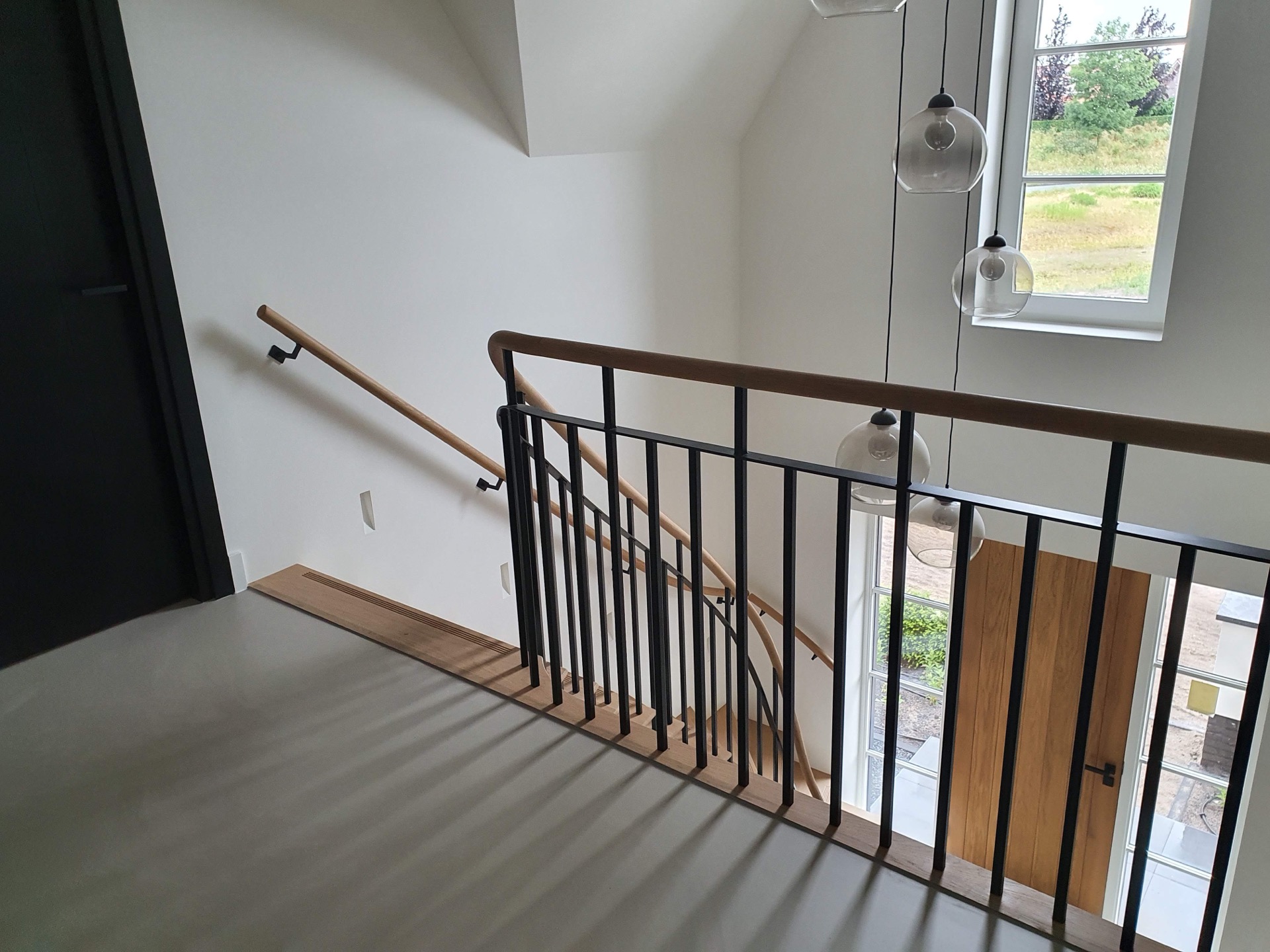
The balustrade never closes the staircase off. Its open spacing leaves room around the structure, and that lightness is reinforced by the white treads and side planes. In the front view, the stair feels almost graphic: black uprights, pale steps, oak edges. In the side view, the same elements shift slightly, revealing the way the turn is handled and how the railing follows the route without interruption. The whole composition depends on that measured repetition of line and gap.
The handrail itself does a lot of the visual work. It is rounded enough to feel continuous in the bend, but still firm in outline. That shape softens the transition at the quarter-turn and gives the railing a smoother reading than a purely angular detail would. The oil finish on the oak keeps the surface close to the natural timber color, so the wood remains visible even where the light is low or the shadows from the balusters fall across it.
What the camera picks up
The photographs show the stair from several useful angles: an overview of the quarter-turn staircase with railing, a frontal view of the balustrade, a side view along the white stair walls, and close-ups of the handrail and spindles. Those views make the construction easy to read. The eye can move from the broad geometry to the individual parts: the oak treads, the black metal strip, the square balusters, and the curved handrail that ties them together.
Even in the tighter shots, the stair remains tied to the surrounding interior. Daylight enters from the side and catches the wood differently from the black coating, which stays matte and dark. That difference keeps the railing from blending into the background. It also explains why the quarter-turn staircase with railing works so well in images: the turn gives it a clear silhouette, and the material contrast gives that silhouette depth.
A clear profile from every angle
Seen as a whole, the stair is built on restraint and exact placement. Rubberwood stair stringers form the hidden support, oak defines the parts you touch, and black-coated metal gives the balustrade its outline. Nothing here is overdrawn. The materials are left visible, the turn is left readable, and the open staircase railing keeps air between the components. That is what makes the stair memorable: not ornament, but the way each part occupies its own line in the composition.
The quarter-turn staircase with railing also shows how a small change in direction can shape the experience of a room. The bend slows the movement for a moment, then releases it again. Around that turn, the curved wooden handrail with black spindles becomes the most expressive element, tracing the route with a measured sweep. It is a simple structure, but every detail has a clear role in how it is seen.
Photography: JV That makes the quarter-turn staircase with railing part of the architectural character rather than a loose finish.
Want to see more of Veijer Trappen BV? View the page of Veijer Trappen BV for even more great projects and company information.


.png)