





Renovatie van woning met rieten dak en traditionele details
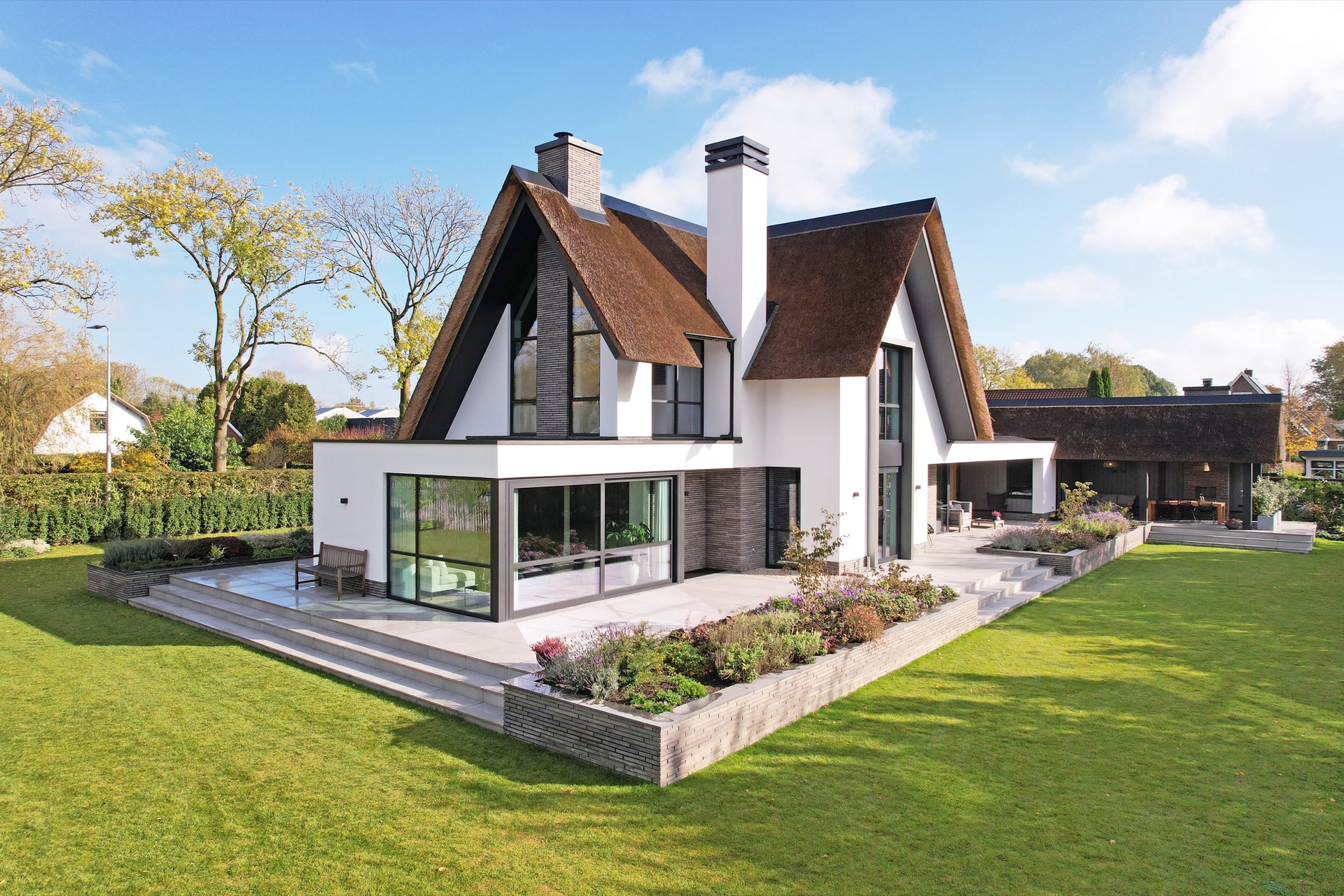
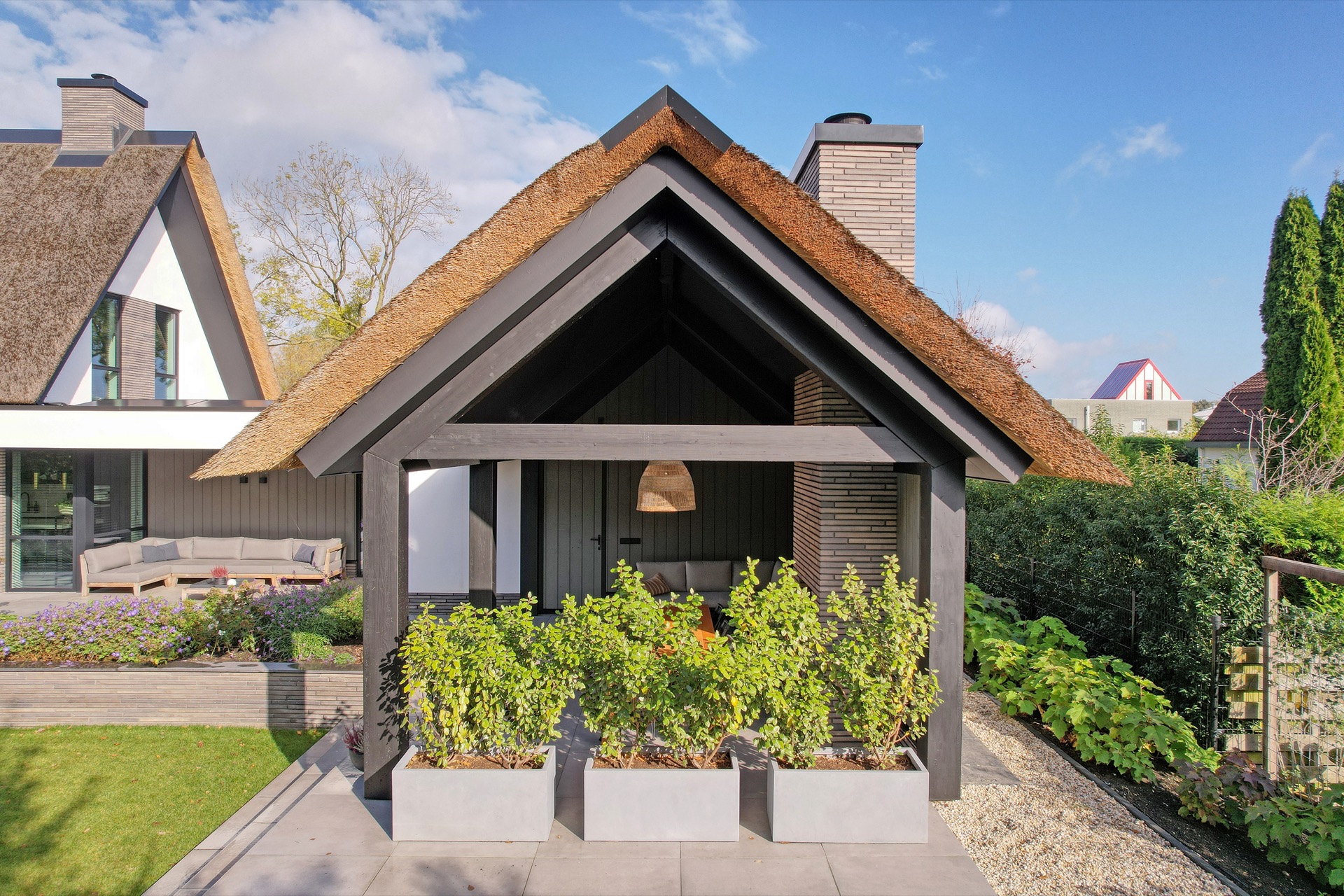
The broad thatched roof arches over the home, its dense straw layers resting firmly atop the structure. Aluminum caps trace the ridges, forming a slender line that guards the vulnerable edges where weather has the greatest impact. This integration enhances the roof’s resilience without obscuring the original texture of the thatch, keeping the craftsmanship visible and intact.
thatched roof as the architectural starting point
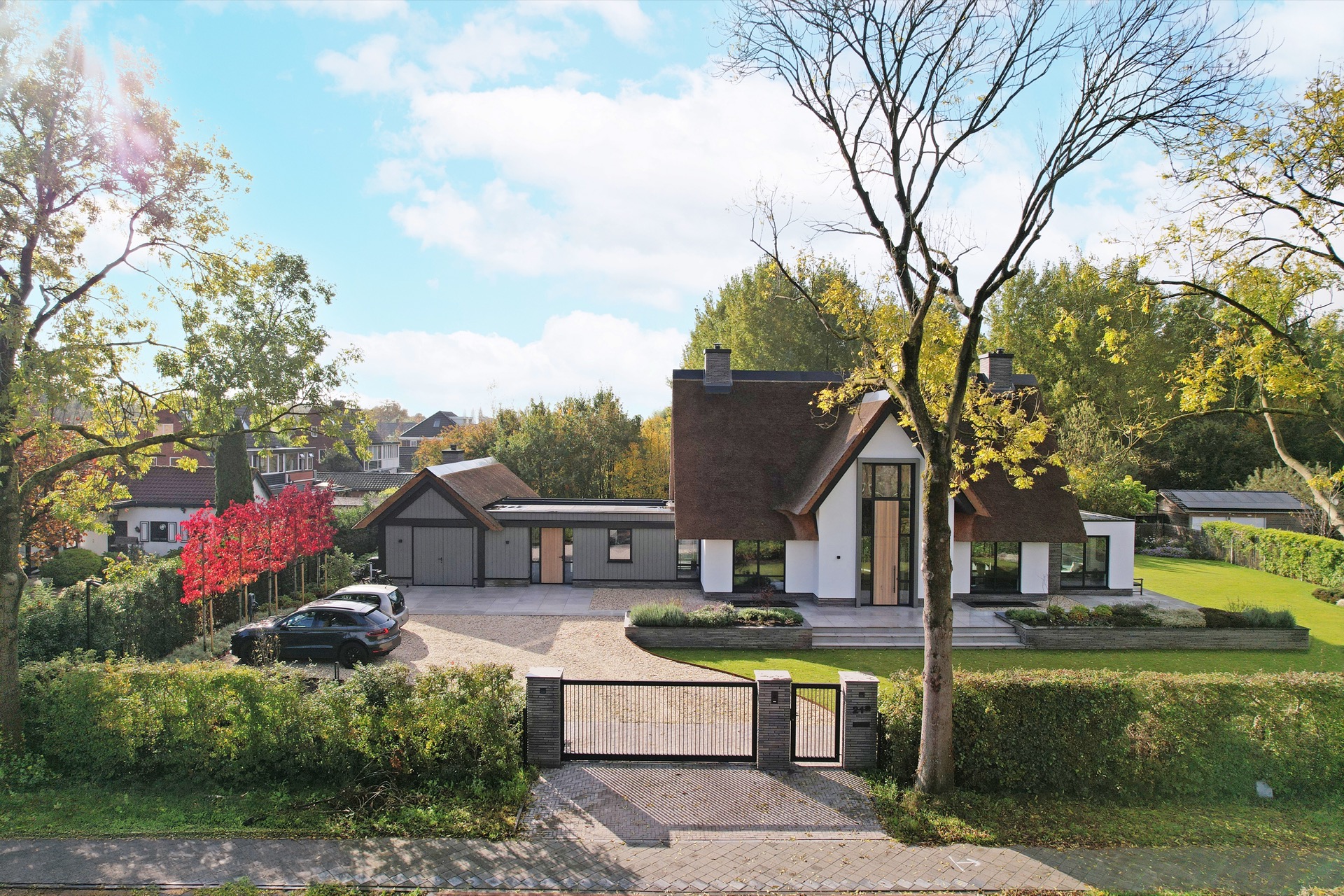
White plaster sections dominate the exterior walls, punctuated by a band of horizontally laid Petersen bricks. These bricks bear subtle variations in warm, earthy hues, each framed by pronounced masonry cornerstones that anchor their placement and emphasize structural transitions. Complementing this, vertical half-timber cladding envelops the garage and utility areas, introducing a tactile wood grain that shifts the facade’s rhythm and signals the functional zones.
Entry Details Embrace Textural Contrast
The front entrance presents vertical oak planks aligned seamlessly, their grain pulling the eye upward alongside aluminum frames that echo the roof’s metallic ridge accents. This measured clash of materials marks the threshold with modest warmth and geometric clarity, guiding visitors into the home.
Windows Shape Interior Ambience
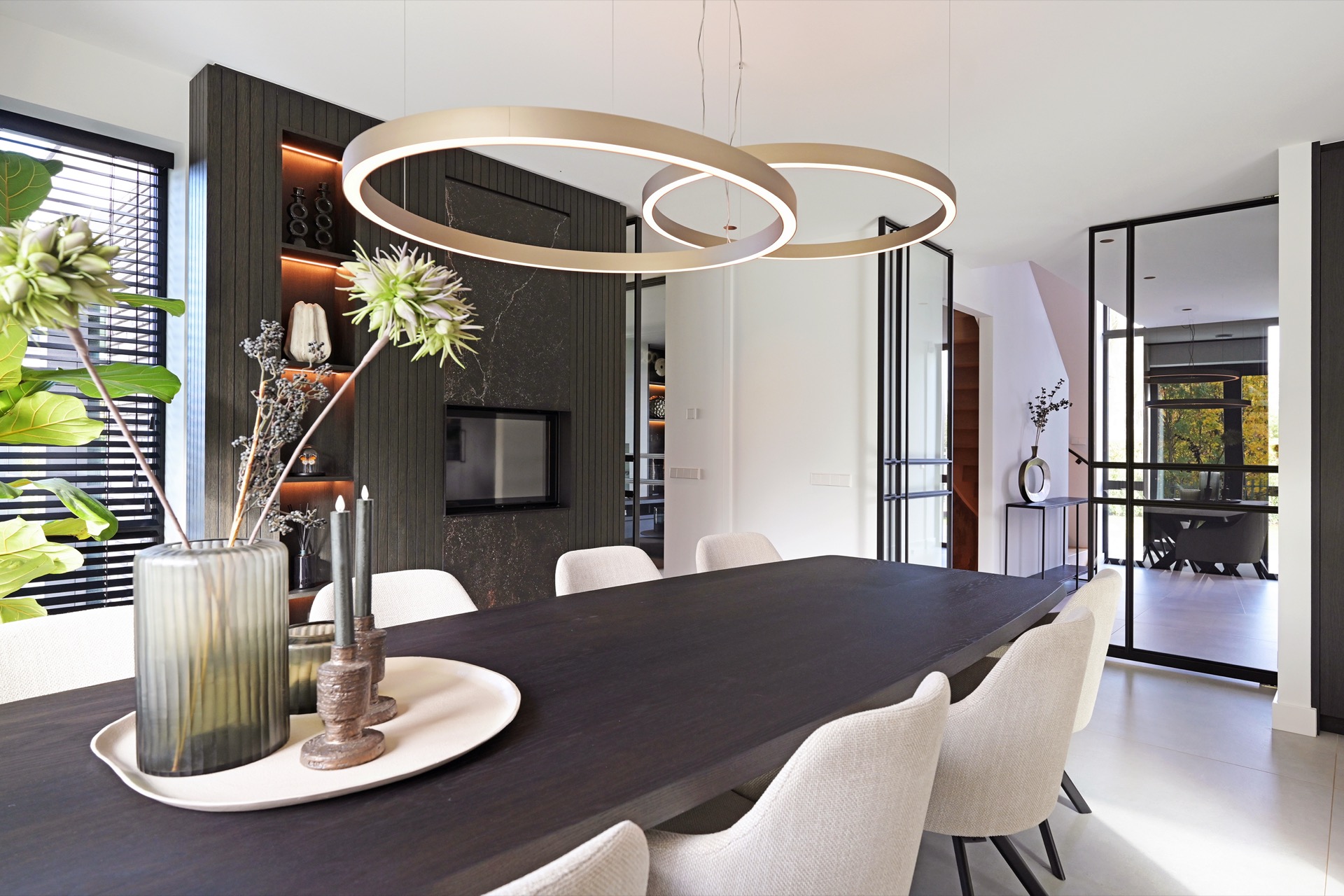
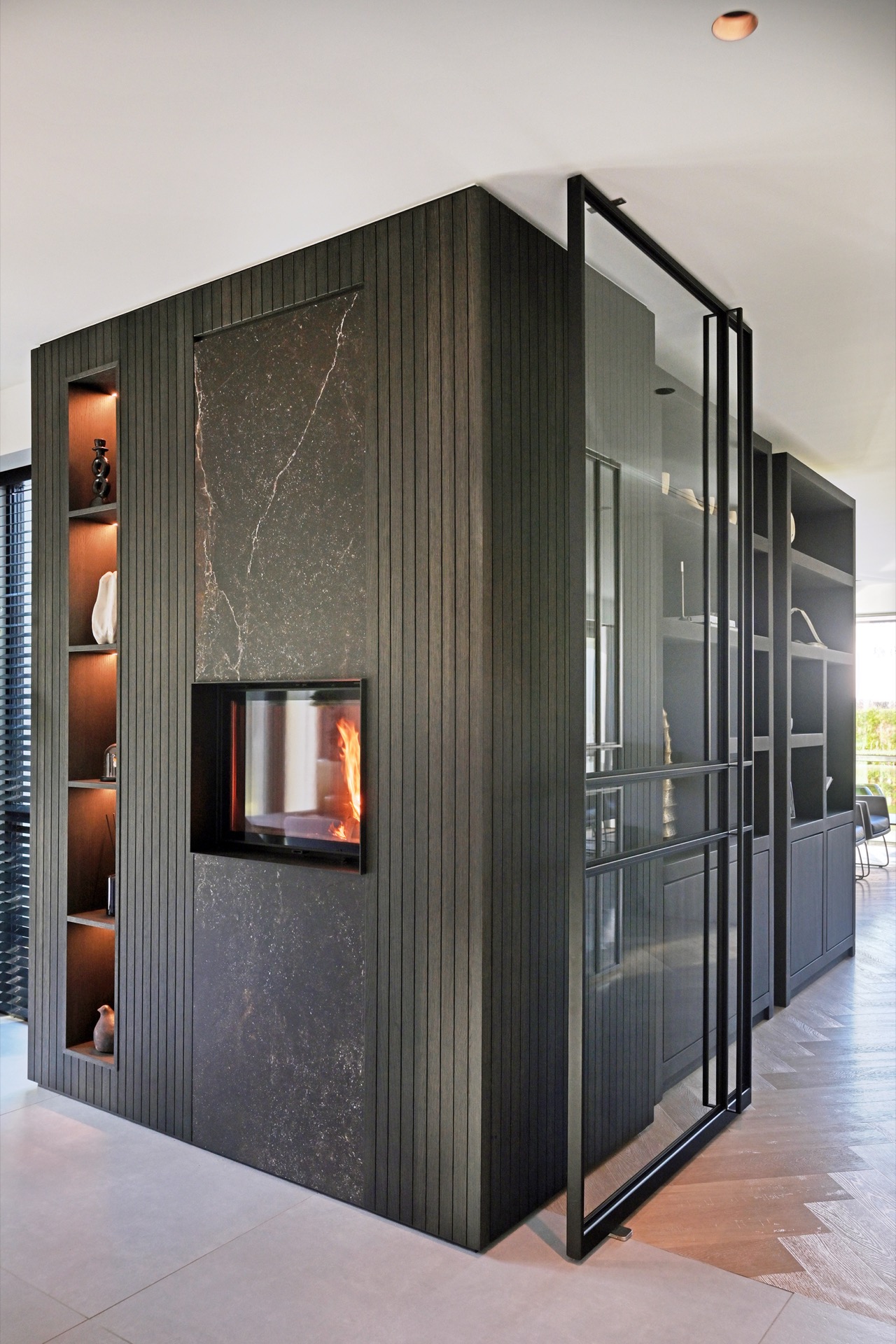
Generous vertical windows punctuate the smooth plaster surfaces, allowing natural light to cascade deeply into rooms while offering framed views toward the garden. Their dimensions respect the home’s proportions, balancing light admittance with privacy. Inside, steel-framed pivot and sliding doors in black provide flexible openness between spaces, maintaining sight lines while offering partition options.
Floor Surfaces Organize Open Spaces
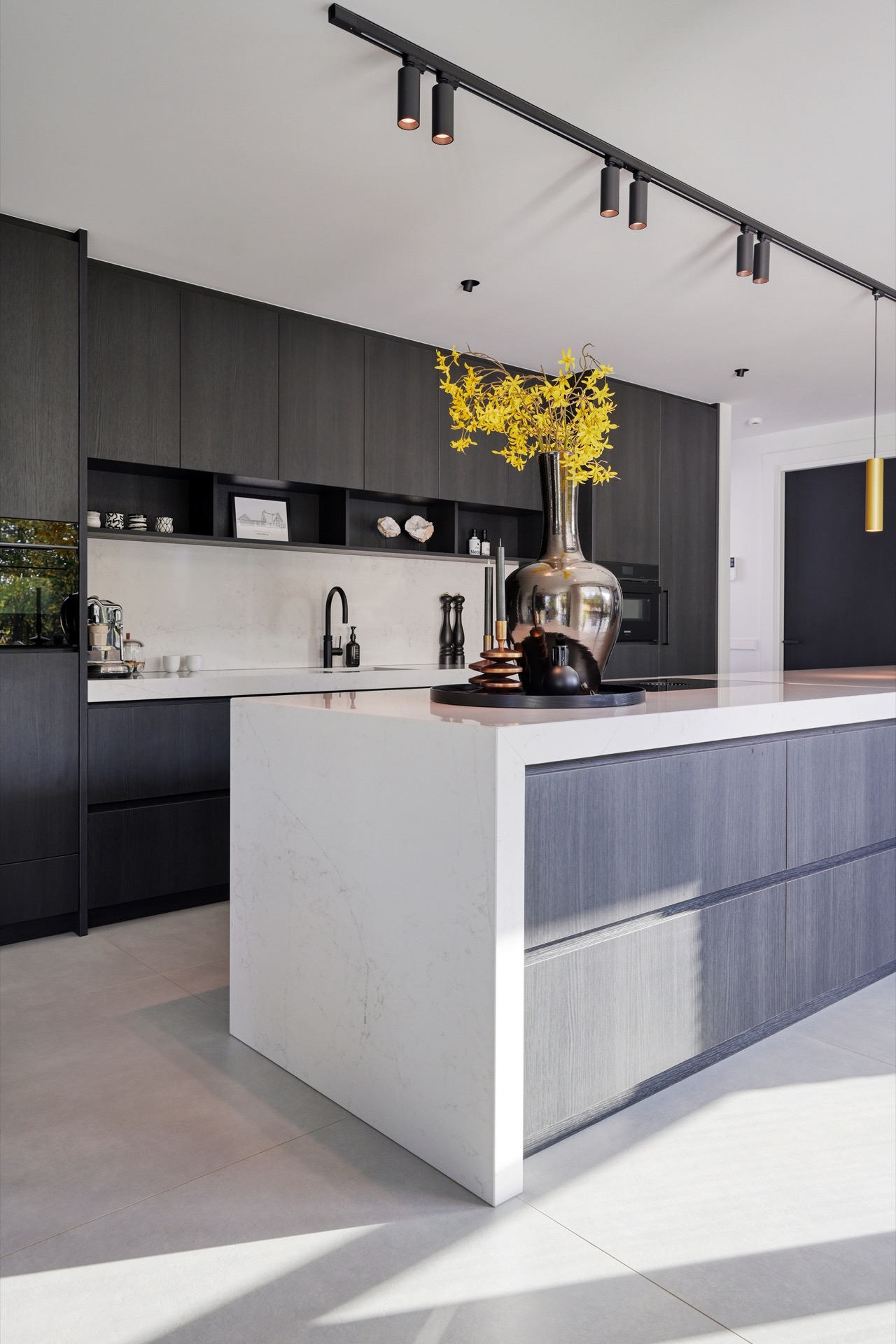
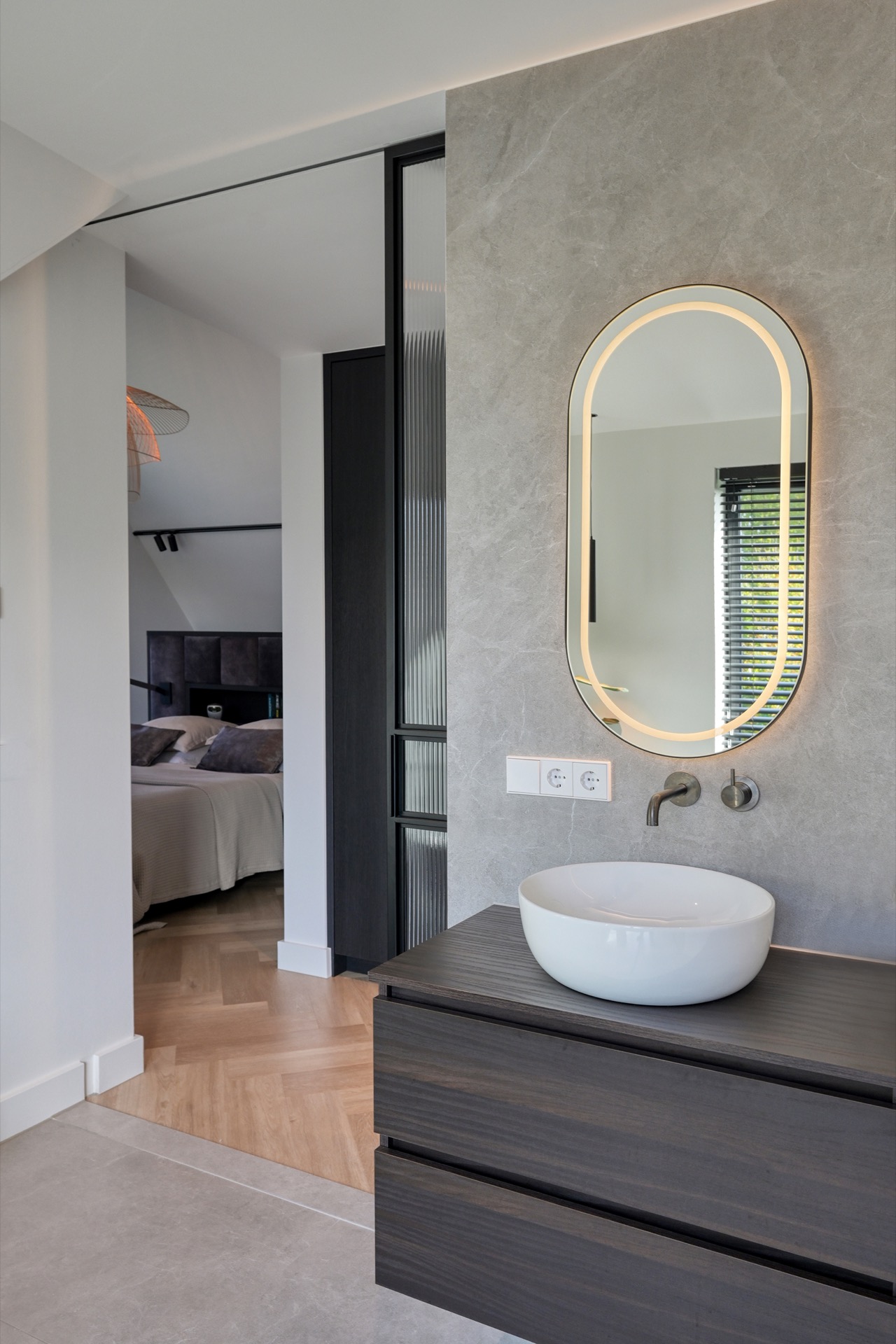
The living area unfolds over herringbone wood flooring, its repeating pattern adding subtle movement beneath restrained furnishings. Transitioning to the kitchen, large-format ceramic tiles establish a more utilitarian surface suitable for cooking tasks. This contrast between patterned wood and smooth tile subtly delineates activity zones without physical barriers.
Roof Renovation Integrates Tradition with Practicality
The aluminum ridge caps atop the classic reed roof serve a protective role, shielding exposed thatch ends from weather damage. This practical adjustment respects the nidified layering of the original thatched construction, ensuring the roof’s insulation properties endure while reducing maintenance needs.
thatched roof as the architectural starting point
Calculated window distribution aligns with structural bays, creating a measured cadence across the facade. As daylight shifts, the light plays over the textured surfaces and inside spaces, revealing nuanced material interplay and varying spatial qualities throughout the day.
Kitchens Emphasize Function and Clarity
Simplicity guides the kitchen’s material palette—large smooth floor tiles, clean-lined cabinetry, and stone countertops form an understated backdrop. This restrained environment supports cooking activities through surfaces that combine durability and easy maintenance. That makes the thatched roof part of the architectural character rather than a loose finish.
Material Choices Reflect a Layered Construction Approach
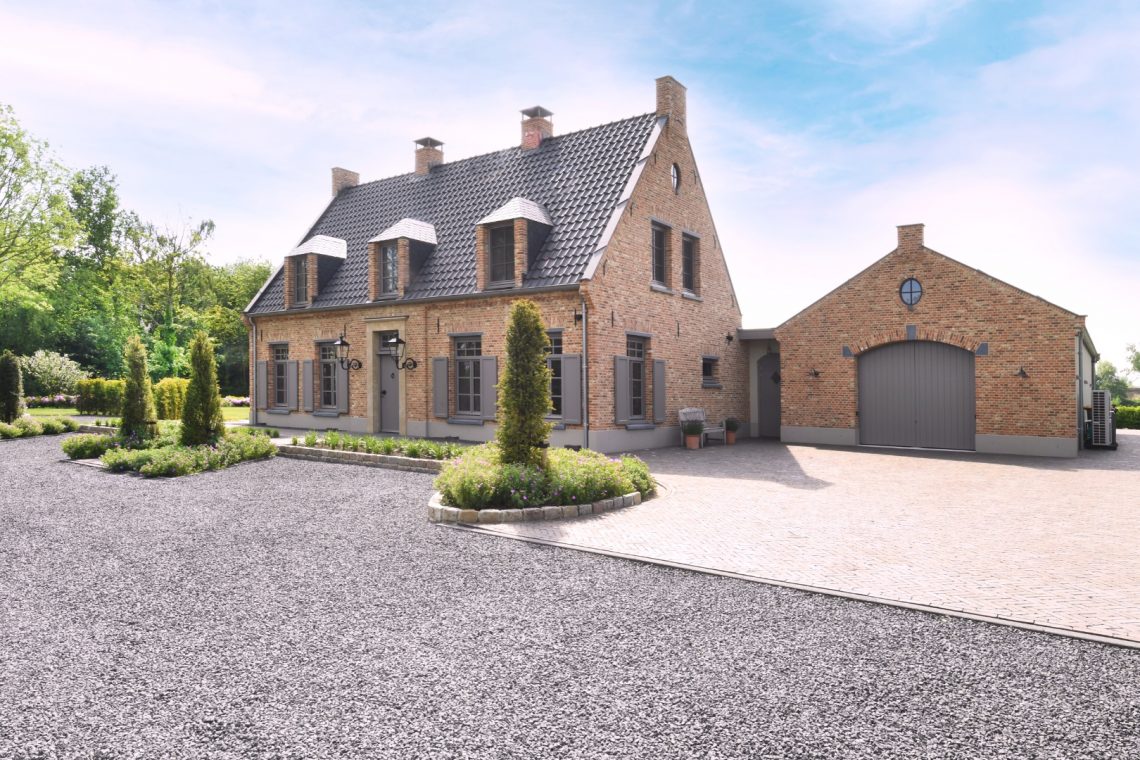
Petersen bricks with their robust textures sit alongside warm timber cladding and crisp aluminum framing. This combination creates a facade that unfolds in layers of natural textures and precision details, linking artisanal masonry with contemporary metalwork.
Spatial Flow Supported by Door and Ceiling Details
Black steel pivot doors offer controlled spatial connections, while sliding steel doors enhance flexibility. The uninterrupted ceiling heights in main rooms reinforce volume and ease movement, with subtle material shifts underfoot guiding the perception of zones without interrupting openness.
Service Areas Articulated Through Material Variation
The garage and utility spaces, clad with vertical timber boards, visually separate these auxiliary functions without detaching from the overall facade composition. This careful treatment sustains design clarity while acknowledging the building’s programmatic needs.
Durability Embedded in Architectural Details
Architectural elements such as masonry cornerstones reveal structural junctions and add visual substance. The aluminum ridges fortify the roof edges, anticipating weather exposure. Together, these details underpin the building’s longevity while affirming the quality of materials.
Light Interaction Elevates Material Presence
Natural daylight filters through extensive windows, skimming over varied surface textures of brick, timber, and metal. The resulting play of shadows and highlights underscores material qualities and spatial boundaries, creating a tactile sense of place without relying on ornamental features.
Transition Between Exterior and Interior Spaces
Large glazing panels define a transparent threshold toward the garden, inviting views while establishing interior brightness. Material shifts—from brick and timber to tile and wood floors—mark functional transitions, articulating a well-considered dialogue between outdoor surroundings and interior realms.
Circulation Areas Emphasize Material Contrast
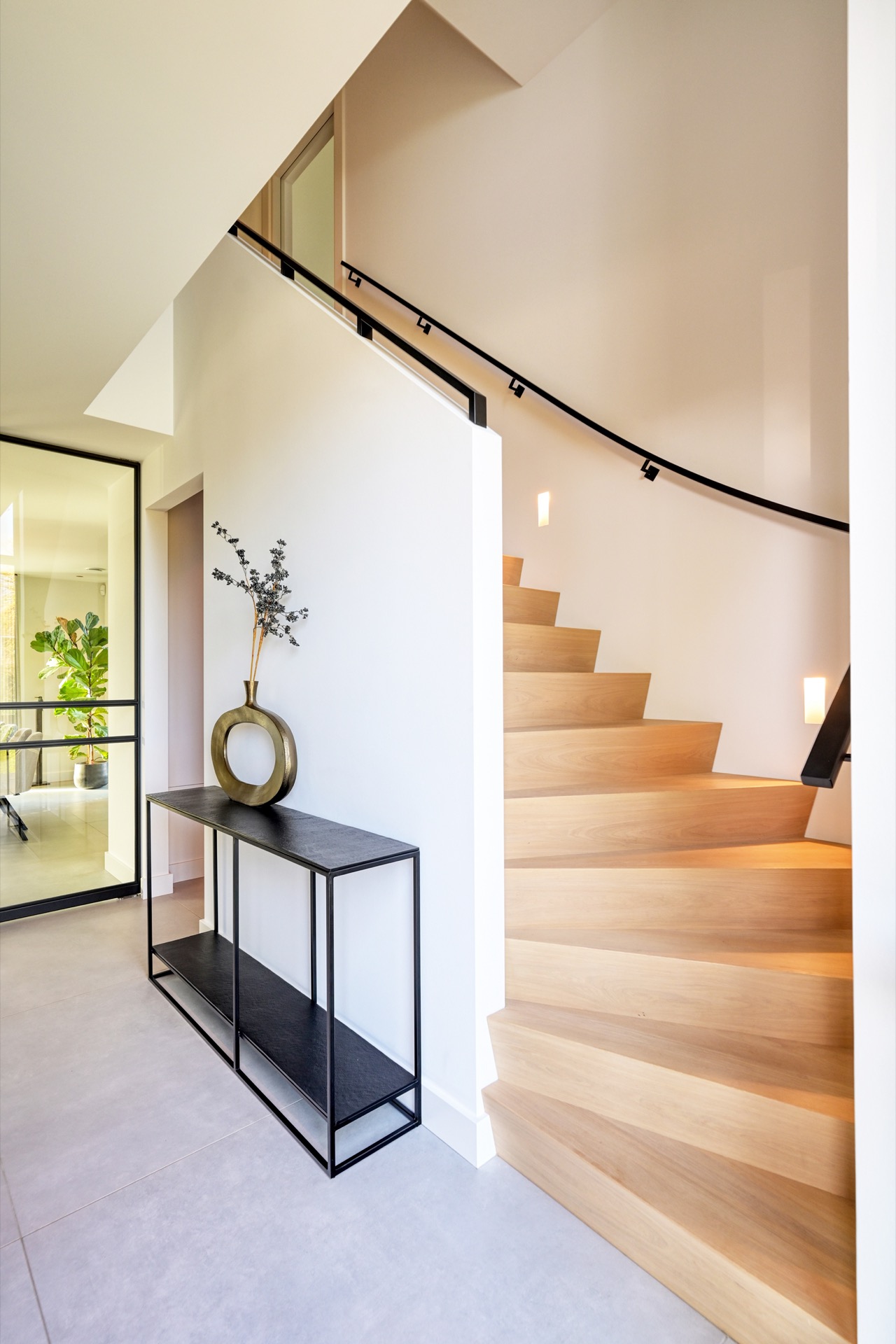
Wooden staircases incorporate natural finishes with crisp detailing, complemented by darker metal accents. This contrast supports visual interest and continuity with the overall material context, while maintaining an unobtrusive flow within corridors and access points. That makes the thatched roof part of the architectural character rather than a loose finish.
Want to see more of HABÉ? View the page of HABÉ for even more great projects and company information.

.png)