








Rustic Wooden Driveway Gate with Automation and a Garden Door (Integrated Mailbox in the Gate Post)
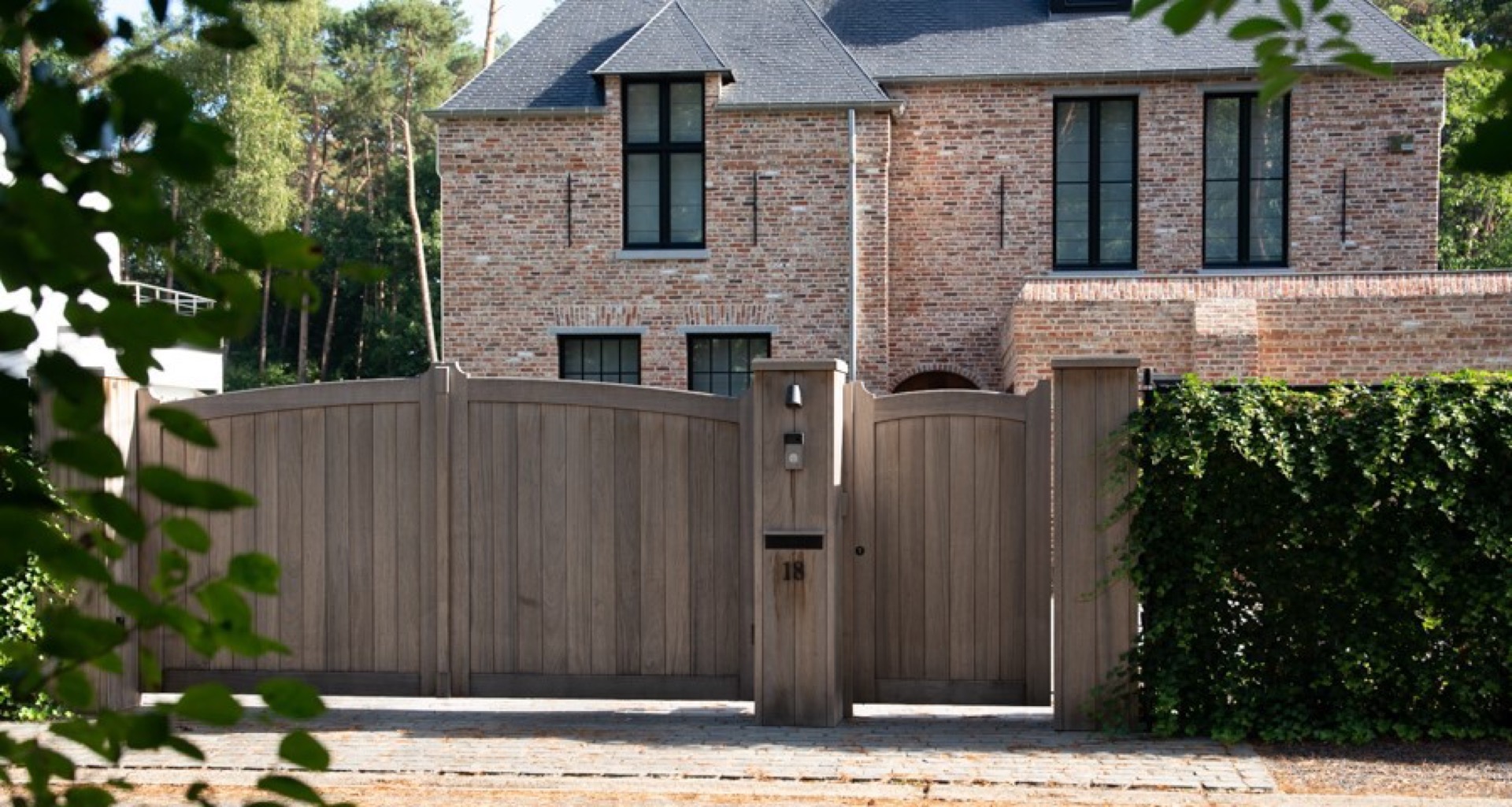
The first thing you notice is the width of the timber posts. They frame the entrance before the gate panels even come into view, and they set the tone for this rustic wooden driveway gate automation project. The wood sits in broad vertical surfaces, with a clear grain and a deep, grounded presence. Next to the main gate, a garden door follows the same language, so the access point reads as one composed frontage rather than separate parts.
Wide gate posts that do more than mark the edge
The wide wooden gate posts carry more than the swing of the gate. Their scale gives the entrance a solid outline, while the timber finish softens the heavier mass of the posts. In the photographs, the posts stand against a brick house and a paved drive, which makes the wood read even more clearly. The contrast is simple: brick in the background, timber at the threshold, and dark metal details where the hardware and fittings are visible.
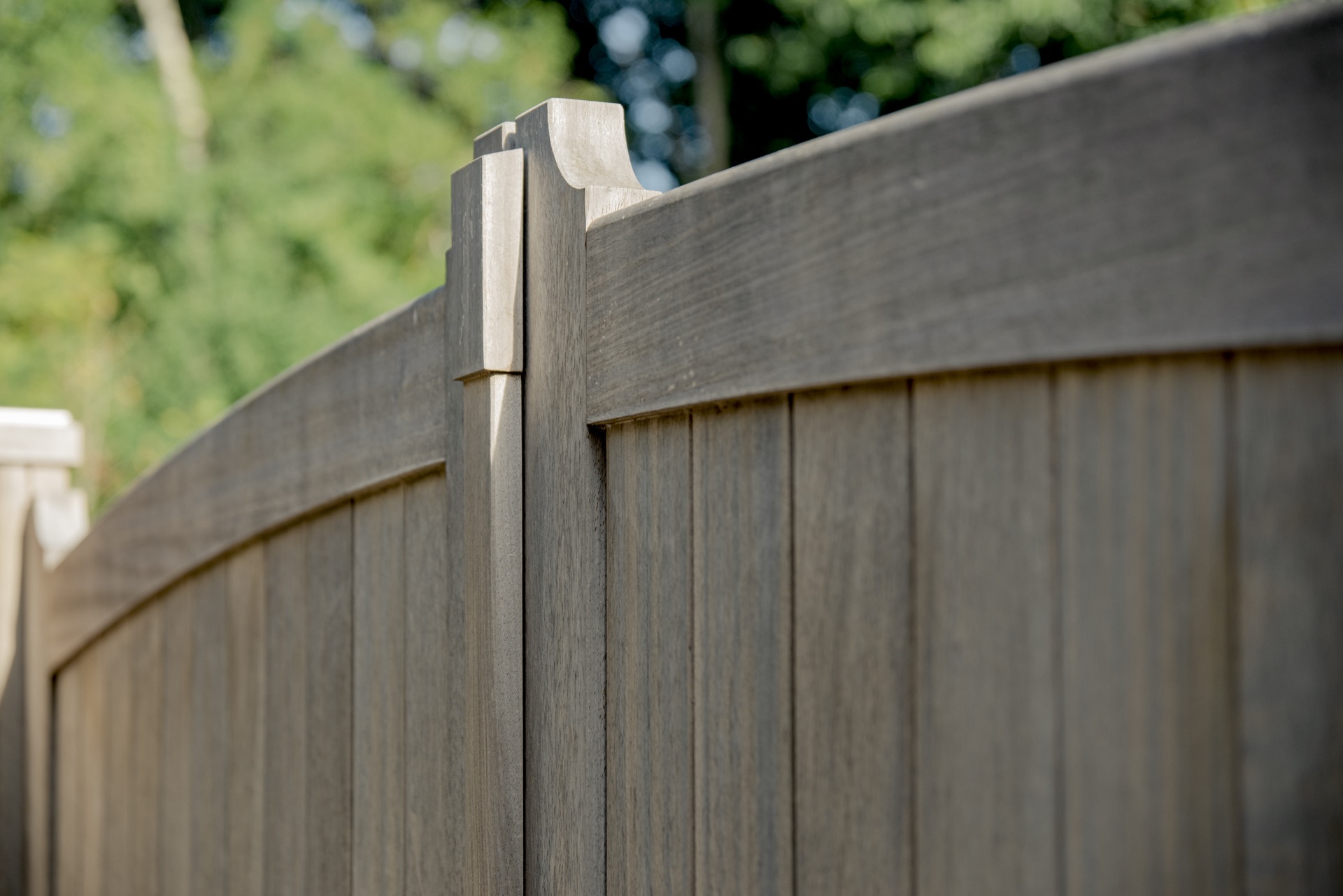
The gate itself is built with vertical slats, arranged in a straight rhythm that keeps the surface calm without losing texture. From the side, the structure reads as a series of narrow lines rather than a single closed plane. That shift matters. It gives the rustic wooden driveway gate automation a lighter profile than the scale of the entrance might suggest, especially when the panels are seen beside the broader posts and the adjoining door.
A garden door placed beside the main gate
The garden door beside the gate repeats the same timber language and keeps the access point practical without breaking the visual order. It sits close to the main swing gate, so the two openings work as a pair. The proportions are careful: one larger opening for vehicles, one smaller one for everyday passage. Seen together, they make the entrance feel legible at a glance, with each function given its own place in the frame.
Because the door uses the same vertical boards, the surface stays consistent across the full width of the entrance. The eye moves from the tall gate panel to the smaller door and back to the post, following the grain and the vertical joints. That repetition is what gives the rustic wooden driveway gate automation its clear frontage. Nothing here is overloaded. The detail lies in the way the openings are stacked side by side and held by the same material and line.
Vertical boards and visible joins
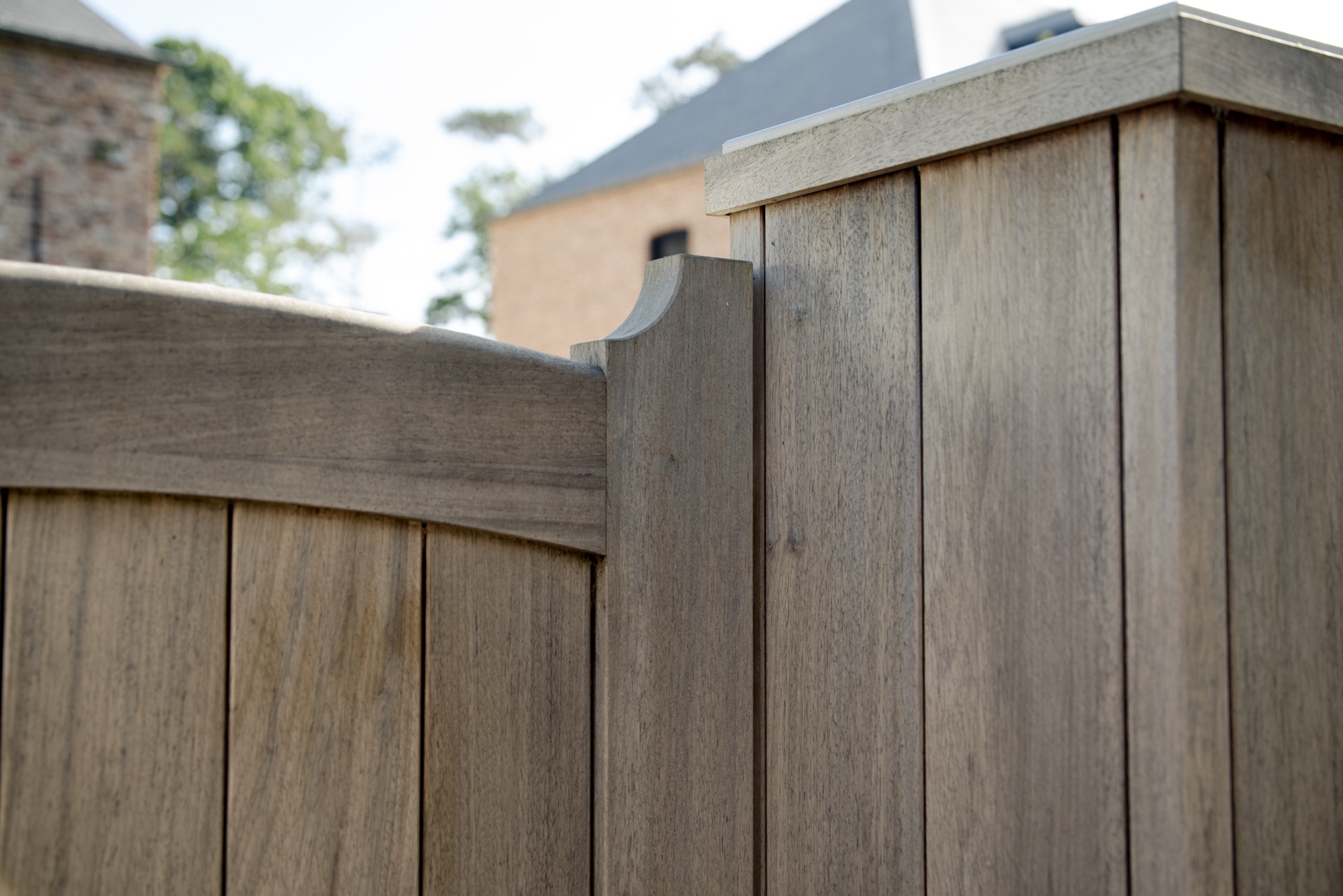
Up close, the gate panels reveal the joints between the wooden planks. A close-up shows an opening detail with a rounded cut-out, which breaks the straight lines of the boards for a moment. It is a small move, but it catches the light and changes the read of the surface. Rather than a flat sheet of timber, the gate becomes a built assembly, with edges, overlaps, and cuts that remain visible.
The side view is especially useful for understanding the craftsmanship. Vertical slats run through the frame, and the lines are tight enough to keep the surface disciplined, yet not so closed that the timber loses its texture. The wood grain remains visible. So does the way the boards meet at corners and at the post, where the broader supports hold the smaller elements together. In a project like this, those junctions do the visual work.
The mailbox detail built into the gate post
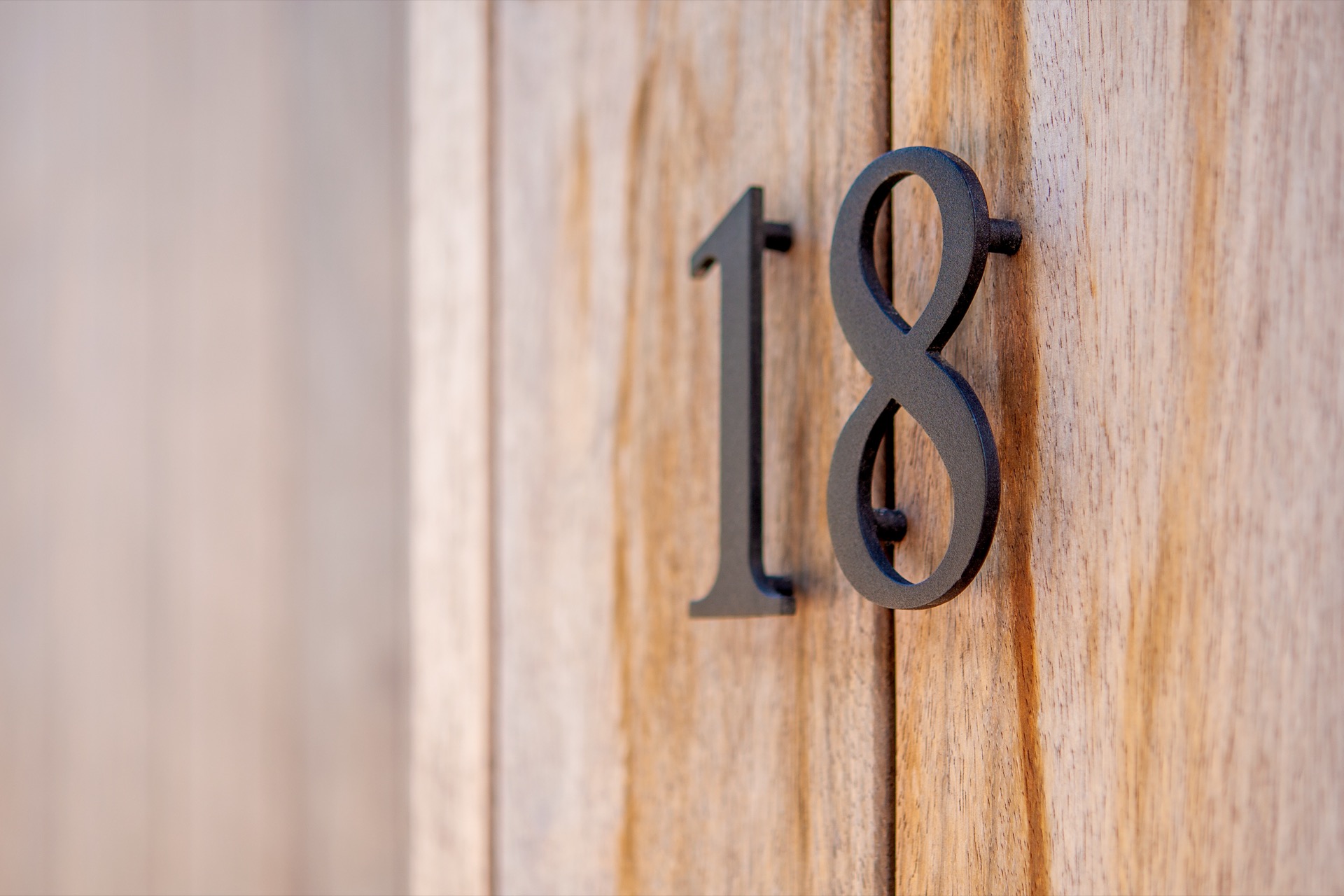
One of the most distinct elements is the mailbox in the gate post. Instead of standing apart from the entrance, it is inserted into the timber post and marked with metal lettering and fittings. The detail is small but deliberate, and it gives the post a second role beyond structure. The gate detail mailbox number becomes part of the entrance itself, sitting in the same frame as the wood and hardware.
This integrated mailbox also changes how the post is read from the street. It is no longer only a support for the gate leaf. It becomes a point of address, with the numbered detail visible at eye level and the timber surface acting as a backdrop. In the close-up, the contrast between the dark metal elements and the warm wood is clear. That contrast is what makes the mailbox in gate post easy to read without overpowering the entrance.
Hardware, numbering, and a small fixed lamp
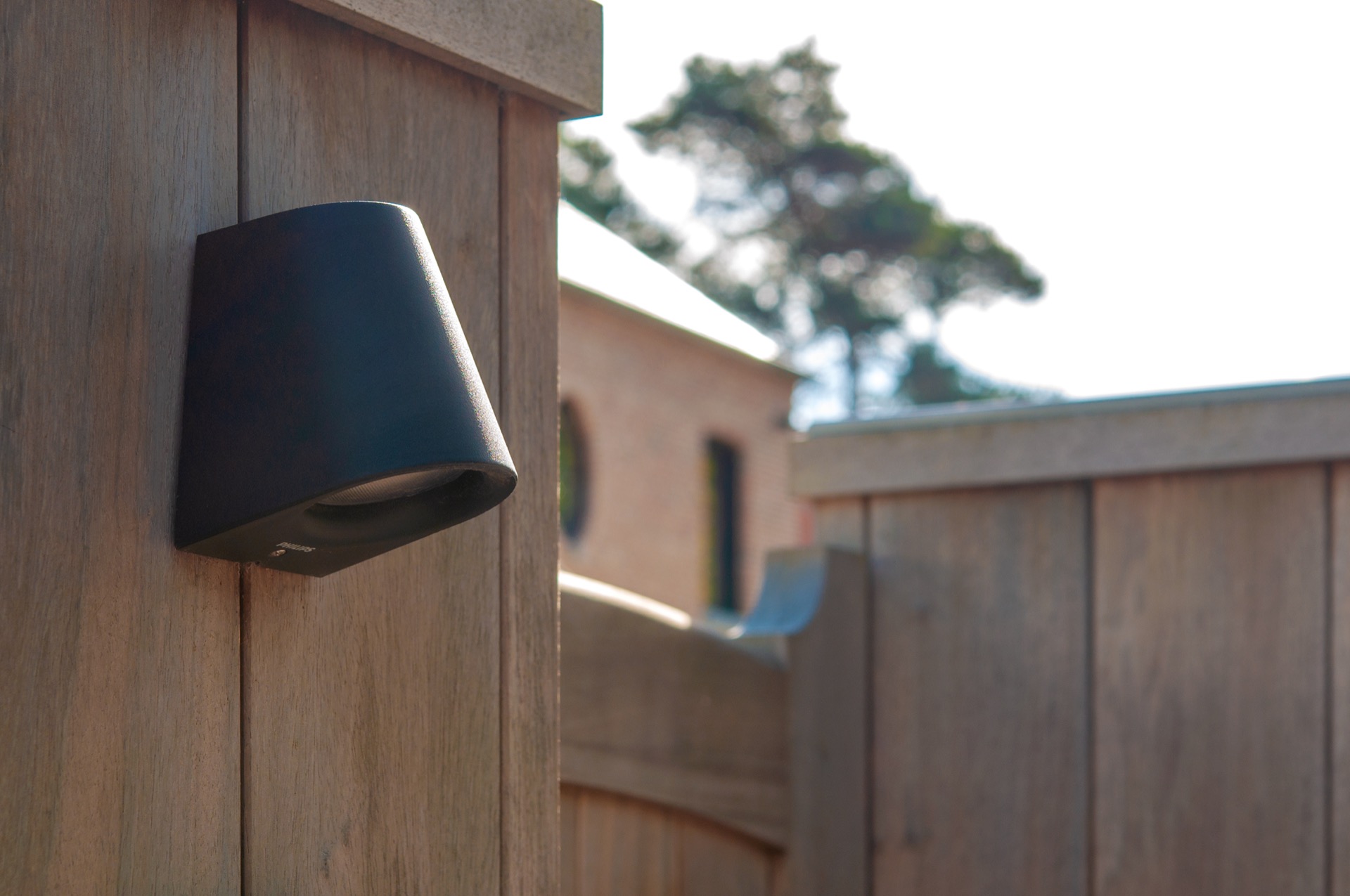
Several photographs show the smaller fittings that keep the entrance from feeling overly polished. A black lamp is mounted on one of the timber sections, and the metal parts around the mailbox and numbering are left visible. These pieces are not hidden. They sit on the surface and give scale to the wood around them. In a gate of this size, those small fixtures help the composition feel anchored.
The numbering detail is especially effective because it uses the post as a carrier rather than adding another sign on the side. The mailbox sits flush enough to read as part of the construction, while the surrounding wood keeps the detail grounded. It is a practical move, but also a visual one. The gate post becomes a marker, a surface, and an address point all at once.
Automation without changing the character of the entrance
The gate automation is part of the project, but it does not dominate the view. What remains visible is the swing gate, the timber frame, and the measured relationship between gate leaf, post, and door. The automation sits behind that calm surface reading, which is why the entrance keeps its rural character rather than becoming purely technical. The result is an entry sequence that opens with a manual-looking timber composition and works with the convenience of gate automation.
From the driveway, the movement reads as controlled and direct. The gate panels are large enough to command the entrance, yet the vertical slat rhythm stops them from looking heavy. The broad posts hold the opening, the garden door gives the composition a second access point, and the integrated mailbox in the gate post completes the front edge. That combination is what defines this rustic wooden driveway gate automation project: one entrance, several functions, all carried by timber and carefully placed details.
Want to see more of De Sutter Naturally? View the page of De Sutter Naturally for even more great projects and company information.



NEW 2026 Jubileum Edition The Best Interior Designers Benelux
Order Now €125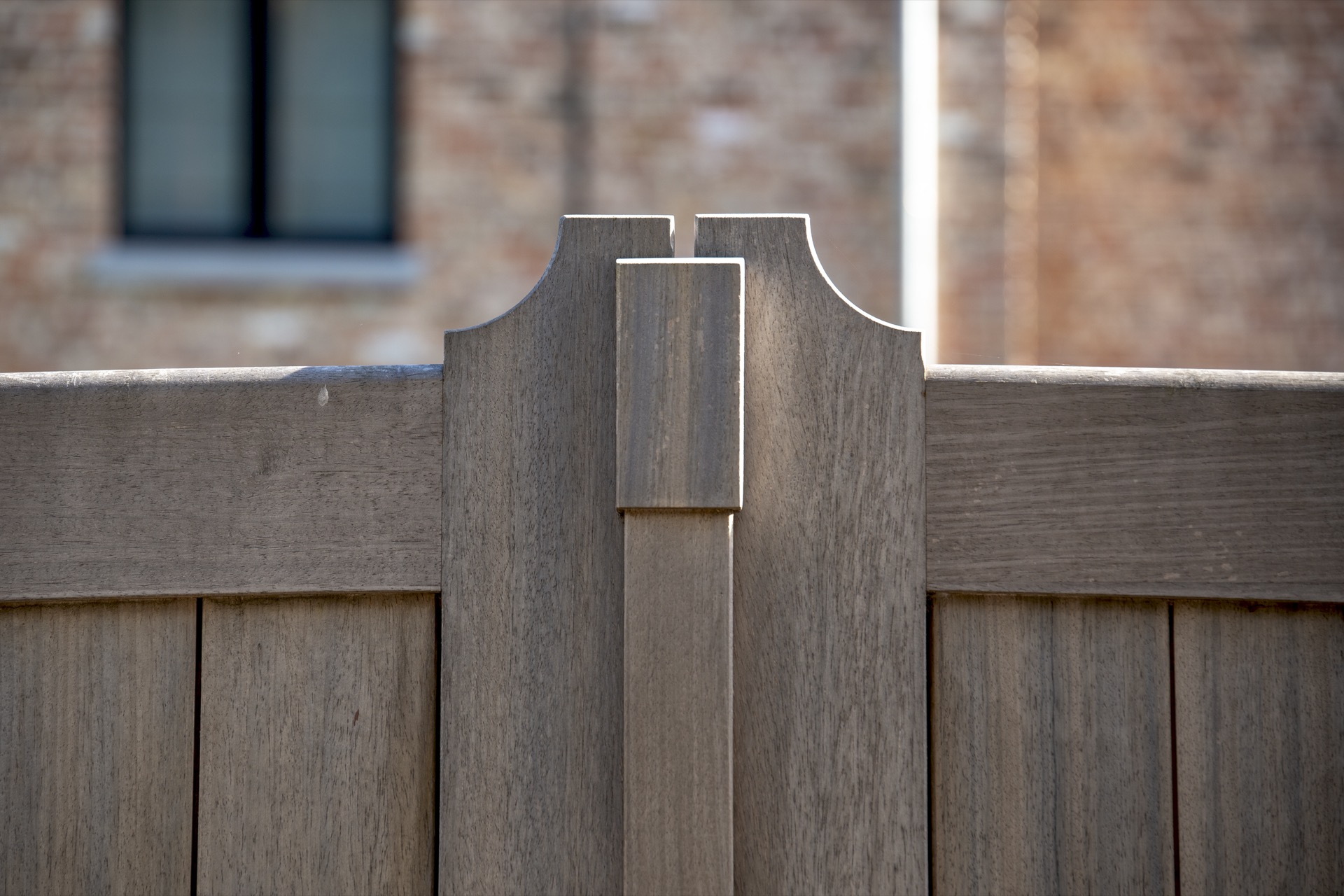



%20-%20)
%20-%20)
%20-%20)
%20-%20)
%20-%20)
%20-%20)