








Rustic wooden staircase with wrought iron balusters
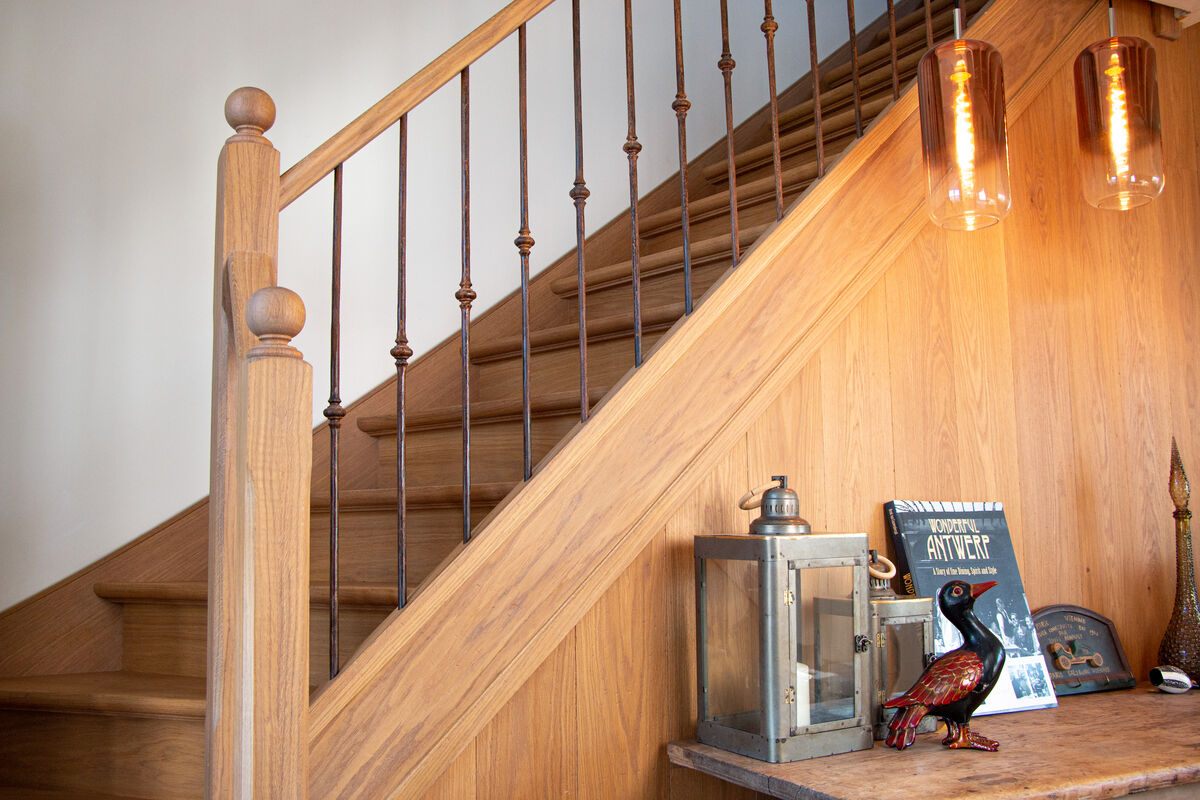
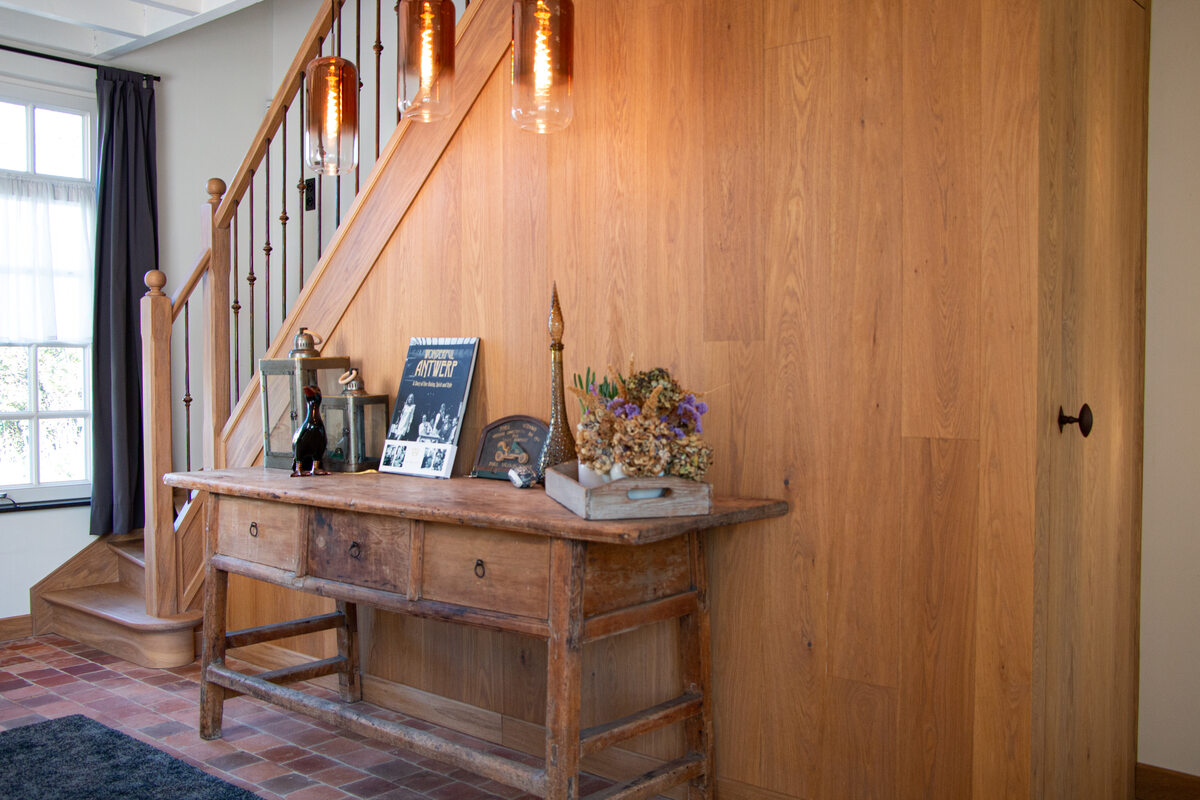
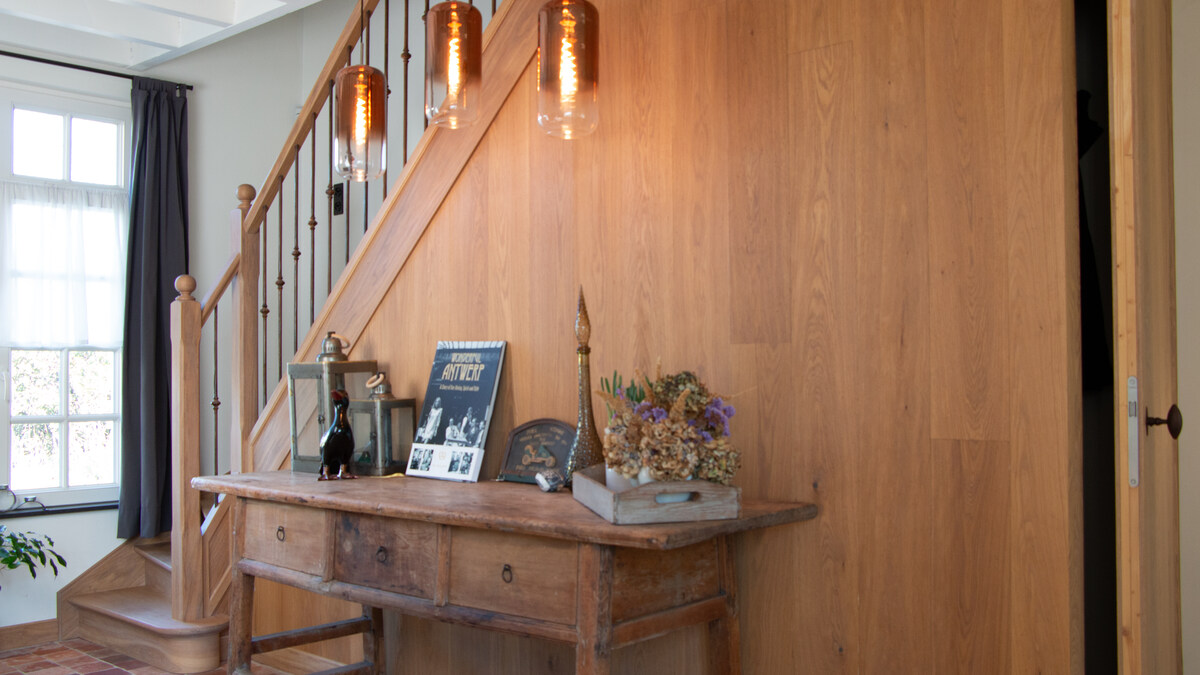
The first thing you notice is the rhythm of dark metal against warm oak. This rustic wooden staircase with wrought iron balusters sits in an interior where terracotta floor tiles, paneled wood walls, and soft lamp light shape the view around it. The stair reads as a wooden staircase from the start, but the iron spindles shift the mood of the whole composition: straight, vertical lines set into a setting that feels lived-in rather than staged.
A rustic stair made to sit naturally in the room
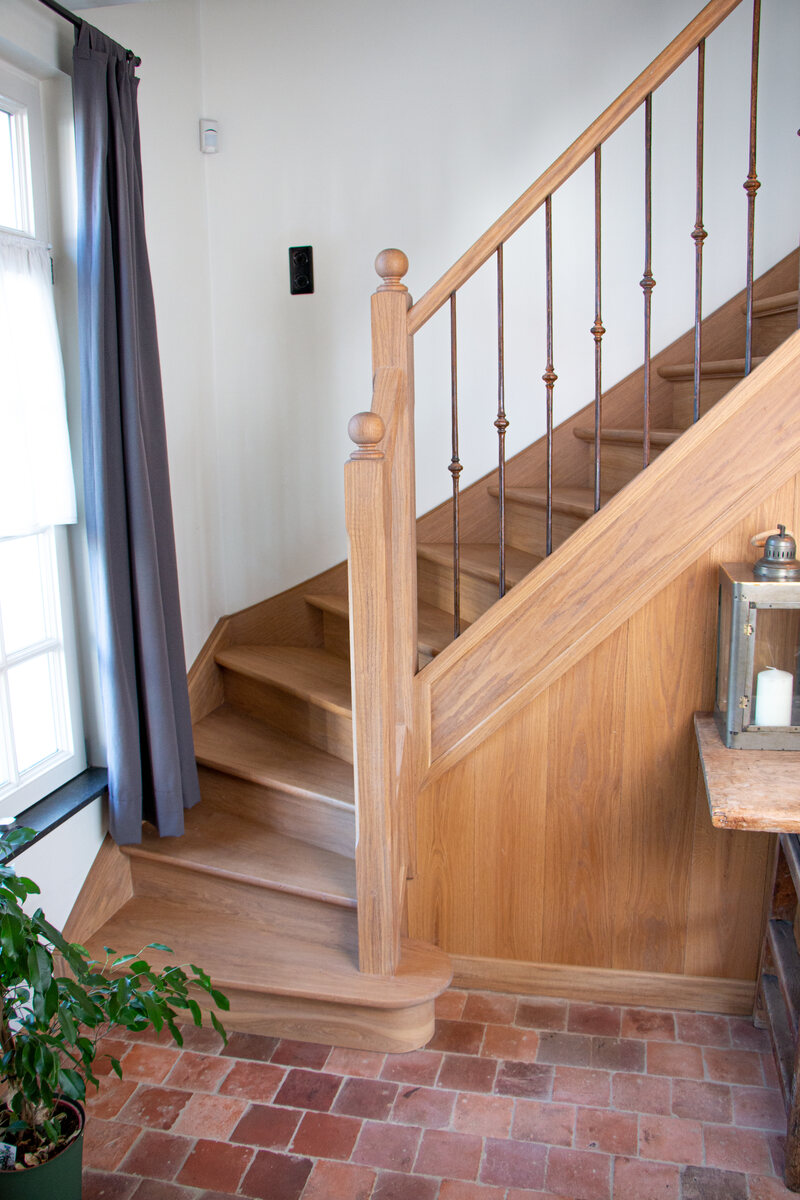
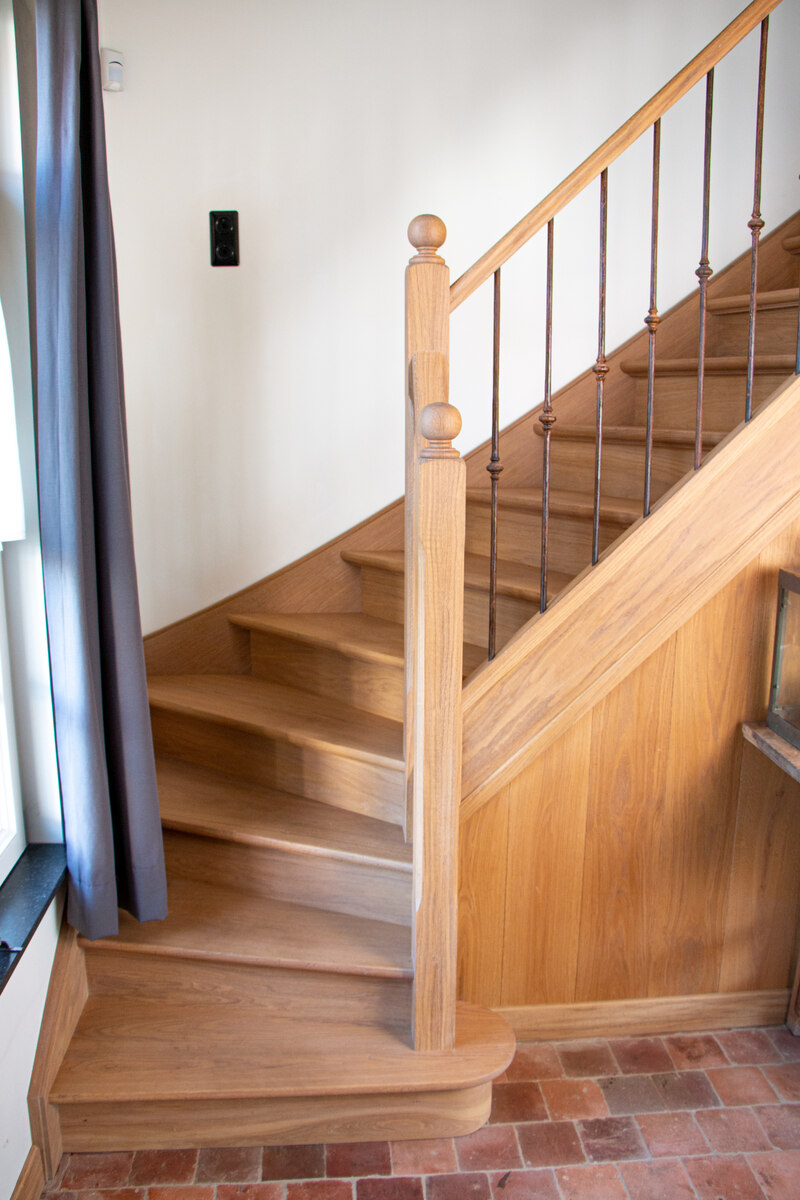
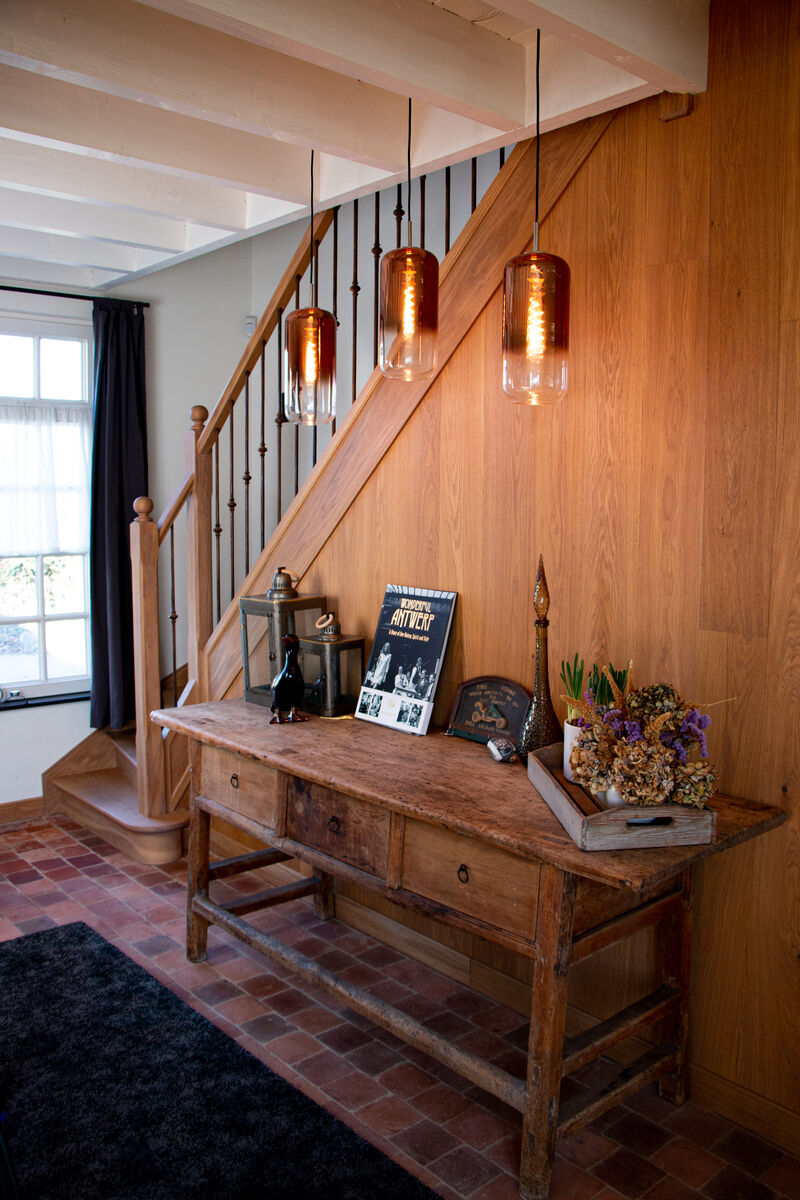
The staircase is built as a closed-riser staircase, which gives the run a solid, enclosed profile. From the floor, the lower treads and side panels hold the line of the stair close to the wall, while the balustrade opens it up with a repeated metal pattern. The French oak staircase wood brings a visible grain to the handrail and surrounding elements, and that grain remains present even beside the darker wrought iron stair spindles.
Seen in context, the stair does not compete with the room. It follows the wall, turns the corner with a clear edge, and meets the terracotta-toned floor without visual noise. The red and brown tiles, laid in a block-like pattern, frame the base of the staircase and make the oak tones read more clearly. Nearby paneled doors and wall cladding in wood keep the material story consistent across the interior.
Wrought iron balusters with a treated surface
The defining detail is the set of wrought iron balusters. They rise between the handrail and the stair structure in a vertical sequence, with a slight change in surface tone that comes from the treatment applied to encourage rust discoloration. It is a restrained effect, but it changes the way the metal reads: less polished, more grounded, and better suited to the rural character of the stair.
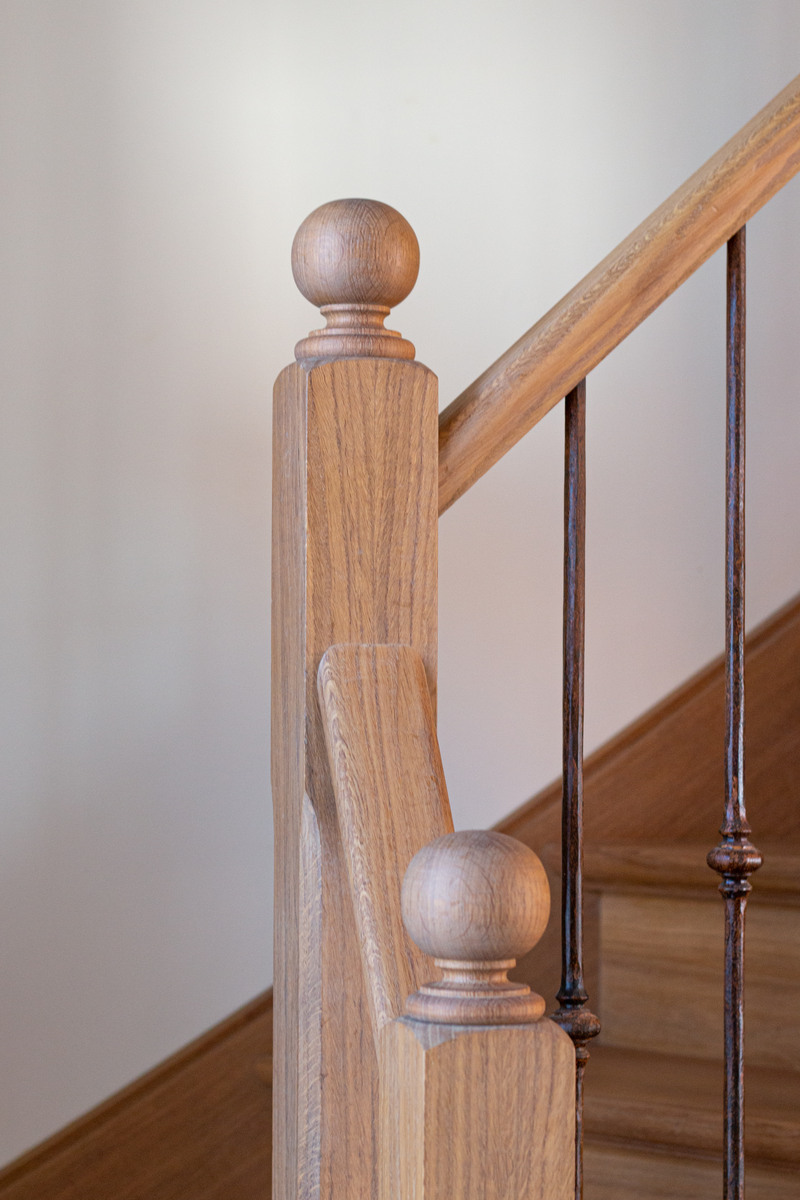
That treatment is not used as decoration for its own sake. It gives the wrought iron stair spindles a muted surface variation that sits comfortably beside the oak and tile around them. In close-up, the balusters show subtle thickness changes and a more crafted profile than simple straight rods. The result is a rustic wooden staircase with wrought iron balusters that depends on detail rather than ornament.
Small details that change the silhouette
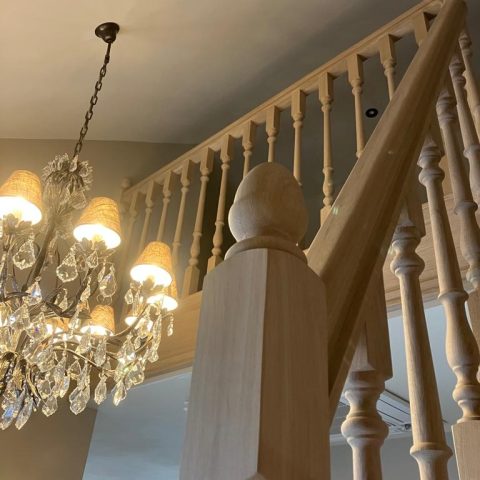
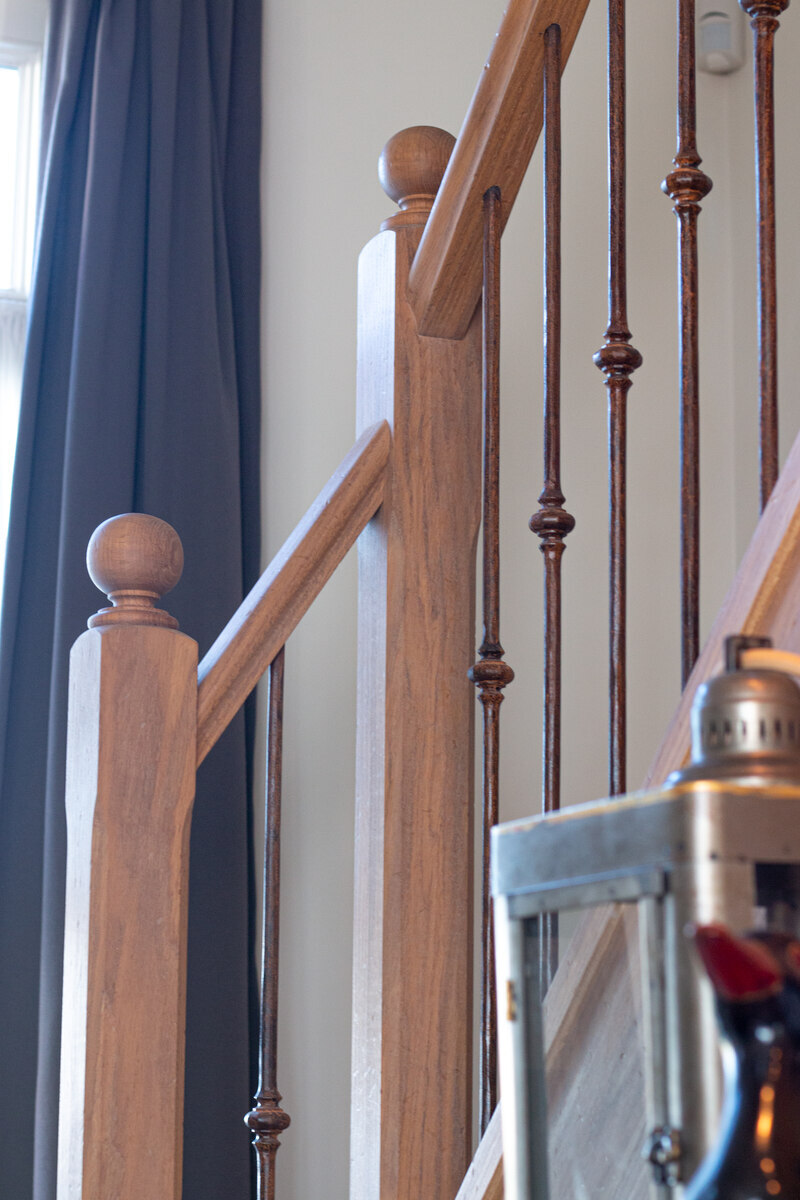
Rounded finials on the balustrade and handrail posts soften the straightness of the vertical ironwork. They appear as small ball-shaped endings, catching light above the darker spindles and giving the top line of the stair a measured pause. That detail matters in a room where many surfaces are already active: wood grain, tile joints, and paneled doors all bring their own structure, so the stair needs a profile that stays legible.
From different angles, the balance between the oak rail and the iron uprights becomes more visible. The handrail carries a warmer tone than the metal, and the darker balusters mark the openings between posts with a steady cadence. It is a simple structure, but the spacing and finish give the wooden staircase a composed presence without making it feel formal.
French oak, seen in panels, edges, and the stair run
French oak 1 bis gives the stair its main material base. The wood appears not only in the steps and handrail, but also in the side elements that line the stair. Its surface keeps enough grain to be read at a glance, especially where light from the pendants lands on the edges. Those reflections are mild, not glossy, and they keep attention on the join between wood and metal.
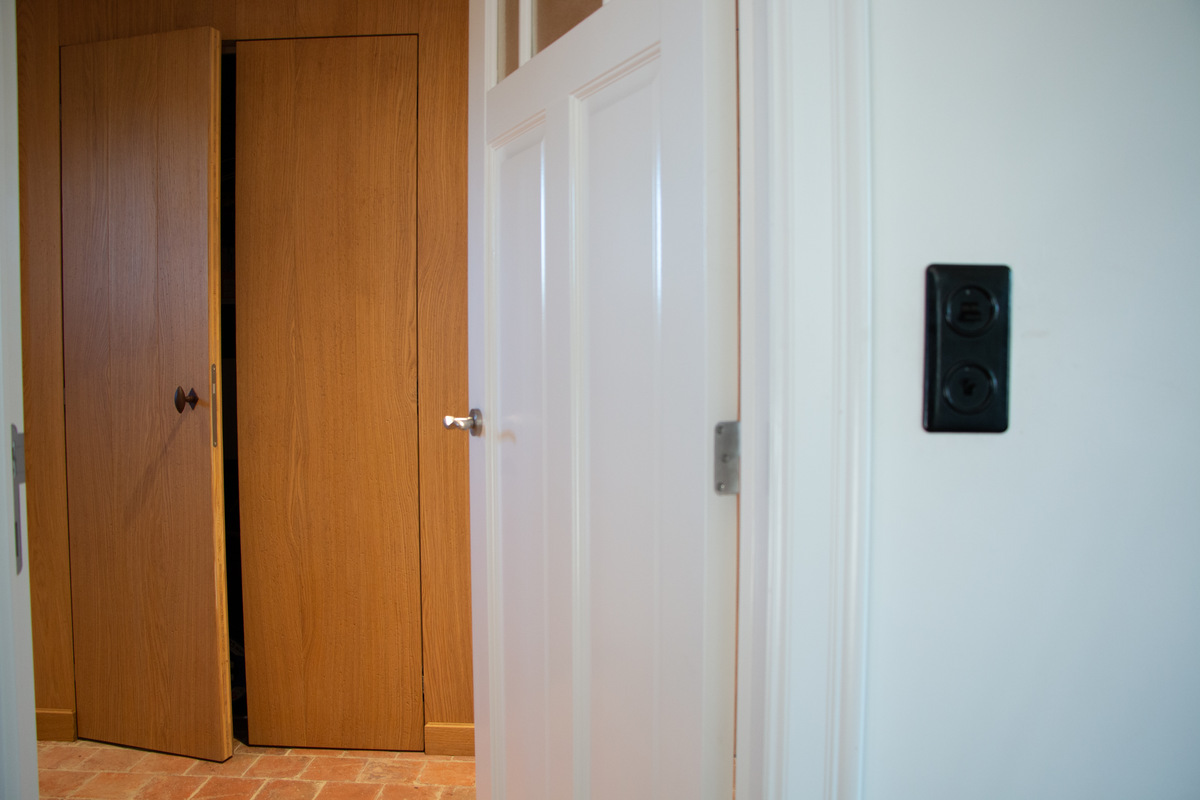
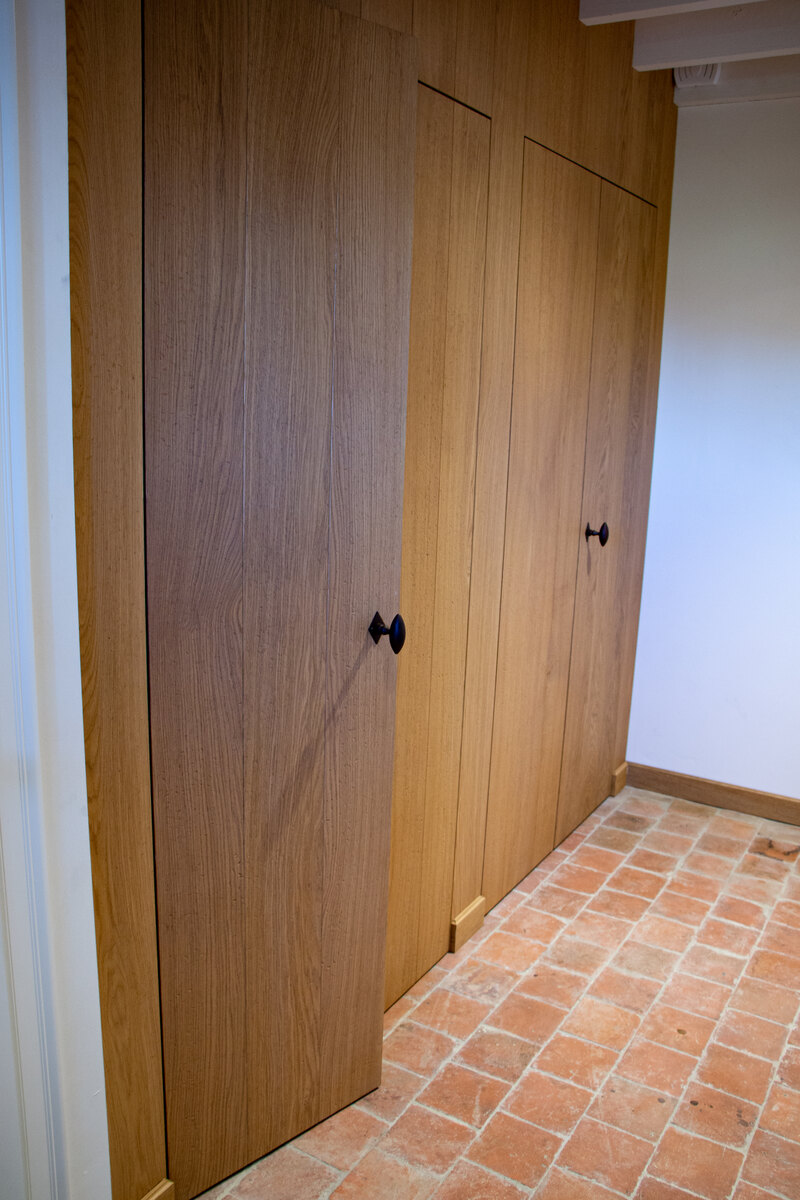
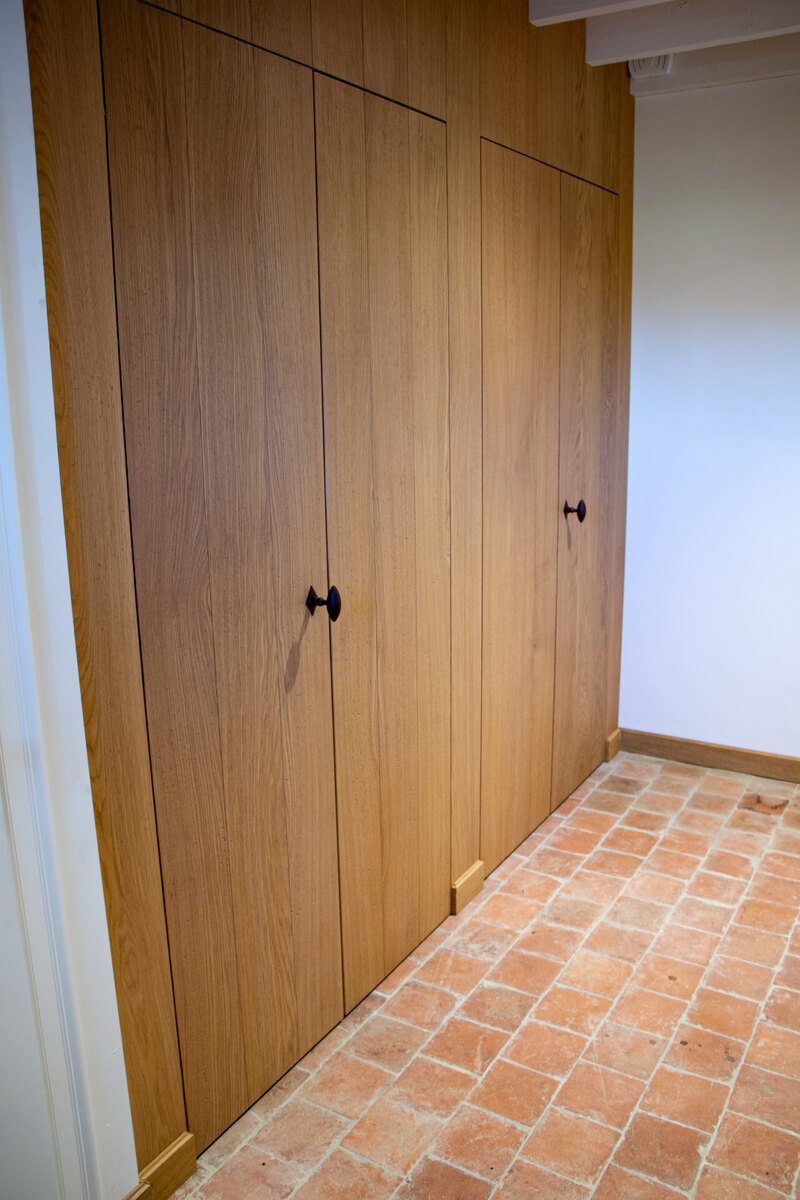
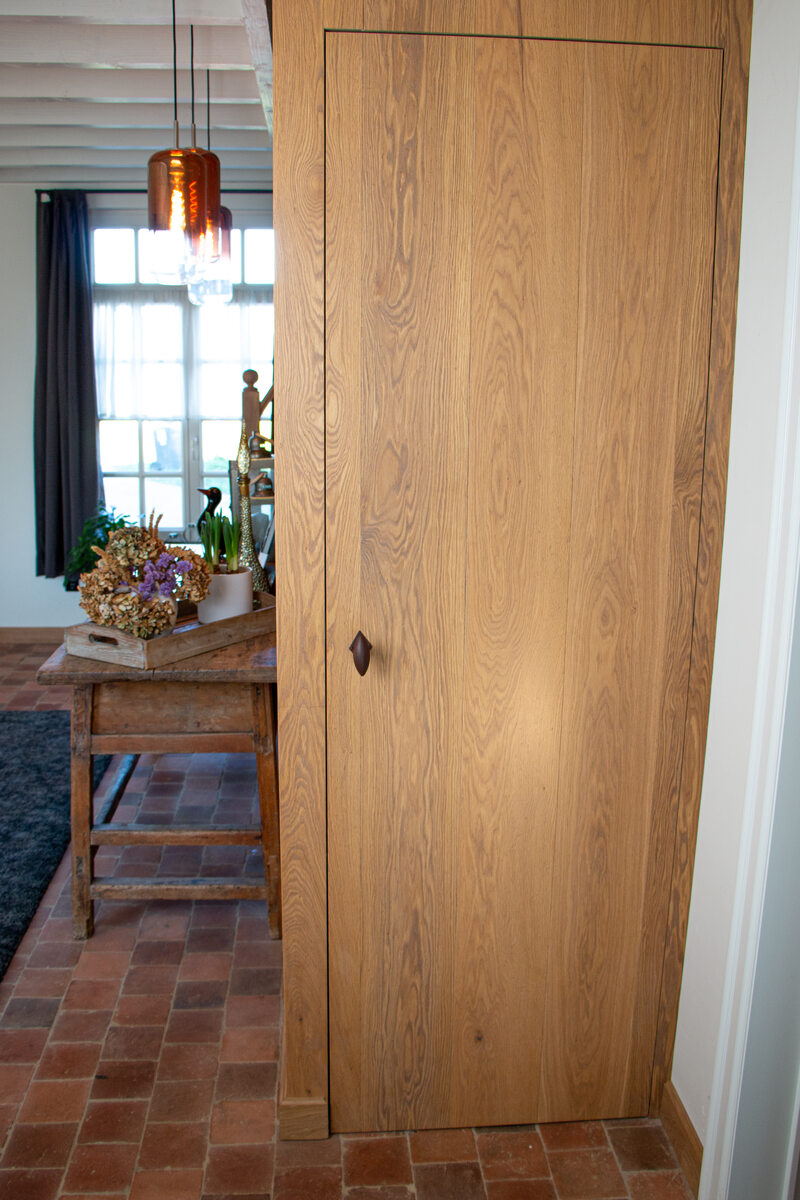
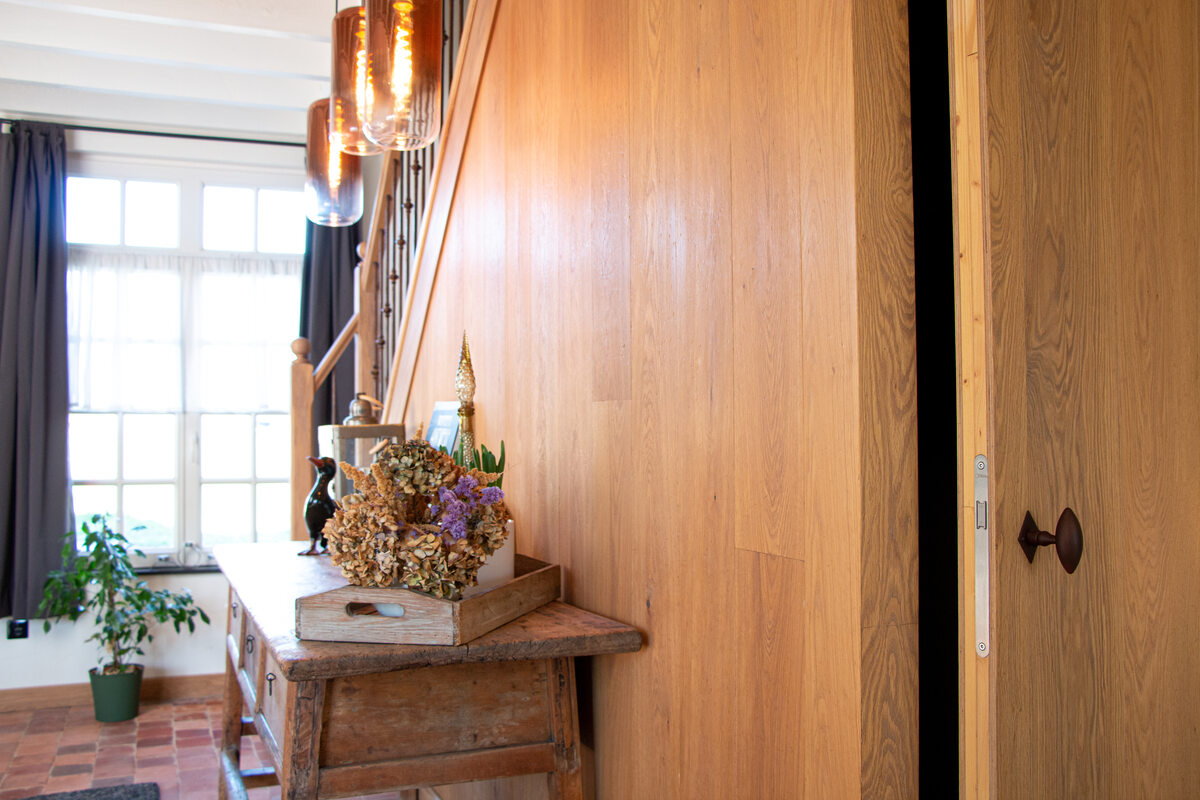
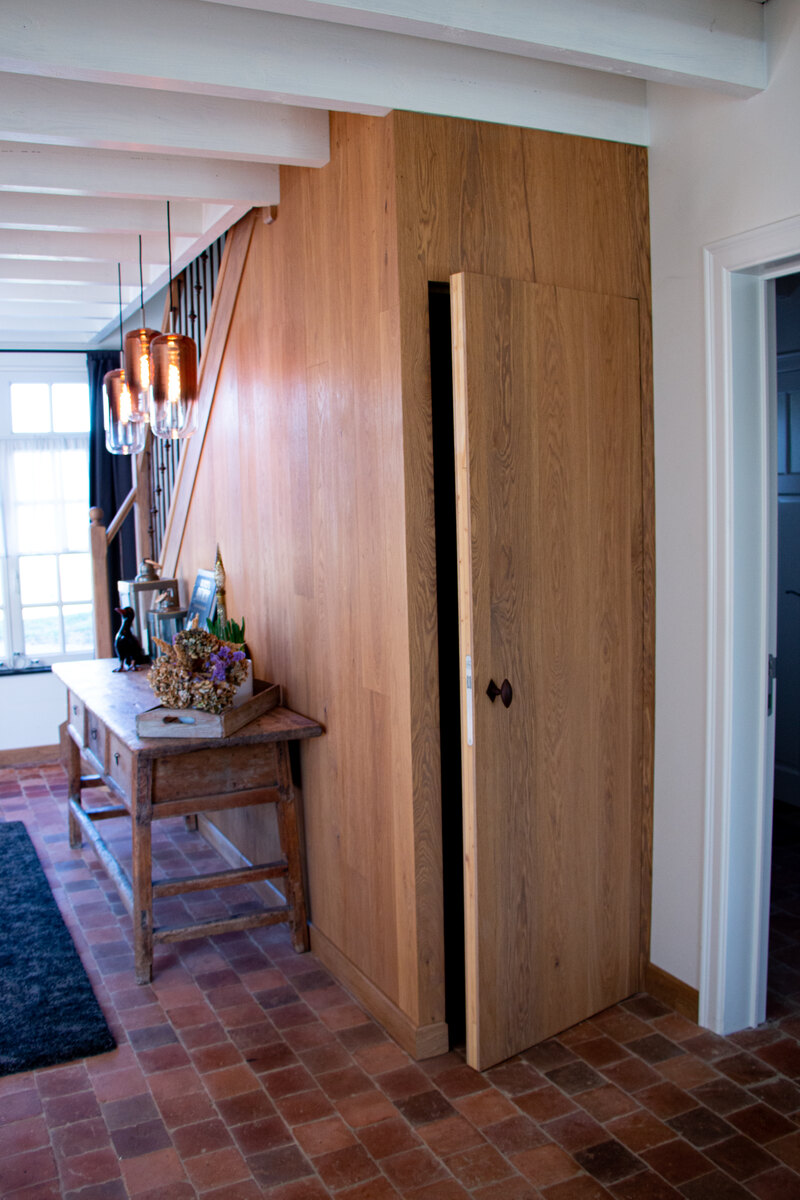
Along the wall, the oak is echoed by the surrounding paneling. Large wooden surfaces carry visible seams and vertical grain, while dark door hardware interrupts the panels in a few places. These details make the staircase feel integrated into the room through repetition of material, not through decoration. The French oak staircase therefore reads as part of a broader interior language built from timber, iron, and clay-colored tile.
Light, tiles, and the route around the staircase
Above the stair zone, glass pendant lights cast a soft orange glow that lands on the upper rail and nearby wall surfaces. The lighting does not flatten the material; it picks up edges, especially where the wrought iron balusters pass in front of the brighter background. At floor level, the terracotta tiles create a darker, earth-toned base that keeps the stair anchored in the room.
The route around the staircase is easy to read because the materials shift clearly from one surface to the next. Tile meets wood, wood meets metal, and the wall panels form a quiet backdrop. In one view, a console or table sits near the stair wall, adding another horizontal line to the composition. It is a small presence, but it reinforces the sense that the staircase belongs to a working interior rather than a purely representational one.
What the balustrade does in the room
The balustrade does more than guard the edge of the stair. It draws the eye upward through a repeated pattern of iron and wood, then releases it again into the open space above the steps. Because the balusters are dark and relatively slender, they let the wall, lamps, and panels remain visible behind them. The stair does not close the room off; it marks the route through it.
In the wider view, the closed-riser staircase and the vertical ironwork create a clear reading from bottom to top. The eye starts at the terracotta floor, moves along the oak handrail, and then lands on the regular spacing of the wrought iron stair spindles. That sequence is simple, but it is what makes the staircase feel settled in the interior. The materials carry the composition, not any excess detailing.
A wooden staircase with a rural profile
The final impression is shaped by proportion rather than gesture. The stair has enough visual weight to hold its place among the paneled walls and tiled floor, yet the iron balusters keep the structure from looking heavy. Their treated surface, with its controlled rust discoloration, gives the whole piece a more rural register without pushing it into nostalgia. It remains a wooden staircase first, with the iron work acting as the sharp line that completes it.
Seen across the full interior, this rustic wooden staircase with wrought iron balusters depends on quiet material contrasts: oak against iron, paneling against tile, verticals against broad wall planes. The French oak staircase wood, the closed-riser construction, and the rust-affected balusters are all visible in the photos, and together they define a stair that reads clearly from every angle.
Want to see more of Trappenmakerij Wim Van Loon? View the page of Trappenmakerij Wim Van Loon for even more great projects and company information.



NEW 2026 Jubileum Edition The Best Interior Designers Benelux
Order Now €125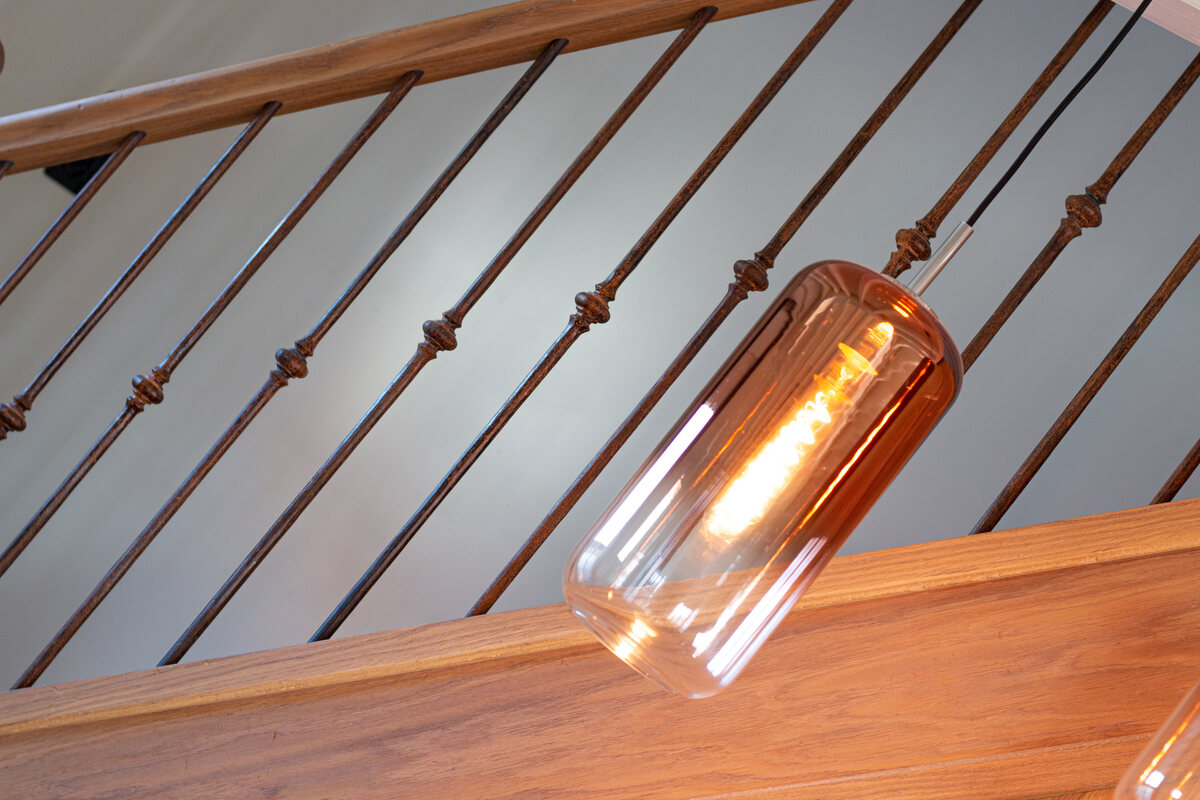
NEW 2026 Jubileum Edition The Best Interior Designers Benelux
Order Now €125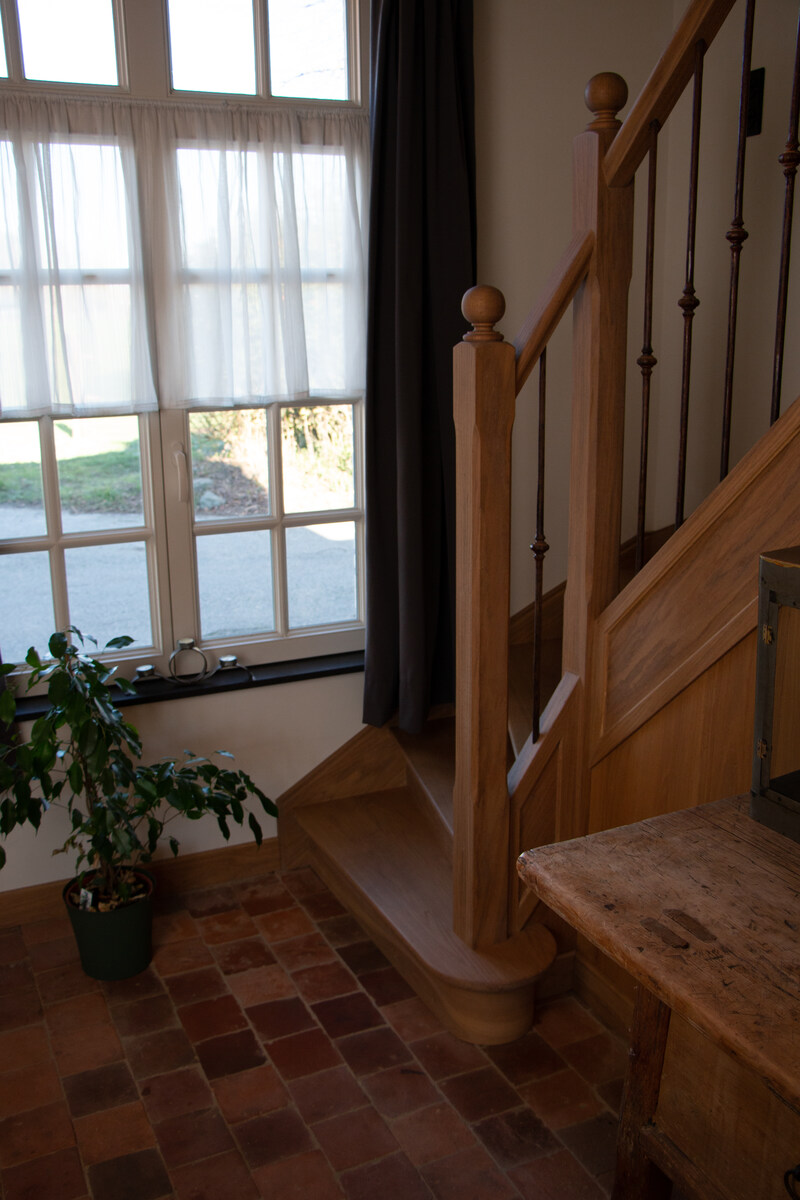
NEW 2026 Jubileum Edition The Best Interior Designers Benelux
Order Now €125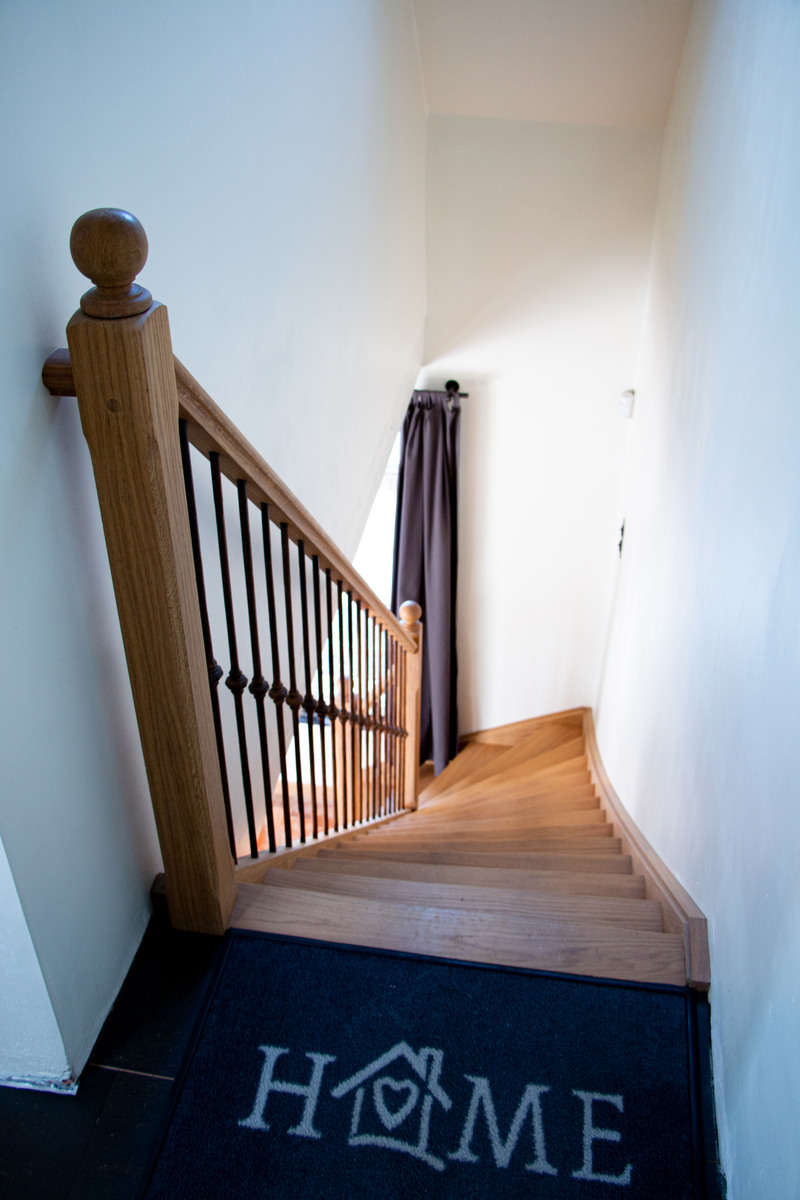
NEW 2026 Jubileum Edition The Best Interior Designers Benelux
Order Now €125