





In simplicity lies elegance: slim wall lamps and pendant lights
Thin lines of light are the first thing you notice, not the fittings themselves. In this interior, slim wall lamps and pendant lights sit close to a calm palette of cream, beige, brown, and dark accents, so the eye moves from the warm glow to the geometric wall pattern behind it. The result is understated at first glance, then more deliberate the longer you look. This is minimalist interior lighting that does its work quietly, while still leaving a clear visual mark on the room.
slim wall lamps and pendant lights as the architectural starting point
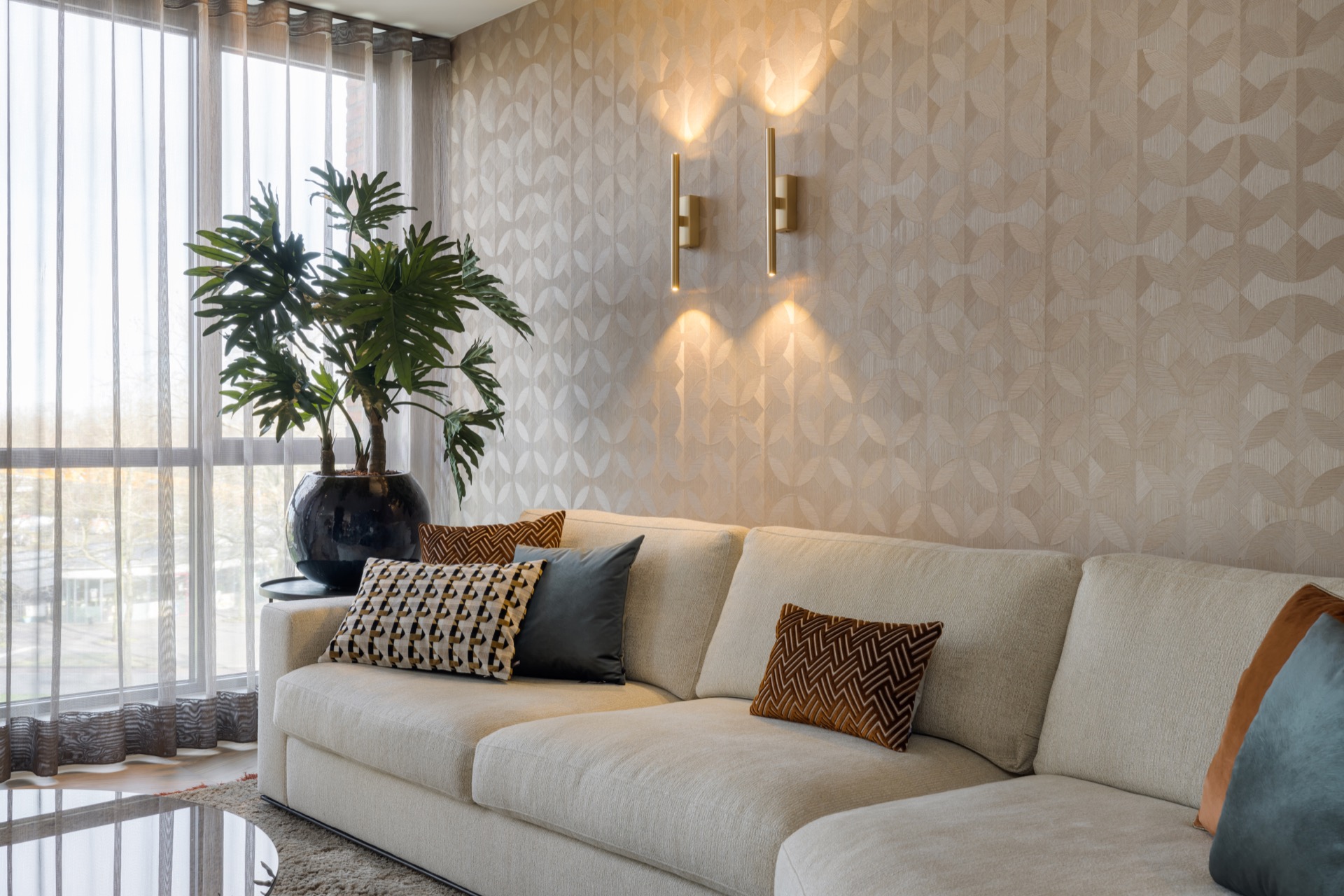
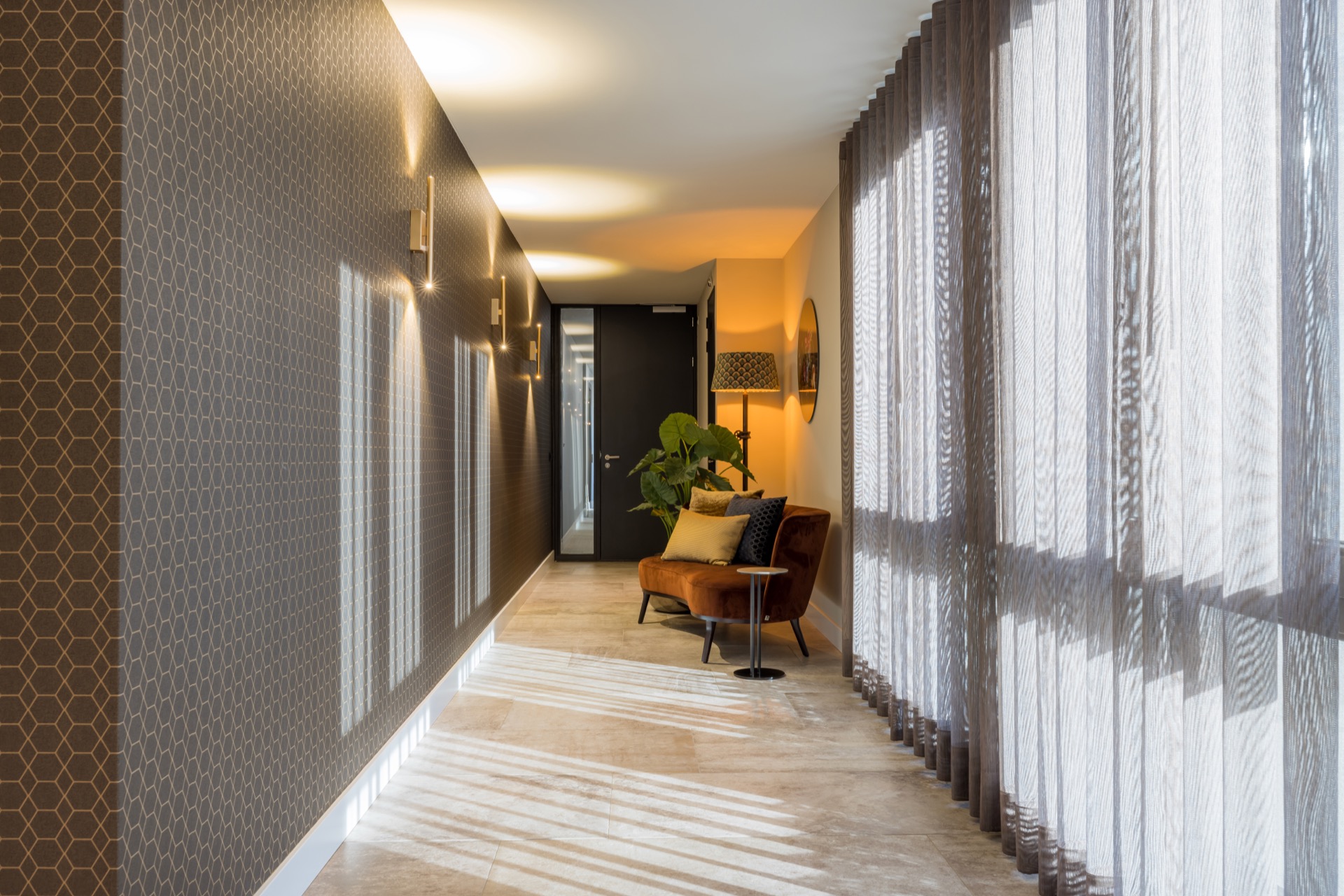
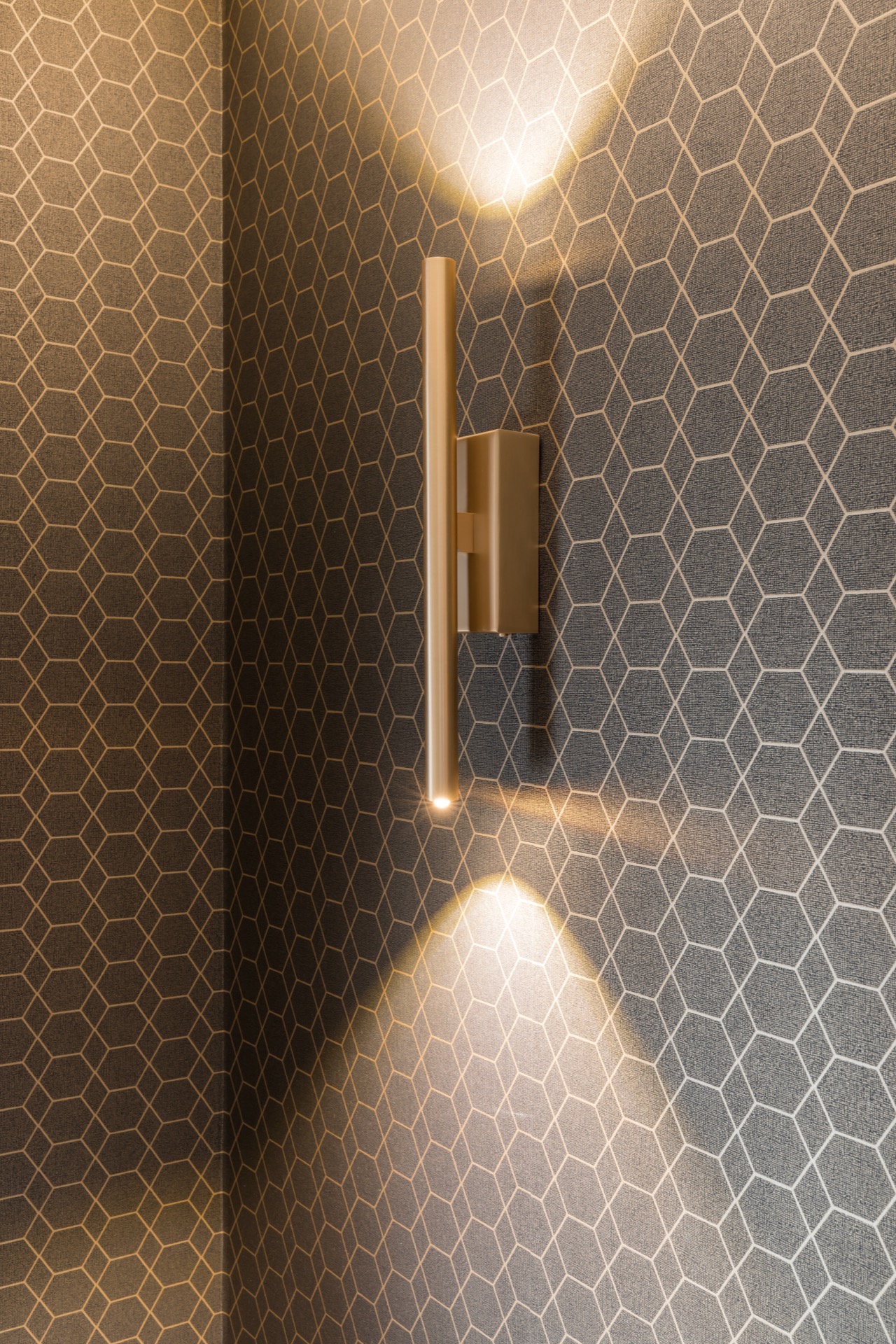
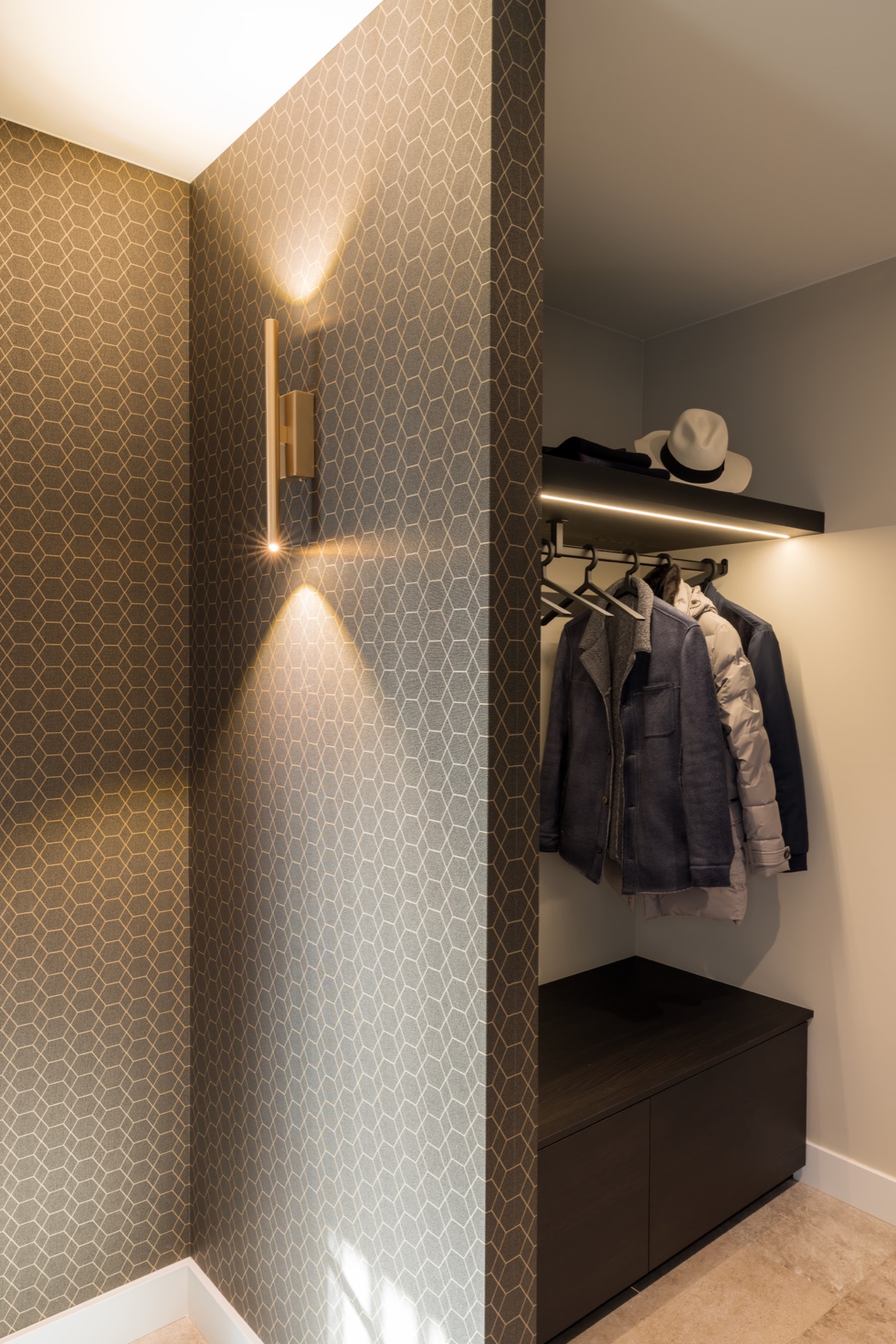
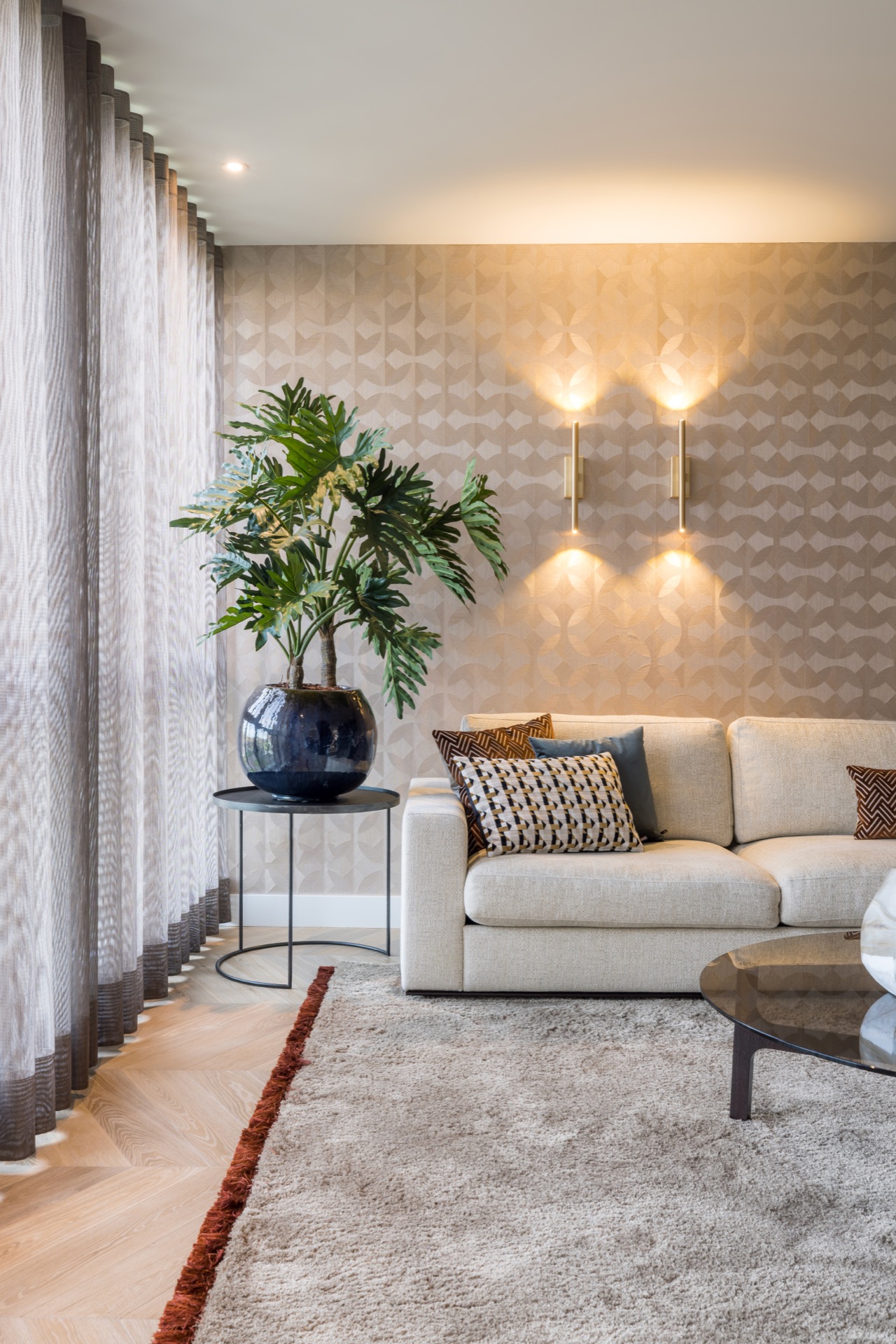
Along the walls, the vertical fixtures act like a measured rhythm. Their warm vertical lighting picks up the texture of the repeated pattern, including the honeycomb-like surfaces seen in the hall and detail views. Rather than flooding the space, the light stays narrow and directed, which keeps the wall readable and gives the pattern depth. That small shift matters: the wall is not only a background, but part of the lighting scheme itself.
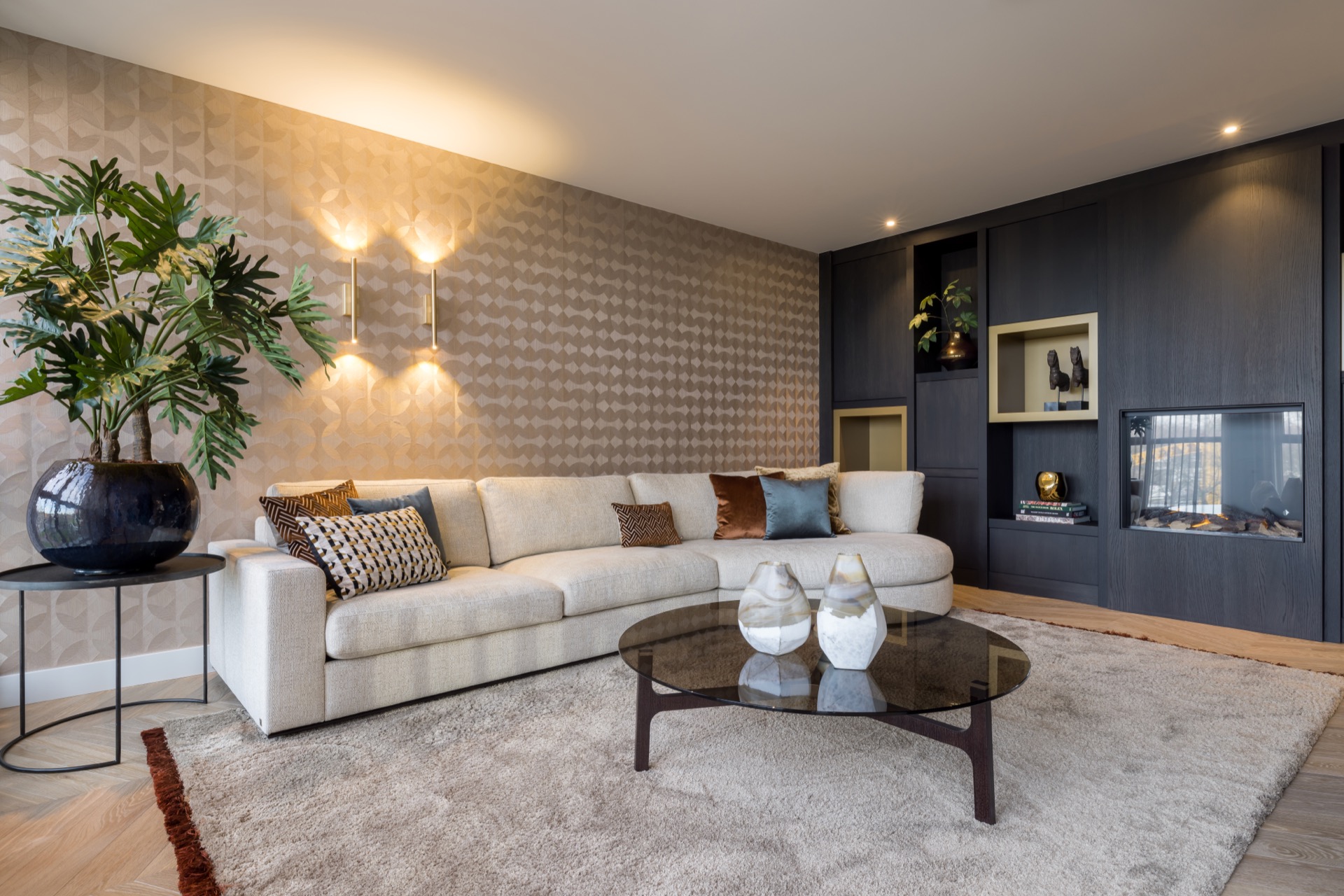
In the living area, the same approach returns in another setting. A neutral sofa, pale cushions, and a round table sit beneath the repeated lines of the fixtures, while a dark insert and fireplace anchor the composition. The lighting does not compete with those elements. Instead, it traces the room’s edges and lets the surfaces carry the mood. That is where the cohesive lighting set becomes visible: one family of fittings, repeated across spaces, without turning repetitive.
A geometric wall pattern as a backdrop
The wall treatment changes the tone of the room without needing strong color. In the images, the geometric wall pattern ranges from a small-scale honeycomb effect to larger, layered panels. This gives the slim wall lamps and pendant lights something to play against. Their vertical form cuts cleanly through the repeated shapes, and the contrast keeps the composition from flattening. Even when the palette stays quiet, the wall remains active because the light catches each edge differently.
That same interplay appears in the corridor view, where the patterned wall runs past a line of slender fixtures and sheer curtains. The corridor feels long and carefully paced, with the lights marking movement rather than announcing themselves. Here, minimalist interior lighting means more than simple form. It also means restraint in how the fixtures are placed, so the geometry of the wall can stay legible from one end to the other.
Warm accents in kitchen and living spaces
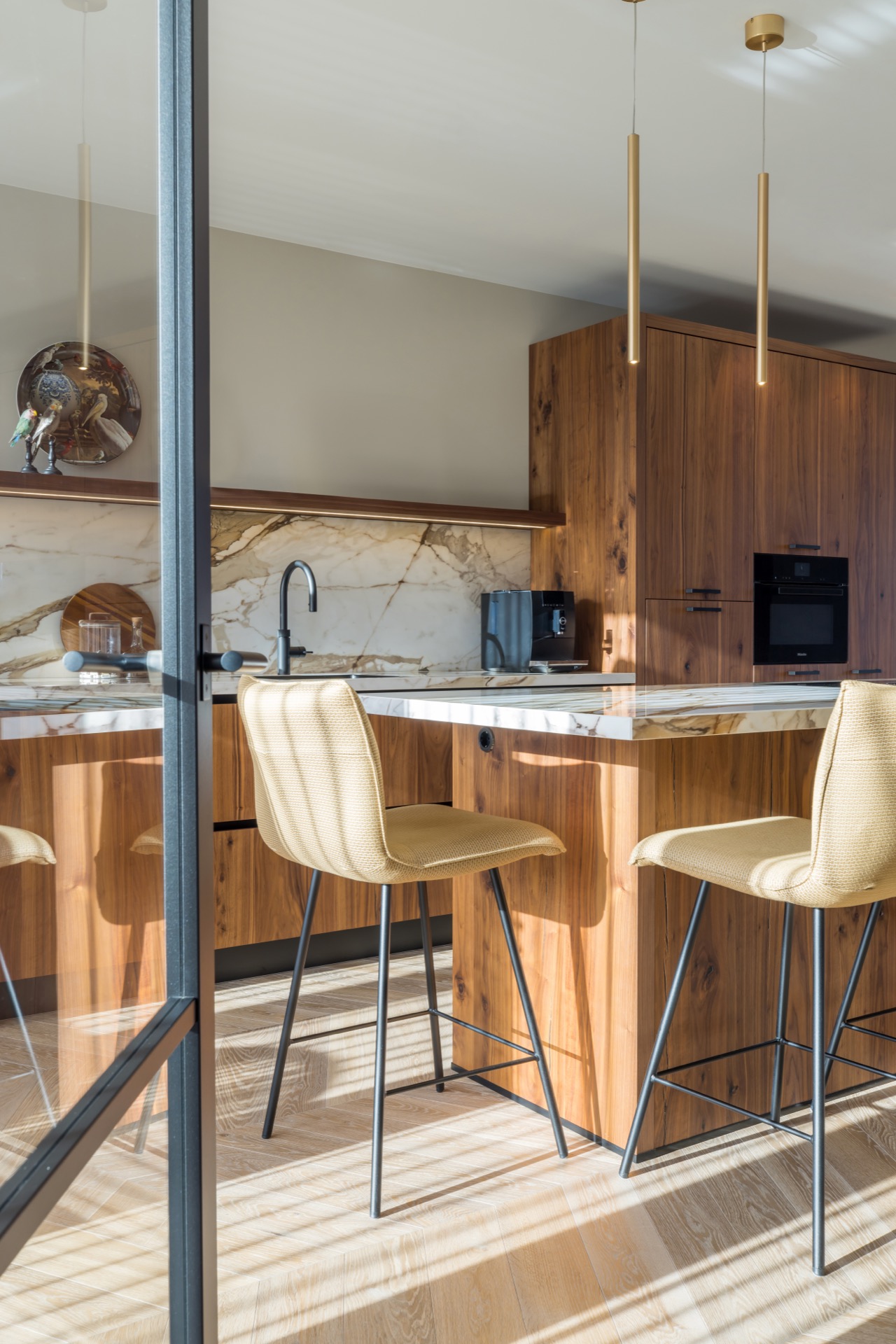
The kitchen image adds another layer to the project. A stone-like worktop, dark cabinetry accents, and warm light along the edge of the surface create a more grounded scene. Above the counter, slim pendant forms draw the eye upward and then back down to the work area. The light is soft, but not vague; it marks the counter zone clearly and leaves the surrounding wood tones intact. This is where the soft glow from wall and pendant fixtures becomes practical without losing its calm register. That makes the slim wall lamps and pendant lights part of the architectural character rather than a loose finish.
What makes the kitchen particularly effective is the way the fittings respect the proportions of the room. The hanging lines stay narrow, so the surface below remains open and easy to read. Nearby wood cabinets and darker details keep the palette from feeling flat, while the warm illumination pulls the eye across the room in a controlled way. The lighting does not announce a separate gesture in each zone. It repeats a single idea with small adjustments to fit the space.
Why the collection reads as one set
Using multiple fittings from the same family changes the room more than a single lamp would. The project shows how a cohesive lighting set can tie together living space, corridor, and kitchen without forcing each room into the same arrangement. The wall-mounted pieces and pendant forms share the same slim profile, so the eye recognizes the connection immediately. Yet each placement responds to the surface around it: a patterned wall, a countertop, a narrow passage, or a seating area.
The finish contributes as well. In close-up, the fixtures feel precise, with a surface that reflects light rather than scattering it. That detail matters against the deeper tones in the room. It gives the fittings enough presence to stand out against the wall pattern, while still allowing the architecture and furnishings to remain the main frame. The project never relies on scale alone; it relies on repetition, proportion, and the way the light lands.
Details that hold the room together
Seen in sequence, the images move from living area to kitchen to corridor, and each space uses the same visual language in a slightly different key. The furniture stays low and neutral, the curtains are light and sheer, and the wall surfaces carry the stronger pattern. Against that backdrop, slim wall lamps and pendant lights become the linking element. They do not interrupt the room. They register it, line by line, with a restrained brightness that leaves room for texture and shadow.
That measured approach gives the project its clarity. The fixtures are narrow, the light is warm, and the walls do much of the visual work. Nothing feels overdrawn. The room changes through small shifts: a line of light beside a honeycomb panel, a pendant above the worktop, a fixture catching the edge of a corridor wall. Those are the moments that hold the project together and explain why this lighting concept stays memorable without needing to be loud.
Photo: Ellen Breedveld That makes the slim wall lamps and pendant lights part of the architectural character rather than a loose finish.
Want to see more of ILFARI Lighting? View the page of ILFARI Lighting for even more great projects and company information.


.png)