







Smart home villa control with smartphone intercom and electronic access
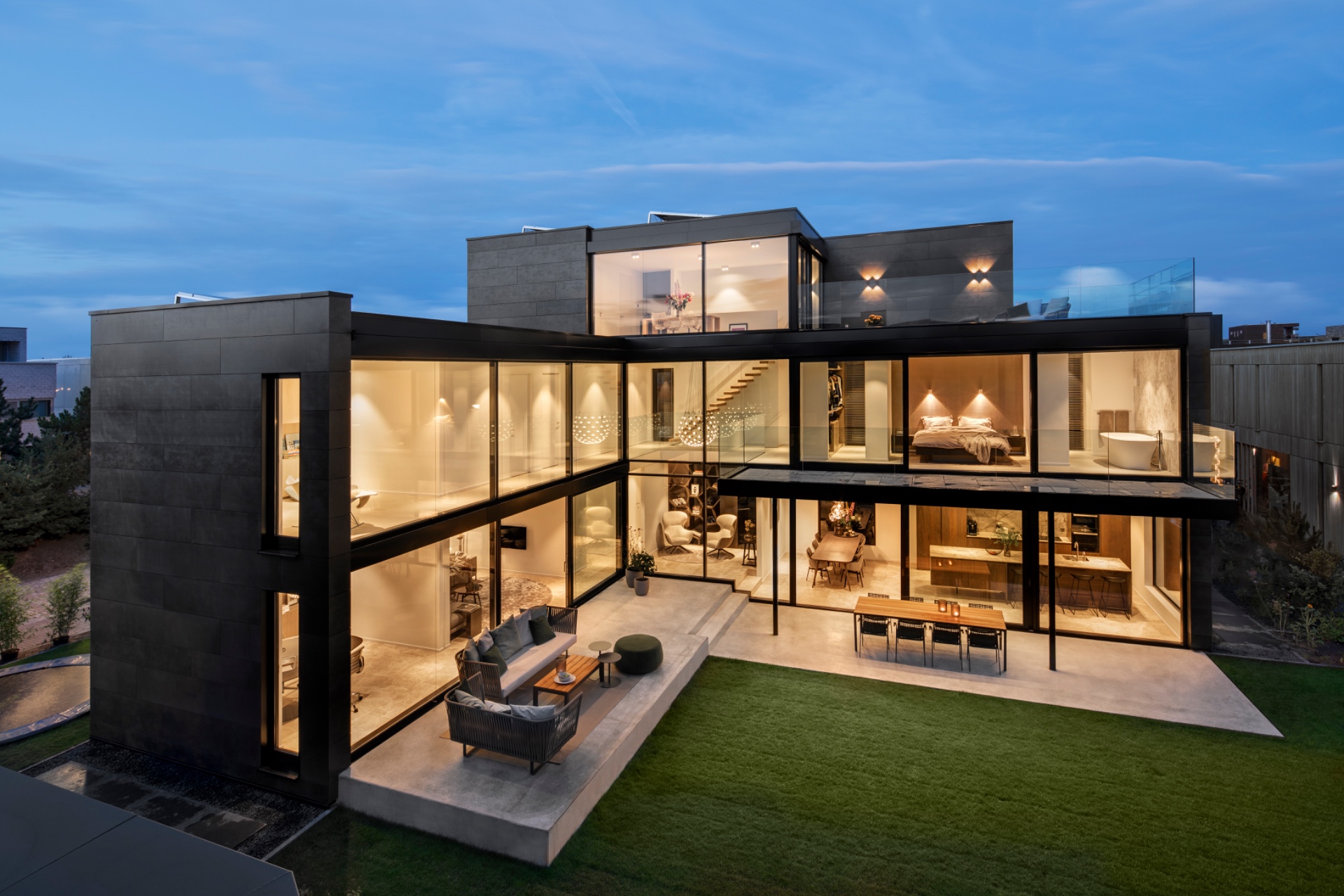
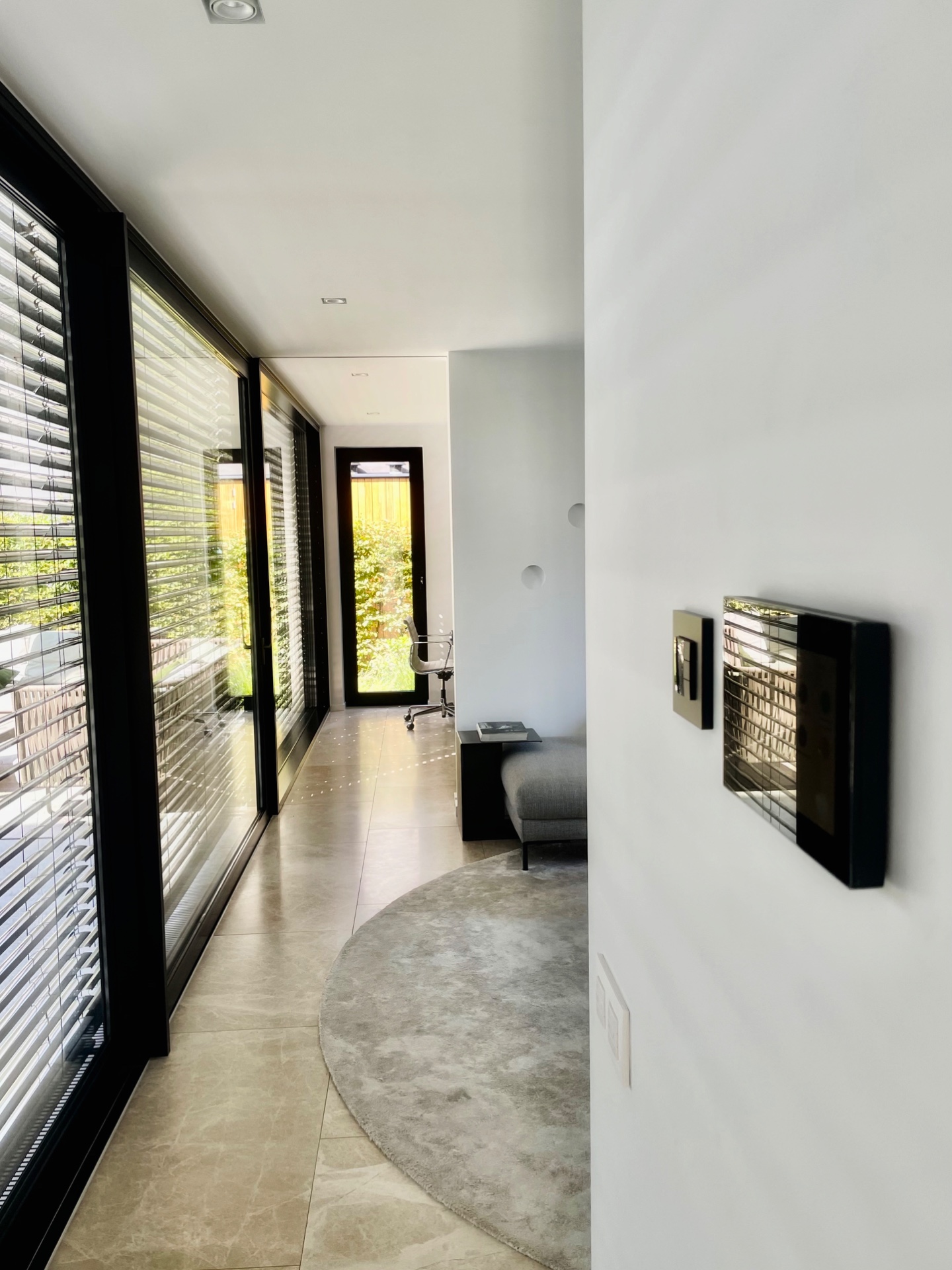
Dark volumes and broad panes of glass set the tone before the technology comes into view. A covered terrace with glass panels opens the house toward the outside, while the interior stays bright and restrained, with white walls, a tiled floor and recessed ceiling lights. Within that setting, the smart home villa control system gives the residents a direct way to manage lighting, ventilation and other electrical applications, either from the wall interface or from a smartphone.
Smart home villa control as a spatial starting point
Niko Home Control is the central layer in this villa. It brings lighting, ventilation and other electrical applications together in one system, so daily adjustments happen from a clear interface inside the home or through the smartphone. The controls are kept in step with the rest of the interior: quiet on the wall, practical in use. In a house with large openings and strong daylight, that kind of control is easy to read from the room itself, without pulling attention away from the glass surfaces and pale finishes.
The smart home villa control approach is not only about convenience. It also supports more measured use of the house’s electrical functions, because the residents can check and adjust settings when they are at home or away. The image of the villa matters here: dark frames, wide glass areas and a covered terrace create a clear visual route between inside and outside, and the control system follows that same direct logic. Nothing is hidden behind extra layers; the interface gives access where the daily routine needs it.
Door intercom to smartphone, even when no one is home
The entrance is equipped with wired Niko door communication with forwarding to the smartphone. That means the residents can see who is at the door even when they are not in the house. A visitor, a delivery driver or a call at the front door no longer depends on someone being physically present by the entry. The system moves the conversation to the phone, while still keeping the connection to the door itself. In an everyday sense, that changes the way arrivals are handled.
One button is enough to open the door remotely. The action stays simple, but the effect is practical: the person inside does not need to cross the house to reach the entrance, and the person outside is not left waiting while someone searches for a key or walks back from another room. The door intercom to smartphone is therefore not an isolated feature; it works as part of the larger domestic routine, alongside the lighting and ventilation controls already in place.
A clear view of the threshold
The exterior language of the villa supports that same sense of directness. Large glass surfaces, dark profiles and a covered terrace make the threshold readable from several points in the house. At night, the recessed lighting at the façade gives shape to those edges. During the day, the glass panels and broad openings pull the eye outward. The intercom system fits into that sequence of views, because the residents can check the entrance without leaving the room they are in.
Electronic access control keeps entry organized
For the building entrance, electronic access control was chosen to keep access clear and secure. It is a straightforward layer between residents and visitors: people with access can enter without delay, while unauthorized access is kept out. In a villa with a strong focus on controlled movement through the house, that matters just as much as the visible controls on the wall. The system does its work quietly, without changing the appearance of the dark interior fittings or the clean wall surfaces. Smart home villa control remains connected to the layout, materials and daily use of the home.
The access solution sits alongside the other installed systems rather than competing with them. Niko Home Control, the wired intercom and the electronic access control each handle a different part of the daily routine, but they read as one practical set of tools. The result is an entry sequence that does not rely on guesswork. Door communication, remote opening and controlled access all support the same house, from the first contact at the door to movement inside the building.
Conventional mailboxes as the most direct daily solution
Not every part of the project is digital. The conventional mailboxes are a simple, reliable answer for daily post. Their role is easy to overlook, but in a residential setting they still matter because they give incoming mail a clear place and keep that function separate from the smartphone-based systems. In the context of the villa, they sit as a grounded counterpoint to the more advanced controls: one part of the entrance works through apps and interfaces, another handles the everyday paper flow without complication.
That contrast is visible in the way the project combines the new and the ordinary. The glass façade and covered terrace give the house its outward presence, yet the mailbox solution remains direct and familiar. It is a useful reminder that the project is not only about automation. It also handles the small, repeated tasks of domestic life, with a physical point for mail and a clear path for visitors at the door.
Materials that stay visually quiet
The selected materials keep the technology from becoming visually noisy. Niko Pure Alu Black brushed switch material is mentioned in the supply list, and its darker tone suits the villa’s black frames and reduced palette. Inside, the white walls, light ceiling and tiled floor provide a plain background for the controls. Outside, the glass panels and dark lines of the structure continue that restrained look. The details are present, but they do not compete with the larger spatial move between rooms, terrace and entrance.
That is especially clear in the way the interior opens toward the outside. Broad openings, inbuilt lighting and the glazed terrace area create a sequence of surfaces that stays legible from one room to the next. The smart home villa control system sits inside that sequence as an everyday tool, not as a visible display. A resident can change lighting or ventilation from the wall or from the phone, while the house itself keeps its clear lines and bright interior surfaces.
Smart home villa control in daily use
What ties the project together is the way each element serves a specific part of the day. Lighting and ventilation are managed through Niko Home Control. The door intercom to smartphone shows who is outside and allows the door to be opened remotely. Electronic access control organizes entry to the building. Conventional mailboxes handle the paper that still arrives at the house. None of these parts is flashy on its own, but together they form a clear system for living in a villa with a glass façade and a covered terrace.
Seen from the outside, the house reads through dark volumes, glass panels and a terrace that extends the interior toward the garden edge. Seen from inside, the white walls and recessed lights keep the rooms calm enough for the controls to disappear into use. That is where the project lands: a smart home villa control setup that works through concrete actions, from the smartphone in the hand to the opening at the door.
Want to see more of Niko? View the page of Niko for even more great projects and company information.