







Stainless steel pool
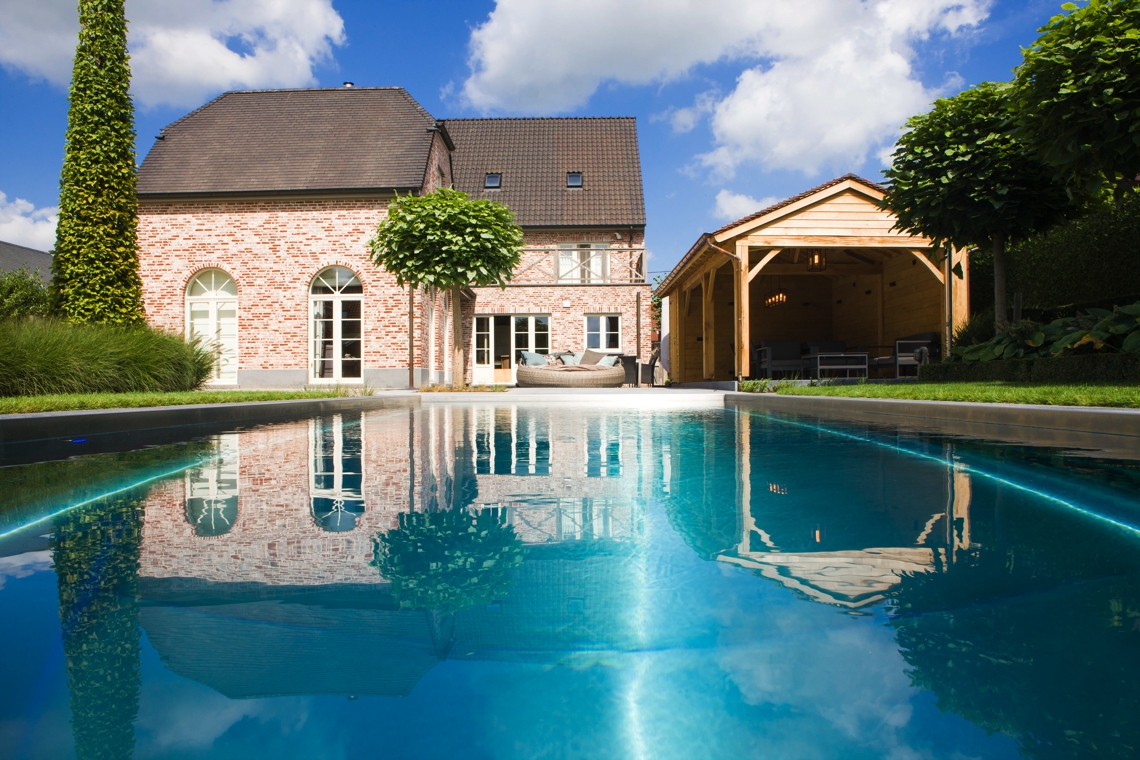
The stainless steel pool sets a sharp line in the garden. Its rectangular shape is easy to read from every angle, and the metal edge catches the light before the water does. Around it, light grey stone paving pulls the pool into the terrace, while the lawn and clipped planting keep the frame open. The result is direct and legible: water, steel, stone, grass.
Rectangular geometry with a clear perimeter
The pool keeps to a strict rectangle, which gives the whole garden a calm visual order without asking for ornament. The stainless steel pool edge runs as a thin perimeter around the water, so the boundary stays precise rather than heavy. In the wider views, that edge is what holds the composition together: a clean contour against the softer green of the lawn and the planted borders. The pool reads as an outdoor room cut into the garden rather than an object placed on top of it.
Reflections change the surface from one image to the next. In some views the water mirrors the sky and nearby architecture; in others, the light strip along the pool line sharpens the edge and makes the water plane look even flatter. The effect is subtle, but visible enough to guide the eye along the length of the basin. That narrow band of light also keeps the pool legible in the evening images without turning the scene into a spectacle.
Stone paving meets the waterline
The stone terrace by pool sits directly against the basin, with paving that stays close in tone to the rest of the garden hardscape. The pale slabs slow the transition from lawn to water and give the pool area a grounded surface to walk on. Because the paving is laid in broad rectangles, it echoes the pool’s geometry instead of competing with it. The terrace does not interrupt the view; it extends the pool outward and gives the edge more room to breathe.
Small shifts in material are easy to read at the waterline. Where the stone meets the stainless steel, the junction stays crisp, and the pool edge detail becomes part of the architecture rather than a hidden technical line. In close-up shots, the corner treatment shows the metal turning cleanly and the surrounding paving held to a narrow joint. These are the places where the project feels most precise, not because it is flashy, but because the transitions have been left visible.
Light along the edge after dark
The LED light strip pool effect is understated. It appears as a narrow line rather than a flood of light, tracing the pool edge and sharpening the rectangle once daylight fades. That strip changes the reading of the water: the surface becomes a darker field, while the perimeter stays readable against the terrace. The lighting does not wash over the garden. It stays close to the pool line, which is what makes the detail so effective in the photographs.
Garden planting as a quiet frame
Planting and lawn keep the setting from becoming purely mineral. The garden pool is edged by green strips and clipped beds, so the hard surfaces are always measured against something softer. In the wider shots, the straight lines of the pool are repeated in the planting geometry, especially where the beds are trimmed into neat blocks. That repetition helps the pool sit naturally in the garden without blending into it. It remains the clearest shape in view.
There is also a sense of depth in the way the garden opens behind the pool. The lawn creates space around the water, while the planted edges compress the view and keep attention on the basin. This gives the project a quiet rhythm: broad grass, narrow paving, steel rim, water. Nothing is overworked, yet every surface has a clear role. The pool becomes the point where those surfaces meet and stay distinct.
A wooden canopy beside the water
The wooden pool canopy introduces a warmer material next to the stone and steel. Seen from the terrace side, it sits as a light structure rather than a full enclosure, leaving the pool area open to the garden. The timber texture softens the hard lines nearby, but it does so without stealing attention. In the images, the canopy works best as a frame over the terrace zone, giving shade and a visual pause beside the long edge of the pool.
That contrast between wood, steel and stone is one of the strongest aspects of the project. The pool itself remains restrained, while the canopy adds a secondary layer at the edge of the scene. Because the structure is only partly visible in the photographs, it reads more as a spatial marker than as a dominant feature. It helps define where the terrace ends and the pool setting begins.
Detail shots that hold the project together
The close-ups make the project more than a broad garden view. One image focuses on a corner where the stainless steel turns tightly around the water; another shows a built-in opening in the edge, set within the surrounding finish. These details matter because they explain how the pool line stays so sharp. The eye can follow the joint, the corner and the inbuilt recess without losing the geometry of the basin.
A separate water-level detail adds another layer. The reflective surface, the visible line of light and the small logo on the water all sit close together, turning a simple section of the pool into a concentrated image. It is the kind of detail that only works because the wider composition is disciplined. The steel edge, stone paving and planted border give that close-up something to belong to.
Seen as a whole, the stainless steel pool is defined by restraint rather than size. The rectangle stays clear, the edge stays visible, and the stone terrace by pool keeps the transition between house, garden and water easy to read. The LED light strip pool detail brings a second reading at dusk, while the wooden canopy and planting add depth around the perimeter. Each element has a visible task, and the pool remains the central line that ties them together.
Want to see more of Nouv’eau? View the page of Nouv’eau for even more great projects and company information.





NEW 2026 Jubileum Edition The Best Interior Designers Benelux
Order Now €125


NEW 2026 Jubileum Edition The Best Interior Designers Benelux
Order Now €125


NEW 2026 Jubileum Edition The Best Interior Designers Benelux
Order Now €125


