







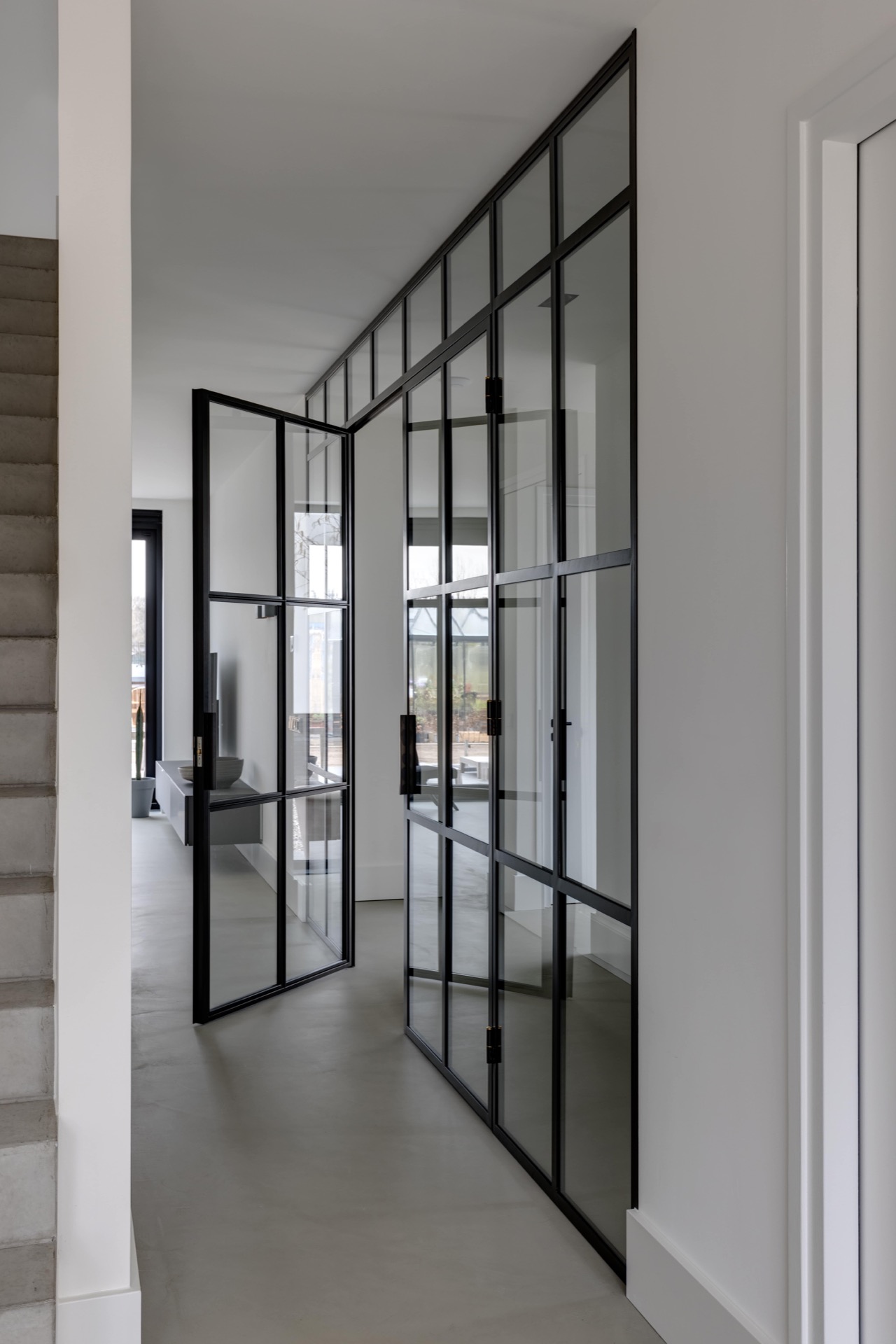
Light moves through the glass before it reaches the stair hall. The steel interior partition with double doors divides the plan without closing it off, using slim profiles, glazed panels, side lights and a transom to keep the sightlines open. From the hall, the frame reads as a clear line between two spaces, while the glass keeps the route visually connected. The result is practical in use, but the first impression comes from the way the steel and glass share the same surface.
Steel interior partition with double doors as a spatial starting point
The main task was straightforward: separate two rooms while trying to keep daylight in circulation. That intention is built into the layout of the steel interior wall with glass panels. The double hinged doors sit in the center, with side lights and overhead glazing extending the frame upward and outward. In the stairwell context, this means the partition marks a threshold without turning it into a dead end. You can see through it, past it, and around it, which gives the hall a lighter edge.
Seen from the corridor, the glazed sections do more than admit light. They also break up the height of the wall and give the steel frame a measured rhythm. Narrow vertical bars define the openings, while the larger glass areas keep the structure from feeling heavy. The contrast with the white walls and grey floor makes every line easier to read. Rather than hiding the transition between rooms, the partition frames it and makes the crossing point visible.
Double hinged doors with glazing in a steel frame
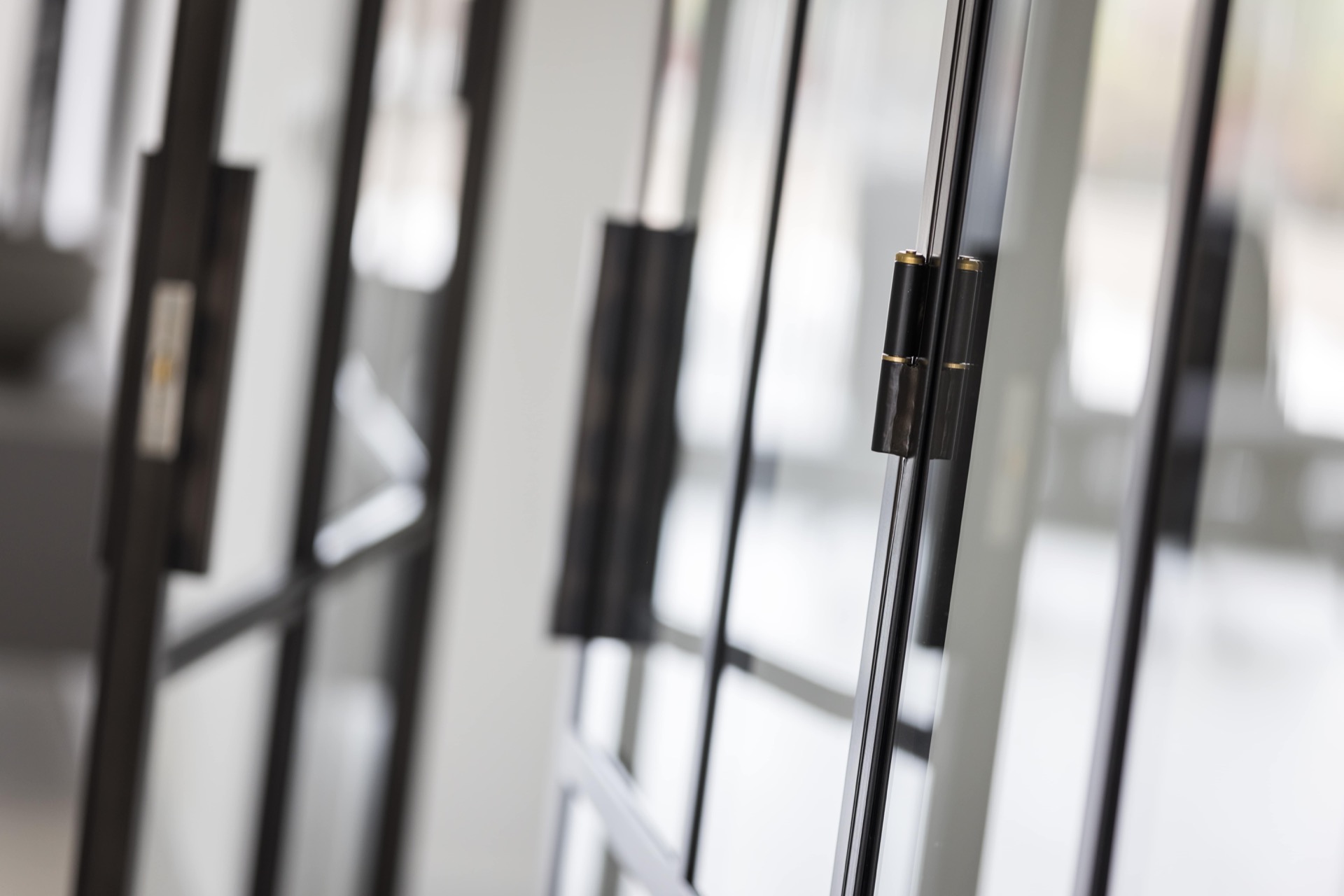
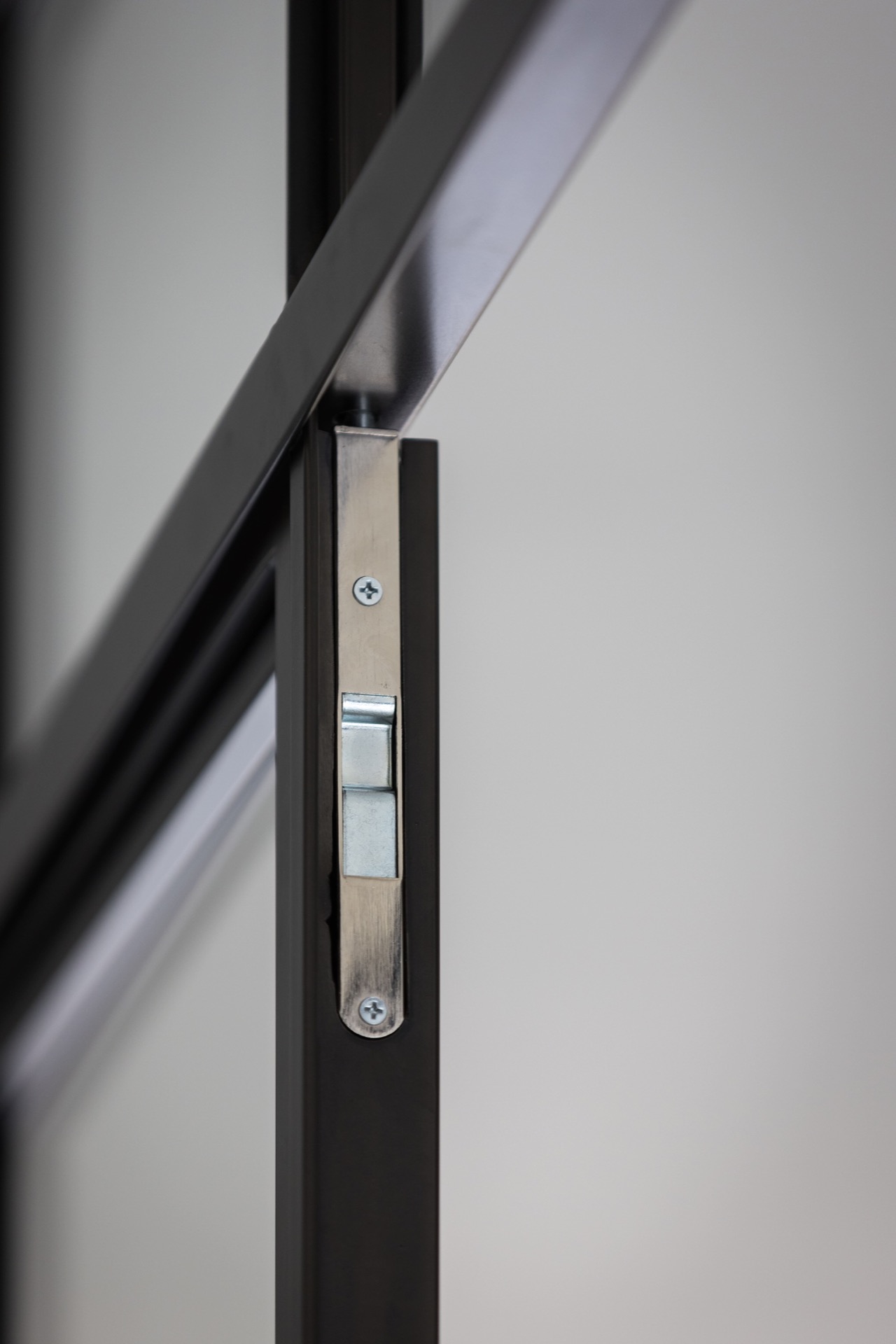
The doors are built as a pair, which gives the opening a broader gesture than a single leaf could. Their glazing follows the same language as the partition, so the door set does not interrupt the wall; it continues it. The door hinge detail in the steel frame becomes part of the composition as well. In the close-up views, the connection points are visible, along with the dark and metallic parts of the hardware. These are the places where the system reveals how it is held together.
Slender profiles, clear joints
The profiles stay visually slim, so the glass remains the dominant surface. That choice is especially noticeable where the doors meet the fixed frame and where the hinges are mounted. The attachment plate sits cleanly against the steel, and the edges of the metal sections keep a crisp outline against the lighter wall behind them. In a project like this, those junctions matter. They carry the weight of the doors, but they also shape the way the partition is read from across the hall.
The glazed arrangement brings a sense of order to the stair landing. Instead of a closed wall, there is a sequence of openings and reflections. The fixed side panels slow the view just enough, while the transom lifts the line of the partition and lets the upper part of the hall stay visually active. The door pair sits within that framework as a functional opening, but the whole composition remains tied to one continuous steel structure. Steel interior partition with double doors remains connected to the layout, materials and daily use of the home.
Blank lacquered steel finish
The steel was finished with a blank lacquer, which keeps the surface character of the material visible. In the image, the frame reads as dark in contrast with the pale walls, while still showing the matte presence of the metal. That finish matters because it prevents the steel from disappearing into a painted surface. You still read the frame, the hinges, the bars and the edges as steel elements, not as a visual disguise.
That same finish gives the partition a consistent tone across the door leaves, fixed glazing and adjoining frame pieces. Under the stairwell light, the lacquer softens the reflections without removing them completely. The surface stays restrained, and the details remain legible. It is a finish that supports the architecture of the frame rather than competing with the glass. The project depends on that clarity, because the relationship between steel, light and opening is what defines the room divider.
Round steel handrails carried through the same language
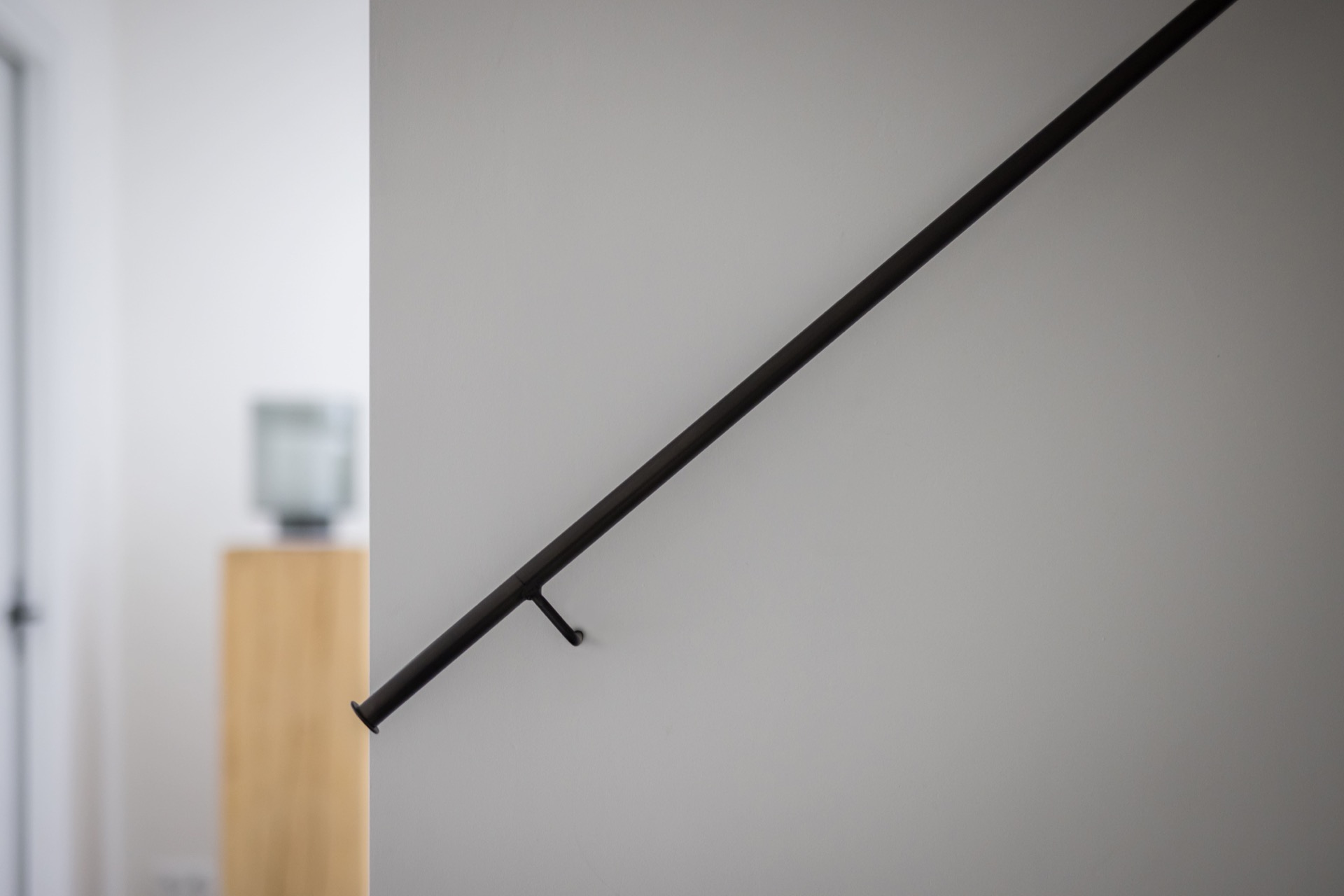
Alongside the partition, round steel handrails were installed and finished in the same blank lacquer. They appear in the stair area as a separate element, but they repeat the same material logic. The rounded profile is easy to follow in the detail shots, where the handrail curves across the frame and meets its fixing point. Compared with the sharper lines of the partition, the handrail introduces a softer edge without leaving the steel vocabulary behind.
Details that tie the stairwell together
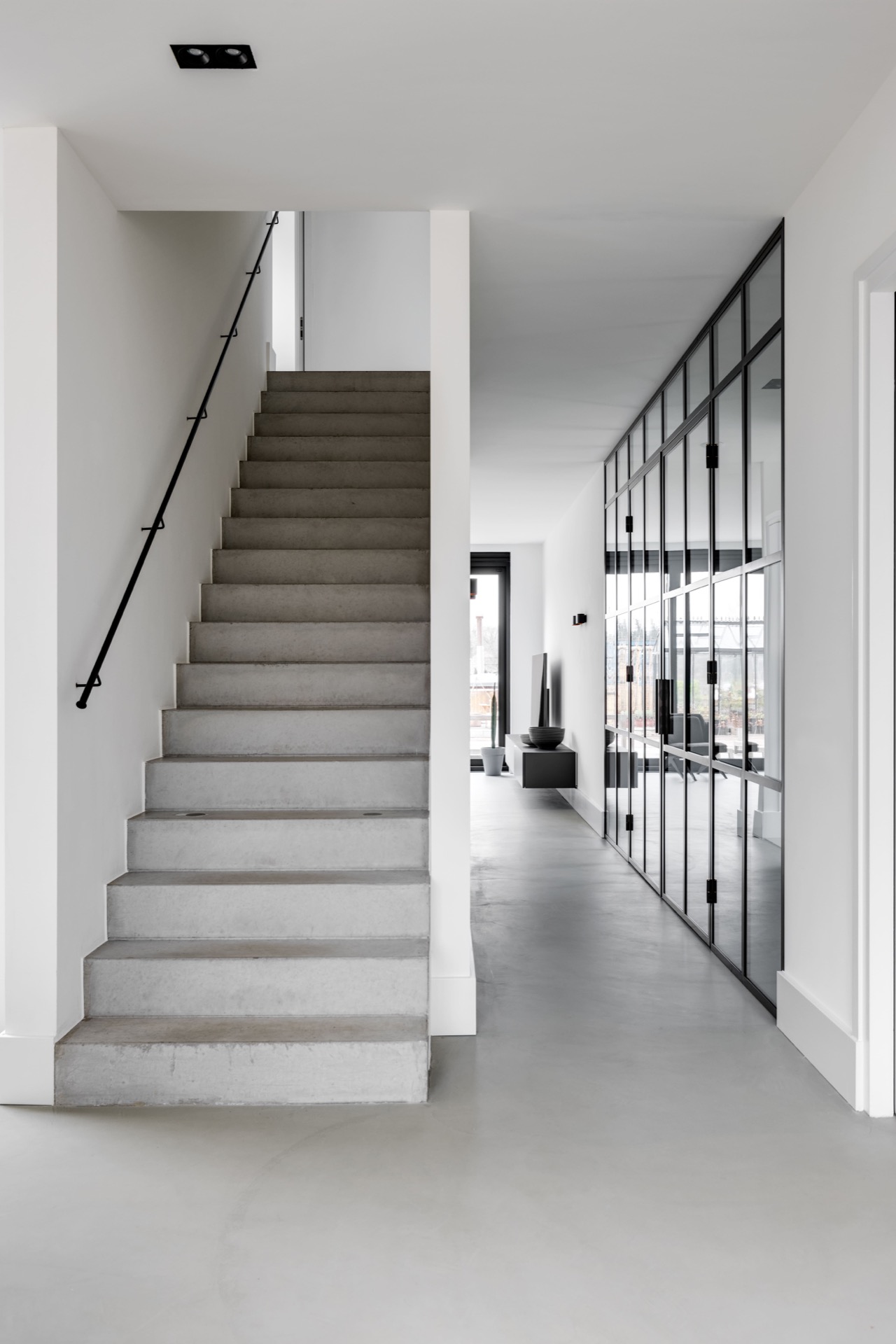
The handrail connections are visible in close-up: short metal brackets, a firm junction to the wall, and a continuous round profile running through the composition. These are small parts, but they help the stair area feel considered as one route. The handrail sits comfortably beside the glazed wall and the concrete steps, echoing the same finish that appears in the partition. Because the lacquer is shared, the eye reads both interventions as part of the same interior move.
What stands out most in the images is the way the steel elements work against the lighter building surfaces. White walls, grey flooring and concrete steps set up a quiet background for the partition and the handrail. That contrast lets the glass panels and the dark steel lines remain distinct, even from a distance. The result is a stair hall that stays open to daylight while still using the steel interior partition with double doors to define where one space ends and the next begins.
The whole assembly relies on precision rather than decoration. Glazing, hinges, slim bars and round rail sections all have a clear role, and each part is visible enough to be read on its own. At the same time, the partition with side lights and transom keeps the room connected, which was the central aim from the start. In that sense, the project is less about adding an object to the hall and more about shaping the passage between two rooms with steel, glass and a controlled amount of light. Steel interior partition with double doors remains connected to the layout, materials and daily use of the home.
Want to see more of ? View the page of for even more great projects and company information.

NEW 2026 Jubileum Edition The Best Interior Designers Benelux
Order Now €125