








Steel pivot door with 3-panel glass layout (anodic brown, matte finish)
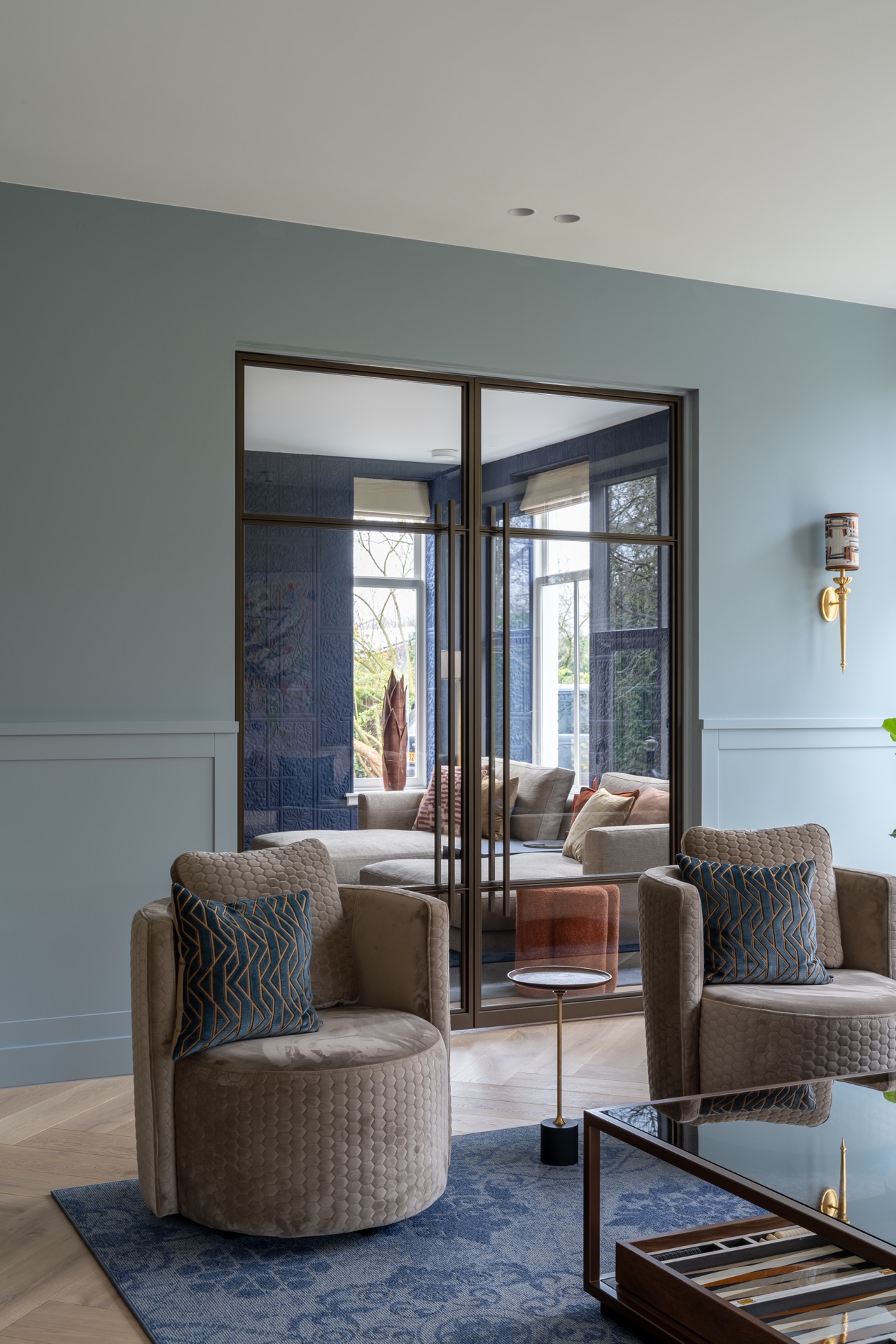
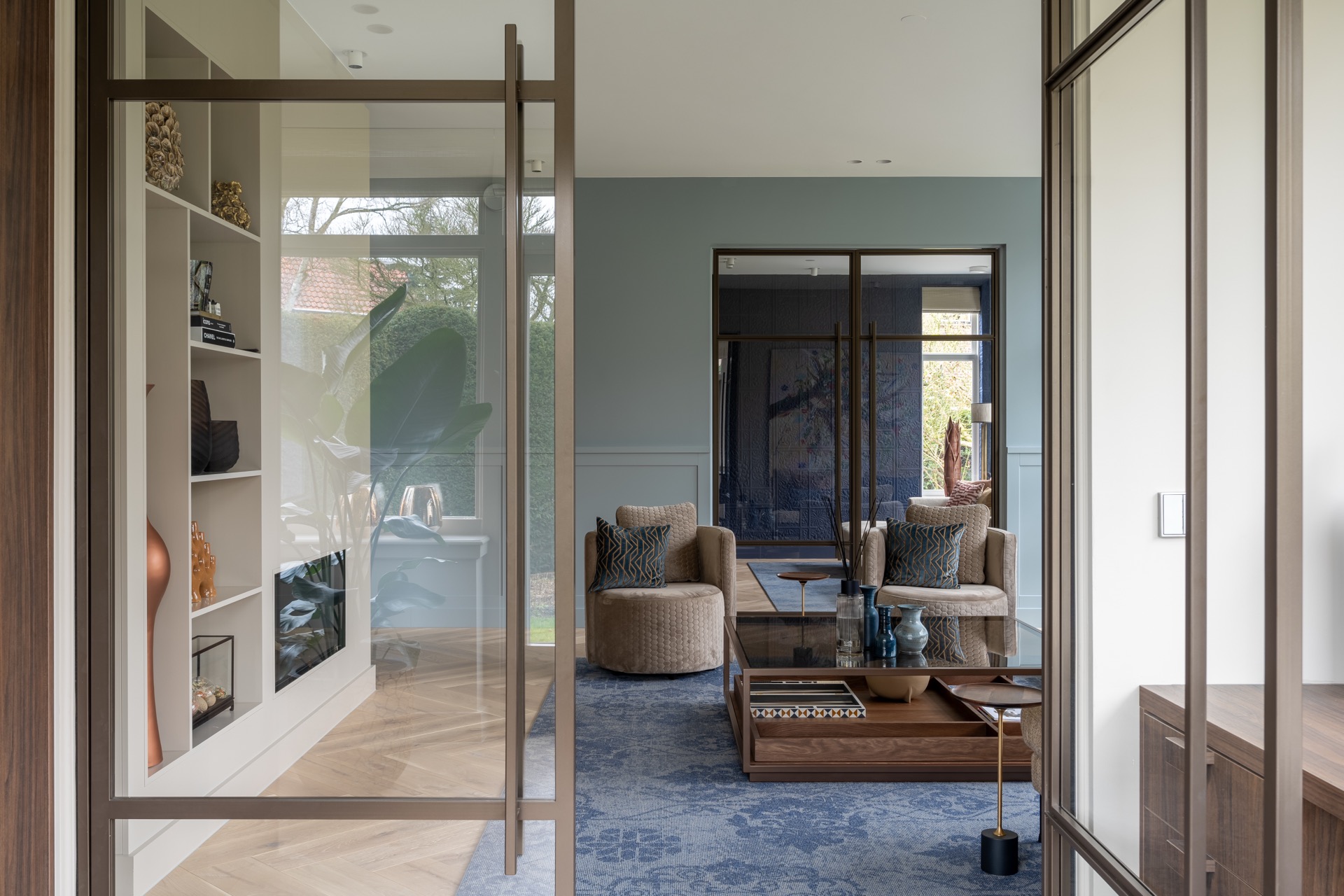
Matte bronze catches the eye first, then the thin black lines of steel around the glass. In this home, seven steel pivot doors were installed as a single family of elements, each one built around a steel pivot door with 3-panel glass layout. The center panel sits slightly higher than the two outer panels, which gives the glazed opening a measured rhythm without making the grid feel busy. The result is quiet, but not flat; the profile work gives the doors a clear edge in the room.
steel pivot door with 3-panel glass layout as the architectural starting point
The rectangular 3-panel glass division is what sets the pace. Rather than dividing the door into many small parts, the design keeps the reading simple: three fields, with the middle section lifted just enough to shift the proportions. That small change is visible from across the room. It makes the steel pivot door with 3-panel glass layout feel deliberate, especially where the glass opens views between living spaces and a circulation zone.
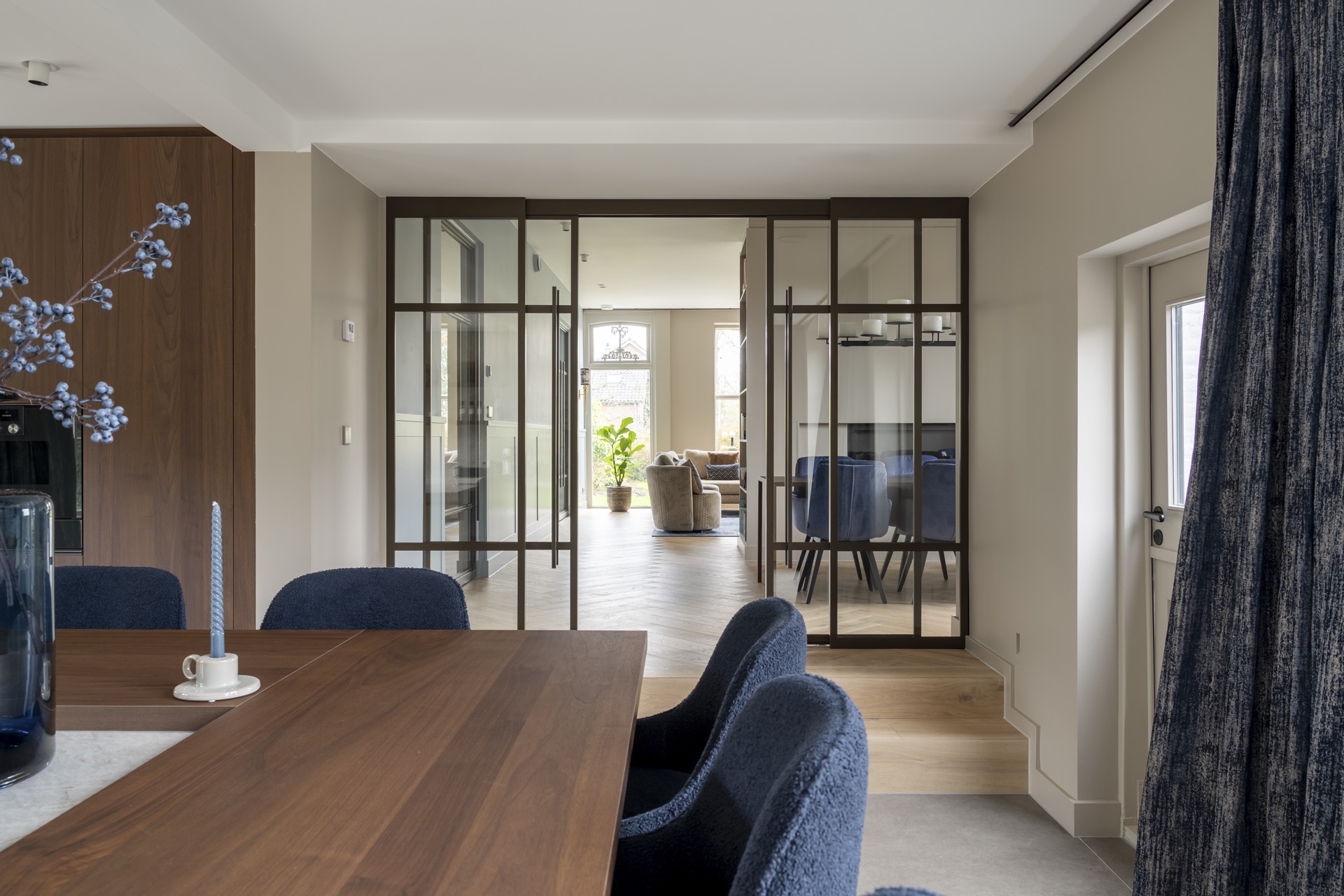
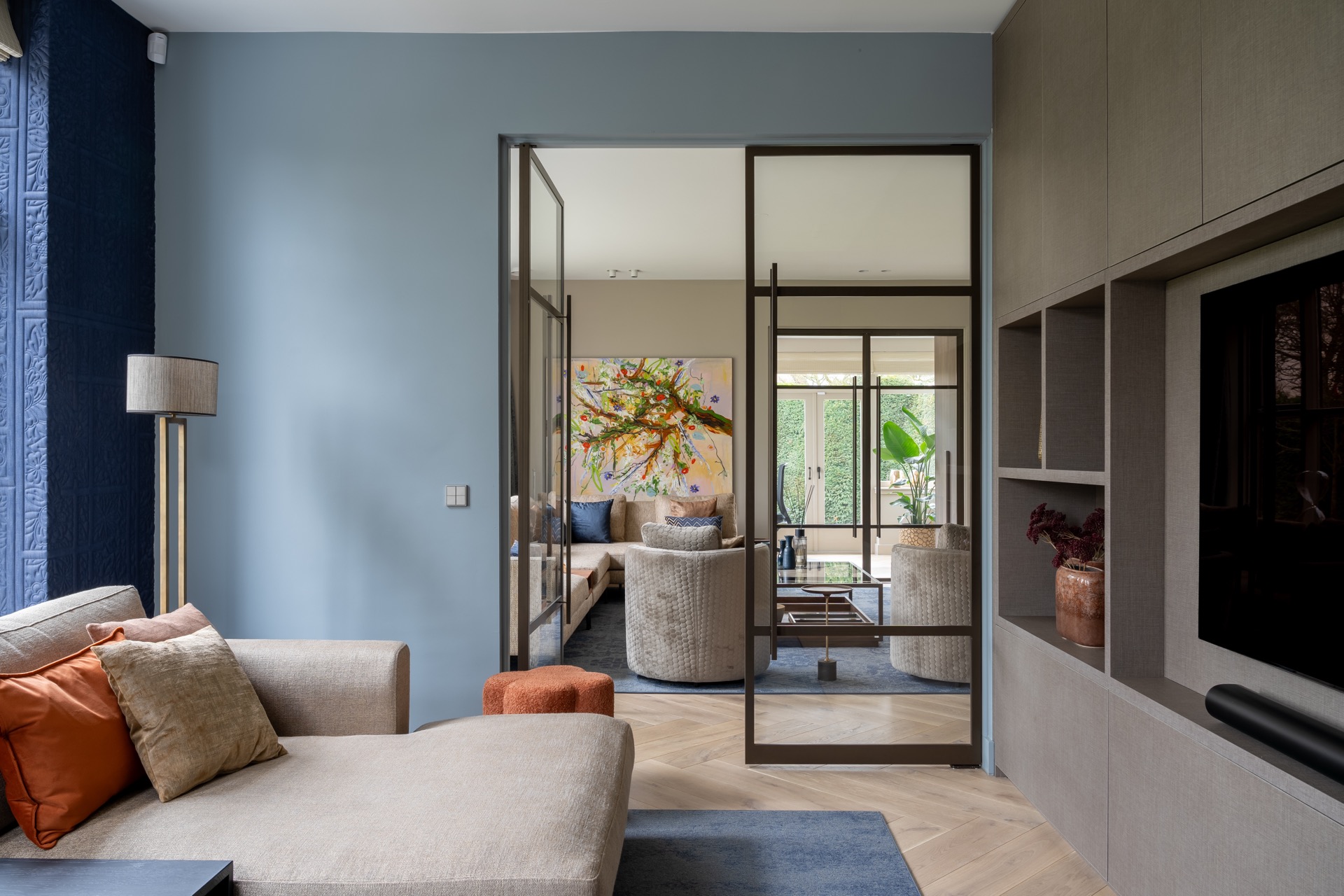
Seen in use, the doors do more than mark a passage. They frame sightlines, filter movement, and leave the interior connected through the glazed openings. The steel frames stay narrow, so the glass retains the main role. From a distance, the geometry is strong and legible. Up close, the slight offset in the center panel becomes the detail that keeps the composition from reading as a standard grid.
Anodic brown on the metal work
The finish was chosen with restraint: a matte bronze powder coating in anodic brown. That surface softens the metal without losing the darker tone around the glazing. It is not glossy, so reflections stay muted and the profiles remain readable. On the installed doors, the finish gives the frames a grounded look, especially where daylight slides over the edges and the rectangular panels appear as cut-outs within the darker metal.
The doors do not rely on ornament. Their presence comes from proportion, color, and repetition. Seven units in the same finish create continuity through the house, but the three-panel arrangement keeps each door visually active. The powder-coated surface sits close to the glass, so the contrast between clear pane and metal line stays sharp. That contrast is visible in both the wider views and the detail shots of the frame joints.
Profile details that stay slim
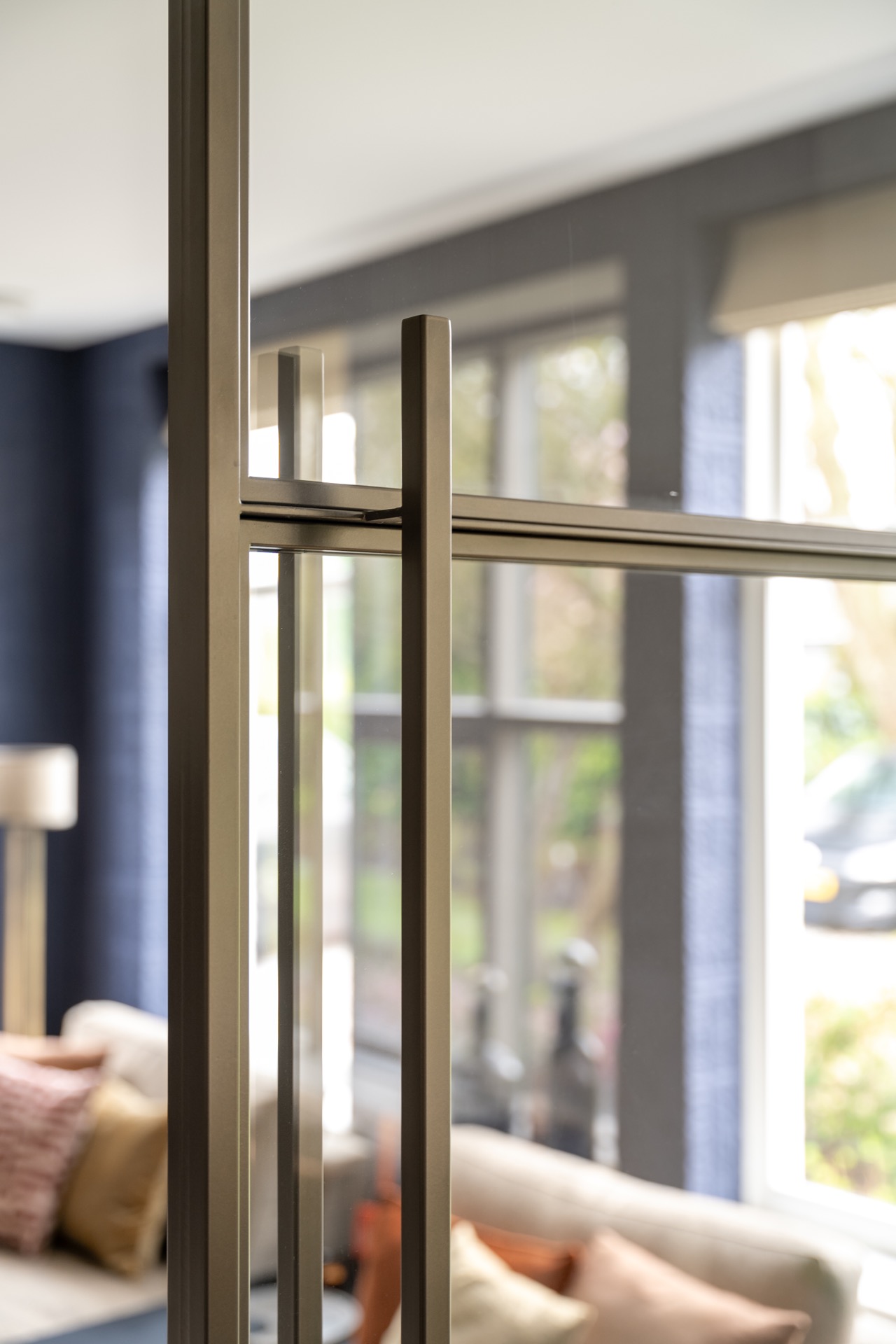
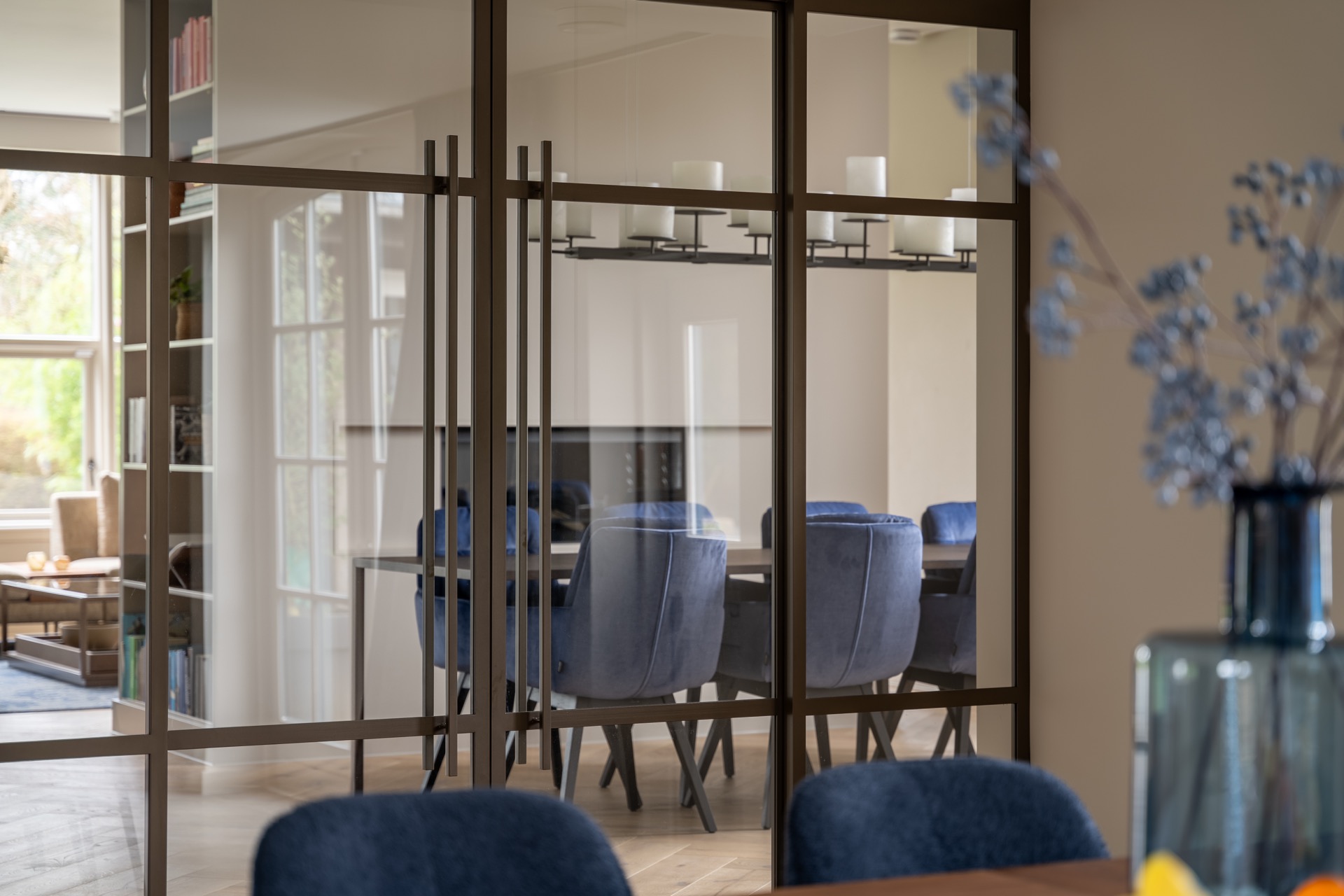
Construction follows the same disciplined approach. A slim T-profile forms the visible structure, while koker glaslatten hold the glass in place. Together they create a frame that looks precise rather than bulky. The rectangular openings remain easy to read because the steel members are kept narrow. This is where the door’s character sits: not in decoration, but in the way each line meets the next.
Hardware details are equally direct. A 20×20 mm handle sits lightly against the steel, adding a small, square touch to the larger grid. It is a modest element, yet it reinforces the measured geometry of the doors. In close-up, the handle, the profile edges, and the glass rebate lines work as one visual field. Nothing is overstated, and that restraint keeps attention on the structure of the steel pivot door with 3-panel glass layout.
Laminated safety glass in the composition
The glazing uses laminated safety glass, which keeps the visual language clean while allowing the panel divisions to remain prominent. Because the glass is clear and evenly set within the frames, the door reads as a light partition rather than a heavy barrier. That effect is especially clear in the open views, where the glazed panels leave the route between rooms visible and open to daylight.
In the wider images, the steel pivot door with 3-panel glass layout acts as an interior threshold. In the close-ups, the layered glass and slim steel work become the subject. The three-panel rhythm, the slightly raised center section, and the matte anodic brown finish are repeated across the seven doors, which gives the project a steady visual line without turning the interior into a single repeated pattern.
What the photographs make clear
The installed doors sit naturally in the house, but the photographs show how much of their effect comes from alignment. Vertical and horizontal steel members draw a clean grid, and the open stands between rooms reveal the depth behind the glazing. In one view, the doors are read through a seating area; in another, the frame catches light in a corridor-like passage. Each image shows the same ingredients from a different angle: steel, clear glass, and the controlled shift of the center panel.
The project is strongest where the details stay visible. The matte bronze powder coating keeps the steel from feeling sharp, while the slim T-profile preserves the outline of the glazing. The 3-panel arrangement gives the doors a clear structure, and the raised center panel adds just enough variation to hold the eye. With seven steel doors installed, the composition repeats across the home in a disciplined way, but each opening still reads as a distinct steel pivot door with 3-panel glass layout.
Seven doors, one visual language
Using seven steel doors in the same finish creates consistency from one opening to the next. The repetition is not loud; it shows up through the same anodic brown tone, the same rectangular 3-panel glass division, and the same narrow profiles around the glass. Seen together, the doors define the circulation between rooms and keep the interior visually open. The steel frames do the shaping, while the glass keeps the view moving through the house.
What remains after the first glance is the precision of the assembly: slim T-profile edges, koker glaslatten, laminated safety glass, and the small 20×20 mm handle. Those parts are ordinary on their own, but here they are arranged with clear discipline. The steel pivot door with 3-panel glass layout is not trying to disappear. It sets a measured line through the interior and lets light, view, and structure do the rest.
Want to see more of Metaal-Art? View the page of Metaal-Art for even more great projects and company information.


.png)


%20-%20)
%20-%20)
%20-%20)
%20-%20)
%20-%20)
%20-%20)