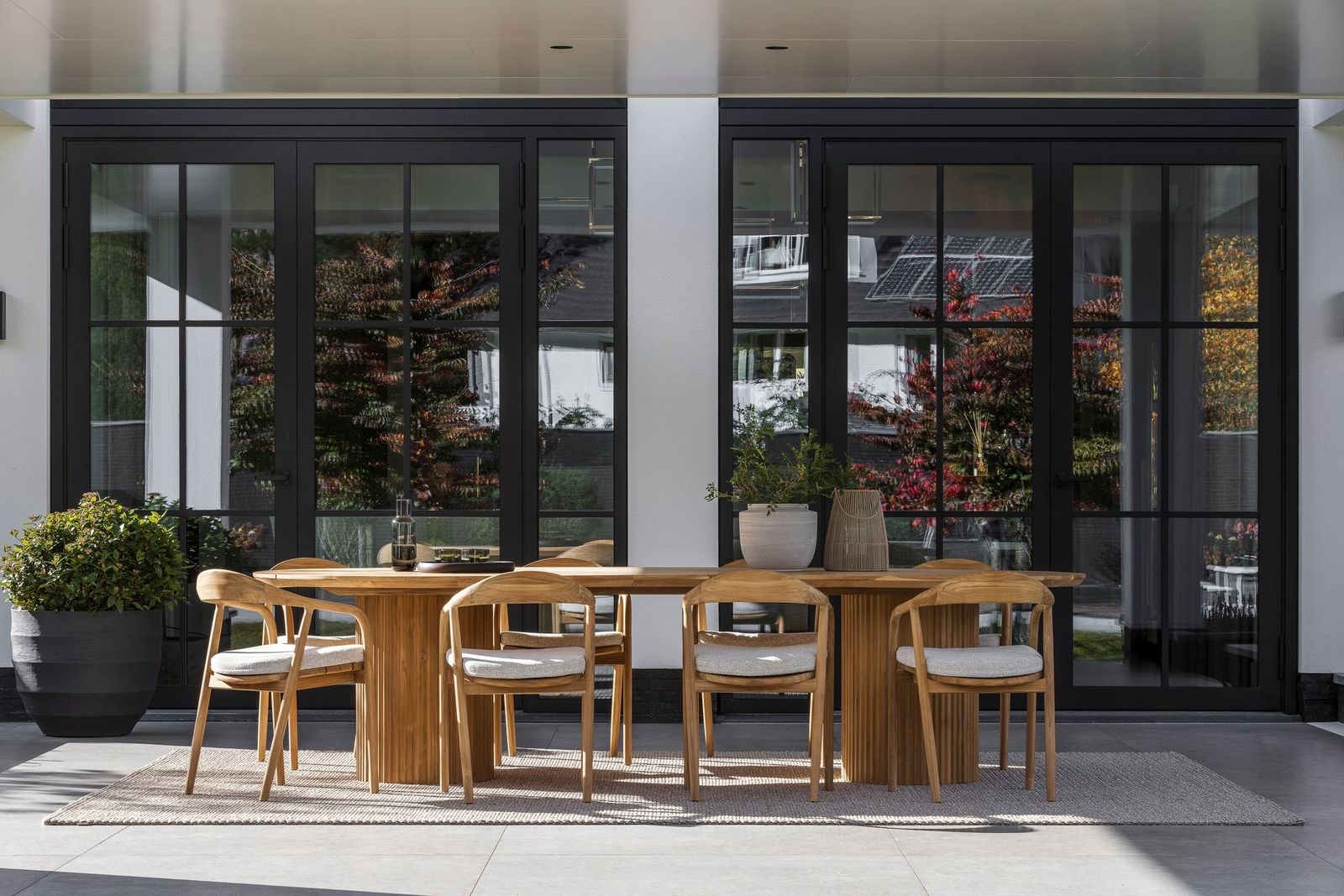








Teak outdoor dining table with an organic kidney silhouette
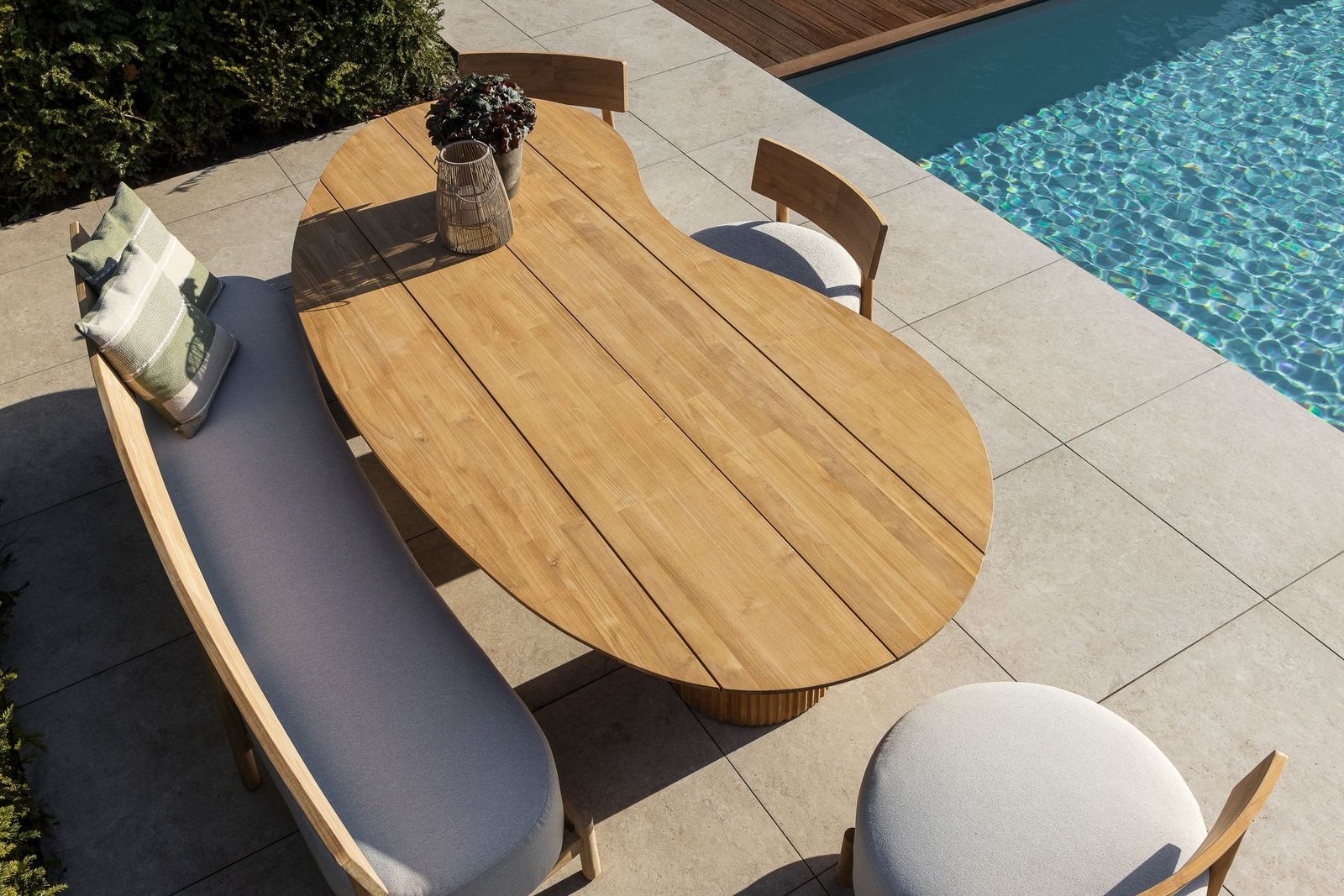
The first thing you notice is the shape: a teak outdoor dining table that reads like a soft landscape drawing rather than a fixed rectangle. The kidney silhouette shifts the usual seating pattern and gives the terrace a looser rhythm. In dining and low dining versions, the table sits somewhere between furniture and form, with rounded edges that keep the profile light and the arrangement open around it.
Teak outdoor dining table as a spatial starting point
The organic oval dining table form works best because it refuses straight lines. One side stretches, the other curves back in, and that asymmetry makes the setting feel more relaxed without losing clarity. Around the table, chairs can sit in a more casual arc, which is visible in the images: pale upholstered seats, wooden frames, and enough space between them to let the shape stay readable. It is a simple move, but it changes how the whole outdoor dining set teak is experienced.
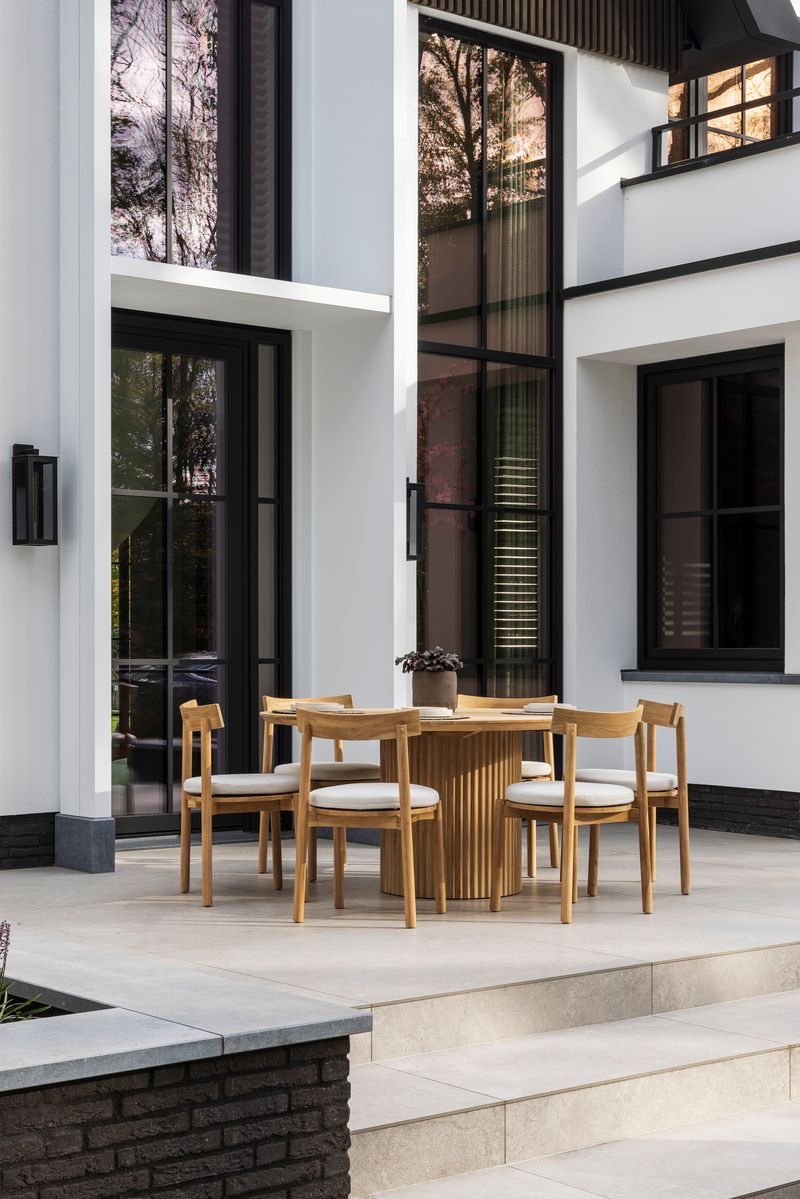
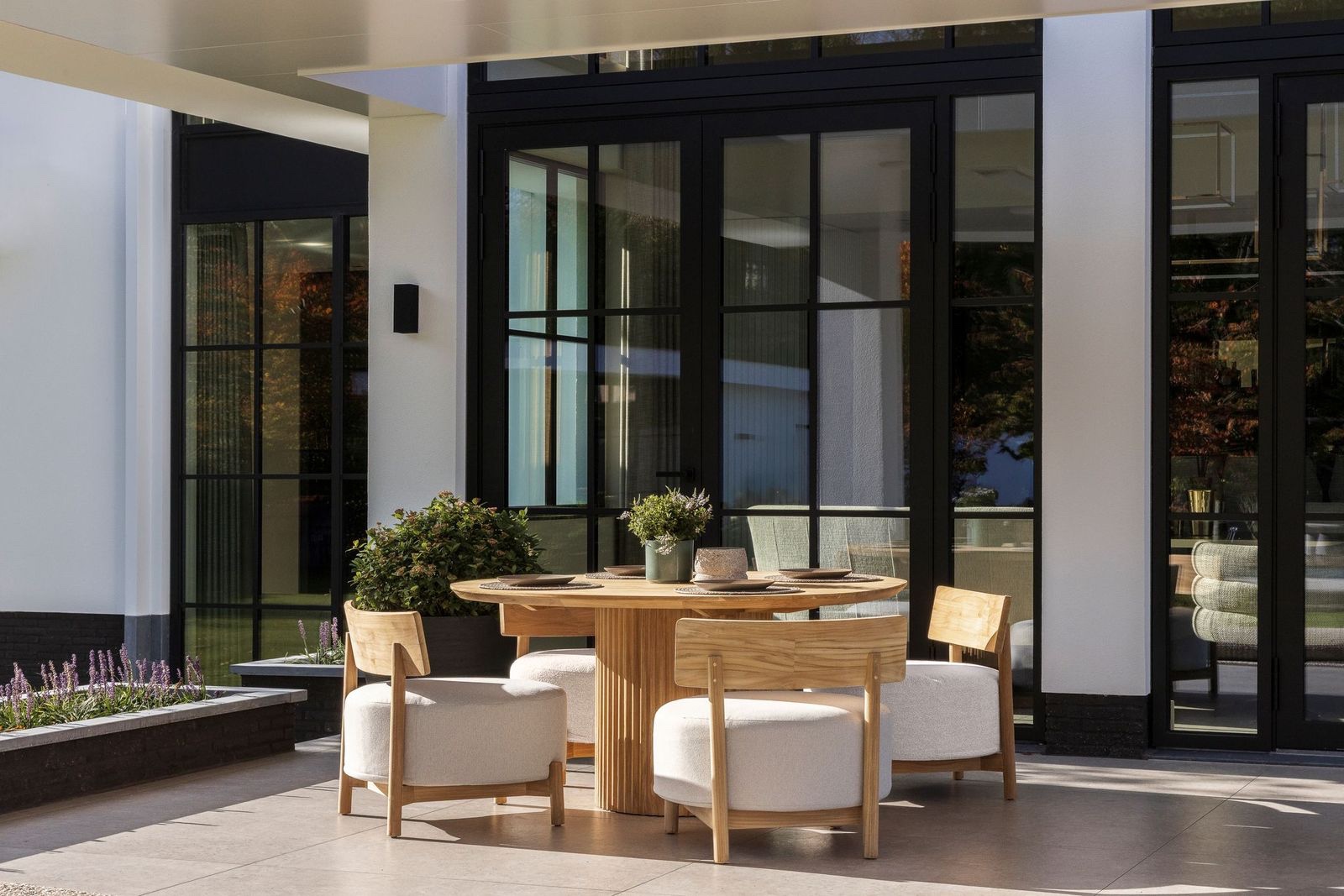
As a modern outdoor dining setup, the table never becomes static. The kidney shaped outdoor table pulls the eye from one end to the other, almost like a path across a terrace. That movement is strongest when the table is seen against large glass panels and black window frames, where the curved outline sits in clear contrast to the hard geometry behind it.
Massive teak, softened at the edges
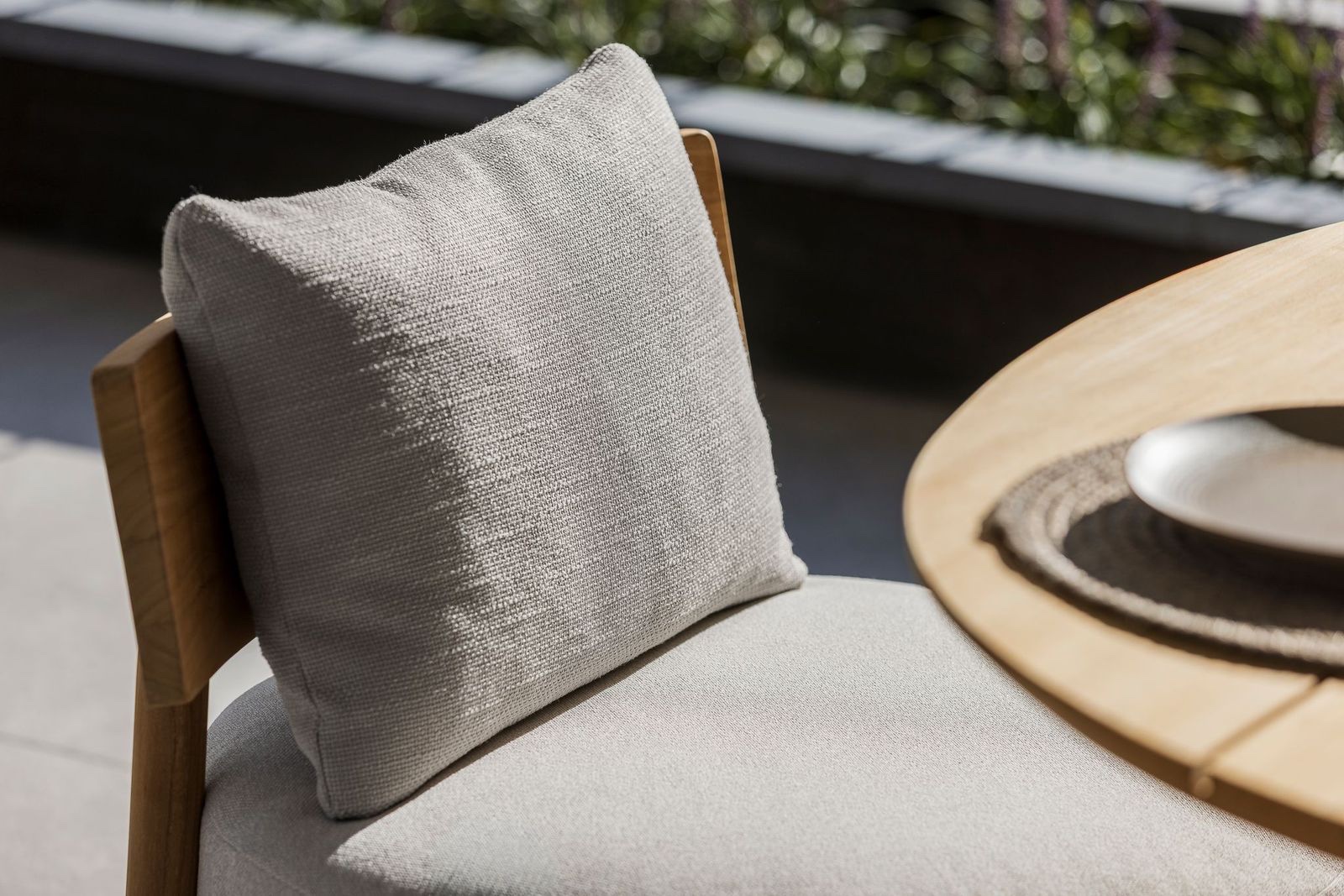
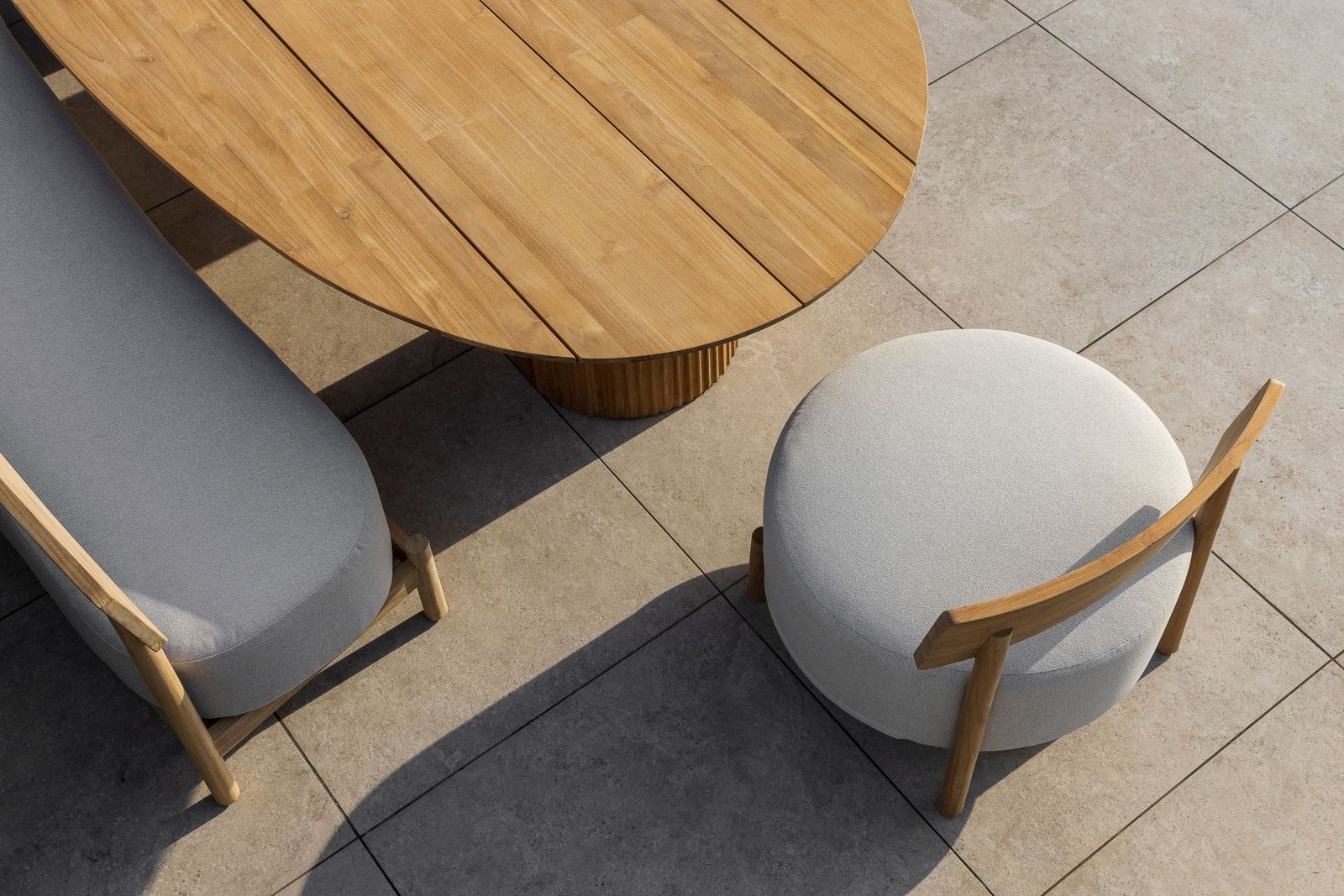
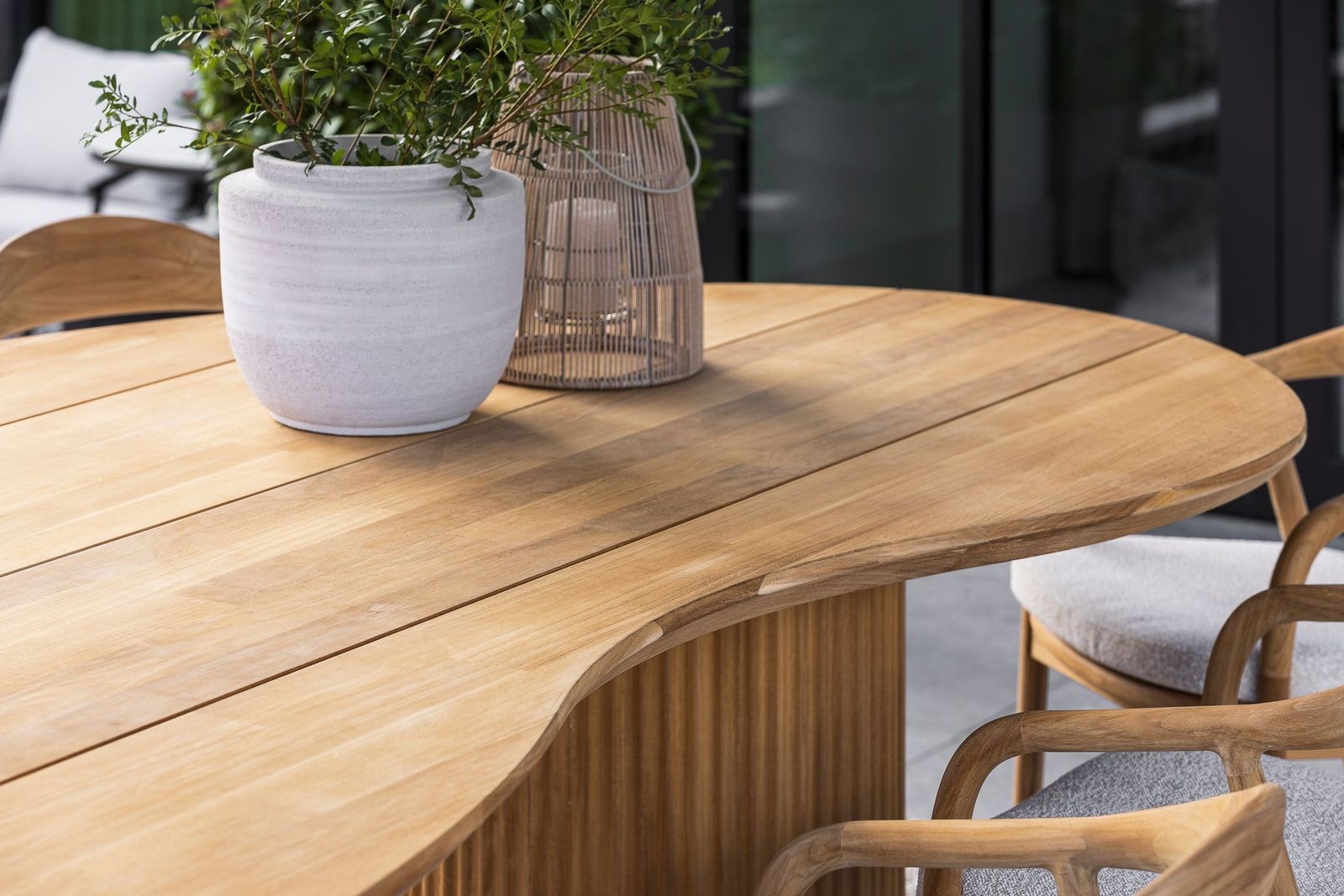
The top is made from massive teak, and the material carries the design more than any decoration could. Visible teak wood grain detail gives each surface its own rhythm: darker streaks, lighter lines, and small shifts in tone that are easy to read in close-up. The boards or lamellae in the top catch light differently across the surface, so the table changes character as you move around it.
Rounded transitions keep the timber from feeling blunt. The edges are lightly softened, which lets the teak look substantial without becoming heavy in the composition. That balance comes from the material itself as much as from the shaping. Teak already has a dense, textured presence; here it is cut and rounded in a way that follows the organic oval dining table language instead of fighting it. The result is a surface that feels tactile and direct.
Because the wood is left visible, the grain remains part of the reading of the table. It is not hidden behind a polished effect. In the images, the tabletop becomes the warm counterpoint to the cooler stone paving and the glass backdrop, which keeps the composition grounded in the terrace rather than lifting it away from the setting.
The pedestal base gives the top room to hover
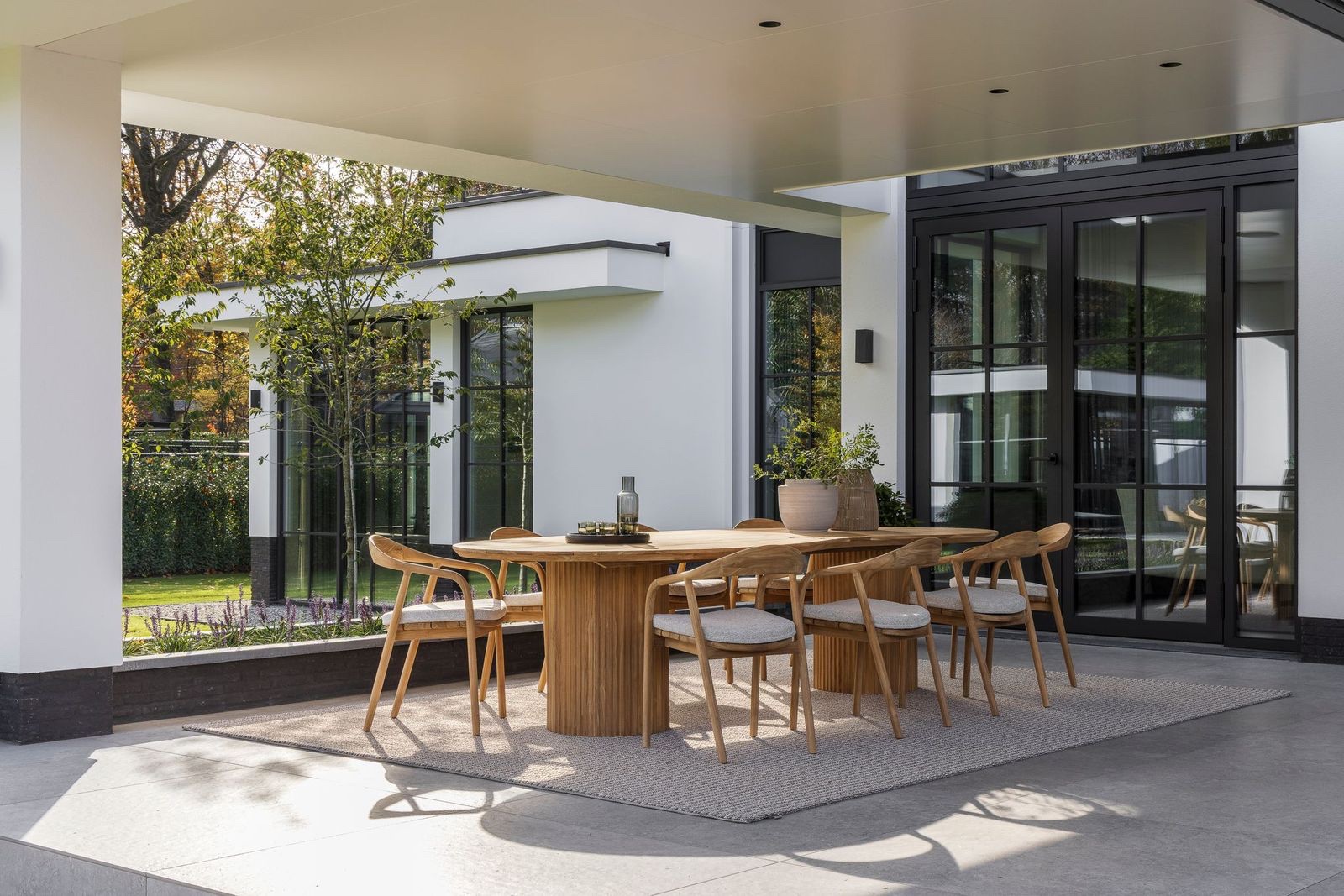
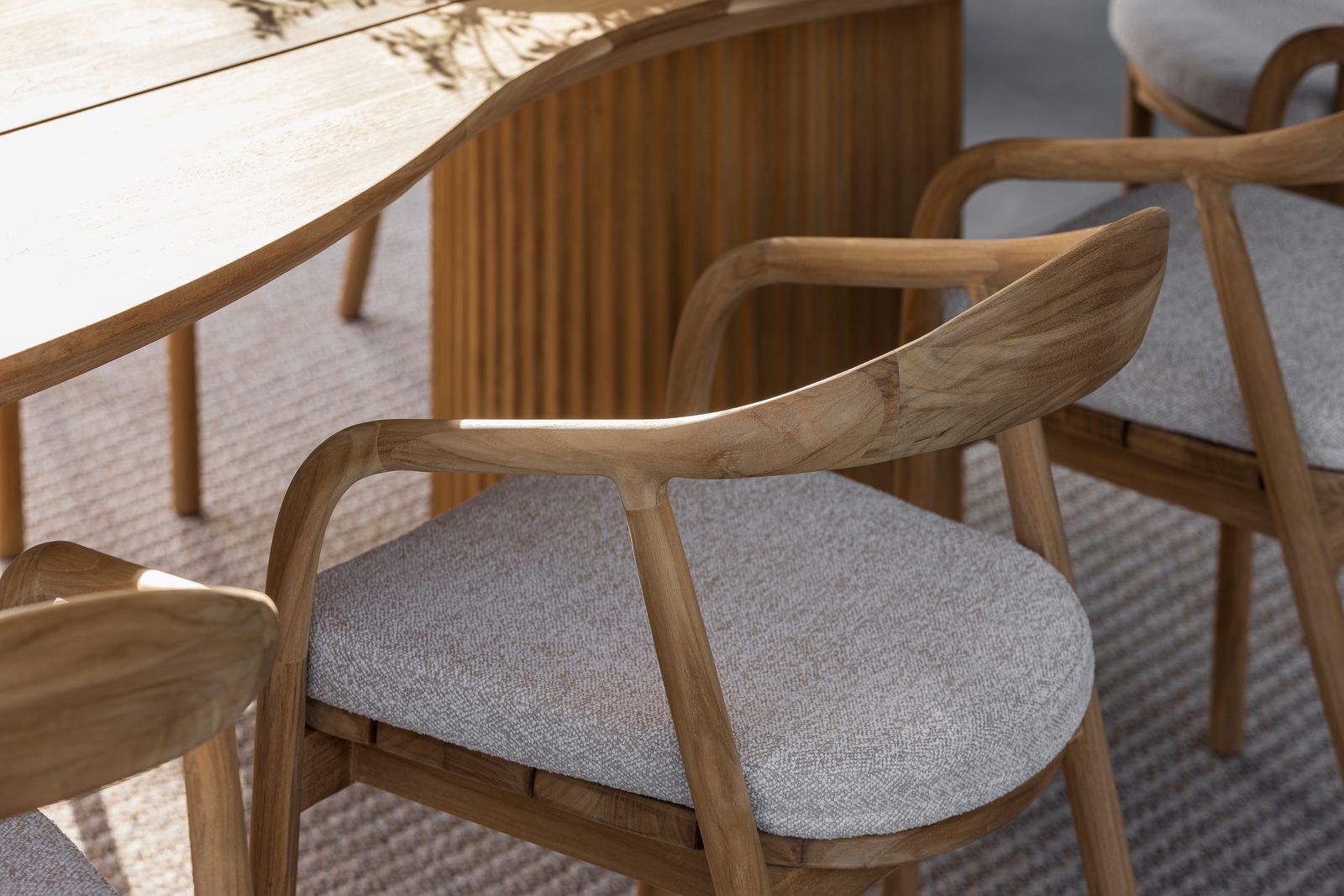
Underneath, the sculptural pedestal base is built from vertical lines that stack into a column-like support. The ribs give the base a measured graphic quality, almost architectural, while the form itself stays compact enough not to interrupt the silhouette above. From some angles the tabletop seems to hover just above the support, and that lightness is part of the appeal.
Vertical ribs instead of a bulky frame
The choice of a sculptural pedestal base keeps sightlines open. There is no busy leg structure to break the curve of the top, which matters in a kidney shaped outdoor table where the outline is the feature. The vertical ribbing also adds a quiet contrast to the smooth teak plane above. In the images, that contrast is especially clear on the terrace, where the base sits against pale paving and the table reads as one continuous gesture rather than a cluster of parts. Teak outdoor dining table remains connected to the layout, materials and daily use of the home.
That same structure supports both the dining version and the low dining outdoor table. The lower setting suggests longer evenings and a more relaxed seating height, while the dining height creates a clearer, more familiar table presence. In both cases the base carries the same visual logic: stable, upright, and direct, but not bulky. It lets the form stay fluid from top to floor.
Set against stone, glass and light upholstery
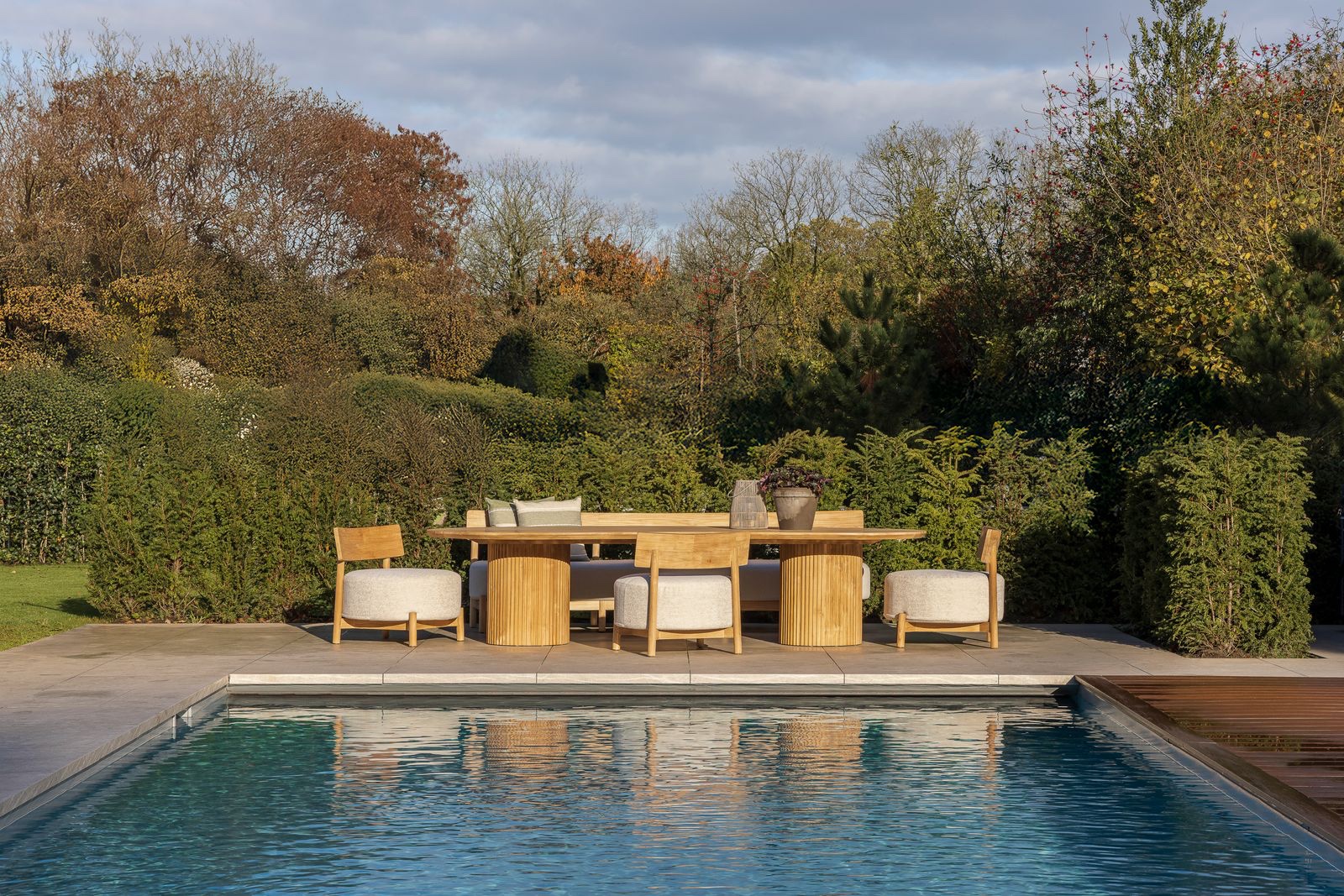
The surrounding scene is as restrained as the table itself. Light stone paving runs under the seating area, and the rectangular pool behind it adds a hard line that makes the organic table silhouette stand out even more. Large panes of glass and black frames anchor the background, giving the terrace a crisp edge without pulling attention away from the teak. The visual tension between curve and grid is what gives the composition its clarity.
Neutral upholstered chairs keep the focus on the table rather than competing with it. Their pale fabric, rounded arms and wooden frames echo the softer language of the top, while the textile surface sits comfortably beside the grain of the teak. Together they form a modern outdoor dining setup that feels considered in shape, not in ornament. There is little excess here: just material, proportion and the way the pieces meet.
Why the low dining option matters
The low dining outdoor table changes the social tone of the arrangement. It lowers the visual horizon and makes the seating group feel more lounge-like, yet the tabletop still retains enough presence to function as a dining surface. That shift is visible in the photos where the chairs sit close to the top and the whole group settles into the terrace rather than standing apart from it. For evenings that move slowly, the lower profile feels especially appropriate.
Seen as a series, the tables show how one form can do several jobs without losing its identity. The same organic oval dining table language works in a fuller dining setting and in the lower version, while the kidney silhouette keeps both from turning formal. The collection does not rely on extra detail or overt styling. Its strength lies in the way teak, curve and ribbed support are put together, and in how clearly those elements read beside stone, glass and water.
An outdoor table shaped by movement, not symmetry
The strongest impression comes from motion that has been held still. The contours suggest a table that has drifted into place, with the asymmetrical outline giving the terrace a softer route around it. Seen from above, the shape becomes even clearer: the kidney form is not a novelty, but a practical way to open the seating and avoid the stiffness of a strict rectangle. That is what makes the teak outdoor dining table feel fresh without relying on exaggeration.
Across the images, the table reads as part of a larger outdoor dining arrangement, yet it keeps enough individuality to stand on its own. The massive teak, the grain, the rounded edge and the sculptural pedestal base all stay visible. Nothing is hidden, and nothing needs to be. The result is a table that holds a terrace together through shape and material alone, with a form that stays readable from every angle. Teak outdoor dining table remains connected to the layout, materials and daily use of the home.
Want to see more of MAX & LUUK? View the page of MAX & LUUK for even more great projects and company information.



NEW 2026 Jubileum Edition The Best Interior Designers Benelux
Order Now €125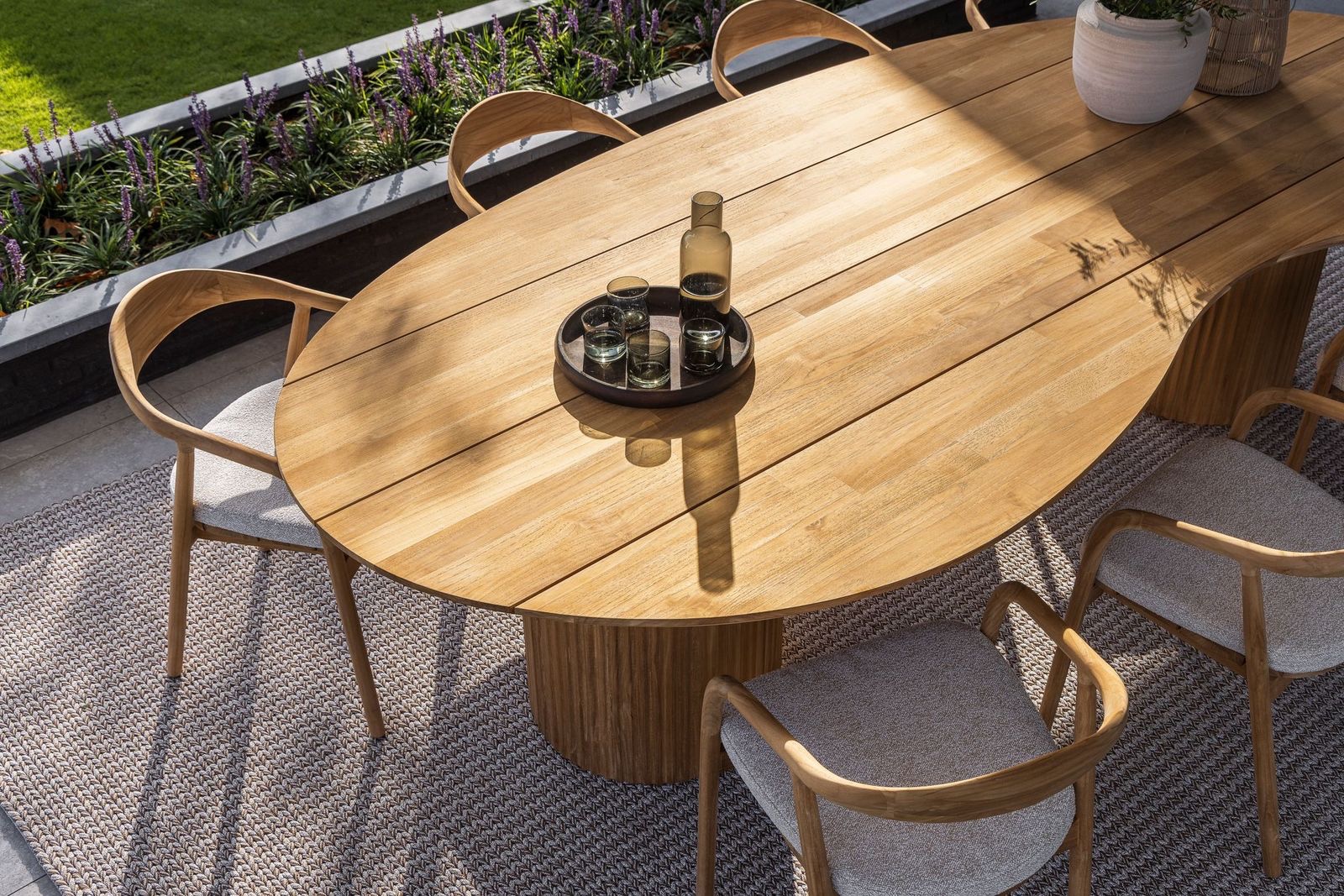
NEW 2026 Jubileum Edition The Best Interior Designers Benelux
Order Now €125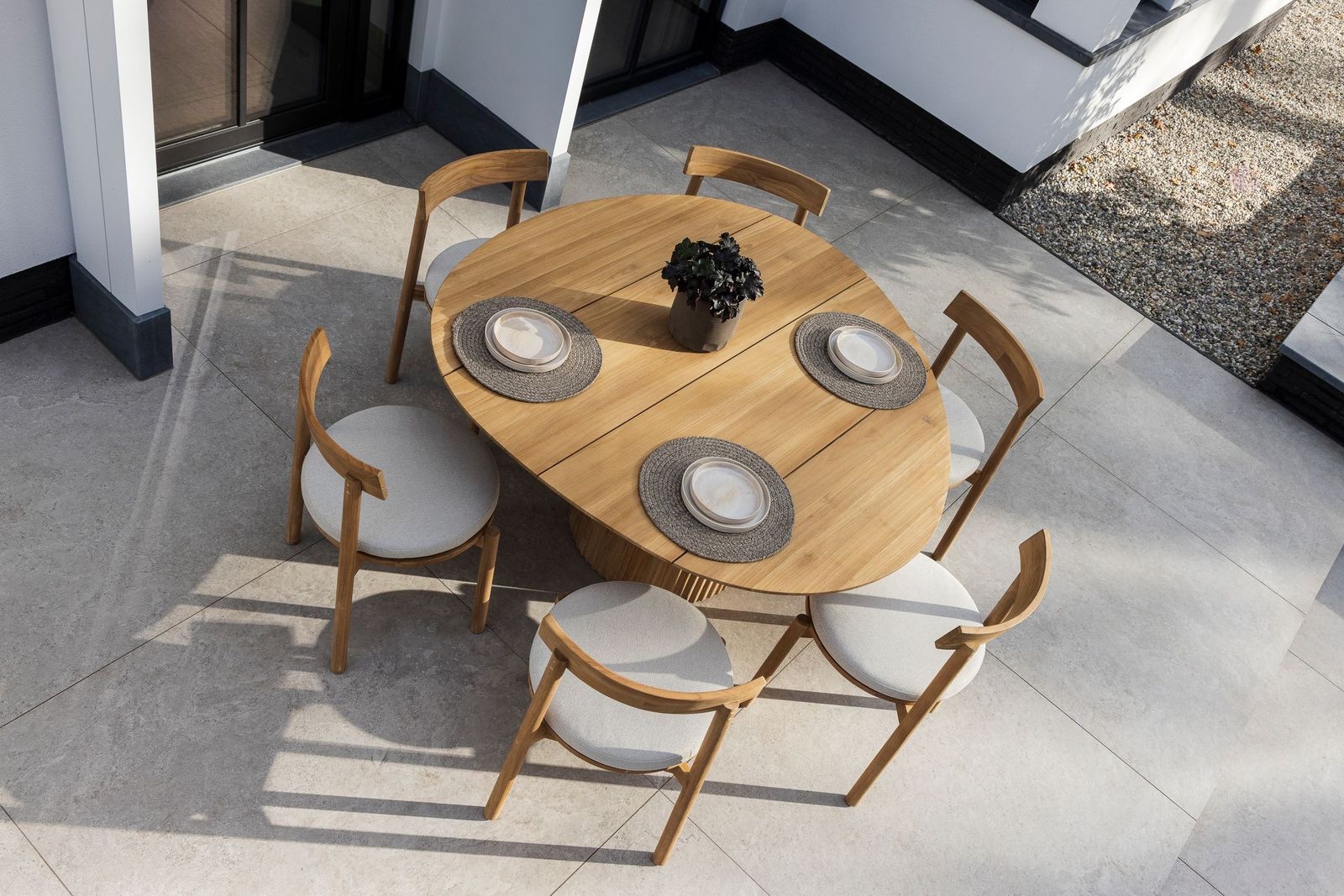
NEW 2026 Jubileum Edition The Best Interior Designers Benelux
Order Now €125