







Timeless entrance gate
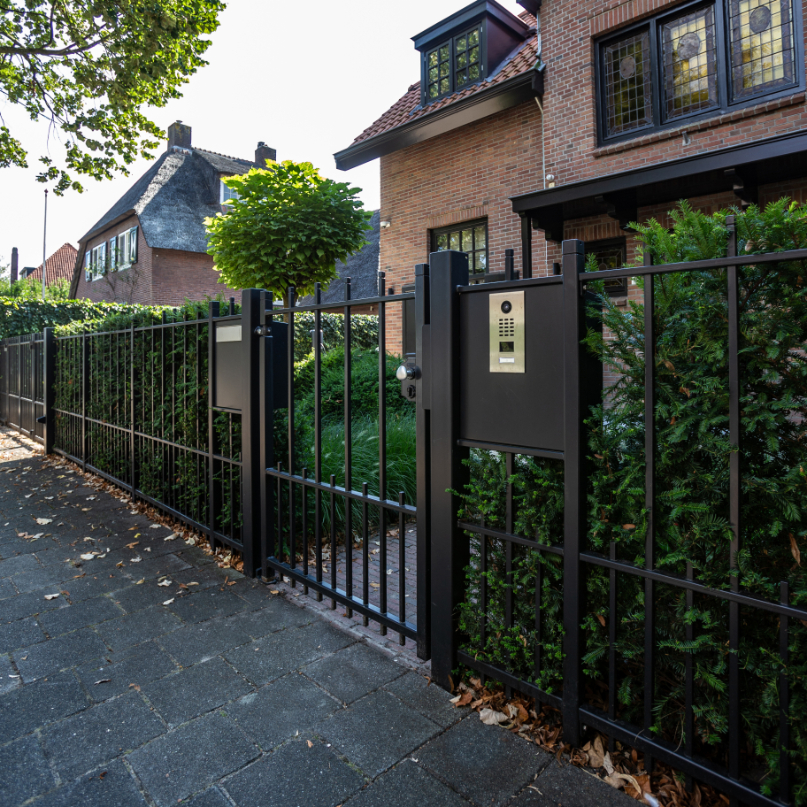
The black vertical bars draw the eye first. They set the tone for this timeless entrance gate before the rest of the composition comes into focus: the brick surface behind it, the paved approach underfoot and the narrow strips of greenery that soften the line of the fence. The gate reads as part of the route into the property, not as a separate object, with the metal frame, post and access panel all pulled into one clear entrance sequence.
A black gate that holds the view
Seen straight on, the black gate with vertical bars keeps the frontage open enough to read the house, while still defining the boundary with precision. The spacing between the bars gives the metalwork a light rhythm. It is a simple move, but an effective one. The gate and driveway entrance feel ordered from the start, with the dark frame standing against the lighter brick facade and the pale paving at the threshold.
The project material describes a broad range of options, from modern to classic, from subtle to robust, and that range is visible in the way this entrance avoids excess. The lines stay upright and clean. The fence extends the same language beside the gate, so the boundary does not stop at one panel. Instead, the eye follows the metal elements along the edge of the property, past the planted border and toward the house.
Access detail at the centre of the gate
At close range, the intercom on entrance gate becomes the focal point. The panel sits within the dark metal surface and introduces a small technical note to an otherwise quiet composition. Buttons, speaker openings and the surrounding plate are visible as part of the gate itself, not added later as an afterthought. That detail gives the entrance a clear point of contact while keeping the overall surface restrained.
One image also shows the access panel from even closer in, with the button and key-related components set into the outer side of the frame. The material contrast matters here: painted metal, smooth panel surfaces and the rougher brickwork in the background. It is a compact detail, yet it changes how the entrance is read. The gate is no longer only a boundary; it is also the place where movement pauses before entry.
Brick, paving and planting at the threshold
The setting around the fencing with brick facade gives the project its context. The brick wall behind the gate adds scale and weight, while the paving in front creates a straight approach into the property. Small areas of planting sit close to the metalwork, breaking the geometry with leaves and low greenery. Nothing here is decorative in a soft sense. Each surface does a job: the paving guides, the brick anchors, the planting interrupts the line just enough.
From the wider views, the entrance sits within a familiar residential frame of red roof tiles, window openings and darker fence lines. The house is only partly seen, but that partial view is enough to place the gate in relation to the frontage. The result is a modern classic gate setting that feels measured rather than showy, with every element keeping the route into the property legible.
A restrained metal fence beside the drive
Along the side of the driveway, the fence repeats the same vertical rhythm as the gate. The posts are slim, the bars upright, and the spacing keeps the screen visually light. In this detail, the project shows how fencing can shape an entrance without closing it off. The black finish sharpens the outline against the lighter ground plane, while the planting behind the fence brings a softer edge to the perimeter.
This is where the entrance reads as a sequence rather than a single object. The driveway, the boundary line and the gate all connect. The metal fence does not try to dominate the view; it traces it. That understated approach suits the project description, which points to options ranging from subtle to robust and from hand-operated to more advanced. Here, the visible expression stays calm and exact.
How the gate sits in the front garden
The front garden is not filled out with large planting or dense ornament. Instead, the scene relies on paving, low greenery and the strong line of the fence to shape the approach. The black gate sets up a direct path, while the brick facade behind it gives the entrance a firm backdrop. In the broader view, the composition feels organised by materials more than by decoration.
That makes this timeless entrance gate easy to read in photographs and in use. The metal bars, intercom detail and masonry backdrop each contribute a different surface, but none of them compete for attention. The gate keeps the entrance clear, the fence extends the boundary, and the surrounding paving holds the movement steady from street side to threshold. It is a concise solution, built around line, material and the point where entry begins.
Why this entrance works visually
The strength of the project lies in its consistency. The gate, fence and access detail all speak the same visual language, and that language is defined by vertical metal lines, a dark finish and a measured relation to brick and greenery. The entrance does not rely on ornament. It relies on proportion. Even the close-up of the panel fits that logic, because it sits neatly within the frame instead of breaking the surface.
As a reference for entrance gates, the project shows how a black gate with vertical bars can feel controlled without looking heavy. It also shows how much the surrounding setting matters. The brick facade, the paved drive and the planted edge all help the gate read correctly in space. Taken together, they form a clear entrance composition that is practical to cross and strong enough to define the property line with confidence.
Want to see more of DJS Hekwerken? View the page of DJS Hekwerken for even more great projects and company information.





NEW 2026 Jubileum Edition The Best Interior Designers Benelux
Order Now €125