








Traditional steel window with fixed panel
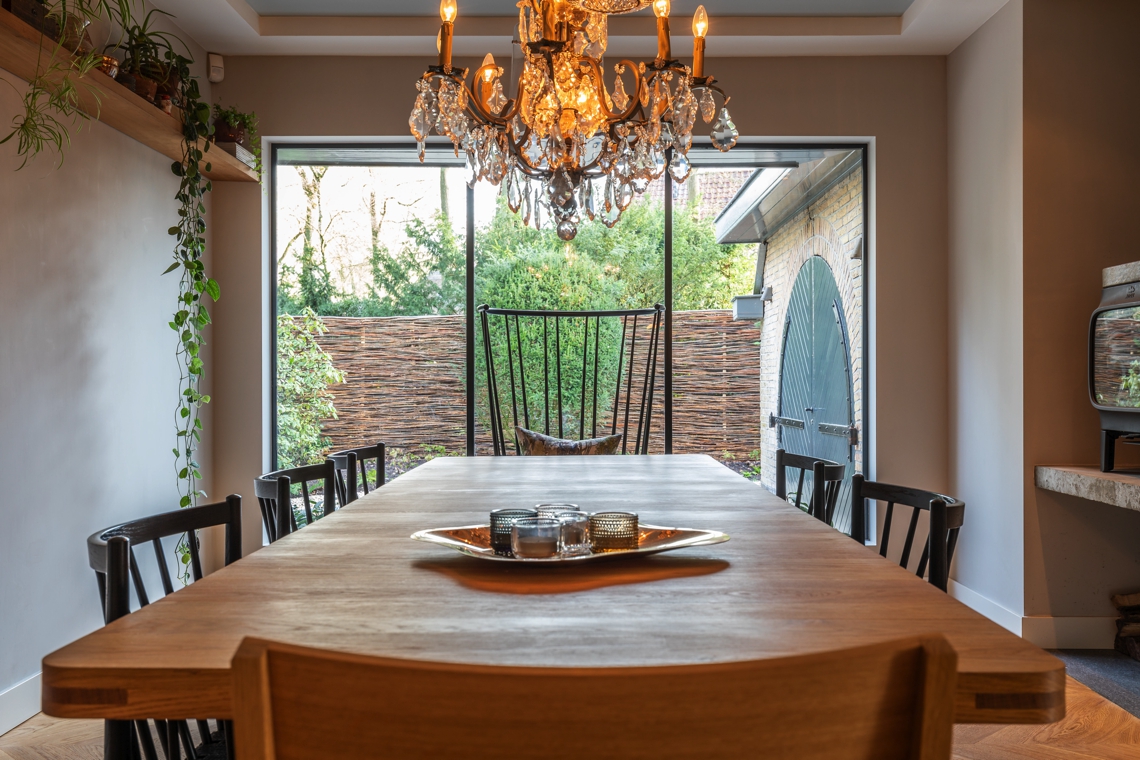
Slender black steel lines set the tone before the eye reaches the glass. In this house from 1930, several original steel frames were already part of the architecture, so the new work had to sit quietly among them. The result is a traditional steel window that keeps the older character in place while introducing a fixed panel with a crisp, restrained profile. From the room, the opening reads as one clean frame, with the terrace and garden held in view behind it.
Slim profiles that follow the existing steel language
The replacement windows were designed within traditional steel frames, using stoeltjesprofielen to echo the earlier detailing. That choice keeps the lines narrow and direct. The frame does not try to draw attention away from the masonry or the light; it simply continues the same visual rhythm already present in the house. Seen against the brickwork, the dark steel makes the opening sharper, while the glazing keeps the surface clear and open.
This traditional steel window was made as a fixed steel window, with dimensions of 193 by 287 centimetres. Those measurements give the opening a tall, broad presence without making the profile heavy. The proportions suit the architecture of the house, where steel has already been used in more than one opening from the same period. The large pane keeps the sightline open toward the terrace, and from inside the room the frame becomes a measured edge rather than a barrier.
RAL 9005 satin on the frame
The powder coated steel frame is finished in RAL 9005 satin. That dark surface gives the metal a calm, matte reading in both daylight and shade. It also pulls the frame back visually, so the glass and the view beyond remain the main focus. In the interior photographs, the finish sits beside the table, chairs, and ceiling light without competing with them. The steel remains present, but it stays close to the line of the opening.
Because the frame is so slim, the glass takes over much of the visual field. The eye moves through the fixed steel window toward the terrace and then onward to the garden. That shift is easy to read from the room. A dark border, a clear pane, and then outdoor light. Nothing is exaggerated, and nothing is hidden. The opening simply expands the room’s connection to the outside while staying loyal to the language of the house.
A large opening, read from inside and out
The interior photographs show how the steel frame works with the room layout. A dining table sits close to the opening, so the window becomes part of daily use rather than a distant architectural detail. The black frame runs around the glass in a strict outline, and the view beyond lands on the terrace first, then the greenery. The terrace view steel window gives the room depth without changing the character of the interior.
From outside, the steel opening sits among traditional brickwork and other dark-framed elements. The contrast is direct: rough masonry, smooth glass, and the precise edge of the coated steel. In the exterior image, the frame is part of a larger wall composition that includes a steel door and a broad glazed opening. The traditional steel window does not break that composition; it is folded into it, repeating the same narrow profiles and dark finish.
Why the fixed panel matters here
Using a fixed steel window keeps the geometry simple. There are no visible operating parts in the opening shown here, so the frame can stay especially slim. That suits the project brief, which was to preserve the atmosphere of the original steelwork while replacing windows with a similar look. The fixed panel also helps the large opening read as one stable surface, especially in the interior view where reflections and daylight move across the glass.
In a house where several steel frames from the period were already present, that consistency matters. The new work needed to echo existing lines without copying them crudely. Stoeltjesprofielen help do that by keeping the shape restrained and familiar. The result is a steel frame window that feels aligned with the house’s original fabric, but clearly updated in the way it is finished and glazed.
What the dark frame does in daylight
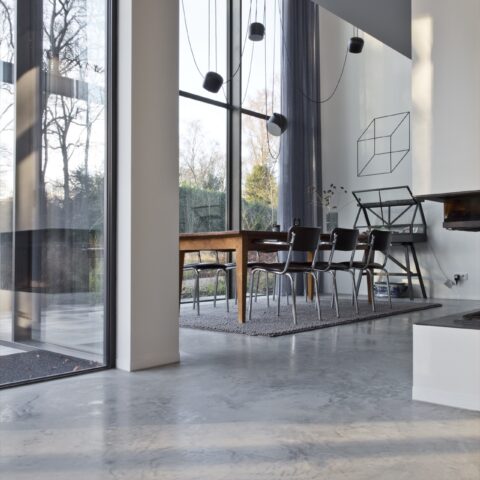
Daylight changes the way the powder coated steel frame is read. In strong light, the RAL 9005 satin finish makes the opening appear even slimmer, because the dark line separates more cleanly from the lighter wall and floor surfaces. In softer light, the same finish absorbs reflections and holds the outline of the frame in place. That is visible in the photographs, where the steel reads as a controlled border around the view rather than a glossy surface.
The fixed steel window also gives the room a firm visual anchor. Chairs, table legs, and the pendant light all sit in front of it, but the large pane keeps the background open. Outside, the terrace and garden remain legible through the glass. Inside, the room stays connected to that view without needing additional framing devices. The effect depends on proportion more than on decoration, which is exactly where the project finds its strength.
A measured replacement within an older steel setting
What stands out most is the restraint. The house already had steel windows from its period, and this replacement follows that lead instead of introducing a different vocabulary. The traditional steel window, the slim steel window frame, and the fixed panel all work together to keep the opening in scale with the original architecture. Even the dark powder coated steel frame supports that approach, because it lets the opening sit back into the wall surface.
Seen across the images, the project moves between brick, steel, and glass without adding extra noise. The large opening in the façade, the interior view toward the terrace, and the narrow profile detail all point to the same decision: keep the existing atmosphere, but sharpen it with precise steelwork. The window becomes part of the house’s structural memory, not a distraction from it.
Want to see more of StalenDeurenHuys? View the page of StalenDeurenHuys for even more great projects and company information.