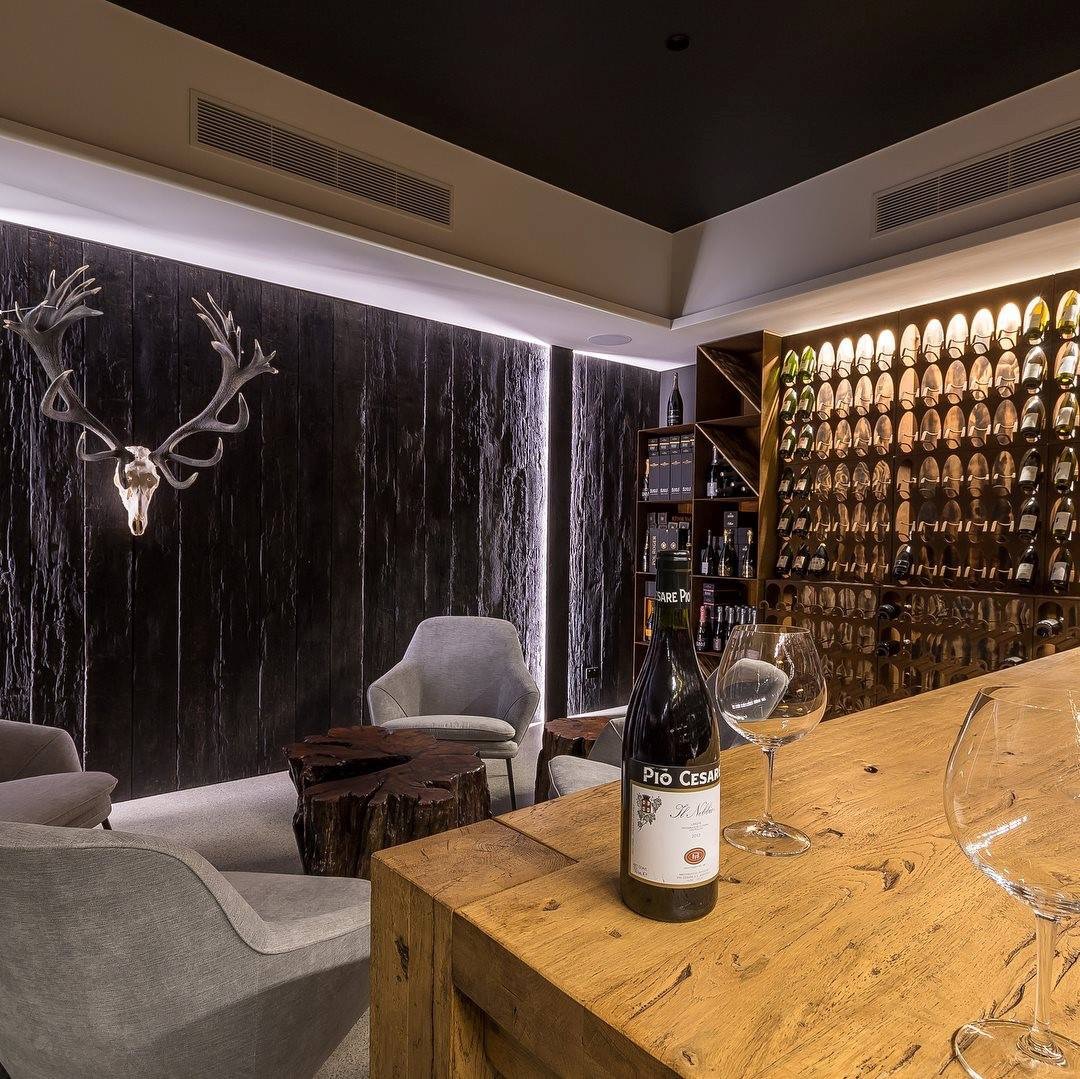






Wall cladding for a wine room
Dark panels set the tone before the bottles do. In this wine room, wall cladding for a wine room is used to give the space a rough black surface that reads clearly against the lighter wood in front. The Millboard finish in Emberred keeps the wall treatment restrained in colour, but not in presence. It is the kind of backdrop that lets the rack, the bar surface and the glass bottles stand out without losing the room’s grounded feel.
Dark vertical wall panels behind the wine rack
The most visible move is the use of dark vertical wall panels across the back wall. Their direction gives the room a strong line from floor to ceiling, which suits the narrow logic of a wine cellar. Against that dark field, the bottles sit in sharper relief. The black tone does not flatten the room; it frames it. This is where wall cladding for a wine room does its work quietly, shaping the whole scene through colour and surface.
The Emberred finish adds texture rather than gloss. In the image, the wall surface reads as rough black cladding, which keeps the background from looking flat or decorative. That roughness is important in a room with bottles, metal fittings and wood grain nearby. It gives the eye something steady to land on. The result is a robust wine cellar wall that holds the lighting, the storage and the table edge together without demanding attention for itself.
Warm light turns the storage wall into a focal point
A warm strip of light runs behind the wine rack, lifting the bottles from the darker wall. The illumination is not bright or theatrical. It stays low and even, which makes the glass surfaces and bottle necks easy to read. That glow softens the hard black of the cladding and gives the room depth. In a space like this, the contrast matters: dark vertical wall panels on one side, warm illuminated wine rack on the other, with the bottles suspended between them.
The lighting also exposes the structure of the storage. Rows of bottles become part of the composition, not just what is stored there. The warm backlight catches edges and labels, while the wall behind keeps the focus tight. This is one of the reasons the room feels composed without looking staged. The wall finish, the rack and the lighting each keep their own line, and that separation gives the interior its clear, robust character.
A foreground of wood grain and plain surfaces
In front of the darker wall, a wooden bar or table surface brings a different texture into view. The grain is visible, and that detail matters because it breaks up the black background with something more tactile. The surface sits low in the frame, so it does not compete with the rack. Instead, it sets a horizontal counterpoint to the vertical wall panels. That shift in direction makes the room easier to read and gives the eye a place to rest.
The wood accents wine bar element is not ornamental. It ties the storage wall to the usable part of the room, where bottles can be placed, poured or discussed. Brown and natural tones soften the black Emberred finish without lightening it too much. The pairing feels deliberate because each material keeps its own tone. Wood, glass and the rough black wall cladding stay distinct, and that distinction gives the room its clear interior rhythm.
How the cladding changes the room’s scale
Dark finishes can shrink a room if they are used without structure, but here the vertical layout helps hold the proportions. The wall panels rise in a straight field, so the background feels orderly even in a compact setting. That is especially useful in a wine room, where storage can quickly look crowded. With the cladding in place, the bottles sit against a controlled surface instead of competing with a busy wall. The room reads as contained, not cramped.
The rough black wall cladding also absorbs attention in the right way. It draws the eye inward and keeps the focus on the immediate materials: metal rack lines, glass bottles, the edge of the table, the soft light around them. The room’s industrial note comes through in those contrasts. Nothing is overworked. The surfaces simply do their job, and the result is a robust wine cellar wall that feels anchored by material rather than decoration.
Emberred as a dark background, not a blank one
Emberred is used here as a rough black colour, but the finish is not uniform in the way painted plaster would be. It carries the look of a textured board surface, which makes the wall more present when light moves across it. That matters in a room with indirect lighting, because the surface can still register even when the space is dim. The cladding becomes part of the atmosphere through texture, not through shine.
What stands out is the way the dark finish supports the rest of the interior. It does not fight the wood grain. It does not compete with the bottles. Instead, it gives the room a stable background that makes the lighter elements legible. The final effect depends on that contrast: rough black wall cladding behind, warm lit storage in the middle, and a wood surface close to hand in the foreground.
A wine room built from clear contrasts
The strongest detail in the project is not a single material, but the way the materials sit next to one another. The dark vertical wall panels establish the room, the warm illuminated wine rack brings movement, and the wood accents wine bar surface adds a tactile edge. Together they create a setting that feels visually controlled without becoming sterile. The eye moves from black to amber light to natural grain, and that sequence gives the room its depth.
Seen as a whole, this wall cladding for a wine room uses a limited palette with confidence. The rough black Emberred finish sets the tone, while the lighter wood and the lit bottles keep the space from disappearing into shadow. It is a compact interior with a clear material order. Every part has a visible role, from the background wall to the front edge of the table, and that is what gives the room its robust character.
Want to see more of Wooddeck? View the page of Wooddeck for even more great projects and company information.