










Water Garden with Pond and Mature Trees
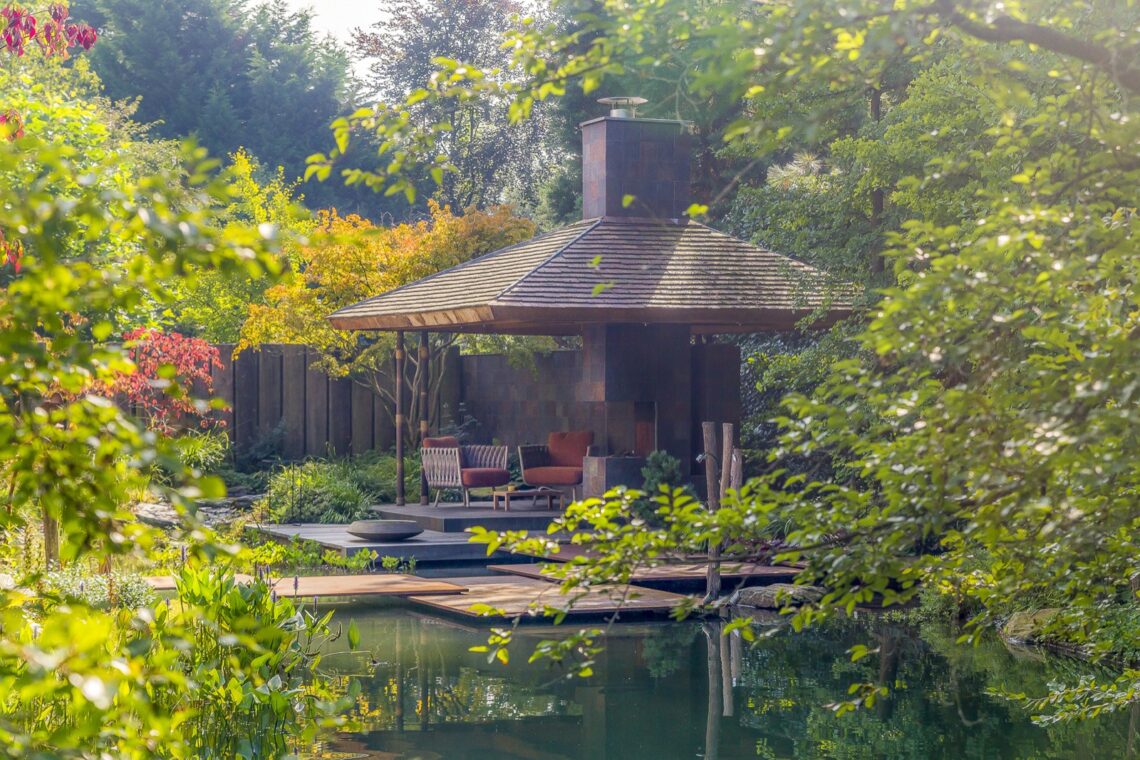
The water garden opens with a broad sheet of water edged by stone, gravel, and low planting. From the house side, the view settles quickly on the pond surface and the shifts in level around it. Stone walks, seating zones, and planting beds sit close to the water, so the eye keeps moving between hard edges and soft growth. The design also carries a memory of earlier influences, but it stays grounded in what is visible here: flowing water, boulders, and mature trees shaping the scene.
A garden pond framed by stone and planting
At the centre sits a garden pond with a natural stone pond edge that is never left alone for long. The water line meets boulders of different sizes, then gives way to gravel and planted pockets. That layered edge keeps the basin from reading as a single flat surface. Instead, the pond becomes a working part of the garden, with reflections, ripples, and the occasional shift of light on the stones. The surrounding planting is dense enough to soften the built edges, yet open enough to keep the water in clear view.
The choice of mature trees landscaping gives the project its depth. Several tree types are named in the source material, including swamp cypress, Japanese walnut, maple, Scots pine, golden birch, smoke tree, zelkova, and plane tree. Their canopies vary in shape and texture, which helps the water garden avoid a fixed picture. Some trees carry the space upward, others spread wide across the border. Together they settle the harder parts of the site and reduce the visual weight of the buildings around it.
Flowing water, boulders and gravel close to the ground
Closer in, the project is built from small changes in surface. Flowing water in garden is not treated as a decorative extra here; it is part of the structure of the composition. Water moves through the stone setting, and the surrounding boulders and gravel define where the eye slows down. The rougher textures sit against smoother water and darker planting, giving the ground plane a more varied reading. In the images, the stone water feature appears in different scales, from a broad water body to tighter details along the edge.
That contrast between water, stone, and planting also gives the garden a distinct seasonal rhythm. The source text mentions that the colour and atmosphere of the planting change through the year, and that new birds have found their way into the garden. Those are not abstract claims here; they belong to the way the site is composed. With water close to the planting, the garden invites movement, reflection, and repeated visits across the seasons. It is a water garden that keeps showing something new without relying on strong gestures.
Seats placed where the view opens
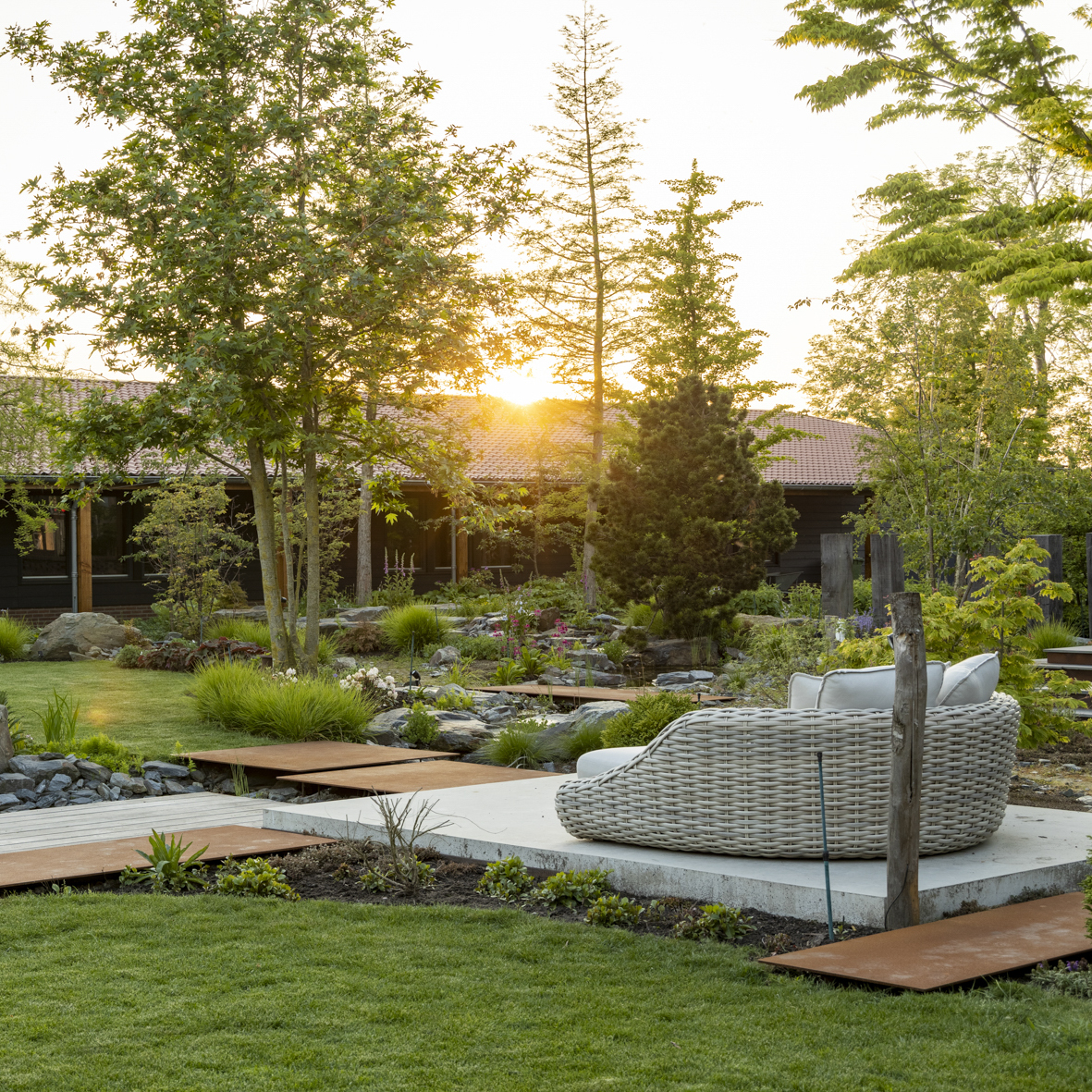
Several seating areas sit near the water, both in sun and in shade. Some are set on terraces close to the house, where the paving gives a firm edge to the softer planting beyond. Other spots look across the pond and its stone margins, so the view changes depending on where you sit. The arrangement is practical, but it also shapes the pace of the garden. A seat by the water becomes part of the route through the site, not just a place to stop.
From the terrace, the pond reads as a calm middle zone between the house and the planting belts. The image material shows glass and masonry facing the garden, with steps, level changes, and stone lines leading outward. That makes the water garden feel connected to daily use. People move toward the water, pause beside it, then continue along paths that follow the contours of the bed. The result is a project that is experienced in fragments as much as in full view.
Stone lines, routes and the edge of the water
Paths and transitions matter throughout the layout. A plank element crosses part of the water zone in some views, while other areas use stepped connections and narrow stone borders. These details keep the project from becoming static. They also make the natural stone pond edge more legible, because the edge is repeatedly crossed, approached, or traced. In the foreground, gravel and boulders hold the planting in place. Behind them, the water sits quietly, but never disappears from the composition.
The surrounding architecture remains present, yet it is softened rather than hidden. The mature trees, shrub layers, and stone bands take the pressure off the built envelope. That is where the water garden works best: not as a scene detached from the house, but as a measured landscape around it. The contrast between masonry, glass, grass, and stone gives the site its pace. Even the broader views keep returning to the same elements, each time from a slightly different angle.
A garden that changes with light and season
Light affects the surfaces quickly here. On the water, small ripples catch brightness; on the gravel, shadows break into speckled patches; on the leaves, colour shifts the tone of the whole bed. Because the trees are already mature, the garden does not need time to suggest structure. It has it from the start. What changes is the surface life of the planting, and that gives the water garden its ongoing interest. A single visit shows the setting; repeated visits reveal the differences.
The source text describes the garden as a place to relax and keep discovering. That fits the way the pond, stone, and seating areas are arranged. There is always a next view: across the water, into the tree canopy, or down to the rough edge where stone meets gravel. The garden pond does not stand apart from the rest of the site. It pulls the planting, the routes, and the sitting places into one readable landscape, with enough detail to reward a slow walk and enough openness to let the setting breathe.
Execution: Groenregie
Photography: Noël van Mierlo
Want to see more of Van Mierlo Tuinen – Experience your Nature? View the page of Van Mierlo Tuinen – Experience your Nature for even more great projects and company information.




NEW 2026 Jubileum Edition The Best Interior Designers Benelux
Order Now €125


NEW 2026 Jubileum Edition The Best Interior Designers Benelux
Order Now €125


NEW 2026 Jubileum Edition The Best Interior Designers Benelux
Order Now €125


