







Floating-looking oak tabletop with sculptural bench seating
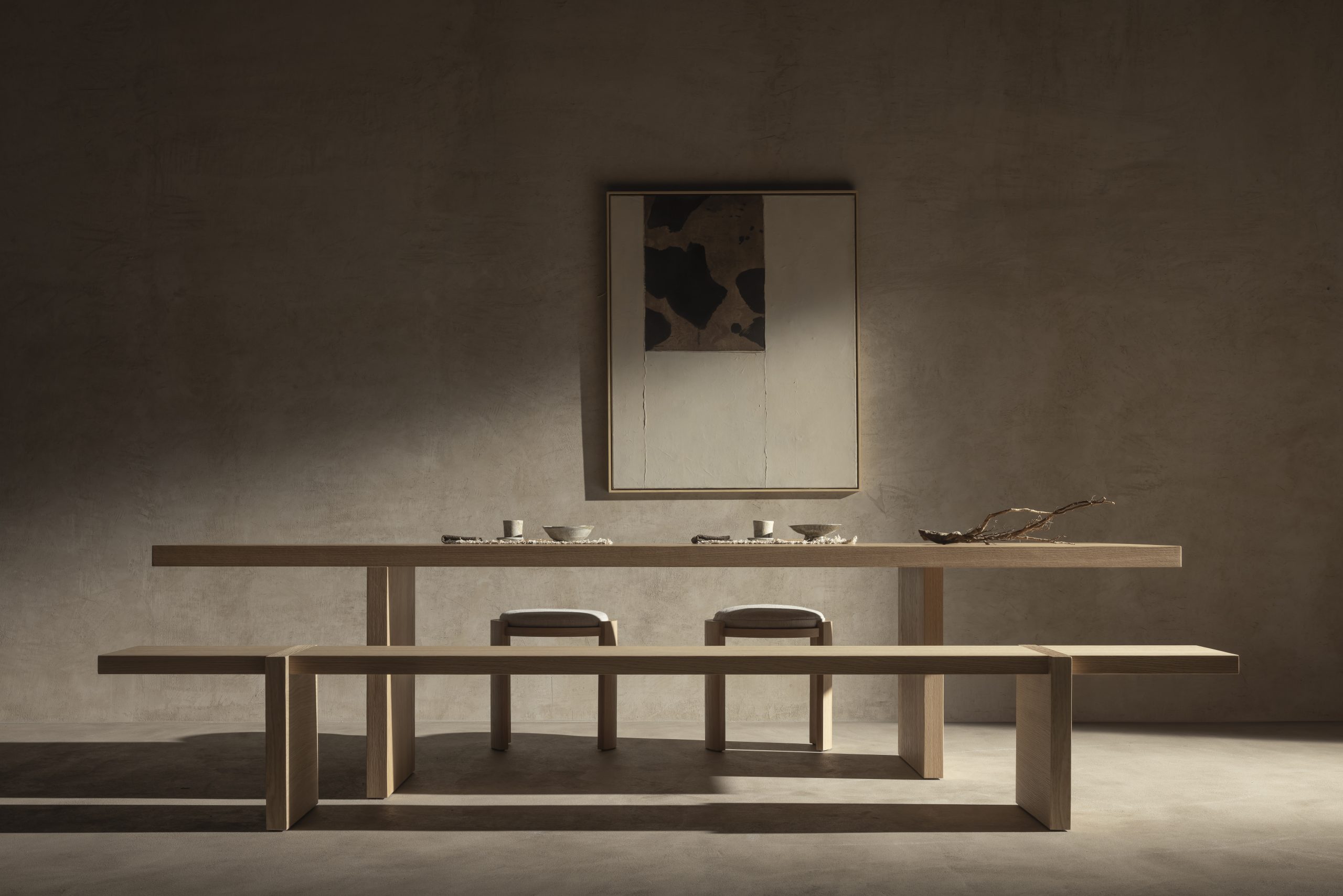
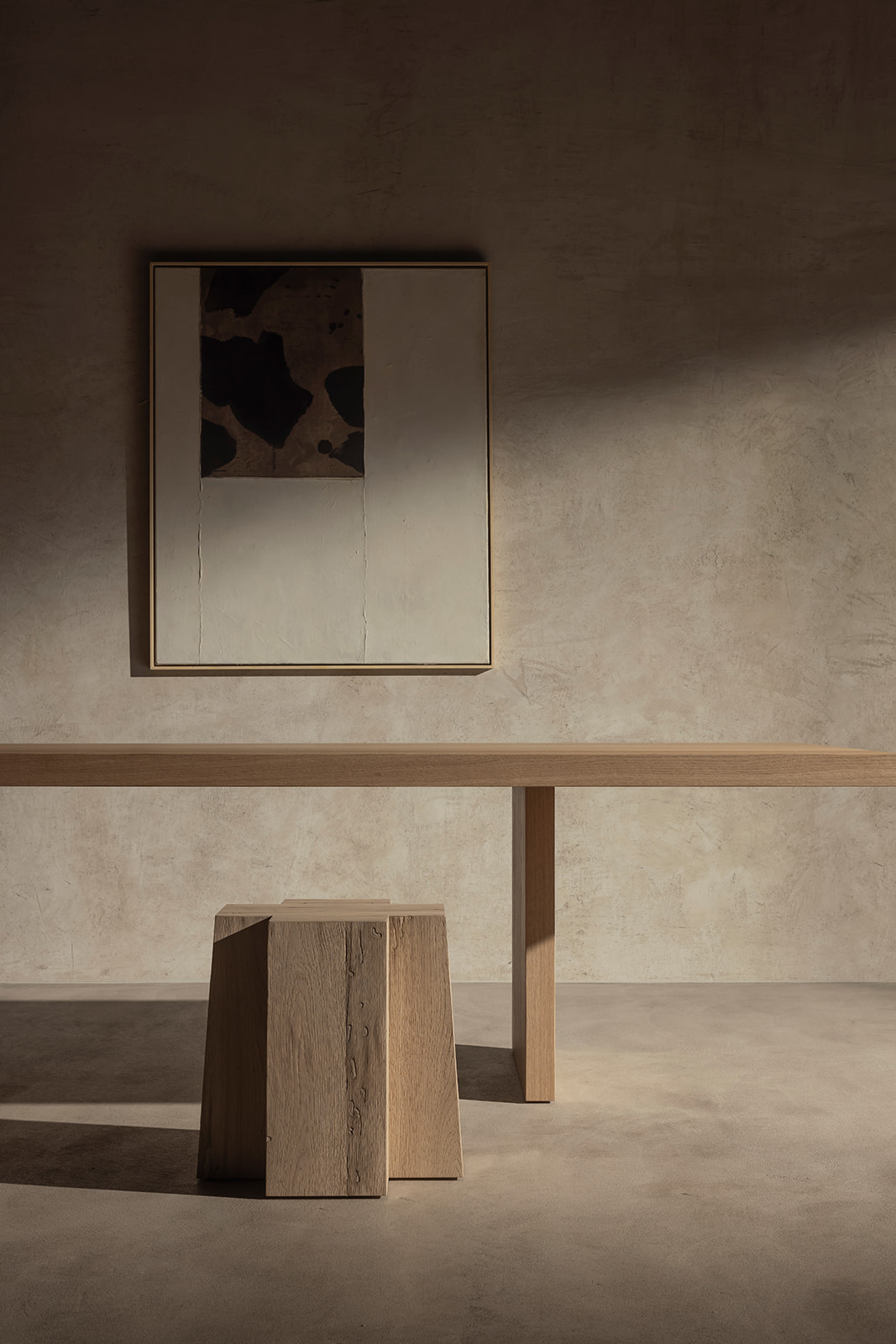
The first thing you notice is the gap under the top. Diagonal table legs pull the eye inward, so the oak dining table seems to lift away from the floor. The hand-brushed French oak keeps that effect grounded: the grain is visible, the edges stay firm, and the long surface reads as one clear plane rather than a heavy block.
Diagonal legs and a tabletop that seems to lift
The floating-looking oak tabletop is built around movement that is almost optical. The legs do not sit straight and passive under the slab; they angle out, then return the focus to the center. That shift creates shadow lines below the table and turns the underside into part of the composition. In a concrete-look interior, those shadows become sharper, especially where the light falls across the floor and up the wall.
The composition is restrained, but it is not flat. Along the length of the oak dining table, the timber surface catches the light in narrow bands, while the base reads as a series of block-like wooden forms. The effect is strongest from the side, where the diagonal table legs make the top appear to hover. It is a small visual trick, yet it changes the entire weight of the room.
Hand-brushed oak with a visible grain
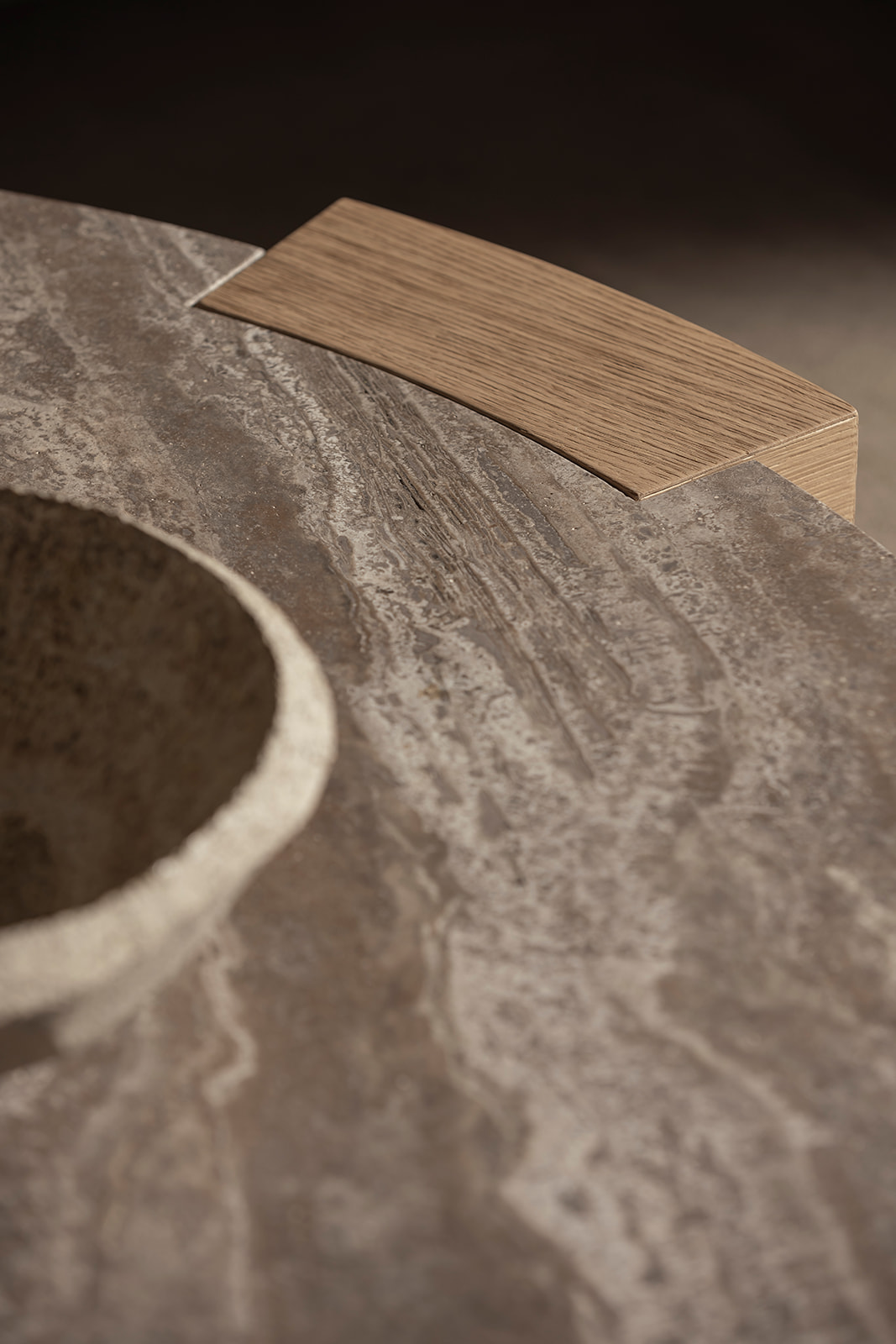
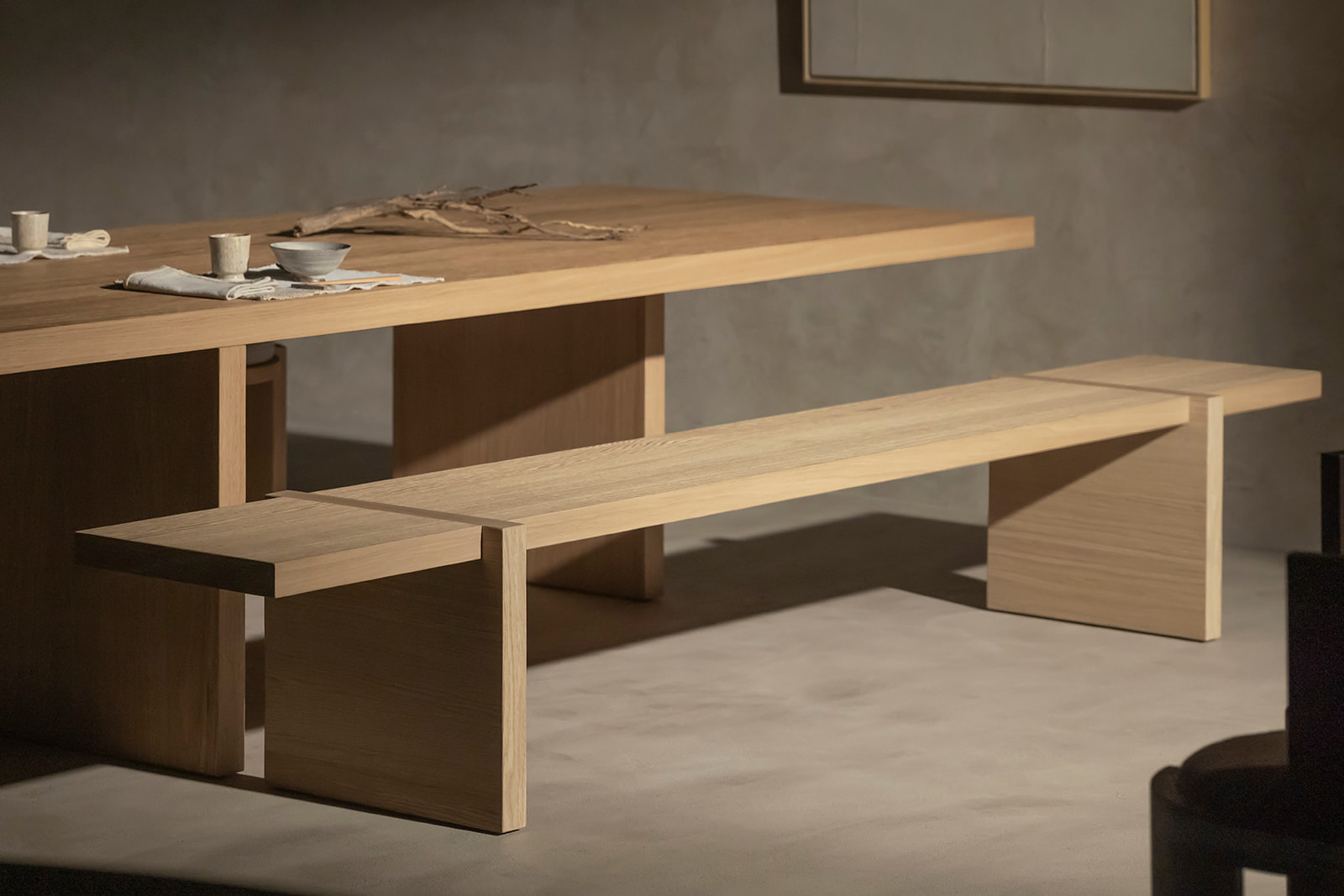
Natural French oak gives the setting its clearest material note. The hand-brushed finish leaves the wood grain readable, so the table and bench do not blur into a smooth, sealed surface. You can see the movement in the timber, especially where the light glances off the edges and the corners stay slightly darker. That contrast makes the joinery and the transitions between horizontal and vertical parts easy to read.
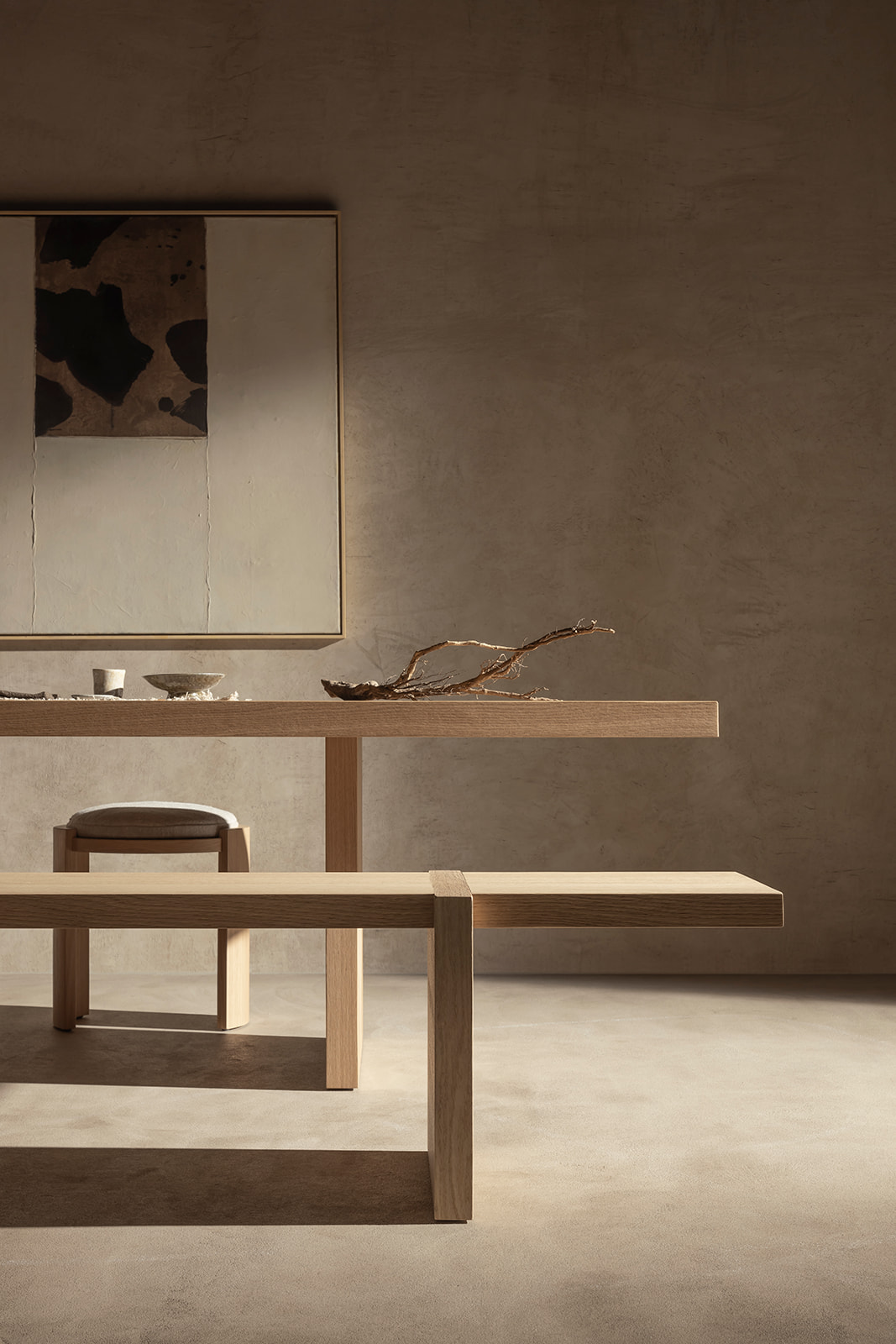
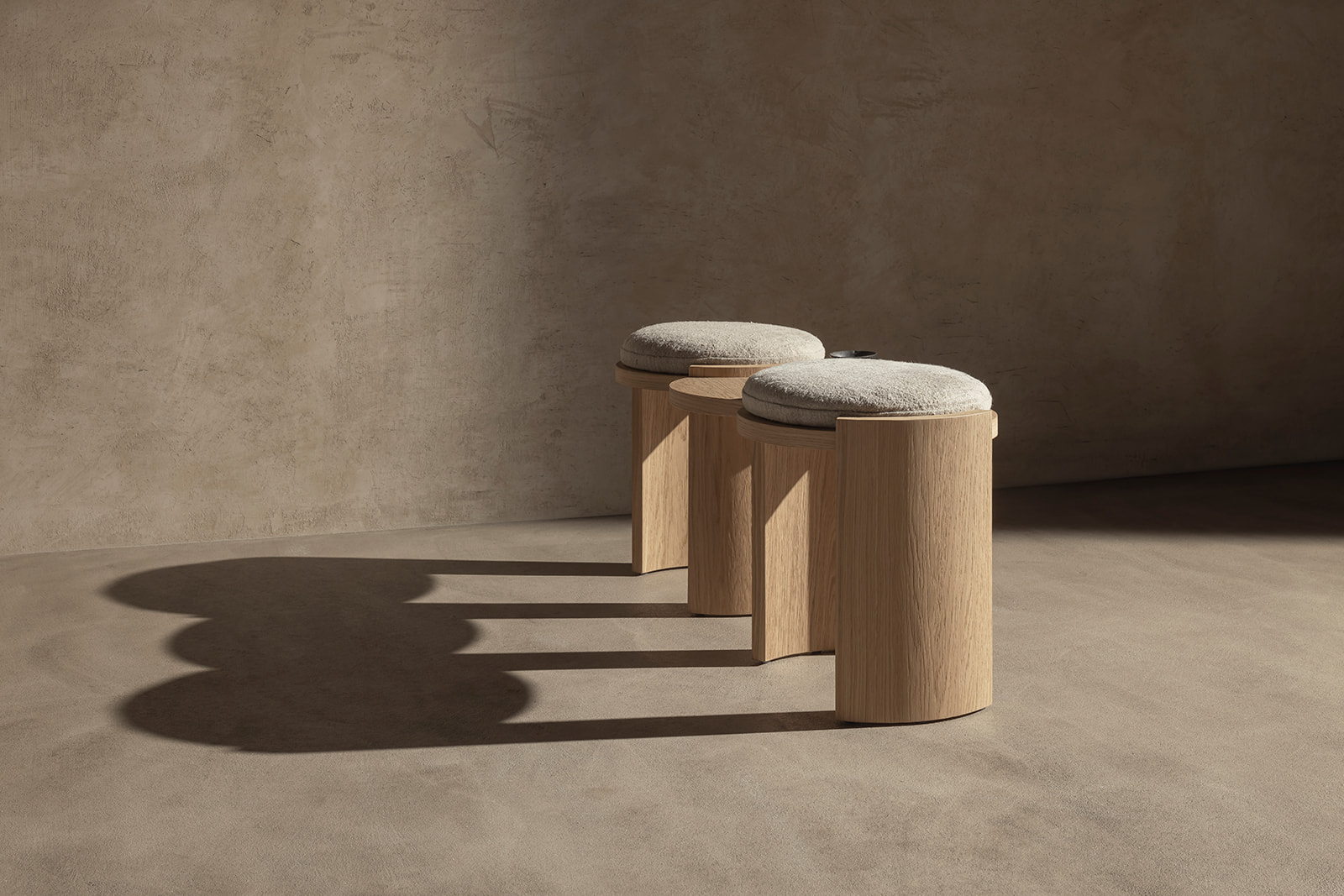
The same timber language carries into the seating. Instead of separating the pieces into unrelated objects, the project keeps the lines consistent: long oak elements, squared volumes, and a low profile that lets the room stay open around them. The minimal dining bench does not compete with the table; it extends the same geometry and gives the setting a quieter second line.
Wood forms that hold the room in place
Some parts are almost monolithic. Thick wooden supports, block-like corners, and straight runs of material give the furniture a weight that the floating effect needs. Without those elements, the top would feel decorative. Here, the base carries enough visual mass to make the lightness above believable. That tension between lift and support is what gives the arrangement its presence.
Close up, the oak grain does more than decorate a surface. It breaks the larger planes into smaller visual rhythms, especially across the bench and the long underside of the table. On the photographed pieces, the grain catches light unevenly, so the furniture keeps changing as you move around it. In a room dominated by concrete-look walls and floor, that movement keeps the wood from going still.
A dining setup sized for long gatherings
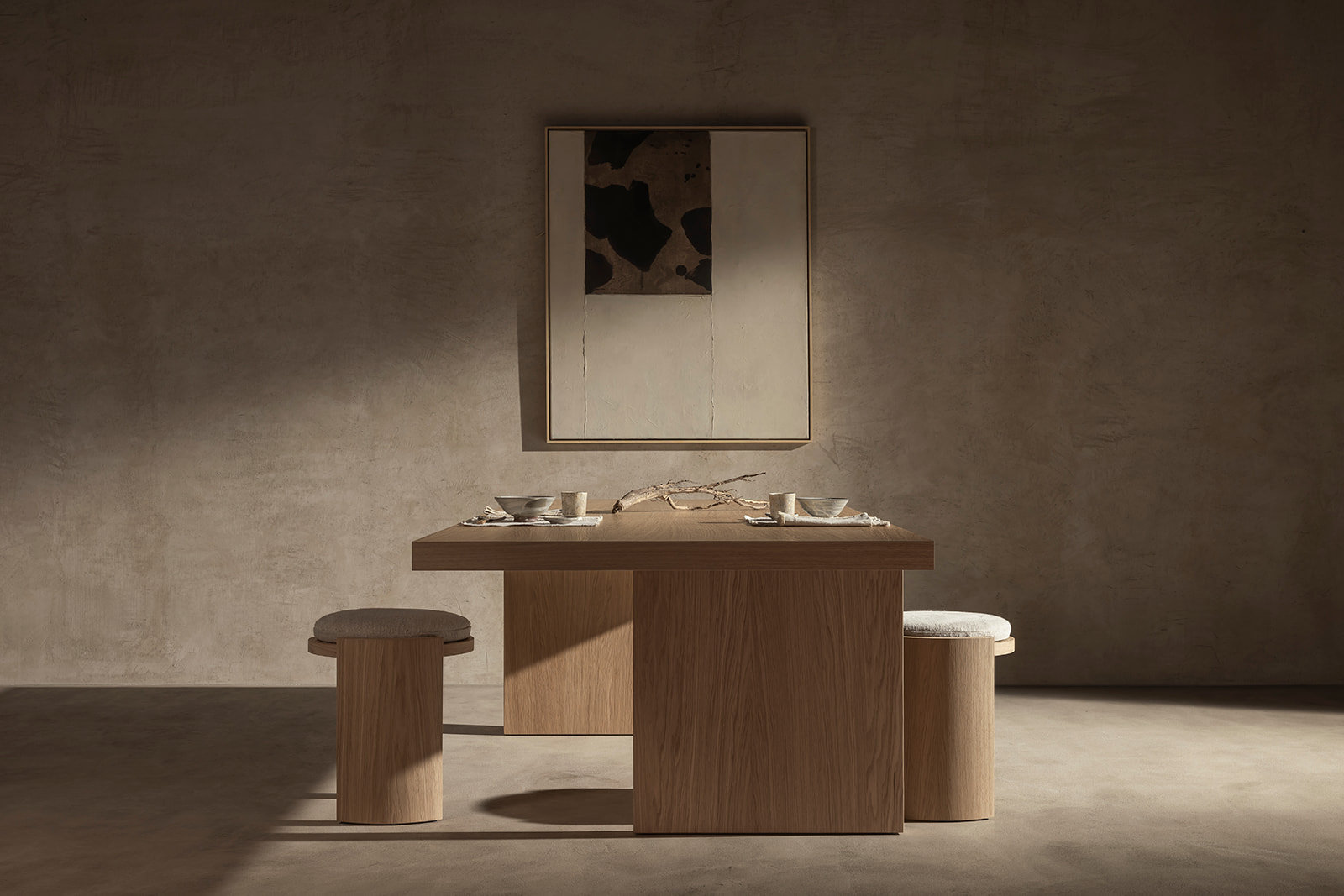
The table and bench composition is meant for dining rituals with up to 12 guests. That scale changes how the furniture is read. The long top is not only a form to look at; it is a surface that organizes place settings, conversation, and the line of sight across the room. Because the seating stays low and linear, the table remains the main horizontal reference. Everything else in the room is measured against it.
The minimal dining bench reinforces that reading. It sits close to the floor and keeps the volume of the seating compact, so the table can remain visually dominant. From one angle, the bench almost disappears into the room’s darker planes; from another, the pale oak edge draws a clean line beside the table. The result is a composition that feels edited, not sparse.
Shadow, stone-like surfaces and a calm background
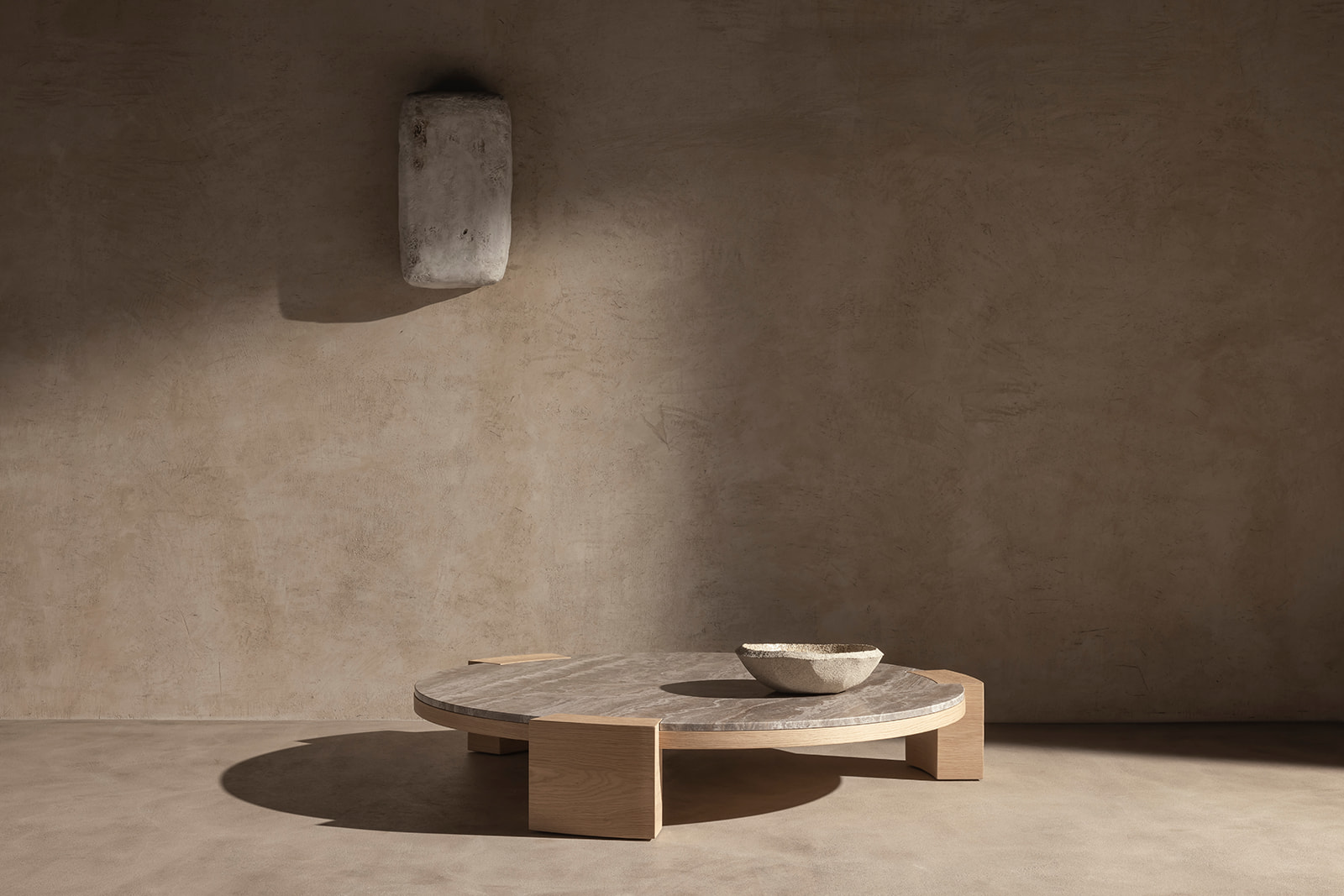
The concrete-look interior plays a clear supporting role. It frames the furniture without pulling attention away from the wood. On the wall, a large abstract print interrupts the plain surface just enough to register as another rectangle in the room. On the floor, the light spreads softly and leaves long shadows under the table, the bench, and the sculptural seating pieces nearby.
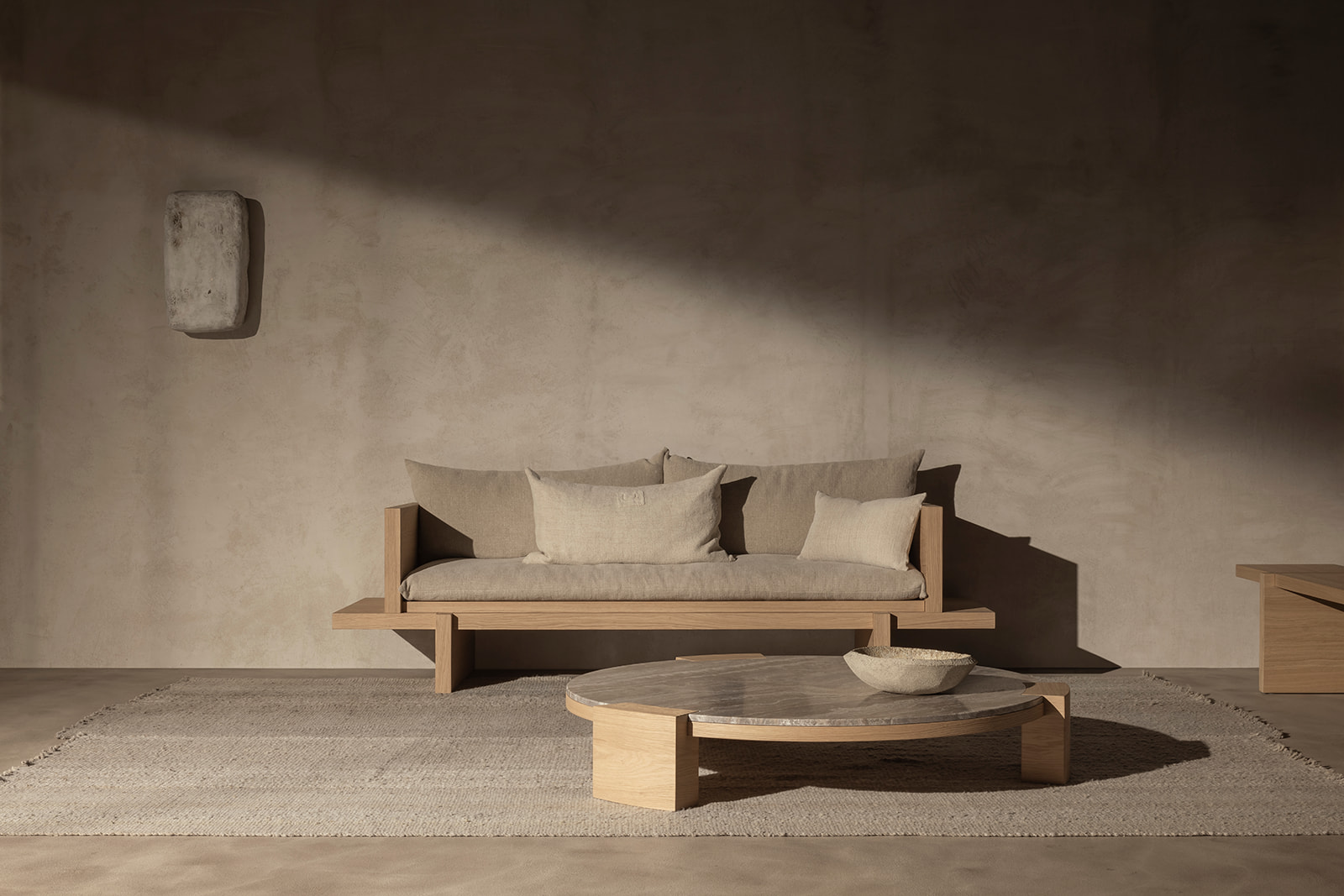
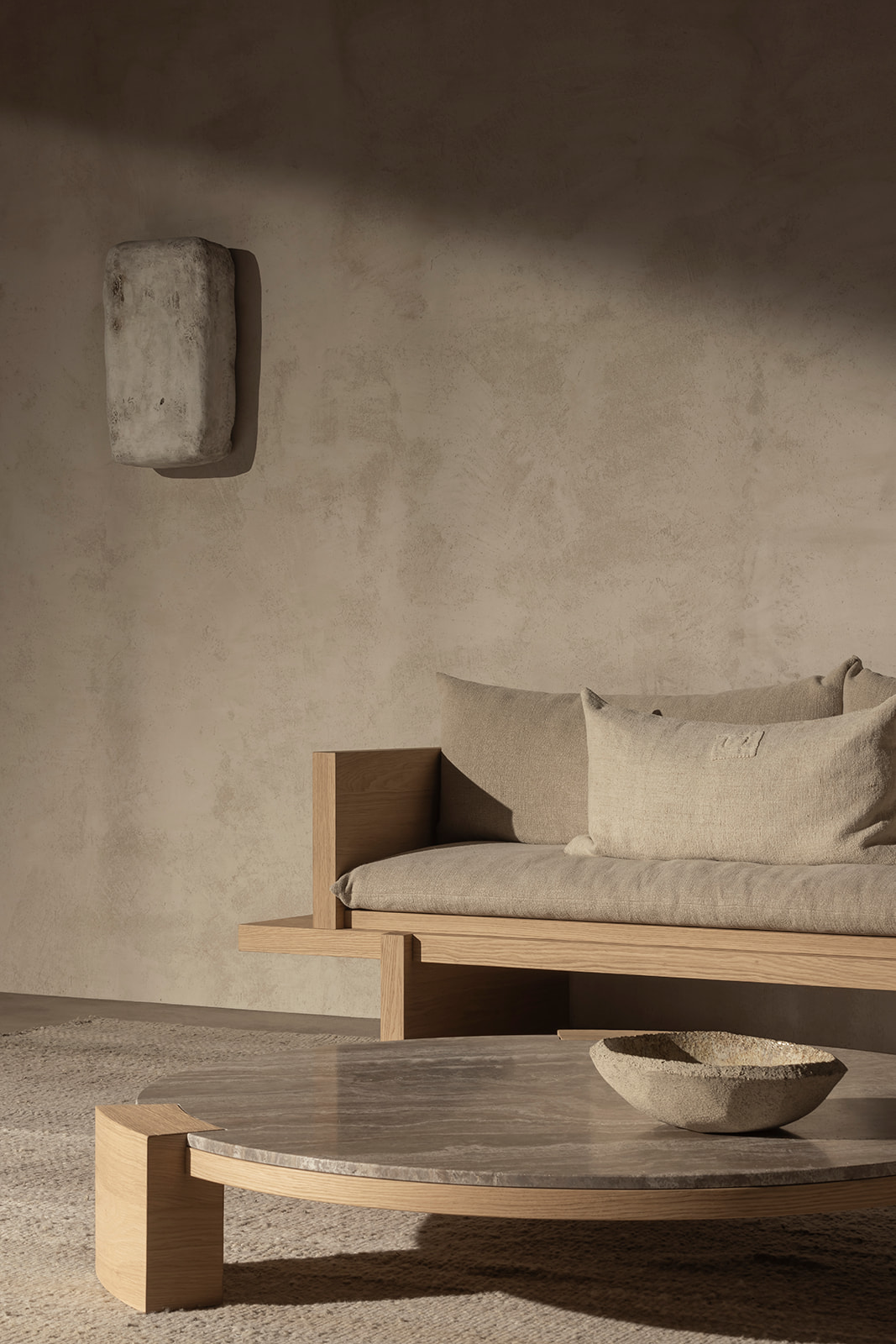
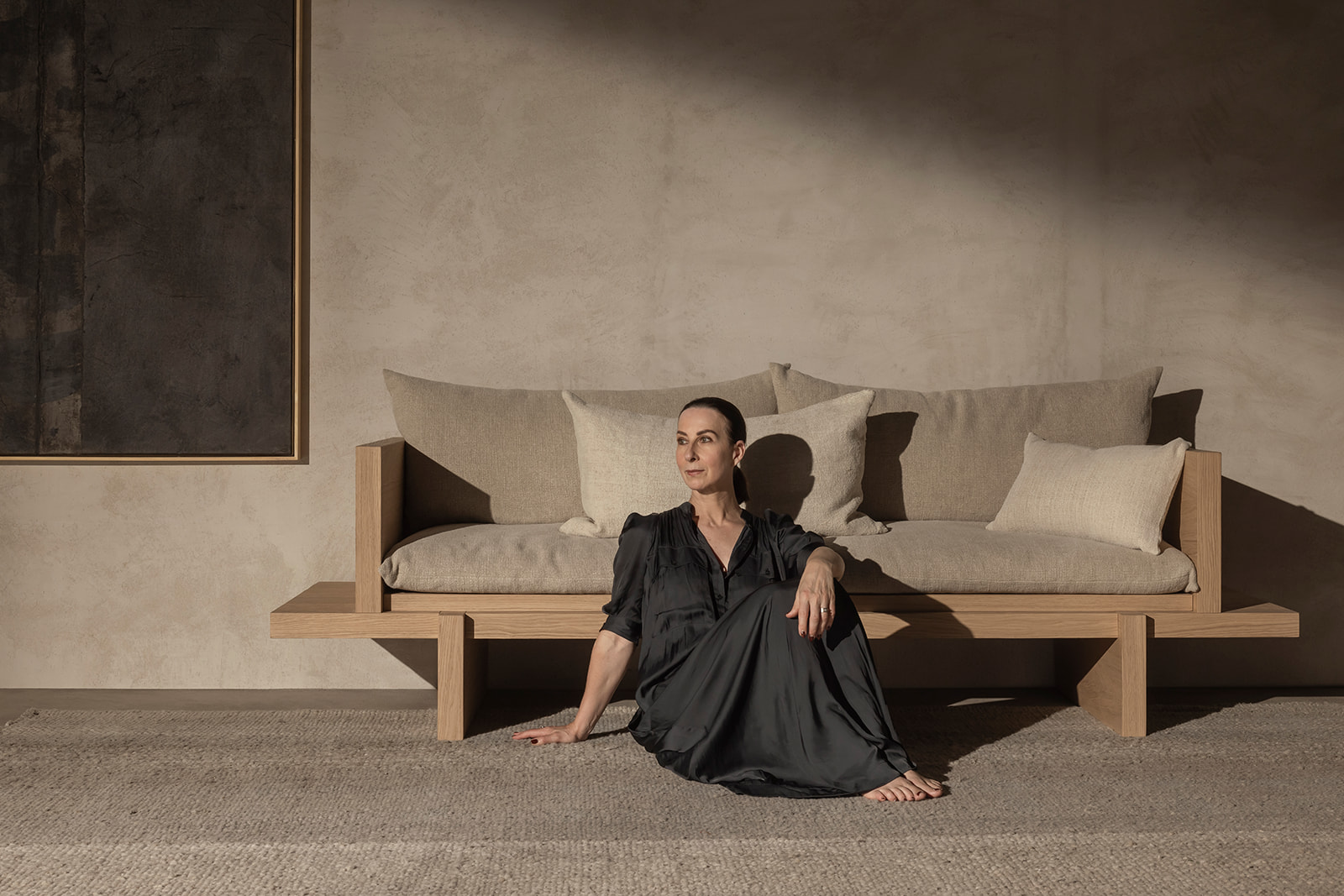
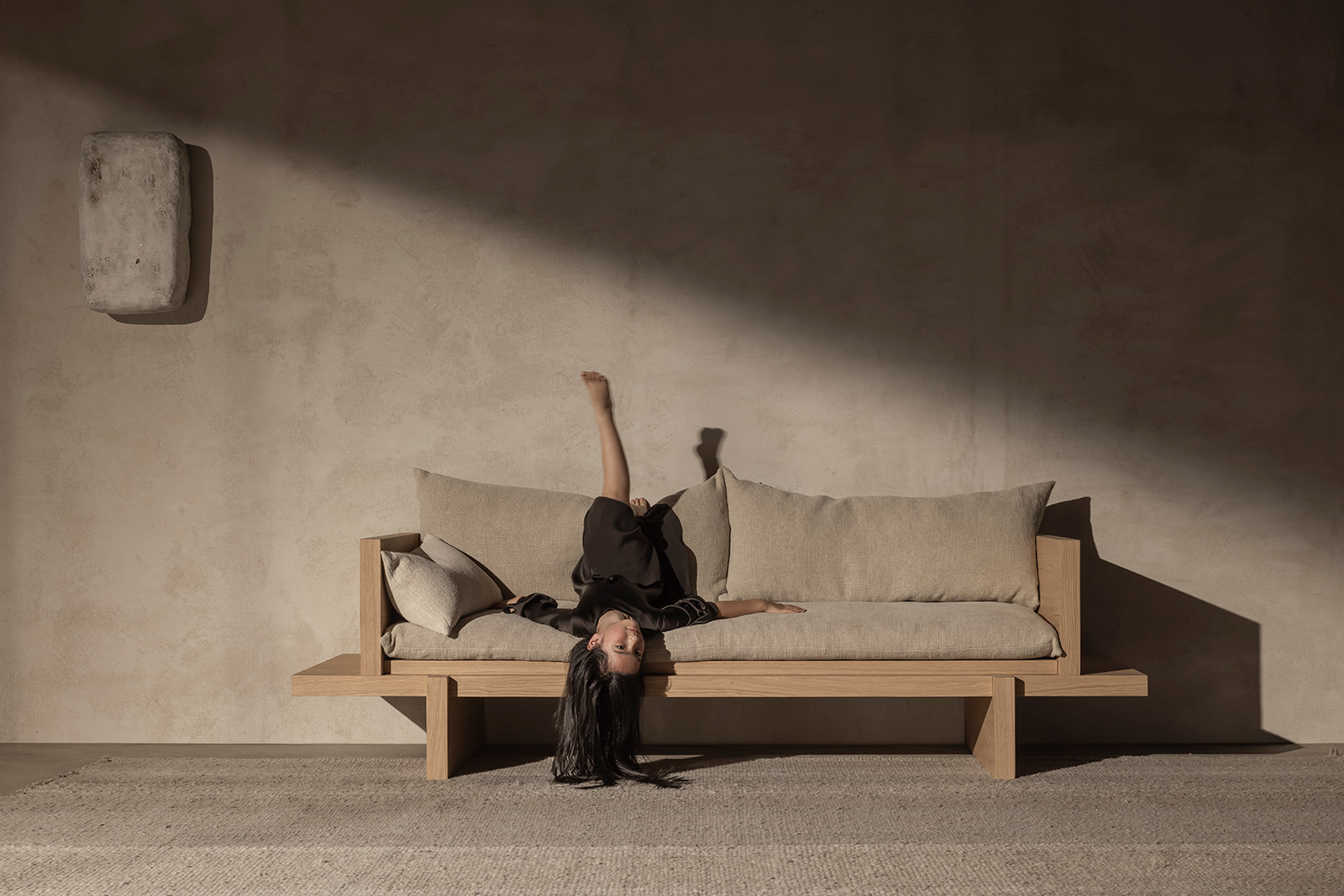
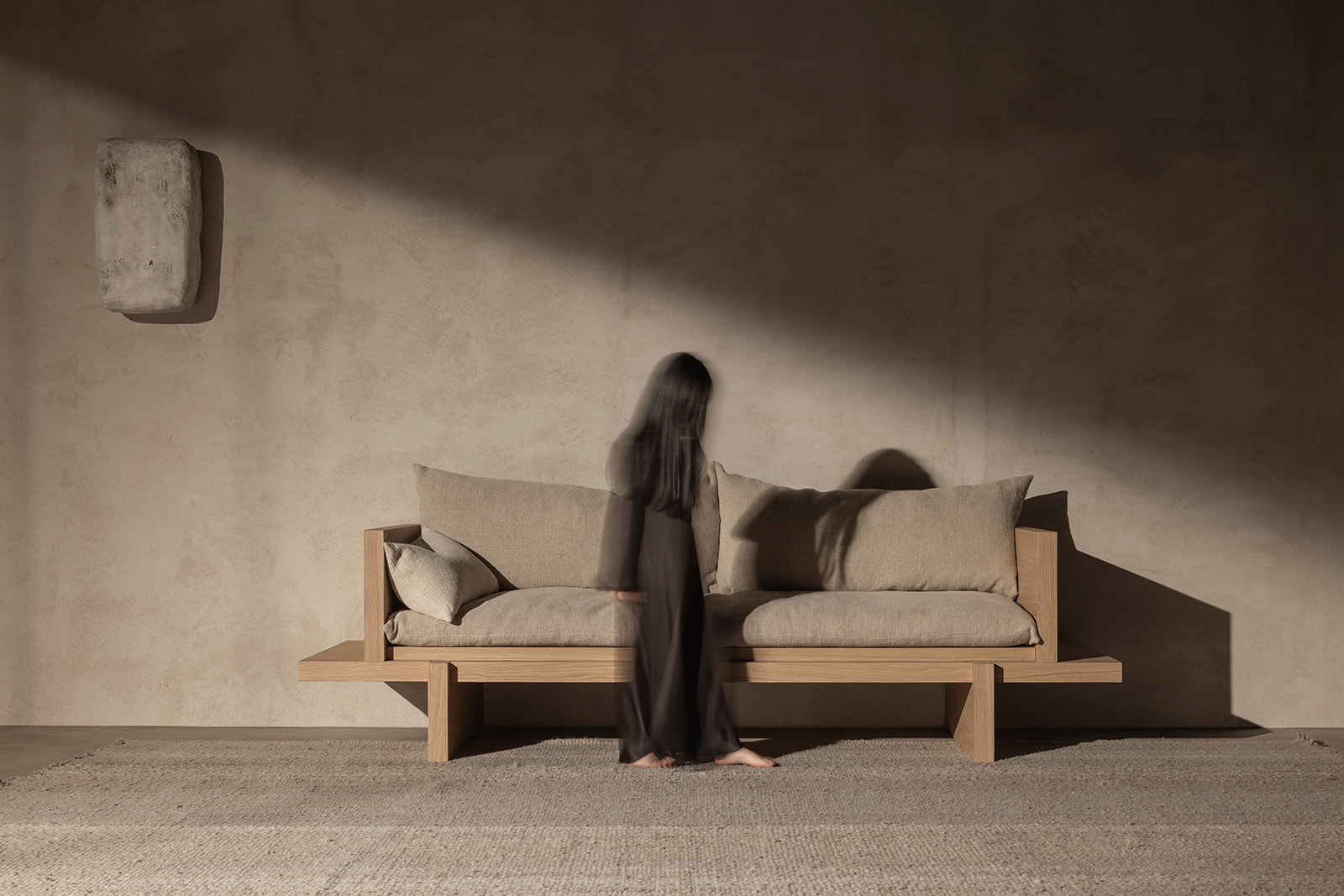
Those nearby pieces repeat the same language in smaller forms. One stool-like seat has a rounded wooden base and beige upholstery; a lounge bench in the background adds cushions and a lower wooden frame. Their presence matters because it shows how the dining table belongs to a wider interior setting, not to a single isolated object. The shared tones of oak, textile, and grey plaster keep the scene readable from every angle.
A round side table with a stone- or marble-look top appears in one view as a quieter counterpoint. Its circular shape softens the strict lines of the dining set, while the wooden rim ties it back to the oak pieces. Even there, the light stays active: it draws a bright edge across the top and lets the base fall into shadow. That mix of hard surfaces and soft reflections keeps the whole setting visually alert.
What remains most clearly in view is the relationship between form and absence. The floating-looking oak tabletop is defined as much by the space beneath it as by the wood above it. Diagonal table legs, visible grain, and the minimal dining bench work together to leave openings, not clutter. In a concrete-look interior, that restraint gives the furniture room to breathe without losing its weight.
Want to see more of Inge Lagae Design Studio? View the page of Inge Lagae Design Studio for even more great projects and company information.



NEW 2026 Jubileum Edition The Best Interior Designers Benelux
Order Now €125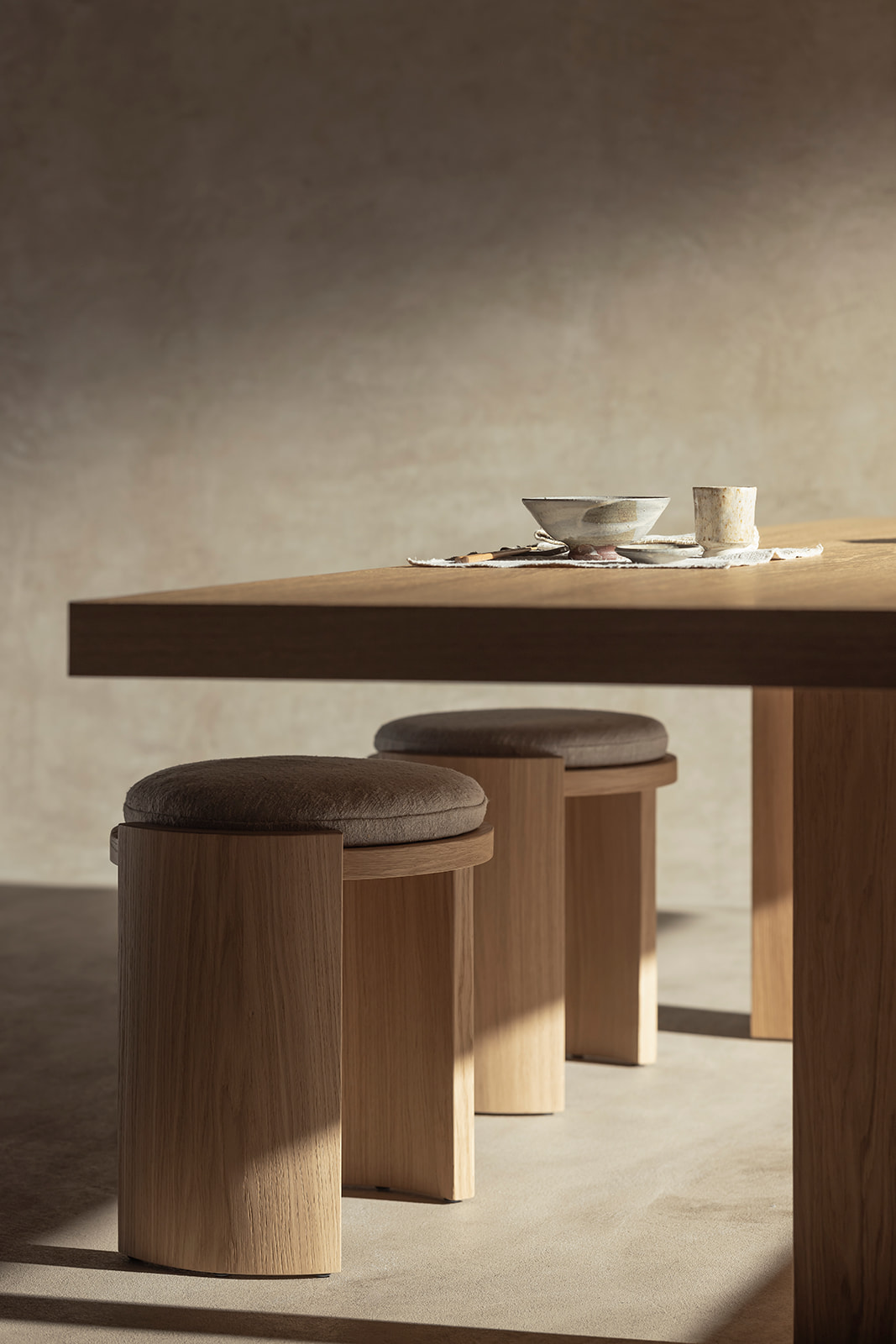
NEW 2026 Jubileum Edition The Best Interior Designers Benelux
Order Now €125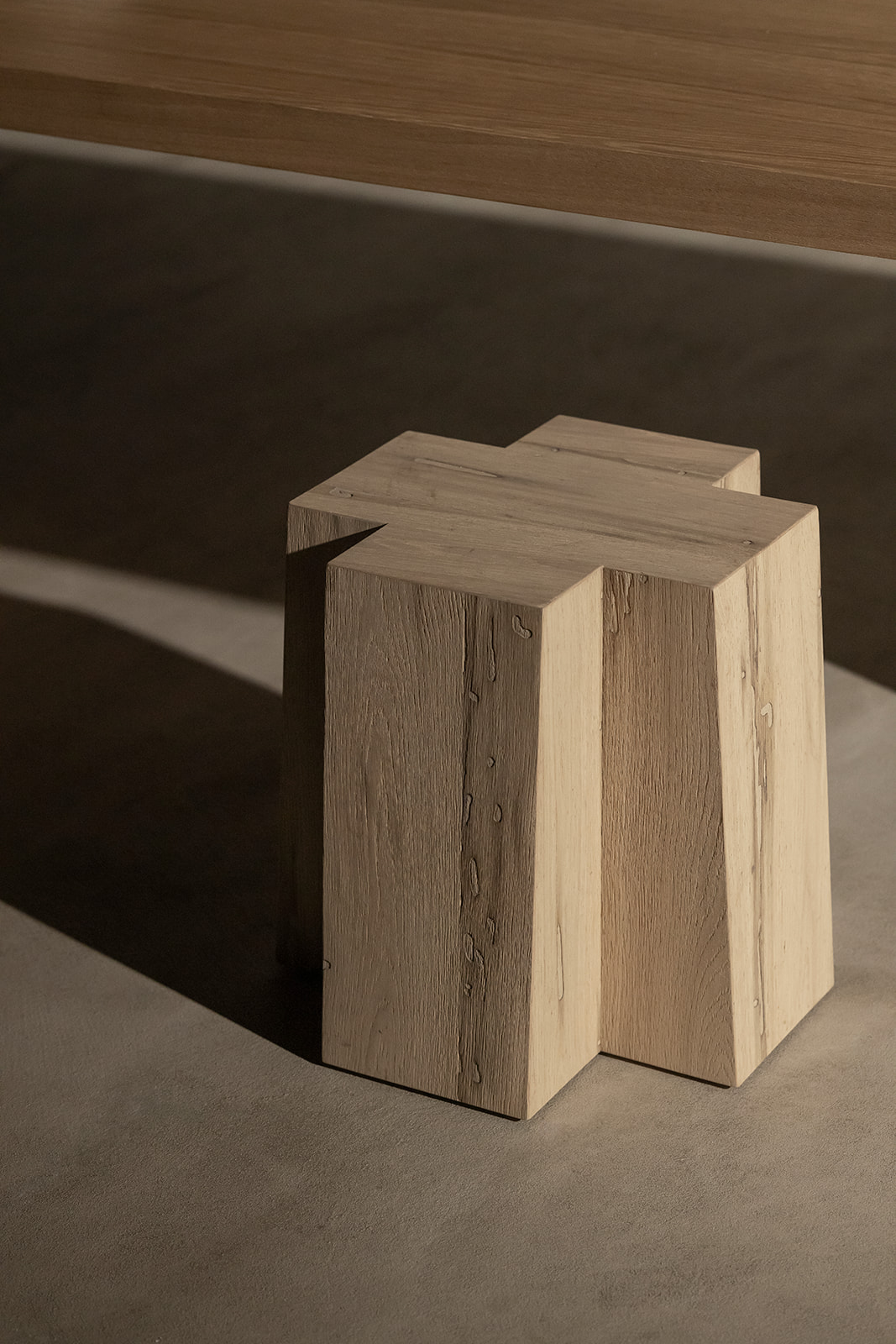
NEW 2026 Jubileum Edition The Best Interior Designers Benelux
Order Now €125