








Kitchen island in a modern marble kitchen
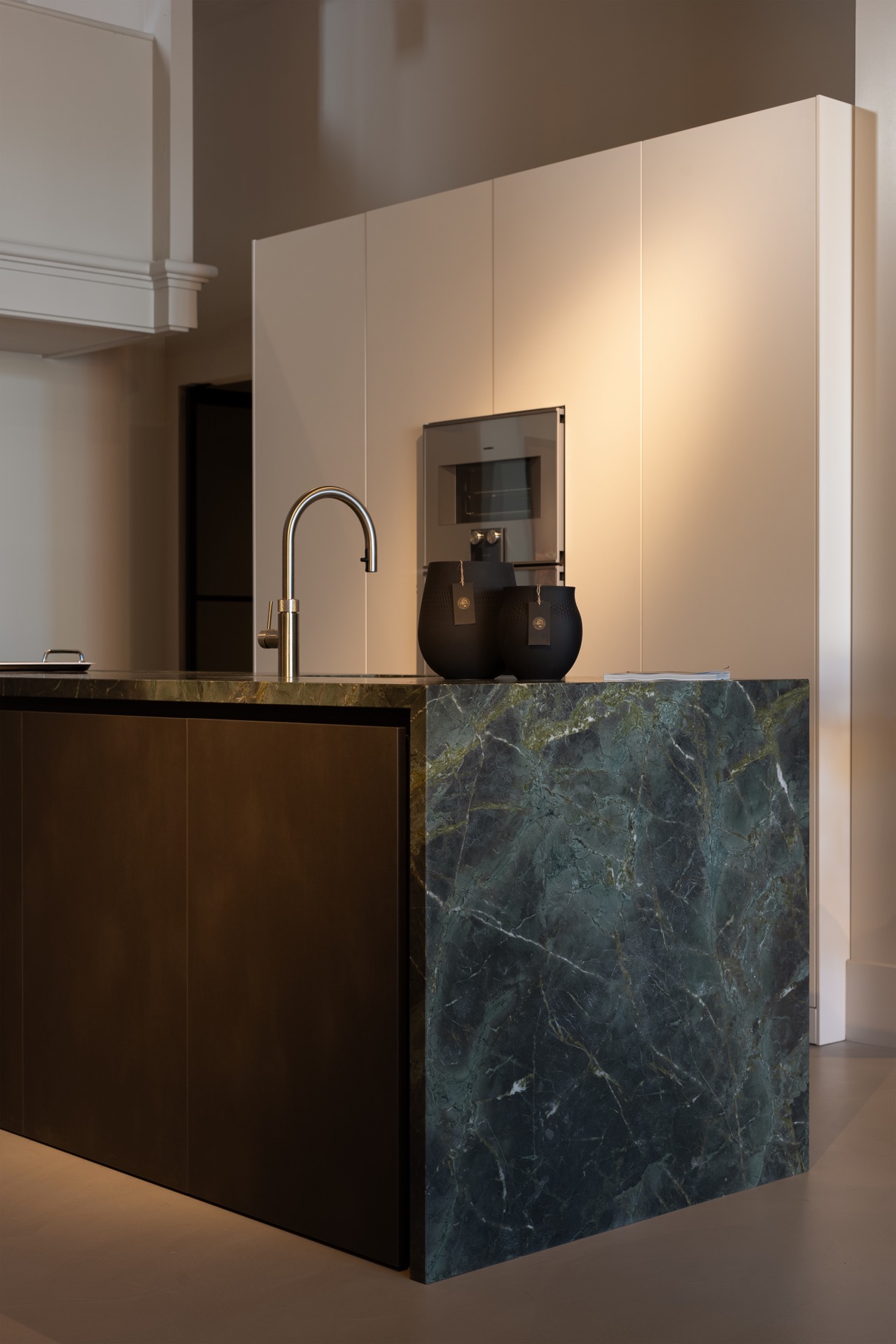
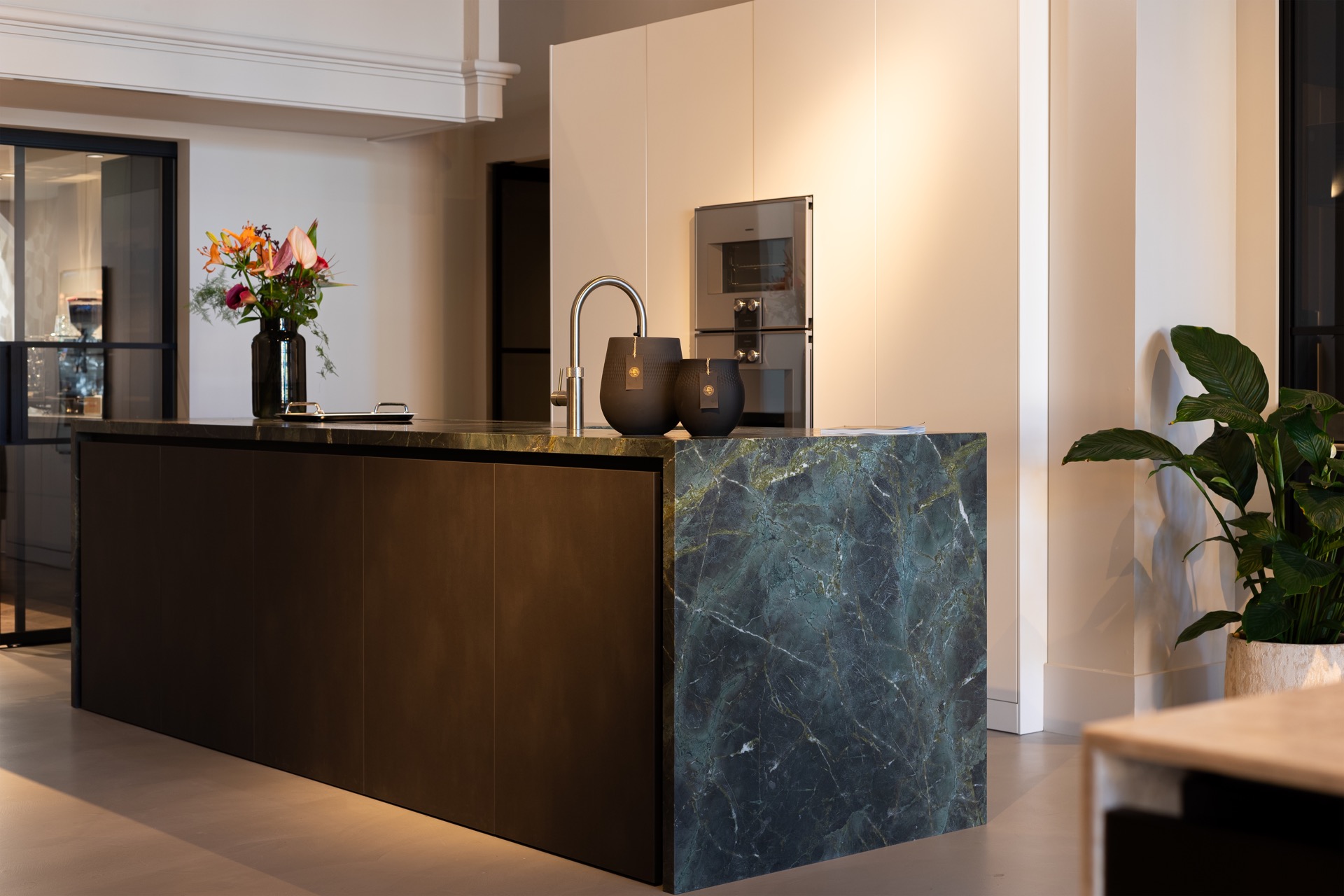
The marble kitchen island sets the tone at once. Dark metal beneath it holds the weight of the composition, while the stone surface pulls the eye across its continuous run. The veining is not treated as decoration; it moves from cheek to cheek and gives the island a clear front, side, and edge relationship. That long sweep of stone is what makes the room read as one decisive gesture rather than a collection of separate parts.
Stone that carries across the island
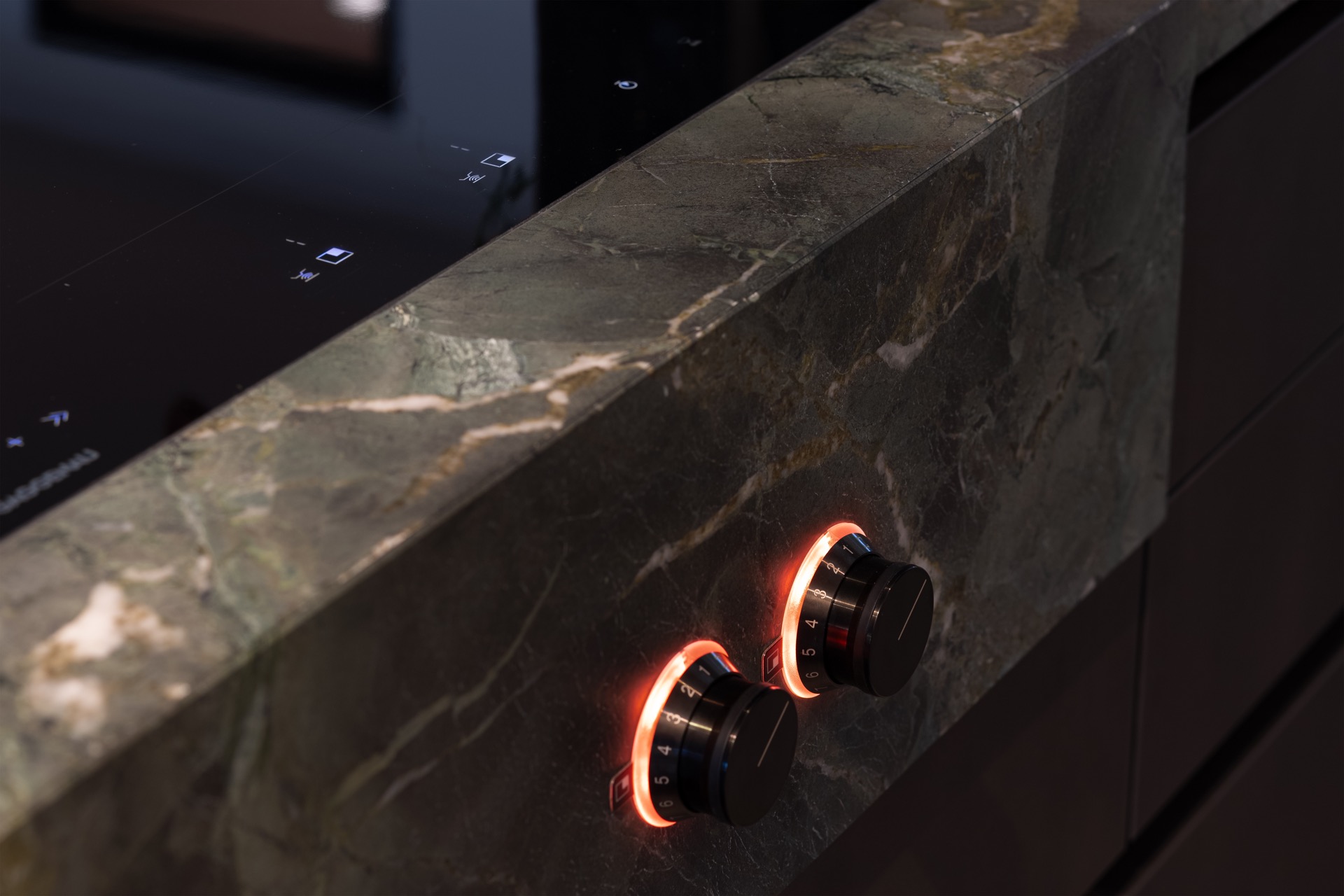
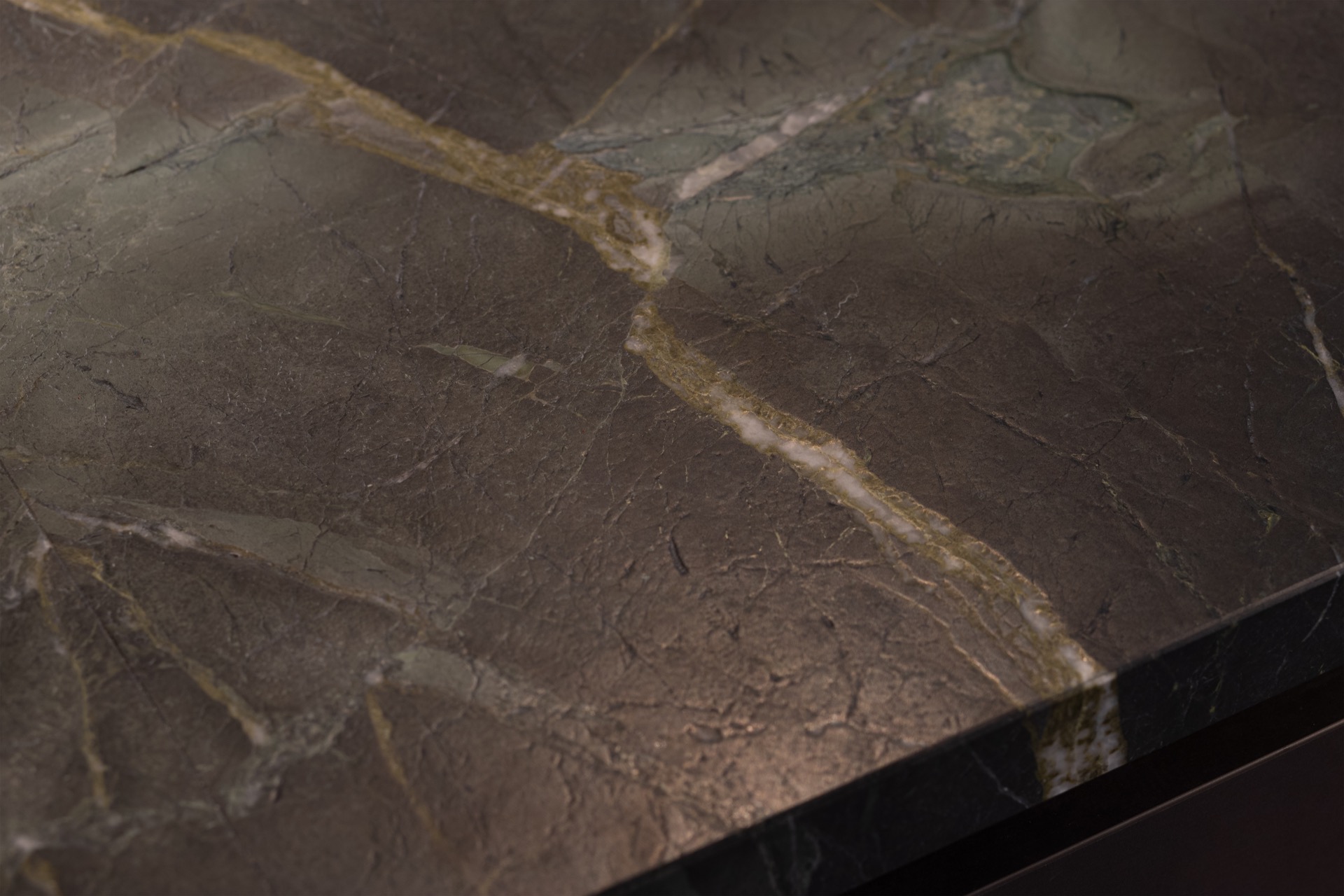
Up close, the marble surface shows a dense green-black field with lighter mineral lines running through it. The leather finish softens the reflection, so the island catches light without turning glossy. On the non-working side, a shadow line wraps around the fronts and pulls the base back visually, letting the stone appear lighter above the dark support. It is a small move, but it sharpens the profile of the island and keeps the lower edge from feeling heavy.
The continuous marble countertop also houses the cooktop controls. Instead of breaking the plane with separate hardware, the control elements sit within the stone and keep the surface visually clean. That detail changes how the island is read: the work zone stays present, yet nothing interrupts the long stone line. The result is a kitchen island that feels engineered around the material rather than layered on top of it.
Integrated controls in the work surface
Because the controls are set into the marble, the cook zone stays close to the surface. The plate and the control points are visible, but they do not compete with the stone pattern. This makes the marble veining detail even more noticeable, especially where light picks up the pale threads against the darker base. The island works both as a visual anchor and as a precise working surface, with the technology kept flat and restrained.
Above the island, the lighting is measured rather than theatrical. It picks out the stone and the dark metal below without flattening either one. In the photographs, the island sits as the room’s strongest horizontal line, and the light above it helps define the edge of the work zone. That pairing of stone and light is what gives the island its presence: one material reflects, the other absorbs, and the contrast stays controlled.
White cabinetry that keeps the wall quiet
Against the island, the minimal white cabinetry reads as a calm vertical plane. The finish has a fine texture, so the wall does not flash or compete with the marble. Push-to-open fronts remove handles from view and allow the cabinet faces to sit almost uninterrupted across the wall. The effect is plain to see: the eye moves first to the island and only then settles on the cabinetry behind it.
The oven area has been resolved with care around the symmetry of four cabinets. Two door fronts are adjusted around the appliances, so the wall keeps its rhythm instead of stopping at the technical insert. Thin 13 mm stiles sharpen the proportions and make the cabinet grid feel slimmer than it is. These are modest details, but they matter in a room where the island already carries so much weight. The wall needs to stay quiet, and it does.
A wall built from narrow lines
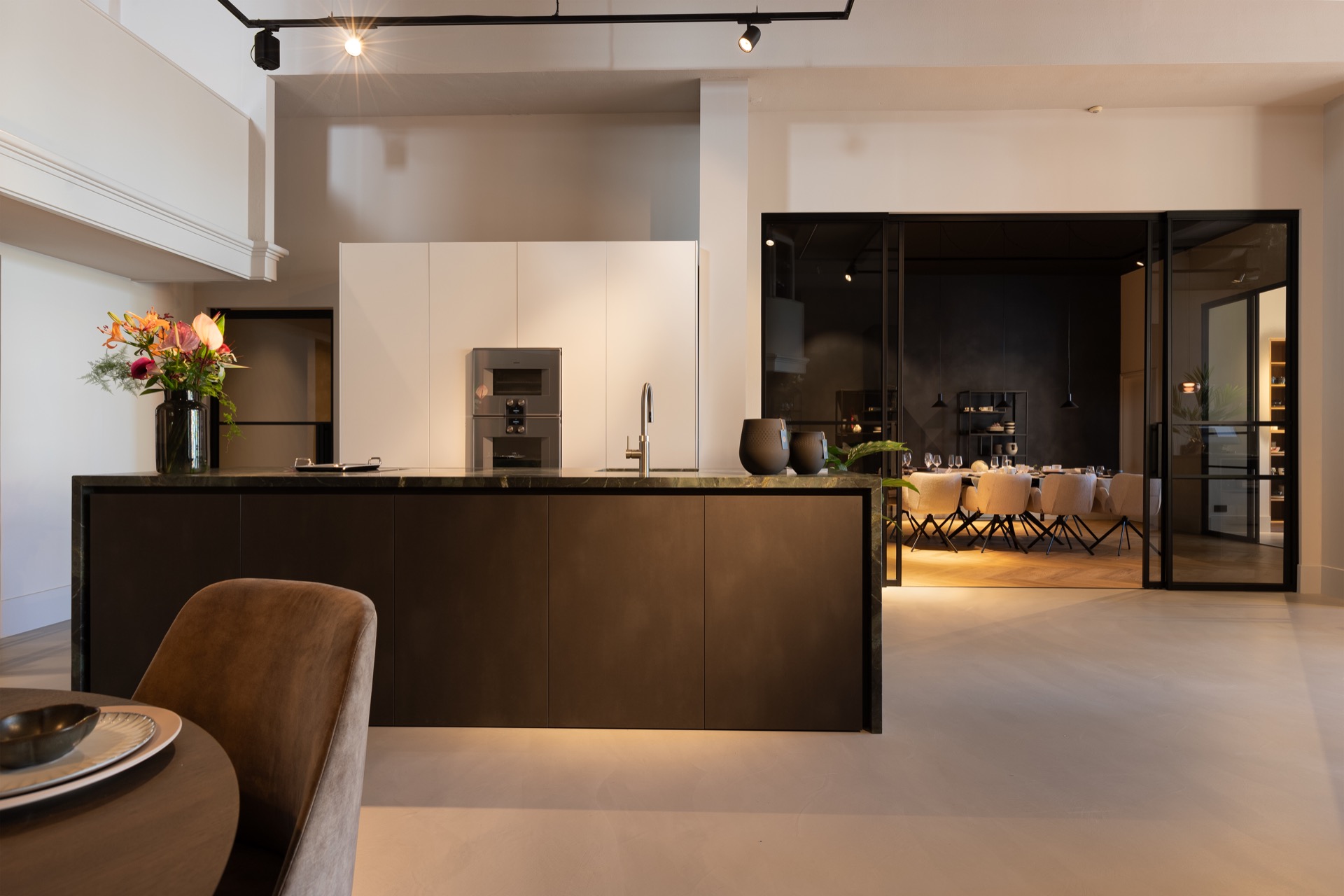
The cabinet wall is about line management. Door edges align, gaps stay narrow, and the white surfaces form a neutral field behind the island. The matte-like texture keeps the wall from becoming a blank slab; it still has a tactile quality when seen beside the reflective stone. In the wide view, this contrast gives the room its structure: dark and light, dense and flat, mineral and lacquered.
What strengthens the composition is the way the island and the cabinetry speak to each other without repeating the same language. The island uses depth, veining, and shadow. The wall uses restraint, flush fronts, and measured spacing. Between them, the room feels resolved through contrast rather than through symmetry alone. Even the equipment remains secondary to that arrangement, which is why the stone surface and the white wall carry the whole image so well.
Details that keep the composition sharp
At the far side of the island, the shadow line around the fronts adds a slight lift, almost like the base has been drawn back by a thin cut of shade. That move is easy to miss in a quick glance, but it is visible in the way the island meets the floor and in the way the dark support recedes beneath the marble. It keeps the island from reading as a block and instead gives it a more layered profile.
The close-up images make the marble veining detail even clearer. Dark greens, almost black in places, are crossed by lighter mineral streaks that run in long, directional bands. Because the stone is bookmatched, the pattern feels deliberate and mirrored rather than random. This is where the kitchen island becomes more than a functional centre: it turns into a surface that is read as much as it is used.
Why this kitchen island stands out
What stays with you is not a single feature but the sequence of them. First the marble kitchen island, then the continuous marble countertop, then the white cabinetry wall behind it. After that come the smaller decisions: integrated cooktop controls, the shadow line detailing, and the trimmed cabinet stiles. None of these elements shout. They work by keeping each surface legible, so the island can carry the room without visual clutter.
In the wider frame, the kitchen feels composed around material rather than ornament. The dark base gives the island a grounded look, the marble brings movement across the plane, and the cabinet wall holds the background in place. That combination is what makes this kitchen island so compelling to look at: it is controlled, but not flat, and every edge has been considered in relation to the next.
Photography: Wesley Bergen
Want to see more of World of Cooking – Kitchens and Interiors? View the page of World of Cooking – Kitchens and Interiors for even more great projects and company information.



NEW 2026 Jubileum Edition The Best Interior Designers Benelux
Order Now €125