








Acoustic Round Rug in a Warm Restaurant Interior
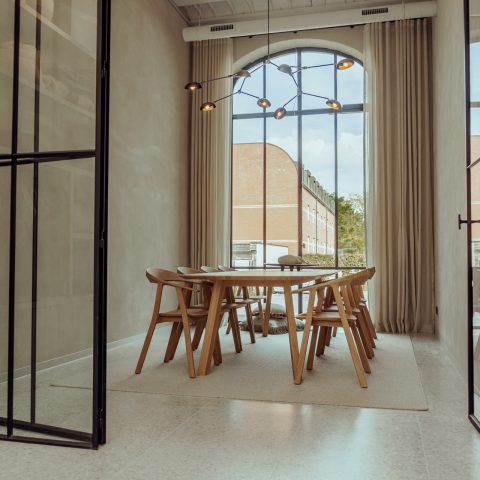
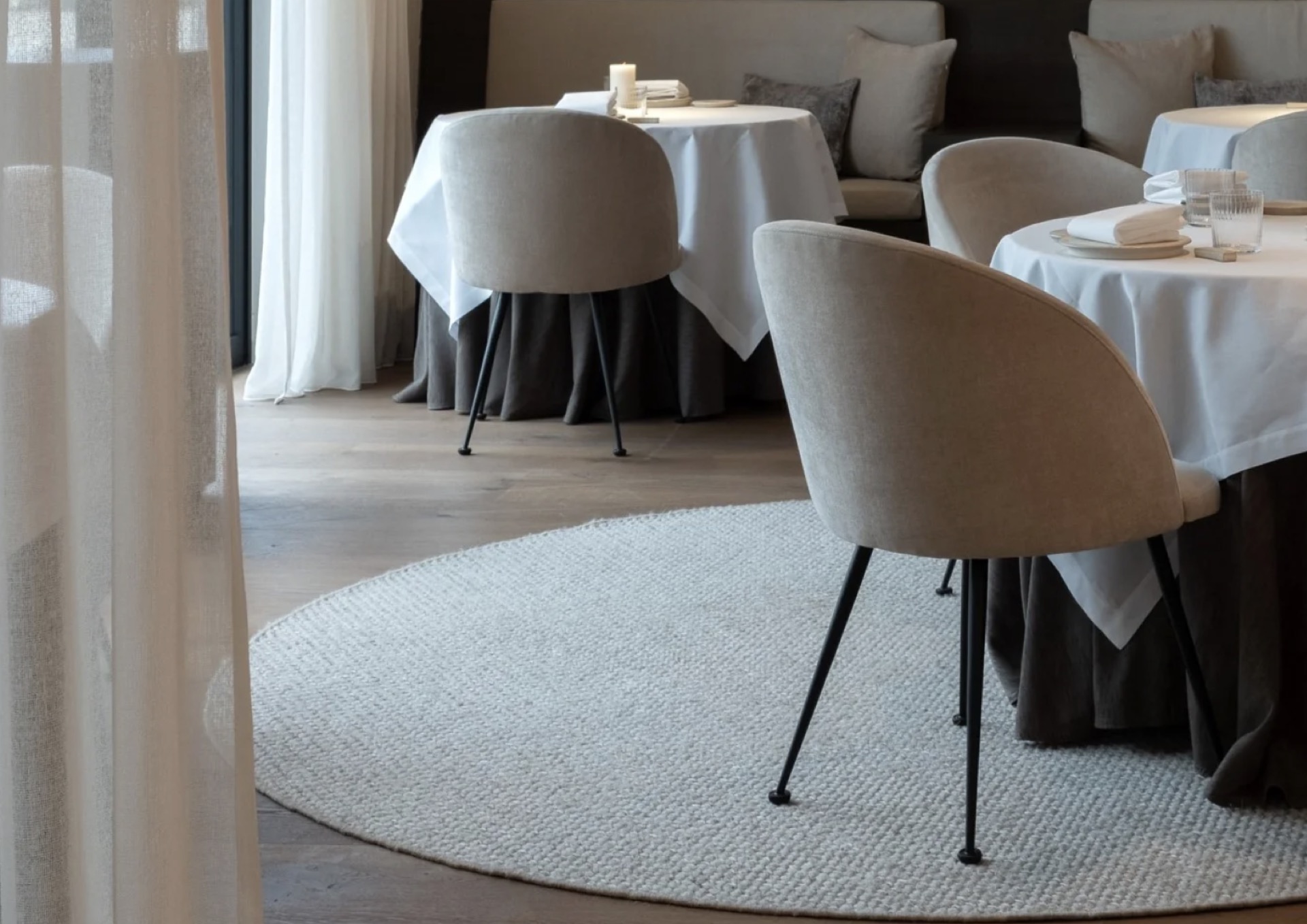
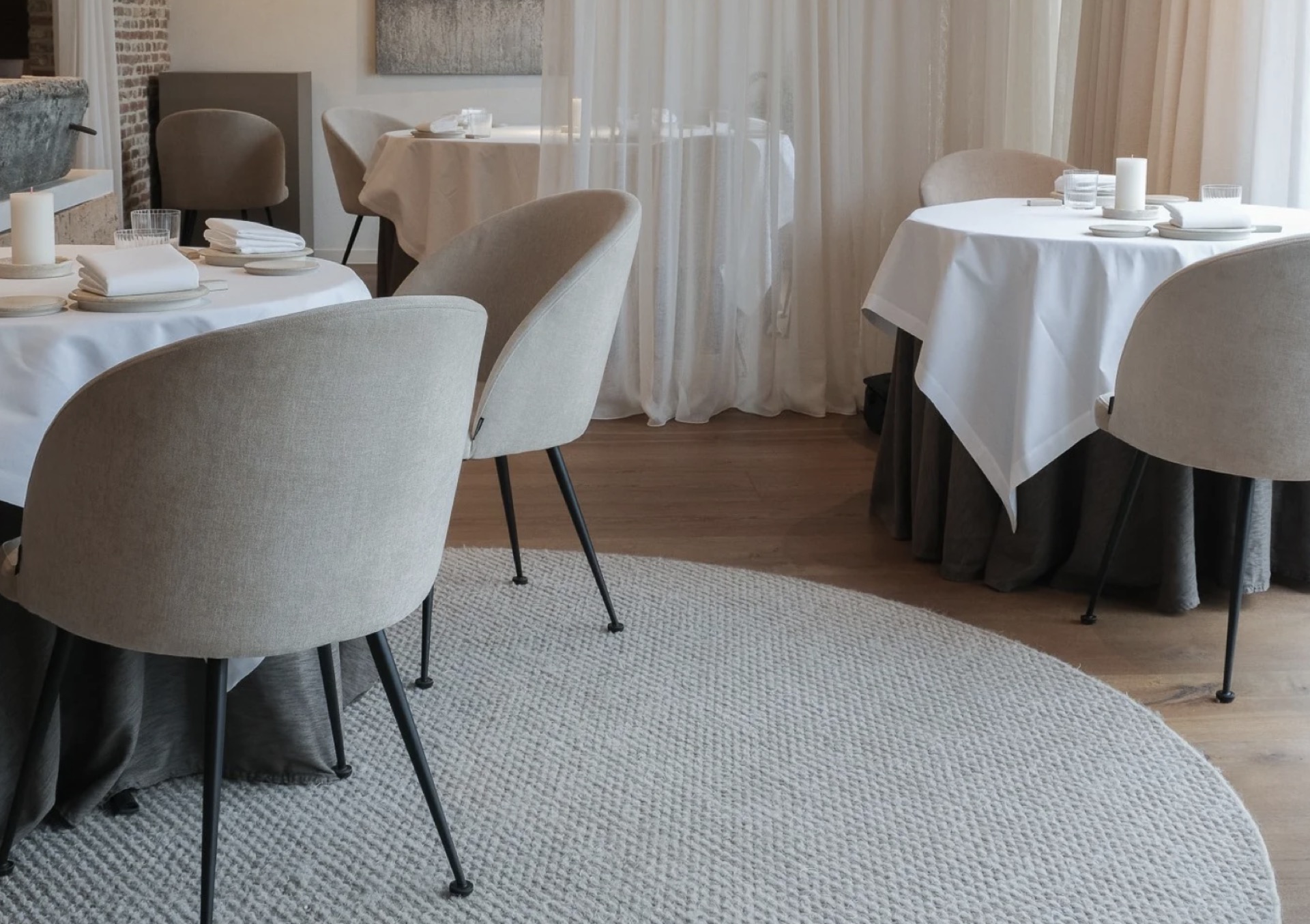
The first thing you register is the rug: a large, light-toned circle under the seating area, set against wood, marble and the dark line of the window frames. It marks out the room without closing it off. In this restaurant interior, the acoustic round rug sits where people gather to dine, and it does more than define the floor plan. The source notes that it was made to match the interior and to improve acoustics, which fits the way the room reads in the photos: softer underfoot, quieter in appearance, and anchored by textiles rather than hard edges.
A dining room built around soft surfaces
The seating area with rug is the clearest gesture in the room. Chairs sit partly on the pile, partly on the surrounding floor, so the rug acts like a field rather than an isolated object. Around it, upholstered chairs, white table settings and pale curtains keep the palette restrained. The result is a warm minimalist restaurant interior that depends on texture more than color. Nothing shouts for attention. Instead, the marble and lighting, the table linen and the rug each take a role in shaping the room’s pace.
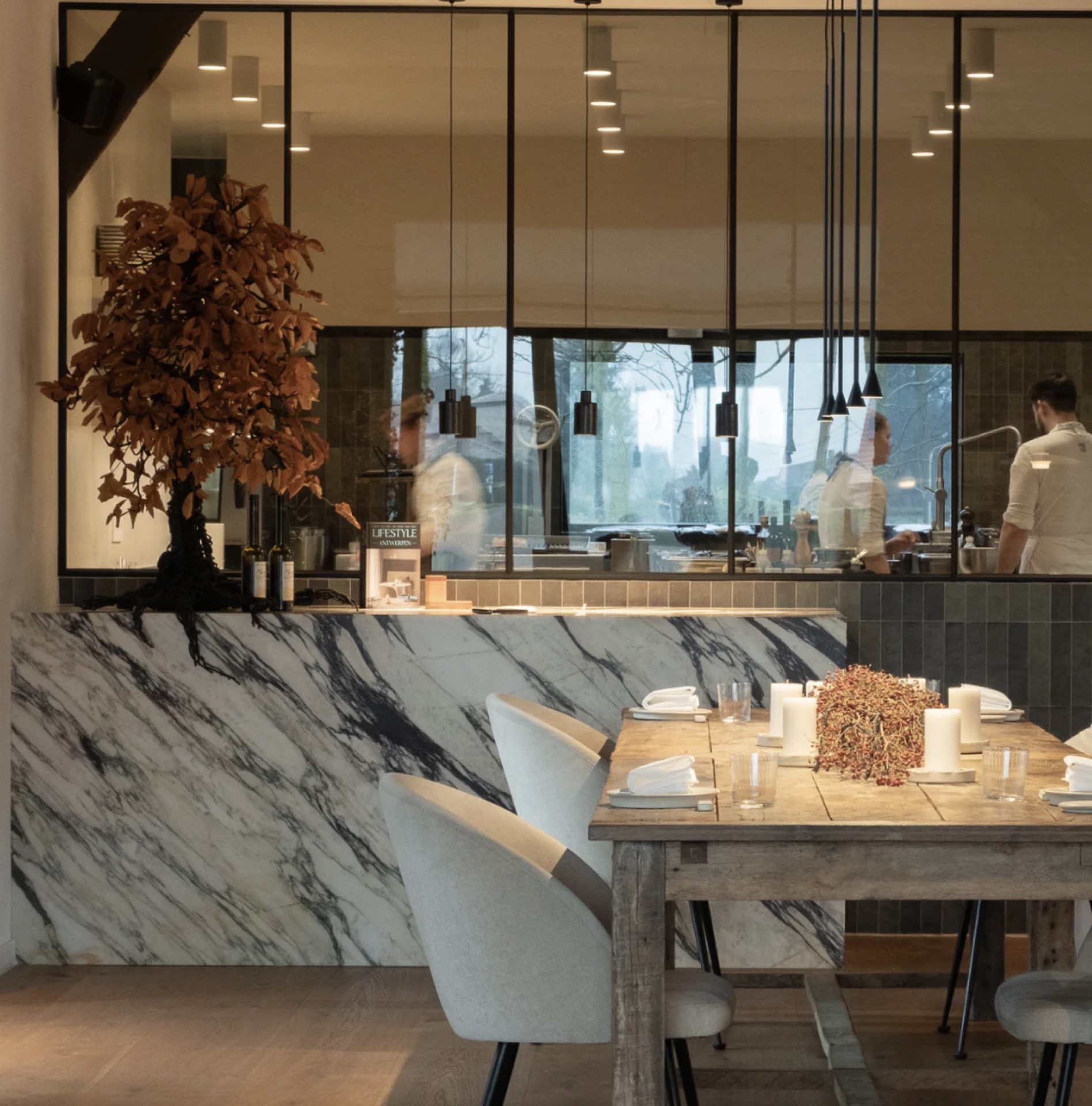
Marble appears as a cool counterpoint, visible on the wall or tabletop depending on the view. Its veining gives the dining zone a sharper surface, especially beside the softer textile layers. That contrast is important here. A fine dining interior often risks feeling hard or overly polished, but the acoustic round rug changes the reading of the space. It pulls the eye downward and gives the tables a visual base, so the room feels arranged in layers rather than left as a series of separate objects.
Daylight across the windows and the rug
Large windows run along one side of the space, bringing a strong horizontal rhythm to the room. Their black frames cut clean lines through the lighter finishes, while cylindrical pendant lights hang in front of the glazing and repeat the vertical drop of the curtain folds. Daylight lands on the rug and the tables in different ways during the day, making the pile look denser in some areas and flatter in others. That shift matters in a restaurant interior where the surfaces have to hold together from across the room and at close range.
Behind the dining zone, translucent curtains soften the window edge and keep the room from feeling too exposed. The fabric sits lightly against the glass, almost like a filter between the interior and the outside light. Combined with the acoustic textile under the tables, it gives the room a layered finish that feels deliberate without becoming heavy. The rug remains the main anchor, but it works with the window wall rather than against it. That is what keeps the room open, even with so many soft elements in play.
Material contrasts that stay visible
Wood flooring frames the rug and creates a clear border around the seating area. You can read the move immediately: hard floor, soft center, table group above it. That sequence helps the space organize itself. The rug’s light grey-beige tone sits close to the chairs and curtains, while the marble surface introduces a colder note. In a warm minimalist restaurant interior, this kind of controlled contrast does the work that decoration usually would. The room gains depth from the difference between polished stone, woven textile and matte upholstery.
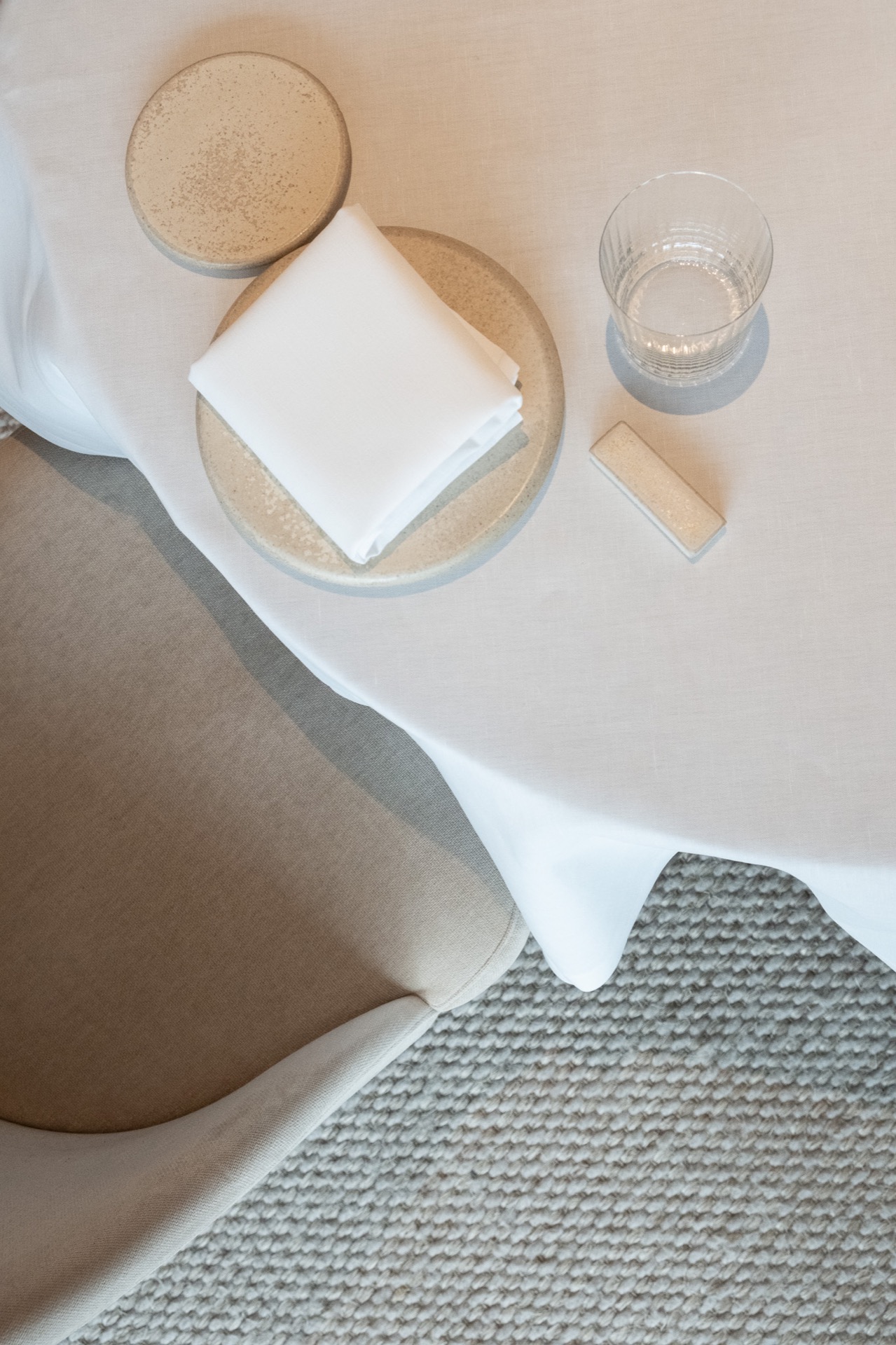
The tables are set in white, which makes the dining zone feel precise without looking formal. On close inspection, the table linen and the edge of the high-pile rug are almost the same kind of visual statement: quiet, tactile, and clearly chosen for how they catch light. The acoustic textile does not read as a technical insert. It reads as part of the furniture arrangement, especially where the chairs sit around it in a loose curve. That is where the project’s strongest move lies: the floor becomes part of the dining composition.
How the room uses texture to shape atmosphere
Because the acoustic round rug is custom-made, it follows the room rather than forcing the room to adapt to it. Its shape softens the seating area and gives the restaurant a point of gravity that is easy to understand from any angle. The pile is visible enough to catch the eye, but not so prominent that it overwhelms the rest of the interior. The project keeps returning to the same idea in different materials: soften the surfaces, keep the lines clear, and let the dining zone feel settled by texture rather than ornament.
A small circular plant arrangement near the window adds another rounded form to the room, but the rug remains the main shape that organizes the scene. It ties together the upholstered chairs, the curtains and the table group without turning the space into a lounge. That balance is especially useful in a fine dining interior, where people need visual calm and enough acoustic softness to talk without strain. The source mentions the rug’s acoustic role; in the images, that effect is also visible in the way the floor reads as a quieter plane.
Close to the table, close to the material
One of the most telling views is the close-up where white table linen meets the edge of the rug. The scale changes completely. What looked broad and architectural in the wider shots becomes a tactile border, with weave, pile and fabric taking over from room layout. This is where the project’s material logic becomes easiest to read. The acoustic round rug does not sit at the end of the interior story; it sits underneath the table setting and supports the rhythm of the room from below.
Seen from this angle, the restaurant interior depends on small shifts rather than large gestures. A black chair leg, the pale curve of the rug, the marble line in the background, the diffuse light from the windows: each element keeps its own character. The custom round rug links them without flattening them into one surface. That is what makes the dining area feel considered. It is not built from spectacle, but from the exact placement of a few materials that know how to work beside one another.
The result is a restaurant interior where the floor matters as much as the tableware. The acoustic round rug gives the seating area a clear center, supports the room’s softer tone and answers the hard finish of marble and window frames. It is a simple intervention, but it changes how the room is read: not as an open hall with tables, but as a series of measured zones where light, textile and stone are allowed to meet on equal terms.
Want to see more of Wool & Wire? View the page of Wool & Wire for even more great projects and company information.

NEW 2026 Jubileum Edition The Best Interior Designers Benelux
Order Now €125