





Rectangular plunge pool in a modern garden
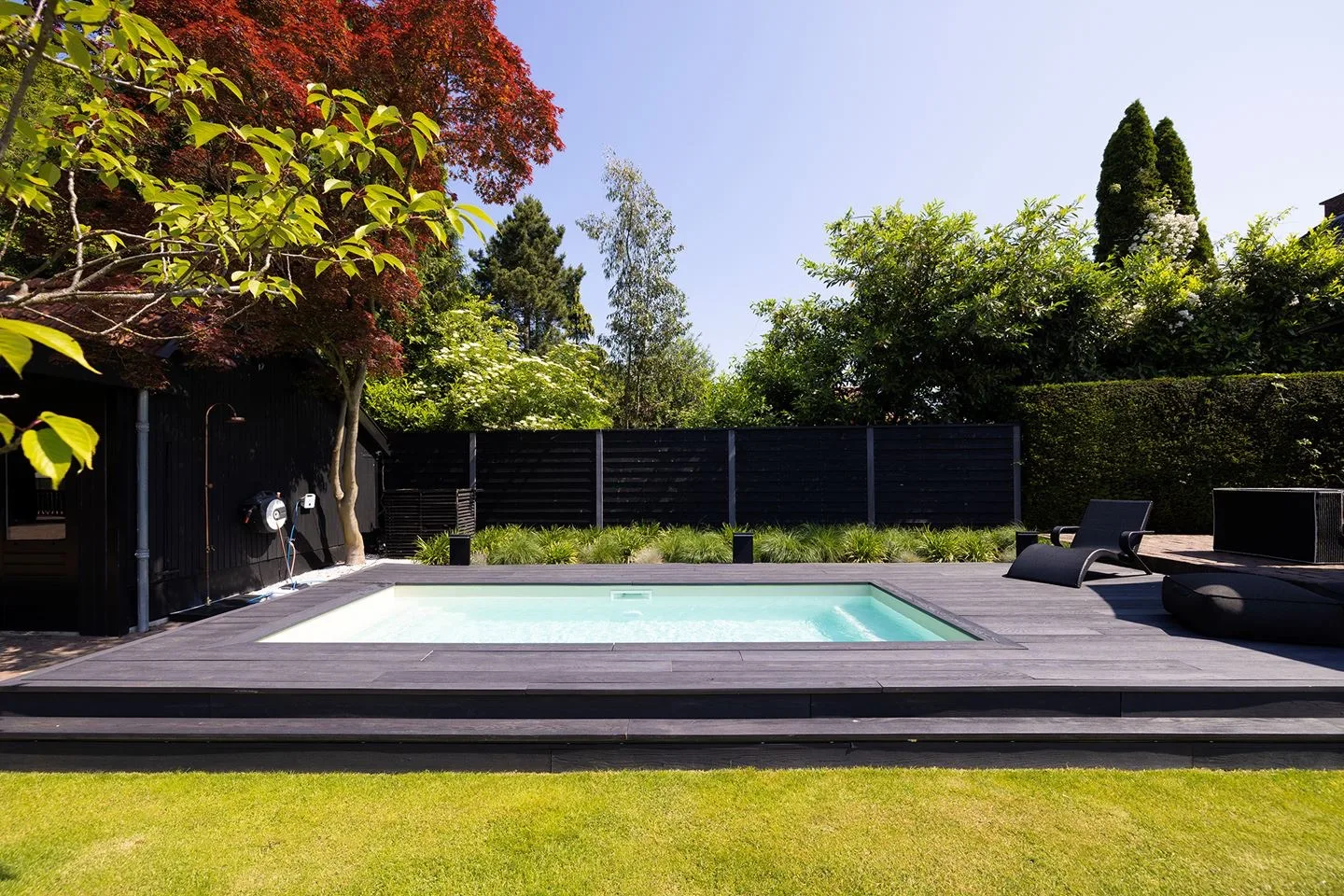
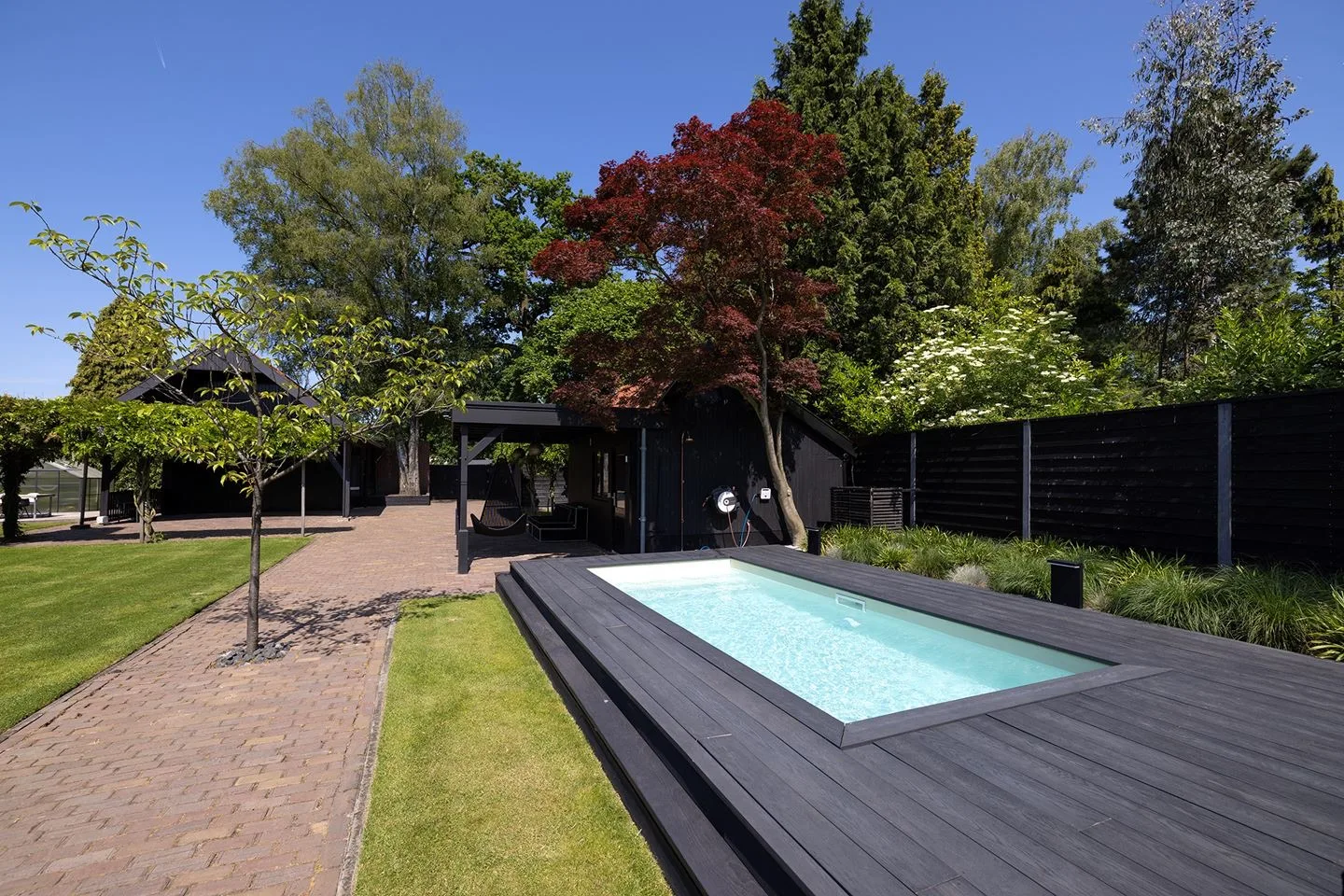
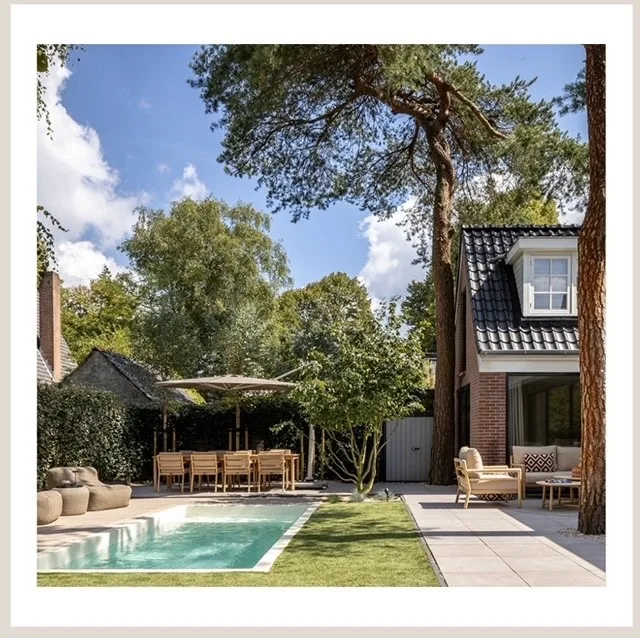
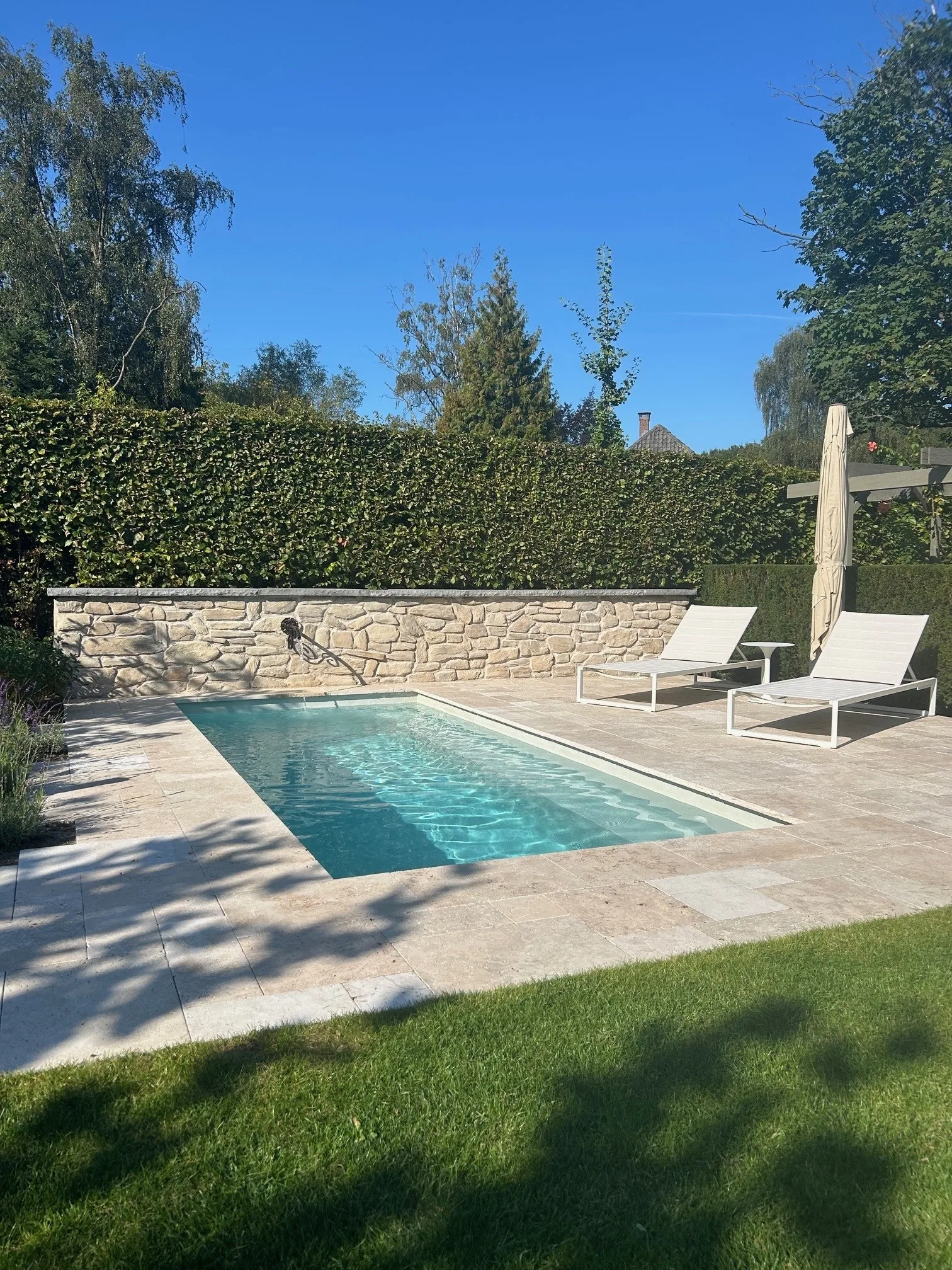
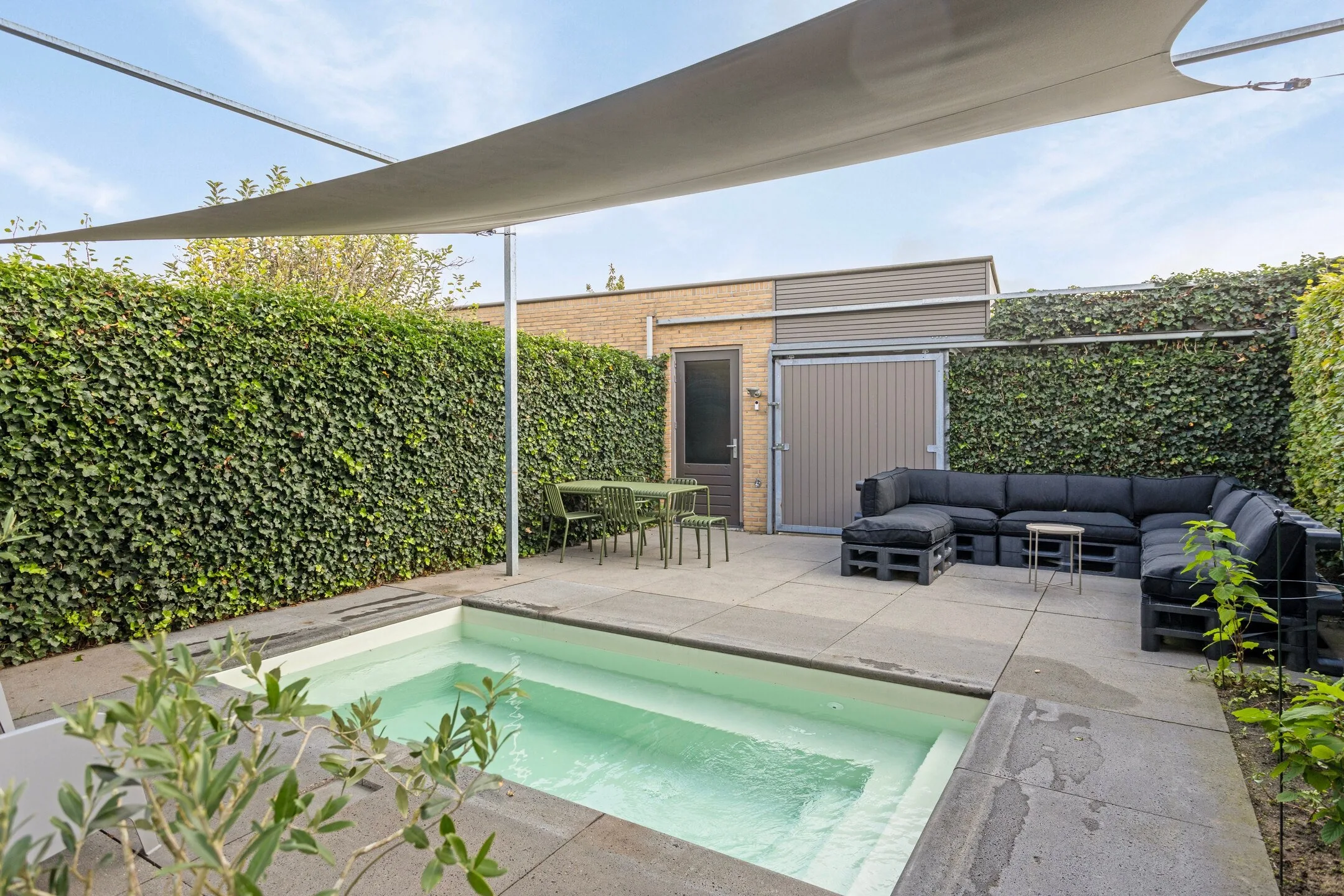
A straight-edged rectangular plunge pool sets the tone of the garden from the first view. The basin sits low in the landscape, with the shallow water zone clearly visible and the outline kept tight and readable. Stone paving runs around the water, while grass and planting soften the edges without breaking the clean geometry. The result is a garden layout that is easy to read at a glance, but still layered in materials and levels.
The pool as a measured centre point
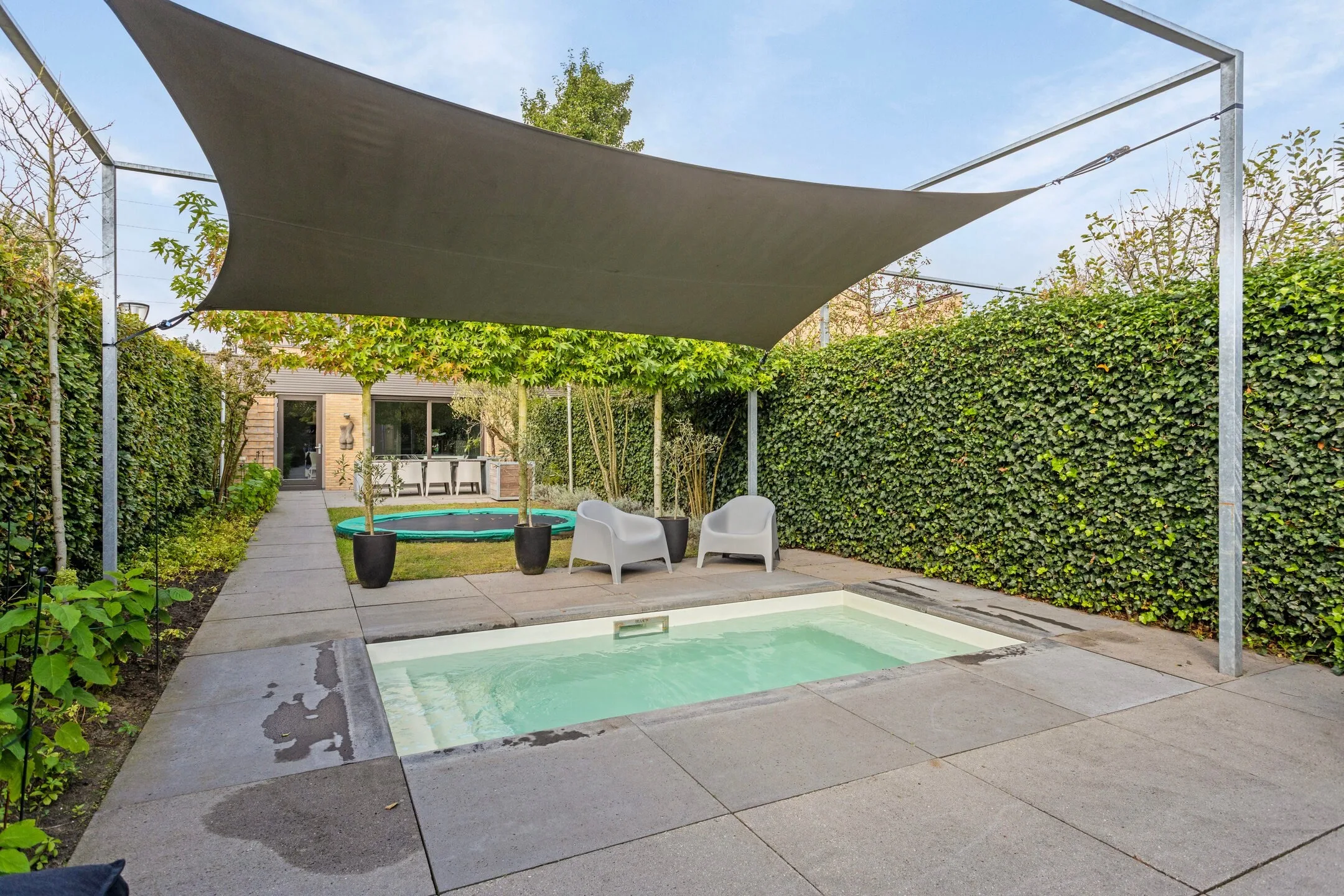
The rectangular plunge pool is built into the garden rather than placed on top of it, and that in-ground presence gives the scene its calm structure. The water surface sits within a crisp frame, with the shallow area visible in several views. That detail matters: it turns the pool into more than a small basin, because the changing depth and the line of the edge give the water a clear role in the composition. Around it, the terrace keeps the setting open and usable.
What stands out most is the way the pool outline is kept simple. There are no visual distractions in the shape itself, only narrow edges and direct lines that meet the paving. The terrace around the pool extends the geometry outward, so the basin does not feel isolated. Instead, it reads as part of the full garden plan, with the lawn, borders, and hard surfaces all arranged around the same rectangular rhythm.
Terrace paving that carries the space
Stone and tile paving form a broad terrace around the pool and give the outdoor space its hard surface. In some views the paving reads as large, light-toned plates; in others, the joints and running lines become more noticeable. Either way, the terrace around the pool is doing important work. It creates room for walking, sitting, and moving between the house side and the water without crowding the pool edge. The paving also gives the blue of the water a sharper frame.
The transition from terrace to planting is kept deliberate. Straight paving lines meet grass edges and low borders, so the garden does not lose its structure at the margins. That contrast between stone, lawn, and planting is visible throughout the project. It keeps the scene from becoming flat, while still leaving the rectangular plunge pool as the main visual anchor. In a modern garden design with plunge pool, those clear shifts in surface make the whole setting easier to read.
A wooden pool edge that breaks the stone sequence
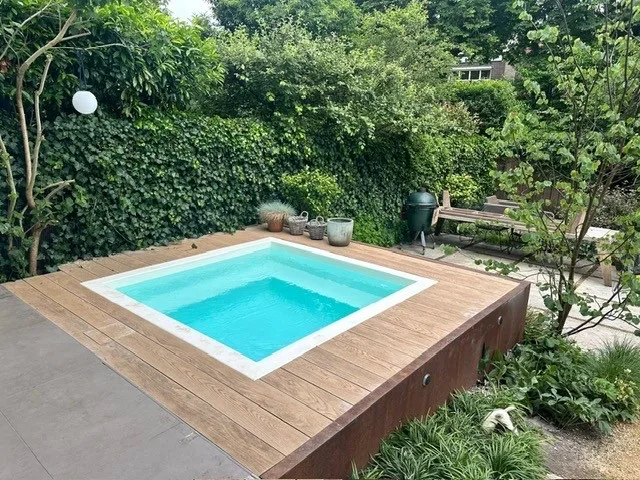
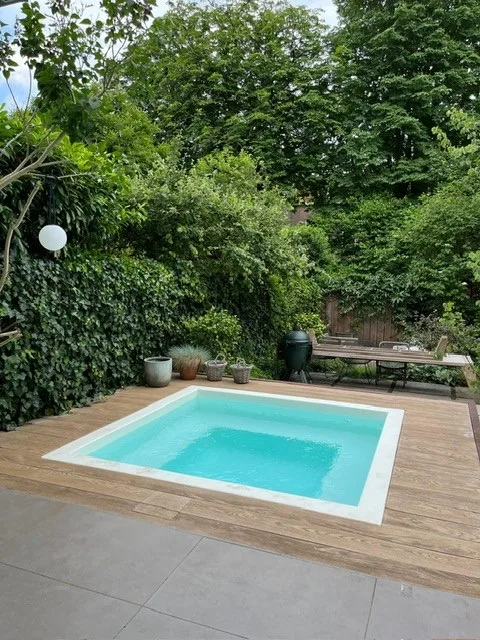
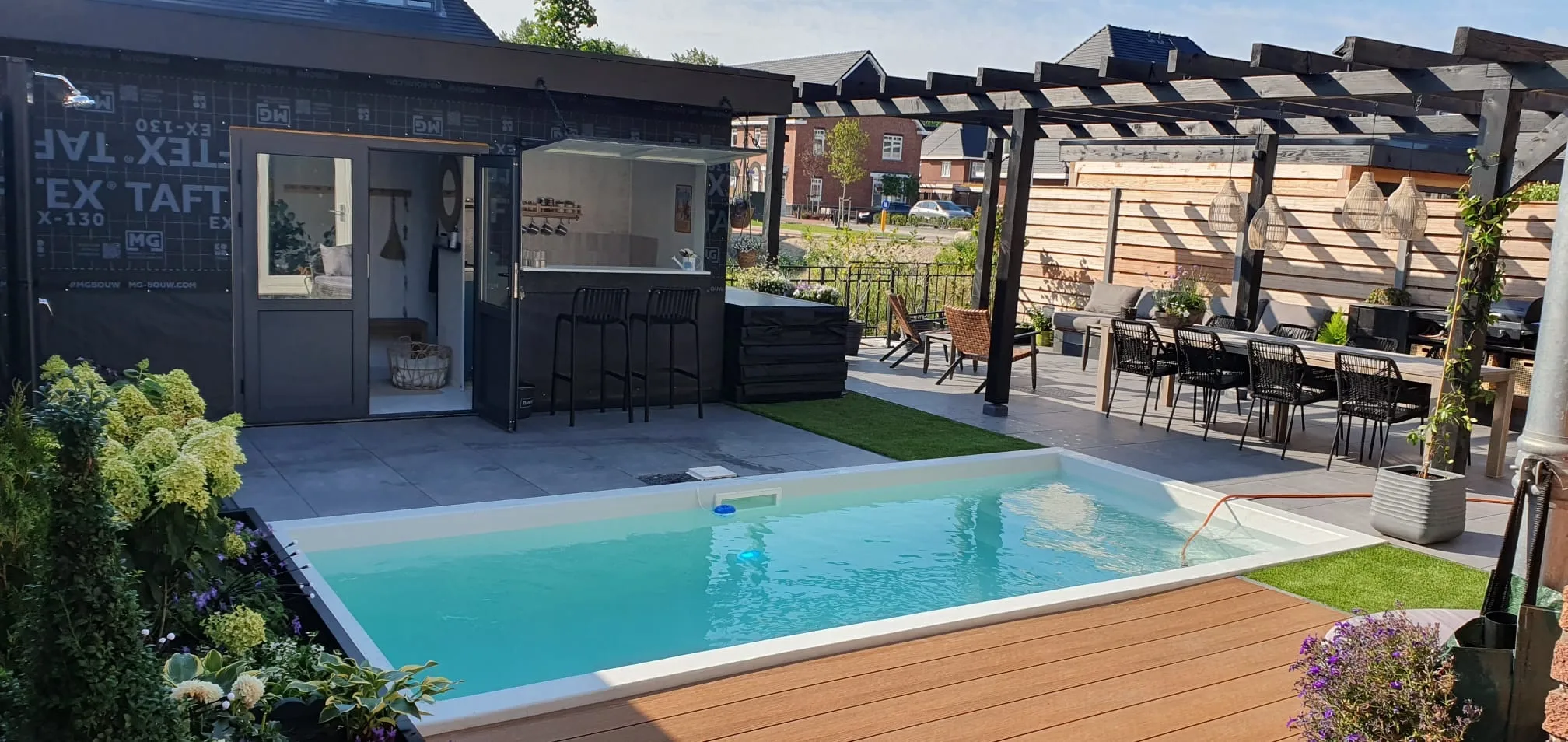
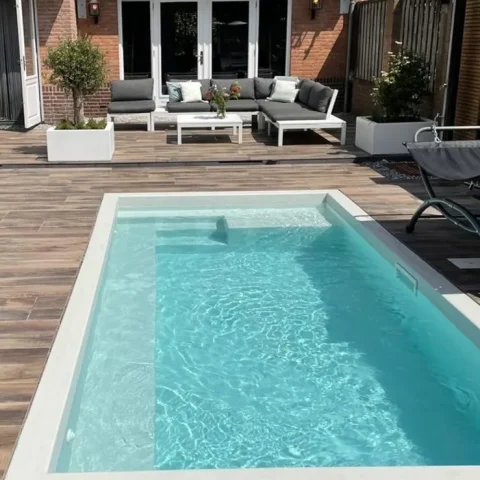
Wood appears as a distinct finish along the pool side, either as an edge or as a covering that wraps part of the basin. Against the harder stone surfaces, that wooden pool edge changes the pace of the composition. It adds a warmer material note without taking over the garden. Because the timber sits directly beside the water, it becomes one of the most visible details in the project and gives the plunge pool a more crafted finish.
The combination of wood and paving is especially effective in the close views. The timber edge catches the eye before the line of the terrace does, then leads it back to the water. This small shift in material is enough to mark the pool perimeter and separate the basin from the surrounding hardscape. It is a simple move, but one that gives the in-ground plunge pool a clearer identity within the garden.
Privacy shaped by hedges and planting
A high green hedge forms a strong backdrop in several images and gives the garden its privacy. Rather than closing the space in a heavy way, the planting sits behind the pool and terrace as a living screen. The green mass also softens the hard edges of the paving and the pool frame. In front of it, the rectangular plunge pool stays bright and legible, with the contrast between water, stone, and foliage doing most of the visual work.
Planting borders and lawn strips help the garden read in layers. You can see where one surface ends and another begins, and that clarity keeps the composition tidy even when more elements are added. In some views, the hedge sits close to the pool area; in others, it is part of a deeper green boundary. The effect is the same: the pool gets a defined setting, and the garden keeps a sense of enclosure without losing light.
Seating under a canopy or pergola
In several images, a canopy or pergola frames the seating zone beside the pool. It sits above the terrace like a simple horizontal plane, giving the outdoor room a second layer. The structure is especially noticeable when paired with the pool’s low line and the tall hedge behind it. Together, those elements create a clear sequence: covered seating, open terrace, and then water. The arrangement keeps the garden usable while letting the pool remain fully visible.
The presence of outdoor furniture makes this part of the project feel more resolved. White seating elements and lounge pieces pick up the light surfaces around them and stand out against the darker planting and wood. Nothing here is overdrawn. The pergola or canopy is a measured addition, not a statement piece, and that restraint suits the geometry of the rectangular plunge pool. It supports the layout rather than competing with it.
Materials that keep the lines legible
Stone, wood, lawn, and planting each hold their own position in the garden. The masonry and stone surfaces give the terrace a firm base, while the wooden pool edge adds a different texture at water level. In some views, masonry or natural stone wall parts appear in the background, adding another hard surface to the setting. These material changes are visible enough to matter, but controlled enough not to disrupt the clean plan of the garden.
That discipline in the material palette is what allows the pool to read so clearly. The rectangular plunge pool does not need elaborate detailing to stand out. Its strength comes from proportion, edge definition, and the way it meets the terrace. The shallow water zone is part of that reading too: it creates a visible shift in depth and light, which makes the surface feel less static and more connected to the rest of the composition.
A compact pool with a clear outdoor route
Seen as a whole, the garden is organized around a few simple moves: a rectilinear pool, a surrounding terrace, planted boundaries, and a covered sitting area in some views. Those moves keep the outdoor route clear. You can move from house to terrace, from terrace to water, and from open sun to shaded seating without the plan ever feeling crowded. The compact scale of the basin helps, because it leaves room for surfaces and borders to breathe.
What lingers is the clarity of the scene. The rectangular plunge pool sits low and direct, the shallow zone gives the water a readable edge, and the terrace around the pool draws everything into a single outdoor setting. Hedges and planting take care of privacy, while wood and stone prevent the materials from becoming monotone. It is a garden built on sharp lines, but the details keep those lines from feeling hard.
The project shows how a plunge pool can anchor a modern garden design without dominating it. The in-ground plunge pool, the terrace paving, and the wooden pool edge all work within the same frame, while the hedge and canopy or pergola near seating shape how the space is used. The result is measured, practical to read, and visually precise. Every part has a clear place, and that makes the pool feel fully integrated into the garden rather than added at the end.
Want to see more of Blaauw Mini Pools? View the page of Blaauw Mini Pools for even more great projects and company information.