








Oak staircase with steel
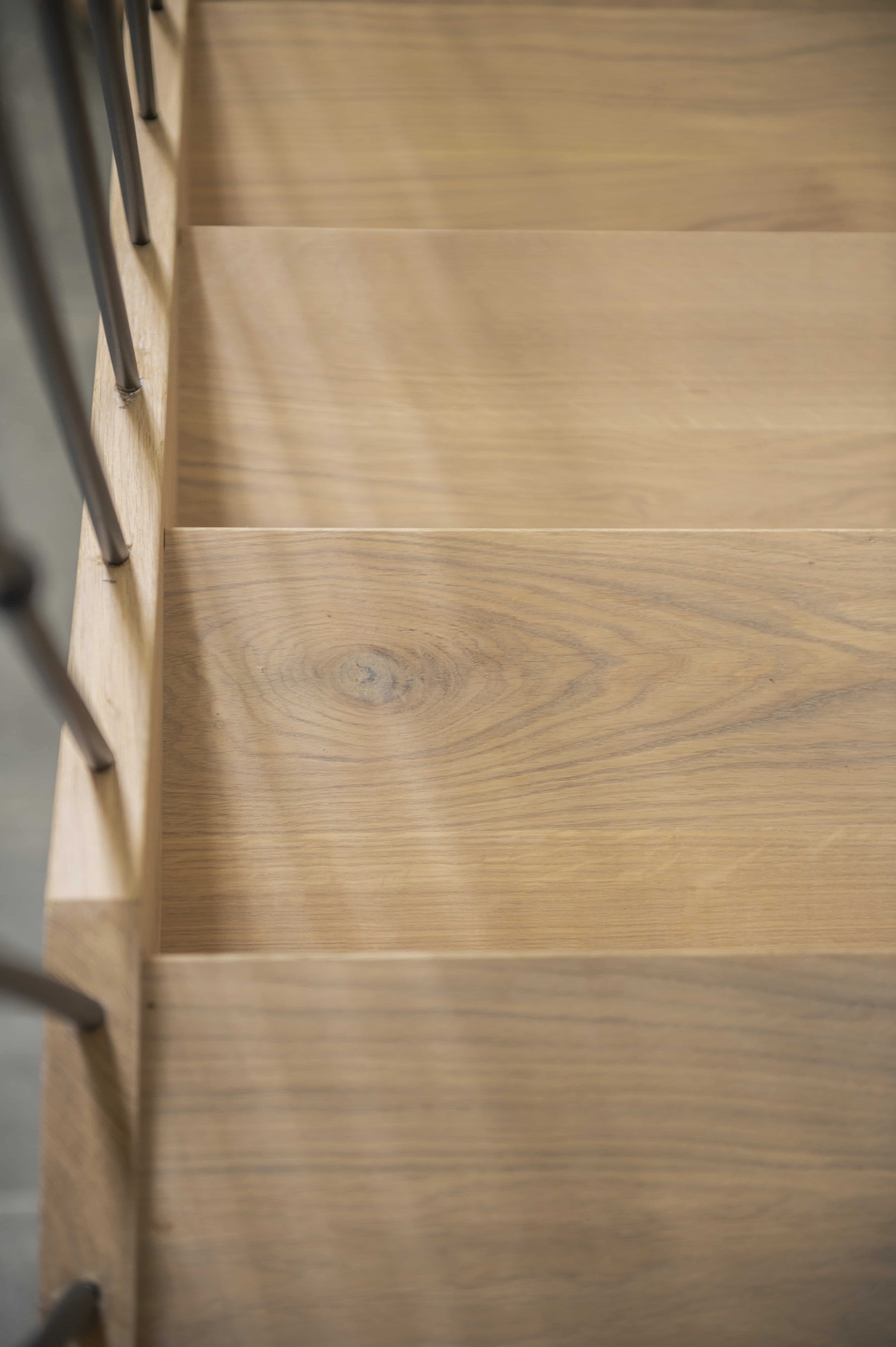
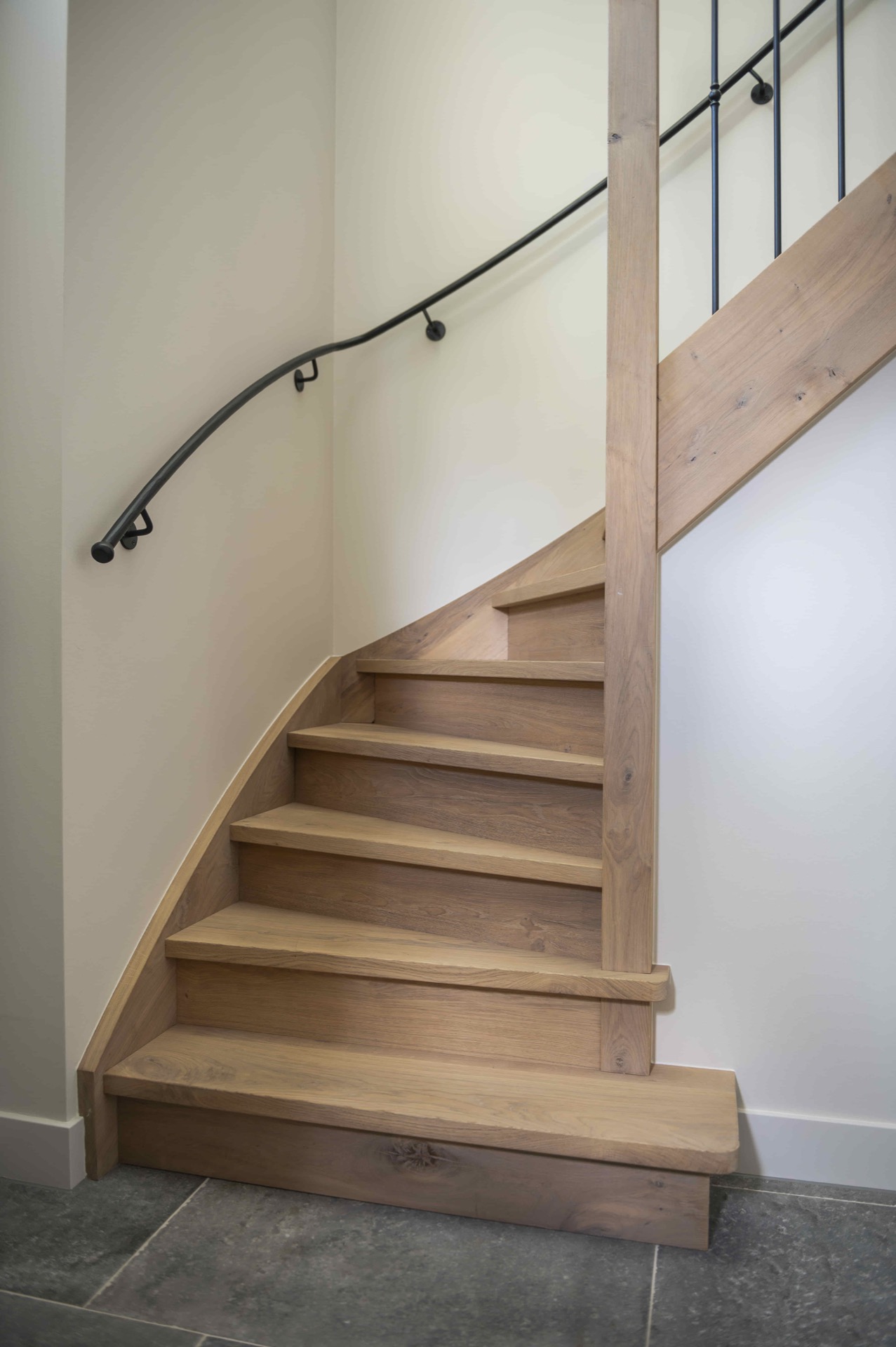
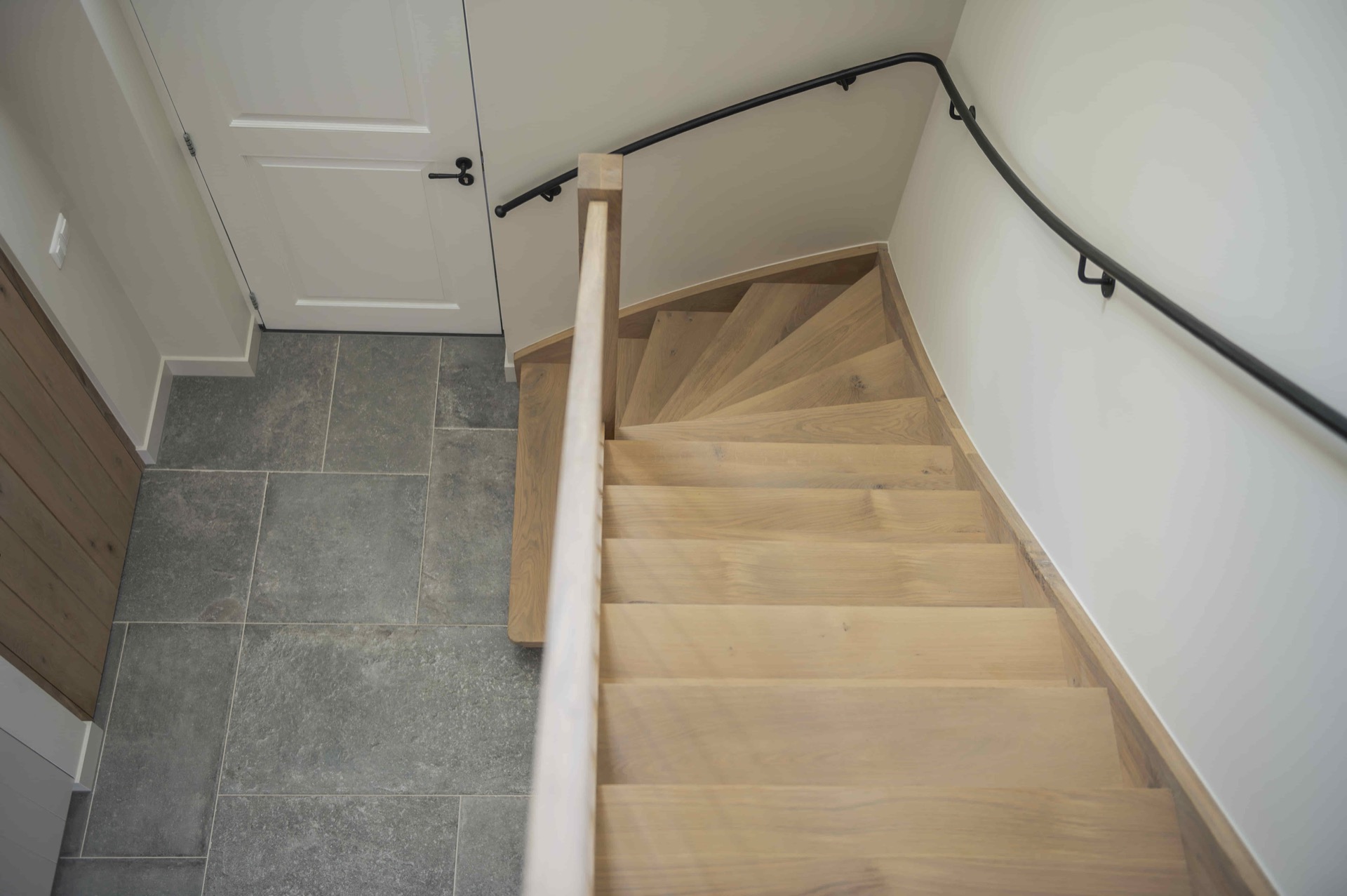
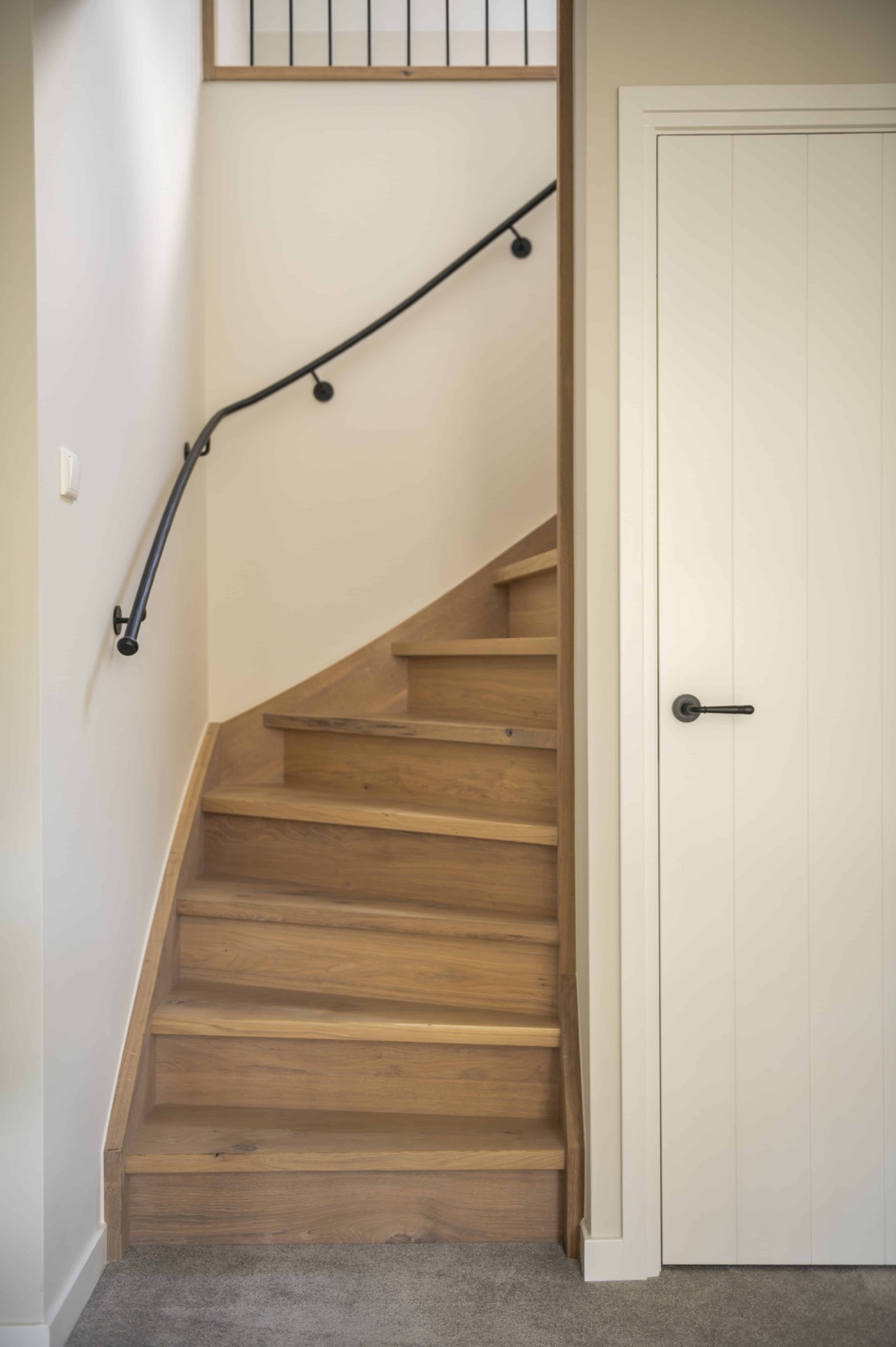
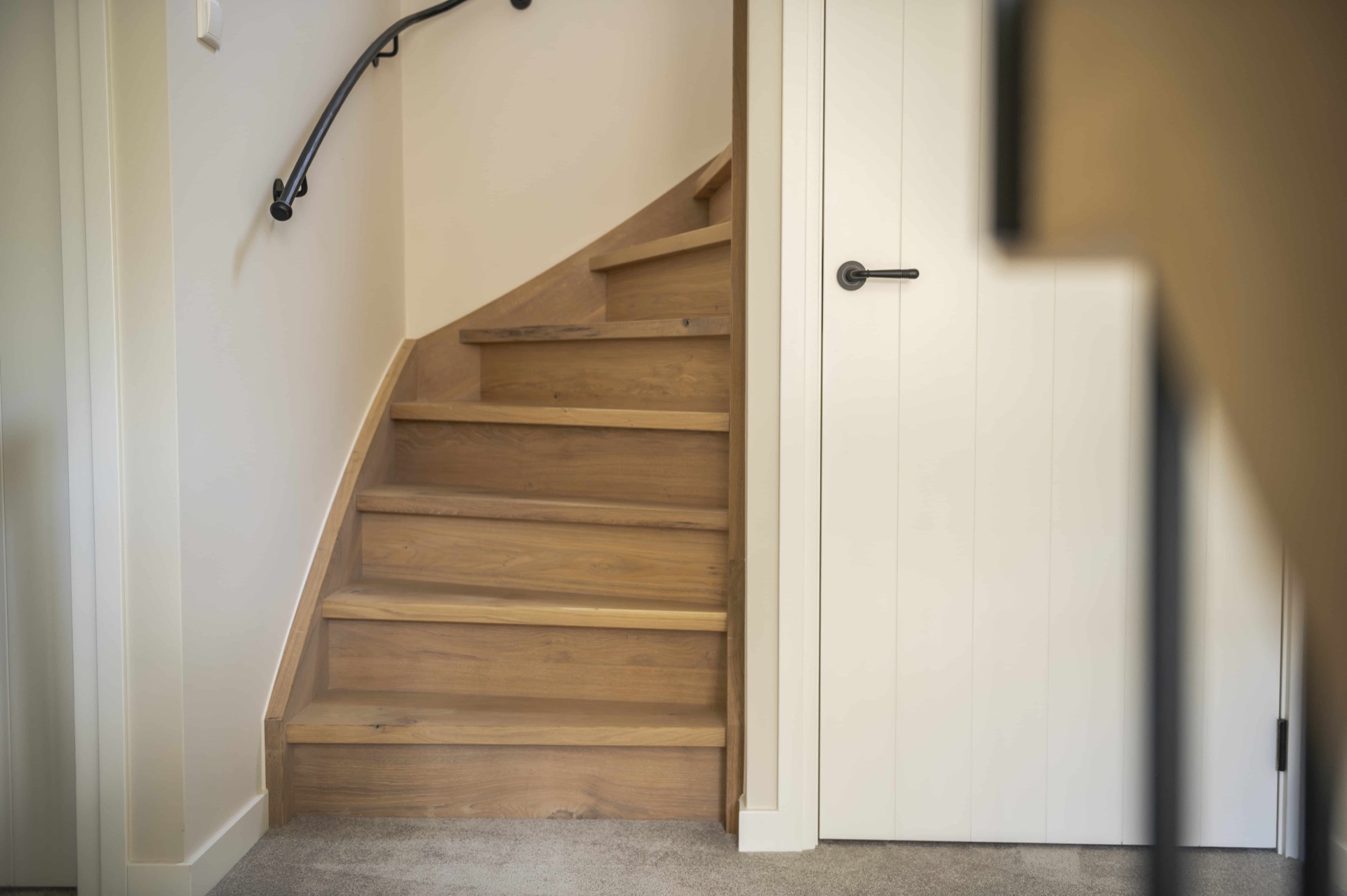
Oak treads carry the eye upward before the black steel takes over the line of the stair. The grain stays visible, and in a few close views the knots read clearly in the wood. Against the white walls, the staircase feels open rather than heavy, while the dark balustrade and handrail sharpen every edge of the route through the stairwell. It is an oak staircase with steel that relies on material contrast instead of ornament.
Oak grain set against black steel
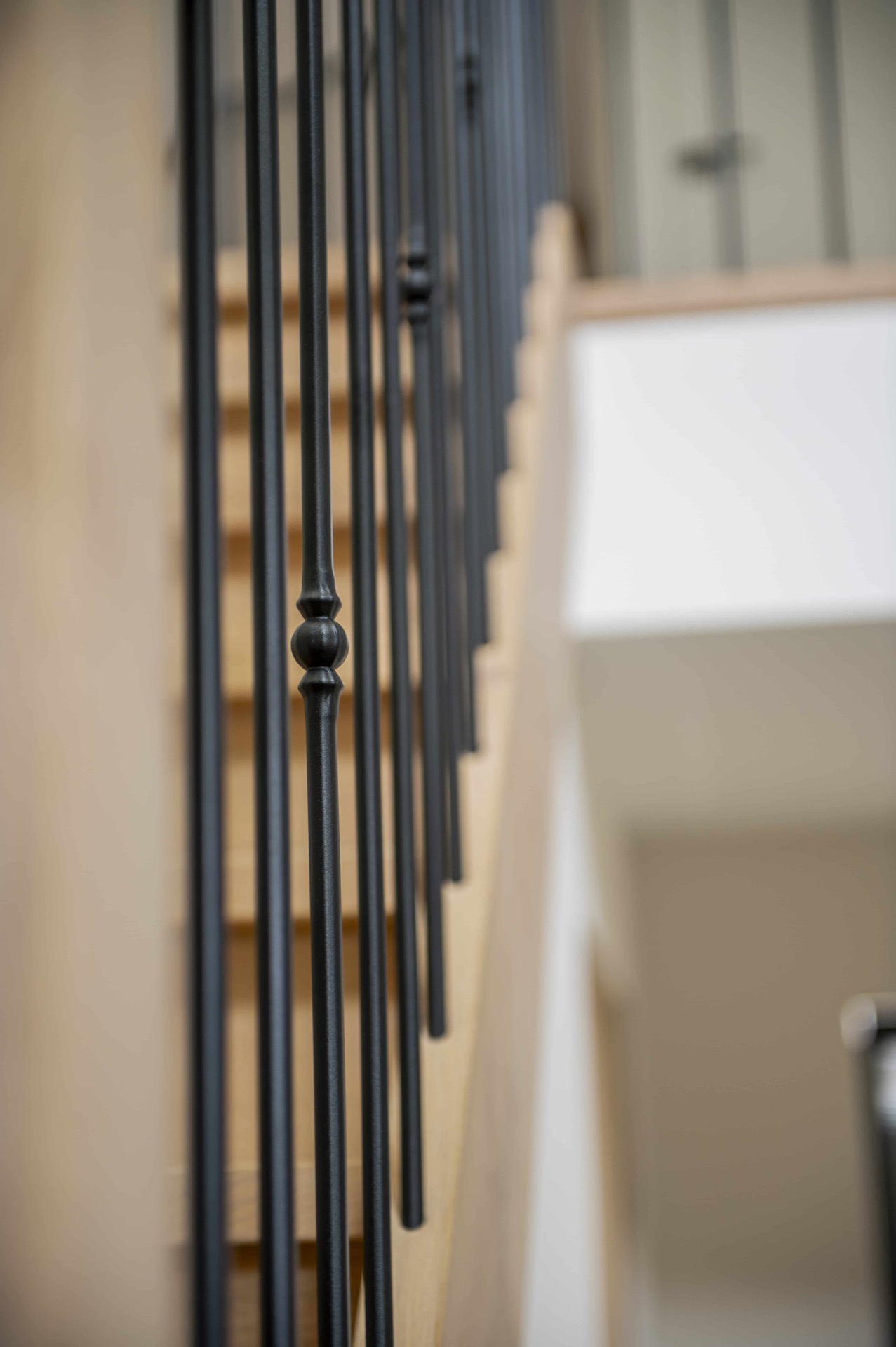
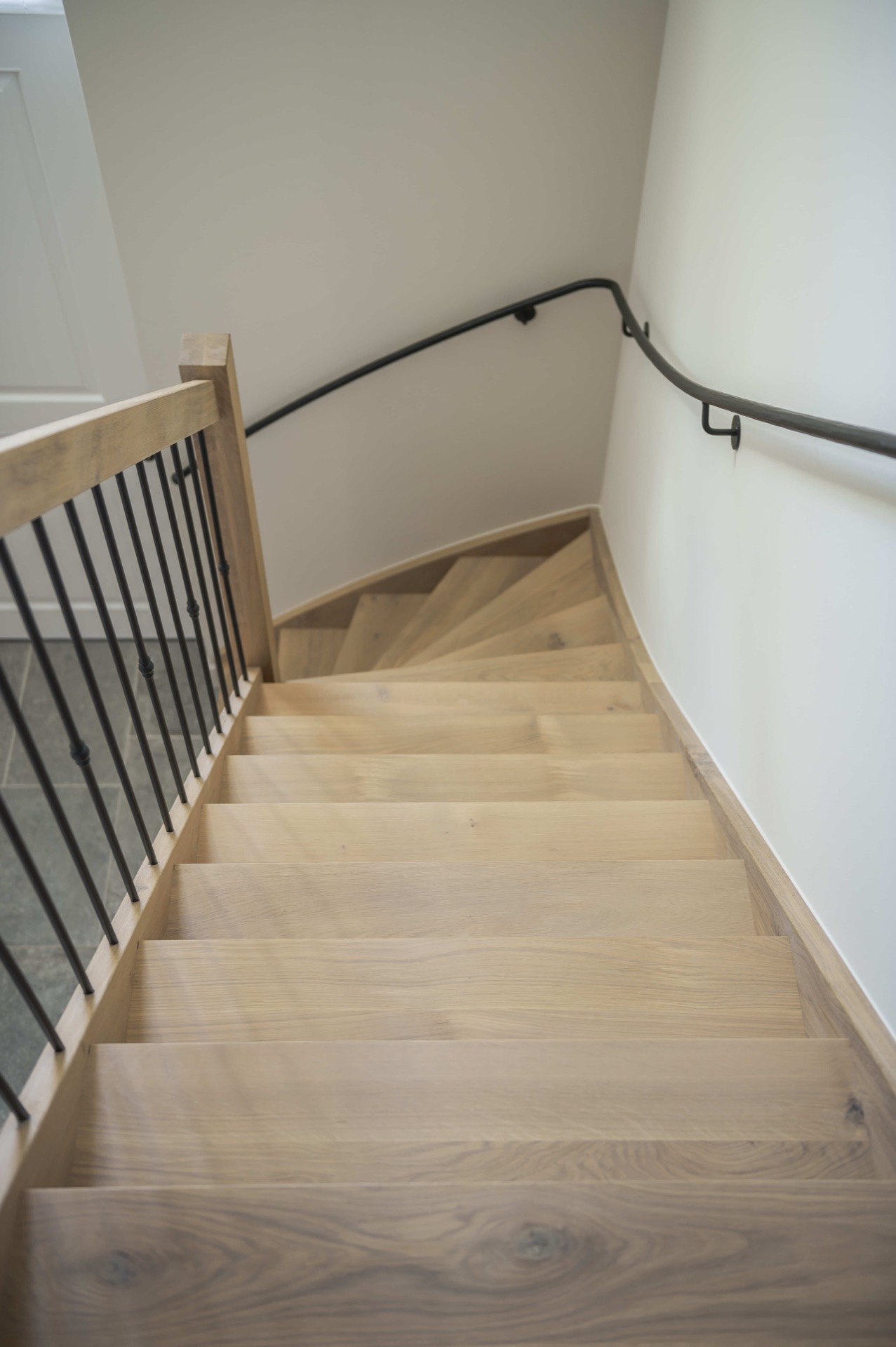
The first impression comes from the surface of the steps. The oak stair treads show a pale tone with enough variation to keep the wood alive from landing to landing. That natural movement is framed by black steel balusters, arranged in a steady vertical rhythm. The combination gives the staircase its rustic wooden staircase with steel character without pushing it into a purely rural reading. The oak and black staircase works because each material keeps its own voice.
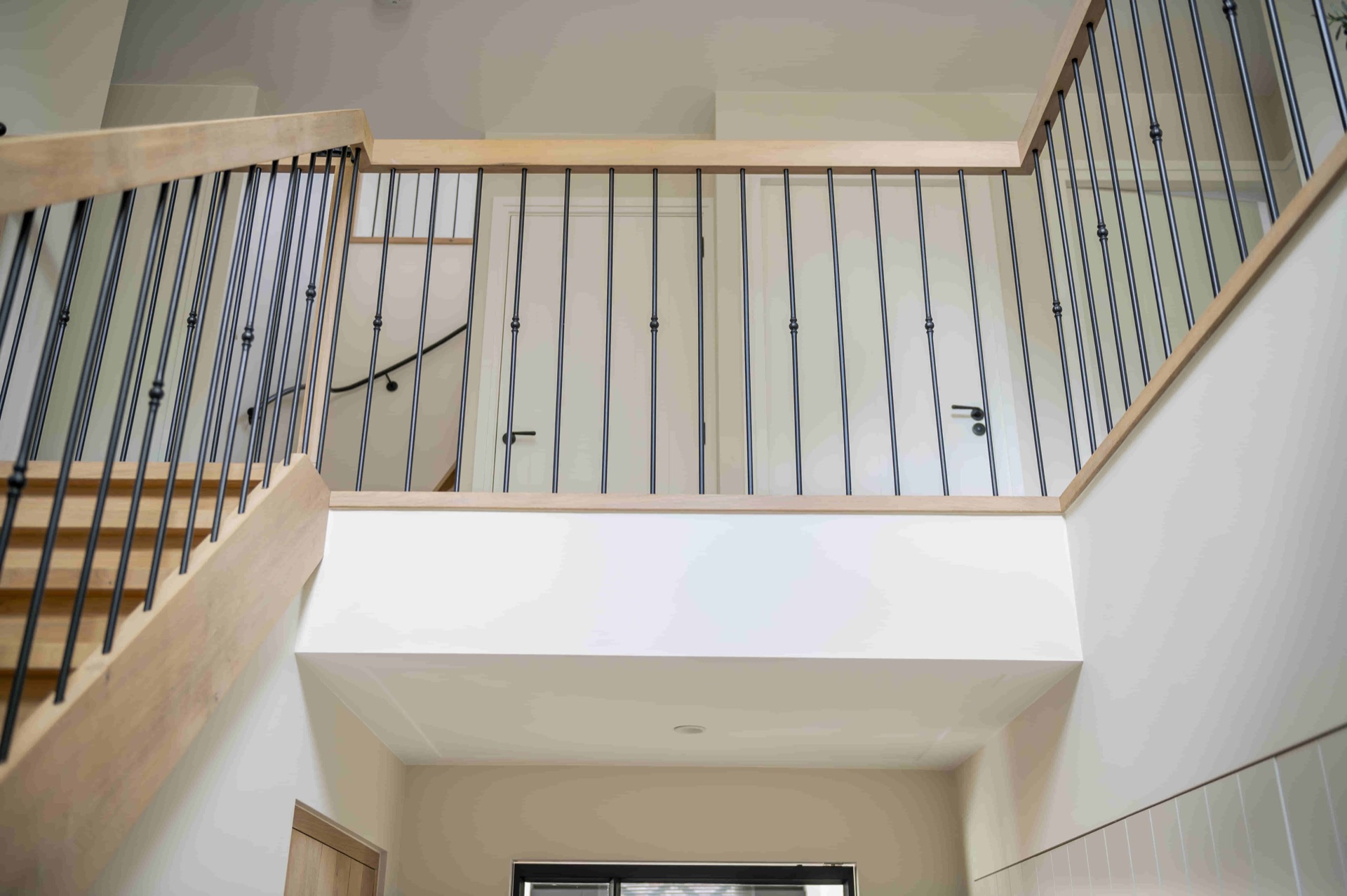
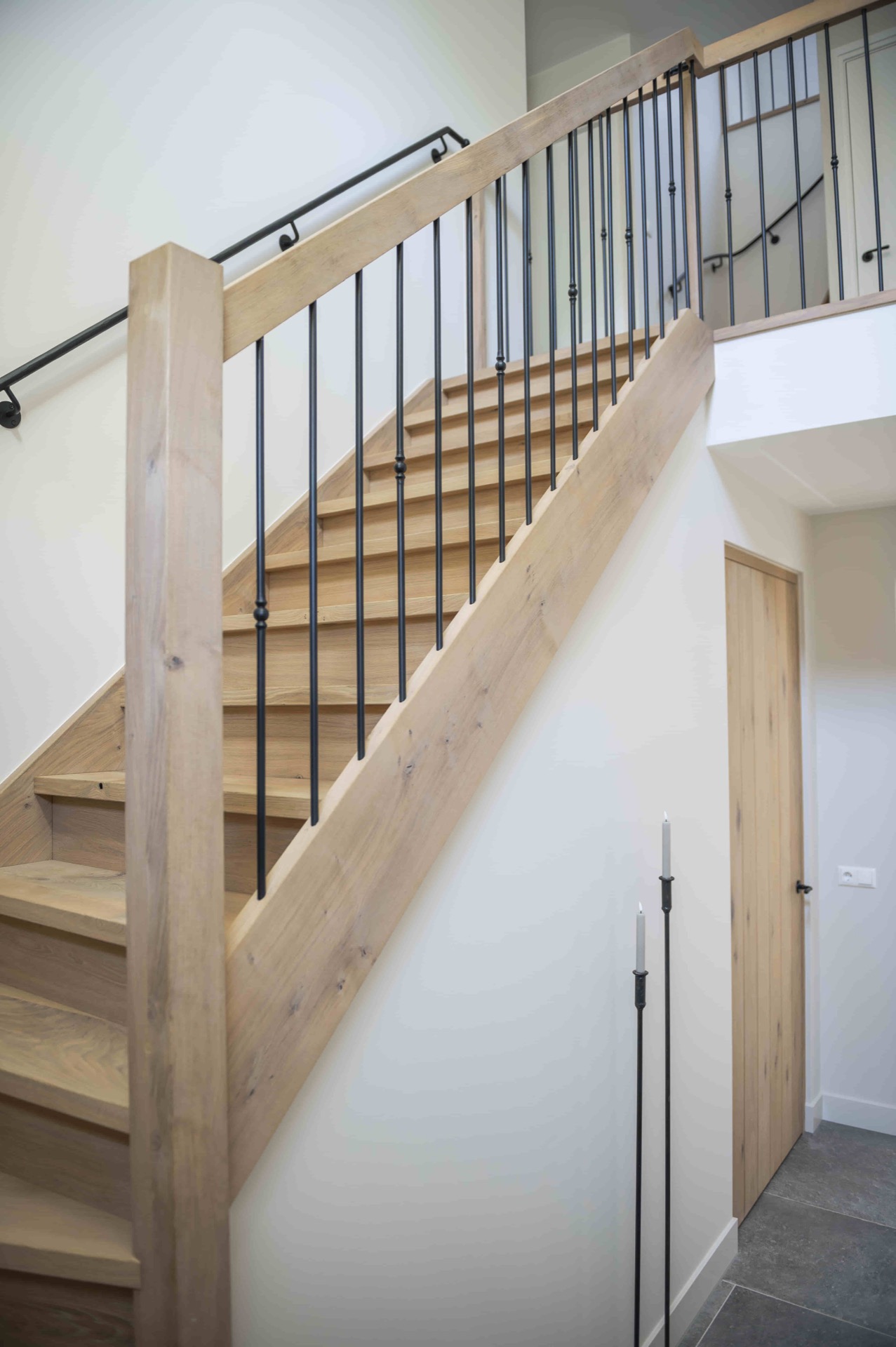
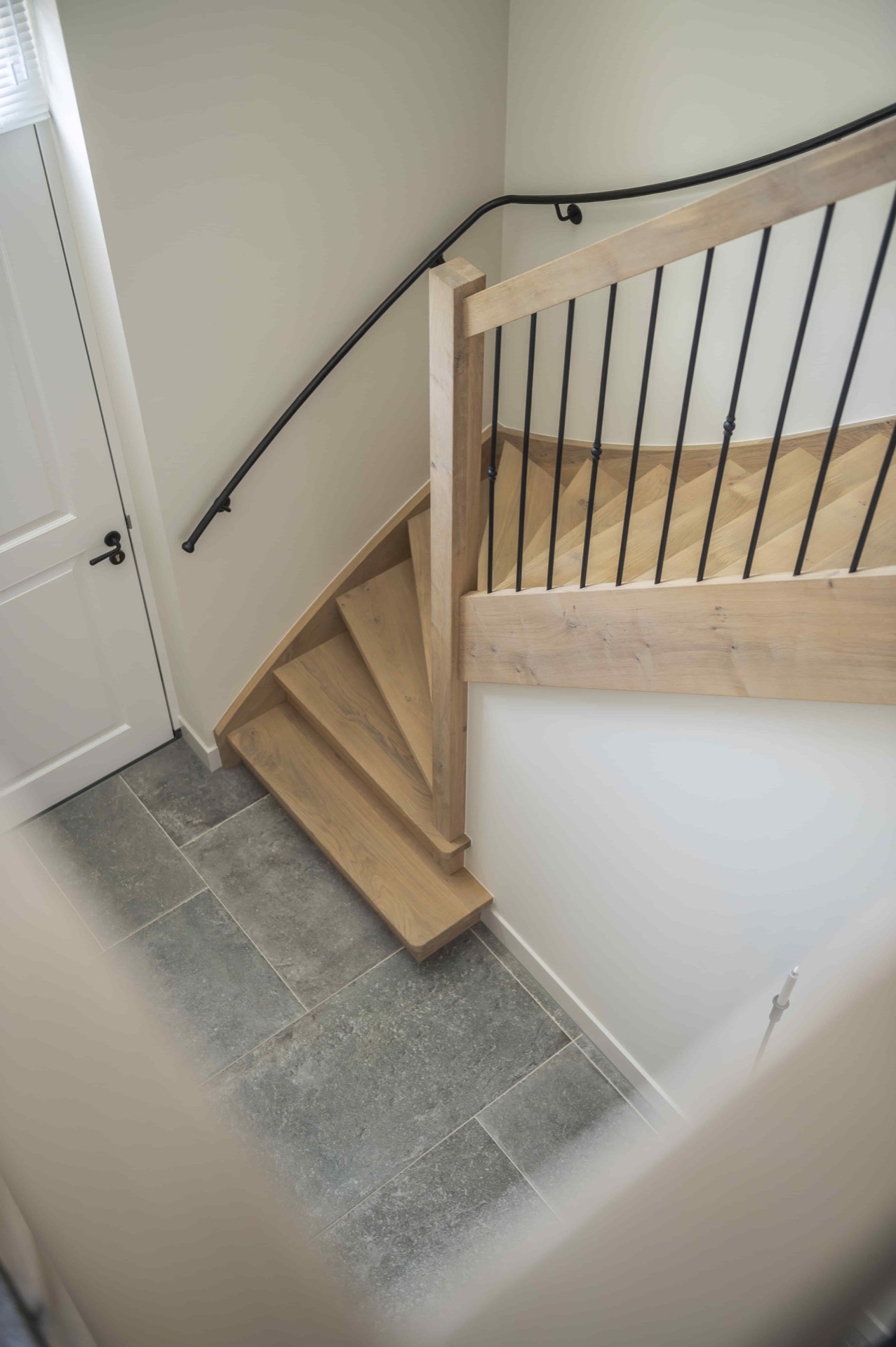
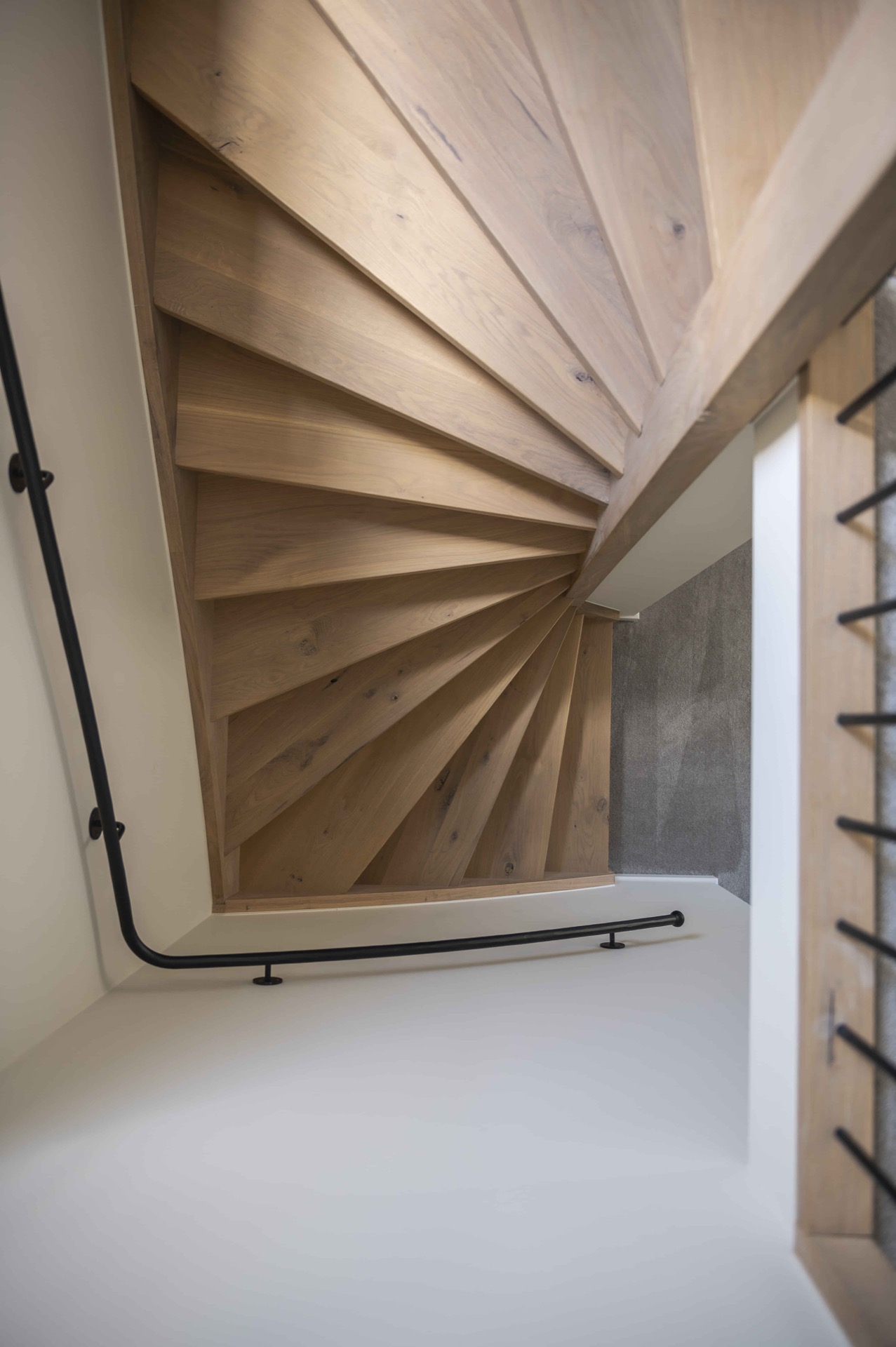
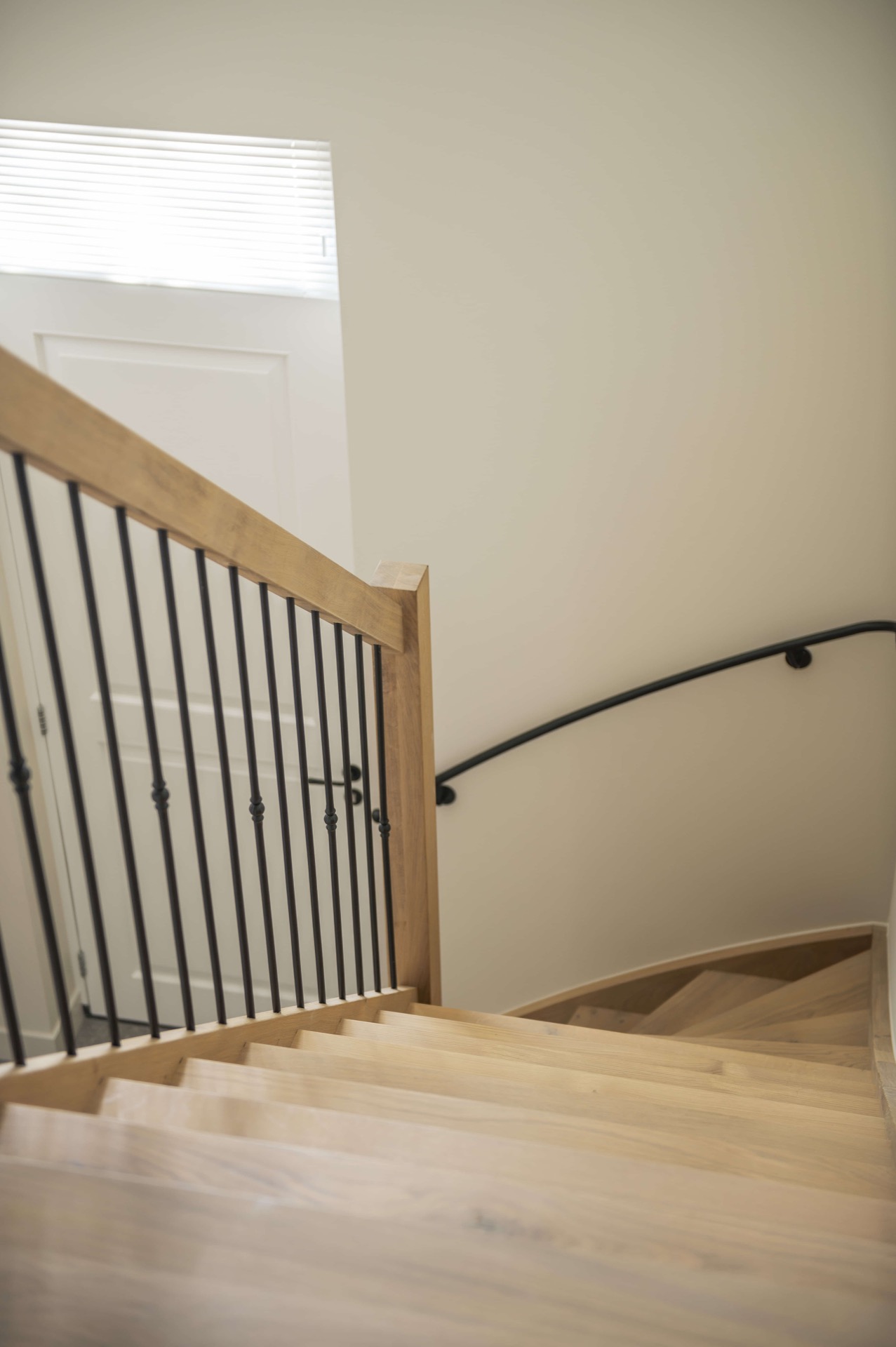
Seen from below, the stair flight becomes a clear composition of light and dark bands. The wood continues along the side elements and the upper rail, while the steel stays slim and direct. Rounded details in the balustrade soften the harder look of the black metal, but the overall line remains crisp. In the photos, the contrast is strongest where the oak meets the handrail: a small junction, yet one that defines the whole stair.
A black steel handrail that traces the route
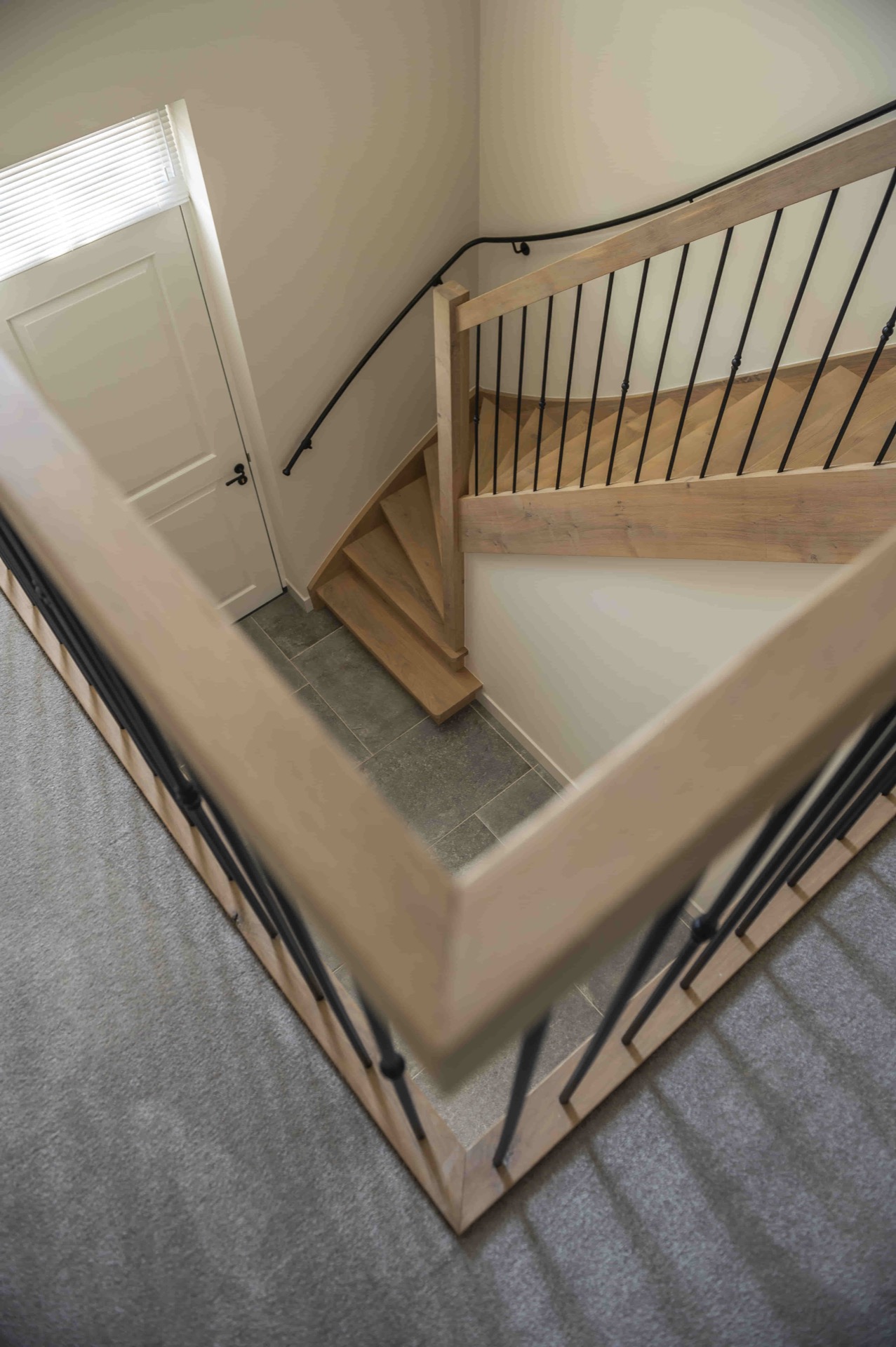
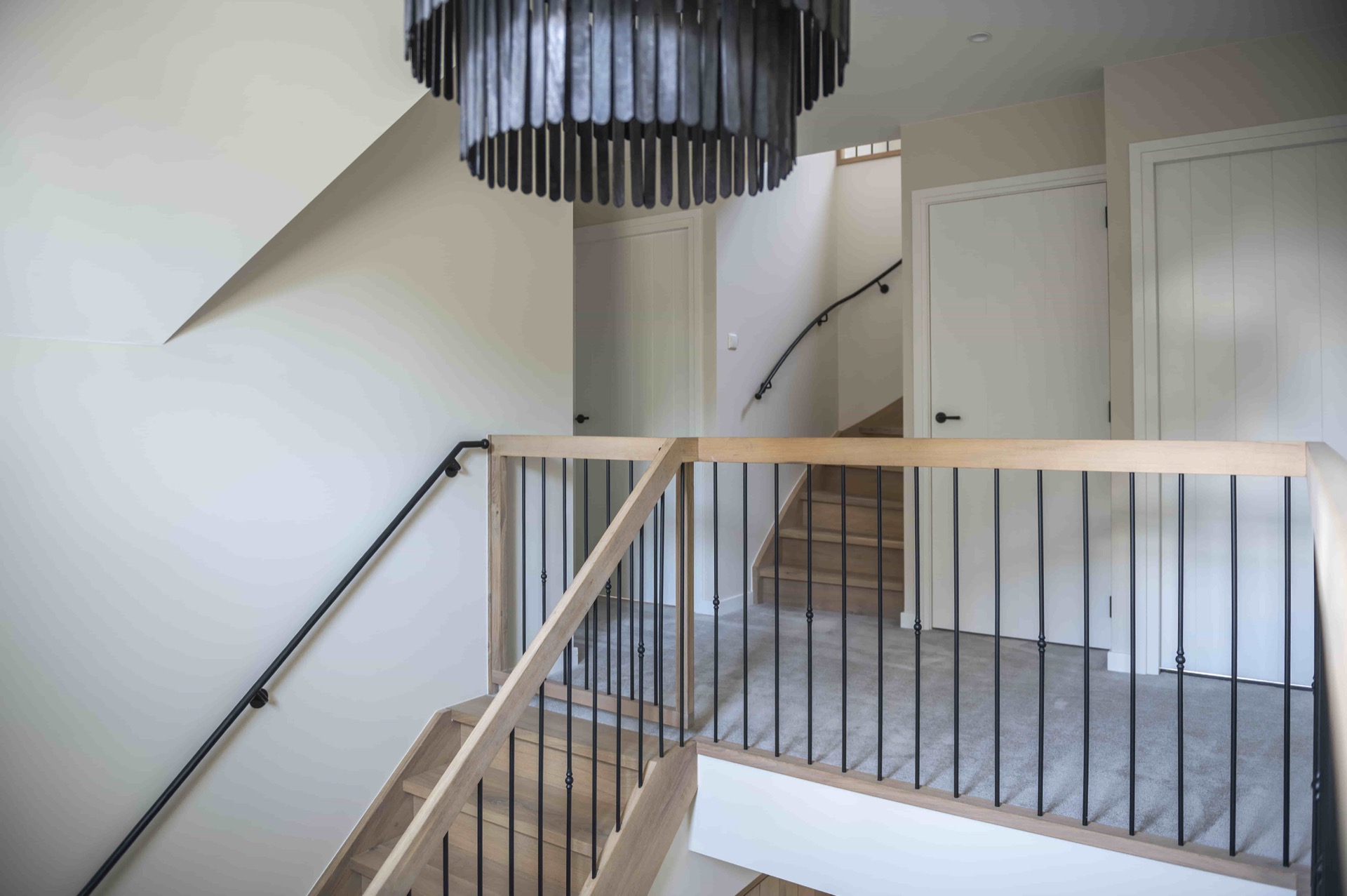
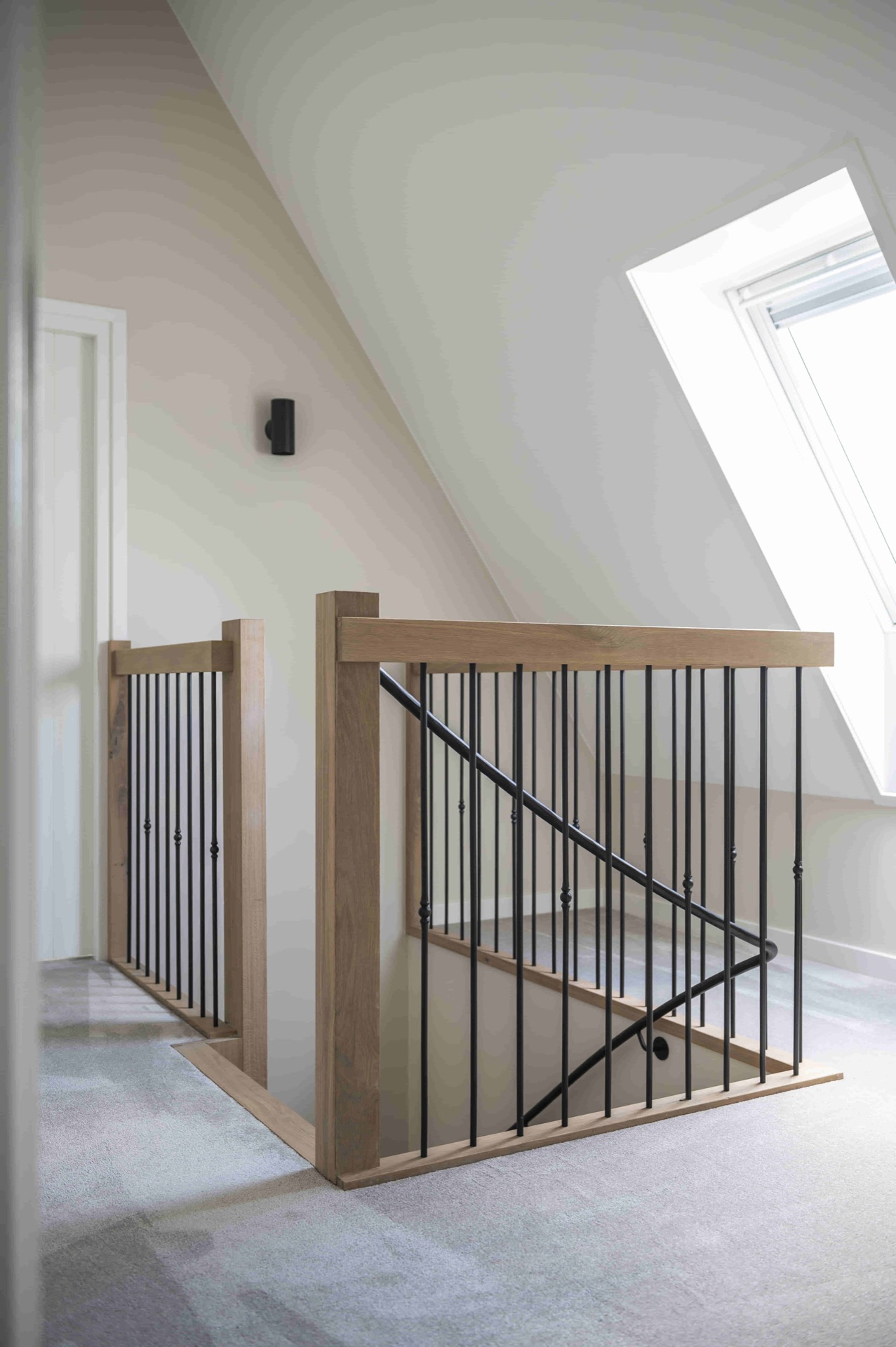
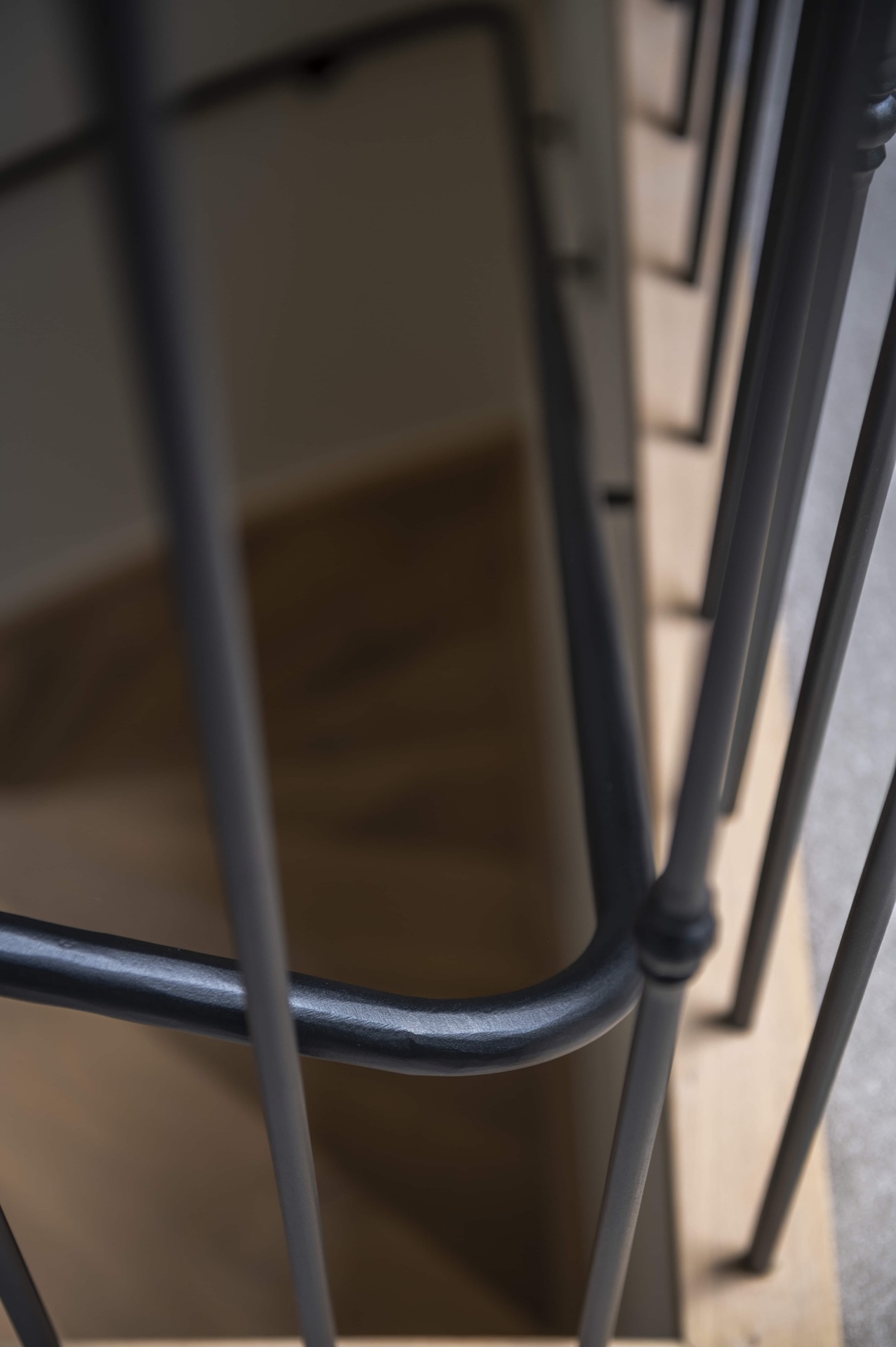
The black steel handrail follows the turns of the staircase and marks the change in direction without visual noise. On the wall side, the handrail sits clear against the white finish, which makes each curve and fixing point easy to read. A few images show the handrail with rounded connections and short wall brackets, details that keep the stair from feeling overbuilt. This is where the oak staircase with steel balustrade becomes most legible: the route is shown by line, not by decoration.
At the lower turn, the handrail bends cleanly around the corner and meets the balusters in a regular sequence. The spacing between the black steel balusters keeps sightlines open through the stairwell, so the wood tread edges stay visible from several angles. The result is a staircase that feels measured in section and in profile. Even in detail shots, the composition stays calm: oak, steel, white wall, then the shadow line of the stair.
Baluster detail in a lighter stairwell
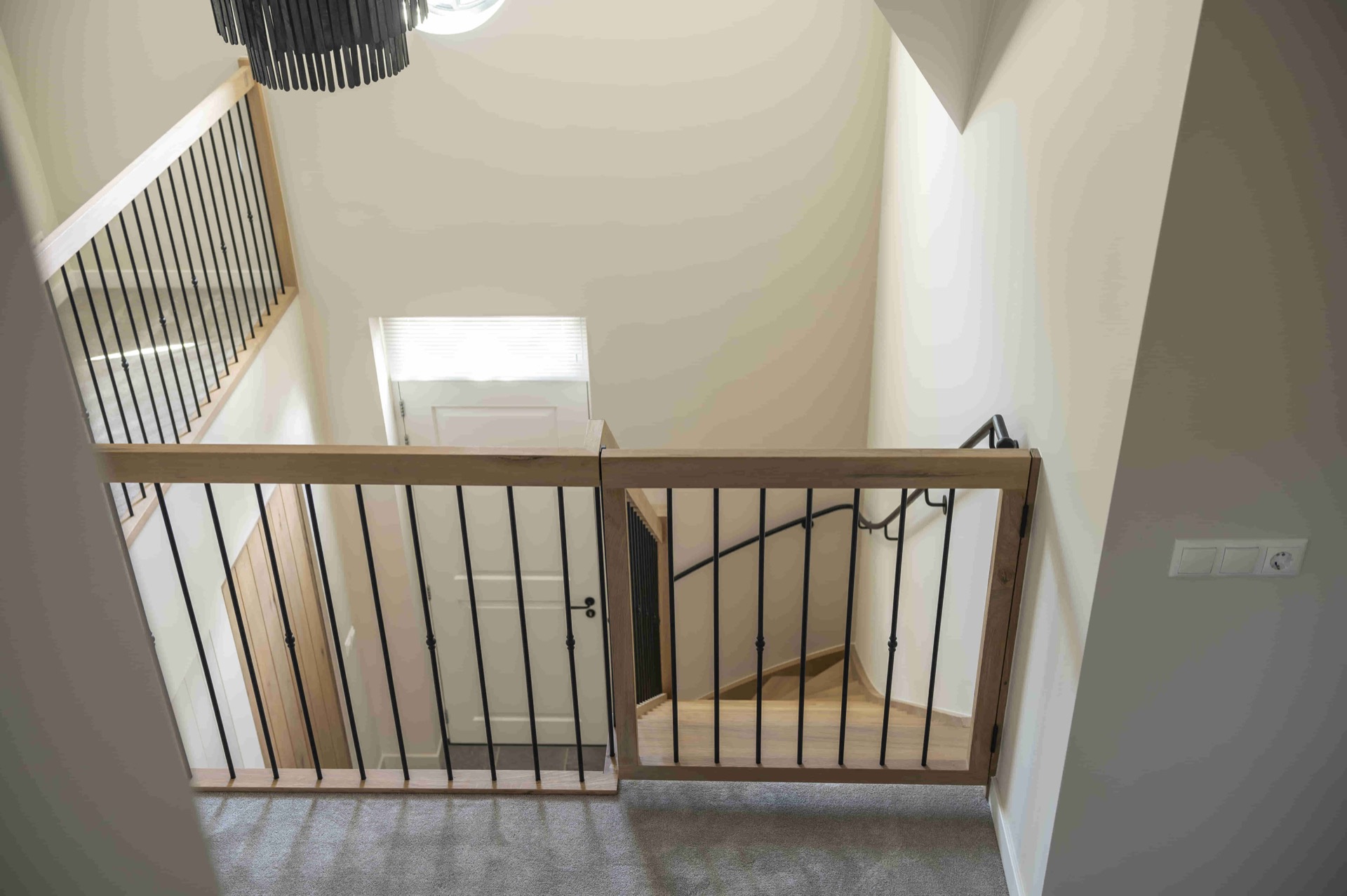
The detail images draw attention to the rounder elements within the balustrade. Small bulb-like joints appear on several posts, breaking the strict vertical pattern just enough to give the rail a more crafted read. Nearby, the oak upper rail and the dark steel bars sit close together, with the wood taking the top edge and the metal filling the open field below. This is a restrained move, but it gives the staircase a clear identity in the stairwell.
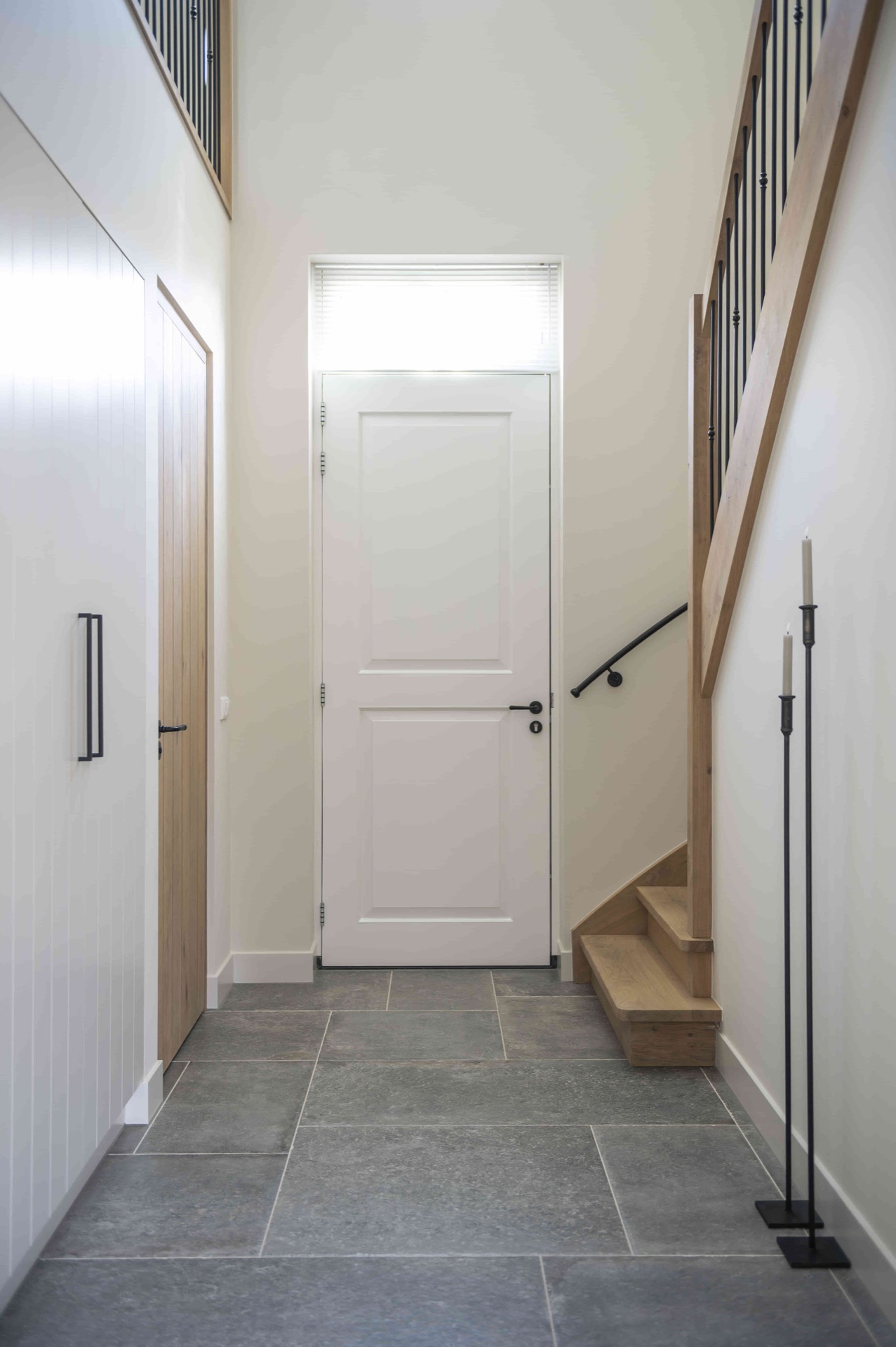
The white walls keep the stairwell bright, and that brightness works in favor of the oak stair treads visible grain. Instead of disappearing into the background, the wood gains definition along the nosings and side boards. Some frames include the grey tiled floor at the base of the stairs, which adds another hard surface to the palette. The tile sits quietly below the timber and steel, reinforcing the direct material reading of the space.
Where the oak staircase with steel reads most clearly
The best overview images show the staircase as a long diagonal through the room. The treads step upward in a steady sequence, while the black balustrade runs in parallel and closes off the edge without blocking the view. In one angle the stair turns near the corner of the space; in another, the handrail is seen along the wall, with the balustrade continuing over the landing. These shifts show how the oak staircase with steel balustrade organizes the stairwell through line and repetition.
There is no excess in the composition. The wood does the visible work on the steps, the steel defines the edge, and the white background keeps both materials readable. On the more distant views, the stair feels almost graphic, especially where the vertical balusters line up against the pale wall. Closer in, the oak grain and the dark metal finish take over. That change of scale is what gives the project its interest: the same staircase reads differently from each viewpoint.
Details at the turn and the landing
At the corner posts, the oak finish becomes more architectural. The square and block-like wooden elements mark the changes in direction, and the black rail rounds into them with a neat connection. Several photos show the balustrade extending across the landing, where the vertical bars create a clear fence line against the open floor. The oak upper rail continues that line and keeps the composition grounded in timber rather than metal alone.
From the lower room, the staircase sits above the grey tiled floor and beside a white wall, so every material reads in layers. The dark handrail stands out immediately, but it is the oak treads that hold the composition together. Their visible grain and pale color keep the stair from looking cold, while the black steel balusters sharpen the outline. Together they make a rustic wooden staircase with steel that feels precise rather than decorative.
An oak and black staircase built through contrast
The project is strongest when viewed as a material study. Oak treads, a black steel handrail, black steel balusters and light walls each occupy a clear role. The staircase does not depend on a large gesture; it relies on small, repeated decisions. A rounded corner in the handrail, a knotted section of wood, the spacing of the bars, the edge of the landing. Each detail stays visible, and together they shape an oak and black staircase that is easy to read from the first step to the top of the flight.
For readers looking at staircase projects, this example shows how an oak staircase with steel balustrade can hold a room without taking over it. The oak stair treads visible grain gives the steps their character, while the black steel handrail and balusters keep the outline sharp in the bright stairwell. It is a straightforward material mix, but the close-up views make the joins, bends, and rhythms worth a second look.
Want to see more of Bronkhorst Machinale Houtbewerking? View the page of Bronkhorst Machinale Houtbewerking for even more great projects and company information.



NEW 2026 Jubileum Edition The Best Interior Designers Benelux
Order Now €125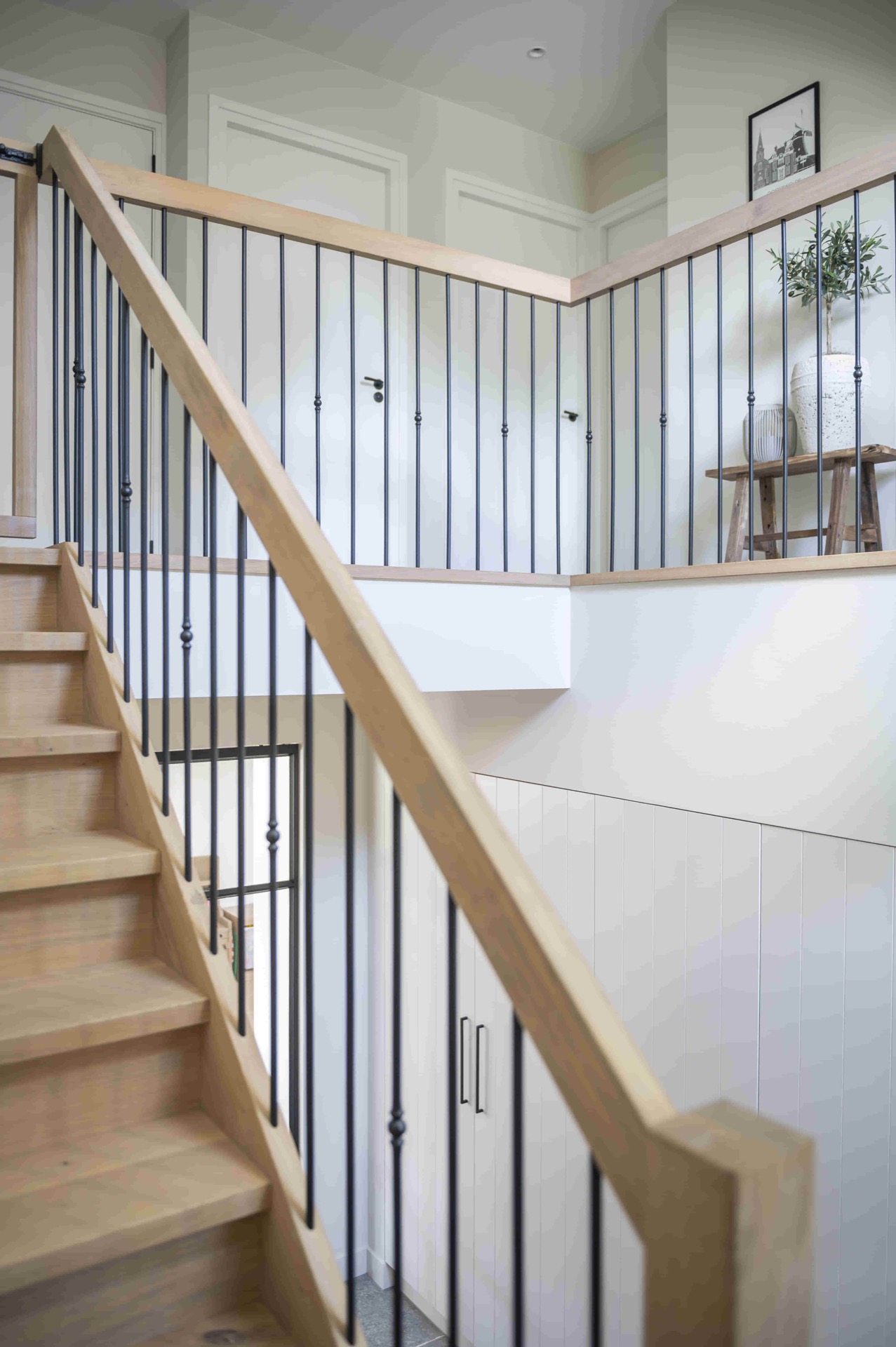
NEW 2026 Jubileum Edition The Best Interior Designers Benelux
Order Now €125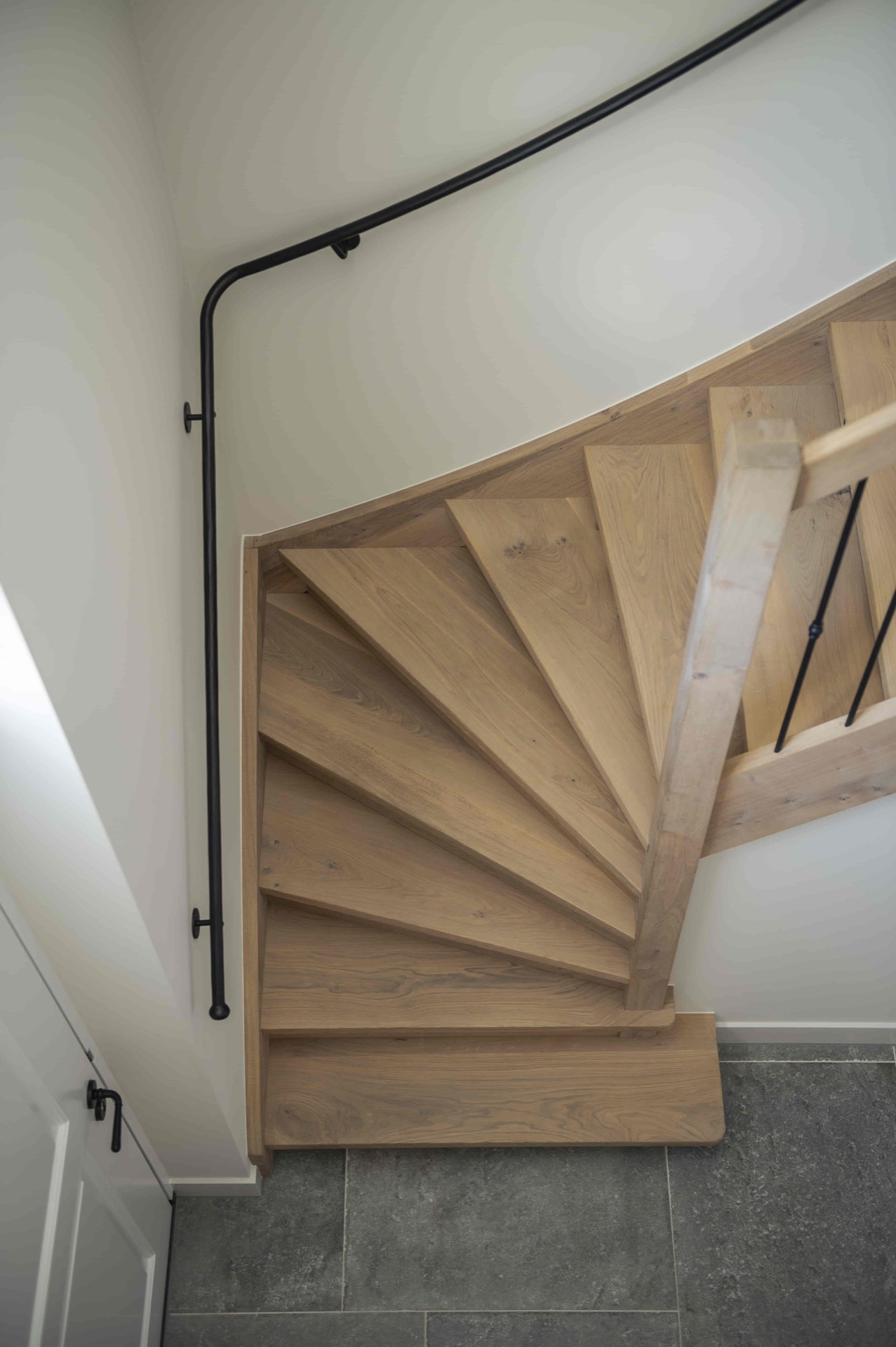
NEW 2026 Jubileum Edition The Best Interior Designers Benelux
Order Now €125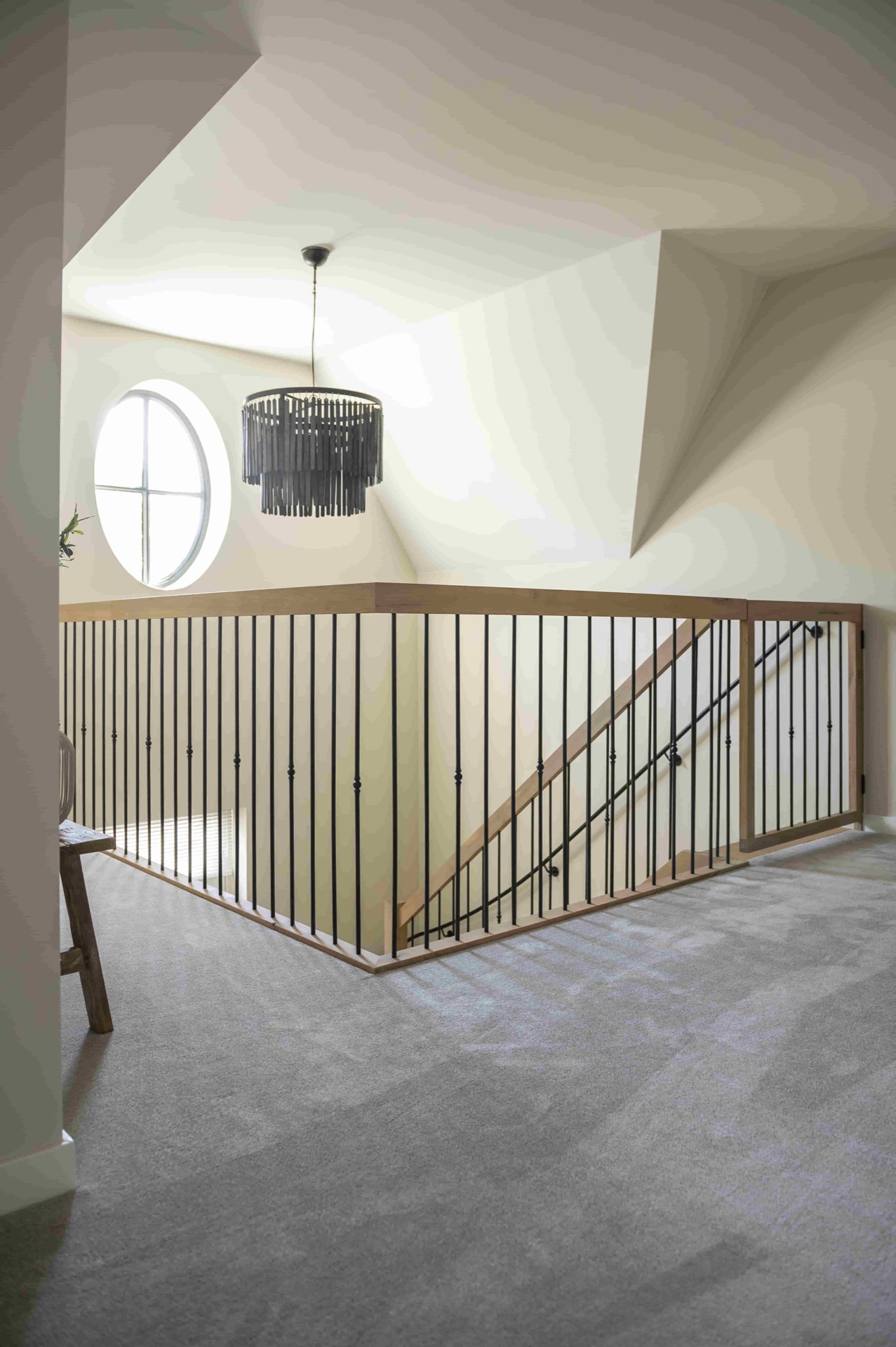
NEW 2026 Jubileum Edition The Best Interior Designers Benelux
Order Now €125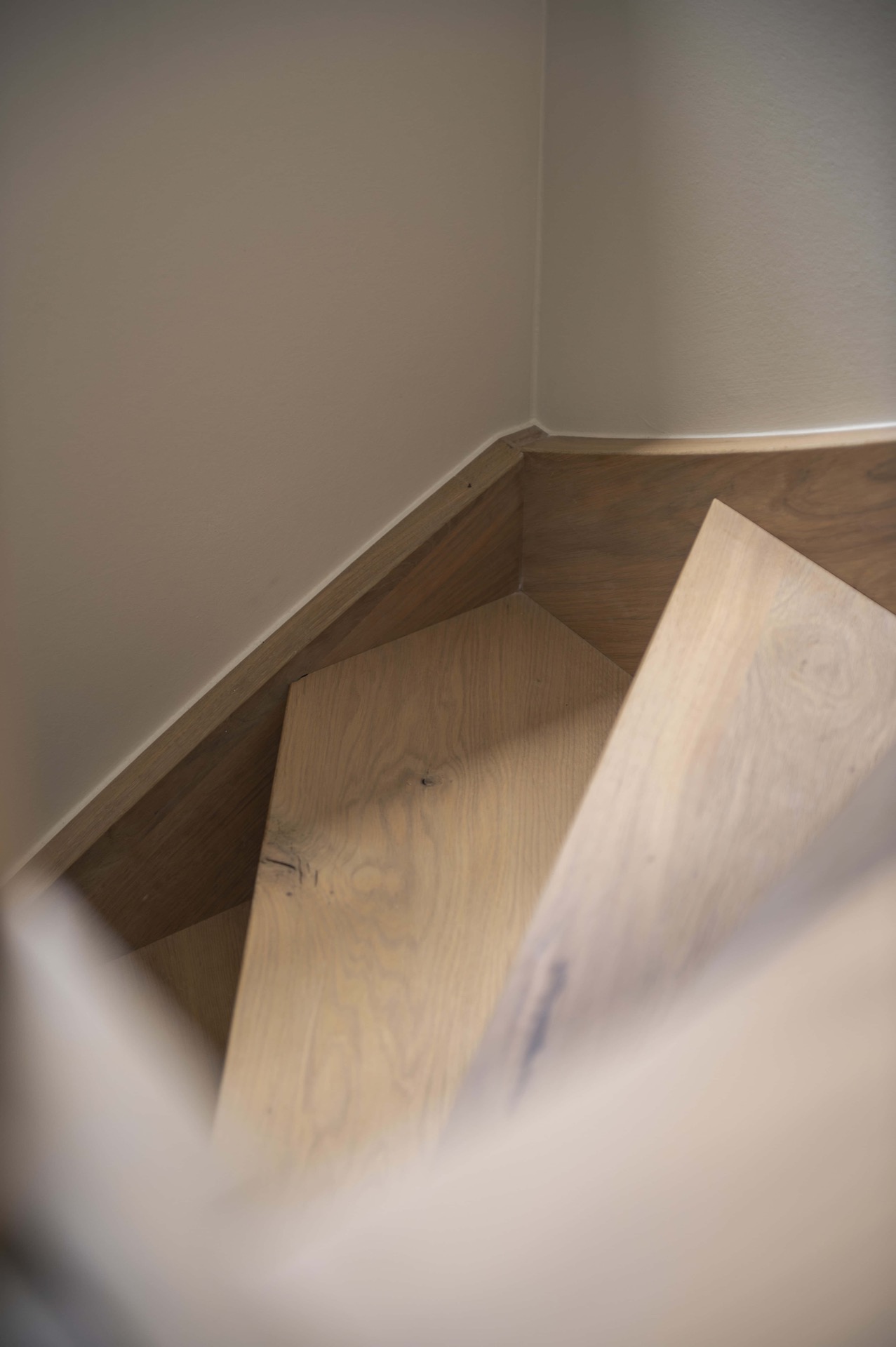
NEW 2026 Jubileum Edition The Best Interior Designers Benelux
Order Now €125