







Outdoor Carpet Maintenance for a Luxury Resort Space
Large outdoor carpets set the tone in these resort lounge areas, where light flooring, low seating and vertical screening come together in one generous, open arrangement. The first impression is not about decoration alone. It is about surface and scale. Five large pieces were made to dress different zones, giving each seating group a defined base while keeping the look quiet and spacious. The result shows how outdoor carpet maintenance can be part of the visual composition, not an afterthought.
Large-format carpets for open lounge zones
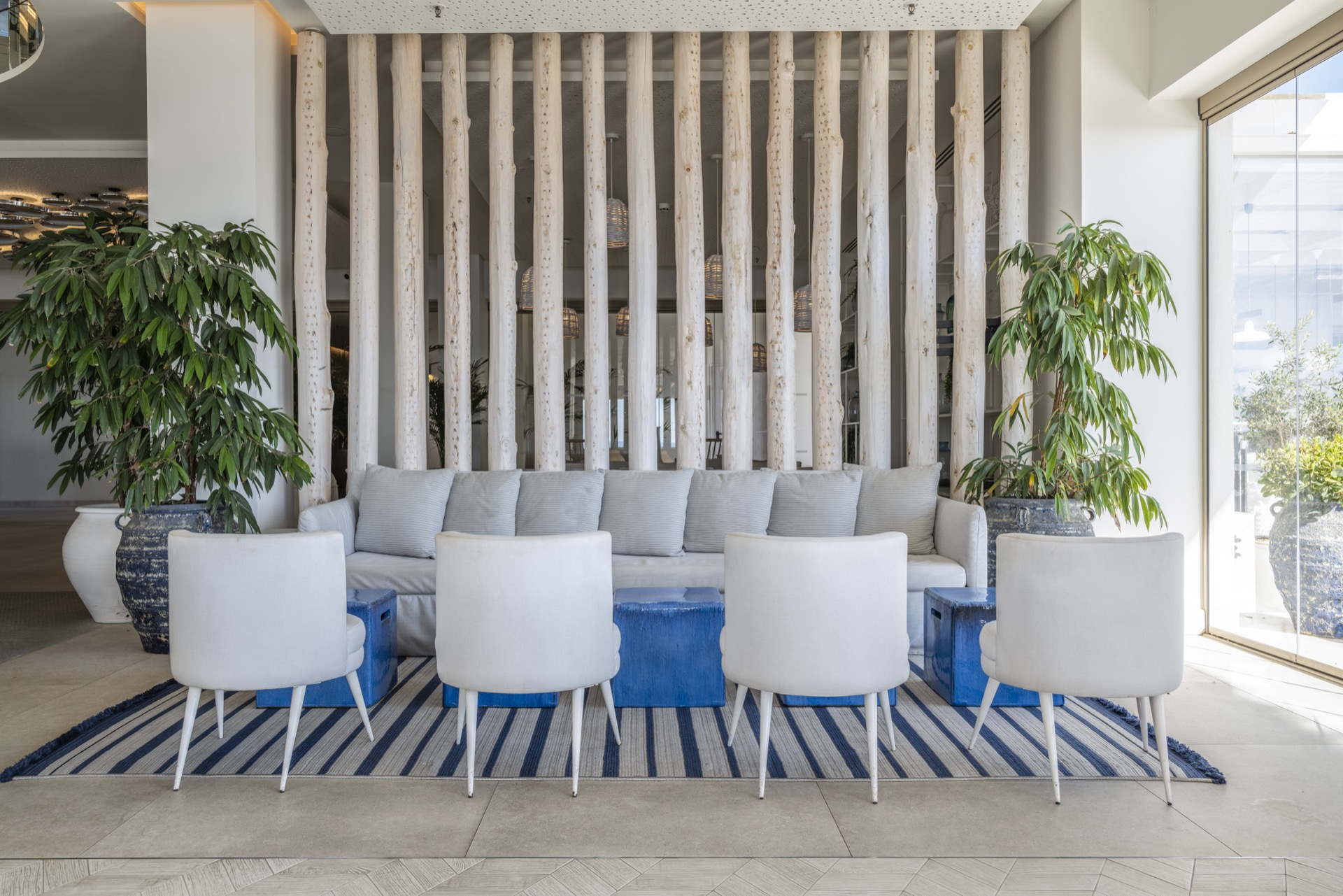
The carpets were designed for broad outdoor areas that are used often and seen from multiple angles. Their size matters. Instead of small rugs that break up the floor, these pieces stretch beneath sofas and chairs, giving the lounge a clearer footprint. In one view, a blue striped carpet pulls the seating area forward against pale tiles and light-colored furniture. In another, a softer, light surface opens the room toward glass and greenery. The carpets do their work in silence, but they hold the layout together.
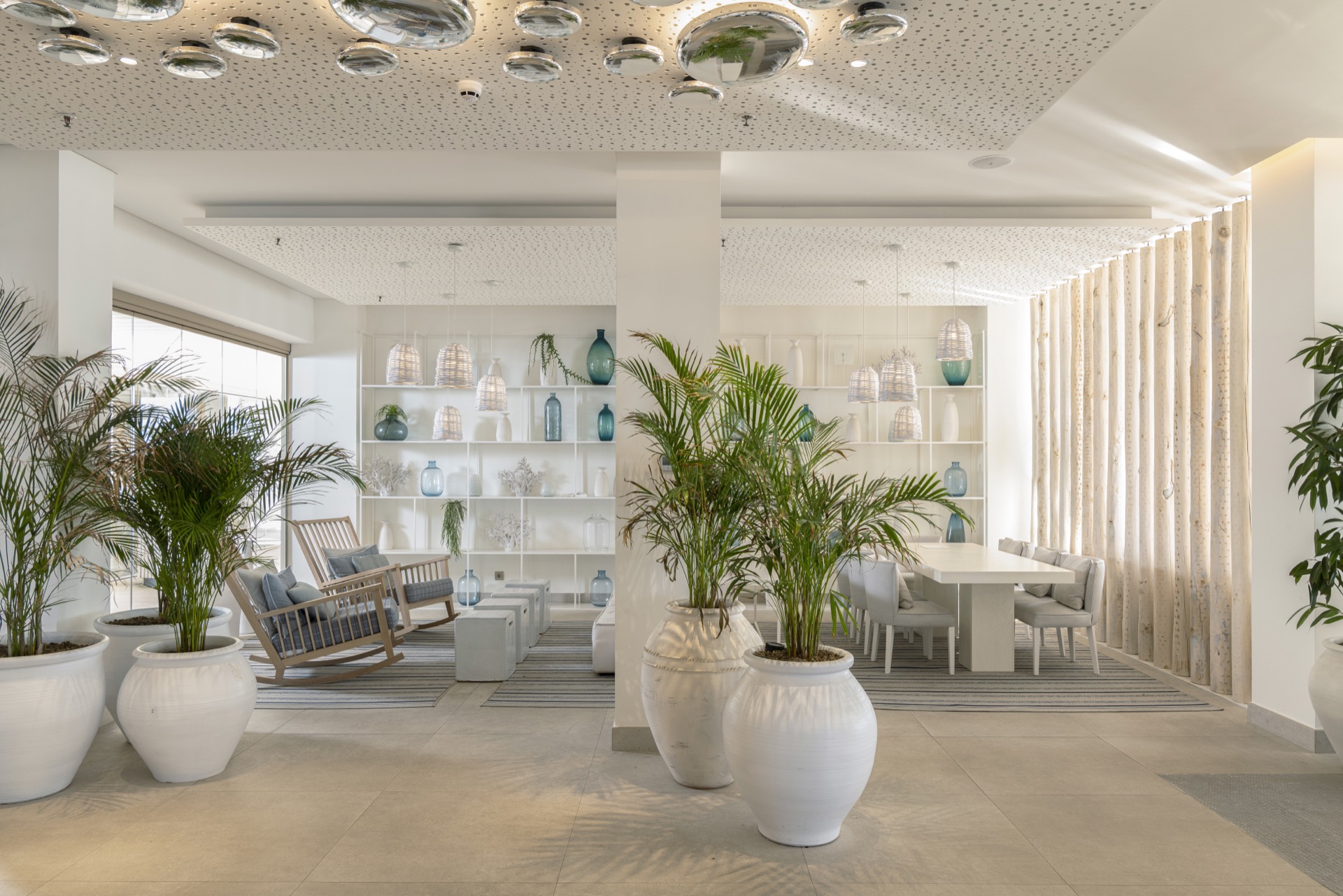
The project also shows how an outdoor lounge carpet can support a hospitality setting without pulling attention away from the architecture around it. Vertical slats or curtain-like panels form a backdrop, while large planters and white seating keep the palette restrained. The carpet surface becomes the middle ground between furniture and floor. That is where the visual order happens: under a sofa, around a table, and across a space that has to remain legible even when busy.
Italian-made and built around a polyolefin fiber
Each carpet is hand-made in Italy and produced with a patented outdoor fiber based on polyolefin. That material choice is central to the project. It was selected for a high-traffic setting where the floor cover needs to stand up to repeated use and regular cleaning. The source material mentions a very low moisture absorption rate of 0.1%, which explains why the carpets were considered suitable for this kind of resort environment. The practical brief shaped the finish as much as the visual one.
Because the fiber is described as taking up only 0.1% moisture, the carpet surface can be washed seasonally without changing the basic appearance of the piece. The maintenance routine is straightforward: soap, rinse, repeat. That ease of care was important for the client, whose spaces are used intensively. This is where custom carpets have a different role than standard furnishing. They have to fit the room, but they also have to survive the room.
Seasonal cleaning in a busy setting
The maintenance note is brief, but it says a lot. These carpets are soaped and washed each season, and that process is part of their daily logic, not a special intervention. In a place with constant foot traffic, drinks, shifting chairs and changing guest flow, the floor covering needs to be ready for that rhythm. The project does not rely on fragile finishes or decorative excess. It relies on a material that can be cleaned and returned to use without drama. That is what made the solution relevant here.
The client’s feedback points in the same direction. Ease of maintenance was not a side benefit; it was one of the reasons for choosing this solution. In the images, that practical choice sits naturally beside the furniture and planting. White seating, pale surfaces, ceramic tiles and blue striping all sit within the same visual field. The carpet does not compete with the room. It absorbs the use of the room and keeps the lounge areas readable from day to day.
Blue stripes, pale floors and a controlled palette
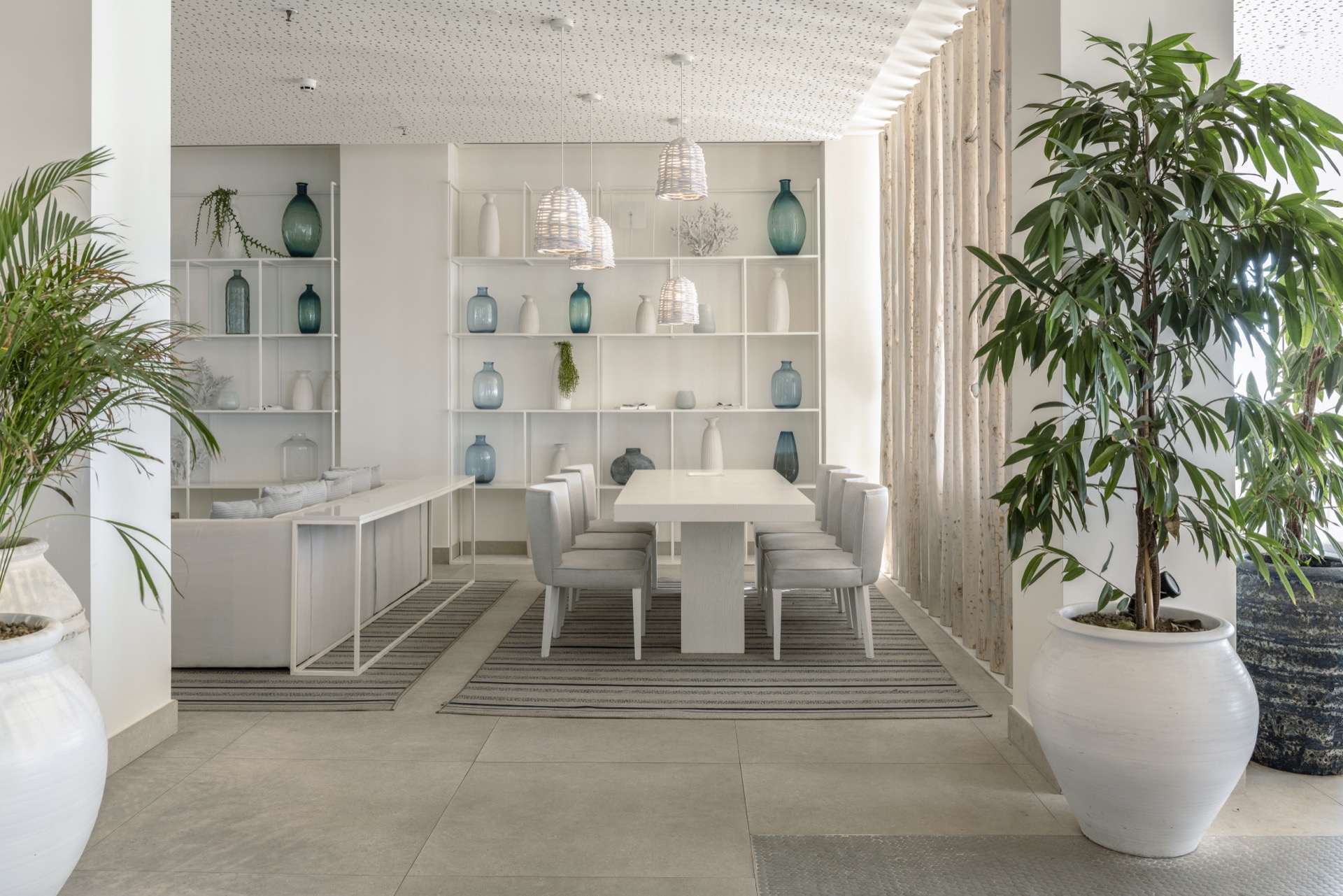
Several images show a blue striped carpet version, which introduces a stronger rhythm into the outdoor seating area. The stripes sit against white chairs and low sofas, with light catching the edges of the pile and the surrounding tile floor. In other views, the carpets are lighter and more neutral, allowing the green planting and vertical panels to carry more of the contrast. That shift between patterned and plain surfaces gives the project a useful range without losing its restraint.
The materials around the carpets are just as specific. Wood appears in the furniture and details, textiles bring softness to the seating, and ceramic tiles form the larger ground plane. The outdoor setting is not stripped back to one material language; it combines several surfaces, each with a clear job. The carpets help connect them. Under the tables, along the sofas and across the semi-outdoor threshold, they provide a measured field that keeps the lounge area grounded.
From lounge seating to interior threshold
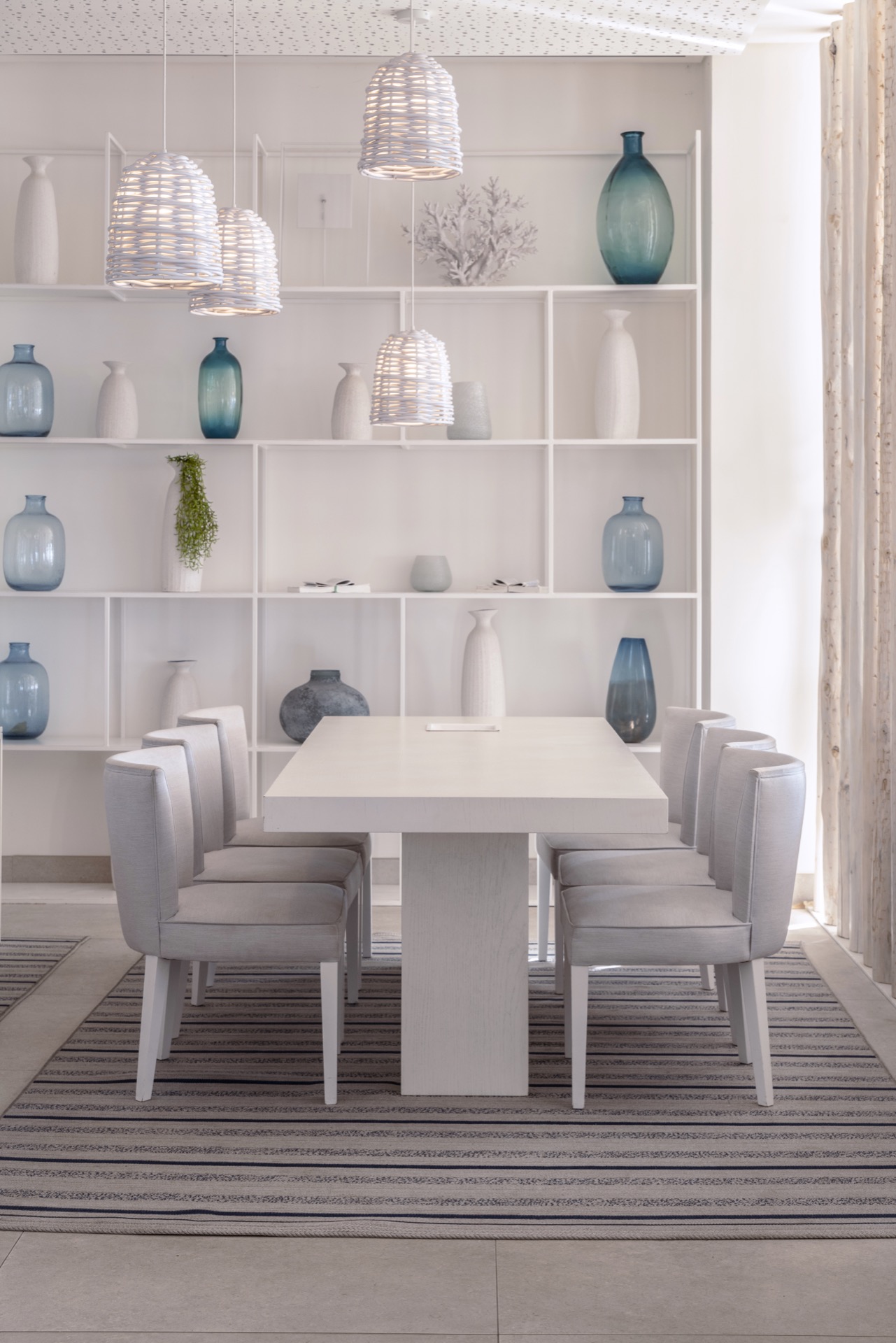
One of the strongest moments in the photos is the transition between the outdoor lounge and the adjacent interior zone. White built-in shelving, round perforated ceiling panels and hanging lights appear just beyond the carpeted area, creating a shift from open-air seating to a more sheltered room. The carpet lines do not stop that movement; they guide it. You can read the route from one space to the next through the floor treatment, the furniture spacing and the change in ceiling detail.
Hospitality projects like this depend on that kind of spatial clarity. The large carpet pieces allow each area to be furnished differently while still belonging to the same setting. In one image, a table and chairs sit beside open shelving; in another, lounge seating is placed against vertical screening and planting. The carpet under each arrangement is doing more than adding texture. It marks use, supports circulation and gives the guest areas a settled base that can handle regular activity.
Why this project works as a reference
What stands out here is the combination of appearance and upkeep. The carpets were made to fit large resort spaces, but they were also chosen because they could be maintained without complexity. Hand-made Italian production, patented outdoor fiber and low moisture absorption all matter, yet they only make sense because the project is used intensively. The images show that clearly: seated groups, planted corners, patterned carpet sections and semi-open transitions all share the same floor language. That is the point of the project portfolio piece.
As a reference, the project is useful because it shows how an easy-care outdoor carpet can carry a lounge area without taking over the scene. The floors remain light, the seating stays legible, and the screening panels continue to shape the perimeter. With five large carpet sections in use, the rooms feel organized from the ground up. For a resort setting that sees heavy use, that practical structure is as visible as any decorative detail.
Project portfolio readers looking at outdoor carpets will notice the same pattern throughout: size, material and maintenance are treated as one brief. The carpets are made to be cleaned seasonally, to sit under repeated use and to hold their place in a busy hospitality environment. In the photos, that approach is easy to read. The surfaces are calm, but never empty; they carry furniture, light and movement without losing their role in the room.
Want to see more of Thibault van Renne? View the page of Thibault van Renne for even more great projects and company information.



NEW 2026 Jubileum Edition The Best Interior Designers Benelux
Order Now €125