










Dark modern kitchen with oak countertop and a black kitchen island
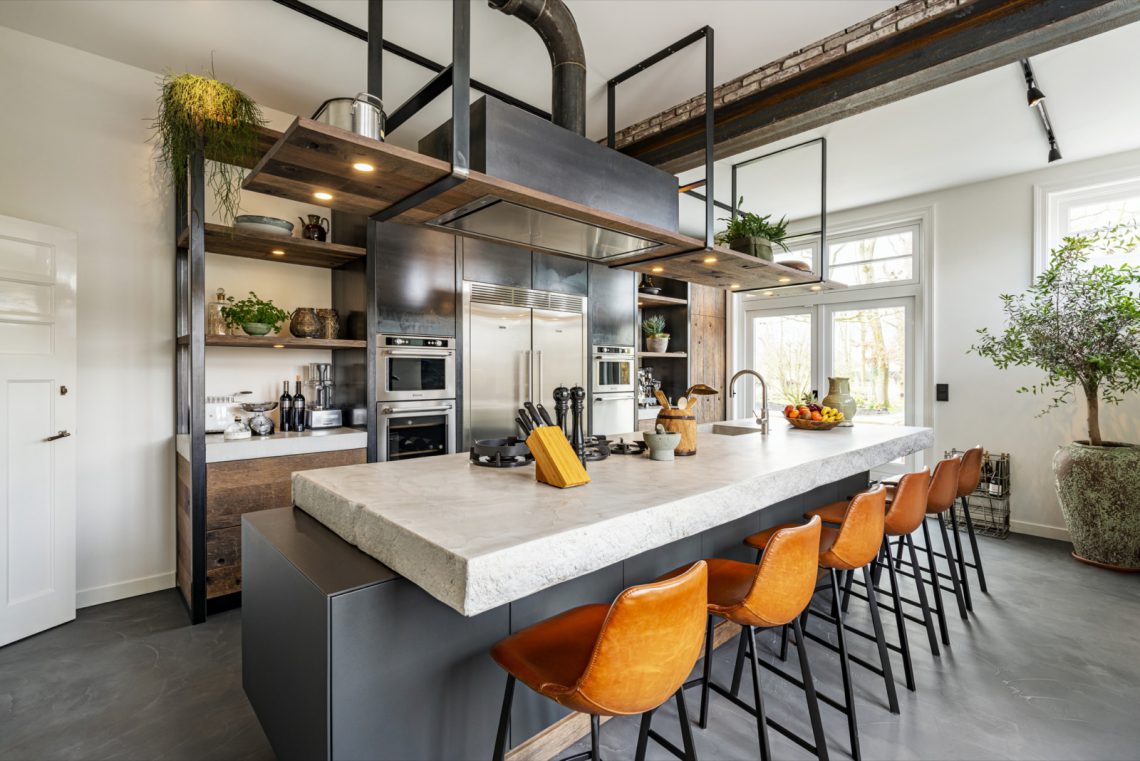
The dark modern kitchen with oak countertop starts with contrast: black matte cabinet fronts, a light oak surface, and white walls that keep the room from feeling closed in. The island sits at the center and pulls the eye immediately, while the ceiling spots and black window frames sharpen the geometry around it. It is a second kitchen for the same client, but the mood has moved decisively away from the earlier white-and-wood version.
Black fronts, flat planes, and a strong line through the room
The cabinet run is built in black coated MDF, with smooth fronts that read as one continuous plane. There is little decoration to break the surface, so the structure of the kitchen comes from line and proportion instead. That makes the wall of storage feel calm rather than heavy. The dark finish also gives the built-in kitchen appliances room to sit back into the composition instead of standing out as separate objects.
Seen from across the room, the kitchen island carries the same restrained language. Its dark base anchors the space, while the oak countertop softens the harder edge of the black finish. The contrast is direct and easy to read. Instead of competing materials, the kitchen uses two surfaces that speak clearly to each other. The result is a layout that feels controlled without losing the grain and texture that keep it from becoming flat.
The oak countertop as the warmest surface in the kitchen
The planed old oak countertop is the part that changes the pace of the room. Its visible grain and lighter tone catch the daylight coming in from the windows with shutters, and the edge line gives the island a more tactile presence. Because the top is a real working surface rather than a decorative overlay, the material shift is obvious as soon as you move closer. Black fronts recede; the oak comes forward.
That material contrast is also what connects the different zones in the kitchen. The oak countertop runs across the island and continues the same visual language into the surrounding composition, where the white walls and pale floor keep the darker elements grounded. In a dark modern kitchen with oak countertop, the wood does more than add warmth. It marks the places where hands land, where cooking starts, and where the room is most closely used.
Cooking and washing built into the island
The kitchen island is not only a visual centerpiece. It holds the cooktop and the integrated sink on kitchen island, so the working part of the kitchen stays close to the center of the room. The placement keeps the island active from both sides: one side for cooking, the other for daily use around the sink and tap. Because the top stays wide and open, the functions read clearly without crowding the surface.
A closer view shows how compact the arrangement is. The black cooktop sits into the oak, and the sink area is integrated rather than treated as a separate block. The tap rises directly from the work surface, which keeps the island visually tidy even when the practical details are all in place. In this dark modern kitchen with oak countertop, the island carries more than one role, but the parts are kept visually calm and easy to follow.
Light and sightlines around the island
The island sits under a ceiling with built-in spotlights, so the surface gets defined by small pools of light rather than one broad wash. That helps the oak read more clearly and keeps reflections on the black fronts under control. Across the room, the windows with shutters and dark frames bring in daylight in narrow bands, which suits the controlled surface palette. The kitchen never relies on ornament; it relies on how light lands on wood, paint, and glass.
Built-in appliances kept inside the wall of storage
The built-in kitchen appliances are arranged in the tall cabinetry, where the flat doors absorb most of the visual weight. This keeps the working equipment aligned with the room instead of letting it fragment the composition. A glazed high module, visible in one part of the wall, hints at storage for bottles or cooling without interrupting the dark run of fronts. The effect is practical, but it is also the reason the room stays visually quiet.
Because the appliances sit within the black wall of cabinetry, the island can remain relatively open. That division matters. One side of the kitchen handles storage and integrated equipment; the other side holds the cooking and washing functions on the island. The layout is easy to read in the images, especially where the dark fronts and the oak top meet at right angles. It is a clear example of a dark modern kitchen with oak countertop built around use, not around display alone.
A second kitchen, but a very different mood
The project carries a small but telling detail in its background: this is the second time the client has returned for a kitchen. The earlier version was white with a wooden top. This one chooses the opposite tone, moving toward black matte kitchen cabinets and a stronger contrast with the oak. The shift is visible before it is explained. The room feels more grounded, with the island, the cabinetry, and the light all working around the same darker core.
What stays consistent is the reliance on honest material pairings. Black coated fronts, a planed old oak worktop, a dark island cooktop, and a clean wall of built-in kitchen appliances create a kitchen that is easy to read from different angles. The compositions in the photos make that clear: a close-up of the oak edge, a broad view of the cabinetry, and the island in use all tell the same story. This is a dark modern kitchen with oak countertop where the strongest effect comes from restraint, not from excess.
Want to see more of Restyle XL? View the page of Restyle XL for even more great projects and company information.




NEW 2026 Jubileum Edition The Best Interior Designers Benelux
Order Now €125


NEW 2026 Jubileum Edition The Best Interior Designers Benelux
Order Now €125


