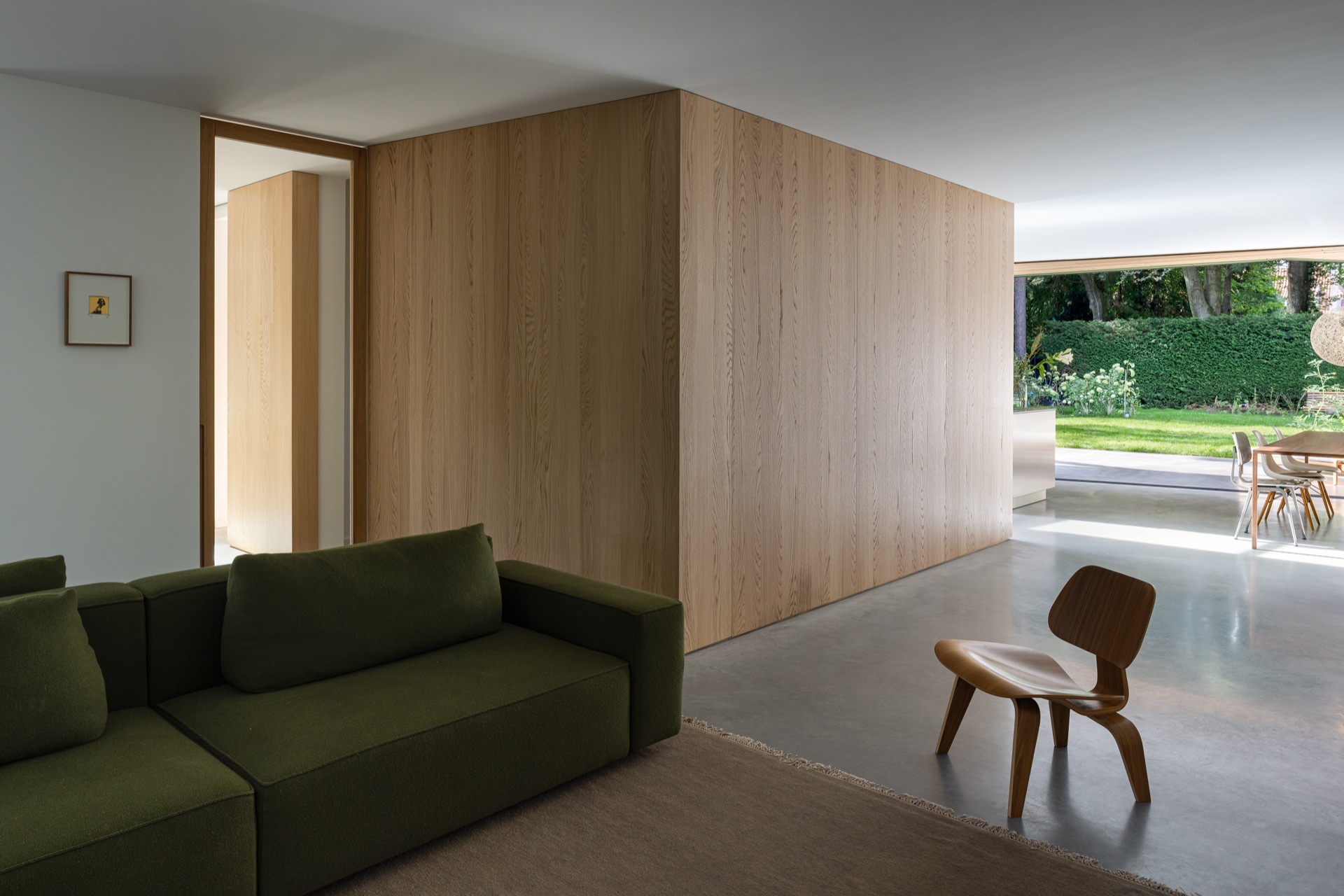







Floated concrete floor and concrete terrace in a modern home extension
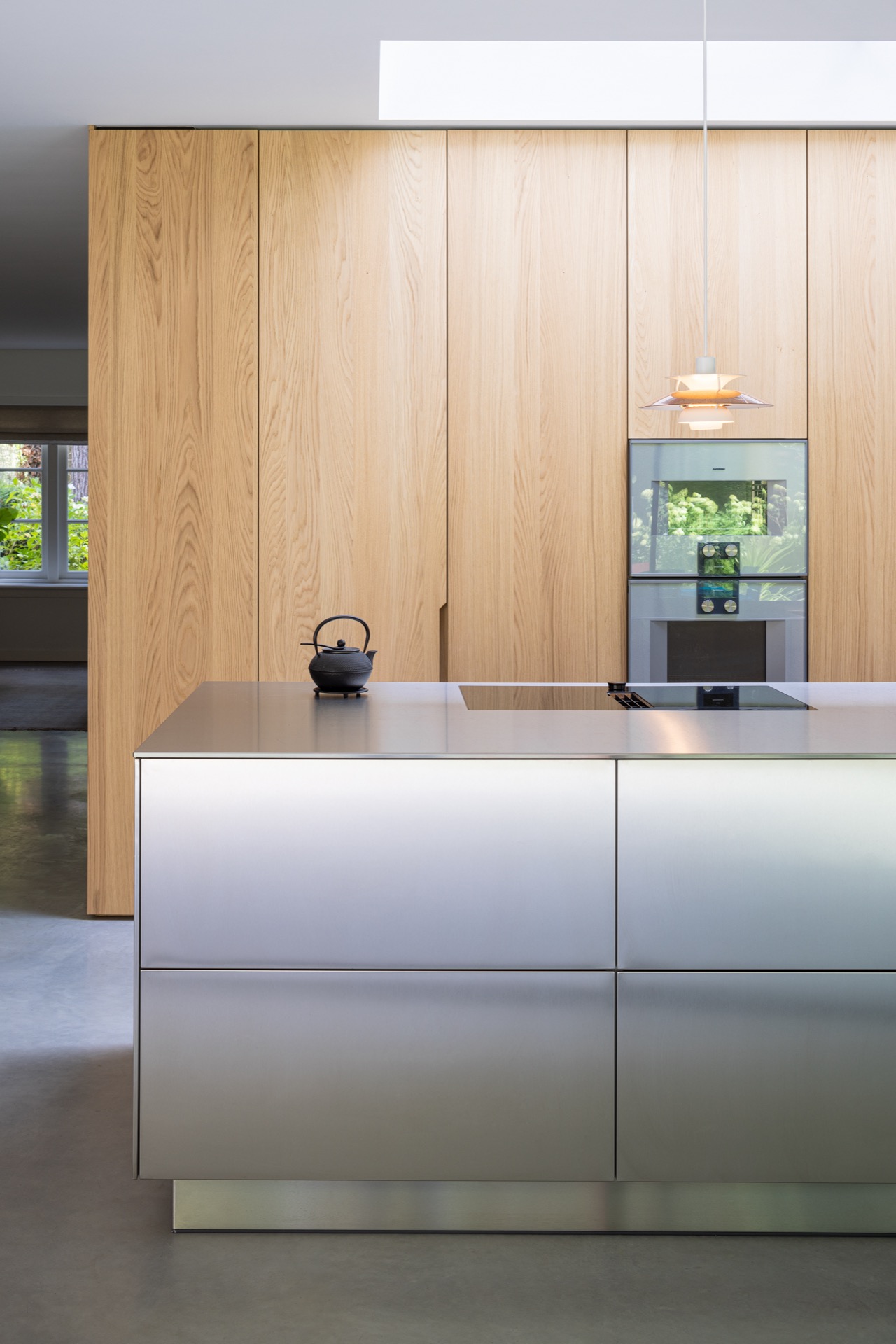
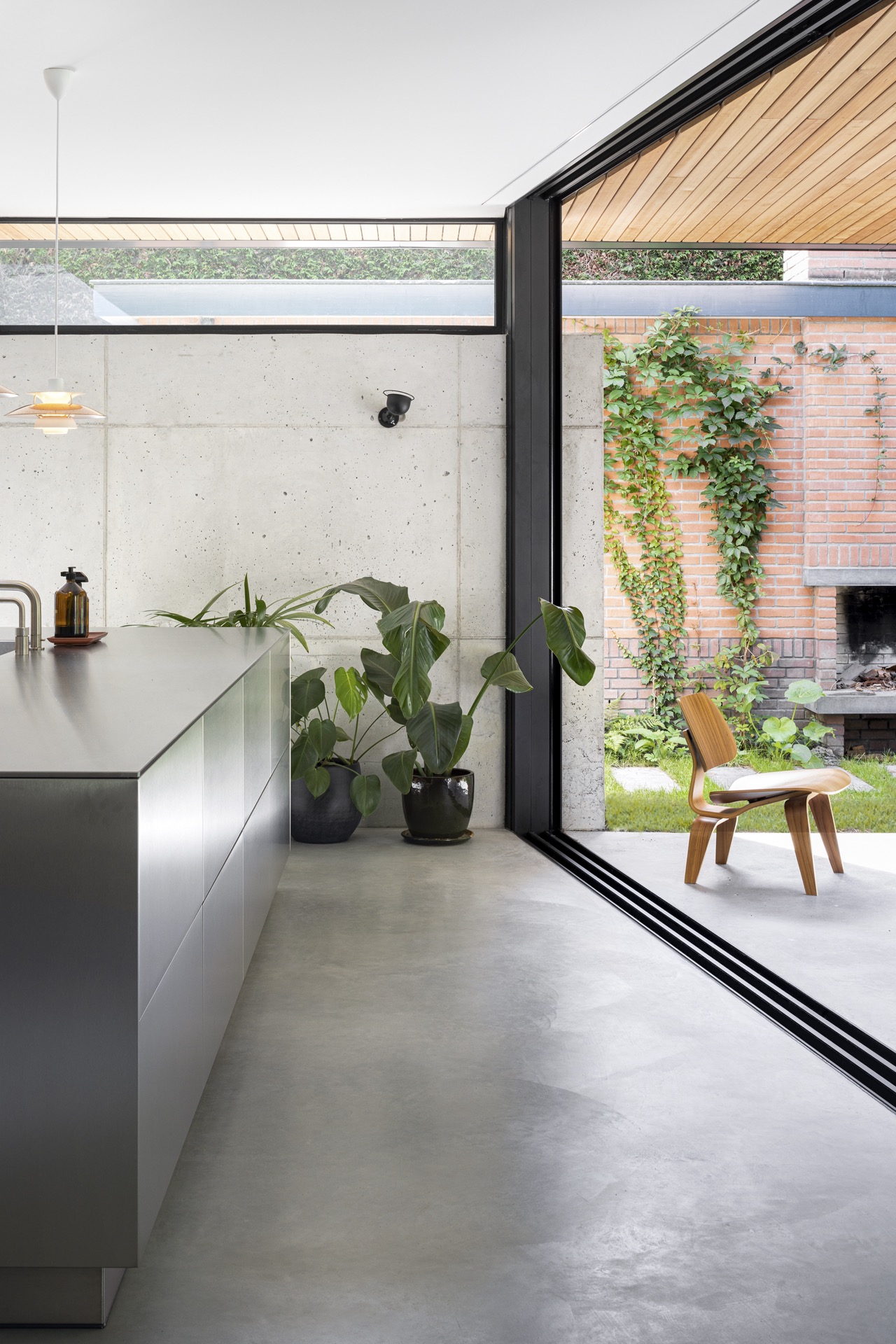
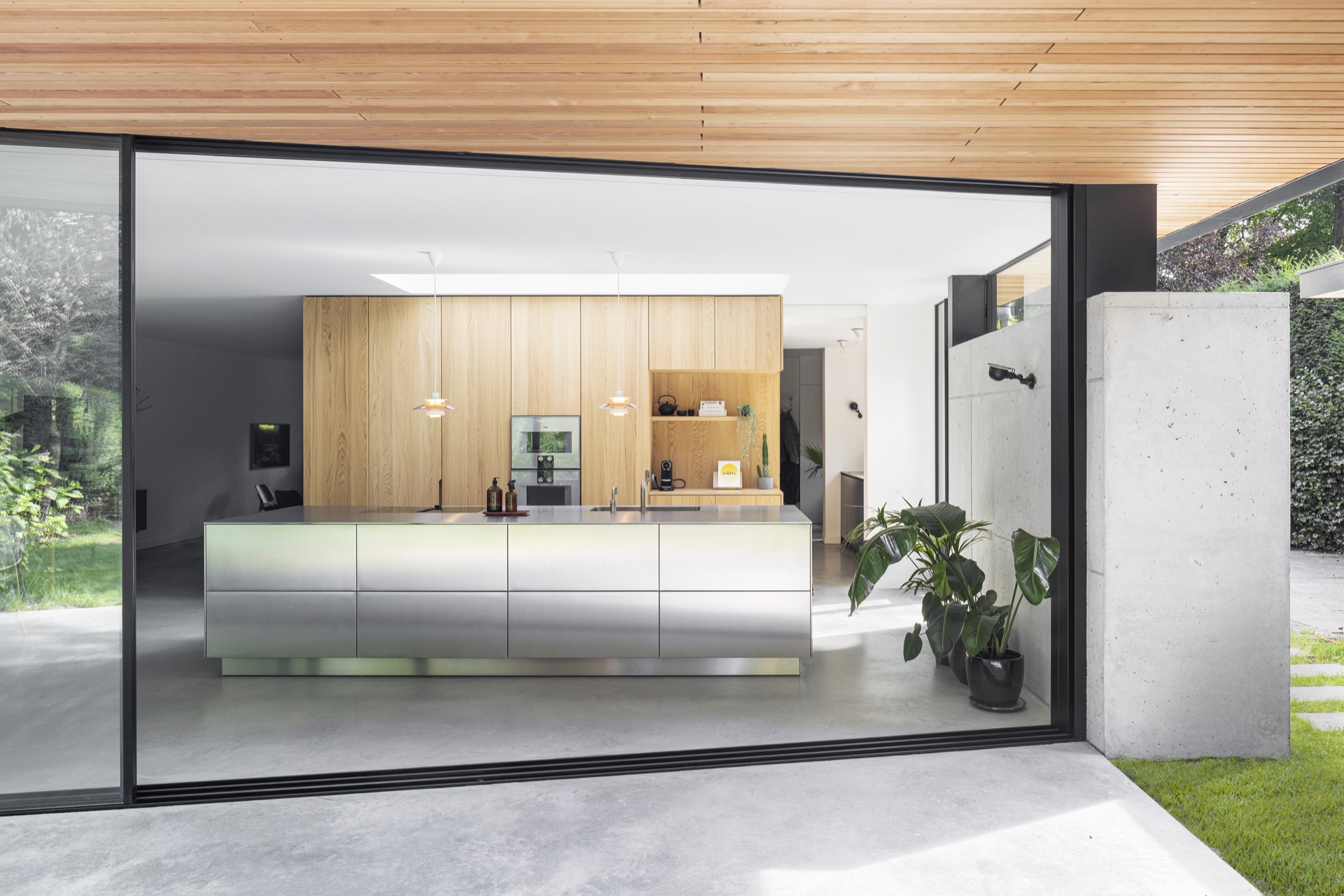
A grey floor runs straight out toward the terrace, so the extension reads as one open plane rather than two separate rooms. The floated concrete floor in base grey sets that line, while the concrete terrace continues it outside and stretches the view across the glazing. Black frames, large openings and the pale sheen of the finished surface keep the space legible at a glance.
floated concrete floor as the architectural starting point
An older extension was replaced by a roomier, more modern addition, and the new layout is built around the floor. Instead of stopping at the threshold, the concrete surface carries on to the terrace, which gives the garden side more length and makes the opening feel broader. The effect is simple but decisive: the eye follows the same grey band from the kitchen area to the outdoor seating zone.
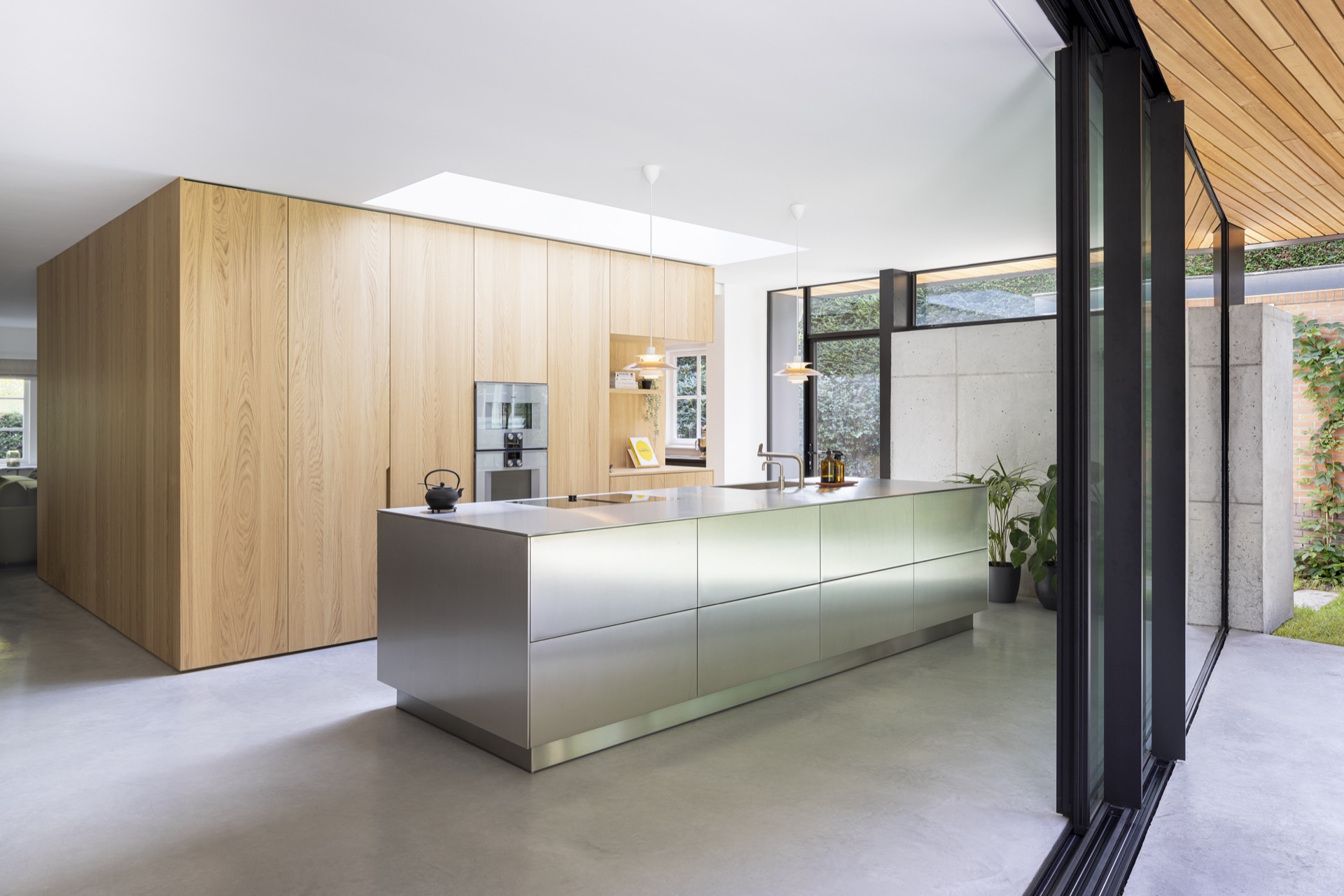
That continuous concrete flooring also works as a quiet backdrop for the other materials. Where the concrete stays cool and even, the wood slats add a different rhythm above and beside it. The result is not a contrast for its own sake, but a clear reading of zones: concrete underfoot, timber overhead, glass between the two. The extension uses that sequence to guide movement without adding visual clutter.
Floated concrete floor in base grey
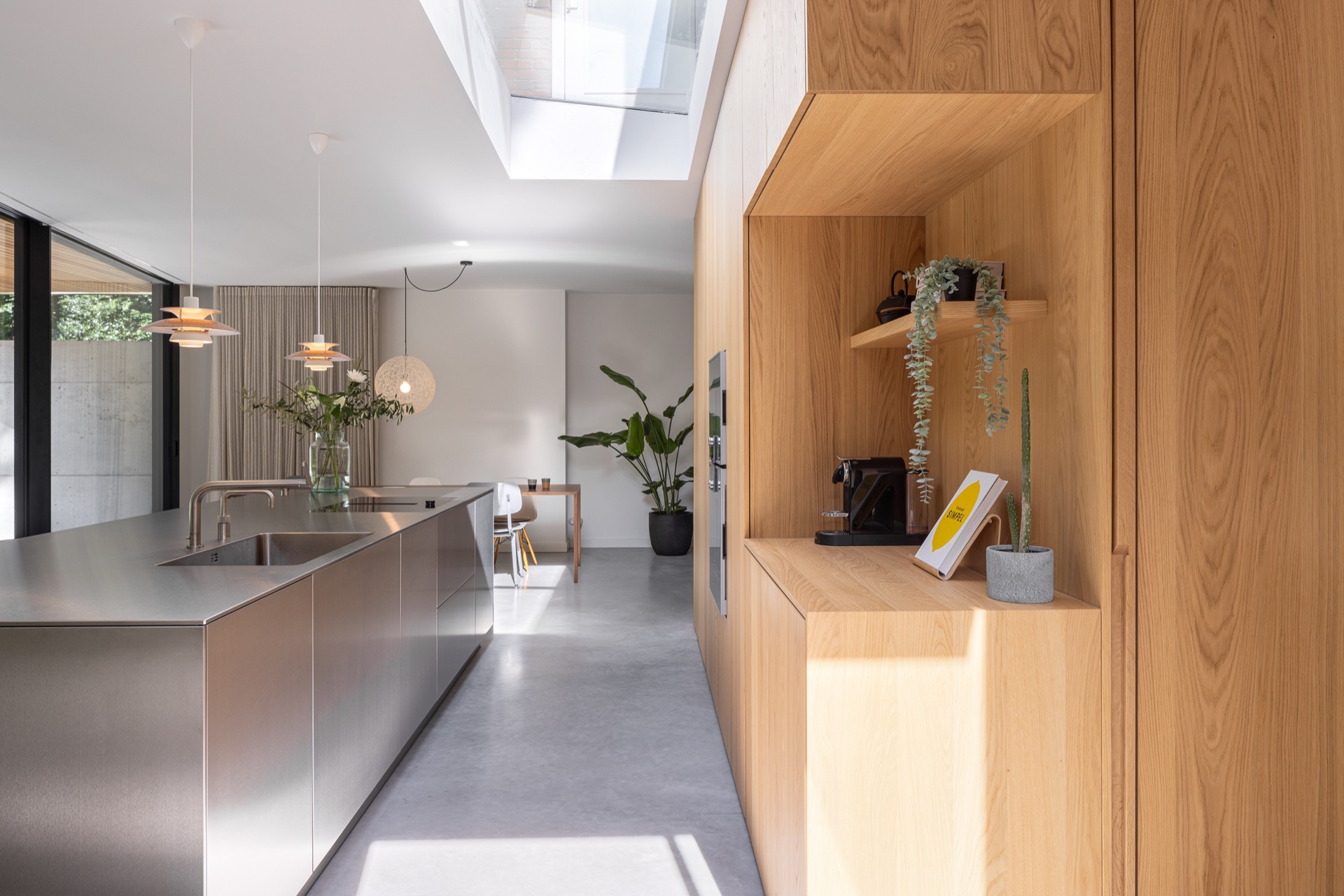
The floated concrete floor has a smooth, level finish that catches light softly rather than reflecting it sharply. In base grey, it reads as a single field across the interior, with subtle variation visible only in the surface and edge details. That restraint lets the room stay open, especially where the flooring meets the black-framed glazing and the pale walls around the kitchen zone.
Because the floor is carried through toward the terrace, the transition from inside to outside becomes less abrupt. You do not get a hard break at the door line. Instead, the same material continues and then meets the open air, which makes the extension feel longer and the terrace feel tied to the room behind it. For a project built around a floated concrete floor, that gesture is the main spatial move.
Concrete terrace as a direct continuation
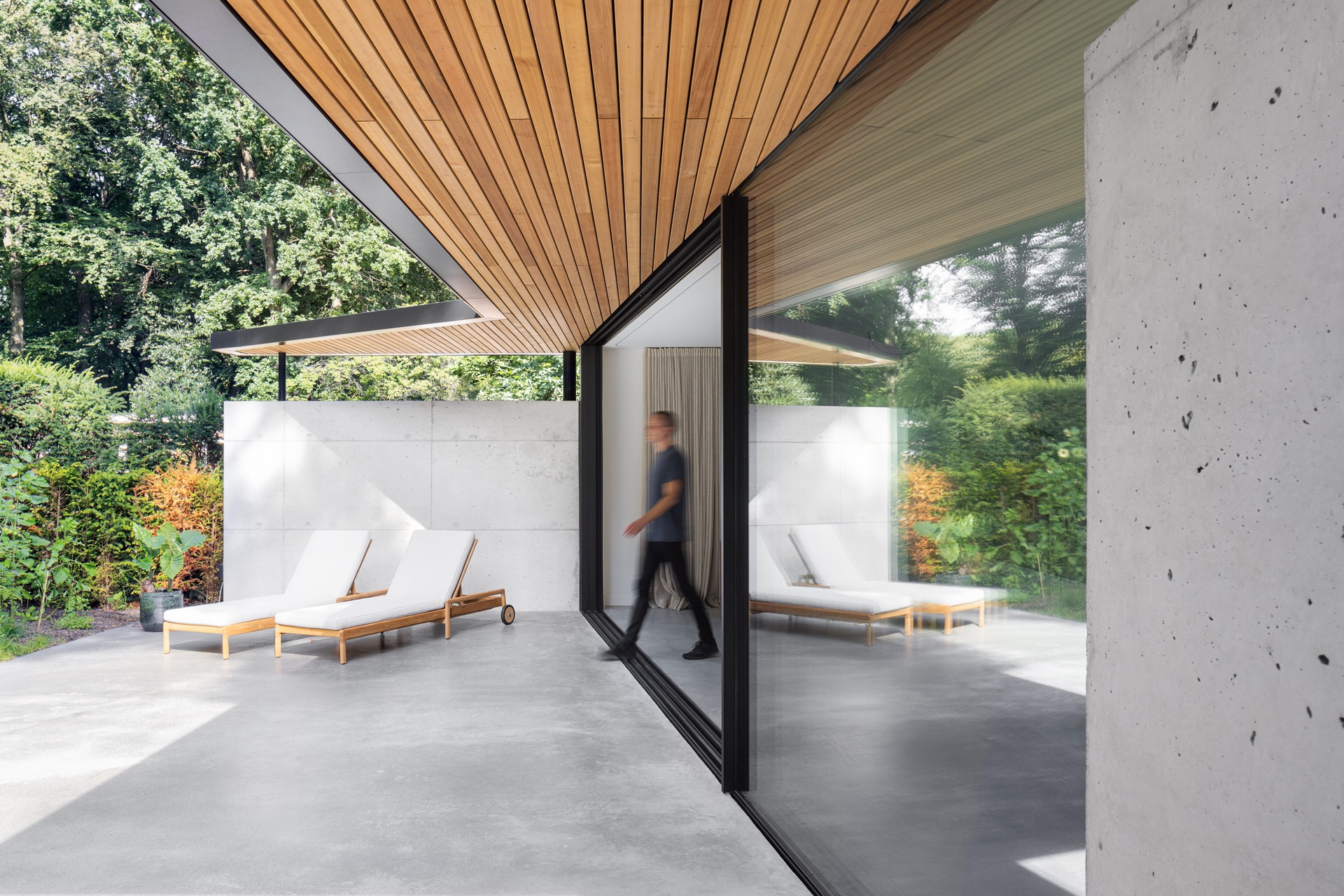
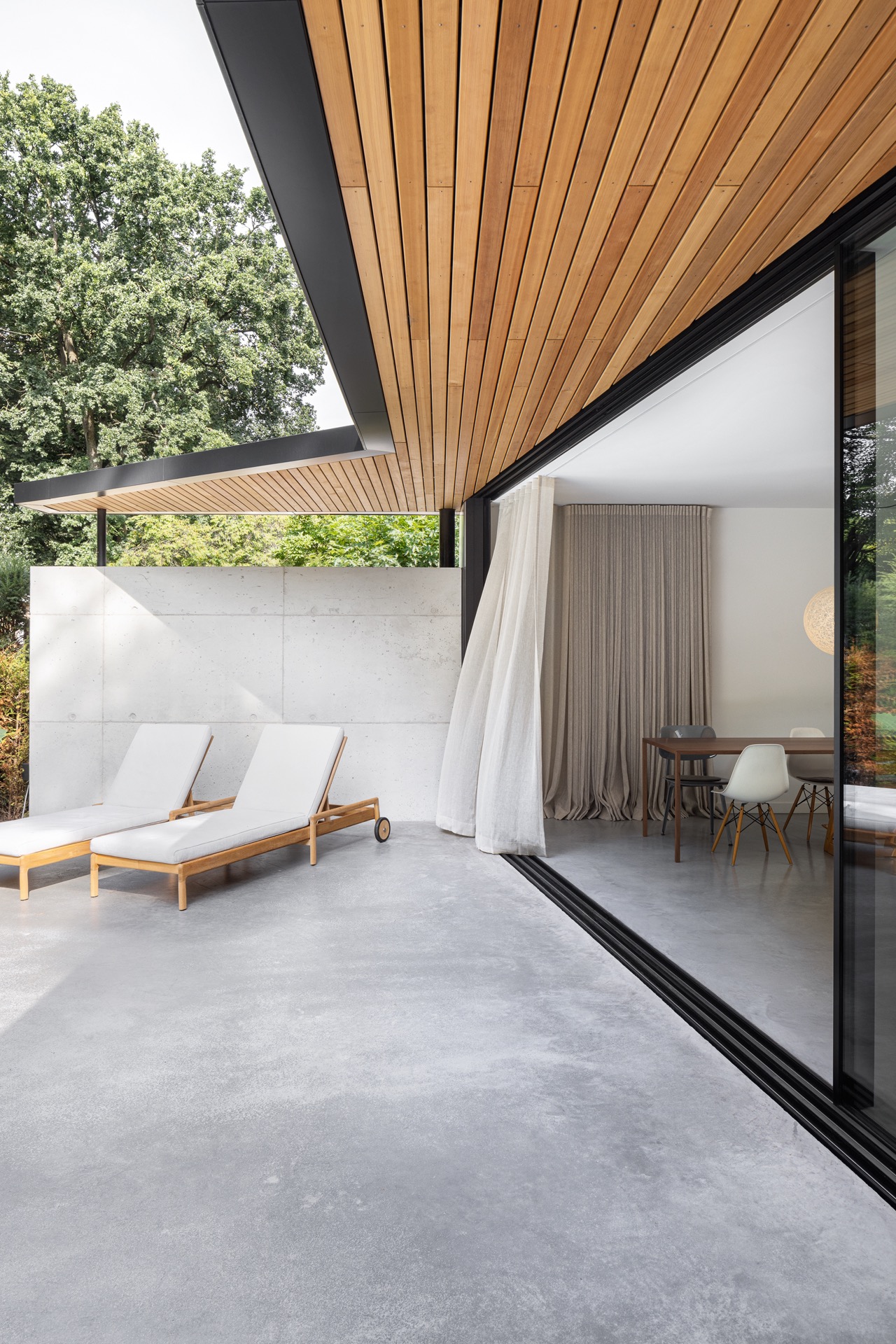
The concrete terrace repeats the interior floor language outside, keeping the surface calm and visually consistent. It sits under the overhang and beside the large opening, so the terrace is not read as an add-on. It feels set into the same composition as the room. The black window and door frames sharpen the edge, while the concrete itself keeps the terrace grounded and plain in the best sense.
From the interior, the terrace looks almost like a second room without walls. That impression comes from the uninterrupted line of material and from the broad glazed opening that links both sides. The project does not need extra devices to make the outdoor area work. The continuous concrete flooring does the job, letting light, depth and the view take over where the surface ends. That makes the floated concrete floor part of the architectural character rather than a loose finish.
Wood slats temper the hard surfaces
Wood appears in slatted panels and a slatted ceiling, and it changes the reading of the concrete immediately. The timber brings texture above the terrace and along the interior walls, where it softens the sharp edges of the glazing and the straight concrete surfaces. Because the slats repeat in narrow lines, they pick up the geometry of the frames without competing with them.
The ceiling under the overhang is especially important. Its linear pattern draws the eye outward and makes the transition to the terrace feel measured. Inside, the wooden wall panels sit close to the kitchen area and give the room a warmer surface beside the grey floor. It is a direct material conversation: floated concrete floor below, wood above, glass in between. The balance is visible, not stated.
Black frames and large glazing set the edge
Large glazed openings with black profiles shape how the extension is read from both sides. They make the outdoor room visible from the kitchen and keep the concrete terrace part of the same view. The dark lines are thin but decisive. Against the base grey floor and the pale concrete wall elements, they clarify the boundaries of each opening without closing the space down.
Those frames also bring the interior details into focus. A concrete wall or column sits near the glass, and the timber panels meet it with a cleaner edge than paint alone would offer. In that setting, the floated concrete floor becomes the quiet field that holds everything together. It supports the open plan, the terrace, and the material contrast without asking for attention.
Why the floor extension changes the room
The strongest move in the project is not decorative. It is the decision to let the floor continue. By extending the concrete floor to the terrace, the room gains depth and the outdoor area gains the same visual weight as the interior. The effect is subtle on paper, but clear in use: the house reads as wider, and the terrace feels like a natural part of the extension rather than a separate platform.
That is where the project sits best within contemporary outdoor living. Not as a statement about trend, but as a practical and visible response to the way the room opens up. The floated concrete floor, the concrete terrace and the base grey surface work together as one continuous setting, with wood slats and black glazing framing the edges. The space remains calm, direct and easy to read from inside and outside alike.
Photography: Stijn Poelstra That makes the floated concrete floor part of the architectural character rather than a loose finish.
Want to see more of Willem Designvloeren? View the page of Willem Designvloeren for even more great projects and company information.


.png)