






Microtopping interior project with lime plaster walls
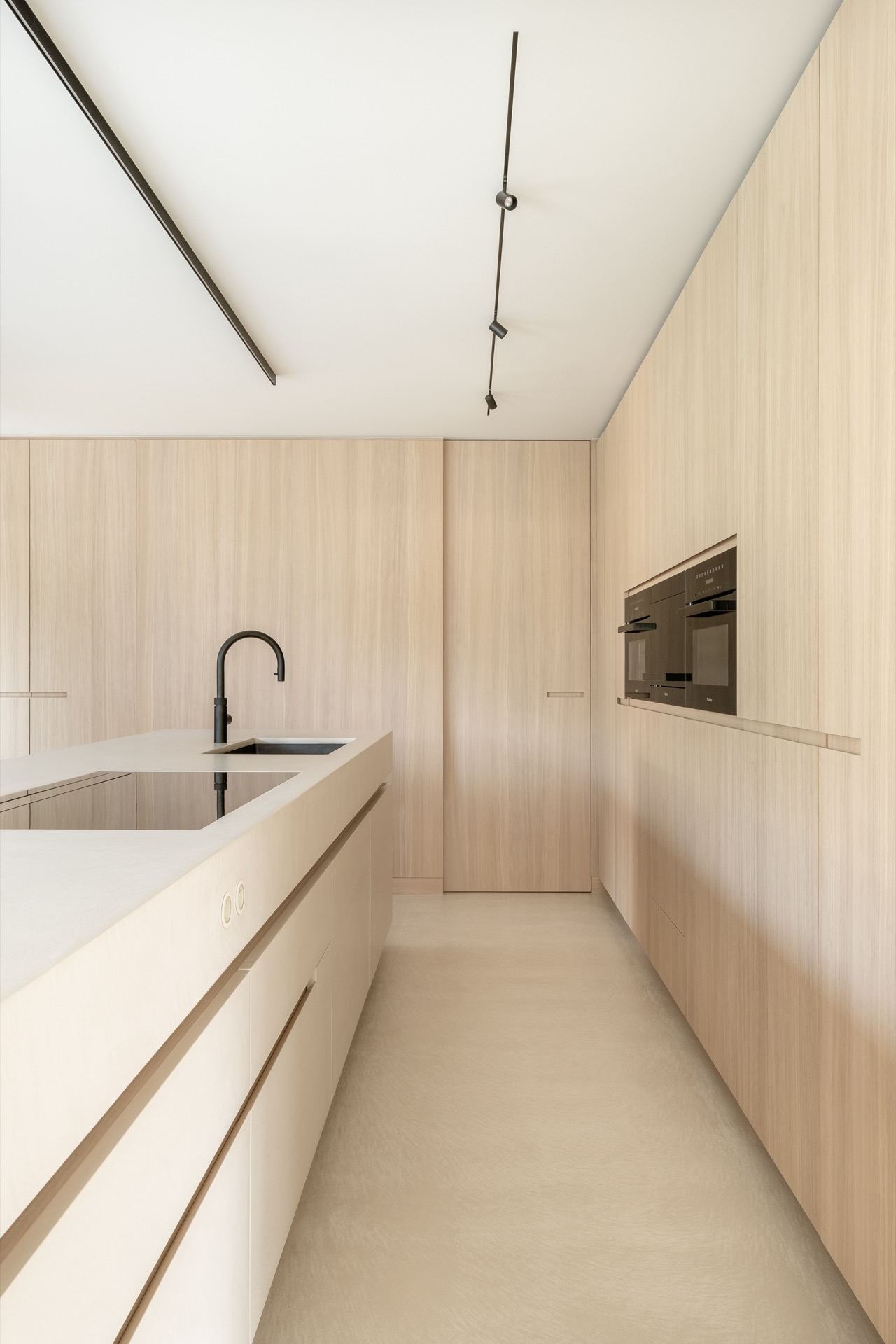
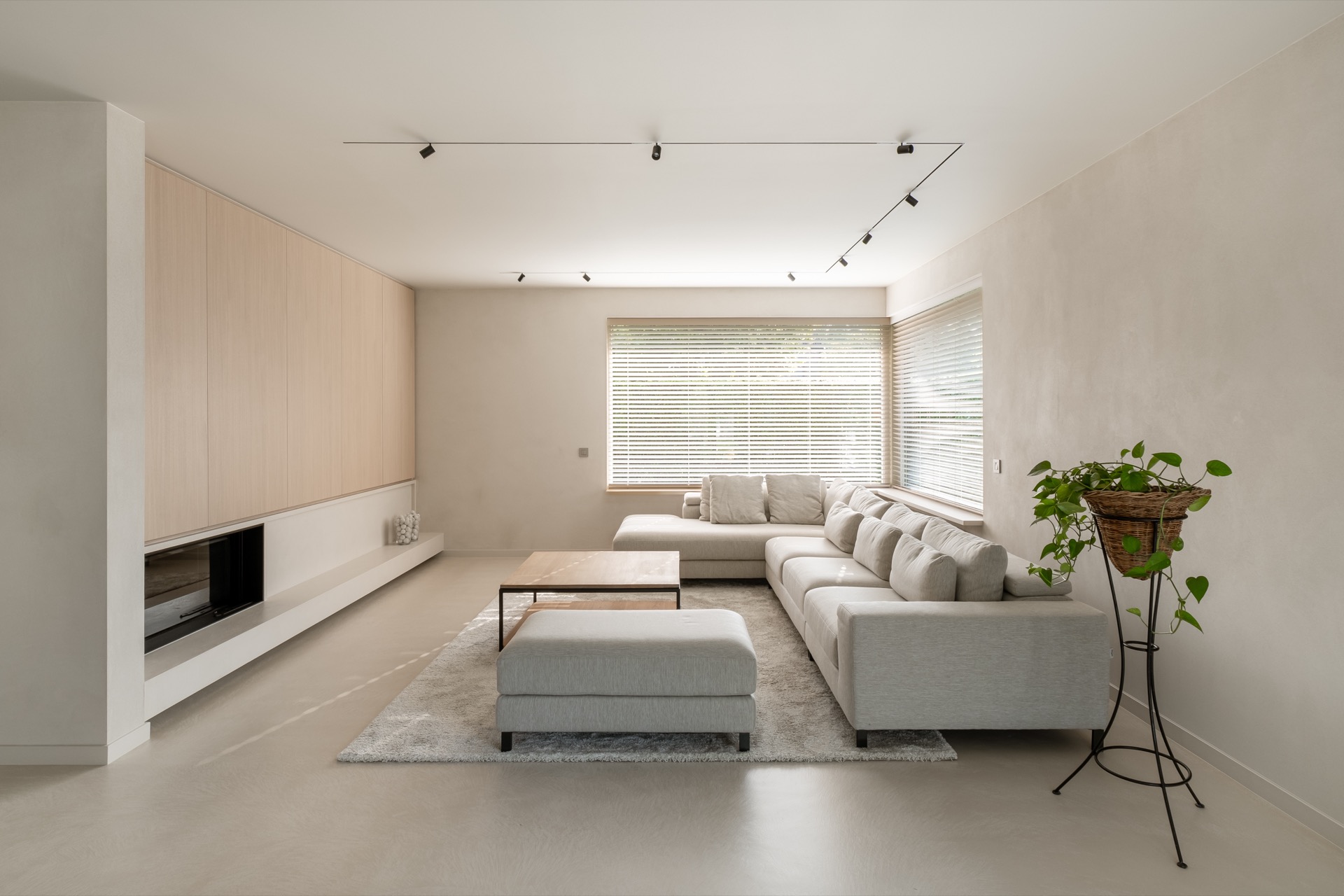
The ground floor reads as one continuous surface, with microtopping running across the floors and into the main living areas. That smooth shift between zones gives the room a calm base, but the material itself does the real work here: it keeps the eye moving without breaking the line from one side of the interior to the other. In this microtopping interior project, the floor finish becomes part of the architecture, not just the surface under it.
microtopping interior project as the architectural starting point
The floor finish is one of the first things you notice because it stretches so evenly across the lower level. There are no abrupt changes in tone or texture to interrupt the route through the space. That choice suits the rest of the interior, where flat fronts, pale walls, and restrained contrasts keep the focus on surfaces. The result is a room that feels drawn with long lines rather than packed with objects.
Light shifts quietly across the microtopping floor as it moves from the living area toward the kitchen. The surface reflects just enough to show its continuity, while still keeping a matte, grounded look. Around it, the furniture and fixed elements stay visually quiet. This lets the flooring hold the plan together without calling attention to itself every few steps.
The kitchen island as a worked surface
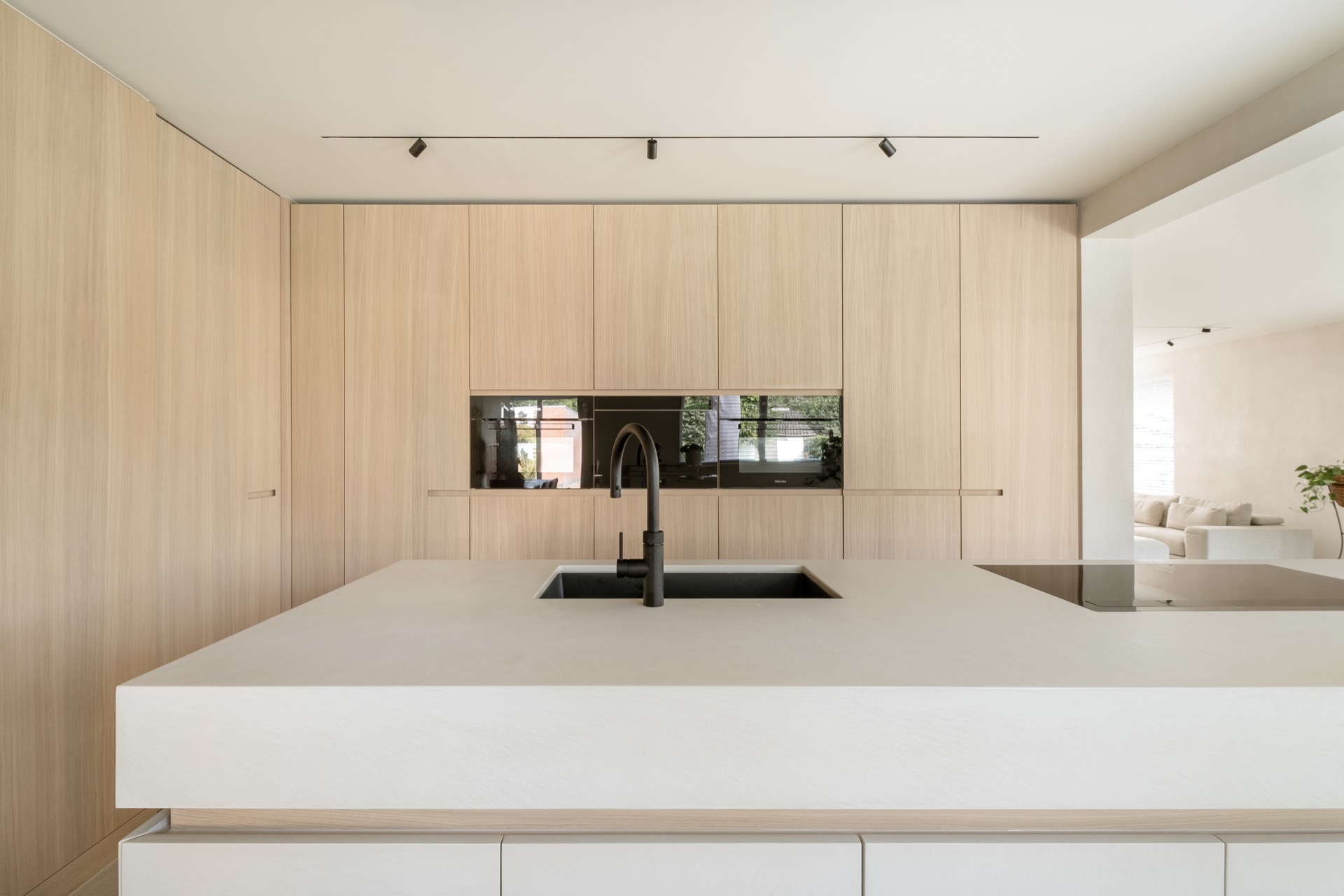
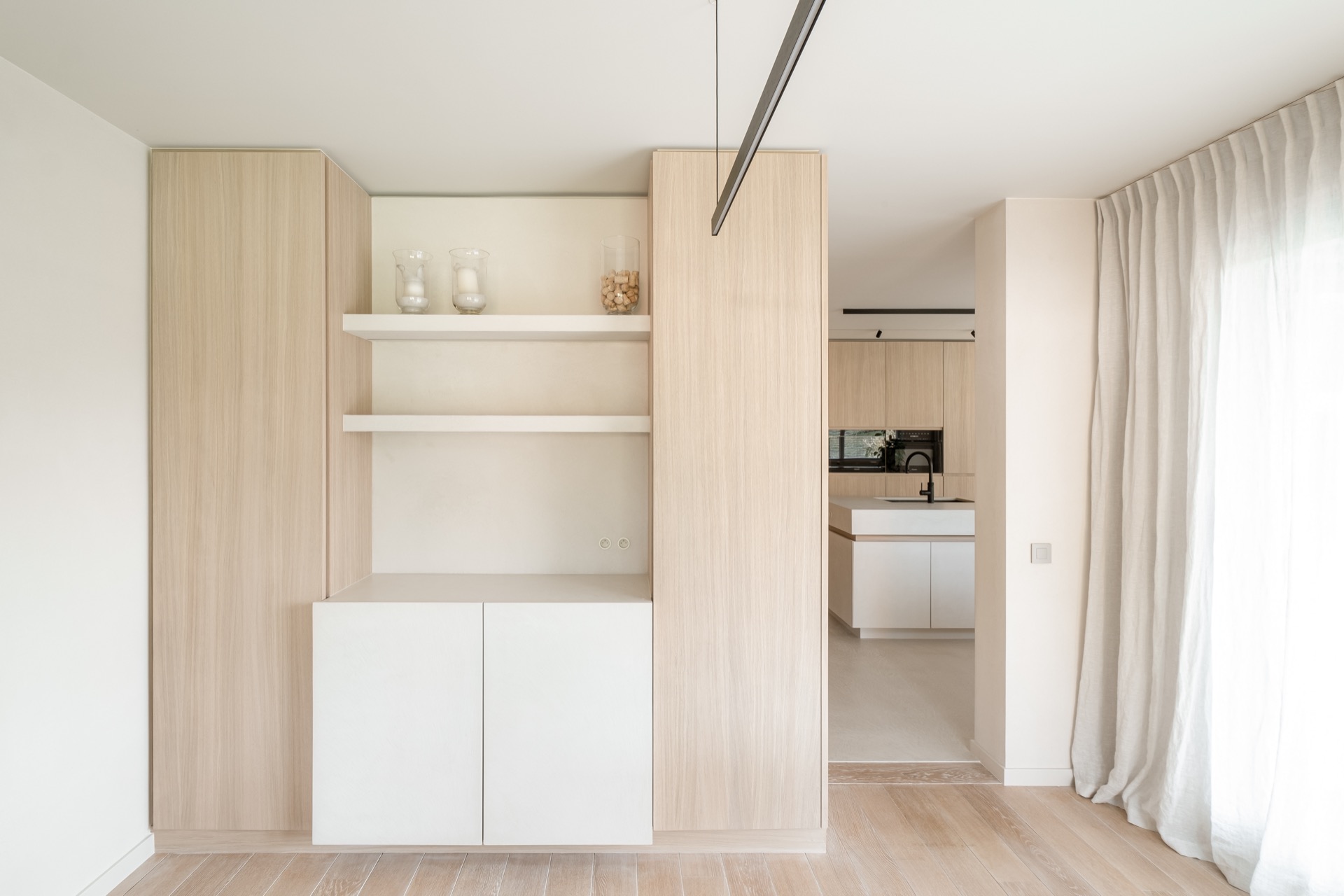
The microtopping kitchen island extends that same material language into the cooking area. It sits as a solid block in the room, with a clean top and an integrated sink set into the surface. The dark tap breaks the pale palette in one sharp line, and the island’s finish keeps the whole composition compact. The project text describes this element as maintenance-friendly, which fits the direct way it is used every day.
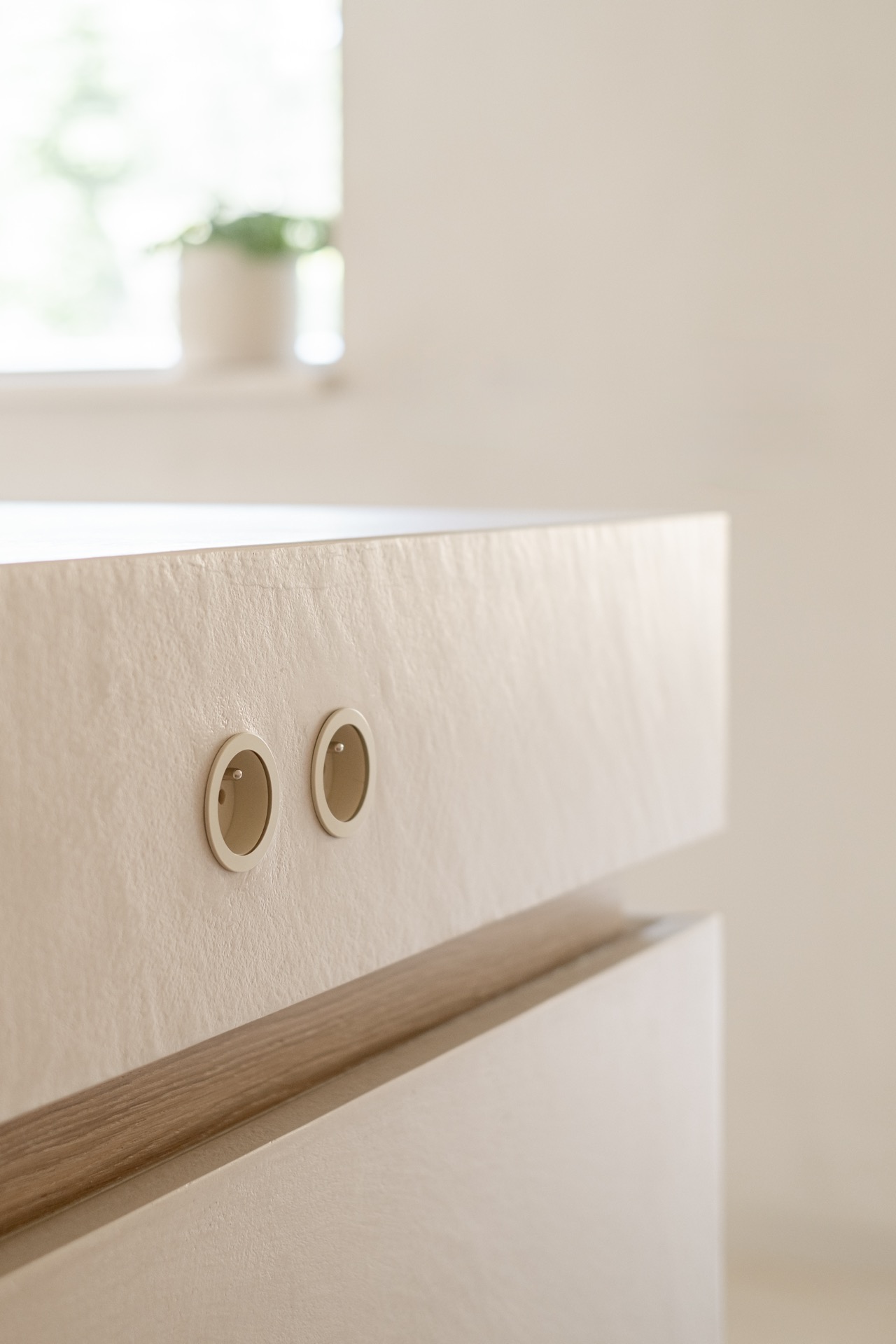
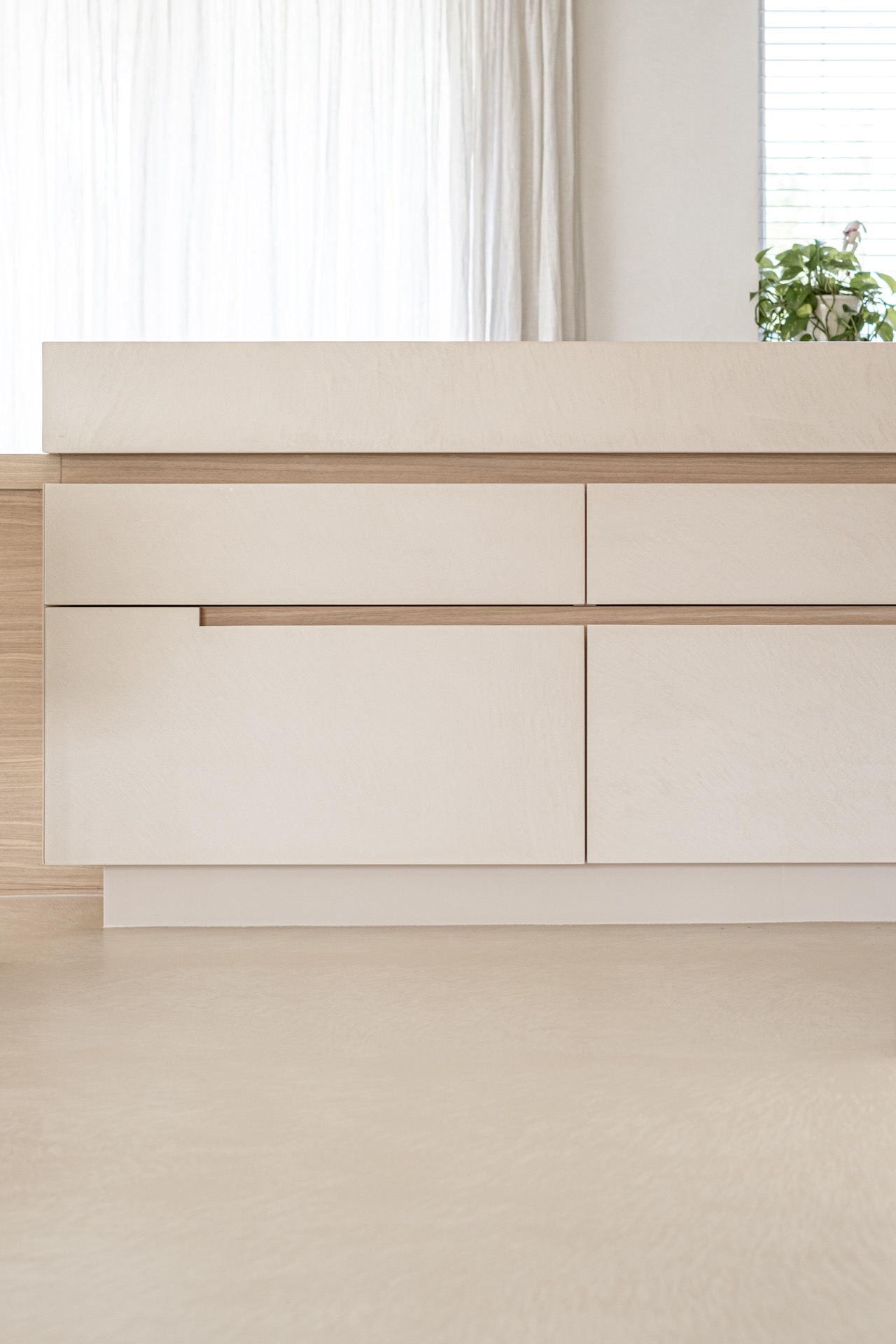
Seen from close range, the island reads less like a separate piece of furniture and more like a continuation of the room’s shell. Its edge lines stay straight, and its surface matches the floor in tone and restraint. That repetition matters. It ties the kitchen to the rest of the interior without introducing a second visual system, so the cooking zone remains open but clearly defined.
Light wood fronts and clear kitchen geometry
Nearby cabinetry in light wood keeps the kitchen from becoming too hard-edged. The flat panels, open niches, and low runs of storage provide a softer counterweight to the microtopping surfaces. In the image detail, the wood veneer shows a pale grain and a clean joinery rhythm, which helps the kitchen read as built-in rather than assembled. Rail spot lighting above it adds another layer of precision, tracing the working area without cluttering the ceiling.
The kitchen layout is legible at once because each finish has a specific role. Microtopping carries the island and floor, wood veneer organizes the storage, and the dark tap marks the sink zone. Nothing is overdesigned. Even the open shelving and niche details stay restrained, which lets the materials speak through their edges, seams, and surfaces rather than through ornament.
Lime plaster walls with a textured surface
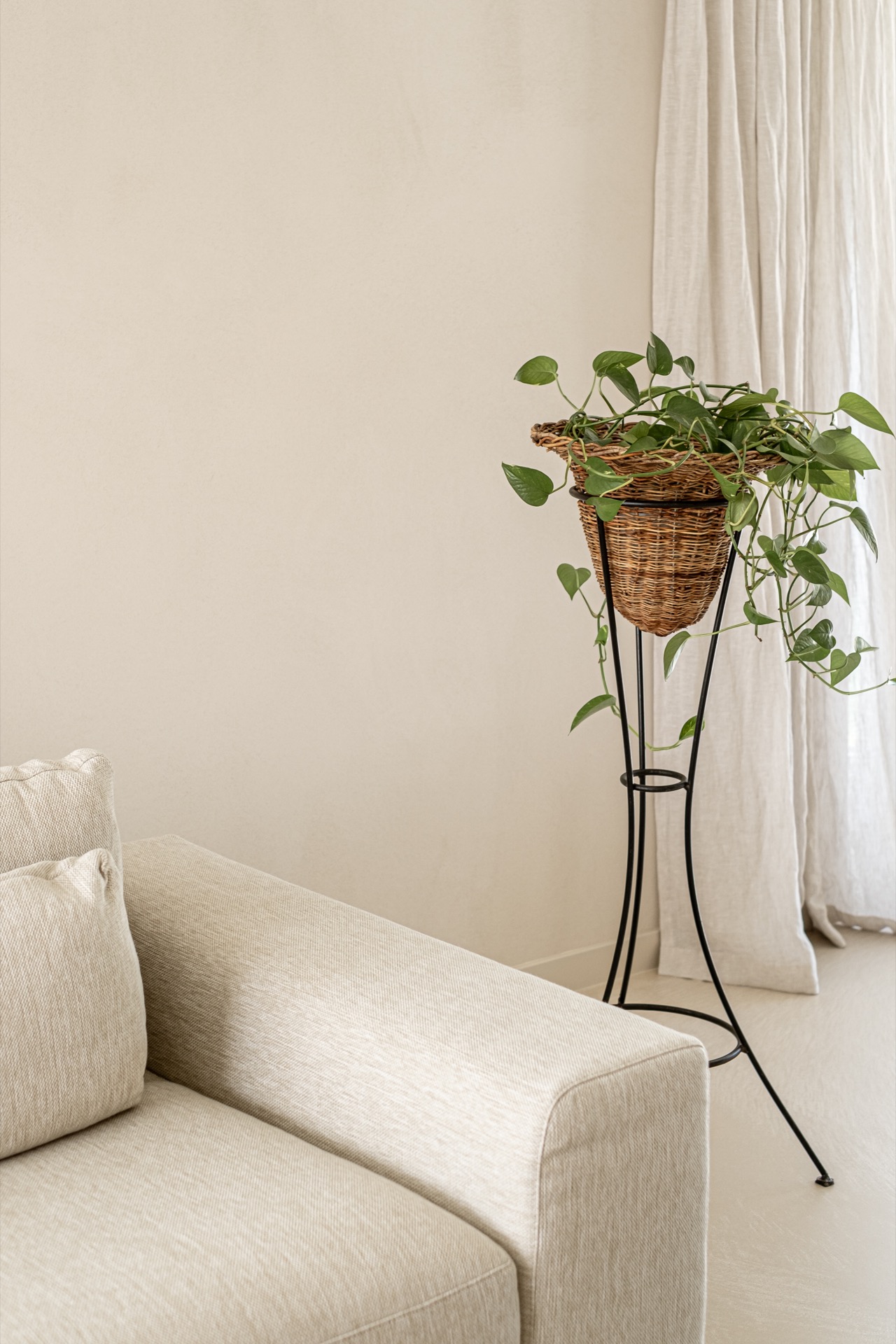
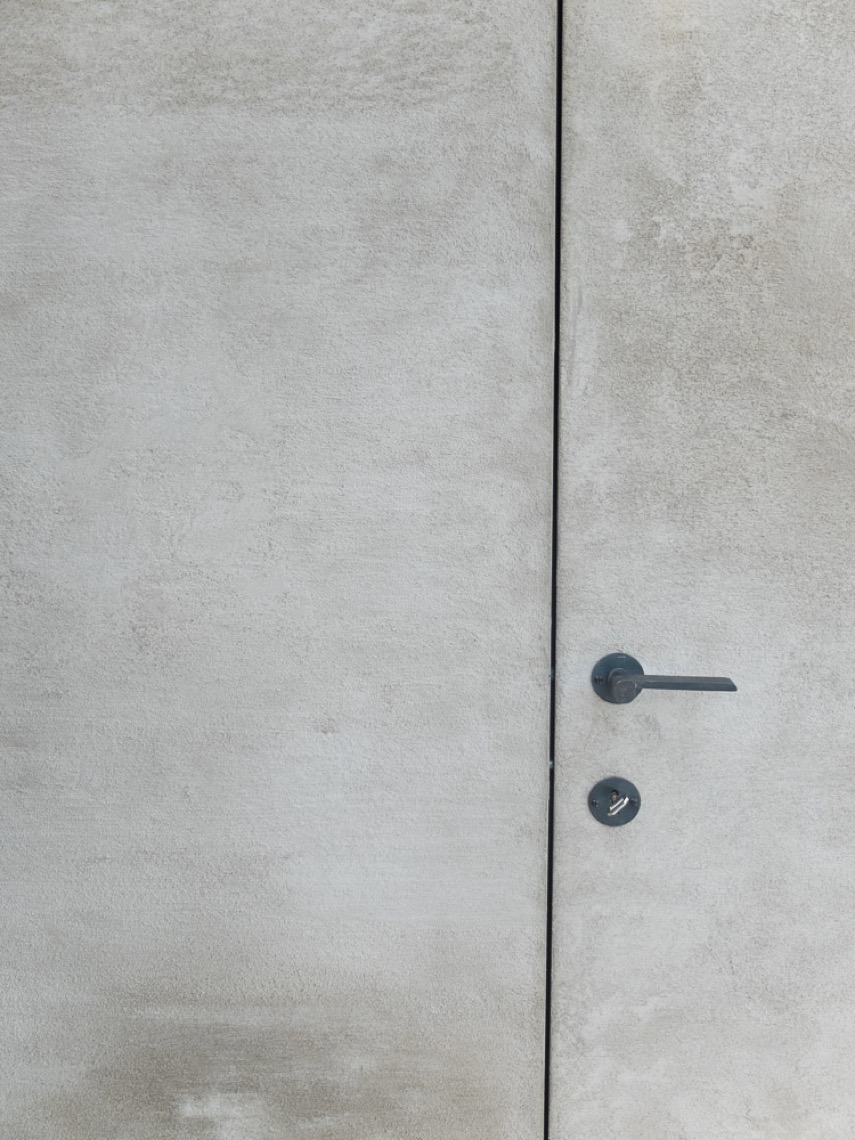
On the walls, the chosen Beirut technique brings a finer, more tactile layer into the interior. It is described as a decorative lime plaster, and that is exactly how it reads in the room: even, textured, and slightly softened by light. The wall finish does not compete with the microtopping or the wood fronts. Instead, it adds a grain that becomes visible when daylight moves across it. That makes the microtopping interior project part of the architectural character rather than a loose finish.
Because the walls carry texture while the ceilings stay calmer, the room gains depth without losing its plain geometry. The lime plaster walls also make the white and cream palette feel less flat. In close-up, the surface shows a subtle variation that sits well beside the smoother microtopping finish. That contrast is quiet, but it is enough to keep the interior from becoming monotonous.
Ceilings painted to keep the volume light
The ceilings are finished with natural paint, which keeps the upper plane visually soft and even. That choice matters in a room with many other defined surfaces. It lets the light travel across the top of the space without interruption, especially where the rail lighting is set against the white field above. Instead of drawing attention upward, the ceiling acts as a steady backdrop for the wall texture and the cabinetry below.
Seen together, the walls and ceiling create a controlled transition: textured lime plaster below, quieter painted surface above. The room does not depend on strong contrasts to feel complete. It relies on small shifts in finish, from the pale ceiling to the more worked wall surface and down to the microtopping floor, to make the interior read as one composed sequence.
A built-in fireplace wall niche and entry storage in one language
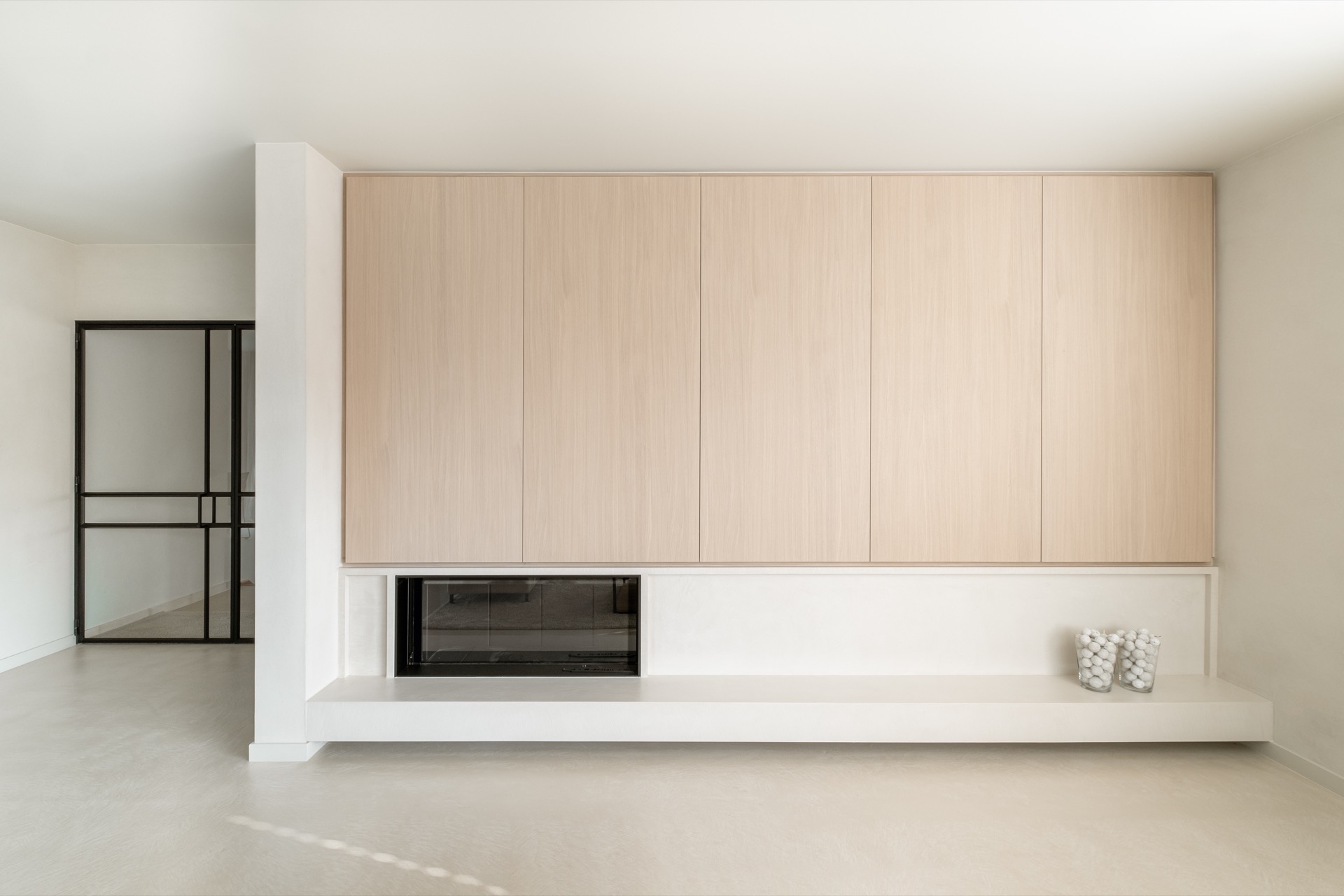
At the edge of the living space, the built-in fireplace wall niche continues the same approach to finishing. It is wrapped in microtopping, so the fireplace opening sits inside a larger surface that feels shaped rather than added on. The image shows a broad recess with a clean outline and light wood panels nearby, which gives the wall a measured presence without turning it into a focal display.
The entry wardrobe is finished in the same material, bringing the same surface treatment to the arrival zone. That repetition is useful because it links the entrance to the main living area through finish rather than decoration. The wardrobe fronts and the fireplace niche both stay close to the room’s restrained palette, so the first and last view of the interior are tied together by material rather than by form alone.
What holds the whole scheme together is the consistency of the surfaces. Microtopping appears on the ground floor, on the kitchen island, and on the built-in fireplace and wardrobe details. Lime plaster walls add texture where the room needs it. Natural paint keeps the ceiling light. Together, those layers give the microtopping interior project its clear rhythm: plain lines, tactile walls, and built-in elements that sit firmly in the architecture.
Details that keep the interior legible
The strongest moments are often the smallest ones: the dark tap centered over the sink, the open niche in the kitchen furniture, the straight joint at the wall base, the rail spots set in a plain ceiling. Each detail supports the larger plan without adding noise. Even the wall outlets sit neatly in the white surface, which shows how carefully the finish was carried through the room.
Seen as a whole, the interior is built from layers that remain easy to read. The floor moves continuously, the island repeats the same finish in a different scale, the walls bring in a finer plaster texture, and the ceiling stays visually light. That measured sequence is what makes this microtopping interior project memorable: not a single statement piece, but a set of surfaces that speak to each other clearly.
Want to see more of Texture Painting? View the page of Texture Painting for even more great projects and company information.

.png)