




Modern new-build home with a sleek dark-blue kitchen and calm interior finish
White render and black window frames set the tone before you even step inside. The house reads as a modern new-build home interior from the street and keeps that direct, pared-back look through the rooms. Inside, the palette stays quiet: soft colours, smooth surfaces and clean lines let the kitchen and the larger glazed openings take over visually. The result is not loud, but it is exact, with every room connected to the next through light and proportion.
Modern new-build home interior as a spatial starting point
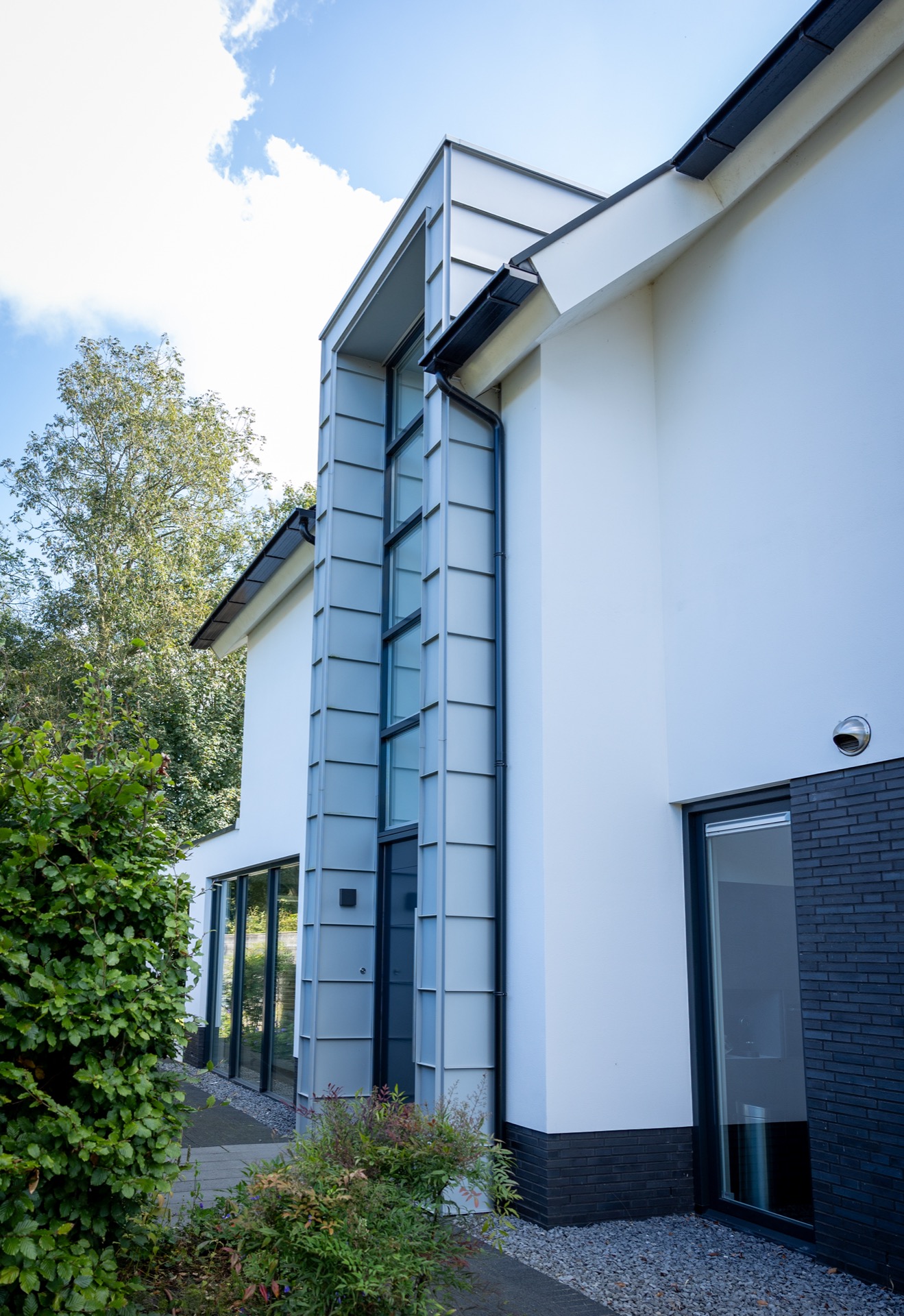
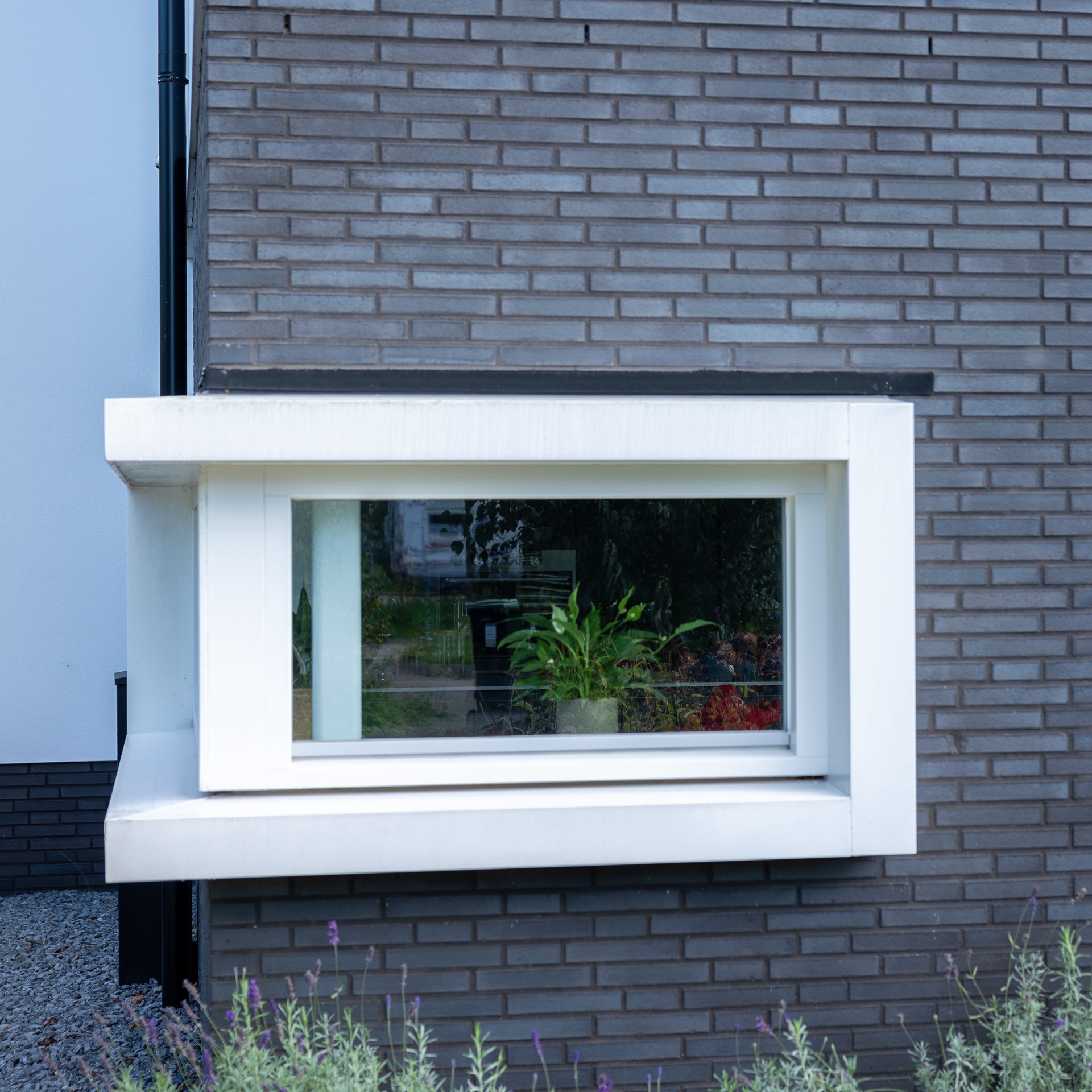
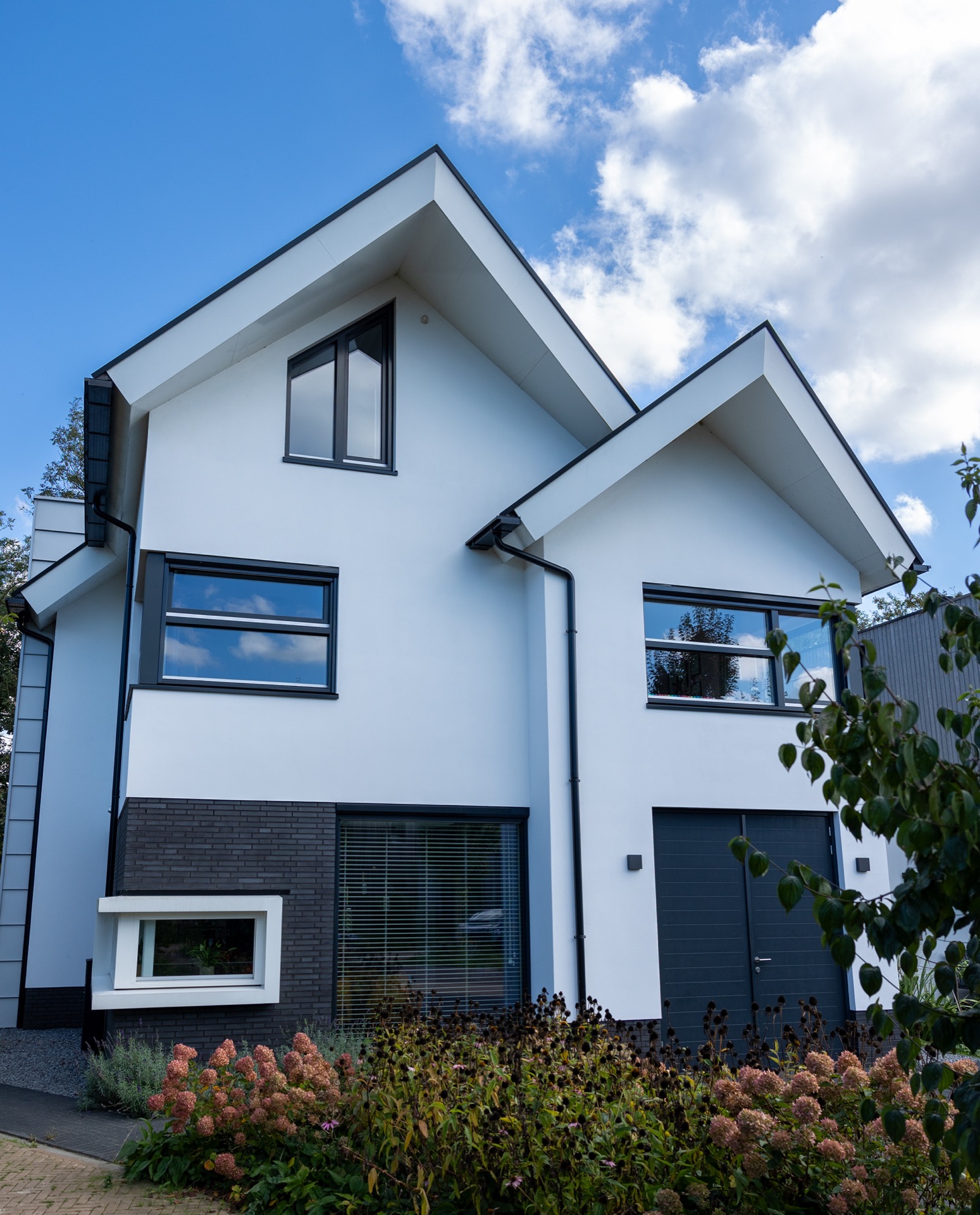
The exterior is sharp in outline and calm in colour. White wall surfaces sit against dark frames, while masonry accents break up the planes at window level and along the lower edge of the building. That mix of render and brick gives the volume more depth without adding decoration. Large windows pull the openings wide, and the black joinery keeps the edges crisp. In photographs, the house looks compact in its detailing and confident in its geometry.
Roof overhangs add another layer to the composition. They project slightly and cast narrow shadows along the upper line of the building, which makes the elevations read in bands rather than as flat walls. The vertical rhythm on one side of the house adds movement to the otherwise restrained shell. Seen together, the masonry and render facade details keep the architecture clear and legible, with each surface doing a specific job in the composition.
The kitchen as the centre of the house
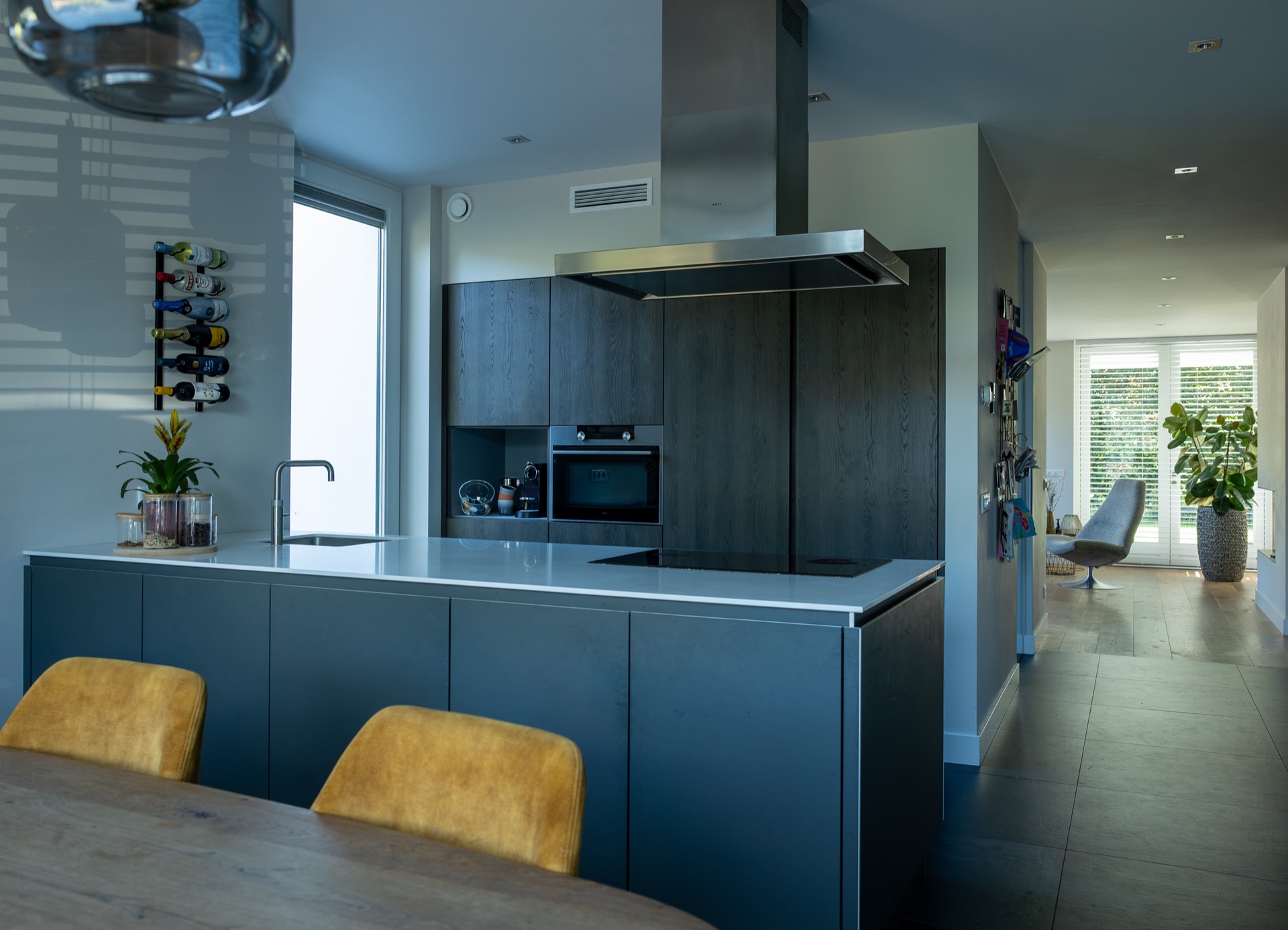
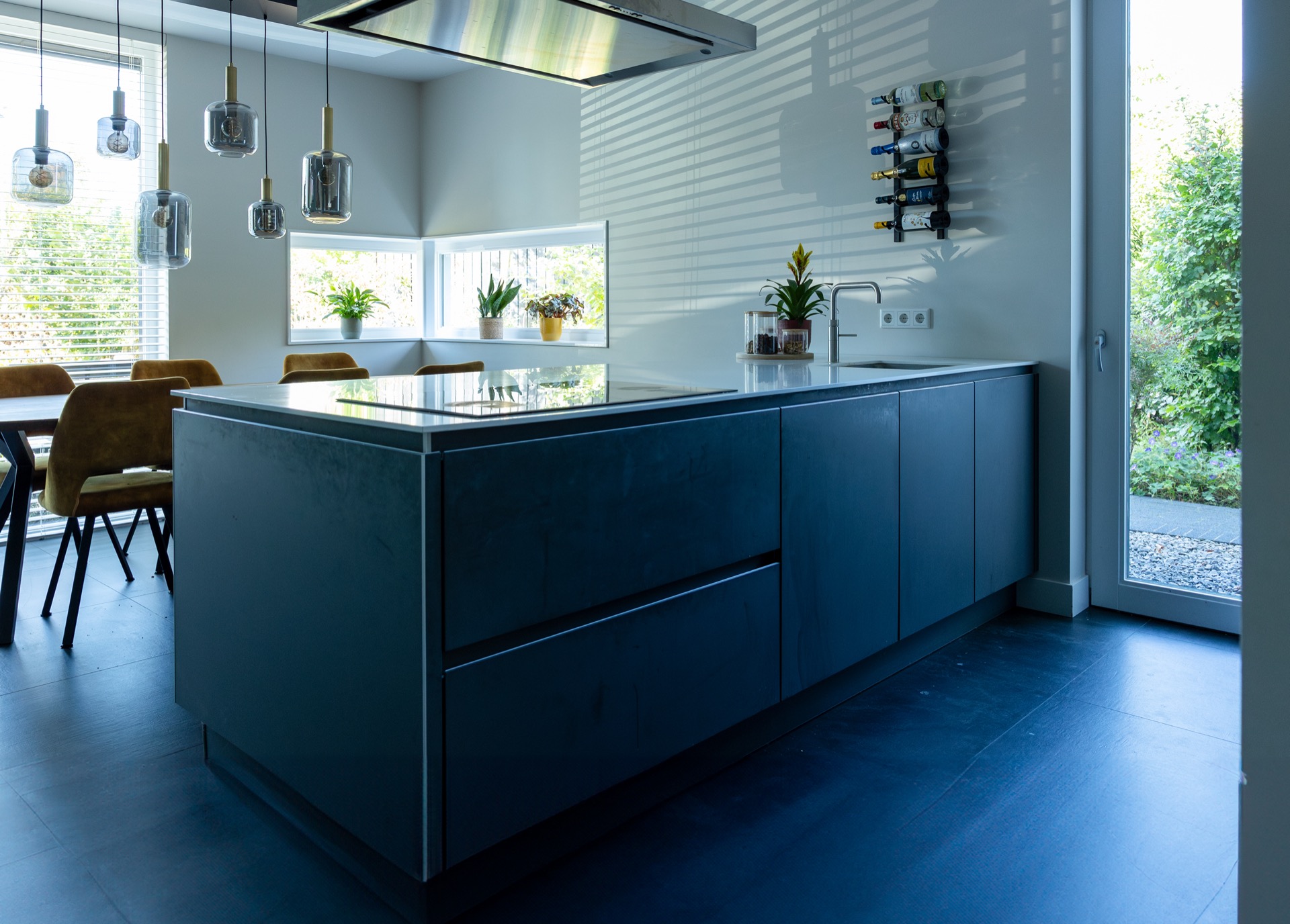
Dark blue kitchen fronts bring weight to the interior. They sit below a long worktop and give the room a grounded centre, especially where the cooking zone and extractor hood sit in the middle of the view. The setup is compact and direct: no ornamental layering, just a clean run of cabinets, a clear extraction point, and enough visual pause around it for the materials to read properly. This is where the modern new-build home interior becomes most tangible.
Wood fronts appear next to the darker cabinetry, softening the contrast without changing the calm mood of the room. The mix of finishes keeps the kitchen from feeling monotone. Overhead spots and linear lighting add a regular pattern to the ceiling, while the worktop runs in one continuous line and strengthens the horizontal emphasis. In this setting, modern kitchen finishing is less about polish than about restraint: surfaces are kept clear so the room can breathe around its core elements.
Dark fronts, clear lines, and a visible cooking zone
The extractor hood is not hidden away; it is part of the composition. Placed above the cooking area, it marks the centre of the kitchen and gives the room a practical focal point without breaking the clean layout. The dark blue fronts, the long counter and the visible cooking zone work together as one measured block. Because the tones stay subdued, the eye moves between texture, edge and shadow instead of being pulled by strong colour changes. Modern new-build home interior remains connected to the layout, materials and daily use of the home.
That same calm continues into the rest of the interior. Walls and floors stay neutral, which lets the kitchen stand out by shape rather than by colour alone. The surfaces are smooth, but not glossy enough to dominate the space. This creates a room that feels composed through detail: the join lines, cabinet edges and the relation between the kitchen volume and the surrounding living area. For a modern new-build home interior, that kind of precision carries more weight than decoration.
Light, glass and the threshold to outside
Large glazing opens the house toward the terrace and pulls daylight deep into the rooms. From inside, the view shifts quickly from the dark kitchen fronts to the bright outdoor edges, and that contrast sharpens the sense of space. The glass does more than connect the rooms to the garden zone; it frames the terrace as part of the daily route through the house. Outdoor terrace glazing views are visible from several angles, and they make the transition between inside and outside feel measured and clear.
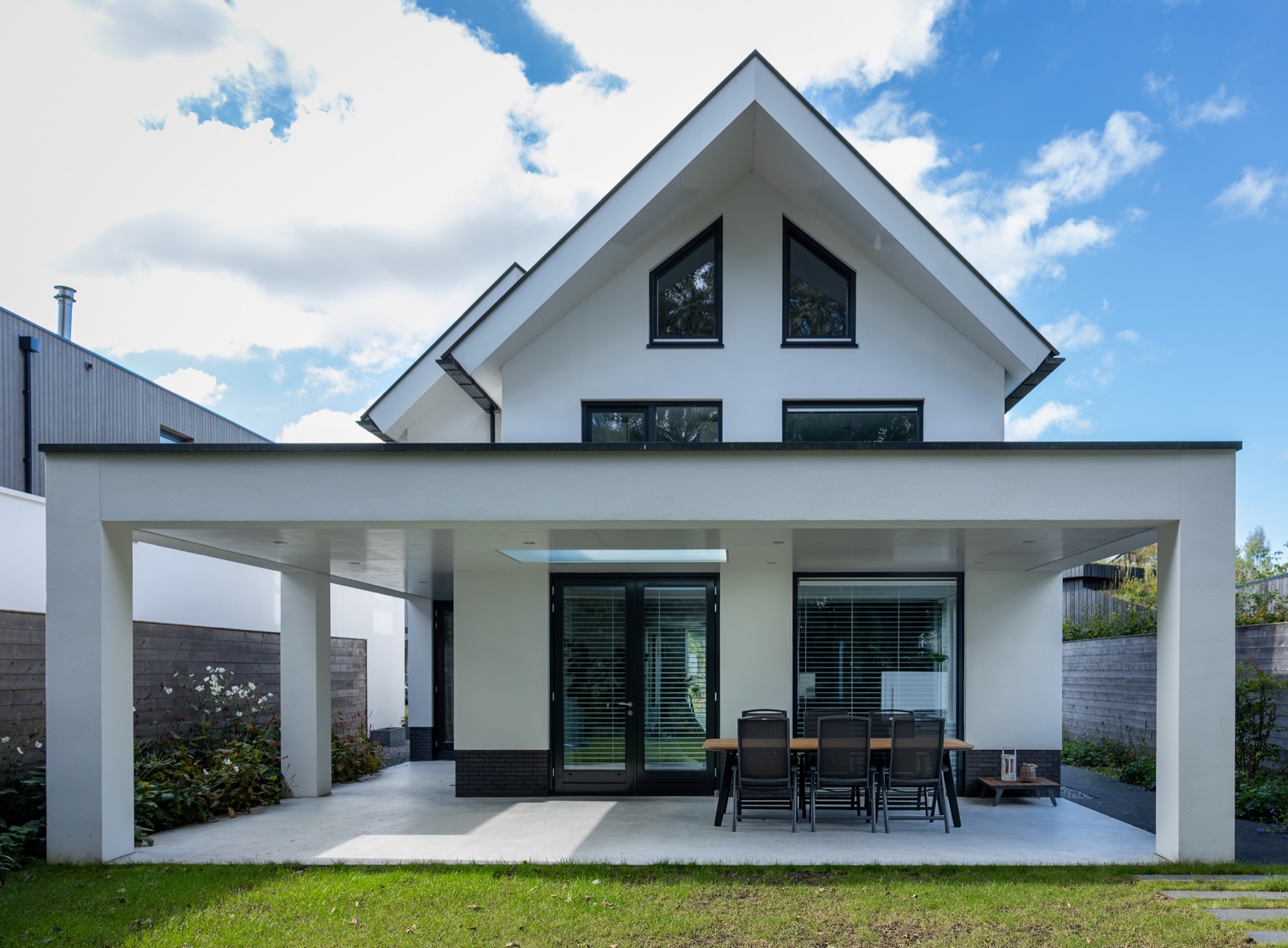
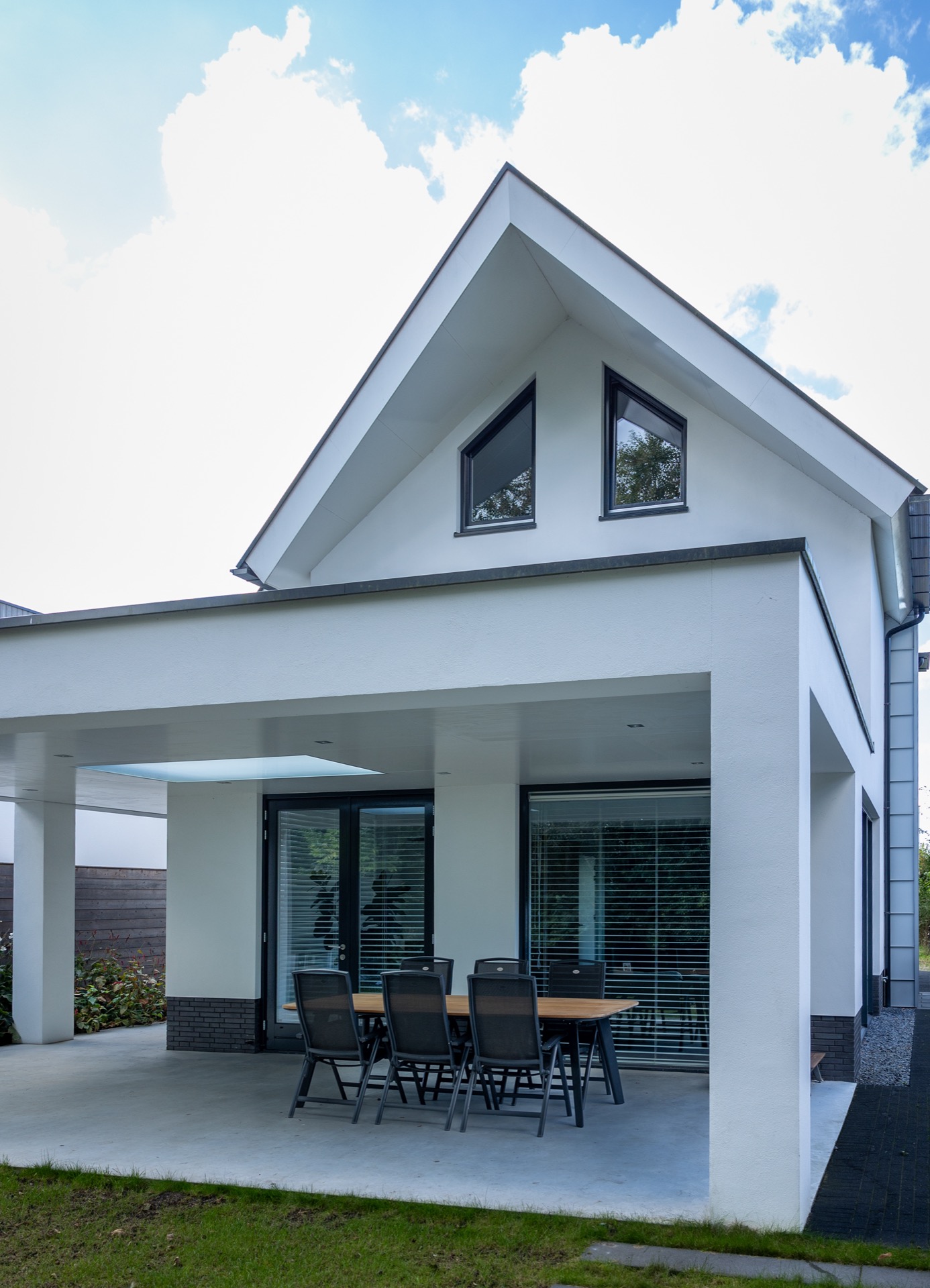
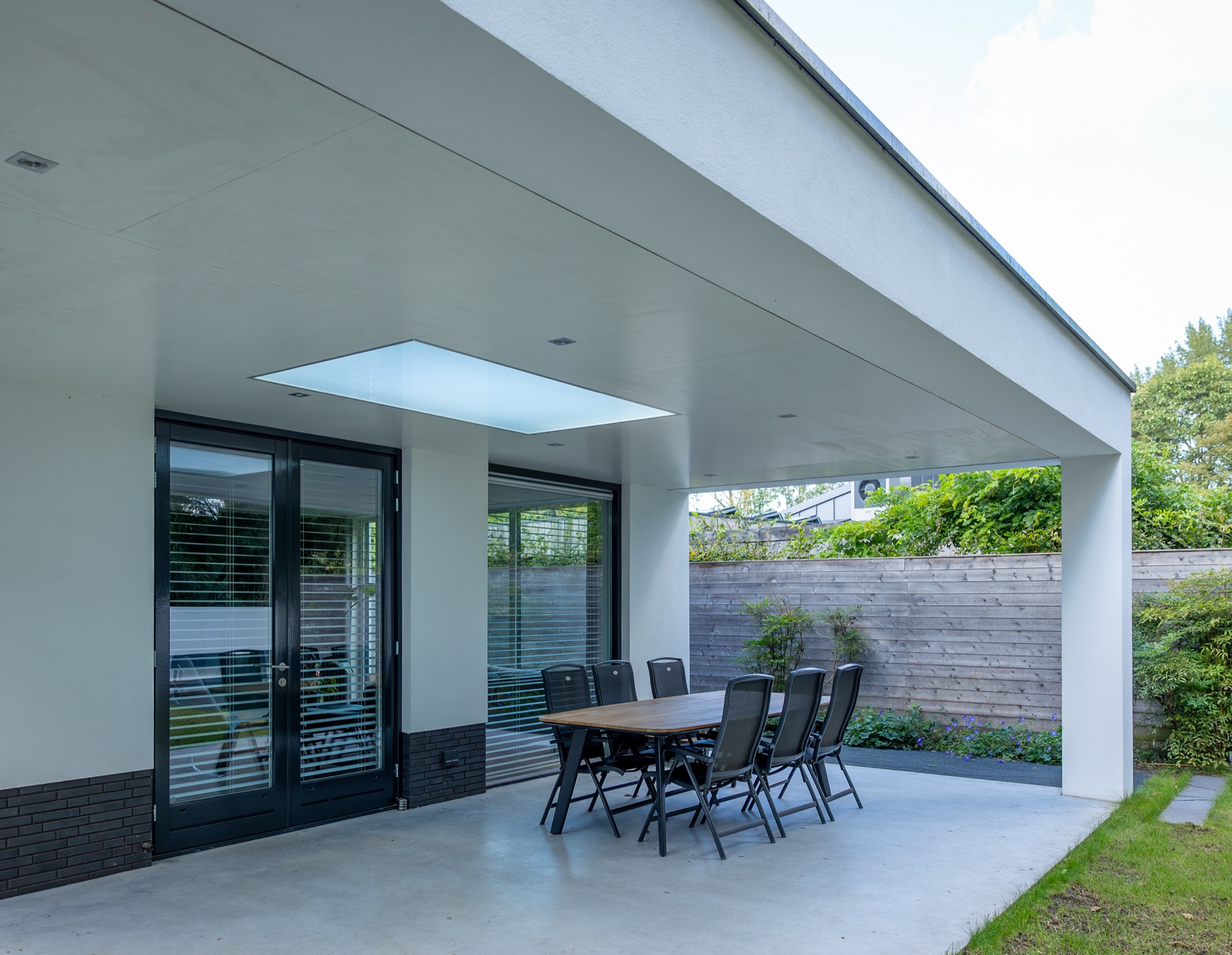
The covered terrace sits directly against the house, supported by white columns and a flat ceiling plane. Its geometry is strict, with straight edges and open bays that leave the framing visible rather than concealed. Along the base, brickwork introduces a rougher note against the smooth terrace surfaces. This is where the modern villa white and black facade language continues outdoors: the same contrasts are repeated, but in a more open setting where shadow, column and opening define the space.
A covered terrace that extends the living space
Under the canopy, the structure becomes easy to read. The ceiling plane is clean and shallow, and the openings between the columns keep the view wide toward the glass doors. The terrace does not try to disguise its construction; instead, the linear structure is left visible, which suits the rest of the house. It creates a sheltered edge for sitting outside while keeping the connection to the interior strong. The large glazing behind it keeps the rooms visually close, even when the doors are closed.
Seen as a whole, the project is shaped by a small set of clear moves: a white and black shell, a quiet interior palette, a kitchen with dark blue fronts, and a terrace that sits under a direct, open canopy. None of those elements shouts for attention, but each one has a clear role in the composition. That is what gives the home its character: the surfaces stay restrained, the details stay visible, and the rooms are tied together through light, line and material rather than excess.
New-build projects | Interior finishing projects | Kitchen realisations | Facade/exterior finishing projects Modern new-build home interior remains connected to the layout, materials and daily use of the home.
Want to see more of Van Boven Aannemers? View the page of Van Boven Aannemers for even more great projects and company information.


.png)