





Curved quarter-turn staircase with rubberwood and wrought iron
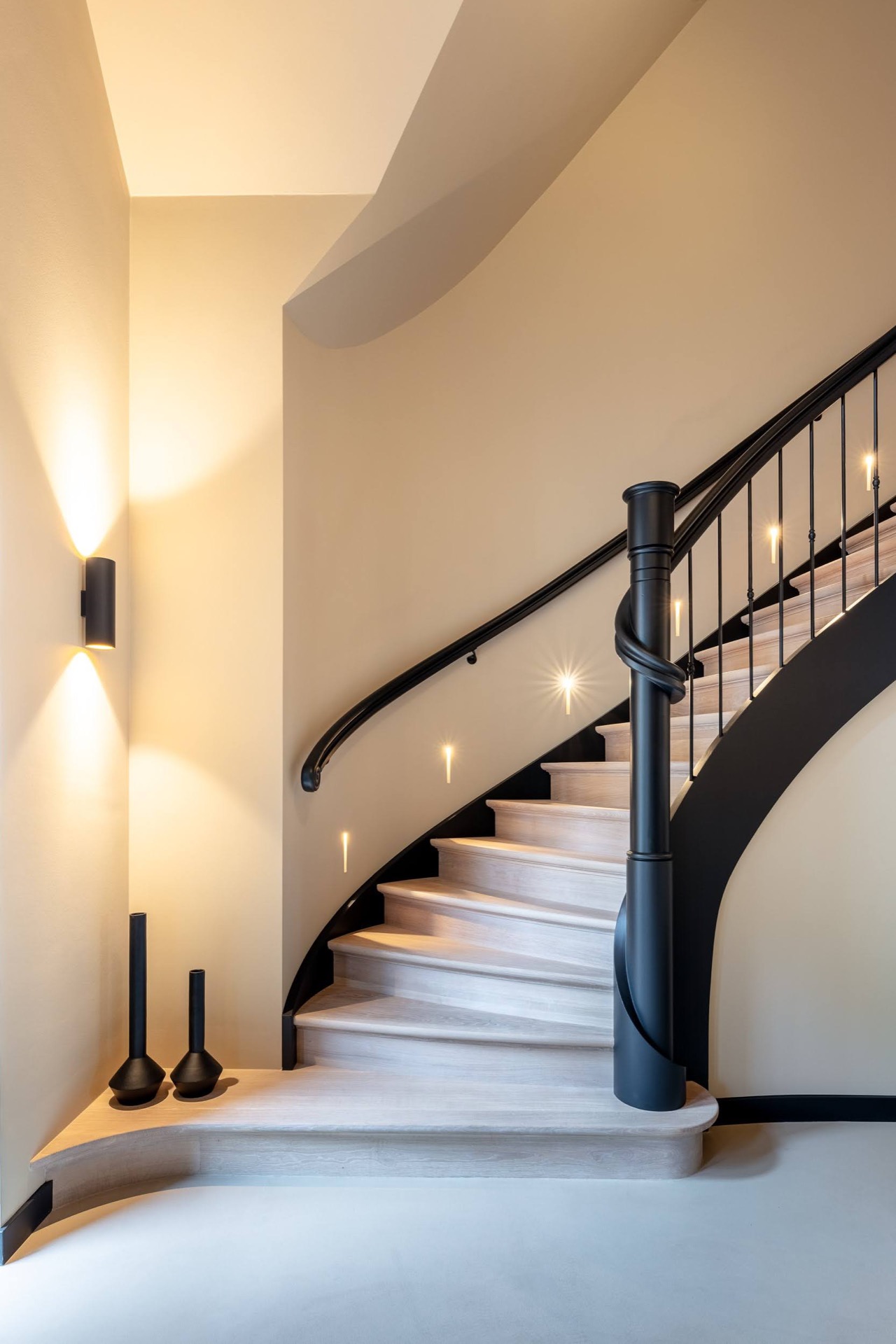
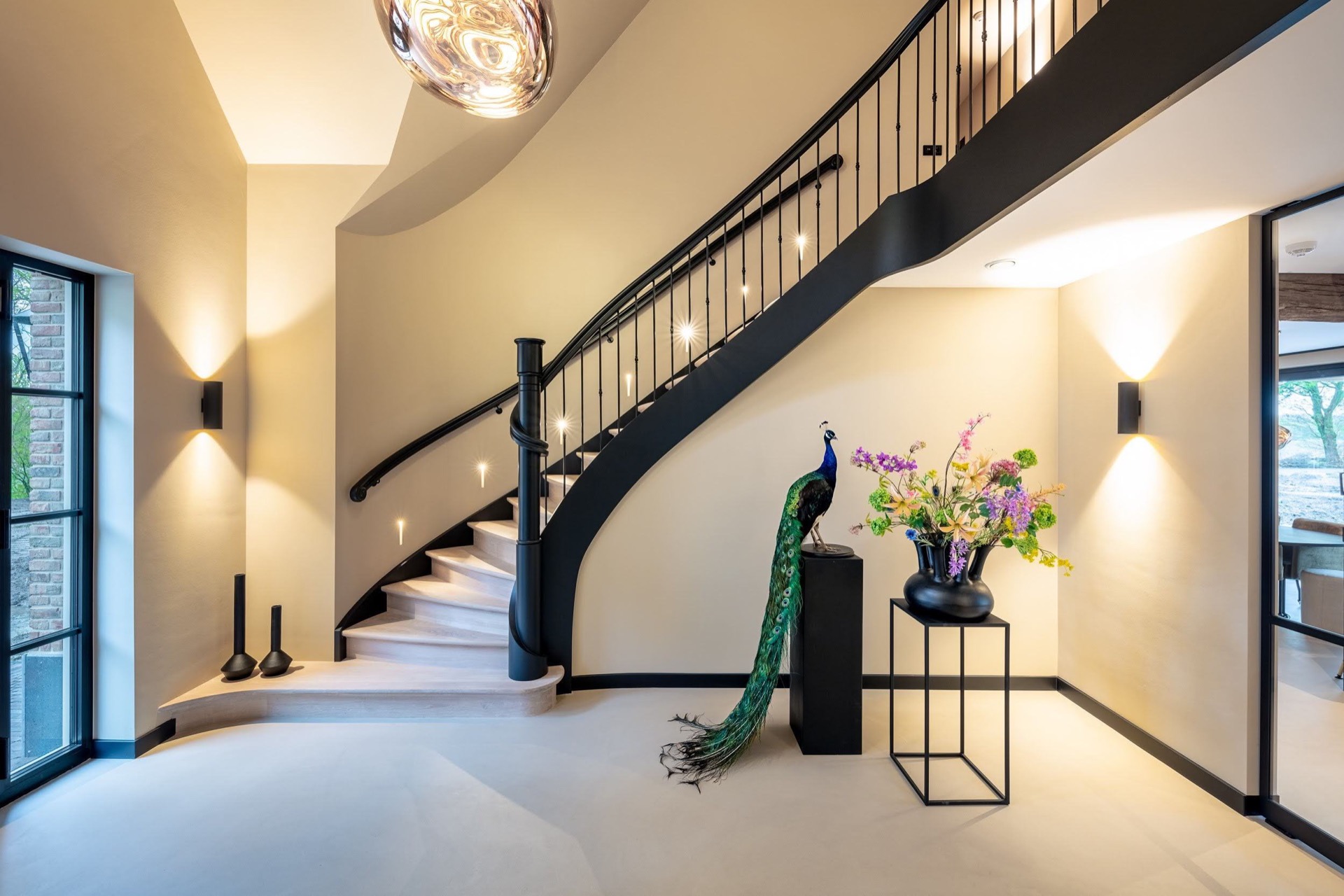
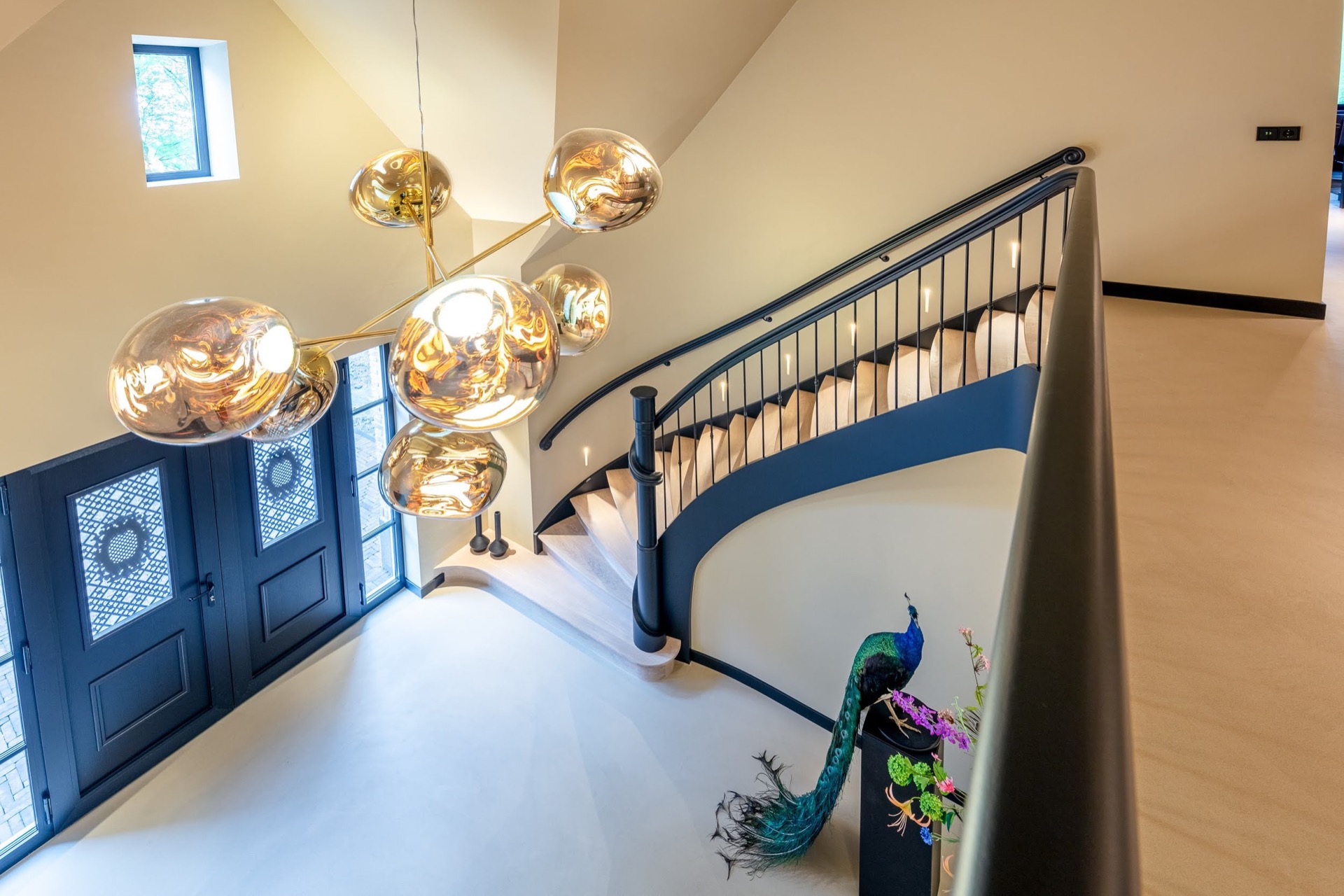
The first thing you notice is the turn: a curved quarter-turn staircase rising through a dark enclosure, with light wooden steps pulling the eye upward. The stair follows an under-quarter turn, so the line does not break sharply at the bend. Instead, the curved stair stringer and the railing carry the movement through the hall, while the whitewashed oak treads keep the composition bright against the darker side wall.
curved quarter-turn staircase as the architectural starting point
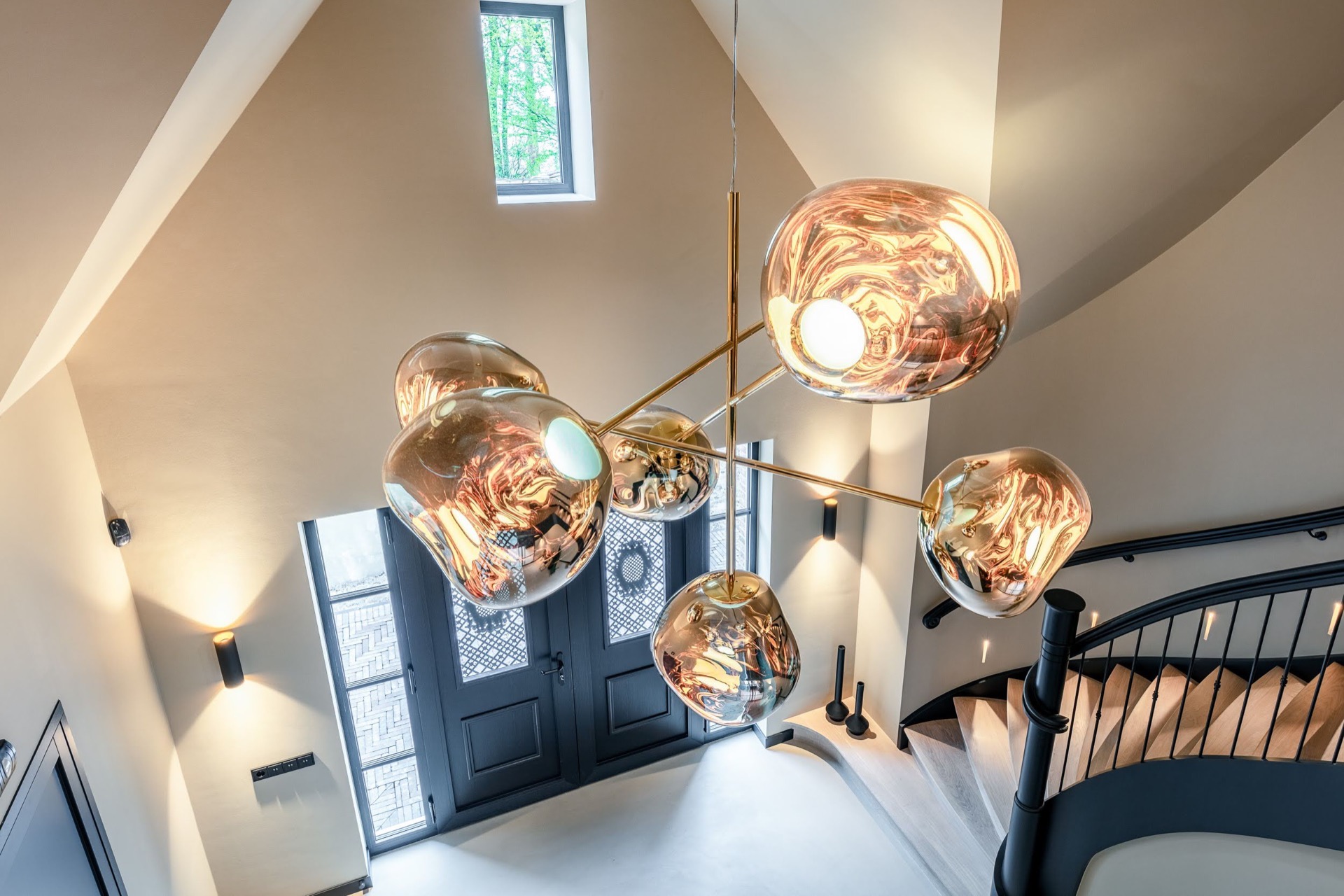
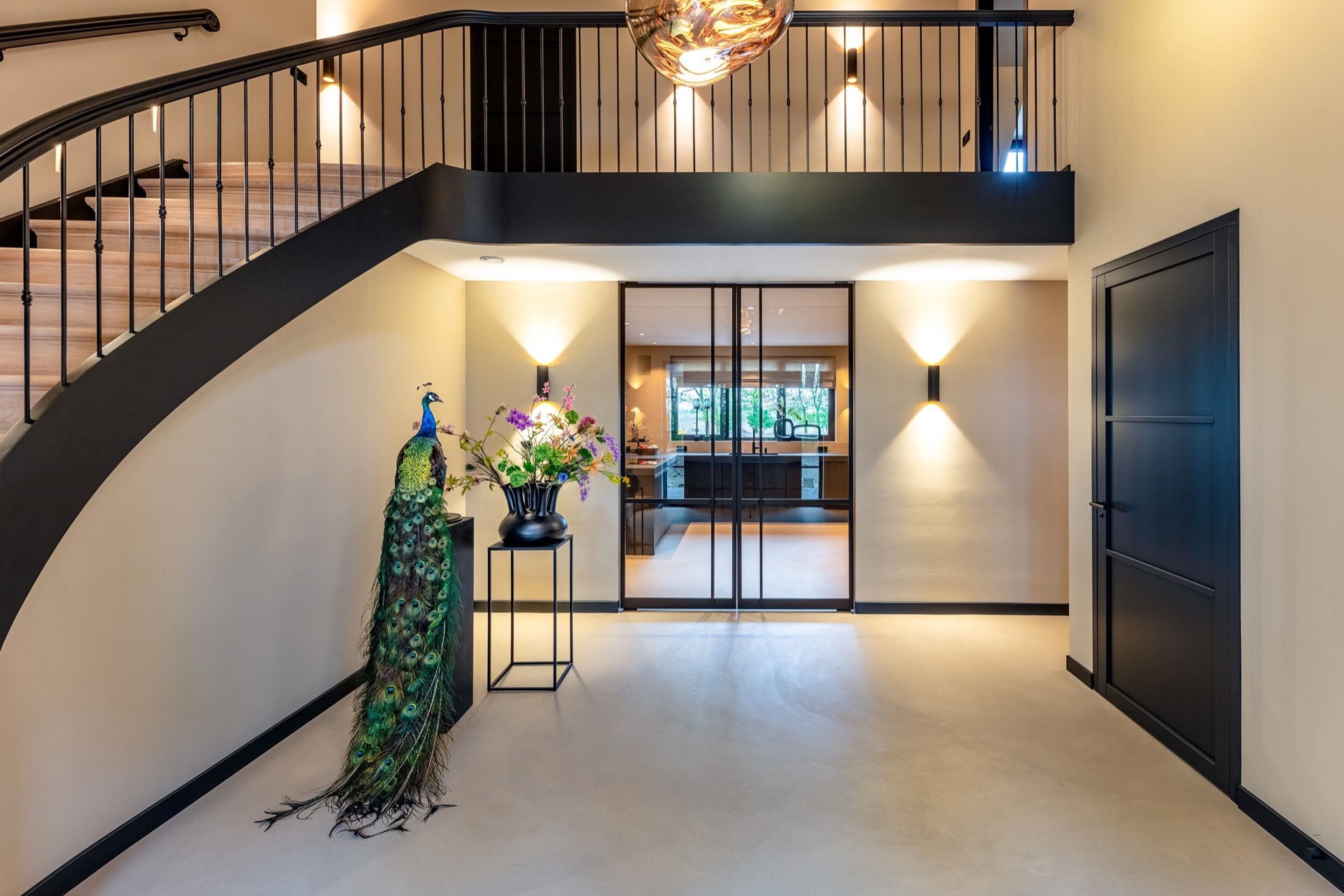
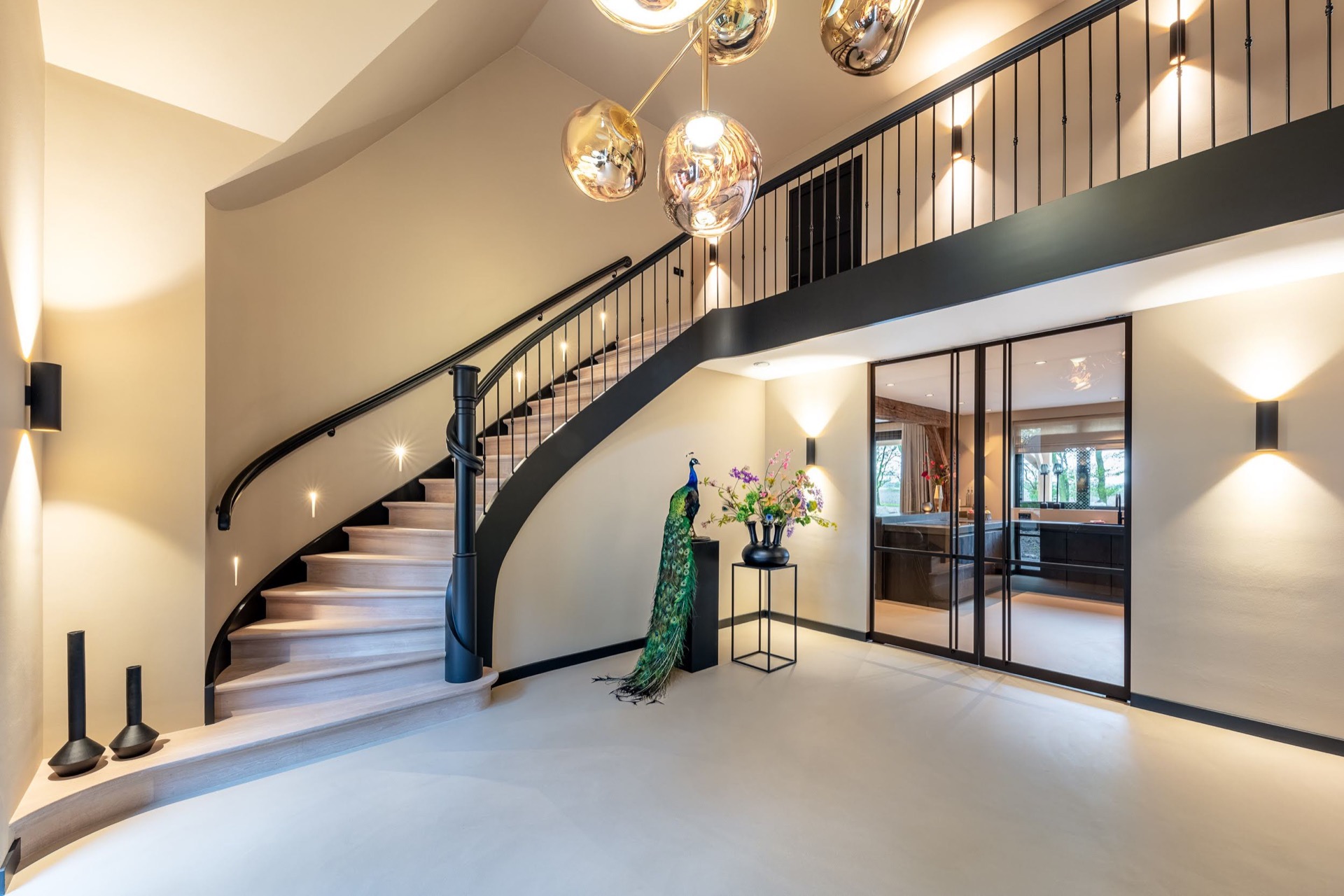
Seen from below, the staircase dark enclosure and light wooden steps create a clear contrast. The curve is not only in the run of the steps but also in the way the handrail wraps around the spindle area before continuing into the upper balustrade. That gesture gives the stair a steady rhythm as it climbs. It is a route made visible, not hidden, and the bend becomes the part you remember first.
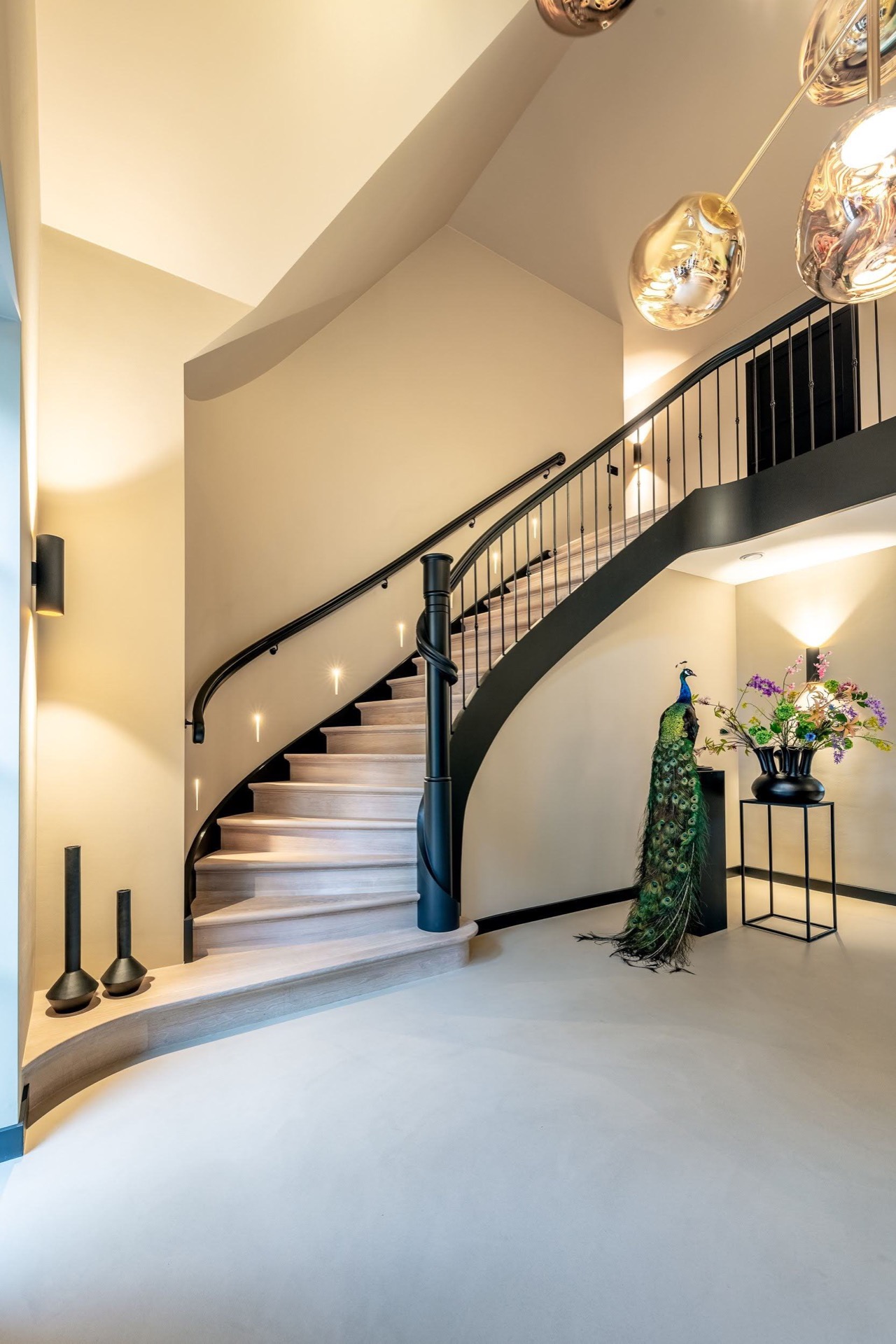
The under-quarter turn also changes how the hall reads. Instead of a straight flight cut into the space, the stair opens the corner and lets the balustrade sweep along the wall. A curved stair railing is doing more than supporting the ascent here; it draws the movement of the whole composition. The vertical wrought iron balusters sharpen that line and set the curved wood against a dark background.
Curved wood at the rail and the stringer
The flowing form depends on several bent wooden parts working together. The curved stair stringer forms the side profile that frames the treads, while the curved rail repeats the same motion at hand height. At the bend, the rail curls subtly around the spindle and then continues into the upper guard rail. That transition is where the stair feels most controlled, because the bend is handled in one continuous line rather than as a visible joint.
Those transitions are also where the kuip and wrong pieces come into view. The kuip piece is the curved section of the stair structure that encloses the steps and guides them upward. The wrong piece bridges the turns in the handrail. In this staircase, both are made in curved wood, so the move from one angle to the next stays visually quiet. The result is a stair that reads as a single gesture from floor level to the landing.
How the curve holds the details together
Close up, the curve is what gives the stair its character. The railing does not stop at the bend or change pace abruptly. It follows the line of the stair and returns to the upper level with the same measured sweep. That is where the curved stair railing and the curved stair stringer work as a pair. One shapes the edge of the stair; the other shapes the hand level. Together they keep the staircase legible even as the view shifts along the hall.
The dark enclosure helps that reading. Against the shadowed side, the lighter wood stands out in thin bands at each tread and riser. The eye moves from the bright step noses to the black metal balusters, then back to the handrail. It is a simple palette, but the contrast is doing the heavy lifting. Without it, the bend would flatten out. With it, the turn remains easy to follow. That makes the curved quarter-turn staircase part of the architectural character rather than a loose finish.
Whitewashed oak and rubberwood in the stair build
The material split is clear and practical. The treads and risers are made of oak and finished with a whitewash wood oil, which gives the steps a pale tone instead of a heavy one. The stair parts in rubberwood provide a steady base for the curved structure. That choice matters in a stair with this kind of bend, because the curved elements need a material that can carry the form without drawing attention away from the surface of the steps.
Rubberwood stair parts are visible in the way the stair reads as a built object rather than a decorative shell. They support the bend, the rail, and the return at the landing without interrupting the view of the treads. The oak remains the most visible surface underfoot, and the whitewashed finish keeps the grain present without making the steps look busy. It is a restrained surface, which suits the strong line of the railing above it.
Wrought iron balusters against the wood grain
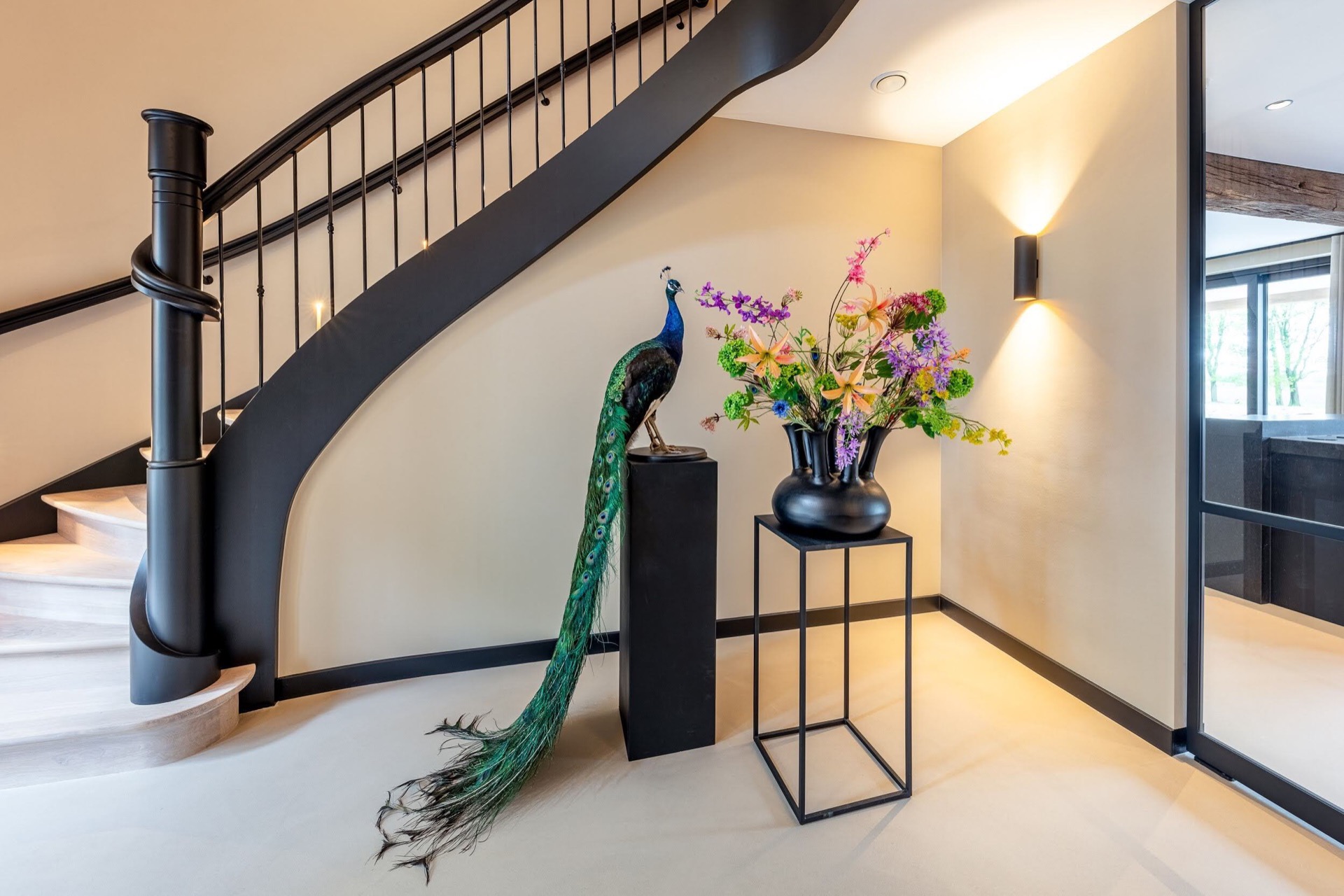
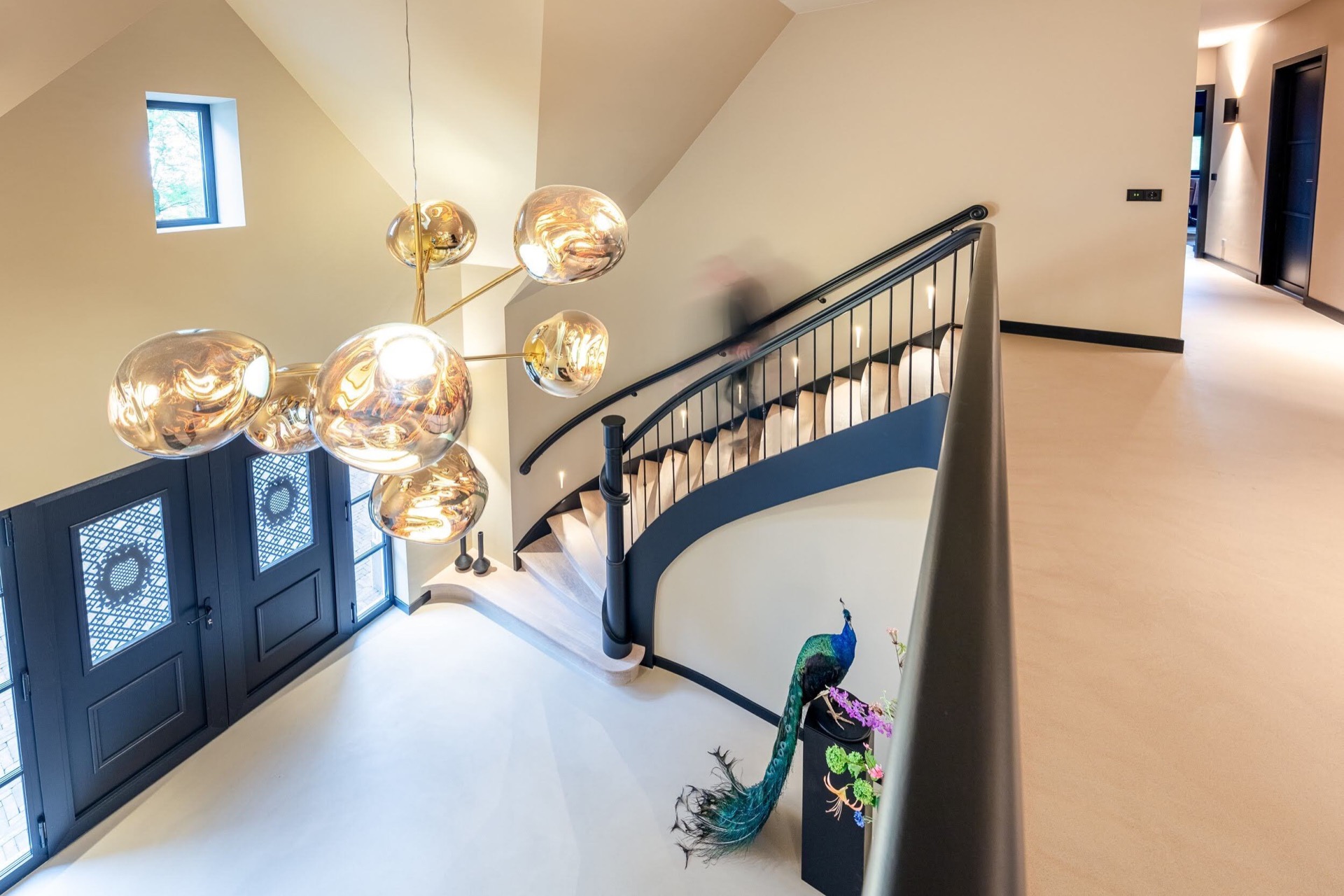
The vertical wrought iron balusters bring a different pace to the stair. Their thin, upright rhythm cuts across the soft curve of the handrail and the broader shape of the wooden stringer. In the images, they read almost like a drawn line, especially where the stair turns and the darker background makes each bar more distinct. That contrast is important. It lets the railing stay light in appearance even though the material itself is visually firm.
The wrought iron stair railing also links the stair to the rest of the hall without adding extra decoration. The black metal has enough presence to define the edge of the stair, but it stays secondary to the curve and the wood. From one angle, the bars line up tightly with the bend. From another, they open toward the landing and reveal how the handrail continues across the upper level. The structure remains clear at every step.
Light, shadow, and the hallway around the stair
The surrounding hall is part of the composition. Warm wall lighting traces the stair zone and picks out the curve where the dark enclosure meets the lighter steps. In the wider views, round glass pendants hang nearby, adding another circle to a space already shaped by arcs and turns. Glass doors and openings appear to one side, so the stair does not sit in isolation. It anchors the movement between adjacent rooms while keeping its own strong profile.
That mix of light and shadow is what gives the staircase its presence in the room. The curved quarter-turn staircase holds its own against the dark wall, yet it never feels heavy because the oak stays bright and the balusters keep the rail open. Seen from above or below, the stair keeps the same logic: curved wood, vertical iron, pale steps, dark support. Every part has a visible role, and the bend is the point where they meet.
Photography – Sterker in Beeld That makes the curved quarter-turn staircase part of the architectural character rather than a loose finish.
Want to see more of Veijer Trappen BV? View the page of Veijer Trappen BV for even more great projects and company information.


.png)