








Home gym with sauna: split-level wellness layout
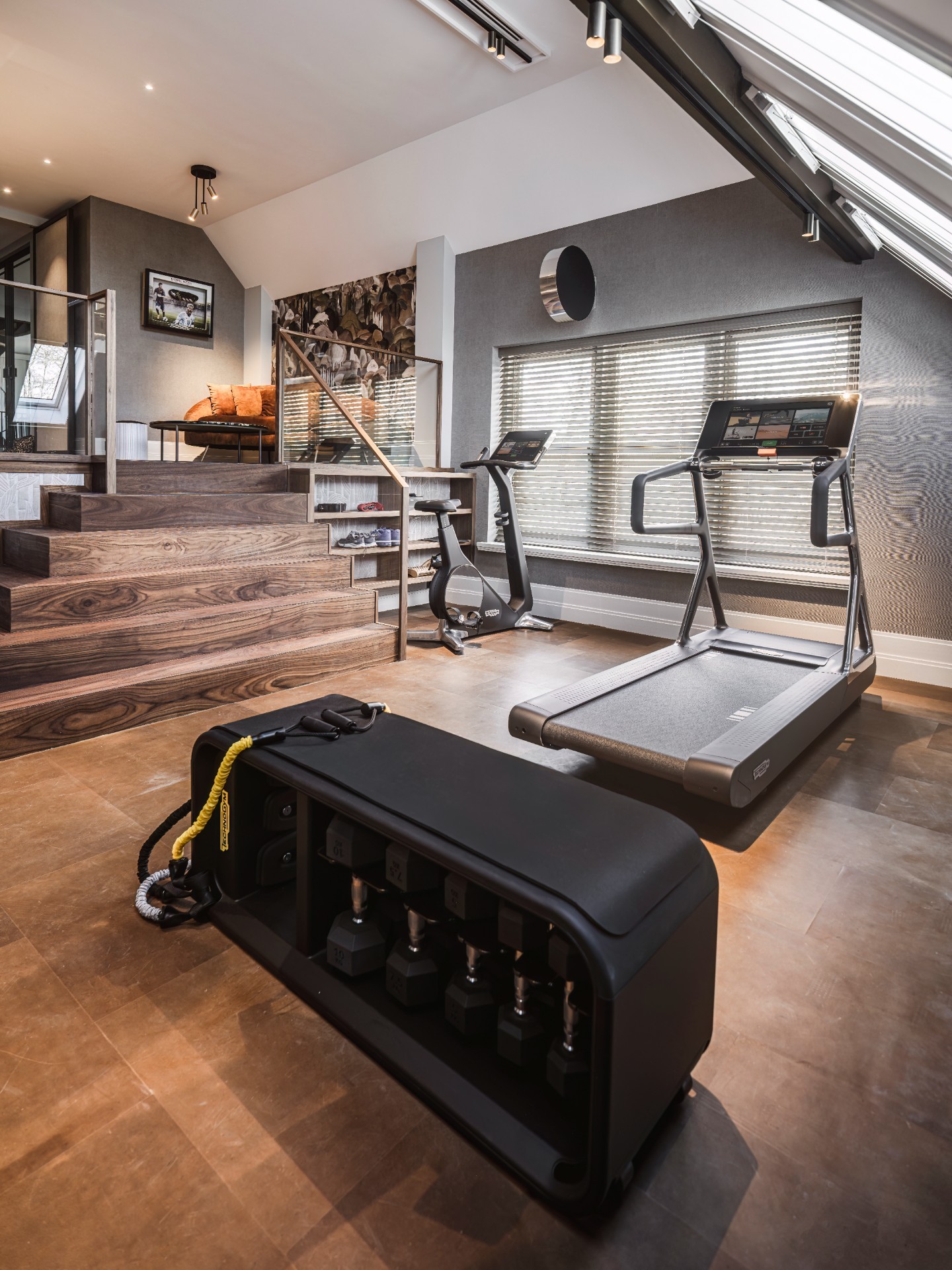
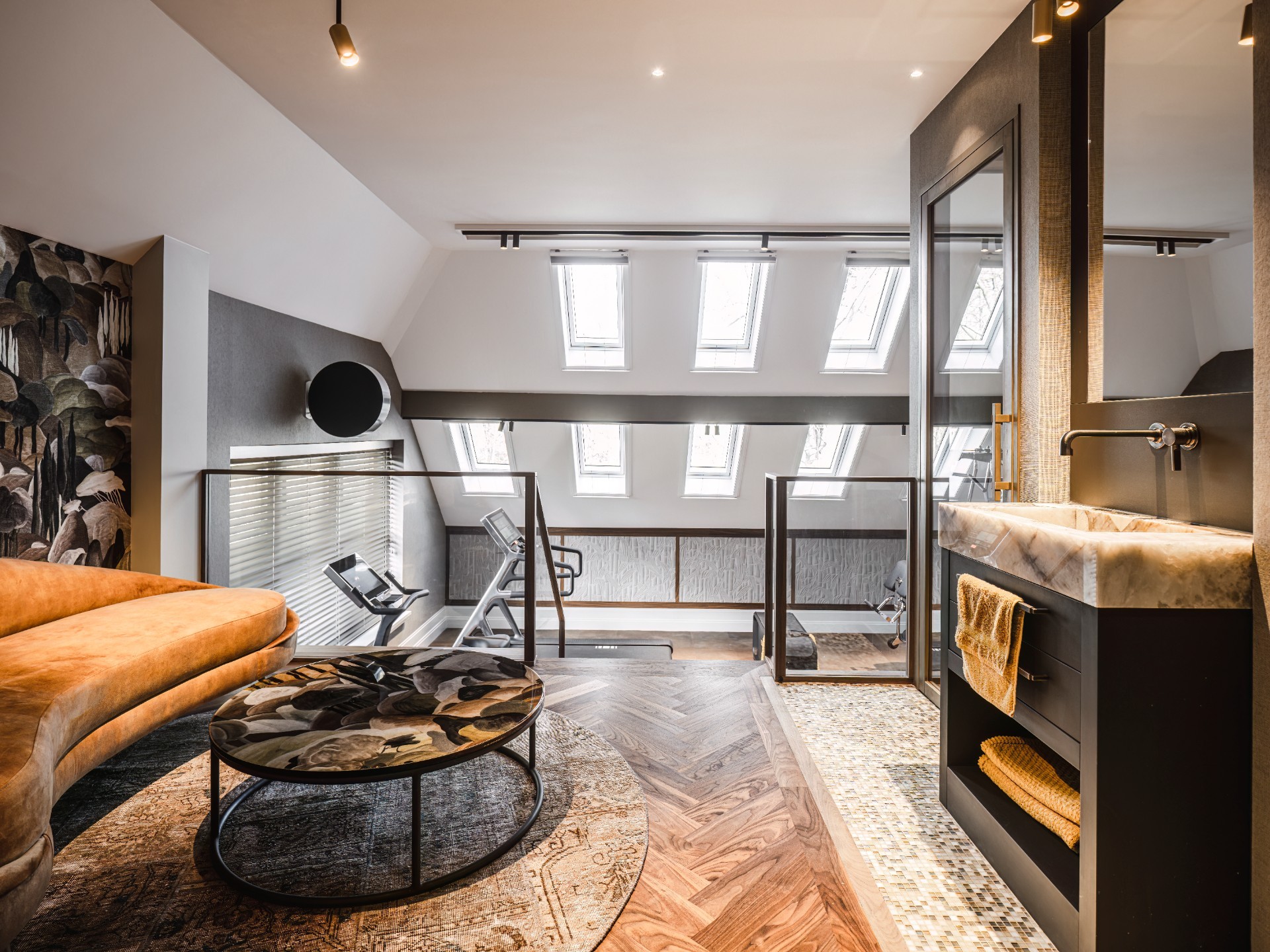
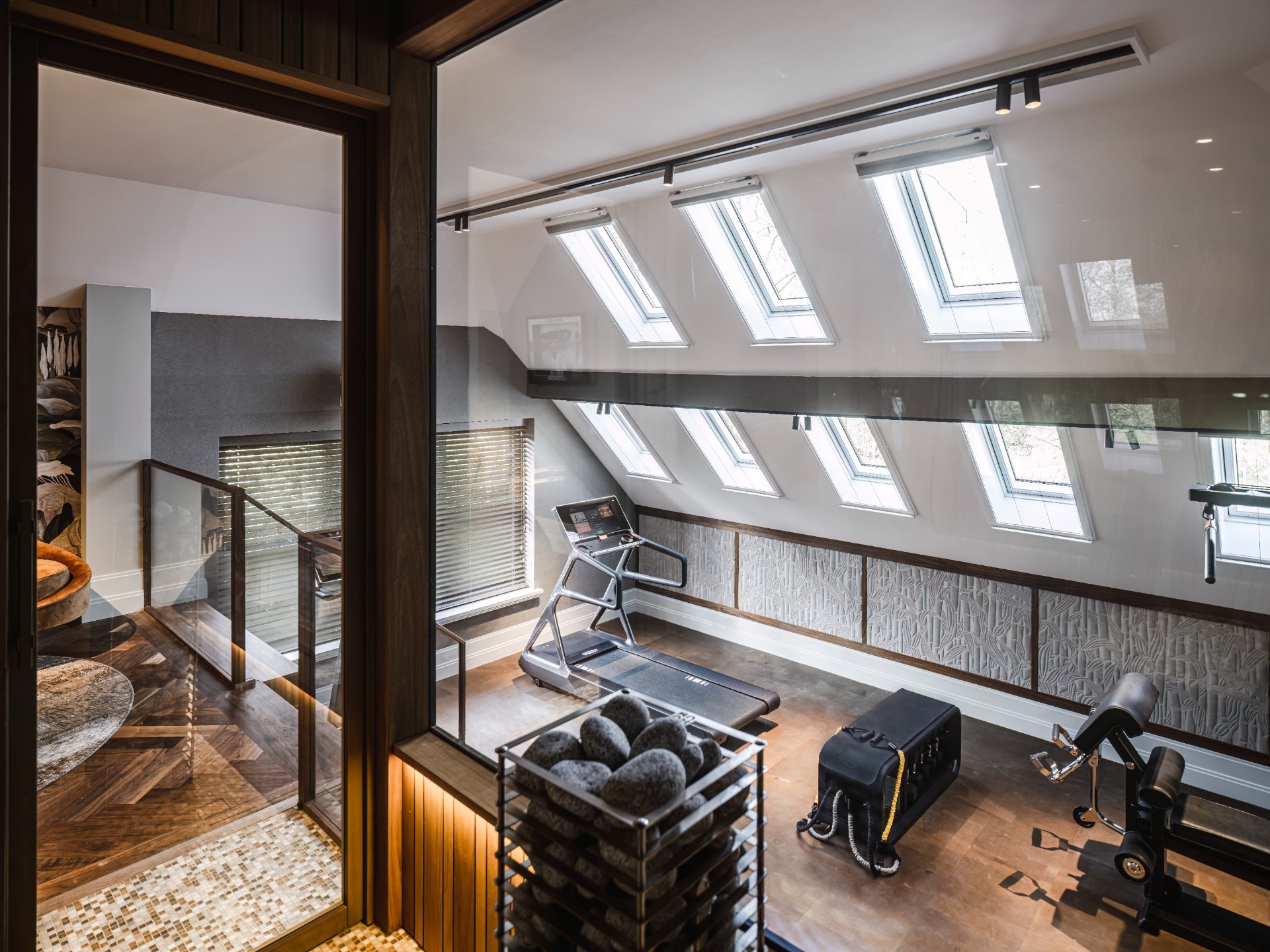
You don’t enter the workout area first—you arrive at a view. The home gym with sauna is arranged so that the sauna sits in your line of sight through a glass separation, linking the two routines without turning them into separate rooms.
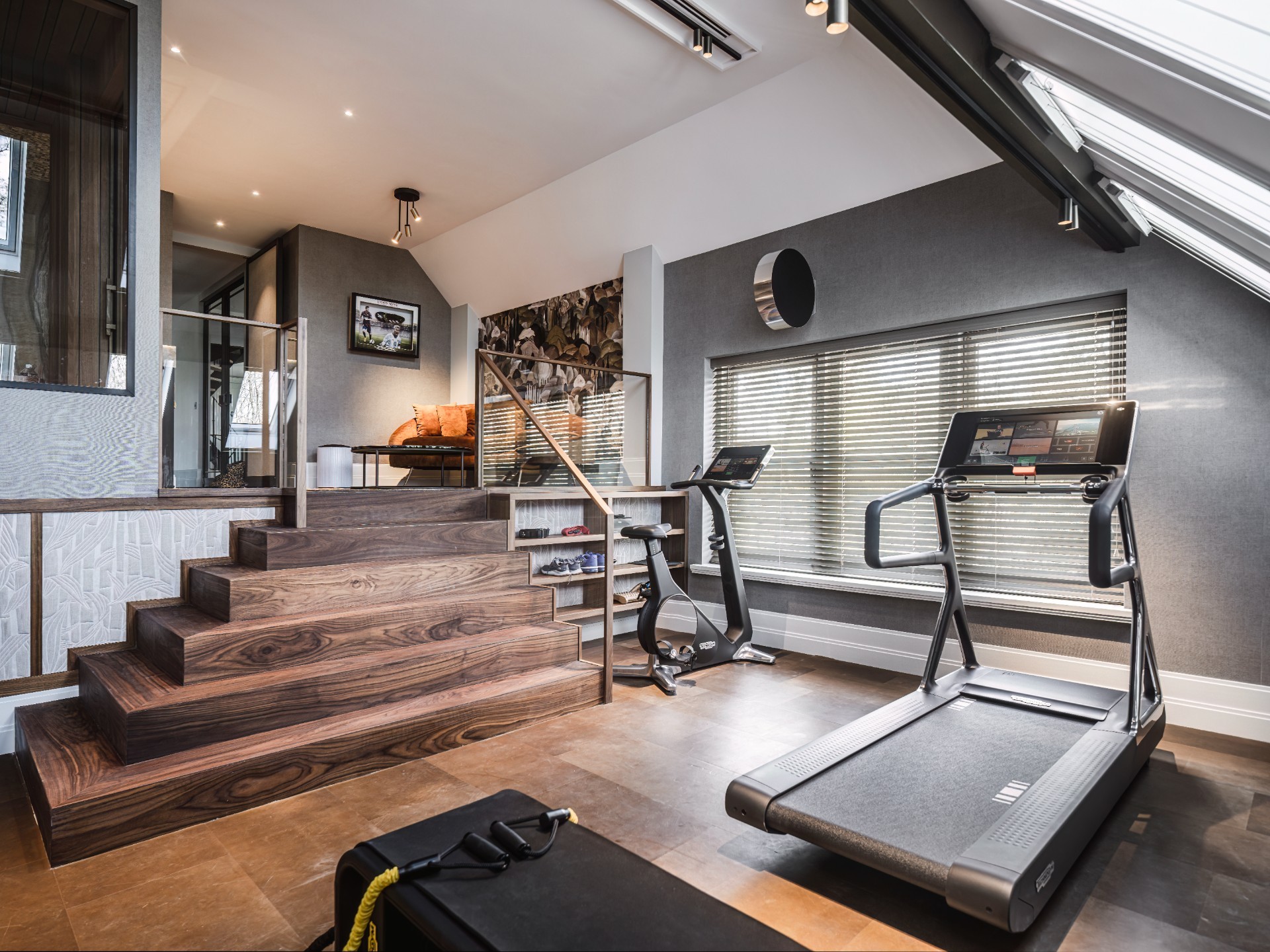
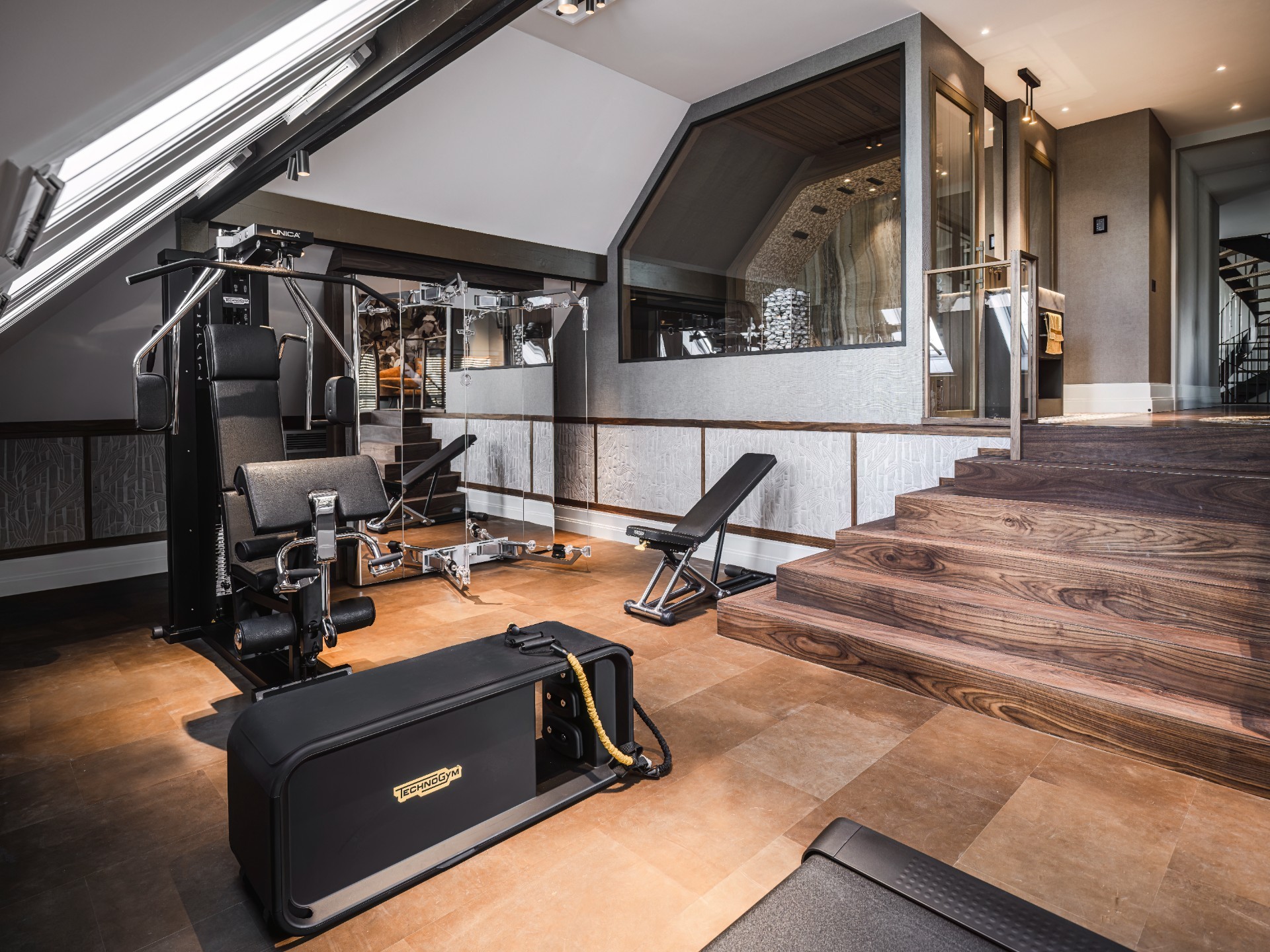
That split-level setup does more than add steps. It changes the height from which you observe each zone. From the gym side, the higher part of the same space reads almost like a continuation: instead of looking at another compartment, you look up into the sauna area as it comes into view.
To reach the upper zone, you pass the half-level. The moment your route shifts, the plan becomes stepwise. It feels intentional rather than accidental—an ordering of movements that keeps the layout open, even when functions change.
Home gym with sauna as a spatial starting point
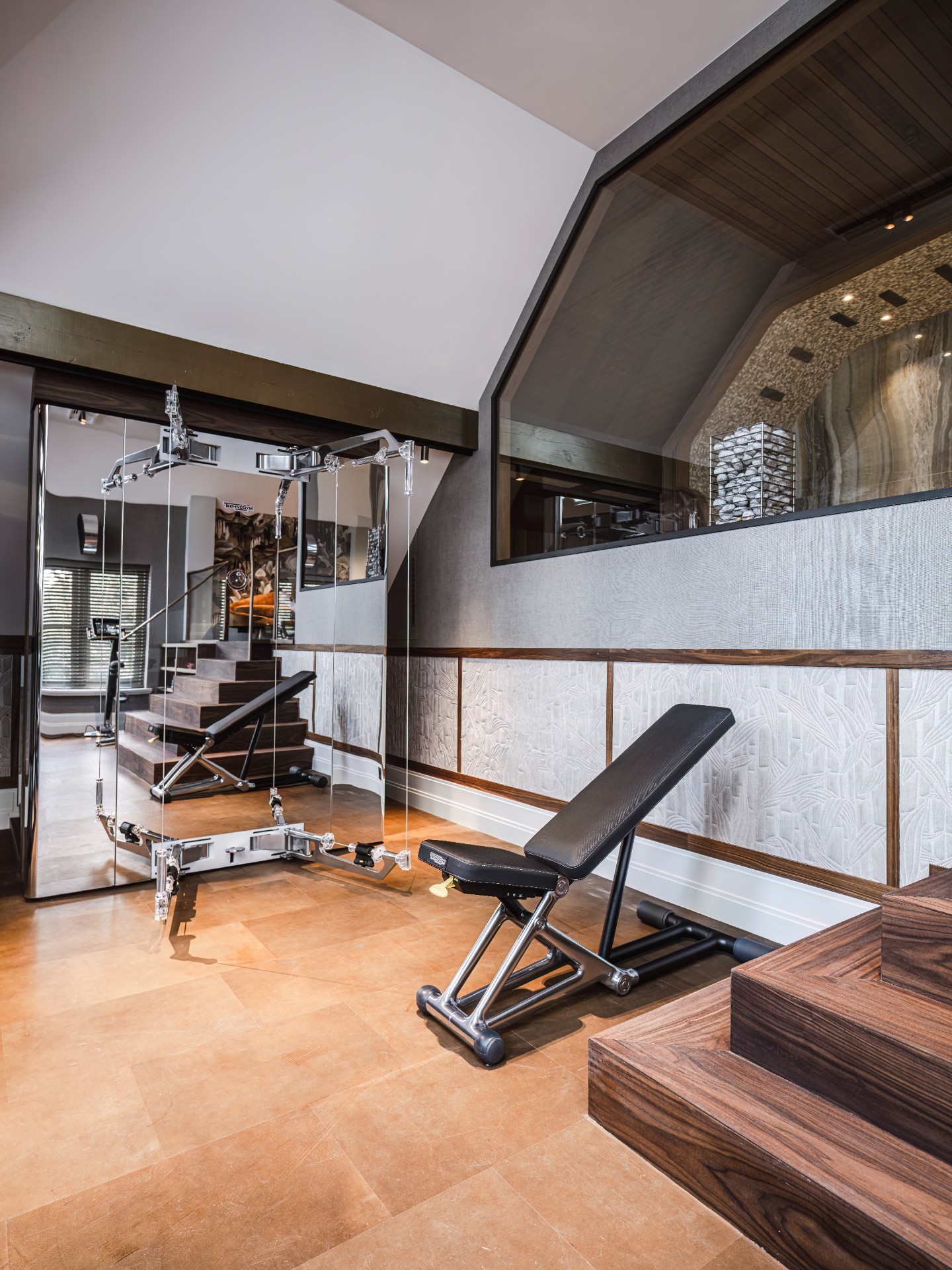
Between gym and sauna, the glass partition isn’t there to block information. It sets the rhythm of the transition. Where a solid wall would interrupt the scene, the glazing shows you where the next phase begins, maintaining a sauna view line that stays readable as you move.
Glass doors and openings through the partition make the route practical. You can cross from workout to warm-down with one clear movement. At the same time, the sauna zone keeps its own identity because the boundary is visible—an edge in the plan that you understand instantly.
The glazing also softens how the zones “push” against each other. Even when you stand on a different level, the relationship between effort and recovery remains in the same architectural frame. It’s not a separation that feels distant; it’s a separation you can monitor.
Sloped ceilings and rail lighting follow the geometry
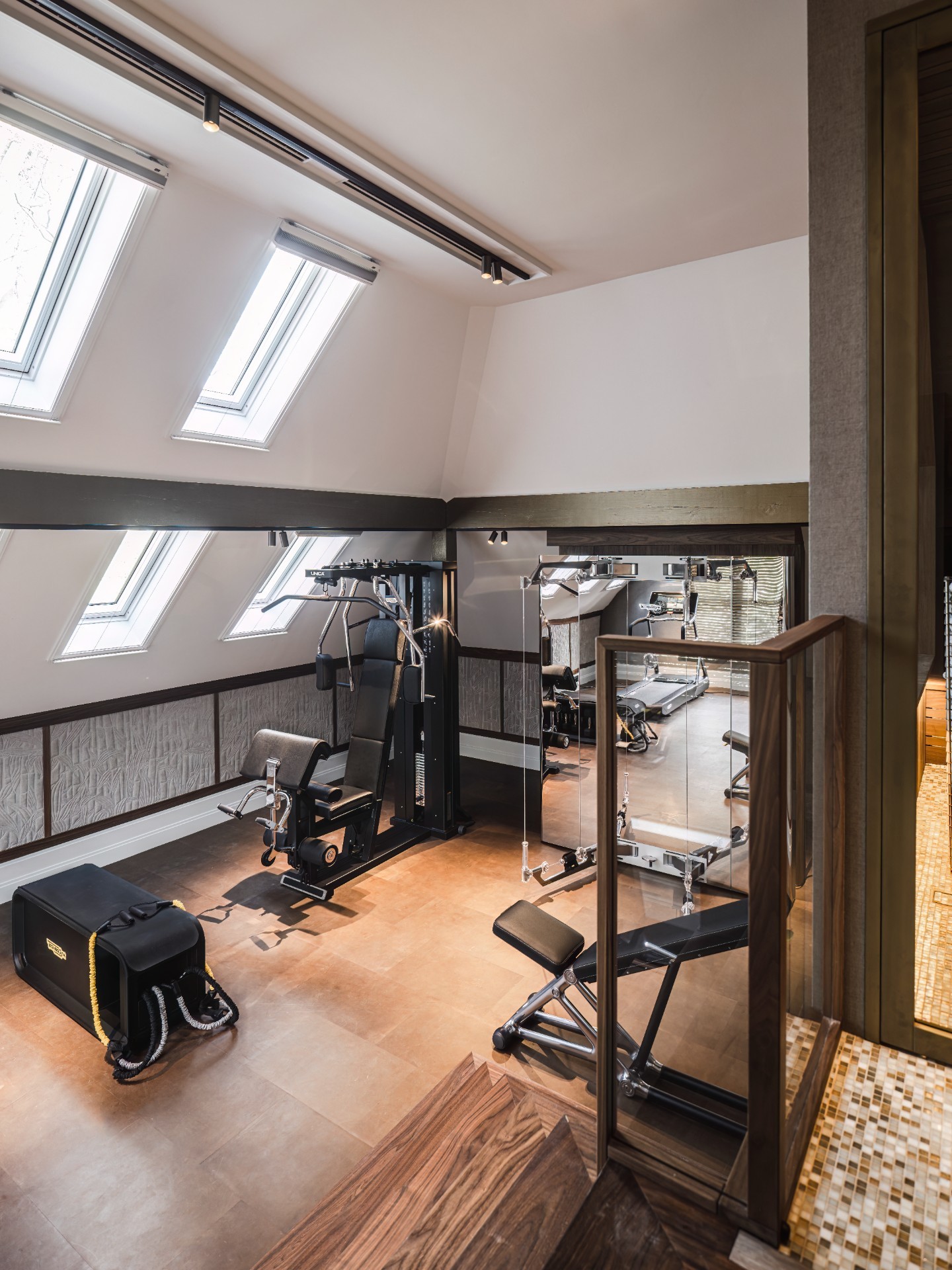
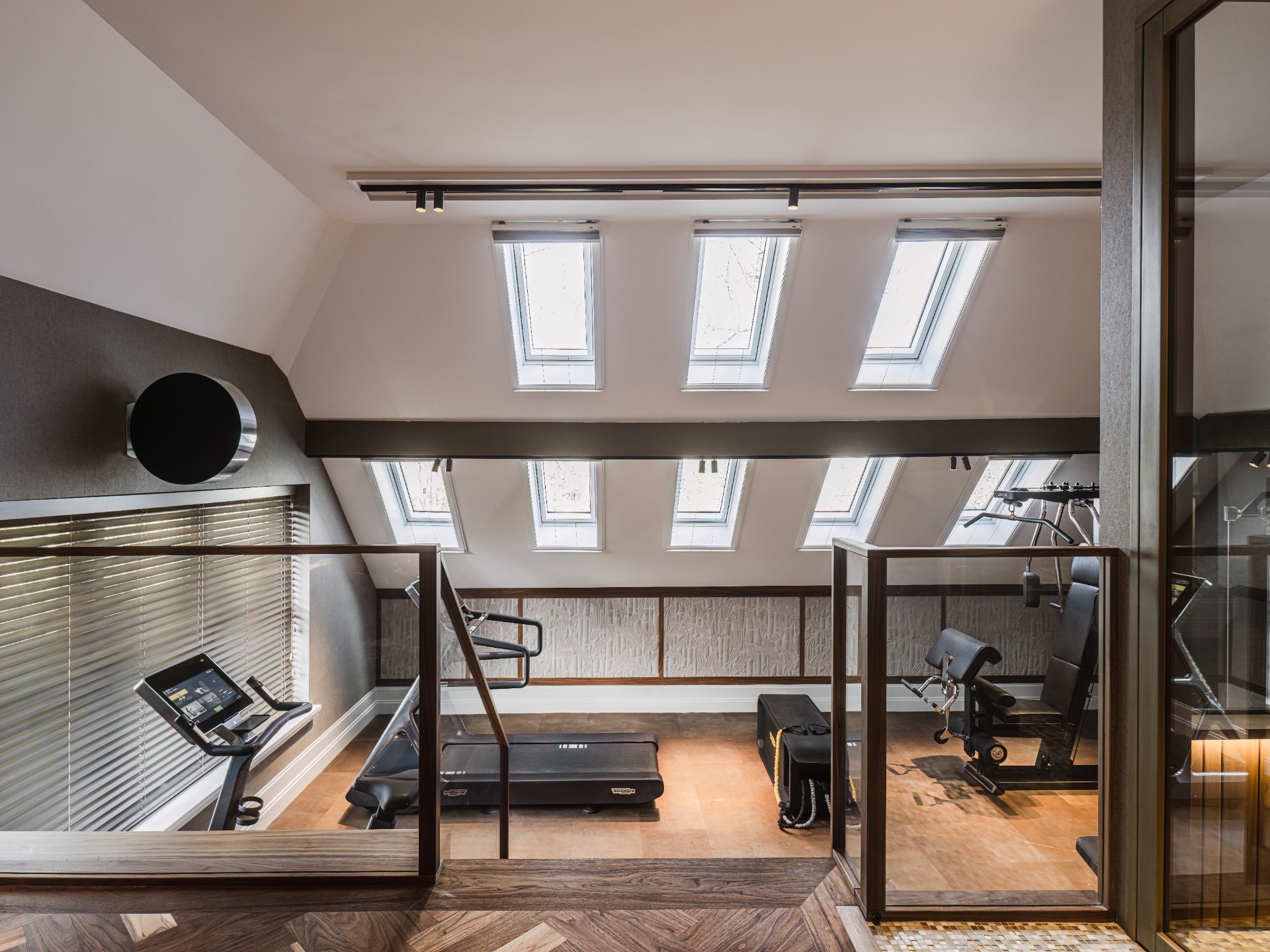
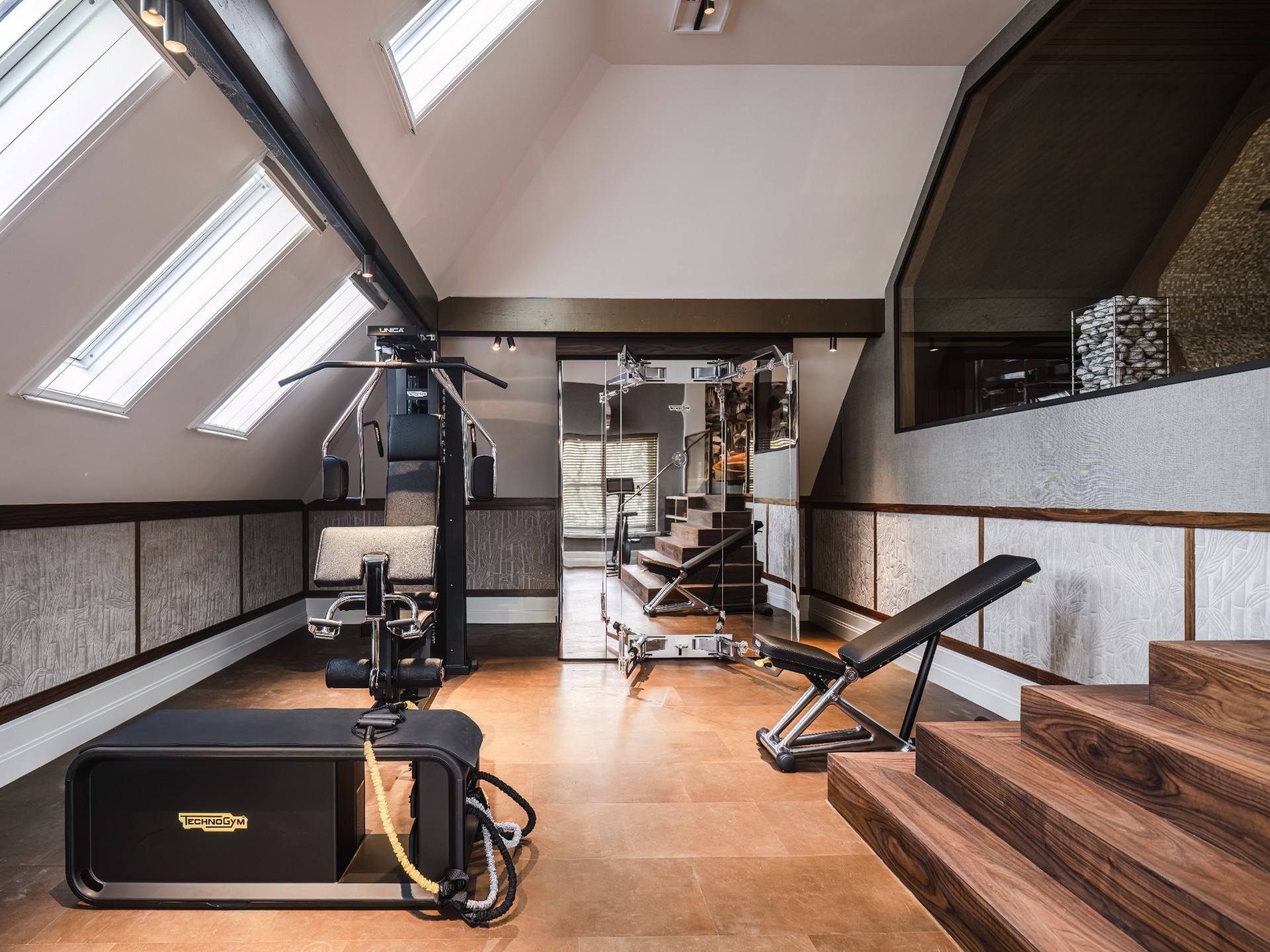
Above the training area, the ceiling doesn’t sit flat. The sloped volume shapes the atmosphere, and the lighting follows it. Rail lighting is installed along the incline so the fixtures trace the ceiling’s line rather than cutting across it.
Recessed spots and light accents appear where the split-level changes direction. That matters, because the space is read in layers: the ceiling carries the upper routing, while the lighting helps you understand where you are in the sequence.
Dark interior wall paneling strengthens that effect. Instead of making the light feel scattered, the darker background lets the illumination define edges and transitions. The ceiling meeting lines become easier to perceive, particularly when daylight shifts during the day.
Skylights in the gym spread the day across levels
Skylights bring overhead light into multiple positions in the room. It’s not a single opening that decides the mood; there are several skylights located across the higher and lower zones, creating a layered rhythm above both workout and sauna.
Because the space is split-level, daylight lands differently depending on where you stand. On the half-level you notice the upper parts in a different way than from the lower zone. That variation keeps the interior from feeling static.
In the gym area, the daylight supports the connection to the sauna by keeping the sight relationship bright enough to read. In places where the glass intervenes, reflections and softer edges change how the sauna presence is perceived—still clear, but never harsh. The result is a transition you experience with light, not with a visual “wall.”
Dark textured wall panels and round openings structure the rooms
The interior wall surfaces do most of the outlining work. Dark panels with a concrete-like texture form a continuous backdrop, and round openings break up the surface in a repeating pattern along key lines.
Those circular cut-outs give the architecture a signature that you recognize at different heights. As you move through the split-level, the same typology returns in the transitions—helping orientation without needing extra signage. Home gym with sauna remains connected to the layout, materials and daily use of the home.
Wood finishing appears along the edges: along stairs and at the boundaries around steps and openings. It makes height changes feel tangible. When dark panels meet wood at the glass thresholds, the boundary between gym and sauna looks framed rather than abrupt.
The stairs and half-level act as a hinge in the plan
The staircase is where the split-level truly becomes visible. Between the steps, wood can be seen, and on the higher level the rest of the interior opens up in one glance. From the lower area, you can read the upper zone in the same spatial sweep, which helps the layout feel like one coordinated route.
At the half-level, the movement pauses. You stop, look ahead, and then continue upward into the sauna side of the plan. That small architectural “hinge” keeps the route from feeling rushed.
Open niches and storage volumes are tucked into the structure around the stairs. They keep vertical dynamics controlled—useful in a home gym, where equipment can easily dominate the visual field. Here, the architecture takes on part of that visual weight, so the room stays organized as a whole.
A tile- or stone-like floor keeps sightpoints calm
The floor is finished in a tile- or stone-like look, giving the walking routes a clear base. In the gym zone, that lighter ground plane contrasts with the dark wall paneling, so your eyes always return to a stable reference underfoot.
When you look from the lower area toward the higher sauna side, the contrast helps the scene stay ordered. Instead of an active surface that pulls focus, the floor works like a visual anchor that supports the glass lines and the ceiling geometry above.
Even around the main training position, the floor remains visually quiet. This matters in a space that relies on layered sightlines: when the upper elements are doing the highlighting, the base shouldn’t compete.
Preparation for tight passages and sloped ceilings shaped the install
Fitting everything into the existing volume demanded more than standard assembly. The project notes a careful preparation phase, including a white-gloves-style pre-check, specifically to test how installation would work with the available clearances.
Smaller passage widths and sloped ceiling areas make alignment critical. With glass partitions and door transitions, any mismatch becomes visible immediately—both in the line of sight and in how materials meet. The same precision is needed for the rail lighting along the inclined ceiling, where the positions must align with the architectural lines.
By preparing in advance, the installation could stay controlled even in the tight logistics. That preparation is also reflected in the final effect: the routing and the layered sightlines feel deliberate, not improvised.
A single wellness story told in steps
At the core of this design is one route: training and sauna sit inside the same split-level volume. The glass partition keeps the connection visible, so switching between effort and warm-down doesn’t require choosing between separate experiences.
The lighting approach reinforces that continuity. Sloped ceiling track lighting, recessed accents, and skylights keep the upper volume active as you move through the room. Meanwhile, dark textured wall panels with round openings set a consistent visual framework, softened by wood detailing along edges, steps, and thresholds.
The calm, tile- or stone-like flooring supports the layered composition. Together, these choices turn a home gym with sauna into a sequence you read in levels—where sightlines, movement, and light carry the narrative from one zone to the next.
Want to see more of Technogym? View the page of Technogym for even more great projects and company information.


NEW 2026 Jubileum Edition The Best Interior Designers Benelux
Order Now €125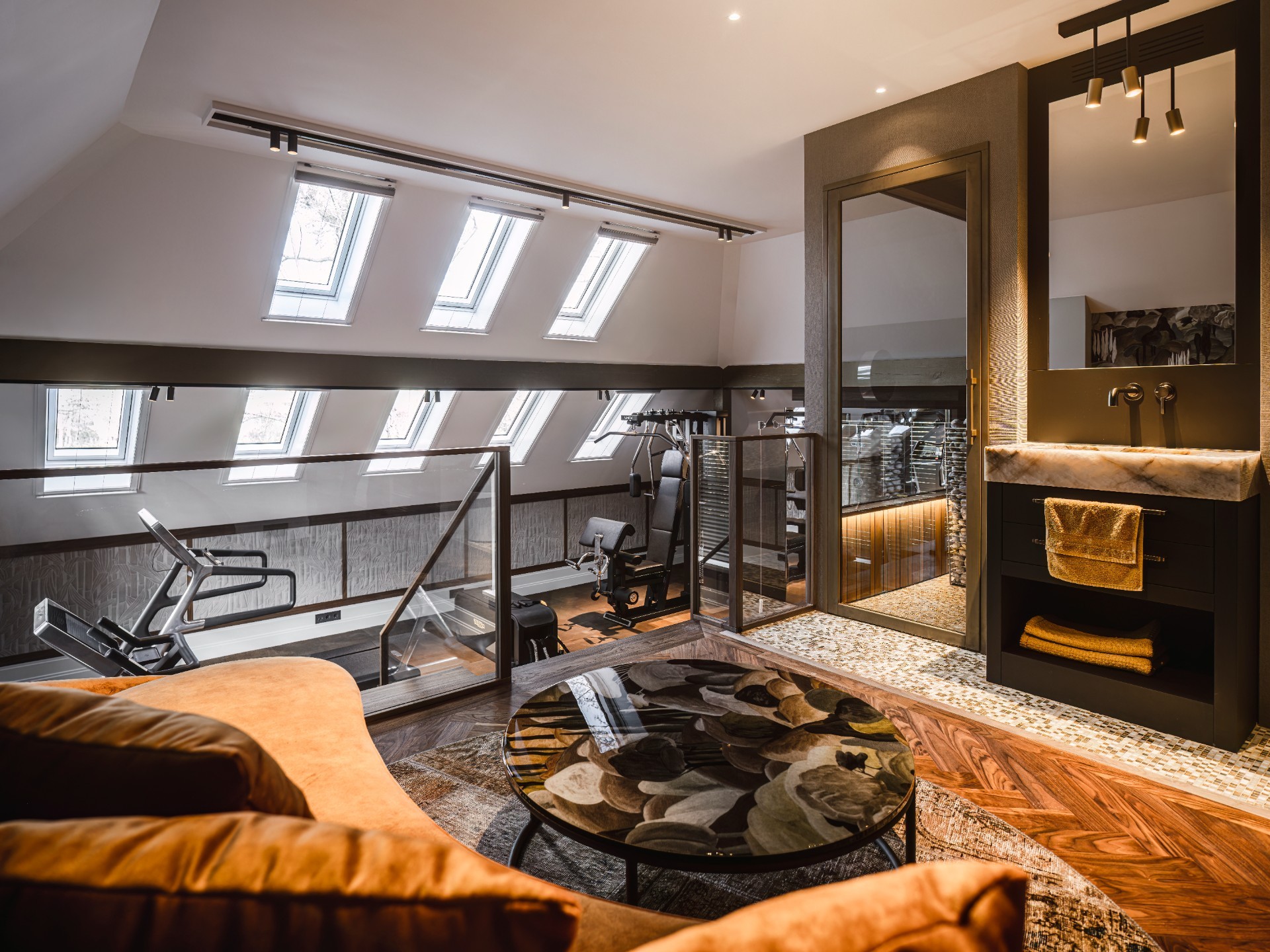
NEW 2026 Jubileum Edition The Best Interior Designers Benelux
Order Now €125