








Domotics showroom with natural stone feature wall and LED lighting scenes
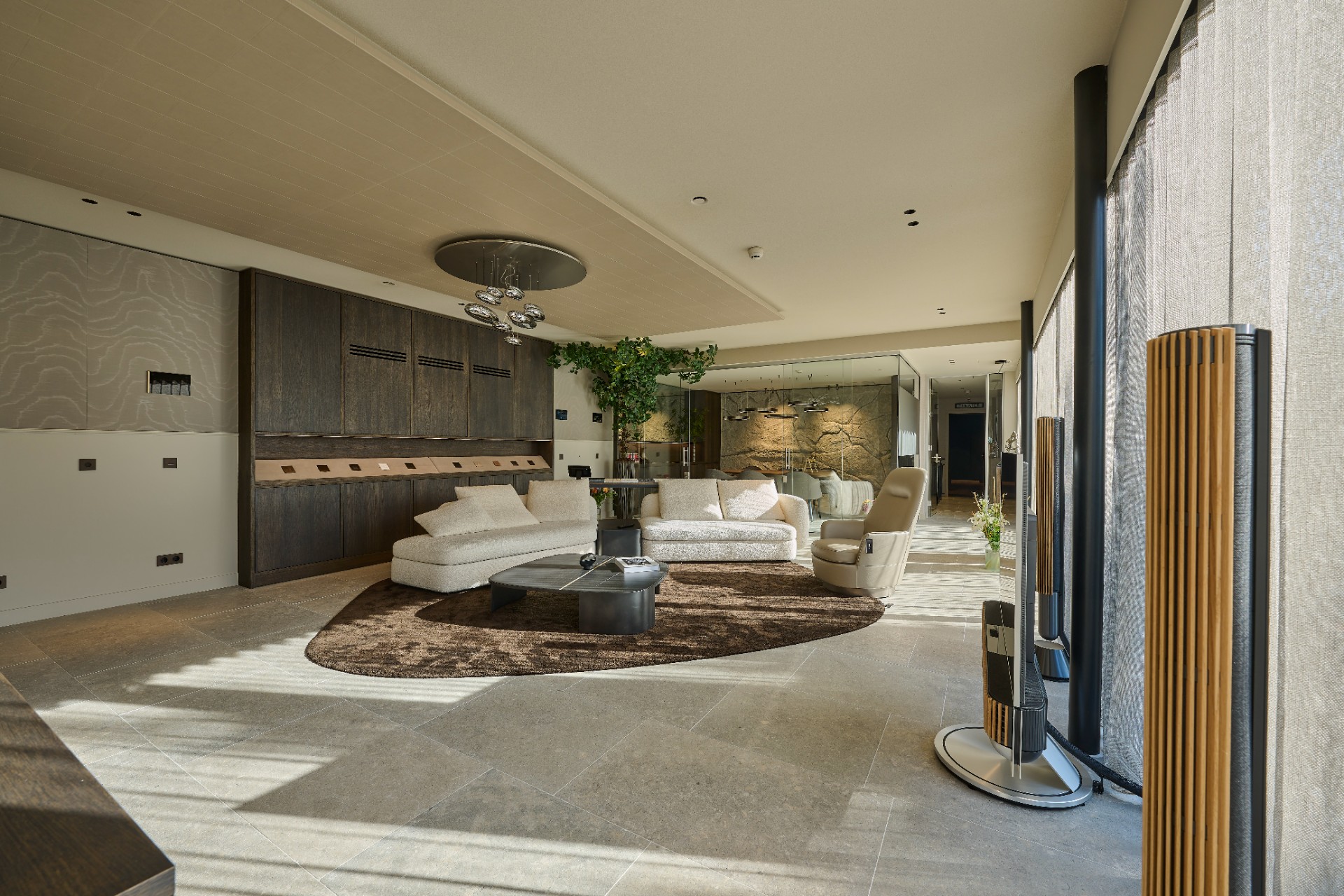
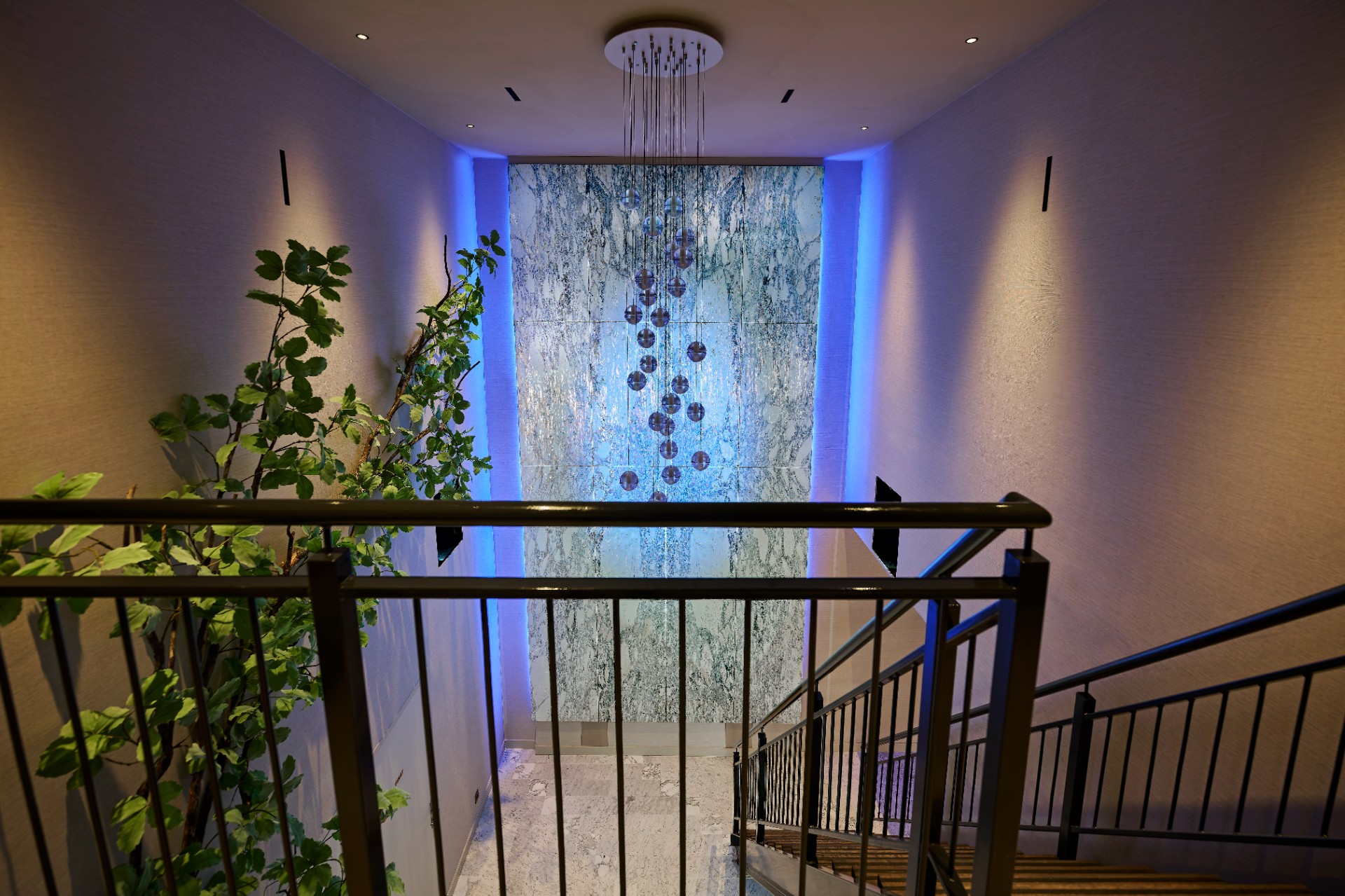
The domotics showroom opens with stone, light and sound working across the same surface. A six-metre natural stone feature wall fills the first space, and a projected waterfall turns that wall into a moving image rather than a static backdrop. LED lighting scenes trace the texture, catching the uneven face of the stone while the room stays open and tall around it. The result is immediate: you do not walk into a display room so much as into a staged sequence of material, projection and sound.
Domotics showroom as a spatial starting point
At close range, the wall reads as rough and worked, not polished flat. That detail matters, because the projection does not sit on top of a neutral surface; it meets a material that already has depth and marks in it. As you move alongside it, the waterfall image, the light and the stone seem to change their pace together. The domotics showroom uses that shift to set the tone for everything that follows, with the wall acting as both an architectural anchor and a screen for atmosphere.
Sound enters from all sides as a soft rainforest sound, and a handmade scent developed for the space adds another layer without calling attention to itself. Nothing here is isolated. Light, texture and audio are set up to overlap, so the visitor notices how one cue alters the reading of the next. The stone wall carries that idea best: under the LED lighting scenes, its surface moves between shadow, reflection and the projected water effect. It gives the room a clear starting point, but never a fixed one.
From darkness to discovery in the showroom
The showroom itself begins in near-darkness. A thin line of light moves through the space and slowly reveals what is there, instead of showing everything at once. That controlled reveal keeps the room in motion even when the furniture stays still. Music fills the space without a visible source, and then a piece of joinery opens to expose a live concert on a screen. The gesture is small, but it changes the room from silence to attention in a single step.
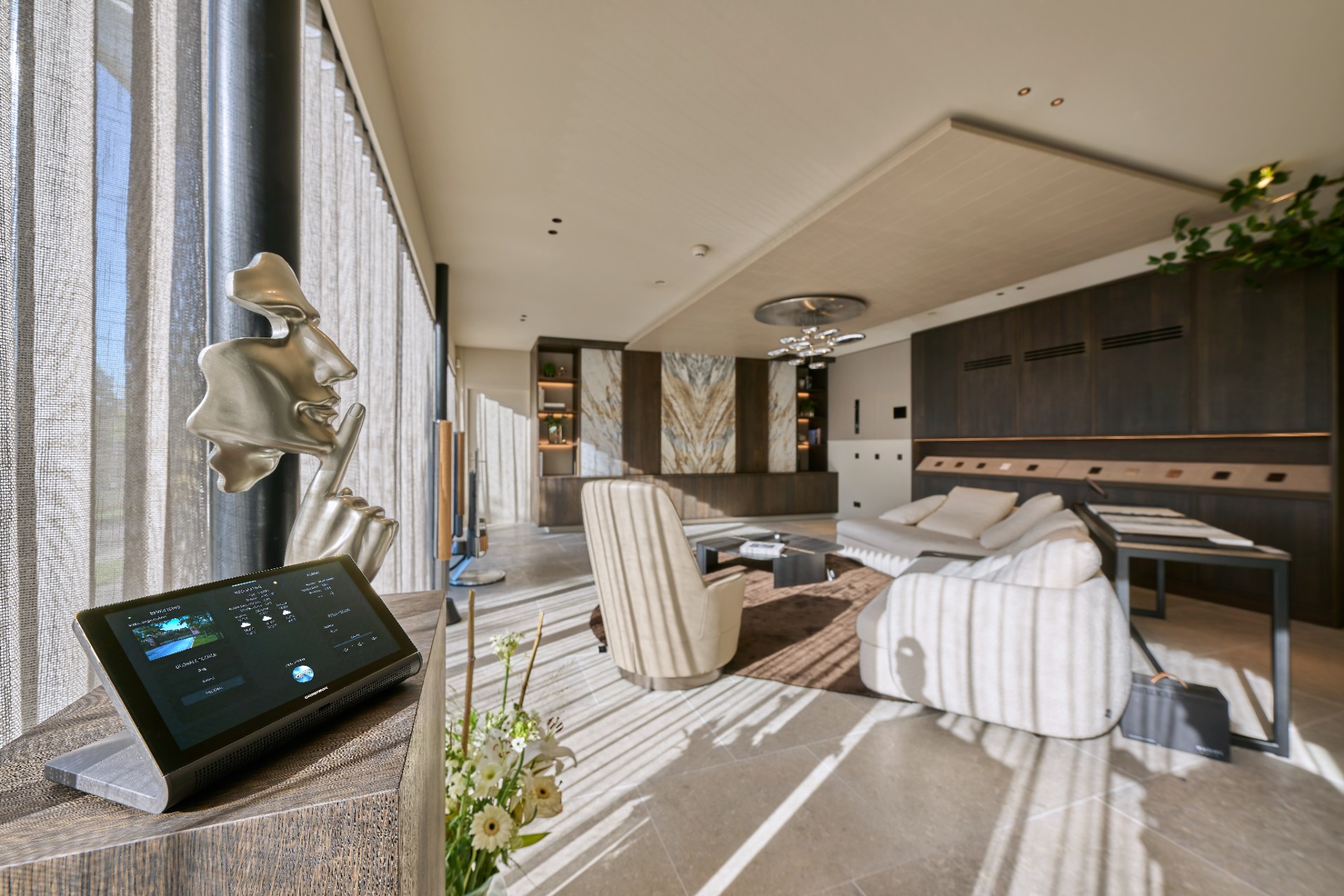
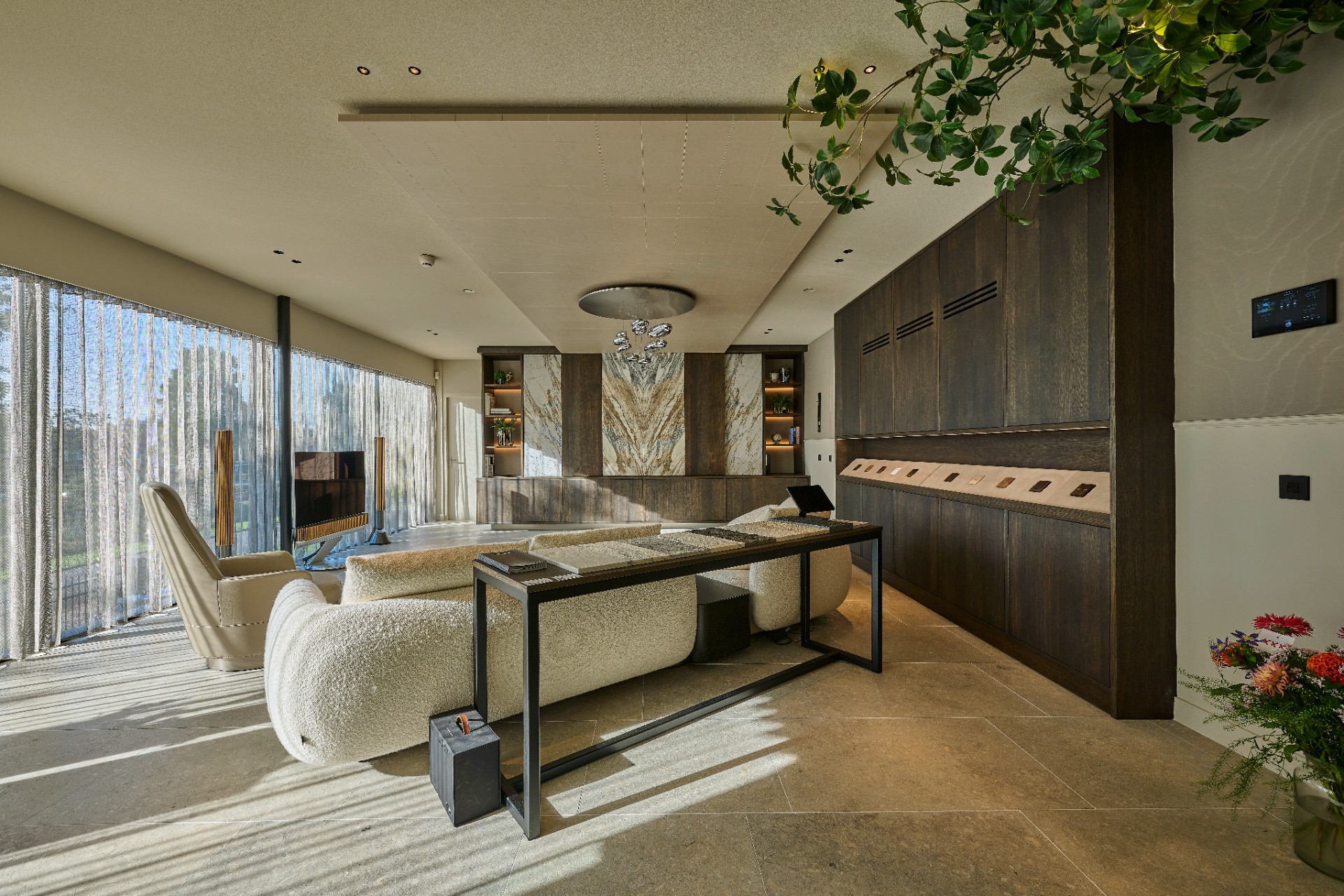
After that first reveal, the showroom shifts again into a product gallery. This is where the visitor can touch materials, read textures and compare finishes at close range. The lighting becomes less about drama and more about clarity, so colours and surfaces can do the work. The sequence is important: dark room, moving line of light, music, screen, then a gallery of materials. Each stage changes the way the same space is used. The domotics showroom never stands still for long, and that is what makes the route through it legible.
LED lighting scenes as a spatial guide
The LED lighting scenes are not treated as decoration on top of the interior. They guide the path through it. In some moments they edge the walls; in others they soften the transition between the stone, the floor and the surrounding volumes. That approach keeps attention on the route itself. The visitor reads the room through changes in brightness, colour and reflection, rather than through signage or fixed focal points. It is a controlled sequence, but not a rigid one.
In the material gallery, the light becomes a way to compare rather than to impress. Stone, wood, glass and fabric-like textures can be approached under conditions that make their differences visible. That matters in a domotics showroom, where screens and control systems need to sit next to finishes, joinery and furniture without breaking the atmosphere. The light scenes hold those parts together visually, while the tactile zone lets the body understand what the eye has just seen.
Mirror TV integration in the boardroom
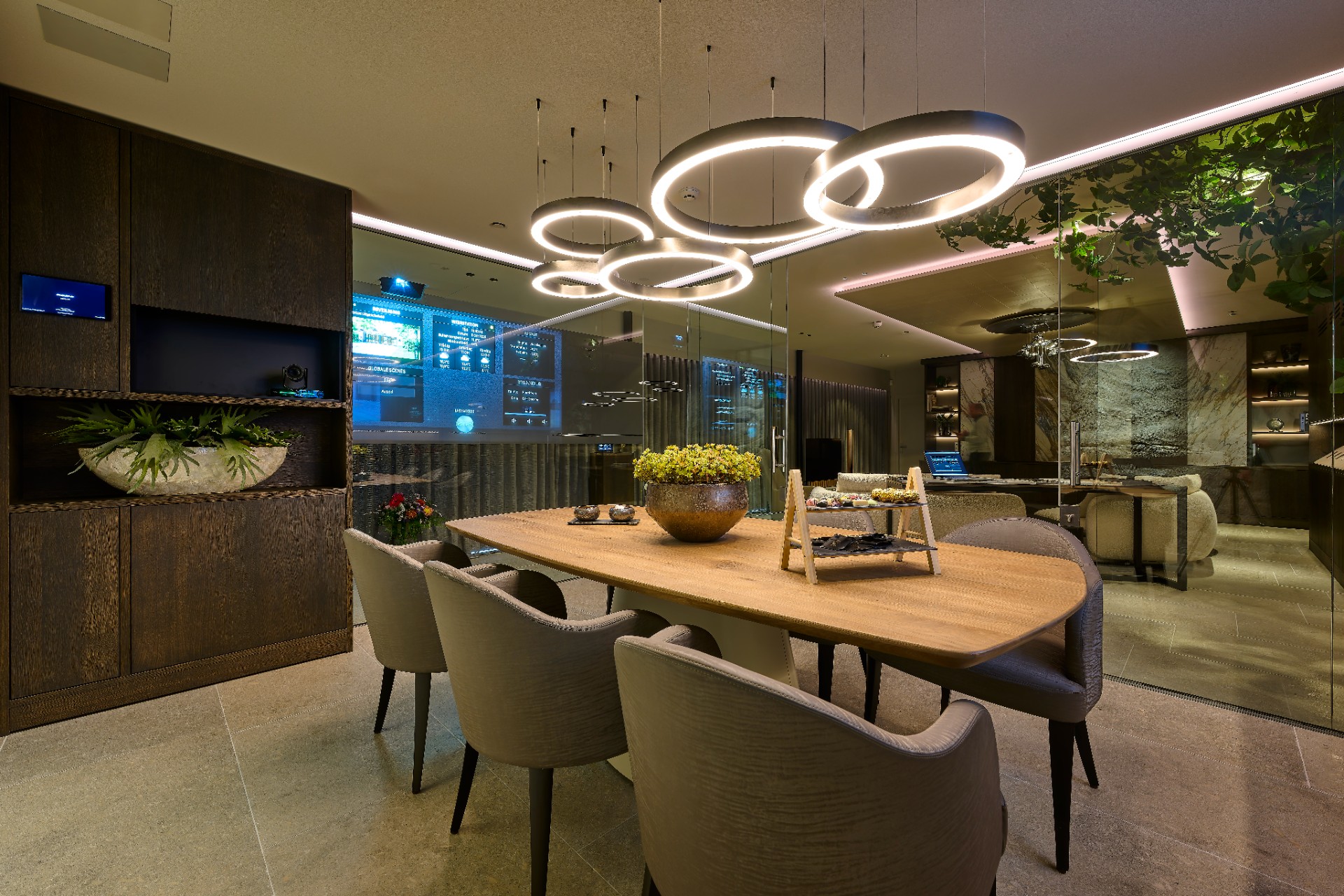
The boardroom changes the language again. Here, the technology is built into the interior rather than placed in front of it. A mirror subtly becomes a TV, while a glass projection screen appears on the opposite wall. The setup keeps the room calm in appearance, yet ready for use. A camera hides behind a sliding panel, and with one press of a button a video meeting can begin. The presentation image then appears on the mirror TV across the room, so the boardroom video meeting integration feels direct and clear. Domotics showroom remains connected to the layout, materials and daily use of the home.
What stands out is the way the room stays visually restrained while several functions are available at once. The mirror TV integration avoids a cluttered wall of equipment, and the glass projection screen keeps the presentation surface light in appearance. The room reads as a meeting space first, but the hardware is still there, embedded in the joinery and wall composition. That is the logic repeated across the project: devices appear only when needed, then disappear back into the architecture.
Boardroom video meeting integration without visual noise
The boardroom is a useful counterpoint to the larger sensory spaces earlier in the route. It proves that the project is not only about spectacle. Here, control is the point. The camera, the screen and the mirror TV are arranged so that switching from discussion to presentation does not disturb the room. Even the sliding panel has a clear role: it gives the camera a place to live when it is not in use. For a domotics showroom, that kind of restraint is as telling as any light effect.
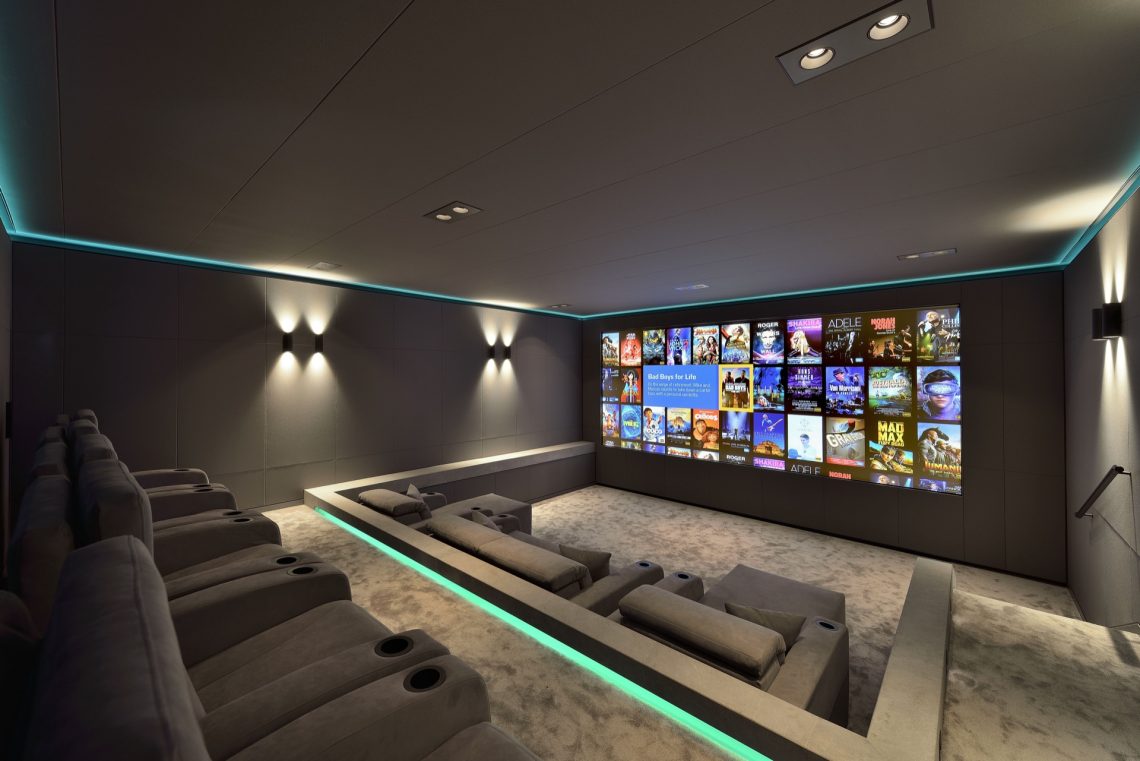
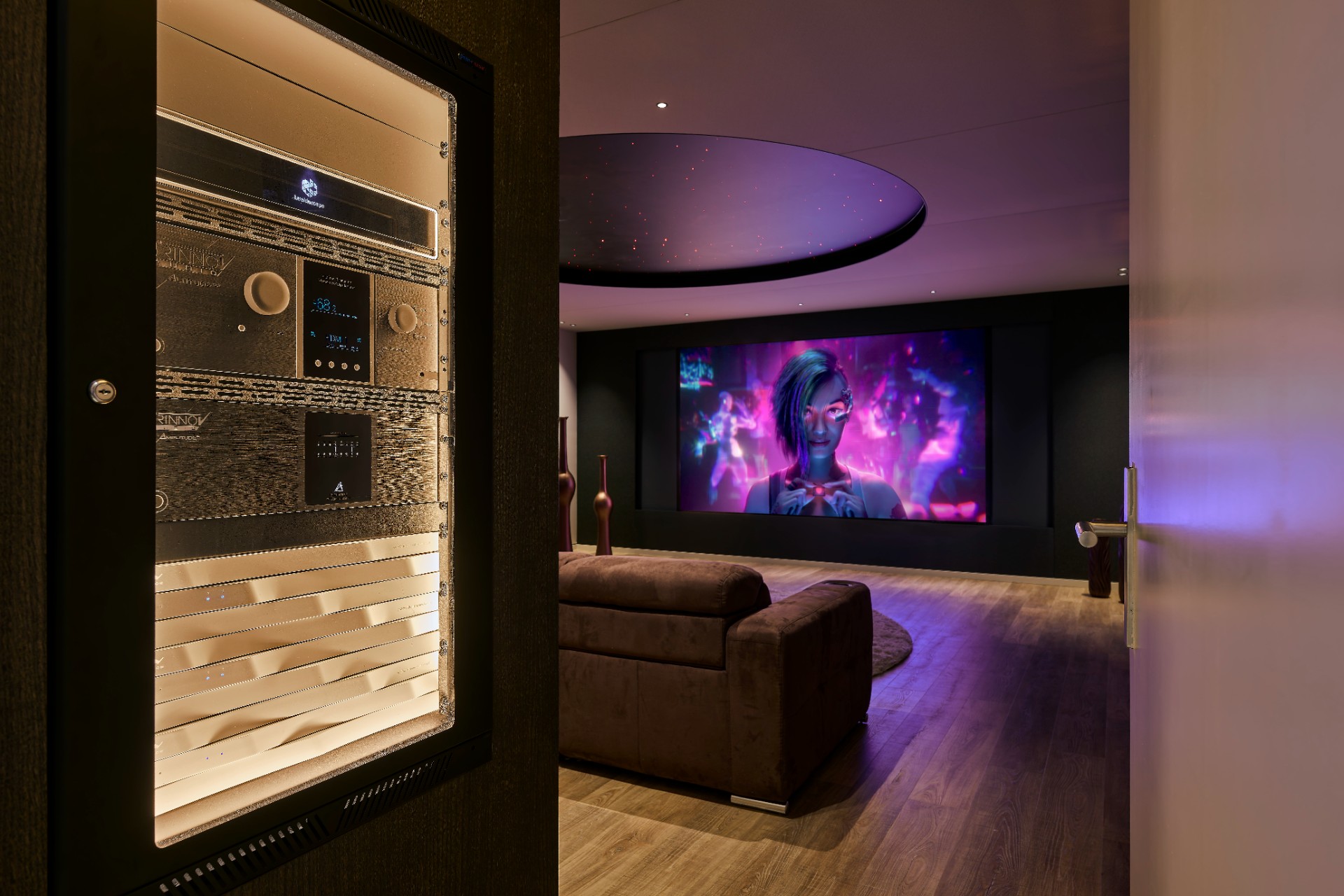
The same thinking carries into the cinema, where the route ends. The room is described as a living-room-like setting, with a warmer character than the boardroom, but the technical intent remains precise. Once the film starts, image and sound wrap around the space, and the room becomes more than a place to sit. The immersive cinema sound and picture turn the interior into the final demonstration of the project’s idea: that atmosphere can be built, controlled and changed in seconds.
The cinema as the final room in the sequence
The cinema zone closes the visit with a different kind of focus. Instead of revealing materials or meeting tools, it concentrates on immersion. The room is read as a comfortable living room at first, with a domestic scale that keeps the screen from feeling detached. Then the audiovisual layer takes over. The picture fills the field of view, the sound surrounds the seating, and the room no longer reads as a set of objects but as one enveloping condition. That is where the project’s spatial route reaches its strongest contrast.
Even at the end, the materials remain part of the story. The same attention to light and surface that shaped the stone wall and the showroom gallery is present here in the darker zone, where screen glow and acoustic treatment define the edges of the room. The domotics showroom ends not with a single statement, but with a shift in scale: from stone wall to product gallery, from boardroom to cinema, from observation to absorption. The path is clear, and each room marks a different way of using technology in the interior.
Behind the scenes, the systems are set up to work only when needed, so energy can be managed with care while the space still delivers full effect at the right moment. That operational layer stays out of sight, but it supports the project’s main idea: the experience changes only when the room calls for it. The stone wall, the LED lighting scenes, the rainforest sound and the concealed screens all point in the same direction. This domotics showroom is built as a sequence of rooms, but it is remembered as a chain of transitions.
Suppliers and materials: Savema / Stonetrack, Wisdom Audio, Trinnov, Sonance, Crestron and Basalte. Interim joinery and carpentry were delivered by Bjorn Smetsers of Smetsers Interieur- en Timmerwerken. Photography by Werner Ero. Domotics showroom remains connected to the layout, materials and daily use of the home.
Want to see more of De Opera Domotica? View the page of De Opera Domotica for even more great projects and company information.

NEW 2026 Jubileum Edition The Best Interior Designers Benelux
Order Now €125