







Troweled Concrete Floor in a Villa: Indoors & Terrace, Continuous
A light concrete surface carries through the rooms, past the kitchen and corridor, and straight onto the terrace. The same troweled concrete floor villa finish is visible indoors and outside, so the route underfoot stays legible as the plan opens up toward the glass. The mix is described as 75% mid grey and 25% dark grey, which gives the floor a muted, layered tone rather than a flat single shade.
Troweled concrete floor villa as a spatial starting point
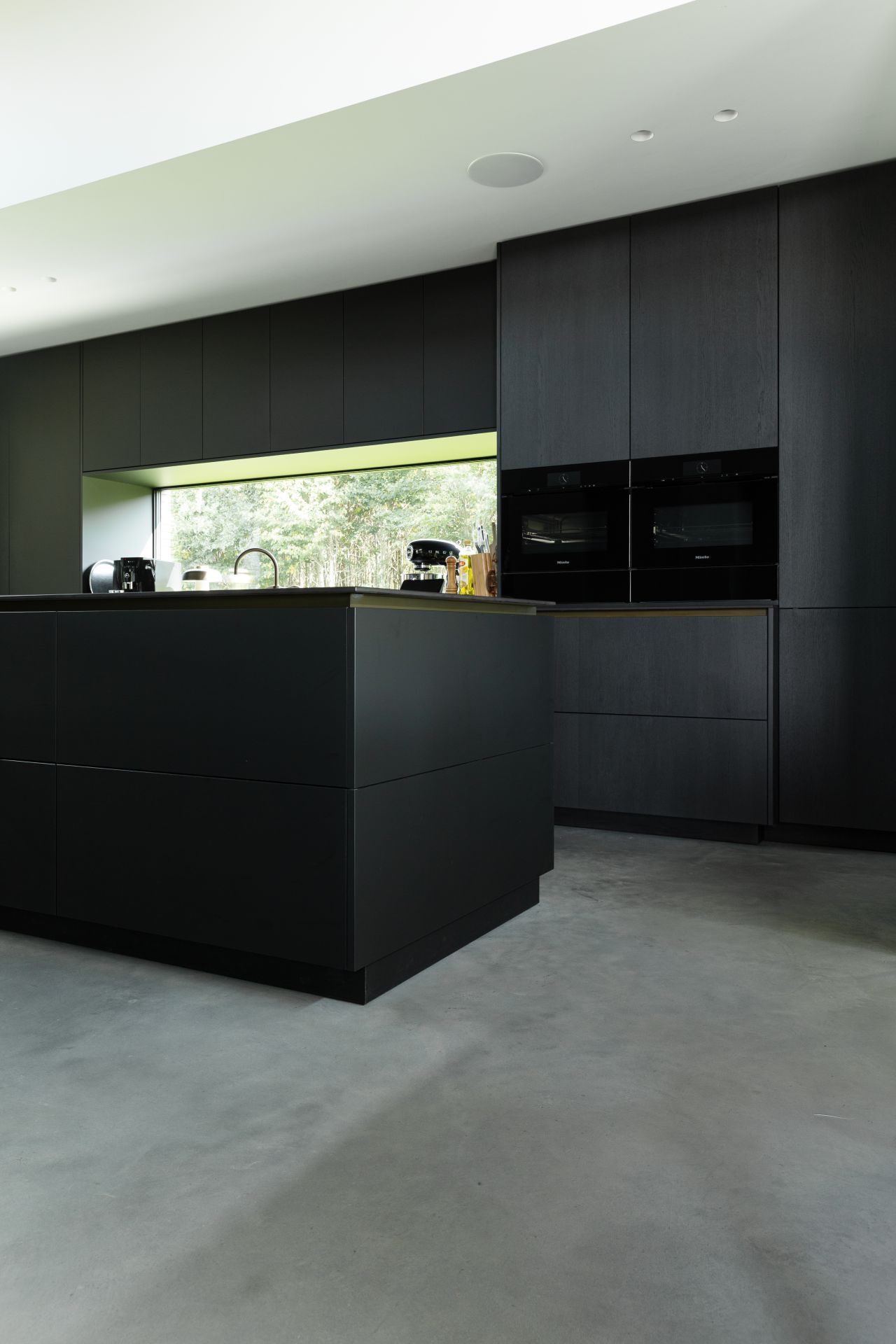
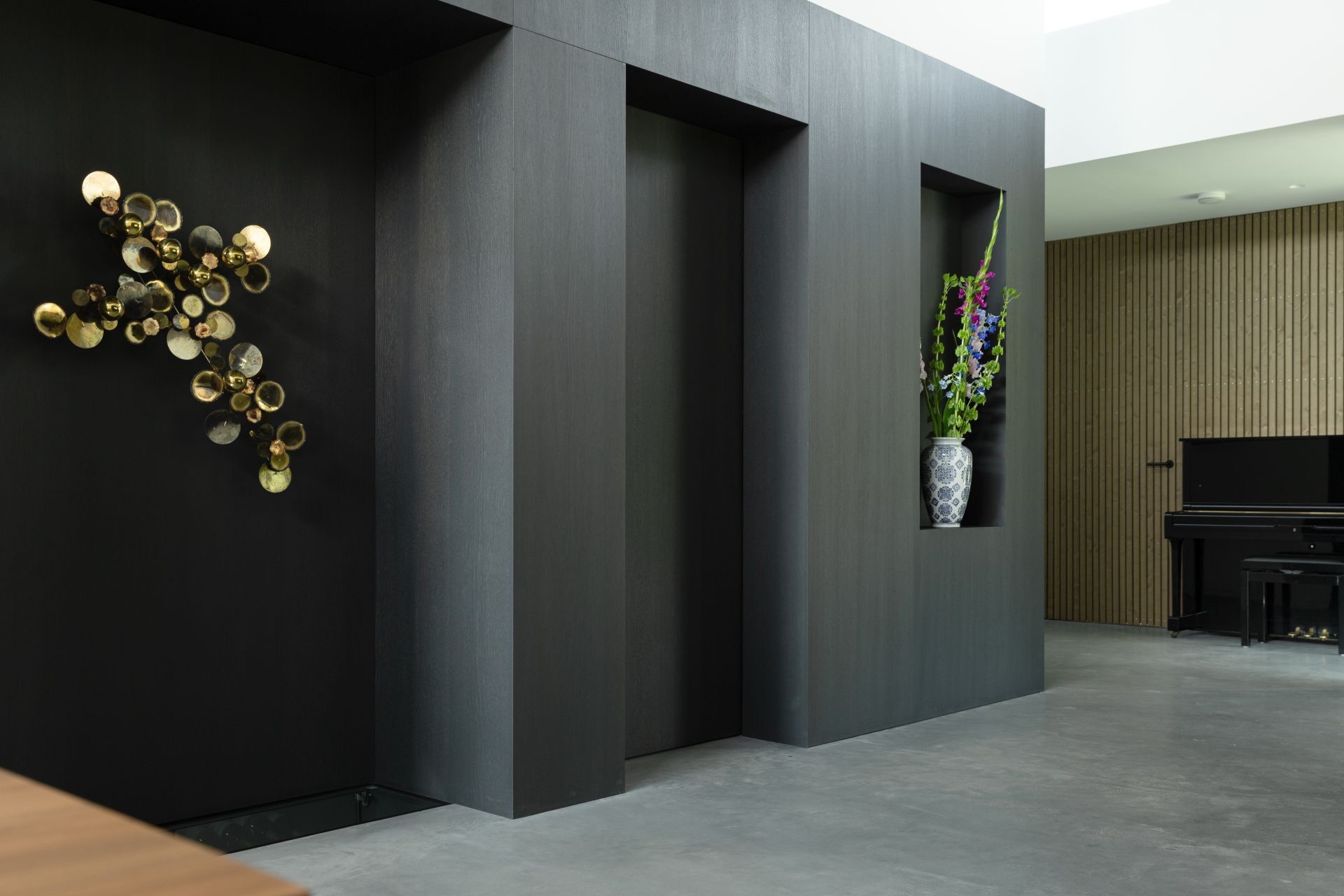
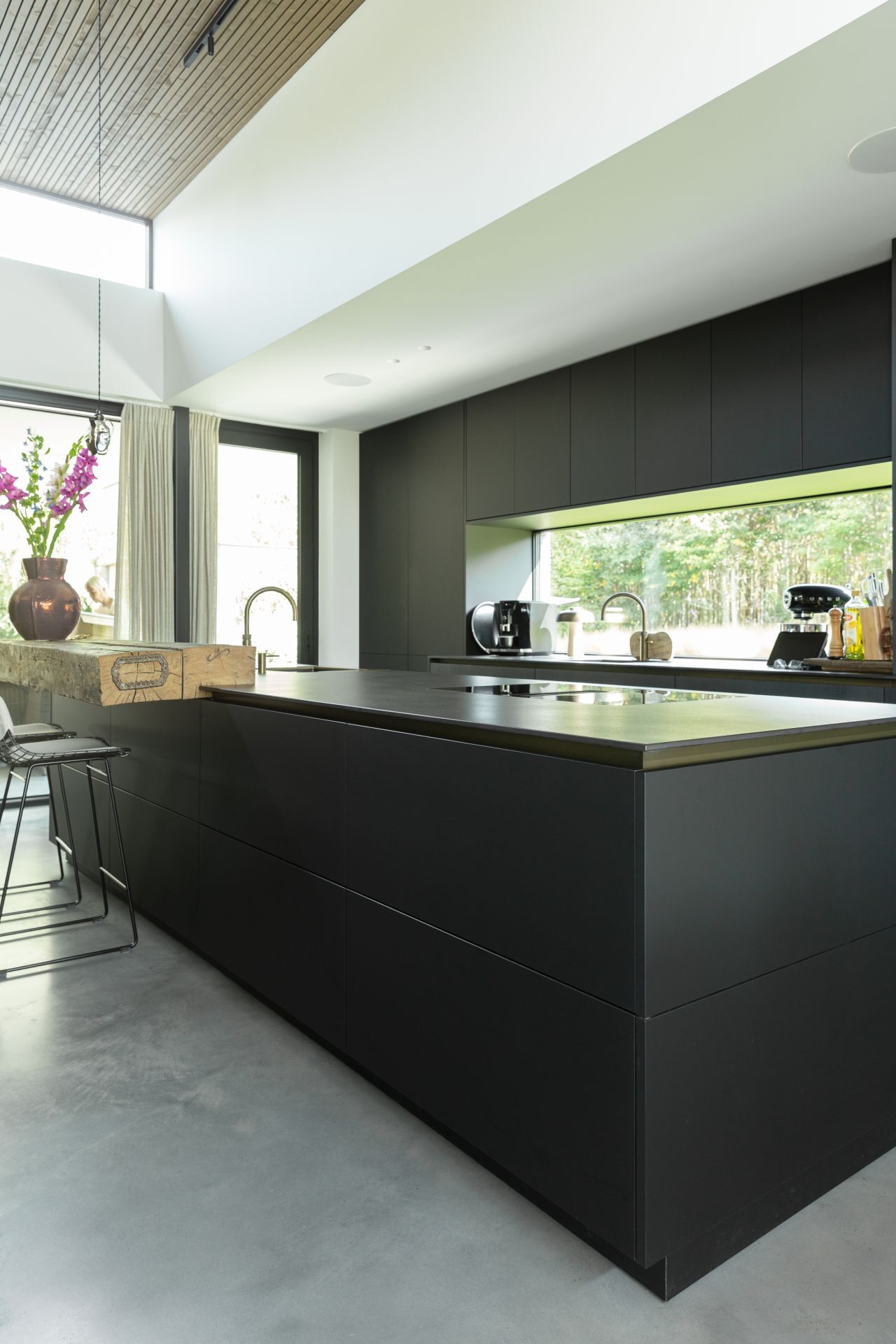
The floor does not stop at the living areas. It continues to the cellar and storage as well, which makes the troweled concrete floor villa feel spread across the practical and the representative parts of the house at the same time. In the images, the concrete reads as a continuous base beneath dark built-in cabinetry, narrow openings, and clean wall lines. That steady surface keeps the plan easy to read from room to room.
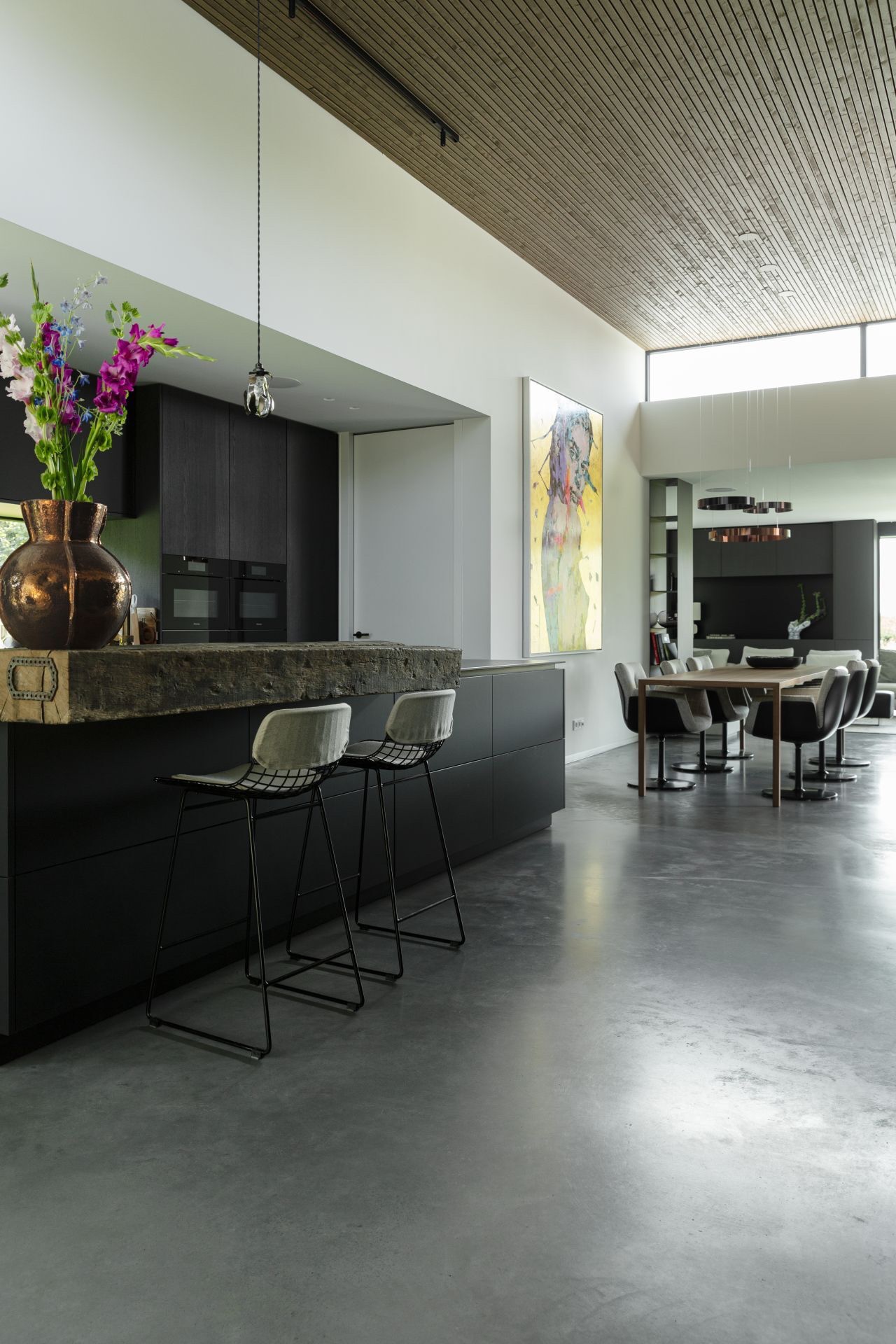
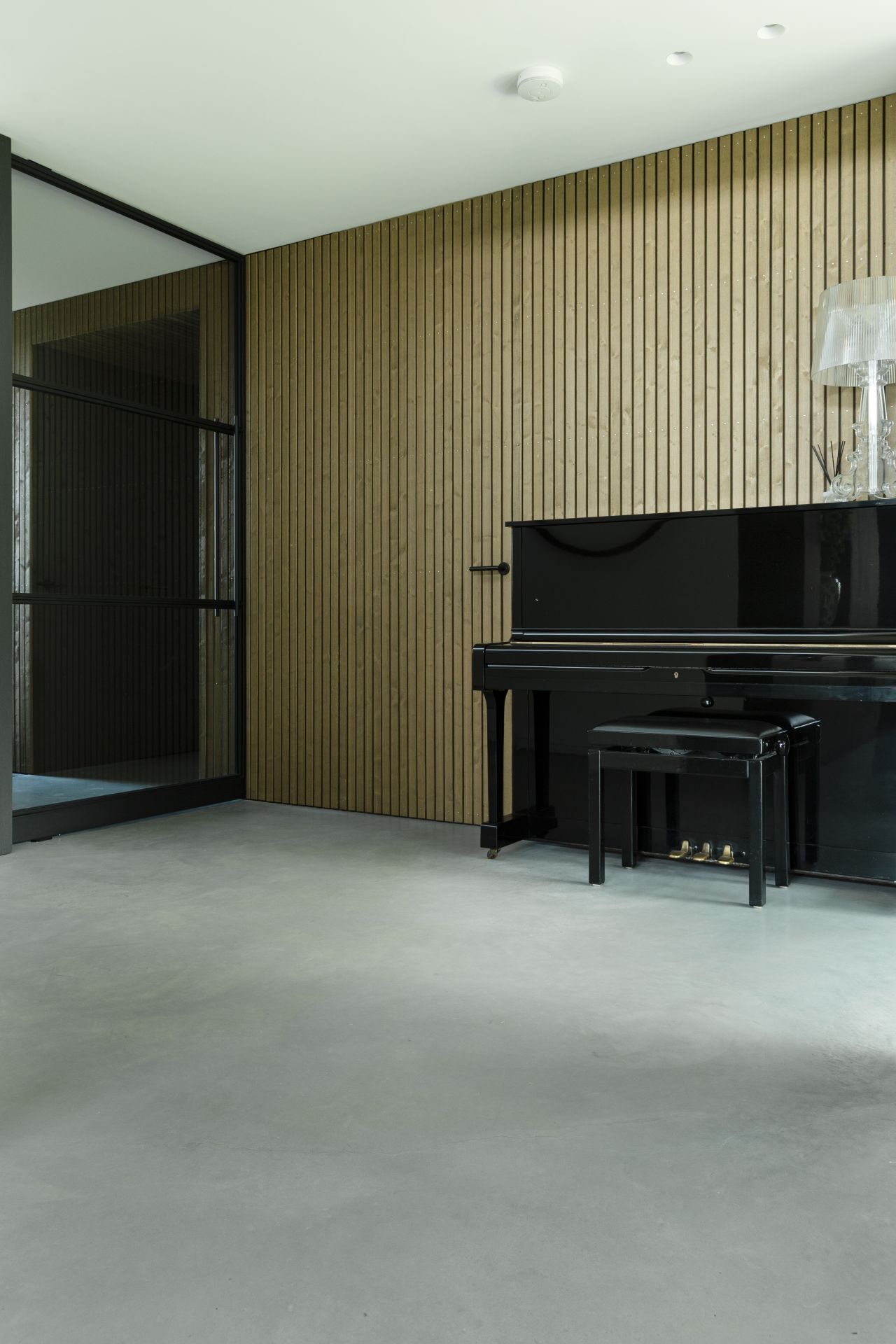
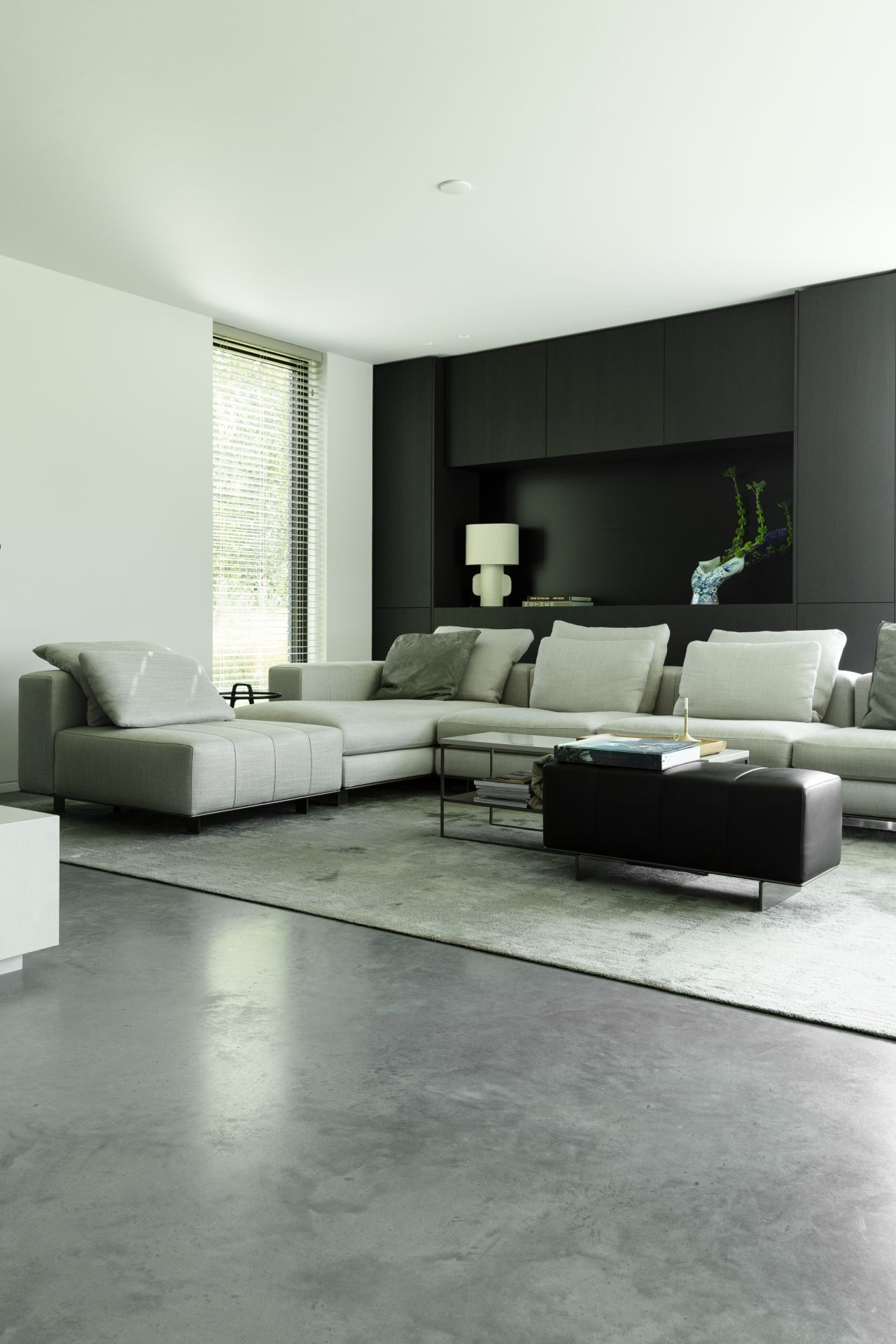
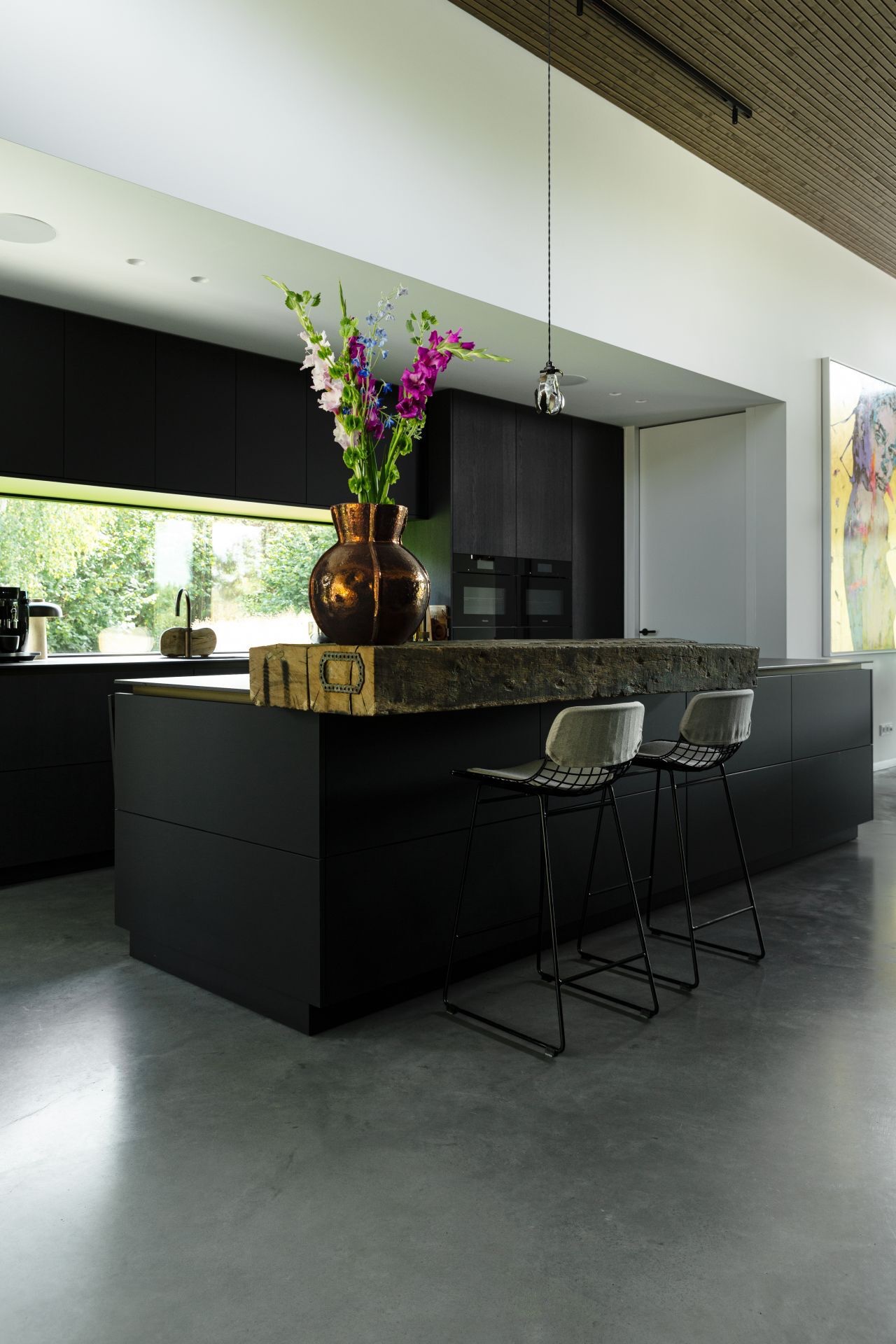
Seen across the interior, the troweled polished concrete look sits against darker joinery and a restrained palette of grey, black, and wood. The contrast is strongest where full-height cabinets run in a straight line beside the floor, and where the slab-like surface meets a wall opening or a stair edge. Instead of breaking the house into separate finishes, the floor binds the spaces together by staying visually constant.
The terrace follows the same material line
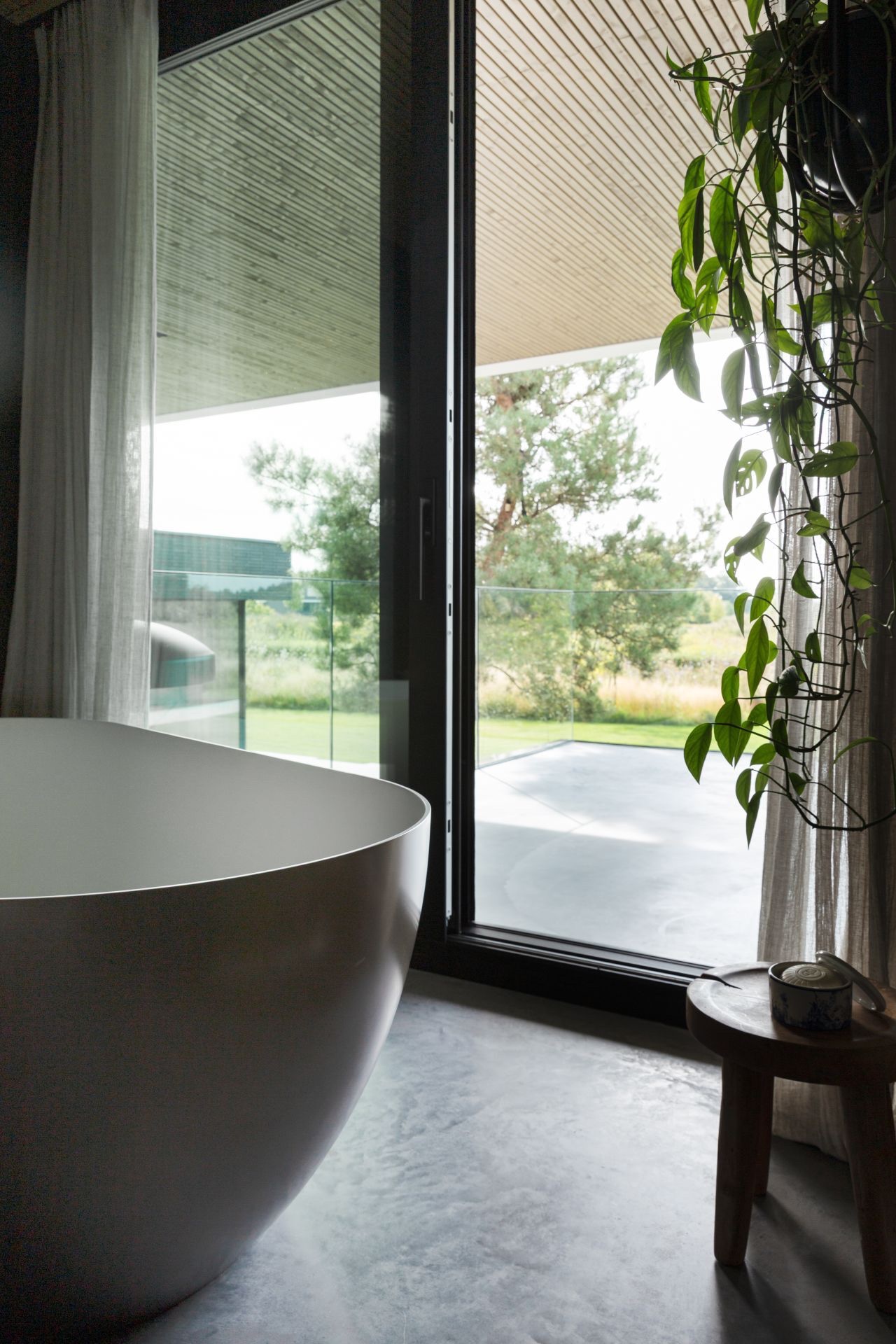
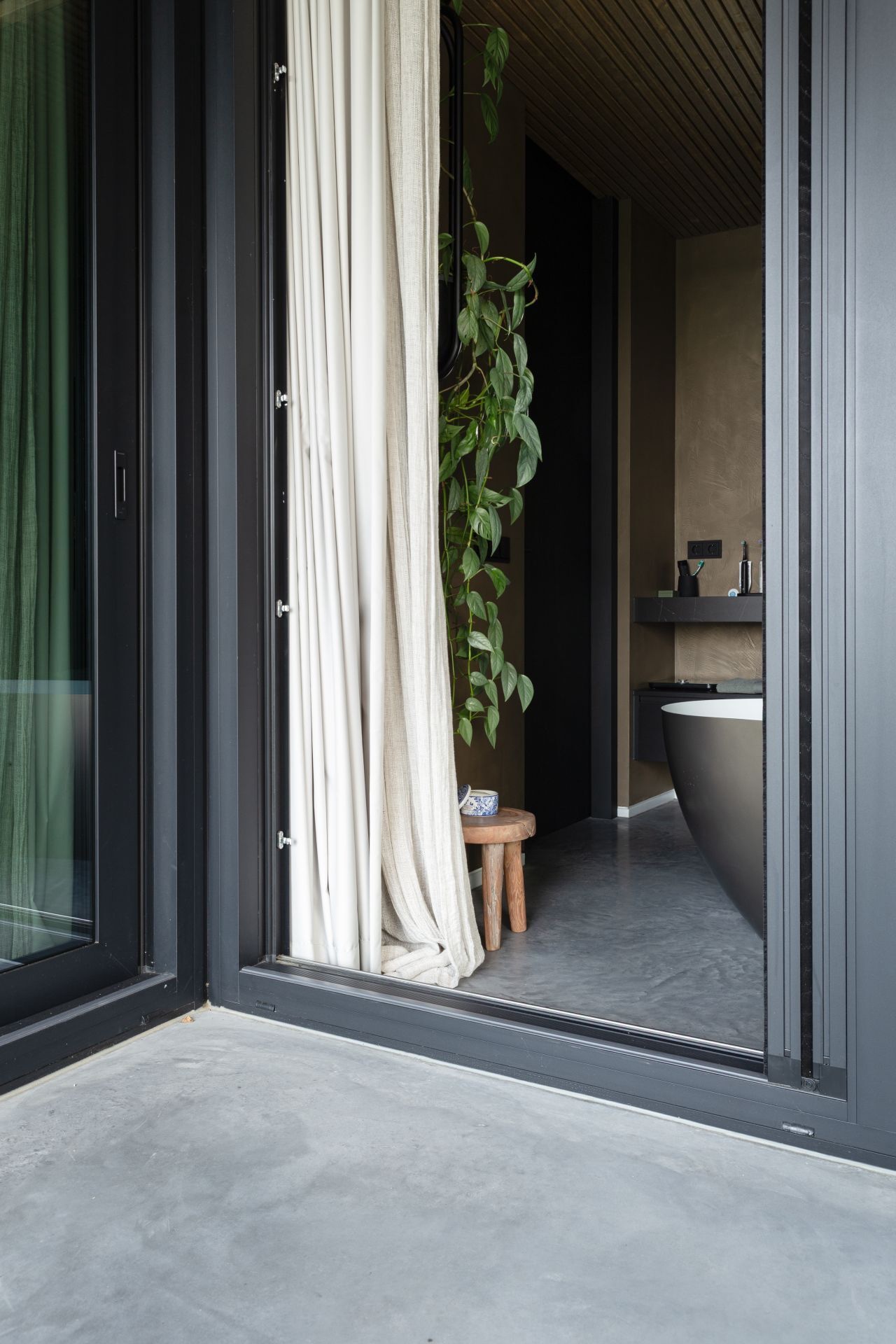
Outside, the troweled concrete terrace repeats the same language in a lighter register. It sits directly beyond the glazing, so the indoor-outdoor concrete flooring feels like one movement rather than two separate surfaces. Large glass panels frame the transition, and the terrace surface picks up the same grey character as the interior floor. The result is a clear path from living space to outdoor sitting area without a visible change in rhythm.
The terrace is not treated as a separate decorative zone. It extends the concrete floor outside in a way that echoes the interior plan, with the glass opening acting as the hinge between both sides. In the exterior views, the terrace is paired with dark masonry, black window frames, and the edge of the roof or slatted overhang above the opening. Those lines keep the focus on the floor plane and the opening to the garden.
Light grey concrete against darker joinery
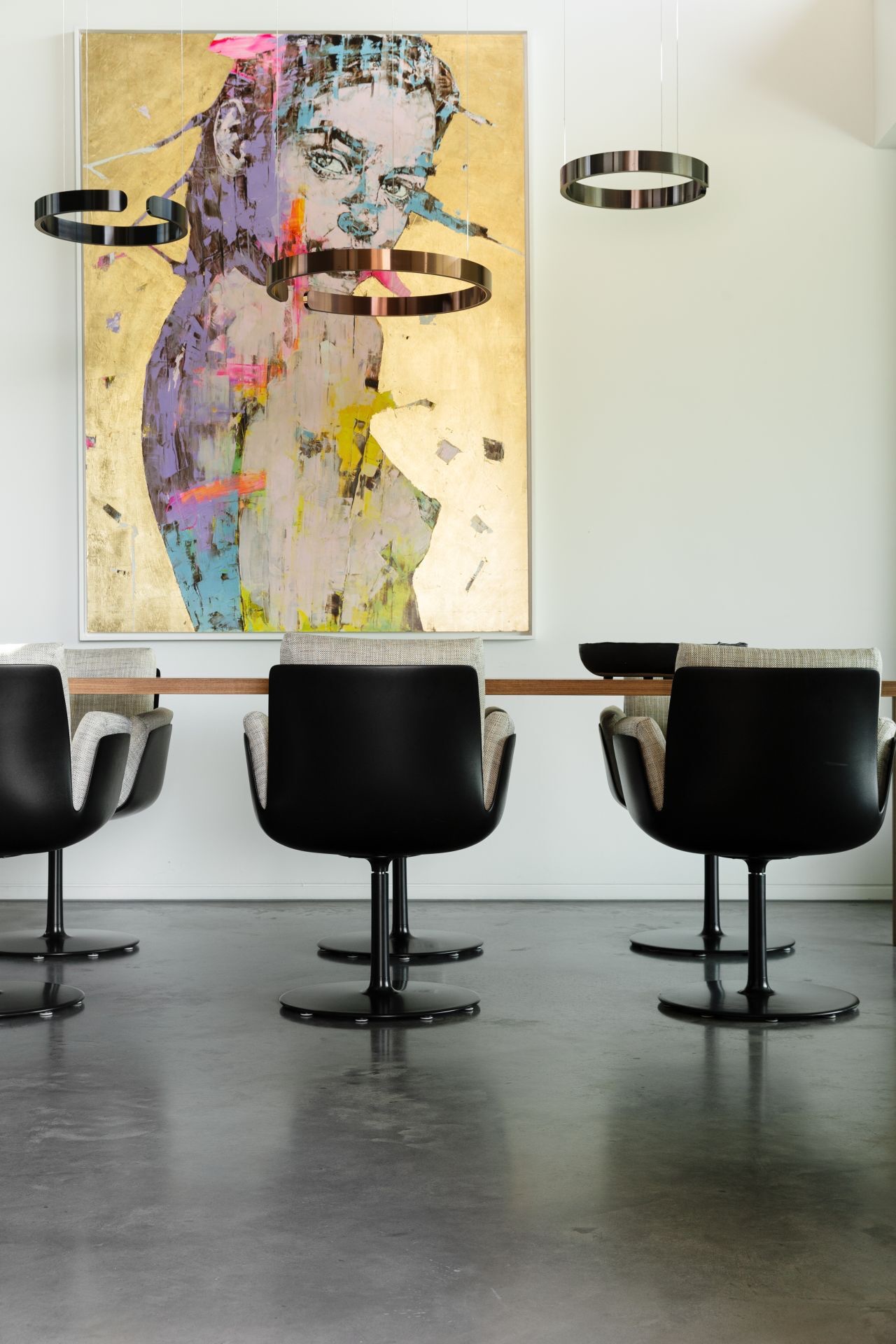
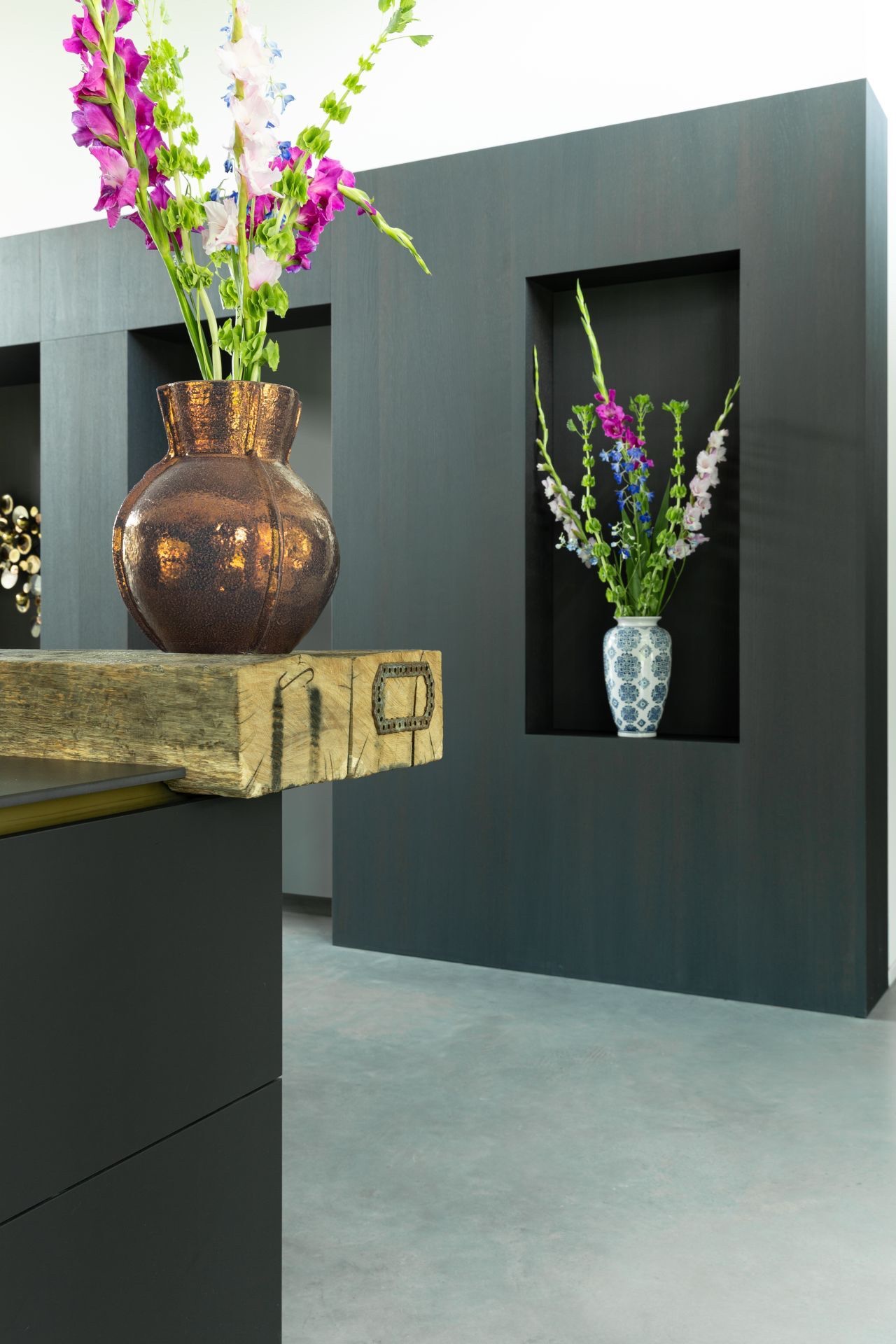
Inside, the floor’s pale concrete tone sets off the darker cabinetry. Tall storage walls, kitchen fronts, and built-in volumes appear almost graphic beside the muted surface below. This modern concrete floor with custom cabinetry is especially clear in the kitchen and circulation spaces, where the vertical planes are strict and the floor remains even. The room reads through line and contrast rather than through ornament.
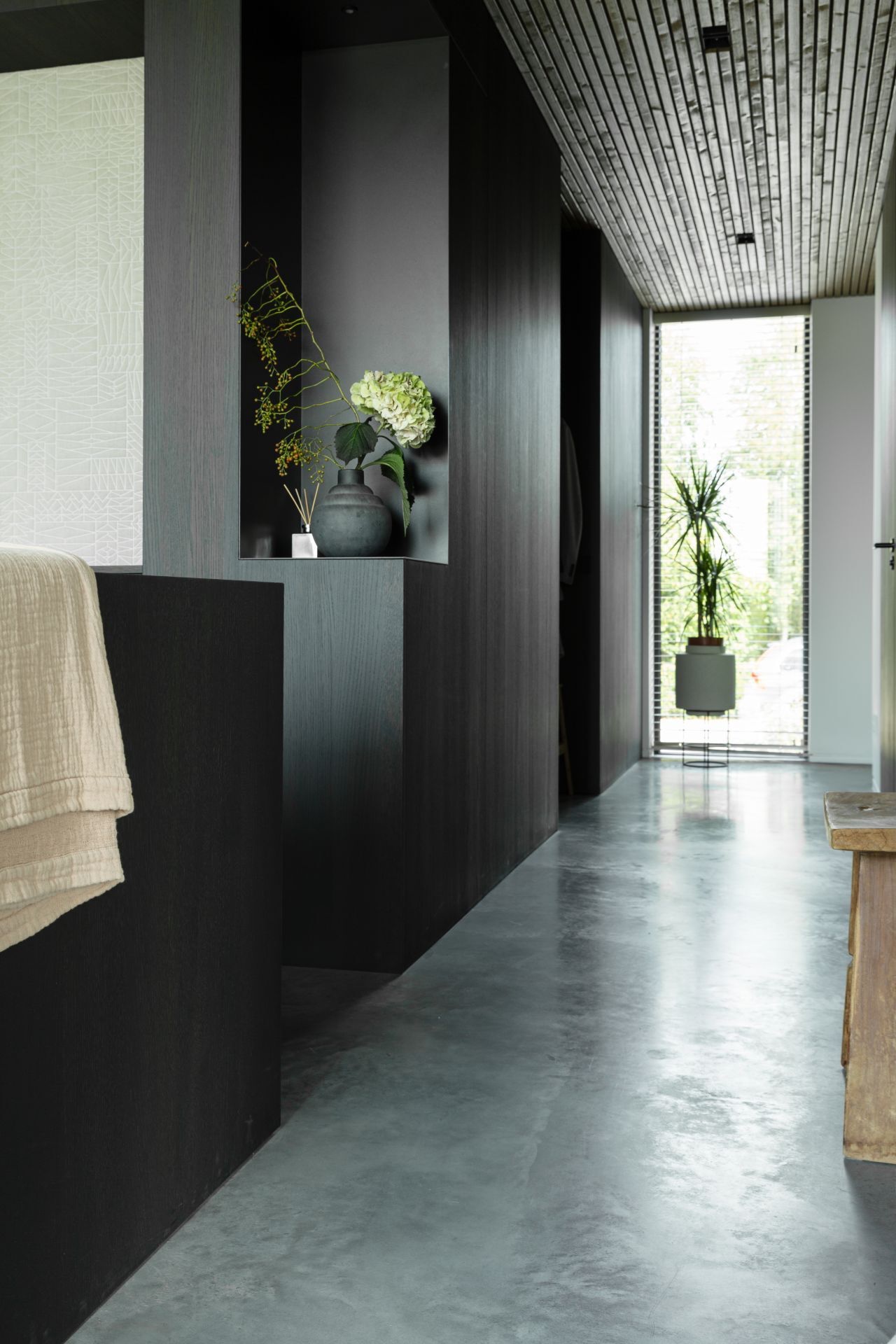
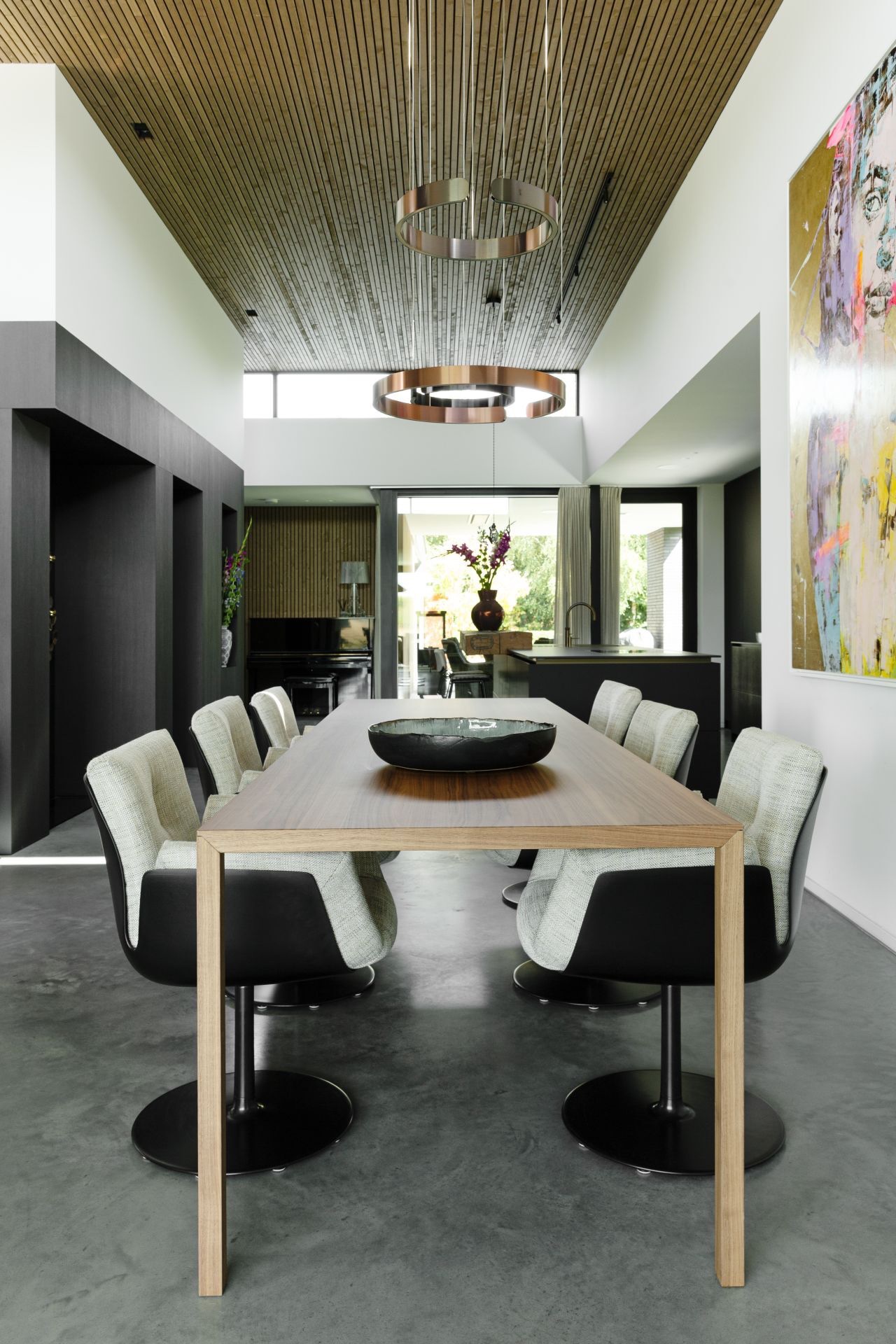
Wood softens that contrast in small but visible ways. Slatted ceiling sections and lamella accents run above the main rooms and through the passage areas, where track lighting is set into the ceiling rhythm. The wood brings a warmer grain into view without changing the structure of the interior. It sits above the concrete rather than competing with it, which keeps the floor as the grounding element throughout the house. Troweled concrete floor villa remains connected to the layout, materials and daily use of the home.
Where the concrete floor meets storage and circulation
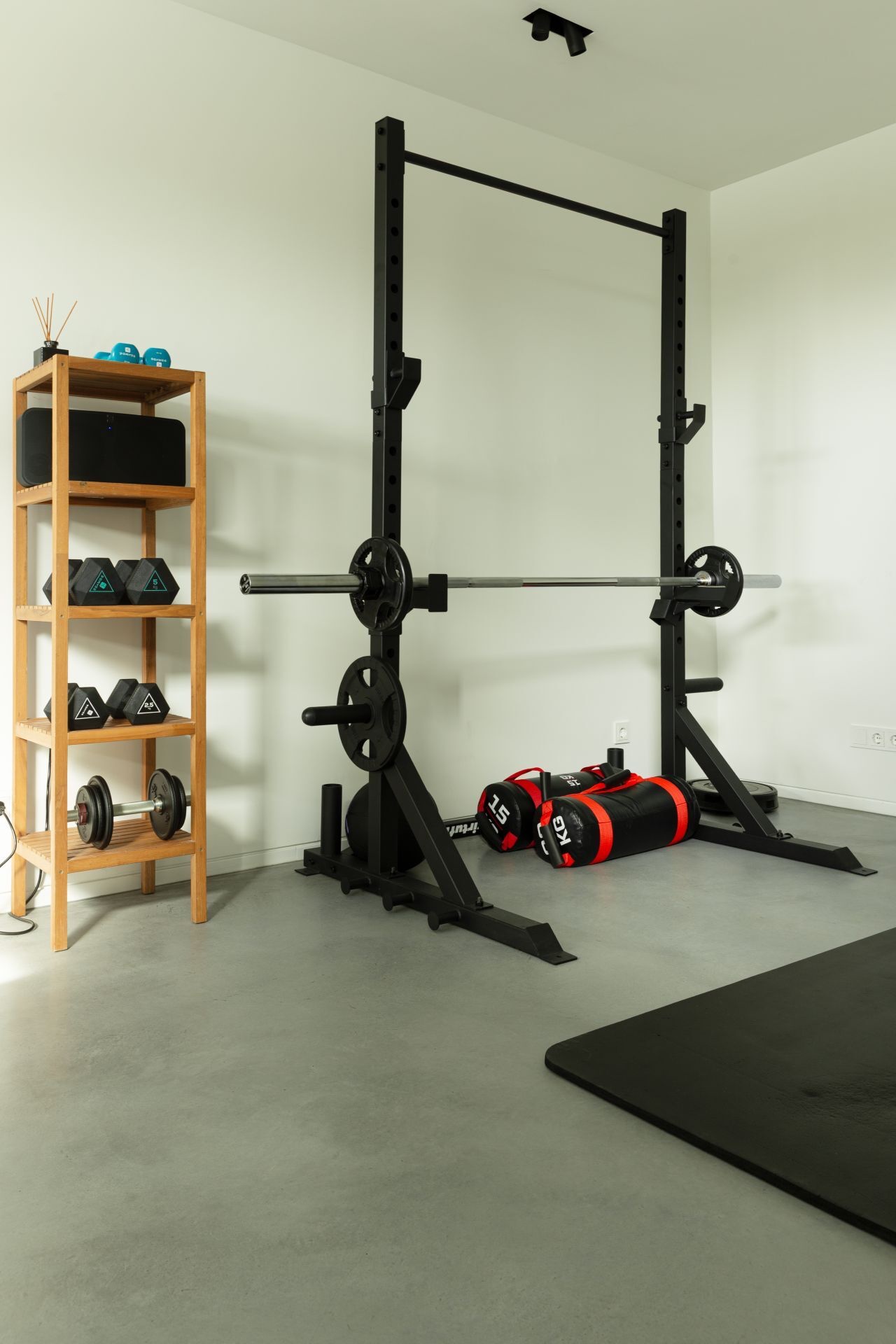
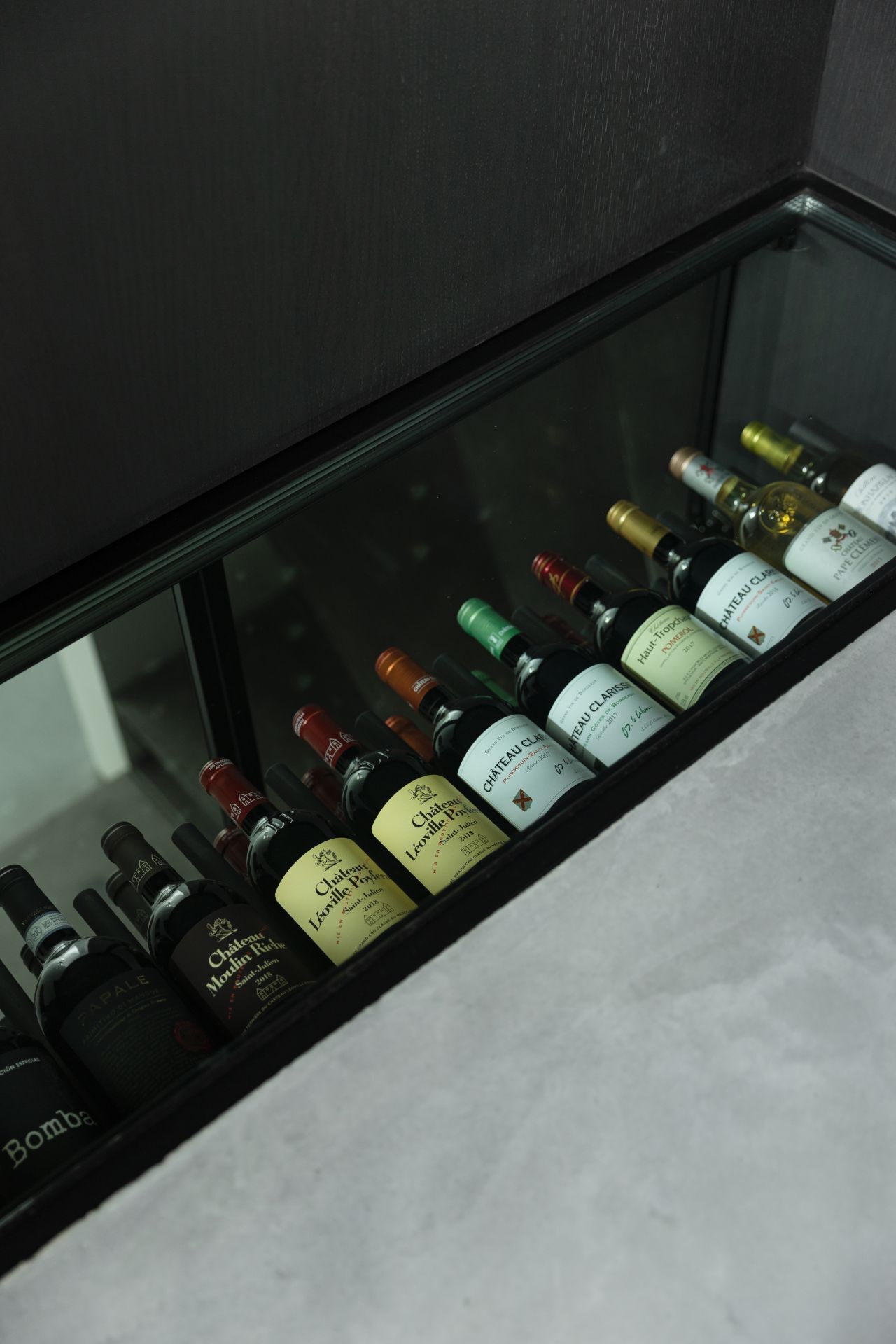
The cellar and storage areas show the same material discipline in a more utilitarian setting. There, the concrete floor continues under open shelving and functional metal structures, with a simpler light condition and fewer decorative elements. That makes the floor’s surface more obvious: smooth, pale grey, and practical in how it takes over the room. Even in these smaller spaces, the same finish is present, so the house does not switch language at the back of the plan.
Transitions matter here. A hallway, a storage threshold, or a turn toward the stairs is marked by the continuity of the floor rather than by a change in material. The troweled concrete floor villa finish keeps these routes visually connected, and the image set shows that clearly in the passage areas. The result is a plan that can be read through the floor alone, especially where walls, cupboards, and openings are kept deliberately quiet.
Glazing, reflections and the edge of the terrace
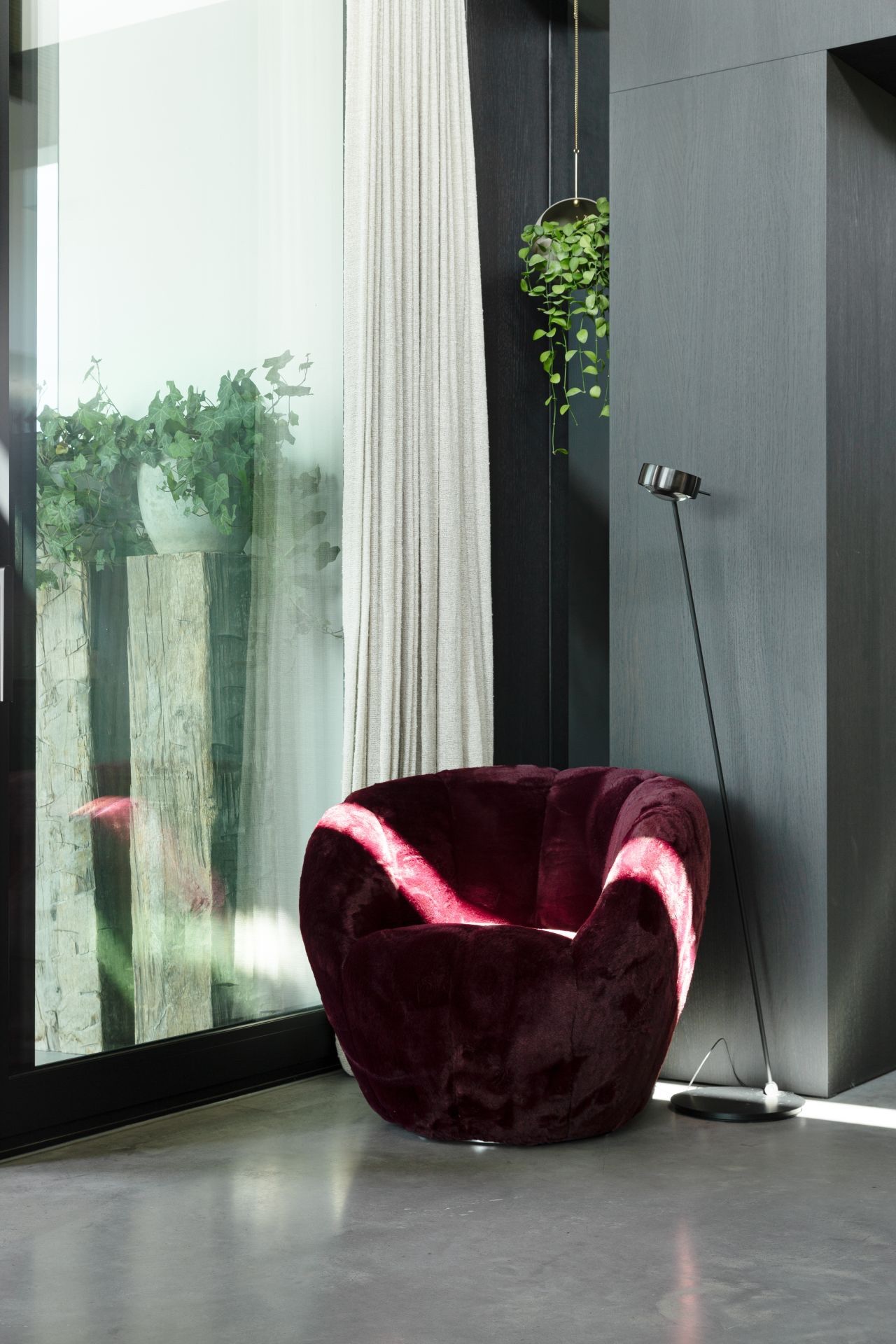
Large openings bring the green surroundings close to the concrete surface. Reflections in the glass lighten the interior, while the terrace stays visually tied to the rooms behind it. The troweled concrete terrace appears under the same daylight that reaches the inside, so the surface tone shifts only slightly as it moves outdoors. That consistency is part of what makes the project easy to follow in photographs: the floor, the glazing, and the view all sit on the same axis.
The exterior pictures also show how the concrete floor works with the darker envelope around it. Black frames, masonry, and the shadowed underside of the overhang sharpen the edge of the terrace. The floor remains the most continuous element in the scene. It carries the eye from the room to the threshold and then out toward the garden, while the architecture around it stays recessive.
A grey palette with measured contrast
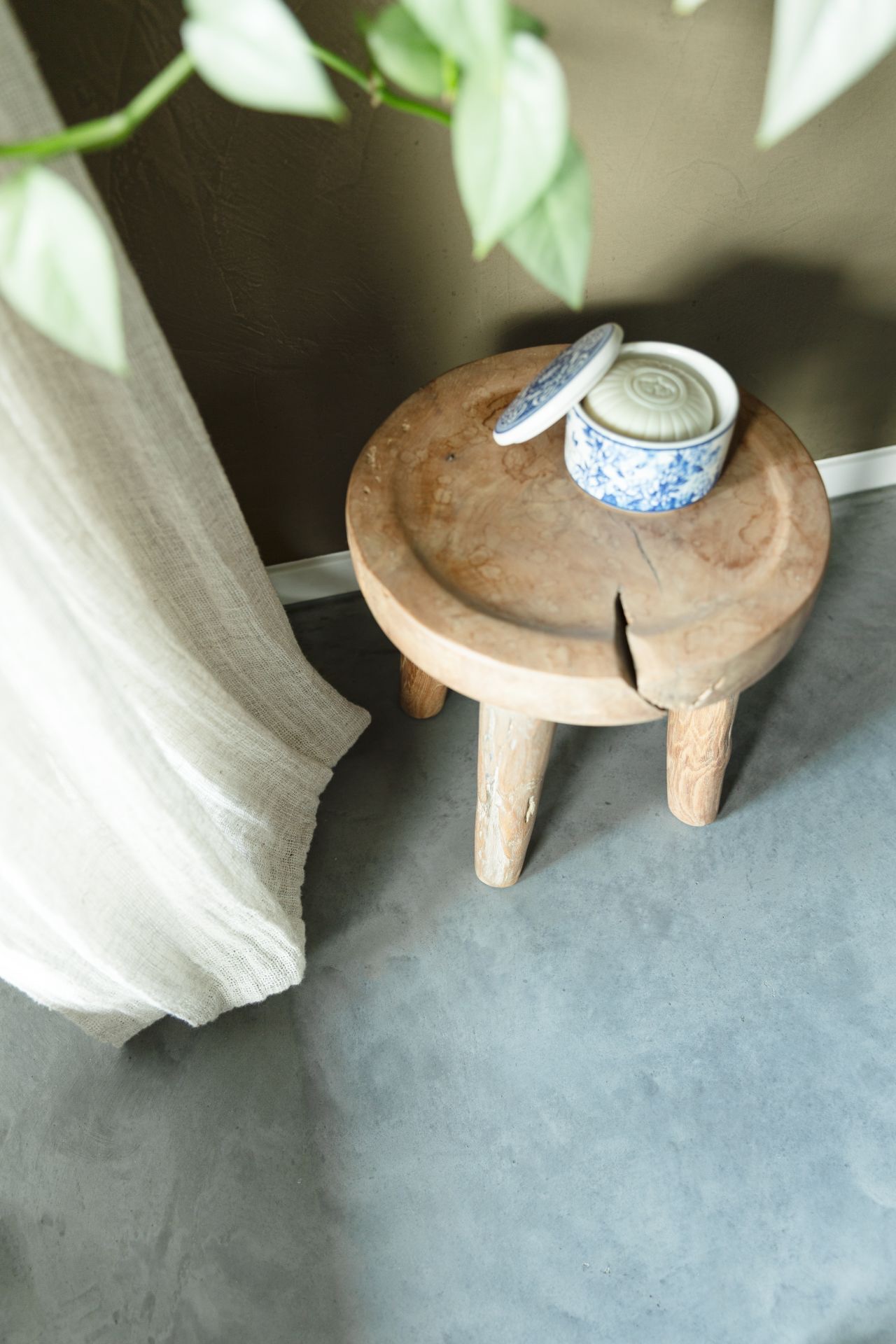
The stated 75% mid grey and 25% dark grey mix is visible in the surface as a subdued range rather than a single blocked color. Under daylight, the floor catches lighter notes near the windows and a denser grey in shaded areas, especially around corners and cabinetry. That dark and light concrete look palette gives the finish depth without making it busy. It is precise enough to support the straight lines of the interior, yet soft enough to work across the whole plan.
What stands out most is how little the floor asks for attention, even though it is present everywhere. It frames the darker furniture, the wood ceiling details, and the glass openings without stealing focus from them. This is what the continuous concrete floor indoor outdoor concept achieves here: not a dramatic gesture, but a steady surface that lets the rooms, the terrace, and the route through the house stay connected in plain sight.
Photographer and materials
Photographer: Willem Designvloeren. Type of floor: troweled concrete floor indoors plus terrace. Color: 75% mid grey and 25% dark grey. The project shows that same finish across the living spaces, service rooms, and outdoor terrace, with each area kept readable through light, line, and the repeated concrete surface. Troweled concrete floor villa remains connected to the layout, materials and daily use of the home.
Want to see more of Willem Designvloeren? View the page of Willem Designvloeren for even more great projects and company information.



NEW 2026 Jubileum Edition The Best Interior Designers Benelux
Order Now €125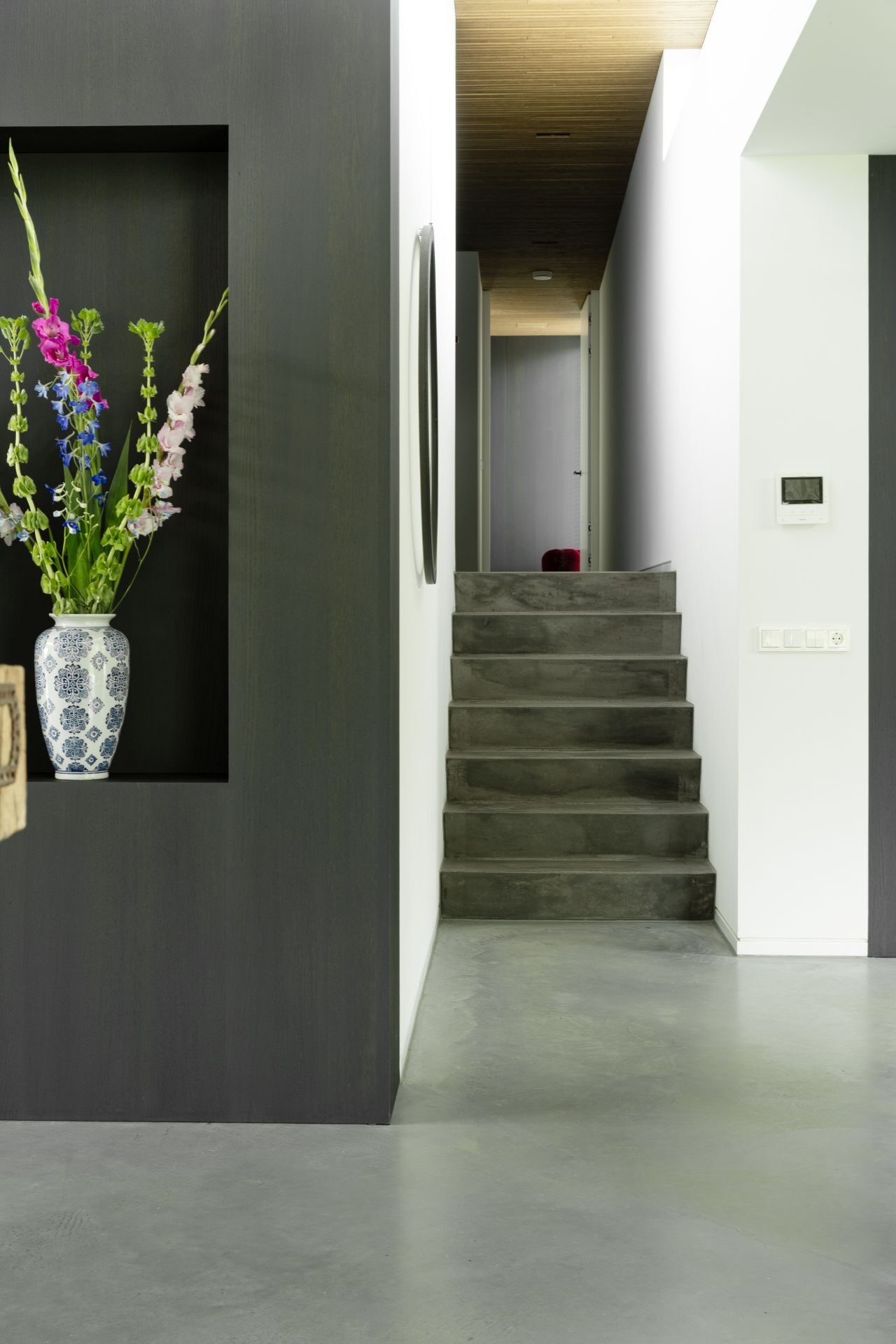
NEW 2026 Jubileum Edition The Best Interior Designers Benelux
Order Now €125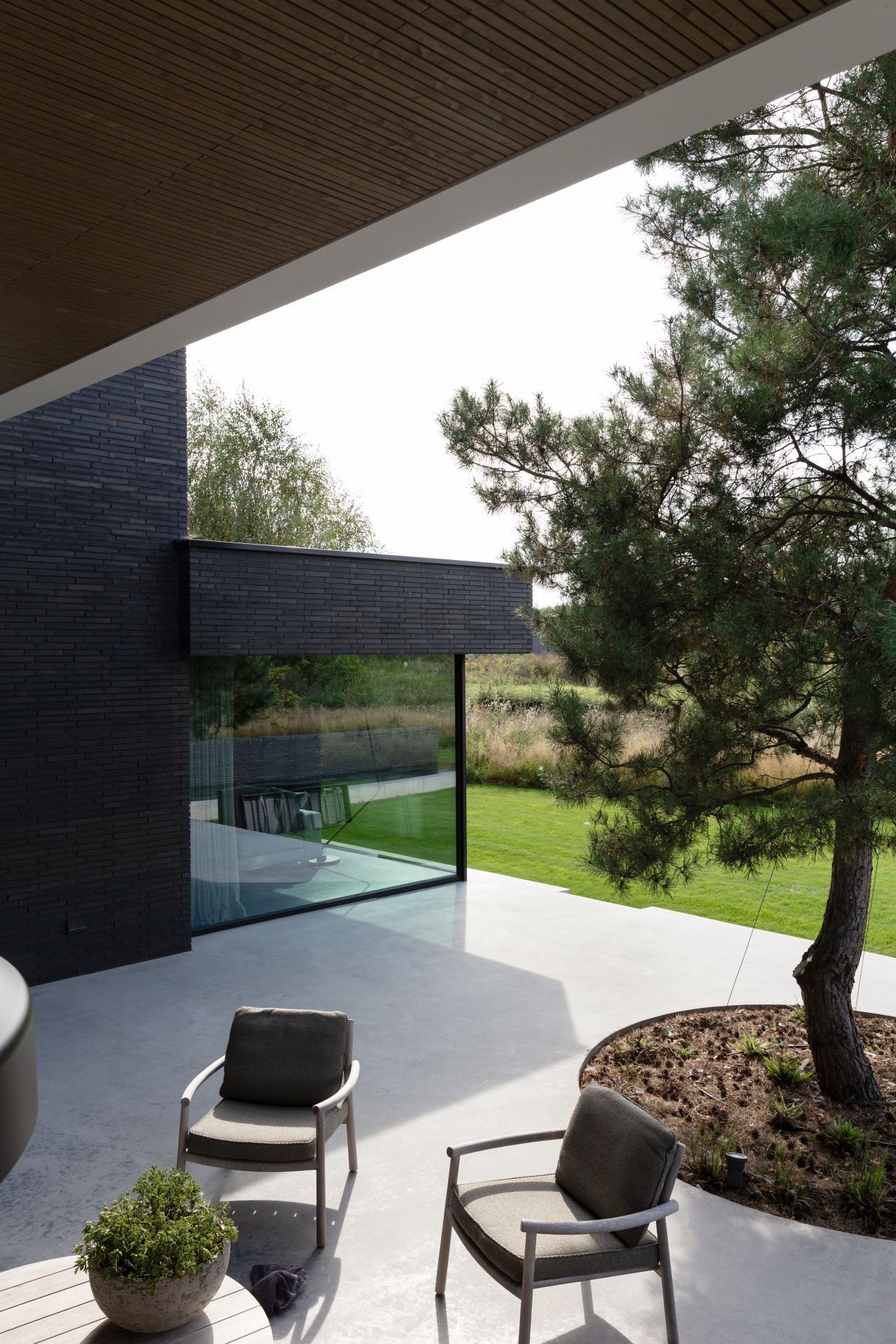
NEW 2026 Jubileum Edition The Best Interior Designers Benelux
Order Now €125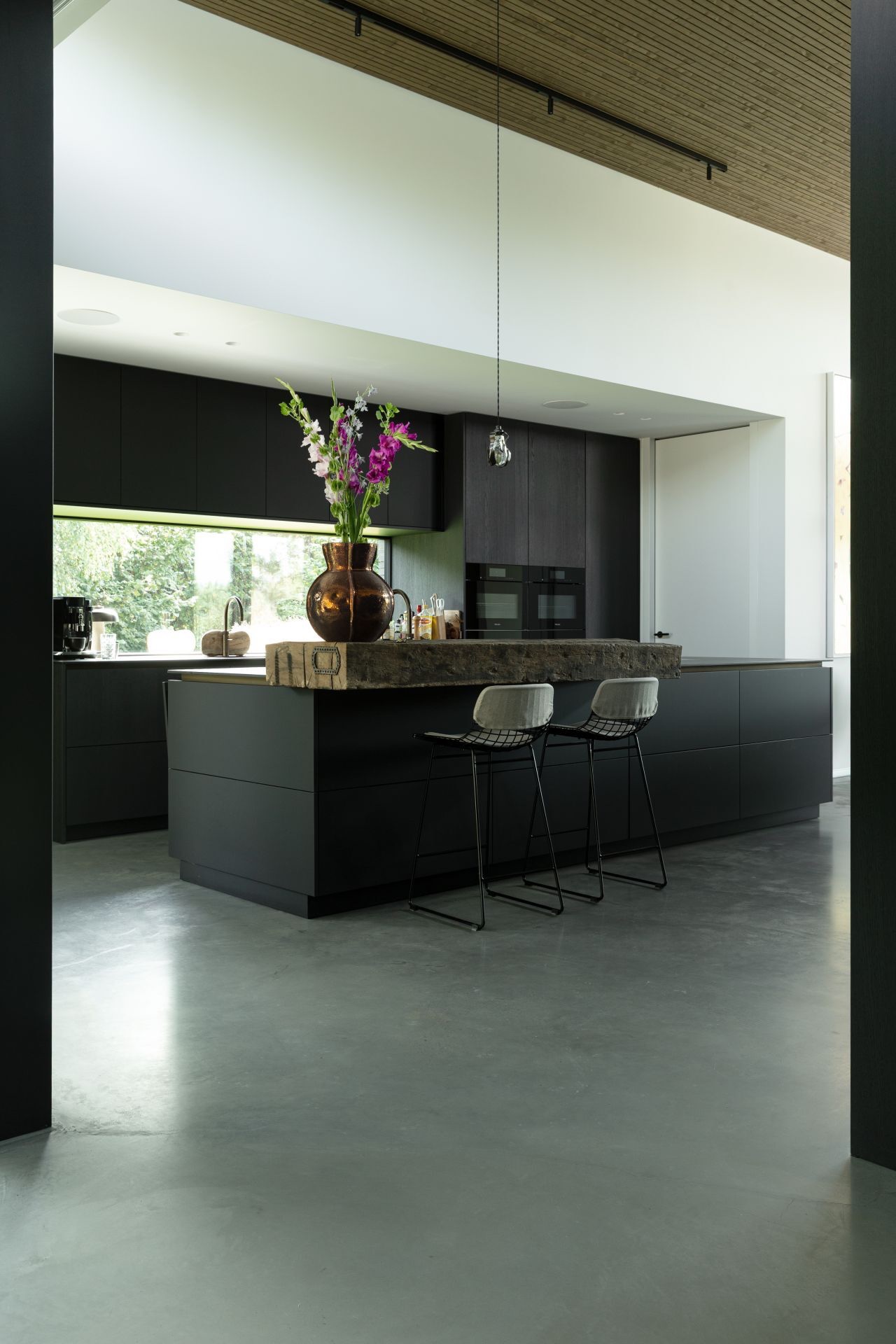
NEW 2026 Jubileum Edition The Best Interior Designers Benelux
Order Now €125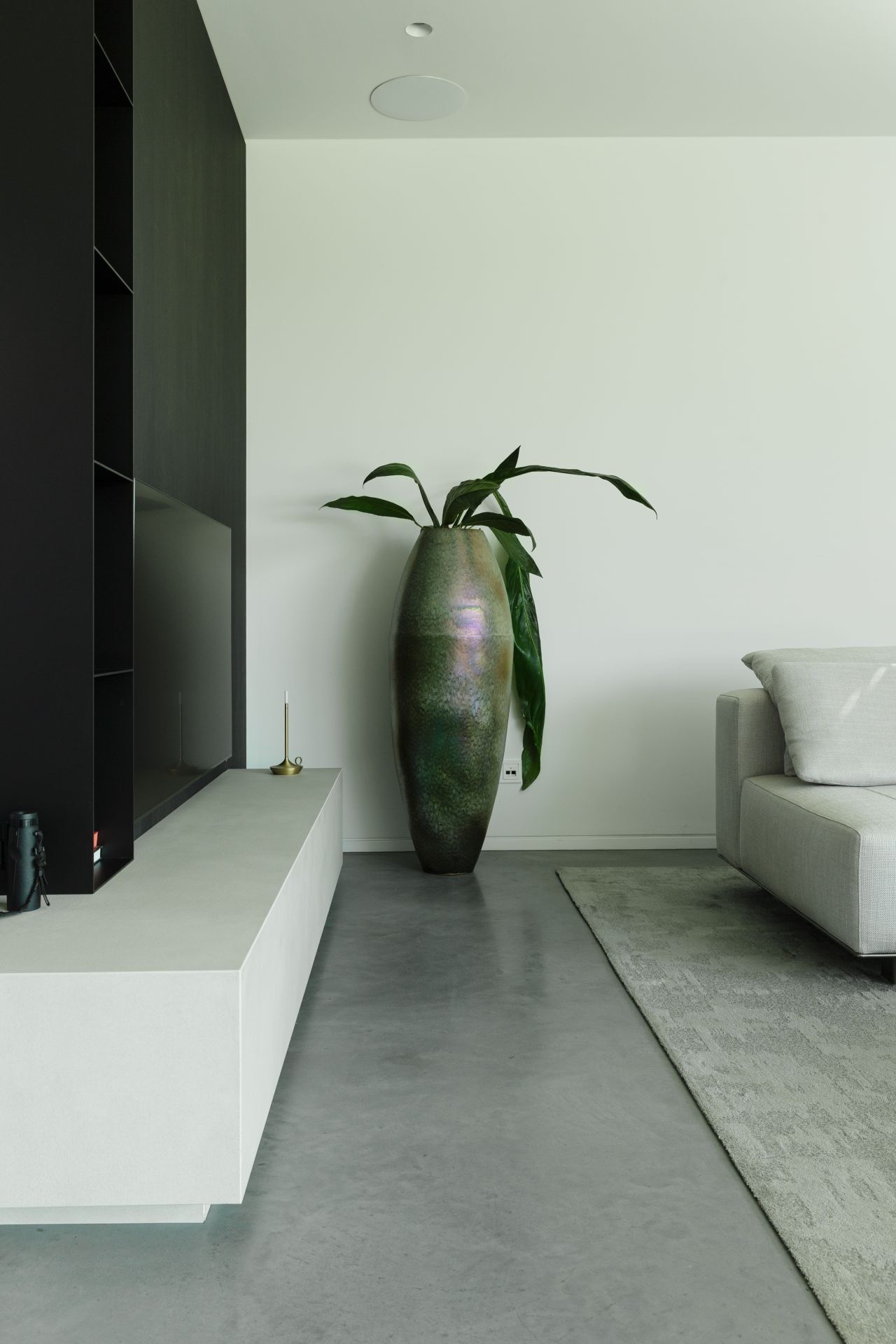
NEW 2026 Jubileum Edition The Best Interior Designers Benelux
Order Now €125