






Custom showroom finishing with metal, glass and warm light
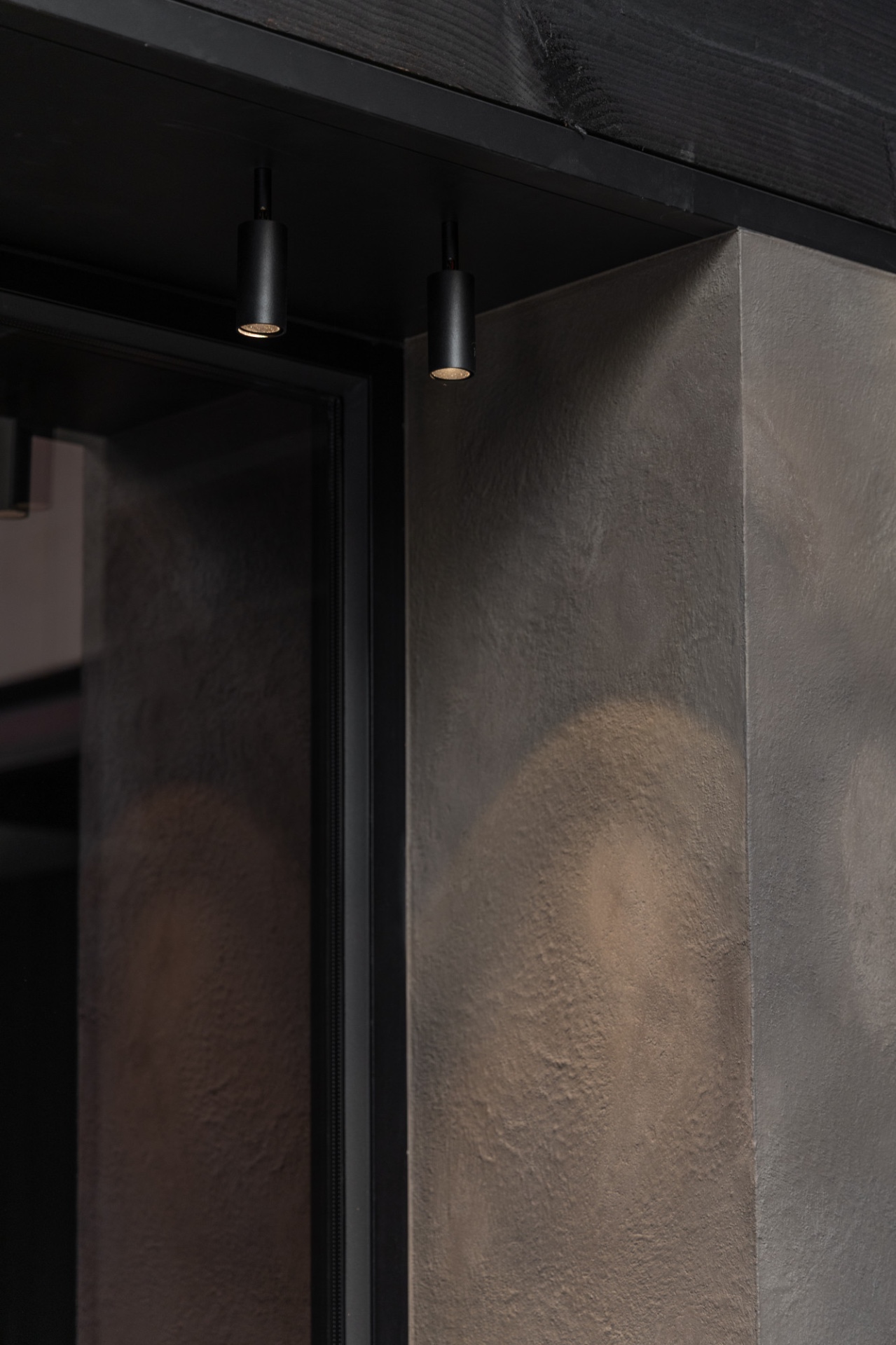
A matte wall surface, a line of glass, and black metal framing set the tone from the first view. This custom showroom interior was finished with a fully custom technique, developed to suit a space that already spoke the language of metalwork. Rather than smoothing everything into one surface, the finishing leaves room for contrast: cool metal against warmer textures, sharp edges against soft light. The result is a dark industrial showroom that feels composed through detail rather than decoration.
Custom showroom interior as a spatial starting point
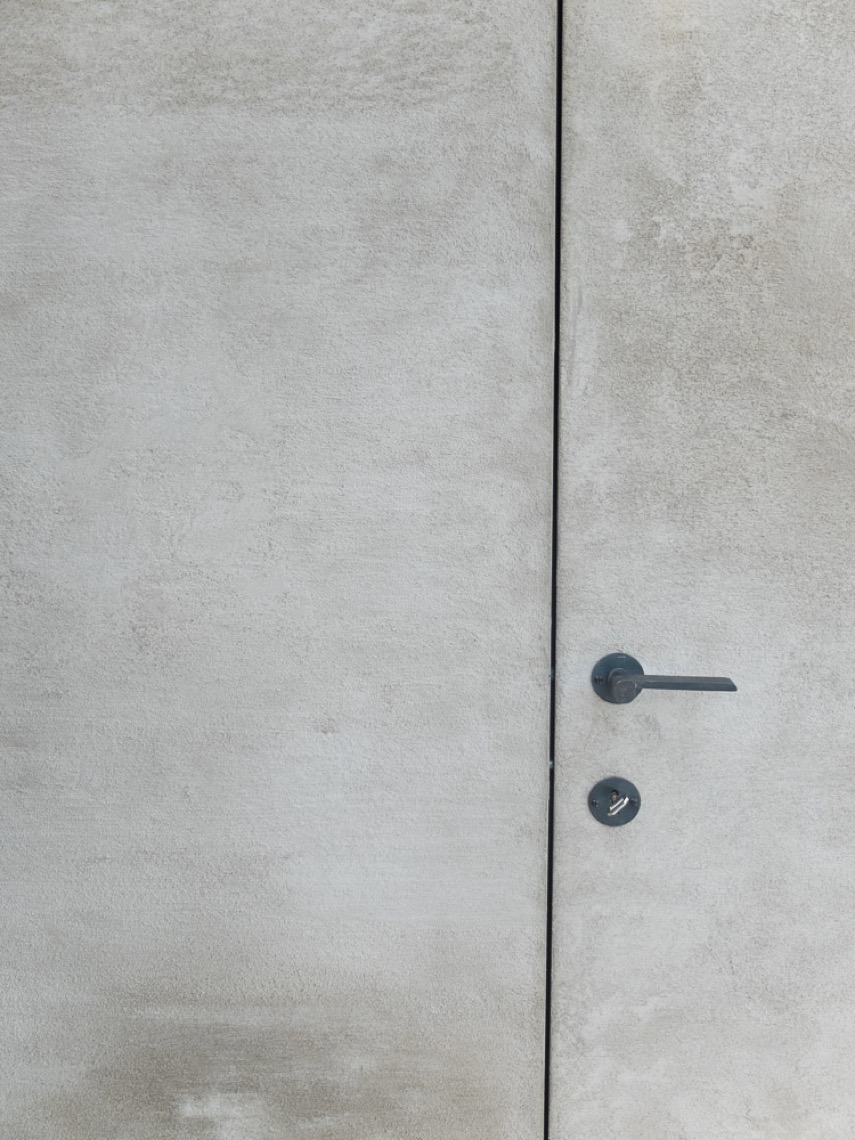
The project began with a clear brief: develop a custom technique for the showroom finish, tailored to the atmosphere the client had in mind. That freedom shows in the way the materials are kept close to their own character. The concrete look plaster wall reads as solid and quiet, while the black metal framing draws crisp lines around the glazed cabinet fronts. Nothing fights for attention. The surfaces sit beside one another and let the showroom’s structure do the work.
What makes the space interesting is the way the finish supports the existing sign of the metalwork instead of softening it away. In a custom showroom interior like this, the transition between wall, cabinet and opening matters more than any single decorative gesture. The glass sightlines keep the room open, but the dark framing holds that openness in place. You read the cabinet wall as a sequence of framed views, each one catching light differently.
Glass display cabinets with a darker edge
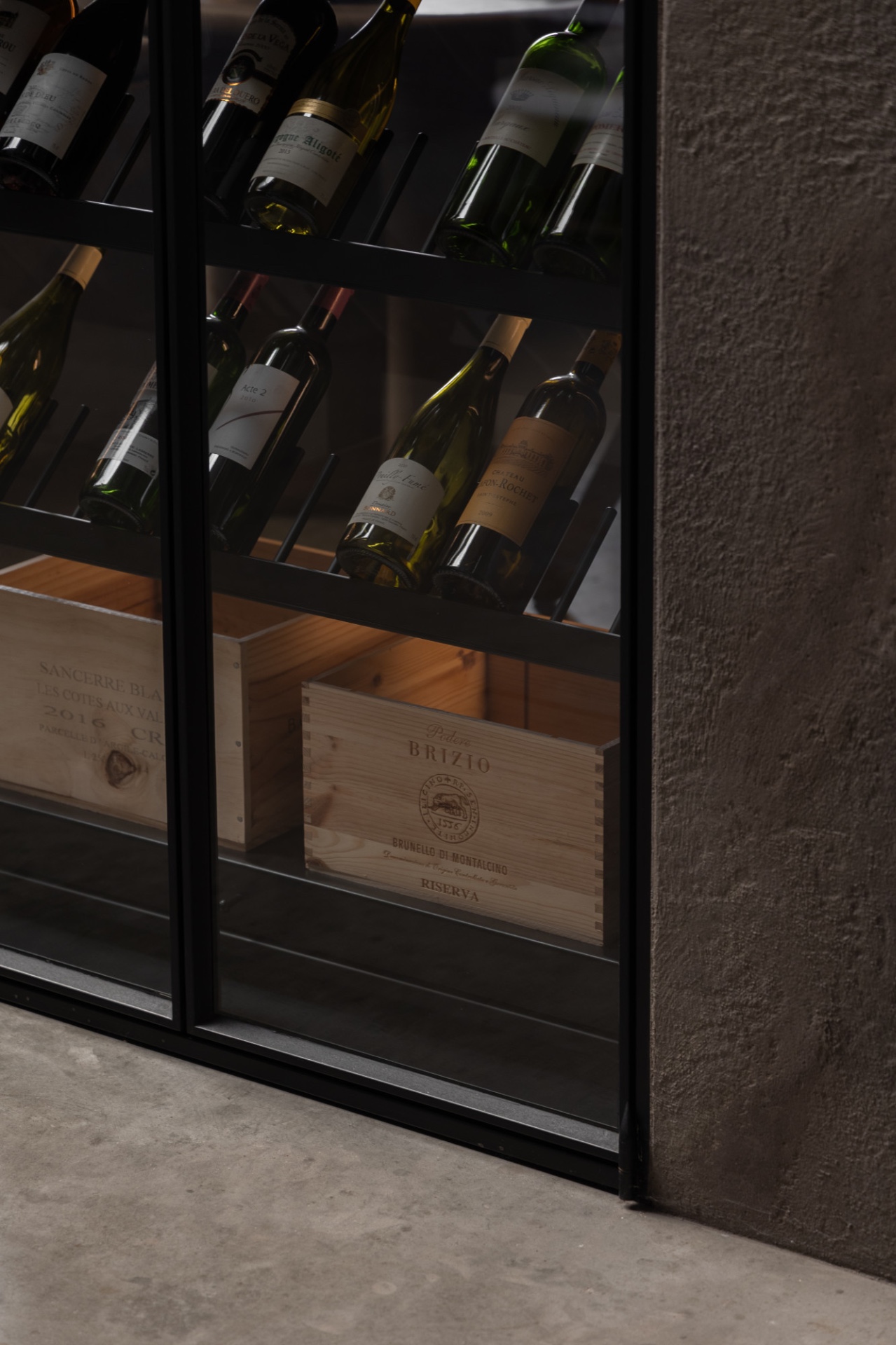
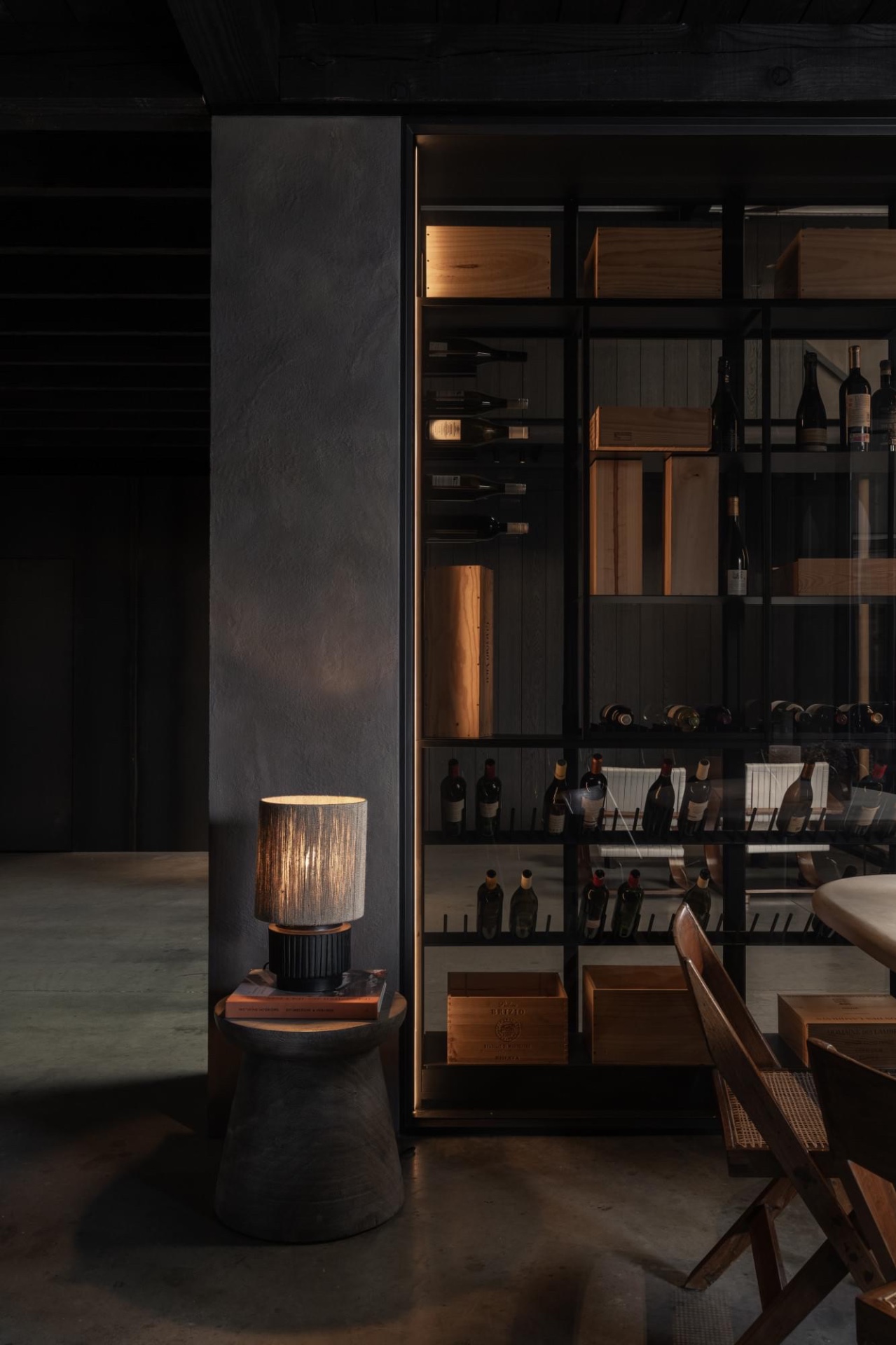
The bespoke glass display cabinets are one of the clearest visual anchors in the room. Slim black metal borders outline the shelves and compartments, while the glass keeps the contents visible without breaking the rhythm of the wall. Hints of wood inside the cabinets soften the colder materials. They appear as back panels and small storage boxes, set against the darker structure, so the display does not become sterile. It stays precise, but never flat.
Several images show how the cabinetry works as a continuous surface rather than a loose collection of units. The shelves are stacked with care, the vertical lines remain sharp, and the warm accent light is allowed to graze the edges. That lighting is not hidden by excess detail. Instead, it marks the depth of the cabinet wall and makes each niche legible. In a dark industrial showroom, that kind of control is what keeps the room readable.
Warm light where the cabinet turns inward
Warm indirect lighting lines run through the cabinet fronts and along the vertical edges, giving the glass a soft glow without washing out the darker materials. Recessed spot lighting adds focused highlights on the matte wall surfaces and in the niches. The light does not behave like a backdrop; it shapes the depth of the cabinetry and the cut of the openings. A few images show it catching the wood inserts and the shelf fronts, which makes the cabinet wall feel layered rather than sealed.
That light also clarifies the relationship between open and closed storage. Behind the glass, the darker framework is still visible. Around it, the wall finish remains calm and slightly absorbent, with a concrete look plaster wall texture that avoids reflection. The combination gives the custom showroom interior a measured contrast: polished enough to show detail, restrained enough to let the materials speak in their own tone.
Wood accents that cut into the darker surfaces
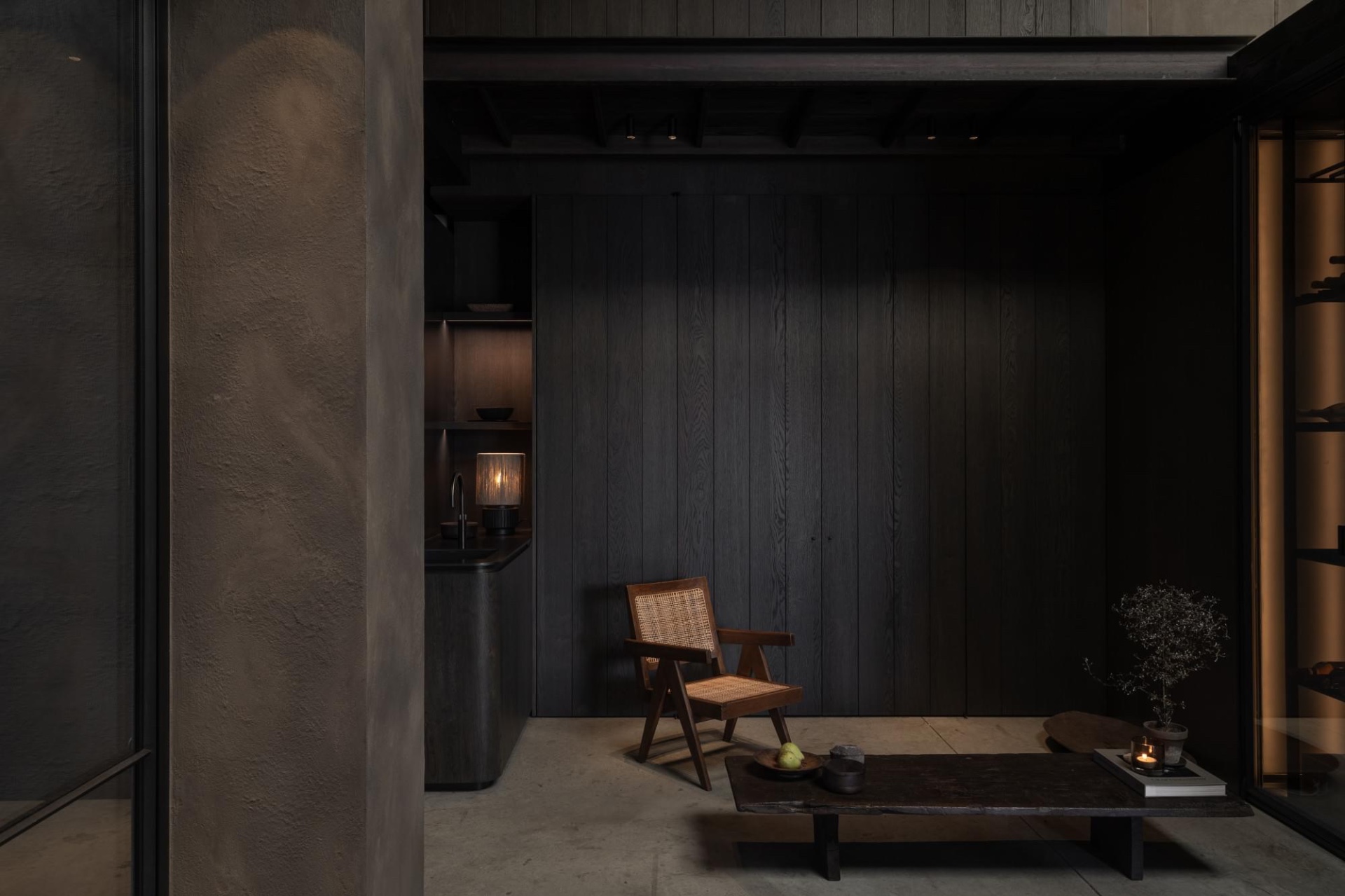
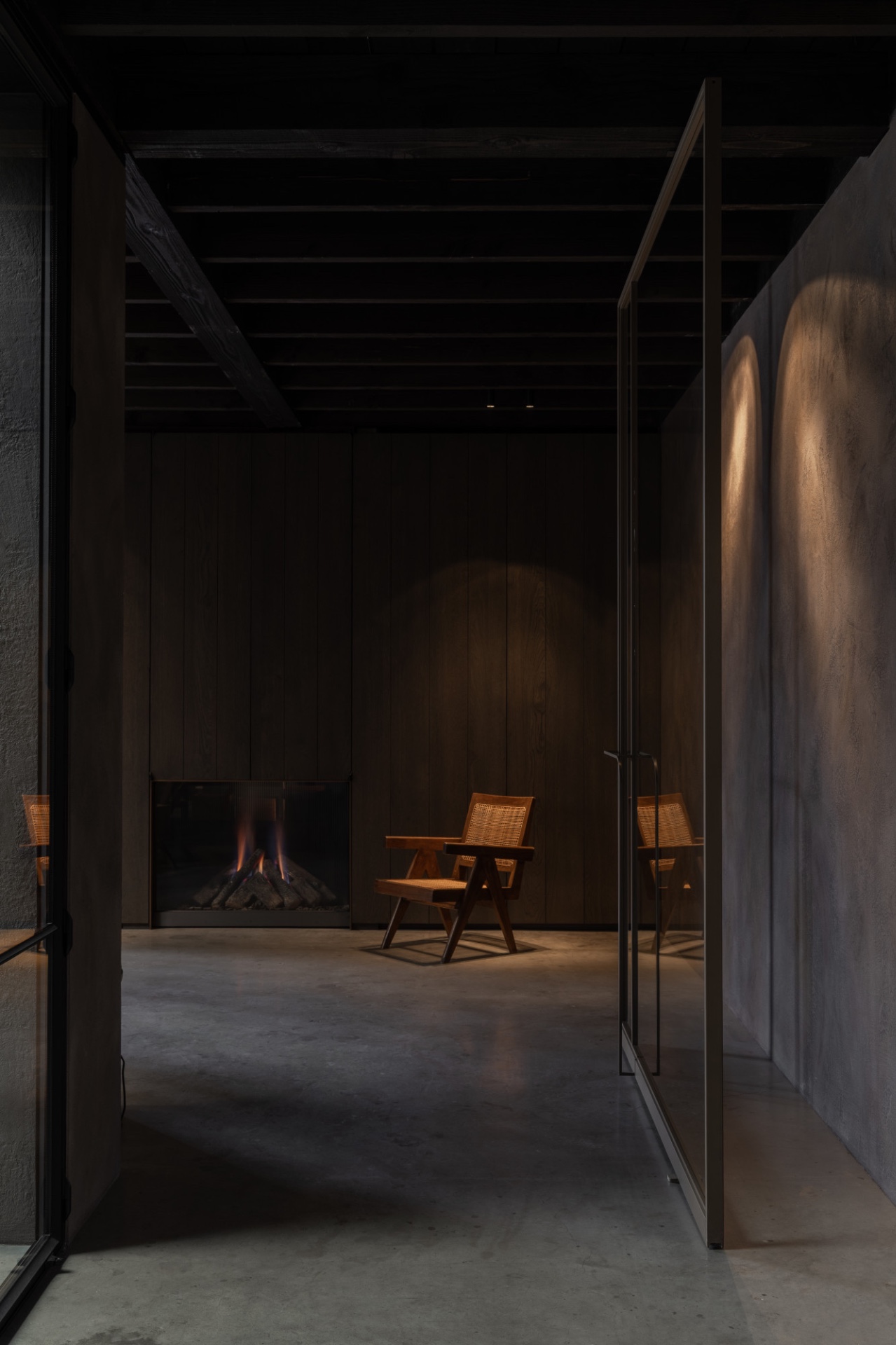
Wood appears in controlled sections rather than broad panels. A wood slat wall adds vertical rhythm, while recessed niches use the same material to draw the eye inward. In the background of one view, the slats frame a central opening and the fire sits inside that opening like a fixed point. Elsewhere, wood shows up as a lining inside cabinets or as a backing for display objects. These inserts are small, but they change how the darker metal and glass are read. They stop the room from becoming one-note. Custom showroom interior remains connected to the layout, materials and daily use of the home.
The wood elements also mark transitions. Where the wall shifts from a plain plaster finish to a lined niche or a glazed opening, the change in texture is immediate. That matters in a showroom where every surface is visible. The wood does not compete with the black metal framing. It interrupts it, breaks the grid, and gives the eye a pause before moving on to the next cabinet bay or opening.
Glazed openings and sightlines to the rear
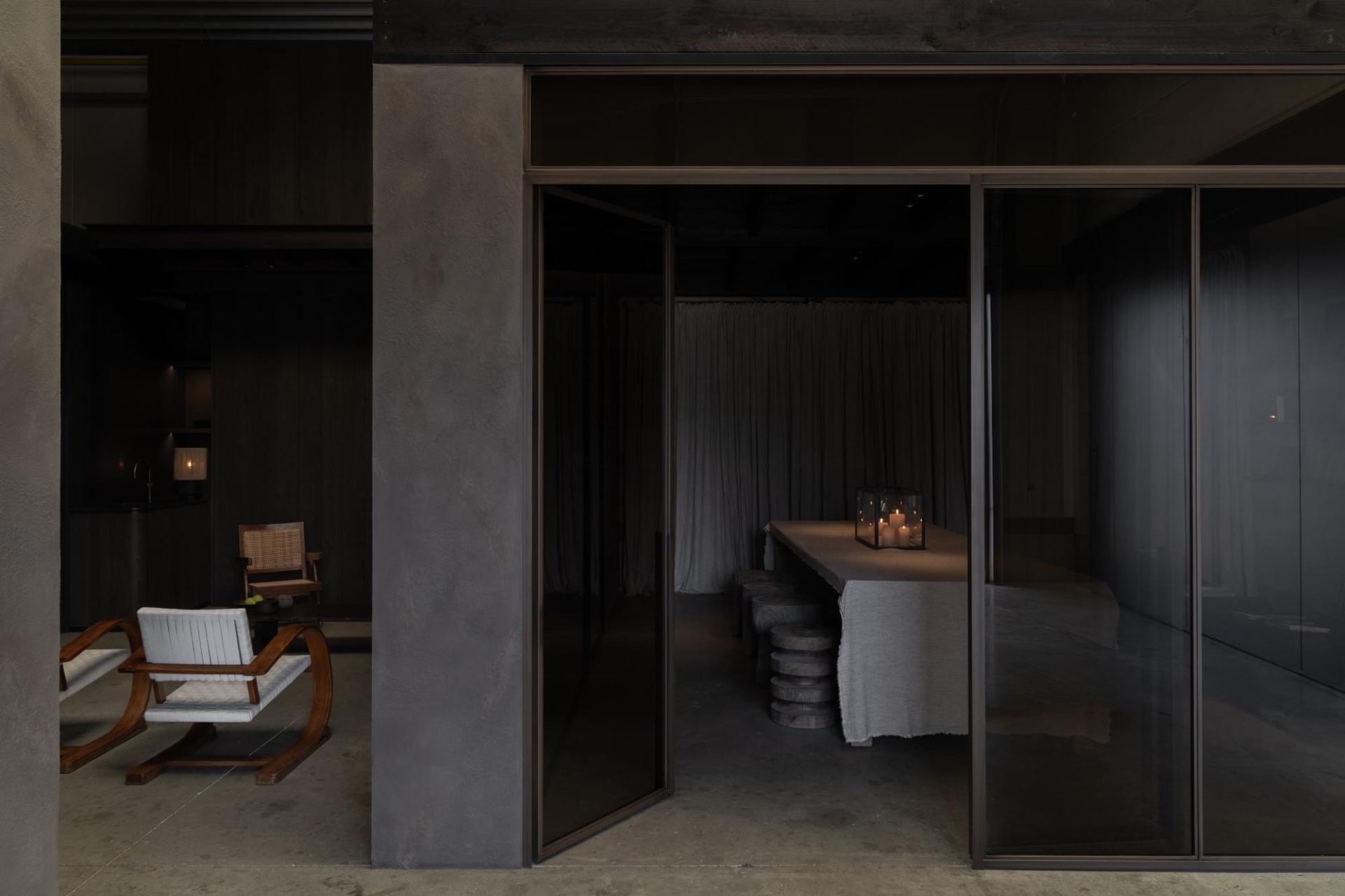
Glass is used not only in the cabinet fronts but also in the room’s partitions and openings. Those glazed sightlines create a sense of depth, allowing views toward the back area while still keeping the layout defined. In one image, the glass reads almost like a threshold rather than a wall. In another, it sits in front of a more private zone, so the showroom keeps its layered feeling without losing clarity. The effect is subtle and practical at once.
Because the framing stays slim, the glass remains the main event in those transitions. Reflections are kept under control by the darker finish and the matte wall surfaces. You notice the route through the room, the shift from display wall to opening, and the way the space narrows before opening again. That movement is part of the project’s character. The custom showroom interior is not only about display, but also about how the eye travels across it.
Concrete look plaster and matte surfaces at the right distance
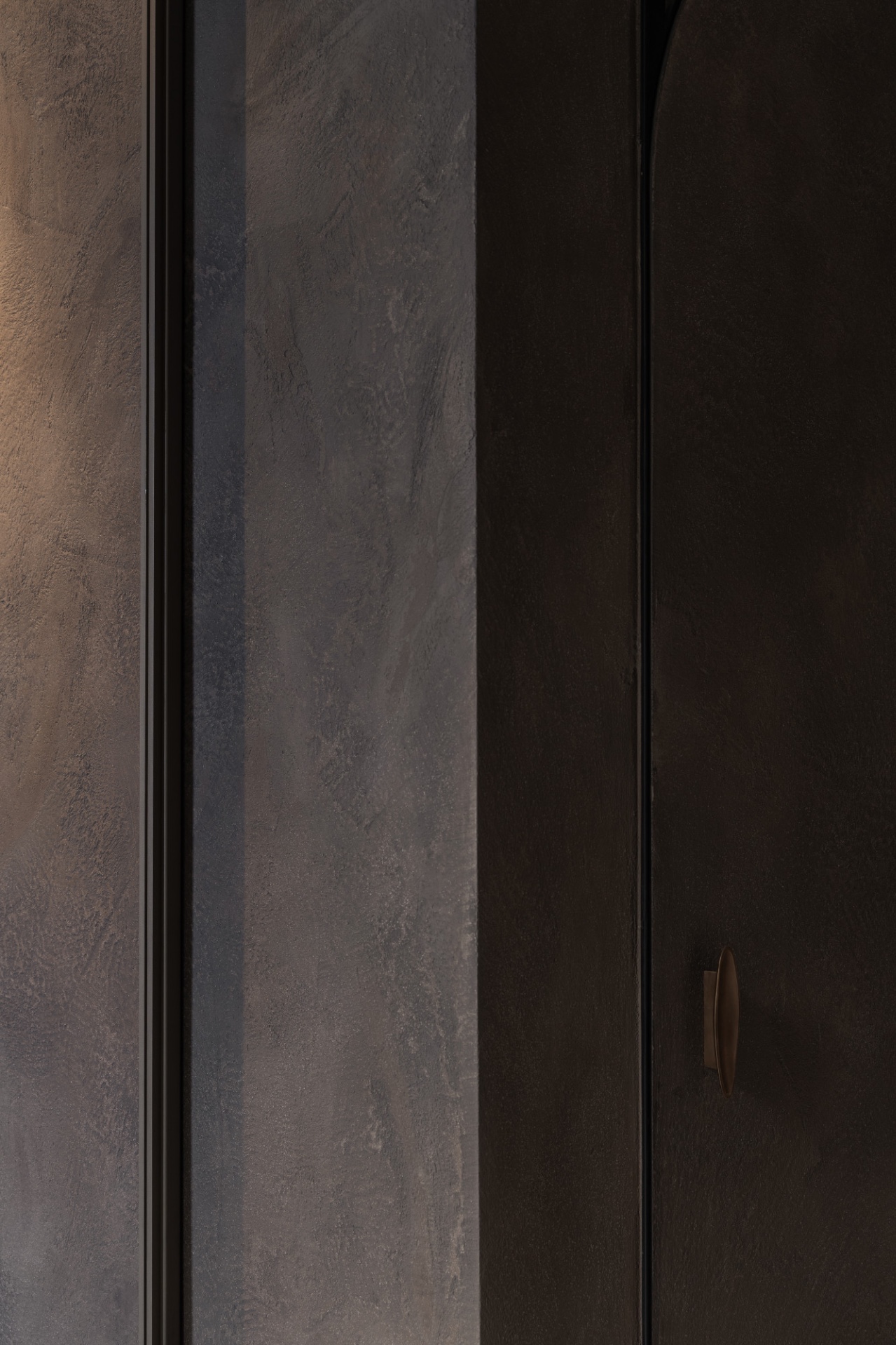
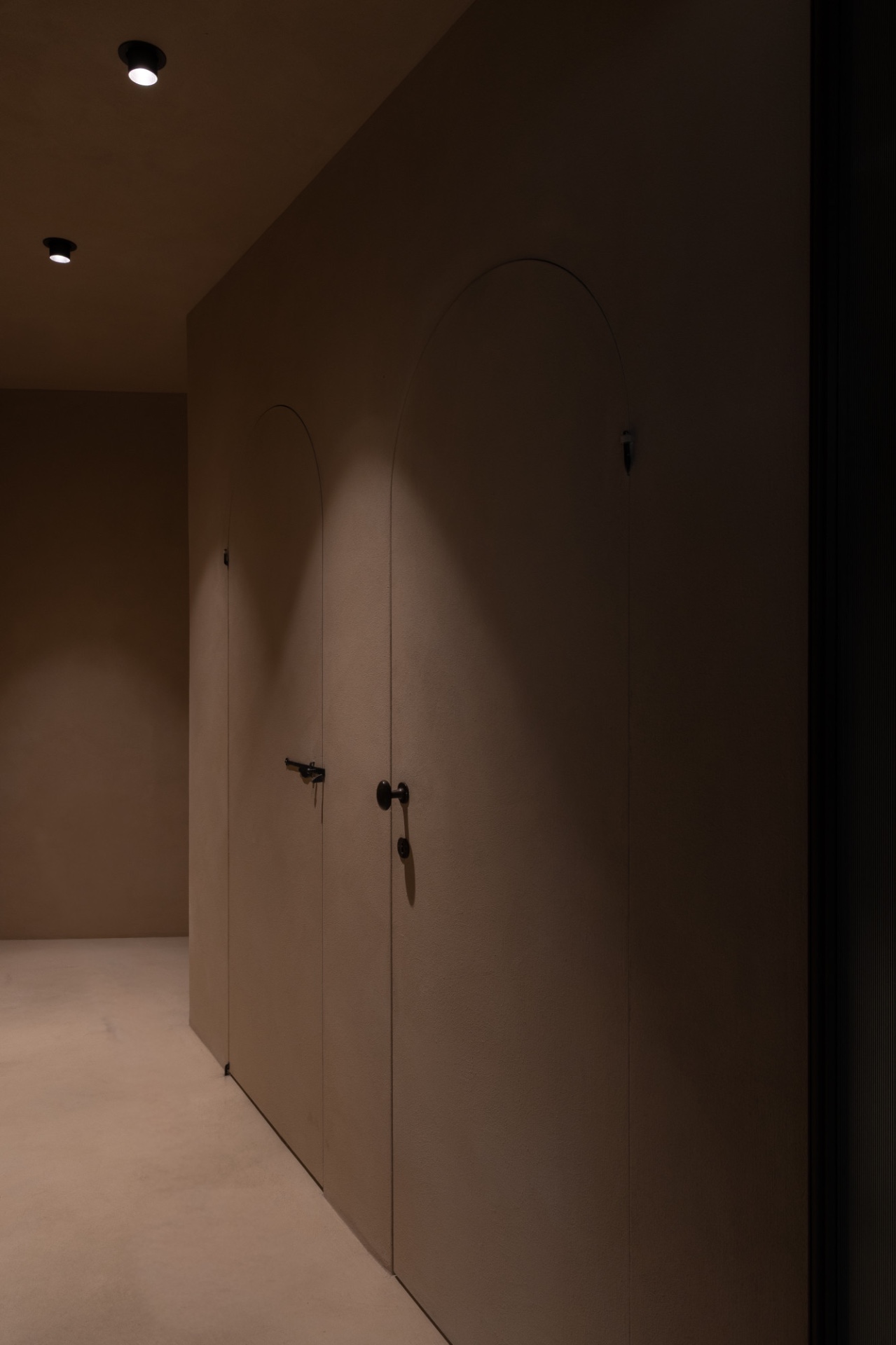
Up close, the walls show a concrete look plaster finish with a soft, matte response to light. It is not a decorative plaster effect; it is a surface that supports the rest of the room by staying measured. The finish absorbs some of the glow from the warm lighting lines and lets the shadows sit where they fall. In the detail images, the surface texture is visible enough to matter, but quiet enough to leave the cabinetry in front of it fully legible.
That restraint works especially well beside the metal. Black framing can quickly become heavy, but here the wall keeps it anchored. The result is a dark industrial showroom with clear edges and no excess ornament. Every shift in tone comes from the materials themselves: glass catching light, plaster staying matte, wood holding a deeper warmth, and metal setting the boundary between them.
A showroom finish built through collaboration
The project was developed in collaboration with several parties, and that joint process is visible in the precision of the finish. The custom technique had to align with an established metal signature, but it also had to leave room for experimentation. That combination can be difficult to hold in one interior. Here it is handled through disciplined material choices, careful joinery around the glass, and lighting that highlights rather than overwhelms. The showroom feels designed from the inside out, starting with the surfaces people actually meet.
Seen as a whole, the room is held together by the relationship between the bespoke glass display cabinets, the black metal framing, the concrete look plaster wall, and the wood slat wall details. Warm indirect lighting lines and recessed spot lighting make those elements readable at different distances. It is a custom showroom interior that relies on close control, clear sightlines and a finish tailored to the space it had to support.
Want to see more of Texture Painting? View the page of Texture Painting for even more great projects and company information.


NEW 2026 Jubileum Edition The Best Interior Designers Benelux
Order Now €125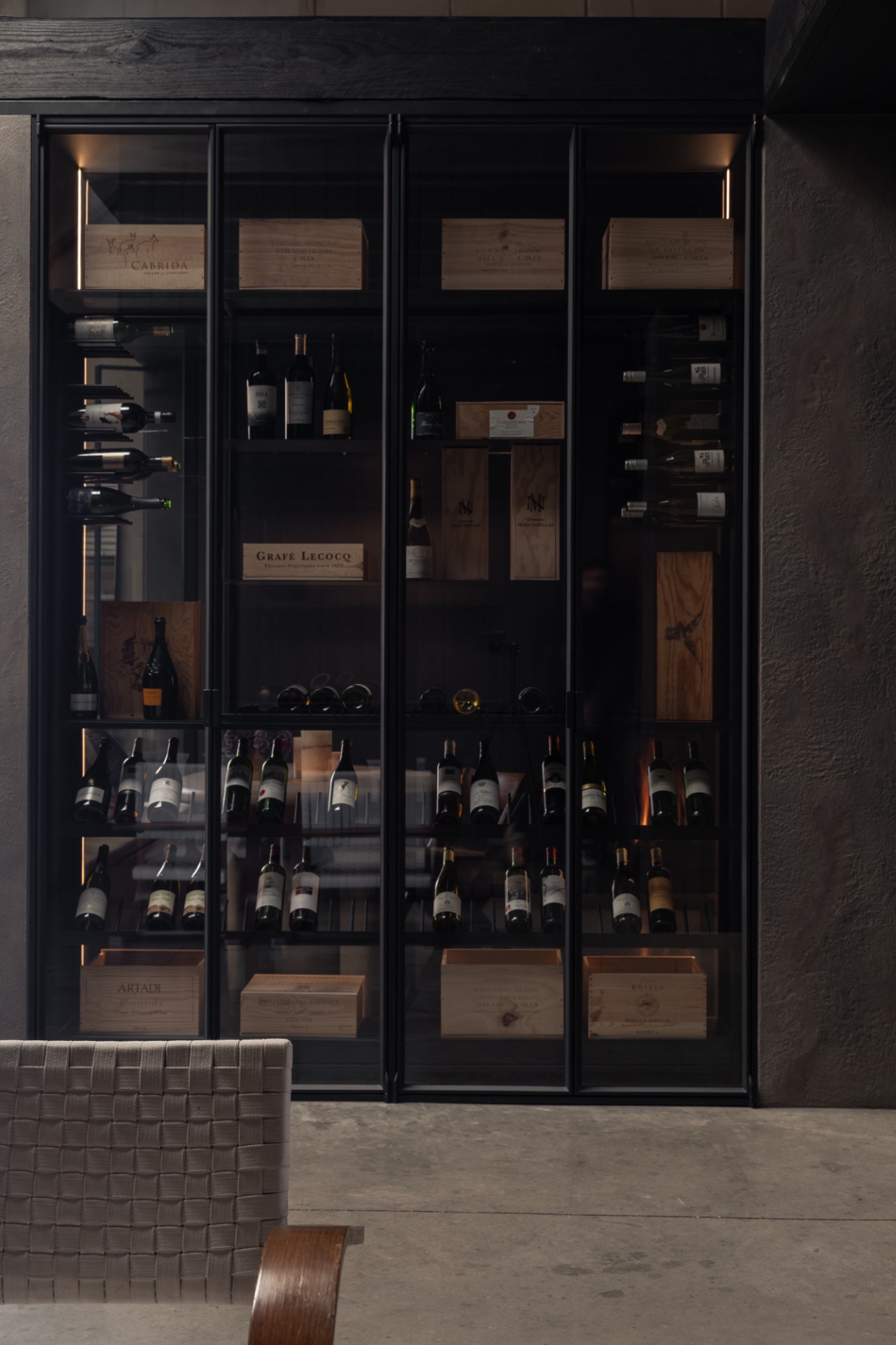
NEW 2026 Jubileum Edition The Best Interior Designers Benelux
Order Now €125