







Villa interior with authentic details
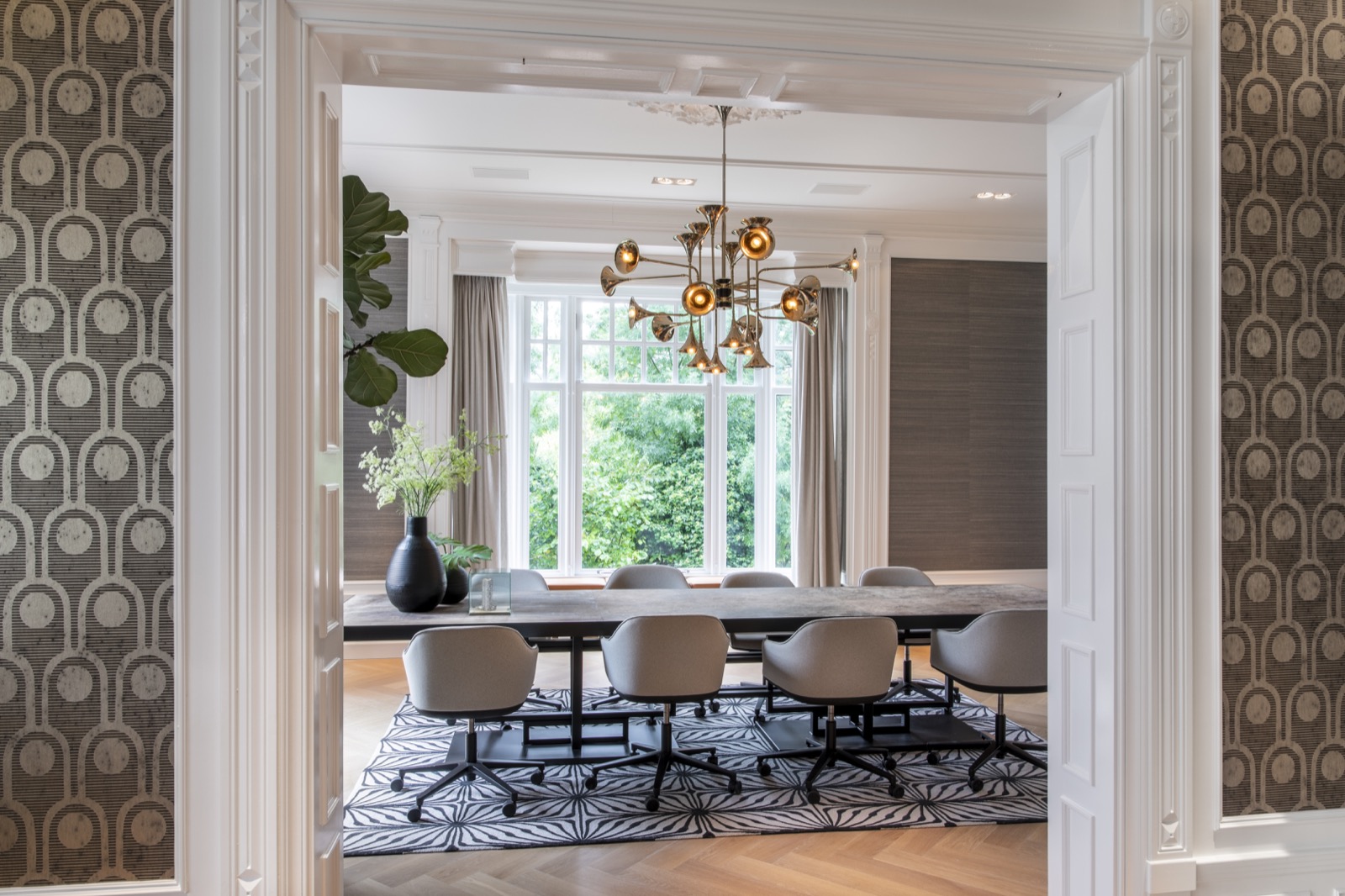
A long wooden table sets the tone early in this villa interior with authentic details. Around it, the dining room feels measured and generous, with cup chairs pulled close and light catching on the tabletop. The room relies on simple moves rather than display: wood underfoot, soft textiles at the windows, and a layout that leaves the center open. The result is a dining area that reads clearly in one glance, yet still holds several layered details.
The dining room stays close to the materials
In the dining room, the long wooden table does most of the work. Its length draws the eye through the room and gives the chairs a steady place to gather around. Above and around it, the palette stays restrained, so the wood grain and the upholstered seating can speak for themselves. Large windows with curtains soften the edges of the space, while the light tone of the room keeps the table visually grounded rather than heavy.
A table built for the center of the room
The dining room with long wooden table is arranged as a clear central composition. The table sits on a large rug that defines the seating zone without closing it off. Cup chairs add a rounded profile beside the straight table edges, which keeps the room from feeling rigid. The scale is notable: there is enough room to move around the table, and that sense of breathing space matters as much as the furnishings themselves.
Living room details come forward slowly
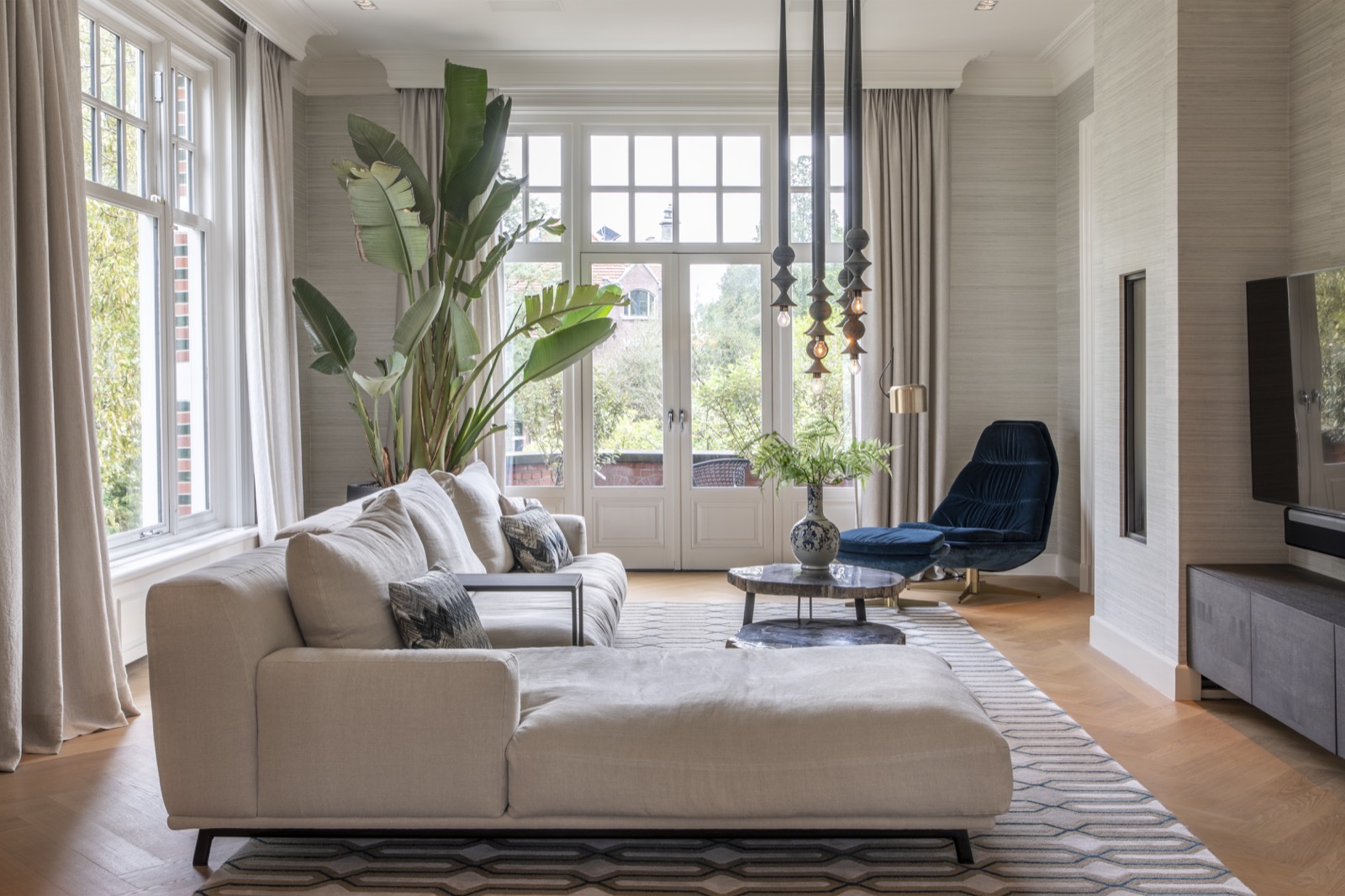
The living room shifts the mood with a light sofa, a tall plant, and a patterned rug that anchors the seating area. The rug introduces movement to an otherwise calm room, and that pattern is repeated more quietly in the wall and window treatments nearby. A large window front brings in daylight and a view of greenery outside, so the seating area feels connected to the exterior without needing ornament to explain itself. A low wall unit and fireplace niche keep the room visually organized.
Pattern and light in the seating area
What stands out most in the living room with patterned rug is the way the floor covering changes the room’s rhythm. It marks out the conversation zone, while the pale upholstery lets the eye rest. Curtains frame the windows in soft vertical lines, and the high plant adds a single strong gesture beside the sofa. The room is not crowded. Instead, each object has room to register, from the low furniture to the higher line of the window openings.
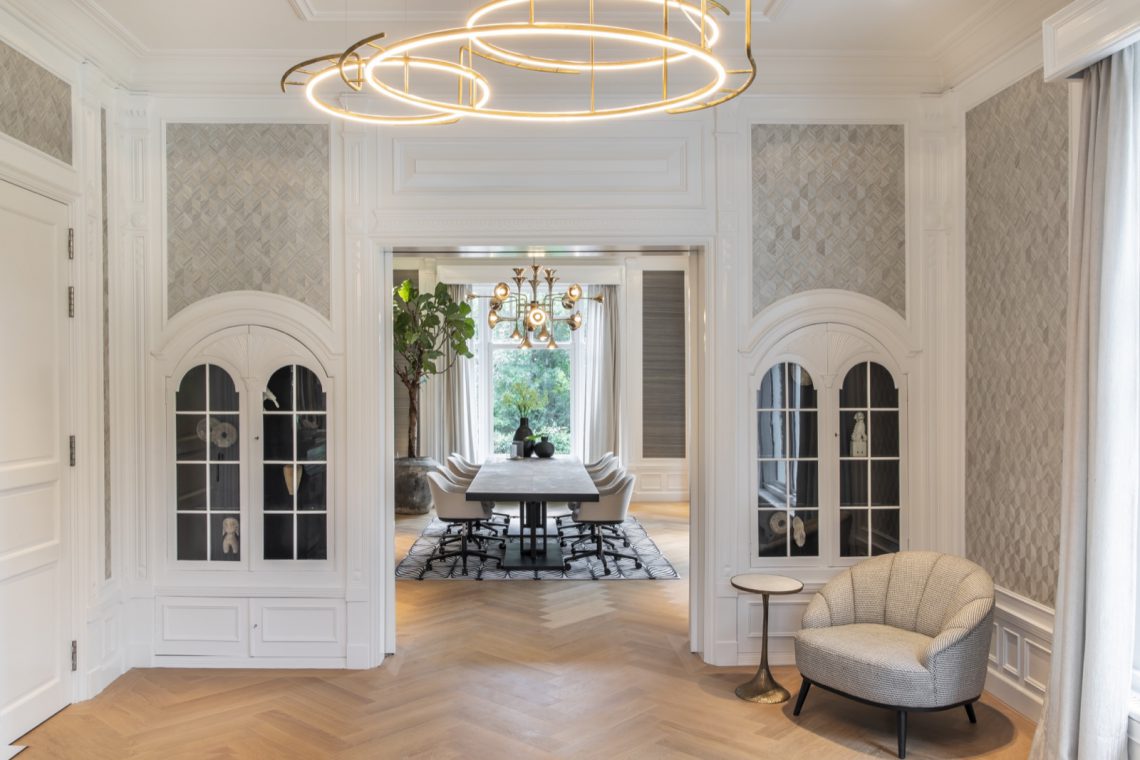
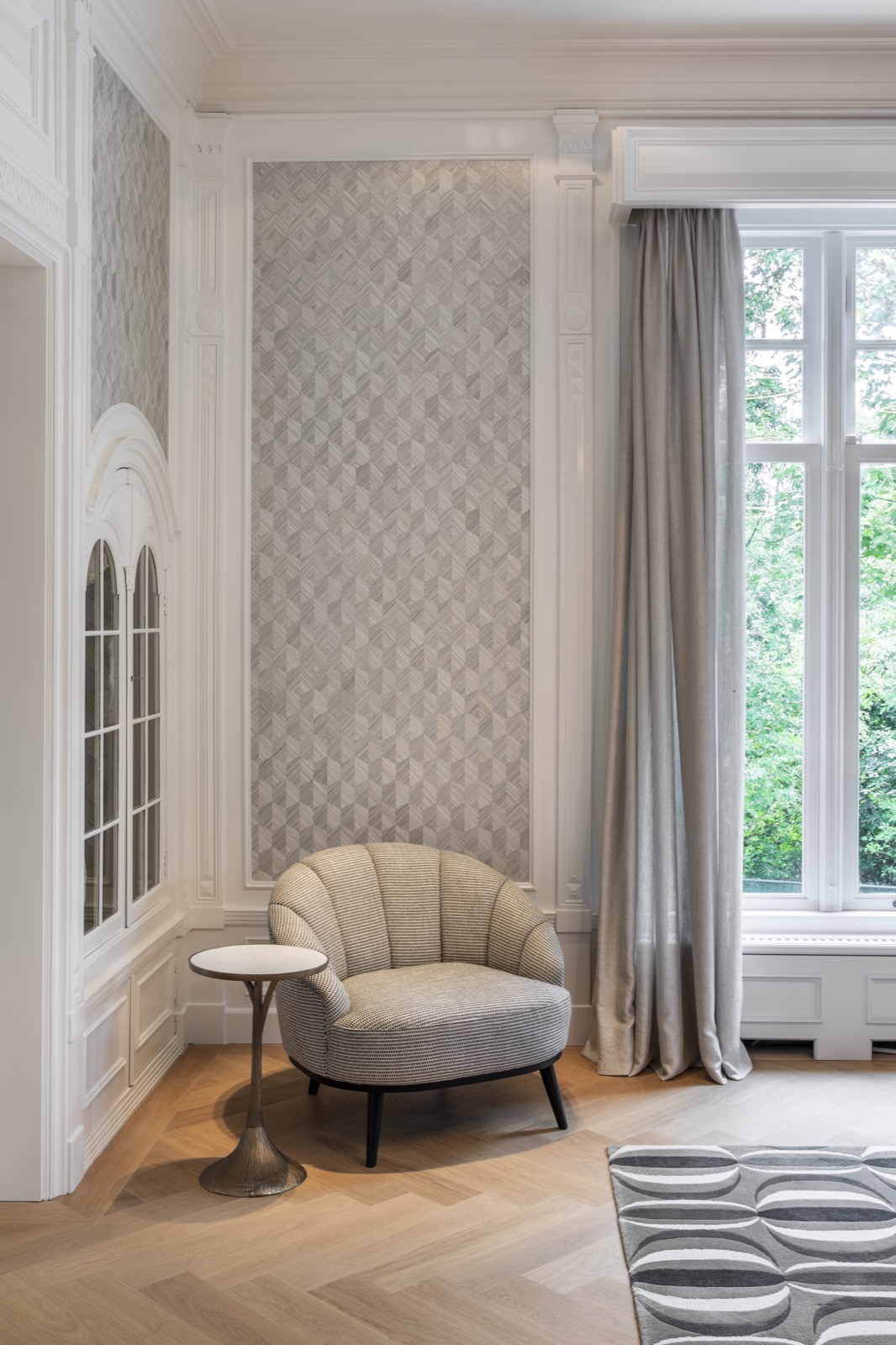
Classic wall paneling appears throughout the interior in tall white sections and framed wall surfaces. It gives the rooms a clear architectural edge and keeps the transitions between openings, panels, and doorways crisp. In close view, the detailing matters: profiles, trims, and panel divisions create depth without turning decorative noise into the main event. The effect is most visible where the white elements meet grayer or textured surfaces, especially in the walls that frame passages and niche-like sections.
The warm living kitchen with island draws people in
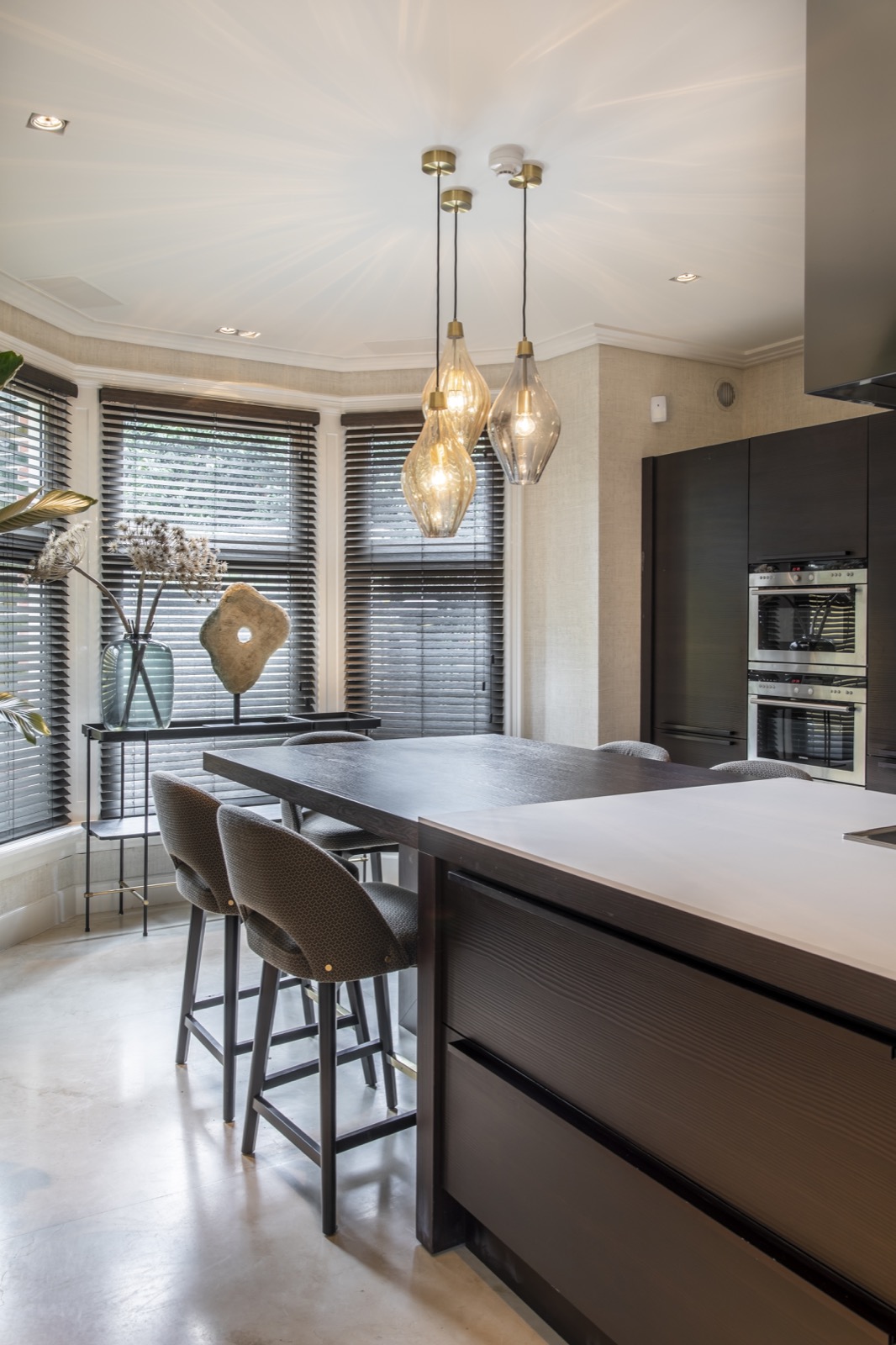
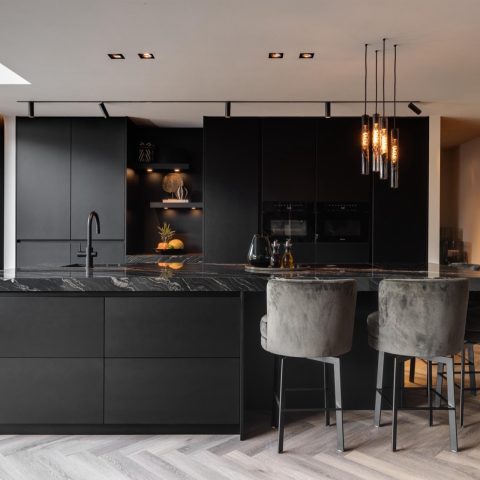
The living kitchen shifts toward darker tones. A large island stands in the center, with bar seating along one side and pendant lights hanging above it. The dark kitchen cabinetry forms a solid backdrop, and the lighter worktop keeps the composition from closing in. This is a room that works through contrast: open seating at the island, enclosed storage behind it, and windows fitted with blinds that pull daylight across the surfaces. The layout makes the kitchen feel active without losing its order.
Dark cabinetry, lighter surfaces
In the warm living kitchen with island, the relationship between the cabinets and the island is what gives the room its weight. Dark kitchen cabinetry lines the walls, while the island reads as a separate plane for preparation and sitting. The bar stools make the island feel lived-in, not just functional. Above, the hanging lights mark the work zone and add another horizontal layer to the room. It is a kitchen that reveals its structure plainly, room by room and surface by surface.
From another angle, the kitchen shows how restraint can still feel complete. The integrated appliances sit quietly in the cabinetry, and the darker fronts hold the composition together. Visible wood and light stone-like surfaces interrupt that darker field just enough to keep the space from flattening out. The room owes much of its character to proportion: deep storage on one side, open circulation at the island, and a broad run of glazing that keeps the kitchen connected to the rest of the interior.
The hallway turns the stair into a feature
The hallway offers one of the sharpest visual shifts in the villa interior with authentic details. The staircase upholstery with pattern is immediately noticeable, turning a practical element into a surface with rhythm. Instead of disappearing into the background, the stair covering adds movement to the passage. Nearby white framing and pale wall surfaces keep the corridor bright, so the patterned stair reads clearly against the surrounding architecture. It is a brief space, but it carries one of the most memorable details in the house.
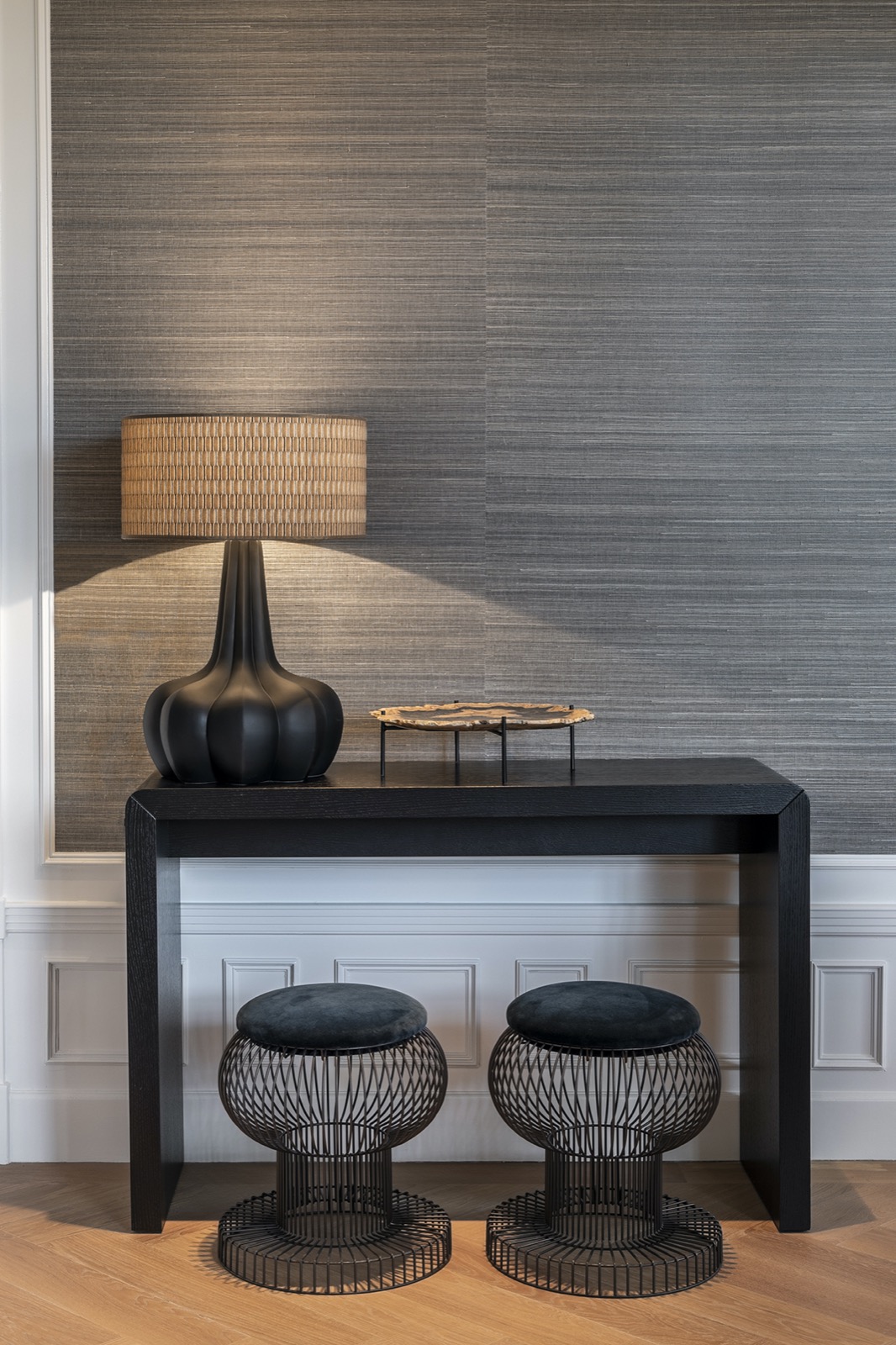
Elsewhere, wall panels and textured surfaces continue the same language in a quieter register. A patterned wall surface appears in gray and beige tones, while white trim and paneling hold the lines together. These details do not compete with the furniture; they set the backdrop for it. In that sense, the villa relies on a steady dialogue between enclosed surfaces and open rooms. The finishes are visible, the rooms are legible, and nothing needs to shout to be noticed.
What remains after moving through the rooms is the way comfort and aesthetics are handled through concrete choices rather than broad statements. A long table, a patterned rug, dark kitchen cabinetry, and the stair covering all shape how the interior is read from one space to the next. The villa interior with authentic details stays consistent because each room uses its own material emphasis, yet the whole never feels forced. It simply follows the same quiet logic from dining room to living room, kitchen, and hallway.
Want to see more of Maaike van Diemen? View the page of Maaike van Diemen for even more great projects and company information.




NEW 2026 Jubileum Edition The Best Interior Designers Benelux
Order Now €125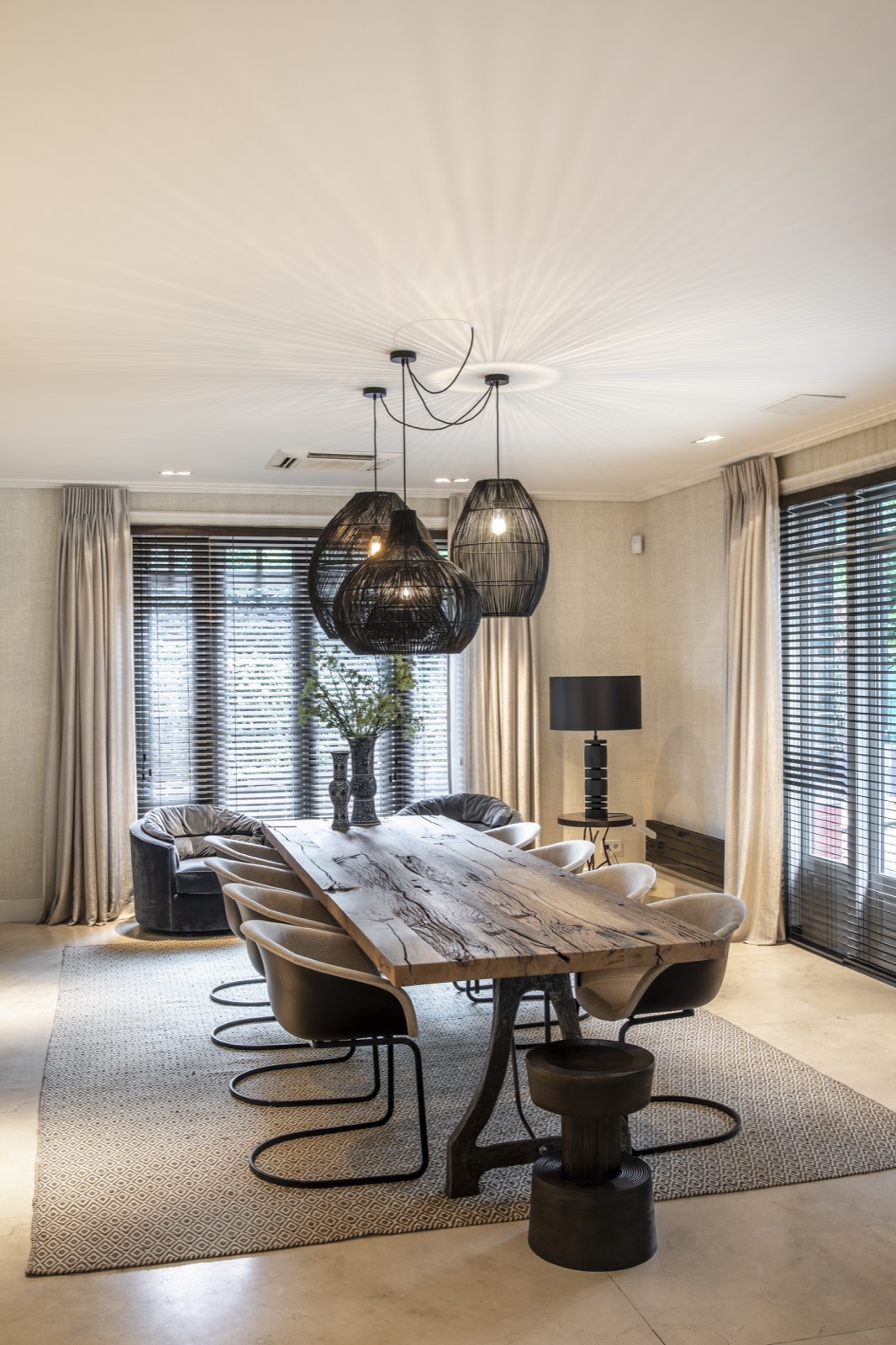
NEW 2026 Jubileum Edition The Best Interior Designers Benelux
Order Now €125