







2-meter linear gas fireplace built into a modern living
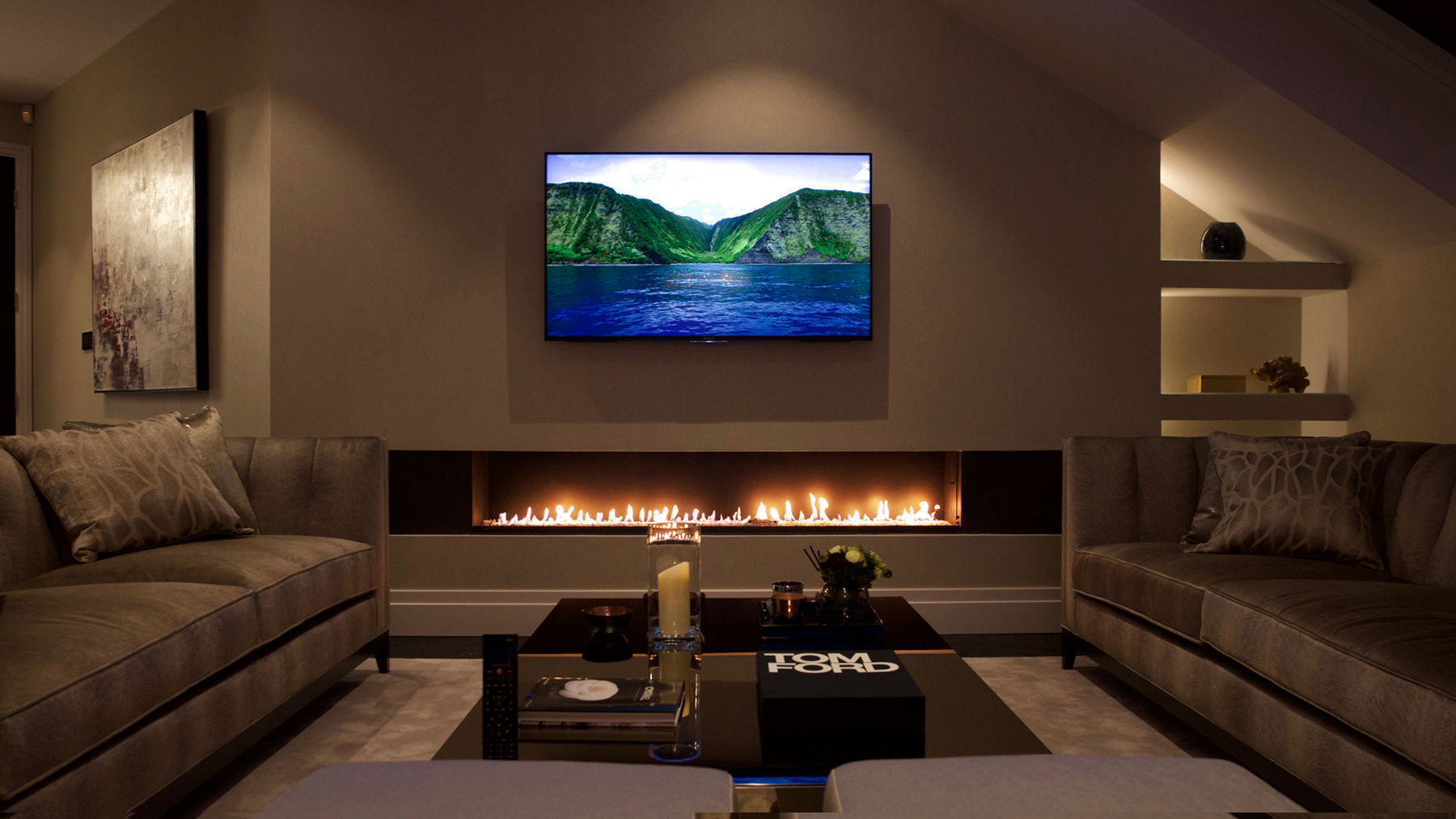
A 2-meter linear gas fireplace runs across the wall opening and sets the pace for the room. In the attached photo, the flames sit low and long inside a dark alcove, so the fire reads as a clear horizontal line rather than a single focal point in the middle of the wall. The installation works as a linear gas fireplace in the living area, with the opening positioned to anchor the seating arrangement around it.
A long opening that lets the flames lead
The first thing the eye meets is the strip of flame inside the recessed opening. It moves across the length of the firebox and leaves enough dark material around it for the glow to stand out. That contrast is what gives the black linear fireplace its presence in the room. The visible flames fireplace effect is strongest when the light drops, and the photo captures that moment well: the fire becomes the brightest line in the space.
The wall treatment around the opening keeps the composition contained. Dark side panels frame the fireplace on both sides and make the horizontal line read even more clearly. Rather than breaking the wall into smaller pieces, the surround lets the 2-meter length hold together visually. This is where the gas fireplace alcove matters most: the fire sits in a recessed setting that gives it depth without adding clutter around the opening.
Furniture placed to face the fire
Across from the hearth, the seating is set out symmetrically. Two sofa groups sit on either side of a low coffee table, leaving the fireplace in direct view from the main seating positions. That arrangement turns the room into a modern living fireplace setting without relying on extra decoration. The furniture keeps a low profile, so the long line of flame stays visible above the backs of the seats.
From this angle, the fire reads less like an isolated object and more like part of the room layout. The horizontal opening lines up with the sofa bases and the table in front, which makes the eye move evenly across the living area. The result is a wall mounted linear fire that works with the room’s width rather than competing with it. The fire is not pushed to the edge of the plan; it stays at the center of the seating field.
Dark trim that sharpens the outline
What makes the installation stand out is the way the darker lining frames the fire. The surround is restrained, but it changes how the flames are read. Against the darker panels, the light from the burner appears sharper, and the opening gains a stronger edge. This black linear fireplace approach keeps attention on the strip of flame while still letting the wall recess remain visible.
The photo also shows that the room is not built around one blank surface. Above the fireplace, wall art hangs in line with the opening, and to the right, built-in shelves sit high on the wall. These elements add depth to the background without overtaking the fire. The linear gas fireplace stays dominant because the surrounding finishes are quiet, dark, and physically close to the opening.
Evening light gives the room its clearest moment
The flames look most active in the evening light. Their movement is small and continuous, but across a 2-meter run it becomes a clear visual rhythm. That is what makes this visible flames fireplace installation work so well in a living space: the fire has length, not height, so it spreads the brightness sideways instead of upward. The low table, soft seating, and dark surround all keep the focus at that level.
There is also a strong sense of depth in the room. The alcove holds the fire back from the wall plane, and the dark panel edges make the recess easy to read. In a space like this, the fireplace does more than heat the room visually; it sets the direction of the composition. The line of flame, the dark trim, and the opposite seating all connect through the same horizontal axis.
What the attached photo shows clearly
The attached photo records the installation with enough clarity to show how the proportions work. A long fire opening sits between dark side panels, the sofas face inward, and the low coffee table stays below the sightline of the flames. It is a simple arrangement, but the details do the work: the edge of the recess, the strip of light from the fire, and the measured spacing around the hearth.
For anyone looking at a linear gas fireplace as a reference point for a living area, this project shows how little needs to be added when the opening is handled well. The fire remains the main event because the wall around it is direct and the furnishings are kept in check. In this room, the gas fireplace alcove is not a backdrop; it is the part that holds the room together visually.
The overall effect comes from proportion rather than decoration. A 2-meter opening gives the fire enough length to shape the wall, while the dark trim and side panels keep the rectangle tight. The seating, shelves, and wall art all sit around that core line. It is a clear example of how a linear gas fireplace can define a living space through placement, scale, and the way the flames are framed.
Viewed as a whole, the room depends on the relationship between the recess and the furniture around it. The fireplace does not ask for extra features; it already has enough presence in the length of the opening and the motion of the fire. That is why the modern living fireplace reads so strongly here. The line is clear, the surfaces are dark, and the flames remain visible from every main seat in the room.
For more examples of this kind of installation, see the linear gas fireplace collection and other projects with a fireplace alcove. If you are comparing finishes, the same wall opening approach can also be read alongside custom fireplace design and interior finishes around fireplace surrounds.
Want to see more of Modus Fireplaces? View the page of Modus Fireplaces for even more great projects and company information.