










Black steel custom kitchen with an industrial look
The first thing you notice is the black steel custom kitchen: long front panels, narrow handle strips, and a stone-like work surface that holds the room in a straight, steady line. Above it, the wooden ceiling beams shift the mood without softening the geometry. The result is a kitchen that reads as precise and practical, but never flat. Every surface has a clear job, from the dark cabinet fronts to the open niche set into the wall.
Long lines set against wood overhead
The cabinetry stretches out in wide horizontal bands, with the metal fronts broken only by slim grip profiles. That detail matters here. It keeps the industrial black steel kitchen from becoming heavy, and it gives the wall a measured rhythm. The warm wood above does the opposite: visible beams and ceiling boards bring a grain and direction that you can read at a glance. Together they create a strong frame for the room, but the materials still keep their own voices.
Seen from the main angle, the kitchen feels anchored by the dark base and lifted by the lighter ceiling plane. The contrast is not decorative; it is structural. Black metal, pale stone, and brown timber sit close to one another, each one showing a different surface quality. That mix gives the space its character without relying on ornament. The clean runs of the fronts do most of the work, especially where the handle strips cut through the darker planes.
A black steel kitchen niche built into the wall
One of the strongest moments in the project is the black steel kitchen niche, where the wall opens up into a fitted zone for equipment and storage. The opening is framed tightly, and the surrounding surfaces read as part of the same composition rather than as an afterthought. In the details, a horizontal light line appears inside the recess, marking the depth of the niche and separating the inner zone from the outer wall. It is a small move, but it gives the built-in area a clear edge.
Elsewhere, the wall treatment stays stone-like and restrained, with pale grey and white tones working behind the darker fronts. The niche does not fight the cabinetry; it sits beside it and lets the black metal remain the dominant line. That is also where the project becomes more than a storage wall. The custom kitchen storage niche turns equipment, shelving, and frame into one visual system. You can read how each part is held in place, especially in the shots that show the narrow metal trims and the darker inset surfaces.
Details that keep the composition tight
Close images reveal how the front edges are handled. Some panels appear almost flush, while others are given a thin metal outline or a shallow opening that catches light. Those small differences stop the long run of black surfaces from becoming monotonous. They also make the material feel purposeful. In the open drawer detail, the internal dividers are clearly visible, set out in geometric compartments that make the storage legible at once. It is the kind of detail that usually disappears in a wider view, yet here it is treated as part of the composition.
The side view reinforces that feeling of precision. A worktop edge appears as a thin stone line above the darker cabinet body, and the front panels continue in straight bands beneath it. Nothing is overly polished or theatrical. The value is in the exactness of the junctions: stone meeting steel, steel meeting timber, and the dark surfaces meeting brighter wall sections. That is what gives the black steel custom kitchen its drawn, architectural quality.
Stone surfaces around the cook zone
The cook area is set on a stone-like countertop that carries two circular zones, one of them marked by a red ring. That small red accent pulls the eye immediately, especially against the darker frame around the unit. It also helps define the active part of the kitchen without adding visual noise. The surrounding surface reads as stone or stone-look material, with a pale, speckled tone that sits comfortably against the black metal fronts.
In the close-up, the cook zone feels carefully integrated rather than isolated. A dark border frames the unit, and the countertop surface continues around it with enough visual weight to hold the appliance detail. This is where the wood and stone kitchen aspect becomes most direct: stone at hand level, dark metal at cabinet height, and timber above. The contrast is sharp, but the room never feels overworked. Instead, it relies on a few material shifts that are easy to read from one step to the next.
Light drawn across the niche and counters
Lighting is used sparingly and with clear intent. Cylindrical spot fixtures and bar-like pendants appear in the broader views, while the niche detail shows a clean horizontal light line. These elements do not flood the room with decoration. They mark the surfaces, pick out the edges, and make the recesses easier to read. The effect is especially strong at night-like exposure, where the dark cabinet faces need a deliberate line of light to reveal their depth.
Because the lighting stays close to the architecture, the materials remain the focus. Reflections skim across the metal fronts, and the stone-like wall keeps a muted, matte presence beside them. The ceiling beams also gain a stronger outline under this light, which helps the room’s upper plane feel connected to the cabinetry below. In a project built on restraint, these illuminated edges matter. They guide the eye without turning the space into display.
Why the storage details matter as much as the front view
The open drawer and the inset zones show that the project is not only about the main elevation. It is about how the black steel custom kitchen works when you are close to it. Internal divisions, narrow trims, and integrated frames all appear in the photo set, each one tightening the logic of the layout. Those details give the kitchen a disciplined structure, especially where storage sits beside the built-in equipment. The arrangement is readable from a distance, but it becomes more convincing when you look at the joins.
What stays with you is the way the materials are allowed to stay distinct. Dark steel fronts stay dark. Wood keeps its grain. Stone-like surfaces remain light and matte. There is no need for heavy decoration when the cabinet rhythm, the kitchen niche, and the cook zone already carry the composition. That clarity is what gives the room its industrial edge, and it is also what makes the project easy to understand in photographs: every detail points back to the same careful, custom-built frame.
Want to see more of Grezzo Concrete | Exclusive Handmade Interior Finishes? View the page of Grezzo Concrete | Exclusive Handmade Interior Finishes for even more great projects and company information.


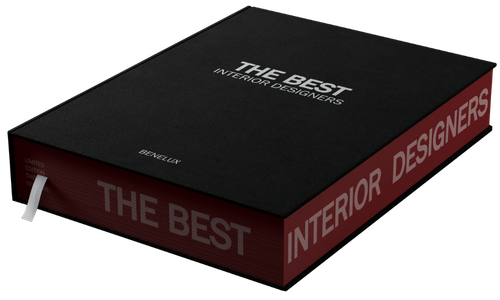
NEW 2026 Jubileum Edition The Best Interior Designers Benelux
Order Now €125


NEW 2026 Jubileum Edition The Best Interior Designers Benelux
Order Now €125


