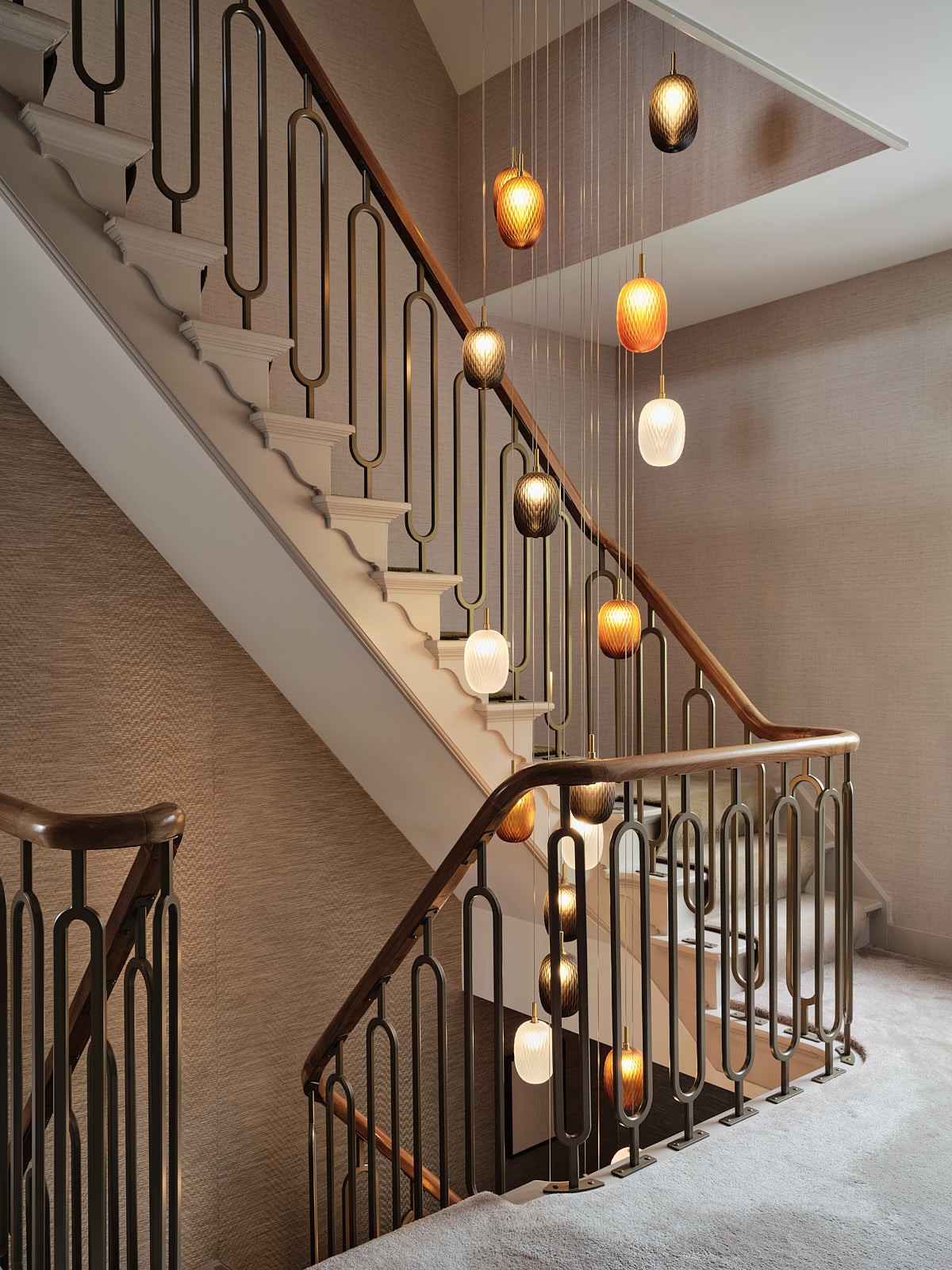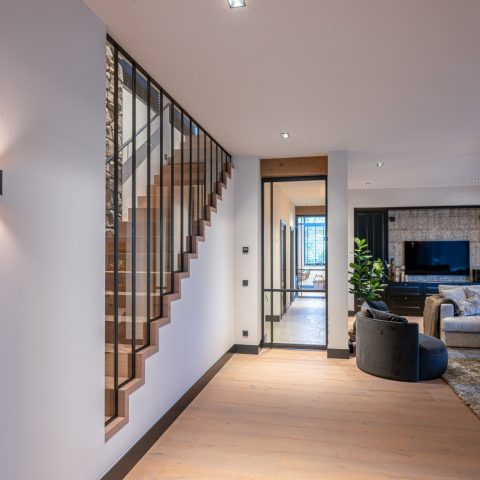








Bronze copper steel doors and elements
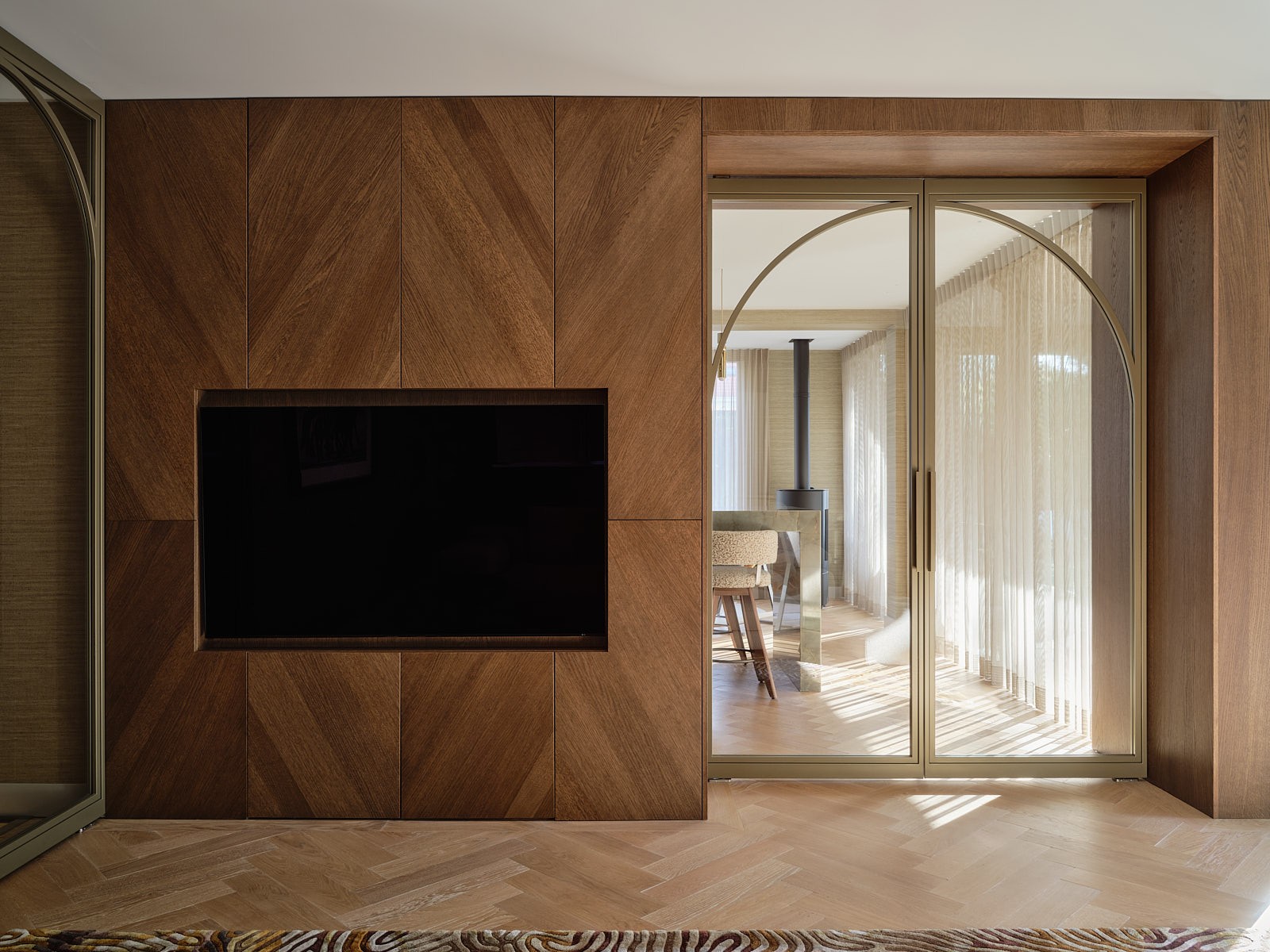
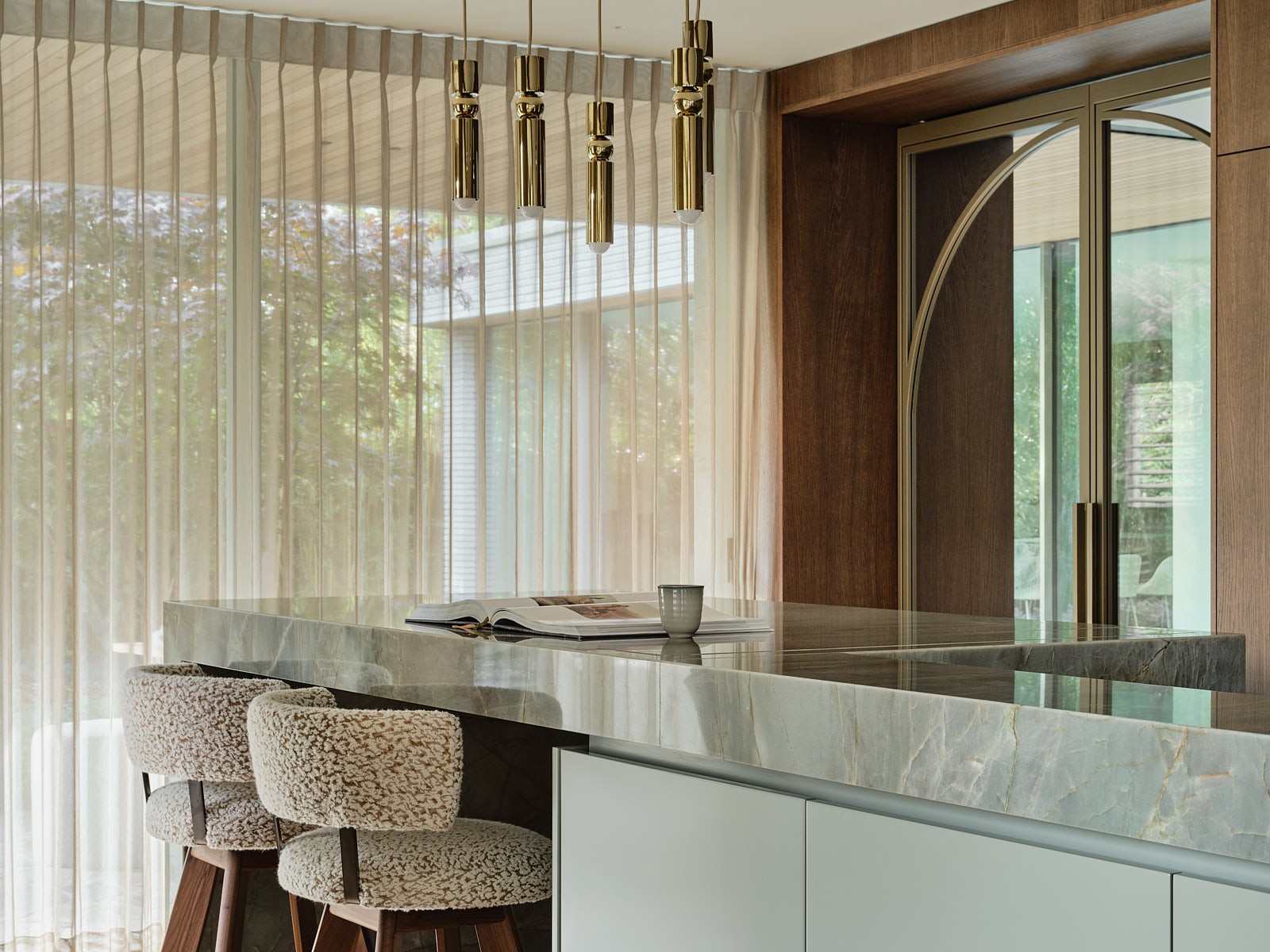
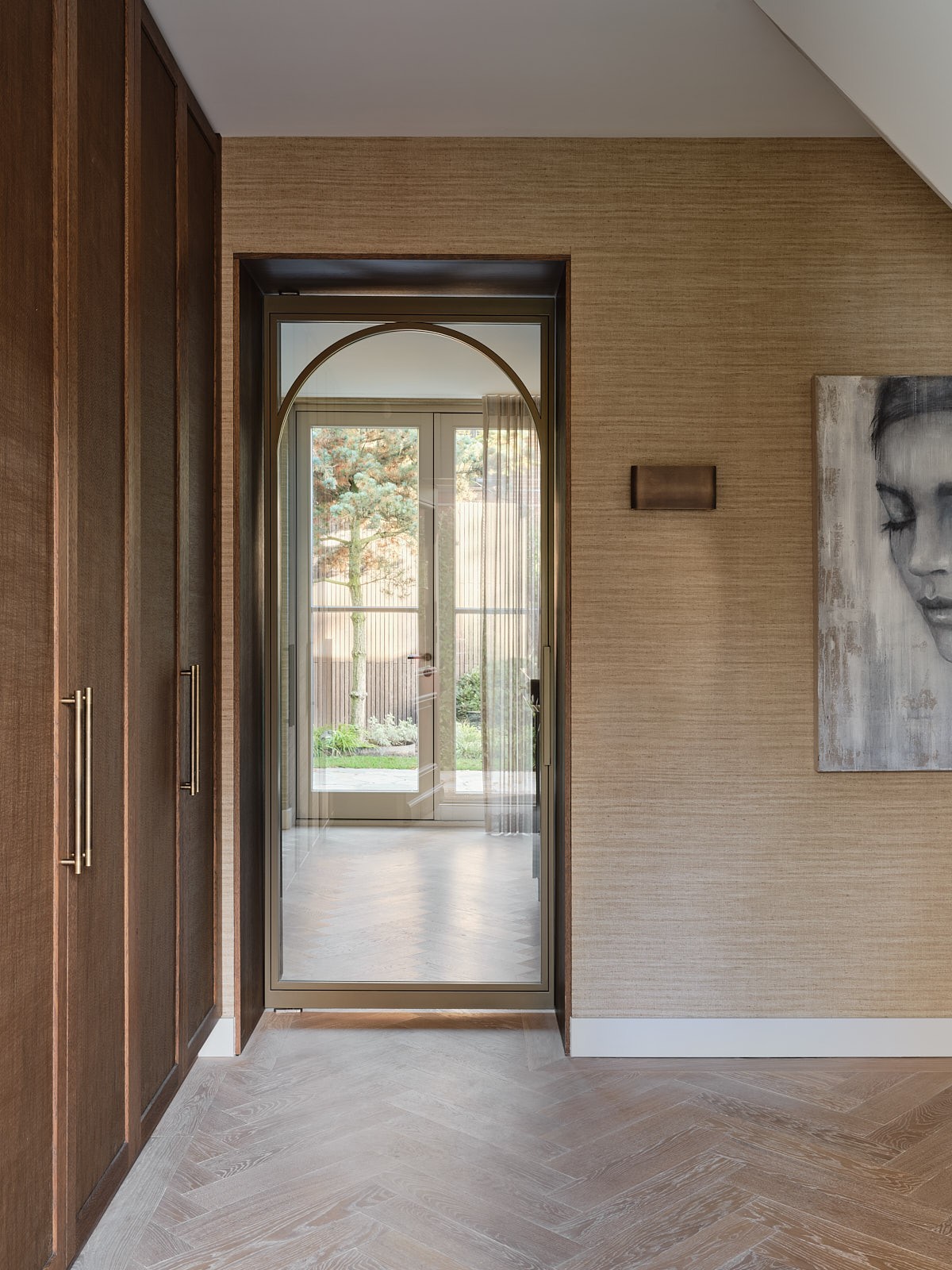
Bronze-copper steel doors set the tone as soon as the eye meets the first opening. The finish softens the line of the frame, while the glass keeps the passage light and open. In this luxury villa, the steelwork is not confined to one room or one type of detail. Door leaves, handles, arched openings and reflective elements in the sanitary areas all follow the same colour choice, so the interior reads in one material language.
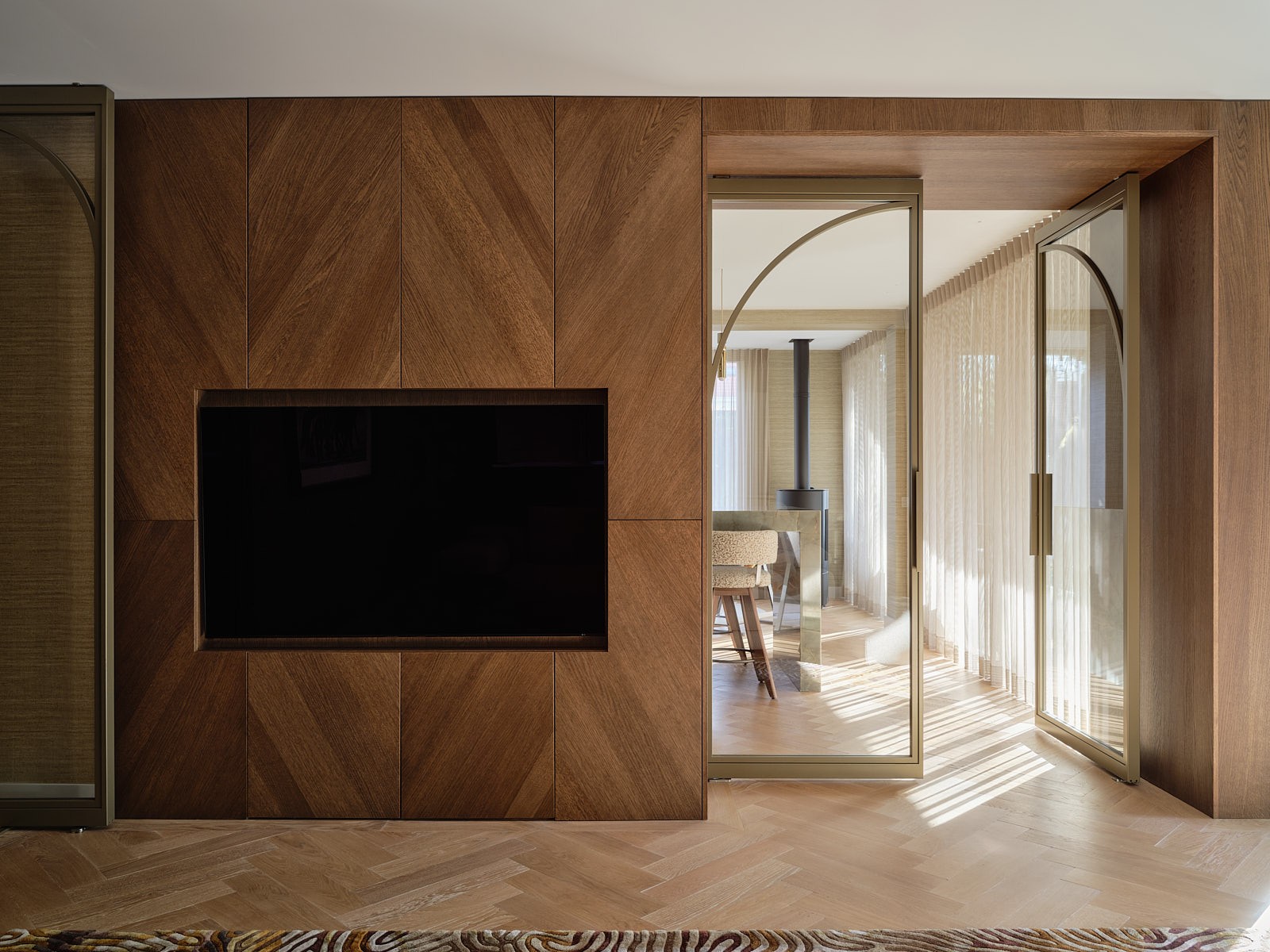
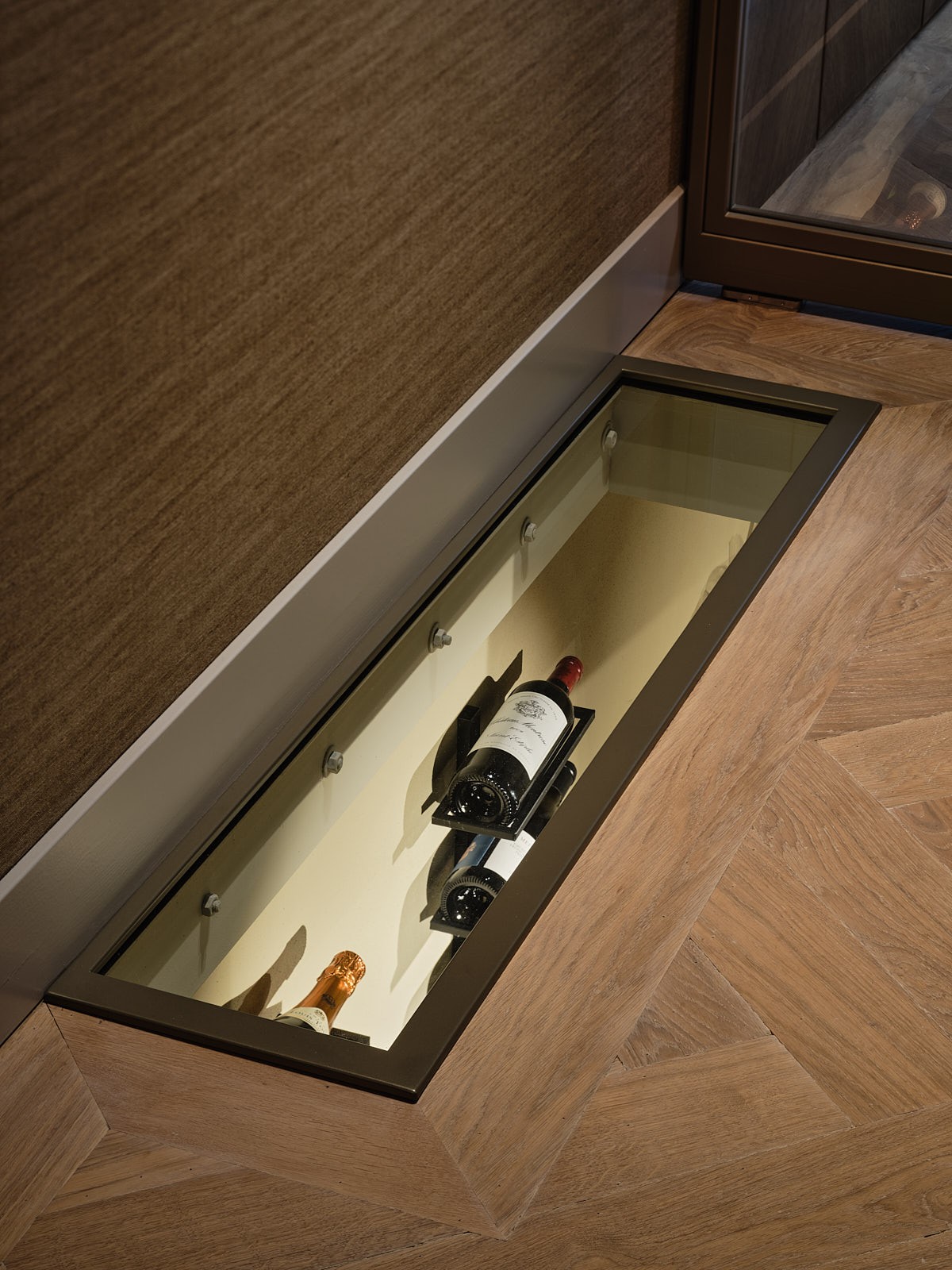
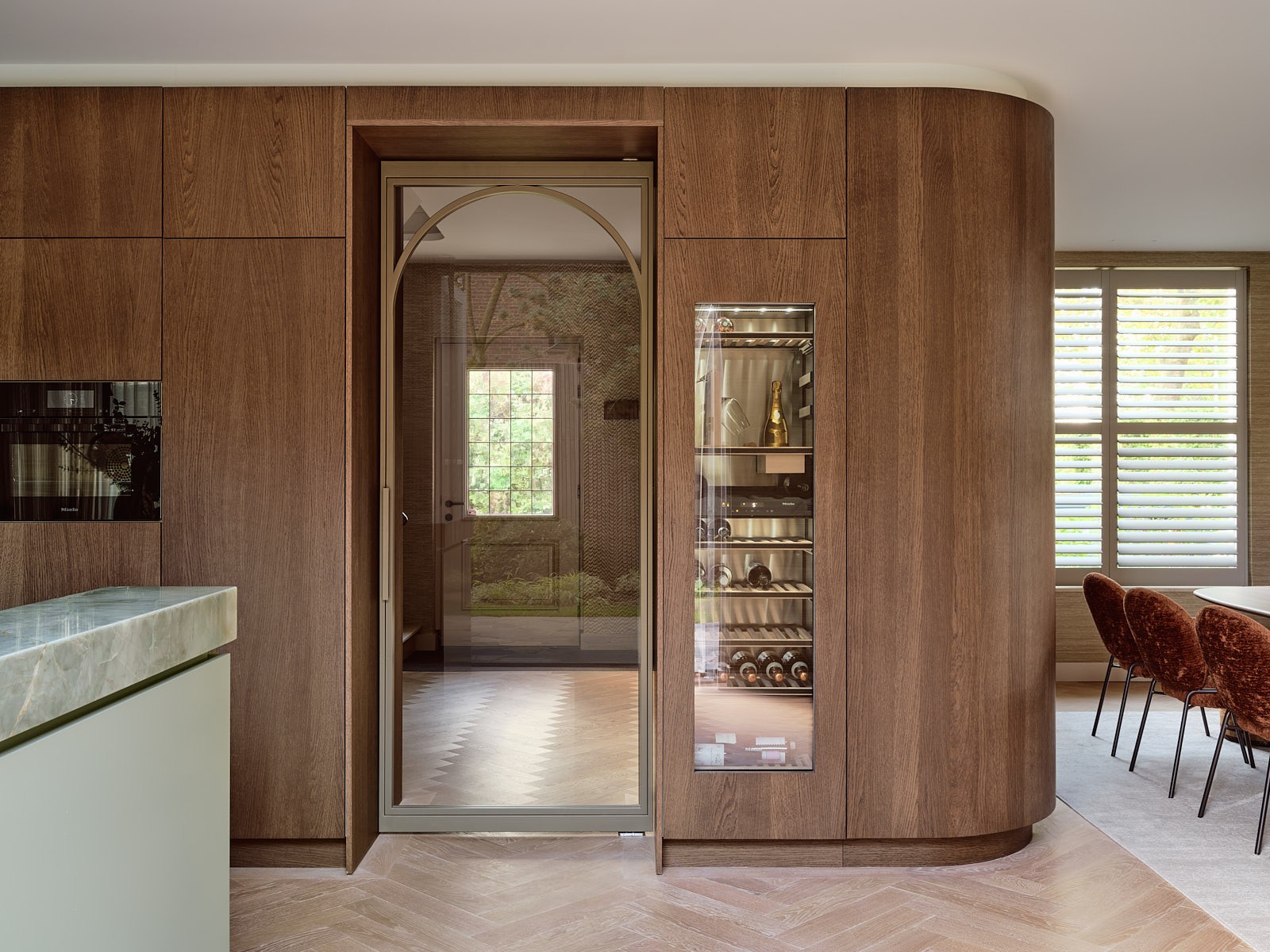
Warm wood panels run through that language with equal weight. Their grain sits close to the slim metal profiles and keeps the bronze-copper steel doors from feeling too sharp. The result is visible in the way a glazed opening can sit inside a timber wall without breaking the rhythm of the room. Even the transition toward the wine storage niche feels deliberate, with steel framing the view and glass revealing the bottles behind it.
Arched steel door detail in a calm, exact line
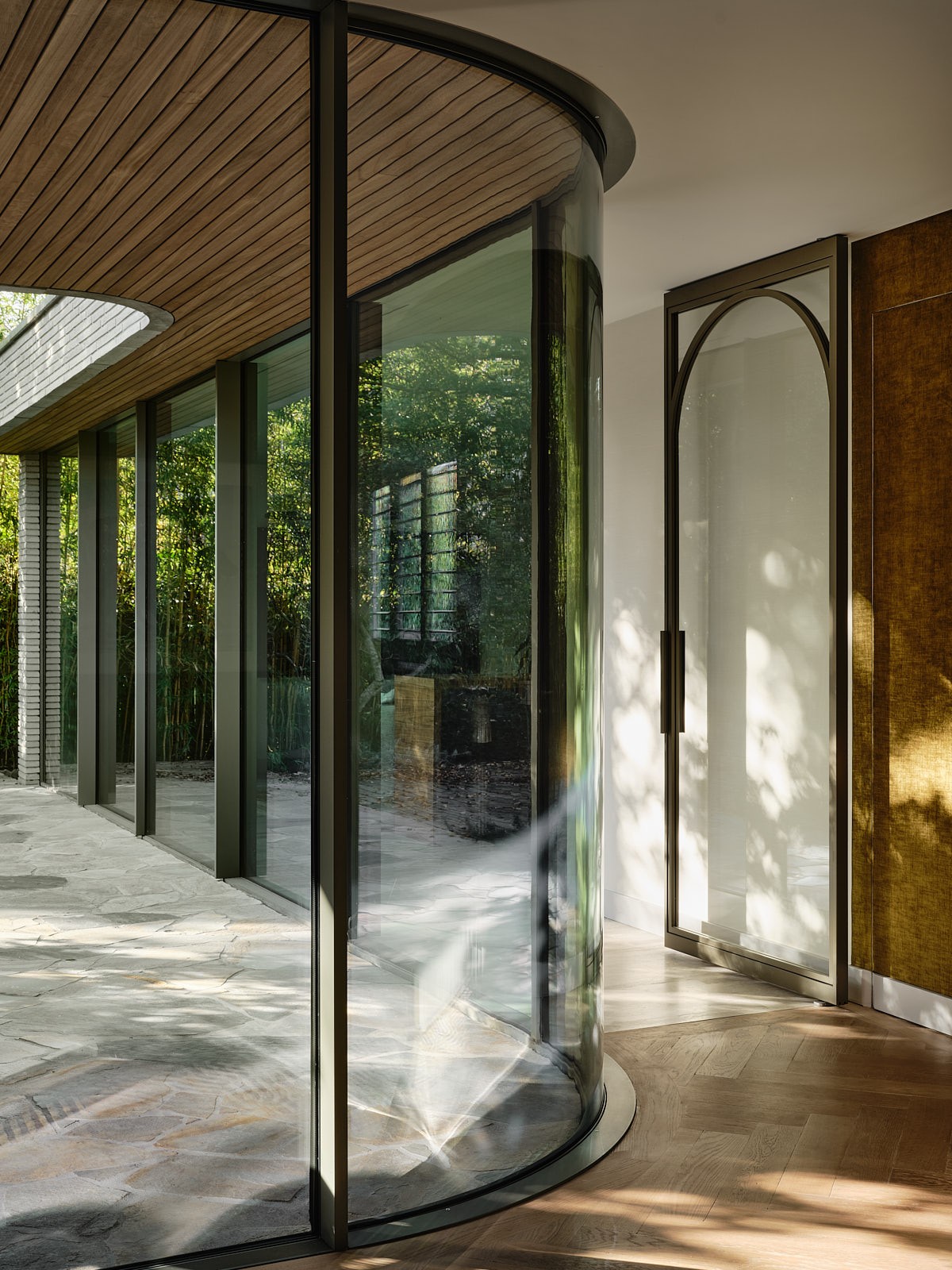
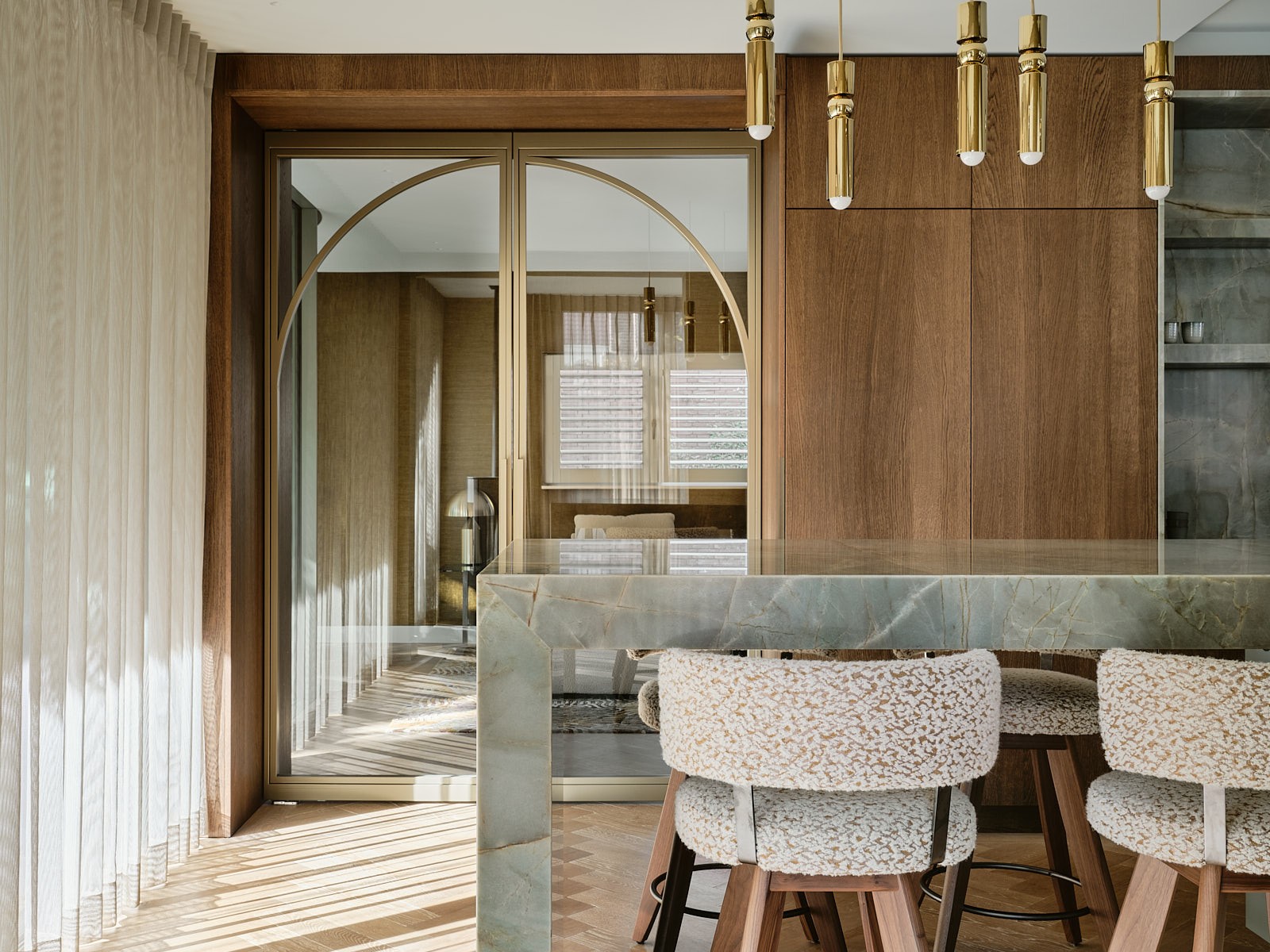
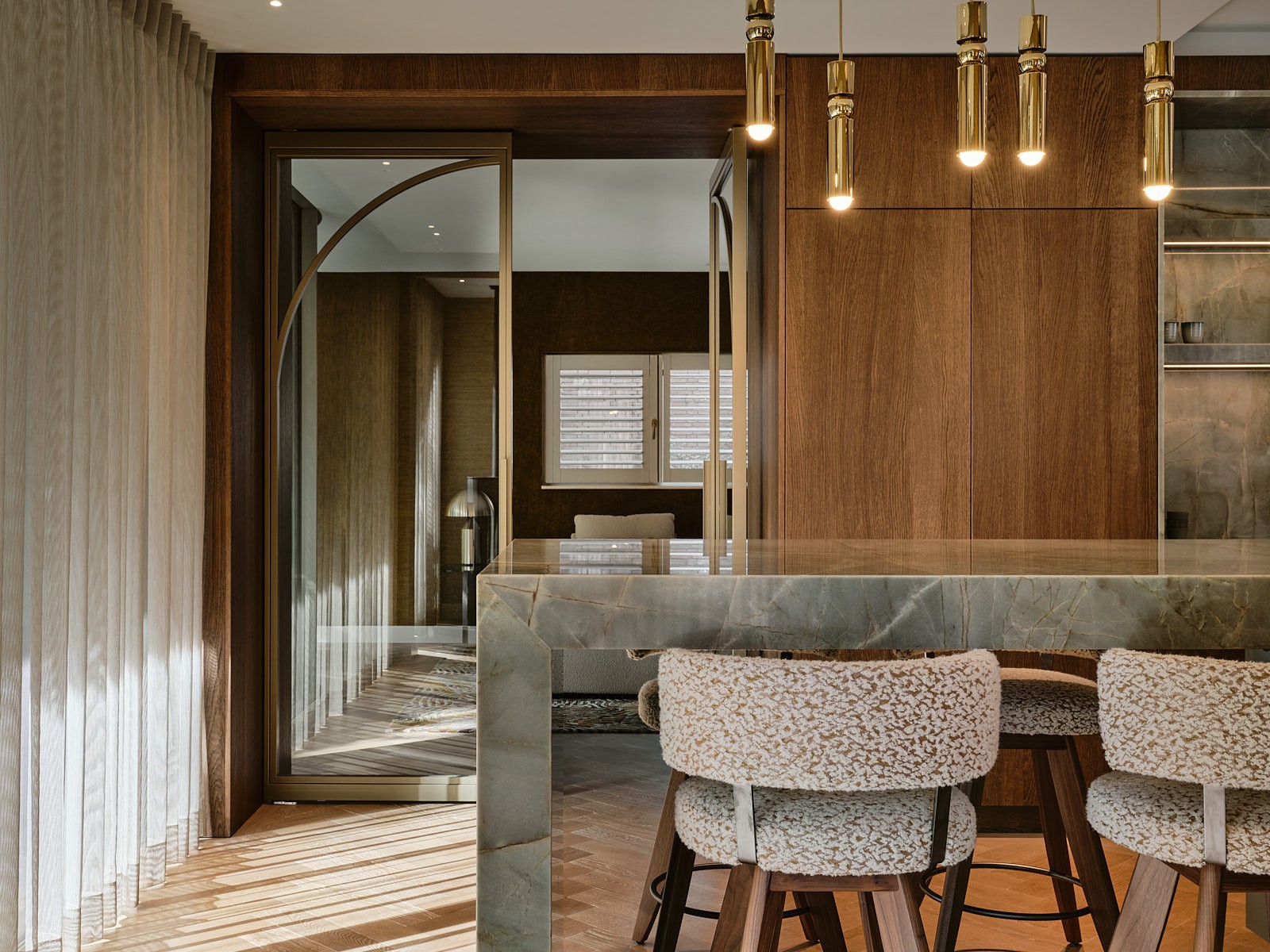
The arched steel door detail gives the project its most recognisable contour. Instead of a straight top line, the opening curves gently before meeting the vertical frame. That small shift changes the whole surface. It draws the eye upward, then back down to the handle and the glass below. The shape appears several times across the interior, which helps the bespoke frames feel connected rather than isolated as separate gestures.
Glass plays a clear role in that effect. The steel doors with glass allow long views through the villa, including a look toward the wine storage niche and through to adjoining rooms. Because the frame is kept slim, the glass remains the dominant plane. The bronze-copper finish acts almost like a drawn outline around it. In close view, the profile and handle become as important as the opening itself.
Bronze-copper steel frames against warm wood
The strongest contrast in the project comes from the meeting of bronze-copper steel frames and wood wall panels. The timber is not used as a backdrop in a decorative sense; it is the surface that sets the depth of the room. Against it, the steelwork appears measured and precise. You notice this in the glazed doorways, but also in the mirror-like elements in the sanitary areas, where the same colour tone continues and keeps the material palette tightly edited.
That repetition across rooms matters. The doors are not treated as standalone objects. They belong to the interior as fitted elements, matching the surrounding joinery and keeping the lines of the wall intact. In the kitchen and bar zones, the timber panelling is interrupted only where a glass niche or opening is needed. The steel then does its quiet work: it defines the edge, frames the view and marks the threshold without crowding it.
Wine storage niche with glass as a visual pause
The wine storage niche with glass is one of the clearest supporting details in the villa. It sits within the wood-clad interior like a small framed display, with bottles visible behind the transparent front. The niche does not try to dominate the room. Instead, it slows the circulation of the eye. After the larger door openings and paneled walls, this smaller glazed field gives the interior a moment of focus and scale.
Its bronze-copper surround ties it back to the doors. That link is useful, because it keeps the niche from reading as a separate inserted feature. The same steelwork vocabulary returns, just in a more compact format. Nearby marble-look tile surfaces and the warm timber panels sharpen the contrast between solid and transparent, between enclosure and display. It is a small element, but one that helps explain the overall interior order.
Interior steelwork that follows the room, not the other way around
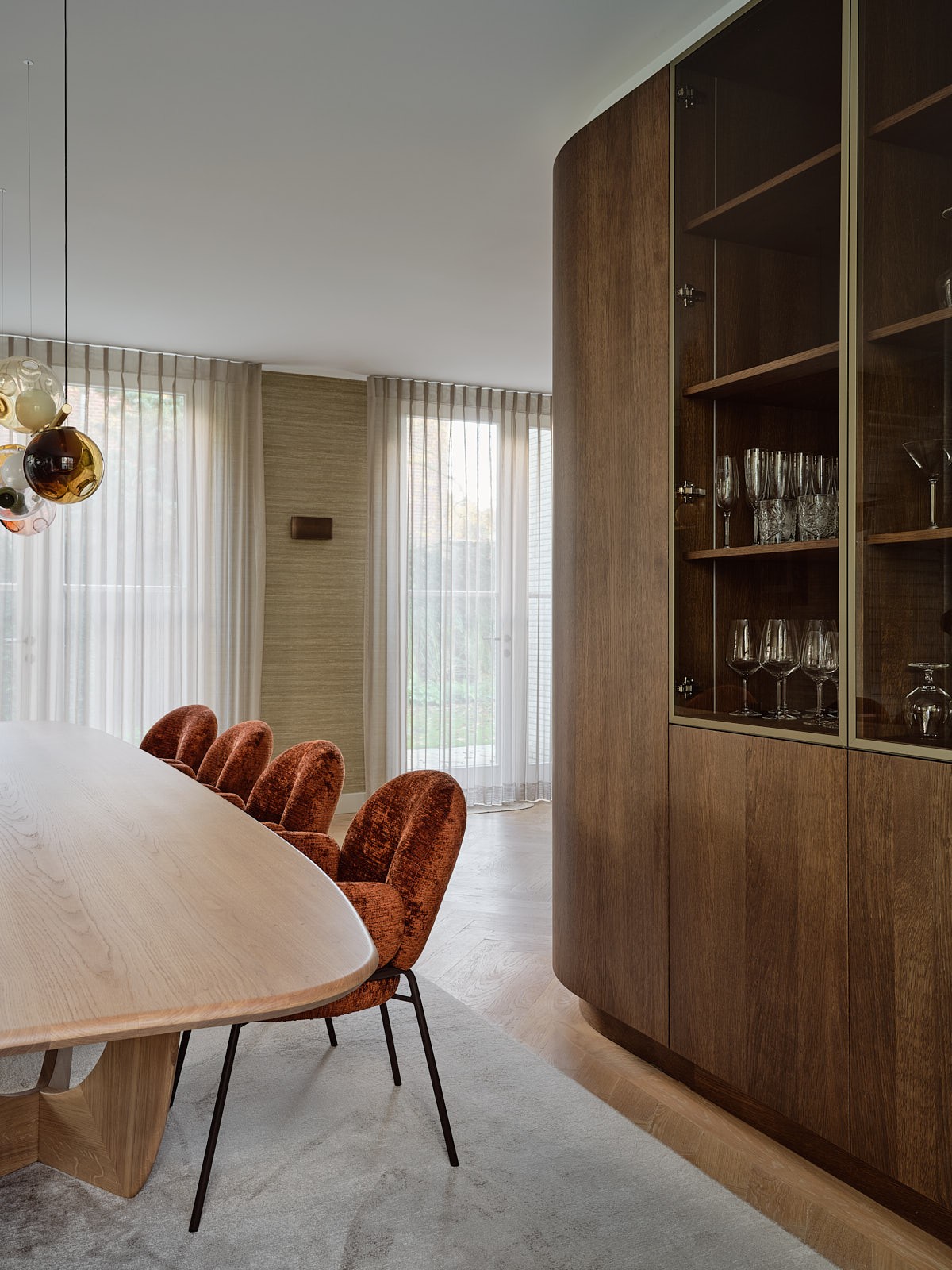
This kind of luxury interior steelwork works best when it adapts to the architecture around it. Here, the frames follow the wall openings, the curves of the arches and the size of the glazed panels. They do not interrupt the interior composition; they complete it. That is visible in the way the larger glass transitions and smaller internal openings share the same material tone, even when the scale changes from doorway to niche.
The approach also reaches the sanitary spaces, where reflective elements and glazed inserts continue the same bronze-copper line. Rather than introducing a new finish for each room, the project keeps returning to the same measured palette. That consistency gives the doors, the frames and the mirrors a shared identity. The villa gains clarity from that restraint, especially where the timber and stone surfaces are already doing a lot of visual work.
Large glass transition toward the patio
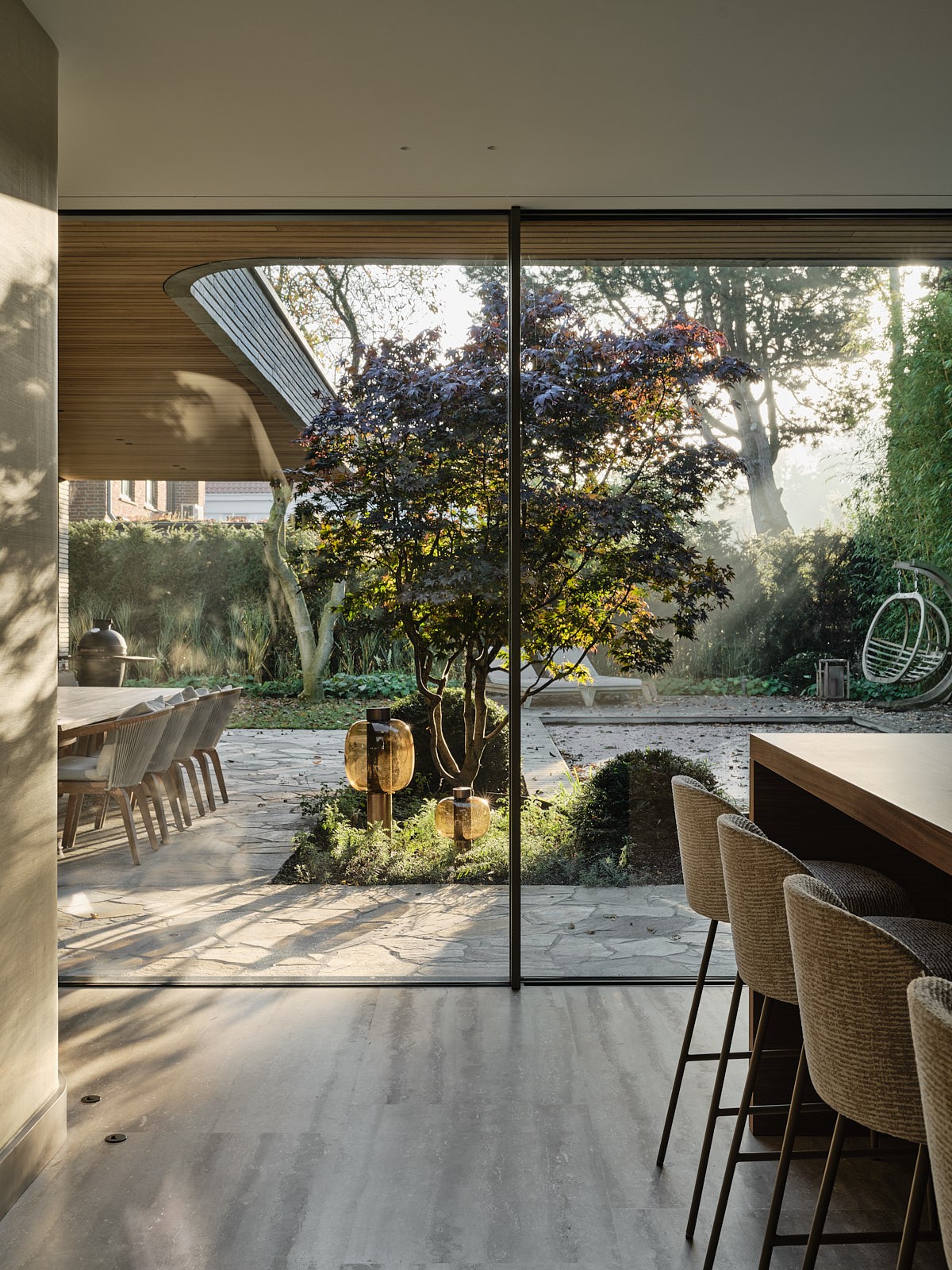
Outside, a large glass transition opens the interior toward the patio. The dark steel frame around that opening is visually lighter than a solid wall would be, even though it carries the same architectural weight. From inside, the view extends to the natural stone terrace and the garden beyond. From outside, the glazing reads as part of the same interior vocabulary, with the metal lines continuing the precise geometry used throughout the house.
That exterior glazing does not compete with the bronze-copper steel doors. It supports them. The broader opening shows how the project moves between enclosed rooms and open views without changing its material logic. The steel frames remain slim, the glass remains clear, and the wood inside keeps the palette grounded. Together they create a sequence of thresholds, each one distinct, each one related to the next.
Close-up details that make the frames readable
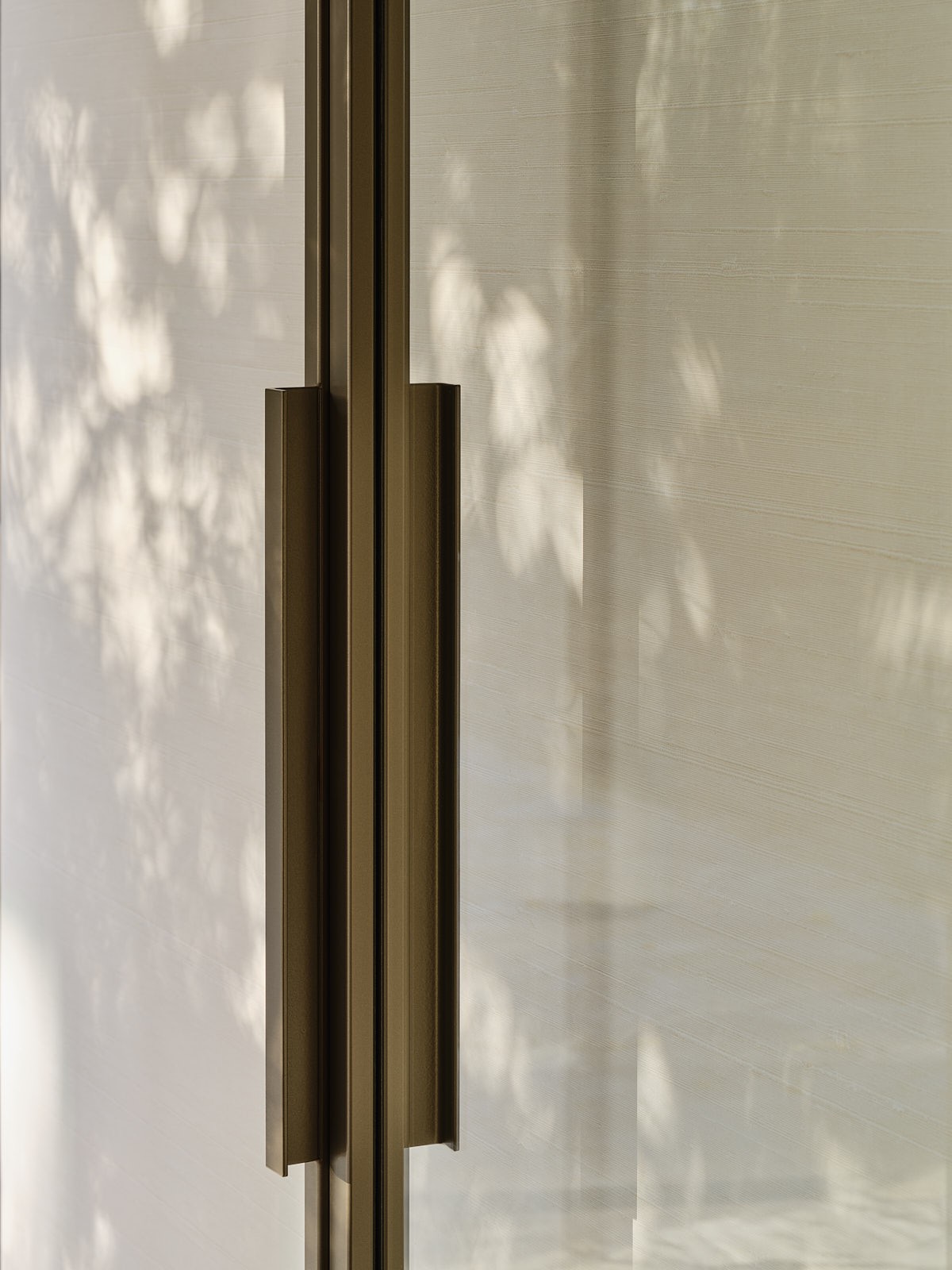
In the close-up photographs, the details become more legible: the steel profile beside the glass edge, the handle set against the bronze-copper surface, the crisp joint where one frame meets another. These are not loud elements, but they are the parts that give the project its precision. They show how the doors are built into the interior rather than placed on top of it. The finish catches light differently across each angle, which keeps the profile visible even when the room is quiet.
The same applies to the broader openings with arched tops. Seen from one side, they appear almost sculptural; seen from another, they recede into the wall and let the room carry the scene. That shift in reading is part of what makes the bronze copper steel doors memorable. They work as structure, as threshold and as surface. In a house where wood, glass and stone already have strong presence, that measured steelwork gives the interior its clearest line.
Suppliers/materials:
Architect: Lagrand Interior Design
Steel doors and elements: Maco Design B.V.
Photography: Space Content Studio
Want to see more of Maco Design B.V. | Exclusive custom steel craftsmanship? View the page of Maco Design B.V. | Exclusive custom steel craftsmanship for even more great projects and company information.


NEW 2026 Jubileum Edition The Best Interior Designers Benelux
Order Now €125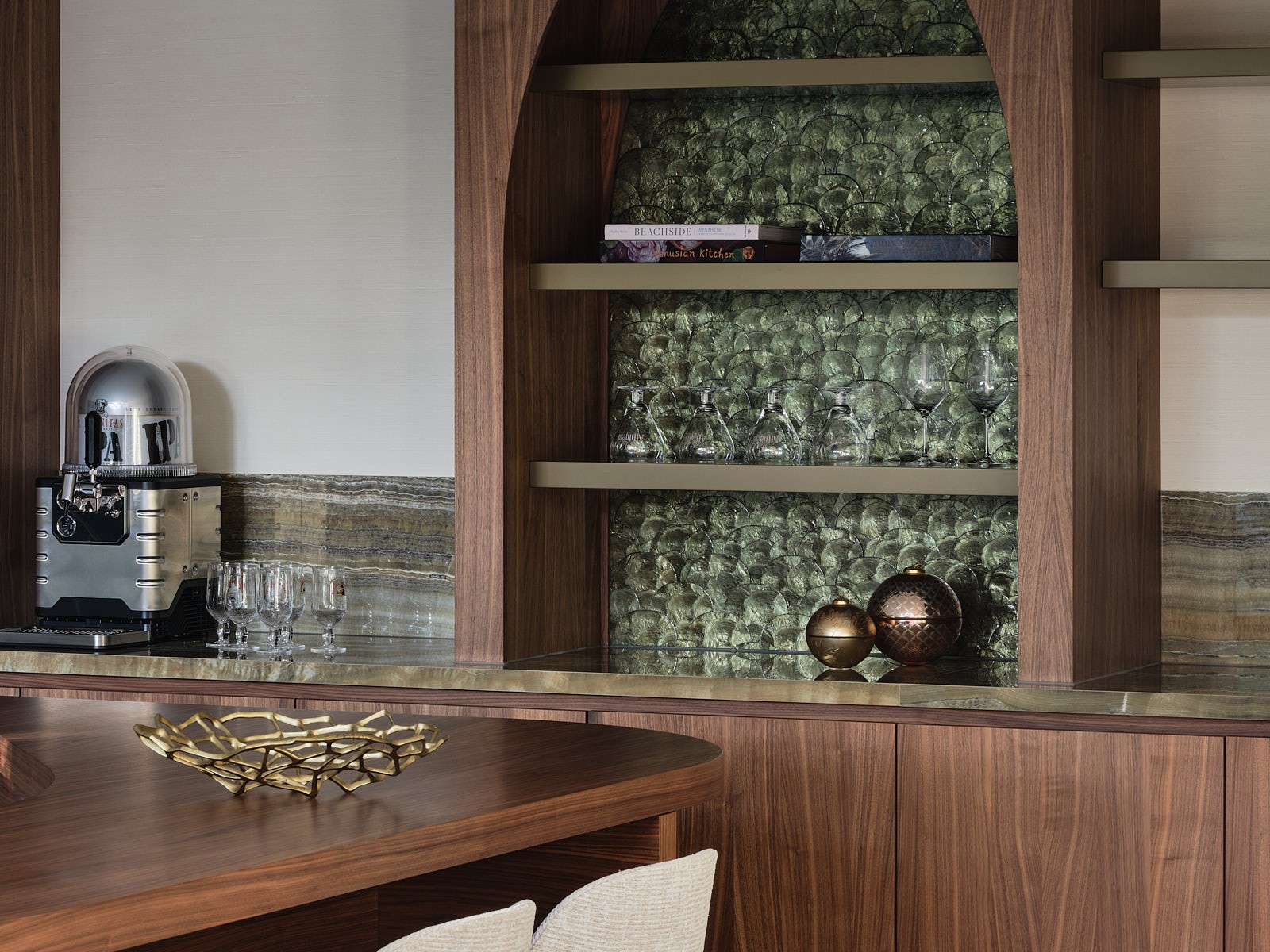
NEW 2026 Jubileum Edition The Best Interior Designers Benelux
Order Now €125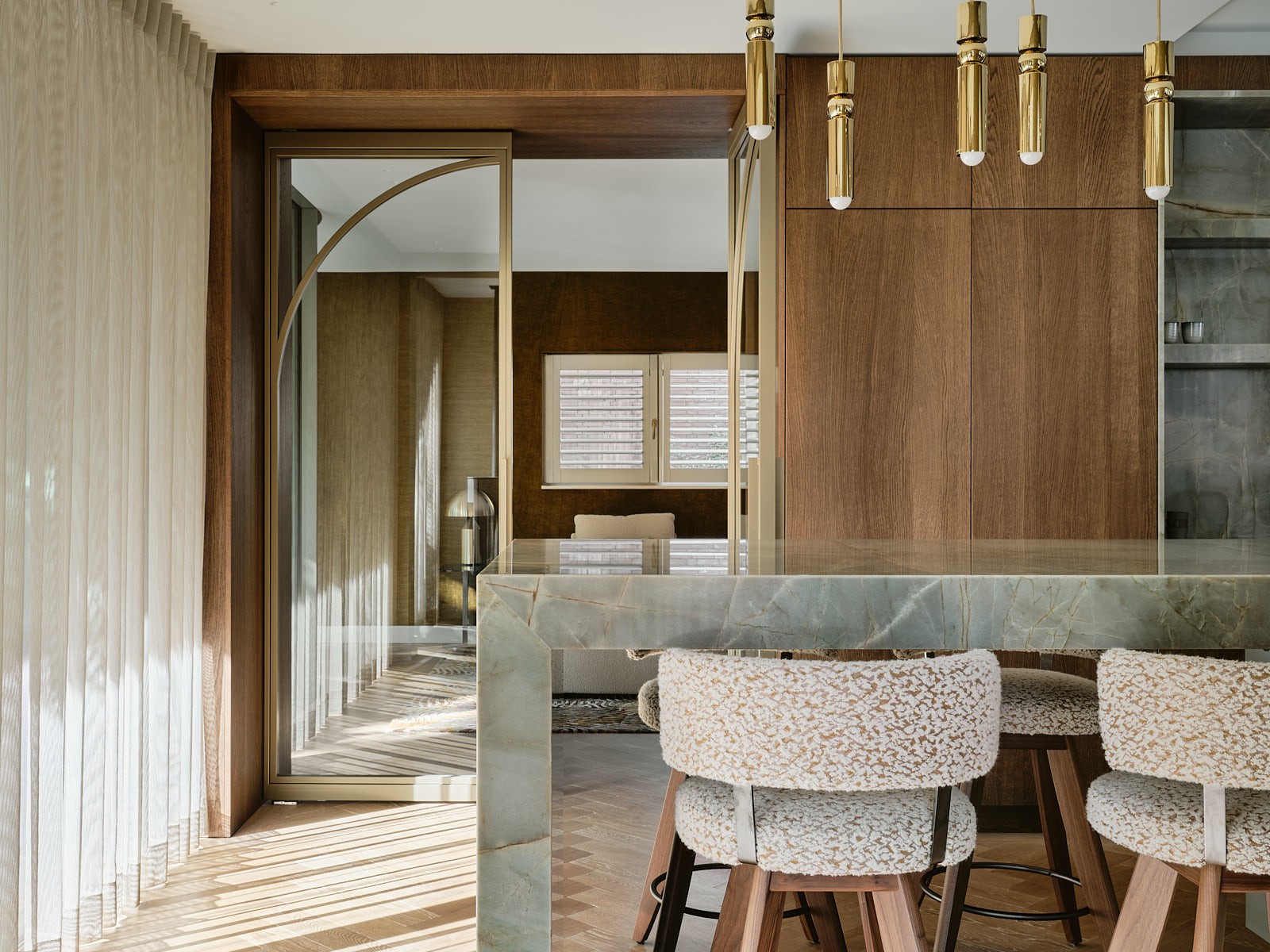
NEW 2026 Jubileum Edition The Best Interior Designers Benelux
Order Now €125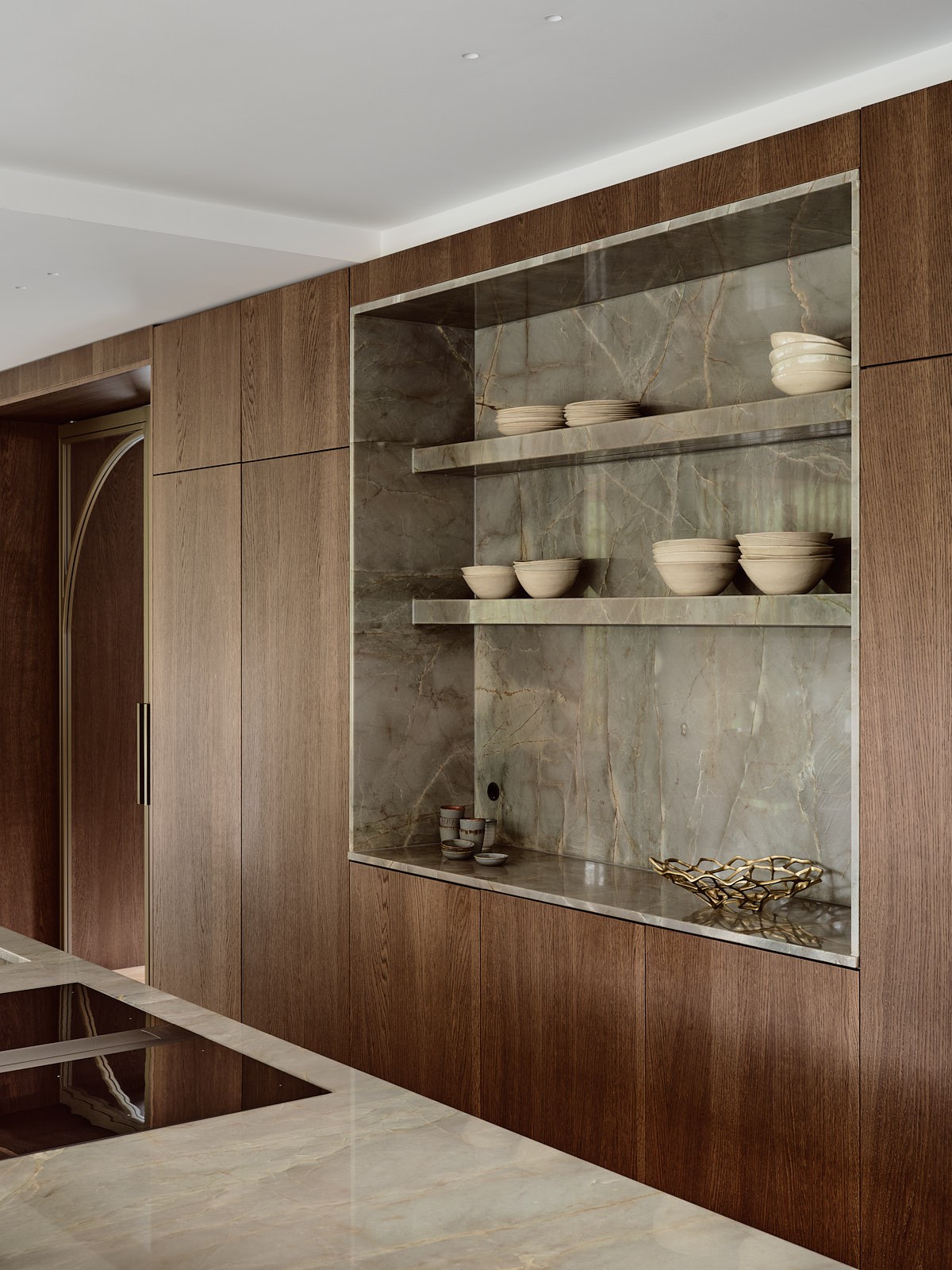
NEW 2026 Jubileum Edition The Best Interior Designers Benelux
Order Now €125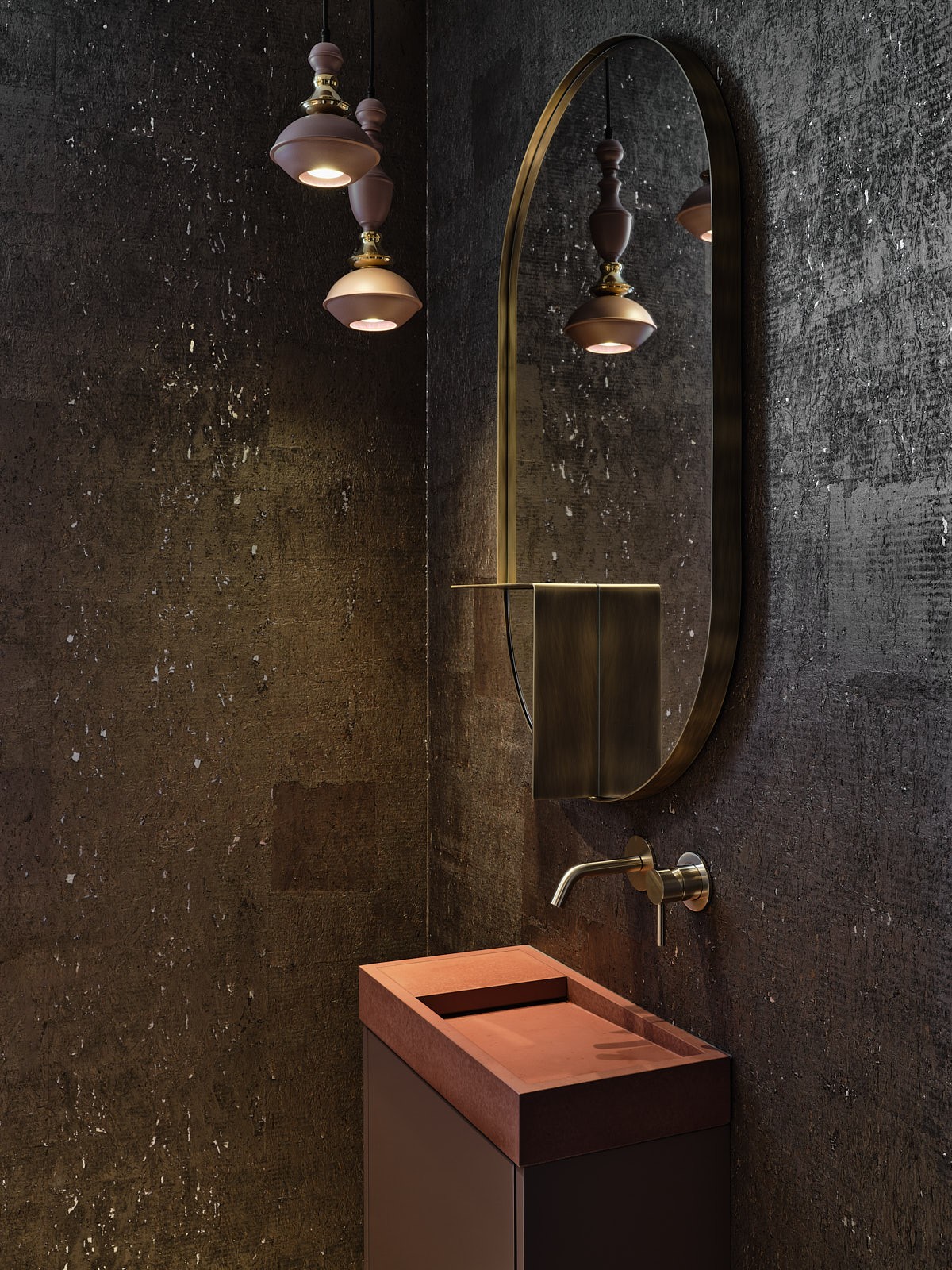
NEW 2026 Jubileum Edition The Best Interior Designers Benelux
Order Now €125