








Built-in undercounter wine cooler with two temperature zones
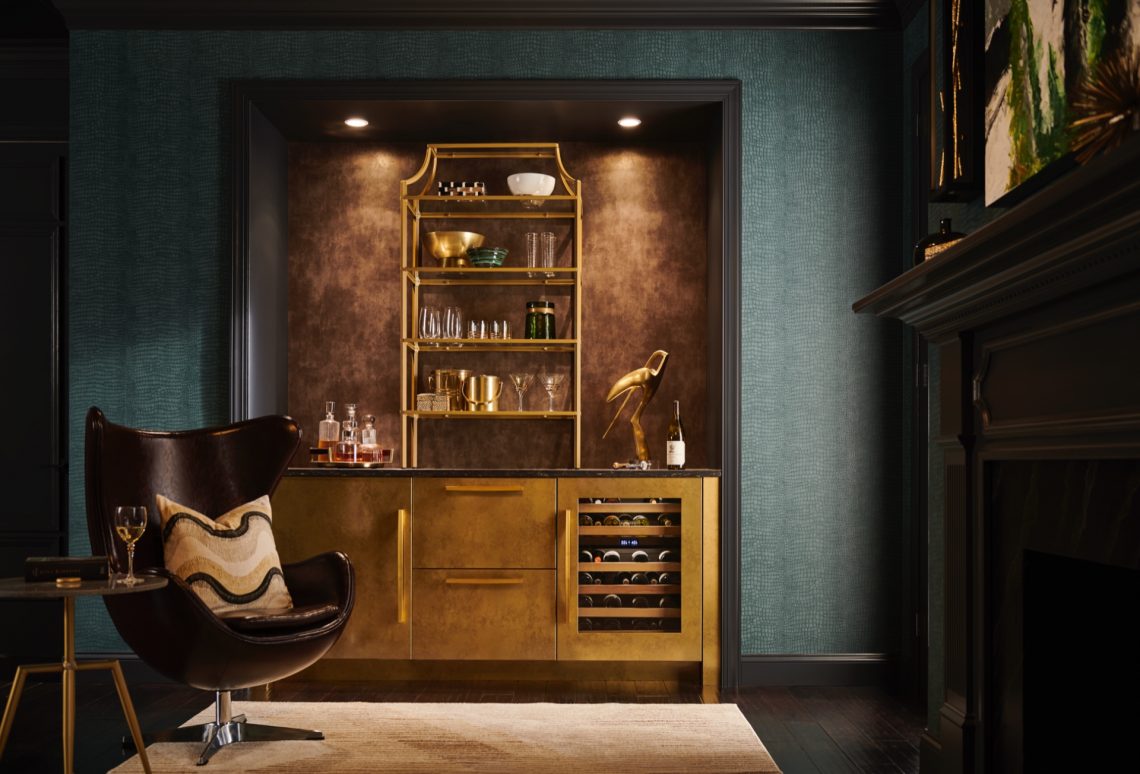
Dark wall panels frame the opening first. Then the eye lands on the built-in undercounter wine cooler, set into a niche with bronze-gold front surfaces and a warm-lit interior behind it. The unit sits low in the composition, so the bottle storage reads as part of the room rather than a separate appliance. That integrated wine cooler niche is the main idea here: a compact installation with a fully customizable exterior, shaped to sit within a tailored interior setting.
Built into the room, not placed in it
The front can be finished to suit the space, and the project makes that flexibility visible. Steel door panels are available with or without a lock, and different handles can be chosen. In the images, the front work is joined by dark surrounding surfaces and a stone- or composite-look top, which keeps the wine cooler visually anchored beneath the counter. It is a built-in undercounter wine cooler, but the surrounding finishes do much of the visual work.
What stands out in the niche is the layering: open shelving, framed door sections, and narrow wooden slats that soften the metal and glass. The composition does not hide the appliance. Instead, it turns the storage into part of the room’s architecture, with the bottle rows, frames, and lighting set against a deeper, cocoa-toned interior.
Two temperature zones, visible at a glance
The technical core is straightforward and easy to read. This wine cooler with two temperature zones holds 42 bottles, and each zone can be controlled independently. Digital displays are visible in the compartment, giving the front a practical focal point rather than leaving the settings hidden away. That matters in a project like this: the controls are part of the experience, not an afterthought tucked behind a panel.
The dual-zone setup suits a storage arrangement where different bottles can sit at different temperatures without sharing the same setting. The display screens, placed within the niche, make the temperature information immediate. In the photos, the effect is calm and precise: the lighted interior, the bottle racks, and the readouts all sit close together, so the eye understands the layout at once.
Remote control through WiFi
A wifi wine cooler adds another layer of control without changing the appearance of the installation. The unit can be operated remotely, including temperature regulation for both zones. That function suits the kind of built-in wine storage shown here, where the hardware is visually integrated and the interface stays discreet. The result is a storage unit that is easy to manage while remaining visually tied to the surrounding joinery and finishes.
A cocoa-brown interior with bottle rows in view
Inside, the warm cocoa-brown finish gives the bottle storage a darker backdrop. The color is not decorative in a superficial sense; it lets the glass bottles, metal frames, and interior light stand out more clearly. In the images, the shelves are visible in rows, and the interior lighting picks up the edges of each bottle. That combination makes the wine cooler with digital display feel structured rather than crowded.
The bottle capacity is limited to 42, which keeps the scale practical and compact. Because the unit is undercounter, the proportions stay low and linear. The wine storage solutions shown here rely on that restraint: a measured number of bottles, clearly separated zones, and a front that can be adjusted to match the room. The space around the cooler remains readable, with the top surface and dark sides keeping the composition tight.
Wooden slats, metal panels and a lighter touch on the front
The visual detail changes from one section to the next. Wooden slats appear in the rack and front treatment, introducing a lighter rhythm against the darker niche. The metal elements read differently depending on the angle: sometimes as bronze-gold panels, sometimes as steel surfaces with a more technical look. That mix gives the built-in undercounter wine cooler a layered face without making it feel busy.
Because the door panel can be clad to choice, the front does not force a single finish across the whole installation. The images show how that freedom can work with surrounding cabinetry and a stone-like counter. The wine cooler with wooden slats is therefore not a separate decorative object; it is part of a larger joinery sequence where material transitions do the visual lifting.
A niche that keeps the focus low
The integrated wine cooler niche is visually compressed in the best sense. It sits below counter height, so the upper line remains clean while the lower section carries the detail. This setup gives the bottle storage a clear place in the room. The dark surround deepens the niche, and the interior light prevents it from disappearing into shadow. What remains is a controlled composition of glass, metal, wood, and display light.
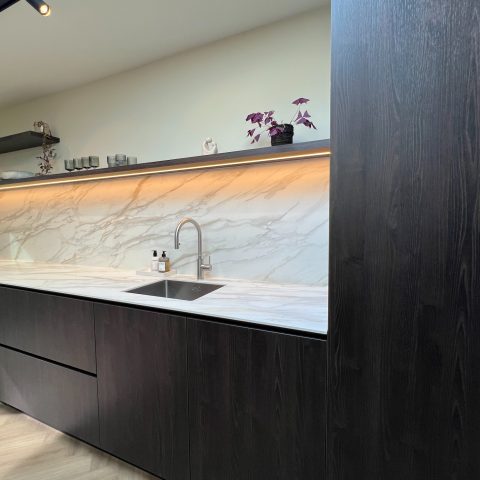
That low placement also explains why the project feels so resolved in close-up. The cooler does not need a large footprint to register. Its proportions, the two-zone display, and the custom front finish are enough to define the corner. The surrounding cabinetry and the marbled top surface sharpen the outline, making the wine storage read as an embedded part of the interior rather than a detachable unit.
Seen as a whole, the project is about controlled storage and visible finish choices. The built-in undercounter wine cooler protects wine from heat, moisture, light, and vibrations, while the customizable exterior lets it sit comfortably within a tailored setting. The two temperature zones, WiFi operation, and 42-bottle capacity give it a clear functional profile. The images add the rest: warm interior light, digital readouts, wood slats, and a bronze-gold front that settles neatly into the niche.
Want to see more of Sub-Zero Wolf? View the page of Sub-Zero Wolf for even more great projects and company information.